 @awinkler@openbiblio.social
2026-10-12 11:55:27
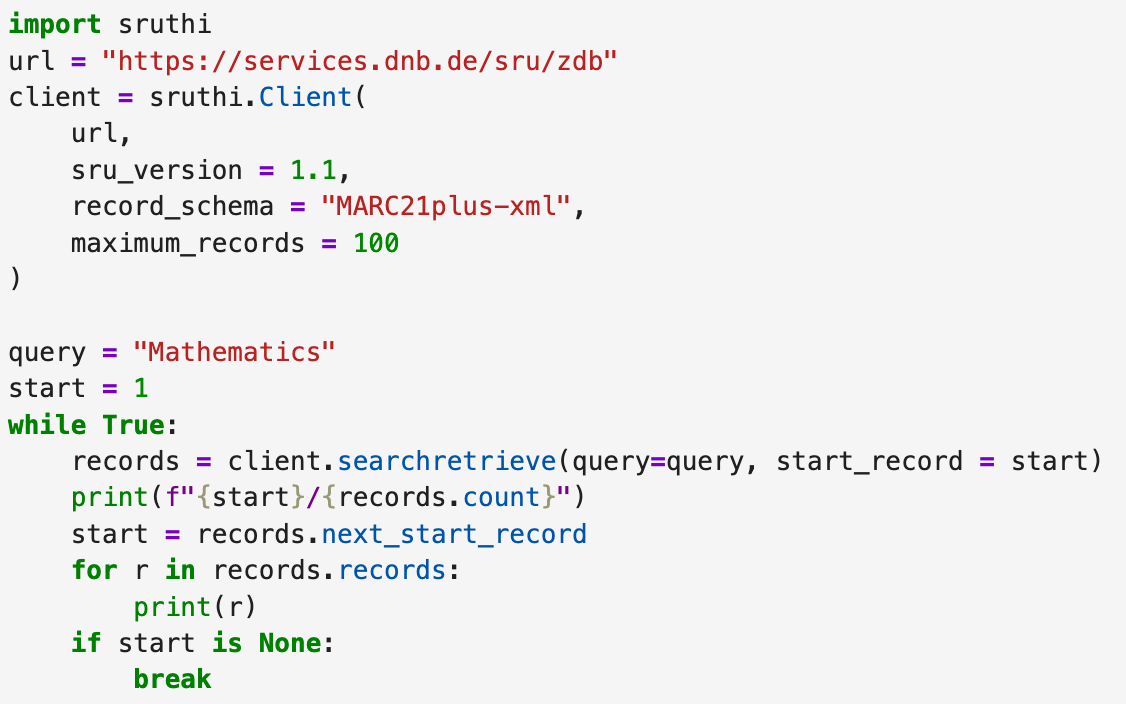
@awinkler@openbiblio.social @awinkler@openbiblio.socialThere's also a #SRU library for Python, a bit less elaborate than #scythe for OAI. It's called sruthi (https://github.com/metaodi/sruthi
 @frankel@mastodon.top
#Python 3.15 Is Bigger Than You Think: 7 New Features Worth Using in 2026
https://medium.com/@captain-solaris/python-3-15-is-…
 @mszll@datasci.social
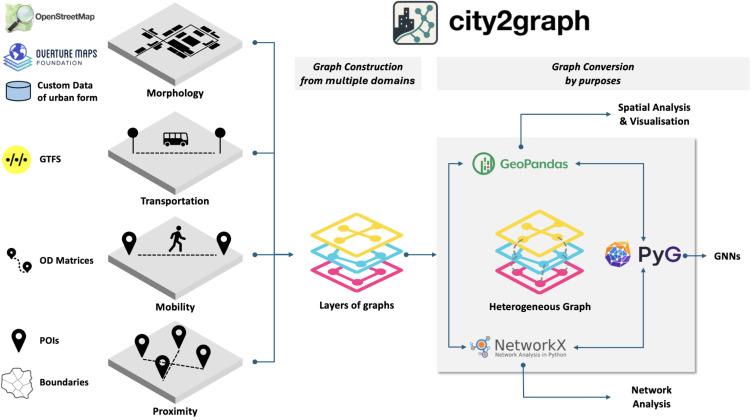
City2Graph: A Python library for Heterogeneous Graph Neural Networks and spatial analysis in urban systems
https://www.sciencedirect.com/science/article/pii/S0198971526000943
Looks very interesting!
 @cyrevolt@mastodon.social
Who still uses Python 2?
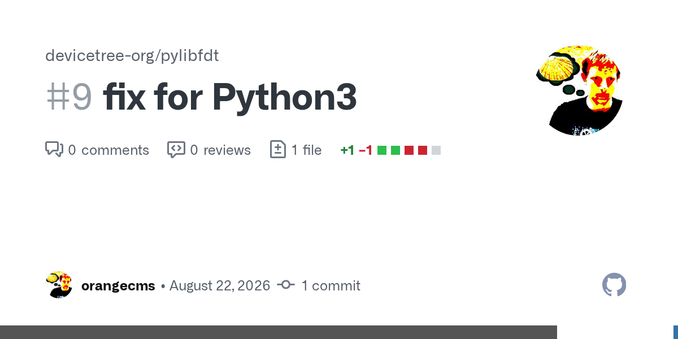
Apparently, the library used for checking device trees in Linux.
The code is NOT compatible with Python 3 though, due to one single type.
Hopefully this gets accepted:
https://github.com/devicetree-org/pylibfdt/pull/9
 @nobodyinperson@fosstodon.org
It's 2026 and :python: #Python's standard library *still* does not have a flatten function? 🤨
(Yes, more-itertools, that's not the point)
 @arXiv_mathGM_bot@mastoxiv.page
Fractional-order differential geometry of Gielis curves: chart regularization, Caputo curvature, and the fate of singularities
Umut Selvi, Derya Sa\u{g}lam
https://arxiv.org/abs/2610.03754 https://arxiv.org/pdf/2610.03754 https://arxiv.org/html/2610.03754
arXiv:2610.03754v1 Announce Type: new
Abstract: Gielis curves describe many natural shapes, and some of them have corners or cusps. We apply two recent ideas from the differential geometry of curves to Gielis curves: "regularizing" changes of metric and fractional curvatures based on the Caputo derivative. First, we show that the smoothness of a Gielis curve is controlled by the exponents $n_2$ and $n_3$, not by $n_1$. A change of coordinates, the Gielis chart, maps every Gielis curve that closes after one turn onto the unit circle. However, the corners and cusps of the curve reappear as a loss of regularity of the metric; they are transported, not removed. Second, for the fractional curvature defined by Caputo scaling, we distinguish two conventions that differ in the choice of parameter and derive their scaling laws under homotheties. We prove that the memory of the Caputo operator breaks the rotational symmetry: the fractional curvature takes different values at corresponding points of congruent arcs. For fractional order $\alpha<1$, the curves of constant fractional curvature are spirals, and the clothoid is a special case. We also introduce a fractional total turning for curves with corners, give closed forms for regular polygons, and show that fractional general and slant helices coincide with the classical ones. The Python library used in the computations is listed in the appendix.
toXiv_bot_toot
 @mgorny@social.treehouse.systems
I suppose there's something telling about the fact that a #Python library for file locks has… [checks notes]… 116 releases already.
 @berlinbuzzwords@floss.social
Ralph Matthias Debusmann was at #bbuzz26 to break down why existing stream processing libraries are too complex, and to unveil Kafi Streams, an open source Python library that treats streaming like batch.
Full recording: https://youtu.be/_oKQaDyP1CQ?si=XI04TdQSLJ047rZ_
 @arXiv_csCY_bot@mastoxiv.page
Drafter: A Python Library for Full-Stack Web Development in CS1
Austin Cory Bart, Nazim Karaca
https://arxiv.org/abs/2609.28481 https://arxiv.org/pdf/2609.…
@mgorny@social.treehouse.systems#Python in a nutshell:
1. Let's use this new fancy #TOML thing for everything, it's so cool!
2. Everyone starts depending on third-party TOML libraries.
3. TOML library is finally added to the standard library, so people are moving to conditionally using it.
4. As old versions of Python become irrelevant, people are finally dropping fallbacks to the third-party library.
5. TOML 1.1 is introduced, and everyone has to start using a third-party library again… (at least until Python 3.15)
That's in case anyone is wondering why dev-python/tomli is suddenly getting installed on #Gentoo systems again.
 @adulau@infosec.exchange
ptrclassify is a small, dependency-free Python library and CLI that infers likely IP usage and location from reverse-DNS PTR hostnames.
Version 0.3 released including new rules and CSV tool.
#ptrclassify #infosec #cybersecurity
🔗 https://github.com/adulau/ptrclassify
@mgorny@social.treehouse.systems @adulau@infosec.exchangeI just released ptrclassify is a small, dependency-free Python library and CLI that infers likely IP usage from reverse-DNS PTR hostnames.
It is intentionally heuristic and multi-label. PTR naming is operator-controlled and is not authoritative evidence of how an address is actually used. The output therefore includes a confidence score, the text that matched, and the rule IDs that produced each label.
To summarize, the library is trying to guess usage (and a bit location) of an IP address based on its PTR records. It's based on a set of rules which can be updated easily.
#osint #cybersecurity #ptrclassify #opensource #dns  https://github.com/adulau/ptrclassify
 module https://pypi.org/project/ptrclassify/