 @tezoatlipoca@mas.to
2026-10-08 19:54:12
Fudge it. I have made it appear as though I have been working sufficiently for today. Time to play the new #ArcRaiders update.
#clockingout #takethisjobandshoveit

 @arXiv_astrophGA_bot@mastoxiv.page
2026-09-09 09:29:35
Euclid: Quick Data Release (Q1) -- Exploring the detailed visual morphology of galaxies in clusters
Mas-Buitrago, Kruk, O'Ryan, Nardone, La Marca, Awad, Baes, Fossati, G\'eron, Ghaffari, Girardi, Lintott, Sorce, Altieri, Durret, Pettorino, Irureta-Goyena, Simmons, Reerink, S\'anchez, Knapen, Shankar, Duran-Camacho, P\'erez-Mart\'inez, Walmsley, Auricchio, Baccigalupi, Baldi, Bardelli, Battaglia, Biviano, Bolzonella, Bonchi, Branchini, Brescia, Brinchmann, Camera, Ca\~nas-Herrera, Capobianco, Carbone, Carretero, Castellano, Castignani, Cavuoti, Cimatti, Colodro-Conde, Congedo, Conselice, Conversi, Copin, Costille, Courbin, Courtois, Cropper, Degaudenzi, De Lucia, Dole, Dubath, Dupac, Dusini, Ealet, Fabricius, Farina, Farinelli, Ferriol, Fosalba, Fotopoulou, Frailis, Franceschi, Fumana, Galeotta, George, Gillis, Giocoli, G\'omez-Alvarez, Gracia-Carpio, Grazian, Grupp, Gwyn, Holmes, Hook, Hormuth, Hornstrup, Huertas-Company, Jahnke, Jhabvala, Joachimi, Kermiche, Kiessling, Kubik, K\"ummel, Kunz, Kurki-Suonio, Le Brun, Ligori, Lilje, Lindholm, Lloro, Mainetti, Mansutti, Marggraf, Martinelli, Martinet, Marulli, Massey, Maurogordato, Medinaceli, Melchior, Meneghetti, Merlin, Meylan, Mora, Moresco, Moscardini, Munari, Neissner, Niemi, Nightingale, Padilla, Paltani, Pasian, Pedersen, Percival, Pezzotta, Pires, Polenta, Poncet, Popa, Pozzetti, Raison, Renzi, Rhodes, Riccio, Romelli, Roncarelli, Rusholme, Saglia, Sakr, S\'anchez, Sapone, Sartoris, Schneider, Schrabback, Scodeggio, Secroun, Sihvola, Simon, Sirignano, Sirri, Tallada-Cresp\'{i}, Taylor, Teplitz, Tereno, Tessore, Toft, Toledo-Moreo, Torradeflot, Tutusaus, Valiviita, Vassallo, Kleijn, Veropalumbo, Wang, Weller, Zacchei, Zamorani, Zerbi, Zucca, Macias-Perez, Sereno
https://arxiv.org/abs/2609.08962 https://arxiv.org/pdf/2609.08962 https://arxiv.org/html/2609.08962
arXiv:2609.08962v1 Announce Type: new
Abstract: Galaxy clusters provide unique laboratories for studying environmental effects on galaxy evolution. The morphology--density ($T$--$\Sigma$) and morphology--cluster-centric radius ($T$--$R$) relations trace how galaxy morphology is influenced by the environment, but previous studies at intermediate redshifts have been limited in both sample size and radial coverage. We use the Euclid Quick Data Release 1 (Q1) visual morphology catalogue to measure the $T$--$\Sigma$ and $T$--$R$ relations for smooth, featured-or-disc, and barred galaxies in known clusters at $0.2\leq z\leq 0.5$, extending this analysis to large cluster-centric distances ($3 R_{500c}$) and studying their dependence on stellar mass. Using photometric redshifts and stellar masses provided by Euclid, we identify 1754 cluster members within $1.5 R_{500c}$, distributed across 71 clusters. We classify the identified galaxies as smooth, featured-or-disc, or barred using the predicted vote fractions provided by the Zoobot deep learning foundation model in the Q1 visual morphology catalogue. We confirm the $T$--$\Sigma$ relation in all the stellar mass ranges studied, with a stronger influence of the cluster environment on galaxy morphology in the densest parts of the cluster and closer to the cluster centre. Beyond $1.5 R_{500c}$, the morphological segregation weakens, with featured-or-disc galaxies overtaking smooth galaxies at the lowest densities, consistent with the growing contribution of field interlopers in the cluster outskirts. For barred galaxies, we find a tentative decline of the bar fraction toward lower densities that is most pronounced for the most massive galaxies. In conclusion, our results show that the cluster environment drives a progressive transformation of galaxy morphology, with the loss of disc structure becoming more pronounced towards the cluster core, where environmental processes act most efficiently.
toXiv_bot_toot
 @cdarwin@c.im
2026-08-01 00:25:36
The US government released its anxiously awaited plan for how to manage the Colorado river crisis on Friday
-- outlining cuts in water supplied to California, Arizona and Nevada.
The proposal from the US Bureau of Reclamation spares Colorado, Utah, New Mexico and Wyoming from facing mandatory cuts, for now.
But it is a temporary fix as the states that rely on the river continue to fight over a long-term management plan for the dwindling resource that supplies huge swaths of…

 @Mediagazer@mstdn.social
2026-10-04 05:50:57
Cinema United: North American movie theaters have invested $2.7B since September 2024 in upgrades like premium large formats, reclining seats, and more (Pat Saperstein/Variety)
https://variety.com/2026/film/news/theaters-2-7-billion-heated-seats-bar…

 @Techmeme@techhub.social
2026-08-06 00:01:52
Block reports Q2 revenue up 9% YoY to $6.62B, vs. $6.49B est., Cash App gross profit up 31% to $1.97B, and raises its FY 2026 gross profit forecast (Manya Saini/Reuters)
https://www.reuters.com/business/blocks-second-quarter-p…
 @primonatura@mstdn.social
2026-07-27 12:00:39
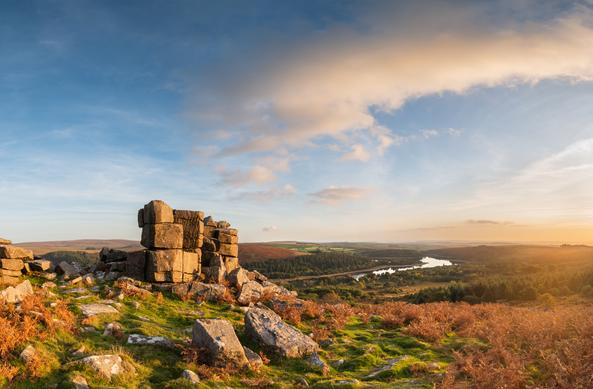
"Inside the Duchy of Cornwall’s people-first plan for net-zero"
#NetZero
https://www.edie.net/inside-the-duchy-of-cornwalls-people-first-plan-for-…
 @Cosipa@social.linux.pizza
2026-08-07 10:44:21
 @DieGesellschafterinLang@swiss.social
2026-08-19 14:14:50
Happy Birthday Diana Muldaur (88)!
https://www.instagram.com/p/DcN7-C_x0od/
 @cdarwin@c.im
2026-07-16 20:31:36
Water levels in Lake Powell,
the second-biggest reservoir on the beleaguered Colorado River,
are in danger of falling so low that its dam can no longer generate hydropower,
according to a federal analysis released Wednesday.
The new “most probable” forecast from the Bureau of Reclamation projects that
the height of water in Lake Powell,
which sits on the border of Utah and Arizona,
will fall to 3,491 feet by March.
That’s just one foot above
