Department of Homeland Security (DHS) lawyers told officers investigating voter fraud they would not be held responsible for violating state laws around accessing voter registration information, an anonymous whistleblower revealed on Monday.
DHS officers also had concerns about the reliability of the data they were working with, the whistleblower said.
The Trump administration has ramped up its investigation into noncitizen voting ahead of the midterm elections.
Noncitize…
Department of Homeland Security (DHS) lawyers falsely told officers investigating voter fraud they would not be held responsible for violating state laws around accessing voter registration information, an anonymous whistleblower revealed on Monday.
DHS officers also had concerns about the reliability of the data they were working with, the whistleblower said
I know there’s been talk of macOS 27 being like Snow Leopard: a release focused on improved quality / stability / reliability. So far that has been the opposite of my experience with it.
The DoJ claims up to 250k registered voters in CA NV NJ PA are non-citizens. If that's true and they're all in CA and they all vote and they all vote the same way, that could swing a vote by 1.1-1.6% (CA has 23.2M registered voters; 16.1M voted in 2024). CA has no senate races this cycle and the Dem gubernatorial candidate leads the polls by 16.1%.
CA has 48h to validate the list—an impossible task.
"I have serious doubts about the reliability of your data and accuracy of your claims, since my office has not shared our statewide voter registration list with DHS or any other federal agency or official," [CA Secretary of State] Weber said …
The Republican administration claimed Nevada had 1,500 noncitizen voters on its voter rolls. But after the federal government identified them to the state, the number of actual registered noncitizens turned out to be zero.
#USpol
It's a shame that 'AI' adoption is what led to them to look at this more, but yeah. Cloud reliability is bullshit https://www.computerweekly.com/news/366646705/Troubleshooting-cloud-connectivity-emerges-as-main-bar…
Fine-Tuning Large Language Models for Codebook-Guided Coding of Students' Mathematics Metaphor Responses
Liang Zhang, Stephen Hwang, Yue Ma, Jinfa Cai
https://arxiv.org/abs/2608.10276 https://arxiv.org/pdf/2608.10276 https://arxiv.org/html/2608.10276
arXiv:2608.10276v1 Announce Type: new
Abstract: Student-generated metaphors about mathematics can reveal students' attitudes, beliefs, identities, and experiences, but human expert coding of these thematically and semantically complex open-ended responses is time-intensive and difficult to scale. This study examines whether LoRA-based supervised fine-tuning of large language models (LLMs) can improve their performance on codebook-guided coding tasks for student mathematics metaphors. We used a human-coded corpus of 2,265 Grade 6-8 responses to food- and animal-based metaphor prompts and instructed the LLMs to perform two coding tasks: valence-intensity coding to capture the direction and strength of students' affective orientations toward mathematics, and thematic coding to capture students' framings of mathematics as expressed through their metaphors. We compared two proprietary models, GPT-4o mini and GPT-5 mini, under prompt-only conditions with two open-weight models, DeepSeek-R1 1.5B and Mistral 7B, evaluated before and after fine-tuning. Results show that fine-tuning substantially improved the performance and run-to-run reliability of the open-weight models across both tasks relative to their base versions. The fine-tuned compact open-weight models became competitive with, and often outperformed, the proprietary prompt-only models. These findings suggest that compact open-weight LLMs can support scalable, locally controllable, and privacy-conscious AI-assisted measurement of students' metaphor responses in mathematics education.
toXiv_bot_toot
The eighth generation of Wi-Fi represents a change in focus.
While previous incarnations of the Wi-Fi standard have promised higher connection speeds,
Wi-Fi 8 seems to be more about improving the basics:
reliability, stability, and lower latency.
Wi-Fi 8 also promises seamless roaming, keeping devices connected as you move and cutting down on dropped connections and dead zones.
For those keeping score, Wi-Fi 8 is IEEE 802.11bn using the old naming convention, w…
Most days my bus is late, doesn't show up or is packed and I must wait for the next one. The morning bus I am near the back exit when I board as five stops up the bus is packed and if I am not near the exit I won't be able to disembark. Their improvement is to run a total of two specials. First at 06:06 and then 07:06. I still have to take a bus to get there. For the 06:06 I have to get the 05:37 bus. That takes 10 minutes so I wait for the express to show up. Problem is that m…
TransLink improves access to jobs, campuses, and growing communities
Investment Plan improvements add capacity on busy routes, expand access to major employment and education destinations
TransLink is making it easier for people to get to work, school, and other important destinations this fall by adding capacity on busy routes, improving reliability, and expanding transit into growing employment areas.
Starting September 7, customers will see new or improved service on 21 …
🎯 Smart routing with six strategies ranks models by live speed, capability and reliability scores. On 429 or 5xx the router cools the key down and retries the next model in the chain.
📊 Per-key RPM/RPD/TPM/TPD counters learn each provider's reported ceilings, so routing stays under every free-tier cap.
Getting unicorns from #github again so I assume they are moving towards their famed Four Eights reliability. Time to find a non-github dependent task for the rest of the day.
Homeland Security Secretary Markwayne Mullin
asked the Justice Department this week to probe the reliability of a widely used digital voting system,
as well as whether election nonprofits had improperly obtained private voter data.
Mullin’s concerns center around a multistate voter data collective
— called the Electronic Registration Information Center, or ERIC
— which is designed to prevent the sharing of any records “indicating an individual is a non-citizen,”…
GitHub says its 7 hour August 17 outage was caused by a capacity failure when peak traffic overwhelmed an infrastructure component in a Central US data center (Vlad Fedorov/The GitHub Blog)
https://github.blog/news-insights/company-news/the-august-17-…
Crosslisted article(s) found for physics.app-ph. https://arxiv.org/list/physics.app-ph/new
[1/1]:
- Reliability-Aware Bayesian Optimization of 1310 nm PCSELs with FDTD Verification
Jinglin Yu, Feiyang Wu, Longying Wen, Chongxian Yuan, Renjie Li, Zhaoyu Zhang
https://arxiv.org/abs/2607.21772
- Energy-resolved measurement of individual GeV muon tracks generated by electrons from a compact L...
Davide Terzani, et al.
https://arxiv.org/abs/2607.21830 https://mastoxiv.page/@arXiv_physicsaccph_bot/116990836025947701
- Noise-Robust Frequency Estimation via Overlapped Sampling-Intervals Zero-Crossing Fitting
Phichai Youplao, Nithiroth Pornsuwancharoen, Yusaku Fujii
https://arxiv.org/abs/2607.22096 https://mastoxiv.page/@arXiv_eessSP_bot/116990914442359926
- Field-driven nonlinear metasurface: self-adaptive transition between high-selectivity transmissio...
Yuan Xu, Hanqing Liu, Shangjing Xi, Xiaodi Zhang, Yanqing Cheng, Wenye Ji, Peiguo Liu
https://arxiv.org/abs/2607.22144 https://mastoxiv.page/@arXiv_physicsoptics_bot/116990896491588825
- Levitated nano-trampoline resonators for magnetic field sensing
Chen, Raj, Chua, Chen, Gu, Xu, Cho, Assad, Ding, Lam
https://arxiv.org/abs/2607.22160 https://mastoxiv.page/@arXiv_condmatmeshall_bot/116990837762031696
toXiv_bot_toot
https://electrek.co/2026/08/04/waymo-co-ceo-camera-only-self-driving-tesla/
Reliability lives on what Dolgov called an “exponential ladder of nines.” Tesla CEO Elon Musk calls it the “march of the nines.” Getting to 90% or 99% is the easy part. Every additional nine of reliability takes roughly ten times more effort than the one before it.
Nope! Each nine in precision is exponentially harder, not geometrically.
From Translink
Elevator replacement begins at 29th Avenue SkyTrain Station
Alternative accessible shuttle service available on weekday mornings and afternoons
#Vancouver #Transit
TransLink is improving accessibility and reliability for customers by modernizing SkyTrain stations across the s…
🏷️ Epistemic status labels — Hypothesis, Supported, Contested, Refuted, Consensus — give communities a shared language for reliability
✅ Only humans can grant the Human Seal of Approval on agent-generated posts
Collaborative System Failure Prognostics via Federated Longitudinal-Survival Modeling
Fan Yang, Madelyn Weller, Dimuthu Fernando, Hila Livneh, Yuxin Wen
https://arxiv.org/abs/2607.26038 https://arxiv.org/pdf/2607.26038 https://arxiv.org/html/2607.26038
arXiv:2607.26038v1 Announce Type: new
Abstract: Time-to-event modeling provides a systematic framework for estimating time-dependent failure risk, reliability, and remaining useful life (RUL) from longitudinal condition monitoring data. However, applying these models to distributed prognostics remains challenging because sensor trajectories and failure-time records are often stored across organizations or operational sites and cannot be centrally pooled due to privacy or proprietary constraints. Moreover, the classical Cox proportional hazards model relies on a nonseparable partial likelihood involving global risk sets, making direct optimization difficult under standard federated learning protocols. This paper presents a federated longitudinal-survival modeling framework for collaborative system failure prognostics. The proposed framework combines longitudinal sensor representation learning with a client-separable discrete-time hazard objective, enabling multiple clients to collaboratively train a prognostic model without sharing raw sensor measurements or individual failure records. Time-dependent representations extracted from multivariate sensor histories are used to estimate interval-specific failure hazards, reliability curves, and system RUL. Experiments on the four C-MAPSS turbofan engine degradation subsets under simulated decentralized settings demonstrate that the proposed framework consistently improves prognostic performance over isolated local training while maintaining performance comparable to centralized training across heterogeneous operating conditions and failure modes. These results demonstrate the potential of federated longitudinal-survival modeling for collaborative, data-aware condition monitoring and system failure prognostics.
toXiv_bot_toot
Treating adversaries better than allies is a recipe for isolation
America’s adversaries, especially those with nuclear weapons, sometimes seem to be treated more kindly by Donald Trump than the country’s oldest friends.
Such U.S. unreliability risks encouraging nuclear proliferation by pushing countries to look out for themselves.
Last week underscored the dynamic:
Trump rolled out the red carpet in Washington for Chinese President Xi Jinping
while continuing …
Orientation Reading by Production Vision-Language Models on Optotype Charts: A Controlled Multi-Model Evaluation Across Reasoning Modes, Prompts, and Access Modalities
Shahryar Wasif, Avneek Sandhu, Bin Hu
https://arxiv.org/abs/2607.16595 https://arxiv.org/pdf/2607.16595 https://arxiv.org/html/2607.16595
arXiv:2607.16595v1 Announce Type: new
Abstract: OBJECTIVES: Vision-language models are increasingly used to interpret medical and everyday images through consumer chat interfaces, yet their ability to read orientation - the single perceptual operation tested by the tumbling-E acuity optotype - is poorly characterized on the surfaces through which they are actually used. METHODS: We evaluated four production vision-language models (referred to as Claude, GPT, GROK, and Gemini) through their consumer chat interfaces on a locked set of seven optotype charts: four uniform tumbling-E charts (one per cardinal orientation), two mixed-orientation tumbling-E charts, and one Snellen letter chart as a specificity control. Each model was run in two reasoning modes (Fast and Thinking) under two prompt variants (with and without an explicit orientation-decoding rule) by up to three operators. The corpus comprised 920 scoreable trials and 50,420 glyph judgements. The primary outcome was glyph-level accuracy against the chart's designed orientation, summarized with Wilson 95% confidence intervals. RESULTS: Accuracy ranged from 43.0% to 97.0% across models on identical charts, and the strongest model depended on reasoning mode (GPT 97.0% in Fast mode; GROK 96.6% in Thinking mode). Errors were not random but collapsed onto a model-specific attractor direction. Models were 96-100% internally self-consistent yet ranged widely in accuracy, dissociating reliability from validity. An answer-key-free ensemble-consensus estimate tracked accuracy closely (r = 0.998). For one model, consumer-interface accuracy fell 25-27 points below programmatic access, almost entirely on a single orientation. CONCLUSIONS: A single accuracy figure conceals clinically relevant, orientation-specific failure modes; vision-language models should be evaluated along multiple axes and on the deployment surface before image-interpretation outputs are trusted.
toXiv_bot_toot
Learning Latent Memory States from Longitudinal Athlete Monitoring Data
Dae-Jin Lee
https://arxiv.org/abs/2608.06290 https://arxiv.org/pdf/2608.06290 https://arxiv.org/html/2608.06290
arXiv:2608.06290v1 Announce Type: new
Abstract: We propose a new unit of analysis for longitudinal data: the Latent Memory Table. The scientific contribution is not the encoder. It is that table, treated as a reusable statistical object on the same footing as a matrix of principal-component scores, a table of estimated random effects, or a table of predicted probabilities. We estimate a statistical table that summarizes recent longitudinal history and is intended to be stored, queried, analysed and reused throughout the statistical workflow. A memory operator maps each masked windowed history to a finite-dimensional state; collecting those states with uncertainty yields the Latent Memory Table. Validation is organized around six properties---recoverability, personalization, temporal coherence, interpretability, stability and reusability---summarized by a composite quality index \(Q\); the Transformer, the SoccerMon case study and the simulations exist to argue that this table deserves that status. Classical exponentially weighted moving averages and related short- and long-horizon scalar summaries arise as restricted, typically univariate special cases of the same operator class. A simulation study with known memory mechanisms shows that \(Q\) and rotation-invariant recovery scores discriminate genuine multivariate or personalized memory from negative controls and from misspecified windows, whereas regime classification accuracy alone does not. SoccerMon serves as an empirical case study: a constructed Latent Memory Table attains \(Q\approx 0.73\) versus about \(0.40\) for classical and lagged principal-component baselines, with incremental held-out value for some wellness targets and Procrustes ensembles for row-wise reliability.
toXiv_bot_toot
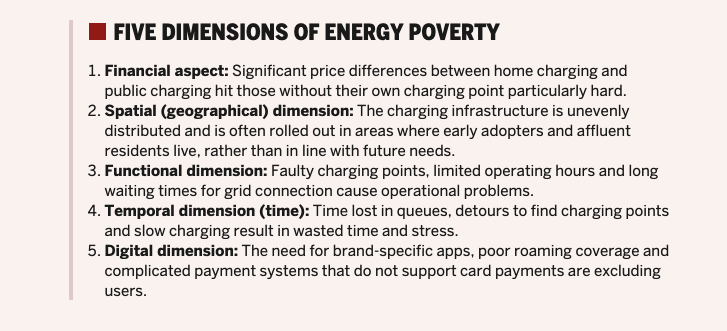
‘Laddfattigdom' or 'charging poverty’
In Sweden, too, there is growing awareness of the inequality between those who can charge their EV at home (low costs, reliability, time savings) and those who are dependent on public charging infrastructure
https://www.di.se/nyheter/det-nya-hotet-mot-elbilsrevolutionen-laddfattigdom/
https://www.nature.com/articles/s44333-026-00125-0
A northern California county that has become a hotbed of activism for those who sow doubts about the reliability of voting machines
plans to hire Tina Peters, the prominent Colorado election denier recently released from prison, to work on elections.
Clint Curtis, the top election official in Shasta county, told the Guardian he plans to hire Peters as a consultant to replace Brent Turner,
his top deputy, who has been on medical leave.
He said Peters would not have acc…
"Most Census Bureau reports identify the authors of the report and detail the reliability of the data they are using. This analysis did neither."
A new Trump administration analysis claims noncitizens voted in 2020. Experts are questioning its validity. - Daily Kos
https://www.dailykos.com/stories/2026/8/23/800087687/elections/a-new-trump-administration-analysis-claims-noncitizens-voted-in-2020-experts-are-questioning-its-validity/
Crosslisted article(s) found for physics.flu-dyn. https://arxiv.org/list/physics.flu-dyn/new
[1/1]:
- Reliability-Aware Hard--Soft Physics-Informed Neural Networks for Robust Learning of Challenging ...
Duc Tien Nguyen, Hang Tran, Trinh Minh Tuan, Nguyen Duc Manh, Dinh Gia Ninh
https://arxiv.org/abs/2607.19377 https://mastoxiv.page/@arXiv_mathNA_bot/116968180625937180
- Scale-Aware Learning of Chaotic Dynamics on Unstructured Meshes via Binned Spectral Losses
Kanad Sen, Romit Maulik
https://arxiv.org/abs/2607.19387 https://mastoxiv.page/@arXiv_csLG_bot/116968249440196254
- IteraSim RAG: A Multi-Stage Retrieval-Augmented Agentic Back-End for OpenFOAM-Based Computational...
Pratyush Kumar
https://arxiv.org/abs/2607.20346 https://mastoxiv.page/@arXiv_csCE_bot/116968118889811785
toXiv_bot_toot
Ever see or hear of a NetFRAME? They were a kind of elite and pricey PC server in the early/mid 1990s. They had a reputation for high availability and reliability in a market many mini/mainframe people considered replete with cheap junk (not entirely untrue).
In a water-flooded data center event I went through, they survived when their cheaper competitors did not. Here is what they looked like:
https://www.ebay.com/itm/267404416661
Physical Properties of 6.7 Million Galaxies from the DESI Bright Galaxy Survey: Spectral Fitting and Systematic Tests with Mock Spectra
Niu Li, Hu Zou, Jinfu Gou, Weijian Guo, Wenxiong L, Haoming Song, Jipeng Sui, Xi Tan, Yunao Xiao, Jingyi Zhang
https://arxiv.org/abs/2607.19162 https://arxiv.org/pdf/2607.19162 https://arxiv.org/html/2607.19162
arXiv:2607.19162v1 Announce Type: new
Abstract: We present a comprehensive analysis of the physical properties of galaxies in the Dark Energy Spectroscopic Instrument (DESI) Data Release 1 (DR1) Bright Galaxy Survey (BGS), based on full spectral fitting of $\sim 6.7$ million galaxy spectra. Using a customized spectral fitting pipeline, we derive key physical parameters including stellar mass, stellar velocity dispersion, stellar population age, dust attenuation, and emission-line properties. To quantify the reliability and systematic uncertainties of our measurements, we construct a large set of mock spectra that closely reproduce the observed properties of DESI data, including realistic noise and spectral features. By comparing the recovered parameters with the known inputs, we assess the performance of the spectral fitting as a function of stellar continuum signal-to-noise ratio (S/N, defined as the ratio of the median continuum flux to its associated error) and redshift. We find that stellar masses can be robustly recovered with negligible bias for spectra with $\mathrm{S/N} \gtrsim 5$, while low-S/N spectra ($\mathrm{S/N} \lesssim 5$) show a mild systematic overestimation of $\sim 0.1$ dex and increased scatter. Similar trends are observed for stellar population parameters, while emission-line fluxes are recovered with high accuracy and minimal bias. We further validate our stellar mass estimates by comparison with independent measurements from photometric spectral energy distribution fitting, finding good overall consistency within the expected systematic uncertainties. The value-added catalog presented in this work enables a wide range of statistical studies of galaxy evolution with DESI, and provides a foundation for future analyses.
toXiv_bot_toot
 @cdarwin@c.im