 @rasterweb@mastodon.social
2026-08-11 19:13:04
This is the weirdest article... it reads like something from the Onion.
"While driving last week I saw a young adult riding a bicycle. He was probably in his late teens or early twenties. I don't know him or his story, but when I saw him, I felt impressed. I think he reminded me a bit of myself when I wasn't old enough to drive."
 @hex@kolektiva.social
2026-07-02 07:40:30
There is more to #SolarPunk than solar panels and bikes. What we are talking about is being part of a living world. The hegemonic culture is one of hierarchical domination.
But many of the the cultures that hegemony suppresses bring a vibrancy to life. I don't buy yeast from the store, sealed in a plastic packet, a coffin for a living thing. I feed my sourdough. I am obligated to it, in a relationship with it, as the culture is reliant on me for it's survival. It speaks to me, with smell and color. I must pay attention. I have to learn it's nature, how it grows and eats at different temperatures informed by different times of the year. Mushrooms, yeast, kiefer, plants, independent things, things I can't control, life that is intertwined with my own.
But even my #bicycle speaks to me, which is something I hadn't considered until reading this and thinking about that framing.
It is not simply that "we need a different economic system." What we are talking about is a fundamentally different interpretation and experience of the world, from the hierarchical structure of death to a web of life, where even "inanimate" things become imbued with agency.
https://substack.com/app-link/post?publication_id=2936873&post_id=151655646
 @ncoca@social.coop
2026-08-27 08:23:53
Worth #reading this piece - a level-headed take on #China and how its changed.
https://www.chinafile.com/reporting-op…

 @pixelcode@social.tchncs.de
2026-07-24 13:04:49
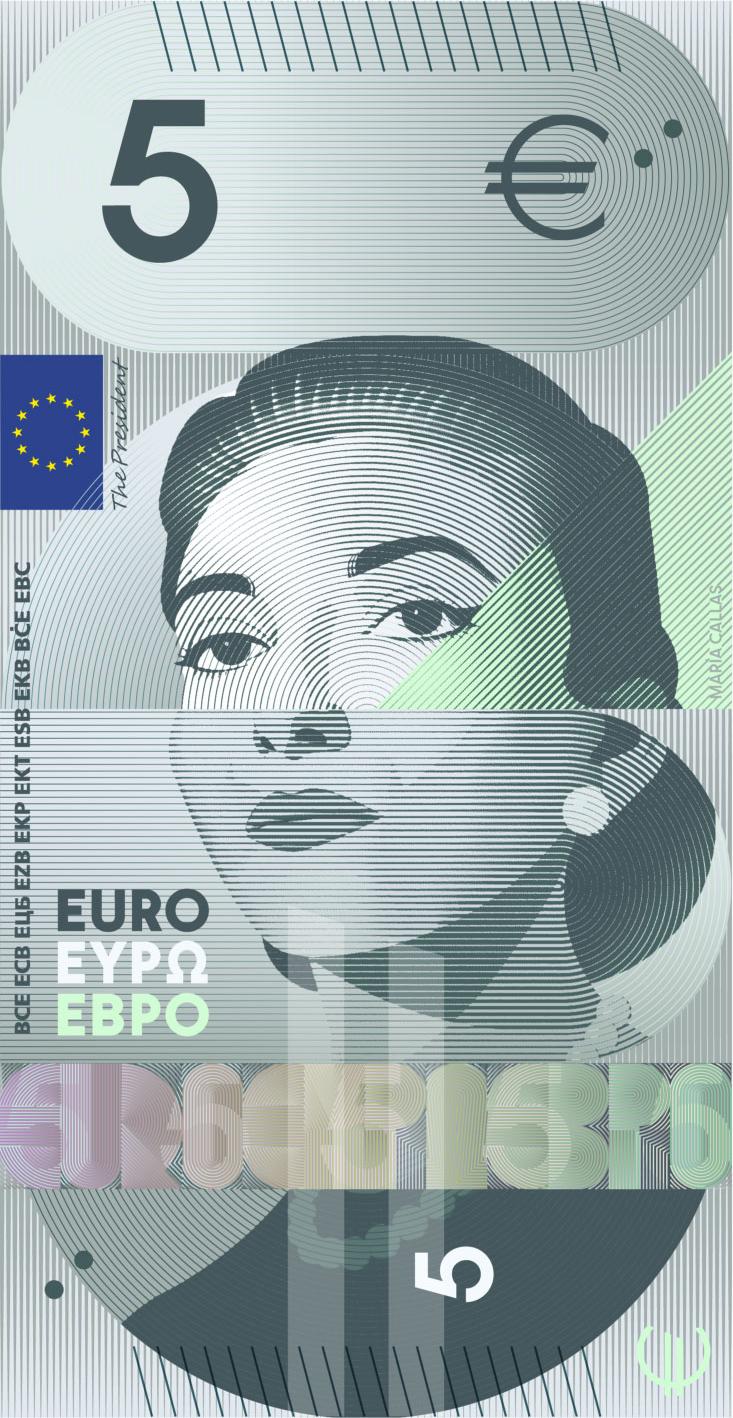
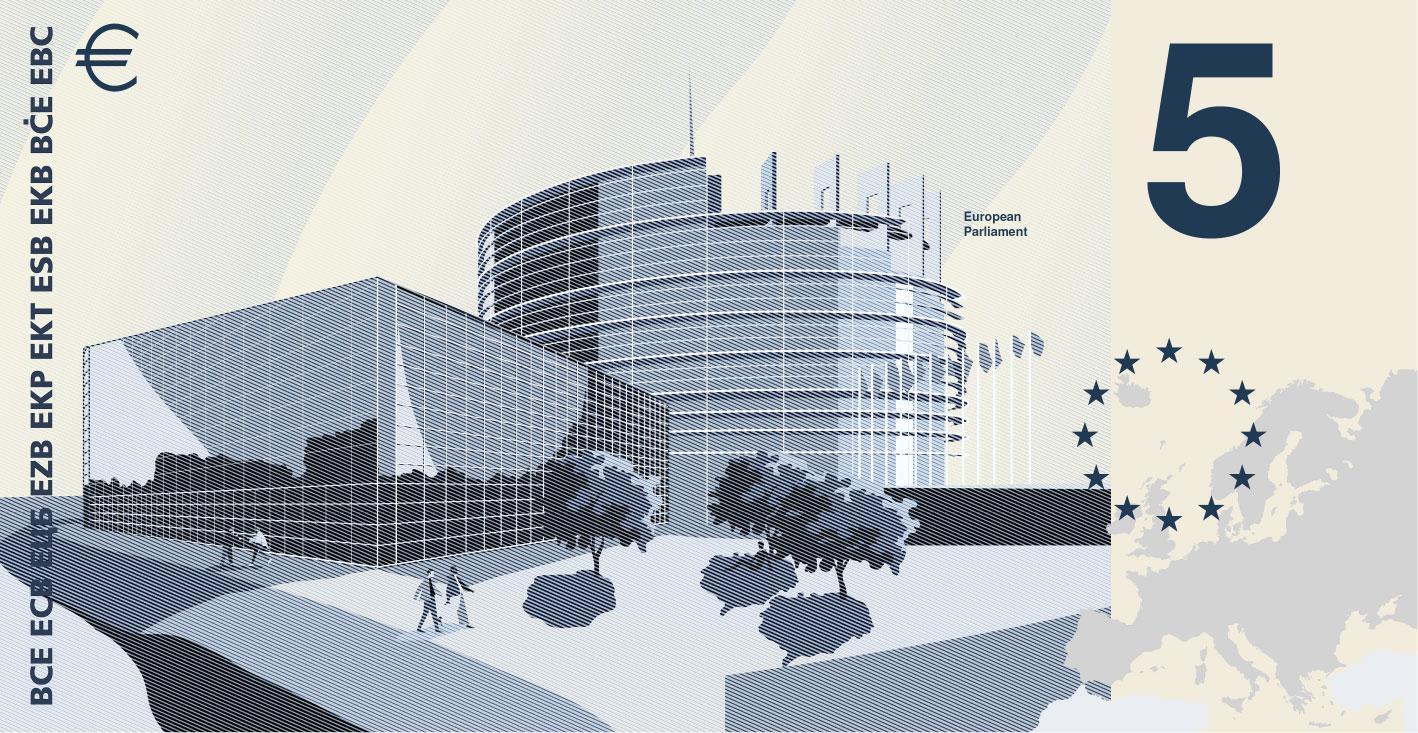
Design G suggests the most modern, banknote-looking front sides for the future #Euro banknotes. Though, I really don't like the corporate-like vector stock images on the backs.
Design B, on the other hand, features very clean and informative illustrations of the European institutions' buildings on the backs. Architecture and banknotes are a dream team. Though, I'm not a fan of th…
 @metacurity@infosec.exchange
2026-09-15 12:31:29
As the tech world grapples with AI doomerism, AI safety has swiftly become Washington’s most combustible political snarl.
Check out today's Metacurity for more on this developing story and other critical infosec developments you should know, including
--South Korea drafts security rules for autonomous AI agents,
--Human contractors are reading sensitive ChatGPT conversations,
--Manhattan DA seizes 12 deepfake porn domains,
--Cops searched 19k Flock cameras “for the lols,”
--US to receive six Black Axe suspects accused of $6.2m fraud,
--Hackers hijack HBO Max Reddit account to spread malware,
--Telus customer accounts exposed in yearlong breach,
--Microsoft issues emergency fix for broken Windows updates,
--Cisco email gateway zero-day exploited for root access,
--Coupang forms security committee after $460m fine,
--Florida DMV hacked after breach claiming 160m IDs,
--CrowdStrike hits record high as AI fears lift cyber stocks,
--Exein raises $270m at $1.7B valuation,
--Supreme Court blocks Trump’s mail-ballot changes,
--Marks & Spencer rebounds from devastating cyberattack,
--Anthropic wants Claude connected to your bank account,
--UK pubs get biometric age checks
https://www.metacurity.com/ai-safety-has-swiftly-become-washingtons-most-combustible-political-snarl/
 @arXiv_csAR_bot@mastoxiv.page
2026-08-13 07:31:17
APEX: Adaptive Expert Prefetching for Memory-Efficient Edge MoE Inference
Alish Kanani, Layan Badawi, Umit Y. Ogras
https://arxiv.org/abs/2608.11688 https://arxiv.org/pdf/2608.11688 https://arxiv.org/html/2608.11688
arXiv:2608.11688v1 Announce Type: new
Abstract: Mixture-of-Experts (MoE) models are attractive for edge deployment because they provide high model capacity while activating only a small subset of parameters per token, improving compute efficiency. However, MoE inference at the edge is fundamentally limited by memory. Expert parameters are large and often reside in off-chip memory due to capacity, cost, and power constraints, putting expert loading to the critical path. We present APEX: Adaptive Expert Prefetching, a predictive resource management framework that overlaps expert loading with useful computation. APEX introduces a lightweight prefetch router that predicts candidate experts before the attention block to dynamically fetch additional experts using a learned confidence model. This adaptive strategy achieves over 99% overlap accuracy, significantly outperforming fixed top-k prefetching techniques. APEX supports two execution modes: a correctness-preserving mode that guarantees exact routing semantics, and a stall-free mode that eliminates residual stalls by operating on available experts with negligible impact on application accuracy. Across multiple MoE models, the correctness-preserving mode reduces per-token latency by up to 26% and improves energy-delay product (EDP) by up to 41% over state-of-the-art baselines, while the stall-free mode provides additional efficiency gains with negligible impact on application accuracy. These results establish adaptive, confidence-driven expert prefetching as an effective approach for efficient MoE inference on edge systems.
toXiv_bot_toot
 @tiotasram@kolektiva.social
2026-09-15 07:31:34
Wish inspiration hadn't struck right at 1 a.m. when I have to teach tomorrow, but we'll see if I can get back to sleep now that I'm done with a draft of this story. Glad to have my first entry in my "incredulous young historians of the future" series actually written instead of just imagined. There are surely some typos ahead...
#SciFi #Writing #Technology #ShortStory
"The Age of Progress", a short story by Tiota Sram.
"Your assignment", said the teacher, "is to describe why the progressive vision of technology that gives us the name 'Age of Progress' today failed, and why it was actually a pessimistic view of technology. Your study guides have links to a few sources, but as usual you should synthesize information from at least two knowledge systems, and one of those shouldn't be family-based."
"Ugh", said Ye'xik, "this is gonna be tricky. Wasn't the whole problem with the Age of Progress that they were too optimistic about technology?"
"Well, they did talk a lot about the end of the world and extinction, and I did almost happen, right?" said Finan.
"Yeah, that's gotta count as pessimism, doesn't it?" Gedi chimed in.
"Well..." said Hallavia, with their usual deliberate tone, "I think it's not that simple, or at least it doesn't have to be."
The four of them were walking outside to have lunch, pondering the new assignment from this cycle's history and culture teacher. A brief silence fell as they pondered the Age of Progress.
"Maybe we should look at it through another history system?" offered Finan. "I mean, we've been learning about knowledge systems and lenses, and the 'Ages' lens of just one perspective with its own distortions, right?"
"My mab is working with my omeh on an oral history right now", said Gedi, "maybe I can use that as my second knowledge system? I'll see what they have to say about it!"
"We shouldn't all use the same knowledge systems though", said Ye'xik. "I think there's a bit of a thesis/antithesis thing going on here too? Like we were learning in ideas class?"
"Wait, I missed ideas last week", said Gedi, what's an antithesis?"
"It's just an opposite, really", said Ye'xik. "You take the thesis statement and construct any statement that contradicts it. The two form a pair, and then you can try to find a synthesis that combines both ideas."
"I didn't really get that part", Finan interrupted, "like, if they're contradictory, how could they be expressed together? Wouldn't you need to pick one that's true?... wait I guess maybe if you mixed different knowledge systems? But then would they really be contradictory?"
The group fell silent for a moment in thought.
Hallavi spoke up: "Incommensurate isn't the same as contradictory, I think. That's what it would be if you had two truths from different knowledge systems that didn't fit. Plus... not all knowledge systems have a concept of truth, or of contradiction?"
The group pondered this for a bit more.
"I think maybe there's lots of ways to be contradictory, even in a very logic-hungry knowledge system", said Gedi. "Then if your thesis and antithesis contradict in one way, you could find another sort out 'axis' in which they don't, and state your synthesis from there?"
"Oh, that makes sense", said Ye'xik.
"Anyways what were you saying about the Age of Progress, Ye'xik?" said Gedi.
"Wait", interrupted Hallavi, "Did that mashes sense to you, Finan?"
Finan had been silent, looking down at their feet, but replied "Oh yeah, thanks for checking Hallavi! I think I got the part about synthesis now, thanks Gedi. I was just thinking about optimism and pessimism more. Is that where you were going with this, Ye'xik?"
"Haha, yeah Finan, you got it", said Ye'xik. "Since optimism and pessimism can be opposites, does the teacher actually want us to form a synthesis of them?"
"Oh..." muttered Gedi, "that's a good idea."
"I think..." began Hallavi, pausing to collect their thoughts, "I think the teacher would have told us that, though. Obviously it's not a wrong way to approach this assignment because it incorporates pessimism, but teachers usually aren't too tricky. I think it's okay to be literal about the pessimism thing. And I think I have an idea..."
When Hallavi remained silent for a moment, Ye'xik opened their mouth to speak, but then looked at Hallavi and closed it again. Finan and Gedi were looking at Hallavi too. They pushed through the doors out to the meadow, and settled in their usual place to sit, pulling lunches out of their bags. Hallavi finally spoke up while the others were chewing: "The Age of Progress lasted from the Enlightenment to the Dim Times, and they believed that technology would always get better, no matter what. That's the progressive vision of technology our teacher was talking about. They thought it could solve any problem, and they wouldn't have to worry about weapons or extinctions or the climate or pollution or any of that stuff, because technology would eventually come up with a solution. They looked at the technology that solved problems like diseases or overcame engineering challenges and extrapolated too broadly, basically. That's the idea they had?"
The other three were all nodding their heads, knowing Hallavi needed room to think and put words together.
Hallavi continued: "So it seems like it's optimistic, because they thought it could do anything. But they were thinking about technology like I just talked about it: like an 'it' that could 'do'. That's not what we've been learning in our technology class. Invention is a social phenomenon, and technologies have both material and social bases, not to mention communities of practice and knowledge maintenance. So I think the idea of technological progress divorced from social participation is pessimistic, because it mythologizes technology in a way that makes it seem uncontrollable."
"Huh" said Gedi and Finan while at the same time Ye'xik said "mhmm".
Hallavi looked up shyly at the rest of them, but they were all looking back with admiration.
"I think you're right, Hallavi", said Ye'xik. "Or at least, that's probably what the teacher wanted us to puzzle out. Good thing they asked us to include two knowledge systems so we can each have our own perspectives to contribute, otherwise you'd go first and our presentations would all just be 'What Hallavi said'".
Hallavi blushed but Finan laughed "Hah! You're right and that Ye'xik."
Gedi was looking at their sandwich with some intensity. They looked at Hallavi then back at their sandwich. "It's like they thought they were strapped to an out-of-control rocket, when you put it that way", they said. "It must have been scary, really, to believe that technology was almost an entity, changing in an inevitable way. That word 'inevitable' really takes all the human agency out of it, doesn't it. And even though they kept saying that technology would inevitably solve problems, look at what the technologies they invented actually did!"
Finan shuddered. He added, "Really, it was their dominators who were saying it was inevitable wasn't it? Back then it wasn't like today where historians travel and sample all kinds of ideas, so the primary sources we're reading are almost all from dominators, right?"
Ye'xik responded "Yeah, I keep forgetting to account for that. It was such a weird and horrible time, it's kinda hard to believe everything we read and hear sometimes."
Gedi picked up the thread again "That makes it worse, right? All those dominators saying the stuff they're doing is inevitable, and lying to everyone's faces about it being progress and wonderful stuff, meanwhile two thirds of it is the most awful stuff there's ever been, I mean they could have literally killed everyone and ruined the whole planet, and they almost did."
"They did actually crush a lot of cultures beyond recognition so the survivors had to rebuild with only weak ties to their old traditions", said Hallavi with a quiet intensity.
They all were silent for a moment, pondering the horrors of a bygone age.
Finan broke the silence: "That's a terrible kind of pessimism, to believe that technologcal 'progress' is inevitable, at a time when most people are dominators somewhere in a hierarchy and the ones on top constantly talk about how technologies like medicines will 'save' the world while mostly inventing new technologies of violence. Everyone must have understood what they really meant based on the technologies they were actually developing and investing into. I think I still don't understand how the Age of Progress and the Dim Times could even happen".
"Yeah, and the pessimism is only part of our assignment", signed Ye'xik. "We still have to describe why the progressive vision failed, although I think maybe you just did a lot of that, Finan".
A gloom descended briefly, until Gedi said "Well, this assignment is supposed to take a week or two, right? Thanks to Hallavi we've already cracked the crux, I think, so we don't need to ruminate too much right this moment about ancient history, and we know things turned out okay in the end. Let's finish lunch and go climb a tree!"
 @radioeinsmusicbot@mastodonapp.uk
2026-08-13 10:19:46
🇺🇦 Auf radioeins läuft...
EELS:
🎵 I'm On Standby (Radio Edit)
#NowPlaying #EELS
https://open.spotify.com/track/3CE5Mnws5D0xuCvoZgbMO6
 @arXiv_qbioNC_bot@mastoxiv.page
2026-07-22 07:57:40
Eccentricity-Constrained CNN Training Reveals Adaptive Information Coding Around the Visual Field
Dylan M. Diaz, Margaret M. Henderson
https://arxiv.org/abs/2607.19316 https://arxiv.org/pdf/2607.19316 https://arxiv.org/html/2607.19316
arXiv:2607.19316v1 Announce Type: new
Abstract: In the primate visual system, center-preferring cortical populations have higher spatial resolution and overlap face- and word-selective regions while periphery-preferring populations have lower spatial resolution and overlap scene-selective regions. This "eccentricity bias" may reflect differential task-relevance: central vision may better support fine-grained tasks like face recognition and reading, while peripheral vision may better support scene understanding. To test whether eccentricity-dependent coding can emerge from natural experience, we used egocentric video and eye-tracking data from the Visual Experience Dataset (VEDB). We trained ResNet-18 models using contrastive learning (SimCLR) on frames modified to isolate different eccentricities (gaze-contingent fovea-only crops, periphery-only crops, and periphery-only crops with a NeuroFovea transform applied). We evaluated downstream task performance and model alignment with human fMRI data (Natural Scenes Dataset; encoding models). In-domain VEDB frame classification showed systematic differences between fovea- and periphery-only models across categories, indicating differential informativeness across tasks. On downstream classification, VEDB-pretrained models generalized better to scene categorization (Places365) than face recognition (VGGFace2), with fovea-only models stronger on both. Across visual cortex, VEDB-pretrained models matched neural predictivity of models trained on mid-sized non-egocentric datasets (ImageNet-100), suggesting egocentric data supports emergence of cortically-aligned representations. In scene-selective cortex (PPA, RSC), periphery-only models held a small but consistent advantage in explained variance over fovea-only models, suggesting these regions are aligned with peripheral statistics. Together, these results suggest egocentric experience may adaptively constrain cortical information processing.
toXiv_bot_toot
@tiotasram@kolektiva.social2026-08-11 23:25:20
Just finished "What Elephants Know" by Eric Dinerstein. Leaves me with very mixed feelings: it's a novel in many ways about Nepal, and I don't doubt that the author's experience living there gives him a not-insignificant window into the culture, plus there are multiple people mentioned in the acknowledgements as judging faithfulness to Nepali culture. I myself have no direct connection to the country, nor enough knowledge to see any clear inaccuracies in the writing, nor ways in which it directly disrespects the culture.
That said, my instincts say this is a portrayal of the culture and country that probably elides much about the downsides of foreign influence and the monarchy (something I naturally distrust as an anarchist). At minimum, the internal contradiction is clear between the police as an inept and dangerous institution when encountered directly, but as a clean and unproblematic way to resolve problems with criminals when the Maroons subplot needs wrapping up. This is typical of neoliberals who have begun to acknowledge the most obvious problems with police but who refuse to admit the necessity of police abolition. Furthermore, there's a strong thread of white saviorism thrown in, and a big piece of meritocracy to go along with it. This story presents only highly particular fictionalized solutions to the real structural problems facing the elephants and other animals it describes, and the solutions it imagines require reliance on institutions which are in the real world fundamentally untrustworthy.
I enjoyed learning about the ecology of the Nepali borderlands, and about the cultures surrounding elephants there, plus some of the diversity of religions and cultures that interact in the area, and the story was satisfyingly written in terms of the main character's trials and responses to them, if I disregard the issues mentioned above.
If anyone has recommendations for novels in English (including via translation) by actual Nepali authors, I'd love to hear them, as I'll be looking for that perspective to balance this one.
#AmReading #ReadingNow #Bookstodon