 @macandi@social.heise.de
2026-08-21 10:19:04
Susan Kare: Wie die Designerin die frühen Mac-Icons prägte
Die Grafikdesignerin Susan Kare gab Einblicke in die Entstehung der frühen Mac-Icons. Sie entwickelte unter anderem den Happy Mac und das CMD-Symbol.
ht…

 @cdarwin@c.im
2026-07-22 03:50:52
Alman is a simplified dialect of German designed to reduce the complexity of the language while maintaining mutual intelligibility with Standard German.
It systematically eliminates several complex grammatical features:
🔸Gender System: Uses a single article form for most contexts
🔸Case Markings: Removes most case-based inflections
🔸Noun Declensions: Simplifies noun endings across cases
🔸Job Titles: Eliminates gender-specific forms in occupational titles
The English home page…
 @arXiv_physicsinsdet_bot@mastoxiv.page
2026-08-21 08:04:41
PSEC6: an 8-Channel 40 GSa/s Waveform Sampling ASIC in TSMC 65nm with 10.24 GHz PLL
Ahan Datta, Andrew Arzac, Davide Braga, Gordon Chen, Troy England, Farah Fahim, Henry J. Frisch, Nathan Gehl, Mary Heintz, Sumin Kim, Ava Lalich, Jinseo Park, Nathaniel J. Pastika, Hector D. Rico-Aniles, Paul M. Rubinov, Xiaoran Wang, Y. M. Richmond Yeung
https://arxiv.org/abs/2608.19473 https://arxiv.org/pdf/2608.19473 https://arxiv.org/html/2608.19473
arXiv:2608.19473v1 Announce Type: new
Abstract: Picosecond level timing resolution is a prerequisite capability for improved coincidence matching, time-of-flight measurements, and secondary vertex reconstruction. Here, we present the specification, design, and simulation results for a new Application Specific Integrated Circuit (ASIC), called PSEC6, in the TSMC 65nm process. It features 8 channels, a maximum sampling rate of 40 GSa/s, a buffer length of 204.8 nanoseconds, and a 10.24 GHz Phase Locked Loop (PLL), which is the first of its kind in the 65nm CMOS process. The event readout rate is 32 kHz, with the digitization done by an off-chip Analog-to-Digital Converter (ADC).
Simulations predict a 4.0 GHz analog input bandwidth and 20 mW per channel during sampling; the 10.24 GHz PLL has a predicted jitter of 550 fs RMS at 15.7 mW. The paper describes the sampling architecture, chip signal paths, PLL design, and presents simulation results.
toXiv_bot_toot
 @geant@mstdn.social
2026-07-21 11:45:27
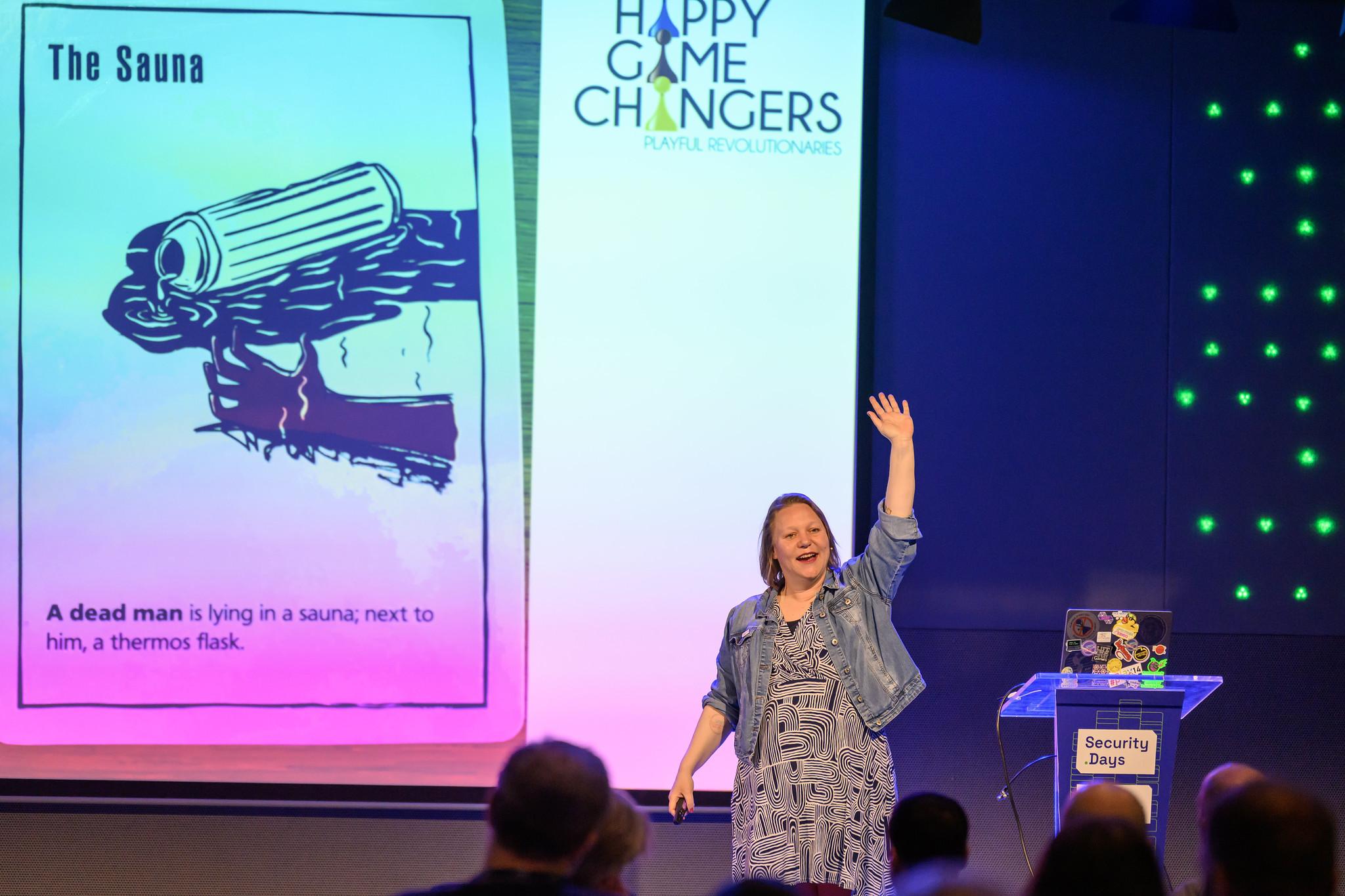
Nancy Beers' keynote at #SecurityDays 2026 had the whole room on its feet, playing games and laughing together.
We spoke with her recently to learn more about what "Play More Today. Secure Tomorrow" means for security culture, from how a simple box of LEGO bricks can make abstact discussions come alive, to why she believes cybersecurity can't exist in silos.
🔗 Re…
 @philip@mastodon.mallegolhansen.com
2026-07-20 20:14:37
@… Sorta funny though that the “Is this dangerous?” decision can be tipped simply by having a plausible explanation.
You’d think if the goal was to prevent bad actors from bringing things, they’d account for the fact that bad actors might have plausible explanations lined up as well.
 @ripienaar@devco.social
2026-09-20 07:53:18
Am home alone this weekend so you get to have a 2nd post in my AI Harness design series.
Today we discuss the Agentic Loop: how to write one, how context snowballs quadratically, how "thank you" can cost you multiple MB of traffic, how inefficient the statless protocol is (while also unlocking major capabilities)
We plug a basic tool into the loop and overall make a functional AI assistant with the possibility of outside access in 60 lines of code.
 @fanf@mendeddrum.org
2026-09-16 14:42:04
from my link log —
A design space exploration of async/await.
https://cel.cs.brown.edu/blog/design-space-async-await/
saved 2026-09-15 https:/…

 @grumpybozo@toad.social
2026-07-18 17:00:16
It must be galling to him that we no longer have the pre-Reagan pre-cable FCC regs and station norms that empowered the POTUS to monopolize the media in primetime.
I expect that many non-olds don’t even realize that was a thing. Once upon a time all TV was broadcast and most was network-affiliated or network-owned, and those all took the feed from the White House when it was offered. There was no escape... @…

 @niklaskorz@rheinneckar.social
2026-07-19 17:58:34
Ah yes, DHH is certainly who we should look towards for how to govern the NixOS foundation. /s
This blog post is the wildest shit I had to read in a while.
https://fzakaria.com/2026/07/18/how-to-piss-off-your-nix-friends
![A paragraph in a questionable blog post citing the famously openly racist DHH
> A clear vision, whether you agree with it or not, is refreshing. Someone who can say yes or no and is not simply stonewalled by design-by-committee. DHH had said it poignantly well: “Using open source software does not entitle you to a vote on the direction of the project.” [cite].](https://rheinneckar.social/system/media_attachments/files/116/947/928/494/216/048/original/30aaa9b6a4b197a3.png)
 @detondev@social.linux.pizza
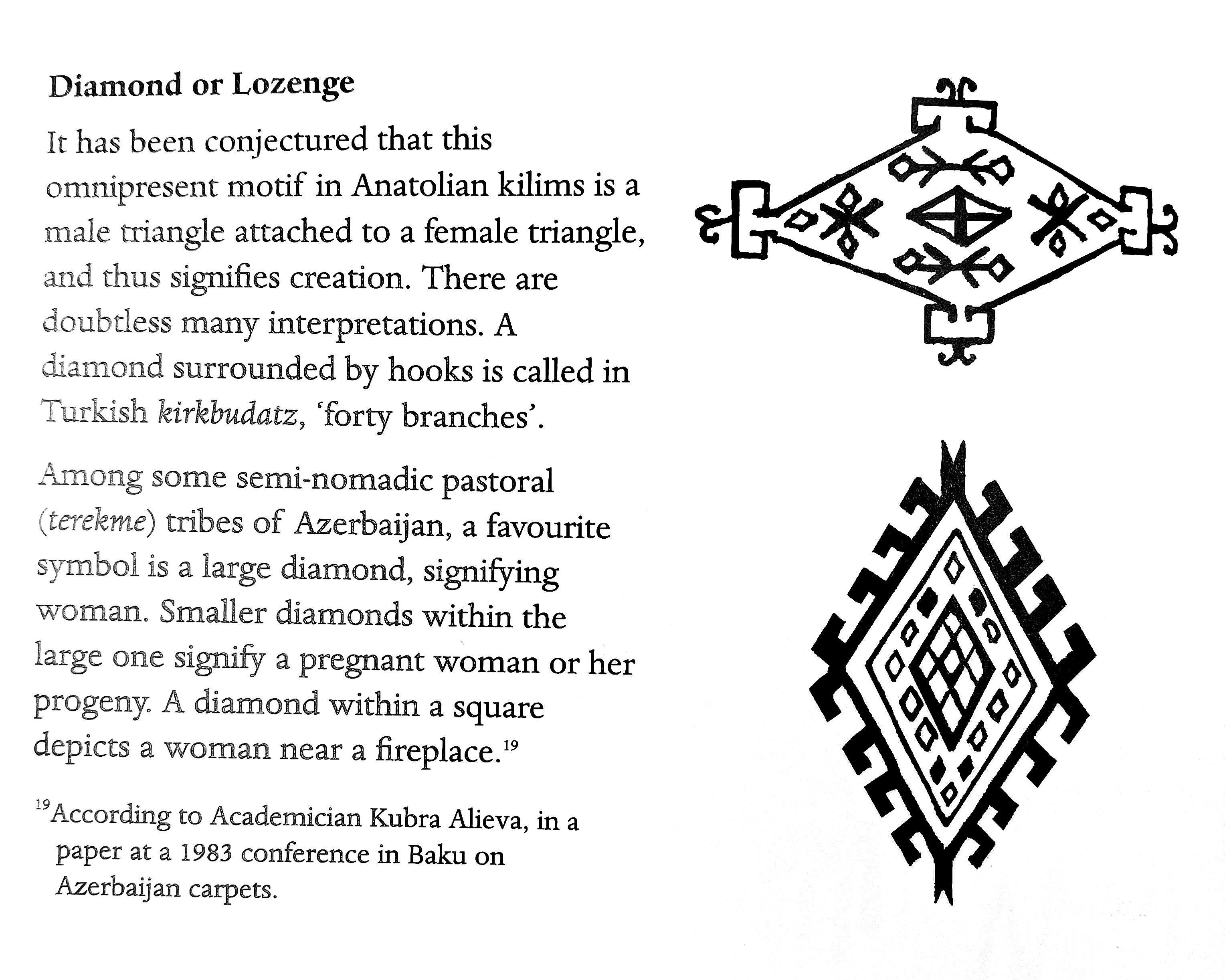
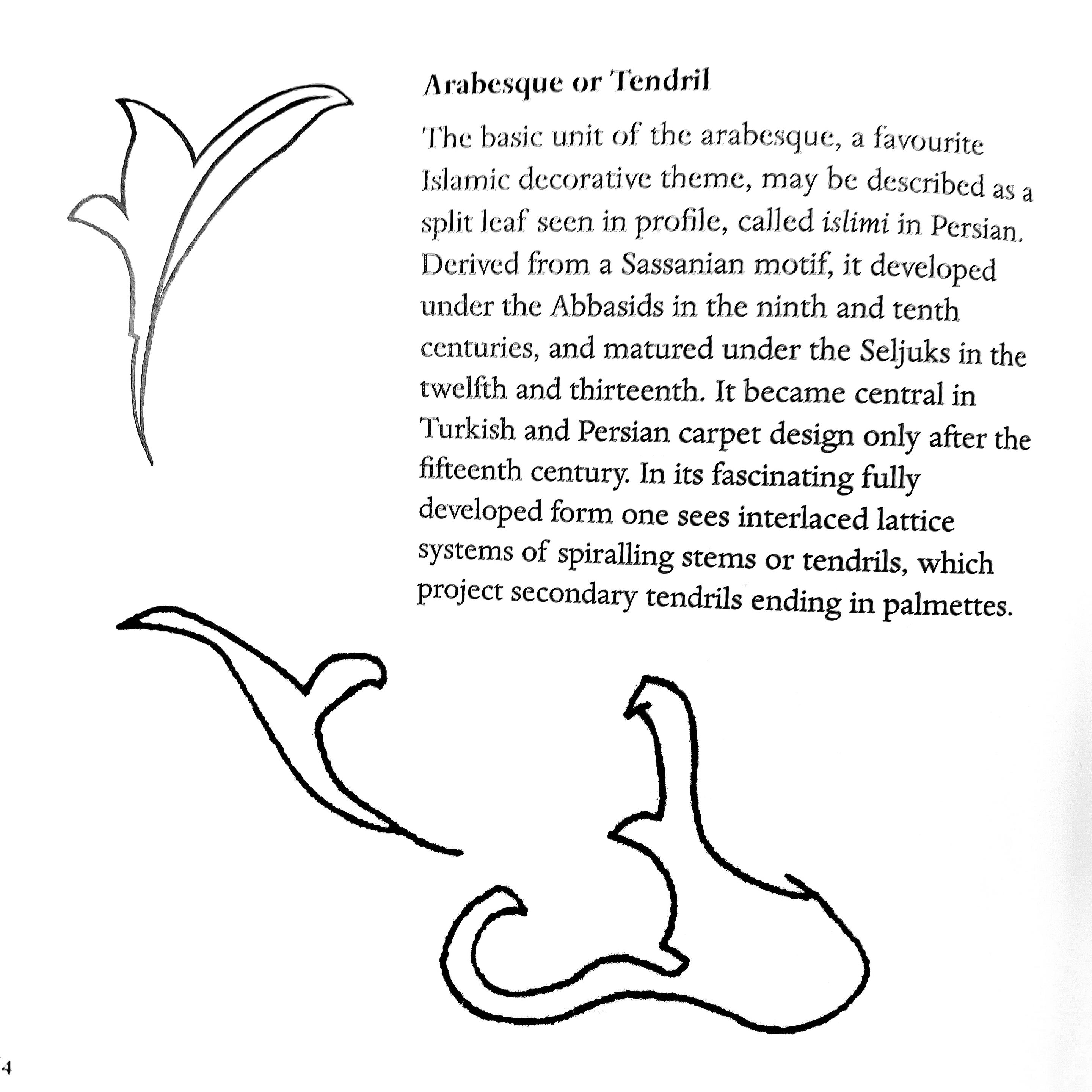
2026-07-14 19:01:01
A few highlights from the Turkish-Persian section of a random carpet symbolism book I skimmed while stopped at a random library in New Jersey a couple days ago