Wait, the for-profit not-for-profit privacy champion funded by half-a-billion dollars a year from Google is doing this? Do you think their then-head of public policy was actually telling the truth when she told me “we’re just another Silicon Valley tech company?” No, couldn’t possibly be. I’m sure there are some benefits of the doubt we could still dust off and send their way.
#Mozilla
Nothing has changed. -- Yet.
But we stand on the edge of inevitable economic cataclysm, such as not seen in our lifetimes.
It’s an odd, hold-your-breath moment,
waiting for what the International Energy Agency (IEA) says is now certain to happen:
an energy crisis so critical it will be the equivalent of the two oil crises in 1973 and 1979 and Russia’s 2022 full invasion of Ukraine, put together.
The IEA says it’s already too late to prevent this impending ener…
Upon reflection, the single semester of Capoeira I took as a PE elective in college has to be one of the must useful college classes I took in terms of applications to parenting. Learning how to use concentric momentum and transfer it into other movements for standing up from prone or lying/sitting from standing is amazingly useful.
Series B, Episode 10 - Voice from the Past
BLAKE: [V.O.] It's only a couple of years since it was abandoned. Under terms of the interplanetary mining agreement the company was bound by law to leave fuel and other...
VILA: Blake, you alright?
https://blake.torpidity.net/m/210/272 B7…
Event: WebinAAR on Religion and Museums
Co-Sponsored by The Association for Public Religion and Intellectual Life (APRIL)withSB Rodriguez-Plate, Sarah Dees, Erika Gault, and Hussein Rashid This is the second of our “Religion and America at 250” webinAAR series that will engage central questions around the meaning of religion, the meaning of America, and the intersections of those terms and with special consideration of the 250th anniversary of the United States.
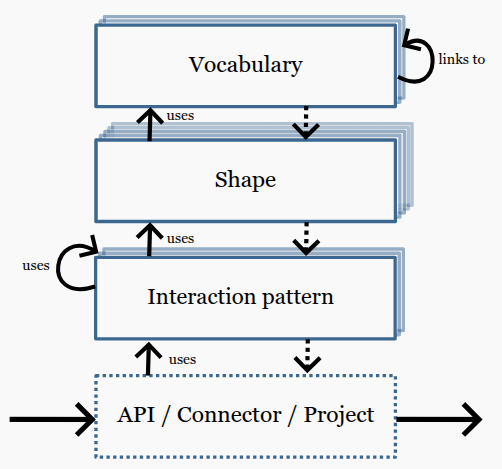
I've started telling people that the biggest change websites can make in terms of improving environmental sustainability, is to use clear, semantically rich, text mark-up along with well specced public APIs.
This will reduce, to some unknown aggregate, the amount of power and resources used by current and future agentic systems when interacting with them.
Sources: OpenAI is offering PE firms a guaranteed minimum return of 17.5% and early access to new models to secure JVs, an improvement on Anthropic's terms (Reuters)
https://www.reuters.com/business/openai-sweetens…
foldoc: FOLDOC entries (2002)
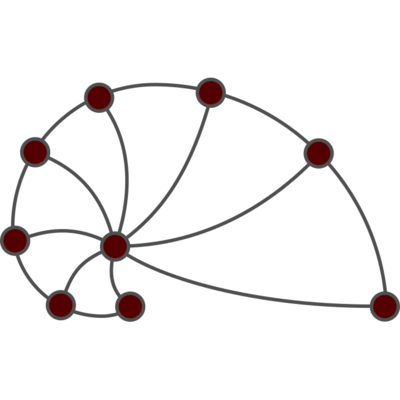
A network of hyperlinks among entries in the Free On-line Dictionary of Computing (FOLDOC, www.foldoc.org), an online dictionary of acronyms and technical terms for computers. An edge points from i to j if the term j is referred to in the entry for term i. Edge weight denotes number of uses of the same term.
This network has 13356 nodes and 120238 edges.
Tags: Informational, Web graph, Weighted
In the Netflix/Spotify/Amazon era,
many of us access copyrighted works purely in digital form
– and that means we rarely have the chance to buy them.
Instead, we are stuck renting them,
subject to all kinds of terms and conditions.
And because the content is digital,
reselling it,
lending it,
even preserving it for your own use
inevitably requires copying.
Unfortunately, when it comes to copying digital media,
US copyright l…
TFW when a post breaks containment and you get the replyguys explaining to you in uncertain terms how you're wrong
I've mentioned it before, and I'm sure I will again, but, as much as there's a reason why I reject Christianity, there were also a lot of good things. Churches have governing bodies (with varying degrees of democratic representation) that guide the ministry (preaching and actions) as well as managing logistics (building maintenance, accounting, etc). This provides opportunities for self-governed collective action.
Quakers are the most radical in terms of this, and are basically anarchists. Quaker circles often meet at people's houses and can be as small as 3 people. There is often no leadership. A Quaker service could easily just be everyone sitting in a circle and someone talking at one point.
I grew up in a Presbyterian church, and one of my first jobs (at 11 or 12) was landscaping there. Within the church there were a lot of different trades, which meant that you could volunteer time and learn basically any kind of maintenance. Basically everything that needed to be done was done in-house. This also meant that if you needed a plumber, an electrician, etc, that you could pick one from within the church.
I remember painting the church, learning how to paint, with a bunch of other members of the congregation at a work party. I also remember being volunteered for child care during choir. There were a few rooms around that were used for different things, such as music practice. But these rooms could be made available for any type of community activity. This can actually include community organizing. In fact, Seattle GDC was offered an occasional space for organizing in a church (we didn't take it, but appreciated the offer), and that same church hosted a lot of other community events. I actually went to a queer relationships skills class once hosted in a church, which was great.
What I'm saying is that churches often act as a kind of parallel society up-to-and-including acting as dual power structures....
TIL that some select economies go like this in terms of nominal GDP:
USA - 30 trillion USD
EU - 21 trillion
China - 19 trillion
India - 4 trillion
UK - 4 trillion
Mercosur - 3 trillion
Russia - 2.5 trillion
EU candidates - 2 trillion (although most of it is Turkey)
EFTA - 1.5 trillion
As a comparison, the whole of Africa gets to about 3 trillion.
Rethink Efficiency Side of Neural Combinatorial Solver: An Offline and Self-Play Paradigm
Zhenxing Xu, Zeyuan Ma, Weidong Bao, Hui Yan, Yan Zheng, Ji Wang
https://arxiv.org/abs/2602.20730 https://arxiv.org/pdf/2602.20730 https://arxiv.org/html/2602.20730
arXiv:2602.20730v1 Announce Type: new
Abstract: We propose ECO, a versatile learning paradigm that enables efficient offline self-play for Neural Combinatorial Optimization (NCO). ECO addresses key limitations in the field through: 1) Paradigm Shift: Moving beyond inefficient online paradigms, we introduce a two-phase offline paradigm consisting of supervised warm-up and iterative Direct Preference Optimization (DPO); 2) Architecture Shift: We deliberately design a Mamba-based architecture to further enhance the efficiency in the offline paradigm; and 3) Progressive Bootstrapping: To stabilize training, we employ a heuristic-based bootstrapping mechanism that ensures continuous policy improvement during training. Comparison results on TSP and CVRP highlight that ECO performs competitively with up-to-date baselines, with significant advantage on the efficiency side in terms of memory utilization and training throughput. We provide further in-depth analysis on the efficiency, throughput and memory usage of ECO. Ablation studies show rationale behind our designs.
toXiv_bot_toot
foldoc: FOLDOC entries (2002)
A network of hyperlinks among entries in the Free On-line Dictionary of Computing (FOLDOC, www.foldoc.org), an online dictionary of acronyms and technical terms for computers. An edge points from i to j if the term j is referred to in the entry for term i. Edge weight denotes number of uses of the same term.
This network has 13356 nodes and 120238 edges.
Tags: Informational, Web graph, Weighted
Going to Rise of the Tomb Raider (2016) from #TombRaider (2013) feels like such a leap in quality. I guess it's mainly a big increase in budget, but not only is the sequel competitive with today's games in terms of graphics (while being much lighter on the hardware, thanks to no ray tracing), they also took all game mechanics of the predecessor and made them much more mature.
"As I entered, I was told of an astonishing event last night where Trump's Commerce Secretary Howard Lutnick told the audience that, in terms of Europe's economy, "you're dead"."
https://www.bbc.com/news/articles/cm24vjvy3n1o
UNBELIEVABLE
I spent way too much time writing up this Terms of Service for my website.
By viewing this website, you agree that I have permission to inject words, images, and other content into your brain. 1400 words - 7 minutes
https://felix.dognebula.com/art/terms-of-service.html…
Setapp Mobile, one of the first alt iOS app stores launched in 2024 after the EU's DMA, plans to shut down, blaming "still-evolving and complex business terms" (Tim Hardwick/MacRumors)
https://www.macrumors.com/2026/01/15/setapp-mobile-eu-app…
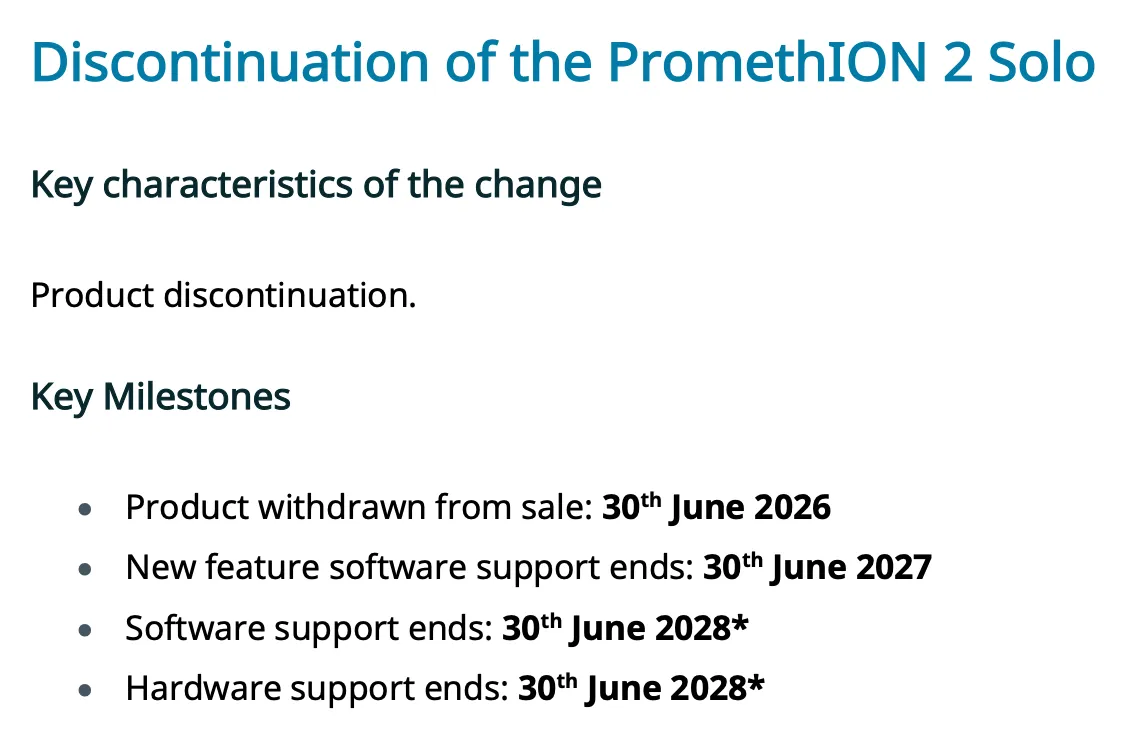
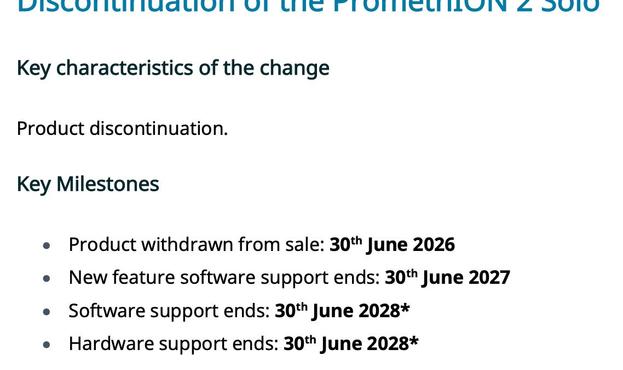
@… to discontinue P2 Solo #sequencer
this is surprising, although I can imagine selling sequencer integrated with computer (P2i) is way more profitable (and you get to charge for support on annual basis), so probably P2S reduces their profit from larger seque…
Francesca Hong interview…
“This campaign is about reclaiming the power of sewer socialism — how much it delivered for communities in terms of climate and clean water and investing in public education. This was a time where people saw that there can be a government for good.”
https://jacobin.…
I've been thinking more about this AI stuff in terms of industry impact. What I think will happen is that upward mobility will stall for a lot of devs (no more promotions), and there will be no new devs coming in.
Part of improving yourself is knowing that, one day, you'll likely pass your knowledge, responsibility, and more on to another person so you can pursue new and different challenges.
You'll essentially see folks stuck on a treadmill going nowhere until they f…
He's right about the customs union. But rejoining the EU would not be on the same terms we had when we left it. A generally bad and distracting idea.
Schengen, on the other hand would be worth considering.
Sadiq Khan says Labour should pledge to rejoin EU - BBC News
https://www.bbc.co.uk/news/articles/c62g2…
We have updated our Terms of Service. Pray we do not update them further
I'm really proud of my little AI project. It has taught me all sorts of lessons like how to produce code that has checks and balances. Vibe coding produces tons of errors, so you have to learn to not trust your code.
Part of my checks and balances was to codify terms of service. When Meta bought Moltbook, the lawyers were quick to publish new T&Cs. Instead of just updating one agent, I built a framework where all agents periodically update their T&Cs, then send a coding req…
Requests are being spread on fediverse to use hashtags not inline but at the end, because screen readers. I am aiming for accessibility.
At the same time, I like using hypertext in full and not as a digital copy of printed materials, and highly value terms being links when first used, not with the main expectation that they are followed, but for clarification (eg. of definitions) and semantic linking.
Can and should I indicate such "soft" (non-intrusive) links in HTML?
Untied Ulysses: Memory-Efficient Context Parallelism via Headwise Chunking
Ravi Ghadia, Maksim Abraham, Sergei Vorobyov, Max Ryabinin
https://arxiv.org/abs/2602.21196 https://arxiv.org/pdf/2602.21196 https://arxiv.org/html/2602.21196
arXiv:2602.21196v1 Announce Type: new
Abstract: Efficiently processing long sequences with Transformer models usually requires splitting the computations across accelerators via context parallelism. The dominant approaches in this family of methods, such as Ring Attention or DeepSpeed Ulysses, enable scaling over the context dimension but do not focus on memory efficiency, which limits the sequence lengths they can support. More advanced techniques, such as Fully Pipelined Distributed Transformer or activation offloading, can further extend the possible context length at the cost of training throughput. In this paper, we present UPipe, a simple yet effective context parallelism technique that performs fine-grained chunking at the attention head level. This technique significantly reduces the activation memory usage of self-attention, breaking the activation memory barrier and unlocking much longer context lengths. Our approach reduces intermediate tensor memory usage in the attention layer by as much as 87.5$\%$ for 32B Transformers, while matching previous context parallelism techniques in terms of training speed. UPipe can support the context length of 5M tokens when training Llama3-8B on a single 8$\times$H100 node, improving upon prior methods by over 25$\%$.
toXiv_bot_toot
Dear Mr @…, I wish to protest in the strongest possible terms about the graphic for this week's #ThePlaylist, cos of wot it makes my podcast player's dropdown look like it has a glitch with a great big vertical line through it.
Yours etc etc, A Late Kate
"The Pentagon is pushing four AI companies to let the military use their tools for "all lawful purposes," including in areas of weapons development, intelligence collection and battlefield operations, but Anthropic has not agreed to those terms and the Pentagon is getting fed up after months of negotiations, according to the Axios report."
Anthropic is not ruthless enough, apparently.
[Paraphrasing Felix Bloch speaking to Heisenberg]...space was simply the field of linear operations.
[Heisenberg] Nonsense, space is blue and birds fly through it.
[Bloch, explaining] What he meant was that it was dangerous for a physicist to describe Nature in terms of idealised abstractions too far removed from the evidence of actual observation.
Tell it! Yay Heisenberg!
#Foundation
I wonder: Prompts and "skills" and whatnots for "AI" are written as if you were talking to a person. Has anyone seen structured studies about whether that form of flourish is actually beneficial for the inference or if that's just the anthropomorphization kicking in hard?
Like does just dropping the key terms into the prompt work just as well or worse or better? Would love to see some actual studies.
Federal Judges Are Done With The Deference: Courts Call Out Admin’s Immigration ‘Bullshit’ In Increasingly Pointed Terms https://www.techdirt.com/2026/02/04/federal-judges-are-done-with-the-de…
Well, now that it has happened we can all know, based on actual concrete proof, that not a single person in the US military hierarchy obeys the law that requires the refusal of unlawful/unconstitutional orders.
We have transitioned from a military under Constitutional and statutory limitations to a military that is a Republican Guard, or in older terms, a Praetorian Guard.
If we ever do, if ever, return to a nation of laws then every person in the entire military hierarchy is goi…
Scottish Government Value for Money team: I've heard some worrying information about how this team is influencing government grants, to restrict provision for maternity pay, etc.
If anyone has any concrete information about this team, I would appreciate it if you would let me know.
https://w…
foldoc: FOLDOC entries (2002)
A network of hyperlinks among entries in the Free On-line Dictionary of Computing (FOLDOC, www.foldoc.org), an online dictionary of acronyms and technical terms for computers. An edge points from i to j if the term j is referred to in the entry for term i. Edge weight denotes number of uses of the same term.
This network has 13356 nodes and 120238 edges.
Tags: Informational, Web graph, Weighted
Nvidia says it will sell 1M GPUs and a broad mix of other chips, including new Groq chips, to AWS by the end of 2027; financial terms were not disclosed (Stephen Nellis/Reuters)
https://www.reuters.com/business/retail-con…
#Blakes7 Series C, Episode 09 - Sarcophagus
AVON: I didn't hear any terms, just something about "pets."
ALIEN: Cally would want you to live, I know that.
AVON: It must get tiresome for you, knowing so much.
VILA: Avon! Say you'll do as she says.
tracking IT terms over time
2006: “mock data”
2026: “agentic content-workstream synthesis”
Ofcom fines 4chan £520K for OSA violations, including a £450K penalty for failing to implement age assurance checks, giving it until April 2 to implement them (Mizy Clifton/Politico)
https://www.politico.eu/article/uk-online-safety-regulator-f…
Just finished "Song of A Blackbird" by Maria van Lieshout. It's an excellent and extremely timely historical fiction graphic novel about rediscovering a family connection that was severed by war, and the Dutch Resistance figures under Nazi occupation who saved many lives, in some cases at the cost of their own.
Despite being fiction, it's very closely grounded in historical facts, and the inclusion of photographs within the illustrations is really cool.
Now is an interesting time to be thinking about the fates of Nazis, collaborators, their victims, and the resistance, as well as how we remember them all. I especially liked the section at the end about the real historical figures and their fates. So "fascinating" that none of the Nazis were executed or died in prison (mostly they did serve long terms before their release), even those who oversaw mass killings and deportations to concentration camps. I'm a prison abolitionist and not a fan of state capital punishment, so on *some* level this seems like an outcome I should be happy about, but I somehow doubt that the state was this lenient for all prisoners during this time period...
#AmReading #ReadingNow
If you are an anti-fascist, you are against petroleum. Petroleum funds fascism globally. It is at the heart of the military industrial complex driving global imperialism, from both the US and Russia. Motonormitivity is fascist, both in it's elitist roots and in it's ties to historical fascism (Hitler hated bikes, just on principle). Oil is militarism.
Oil is the dominant resource which drives war, both in terms of it being the primary spoil wars are fought over and in terms of fueling the military vehicles and weapons that carry out those wars. Practically every war since (and including) WWII has been over oil. Genocides are carried out to secure oil. Gaza is over oil, in more ways than one.
Oil is the absolute enemy, and AI is simply an extension of that: an attempt to atomize us so we can't resist the oil-centric global order, one last grasp at the control over our lives oil has given to those whose power is now threatened by a solar punk future.
"I haven't written for a few weeks now. As I write the closing chapter and begin rewriting previous sections, everything feels both more distant and more immediate. The working title [Kairos] has only continued to feel more and more resonant, both during the writing and during my pause."
Now is the time to resist by making something different, by creating a world fundamentally opposed to these systems of oppression.
This is the last in my Kairos series. From here on out I'll be editing to try and make it more of a book than a series of posts. Thanks to everyone who has helped so far. All editing is welcome (typos, spell checks, questions and challenges). Between ADHD and dyslexia, it's always hard for my brain to notice mistakes in my own text so I always appreciate the support of those who can.
https://anarchoccultism.org/building-zion/kairos
In his first term, Trump appointed a record-setting 54 federal appellate judges.
Circuit judges are nominated by presidents and, if confirmed by the Senate, serve lifetime appointments.
This analysis provides an early look at how those appointments will likely reverberate nationwide in terms of dismantling or failing to uphold environmental laws and policy, legal scholars said.
“Long term, it’s going to set a lot of precedent that pushes the law away from environmental pr…
Claude, the AI model developed by Anthropic, was used by the US military during its operation to kidnap Nicolšs Maduro from Venezuela,
a high-profile example of how the US defence department is using artificial intelligence in its operations.
The US raid on Venezuela involved bombing across the capital, Caracas, and the killing of 83 people, according to Venezuela’s defence ministry.
Anthropic’s terms of use prohibit the use of Claude for violent ends, for the development o…
Anthropic says new DOD "contract language" made "virtually no progress" on preventing Claude's use for mass domestic surveillance or fully autonomous weapons (Axios)
https://www.axios.com/2026/02/26/anthropic-rejects-pentagon-ai-terms
None of the age verification options are perfect in terms of protecting information, providing access to everyone, and safely handling sensitive data.
That’s just some of the reasons that EFF is against age-gating mandates,
-- and is working to stop and overturn them across the United States and around the world.
http…
Admin official: Pentagon may sever Anthropic relationship over AI safeguards; Anthropic says only mass surveillance and fully autonomous weapons are off limits (Axios)
https://www.axios.com/2026/02/15/claude-pentagon-anthropic-contract-maduro
US FTC chair urges Tim Cook to review Apple News' terms and curation after a study claimed the app promoted "leftist outlets" and suppressed conservative ones (Michael Acton/Financial Times)
https://www.ft.com/content/0c25de53-4668-4ddf-9e28-f8c4fc34940e
Donald Trump has bragged about building a political war chest exceeding $1.5 billion
— a staggering sum that he can wield at his whim to shape November’s midterms and the 2028 race to succeed him.
Trump’s stockpile
— which dwarfs any amounts raised by his predecessors in their second terms
— is not easy to precisely calculate
given that much of it is being collected by groups that aren’t required to file regular financial disclosures.
Current and former st…
Instagram says it will alert parents if their teen repeatedly searches for terms related to self-harm or suicide in the US, the UK, Canada, and Australia (Jess Weatherbed/The Verge)
https://www.theverge.com/tech/885110/meta-instagram-parent-alert-teen-…
 @aral@mastodon.ar.al