 @cdarwin@c.im
2026-05-28 04:32:28
After 88 days of near-total internet blackout in Iran,
long-delayed messages, images and poems flooded phones and social media feeds at about 5pm on Tuesday,
when still-limited connectivity flickered back to life.
The first reactions, however, were not celebratory.
Many new posts were threaded with scepticism, anxiety and anger.
Ellie*, 42, an artist from Tehran, was able to connect for the first time since 28 February.
“I lit a cigarette, played SoundCloud…
 @shriramk@mastodon.social
2026-07-28 17:00:49
0/ At the AIMCS (AI for Math and CS) workshop at FLoC 2026, Swarat Chaudhuri ran a really fun panel on "How should the Formal Methods community respond to AI progress?" He put a lot of thought into very good questions, so here are my answers to them: ↵
 @gratianriter@bildung.social
2026-06-29 09:53:24
Großartiger Artikel von Emily Bender ("stocchic parrot") und Nanna Inie zur Frage, wie man über "KI" sprechen und gleichzeitig die Anthropomorphisierungsfalle umgehen kann:
https://buttondown.com/maiht3k/archive/how-to-talk-about-ai-wit…


![who’s right? → is the machine output correct?
they produce results → the team uses it [the system] to produce results](https://storage.gra.cloud.ovh.net/v1/AUTH_91eb37814936490c95da7b85993cc2ff/bildungsocial/media_attachments/files/116/832/783/777/055/147/original/c2350249badb2921.png)
 @tiotasram@kolektiva.social
2026-05-24 01:01:54
Just ran across this article on the perpetrator's history with law enforcement:
#AbolishThePolice #PoliceAbolition #Anarchy
 @jonippolito@digipres.club
2026-05-26 16:57:49
Prompt engineering is a moving target. Here's my rundown on how GPT-5.5 and Claude 4.7 reward clarified output over magical incantations, and what it means for AI literacy https://www.linkedin.com/posts/jonippolito_the-lates…
 @inthehands@hachyderm.io
2026-05-22 15:41:42
IT WAS IN THE TRAINING DATA. Your test gave the machine a pile of correct answers and free license to plagiarize.
I remember people being wowed that Claude Code could implement a complete C compiler. But somehow it doesn’t sound quite as impressive when you phrase it as “given every existing C compiler as input, the LLM can produce a C compiler as output.”
2/
 @jswright61@ruby.social
2026-07-07 12:24:16
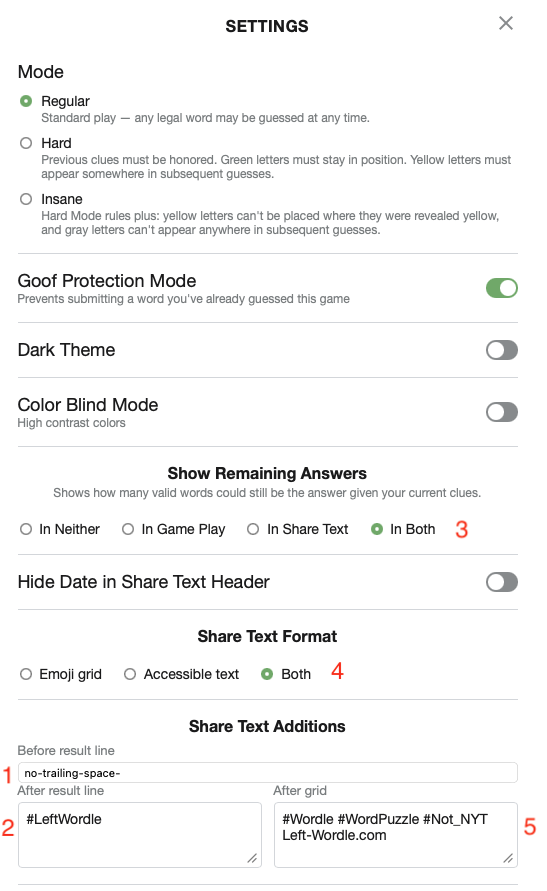
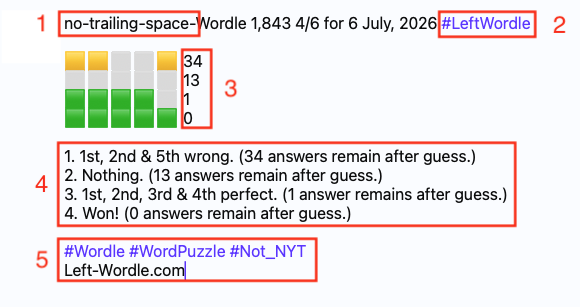
I was asked by @… how some of the elements of the #LeftWordle Share Text that gets posted are modified. I have attached two images. The first is the settings modal which is accessed by clicking the gear icon to the far right on the header line. The second is an example of th…
 @bencurthoys@mastodon.social
2026-06-16 08:45:24
I saw this and I instantly thought of @… because somehow he had become the most salient reference node for revolting arthropods and we all know why.
https://www.instagram…
 @tiotasram@kolektiva.social
2026-07-12 16:28:07
Since it was relevant to a discussion I just had on here and is something most people probably haven't thought about much (unless you've taken one of a handful of philosophy classes), I thought I'd try to lay out a key piece of Descartes' Meditations (#philosophy
@jswright61@ruby.social2026-06-22 12:01:11
Questions for Wordlers out there.
These questions refer to displaying remaining answers, either in Game Play after each turn, or in the text that I share with others. (examples in reply)
Boosts are much appreciated!
#Wordle #LeftWordle