 @Techmeme@techhub.social
2026-07-16 15:35:42
Filing: a Chinese company says a fund in which its unit invested paid ~$420M for an indirect 0.8265% stake in DeepSeek, implying DeepSeek is valued at ~$52B (Eduardo Baptista/Reuters)
https://www.reuters.com/world/asia-pacific
 @cdarwin@c.im
2026-07-16 20:31:36
Water levels in Lake Powell,
the second-biggest reservoir on the beleaguered Colorado River,
are in danger of falling so low that its dam can no longer generate hydropower,
according to a federal analysis released Wednesday.
The new “most probable” forecast from the Bureau of Reclamation projects that
the height of water in Lake Powell,
which sits on the border of Utah and Arizona,
will fall to 3,491 feet by March.
That’s just one foot above

 @Mediagazer@mstdn.social
2026-09-15 23:40:54
Filing: the DOJ says states suing to block the WBD deal must post a "proper bond" to cover potential damages, backing Paramount's request for a $1.88B bond (Winston Cho/The Hollywood Reporter)
https://www.hollywoodre…
 @burger_jaap@mastodon.social
2026-07-17 05:35:23
“Buildings are the single largest energy consumer in Europe. Transposition and implementation of the #EPBD is key to boosting the EU's current very low annual energy renovation rate (1%), reducing bills for citizens and businesses and the EU's dependence on imported fossil fuels, and achieving a zero-emission and fully decarbonised building stock by 2050.”

 @UP8@mastodon.social
2026-07-17 01:13:40
Twilight 5K runner with hair up in the air -- hope the air clears up well for Trackapalooza 2026 this weekend!
#photo #photography #running
 @Techmeme@techhub.social
2026-07-17 21:55:57
The Philadelphia Semiconductor Index sank ~10% for the week, its largest weekly fall in over a year, and is now down ~20% from its late-June all-time high (Reuters)
https://www.reuters.com/world/asia-pacific/chipmakers-other-h…
@cdarwin@c.im2026-08-14 20:48:32
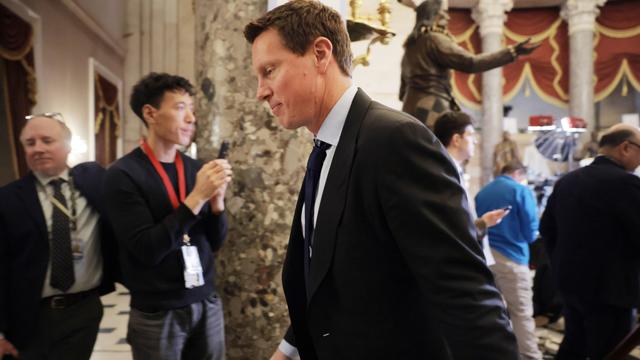
Roughly a quarter of legislators on Capitol Hill have traded individual stocks this term,
with some buying and selling millions of dollars in shares.
Since the start of this term in January 2025, members and their families have collectively traded $160 million to $664 million in individual stocks,
according to a New York Times analysis of data collected from members’ required financial filings by 2iQ Research, an analytics firm.
Members are required to disclose their…
 @Mediagazer@mstdn.social
2026-08-13 23:05:44
Filing: WBD president and CEO David Zaslav sold $195M worth of WBD stock since the company agreed to be acquired by Paramount; his latest sale totaled $21.7M (Todd Spangler/Variety)
https://variety.com/2026/tv/news/warner-bros-discove…
 @Techmeme@techhub.social
2026-08-14 21:50:52
Filing: Nvidia has a nearly $21B stake in SpaceX and a $30B stake in Intel; Nvidia invested as much as $2B in xAI in 2025 and $5B in Intel (Lynn Doan/Bloomberg)
https://www.bloomberg.com/news/articles/2026-08-14/nvidia-has-21-b…
@cdarwin@c.im2026-07-16 01:07:59
The Trump administration fired a federal prosecutor on Wednesday,
⭐️less than an hour after he was appointed to lead the United States attorney’s office in Seattle
-- a move that sets the stage for a likely legal battle.
Federal judges in the Western District of Washington had unanimously appointed Roger Rogoff to be the Justice Department’s top official there,
filling a vacancy that the president has never addressed.
But the Trump administration has largely def…
