Classical Acceptance Is Not Hybrid Authentication: Measuring X.509 Verifier Semantics in Post-Quantum Migration
Taesung Kim, Boheung Chung, Keonwoo Kim, Yousung Kang
https://arxiv.org/abs/2607.20800 https://arxiv.org/pdf/2607.20800 https://arxiv.org/html/2607.20800
arXiv:2607.20800v1 Announce Type: new
Abstract: A relying party validating a hybrid X.509 certificate --- carrying both a classical and a post-quantum credential --- must distinguish whether its accepting judgment rests on the post-quantum evidence or only on the classical path. To preserve compatibility, the separable designs place that evidence where classical path validation may ignore it. A verifier can then validate the classical path and accept while the post-quantum evidence never bears on the decision --- a valid classical result silently promoted to a hybrid conclusion it did not establish. We measure this across eight path-validation stacks (seven independent codebases), in nine validation modes, over six certificate schemes. Under a hybrid-required policy, nearly every stack parsing a separable hybrid certificate accepts on the classical path without making the post-quantum evidence outcome-bearing; one enforcing mode instead fractures interoperability over a signature-input encoding not yet interoperably profiled; and stacks that verify post-quantum signatures still do not enforce the binding by default: the gap is structural, not explained by missing primitive capability alone. Under lifecycle desynchronization the downgrade is realized: when a bound post-quantum credential is revoked while the classical certificate stays valid, the default path still accepts, because the bound credential lies outside the decision's scope. Binding success is not authentication success. We contribute a specification-derived verifier model and an executable, policy-parametric reference contract --- what a verifier must recognize, verify, make outcome-bearing, and check before reporting a validation as hybrid --- with a diagnosis of why standards do not require it.
toXiv_bot_toot
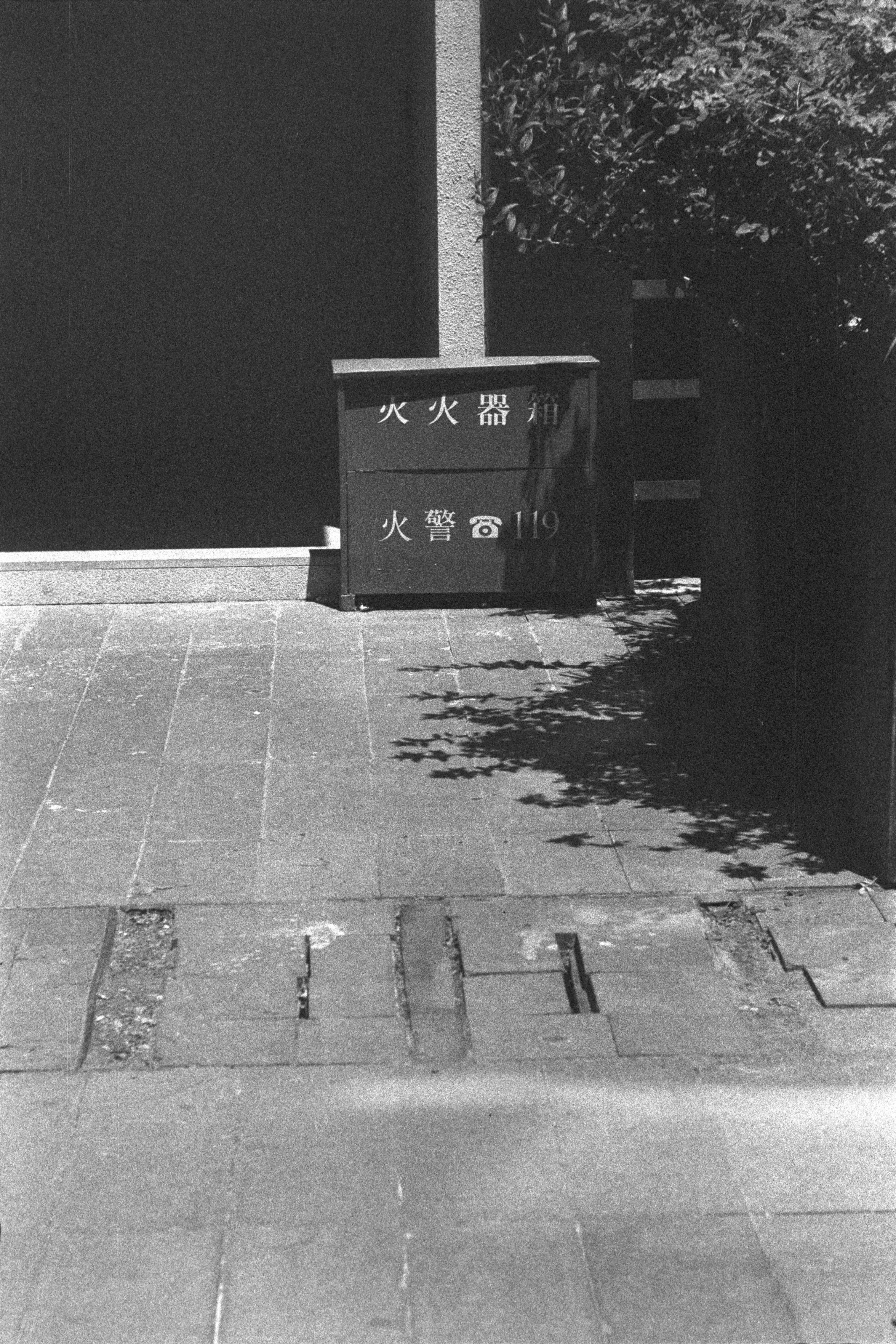
The Story of the Two Towers II 📖
双塔故事 II 📖
📷 Nikon F4
🎞️ Harman Switch Azure (FF)
If you like my work, Support by buying me a coffee or a roll of film from PayPal https://www.paypal.com/paypalme/ydcdingsite
Ayer estuve en una fundación que mantiene un archivo histórico con la que estoy colaborando dando soporte y estuvimos mirando precios de discos duros porque les llegan 8 Tb de vídeos. Y hostias pedrín. Estamos hablando de 1800 palos en dos discos duros, porque claro, necesitamos tenerlo en RAID 1 y necesitamos espacio para el futuro.
#putaIA
OpenPINT: Open-source Planning for Isoeffective Nuclear Treatments in BNCT research
Ian Postuma, Sara J. Gonz\'alez, Setareh Fatemi, Cristina Pezzi, Carolina Ruzzon, Oreste Nicrosini, Valerio Vercesi, Silva Bortolussi
https://arxiv.org/abs/2606.21476 https://arxiv.org/pdf/2606.21476 https://arxiv.org/html/2606.21476
arXiv:2606.21476v1 Announce Type: new
Abstract: Objective: Present OpenPINT (Open-source Planning for Isoeffective Nuclear Treatments), an open-source treatment planning system for nuclear therapies that integrates Monte Carlo dose calculations with modular dosimetric and radiobiological models for photon-isoeffective dose evaluation.
Approach: We describe the software architecture, implementation choices, and data flow from segmented geometry and source configuration to NIfTI dose outputs. We define BNCT-relevant dosimetric metrics and evaluate the workflow with reproducible analytic and voxelized cylindrical-phantom benchmarks, supplemented by a geometric patient-positioning example.
Main results: The module provides a reproducible and scriptable path for generating MCNP-ready inputs, extracting component-wise BNCT dose maps, and computing analysis-ready outputs for quality checks and decision support. Fine-resolution voxelized configurations reproduced the 1 mm analytic reference within 0.13% for the brain-limited irradiation-time endpoint, whereas the full voxelized sweep exposed deviations up to 4.42% in coarse 8--10 mm configurations. Patient-wide gamma pass rates were at least 99.60% for the evaluated mesh/interpolation cases, while low-dose DVH-tail quantities remained sensitive to boundary discretization.
Significance: This first paper isolates and validates the simulation-preparation and dosimetric-analysis core of an open-source BNCT treatment-planning platform. It establishes a foundation for subsequent work on optimization, biological weighting, and clinical workflow integration.
toXiv_bot_toot
They've been doing some great work on the paths on Mont Royal, Montréal. #FootpathFriday
New report questions Africa’s oil and gas promise #Africa
¡Tenemos nuevo podcast! Hemos tardado (estaba editando el vídeo de 3... y preparando un viaje que no pude hacer T_T) pero por fin tenemos un podcast con rocquimendaciones, reseñas, y hasta tierlist al final. Espero que lo disfrutéis ;) https://go.ivoox.com/rf/177417244
Quando eu estava chegando no trabalho, um colega de equipe veio com um problema de matemštica para eu resolver, dando a entender que era algo simples que eu talvez até resolvesse de cabeça. Como eu estava atrasado para a aula, pedi para ele me enviar por whatsapp. No intervalo entre aulas eu dei uma olhada ršpida e não consegui resolver. Cheguei em casa, troquei de roupa, jantei e dei uma segunda olhada. Novamente, não consegui resolver. Aí fui tomar banho. Passei o banho inteiro pensando no…