 @leftsidestory@mstdn.social
2026-01-25 01:43:23
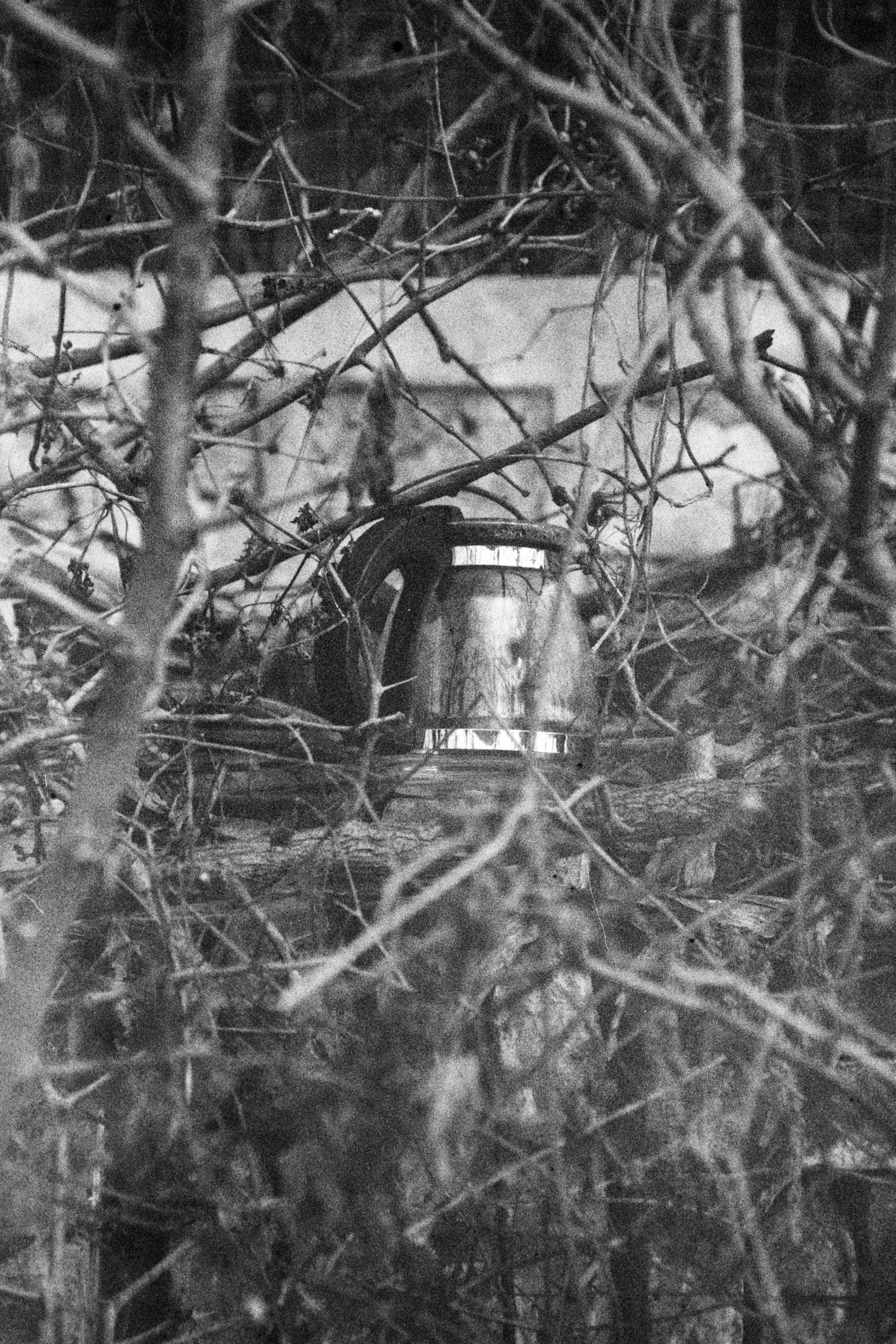
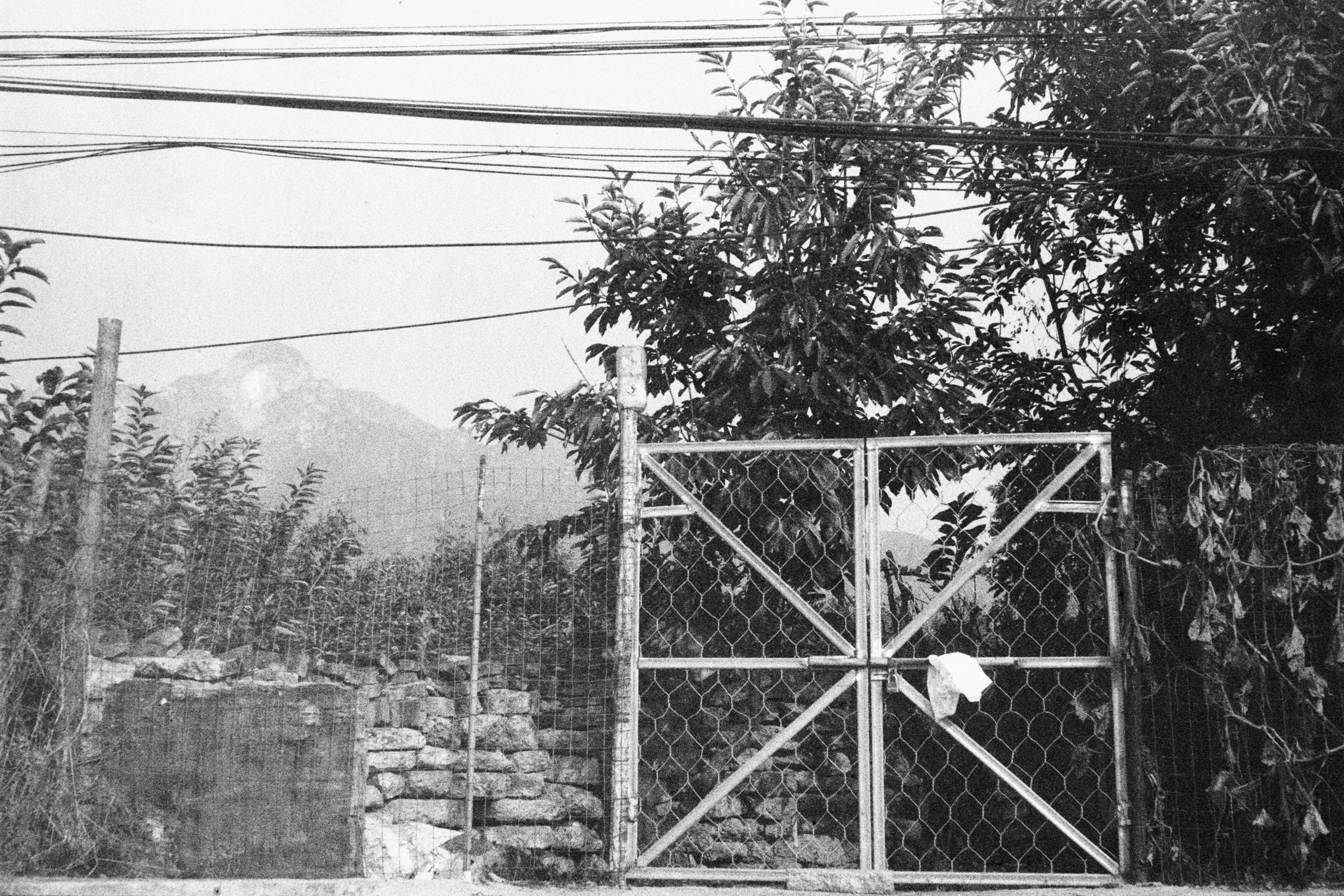
Some City Some Nature III 🏙️
一些城一些自然 III 🏙️
📷 Nikon F4E
🎞️ ERA 100, expired 1993
#filmphotography #Photography #blackandwhite


 @Dragofix@veganism.social
2026-04-25 01:58:20
Hundreds of millions at risk as river deltas sink faster than rising seas #Riverdeltas

 @Techmeme@techhub.social
2026-04-25 09:40:58
Citizen Lab details two spying campaigns that abuse weaknesses in the SS7 and Diameter protocols across 2G, 3G, 4G, and 5G networks to track people's locations (Lorenzo Franceschi-Bicchierai/TechCrunch)
https://techcrunch.com/2026…

 @holger_moller@bildung.social
2026-03-23 17:11:11
Ich finde, dieses Bild bringt es so auf den Punkt. ⬇️
Quelle: Timothy Snyder
https://bsky.app/profile/timothysnyder.bsky.social/post/3mhqfwsjfi22w

 @arXiv_csLG_bot@mastoxiv.page
2026-02-25 10:37:41
Transcoder Adapters for Reasoning-Model Diffing
Nathan Hu, Jake Ward, Thomas Icard, Christopher Potts
https://arxiv.org/abs/2602.20904 https://arxiv.org/pdf/2602.20904 https://arxiv.org/html/2602.20904
arXiv:2602.20904v1 Announce Type: new
Abstract: While reasoning models are increasingly ubiquitous, the effects of reasoning training on a model's internal mechanisms remain poorly understood. In this work, we introduce transcoder adapters, a technique for learning an interpretable approximation of the difference in MLP computation before and after fine-tuning. We apply transcoder adapters to characterize the differences between Qwen2.5-Math-7B and its reasoning-distilled variant, DeepSeek-R1-Distill-Qwen-7B. Learned adapters are faithful to the target model's internal computation and next-token predictions. When evaluated on reasoning benchmarks, adapters match the reasoning model's response lengths and typically recover 50-90% of the accuracy gains from reasoning fine-tuning. Adapter features are sparsely activating and interpretable. When examining adapter features, we find that only ~8% have activating examples directly related to reasoning behaviors. We deeply study one such behavior -- the production of hesitation tokens (e.g., "wait"). Using attribution graphs, we trace hesitation to only ~2.4% of adapter features (5.6k total) performing one of two functions. These features are necessary and sufficient for producing hesitation tokens; removing them reduces response length, often without affecting accuracy. Overall, our results provide insight into reasoning training and suggest transcoder adapters may be useful for studying fine-tuning more broadly.
toXiv_bot_toot
 @cdarwin@c.im
2026-03-22 06:06:11
Across south-east Asia,
governments are scrambling to find ways to conserve energy
and shield the public from soaring costs,
as war in the Middle East causes huge disruption in the global oil market.
In Thailand, news anchors are ditching their jackets after orders to reduce air conditioning use, while government workers in the Philippines are operating on a four-day week.
Asia relies heavily on imported energy, much of which passes through the strait of Hormu…
 @karlauerbach@sfba.social
2026-03-22 04:22:09
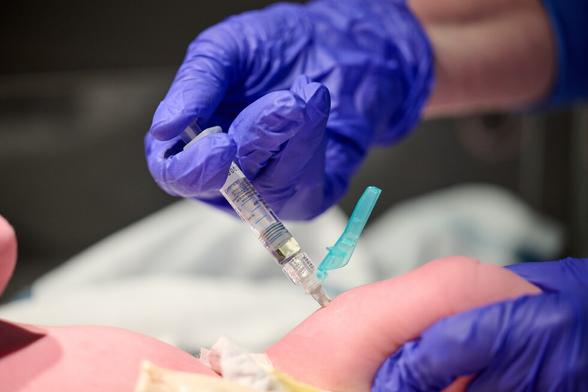
I remember reading cases of "wrongful birth" in which children sued their parents for withholding care (or using voodoo "natural' style medication) resulting in the child being damaged for life.
Seems like that notion - child's rights vs parents - ought to be expanded.
"It’s not just vaccines — parents are refusing other routine preventive care for newborns"
 @arXiv_csLG_bot@mastoxiv.page
2026-02-25 12:33:22
Crosslisted article(s) found for cs.LG. https://arxiv.org/list/cs.LG/new
[1/3]:
- SMaRT: Online Reusable Resource Assignment and an Application to Mediation in the Kenyan Judiciary
Farabi, Pinto, Lu, Ramos-Maqueda, Das, Deeb, Sautmann
https://arxiv.org/abs/2602.18431 https://mastoxiv.page/@arXiv_csCY_bot/116119352329590193
- Benchmarking Distilled Language Models: Performance and Efficiency in Resource-Constrained Settings
Sachin Gopal Wani, Eric Page, Ajay Dholakia, David Ellison
https://arxiv.org/abs/2602.20164 https://mastoxiv.page/@arXiv_csCL_bot/116130101399805837
- VISION-ICE: Video-based Interpretation and Spatial Identification of Arrhythmia Origins via Neura...
Dorsa EPMoghaddam, Feng Gao, Drew Bernard, Kavya Sinha, Mehdi Razavi, Behnaam Aazhang
https://arxiv.org/abs/2602.20165 https://mastoxiv.page/@arXiv_csCV_bot/116130222034322594
- Benchmarking Early Deterioration Prediction Across Hospital-Rich and MCI-Like Emergency Triage Un...
KMA Solaiman, Joshua Sebastian, Karma Tobden
https://arxiv.org/abs/2602.20168 https://mastoxiv.page/@arXiv_csCY_bot/116130239074411770
- Cross-Chirality Generalization by Axial Vectors for Hetero-Chiral Protein-Peptide Interaction Design
Yang, Tian, Jia, Zhang, Zheng, Wang, Su, He, Liu, Lan
https://arxiv.org/abs/2602.20176 https://mastoxiv.page/@arXiv_qbioBM_bot/116130281674122586
- Enhancing Heat Sink Efficiency in MOSFETs using Physics Informed Neural Networks: A Systematic St...
Aniruddha Bora, Isabel K. Alvarez, Julie Chalfant, Chryssostomos Chryssostomidis
https://arxiv.org/abs/2602.20177 https://mastoxiv.page/@arXiv_csNE_bot/116130397676559696
- Data-Driven Deep MIMO Detection:Network Architectures and Generalization Analysis
Yongwei Yi, Xinping Yi, Wenjin Wang, Xiao Li, Shi Jin
https://arxiv.org/abs/2602.20178 https://mastoxiv.page/@arXiv_eessSP_bot/116130257424413457
- OrgFlow: Generative Modeling of Organic Crystal Structures from Molecular Graphs
Mohammadmahdi Vahediahmar, Matthew A. McDonald, Feng Liu
https://arxiv.org/abs/2602.20195 https://mastoxiv.page/@arXiv_condmatmtrlsci_bot/116130271189617558
- KEMP-PIP: A Feature-Fusion Based Approach for Pro-inflammatory Peptide Prediction
Soumik Deb Niloy, Md. Fahmid-Ul-Alam Juboraj, Swakkhar Shatabda
https://arxiv.org/abs/2602.20198 https://mastoxiv.page/@arXiv_qbioQM_bot/116130341315320687
- Regressor-guided Diffusion Model for De Novo Peptide Sequencing with Explicit Mass Control
Shaorong Chen, Jingbo Zhou, Jun Xia
https://arxiv.org/abs/2602.20209 https://mastoxiv.page/@arXiv_qbioQM_bot/116130374083646541
- The Sim-to-Real Gap in MRS Quantification: A Systematic Deep Learning Validation for GABA
Zien Ma, S. M. Shermer, Oktay Karaku\c{s}, Frank C. Langbein
https://arxiv.org/abs/2602.20289 https://mastoxiv.page/@arXiv_eessSP_bot/116130267228834775
- Gap-Dependent Bounds for Nearly Minimax Optimal Reinforcement Learning with Linear Function Appro...
Haochen Zhang, Zhong Zheng, Lingzhou Xue
https://arxiv.org/abs/2602.20297 https://mastoxiv.page/@arXiv_statML_bot/116130255458256497
- Multilevel Determinants of Overweight and Obesity Among U.S. Children Aged 10-17: Comparative Eva...
Joyanta Jyoti Mondal
https://arxiv.org/abs/2602.20303 https://mastoxiv.page/@arXiv_csAI_bot/116130097466859145
- An artificial intelligence framework for end-to-end rare disease phenotyping from clinical notes ...
Shyr, Hu, Tinker, Cassini, Byram, Hamid, Fabbri, Wright, Peterson, Bastarache, Xu
https://arxiv.org/abs/2602.20324 https://mastoxiv.page/@arXiv_csAI_bot/116130100089848459
- Circuit Tracing in Vision-Language Models: Understanding the Internal Mechanisms of Multimodal Th...
Jingcheng Yang, Tianhu Xiong, Shengyi Qian, Klara Nahrstedt, Mingyuan Wu
https://arxiv.org/abs/2602.20330 https://mastoxiv.page/@arXiv_csCV_bot/116130463214879334
- No One Size Fits All: QueryBandits for Hallucination Mitigation
Nicole Cho, William Watson, Alec Koppel, Sumitra Ganesh, Manuela Veloso
https://arxiv.org/abs/2602.20332 https://mastoxiv.page/@arXiv_csCL_bot/116130370809116915
- Learning During Detection: Continual Learning for Neural OFDM Receivers via DMRS
Mohanad Obeed, Ming Jian
https://arxiv.org/abs/2602.20361 https://mastoxiv.page/@arXiv_csIT_bot/116130289537785136
- Detecting and Mitigating Group Bias in Heterogeneous Treatment Effects
Joel Persson, Jurri\"en Bakker, Dennis Bohle, Stefan Feuerriegel, Florian von Wangenheim
https://arxiv.org/abs/2602.20383 https://mastoxiv.page/@arXiv_statME_bot/116130509065601748
- Selecting Optimal Variable Order in Autoregressive Ising Models
Shiba Biswal, Marc Vuffray, Andrey Y. Lokhov
https://arxiv.org/abs/2602.20394 https://mastoxiv.page/@arXiv_statML_bot/116130299369541741
toXiv_bot_toot
@cdarwin@c.im2026-04-18 15:58:59
Traders placed over $1 billion in perfectly timed bets on the Iran war.
On the night of 27 February, the day before the US and Israel would carry out strikes on Iran, an unusual influx of about 150 accounts on Polymarket placed bets that the US would strike Iran the next day.
A New York Times analysis found the bets totaled $855,000, with 16 accounts pocketing more than $100,000 each.
Soon after, a single anonymous Polymarket user, under an account named “Magamyman”, made o…
 @cdarwin@c.im
2026-02-18 15:19:53
A survey of almost 6,000 corporate execs across the US, UK, Germany, and Australia found that
more than 80 percent detect no discernible impact from AI on either employment or productivity.
The study from the National Bureau of Economic Research (NBER) in Massachusetts is based on input from CFOs, CEOs, and executives at enterprises of different sizes across the four countries.
On average, 69 percent of businesses currently use some form of AI, and 75 percent expect to use …
