Tootfinder

Opt-in global Mastodon full text search. Join the index!

@blakes7bot@mas.torpidity.net
2025-12-22 10:26:59

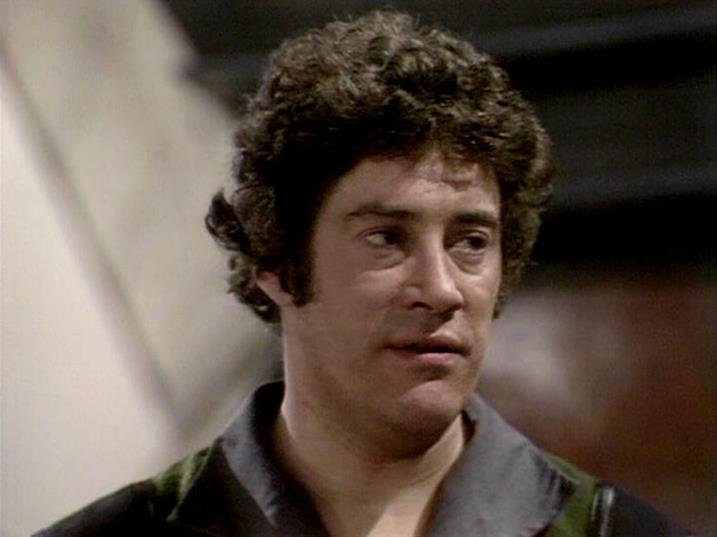
Series A, Episode 06 - Seek-Locate-Destroy
PRELL: Perhaps they had trouble getting them to work, sir.
TRAVIS: And why did they take you and your men out of here?
PRELL: I suppose they thought it was safer with us out of the way.
blake.torpidity.net/m/106/263 B7B2

Claude Sonnet 4.5 describes the image as: "This appears to be a scene from a classic science fiction television production, likely from the late 1970s or early 1980s based on the video quality and aesthetic. The image shows two men in what appears to be a stark, industrial or underground setting with rough walls.

In the foreground is a man wearing dark leather or similar material costume with distinctive metallic or silver makeup covering part of his face, particularly around one eye area. Thi…
@blakes7bot@mas.torpidity.net
2025-11-23 11:05:49

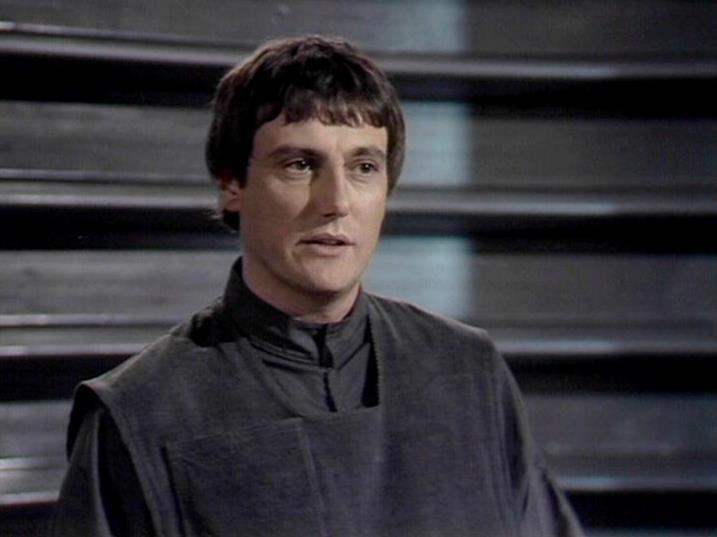
Series A, Episode 03 - Cygnus Alpha
AVON: And on living matter it never worked. Put a living creature into one end, take a dead creature out of the other, or nothing at all.
JENNA: So you think that is what all this is for? Matter transmission?
blake.torpidity.net/m/103/142 B7B…

Claude Sonnet 4.0 describes the image as: "This image shows a scene from what appears to be a British science fiction television production, likely from the late 1970s or early 1980s based on the visual quality and aesthetic. The setting features a stark, industrial backdrop with horizontal metal or plastic paneling creating a futuristic corridor or spaceship interior.

Paul Darrow appears in character wearing a distinctive grey-black tunic with a high collar characteristic of utilitarian sci-f…
@cjust@infosec.exchange
2025-12-13 03:23:41

I used to work at McDonald's in my youth. Can confirm
#ShamelesslyStolenFromSomewhereElseOnTheInternetHonestlyICantKeepTrackOfThisStuffAnymore #Shitpost

The image is a humorous meme composed of three distinct sections, playfully suggesting an unconventional method for the production of McDonald's apple pie filling.

The top left section displays an industrial scene with a bright orange, molten substance being poured from a metal container. The substance has a flowing, lava-like appearance, suggesting extreme heat and viscosity. The background shows industrial equipment and a metallic structure.

The top right section is in black and white and d…
@arXiv_csAI_bot@mastoxiv.page
2025-10-03 10:38:31

Optimizing Fairness in Production Planning: A Human-Centric Approach to Machine and Workforce Allocation
Alexander Nasuta, Alessandro Cisi, Sylwia Olbrych, Gustavo Vieira, Rui Fernandes, Lucas Paletta, Marlene Mayr, Rishyank Chevuri, Robert Woitsch, Hans Aoyang Zhou, Anas Abdelrazeq, Robert H. Schmitt
arxiv.org/abs/2510.01094

@mgorny@social.treehouse.systems
2025-10-02 19:43:19

"""
[…] Paradoxically, the more a population grew, the more precious it became, as it offered a supply of cheap labour, and by lowering costs allowed a greater expansion of production and trade. In this infinitely open labour market, the ‘fundamental price’, which for Turgot meant a subsistence level for workers, and the price determined by supply and demand ended up as the same thing. A country was all the more commercially competitive for having at its disposal the virtual wealth that a large population represented.
Confinement was therefore a clumsy error, and an economic one at that: there was no sense in trying to suppress poverty by taking it out of the economic circuit and providing for a poor population by charitable means. To do that was merely to hide poverty, and suppress an important section of the population, which was always a given wealth. Rather than helping the poor escape their provisionally indigent situation, charity condemned them to it, and dangerously so, by putting a brake on the labour market in a period of crisis. What was required was to palliate the high cost of products with cheaper labour, and to make up for their scarcity by a new industrial and agricultural effort. The only reasonable remedy was to reinsert the population in the circuit of production, being sure to place labour in areas where manpower was most scarce. The use of paupers, vagabonds, exiles and émigrés of any description was one of the secrets of wealth in the competition between nations. […]
Confinement was to be criticised because of the effects it had on the labour market, but also because like all other traditional forms of charity, it constituted a dangerous form of finance. As had been the case in the Middle Ages, the classical era had constantly attempted to look after the needs of the poor by a system of foundations. This implied that a section of the land capital and revenues were out of circulation. In a definitive manner too, as the concern was to avoid the commercialisation of assistance to the poor, so judicial measures had been taken to ensure that this wealth never went back into circulation. But as time passed, their usefulness diminished: the economic situation changed, and so did the nature of poverty.
«Society does not always have the same needs. The nature and distribution of property, the divisions between the different orders of the people, opinions, customs, the occupations of the majority of the population, the climate itself, diseases and all the other accidents of human life are in constant change. New needs come into being, and old ones disappear.» [Turgot, Encyclopédie]
The definitive character of a foundation was in contradiction with the variable and changing nature of the accidental needs to which it was designed to respond. The wealth that it immobilised was never put back into circulation, but more wealth was to be created as new needs appeared. The result was that the proportion of funds and revenues removed from circulation constantly increased, while that of production fell in consequence. The only possible result was increased poverty, and a need for more foundations. The process could continue indefinitely, and the fear was that one day ‘the ever increasing number of foundations might absorb all private funds and all private property’. When closely examined, classical forms of assistance were a cause of poverty, bringing a progressive immobilisation that was like the slow death of productive wealth:
«If all the men who have ever lived had been given a tomb, sooner or later some of those sterile monuments would have been dug up in order to find land to cultivate, and it would have become necessary to stir the ashes of the dead in order to feed the living.» [Turgot, Lettre Š Trudaine sur le Limousin]
"""
(Michel Foucault, History of Madness)

@arXiv_csRO_bot@mastoxiv.page
2025-10-15 09:18:41

Achieving Meaningful Collaboration: Worker-centered Design of a Physical Human-Robot Collaborative Blending Task
Nicky Mol, Luka Peternel, Alessandro Ianniello, Denis Zatyagov, Auke Nachenius, Stephan Balvert, J. Micah Prendergast, Sara Muscolo, Olger Siebinga, Eva Verhoef, Deborah Forster, David A. Abbink
arxiv.org/abs/2510.12340

@gedankenstuecke@scholar.social
2025-11-27 01:24:44

«The tech industry is being taken over by merchants of services, and the Open Source community is starting to depend on them. We've seen this coming, with GitHub being a startup, bought by Microsoft which is now pushing AI. They are the means of production.»
And FLOSS would be doing well to divest from the industrial-owened means of production sooner rather than later.
What AI is doing to developers - (not) my ideas
notmyidea.org/what-ai-is-doing

@arXiv_csAI_bot@mastoxiv.page
2025-10-02 10:43:11

Optimizing Fairness in Production Planning: A Human-Centric Approach to Machine and Workforce Allocation
Alexander Nasuta, Alessandro Cisi, Sylwia Olbrych, Gustavo Vieira, Rui Fernandes, Lucas Paletta, Marlene Mayr, Rishyank Chevuri, Robert Woitsch, Hans Aoyang Zhou, Anas Abdelrazeq, Robert H. Schmitt
arxiv.org/abs/2510.01094

@brichapman@mastodon.social
2025-12-05 19:03:02

Solar breakthrough alert: Fraunhofer ISE just hit 30.6% efficiency with a perovskite-silicon tandem solar cell.
What makes this special? They used an industry-standard TOPCon bottom cell—meaning this tech could actually scale to mass production, not just stay in the lab.
This could be a game-changer for making solar panels significantly more powerful.

@blakes7bot@mas.torpidity.net

2025-11-16 19:11:13

Series A, Episode 03 - Cygnus Alpha
[They run out door. Gan slams it shut and holds it]
BLAKE: Gan, can you hold them?
GAN: As long as the door doesn't break.
VILA: Did you see? They killed Arco.
blake.torpidity.net/m/103/541 B7B5

Claude 3.7 describes the image as: "# Scene Description

This image appears to be from a television production, showing three men in what looks like an indoor setting with dark, industrial-style surroundings. The lighting is dim and atmospheric, suggesting either a spacecraft interior or underground facility.

The men are dressed in casual clothing - one wears a red and beige/tan colored outfit on the left, while the others wear earth-toned garments including browns and grays. Their positioning…
@arXiv_csNE_bot@mastoxiv.page
2025-10-10 07:37:48

A Digital Pheromone-Based Approach for In/Out-of-Control Classification
Pedro Pestana, M. F\'atima Brilhante
arxiv.org/abs/2510.07329 a…

@blakes7bot@mas.torpidity.net
2025-10-15 09:15:54

Series C, Episode 05 - The Harvest of Kairos
SHAD: [On screen] Yes, madam.
[Launch platform]
GUARD: Instructions from the Captain. You are to wait for the next shuttle.
CARLON: But there isn't another.
GUARD: One will be sent for you tomorrow.
blake.torpidity.net/m/305/214

Claude 3.7 describes the image as: "This image appears to be from a science fiction television production, showing a person in what looks like a military or security uniform with a distinctive black helmet. They appear to be inside what could be a spacecraft or command center, with technical equipment and panels visible in the background. The scene has a somewhat dark, industrial aesthetic with red and metallic elements visible in the background, which was characteristic of many sci-fi producti…
@mgorny@social.treehouse.systems
2025-10-02 17:42:42

"""
Traditional politics of assistance and the repression of unemployment were now called into question. The need for reform became urgent.
Poverty was gradually separated from the old moral confusions. Economic crises had shown that unemployment could not be confused with indolence, as indigence and enforced idleness spread throughout the countryside, to precisely the places that had previously been considered home to the purest and most immediate forms of moral life. This demonstrated that poverty did not solely fall under the order of the fault: ‘Begging is the fruit of poverty, which in turn is the consequence of accidents in the production of the earth or in the output of factories, of a rise in the price of basic foodstuffs, or of growth of the population, etc.’ Indigence became a matter of economics.
But it was not contingent, nor was it destined to be suppressed forever. There would always be a certain quantity of poverty that could never be effaced, a sort of fatal indigence that would accompany all forms of society until the end of time, even in places where all the idle were employed: ‘The only paupers in a well governed state must be those born in indigence, or those who fall into it by accident.’ This backdrop of poverty was somehow inalienable: whether by birth or accident, it formed an inevitable part of society. The state of lack was so firmly entrenched in the destiny of man and the structure of society that for a long time the idea of a state without paupers remained inconceivable: in the thought of philosophers, property, work and indigence were terms linked right up until the nineteenth century.
This portion of poverty was necessary because it could not be suppressed; but it was equally necessary in that it made wealth possible. Because they worked but consumed little, a class of people in need allowed a nation to become rich, to release the value of its fields, colonies and mines, making products that could be sold throughout the world. An impoverished people, in short, was a people that had no poor. Indigence became an indispensable element in the state. It hid the secret but most real life of society. The poor were the seat and the glory of nations. And their noble misery, for which there was no cure, was to be exalted:
«My intention is solely to invite the authorities to turn part of their vigilant attention to considering the portion of the People who suffer … the assistance that we owe them is linked to the honour and prosperity of the Empire, of which the Poor are the firmest bulwark, for no sovereign can maintain and extend his domain without favouring the population, and cultivating the Land, Commerce and the Arts; and the Poor are the necessary agents for the great powers that reveal the true force of a People.»
What we see here is a moral rehabilitation of the figure of the Pauper, bringing about the fundamental economic and social reintegration of his person. Paupers had no place in a mercantilist economy, as they were neither producers nor consumers, and they were idle, vagabond or unemployed, deserving nothing better than confinement, a measure that extracted and exiled them from society. But with the arrival of the industrial economy and its thirst for manpower, paupers were once again a part of the body of the nation.
"""
(Michel Foucault, History of Madness)

@blakes7bot@mas.torpidity.net
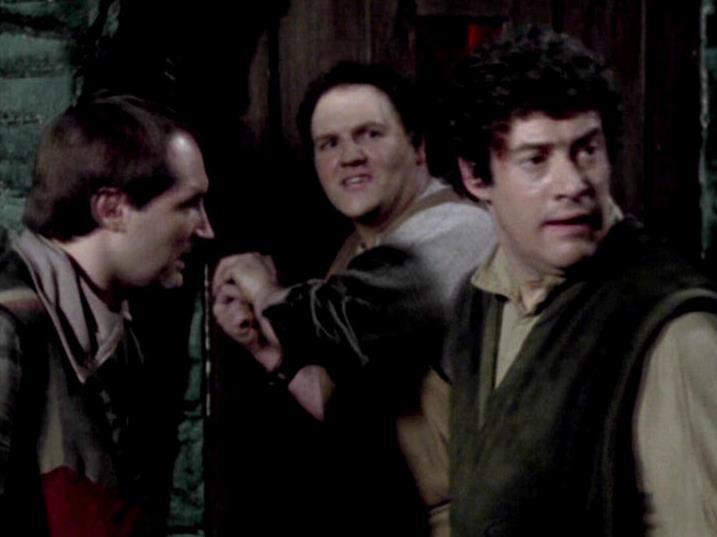
2025-11-12 16:26:37

Series A, Episode 11 - Bounty
CALLY: But the elections were rigged.
TYCE: It was still failure.
BLAKE: [To Cally] That's something you should understand.
TYCE: I thought I could help him.
BLAKE: He must come with us, by force if necessary.
blake.torpidity.net/m/111/225

Claude Sonnet 4.0 describes the image as: "This image appears to be from a classic British science fiction television series, likely from the late 1970s or early 1980s based on the production quality and costume design. The scene shows three characters in what appears to be a spaceship or futuristic facility interior, with industrial gray walls visible in the background.

The woman on the left wears a distinctive red velvet tunic with white cord trim and a black turtleneck underneath, styled wi…
@blakes7bot@mas.torpidity.net

2025-12-06 19:17:32

Series C, Episode 12 - Death-Watch
TARRANT: Yes, I'm afraid they will.
DAYNA: The electronic warriors strike again. That'll be four of Servalan's ore ships we've let through without a fight.
AVON: To FIGHT them we have to catch them.
blake.torpidity.net/m/312/39

Claude Sonnet 4 describes the image as: "This image appears to be from a science fiction television production, likely from the late 1970s or 1980s based on the styling and set design. The scene takes place on what looks like a futuristic spacecraft or space station, with metallic stairs and industrial-looking architecture in the background.

Three actors are positioned on the steps in what appears to be a dramatic scene. On the left is an actress wearing an elegant emerald green dress with a d…
@blakes7bot@mas.torpidity.net

2025-12-05 19:17:54

Series D, Episode 06 - Headhunter
VILA: I am!
SOOLIN: I know.
VILA: Where's Orac? He can run a scan first.
SOOLIN: 'Fraid not, sorry.
AVON: [Who has entered unnoticed and is leaning casually against the doorway.] Why not?
SOOLIN: Orac's in hiding.
blake.torpidity.net/m/406/444

Claude Sonnet 4 describes the image as: "This image shows a scene from what appears to be a science fiction television production, set in a futuristic interior space with white/gray walls, ventilation grates, and industrial-style lighting. The setting has a distinctly spaceship or space station aesthetic typical of sci-fi shows from the late 1970s or early 1980s.

Two actors are positioned in the scene - a man on the left wearing a light-colored military or utility-style jacket, and a woman on …
@blakes7bot@mas.torpidity.net
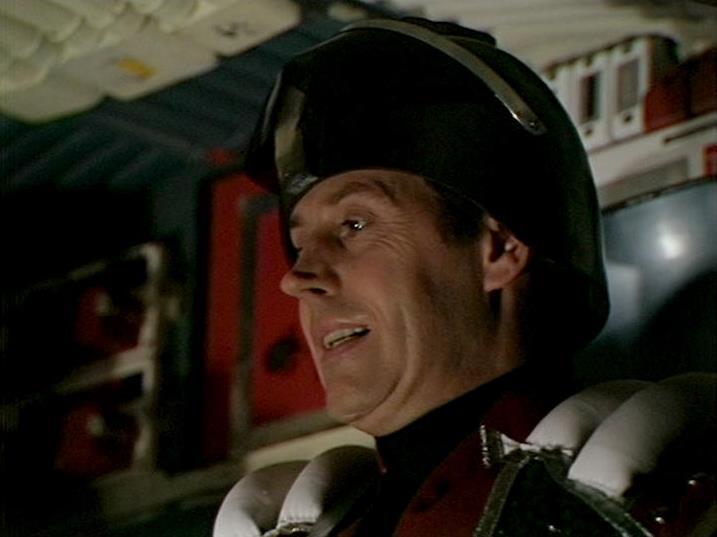
2025-11-03 10:04:39

Series A, Episode 09 - Project Avalon
BLAKE: Does it support any intelligent life?
AVON: Does the Liberator? [Blake and Jenna exchange looks.] There are humanoid creatures called subterrons. They live in caves. Quite what that says for their intelligence, I really wouldn't know.
blake.torpidity.net/m/109/24

Claude Sonnet 4.0 describes the image as: "I can see this appears to be from a science fiction television production, likely from the late 1970s or early 1980s based on the image quality and styling. The scene shows someone in what appears to be a futuristic or military-style costume with distinctive collar details. The setting looks like it could be aboard a spacecraft or in some kind of technical facility, with blurred background elements suggesting an industrial or high-tech environment. The…
@blakes7bot@mas.torpidity.net
2025-11-29 19:22:25

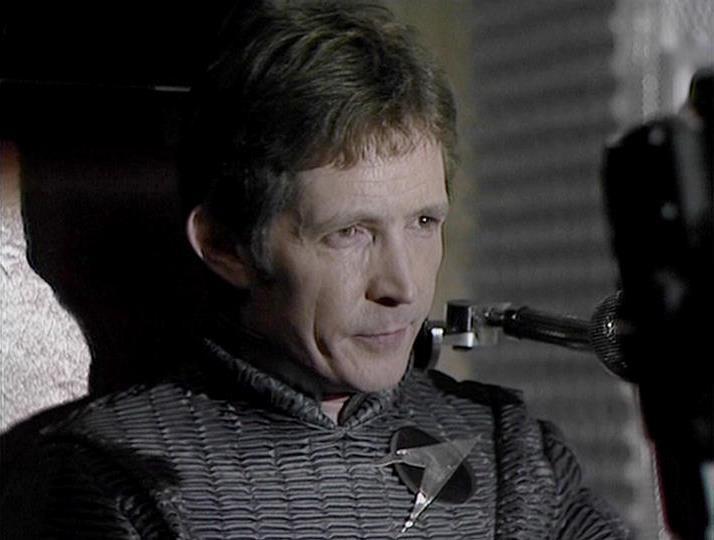
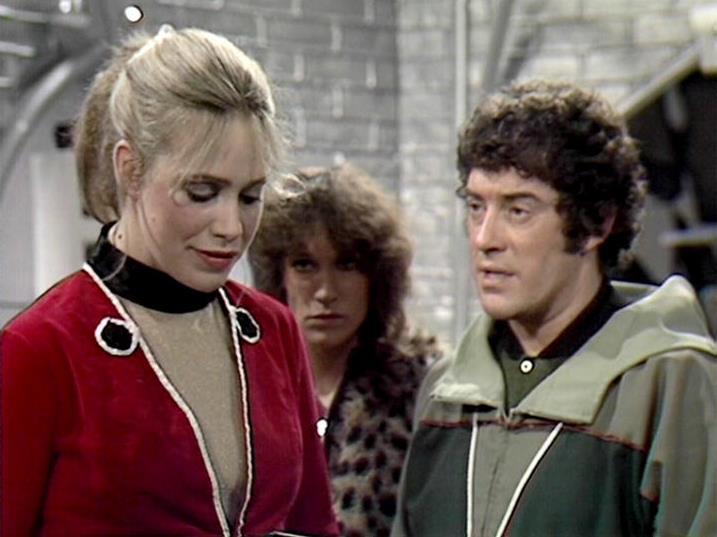
Series B, Episode 08 - Hostage
COMMANDER: Good. Our detector shield is working. Give me her exact position in three minutes at present speed. Mark.
MUTOID: Computer running.
blake.torpidity.net/m/208/56 B7B5

Claude Haiku 4.5 describes the image as: "# Image Description

This image appears to be a scene from a film or television production, shot in black and white or with muted color grading. The setting looks like an interior space, possibly a spacecraft or industrial facility, given the metallic and geometric architectural elements visible in the background.

The main subject is a man shown in profile, wearing a dark textured jacket or tunic with a quilted pattern. He appears to be in a tense or s…
@blakes7bot@mas.torpidity.net
2025-11-24 07:11:59

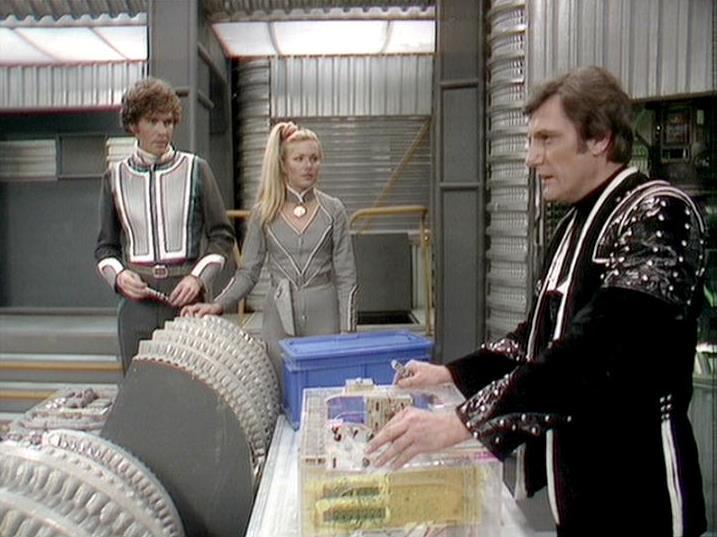
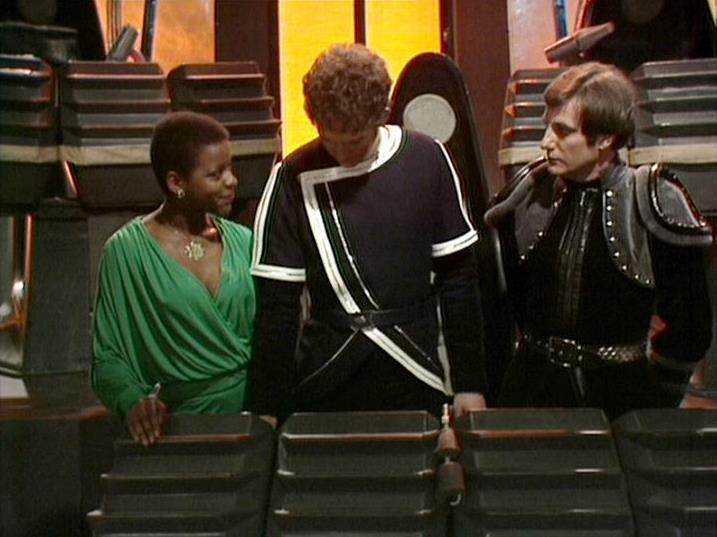
#Blakes7 Series D, Episode 05 - Animals
AVON: Right. How's our armament situation?
SOOLIN: Good as it'll ever be. We couldn't hold off a Federation patrol with it, but we knew that already.
blake.torpidity.ne…

Claude 3.7 describes the image as: "This image appears to be from the classic British science fiction series "Blake's 7." The scene takes place in what looks like a spacecraft or space station interior with metallic walls and industrial styling typical of the show's production design.

Three people are gathered around what appears to be a control console or workstation. On the right, a person wearing a distinctive black outfit with decorative elements stands at the console, appearing to operate…
@blakes7bot@mas.torpidity.net
2025-10-25 06:08:12

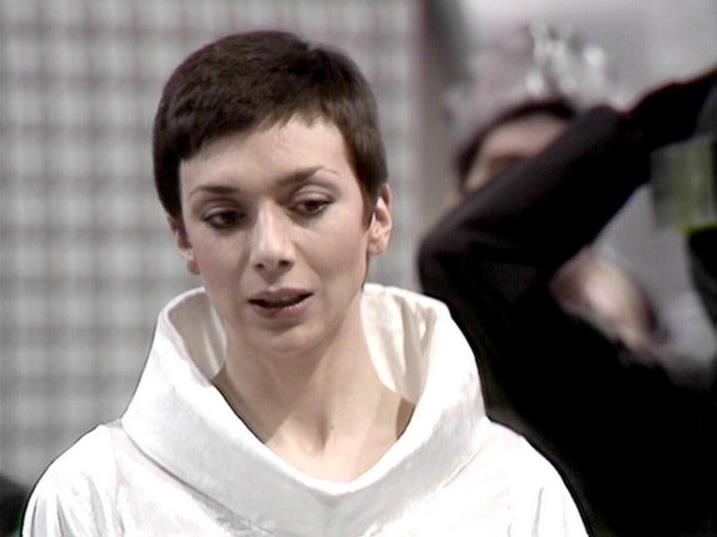
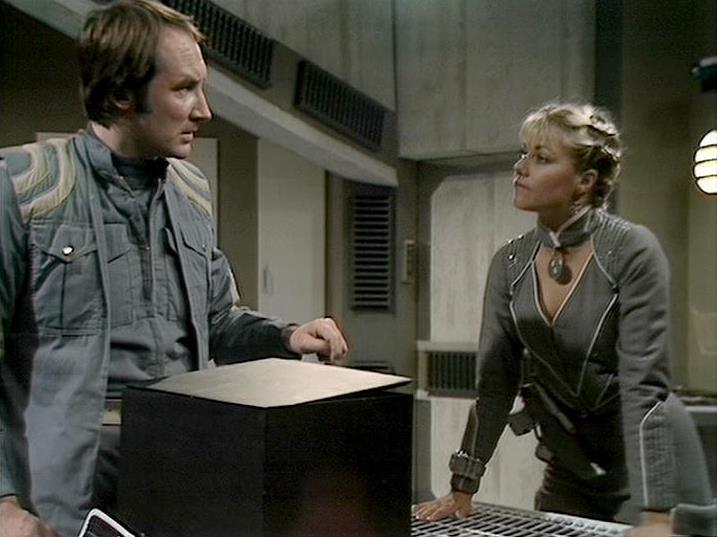
#Blakes7 Series A, Episode 09 - Project Avalon
SERVALAN: [To Travis] Project Avalon has failed totally. There will be a full inquiry. Until that time you are relieved of your command.
TRAVIS: [To himself] If it takes all my life, I will destroy you, Blake. I will destroy you. I will destroy you.

Claude 3.7 describes the image as: "The image shows a person with very short dark hair wearing a white robe or garment with a wide neckline. They have a focused expression and appear to be speaking or reacting to something. The background is blurry but suggests an indoor setting with some structural elements visible.

This appears to be from a science fiction production, with the minimalist costume and setting typical of the genre from that era. The stark white costume against the industrial-lo…