 @PwnieFan@infosec.exchange
2026-01-15 15:30:35
Never been prouder of my Twin Cities than at this moment. ICE is terrorizing our city and all I've seen between neighbors is kindness. This morning at the coffeeshop I watched a man buy a meal for a stranger. There's a group gathering in front of me to knit hats for donation. I didn't choose to live through this moment in history, but if I have to I couldn't pick a better place. For those of you outside MN, please consider calling your senators, representatives, local governm…

 @leftsidestory@mstdn.social
2026-02-14 00:30:00
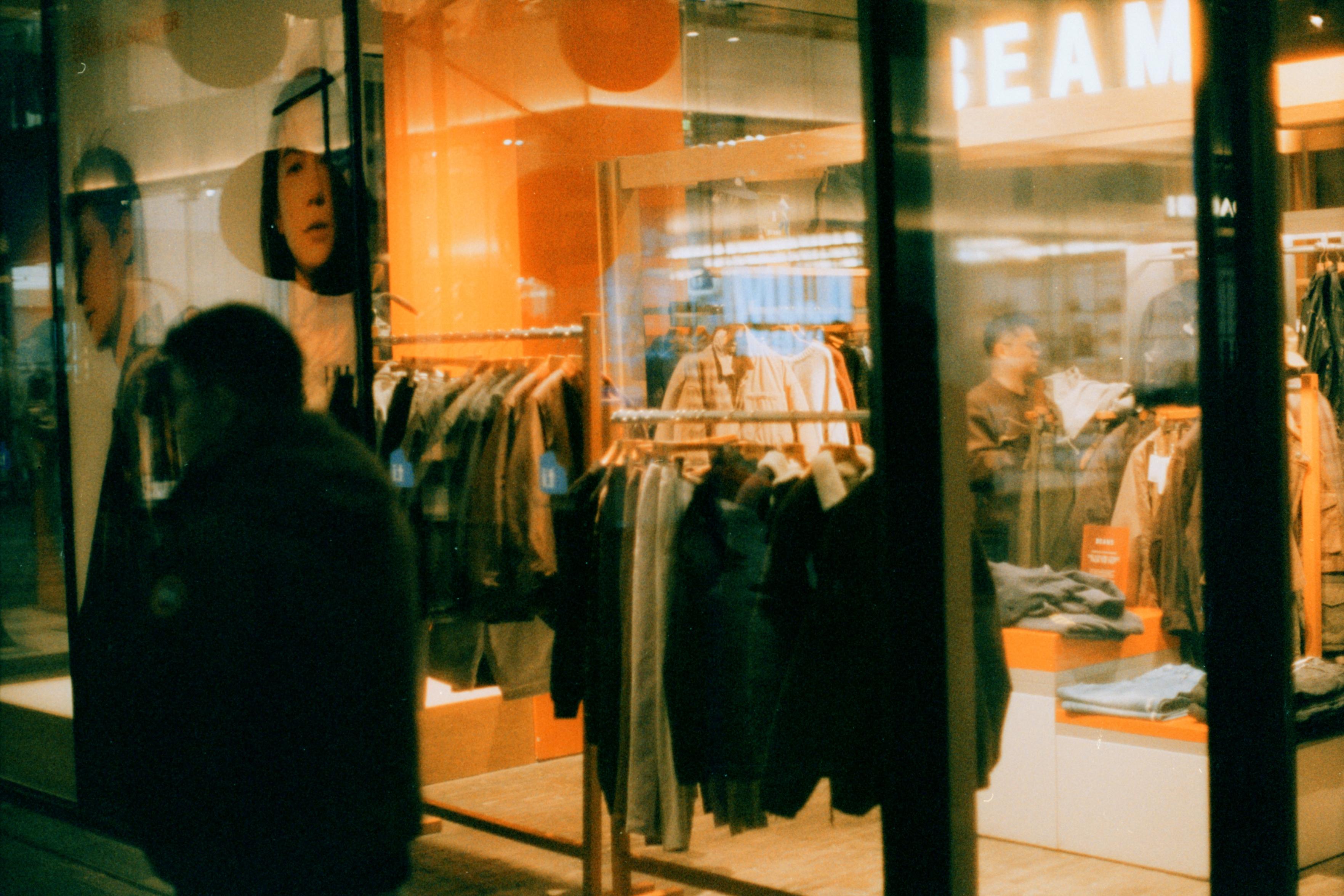
Rare Colours Blues IV🔷🔷
稀有的色彩蓝 IV🔷🔷
📷 Pentax MX
🎞️ Harman Phoenix 200 II (FF)
#filmphotography #Photography #Art



 @arXiv_csDS_bot@mastoxiv.page
2026-02-10 10:15:16
Neighborhood-Aware Graph Labeling Problem
Mohammad Shahverdikondori, Sepehr Elahi, Patrick Thiran, Negar Kiyavash
https://arxiv.org/abs/2602.08098 https://arxiv.org/pdf/2602.08098 https://arxiv.org/html/2602.08098
arXiv:2602.08098v1 Announce Type: new
Abstract: Motivated by optimization oracles in bandits with network interference, we study the Neighborhood-Aware Graph Labeling (NAGL) problem. Given a graph $G = (V,E)$, a label set of size $L$, and local reward functions $f_v$ accessed via evaluation oracles, the objective is to assign labels to maximize $\sum_{v \in V} f_v(x_{N[v]})$, where each term depends on the closed neighborhood of $v$. Two vertices co-occur in some neighborhood term exactly when their distance in $G$ is at most $2$, so the dependency graph is the squared graph $G^2$ and $\mathrm{tw}(G^2)$ governs exact algorithms and matching fine-grained lower bounds. Accordingly, we show that this dependence is inherent: NAGL is NP-hard even on star graphs with binary labels and, assuming SETH, admits no $(L-\varepsilon)^{\mathrm{tw}(G^2)}\cdot n^{O(1)}$-time algorithm for any $\varepsilon>0$. We match this with an exact dynamic program on a tree decomposition of $G^2$ running in $O\!\left(n\cdot \mathrm{tw}(G^2)\cdot L^{\mathrm{tw}(G^2) 1}\right)$ time. For approximation, unless $\mathsf{P}=\mathsf{NP}$, for every $\varepsilon>0$ there is no polynomial-time $n^{1-\varepsilon}$-approximation on general graphs even under the promise $\mathrm{OPT}>0$; without the promise $\mathrm{OPT}>0$, no finite multiplicative approximation ratio is possible. In the nonnegative-reward regime, we give polynomial-time approximation algorithms for NAGL in two settings: (i) given a proper $q$-coloring of $G^2$, we obtain a $1/q$-approximation; and (ii) on planar graphs of bounded maximum degree, we develop a Baker-type polynomial-time approximation scheme (PTAS), which becomes an efficient PTAS (EPTAS) when $L$ is constant.
toXiv_bot_toot
 @bourgwick@heads.social
2025-12-12 00:36:55
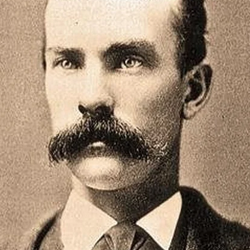
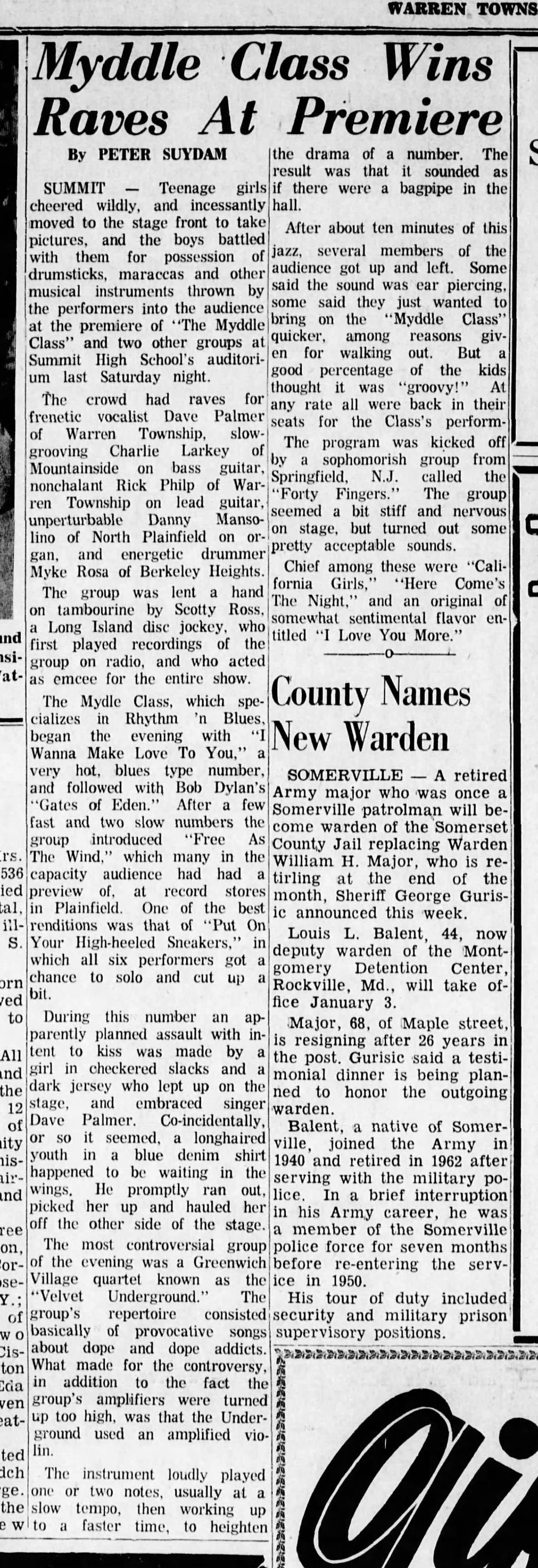
60 years ago tonight, the velvet underground at summit high school in new jersey, opening for the myddle class, both acts' 1st proper shows. sometimes called the VU's debut, rob norris’s classic scene report, “i was a velveteen” (from kicks #1) mentions they’d just been fired from cafe wha?, so maybe there was one earlier, too? some great local coverage, too!



 @hex@kolektiva.social
2026-02-08 05:06:12
FPS is the biggest available channel that I'm aware of to funnel Academi into ICE/CBP enforcement operations. The point of using FPS to support ICE agents is that FPS is stocked full of troops from EriK Prince's private army (now called "Academi" but formerly called "Blackwater"). This means that carrying out ethnic cleansing can dump money directly into the pockets of America's version of the Wagner Group (side from, of course GEO Group).
The Erik Prince angle also means that there can be an alternative chain of command that exists outside of official channels. ICE is already bad enough, but similar people have worked as mercenaries for a long time. Having an established chain of command over armed occupiers, one based entirely on economic incentives, one that can't be legally monitored or audited, one that's completely outside of the government, should be especially worrying.
I don't believe we've ever seen a clear explanation of who was kidnaping people off the streets, but I know that Academi had a contract (I believe with FPS) in Portland at the time. We also don't know who is on the ground in US cities right now, because they're wearing masks.
The bit reason J6 didn't go as planned is that Erik Prince wasn't behind it. Now there are troops with experience occupying American cities who can be called directly via Erik when Trump wants to make sure he doesn't lose again. And Erik won't back out at the last minute this time, because he's already seen that there will be no consequences for participating in a coup... if the time comes.
#USPol
 @arXiv_csGT_bot@mastoxiv.page
2025-12-08 08:28:40
Correlation of Rankings in Matching Markets
R\'emi Castera, Patrick Loiseau, Bary S. R. Pradelski
https://arxiv.org/abs/2512.05304 https://arxiv.org/pdf/2512.05304 https://arxiv.org/html/2512.05304
arXiv:2512.05304v1 Announce Type: new
Abstract: We study the role of correlation in matching markets, where multiple decision-makers simultaneously face selection problems from the same pool of candidates. We propose a model in which a candidate's priority scores across different decision-makers exhibit varying levels of correlation dependent on the candidate's sociodemographic group. Such differential correlation can arise in school choice due to the varying prevalence of selection criteria, in college admissions due to test-optional policies, or due to algorithmic monoculture, that is, when decision-makers rely on the same algorithms and data sets to evaluate candidates. We show that higher correlation for one of the groups generally improves the outcome for all groups, leading to higher efficiency. However, students from a given group are more likely to remain unmatched as their own correlation level increases. This implies that it is advantageous to belong to a low-correlation group. Finally, we extend the tie-breaking literature to multiple priority classes and intermediate levels of correlation. Overall, our results point to differential correlation as a previously overlooked systemic source of group inequalities in school, university, and job admissions.
toXiv_bot_toot
 @rafa_font@mastodon.online
2025-12-06 08:11:53
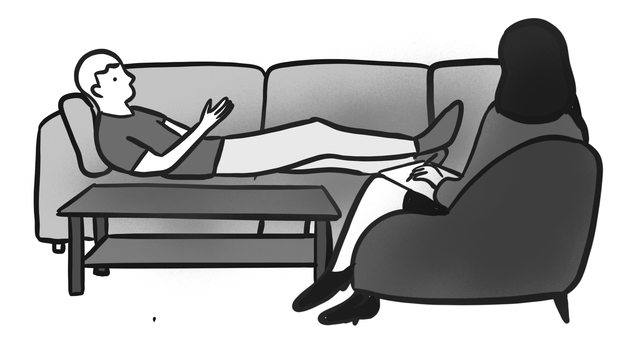
"No group in America has fallen further, faster than young men. When I began talking about this several years ago, that was a controversial statement, especially on the left, where many pathologize masculinity.
While the right has suggested the solution is to take women and non-white people back to the 1950s, the left’s view is that young men don’t have problems, they are the problem.
Neither attitude helps."
 @arXiv_csDS_bot@mastoxiv.page
2026-02-10 09:06:51
Local Computation Algorithms for (Minimum) Spanning Trees on Expander Graphs
Pan Peng, Yuyang Wang
https://arxiv.org/abs/2602.07394 https://arxiv.org/pdf/2602.07394 https://arxiv.org/html/2602.07394
arXiv:2602.07394v1 Announce Type: new
Abstract: We study \emph{local computation algorithms (LCAs)} for constructing spanning trees. In this setting, the goal is to locally determine, for each edge $ e \in E $, whether it belongs to a spanning tree $ T $ of the input graph $ G $, where $ T $ is defined implicitly by $ G $ and the randomness of the algorithm. It is known that LCAs for spanning trees do not exist in general graphs, even for simple graph families. We identify a natural and well-studied class of graphs -- \emph{expander graphs} -- that do admit \emph{sublinear-time} LCAs for spanning trees. This is perhaps surprising, as previous work on expanders only succeeded in designing LCAs for \emph{sparse spanning subgraphs}, rather than full spanning trees. We design an LCA with probe complexity $ O\left(\sqrt{n}\left(\frac{\log^2 n}{\phi^2} d\right)\right)$ for graphs with conductance at least $ \phi $ and maximum degree at most $ d $ (not necessarily constant), which is nearly optimal when $\phi$ and $d$ are constants, since $\Omega(\sqrt{n})$ probes are necessary even for expanders. Next, we show that for the natural class of \emph{\ER graphs} $ G(n, p) $ with $ np = n^{\delta} $ for any constant $ \delta > 0 $ (which are expanders with high probability), the $ \sqrt{n} $ lower bound can be bypassed. Specifically, we give an \emph{average-case} LCA for such graphs with probe complexity $ \tilde{O}(\sqrt{n^{1 - \delta}})$.
Finally, we extend our techniques to design LCAs for the \emph{minimum spanning tree (MST)} problem on weighted expander graphs. Specifically, given a $d$-regular unweighted graph $\bar{G}$ with sufficiently strong expansion, we consider the weighted graph $G$ obtained by assigning to each edge an independent and uniform random weight from $\{1,\ldots,W\}$, where $W = O(d)$. We show that there exists an LCA that is consistent with an exact MST of $G$, with probe complexity $\tilde{O}(\sqrt{n}d^2)$.
toXiv_bot_toot
 @vform@openbiblio.social
2026-02-04 19:18:43
Ach, ich hab immer via Shell geguckt, ob bei mail was bei username@localhost angekommen ist (für privaten Rechner brauch ich kein Forwarding an richtige Mail).
Gerade der Gedanke, ich kann die einfach in Thunderbird als lokalen Ordner anzeigen. Mit Flatpak grob so
1. Bei Flatpak Zugriff auf Ordner /var/mail erlauben
3. `ln -s /var/mail/USERNAME "/home/USERNAME/.var/app/org.mozilla.Thunderbird/.thunderbird/CHECKMICH.default-release/Mail/Local Folders/System-Mail"
@arXiv_csDS_bot@mastoxiv.page2026-02-04 07:41:25
Perfect Network Resilience in Polynomial Time
Matthias Bentert, Stefan Schmid
https://arxiv.org/abs/2602.03827 https://arxiv.org/pdf/2602.03827 https://arxiv.org/html/2602.03827
arXiv:2602.03827v1 Announce Type: new
Abstract: Modern communication networks support local fast rerouting mechanisms to quickly react to link failures: nodes store a set of conditional rerouting rules which define how to forward an incoming packet in case of incident link failures. The rerouting decisions at any node $v$ must rely solely on local information available at $v$: the link from which a packet arrived at $v$, the target of the packet, and the incident link failures at $v$. Ideally, such rerouting mechanisms provide perfect resilience: any packet is routed from its source to its target as long as the two are connected in the underlying graph after the link failures. Already in their seminal paper at ACM PODC '12, Feigenbaum, Godfrey, Panda, Schapira, Shenker, and Singla showed that perfect resilience cannot always be achieved. While the design of local rerouting algorithms has received much attention since then, we still lack a detailed understanding of when perfect resilience is achievable.
This paper closes this gap and presents a complete characterization of when perfect resilience can be achieved. This characterization also allows us to design an $O(n)$-time algorithm to decide whether a given instance is perfectly resilient and an $O(nm)$-time algorithm to compute perfectly resilient rerouting rules whenever it is. Our algorithm is also attractive for the simple structure of the rerouting rules it uses, known as skipping in the literature: alternative links are chosen according to an ordered priority list (per in-port), where failed links are simply skipped. Intriguingly, our result also implies that in the context of perfect resilience, skipping rerouting rules are as powerful as more general rerouting rules. This partially answers a long-standing open question by Chiesa, Nikolaevskiy, Mitrovic, Gurtov, Madry, Schapira, and Shenker [IEEE/ACM Transactions on Networking, 2017] in the affirmative.
toXiv_bot_toot