 @EarthOrgUK@mastodon.energy
2026-08-14 03:23:04
@EarthOrgUK@mastodon.energy @Mediagazer@mstdn.social
IMDb adds Digital Creator as a new professional category on both IMDb and IMDbPro, including sub-categories like Streamer, Vlogger, and Influencer (Todd Spangler/Variety)
https://variety.com/2026/digital/news/imdb-digital-creator-profiles-1236855930/
 @Techmeme@techhub.social
Extracted system prompts show Meta's Muse compiles "a page for every person in the user's life", with facts, history, tips to improve relationships, and more (Wired)
https://www.wired.com/story/muse-creates-detailed-profiles-of-all…
 @netzschleuder@social.skewed.de
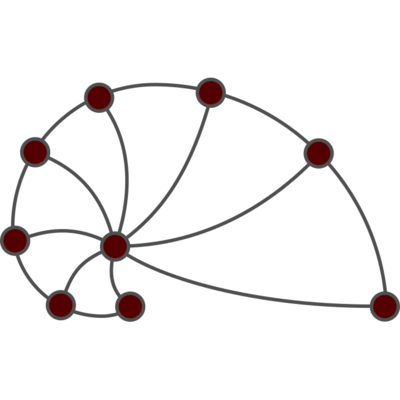
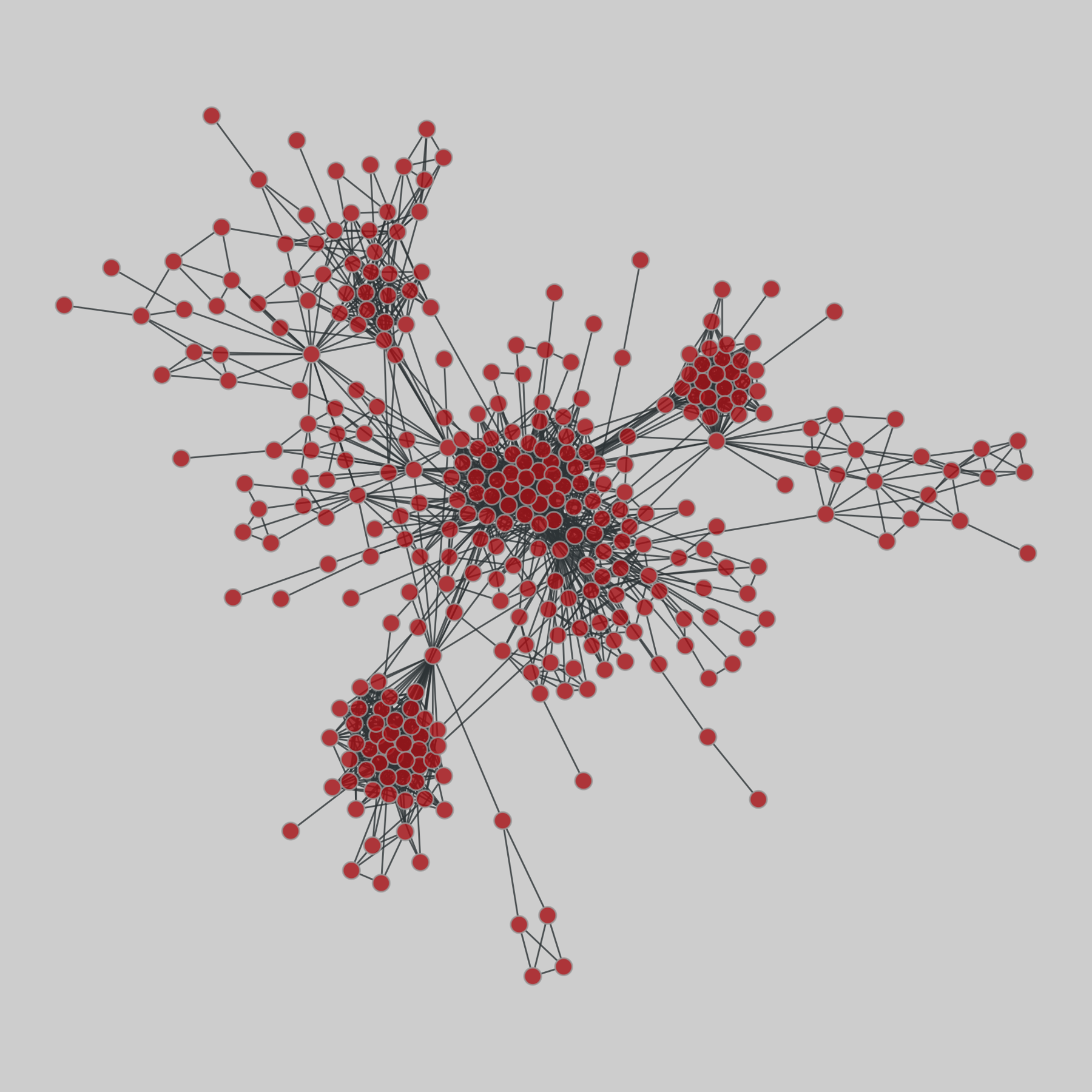
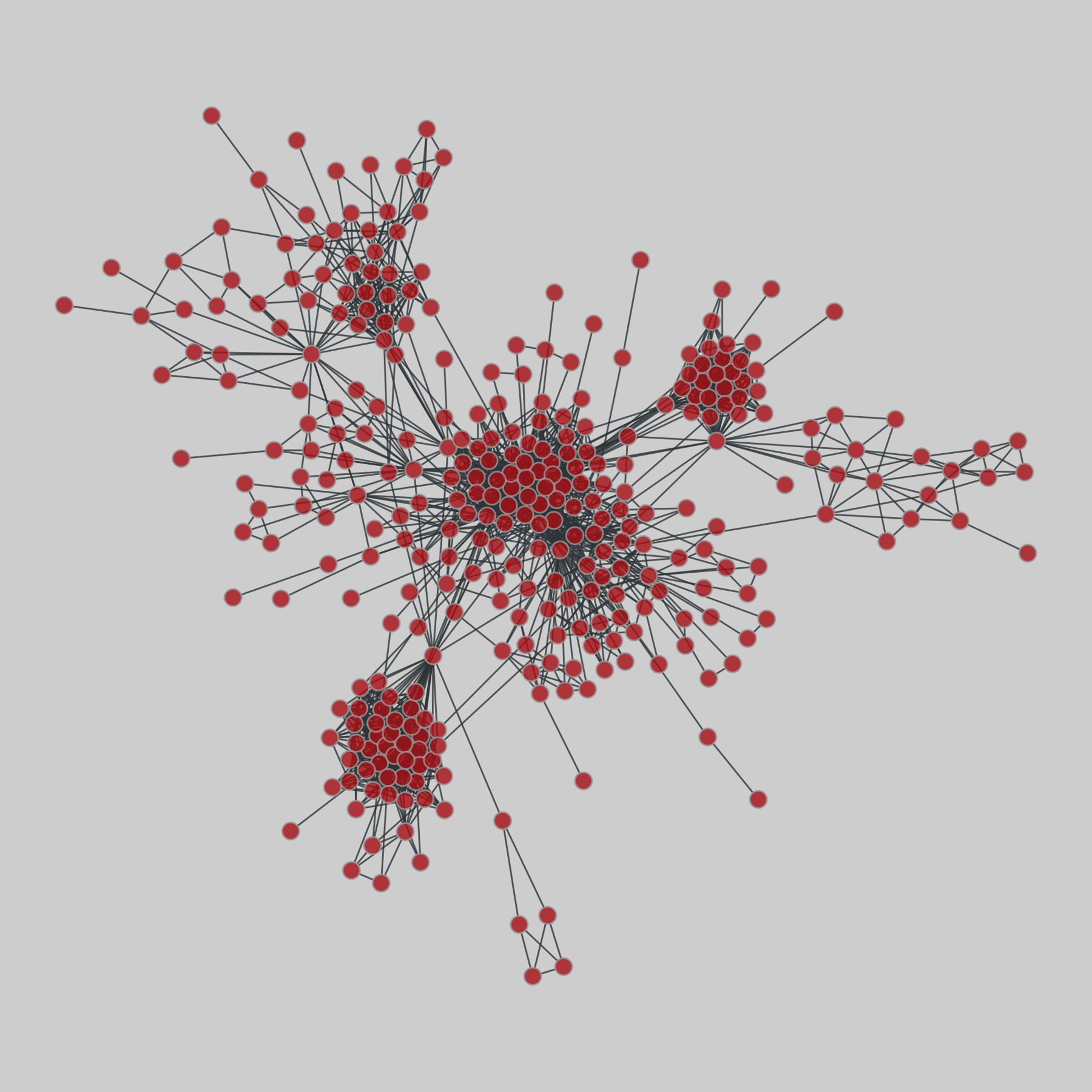
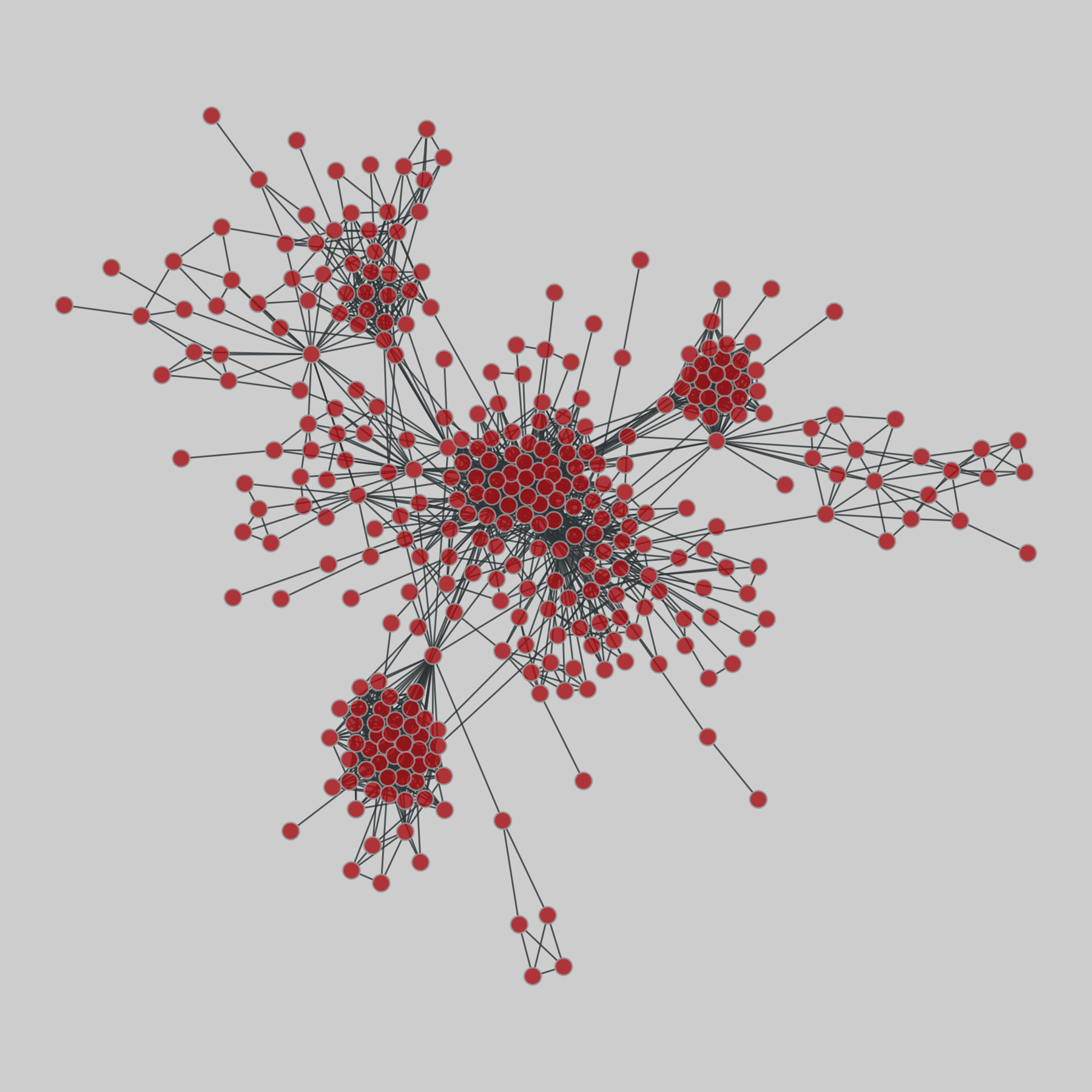
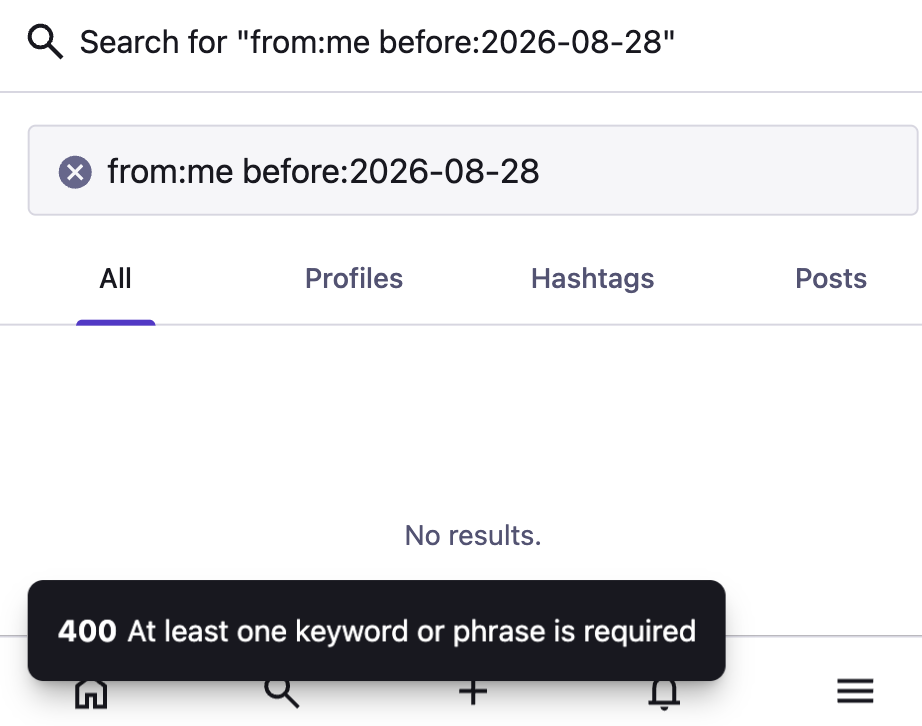
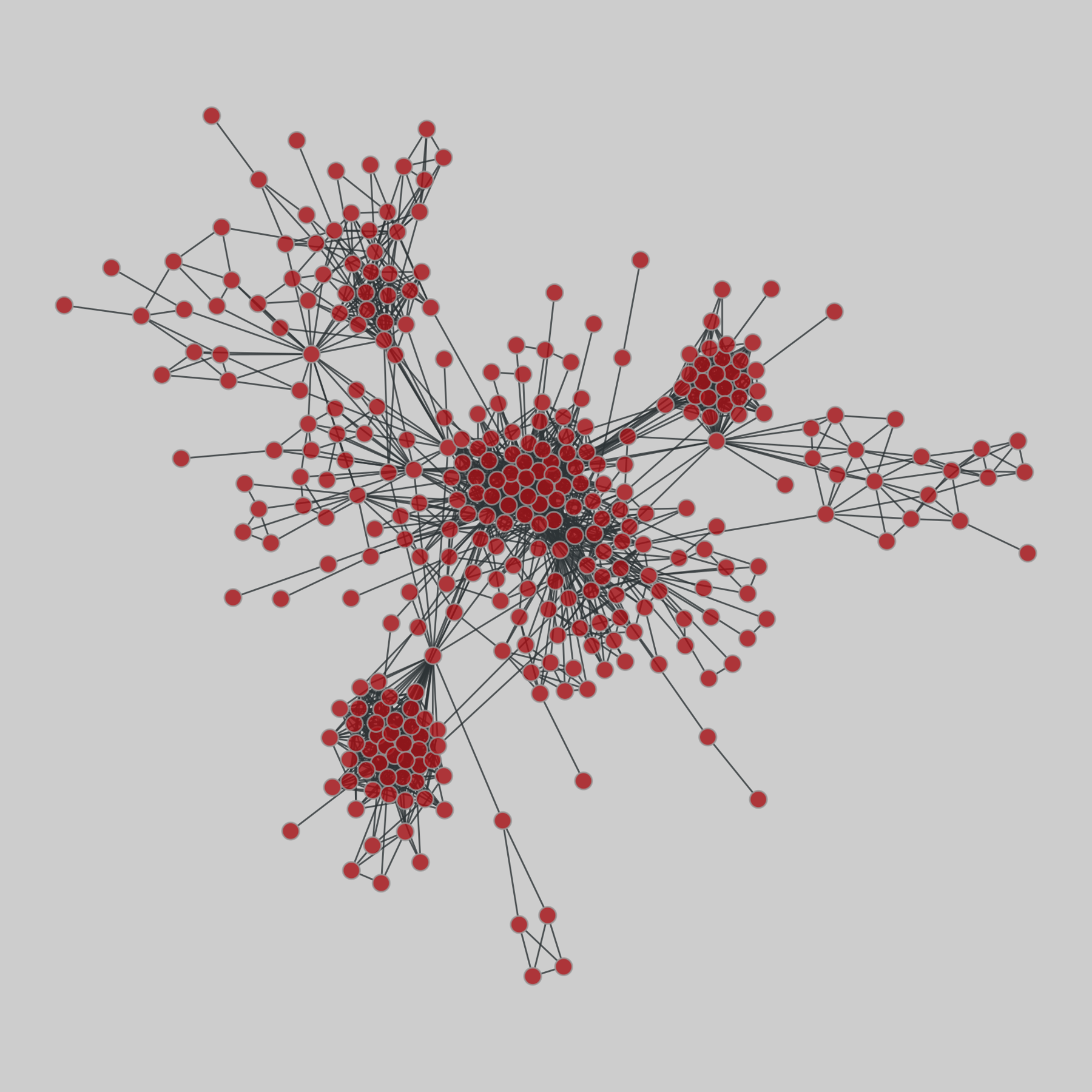
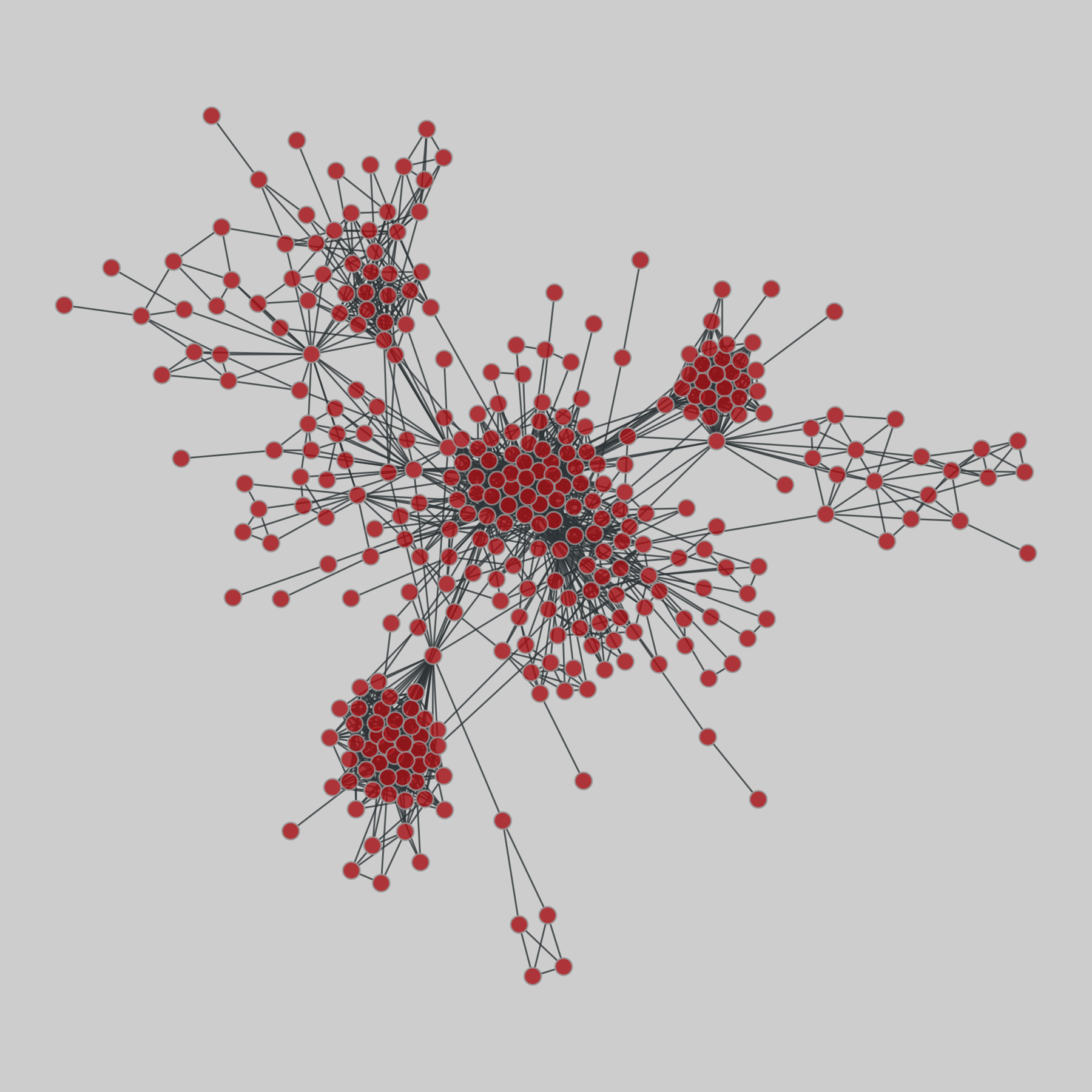
facebook_friends: Maier Facebook friends (2014)
A small anonymized Facebook ego network, from April 2014. Nodes are Facebook profiles, and an edge exists if the two profiles are "friends" on Facebook. Metadata gives the social context for the relationship between ego and alter.
This network has 362 nodes and 1988 edges.
Tags: Social, Online, Unweighted, Metadata
 @Techmeme@techhub.social
LinkedIn profiles show Google appears to have completed its talent deal, reportedly for $1.5B , with AI coding startup Mechanize (Business Insider)
https://www.businessinsider.com/google-completes-deal-for-ai-agents-startup-mechanize-2026-9…
 @padraig@mastodon.ie @Mediagazer@mstdn.social
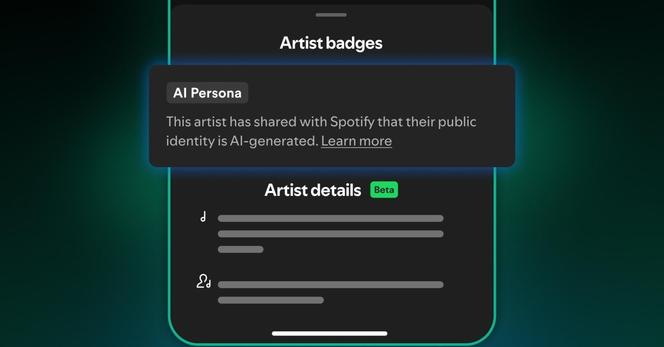
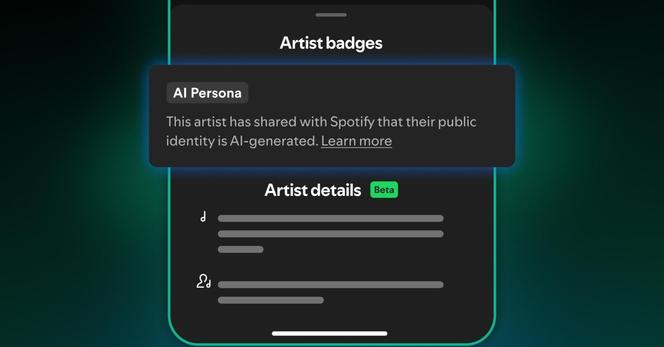
Spotify says it will roll out an "AI Persona" badge in September for profiles that do "not represent a real person" and exclude their music from recommendations (Emma Roth/The Verge)
https://www.theverge.com/entertainment/977815/spot…
@Techmeme@techhub.socialSpotify plans to roll out AI Persona labeling in mid-September for profiles that do "not represent a real person"; the system uses human review and AI tools (Emma Roth/The Verge)
https://www.theverge.com/entertainment/977815/spotify-ai-persona…
 @thomasrenkert@hcommons.social
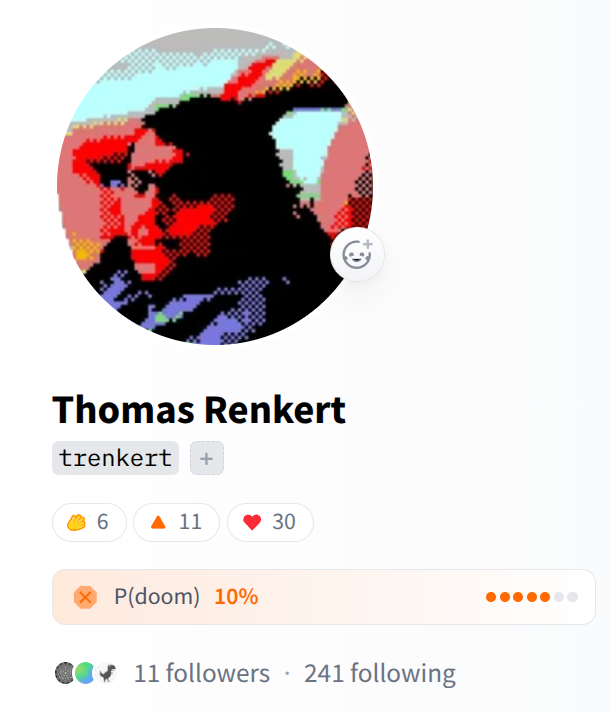
#Huggingface lets you add your personal p(doom) prediction to your profile now.
Makes for a nice personal touch of living through the apocalypse, if you ask me.

 @netzschleuder@social.skewed.de
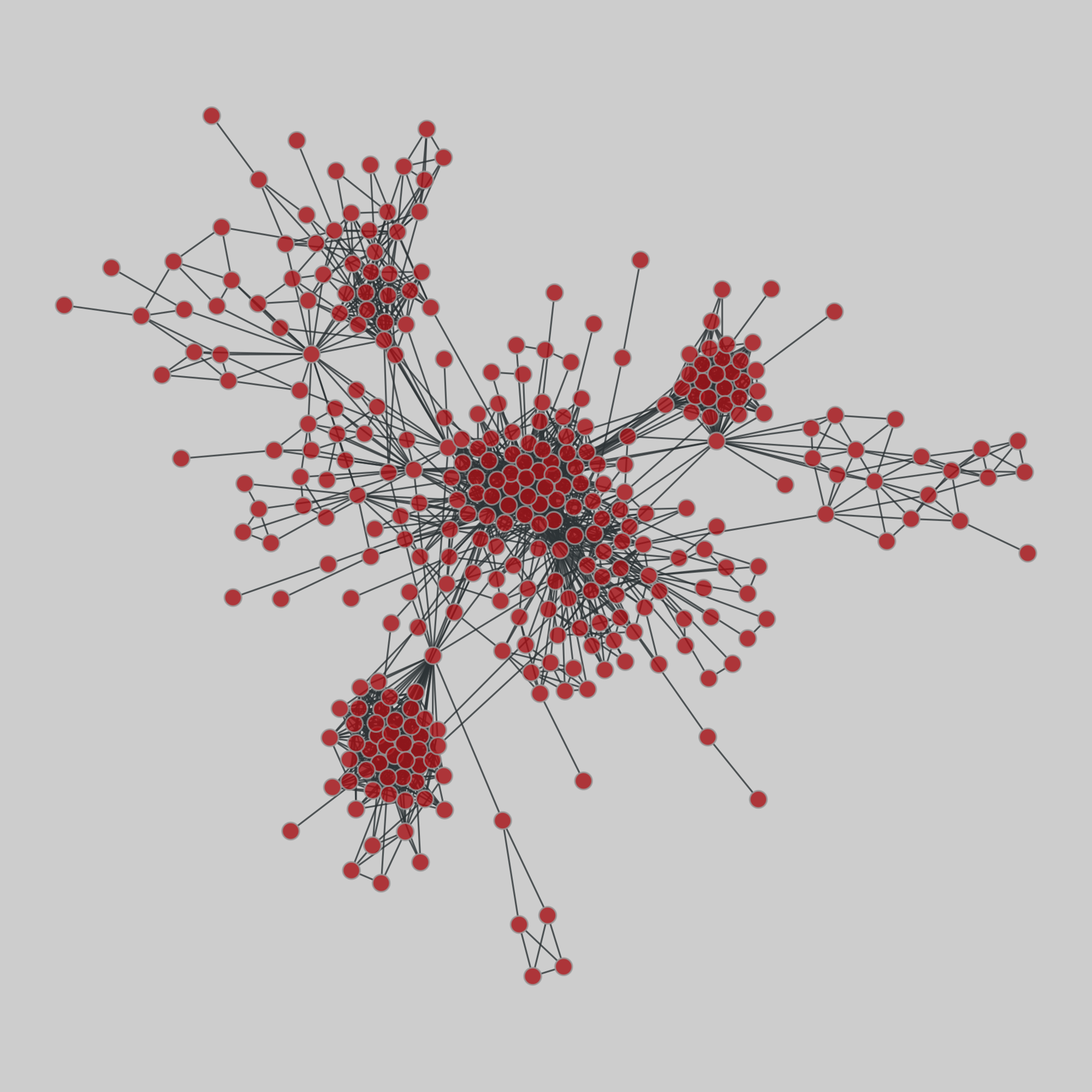
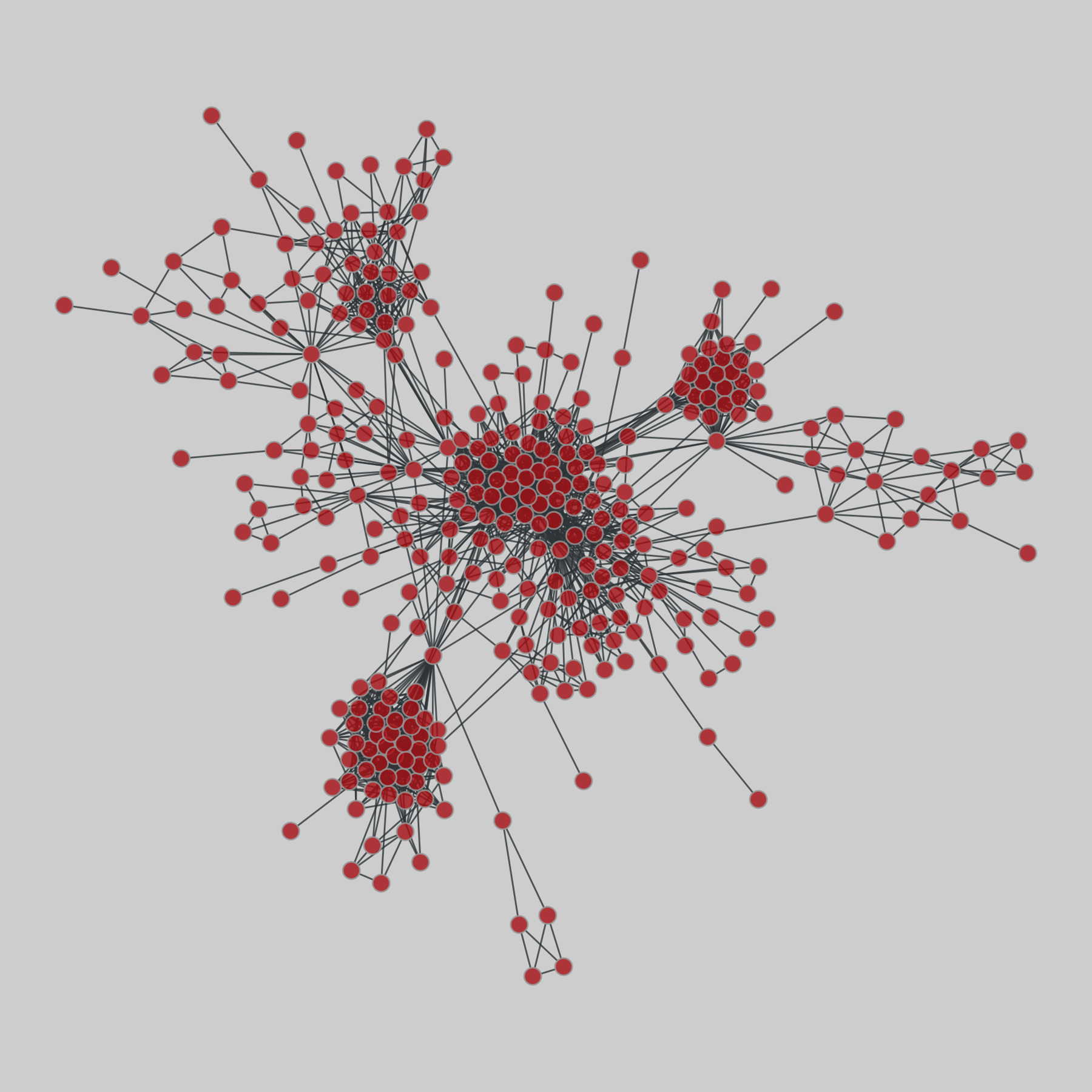
facebook_friends: Maier Facebook friends (2014)
A small anonymized Facebook ego network, from April 2014. Nodes are Facebook profiles, and an edge exists if the two profiles are "friends" on Facebook. Metadata gives the social context for the relationship between ego and alter.
This network has 362 nodes and 1988 edges.
Tags: Social, Online, Unweighted, Metadata
 @frankel@mastodon.top
 @arXiv_csAR_bot@mastoxiv.page
A Full-Stack Characterization of High-Bandwidth Flash for KV-Centric LLM Serving
Zhuoran Li, Zhuohang Bian, Xin Huang, Yibo Zhao, Guangyu Sun, Youwei Zhuo
https://arxiv.org/abs/2608.11668 https://arxiv.org/pdf/2608.11668 https://arxiv.org/html/2608.11668
arXiv:2608.11668v1 Announce Type: new
Abstract: High-Bandwidth Flash (HBF) stacks NAND behind a wide, package-local interface, giving flash-scale capacity with far better read latency and bandwidth than an SSD. This makes it tempting to keep an SSD-style Mooncake KV-offloading stack and swap only the backing tier for HBF. We test that substitution with an extended TokenSim, four complete two-hour Qwen-Bailian production traces, five dense and mixture-of-experts models, and H100/B200 profiles. Serving gets worse, not better, and a cost-benefit model explains why. A faster far tier helps only when read I/O is the serving bottleneck, reads outweigh writes, and delivered bandwidth is sustainable. All three must hold together, and transient KV fails every one. The package trade that buys flash costs GPU near-tier capacity and bandwidth, so average end-to-end latency rises 2--5.5x and maximum SLO goodput falls 1.1--2.7x across H100 and B200. Serving is almost insensitive to HBF's own read/write latency, and base-die near-memory compute does not raise the flash tier's share of the critical path. The two-tier hierarchy keeps reuse in the near tier and hands HBF a write-heavy stream, so writes outnumber reads on every trace. A 3D-ICE model shows that stream drives the stack to its thermal limit well below peak bandwidth, and a TLC tier wears out sooner than a capacity-matched SSD pool. The faster device yields a slower system because the package gives up more than the medium returns. HBF is not the problem; using it as a faster SSD for transient KV is. It belongs in serving as a selective, reuse-aware, write-budgeted, and thermally coordinated tier, not as a drop-in SSD replacement.
toXiv_bot_toot
 @CubitOom@social.linux.pizza
Fascist little bitch, racially profiles and harasses a US citizen (West Texas)
Video Source:
#ice

 @seeingwithsound@mas.to
Tensor decomposition reveals discrete cortical reorganization under graded propofol anesthesia https://www.frontiersin.org/journals/neuroscience/articles/10.3389/fnins.2026.1950745/full Circumstantial evidence that the qualia of perception (vis…

 @arXiv_mathph_bot@mastoxiv.page
Operator Schmidt Rank and the Geometry of Schmidt Profiles
Mohsen Kian, Mohammad Sal Moslehian
https://arxiv.org/abs/2610.09794 https://arxiv.org/pdf/2610.…
 @cdarwin@c.im
Experts estimate that a language is lost every two weeks
— and that half of the world’s 7,000 spoken languages could be lost by the end of the century.
Quechua is the most widely spoken Indigenous language in the Americas,
with approximately 7 to 10 million speakers living primarily in Peru, Bolivia and Ecuador.
But like so many Indigenous languages, Qechua is vulnerable due to cultural pressures and discrimination.
The new documentary Runa Simi
— “our la…
 @arXiv_mathGN_bot@mastoxiv.page
Replaced article(s) found for math.GN. https://arxiv.org/list/math.GN/new
[1/1]:
- Residual profiles and bounded generation in pro-$p$ completions of amalgamated products
Dekui Peng, Jiang Yang
https://arxiv.org/abs/2608.02193 https://mastoxiv.page/@arXiv_mathGR_bot/117036342885792052
toXiv_bot_toot
@EarthOrgUK@mastodon.energy @arXiv_astrophGA_bot@mastoxiv.page
J023721.13$-$010528.5: A Giant $S$-shaped Radio Galaxy Showing Four Episodes of Jet Activity
Pavan Vijay Khadekar, Dharam Vir Lal, Ramana Athreya
https://arxiv.org/abs/2609.08506 https://arxiv.org/pdf/2609.08506 https://arxiv.org/html/2609.08506
arXiv:2609.08506v1 Announce Type: new
Abstract: We present high-sensitivity, high-resolution radio observations of J023721.13$-$010528.5 using the upgraded Giant Metrewave Radio Telescope in band-3 (250--500\,MHz) and band-4 (550--950\,MHz), along with MeerKAT (1280\,MHz) and VLA (3\,GHz) survey images. The radio source, hosted by a bright cluster galaxy at redshift $z=0.372$, is a giant radio galaxy with a projected linear size between the outermost hotspots of 1.2~Mpc and is one of the largest $S$-shaped radio sources known. Its radio morphology revealed four pairs of components straddling the radio core, which were also local maxima in profiles of radio flux densities and equipartition energy density measured along the radio lobes. Spatially resolved multi-frequency spectral analysis showed progressively older emission from the inner to the outer components, spanning approximately 4--21 Myr. The high degree of symmetry of the inner three component-pairs with respect to the radio core makes it improbable that these are randomly located knots in the radio jet. Therefore, we present J023721.13$-$010528.5 as the prototype of a new class of radio galaxies with four episodes of jet activity --- a quadruple-double radio galaxy. We suggest that giant $S$-shaped radio sources may be among the most promising targets for identifying and studying multi-epoch radio jet activity, since their large linear sizes and jet-axis evolution can spatially separate hotspots from successive episodes, making them easier to detect and analyse.
toXiv_bot_toot
 @sherold@mastodon.online
Hi @… and @…. 👋🏻 Did the "Search my posts" feature disappear from the ... menu on the profile page, or did I miss something?

 @arXiv_astrophCO_bot@mastoxiv.page
Replaced article(s) found for astro-ph.CO. https://arxiv.org/list/astro-ph.CO/new
[2/2]:
- Empirical Relationship Between Dark Matter and Baryon Profiles for Solving the Core-Cusp and Dive...
Kento Kamada
https://arxiv.org/abs/2512.23008 https://mastoxiv.page/@arXiv_astrophGA_bot/115807857809860714
- Traversable Wormholes induced by polytropic $n=1$ energy density
Remo Garattini, Francisco S. N. Lobo, Kirill Zatrimaylov
https://arxiv.org/abs/2603.12527 https://mastoxiv.page/@arXiv_grqc_bot/116237749184521305
- Primordial Black Holes: A Review of Formation and Evolution
S. Shankaranarayanan, Soumya Bhattacharya, Archit Vidyarthi
https://arxiv.org/abs/2606.23846
toXiv_bot_toot
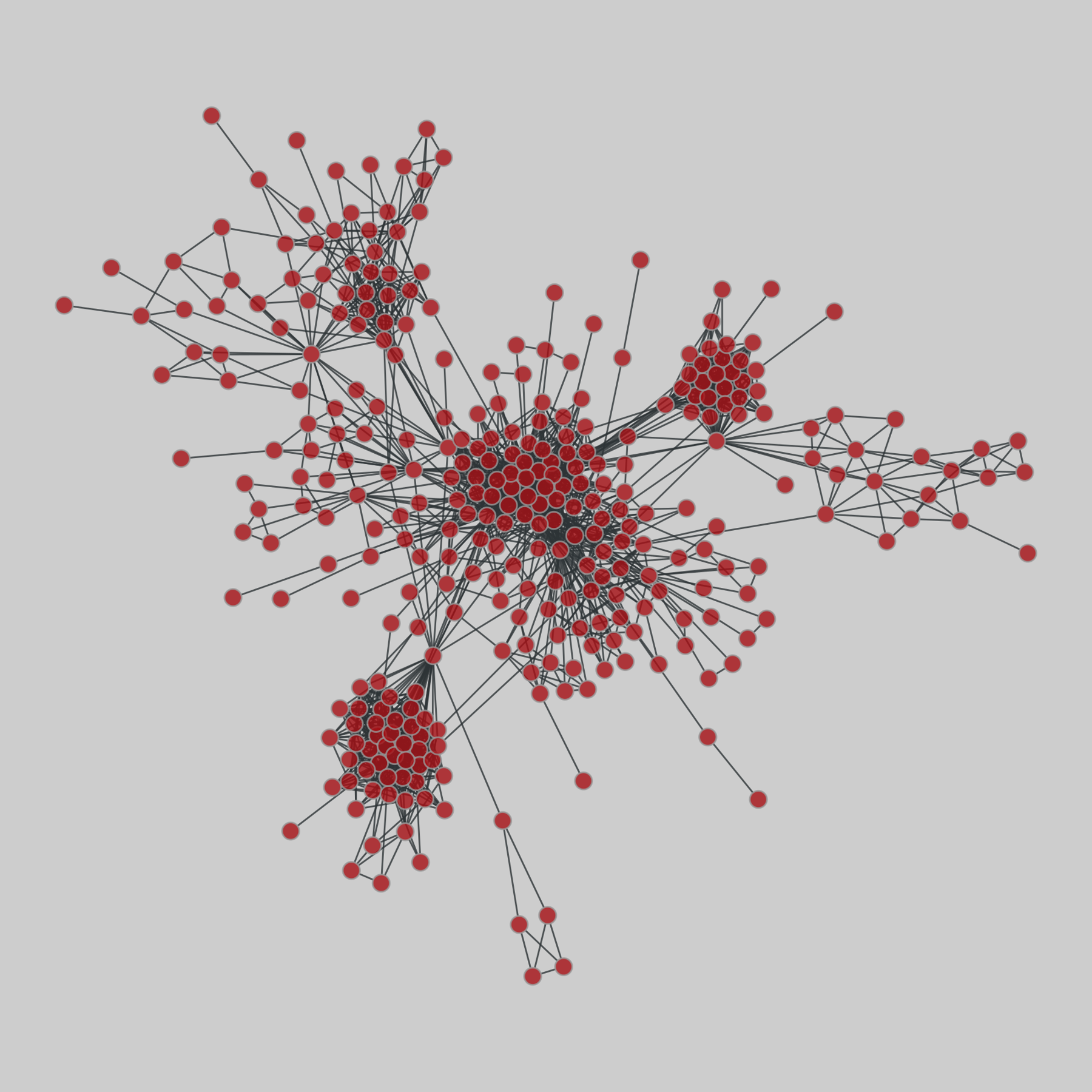
@netzschleuder@social.skewed.defacebook_friends: Maier Facebook friends (2014)
A small anonymized Facebook ego network, from April 2014. Nodes are Facebook profiles, and an edge exists if the two profiles are "friends" on Facebook. Metadata gives the social context for the relationship between ego and alter.
This network has 362 nodes and 1988 edges.
Tags: Social, Online, Unweighted, Metadata
 @theodric@social.linux.pizza
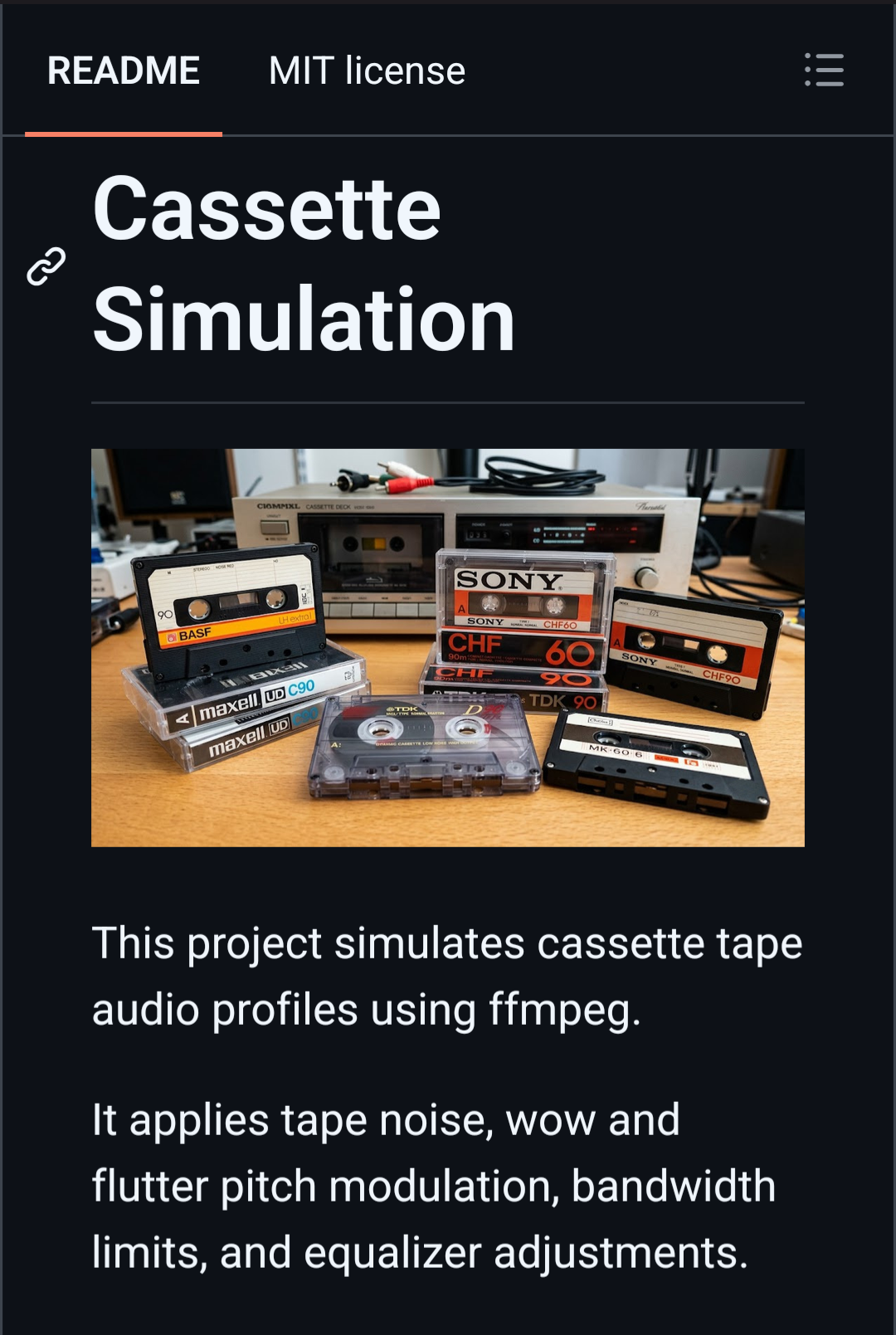
Speaking as someone who grew up in the cassette and CD era: why in the hell would you want to make your recording sound worse? Tapes sucked. Their main advantages over CD were durability at rest when stepped on or dropped under the car seat, and (for about 15 years) recordability. The people who are convinced analog is superior aren't getting anything out of applying synthetic distortion to a digital file in ffmpeg, so it's not that.
 @EarthOrgUK@mastodon.energy
Pint, Poster, Paper: Slice-and-Dice Heating Decarb (2026) - From Pint-of-Science public talk to academic paper; derivatives and heat-pump load profiles. #PhD #heating #flexibility -
 @stf@chaos.social
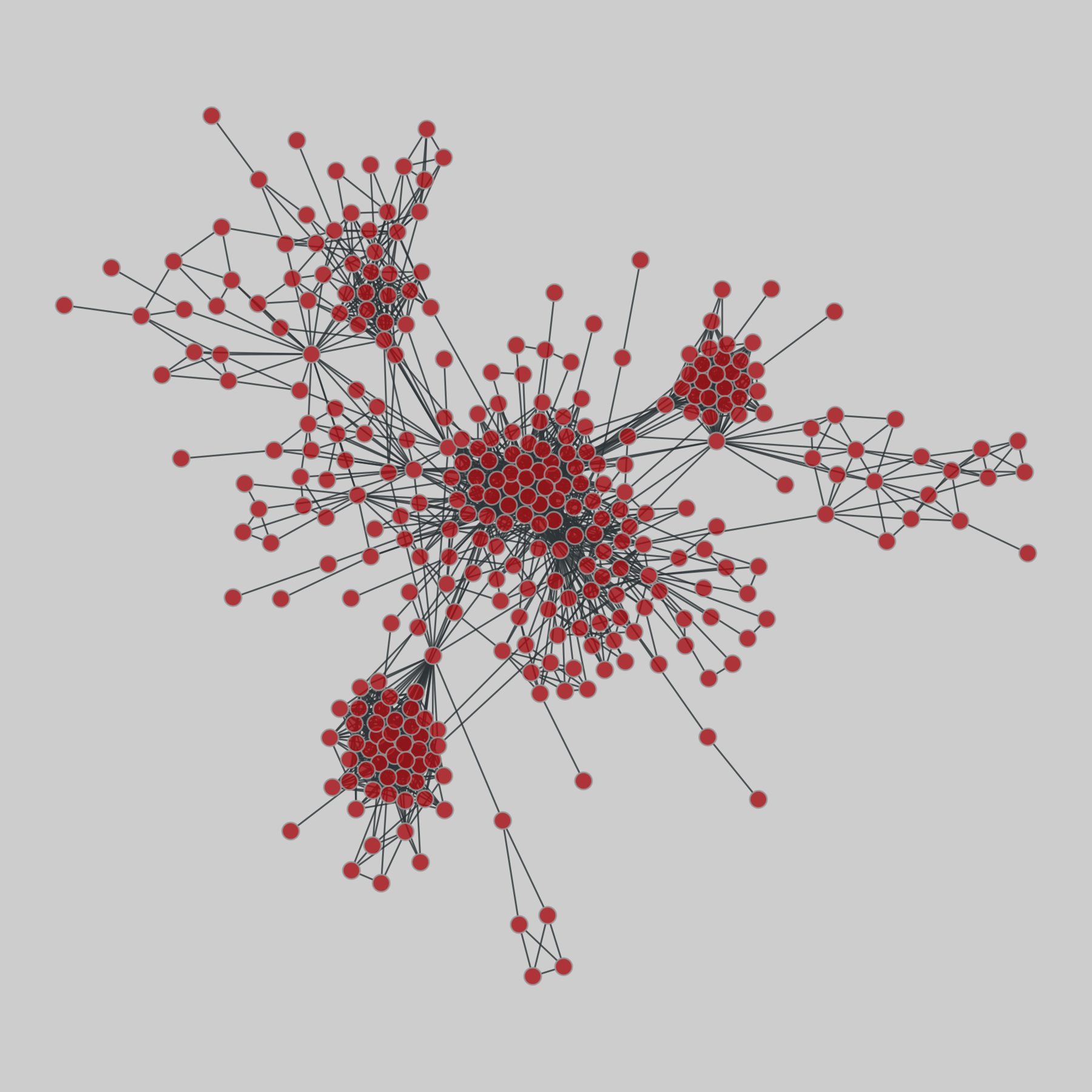
if only #mastodon would support *any* kind of shitty search for posts scrolling by... but even when i know to query "from:@… <term>" i get 0 posts, but 3 completely irrelevant profiles, for any term, even terms that i see in my feed which are in the toots by this …
@arXiv_astrophGA_bot@mastoxiv.pageDetection prospects for heavy WIMP dark matter around M31* in microwave band
Andrei E. Egorov
https://arxiv.org/abs/2609.08771 https://arxiv.org/pdf/2609.08771 https://arxiv.org/html/2609.08771
arXiv:2609.08771v1 Announce Type: new
Abstract: This work analyzes the detection prospects for weakly interacting massive particles (WIMPs) in dark matter (DM) density spike around the supermassive black hole (SMBH) in Andromeda galaxy M31 in microwave band. WIMP annihilation produces relativistic electrons and positrons, which generate the synchrotron emission in strong magnetic field of the accretion flow medium at microwave frequencies. Properties of this emission, as well as their dependence on DM and medium parameters, were modeled. Atacama Large Millimeter Array (ALMA) sensitivity to this emission and underlying WIMP parameters was estimated. It was obtained that M31* in microwave band represents the unique target, where DM spike signal can be detected in case of realistic spike and halo density profiles. In such case ALMA may reach the thermal s-wave annihilating WIMPs with masses up to around 1 TeV with just 10--100 hours exposure. Optimistic parameter configurations may allow probing all possible WIMP masses up to 100 TeV. Related systematic uncertainties are discussed.
toXiv_bot_toot
 @michabbb@social.vivaldi.net
🔍 refscout profiles live award-winning sites for the libraries they really load, pinned scenes, scroll budget, fonts and painted palette. moodboard builds a numbered contact sheet, and source.mjs fetches licence-clean HDRIs and glTF models with every licence recorded.
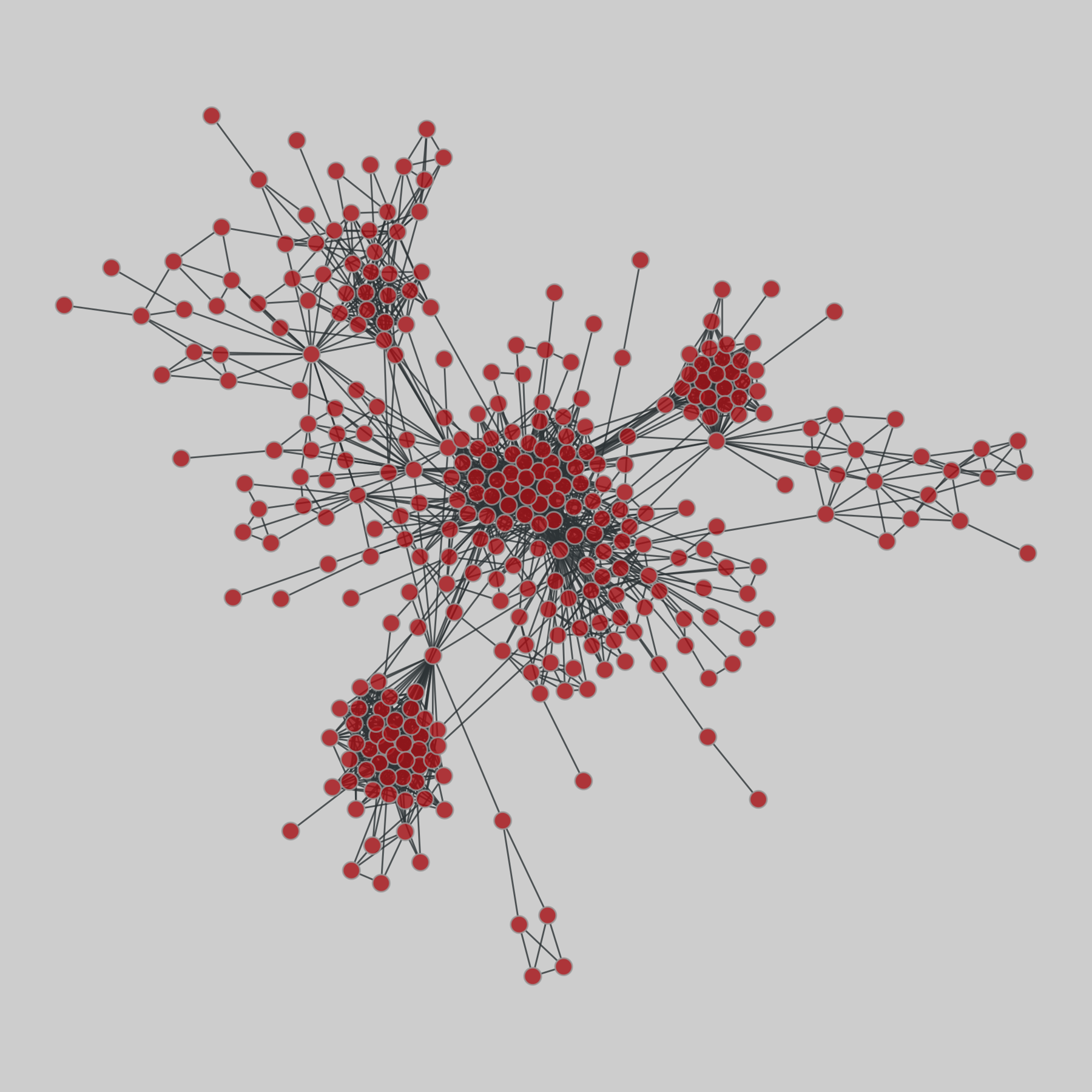
@netzschleuder@social.skewed.defacebook_friends: Maier Facebook friends (2014)
A small anonymized Facebook ego network, from April 2014. Nodes are Facebook profiles, and an edge exists if the two profiles are "friends" on Facebook. Metadata gives the social context for the relationship between ego and alter.
This network has 362 nodes and 1988 edges.
Tags: Social, Online, Unweighted, Metadata
 @EarthOrgUK@mastodon.energy
 @NFL@darktundra.xyz
Renner's 2027 NFL Draft scouting series: Ranking the top 10 running backs
https://www.cbssports.com/college-football/news/top-2027-nfl-draft-running-backs-ahmad-hardy/
 @arXiv_physicsinsdet_bot@mastoxiv.page
Post-diffusion cooling effects on Hall-derived active lithium donor profiles in high-purity germanium
Kunming Dong, Dongming Mei, Anupama Karki, Partrick Burns, Sanjay Bhattarai
https://arxiv.org/abs/2608.23511
 @metacurity@infosec.exchange
Check out today's Metacurity for the most crucial infosec developments you should know, scanned from thousands of sources and tightly excerpted, including
--AI could crack crypto’s defenses before quantum computers do, Buterin warns,
--FBI moves to seize sites selling stolen intimate images,
--Empire Market co-founder gets 40 years for $430m dark web operation,
--MonsterCloud owner charged over secret ransomware payments,
--Asos breach exposes detailed customer profiles,
--Arizona court hack exposes 1.3m people’s data,
--Ransomware attack knocks Japanese websites offline,
--Four states sue TP-Link over security claims and China ties,
--Ex-CIA officer admits $193m fraud and exposing an intelligence source,
--FBI warns FortiBleed attacks give ransomware gangs a foothold,
--Poem-powered botnet compromises 3.4k servers,
--Russia-linked spies sharpen malware targeting Ukraine,
--Apollo software pioneer Margaret Hamilton dies at 90,
--Senate passes healthcare cybersecurity bill,
--AI engineers put GPT-6 Astra behind the wheel for burgers,
--Co-op puts workers’ customer calls under AI surveillance
https://www.metacurity.com/ai-could-crack-cryptos-defenses-before-quantum-computers-do-buterin-warns/
@arXiv_astrophGA_bot@mastoxiv.pageReplaced article(s) found for astro-ph.GA. https://arxiv.org/list/astro-ph.GA/new
[3/4]:
- Characterising the Globular Cluster Systems of Three Local Group Dwarf Galaxies: NGC6822, NGC147 ...
McGill, Ferguson, Mackey, Crociati, Howell, Huxor, Irwin, McConnachie, Savino, Tanvir, Weisz
https://arxiv.org/abs/2608.28434 https://mastoxiv.page/@arXiv_astrophGA_bot/117189126930011519
- Magnetic Fields in Massive Star-forming Regions (MagMaR). IX. Radiative Torque Alignment and Disr...
Vineet Rawat, et al.
https://arxiv.org/abs/2609.03458 https://mastoxiv.page/@arXiv_astrophGA_bot/117211751382008296
- Rapid Growth of Intermediate-Mass Black Holes through Disk-induced Stellar Disruptions
Mengye Wang, Yiqiu Ma, Qingwen Wu, Boyuan Liu, Zijian Wang, Zhili Wang
https://arxiv.org/abs/2609.03701 https://mastoxiv.page/@arXiv_astrophGA_bot/117211765145858867
- Comparison of HMG and flat rotation velocities inferred from galaxy-galaxy weak lensing
Robert Monjo
https://arxiv.org/abs/2410.04258 https://mastoxiv.page/@arXiv_astrophCO_bot/113270920913210256
- Not-quite-primordial black holes
Wenzer Qin, Soubhik Kumar, Priyamvada Natarajan, Neal Weiner
https://arxiv.org/abs/2506.13858 https://mastoxiv.page/@arXiv_astrophCO_bot/114703627339774703
- Constraining fuzzy dark matter with the 21-cm power spectrum from Cosmic Dawn and Reionization
Shihang Liu, Yilin Liu, Bowen Peng, Mengzhou Xie, Zelong Liu, Bohua Li, Yi Mao
https://arxiv.org/abs/2508.10176 https://mastoxiv.page/@arXiv_astrophCO_bot/115031874791799781
- Using Strong Lensing to Detect Subhalos with Steep Inner Density Profiles
Kassidy E. Kollmann, James W. Nightingale, Mariangela Lisanti, Andrew Robertson, Oren Slone
https://arxiv.org/abs/2510.17956 https://mastoxiv.page/@arXiv_astrophCO_bot/115416896040400445
- Axion Constraints from White Dwarf Cooling in 47 Tucanae
Leesa Fleury, Alysa Obertas, Harvey Richer, Jeremy Heyl
https://arxiv.org/abs/2511.21676 https://mastoxiv.page/@arXiv_astrophSR_bot/115621063357293188
- Frequency shift and viewing direction variations in gravitational lensing
Miko{\l}aj Korzy\'nski, Mateusz Kulejewski
https://arxiv.org/abs/2601.13912 https://mastoxiv.page/@arXiv_astrophCO_bot/115932615538946873
- WIMP Dark Matter Searches in Reticulum II Using MeerKAT
Shibre Semane, Geoff Beck, Sphesihle Makhathini, Marco Regis, Gianni Bernardi
https://arxiv.org/abs/2603.06385 https://mastoxiv.page/@arXiv_astrophCO_bot/116198370267558665
toXiv_bot_toot
@Mediagazer@mstdn.socialSoundCloud launches a beta feature letting artists sell music directly from their profiles, instead of diverting fans to purchase from services like Bandcamp (Jess Weatherbed/The Verge)
https://www.theverge.com/entertainment/984926/soundcloud-direct-mu…
@netzschleuder@social.skewed.defacebook_friends: Maier Facebook friends (2014)
A small anonymized Facebook ego network, from April 2014. Nodes are Facebook profiles, and an edge exists if the two profiles are "friends" on Facebook. Metadata gives the social context for the relationship between ego and alter.
This network has 362 nodes and 1988 edges.
Tags: Social, Online, Unweighted, Metadata
 @pixelpusher220@dmv.community
Might as well make a full post
Do NOT wipe your phone to hide it from law enforcement - Unless there is evidence on your phone of worse crimes than 'destruction of evidence'.
"Don't do the crime if you can't do the time" etc.
For Android users there is a far less risky option. Create a second user on your phone.
https://www.howtogeek.com/333484/how-to-set-up-multiple-user-profiles-on-android/
Separate user,
separate PIN,
separate lock screen,
separate lock screen wall paper,
separate CONTACTS,
separate BROWSING HISTORY etc.
Leave that user as the logged in/locked user whenever you'd wish to shield the main account from prying eyes.
Officer: "UNLOCK YOUR PHONE!"
Me: Sure
Officer: "Wtf, man you play a lot of backgammon. Move along"
You didn't disobey the command.
https://arstechnica.com/gadgets/2026/07/activist-charged-with-felony-after-giving-border-agent-duress-code-that-wiped-his-phone/
@netzschleuder@social.skewed.defacebook_friends: Maier Facebook friends (2014)
A small anonymized Facebook ego network, from April 2014. Nodes are Facebook profiles, and an edge exists if the two profiles are "friends" on Facebook. Metadata gives the social context for the relationship between ego and alter.
This network has 362 nodes and 1988 edges.
Tags: Social, Online, Unweighted, Metadata
 @cosmos4u@scicomm.xyz
The First Measurement of Jet Collimation Profiles in an X-Ray Binary - The Case of #SS433: https://iopscience.iop.org/article/10.3847/2041-8213/ae93b4 -> Researchers Reveal First Jet Collimation Profile in an X-ray Binary: https://english.cas.cn/newsroom/research-news/202609/t20260902_1189725.shtml
@netzschleuder@social.skewed.defacebook_friends: Maier Facebook friends (2014)
A small anonymized Facebook ego network, from April 2014. Nodes are Facebook profiles, and an edge exists if the two profiles are "friends" on Facebook. Metadata gives the social context for the relationship between ego and alter.
This network has 362 nodes and 1988 edges.
Tags: Social, Online, Unweighted, Metadata
 @Techmeme@techhub.social
Hinge adds Friend's Take, a new feature that lets daters enlist 10 close contacts to share written feedback, photos, voice notes, or videos on their profiles (Samantha Kelly/Bloomberg)
https://www.bloomberg.com/news/articles/20
 @luana@wetdry.world
Any browser with Safari-like profiles and tab groups on Android? (and for linux mobile too)
 @arXiv_physicsfludyn_bot@mastoxiv.page
Theoretical development of an operational wave-induced ice erosion model through laboratory experiments
Wenjun Lu, Behnam Ghadimi, Dominique Mouaze, Marianne Font, R\'emi Lambert, Harvey Goodwin, Widar Weizhi Wang, Raed Lubbad, Sveinung L{\o}set
https://arxiv.org/abs/2607.20118 https://arxiv.org/pdf/2607.20118 https://arxiv.org/html/2607.20118
arXiv:2607.20118v1 Announce Type: new
Abstract: Wave-induced melting of vertical ice fronts is represented in several operational iceberg and coastal-erosion models by the rough-wall parameterization of White (1980), whose closure chain is incompletely documented and whose commonly used compact expression is stated at the waterline. We reconstruct the formulation, specify the rough-turbulent wave-friction closure using Jonsson's implicit relation and its Lambert-W solution, and extend the model to a depth-resolved melt-rate profile under linear wave kinematics. Because the horizontal and vertical orbital-velocity components are linked, we use the horizontal component as a convenient representative scale and introduce a dimensionless coefficient alpha for the remaining closure uncertainty. The reconstruction gives a waterline coefficient of 3.0 x 10^-4 with White's resultant-velocity definition and 2.09 x 10^-4 for the reference choice alpha = 1; neither reproduces White's published 1.46 x 10^-4 directly. Two monochromatic wave-flume experiments with freshwater ice are then used to calibrate alpha from profiles below the wave trough. The full Lambert-W friction coefficient is used in this calibration. Best-fit values are 0.684 and 0.612 for periods of 1.54 and 0.87 s, respectively, a relative difference of approximately 11%. Their corresponding effective waterline coefficients, 1.43 x 10^-4 and 1.28 x 10^-4, are close to White's published value but do not constitute an independent validation. The fitted profiles reproduce the observed depth dependence below the trough, while deviations near the surface expose unresolved effects of intermittent submergence, local wave impact, and uncertain thermal forcing.
toXiv_bot_toot
@netzschleuder@social.skewed.defacebook_friends: Maier Facebook friends (2014)
A small anonymized Facebook ego network, from April 2014. Nodes are Facebook profiles, and an edge exists if the two profiles are "friends" on Facebook. Metadata gives the social context for the relationship between ego and alter.
This network has 362 nodes and 1988 edges.
Tags: Social, Online, Unweighted, Metadata
 @cheeaun@mastodon.social
😱 so "Search my posts" and month filter on profiles on #PhanpySocial won't appear now. Will be looking into this 🙇♂️
 @metacurity@infosec.exchange
Don't miss today's Metacurity for the most critical infosec developments you should know, including
--Europe’s wind and solar farms leave controls exposed, raising the risk of sabotage,
--Anthropic opens powerful AI models to more cyber defenders,
--Anthropic offers startups a free year of Claude Team and $1k in credits,
--Mistral previews Le Chonk to challenge AI heavyweights,
--Meta, Walmart and Stripe push a standard for personal AI agents,
--AI music fraudster gets 18 months for an $8m royalty scam,
--EY hack exposes Goldman Sachs data,
--Atlassian urges patches for critical file access flaw,
--Hackers hijack three top-level domains to forge Google TLS certificates,
--Hadrian raises $40m for AI offensive security,
--Serval buys Ensignia to bolster AI agent security,
--Futurism reporting prompts Google crackdown on fake bylines and AI headshots,
--Newsom reports cyber threat uptick after Trump suggests Iran strike California cities,
--Amazon’s “About you” page turns shopping activity into personal profiles,
--BMW reportedly refuses to revoke abusive ex-husband’s access to car location
https://www.metacurity.com/europes-wind-and-solar-farms-leave-controls-exposed-raising-the-risk-of-sabotage/
@netzschleuder@social.skewed.defacebook_friends: Maier Facebook friends (2014)
A small anonymized Facebook ego network, from April 2014. Nodes are Facebook profiles, and an edge exists if the two profiles are "friends" on Facebook. Metadata gives the social context for the relationship between ego and alter.
This network has 362 nodes and 1988 edges.
Tags: Social, Online, Unweighted, Metadata
 @veit@mastodon.social
Researchers at ETH Zurich and Anthropic have published an impressive study demonstrating just how fragile online anonymity has become. They show that large language models can be used for de-anonymisation on a large scale. With unrestricted internet access, their agent was able to re-identify users of Hacker News and participants in Anthropic interviews with a high degree of accuracy, based solely on pseudonymous online profiles and conversations: #Anonymity #LLM
 @thomasfuchs@hachyderm.io
Mastodon, how hard would it be to show me why I blocked somebody, e.g. their posts around the time I blocked them, especially when I'm mentioned. Or maybe just the date and time I blocked them, so I can find those posts myself. ¯\_(ツ)_/¯
Important note: I'm fully cognizant that it is possible to leave private notes on profiles and this helps me exactly not at all for this.
 @memeorandum@universeodon.com
FBI warned ICE agents could be targeted by fake 'tradwife' dating profiles, memo reveals (Sam Levin/The Guardian)
https://www.theguardian.com/us-news/2026/sep/17/fbi-ice-tradwife-doxing
http://www.memeorandum.com/260917/p83#a260917p83
 @lukem@hachyderm.io
Today for the first time I've seen a memorialized LinkedIn profile.
I've seen Facebook profiles of deceased people. Never ever have I seen a LinkedIn profile until now.
We had each other on our contact lists. We weren't friends, but we weren't strangers either.
Linkedin never showed me this in my feed nor notifications. And this is stuff I'd appreciate knowing a little sooner than two years after the person's death.
I wasn't ready for this.
@netzschleuder@social.skewed.defacebook_friends: Maier Facebook friends (2014)
A small anonymized Facebook ego network, from April 2014. Nodes are Facebook profiles, and an edge exists if the two profiles are "friends" on Facebook. Metadata gives the social context for the relationship between ego and alter.
This network has 362 nodes and 1988 edges.
Tags: Social, Online, Unweighted, Metadata
 @arXiv_physicsmedph_bot@mastoxiv.page
Theoretical derivation of blood velocity from TOF-MRA based artery centerline
Abrar Faiyaz
https://arxiv.org/abs/2607.16498 https://arxiv.org/pdf/2607.16498 https://arxiv.org/html/2607.16498
arXiv:2607.16498v1 Announce Type: new
Abstract: Time-of-flight magnetic resonance angiography (TOF-MRA) is widely used for structural vascular imaging, but extracting functional hemodynamics like blood velocity typically requires supplementary phase-contrast scans. This study proposes a novel, physics-informed computational framework to extract variable fluid velocity directly from standard TOF-MRA signal profiles. We analytically expand the Bloch equations into Bloch-McConnell flow equations, establishing a mathematical relationship between the spatial decay of longitudinal magnetization and fluid velocity. To validate this derivation and overcome the limitations of constant-velocity assumptions, a MATLAB simulation framework was developed to model fluid flow in two variable-geometry flowing tube cases i.e continuous tapering and focal stenosis -under synthetic scanner noise. A global inverse optimization approach utilizing Dual-Tikhonov regularization was deployed to stably invert the ill-posed transit time integral, actively penalizing high-frequency numerical ringing while preserving structural curve stiffness. The computational sim-ulations successfully recovered ground-truth point-wise velocities, accurately tracking gradual hemodynamic accelerations and sharp stenotic jets. This theoretical framework provides a robust mathematical proof-of-concept that quantitative, localized functional hemodynamic metrics can be extracted from standard structural MRA imaging, estab-lishing a foundation for advanced flow quantification without requiring additional scan time.
toXiv_bot_toot
 @teledyn@mstdn.ca
@… won't get this but I do believe those #Nextcloud wss:// errors are mere warnings, however when I look at the console errors (which include the wss) I notice Social fails to read outside profiles from #mstdnca although I can see the profile on my local pixelfed and both social and pixelfed show these following each other, but even the local pixelfed gets no posts, and social sees the profile from pixelfed but no posts or messages.
 @netzschleuder@social.skewed.de
facebook_friends: Maier Facebook friends (2014)
A small anonymized Facebook ego network, from April 2014. Nodes are Facebook profiles, and an edge exists if the two profiles are "friends" on Facebook. Metadata gives the social context for the relationship between ego and alter.
This network has 362 nodes and 1988 edges.
Tags: Social, Online, Unweighted, Metadata
 @netzschleuder@social.skewed.de
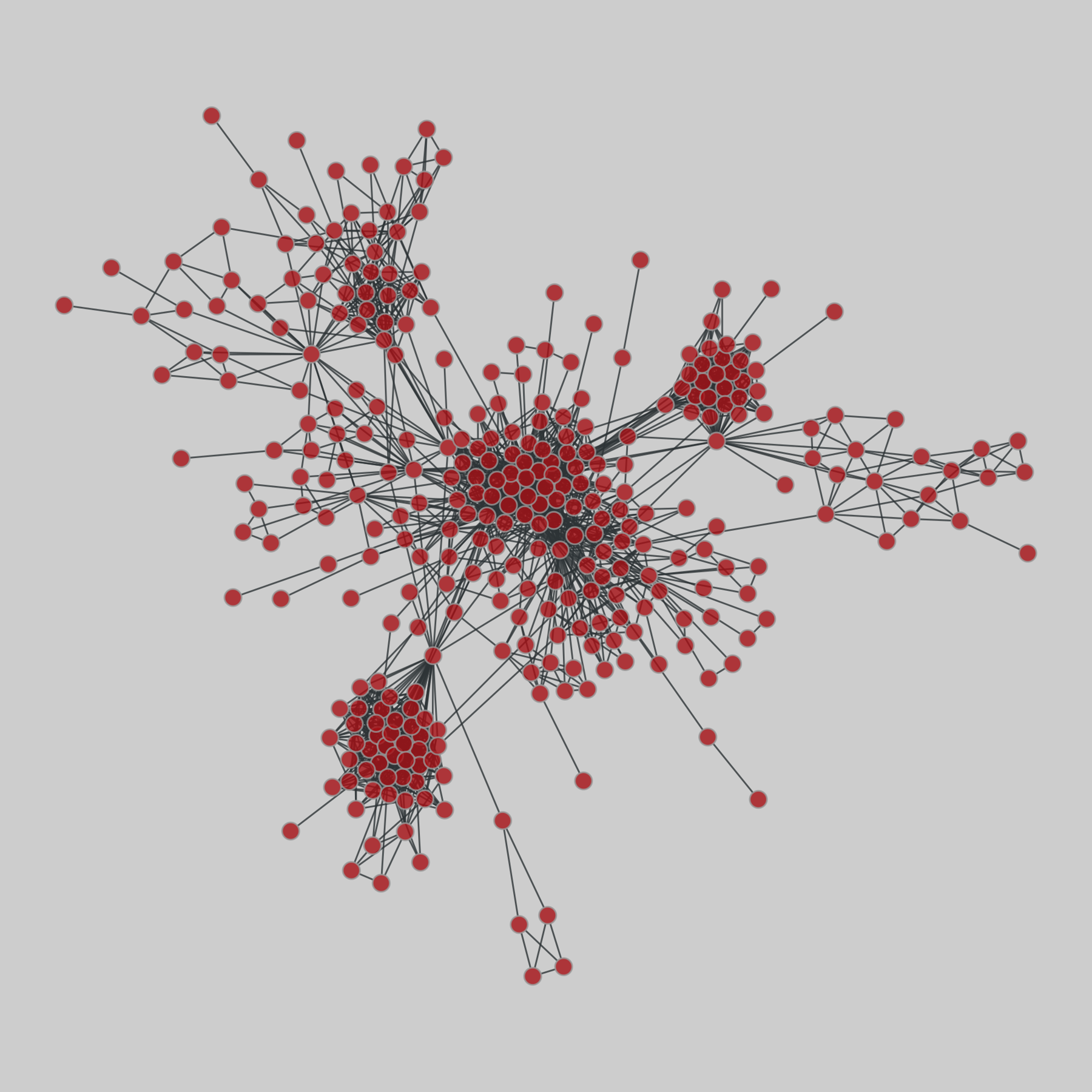
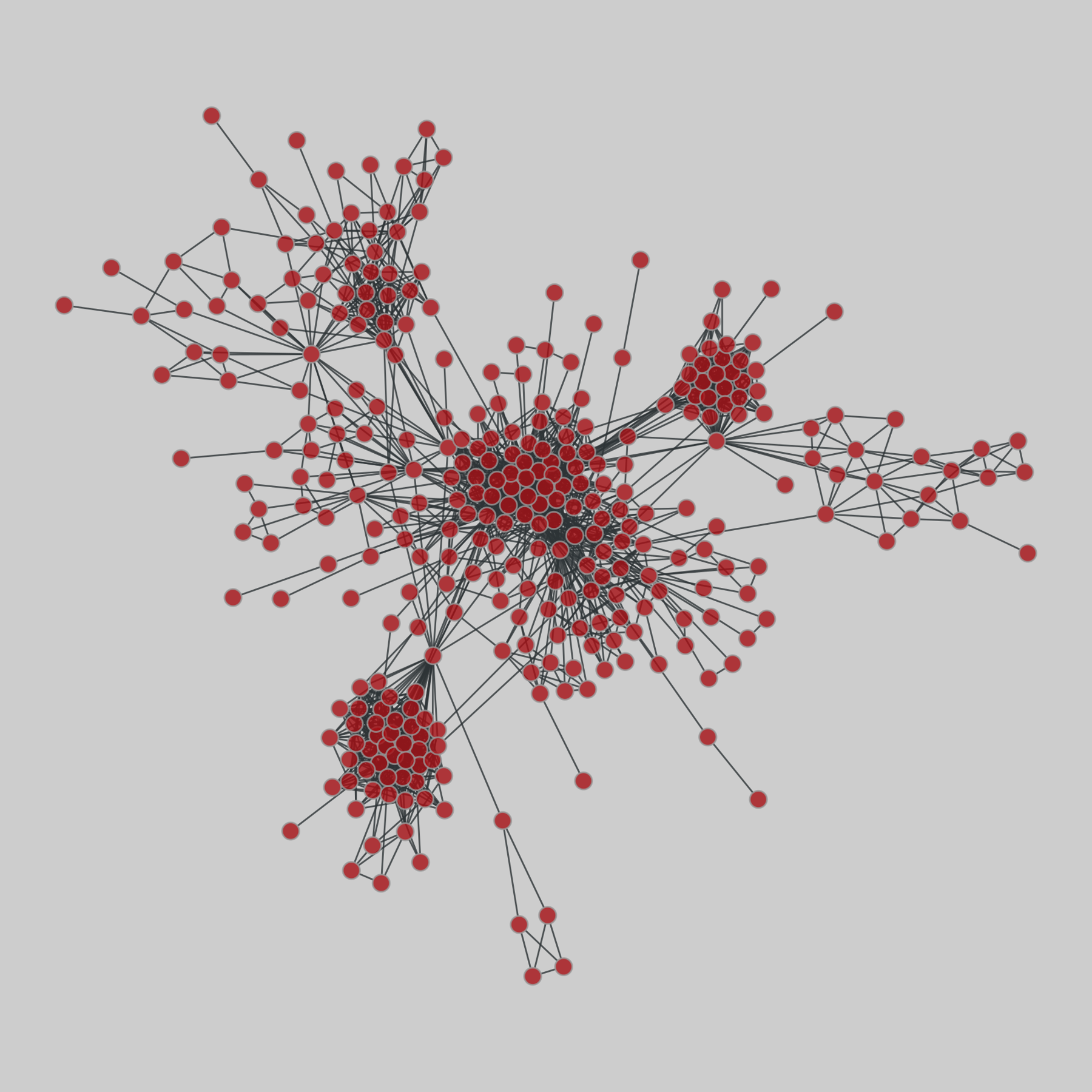
facebook_friends: Maier Facebook friends (2014)
A small anonymized Facebook ego network, from April 2014. Nodes are Facebook profiles, and an edge exists if the two profiles are "friends" on Facebook. Metadata gives the social context for the relationship between ego and alter.
This network has 362 nodes and 1988 edges.
Tags: Social, Online, Unweighted, Metadata
 @arXiv_physicsfludyn_bot@mastoxiv.page
Sidewall effects on the onset of interfacial Holmboe waves in stratified exchange flows at high Schmidt number
Guilherme Siqueira de Aquino, Metten M. de Lange, Adrien Lefauve, Matias Duran-Matute
https://arxiv.org/abs/2607.19565 https://arxiv.org/pdf/2607.19565 https://arxiv.org/html/2607.19565
arXiv:2607.19565v1 Announce Type: new
Abstract: Predicting the onset of interfacial instabilities is central to understanding turbulent mixing in natural and engineered stratified shear flows. Here, we study the onset of travelling Holmboe waves in confined exchange flows along a slope. Earlier stratified inclined duct experiments have mapped this transition, and stability analyses based on measured or prescribed profiles have explained their emergence. However, a predictive criterion linking forcing, geometry, base flow, and wave onset was still lacking. We closed this gap with a long-duct, sharp-interface asymptotic theory for the three-dimensional laminar exchange flow, including the effects of sidewall friction. The resulting analytical solution naturally identifies a confinement-adjusted Froude number, $Fr^*$, which unifies the effects of forcing and confinement into a single measure of the effective laminar exchange flow. Using this solution to parameterise sidewall drag in a practical width-averaged model, we perform linear stability analyses and numerical simulations at high Schmidt number. Together, linear stability analysis, direct numerical simulations, and existing experiments across a range of duct widths show that wave onset is accurately predicted by an approximately constant critical value of $Fr^*$. Deviations arise only in very narrow ducts, where sidewalls influence instability not only by modifying the laminar exchange flow but also by directly damping perturbations and delaying wave onset. These findings provide a predictive criterion for wave onset, reconcile long-standing discrepancies among experimental configurations, and establish lateral confinement as a fundamental control on the transition from laminar exchange to wave-driven mixing in stratified shear flows.
toXiv_bot_toot
@arXiv_astrophGA_bot@mastoxiv.pageStar formation powers optical line emission from the CGM
Huanian Zhang, Lizhi Xie, Zhijie Qu, Dennis Zaritsky, Luis C. Ho, Min Bao, Fabio Fontanot, Michaela Hirschmann, Chenxu Liu, Gabriella De Lucia, Enci Wang, Haoyan Zheng
https://arxiv.org/abs/2607.18385 https://arxiv.org/pdf/2607.18385 https://arxiv.org/html/2607.18385
arXiv:2607.18385v1 Announce Type: new
Abstract: Using integral field spectroscopy, we explore the disk-halo interface, or the inner circumgalactic medium (CGM), of individual galaxies by constructing and analyzing emission-line maps for a large sample (72) of normal, low-redshift galaxies spanning three orders of magnitude in stellar mass and four orders in star formation rate (SFR). We find a steep turnover occurring at $(1-2) R_e$ in the H$\alpha$, [O {\small II}], and [O {\small III}] line emission radial profiles. Beyond this radius, the slope of the line emission radial profiles becomes shallower as the SFR of the central galaxy decreases, which might reflect the strength of the feedback processes. The line emission fluxes at large radius ($(5-10) R_e$ or $\sim (0.1-0.25)r_{\rm vir}$) correlate with the galaxy's SFR, but not with its stellar mass. These findings suggest that ionizing photons escaping from star-forming regions in the central galaxy account for the observed emission line fluxes from the inner CGM, with escape fractions inferred from the [O {\small III}] and [O {\small II}] ratio. Different state-of-the-art theoretical models do not agree on the predicted dependence of cool gas on the SFR of the central galaxies, highlighting the importance of CGM emission line measurements to distinguish between different subgrid models for star formation and feedback processes.
toXiv_bot_toot
@arXiv_physicsfludyn_bot@mastoxiv.pageParameter mapping and physical reconstruction of Akhmediev breathers at the interface of two fluid half-spaces
Olga Avramenko, Volodymyr Naradovyi
https://arxiv.org/abs/2607.20193 https://arxiv.org/pdf/2607.20193 https://arxiv.org/html/2607.20193
arXiv:2607.20193v1 Announce Type: new
Abstract: A methodology combining parameter mapping and physical reconstruction of Akhmediev breathers at the interface between two fluid half-spaces is developed on the basis of the Nayfeh model. Parameter maps are constructed to characterize the breather modulation period, the modulational instability growth rate, and the relative contribution of the bound second harmonic to the reconstructed interfacial profile. Their combined analysis provides a physically meaningful classification of breather regimes beyond the conventional focusing condition of the nonlinear Schr\"odinger equation. Reconstruction of the physical interfacial profile establishes a quantitative relation between nonlinear wave deformation and the contribution of the bound second harmonic, making it possible to identify the range of applicability of the weakly nonlinear approximation. Representative regimes from different modulational instability regions are analyzed to demonstrate the influence of resonance and focusing boundaries on breather characteristics and interfacial wave profiles. The proposed approach provides a direct link between the mathematical description of Akhmediev breathers and their physical interpretation and can be extended to other localized solutions of the nonlinear Schr\"odinger equation and to a broad class of stratified hydrodynamic systems.
toXiv_bot_toot
@arXiv_astrophGA_bot@mastoxiv.pageReplaced article(s) found for astro-ph.GA. https://arxiv.org/list/astro-ph.GA/new
[1/2]:
- GA-NIFS: Powerful and frequent outflows in moderate-luminosity active galactic nuclei at $z\sim3-6$
Giacomo Venturi, et al.
https://arxiv.org/abs/2512.09996 https://mastoxiv.page/@arXiv_astrophGA_bot/115705753776819617
- ALMA High-J CO Spectroscopy of High-Redshift Galaxies. II. 0.03" Resolution CO Kinematics Reveal ...
Ken-ichi Tadaki
https://arxiv.org/abs/2603.01352 https://mastoxiv.page/@arXiv_astrophGA_bot/116164867046260901
- Very long-term relaxation of harmonic 1D self-gravitating systems
Kerwann Tep, Jean-Baptiste Fouvry, Christophe Pichon
https://arxiv.org/abs/2603.11238 https://mastoxiv.page/@arXiv_astrophGA_bot/116220857983732581
- The tidal evolution of satellite galaxies in cosmological simulations: insights from COLIBRE
Feihong He, et al.
https://arxiv.org/abs/2604.03105 https://mastoxiv.page/@arXiv_astrophGA_bot/116356854403461047
- Deriving volume density profiles of filaments from observed surface densities
Alexander Men'shchikov, Guo-Yin Zhang
https://arxiv.org/abs/2604.12570 https://mastoxiv.page/@arXiv_astrophGA_bot/116407809964147819
- Reduced Incidence of Little Red Dots at z < 3 from Number Density and Halo Mass Evolution
Chenxuan Zhang, Huanian Zhang, Qingwen Wu, Luis C. Ho, Jian-Min Wang
https://arxiv.org/abs/2606.02773 https://mastoxiv.page/@arXiv_astrophGA_bot/116685196830855300
- The Hubble Missing Globular Clusters Survey IV. Ultra-faint compact satellites of the Milky Way. ...
M. Bellazzini, et al.
https://arxiv.org/abs/2606.12517 https://mastoxiv.page/@arXiv_astrophGA_bot/116736072691643849
- Nebular_AGN: A CIGALE module for fitting AGN emission lines
Hao Zhang, Patrice Theule, Veronique Buat, Denis Burgarella, Estelle Pons, Mederic Boquien
https://arxiv.org/abs/2606.14643 https://mastoxiv.page/@arXiv_astrophGA_bot/116753094453286560
- Assembly bias from nuisance to probe I: the relation between galactic conformity and the linear m...
Nelson Padilla, Ivan Lacerna, Dante Paz
https://arxiv.org/abs/2607.04022 https://mastoxiv.page/@arXiv_astrophGA_bot/116877882568563713
- Enabling Cosmic Web Analysis at Gigaparsec Scales: A Multi Block Approach for DisPerSE
Ankit Singh, Frazer Pearce, Meghan Gray, Gustavo Yepes
https://arxiv.org/abs/2607.14785 https://mastoxiv.page/@arXiv_astrophGA_bot/116934310782158818
toXiv_bot_toot