 @usul@piaille.fr
2026-02-16 06:36:30
Thinking about using this to upgrade my system. Anyone using it ?
python3-dnf-plugin-torproxy - Fedora Packages
https://packages.fedoraproject.org/pkgs/dnf-plugins-extras/python3-dnf-plugin-torproxy/
@usul@piaille.frThinking about using this to upgrade my system. Anyone using it ?
python3-dnf-plugin-torproxy - Fedora Packages
https://packages.fedoraproject.org/pkgs/dnf-plugins-extras/python3-dnf-plugin-torproxy/
 @metacurity@infosec.exchange
Target's dev server offline after hackers claim to steal source code
https://www.bleepingcomputer.com/news/security/targets-dev-server-offline-after-hackers-claim-to-steal-source-code/
 @x_cli@infosec.exchange
 @rmdes@mstdn.social
My indiekit fork is now able to Send & Receive webmentions automatically, no human interventions, all I need is to use the /microsub/reader endpoint via Indiepass or via my own blog and whatever I like, repost or bookmarks gets “magically” sent to the source URL I interacted with. Code is here h…
 @Mediagazer@mstdn.social
Analysis: news organizations' open-source activity has fallen from a peak of 2,092 new public GitHub repositories in 2016 to 396 in 2025, an ~80% decline (Nieman Lab)
https://www.niemanlab.org/2026/02/journalism-lost-its-culture-of-sharin…
 @penguin42@mastodon.org.uk
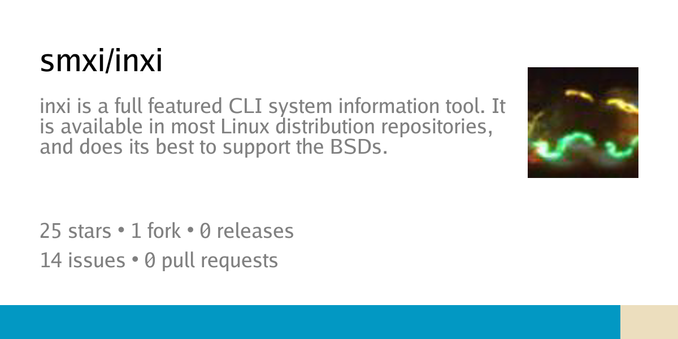
'inxi' is a CLI system information tool - it's got modes that cover a lot of different things, but for example if you're speaking to someone with a graphics problem, instead of asking them which GPU they have, and then checking their Mesa etc options - just ask them to paste you the output of 'inxi -G'
https://c…
 @relcfp@mastodon.social
LGBTQ Religious Archives Network Seeks Part-Time Archivist
https://ift.tt/L5N9Gwr
ResearchGate: Publishers Take Formal Steps to Force Copyright Compliance A summary of…
via Input 4 RELCFP ht…
 @phpmacher@sueden.social
Als #Entwickler arbeitet man ja meist in Repositories und nicht alle #Dateien in diesen Verzeichnissen sollen oder dürfen in das #Repository rein (Credentials, Notizen, KI-Dateien).
Und manche von…
 @compfu@mograph.social
For hosting our internal source code repositories, we're using #gitea. There are a bunch of other options and all of them seem to mimic github's look and feel. Gitea was the one I found out about first some years ago and it stuck. It has an issue tracker and works well for doing pull requests and reviewing them online.
There's a commercial cloud hosting offer and an enterprise opt…
 @gla@mastodon.social
Bitbucket recently announced shutting down inactive workspaces.
I logged there, and my Ph.D stuff (mostly papers, some Python) were all there.
To preserve them, I asked #Copilot to write a script to move them to GitHub.
If you want to admire the slop, there’s now a post about it
 @memeorandum@universeodon.com
This is what democracy looks like -- There is an uncountable number of repositories of power all across the United States. (pbump)
https://www.pbump.net/o/this-is-what-democracy-looks-like/
http://www.memeorandum.com/260203/p145#a260203p145
 @adulau@infosec.exchange
End-of-Year Threat Intelligence Sightings Forecast
This report presents an analysis of Threat Intelligence (TI) Sightings aggregated from several key data sources, including social platforms, code repositories, and specialized TI feeds. The primary objective is to visually track historical trends per source and provide a short-term adaptive forecast for a defined period (in days).
#opensource
 @bourgwick@heads.social
looking for a 13th floor elevators chronology, i spent time last night marveling the late patrick lundborg's site(s), one of the world's most incredible repositories of psychedelia research, now only preserved by @….
 @theodric@social.linux.pizza
In case you don't trust GitHub not to ban you and nuke all your code, there's a simple way to keep backups: https://github.com/ChappIO/git-backup
 @fanf@mendeddrum.org
from my link log —
Mapping a universe of open source software: the Nixpkgs dependency graph.
https://www.tweag.io/blog/2019-02-06-mapping-open-source/
saved 2020-07-28
 @joxean@mastodon.social
One question: does #Gitlab support private repositories with the free tier?
 @khalidabuhakmeh@mastodon.social
Maybe private companies shouldn't run the core infrastructure of technology stacks after a certain point.
At some point, package repositories become public utilities.
@metacurity@infosec.exchangeAn initial group of 28 malicious skills targeting Claude Code and Moltbot users were published to ClawHub and GitHub between January 27-29, 2026. A second larger group of 200 skills were published January 31-February 1, bringing the total number of malicious skills to 230 .
https://opensourcemalware.…
 @grahamperrin@bsd.cafe
@… @… @… FreeBSD 15 has three package repositories preconfigured:
FreeBSD-base
FreeBSD-ports
 @psittacus@social.linux.pizza
 @PwnieFan@infosec.exchange
 @x_cli@infosec.exchange
Of course, actions/checkout does not support Git repositories with a SHA-256 object format and it fails with a non-obvious error message about not finding your commit.
fatal: couldn't find remote ref 93dc253dbf61c4006943cff76f522904fa2a6fc5a96060b9aa963cce990a2d0b
Fuck that shit.
 @arXiv_csLG_bot@mastoxiv.page
Estimating Spatially Resolved Radiation Fields Using Neural Networks
Felix Lehner, Pasquale Lombardo, Susana Castillo, Oliver Hupe, Marcus Magnor
https://arxiv.org/abs/2512.17654 https://arxiv.org/pdf/2512.17654 https://arxiv.org/html/2512.17654
arXiv:2512.17654v1 Announce Type: new
Abstract: We present an in-depth analysis on how to build and train neural networks to estimate the spatial distribution of scattered radiation fields for radiation protection dosimetry in medical radiation fields, such as those found in Interventional Radiology and Cardiology. Therefore, we present three different synthetically generated datasets with increasing complexity for training, using a Monte-Carlo Simulation application based on Geant4. On those datasets, we evaluate convolutional and fully connected architectures of neural networks to demonstrate which design decisions work well for reconstructing the fluence and spectra distributions over the spatial domain of such radiation fields. All used datasets as well as our training pipeline are published as open source in separate repositories.
toXiv_bot_toot
 @knurd42@social.linux.pizza