 @tinoeberl@mastodon.online
2026-08-17 15:17:01
#Steady #Klimacrew
Wie lässt sich das Wachstum von #Feldfrüchten vorhersagen, ohne sie überhaupt anzubauen?
Ein KI-Modell aus
@tinoeberl@mastodon.online#Steady #Klimacrew
Wie lässt sich das Wachstum von #Feldfrüchten vorhersagen, ohne sie überhaupt anzubauen?
Ein KI-Modell aus
 @azonenberg@ioc.exchange
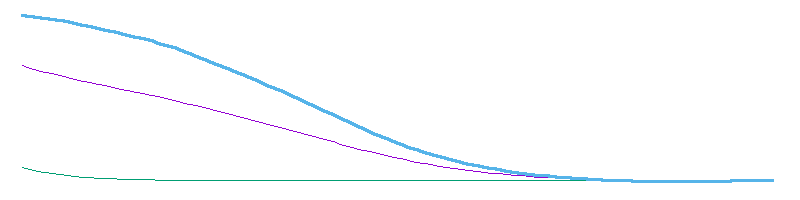
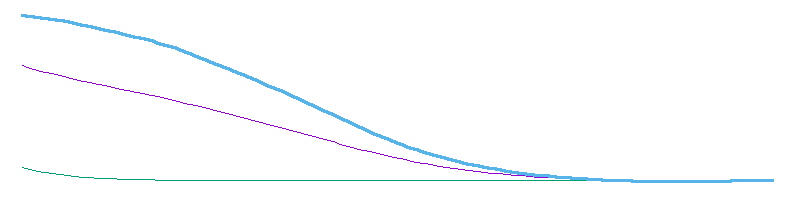
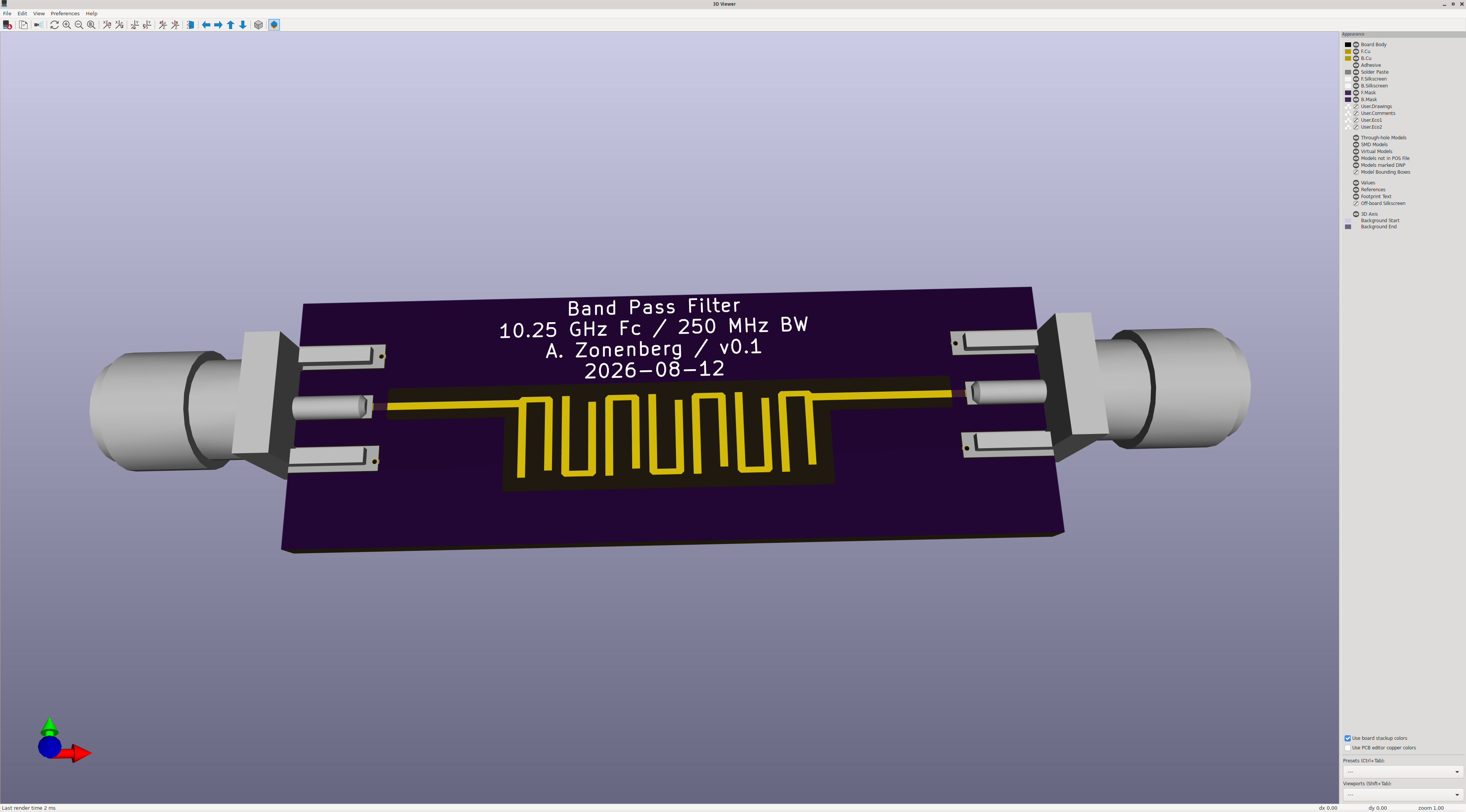
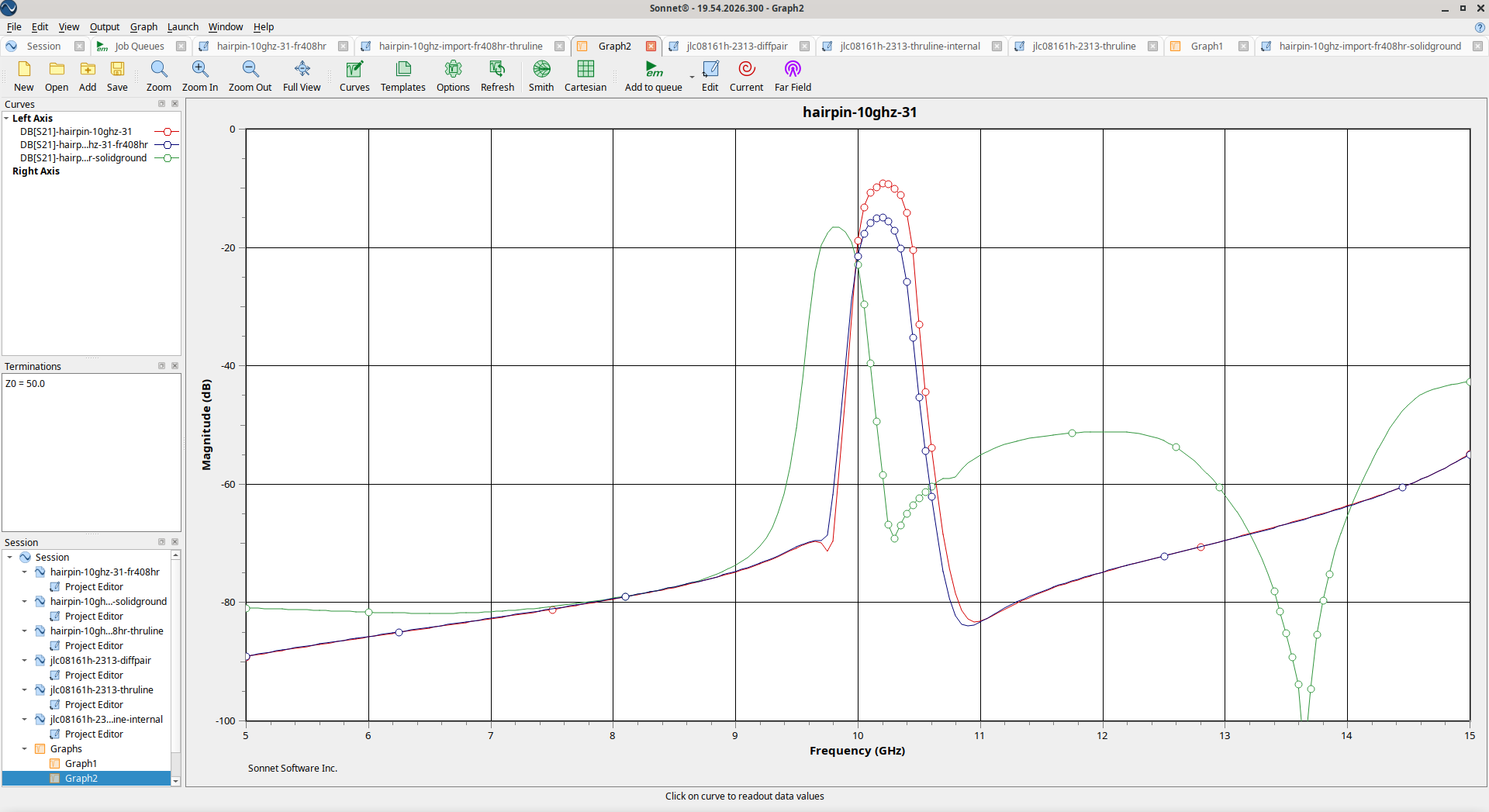
Finished the first round of bandpass filter design simulations.
Red line: original design target. This was a simulation of the filter in isolation on RO4350B.
Blue line: Same layout with the RO4350B swapped for FR408HR. This shows the impact of dielectric loss (copper roughness and plating ignored for both simulations).
Green line: final layout imported from KiCAD gerbers including connector launches and feedlines. Fc shifted down from about 10.2 to 9.85 GHz which is quite …
 @EarthOrgUK@mastodon.energy
16WW Eddi PV DHW Diverter Export Margin Analysis (2022-08) - Chosing a more grid-friendly value for the Export Margin based on 3 years' export data. #simulation #gridFriendly #diversion - …
 @Techmeme@techhub.social
Tel Aviv-based QuantHealth, a provider of AI clinical trial simulation software, raised a $45M Series B led by Qumra Capital, taking its total funding to ~$70M (Cailey Gleeson/Fierce Healthcare)
https://www.fiercehealthcare.com/finance/q
 @qbi@freie-re.de
RE: https://mathstodon.xyz/@threebodybot/117086770074110747
Bei der Simulation überleben die Planeten das 3-Körper-Problem mehr als 1300 Jahre. Das ist eine der längsten Zeiträume, die simuliert wurden.
 @theodric@social.linux.pizza
I have more things to add to the list of topics you don't need to make any YouTube videos about:
- Simulacra and Simulation
- "Hyperreality"
- anything else you learned about Baudrillard in your sophomore year
 @mlawton@mstdn.social @EarthOrgUK@mastodon.energy
16WW Eddi PV DHW Diverter Export Margin Analysis (2022-08) - Chosing a more grid-friendly value for the Export Margin based on 3 years' export data. #simulation #gridFriendly #diversion - …
 @seeingwithsound@mas.to
A map of the imagined: topographic principles of sensory simulation in the human parietal cortex https://www.biorxiv.org/content/10.64898/2026.08.03.742540v1 "visual imagery preferentially manifested in posterior regions, auditory imagery in ventral regions" of le…
 @NFL@darktundra.xyz
Let's imagine one way the 2026 NFL season could play out: Lions and Chargers to the Super Bowl? https://www.espn.com/nfl/story/_/id/49795320/2026-nfl-season-simulation-fpi-predictions-playoffs-super-bowl-champion…
 @@arXiv_physicsatomph_bot@mastoxiv.page@mastoxiv.page
Crosslisted article(s) found for physics.atom-ph. https://arxiv.org/list/physics.atom-ph/new
[1/1]:
- Many-Body Physics with Rydberg Atoms: Quantum Simulation and Non-equilibrium Dynamics
Zhengyang Bai, Cheng Chen, Fan Yang, Weibin Li
 @barijaona@mastodon.mg
In 1973, there were ELIZA and PARRY.
While ELIZA was a simulation of a Rogerian therapist, PARRY attempted to simulate a person with paranoid schizophrenia. And here’s what you got when ELIZA tried to diagnose PARRY: https://www.rfc-editor.org/info/rfc439/
Did anything really change?
Via…
 @m0les@aus.social
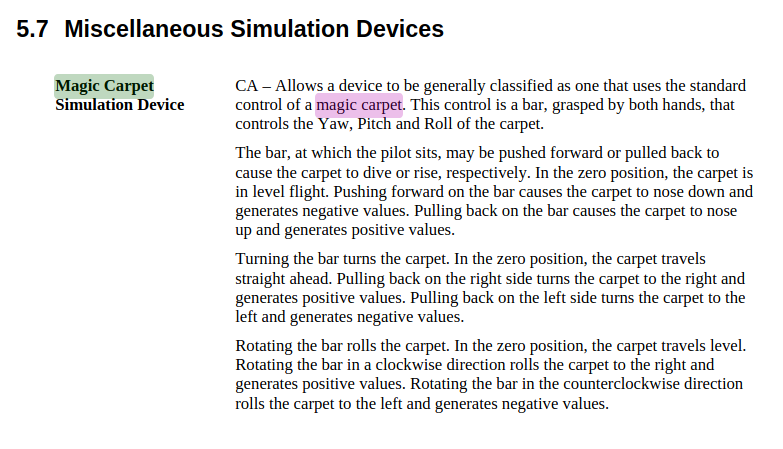
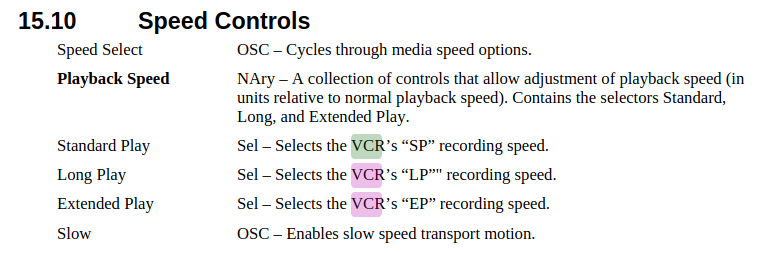
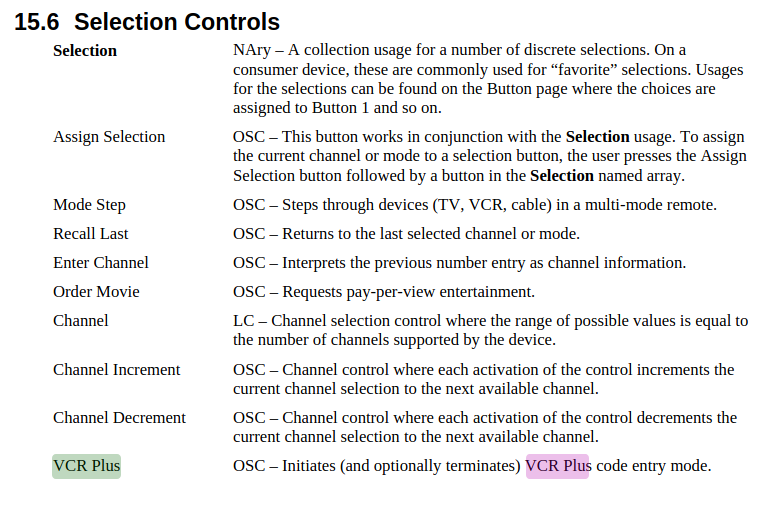
TIL: The USB HID specification has definitions for magic carpets and video cassette recorders (Including Macrovision's "VCR Plus"/"Plus Code" shortcut entry).
 @arXiv_astrophGA_bot@mastoxiv.page
The environmental dependence of the circumgalactic medium in a high-resolution cosmological simulation
Georg Herzog, Rajeshwari Dutta, Michele Fumagalli
https://arxiv.org/abs/2609.08654 https://arxiv.org/pdf/2609.08654 https://arxiv.org/html/2609.08654
arXiv:2609.08654v1 Announce Type: new
Abstract: There is increasing evidence from observations that the circumgalactic medium (CGM) of galaxies depends on the large-scale structure in which they are embedded. When probing the CGM in absorption using quasar sightlines, studies find an enhanced sky coverage in the CGM of galaxies in overdensities compared to galaxies in isolation. However, the exact reason for this environmental dependence is still unclear. In this work we aim to model for the first time the influence of the large-scale structure on the cool and warm ($T\sim10^{4-5}$ K) gas phases of the CGM. We use a high-resolution ($m_{gas}\approx 4.5\times 10^4$ M$_{\odot}$, $m_{dm}\approx 2.4\times 10^5$ M$_{\odot}$) cosmological simulation based on the EAGLE model of galaxy formation. We select all galaxies at $z=0$ with stellar mass $M_*>10^8$ M$_\odot$ and split them into galaxies in overdensities (group galaxies) and galaxies in isolation using a Friends-of-Friends algorithm. For these two samples, we investigate how the large-scale structure influences the physical properties of the CGM and the measured covering fractions of the cool and warm gas phases. When the two samples of group and isolated galaxies are matched in stellar mass, halo mass, and we use only central galaxies, we do not find any significant difference in the physical properties of the CGM and the measured covering fractions. However, when satellite galaxies are included, we recover the observational trends in the difference of covering fractions with the environment. The difficulty of recovering the observational trends shows the complexity of capturing the multiphase CGM in simulations. However, since our results concerning the admixture of satellites are independent of the employed subgrid physics, this work shows that central galaxies and satellites need to be disentangled in observational studies to clearly discern the role of the environment on the CGM.
toXiv_bot_toot
 @arXiv_astrophCO_bot@mastoxiv.page
Cosmology in the Einstein Telescope era: comparing traditional and simulation-based methods for population inference
Giovanni Antinozzi, Guillermo Franco Abell\'an, Davide Sciotti, Matteo Martinelli
https://arxiv.org/abs/2608.04005 https://arxiv.org/pdf/2608.04005 https://arxiv.org/html/2608.04005
arXiv:2608.04005v1 Announce Type: new
Abstract: The next generation of gravitational wave detectors, such as the Einstein Telescope (ET), will observe orders of magnitude more binary black hole mergers than current facilities. Most of these events will lack an electromagnetic counterpart, also known as dark siren events, yet will still enable percent-level cosmological constraints. However, the likelihood traditionally used in Hierarchical Bayesian Inference (HBI) for population-level analyses becomes computationally prohibitive as the size of dark siren catalogues and population parameters grow. In this work we compare HBI against simulation-based inference (SBI) as a scalable alternative for cosmological population inference in the ET era. Studying a proof-of-concept example of a mock ET inference, we build a catalogue of $O(10^4)$ binary black hole events, then perform inference on the Hubble constant $H_0$ and matter density $\Omega_m$ in a flat $\Lambda$CDM cosmology, using both a hierarchical analytical likelihood and Marginal Neural Ratio Estimation (MNRE). We find excellent agreement between the two approaches, with SBI reproducing the HBI posteriors to high accuracy, while requiring orders of magnitude less computation once the simulation and training cost is amortized. We further demonstrate that SBI extends straightforwardly to a joint cosmology-plus-astrophysics analysis, simultaneously constraining $(H_0,\Omega_m)$ together with the parameters of the star formation rate density, at negligible additional cost compared to the significant increase in complexity such an extension would require within the HBI framework. Our results indicate that SBI is a promising and scalable tool for population inference with third-generation GW detectors.
toXiv_bot_toot
@mlawton@mstdn.social @arXiv_csAR_bot@mastoxiv.page
SCALE-Sim EVA: Design Principles for an Extensible, Visualizable, and Adaptable Accelerator Simulation Framework
Jingtian Dang, Ritik Raj, Tushar Krishna
https://arxiv.org/abs/2608.12354 https://arxiv.org/pdf/2608.12354 https://arxiv.org/html/2608.12354
arXiv:2608.12354v1 Announce Type: new
Abstract: Modern AI accelerators increasingly combine heterogeneous compute units, hierarchical memories, local buffers, and specialized data movement paths. This diversity makes fixed accelerator simulators difficult to extend beyond their original execution model. We present SCALE-Sim EVA, an extensible, visualizable, and adaptable simulation framework for IR-aware accelerator modeling. EVA represents workloads as tensor-based commands, tracks runtime tensor placement and readiness, and executes commands on composable hardware components with user-defined functional units and memory behavior. Instead of replaying address-level cycle traces, EVA computes cycle timing from tensor readiness, hardware-unit availability, and modeled operation or transfer latency. Its command decomposition mechanism bridges compiler-level IR granularity and hardware-level execution granularity, allowing global tensor operations to be lowered and scheduled locally across a hardware hierarchy. EVA also emits open command and storage traces for visual analysis of execution timelines, memory occupancy, and resource contention.
toXiv_bot_toot
 @arXiv_eessIV_bot@mastoxiv.page
Automatic Patient-Specific Microwave Ablation Planning Accelerated by a Physics-Guided Deep Learning Model
Seonaeng Cho, Minjee Seo, Minju Seol, Juil Park, Joon Ho Kwon, Kyungho Yoon
https://arxiv.org/abs/2608.03086 https://arxiv.org/pdf/2608.03086 https://arxiv.org/html/2608.03086
arXiv:2608.03086v1 Announce Type: new
Abstract: Microwave ablation (MWA) is a promising minimally invasive treatment for liver tumors, but its therapeutic outcome strongly depends on patient-specific planning of antenna insertion trajectory, power, and treatment duration. Accurate numerical simulation can provide physically reliable ablation predictions; however, its high computational cost limits its use in optimization-based planning, where repeated forward evaluations are required. To address this issue, we propose a digital twin-based automatic planning framework that combines a neural ablation prediction model with a genetic algorithm. The model was trained on multiphysics simulation data generated from patient-specific tumor and vessel structures, antenna configurations, and treatment conditions, and was used as a fast forward model during planning. The prediction model achieved a Dice score of 95.1%, enabling accurate deep learning-based optimization. In 13 unseen planning cases, the proposed method improved ablation efficiency by 54.3% and reduced organ damage by 55.0% compared with clinician-defined planning, while slightly shortening the insertion path length by 3.3%. Most generated plans were also judged clinically applicable by MWA specialists. Furthermore, the framework enabled approximately 420-fold faster planning than numerical-simulation-based planning, demonstrating its potential as a fast digital twin for quantitative and personalized MWA treatment planning. The code is available at: https://github.com/SeonAengCho/MWA-Planning.git
toXiv_bot_toot
@Techmeme@techhub.socialMistral launches Robostral Navigate, a hardware-agnostic robotics navigation model trained via simulation that utilizes a single camera and language prompts (Benoit Berthelot/Bloomberg)
https://www.bloomberg.com/news/articles/20
 @galaxydinodragon@social.linux.pizza
Why do people assume this reality being in a simulation would require a huge amount of compute?
It could just take ages, like it would be a big computer but also could take 10 years per frame. As far as ik, we'd experience reality the same if the simulation ran at 20 million FPS vs 1 frame per decade...
 @arXiv_csHC_bot@mastoxiv.page
Replaced article(s) found for cs.HC. https://arxiv.org/list/cs.HC/new
[1/2]:
- Music Interpretation and Emotion Perception: A Computational and Neurophysiological Investigation
Lyberatos, Kantarelis, Zioga, Anagnostopoulou, Stamou, Georgaki
https://arxiv.org/abs/2506.01982 https://mastoxiv.page/@arXiv_csHC_bot/114623887921808883
- Selective Prediction Reduces the Negative Effects of Automation Bias Overall but Increases False ...
Jabbour, Fouhey, Banovic, Shepard, Kazerooni, Sjoding, Wiens
https://arxiv.org/abs/2508.07617 https://mastoxiv.page/@arXiv_csHC_bot/115015501954907821
- Sighted by Default: Addressing Implicit Vision Assumptions in Real-Time VLM Assistance for BLV Users
Yi Zhao, Siqi Wang, Qiqun Geng, Erxin Yu, Jing Li
https://arxiv.org/abs/2511.00945 https://mastoxiv.page/@arXiv_csHC_bot/115490927925171769
- UXCascade: Scalable Usability Testing with Simulated User Agents
Steffen Holter, Eunyee Koh, Mustafa Doga Dogan, Gromit Yeuk-Yin Chan
https://arxiv.org/abs/2601.15777 https://mastoxiv.page/@arXiv_csHC_bot/115943802965989174
- Does Explanation Correctness Matter? Linking Computational XAI Evaluation to Human Understanding
Gregor Baer, Chao Zhang, Isel Grau, Pieter Van Gorp
https://arxiv.org/abs/2603.25251 https://mastoxiv.page/@arXiv_csHC_bot/116300187728326082
- Beyond Screenshots: Evaluating VLMs' Understanding of UI Animations
Chen Liang, Xirui Jiang, Naihao Deng, Eytan Adar, Anhong Guo
https://arxiv.org/abs/2604.26148 https://mastoxiv.page/@arXiv_csHC_bot/116492495199874264
- Quieting the Cobwebs: Browser Interaction for Visual Floaters
Kenneth Ge, Jinglin Li, Shikhar Ahuja
https://arxiv.org/abs/2605.12739 https://mastoxiv.page/@arXiv_csHC_bot/116571803728109358
- Patients With Personality: Realistic Patient Simulation through Controlled Diversity and Selectiv...
Moritz Schlager, et al.
https://arxiv.org/abs/2606.17441 https://mastoxiv.page/@arXiv_csHC_bot/116764285920198987
- TailVis: Expressive Chart Refinement Preserving Data-Binding Integrity
Yumin Song, Seokhyeon Park, Soohyun Lee, Aeri Cho, Hyeon Jeon, John Joon Young Chung, Jinwook Seo
https://arxiv.org/abs/2607.25386 https://mastoxiv.page/@arXiv_csHC_bot/117002258150815192
- How Usable Are Geospatial Foundation Models? A Systematic Evaluation of 89 Models
Robin Young, Artyom Gabtraupov, Kenzy Soror, Srinivasan Keshav
https://arxiv.org/abs/2608.03804 https://mastoxiv.page/@arXiv_csHC_bot/117041905504697955
toXiv_bot_toot
 @cosmos4u@scicomm.xyz
A more technical update about the start of the #LSST with the #RubinObservatory in spite of non-perfect performance: https://community.lsst.org/t/the-lsst-has-started/12201 -> "a brief summary of what has prompted us to draw the early operations optimization phase to a close and get the survey started. [...] Pre-LSST observations show that the as-built Simonyi Telescope can already deliver an arcsecond sky survey, and there is a technical pathway to make the ~10% improvement in delivered image quality needed to approximately match the baseline survey simulation and deliver a sub-arcsecond LSST, as required. [...] The Board also noted that the time was right: all eight LSST Science Collaborations sent written support for starting the LSST while continuing to improve performance in parallel."
@EarthOrgUK@mastodon.energy16WW Eddi PV DHW Diverter Export Margin Analysis (2022-08) - Chosing a more grid-friendly value for the Export Margin based on 3 years' export data. #simulation #gridFriendly #diversion - …
 @metacurity@infosec.exchange
No, the NSA wasn’t hacked by AI. Here’s what actually happened
https://san.com/cc/no-the-nsa-wasnt-hacked-by-ai-heres-what-actually-happened/
 @arXiv_physicsgeoph_bot@mastoxiv.page
Joint elastic full waveform inversion of multi-component geophone and distributed acoustic sensing data
Hoang Anh Nguyen, Ali Tura
https://arxiv.org/abs/2607.01649 https://arxiv.org/pdf/2607.01649 https://arxiv.org/html/2607.01649
arXiv:2607.01649v1 Announce Type: new
Abstract: Joint full waveform inversion (FWI) of distributed acoustic sensing (DAS) and ocean-bottom node (OBN) data typically requires converting measured strain to particle velocity, introducing numerical noise and spectral distortion. To eliminate this, we present an elastic multi-parameter FWI framework using a velocity-stress-strain (VSS) formulation that directly models pressure, particle velocity, and gauge-length-averaged DAS strain from a single forward simulation. Data residuals are injected additively into a single backward simulation, making computational cost independent of the active sensor subsets. We benchmark individual and combined datasets on cross-talk and elastic Marmousi models. Our results show that joint inversion recovers elastic parameters more accurately than single deployments when the sensors offer complementary information. Specifically, pairing two-component geophones with a deviated borehole DAS cable yields the most accurate parameter recovery and mitigates inter-parameter cross-talk by providing a distinct physical observable and complementary depth aperture. We release our implementation as xFWI, an open-source, Devito-based Python package for scalable, multi-deployment inversions.
toXiv_bot_toot
 @arXiv_hepth_bot@mastoxiv.page
AMSB in Truly Confining Gauge Theories
Riku Ishikawa, Hitoshi Murayama, Shota Saito
https://arxiv.org/abs/2608.06093 https://arxiv.org/pdf/2608.06093 https://arxiv.org/html/2608.06093
arXiv:2608.06093v1 Announce Type: new
Abstract: We study deformation of supersymmetric $t$-confining (truly confininig) gauge theories with small anomaly mediation of supersymmetry breaking. We identify breaking pattern of global symmetries in the theories. These results can be compared in priciple to lattice simulation of non-supersymmetric theories (except for one of the cases where the theory is pseudoreal and chiral).
toXiv_bot_toot
 @ingo@social.stuetzle.cc
Bei aller Kritik an der Kürzung des #Wohngeld: Wohngeldzahlungen setzt auf die Simulation von Marktprozessen und stärkt die Zahlungsfähigkeit: „Allein die Zahlungen für Kosten der Unterkunft und das Wohngeld hatten in den letzten Jahren einen Umfang von über 15 Milliarden Euro pro Jahr und fließen über die Mietzahlungen der Empfängerinnen und Empfänger an die überwiegend privaten Wohnungsu…
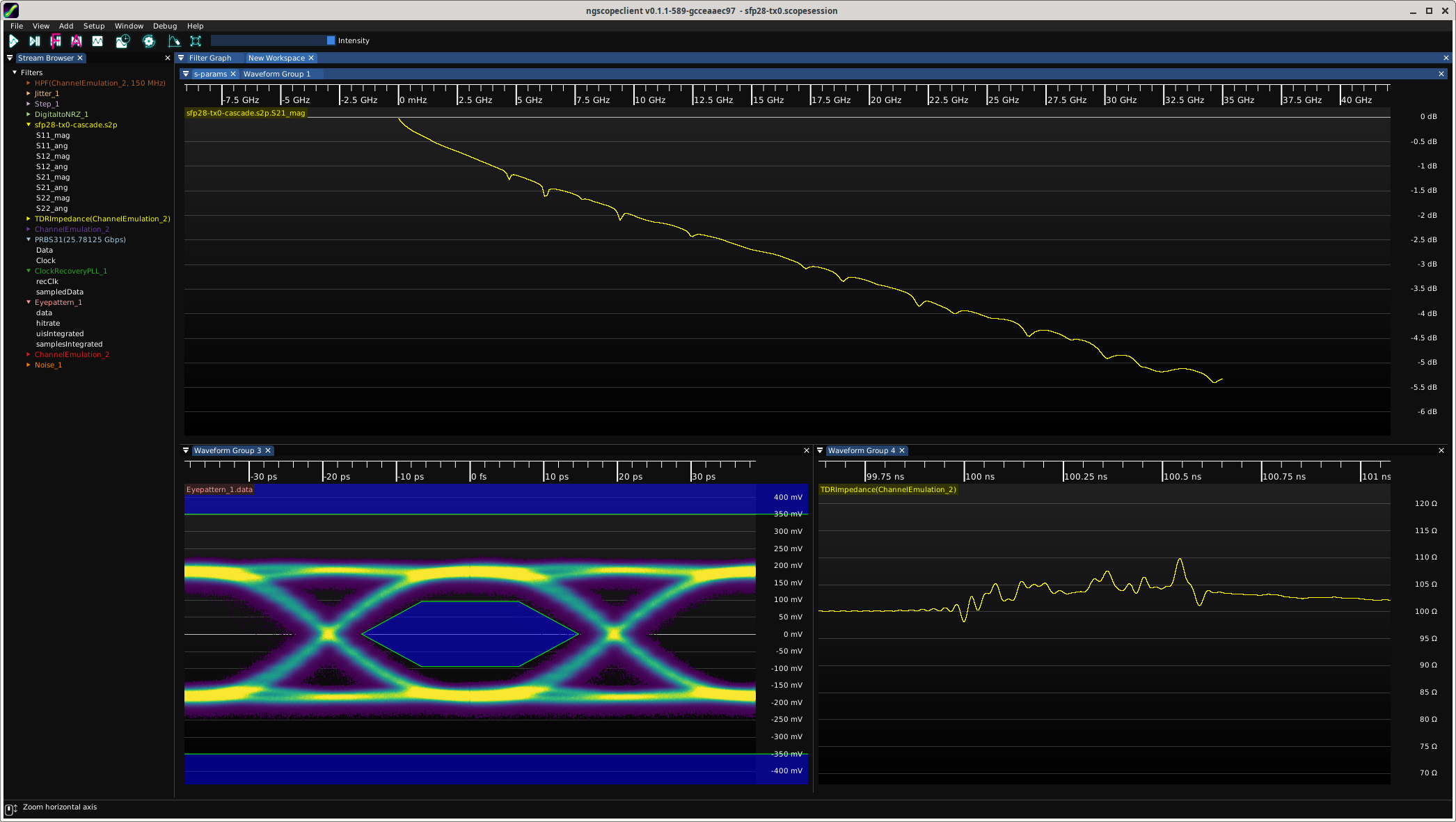
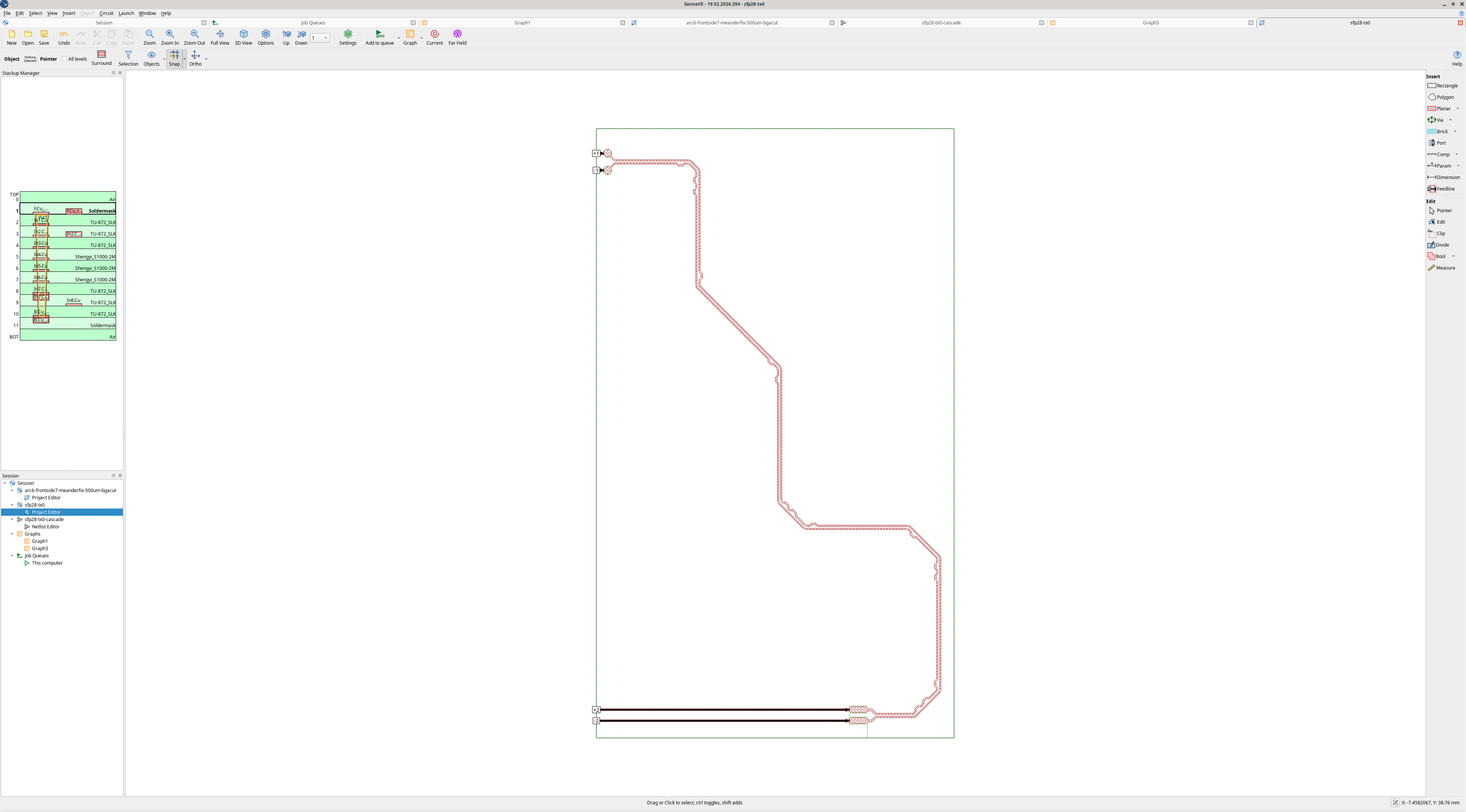
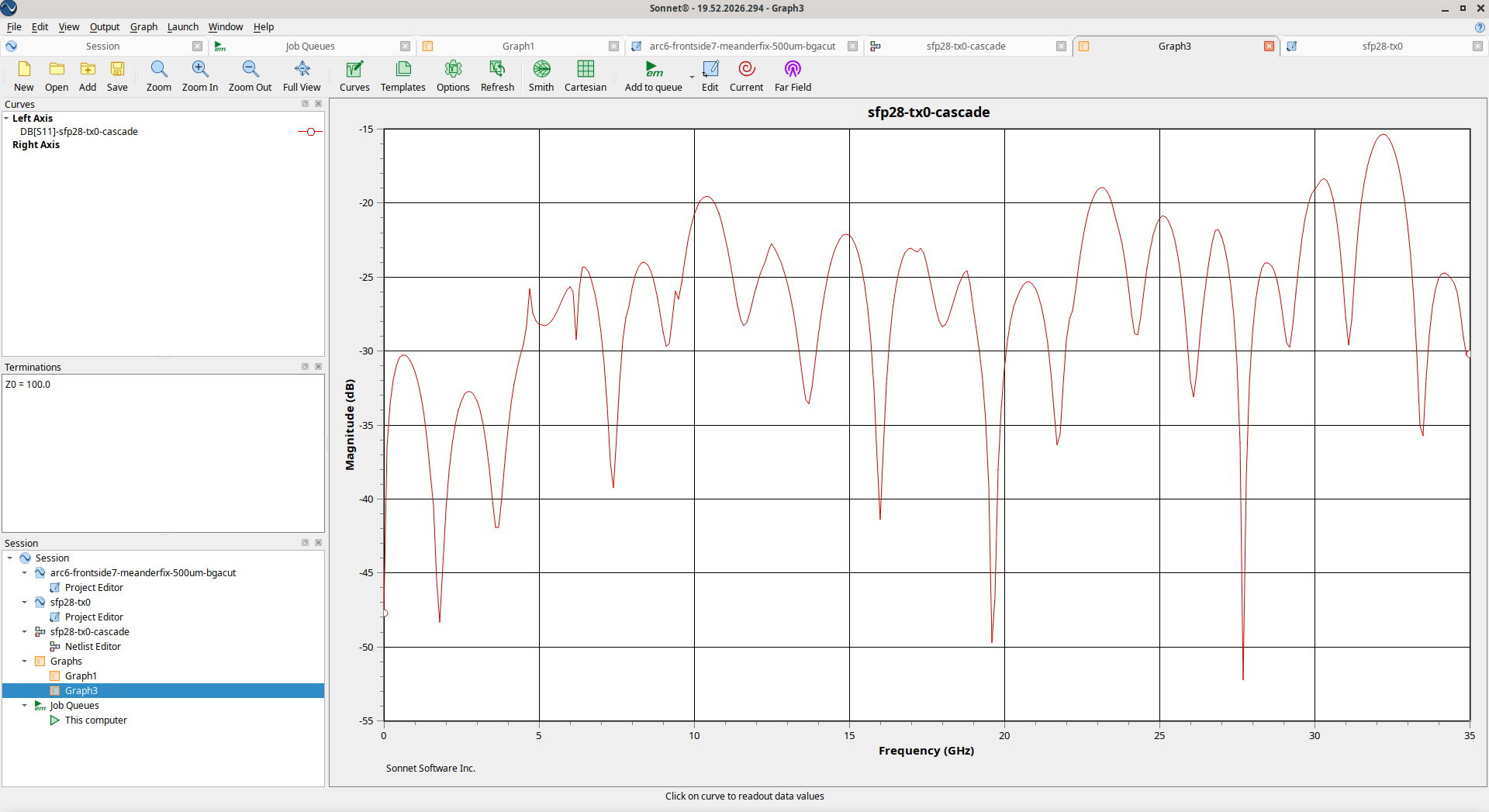
@azonenberg@ioc.exchangeJust finished an end to end simulation, BGA land to ARF6 launch, of the actual SFP28 TX lane 0 pair (not the shorter pair I had been using for initial layout work).
Took a while - the final geometry would have been way too big to simulate in a sane amount of time. Sonnet estimated 113GB of RAM and 122K mesh cells which... yeah.
I *could* do it, I have half a terabyte of RAM on this workstation, but considering that a 22GB / 54K cell simulation takes ~20 minutes per frequency and …
 @davej@dice.camp
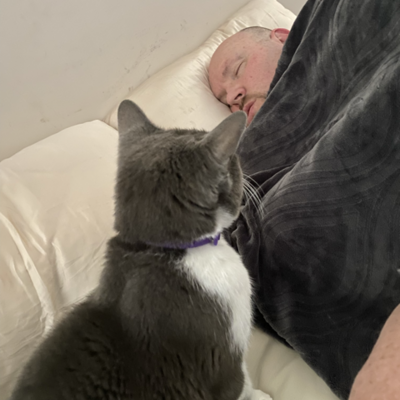
Not to put too fine a point on it, but a midwifery campaign is perfectly possible in #Runequest too, even when both prospective biological parents are male.
Re: https://social.alexschroeder.ch/@osr/s
 @arXiv_condmatsoft_bot@mastoxiv.page
Blinking membrane patterns induced by protein binding/unbinding
Hiroshi Noguchi
https://arxiv.org/abs/2608.13016 https://arxiv.org/pdf/2608.13016 https://arxiv.org/html/2608.13016
arXiv:2608.13016v1 Announce Type: new
Abstract: Nonequilibrium membrane pattern formation is studied using meshless membrane simulation. Bound proteins are considered to have two states that generate different membrane spontaneous curvatures. Protein binding and unbinding occur cyclically owing to chemical potential differences, as an off-lattice active Potts model. It is found that this cyclic binding/unbinding can induce blinking domains, with oscillating size: convex domains of the proteins with a higher spontaneous curvature grow, and subsequently, the proteins change to the other state with a lower spontaneous curvature, resulting in domain shrinkage. These processes repeat. In thermal equilibrium, hexagonal convex domains are formed by the competition between bending and surface tension energies, so that they are stably formed only under positive surface tension. However, blinking domains can form even in tensionless membranes.
toXiv_bot_toot
 @Life_is@no-pony.farm
Wenn wir in einer Simulation leben würden, wäre die längst abgeschaltet worden.
@life_is@no-pony.farmWenn wir in einer Simulation leben würden, wäre die längst abgeschaltet worden.
 @_mr_moe@mastodon.social @tinoeberl@mastodon.online
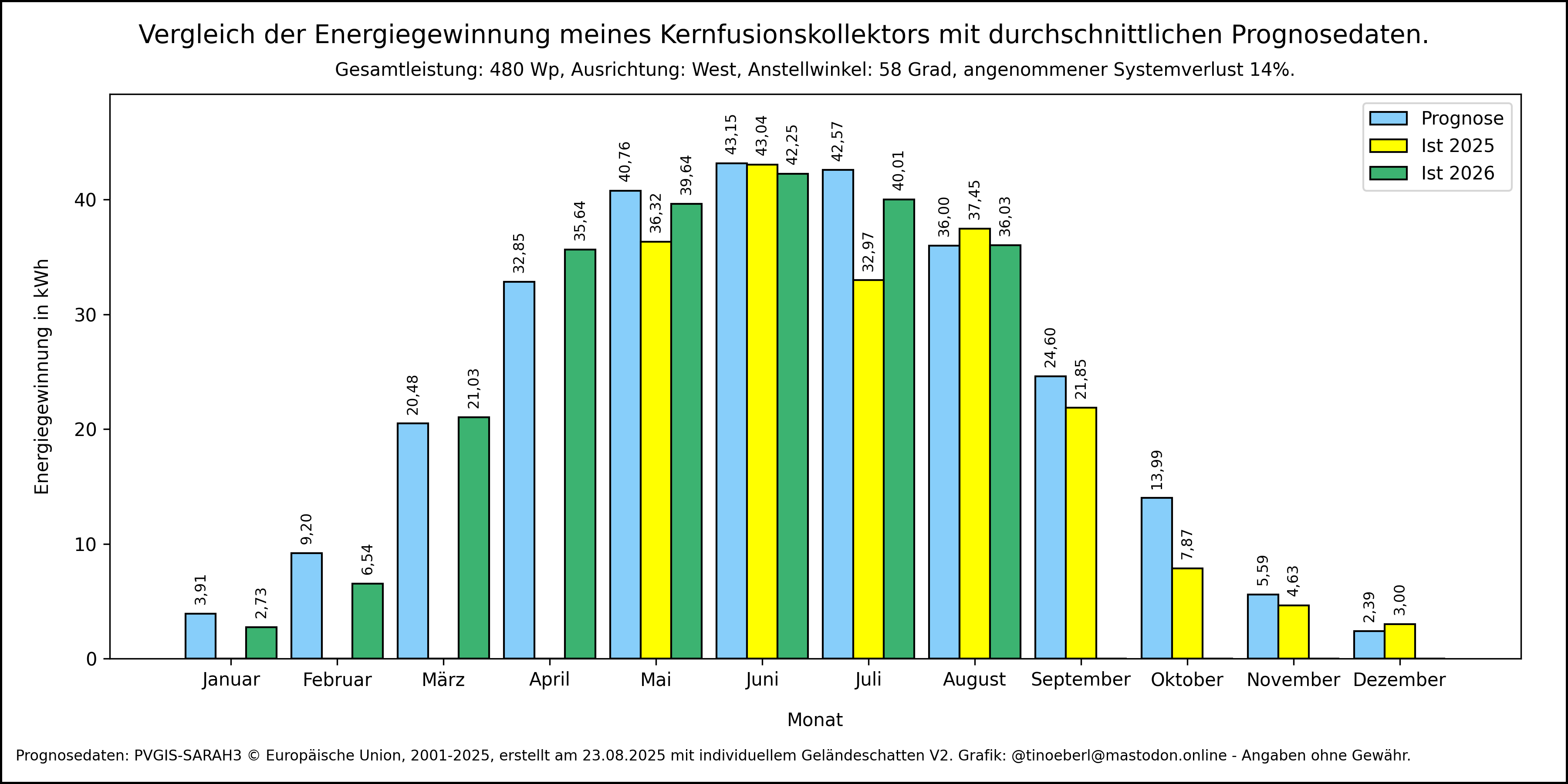
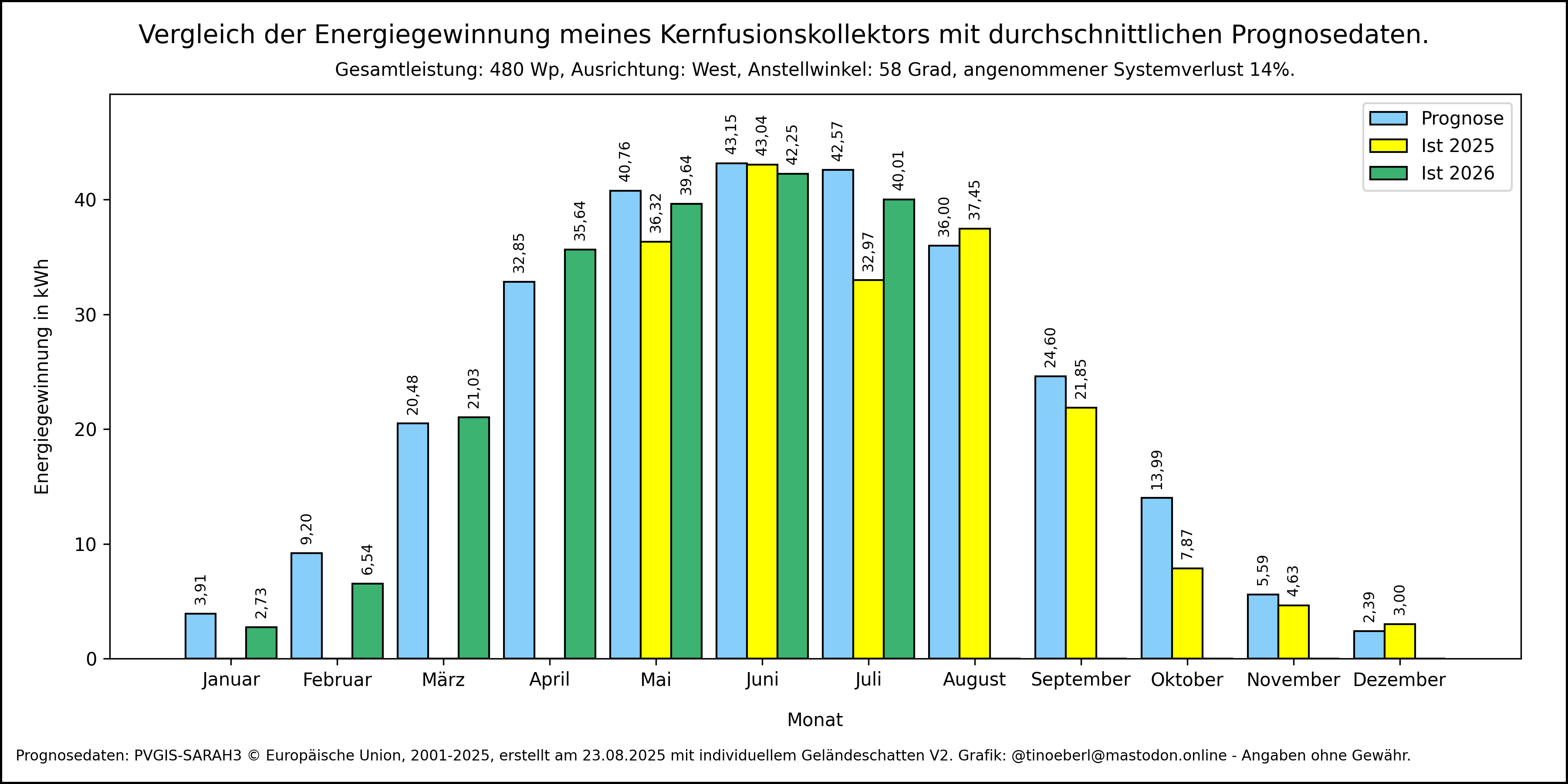
Die monatliche #Energieerzeugung meiner #Kernfusionskollektoranlage im Vergleich zu Prognosedaten aus einer Simulation.
Gesamtleistung: 480 Wp
Ausrichtung: West
Anstellwinkel: 58 Grad
👉 So berechnest Du die Jahresertragsprognose:
 @simon_lucy@mastodon.social
#worldcup2026
I gave up watching the Canada Qatar game the ITV commentary pissed me off.
I had considerable doubts about the foul preventing a goal attempt if you're simulating, which is what it looked like.
And the attempt to claim another penalty later was also simulation.
 @catsalad@infosec.exchange
Press 'Q' to quit simulation 
@EarthOrgUK@mastodon.energy16WW Eddi PV DHW Diverter Export Margin Analysis (2022-08) - Chosing a more grid-friendly value for the Export Margin based on 3 years' export data. #simulation #gridFriendly #diversion - …
 @arXiv_mathDS_bot@mastoxiv.page
Pattern formation: reactivity is not necessary for chemotaxis--driven instabilities
Angela Monti
https://arxiv.org/abs/2608.03685 https://arxiv.org/pdf/2608.03685 https://arxiv.org/html/2608.03685
arXiv:2608.03685v1 Announce Type: new
Abstract: A classical result by Neubert, Caswell and Murray states that reactivity of a spatially homogeneous equilibrium is a necessary condition for diffusion-driven (Turing) instability. In this work, we investigate whether the same conclusion remains valid in the presence of chemotaxis. We consider a general reaction--diffusion system coupled with a chemotactic flux and establish necessary conditions for asymptotic instability. We show that the classical requirement of reactivity can be relaxed when the chemotactic contribution is sufficiently strong. In particular, while reactivity remains necessary for Turing instability, it is not a necessary condition for chemotaxis-driven instability. From a computational viewpoint, we extend the matrix-oriented formulation developed for reaction--diffusion systems to the more general class of reaction--diffusion--chemotaxis models. The chemotactic transport term is discretized in a form compatible with the matrix-oriented approximation of the diffusion operator, yielding an efficient numerical framework for the simulation of chemotaxis-driven pattern formation. A geometric interpretation of the instability region is presented, highlighting the distinct roles played by diffusion and chemotaxis. The theoretical and numerical developments are illustrated through two representative examples: a chemotaxis-extended Schnakenberg model, showing how chemotaxis modifies classical Turing patterns, and a predator--prey model, demonstrating that chemotaxis alone can induce pattern formation in the absence of both reactivity and diffusion-driven instability. These results reveal a fundamental difference between diffusion-driven and chemotaxis-driven mechanisms of spatial self-organization and provide new theoretical and computational insights into the role of non-symmetric transport processes in biological pattern formation.
toXiv_bot_toot
 @arXiv_physicsinsdet_bot@mastoxiv.page
PSEC6: an 8-Channel 40 GSa/s Waveform Sampling ASIC in TSMC 65nm with 10.24 GHz PLL
Ahan Datta, Andrew Arzac, Davide Braga, Gordon Chen, Troy England, Farah Fahim, Henry J. Frisch, Nathan Gehl, Mary Heintz, Sumin Kim, Ava Lalich, Jinseo Park, Nathaniel J. Pastika, Hector D. Rico-Aniles, Paul M. Rubinov, Xiaoran Wang, Y. M. Richmond Yeung
https://arxiv.org/abs/2608.19473 https://arxiv.org/pdf/2608.19473 https://arxiv.org/html/2608.19473
arXiv:2608.19473v1 Announce Type: new
Abstract: Picosecond level timing resolution is a prerequisite capability for improved coincidence matching, time-of-flight measurements, and secondary vertex reconstruction. Here, we present the specification, design, and simulation results for a new Application Specific Integrated Circuit (ASIC), called PSEC6, in the TSMC 65nm process. It features 8 channels, a maximum sampling rate of 40 GSa/s, a buffer length of 204.8 nanoseconds, and a 10.24 GHz Phase Locked Loop (PLL), which is the first of its kind in the 65nm CMOS process. The event readout rate is 32 kHz, with the digitization done by an off-chip Analog-to-Digital Converter (ADC).
Simulations predict a 4.0 GHz analog input bandwidth and 20 mW per channel during sampling; the 10.24 GHz PLL has a predicted jitter of 550 fs RMS at 15.7 mW. The paper describes the sampling architecture, chip signal paths, PLL design, and presents simulation results.
toXiv_bot_toot
@Techmeme@techhub.socialCoval, which develops simulation and evaluation tech for testing, launching, and monitoring AI voice and chat agents, raised a $28M Series A led by Norwest (Duncan Riley/SiliconANGLE)
https://siliconangle.com/2026/06/24/coval-raises-28m-enterpri…
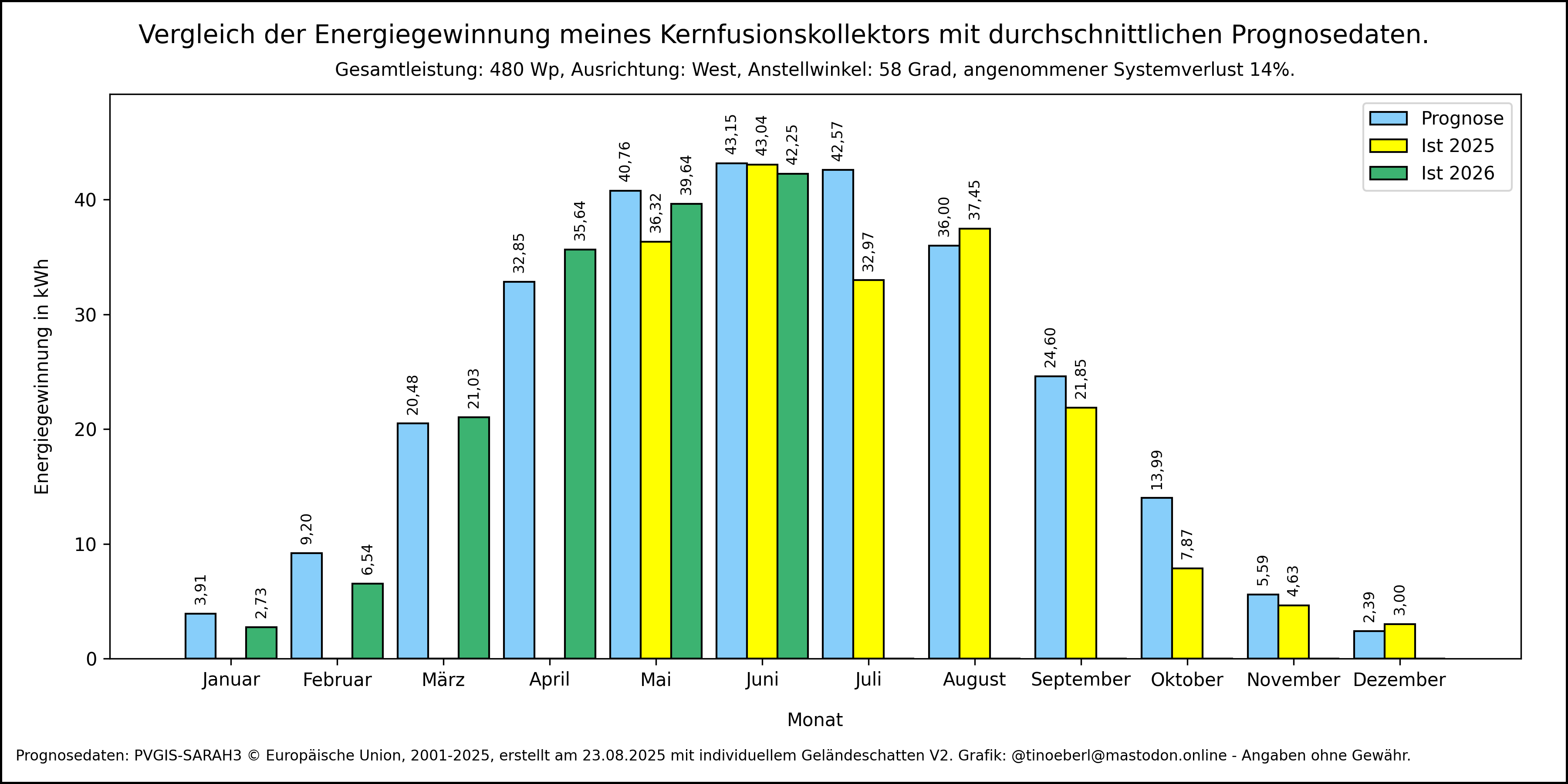
@tinoeberl@mastodon.onlineDie monatliche #Energieerzeugung meiner #Kernfusionskollektoranlage im Vergleich zu Prognosedaten aus einer Simulation.
Gesamtleistung: 480 Wp
Ausrichtung: West
Anstellwinkel: 58 Grad
👉 So berechnest Du die Jahresertragsprognose:
 @arXiv_csAR_bot@mastoxiv.page
Why Do Prefetchers Fail? Let Agents Answer
Xiangfeng Sun, Ceyu Xu, Ningzhi Ai, Zeyu Zhu, Yiyang Yuan, Yuan Xie
https://arxiv.org/abs/2608.13027 https://arxiv.org/pdf/2608.13027 https://arxiv.org/html/2608.13027
arXiv:2608.13027v1 Announce Type: new
Abstract: Hardware prefetchers are crucial to processor performance, yet their design remains labor-intensive and expert-driven. Architects inspect execution and memory-access traces, identify patterns, translate them into online hardware heuristics, and evaluate them in simulation, often with no guarantee of improvement. Human experts cannot systematically inspect billion-instruction traces across diverse real-world workloads.
We present a performance-anomaly-driven autoresearch flow that repeatedly asks why a deployed prefetcher fails and uses the diagnoses to construct the Mixture of Prefetchers (MoP). Each iteration localizes high-impact unexplained misses to program counters, gives agents hardware logs, source code, and sliced traces, validates diagnoses through runnable minimal cases, and synthesizes specialized sub-prefetchers for recurring pattern families. Measured performance and remaining anomalies feed subsequent iterations, enabling simulator-in-the-loop discovery beyond model priors.
The campaign consumes 1.91 billion DeepSeek V4 Pro tokens. On SPEC CPU2006 and SPEC CPU2017, MoP achieves a 61.1% geomean IPC speedup over no prefetching, outperforming the human-designed Alecto, Berti, and Pythia prefetchers by 14.5%, 21.6%, and 23.6%, respectively. RTL synthesis in a 6nm library reports 110 KB of on-chip storage and 0.0347 mm^2 area. To our knowledge, this is the first empirical demonstration that an agent-driven hardware-design process can produce an RTL-practical prefetcher that outperforms state-of-the-art human designs on unseen workloads.
toXiv_bot_toot
@@arXiv_physicsatomph_bot@mastoxiv.page@mastoxiv.pageSimulation of positronium laser cooling using the Lindblad master equation
Kenji Shu, Sohma Shiraishi, Kosuke Yoshioka
https://arxiv.org/abs/2608.06160 https://
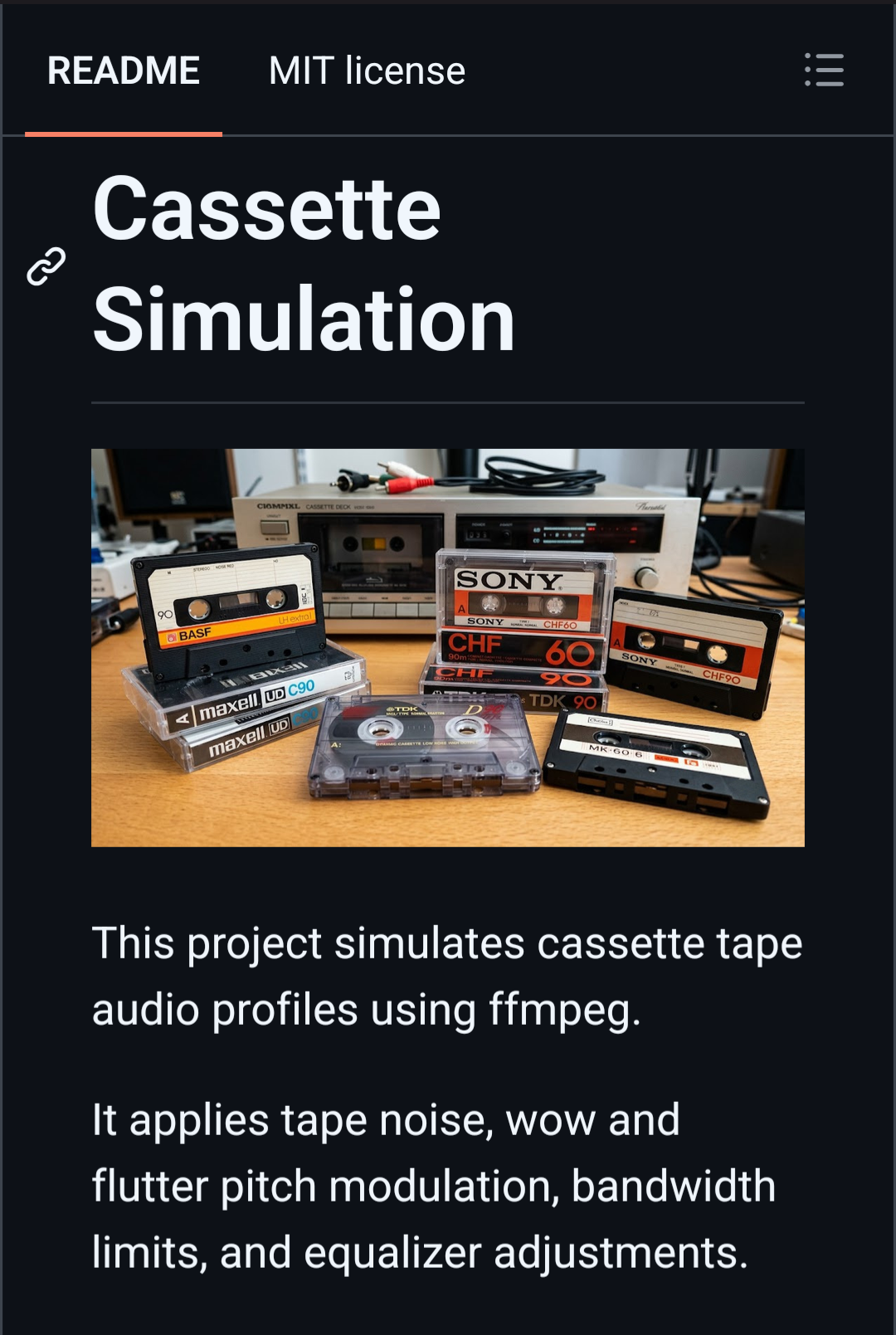
@_mr_moe@mastodon.social @theodric@social.linux.pizzaSpeaking as someone who grew up in the cassette and CD era: why in the hell would you want to make your recording sound worse? Tapes sucked. Their main advantages over CD were durability at rest when stepped on or dropped under the car seat, and (for about 15 years) recordability. The people who are convinced analog is superior aren't getting anything out of applying synthetic distortion to a digital file in ffmpeg, so it's not that.
 @arXiv_astrophCO_bot@mastoxiv.page
Replaced article(s) found for astro-ph.CO. https://arxiv.org/list/astro-ph.CO/new
[1/2]:
- Updated constraints on the primordial power spectrum at sub-Mpc scales
Torsten Bringmann, Djuna Croon, Sergio Sevillano Mu\~noz
https://arxiv.org/abs/2506.20704 https://mastoxiv.page/@arXiv_astrophCO_bot/114754296832362376
- $\texttt{SBi3PCF:}$ Simulation-based inference with the integrated 3PCF
David Gebauer, Anik Halder, Stella Seitz, Dhayaa Anbajagane
https://arxiv.org/abs/2510.13805 https://mastoxiv.page/@arXiv_astrophCO_bot/115383198732999954
- Galaxy Phase-Space and Field-Level Cosmology: The Strength of Semi-Analytic Models
Natal\'i S. M. de Santi, et al.
https://arxiv.org/abs/2512.10222 https://mastoxiv.page/@arXiv_astrophCO_bot/115705840924013174
- A high-significance detection of primordial tidal torque imprints
Sheng, Yu, Bao, Chen, Shao, Guo, Chen, Wang, Pen, Wang, Yang
https://arxiv.org/abs/2512.11383 https://mastoxiv.page/@arXiv_astrophCO_bot/115722821408944705
- Joint constraints on cosmic birefringence and early dark energy from ACT, Planck, DESI, and Panth...
Lu Yin, Guo-Hong Du, Tian-Nuo Li, Xin Zhang
https://arxiv.org/abs/2601.13624 https://mastoxiv.page/@arXiv_astrophCO_bot/115932398559254092
- A Reusable Hierarchical Framework for Joint Inference of Ultralight-Dark-Matter Mass and Core-Hal...
Prasun Panthi, Md Shahrier Islam Arham
https://arxiv.org/abs/2605.11600 https://mastoxiv.page/@arXiv_astrophCO_bot/116566279481155953
- GWTC-5.0: Constraints on the Cosmic Expansion Rate and Modified Gravitational-wave Propagation
The LIGO Scientific Collaboration, et al.
https://arxiv.org/abs/2605.27227 https://mastoxiv.page/@arXiv_astrophCO_bot/116645483007429258
- Constraints on the gravitational potential from DESI DR2 BAO and its implications for the local v...
Indranil Banik, Jos\'e Antonio N\'ajera, Harry Desmond
https://arxiv.org/abs/2606.02712
- Lyman-$\alpha$ forest constraints on pure and mixed fuzzy dark matter
Jianxiang Liu, Yan Gong, Xingchen Zhou
https://arxiv.org/abs/2606.06969 https://mastoxiv.page/@arXiv_astrophCO_bot/116713433278473918
- The Manticore Project II: Bayesian digital twins of cosmic structure across the SDSS and BOSS vol...
Stuart McAlpine, Jens Jasche, Guilhem Lavaux, Ludvig Doeser, Arthur Loureiro
https://arxiv.org/abs/2606.10020 https://mastoxiv.page/@arXiv_astrophCO_bot/116724751031288980
toXiv_bot_toot
@tinoeberl@mastodon.onlineDie monatliche #Energieerzeugung meiner #Kernfusionskollektoranlage im Vergleich zu Prognosedaten aus einer Simulation.
Gesamtleistung: 480 Wp
Ausrichtung: West
Anstellwinkel: 58 Grad
👉 So berechnest Du die Jahresertragsprognose:
 @azonenberg@ioc.exchange
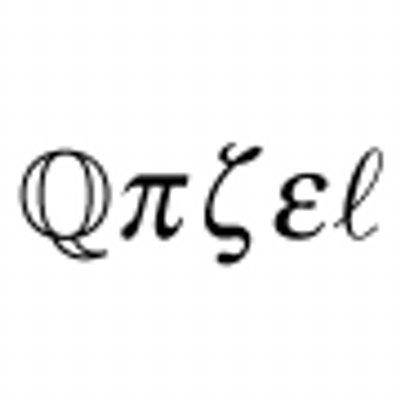
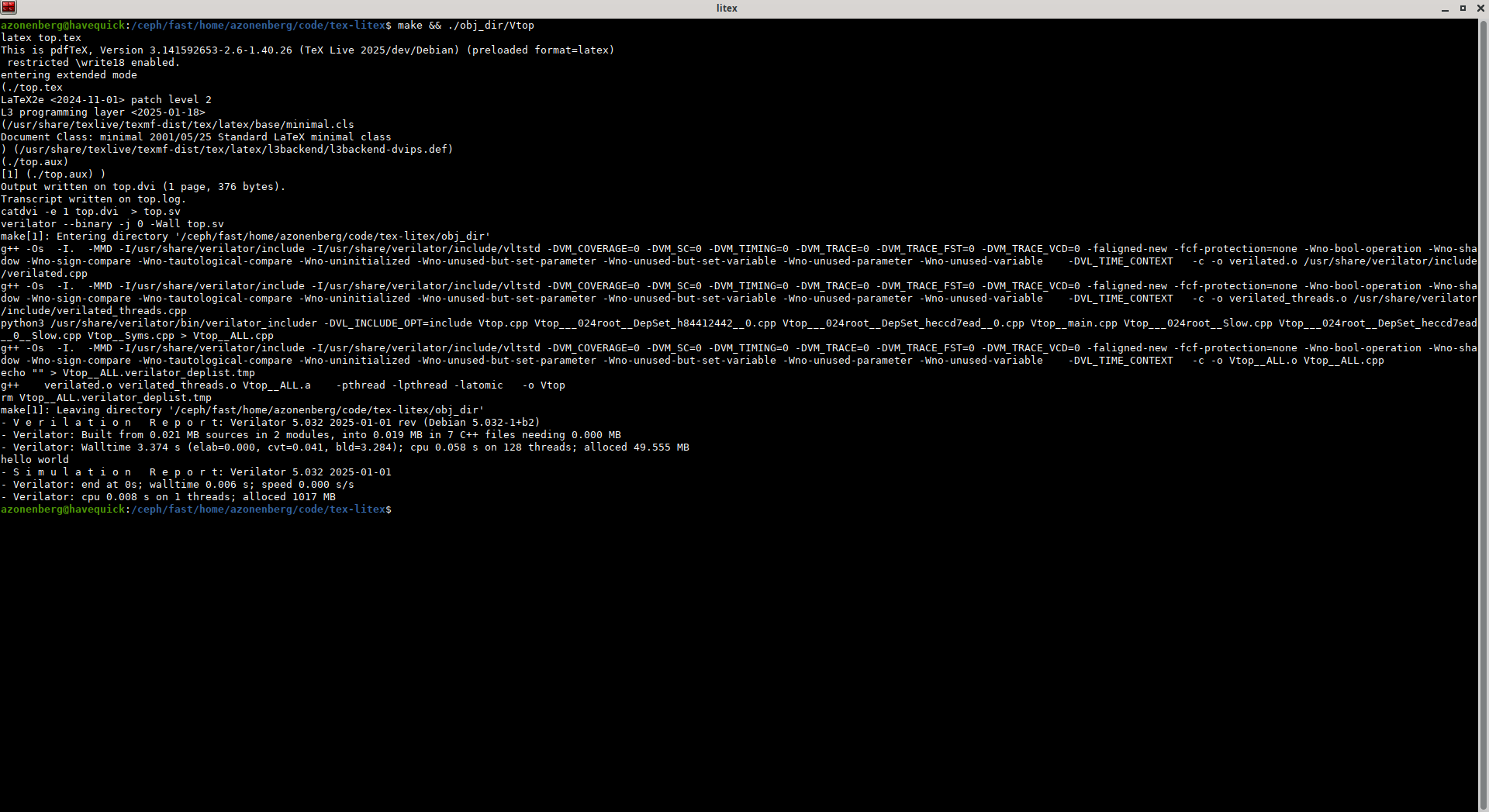
Starting to play with LiTeX.
Am I doing it right?
(Knuth forgive me, for I have sinned...)
 @arXiv_csGR_bot@mastoxiv.page
Fast VEM Fluid Simulation
Runze Zhang, Bo Ren
https://arxiv.org/abs/2607.17725 https://arxiv.org/pdf/2607.17725 https://arxiv.org/html/2607.17725
arXiv:2607.17725v1 Announce Type: new
Abstract: The intricate motion arising from fluid--boundary interactions is visually compelling, yet notoriously difficult and computationally expensive to simulate in the presence of complex boundaries. Accurately resolving boundary geometry requires body-fitted grids constructed via cut-cell methods, which often leads to poorly conditioned linear systems in the pressure projection stage and, consequently, prohibitive computational cost. We present FastVEM, an efficient boundary-conforming fluid simulation framework that enables high-fidelity flow--boundary interaction at substantially reduced cost. Computational efficiency is achieved through a coordinated, top-down design spanning numerical discretization, grid construction, and linear solvers. FastVEM adopts a Virtual Element Method (VEM) discretization to robustly enforce incompressibility and boundary conditions on irregular body-fitted grids, and employs a VEM polynomial-space Particle-in-Cell scheme for advection. Complementing this discretization, a convexity-preserving cut-cell strategy is introduced to construct simulation-friendly body-fitted grids. To accelerate pressure projection, we develop a Galerkin geometric multigrid solver featuring a diffusion-free prolongation operator that prevents coarse-level matrix densification, along with a nested, boundary-aware grid hierarchy that ensures well-posed placement of coarse-level degrees of freedom. Compared to prior cut-cell--based fluid simulators, FastVEM speeds up the computationally dominant pressure projection stage by up to 100x, while robustly handling even more challenging boundary geometries.
toXiv_bot_toot
 @arXiv_csFL_bot@mastoxiv.page
Replaced article(s) found for cs.FL. https://arxiv.org/list/cs.FL/new
[1/1]:
- A Forward Simulation-Based Hierarchy of Linearizable Concurrent Objects
Chao Wang, Ruijia Li, Yang Zhou, Peng Wu, Yi Lv, Jianwei Liao, Jim Woodcock, Zhiming Liu
 @arXiv_physicsmedph_bot@mastoxiv.page
Generation of synthetic CT images from optical scanning for superficial mold brachytherapy
Scott B. Crowe (Royal Brisbane and Women's Hospital, Brisbane Qld, Australia, Herston Biofabrication Institute, Metro North Hospital and Health Service, Brisbane Qld, Australia, University of Queensland, Brisbane Qld, Australia, Queensland University of Technology, Brisbane Qld, Australia), Emily Simpson-Page (Royal Brisbane and Women's Hospital, Brisbane Qld, Australia), Jenna Luscombe (Royal Brisbane and Women's Hospital, Brisbane Qld, Australia), Rachael Wilks (Royal Brisbane and Women's Hospital, Brisbane Qld, Australia, Herston Biofabrication Institute, Metro North Hospital and Health Service, Brisbane Qld, Australia, University of Queensland, Brisbane Qld, Australia), Tanya Kairn (Royal Brisbane and Women's Hospital, Brisbane Qld, Australia, Herston Biofabrication Institute, Metro North Hospital and Health Service, Brisbane Qld, Australia, University of Queensland, Brisbane Qld, Australia, Queensland University of Technology, Brisbane Qld, Australia)
https://arxiv.org/abs/2606.25221 https://arxiv.org/pdf/2606.25221 https://arxiv.org/html/2606.25221
arXiv:2606.25221v1 Announce Type: new
Abstract: Optical 3D scanning systems allow the acquisition of accurate models of patient anatomy, suitable for use in the design of simple 3D-printable patient-matched medical devices with 3D modelling software. This study developed and demonstrated the use of superficial brachytherapy surface mold design workflow that utilizes data from optical 3D surface scanning and enables a commercial brachytherapy treatment planning system to be used for catheter positioning and dose optimization steps. Synthetic CT images were generated from 14 optically scanned anatomical models of human participants. Models and skin textures ac-quired from the optical scans were imported into Autodesk Meshmixer, where the treatment area was delineated, and treatment and device volumes produced. 3D Slicer was used to convert the body, treatment and device volumes to DICOM CT and RTSTRUCT data. The synthetic CT data and contoured volumes were imported into Varian Eclipse, where catheters were designed, and dwell positions and times optimised for dose coverage of the treatment volume. The lack of in-ternal anatomy did not compromise dose calculations, due to clinical use of a TG43 based algorithm. Once 3D printed, molds can be imaged in-situ during CT simulation, and reconstructed, for clinical dose calculation and plan approval.
toXiv_bot_toot
@arXiv_csAR_bot@mastoxiv.pagePotential Applications of HBF in LLM Serving Systems
Yihan Yin, Yinlun Zhao, Zhixin Yun, Guanying Wu, Feng Zhu, Kai Tao, Shu Li, Fei Huang, Zhe Zhang, Shuangchen Li, Hongzhong Zheng
https://arxiv.org/abs/2608.13127 https://arxiv.org/pdf/2608.13127 https://arxiv.org/html/2608.13127
arXiv:2608.13127v1 Announce Type: new
Abstract: LLM serving is increasingly constrained by memory capacity as model weights, KV caches, and the number of served model variants continue to grow. This report examines High-Bandwidth Flash (HBF) as a capacity-oriented extension to HBM-based serving systems. We first discuss how HBF can be integrated into the GPU memory hierarchy without undermining the bandwidth expected by the compute die. We then model the system-level value of added capacity as expanded residency for read-mostly model-state objects. Under this view, HBF can improve MoE serving by enabling more expert replicas and can improve multi-model serving by reducing model loading and supporting hot-model replication. Our simulation results show that these benefits depend on preserving the HBM-resident execution path while using HBF to expand the resident set of model weights.
toXiv_bot_toot
 @arXiv_statCO_bot@mastoxiv.page
Learning Latent Memory States from Longitudinal Athlete Monitoring Data
Dae-Jin Lee
https://arxiv.org/abs/2608.06290 https://arxiv.org/pdf/2608.06290 https://arxiv.org/html/2608.06290
arXiv:2608.06290v1 Announce Type: new
Abstract: We propose a new unit of analysis for longitudinal data: the Latent Memory Table. The scientific contribution is not the encoder. It is that table, treated as a reusable statistical object on the same footing as a matrix of principal-component scores, a table of estimated random effects, or a table of predicted probabilities. We estimate a statistical table that summarizes recent longitudinal history and is intended to be stored, queried, analysed and reused throughout the statistical workflow. A memory operator maps each masked windowed history to a finite-dimensional state; collecting those states with uncertainty yields the Latent Memory Table. Validation is organized around six properties---recoverability, personalization, temporal coherence, interpretability, stability and reusability---summarized by a composite quality index \(Q\); the Transformer, the SoccerMon case study and the simulations exist to argue that this table deserves that status. Classical exponentially weighted moving averages and related short- and long-horizon scalar summaries arise as restricted, typically univariate special cases of the same operator class. A simulation study with known memory mechanisms shows that \(Q\) and rotation-invariant recovery scores discriminate genuine multivariate or personalized memory from negative controls and from misspecified windows, whereas regime classification accuracy alone does not. SoccerMon serves as an empirical case study: a constructed Latent Memory Table attains \(Q\approx 0.73\) versus about \(0.40\) for classical and lagged principal-component baselines, with incremental held-out value for some wellness targets and Procrustes ensembles for row-wise reliability.
toXiv_bot_toot
@arXiv_eessIV_bot@mastoxiv.pageSIMBA: ABidirectional Retrieval Forward Simulation Framework for Modeling FY-4A GIIRS Hyperspectral Infrared Radiances Toward NWP Applications
Jingdong Shen, Fu Wang*, Qifeng Lu, Hao Huang, Chunqiang Wu, Chi Yang, Xiaofang Liu
https://arxiv.org/abs/2606.19943
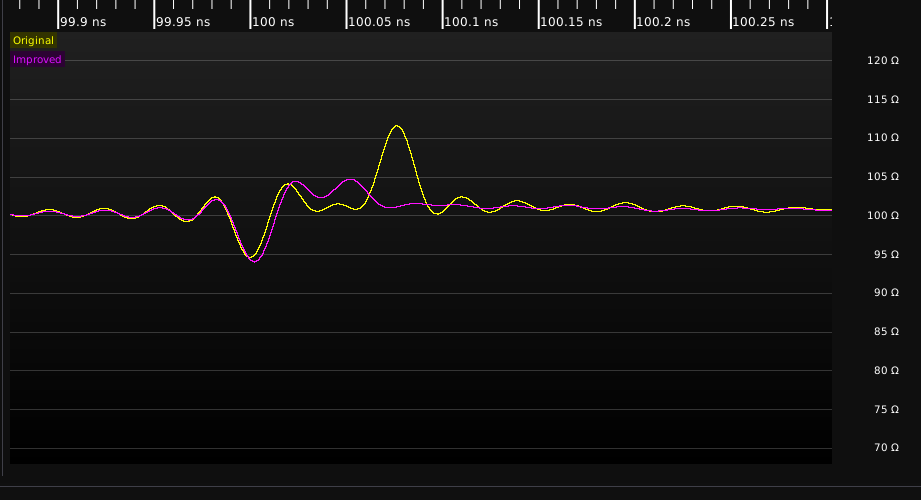
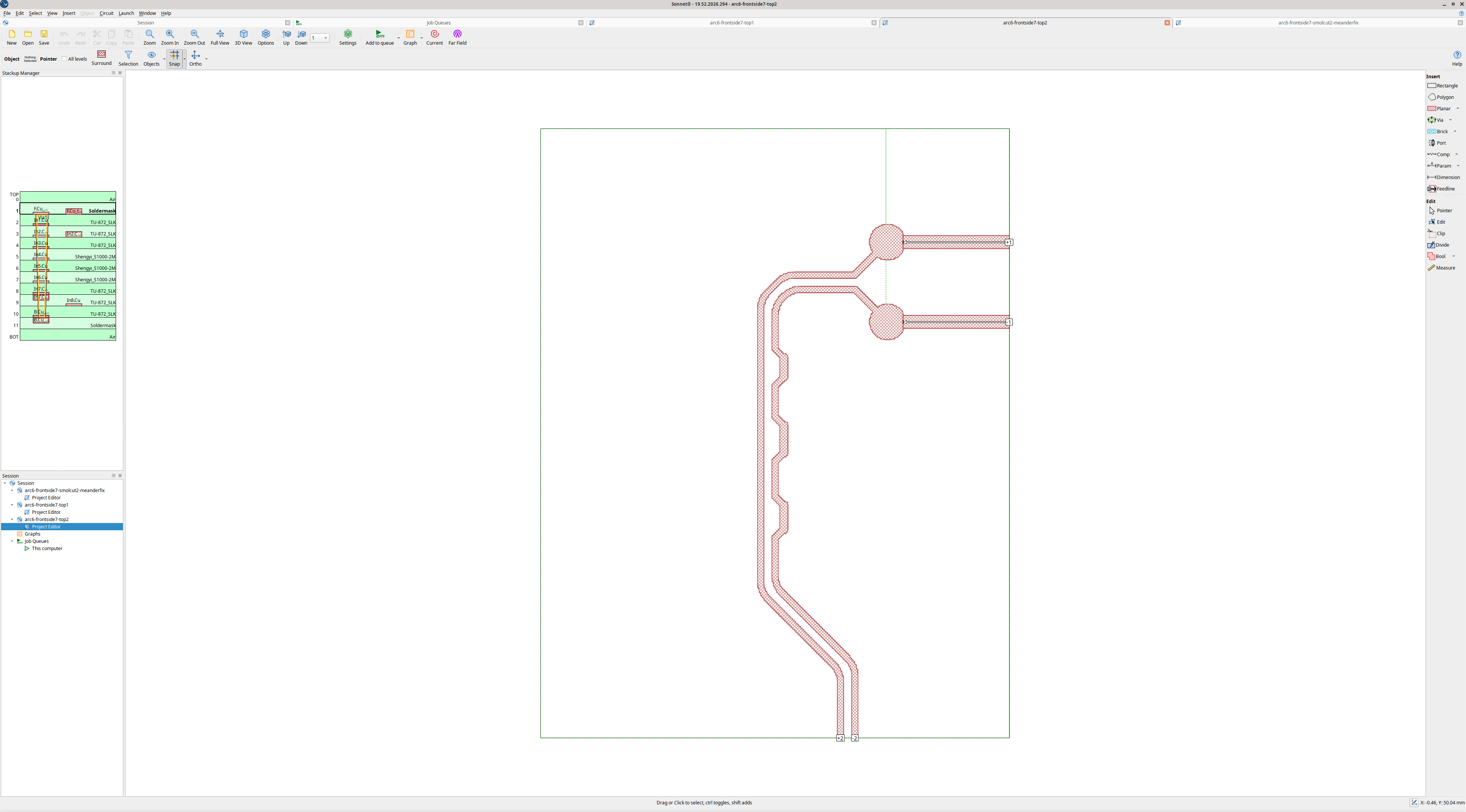
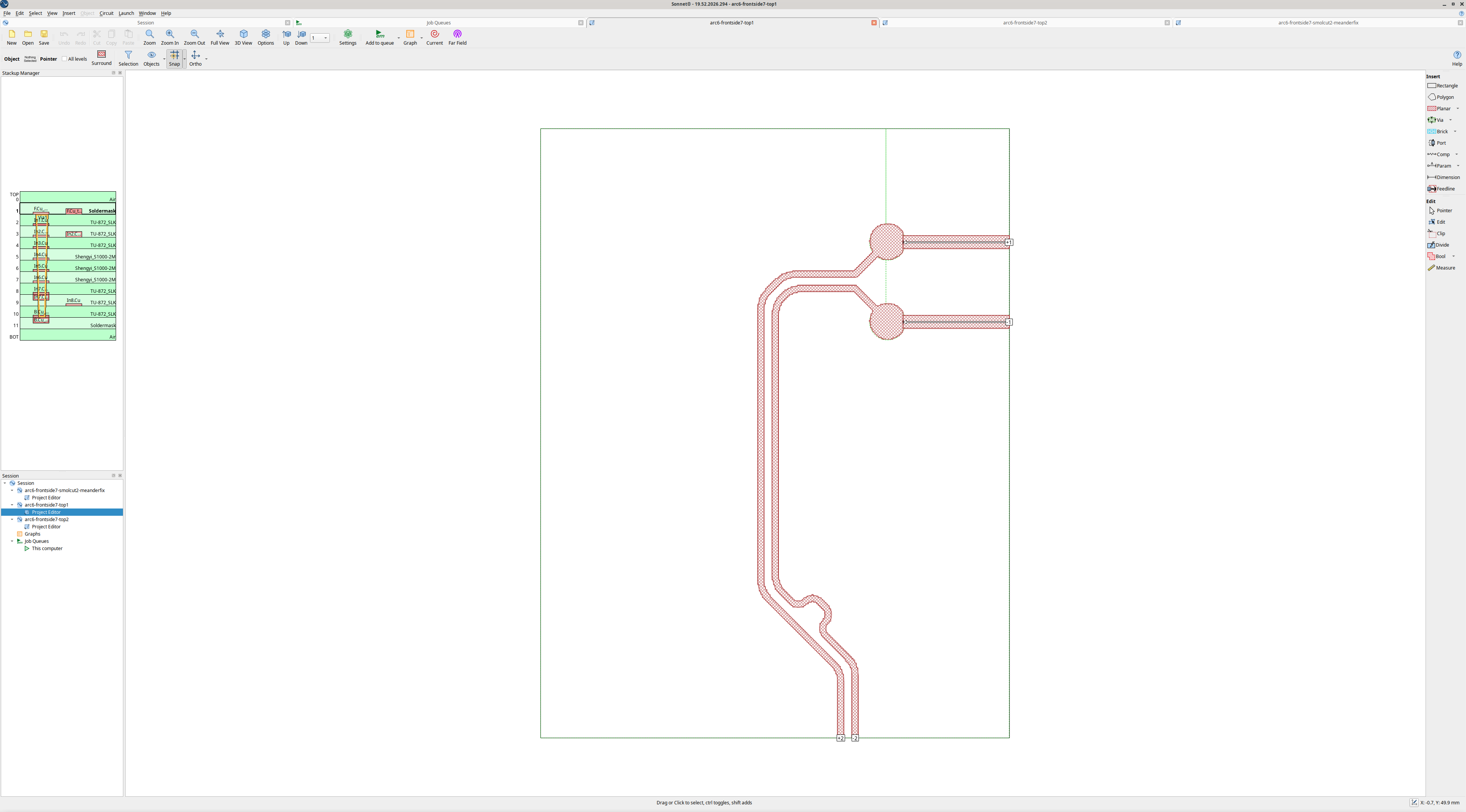
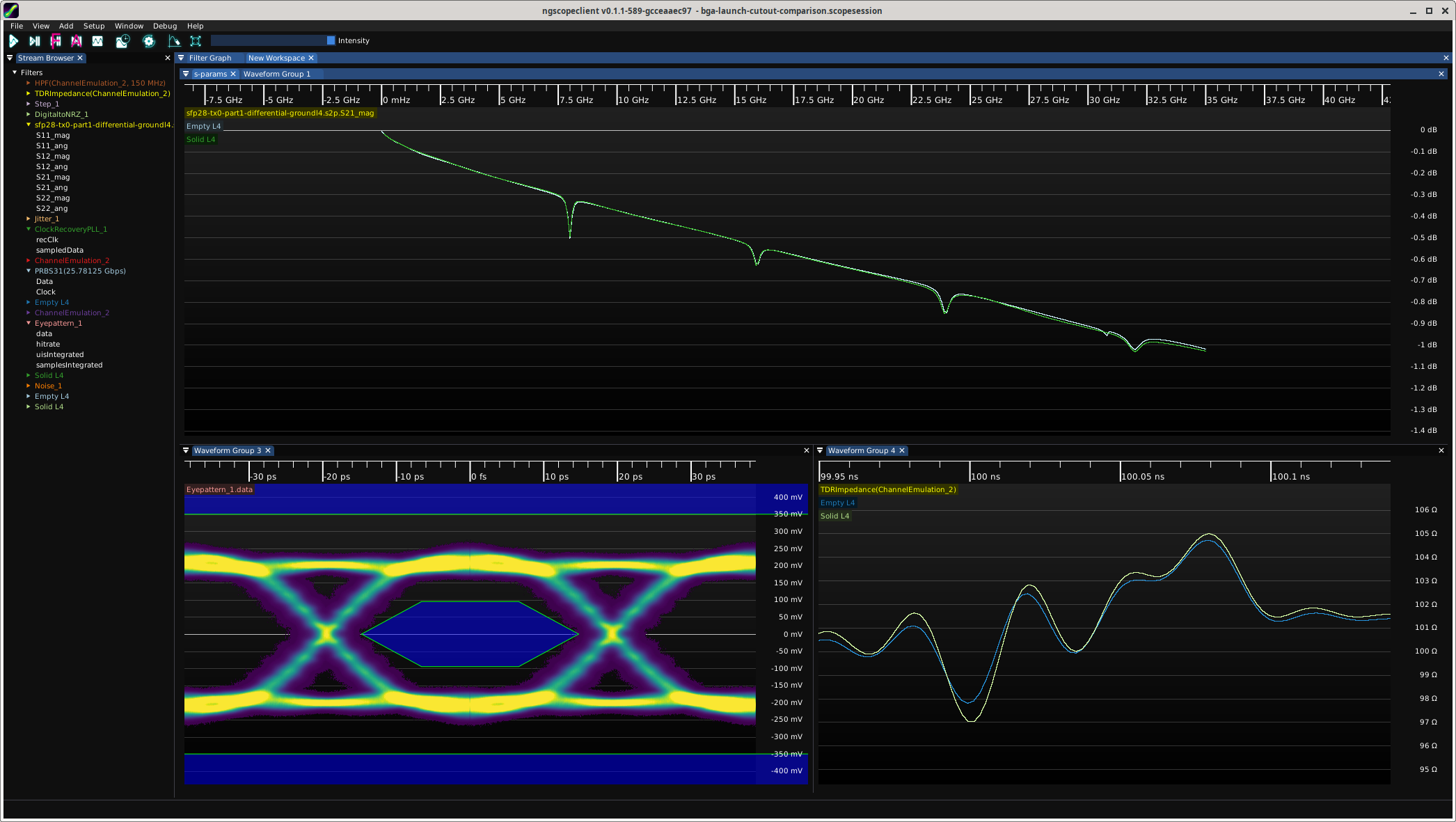
@azonenberg@ioc.exchangeContinuing to tweak the 25G diff pairs.
Here I replace a single large meander with a couple of smaller ones and adjust trace width slightly to reduce the mismatch at each meander.
The end result is replacing a single large reflection with a slightly wider but much lower one that should present less of an issue.
(The dip at T=100 is at the BGA ball itself and I'll be tweaking the cutout there slightly as well)
 @arXiv_csOH_bot@mastoxiv.page
Digital Twin Modeling of a Highly Automated Agricultural Tractor
Clay Hallman, Lukas Pindl, Timo Oksanen
https://arxiv.org/abs/2607.19912 https://arxiv.org/pdf/2607.19912 https://arxiv.org/html/2607.19912
arXiv:2607.19912v1 Announce Type: new
Abstract: In efforts to increase research efficiency and availability, a digital twin of our research tractor (AMX G-trac) is created, focusing especially on the CAN communication for data reading and actuation command following the ISOBUS protocol. Mevea Simulation Software is utilized as the foundation, providing the kinematic model and visuals, while Python is used to read and write CAN messages over a Kvaser CanKing virtual CAN channel. Various performance tests involving straight line and turning behavior are performed in both the digital twin simulation and in the real world to measure similarity. Results indicate that the Mevea model behaves very comparable in its lateral dynamics, often within 5-10 percent, but requires better data to fully capture the longitudinal aspects like acceleration. The final model described in this paper sets the table for a second iteration to include more tractor functions such as hydraulics and tractor-implement dynamics.
toXiv_bot_toot
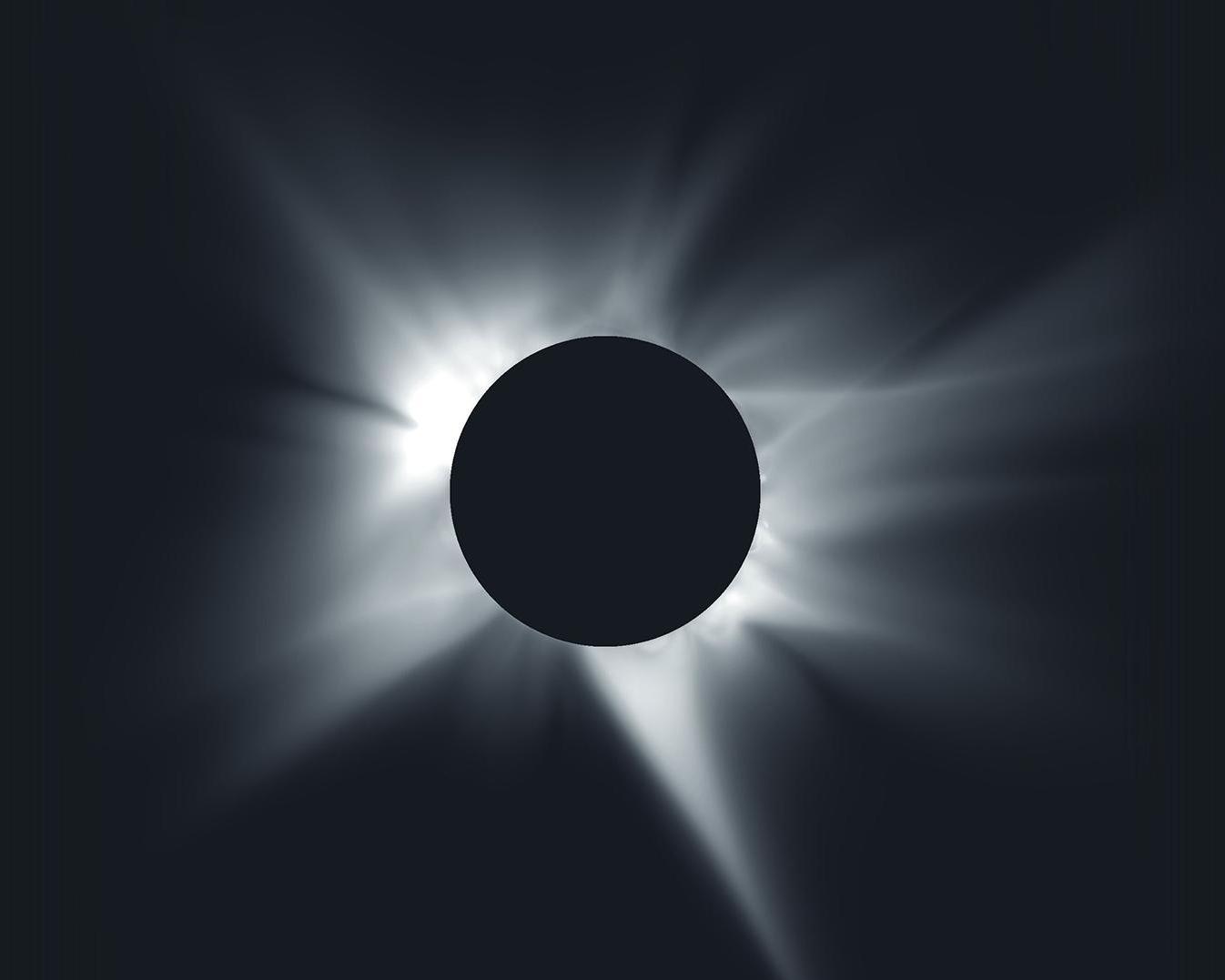
@cosmos4u@scicomm.xyzWill the #SolarCorona look like this come 12 August and the Total #SolarEclipse? The Spanish government thinks so, based on a #simulation - https://www.iac.es/en/outreach/news/iac-and-california-based-predictive-science-inc-predict-solar-corona-august-12-eclipse-using-la-palma - by the Instituto de Astrofísica de Canarias (IAC) in collaboration with Predictive Science Inc.: https://www.ciencia.gob.es/Noticias/2026/julio/MICIU-utiliza-Superordenador-Palma-predecir-corona-solar-eclipse.html
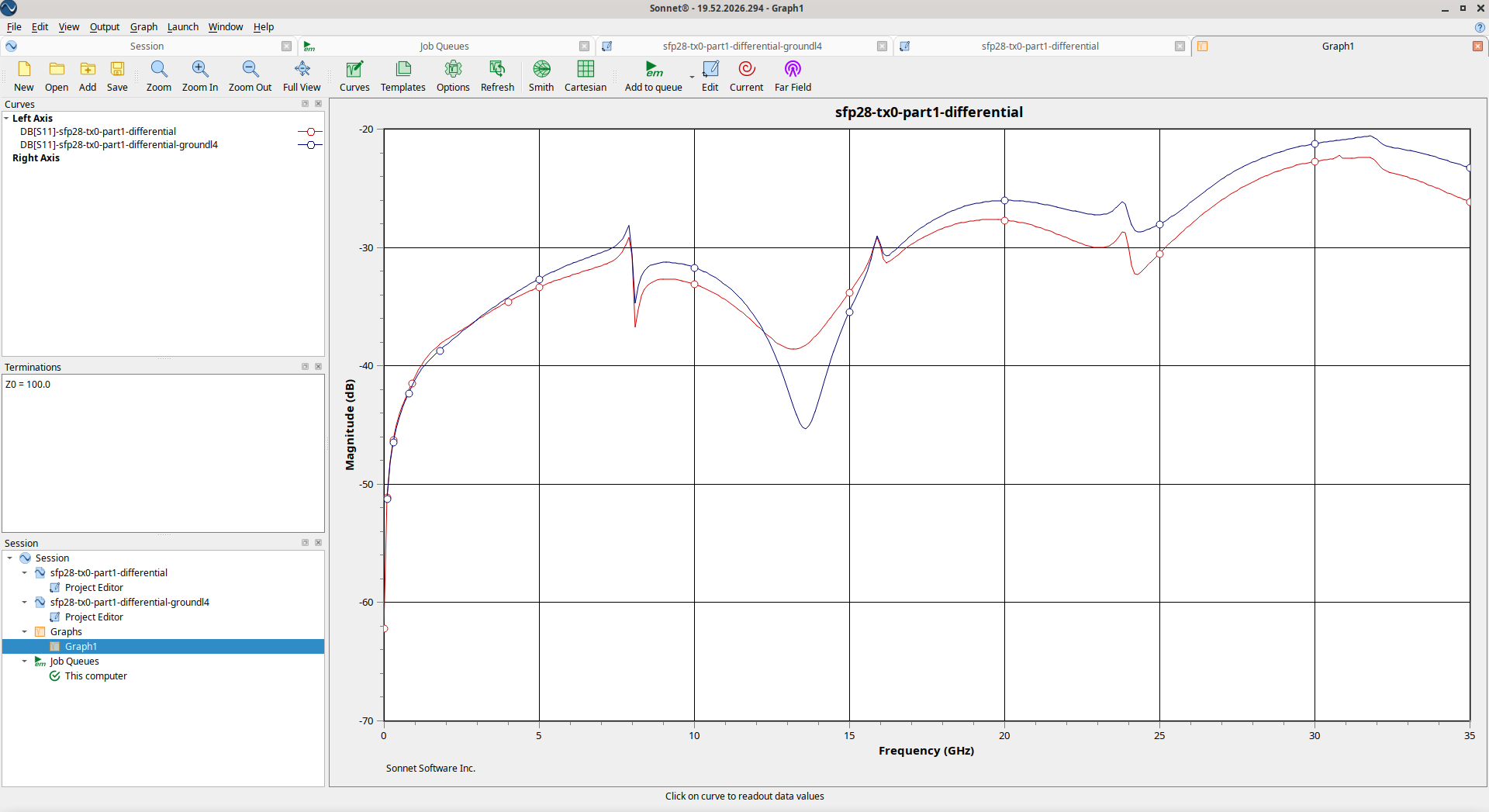
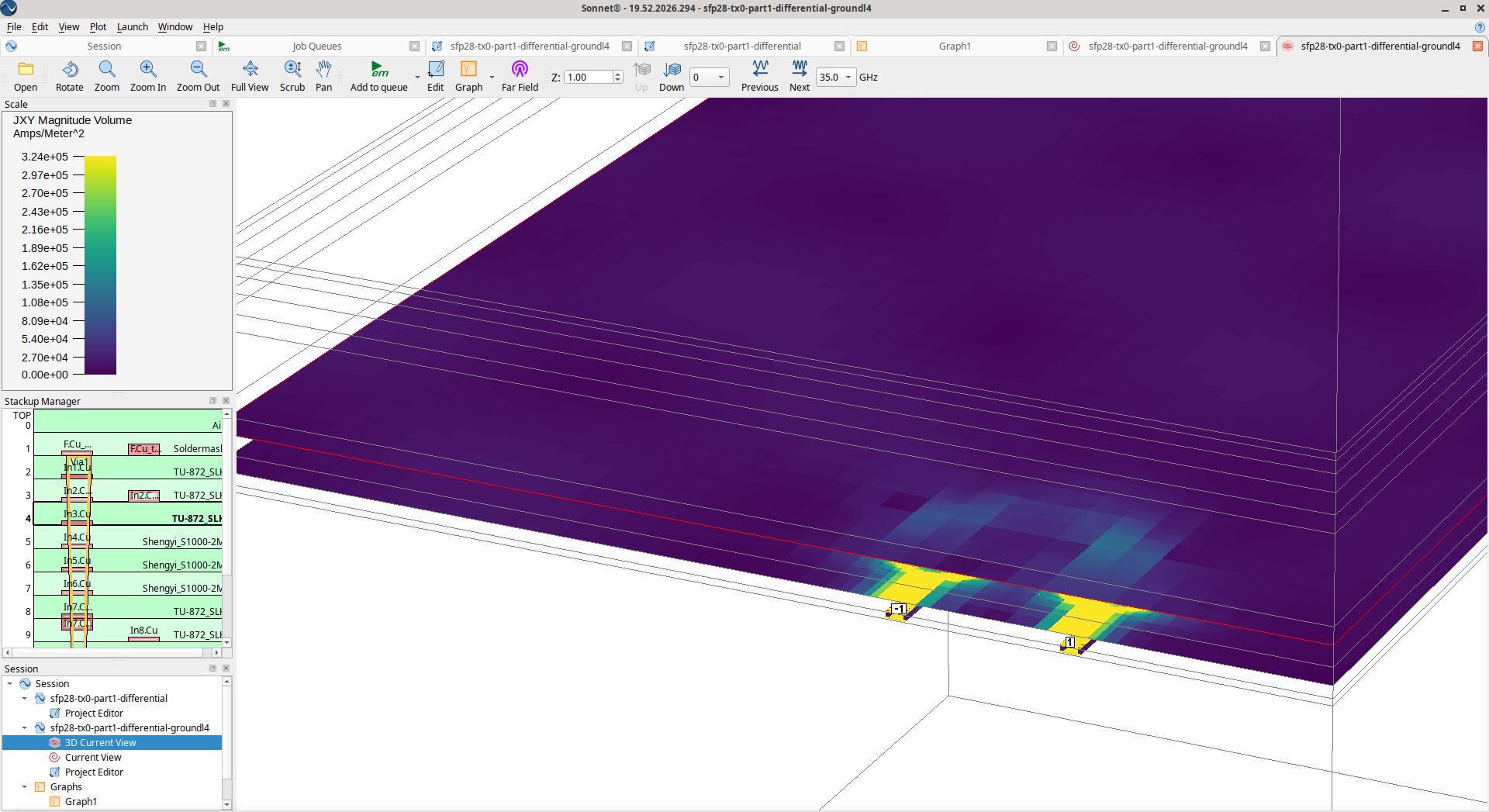
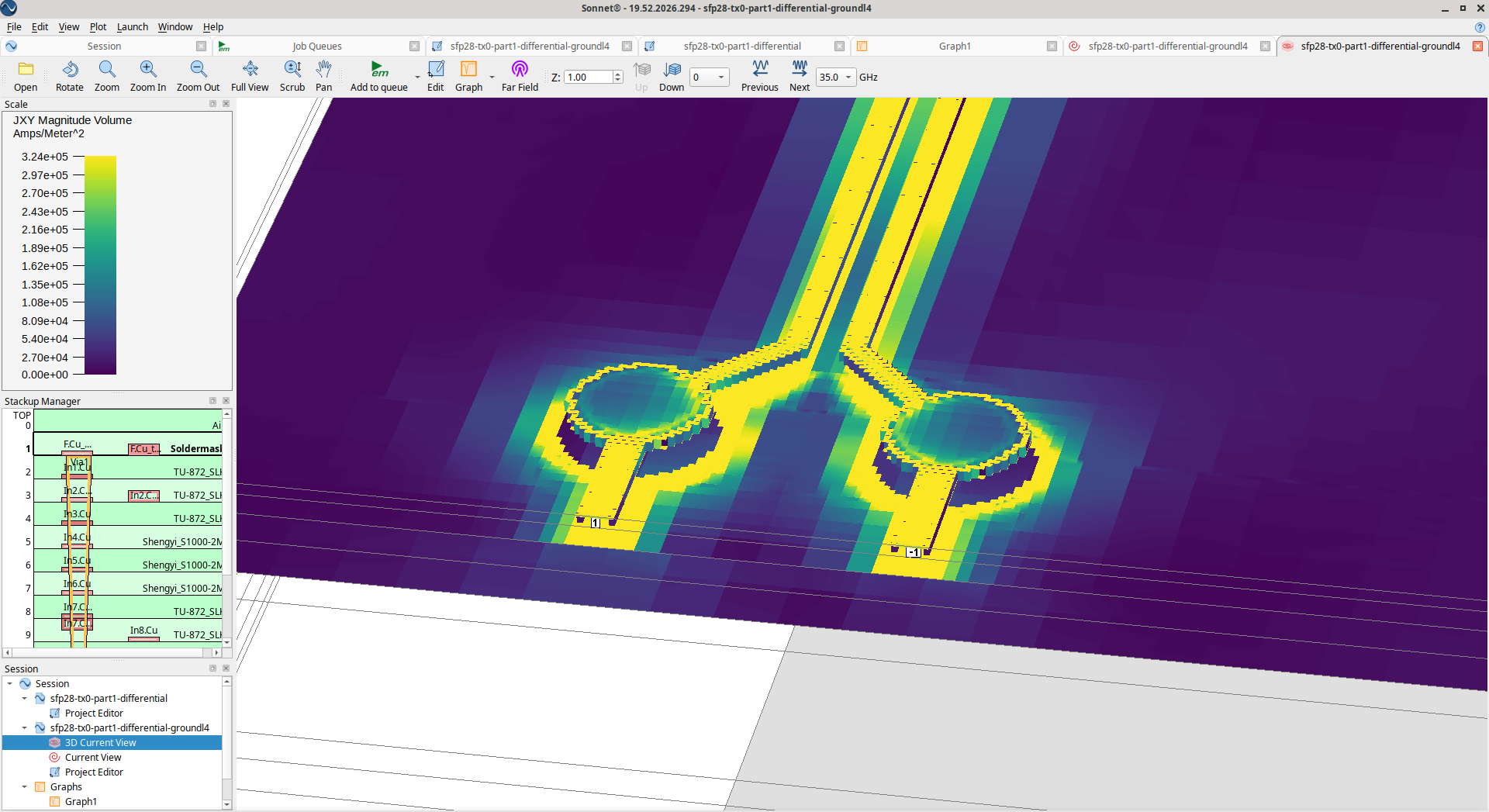
 @azonenberg@ioc.exchange
I did all of my original SI simulations for the SFP28 front side launches using only layer 1 signal and layer 2 ground plane, ignoring everything deeper in the board.
Some of you asked if the ground plane voids needed to extrude all the way into the board. Does it matter?
For the BGA launch, at least, the answer is in: there is a measurable effect in simulation, but it's minimal. Return loss of the launch is better than -20 dB in both configurations so I'm not going to bo…
 @simon_lucy@mastodon.social
#worldcup2026
I gave up watching the Canada Qatar game the ITV commentary pissed me off.
I had considerable doubts about the foul preventing a goal attempt if you're simulating, which is what it looked like.
And the attempt to claim another penalty later was also simulation.
@arXiv_physicsmedph_bot@mastoxiv.pageOpenPINT: Open-source Planning for Isoeffective Nuclear Treatments in BNCT research
Ian Postuma, Sara J. Gonz\'alez, Setareh Fatemi, Cristina Pezzi, Carolina Ruzzon, Oreste Nicrosini, Valerio Vercesi, Silva Bortolussi
https://arxiv.org/abs/2606.21476 https://arxiv.org/pdf/2606.21476 https://arxiv.org/html/2606.21476
arXiv:2606.21476v1 Announce Type: new
Abstract: Objective: Present OpenPINT (Open-source Planning for Isoeffective Nuclear Treatments), an open-source treatment planning system for nuclear therapies that integrates Monte Carlo dose calculations with modular dosimetric and radiobiological models for photon-isoeffective dose evaluation.
Approach: We describe the software architecture, implementation choices, and data flow from segmented geometry and source configuration to NIfTI dose outputs. We define BNCT-relevant dosimetric metrics and evaluate the workflow with reproducible analytic and voxelized cylindrical-phantom benchmarks, supplemented by a geometric patient-positioning example.
Main results: The module provides a reproducible and scriptable path for generating MCNP-ready inputs, extracting component-wise BNCT dose maps, and computing analysis-ready outputs for quality checks and decision support. Fine-resolution voxelized configurations reproduced the 1 mm analytic reference within 0.13% for the brain-limited irradiation-time endpoint, whereas the full voxelized sweep exposed deviations up to 4.42% in coarse 8--10 mm configurations. Patient-wide gamma pass rates were at least 99.60% for the evaluated mesh/interpolation cases, while low-dose DVH-tail quantities remained sensitive to boundary discretization.
Significance: This first paper isolates and validates the simulation-preparation and dosimetric-analysis core of an open-source BNCT treatment-planning platform. It establishes a foundation for subsequent work on optimization, biological weighting, and clinical workflow integration.
toXiv_bot_toot
@arXiv_physicsinsdet_bot@mastoxiv.pageReplaced article(s) found for physics.ins-det. https://arxiv.org/list/physics.ins-det/new
[1/1]:
- Flow-dependent tagging of $^{214}$Pb decays in the LZ dark matter detector
J. Aalbers, et al.
https://arxiv.org/abs/2508.19117 https://mastoxiv.page/@arXiv_physicsinsdet_bot/115099888730207431
- Experimental Characterization of Bulk Micromegas for Development of Active Target Time Projection...
Pralay Kumar Das, Nayana Majumdar, Supratik Mukhopadhyay
https://arxiv.org/abs/2602.21238 https://mastoxiv.page/@arXiv_physicsinsdet_bot/116135916399290266
- An AI-based Detector Simulation and Reconstruction Model for the ALEPH Experiment at LEP
Ya-Feng Lo, Dmitrii Kobylianskii, Benjamin Nachman, Eilam Gross
https://arxiv.org/abs/2604.11834 https://mastoxiv.page/@arXiv_physicsinsdet_bot/116407678561282432
- New Spallation Background Rejection Techniques to Greatly Improve the Solar Neutrino Sensitivity ...
Obada Nairat, John F. Beacom, Shirley Weishi Li
https://arxiv.org/abs/2510.12873 https://mastoxiv.page/@arXiv_hepph_bot/115382755693449240
- Quantization Effects of Artificial Neural Networks for Embedded Edge-Computing Applications
Aksoy, Bekman, Dimitrov, Dorosti, Eguzo, Fleitmann, Hader, Zambanini, van Waasen
https://arxiv.org/abs/2511.05479 https://mastoxiv.page/@arXiv_csNE_bot/115524263599389339
toXiv_bot_toot
@@arXiv_physicsatomph_bot@mastoxiv.page@mastoxiv.pageReplaced article(s) found for physics.atom-ph. https://arxiv.org/list/physics.atom-ph/new
[1/1]:
- Simulation of STIRAP from the 1S to the 2S states of the Hydrogen/Antihydrogen atoms
AbdAlGhaffar K. Amer, A. Capra, T. Friesen, M. C. Fujiwara, T. Momose, C. So, F. Robichea…
@arXiv_csGR_bot@mastoxiv.pageEVOLVE: Efficient Learned Volume Compression with Variable-Rate Encoding on a Cross-Domain Database
Kaiyuan Tang, Maizhe Yang, Chaoli Wang
https://arxiv.org/abs/2607.18187 https://arxiv.org/pdf/2607.18187 https://arxiv.org/html/2607.18187
arXiv:2607.18187v1 Announce Type: new
Abstract: Large-scale scientific simulations generate volumetric data at rates that far outpace advances in storage and network bandwidth, making effective lossy compression increasingly critical. However, conventional compressors often struggle to preserve fine structural details at high compression ratios (CRs), and implicit neural representations (INRs) require costly per-volume optimization and produce models with fixed CRs. To respond, we present EVOLVE, an autoencoder (AE)-based volume-compression framework that targets high CRs for offline compression, with three key contributions. First, we construct a large-scale cross-domain database of 6,376 volumes from 21 scientific simulations, curated via perceptual hashing to ensure diversity, enabling the optimized model to extract features that generalize across volumes within the covered scientific simulation domains. Second, we reexamine the design space of AE-based compressors and incorporate several macro- and micro-designs into a vanilla AE to develop EVOLVE, which substantially improves the expressive power and compression capability. Third, we develop a learnable gain mechanism with a three-stage training strategy to enable variable-rate encoding, allowing a single model to support continuous CR adjustment at inference time. Experiments on multiple unseen scientific simulation datasets demonstrate that EVOLVE achieves substantially higher CRs than conventional compressors at comparable reconstruction quality, while delivering compression speeds that are orders of magnitude faster than INR-based methods, highlighting its promise as a strong alternative for compressing scientific data. The code, model weights, and results are available on our project page at https://evolve-vis.github.io.
toXiv_bot_toot
@cosmos4u@scicomm.xyzNo Stream Left Unscathed - The Imprint of a Host Galaxy: #galactic #simulations narrow the hunt for #darkMatter: https://www.washington.edu/news/2026/08/27/stellar-streams-dark-matter-simulation/
@arXiv_astrophGA_bot@mastoxiv.pageReplaced article(s) found for astro-ph.GA. https://arxiv.org/list/astro-ph.GA/new
[2/3]:
- Hunting Wandering 3<z<8 Black Holes: Spatial Offsets in Ionization Ratio and Continuum Emission
Urvi Thakurdesai, et al.
https://arxiv.org/abs/2606.30715 https://mastoxiv.page/@arXiv_astrophGA_bot/116843669196485332
- Spectral Energy Distributions of Globular Clusters in VV191a
Ashton Cardona, et al.
https://arxiv.org/abs/2607.10352 https://mastoxiv.page/@arXiv_astrophGA_bot/116917375134409194
- The different methods to calculate cluster membership probabilities
Tahereh Ramezani, Prapti Mondal, Katerina Neumannova, Ernst Paunzen, Johana Supikova, Gabriel Szasz
https://arxiv.org/abs/2607.13711 https://mastoxiv.page/@arXiv_astrophGA_bot/116928584338673264
- On the current status of tidal tails of Galactic open clusters
Tahereh Ramezani, Prapti Mondal, Katerina Neumannova, Ernst Paunzen, Johana Supikova, Gabriel Szasz
https://arxiv.org/abs/2607.13747 https://mastoxiv.page/@arXiv_astrophGA_bot/116928607930493156
- The Stripped-Star Ultraviolet Magellanic Cloud Survey (SUMS): The UV Photometric Catalog and Stri...
Bethany Ludwig, Maria R. Drout, Ylva Gotberg, Dustin Lang, Alexander Laroche
https://arxiv.org/abs/2505.18632 https://mastoxiv.page/@arXiv_astrophSR_bot/114578704405418342
- Observable signature of magnetic tidal coupling in hierarchical triple systems
Marta Cocco, Gianluca Grignani, Troels Harmark, Marta Orselli, Davide Panella, Daniele Pica
https://arxiv.org/abs/2510.24897 https://mastoxiv.page/@arXiv_grqc_bot/115462391818777276
- Periodic Gravitational Lensing with Oscillating Boson Stars
Xing-Yu Yang, Tan Chen, Rong-Gen Cai
https://arxiv.org/abs/2511.19606 https://mastoxiv.page/@arXiv_grqc_bot/115615137595636545
- Search for Dark Matter Annihilation and Decay with H$\alpha$ Line Emission
Rebecca K. Leane
https://arxiv.org/abs/2512.09019 https://mastoxiv.page/@arXiv_hepph_bot/115700041751825685
- Reanalyzing DESI DR1: 5. Cosmological Constraints with Simulation-Based Priors
Anton Chudaykin, Mikhail M. Ivanov, Oliver H. E. Philcox
https://arxiv.org/abs/2602.18554 https://mastoxiv.page/@arXiv_astrophCO_bot/116124504277603946
- Can wormholes have vanishing Love numbers?
Shauvik Biswas
https://arxiv.org/abs/2605.03025 https://mastoxiv.page/@arXiv_grqc_bot/116526586864139338
toXiv_bot_toot
@arXiv_csGR_bot@mastoxiv.pageReplaced article(s) found for cs.GR. https://arxiv.org/list/cs.GR/new
[1/1]:
- ClothTransformer: Unified Latent-Space Transformers for Scalable Cloth Simulation
Yu Zhang, Yidi Shao, Wenqi Ouyang, Yushi Lan, Zhexin Liang, Chengrui Wu, Xudong Xu, Xingang Pan
https://arxiv.org/abs/2605.27852 https://mastoxiv.page/@arXiv_csGR_bot/116651047586260795
toXiv_bot_toot
@arXiv_physicsmedph_bot@mastoxiv.pageTheoretical derivation of blood velocity from TOF-MRA based artery centerline
Abrar Faiyaz
https://arxiv.org/abs/2607.16498 https://arxiv.org/pdf/2607.16498 https://arxiv.org/html/2607.16498
arXiv:2607.16498v1 Announce Type: new
Abstract: Time-of-flight magnetic resonance angiography (TOF-MRA) is widely used for structural vascular imaging, but extracting functional hemodynamics like blood velocity typically requires supplementary phase-contrast scans. This study proposes a novel, physics-informed computational framework to extract variable fluid velocity directly from standard TOF-MRA signal profiles. We analytically expand the Bloch equations into Bloch-McConnell flow equations, establishing a mathematical relationship between the spatial decay of longitudinal magnetization and fluid velocity. To validate this derivation and overcome the limitations of constant-velocity assumptions, a MATLAB simulation framework was developed to model fluid flow in two variable-geometry flowing tube cases i.e continuous tapering and focal stenosis -under synthetic scanner noise. A global inverse optimization approach utilizing Dual-Tikhonov regularization was deployed to stably invert the ill-posed transit time integral, actively penalizing high-frequency numerical ringing while preserving structural curve stiffness. The computational sim-ulations successfully recovered ground-truth point-wise velocities, accurately tracking gradual hemodynamic accelerations and sharp stenotic jets. This theoretical framework provides a robust mathematical proof-of-concept that quantitative, localized functional hemodynamic metrics can be extracted from standard structural MRA imaging, estab-lishing a foundation for advanced flow quantification without requiring additional scan time.
toXiv_bot_toot
@arXiv_csGR_bot@mastoxiv.pageFast Wave-optics Rendering of Multiplane Images for 3D Holographic Displays
Brian Chao, Dario Seyb, Nathan Matsuda, Oliver Cossairt, Yang Zhou, Douglas Lanman, Gordon Wetzstein, Grace Kuo, Changwon Jang
https://arxiv.org/abs/2607.19731 https://arxiv.org/pdf/2607.19731 https://arxiv.org/html/2607.19731
arXiv:2607.19731v1 Announce Type: new
Abstract: Recent advances in neural rendering have unlocked unprecedented capabilities in 3D reconstruction and novel view synthesis, giving rise to applications such as virtual fly-throughs of a 3D scene reconstructed from a set of sparse, casually captured images. However, these renderings are viewed on a computer screen or conventional VR headsets as 2D images, greatly limiting the perceptual realism and immersiveness of such experiences. The rapid development in novel 3D scene representations calls for dedicated rendering algorithms that convert these readily-available 3D contents into formats that are compatible with emerging 3D display technologies, such as holographic displays. In this paper, we propose a wave-optics rendering pipeline that works with multiplane images (MPIs) for efficient and high-quality hologram synthesis. Our MPI-based computer-generated holography algorithm greatly outperforms state-of-the-art primitive-based CGH algorithms in terms of runtime, achieving speedups up to 250,000x while achieving comparable image quality, and significantly outperforms conventional layer-based CGH algorithms in terms of image quality. We validate our method extensively on a wide variety of 3D scene datasets both in simulation and through experimentally captured results, showing exceptional 3D focal stack and 4D light field reconstruction performance without sacrificing efficiency.
toXiv_bot_toot