 @arXiv_mathDG_bot@mastoxiv.page
2026-09-15 08:54:44
Singularities of the Wigner Caustic and the Centre Symmetry Set of Frontal Curves in the Euclidean Plane
Micha\l{} Zwierzy\'nski
https://arxiv.org/abs/2609.14653 https://arxiv.org/pdf/2609.14653 https://arxiv.org/html/2609.14653
arXiv:2609.14653v1 Announce Type: new
Abstract: Motivated by the role of the Wigner caustic in semiclassical phase-space analysis, we extend it, together with the centre symmetry set, from regular planar curves to cooriented frontals. For an angularly regular parallel pair, the signed speed of the Wigner caustic is one half of the difference of the extended signed radii of curvature, while singular points of the finite centre symmetry set are the critical points of their projective ratio. These formulas yield criteria and explicit invariants for ordinary and higher cusps, an order-lowering relation between the two constructions, and a multiplicity-weighted extension of the classical cusp-count inequality for strictly convex ovals.
We also analyse parallel pairs containing a singular frontal which is not a front. A $5/2$-cusp produces either a $5/2$- or, at a signed-radius resonance, a $5/3$-cusp on the Wigner caustic. The opposite resonance sends the centre symmetry set to infinity. We obtain the corresponding transfer results for a $5/3$-cusp and give a projective completion which resolves vanishing denominators and simultaneous finite-order zeros of the two signed radii.
toXiv_bot_toot
 @raiders@darktundra.xyz
2026-09-09 09:33:44
NFL Simulator 2026: Live forecast of the playoff picture and outcomes for every team https://www.nytimes.com/athletic/interactive/nfl-playoff-picture-simulator-2026/
 @arXiv_statCO_bot@mastoxiv.page
2026-08-14 07:49:17
Hierarchical Bayesian Calibration with Bayesian Committee Machine
Sebastian Heinekamp, David M. Higdon, Andreas Adelmann
https://arxiv.org/abs/2608.12603 https://arxiv.org/pdf/2608.12603 https://arxiv.org/html/2608.12603
arXiv:2608.12603v1 Announce Type: new
Abstract: Calibrating computational models to experimental data is a core task in applied statistics, especially in scientific domains, where physical experiments are costly and simulations play a central role in design and inference. Motivated by uncertainty quantification challenges in particle accelerator experiments, we develop and evaluate a Hierarchical Bayesian Calibration framework. In contrast to standard Bayesian calibration, certain inputs - such as beam injection amplitude - must be estimated separately for each experiment. We adopt the Kennedy-O'Hagan formulation and extend it with a hierarchical prior structure to model the distribution of experiment-specific calibration parameters, thus borrowing strength and improving generalisation across repeated experiments. A key methodological challenge arises from the need to evaluate a large number of forward simulations, which renders conventional Markov chain Monte Carlo approaches computationally prohibitive. To address this, we leverage the Bayesian Committee Machine as a scalable modelling strategy for Gaussian Process emulators. The BCM provides a principled divide-and-conquer approach, enabling parallel inference and reducing computational cost without requiring problem-specific tuning of the emulator approximation. Posterior sampling is performed using the No-U-Turn Sampler, supported by automatic differentiation in Julia, which removes the need for analytic gradient derivation and facilitates flexible model specification. We assess the proposed framework using established benchmark problems and simulated data from the Argonne Wakefield Accelerator. The results demonstrate substantial computational savings and robust calibration performance, highlighting the applicability of the method to large-scale scientific modelling problems.
toXiv_bot_toot
 @aral@mastodon.ar.al
2026-07-31 12:58:23
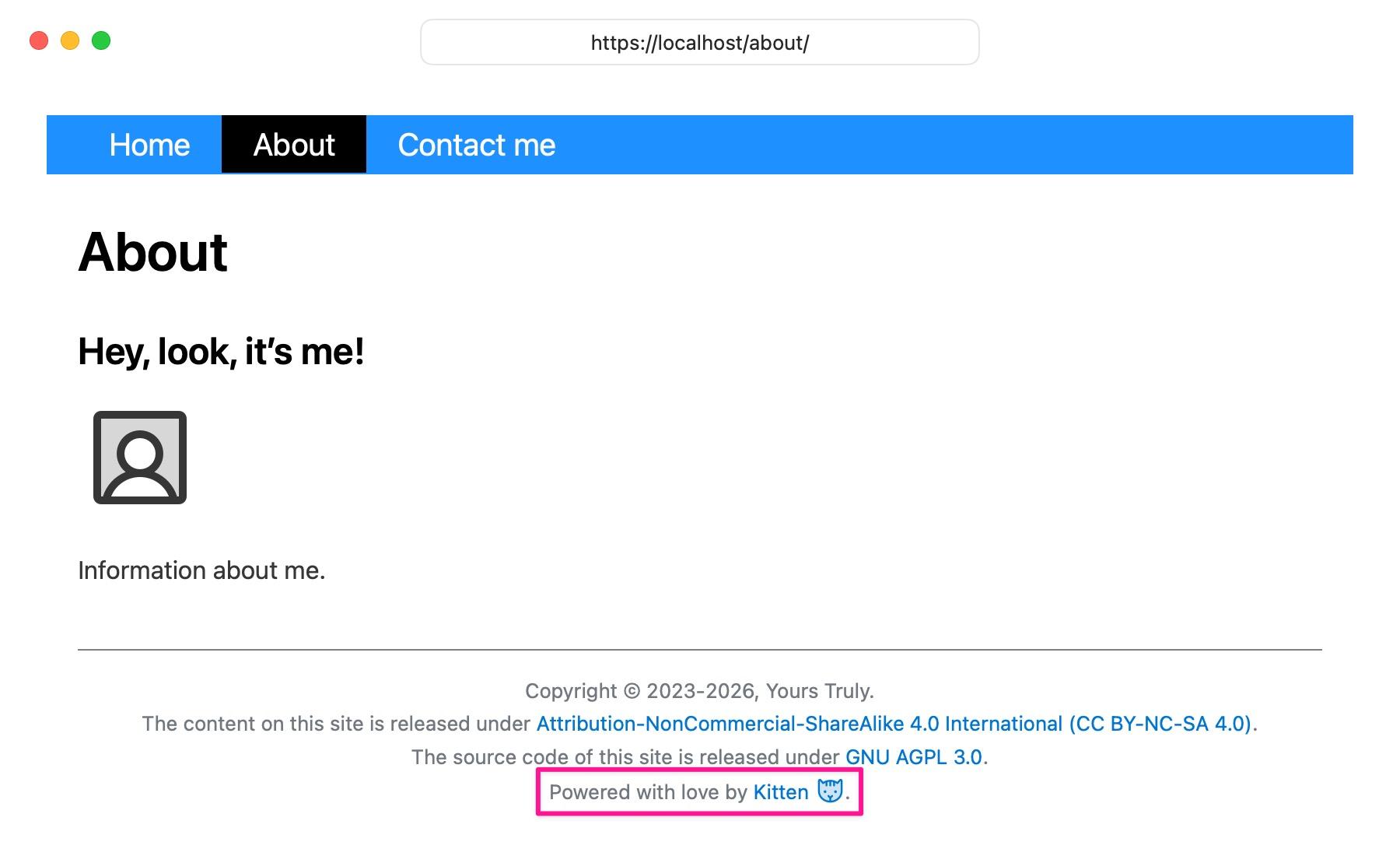
That feeling when your renderer can handle a component that outputs HTML inside link text in Markdown that’s embedded in HTML.
(Yes, I’m bragging.)
#Kitten #SmallWeb #SmallTech
.
Full (visible) code:
export default () => kitten.html`
<footer>
<markdown>
Copyright (c) 2023-${new Date().getFullYear()}, Yours Truly.
T…](https://s3-eu-central-1.amazonaws.com/mastodon-aral/media_attachments/files/117/014/705/153/360/218/original/229421ba28ff29f6.jpeg)
 @arXiv_csHC_bot@mastoxiv.page
2026-08-12 08:25:59
When the Interviewer Is a Bot: Behavior, Breakdowns, and Trust in MLLM-Led Interviews
He Zhang, Kambinachi Chukwuma, ChanMin Kim, John M. Carroll
https://arxiv.org/abs/2608.10412 https://arxiv.org/pdf/2608.10412 https://arxiv.org/html/2608.10412
arXiv:2608.10412v1 Announce Type: new
Abstract: Semi-structured interviews are a cornerstone of qualitative research but remain labor-intensive. We report an empirical study of what actually happens when the interviewer is an off-the-shelf real-time multimodal LLM (MLLM). We built InterviewBot, a voice-based interviewing system that wraps a real-time MLLM with a researcher-authored outline, and deployed it not as a novel architecture but as a research instrument for observing default MLLM interviewing behavior. In a practice study (N=15), participants completed a bot-led semi-structured interview and then a human-led reflection session about that experience. We contribute (i) a turn-level behavioral analysis of an MLLM interviewer (N_turns=428) showing that it is acknowledgment-heavy but probe-light (deepening probes account for 4.9% of all turns), and that 28.7% of question-bearing turns pack multiple questions into one turn despite an explicit one-question-at-a-time instruction; (ii) an inductive catalogue of four data-collection breakdowns (information loss, premature termination, latency, and interruption) observed in a deployed rather than simulated system; and (iii) three social dynamics from participants' reflections: disclosure calibration, where reduced social pressure coincided with shallower elaboration; institutional legitimacy, where trust tracked perceived stakes and what delegation to AI signaled about the organizer rather than conversational competence; and conversational grounding, where content-grounded paraphrase, not generic social filler, was what participants read as listening. We conclude with design implications for depth control, transparent handoffs, and non-templated listening mechanisms in human-centered interview automation.
toXiv_bot_toot
 @inthehands@hachyderm.io
2026-09-13 20:57:55
With the extremely well-founded concern about North Korea, I do want to be careful not to revive all the barenaked racism and xenophobia of the anti-outsourcing arguments from 20 years ago. Not that any replies are doing so yet; it's just a danger that’s lurking here.
Per this conversation in the replies, when offshoring does a faceplant, it’s is almost always about the client company’s dysfunction •first•, the overseas team second, and the innate general properties of people from that other country…um, not at all:
https://hachyderm.io/@skinnylatte/117265404729717952
So let's just stay clear on that. If scammy emails like the one in the OP are actually finding traction in the US, then that's a sign of rot •in the US•.
 @hikingdude@mastodon.social
2026-08-07 17:07:16
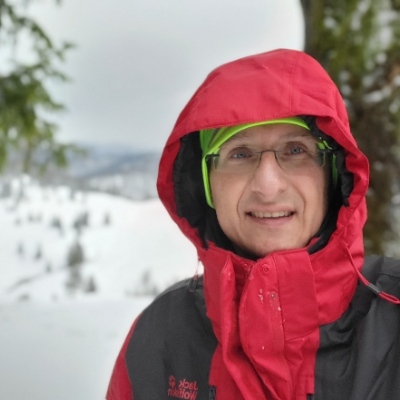
My #FootpathFriday contribution... I wish I was there today to be honest..
This was part of a bike and hike where we returned in the rain. But as we were prepared for it, it was more fun than expected!
#nature

 @arXiv_csAR_bot@mastoxiv.page
2026-08-14 07:32:47
Why Do Prefetchers Fail? Let Agents Answer
Xiangfeng Sun, Ceyu Xu, Ningzhi Ai, Zeyu Zhu, Yiyang Yuan, Yuan Xie
https://arxiv.org/abs/2608.13027 https://arxiv.org/pdf/2608.13027 https://arxiv.org/html/2608.13027
arXiv:2608.13027v1 Announce Type: new
Abstract: Hardware prefetchers are crucial to processor performance, yet their design remains labor-intensive and expert-driven. Architects inspect execution and memory-access traces, identify patterns, translate them into online hardware heuristics, and evaluate them in simulation, often with no guarantee of improvement. Human experts cannot systematically inspect billion-instruction traces across diverse real-world workloads.
We present a performance-anomaly-driven autoresearch flow that repeatedly asks why a deployed prefetcher fails and uses the diagnoses to construct the Mixture of Prefetchers (MoP). Each iteration localizes high-impact unexplained misses to program counters, gives agents hardware logs, source code, and sliced traces, validates diagnoses through runnable minimal cases, and synthesizes specialized sub-prefetchers for recurring pattern families. Measured performance and remaining anomalies feed subsequent iterations, enabling simulator-in-the-loop discovery beyond model priors.
The campaign consumes 1.91 billion DeepSeek V4 Pro tokens. On SPEC CPU2006 and SPEC CPU2017, MoP achieves a 61.1% geomean IPC speedup over no prefetching, outperforming the human-designed Alecto, Berti, and Pythia prefetchers by 14.5%, 21.6%, and 23.6%, respectively. RTL synthesis in a 6nm library reports 110 KB of on-chip storage and 0.0347 mm^2 area. To our knowledge, this is the first empirical demonstration that an agent-driven hardware-design process can produce an RTL-practical prefetcher that outperforms state-of-the-art human designs on unseen workloads.
toXiv_bot_toot
 @qurlyjoe@mstdn.social
2026-08-08 20:22:40
#silentSunday
Never Summer Range. September 2009

 @m0les@aus.social
2026-08-03 15:34:16
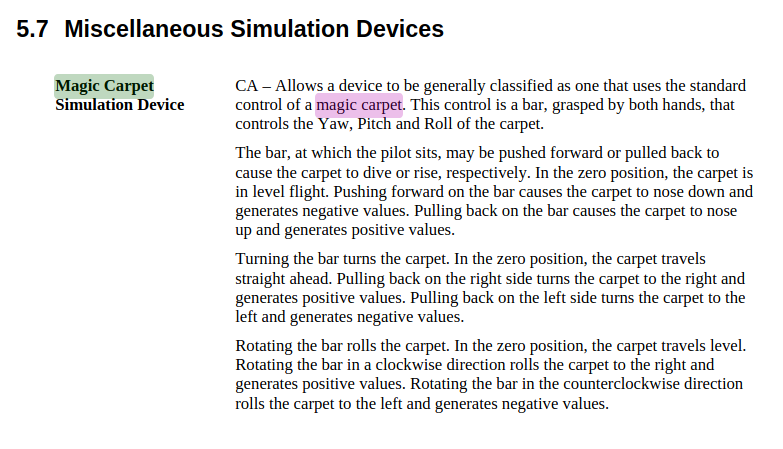
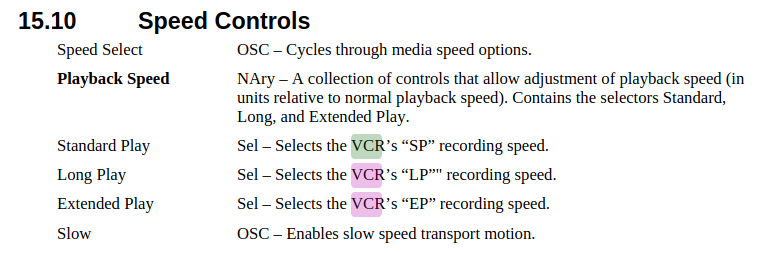
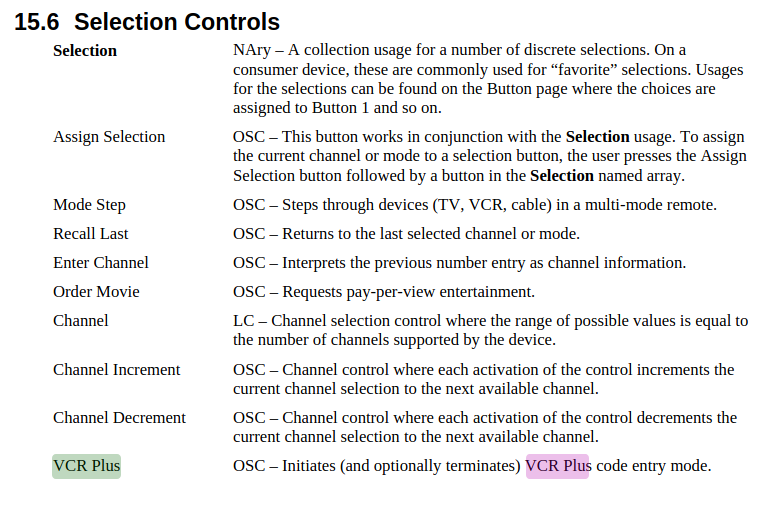
TIL: The USB HID specification has definitions for magic carpets and video cassette recorders (Including Macrovision's "VCR Plus"/"Plus Code" shortcut entry).