Tootfinder

Opt-in global Mastodon full text search. Join the index!

@hex@kolektiva.social
2026-05-29 22:15:58

I tried to write something up to talk about an idea, but it didn't quite work. I have a lot more I need to put into it. But I want to get an idea out, and, after talking with a person who pointed out some of the flaws in what I wrote, I think I can maybe write down the kernel of the idea here.
An acquaintance of mine did a deep dive on Operational Art and wrote his thesis (which prompted an earlier set of posts and an article I wrote for my professional-ish blog) on the intersection of the OODA loop and critical philosophy. I've been spending a lot of time thinking about Kilcullen's Three Pillars model (after watching Andrewism's wonderful video) and Beer's VSM. The TL;DR of it is that there's a much better insurgency model. Of course, the insurgency model also works for a bunch of other things, because cybernetics lets you do all kinds of cool abstraction like that.
So as I was reading the essay of a comrade the other day, that model popped back into my head and I'm going to try to share what I can of it.
When colonizers came to the Salish region, they saw what they believed to be an untouched wilderness. They failed to see the ways in which Salish people tended the land. Indigenous fire practices were common on the northwest coast, and the suppression of those practices remains a problem. There is an interrelationship between an environment and the systems within it. Systems, like people, animals, and cultures, adapt to the environment. In doing so, those systems will also change the environment.
Social technology was invisible, so colonizers defaulted to either some kind of Rousseauvian or Malthusian model of these people. They were not, for the colonizers, people who had developed advanced social technologies to live in harmony with their world. They were, rather, people in "a state of nature."
The European influenced left continues to draw this Rousseauvian model, which continues through a lot of Anarchist revolutionary thought. European anarchists were heavily influenced by observations and theories around the behavior of indigenous people. The remnants of this thought still exist in the idea that the system must only be destroyed for us to be free.
This is the same obliviousness to social technology, that social technology actually exists, often informs both early colonizers and modern radicals.
It is through this obliviousness that we fail to recognize how capitalism is a social technology that is managed into existence and maintained, and how changes in the environment can threaten institutions that have become over-adapted to a specific version of that environment.
We can extend Kilcullen's metaphor of a "conflict ecosystem" through cybernetics into a much more rich model, populated by viable systems. The ecosystem itself has a fitness function, which drives adaptation within the environment. But all actors in the environment also affect it. Some try to manage the environment. Revolutions are often over who manages a social ecosystem, over who controls the social technology and what it does.
Once we see this dynamic at play, calls of "riot" and "revolution" make a whole lot less sense. Rather, the question becomes, "how do we change the ecosystem in such a way that it cannot be 'managed' at all?"
Graeber/Wengrow talked about Turtle Island indigenous social technologies in Dawn of Everything, such as the system of moieties and clans described in the book. So I have a good reading list as I think through this model, but I hope the "ecosystem" model is helpful (if not completely fleshed out).
I'd be interested in any critiques or thoughts to help develop this idea more.

@mgorny@social.treehouse.systems
2026-05-28 04:34:54

New on #blog (this time with quotes from Fedi): "Why Gentoo?"
#Gentoo is perceived by the wider public, the non-users. What probably stands out most is compiling. Almost everyone who heard of Gentoo knows it has something to do with compiling everything. And why are we doing that? Well, besides being hardcore, the common sentiment goes for performance. So yeah, Gentoo users must be some kind of hardcore ricers who try to squeeze every last bit of their system performance.
To be honest, I don’t think that’s a good way to describe Gentoo. Yes, compiling is at the core of it. But performance? I don’t think so, at least not in the obvious, -O9999 -fzomg-fast way. The world has moved on, CPUs have gotten faster, optimizations have gotten smarter, and distributions have started optimizing more aggressively. Optimization-wise, I suspect your average Ubuntu package with generic optimizations may be no slower than the equivalent Gentoo package fine-tuned for your CPU. And if it’s not, then it probably won’t make a real difference anyway.
There’s much more to Gentoo than that. Yes, some of it comes from building from source: the flexibility. But a lot of it comes from the wider Gentoo philosophy, the philosophy that brought us all together. The idea that Gentoo is the distribution we’re making for ourselves and people who enjoy Gentoo. So if I were to make a few arguments for Gentoo, I’d focus on that. And this is what I’d like to do here.
"""

@mgorny@social.treehouse.systems
2026-07-27 06:09:28

I'm trying to keep an open mind.
When someone I used to respect starts using LLMs, I'm thinking: okay, their moral compass is bad, but at least they're putting an effort to review that stuff and they're trying to improve other projects.
When that person writes a pro-AI blog post, complaining that people aren't respecting them anymore, I'm still trying to stay neutral.
But honestly, when said person starts ranting that Codeberg dared ban vibecoded shit, I can't but despise them at this point.
#NoAI #NoLLM

@curiouscat@fosstodon.org
2026-07-08 13:26:50

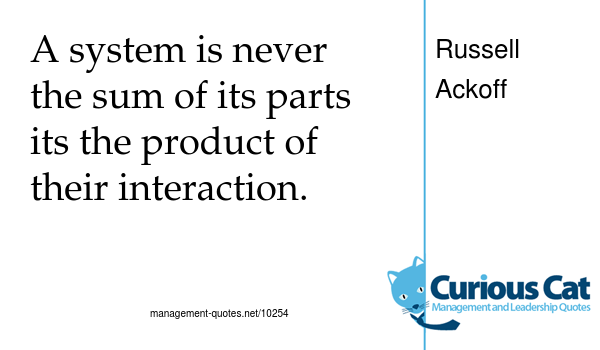
"Systems are created, sustained, and improved by insightful and interactive work on the system, not by using carrots and sticks. Measurable goals do not improve systems; accountability does not improve systems. Improving systems improves systems."
Peter Scholtes, The Leader's Handbook, page 321.
#leadership

image with text: "Systems are created, sustained, and improved by insightful and interactive work on the system, not by using carrots and sticks. Measurable goals do not improve systems; accountability does not improve systems. Improving systems improves systems." by Peter Scholtes
@tiotasram@kolektiva.social
2026-07-12 16:28:07

Since it was relevant to a discussion I just had on here and is something most people probably haven't thought about much (unless you've taken one of a handful of philosophy classes), I thought I'd try to lay out a key piece of Descartes' Meditations (#philosophy

@hex@kolektiva.social
2026-05-25 10:09:12

So one of the authors is Nicholas Carlini, who works for Anthropic. This is basically an ad for the three letter agencies to use Claude. It massively over-promises compared to what the actual paper says.
But, it is important. First, this is really about silencing people. The threat of identification is designed to make people afraid to talk online. There's a massive asymmetry between the fascists and the people. The fascists are weird racists and pedophiles who are obsessed with control. No one likes them. No one likes their ideas, because their ideas are creepy and bad.
When they talk about their ideas, that people should be murdered or kidnaped based on their skin color, that there should be a national dress code, that people's sex lives should be monitored, that children should be treated like objects that are owned by the parent (specifically, one parent), that people with different skin color or uteri should be considered as livestock, people fucking hate it because it's awful. When we talk about our ideas, that everyone should be able to eat and take care of themselves, that people who can't take care of themselves should be taken care of, that we should live in a society that values life, that we should live in harmony with nature, people like those ideas. When fascists out us for talking about those ideas, people support us. When we out people who are working as fascist goons those people have to face social consequences.
Everyone hates these people. The US government is currently less popular than it has ever been. The only way they can keep power is by making everyone think that they aren't extraordinarily unpopular. The only way to do that, the way authoritarian have always done it, is to make everyone afraid to talk.
But, yes, what this paper is saying is actually kind of bad. It looks like people who don't take any precautions at all in separating identities can be identified about 30% of the time (based on the results). It's unclear how this will actually work in the real world. Larger corpses will probably have more data, making connecting things easier.
This isn't as good as a human trying to dox someone. It's not going to work as well. It may only work in a small number of cases. There will be false positives (just like there are with people doing the work). It's probably not cheaper than hiring people. But it does mean that you can just dump money into a machine that has no ethical framework and get data out. That's the point. It's hard to find humans who will do evil shit like help dictatorships target human rights activists, but if a machine can do it for twice the price then it's a better deal for the dictatorship.
For most people, you just shouldn't care. This isn't for you. As long as you keep doing what you're doing, and you can keep everyone else doing what they're doing, then there aren't enough resources to actually target you. Even if they know who you are, there are just too many people who hate them and too few goons.
For people who might actually be targeted, there are a lot of things. First, keep in mind what you're putting into anonymous accounts. Any feature that's connected to your real life is a feature that can be extracted to identify you. This has always been true, it just may be easier to find now. Your identities should be totally siloed. It's also harder to identify you if you're writing anonymously as a collective. Collectives are better anyway because they can help check your thinking. When you write as a collective, you can help clean up each other's personal details and language. A collective develops its own voice, which is distinct from individual contributors. If you do this, and you also present your work as being from one "person," then it becomes even harder for anyone (systems or individuals) to really figure it out.
I'm not going to do a full deep dive on this because I just don't have time, but your existing threat model should *already cover these threats* if you need to make sure your writing remains anonymous.
This paper doesn't present any novel methodologies. It just extracts a bunch of features, which a human would extract as notes, and tries to correlate those between identities, which is how human researchers work. Linguistic forensics were mentioned (not by name) in the paper, but the actual methodology doesn't actually seem to use them.
So a thing with less ethics can do a worse job for more money (when adjusted for the real, not investor deflated, price of tokens). It's worth knowing. It's not the end of the world, but it is a good reminder to check your threat model and make sure it's up to date.

@mgorny@social.treehouse.systems
2026-05-11 07:52:52

Lately I've been thinking about how #Gentoo is perceived by people. So often they're stuck in the "ricer" mindset: Gentoo is being built from source, so it must be ZOMG fast. And if it isn't, then what's the point?
If I were to make four points for Gentoo (to stop myself from making more), they would be:
1. Gentoo is independent.
There is no company behind Gentoo. There is no business plan. It's made and maintained by volunteers. Driven by passion and not profit incentive. And we want to keep it that way.
2. Gentoo aims to be secure.
We are maintaining our own infrastructure to reduce the risk of being hijacked. We're securing our distribution channels and mirrors using OpenPGP. We're only using Codeberg (which we really appreciate) and GitHub as mirrors (with OpenPGP commit signatures) and contribution channels. We have a dedicated security team, who works with the developers to keep packages free of vulnerabilities and our users informed.
3. Gentoo is made by humans.
We banned LLM contributions two years ago, and never regretted it. We didn't "wait and see", we took decisive action, and if we got left behind, it's only for the better. Unfortunately, in today's LLM-ridden world we can't stop slop software from being packaged in Gentoo without sacrificing our commitment to keep packages up to date, but we try to keep the worst offenders (like copywashed chardet) at bay.
4. Gentoo supports sustainability.
This may sound ironic when so many of us build everything from source, but we're actually trying to make computing sustainable. Gentoo's source-first nature makes it inherently flexible. We try our best to support a plethora of older and less common hardware. We go against the flow and still try to provide a workable system on hardware that is not supported by Rust or V8. And on top of that, we do our best to provide binary packages for a variety of configurations.
Of course, that's not all. I want Gentoo to be reliable and stable, to be oriented towards privacy by default, to be welcome and respectful.
And all these things ultimately depend on people working on Gentoo, and contributing to Gentoo. We always need more people that share these principles and want to help us achieve them.
What do you appreciate in Gentoo?

@brichapman@mastodon.social
2026-07-17 14:00:15

Creation and destruction often come hand in hand.
On my free Substack, I write about holding tension without falling apart—and building something beautiful in the midst of unraveling. substack.com/@bricchapman

@pavelasamsonov@mastodon.social
2026-06-01 12:50:47

#UX is asked to do less and less design to ship more and more features. But no amount of fiddling around the edges adds up to one impactful change.
Real systems design requires a different kind of thinking, because product logic squashes agency to make users fungible, while resilient services must embrace and extend that agency.
Building and scaling a system like that requires a new set o…

@thomasfuchs@hachyderm.io
2026-06-26 13:33:12

The current debates about climate change really remind me of how systems thinking ("cybernetics") isn't a part of normal school curriculums in most places—when it very definitely should be.
This German PC game from 35 years ago is teaching this, with a side of ecology and how it improves quality of life.
I remember playing it in school (maybe we had progressive teacher? I don't remember) in the early 1990s, and it's definitely worked on me to consider how things influence each other.
(I've put the game up here if you want to play it in your browser: archive.org/details/oekolopoly, it has a built-in in-depth tutorial but obviously it's in German)

@inthehands@hachyderm.io
2026-06-25 03:00:35

RE: discuss.systems/@dev/116807460
The whole presentation is worth the click-through:
1. Honestly, the metaphorically mangled goose slides in the post make more sense than a lot of the rest of the presentation — which is •really• saying something.
2. That deck is a magnificent example of why I don't like sharing slides as a means of sharing the content of a talk.
3. If we •do• attempt to infer the content from the presentation's sloptastic slides alone, it’s a remarkable window into the investor thinking that’s driving the AI bubble: “Exponential money is hiding just around the corner! Get in on the ground floor! Buy now! Buy now and rocket to infinity and beyond!!”

@mgorny@social.treehouse.systems
2026-05-31 17:03:19

I've just happened to look at the vet's printout for one of my cats, and now I'm thinking that humans should also have a "species" field for all the doctors' printouts.
#shitposting

@brichapman@mastodon.social
2026-06-12 14:00:11

y'all need to sign up for my totally & forever FREE substack newsletter: a weekly dose of inspiration and love substack.com/@bricchapman

@pre@boing.world
2026-05-07 14:32:57

Flower framework to deal with ai engineering work transition
Juliette is a game dev who was excited by ai then , oh, its disruptive and can software dev be ending?
So she made a model for thinking about the impact on teams and engineers.
It activities:
What is the work that might be affected? She has a list of things too long to read.
Define how each is done, standard best practice etc. How outputs of each are inputs to others.
Claude builds skills based on that.
Ai capabilities:
Can si do those things? Can it ever?
Probably not for many.
So what is the impact going to be?
If its all done by ai the job is thinking about the product not coding. That plus working out the odds its done it right. More importantly, philosophy! The job is to define what good software is and have the robot implement.
So sounds like she thinks were heading to the job being thinking about systems then wrangling robots.
But only if its reliable and cheap and not regulated away.
Which might not be the case.
Buy her book for the full list and analysis.
#devWorld #ai

@brichapman@mastodon.social
2026-07-09 14:00:12

🛰️ I'm on Bluesky!
You can follow me at:
@brichapman.com
bsky.app/profile/brichapman.com

@brichapman@mastodon.social
2026-06-09 14:00:15

🛰️ I'm on Bluesky!
You can follow me at:
@brichapman.com
bsky.app/profile/brichapman.com

@mgorny@social.treehouse.systems
2026-05-11 04:49:30

Tech companies seem to be running a cycle:
1. They don't realize how much they're relying on volunteer-maintained projects.
2. Something bad happens and they suddenly decide they need to support this critical infrastructure, often by hiring some people behind it and making its maintenance part of their dayjob.
3. They realize they could save money by exploiting volunteers to maintain these #OpenSource projects. They lay workers off or move them to other projects.
4. Go to 1.
Except now they're trying to replace workers with slop machines, deskill everyone and basically they're not only poisoning the well, but killing the whole water cycle. And they're realizing that they just gave the bad people a tool that can quickly find just how vulnerable their critical infrastructure is.
Really appreciate the long-term thinking there.
#FreeSoftware #FLOSS #TechBros #AI #LLM #NoAI #NoLLM #Linux #security

@brichapman@mastodon.social
2026-05-09 14:00:16

🛰️ I'm on Bluesky!
You can follow me at:
@brichapman.com
bsky.app/profile/brichapman.com