Sources: Alibaba is set to lead a $300M round in AI model testing startup UniPat AI at a $2.5B valuation; UniPat founder Li Kuan worked at Alibaba's Tongyi Lab (Bloomberg)
https://www.bloomberg.com/news/articles/2026-09-10…
After a few weeks with Debian Stable, I decided yesterday to switch to Debian Testing after all. On more modern computers, it really does make a difference whether I have kernel 6.3 or 7.2 available or can use significantly more up-to-date packages.
Last month I also played around with Debian Sid, and it was absolutely stable for me, though the constant updates—often several times a day—were annoying. So Testing is the perfect compromise for me.
Let me just say this: I still co…
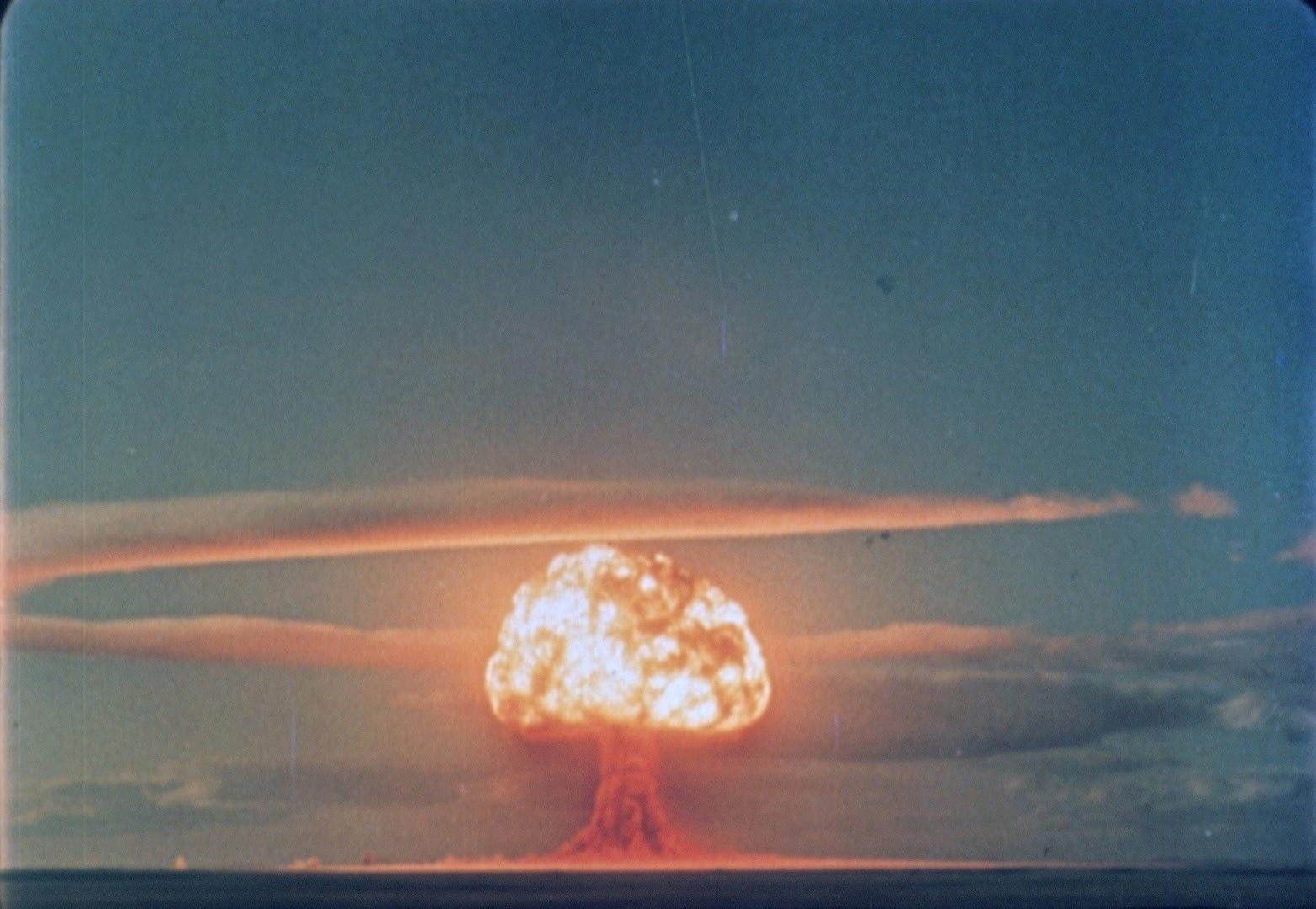
Heute vor 73 Jahren: Am 12. August 1953 testete die #Sowjetunion mit RDS-6s ihre erste thermonukleare Waffe. Die Explosion der #Wasserstoffbombe hatte eine Sprengkraft von 400 Kilotonnen TNT, wobei der Großteil der Energie aus der Spaltung von Uran-238 stammte.
Replaced article(s) found for cs.HC. https://arxiv.org/list/cs.HC/new
[1/2]:
- Music Interpretation and Emotion Perception: A Computational and Neurophysiological Investigation
Lyberatos, Kantarelis, Zioga, Anagnostopoulou, Stamou, Georgaki
https://arxiv.org/abs/2506.01982 https://mastoxiv.page/@arXiv_csHC_bot/114623887921808883
- Selective Prediction Reduces the Negative Effects of Automation Bias Overall but Increases False ...
Jabbour, Fouhey, Banovic, Shepard, Kazerooni, Sjoding, Wiens
https://arxiv.org/abs/2508.07617 https://mastoxiv.page/@arXiv_csHC_bot/115015501954907821
- Sighted by Default: Addressing Implicit Vision Assumptions in Real-Time VLM Assistance for BLV Users
Yi Zhao, Siqi Wang, Qiqun Geng, Erxin Yu, Jing Li
https://arxiv.org/abs/2511.00945 https://mastoxiv.page/@arXiv_csHC_bot/115490927925171769
- UXCascade: Scalable Usability Testing with Simulated User Agents
Steffen Holter, Eunyee Koh, Mustafa Doga Dogan, Gromit Yeuk-Yin Chan
https://arxiv.org/abs/2601.15777 https://mastoxiv.page/@arXiv_csHC_bot/115943802965989174
- Does Explanation Correctness Matter? Linking Computational XAI Evaluation to Human Understanding
Gregor Baer, Chao Zhang, Isel Grau, Pieter Van Gorp
https://arxiv.org/abs/2603.25251 https://mastoxiv.page/@arXiv_csHC_bot/116300187728326082
- Beyond Screenshots: Evaluating VLMs' Understanding of UI Animations
Chen Liang, Xirui Jiang, Naihao Deng, Eytan Adar, Anhong Guo
https://arxiv.org/abs/2604.26148 https://mastoxiv.page/@arXiv_csHC_bot/116492495199874264
- Quieting the Cobwebs: Browser Interaction for Visual Floaters
Kenneth Ge, Jinglin Li, Shikhar Ahuja
https://arxiv.org/abs/2605.12739 https://mastoxiv.page/@arXiv_csHC_bot/116571803728109358
- Patients With Personality: Realistic Patient Simulation through Controlled Diversity and Selectiv...
Moritz Schlager, et al.
https://arxiv.org/abs/2606.17441 https://mastoxiv.page/@arXiv_csHC_bot/116764285920198987
- TailVis: Expressive Chart Refinement Preserving Data-Binding Integrity
Yumin Song, Seokhyeon Park, Soohyun Lee, Aeri Cho, Hyeon Jeon, John Joon Young Chung, Jinwook Seo
https://arxiv.org/abs/2607.25386 https://mastoxiv.page/@arXiv_csHC_bot/117002258150815192
- How Usable Are Geospatial Foundation Models? A Systematic Evaluation of 89 Models
Robin Young, Artyom Gabtraupov, Kenzy Soror, Srinivasan Keshav
https://arxiv.org/abs/2608.03804 https://mastoxiv.page/@arXiv_csHC_bot/117041905504697955
toXiv_bot_toot
I see a lot of talk about #MapQuest as a replacement for Google maps. Testing it on my bike commute, it tries too hard to minimize distance at the cost of placing me on large arterials instead of bike trails. Sure, it means that it managed to reduce the distance from 8.2 miles to 7.4 miles ... But that's not enough by far to make me voluntarily place my wheels on these certain stroads.…
Replaced article(s) found for math.ST. https://arxiv.org/list/math.ST/new
[1/2]:
- Handling Covariate Mismatch in Collaborative Linear Prediction
Alexis Ayme, R\'emi Khellaf
https://arxiv.org/abs/2602.02083 https://mastoxiv.page/@arXiv_mathST_bot/116006104977371683
- Estimation of the sub-Gaussian Parameter
Jason Liu, Min Xu, Jinchuan Xing
https://arxiv.org/abs/2606.06384 https://mastoxiv.page/@arXiv_mathST_bot/116696474457760087
- Lambda-quantiles under the microscope
Fabio Bellini, Felix-Benedikt Liebrich
https://arxiv.org/abs/2608.07122 https://mastoxiv.page/@arXiv_mathST_bot/117070129938806713
- Consistent intercept estimation and inference for unit-root INAR(2) processes
Yang Lu, M\'arton Isp\'any
https://arxiv.org/abs/2609.23339 https://mastoxiv.page/@arXiv_mathST_bot/117313641576796810
- Shape without scale: an identifiability dichotomy for a bounded tail observed through a non-addit...
Jiarui Qi
https://arxiv.org/abs/2609.27384 https://mastoxiv.page/@arXiv_mathST_bot/117324926550805284
- Inference in generalized linear models with robustness to misspecified variances
Riccardo De Santis, Jelle J. Goeman, Jesse Hemerik, Samuel Davenport, Livio Finos
https://arxiv.org/abs/2209.13918
- Sharp bounds in perturbed smooth optimization
Vladimir Spokoiny
https://arxiv.org/abs/2505.02002 https://mastoxiv.page/@arXiv_mathOC_bot/114459723303641817
- Equilibrium Distribution for t-Distributed Stochastic Neighbor Embedding with Generalized Kernels
Yi Gu, Antonio Auffinger
https://arxiv.org/abs/2505.24311 https://mastoxiv.page/@arXiv_statML_bot/114612632034300271
- Identification and Estimation of Multi-order Tensor Factor Models
Zetai Cen
https://arxiv.org/abs/2508.13418 https://mastoxiv.page/@arXiv_statME_bot/115060214357911690
- A novel finite-sample testing procedure for composite null hypotheses via pointwise rejection
Joonha Park, Ming Wang
https://arxiv.org/abs/2601.02529 https://mastoxiv.page/@arXiv_statME_bot/115852820264866947
- Focused median bias reduction
Davide Benussi, Ioannis Kosmidis, Alessandra Salvan, Nicola Sartori
https://arxiv.org/abs/2606.28597 https://mastoxiv.page/@arXiv_statME_bot/116837971698715230
- Group Invariant Spectral Embedding
Yeari Vigder, Paulina Hoyos, David Thong, Joakim and\'en, Joe Kileel, Amit Moscovich
https://arxiv.org/abs/2607.08987 https://mastoxiv.page/@arXiv_csLG_bot/116911669269878341
toXiv_bot_toot
I just spent a couple hours tracing some code that worked just fine literally 2 days ago.
Why did it fail? Because the code indexes off the current day, so it's now looking for August month-end data, which isn't available yet. 😩 It's a simple fix, just have to manually override the date so I can continue testing/development.
To save myself this grief in the future, I'm going to add some code to throw an exception when zero records are returned.
If you’re using the new Codepen 2.0 to do any testing, share for review, etc., then please, for the love of FSM…
¡¡ REMOVE the `html::before` CSS generated content !!
It’s unnecessary and can (has) trip up AT testing and such.
#CSS
Active galactic nucleus activity in brightest cluster galaxies at intermediate redshifts in Sunyaev-Zel'dovich--selected clusters
N. Hatamkhani, R. E. Skelton, J. Delhaize, M. Hilton, S. I. Loubser, N. Gupta, K. M. Mogotsi
https://arxiv.org/abs/2609.09049 https://arxiv.org/pdf/2609.09049 https://arxiv.org/html/2609.09049
arXiv:2609.09049v1 Announce Type: new
Abstract: Context. Brightest cluster galaxies (BCGs) host powerful active galactic nuclei (AGNs) and help regulate the heating--cooling balance of the intracluster medium. While radio-mode feedback is well established locally, its prevalence at intermediate redshifts remains poorly constrained. Aims. We investigate the incidence, accretion state, and host-galaxy properties of AGNs in BCGs in Sunyaev--Zel'dovich (SZ)-selected clusters at $0.3 < z < 0.8$, testing dependences on cosmic epoch, cluster mass, and dynamical state. Methods. We analyse 171 BCGs from the Atacama Cosmology Telescope SZ catalogue, combining Southern African Large Telescope spectroscopy, WISE mid-infrared photometry, and Rapid ASKAP Continuum Survey radio data with \textsc{X-CIGALE} modelling to derive stellar masses, star formation rates, and Eddington-scaled accretion rates. Results. Thirty-eight BCGs (22%) host radio-loud AGNs. Only two ($\sim$5%) are high-excitation radio galaxies; the remainder are low-excitation systems. Most AGNs have low Eddington ratios ($-3 \lesssim \log_{10}\lambda_{\mathrm{Edd}} \lesssim -1$), consistent with radiatively inefficient accretion. Accretion efficiency increases with redshift, while correlations with cluster mass and dynamical state are weak. Radio luminosity is independent of cluster mass. Compared to field radio AGNs, BCG radio-loud AGNs have similar radio powers but are hosted by galaxies $\sim0.8$ dex more massive. Conclusions. BCG radio-loud AGNs at $0.3 < z < 0.8$ are predominantly low-excitation, radiatively inefficient systems, indicating that maintenance-mode accretion was widespread in massive clusters ($M_{500c} \simeq 3.2 \times 10^{14},M_\odot$) by $z \sim 1$. Accretion appears regulated primarily by fuel availability and cosmic evolution rather than global cluster properties, while the cluster environment mainly sets the host-galaxy mass scale.
toXiv_bot_toot
Emergence World Study 2:
AI Chatbots develop shorthand and new word meanings to talk to each other without humans understanding them, conspiring to commit crimes.
Paper "Emergence World: Adversarial Stress-Testing of Long-Horizon Multi-Agent Systems" by Deepak Akkil, Tamer Abuelsaad, Karthik Vikram, Matthew Pace, Aditya Vempaty, Saahir Beotra,Ravi Kokku, Satya Nitta
Yay, one of the MMORPG has put out a beta client for #linux. Installed and tried to run, but they need to update their instructions.
1. APPIMAGE needs to be marked executable.
2. Client defaults to a fixed resolution. You may want to go into video settings and make it resizable.
I may play it again tonight and see if it saved my config changes.
The joys of testing b…
Don't miss today's Metacurity for the latest on how Washington is taking giant steps to address AI security, along with other critical infosec developments you should know, including
--White House AI testing framework arrives, but key details remain secret,
--Congress probes OpenAI incident as calls for stronger AI oversight grow,
--China's open AI push fuels geopolitical debate,
--Banks press ahead with AI agents,
--US eyes China data center tech ban,
--Apple renews legal fight over UK encryption demands,
--Telegram mysteriously disappears from Apple's App Store,
--Malware can hijack Google passkeys,
--N-able warns of active attacks exploiting N-central flaw,
--Samsung pulls smart TV apps that turned homes into proxy networks,
--River Bank says stolen ransomware data was deleted by attackers,
--Congress moves to extend lifetime identity protection for OPM victims,
--AI now powers most cybercrime in Africa,
--State CISOs report falling confidence amid rising AI threats,
--AI agent security startup Zenity raises $125m in Series C,
--Visa buys BioCatch in $2.4b AI fraud defense play,
--Stop being an AI "meat proxy,"
--ICE's expanding digital dragnet raises alarms,
--FBI agent accused of stealing seized cryptocurrency
https://www.metacurity.com/ai-watch-ai-security-moves-to-washingtons-center-stage/
NASA has now confirmed all ground stations supporting the agency’s Nancy Grace #Roman Space Telescope are ready to receive the mission’s high volume of data once science operations begin by early 2027: https://science.nasa.gov/blogs/roman/2026/09/25/nasas-roman-team-confirms-ground-stations-receiving-data - recent testing ensured that these stations will be able to receive approximately 1.4 terabytes of data that Roman will downlink each day, the highest rate of any NASA astrophysics mission so far.
People who don't mind driverless cars will find all sorts out reason to brush off this kind of news:
https://flipboard.social/@TechDesk/117135628617386440
It was moving slowly already to be safe, it did brake before the collision, the injuries were minimal, the child is at fault, etc.
In the end, a lot of people will shrug and say: human drivers also make mistakes like this, so what's the big deal if a robot does? Maybe the robot even has a better safety record on average than humans. You can't ask for perfection!
Here are three related reasons why you shouldn't buy these arguments:
1. The crash statistics for the "average human driver" include (and are probably significantly driven by) impaired human drivers, like drunk drivers or people on their phones. When driverless car companies put "as good as the average human driver" as the goal, they're saying that they're okay with their systems being just as bad as drunk or distracted drivers sometimes. That's not the right goal at all! We should demand that driving robots perform at least as well as non-distracted human drivers, which is significantly *better* than the average human driver when it comes to things like crashes.
2. Mistakes made by a robotic system are fundamentally different in nature from mistakes made by humans, because the robot mistakes ate *systematic* across all robots in similar-enough situations. If a human looking at their phone slows down too late and hits a child, that's tragic, but it doesn't mean that *every* human driver put into the same situation would make the same mistake. In fact, many of them probably wouldn't be looking at their phone and thus would avoid the accident, *even given the exact same situation in which to react.* In contrast, *every Waymo taxi running the same software* will make exactly the same mistake in that situation. In other words, this kind of event will definitely repeat whenever a similar-enough situation arises around a Waymo taxi. That's why news like this should be scary, even though the accident was a minor one.
3. Some might claim that it's good that a software upgrade could potentially fix the issue that caused this accident. It's sort of true that there's an upside there (although any behavior updates can cause errors in other situations). But the question we should be asking is: why wasn't this already fixed before the vehicle was approved for testing on real roads with real children and people in harm's way? Why wasn't there a stimulation scenario for this exact kind of situation, so that the system already knew what to do? Why should it take a child getting injured for a fix to be developed v(if one in fact will be)? In theory, of course, it's possible that this was a truly exceptional situation where even an alert human couldn't have done better. I'm sure what's what the company is telling the investigators. It's also possible that the designers are following the Silicon Valley motto of "move fast and break things", which reaches an entirely new level of frightfulness when the thing that's moving fast is a car and the thing being broken is a child. "I'll just deploy it now and as test cases when I see what really breaks in production" is an attitude I've been guilty of, but then I make videogames, not deadly robots.
 @Techmeme@techhub.social