 @arXiv_csGR_bot@mastoxiv.page
2026-07-21 07:45:37
EVOLVE: Efficient Learned Volume Compression with Variable-Rate Encoding on a Cross-Domain Database
Kaiyuan Tang, Maizhe Yang, Chaoli Wang
https://arxiv.org/abs/2607.18187 https://arxiv.org/pdf/2607.18187 https://arxiv.org/html/2607.18187
arXiv:2607.18187v1 Announce Type: new
Abstract: Large-scale scientific simulations generate volumetric data at rates that far outpace advances in storage and network bandwidth, making effective lossy compression increasingly critical. However, conventional compressors often struggle to preserve fine structural details at high compression ratios (CRs), and implicit neural representations (INRs) require costly per-volume optimization and produce models with fixed CRs. To respond, we present EVOLVE, an autoencoder (AE)-based volume-compression framework that targets high CRs for offline compression, with three key contributions. First, we construct a large-scale cross-domain database of 6,376 volumes from 21 scientific simulations, curated via perceptual hashing to ensure diversity, enabling the optimized model to extract features that generalize across volumes within the covered scientific simulation domains. Second, we reexamine the design space of AE-based compressors and incorporate several macro- and micro-designs into a vanilla AE to develop EVOLVE, which substantially improves the expressive power and compression capability. Third, we develop a learnable gain mechanism with a three-stage training strategy to enable variable-rate encoding, allowing a single model to support continuous CR adjustment at inference time. Experiments on multiple unseen scientific simulation datasets demonstrate that EVOLVE achieves substantially higher CRs than conventional compressors at comparable reconstruction quality, while delivering compression speeds that are orders of magnitude faster than INR-based methods, highlighting its promise as a strong alternative for compressing scientific data. The code, model weights, and results are available on our project page at https://evolve-vis.github.io.
toXiv_bot_toot
 @beyondwatts@beyondwatts.social
2026-09-17 20:13:26
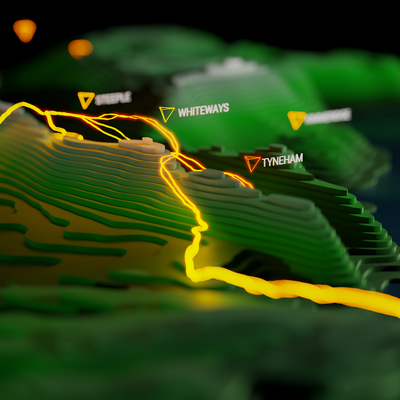
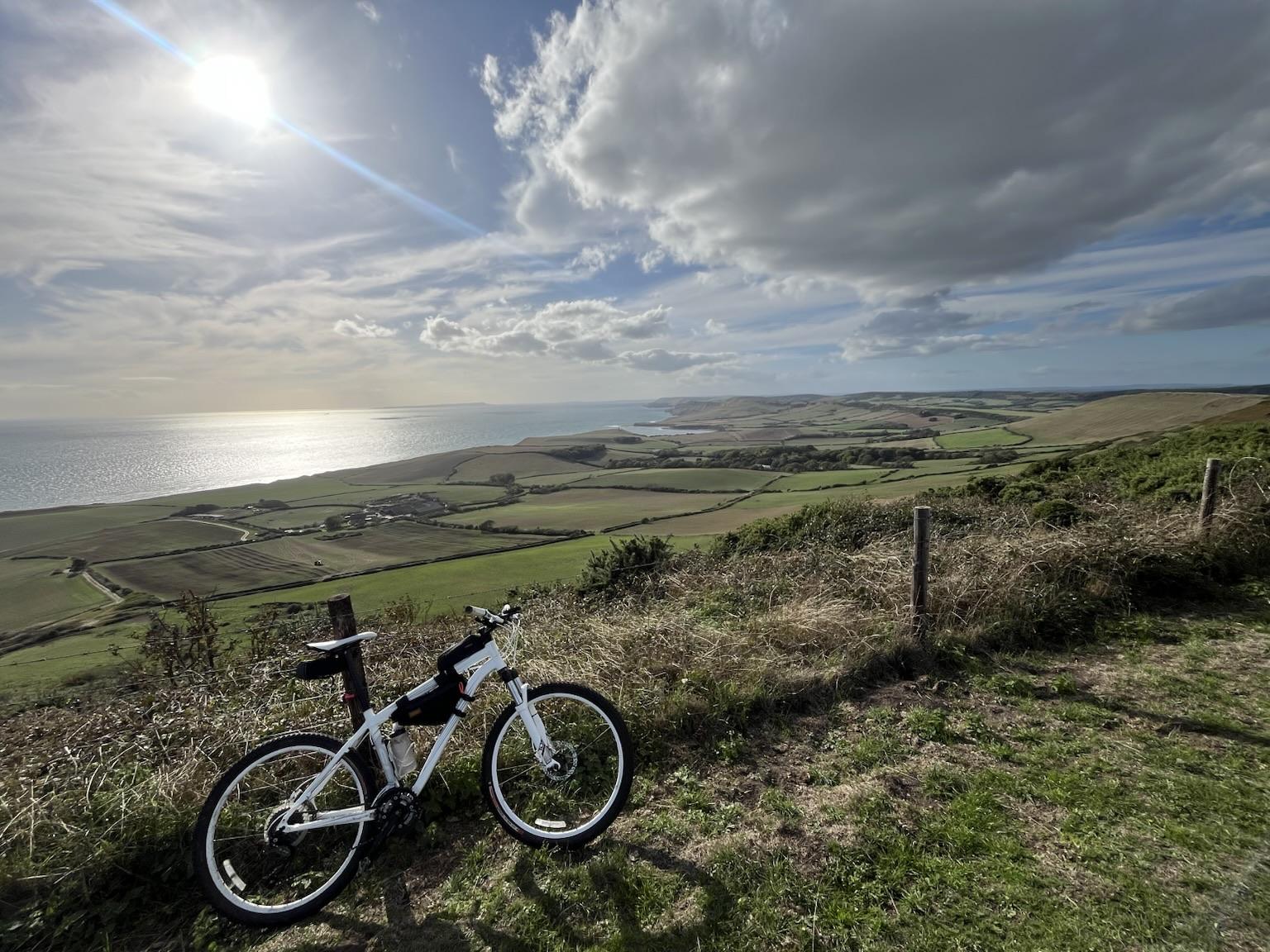
Cracking local loop this evening. Promised I’d be back before dark and just about made it
#biketooter #cycling #bike

 @cdarwin@c.im
2026-07-03 02:40:18
California is making waves with a jaw-dropping plan to settle a 175-year-old score
— returning stewardship of a staggering 7.5 million acres of land and coastal waters to Native tribes.
That’s 7% of the Golden State
— and not by accident.
It matches exactly what the federal government promised indigenous tribes back in the 1850s,
before quietly backing out.
 @cdarwin@c.im
2026-08-08 22:48:06
Andy Burnham promises crackdown on costly subscription traps and 'rip-off discounts'
The Prime Minister will bring forward 'easy to exit' rules,
making it less painful for consumers to cancel subscriptions and avoid automatic renewal at a higher cost
https://w…

 @arXiv_statCO_bot@mastoxiv.page
2026-08-14 07:49:17
Hierarchical Bayesian Calibration with Bayesian Committee Machine
Sebastian Heinekamp, David M. Higdon, Andreas Adelmann
https://arxiv.org/abs/2608.12603 https://arxiv.org/pdf/2608.12603 https://arxiv.org/html/2608.12603
arXiv:2608.12603v1 Announce Type: new
Abstract: Calibrating computational models to experimental data is a core task in applied statistics, especially in scientific domains, where physical experiments are costly and simulations play a central role in design and inference. Motivated by uncertainty quantification challenges in particle accelerator experiments, we develop and evaluate a Hierarchical Bayesian Calibration framework. In contrast to standard Bayesian calibration, certain inputs - such as beam injection amplitude - must be estimated separately for each experiment. We adopt the Kennedy-O'Hagan formulation and extend it with a hierarchical prior structure to model the distribution of experiment-specific calibration parameters, thus borrowing strength and improving generalisation across repeated experiments. A key methodological challenge arises from the need to evaluate a large number of forward simulations, which renders conventional Markov chain Monte Carlo approaches computationally prohibitive. To address this, we leverage the Bayesian Committee Machine as a scalable modelling strategy for Gaussian Process emulators. The BCM provides a principled divide-and-conquer approach, enabling parallel inference and reducing computational cost without requiring problem-specific tuning of the emulator approximation. Posterior sampling is performed using the No-U-Turn Sampler, supported by automatic differentiation in Julia, which removes the need for analytic gradient derivation and facilitates flexible model specification. We assess the proposed framework using established benchmark problems and simulated data from the Argonne Wakefield Accelerator. The results demonstrate substantial computational savings and robust calibration performance, highlighting the applicability of the method to large-scale scientific modelling problems.
toXiv_bot_toot
@cdarwin@c.im2026-06-25 15:36:03
True to the promise of
“drill, baby, drill,”
leaders in Washington are doubling down on attacks
against Alaska’s wildlands
and the clean water, wildlife and ways of life they sustain.
Here’s how the administration is advancing drilling and mining attacks on public lands:
->> Opened every acre of the Arctic National Wildlife Refuge’s fragile coastal plain to oil and gas leasing
->> Approved and reissued permits to move forward on the cont…

 @bibbleco@infosec.exchange
2026-07-12 18:11:30
Rant ahoy!!
I stumbled onto the Wikipedia article about foundational psychoanalyst Melanie Klein. I'd forgotten how angry this trash scam practice of woo-woo muckspreader firehose insanity makes me. It's not so much that someone's built a huge castle in the air, because there's a place for fantasy and worldbuilding and daydreams; that's where we get much of our culture from, after all. It's the waste of time and money, and the unaddressed or exacerbated human misery it represents. It's the duplicitous and meritricious posing as being in some way scientific, or reality-based. Psychoanalysts belong in the same circle of hell as mediums who claim to be in contact with people's deceased love ones, or selling colloidal silver as a cure for cancer. Preying on vulnerable people with snake oil, hokum, religious cults and all the other ways the simple-minded are exploited boils my piss. The apparent fact that most of them sincerely believe their garbage doesn't ameliorate their guilt in my book.
 @pre@boing.world
2026-08-25 11:23:35
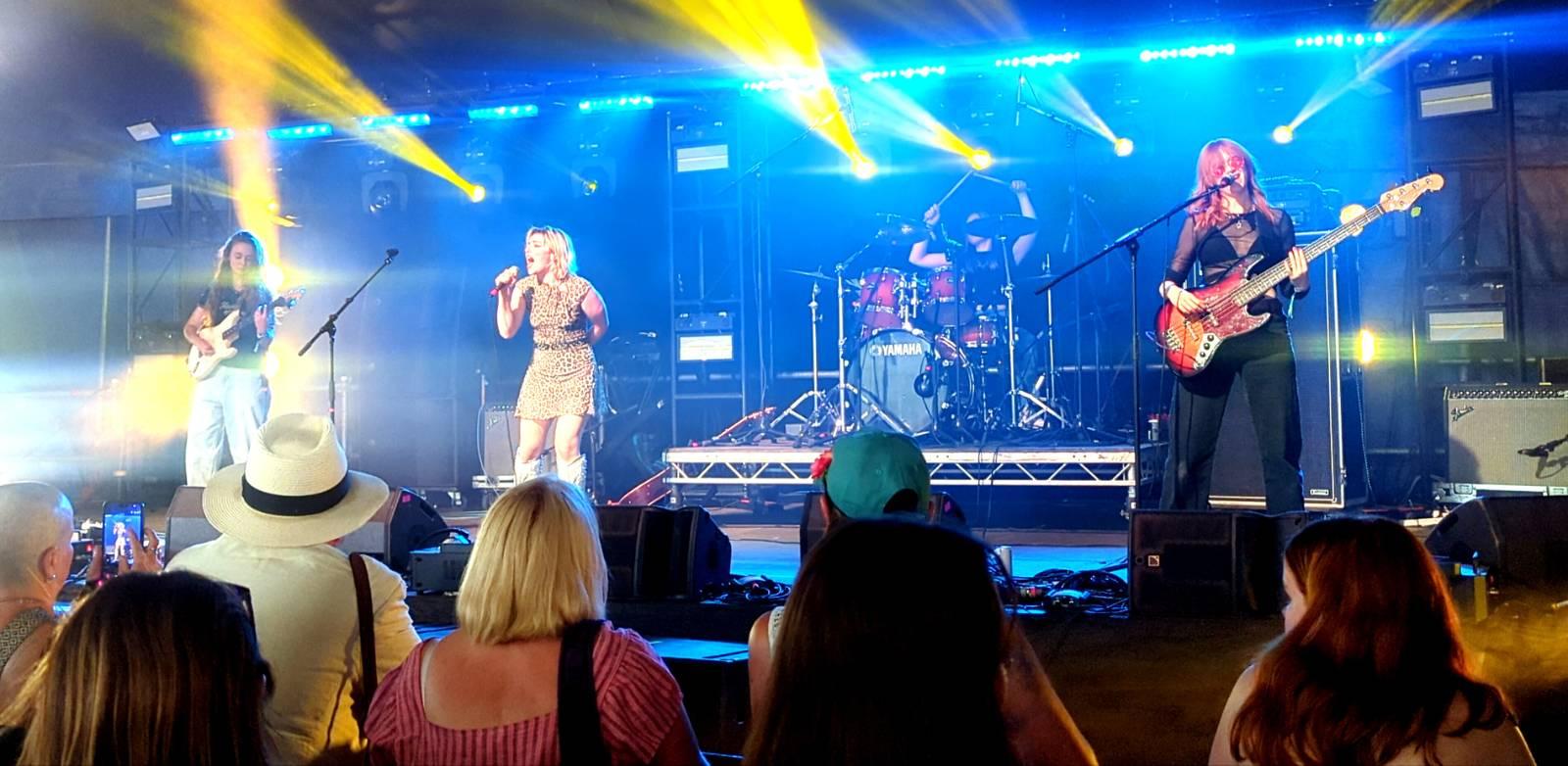
Spent the weekend with a few friends at Beautiful Days festival out in Exeter, which is the one that The Levellers run and fill with mostly 90s bands.
So lots of old men on stage and in the audience. Including me. It's me.
Weather was mostly good as you'd like. Not quite as too-hot as it's been lately and only The Undertones made the weather gods angry. After the end of their wet set the double rainbow promising no more rain proved a true promise.
Mostly either old things, or things I'd never heard of, because I haven't really paid attention to music since the 1900s.
Young new folks seemed to be mostly half Welsh, and included Gwenno who was beautiful in her cat-mask and sang a song in old Cornish about cheese, Gina Larner who was playing country rock with her beautiful sparkly country boots, Trampoline who had one guitarist replaced by a cardboard cut-out for some reason I missed and are from Swansea, and Ben Brown whose rider included a lacy fancy dress and seizable stick - his merch song as he danced around and stripped off the ten tee-shirts he sells and was wearing all at once for the first half apparently was memorable.
Old folks on stage included Billy Brag, who is so right-on and woke you wonder why all the other musicians are so apolitical. Madness, who have banger after banger but lack some energy now they're so old. The Undertones, who angered god by still singing about Teenage Kicks in their sixties, Super Furries who, inexplicably drew a much smaller crowd as people watched the Proclaimers instead I guess. The Divine Comedy, who acts very sophisticated mixing cocktails on stage. Also The Wonder Stuff who still mock their own audience but got us all nostalgic and emotional, they're loved and welcome in my home too.
And of course the Levellers who fill the field because they don't put anyone else up at the same time as them and so WAY up on the hill behind the ice cream van where you can't really see but at least you can move.
The Nanaz are both old and new, in that they've only been playing for a few years and yet are already each as old as the grandad bands playing here singing songs about menopause and being told they used to be beautiful.
It's a lovely smallish festival, big enough to have choices and headliners, but small enough to walk across, with hardly any bandwidth and which is too far away really. That drive home was very tedious.
Bravo though though. Hope it outlasts the Levellers, and both keep going for decades more. Hope to be back.
#music #festival #uk #beautifulDays