 @cdarwin@c.im
2026-10-14 16:08:18
Pennsylvania’s post-conviction issues stem from its failure to invest in or set standards for legal defense for poor people.
Crushing Caseloads:
Lawyers hired under a flat-fee structure that’s banned in some states fell months or years behind, stranding dozens of clients in prison.
Infinite Extensions:
While prisoners face strict deadlines, their lawyers can typically take all the time they want. Some kept clients waiting as long as a decade
 @cdarwin@c.im
2026-10-11 20:56:16
“We live a double life. During the day, I deal with paperwork. At night, I shoot down drones,”
said Oleksandr, a lawyer, standing beside his truck-mounted machine gun in a field outside Kyiv.
“It’s a strange duality. With time you get used to it.”
But warfare in Ukraine evolves at extraordinary speed
and units such as Mriya are struggling to keep up.
Since the summer, Russia has increasingly deployed jet-powered drones that crews say can travel at about 600km/h …

 @arXiv_astrophGA_bot@mastoxiv.page
2026-09-09 09:29:35
Euclid: Quick Data Release (Q1) -- Exploring the detailed visual morphology of galaxies in clusters
Mas-Buitrago, Kruk, O'Ryan, Nardone, La Marca, Awad, Baes, Fossati, G\'eron, Ghaffari, Girardi, Lintott, Sorce, Altieri, Durret, Pettorino, Irureta-Goyena, Simmons, Reerink, S\'anchez, Knapen, Shankar, Duran-Camacho, P\'erez-Mart\'inez, Walmsley, Auricchio, Baccigalupi, Baldi, Bardelli, Battaglia, Biviano, Bolzonella, Bonchi, Branchini, Brescia, Brinchmann, Camera, Ca\~nas-Herrera, Capobianco, Carbone, Carretero, Castellano, Castignani, Cavuoti, Cimatti, Colodro-Conde, Congedo, Conselice, Conversi, Copin, Costille, Courbin, Courtois, Cropper, Degaudenzi, De Lucia, Dole, Dubath, Dupac, Dusini, Ealet, Fabricius, Farina, Farinelli, Ferriol, Fosalba, Fotopoulou, Frailis, Franceschi, Fumana, Galeotta, George, Gillis, Giocoli, G\'omez-Alvarez, Gracia-Carpio, Grazian, Grupp, Gwyn, Holmes, Hook, Hormuth, Hornstrup, Huertas-Company, Jahnke, Jhabvala, Joachimi, Kermiche, Kiessling, Kubik, K\"ummel, Kunz, Kurki-Suonio, Le Brun, Ligori, Lilje, Lindholm, Lloro, Mainetti, Mansutti, Marggraf, Martinelli, Martinet, Marulli, Massey, Maurogordato, Medinaceli, Melchior, Meneghetti, Merlin, Meylan, Mora, Moresco, Moscardini, Munari, Neissner, Niemi, Nightingale, Padilla, Paltani, Pasian, Pedersen, Percival, Pezzotta, Pires, Polenta, Poncet, Popa, Pozzetti, Raison, Renzi, Rhodes, Riccio, Romelli, Roncarelli, Rusholme, Saglia, Sakr, S\'anchez, Sapone, Sartoris, Schneider, Schrabback, Scodeggio, Secroun, Sihvola, Simon, Sirignano, Sirri, Tallada-Cresp\'{i}, Taylor, Teplitz, Tereno, Tessore, Toft, Toledo-Moreo, Torradeflot, Tutusaus, Valiviita, Vassallo, Kleijn, Veropalumbo, Wang, Weller, Zacchei, Zamorani, Zerbi, Zucca, Macias-Perez, Sereno
https://arxiv.org/abs/2609.08962 https://arxiv.org/pdf/2609.08962 https://arxiv.org/html/2609.08962
arXiv:2609.08962v1 Announce Type: new
Abstract: Galaxy clusters provide unique laboratories for studying environmental effects on galaxy evolution. The morphology--density ($T$--$\Sigma$) and morphology--cluster-centric radius ($T$--$R$) relations trace how galaxy morphology is influenced by the environment, but previous studies at intermediate redshifts have been limited in both sample size and radial coverage. We use the Euclid Quick Data Release 1 (Q1) visual morphology catalogue to measure the $T$--$\Sigma$ and $T$--$R$ relations for smooth, featured-or-disc, and barred galaxies in known clusters at $0.2\leq z\leq 0.5$, extending this analysis to large cluster-centric distances ($3 R_{500c}$) and studying their dependence on stellar mass. Using photometric redshifts and stellar masses provided by Euclid, we identify 1754 cluster members within $1.5 R_{500c}$, distributed across 71 clusters. We classify the identified galaxies as smooth, featured-or-disc, or barred using the predicted vote fractions provided by the Zoobot deep learning foundation model in the Q1 visual morphology catalogue. We confirm the $T$--$\Sigma$ relation in all the stellar mass ranges studied, with a stronger influence of the cluster environment on galaxy morphology in the densest parts of the cluster and closer to the cluster centre. Beyond $1.5 R_{500c}$, the morphological segregation weakens, with featured-or-disc galaxies overtaking smooth galaxies at the lowest densities, consistent with the growing contribution of field interlopers in the cluster outskirts. For barred galaxies, we find a tentative decline of the bar fraction toward lower densities that is most pronounced for the most massive galaxies. In conclusion, our results show that the cluster environment drives a progressive transformation of galaxy morphology, with the loss of disc structure becoming more pronounced towards the cluster core, where environmental processes act most efficiently.
toXiv_bot_toot
 @Gord1i@fosstodon.org
2026-10-09 07:51:27
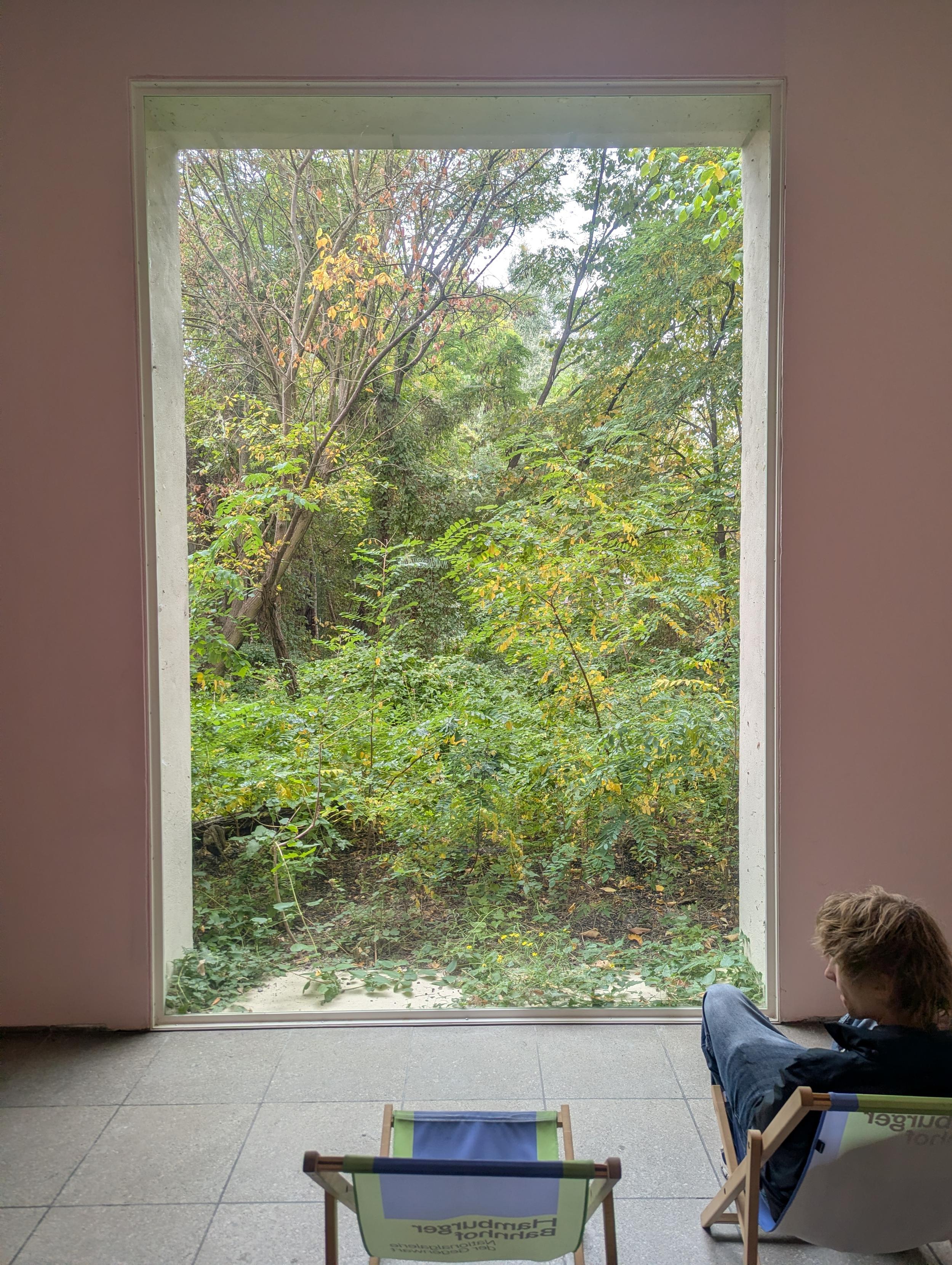
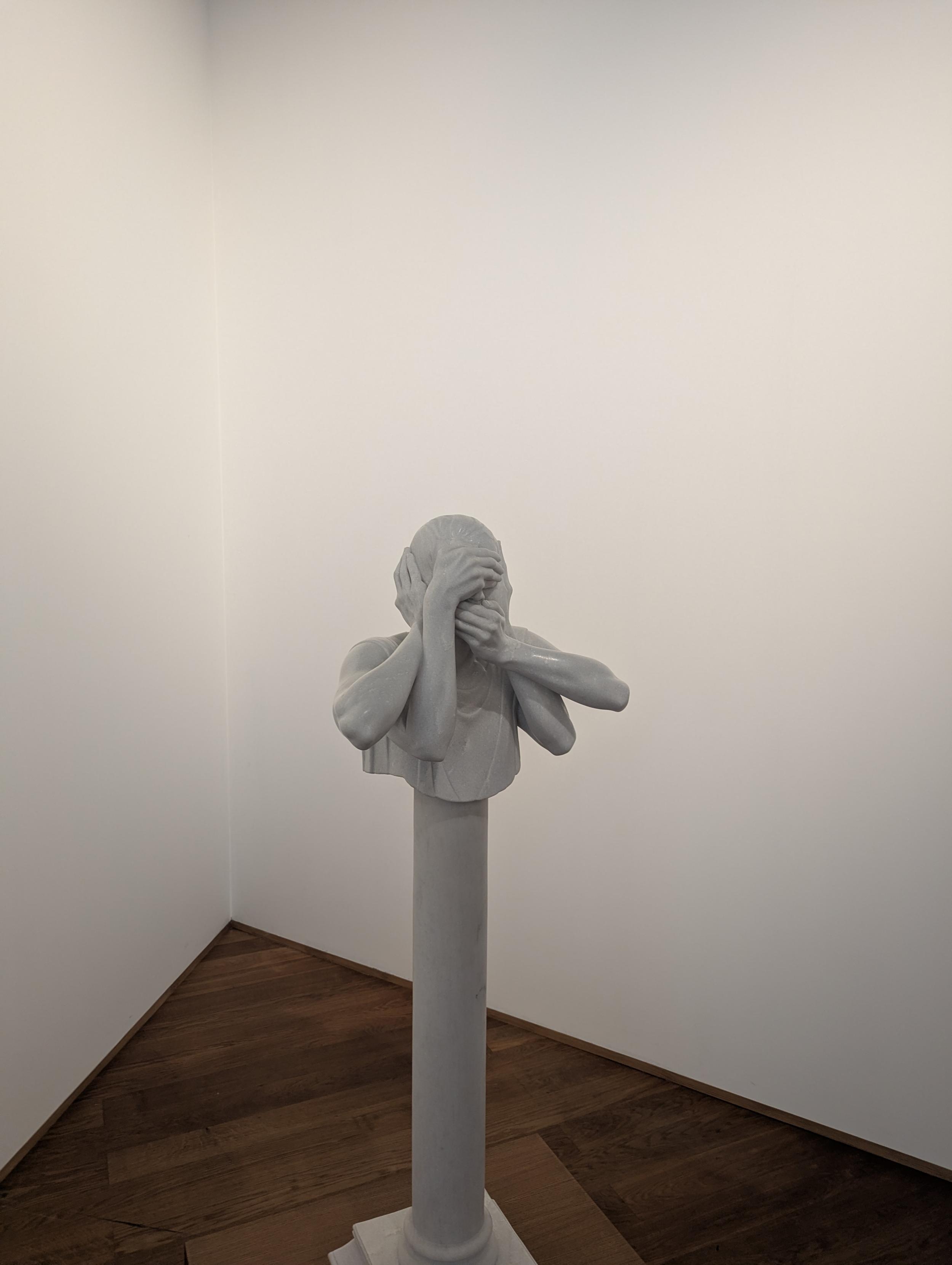
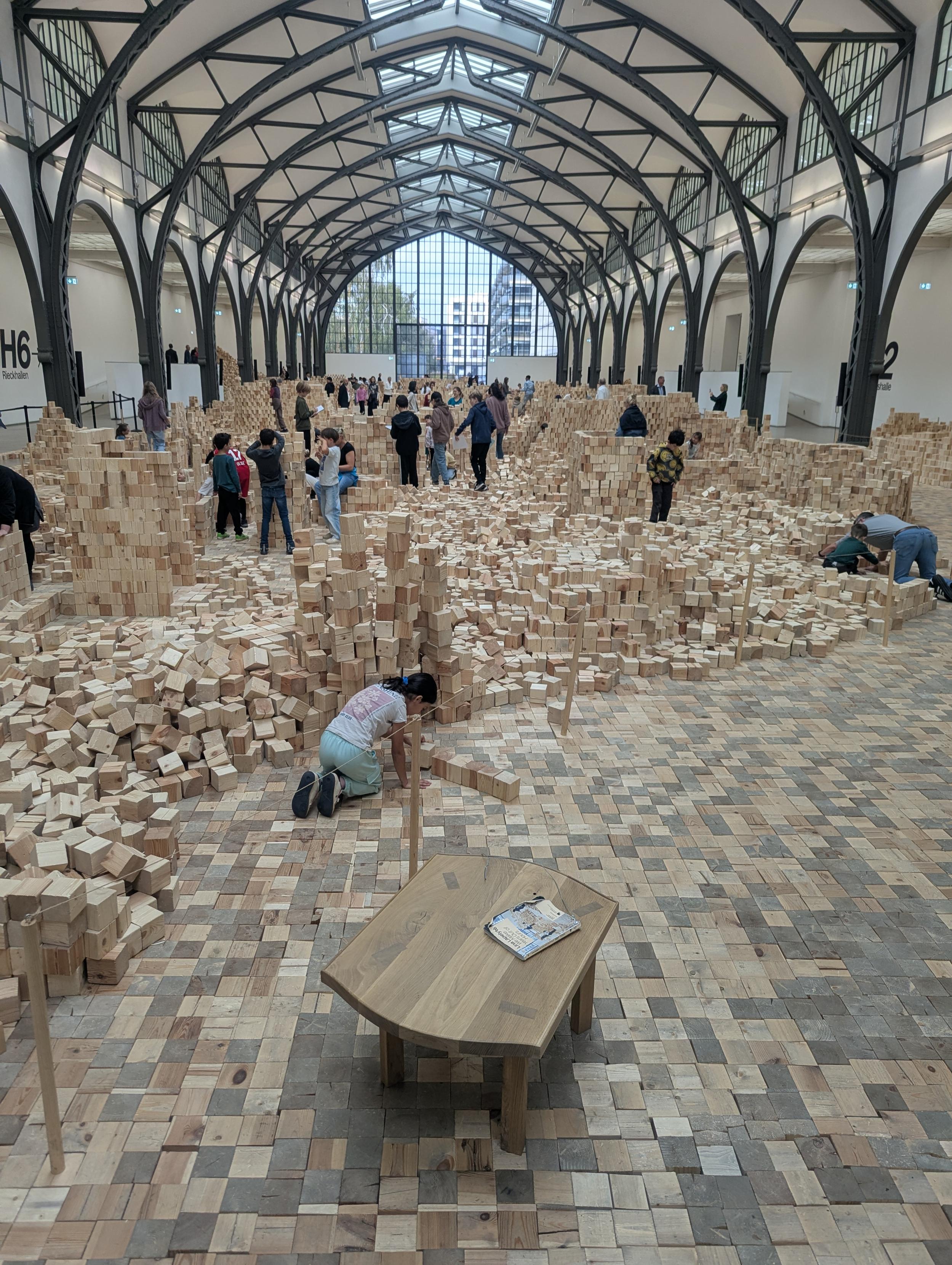
On the recommendation of a friend, went to the excellent Hamburger Bahnhof yesterday - it's an art museum, not a train station, as the name may suggest!
Very cool, not in the least because of the immersive exhibit in the main hall - basically the size of a football/rugby field full of 10cm cubed wooden blocks. Full of kids building the most elaborate structures
#Berlin

 @arXiv_hepth_bot@mastoxiv.page
2026-08-14 08:05:08
Type III von Neumann Algebras are Magical
Mudassir Moosa
https://arxiv.org/abs/2608.12512 https://arxiv.org/pdf/2608.12512 https://arxiv.org/html/2608.12512
arXiv:2608.12512v1 Announce Type: new
Abstract: The number of non-Clifford gates needed to perform a task, or simply \textit{magic}, is a resource for fault-tolerant quantum computation. Von Neumann algebras provide a formal mathematical structure to describe infinite-dimensional quantum systems, such as those in quantum field theory or quantum statistical mechanics. A particularly important class of von Neumann algebras is called Type III algebras, for which the standard notions of finite-dimensional systems such as density matrices and traces break down. In this work, we argue that Type III von Neumann algebras fundamentally require an infinite amount of magic. Specifically, we consider the thermodynamic limit of finite-dimensional quantum systems, such as lattice systems, and show that if the states in the thermodynamic limit possess only a bounded amount of magic, the resulting local von Neumann algebra cannot be of Type III. Our result has direct implications for the quantum simulations of quantum field theories, for which the algebra of a local subregion is known to be of Type III.
toXiv_bot_toot
 @arXiv_condmatsoft_bot@mastoxiv.page
2026-08-13 07:56:23
Density-Selected Topological Pathways in the Melting of Single-Particle-Thick Stripes
Jos\'e Rafael Bordin
https://arxiv.org/abs/2608.11880 https://arxiv.org/pdf/2608.11880 https://arxiv.org/html/2608.11880
arXiv:2608.11880v1 Announce Type: new
Abstract: The melting of stripe-forming systems involves changes in connectivity that are not fully captured by conventional structural and orientational descriptors. We investigate a two-dimensional model with competing interactions whose low-temperature phase consists of one-particle-thick stripes. Molecular dynamics simulations along seven heating isochores are analyzed using thermodynamic, orientational, dynamical, and graph-based observables. Heating produces a multistage reconstruction in which the loss of stripe alignment and the reorganization of filament connectivity occur over distinct temperature ranges. Density controls whether the disordered filaments fragment into finite polymer-like clusters or remain joined in a dynamically fluid, system-spanning network. The topological observables distinguish these outcomes, which are not resolved by the thermodynamic and orientational responses alone. Thus, the same ordered stripe microphase can melt into topologically distinct fluids selected by density.
toXiv_bot_toot
 @leftsidestory@mstdn.social
2026-08-04 02:29:09
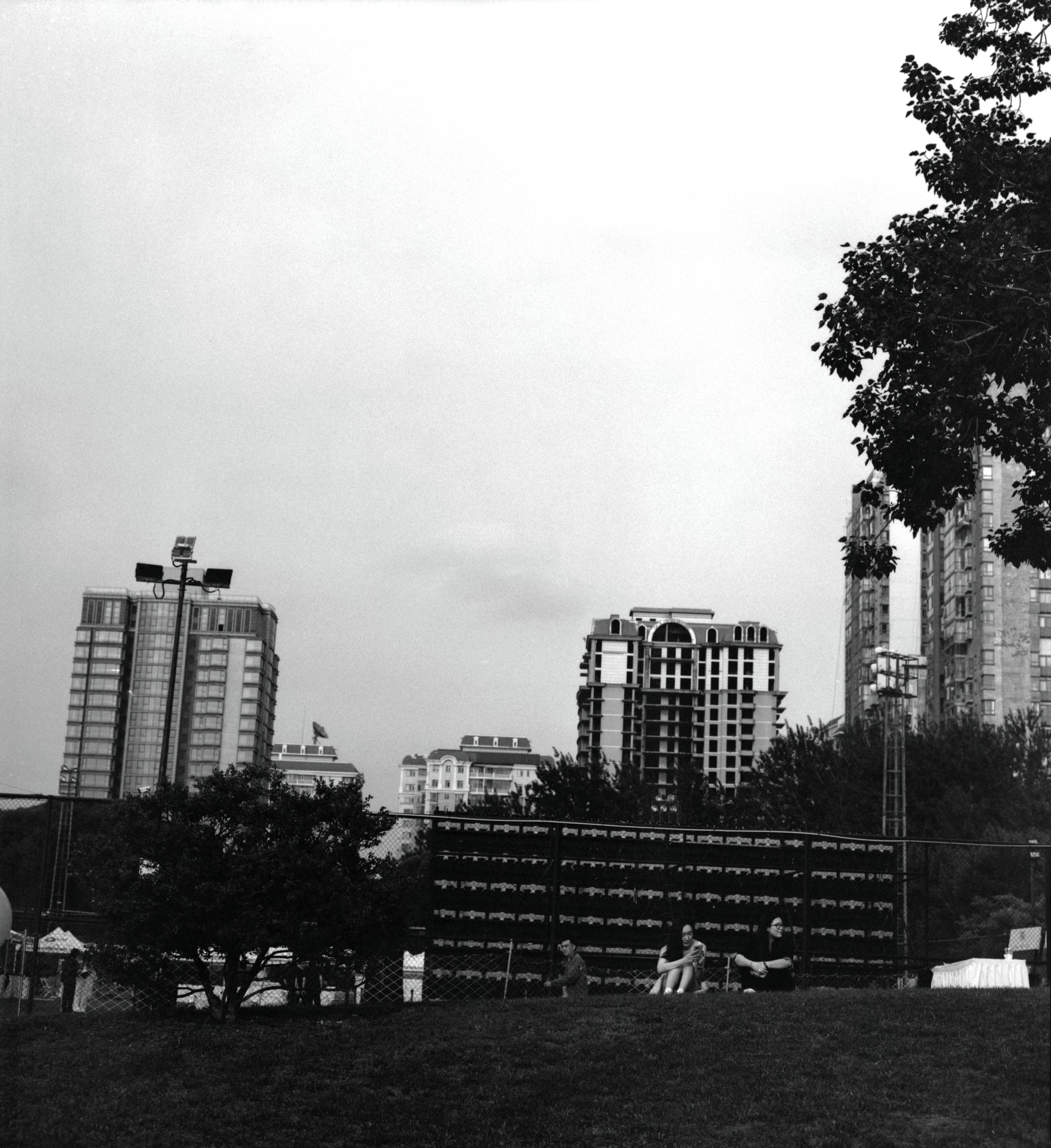
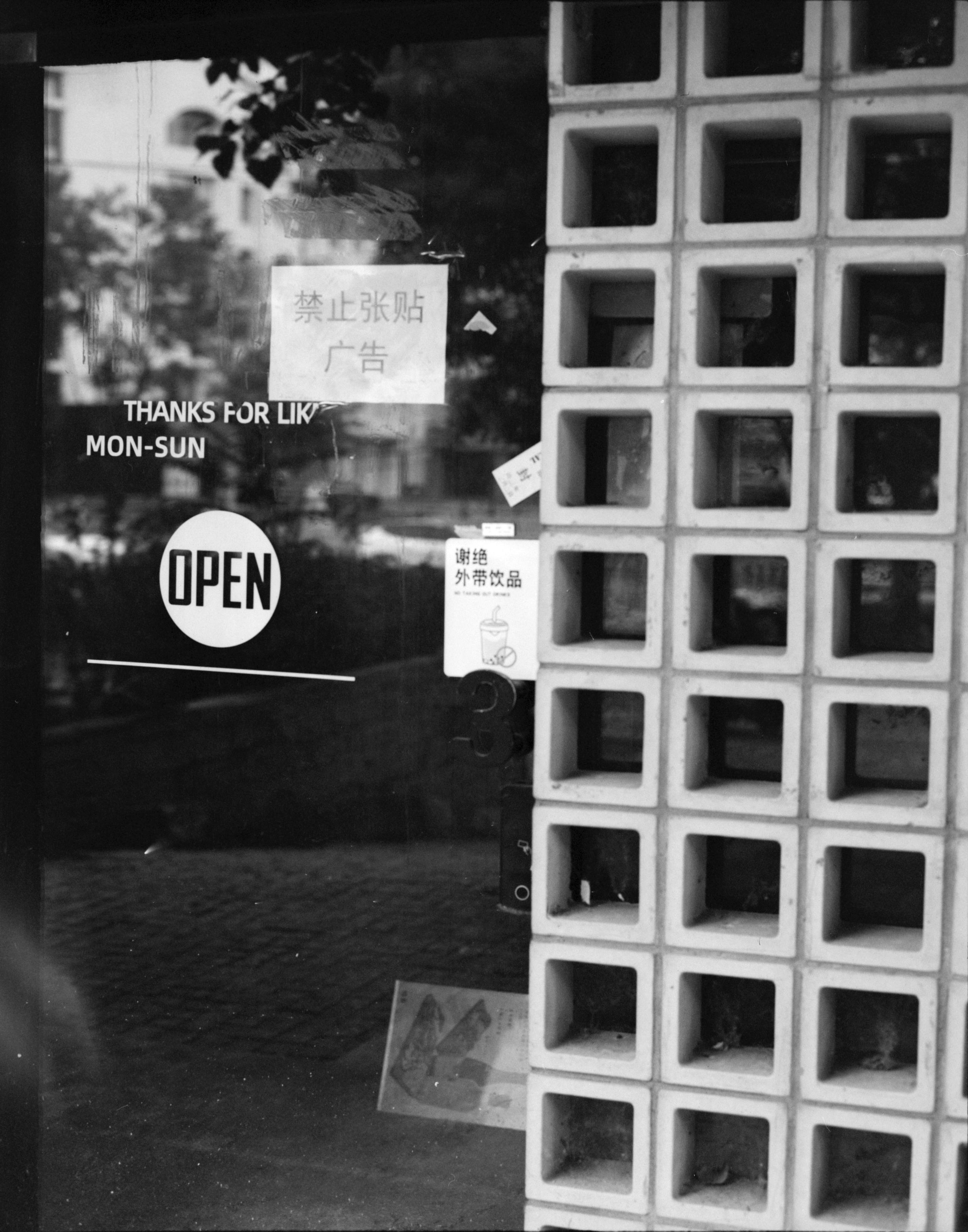
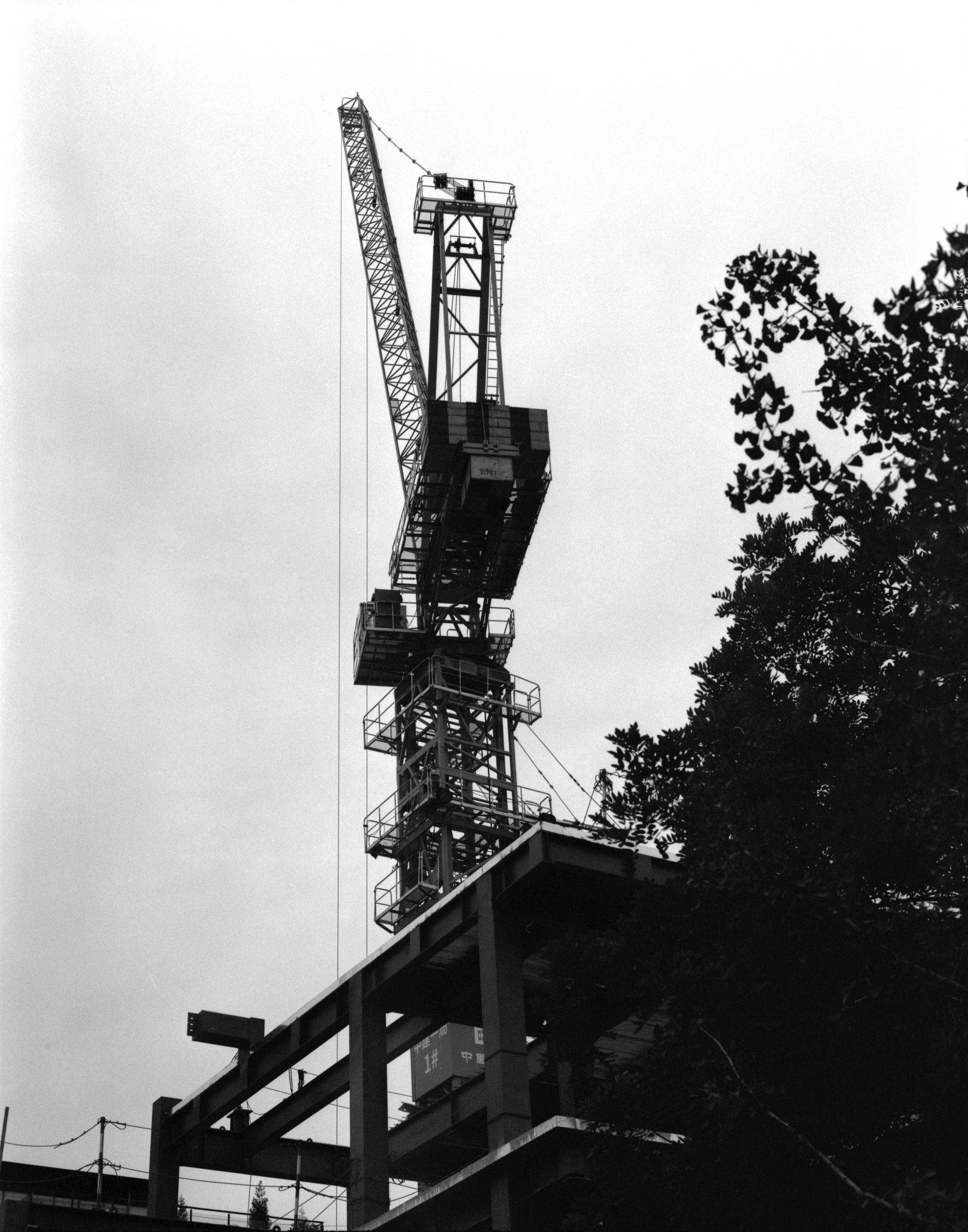
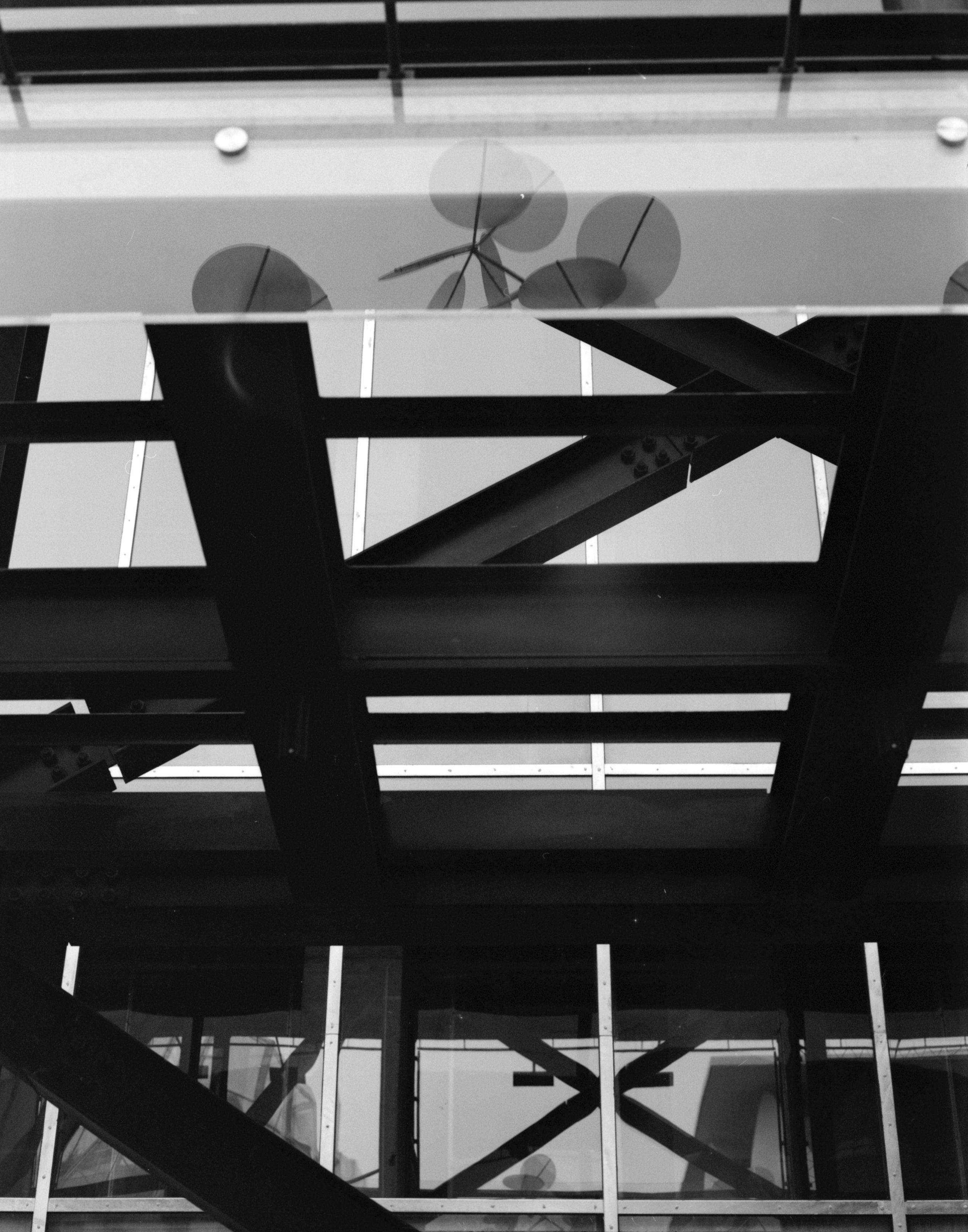
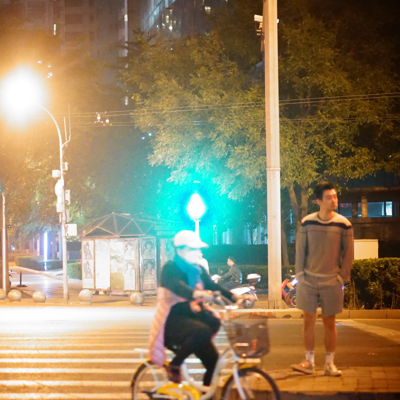
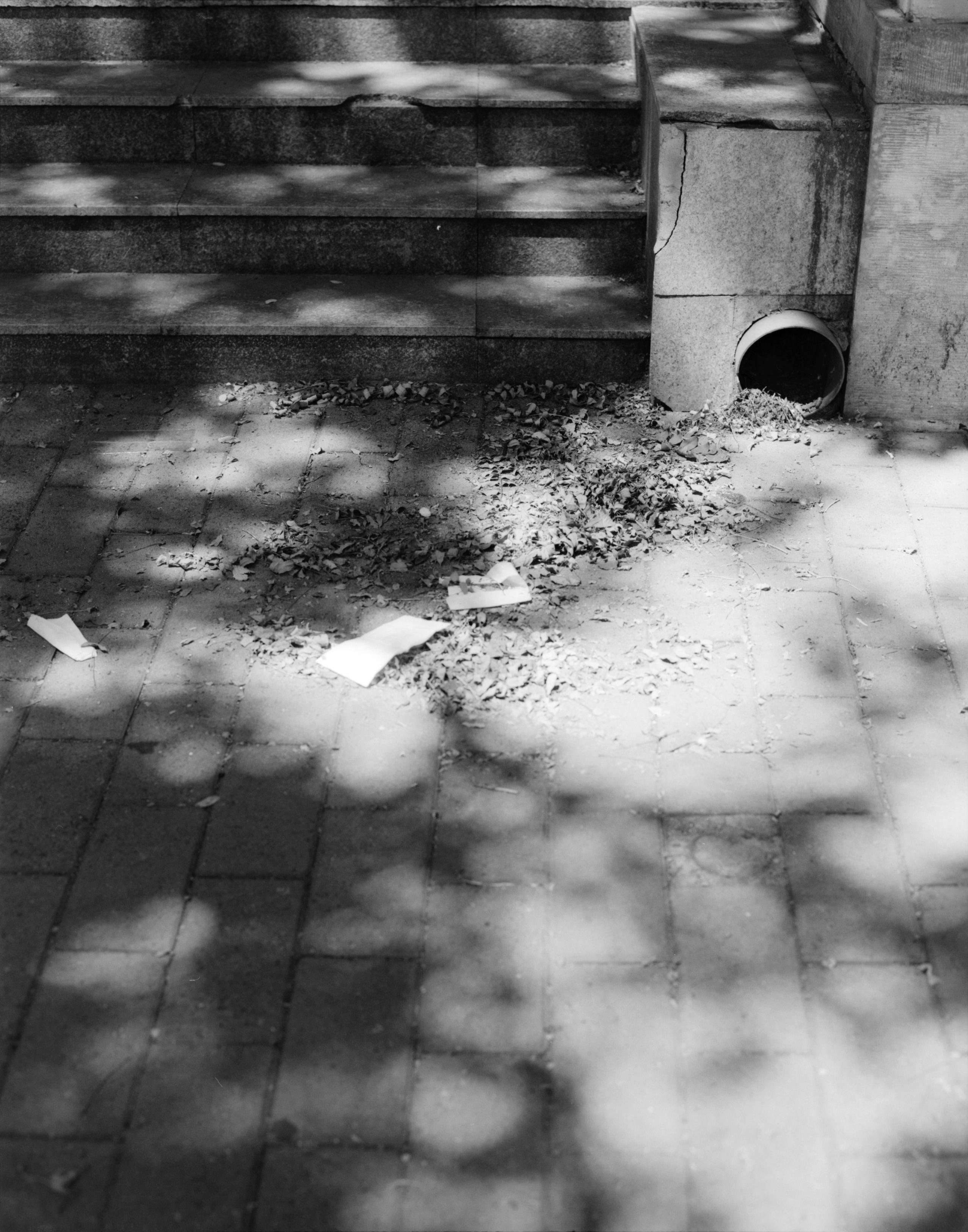
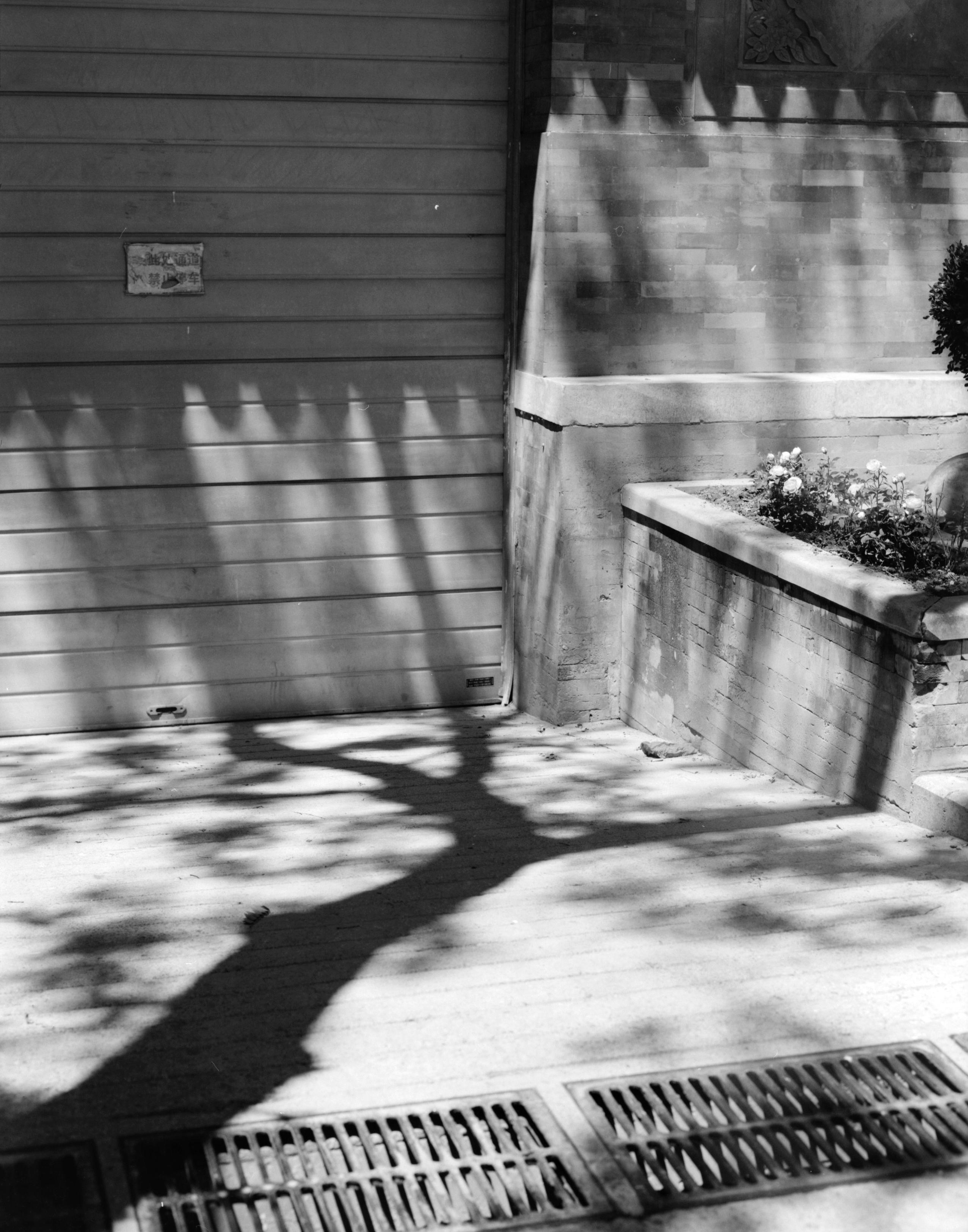
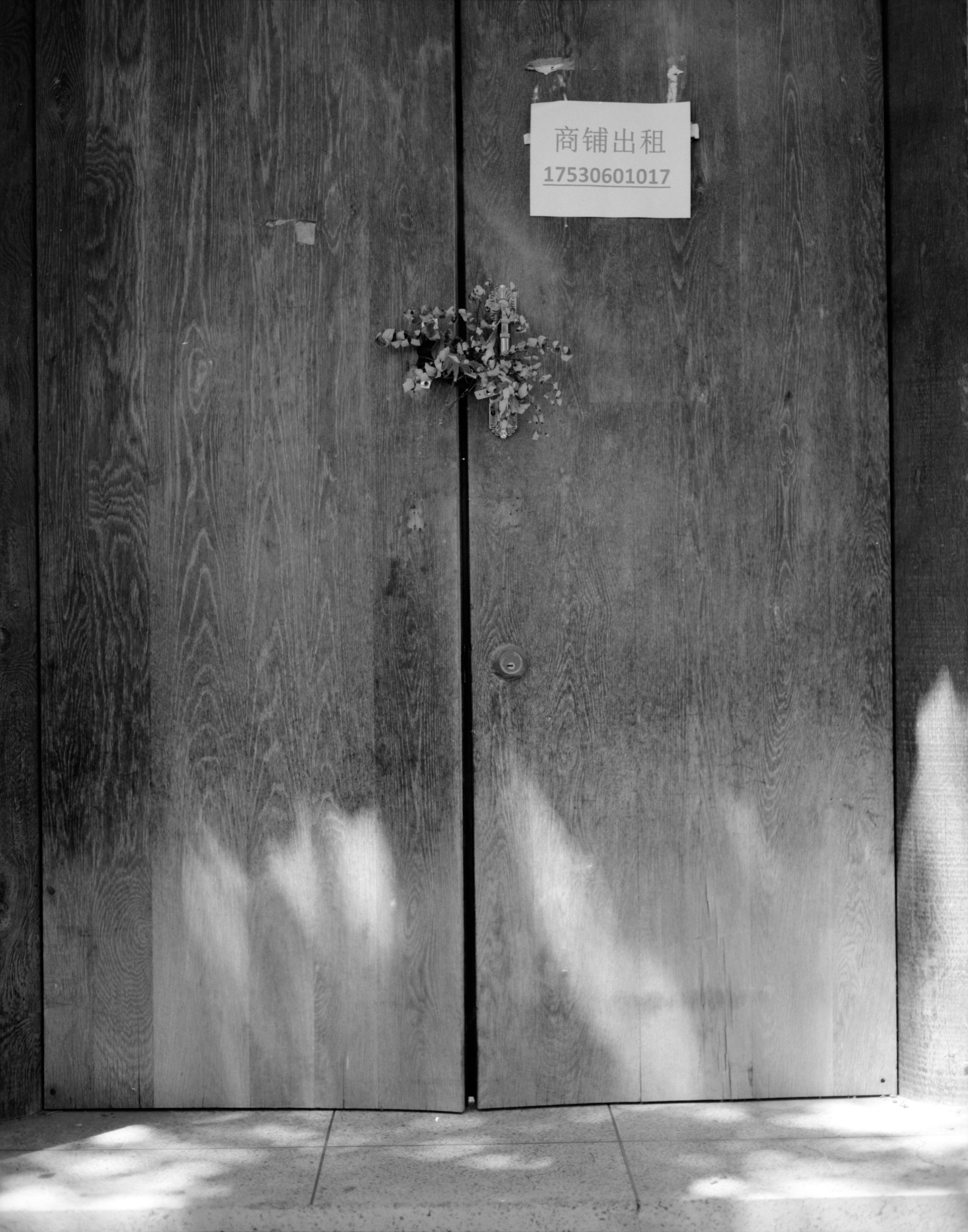
City Lives IV 🔃
城市人生 IV 🔃
📷 Pentax 6x7
🎞️ LUCKY SHD 100 (6x7)
If you like my work, Support by buying me a coffee or a roll of film from
PayPal https://www.paypal.com/paypalme/ydcdingsite
Wise
 @callunavulgaris@mastodon.scot
2026-09-26 10:15:31
I went to return two library books this morning and collect one, and the library was having a sale. Why do they do this??!
For the grand total of £4.50 I bought:
Jeeves and the Leap of Faith, Ben Schott
The Sleeping Beauty, Elizabeth Taylor
The Field of Blood, Paul Doherty
A Foolish Virgin, Ida Simons
The Night Manager, John le Carré
Agent Running in the Field, JlC
A Country Christmas, Miss Read
A Few Green Leaves, Barbara Pym
and I borrow…


 @arXiv_mathDG_bot@mastoxiv.page
2026-08-06 08:17:56
Large mass limits of $\mathrm{G}_2$ and Calabi--Yau monopoles: calibrated concentration, Higgs zeros, and abelianization
Daniel Fadel, Goncalo Oliveira
https://arxiv.org/abs/2608.05128 https://arxiv.org/pdf/2608.05128 https://arxiv.org/html/2608.05128
arXiv:2608.05128v1 Announce Type: new
Abstract: We study large mass monopoles with structure group $\mathrm{SU}(2)$ or $\mathrm{SO}(3)$ on asymptotically conical $\mathrm{G}_2$-manifolds and Calabi--Yau $3$-folds, with fixed asymptotic class. After placing the AC asymptotic theory, the variational compactness theory of Parise--Pigati--Stern, and Li's singular abelian compactness theory in a common $\Theta$-monopole framework, we prove that the mass-renormalized Yang--Mills--Higgs and intermediate energy measures converge to $8\pi\|T\|$ for a compactly supported calibrated integral codimension-three cycle $T$. This identifies the two limiting currents and shows that the variational calibration inequalities are saturated. Using this common limit as the starting point for a finer analysis, if $\mathcal S$ is the calibrated support, $\mathcal Z$ the Kuratowski upper limit of the Higgs zero sets, and $\mathcal C$ the limiting nonabelian locus, defined as the Kuratowski upper limit of Li's curvature concentration loci, then $\mathcal S\subset\mathcal Z\subset\mathcal C=\mathcal S\cup\mathcal O$, where $\mathcal O$ is precisely the obstruction to effective codimension-three monotonicity. For the cohomogeneity-one large mass families on the Bryant--Salamon $\mathrm{G}_2$-manifolds and the Stenzel Calabi--Yau $3$-fold, we prove that $\mathcal O=\varnothing$. On $X\setminus\mathcal C$ the sequence abelianizes; corrected longitudinal curvatures converge smoothly, and the remaining compactness alternatives are governed by $L^2$-harmonic $2$-forms.
toXiv_bot_toot
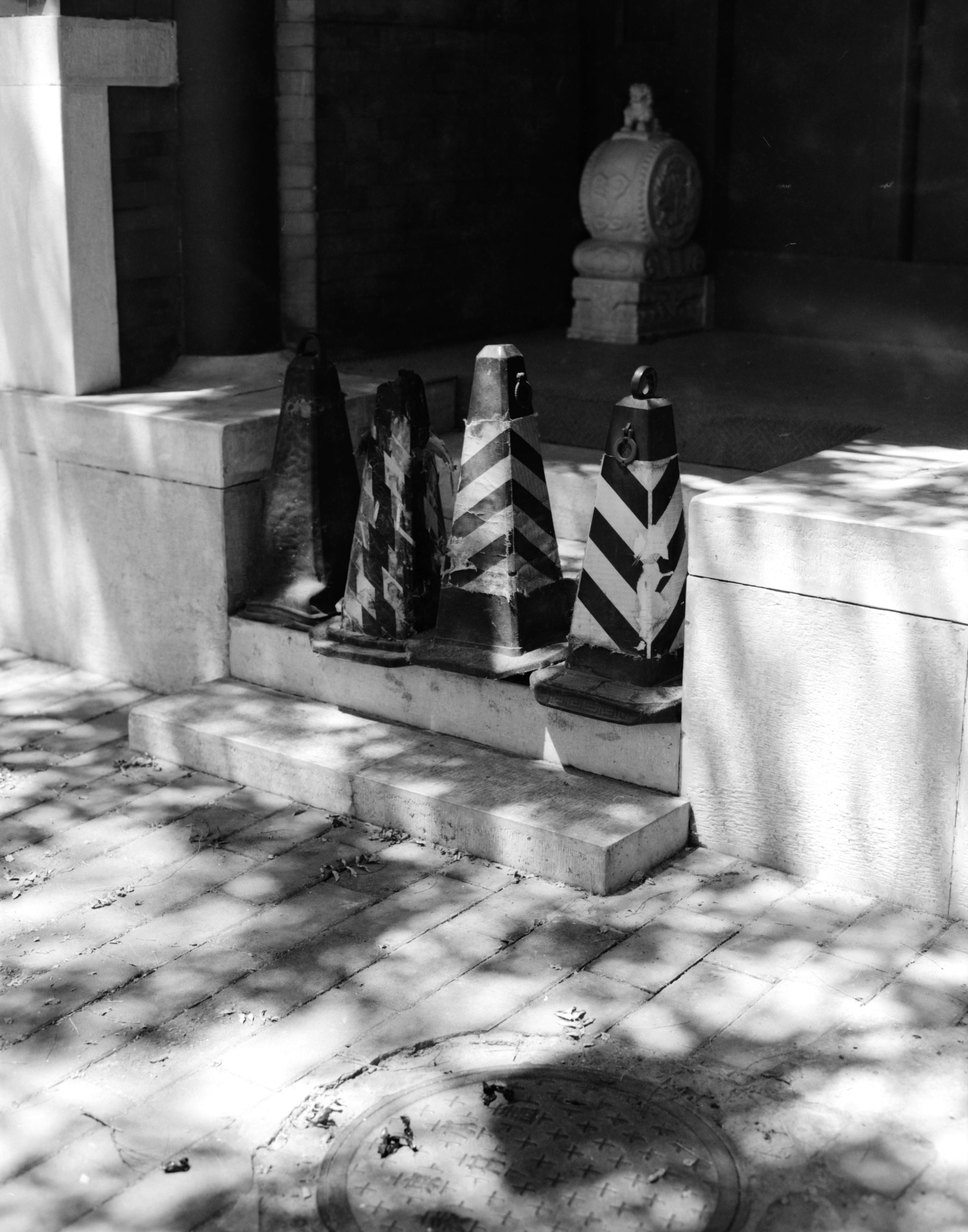
@leftsidestory@mstdn.social2026-08-01 02:25:35
City Lives 🔃
城市人生 🔃
📷 Pentax 6x7
🎞️ LUCKY SHD 400 (6x7)
If you like my work, Support by buying me a coffee or a roll of film from
PayPal https://www.paypal.com/paypalme/ydcdingsite
Wise