@toxi@mastodon.thi.ng
2026-07-20 08:00:06
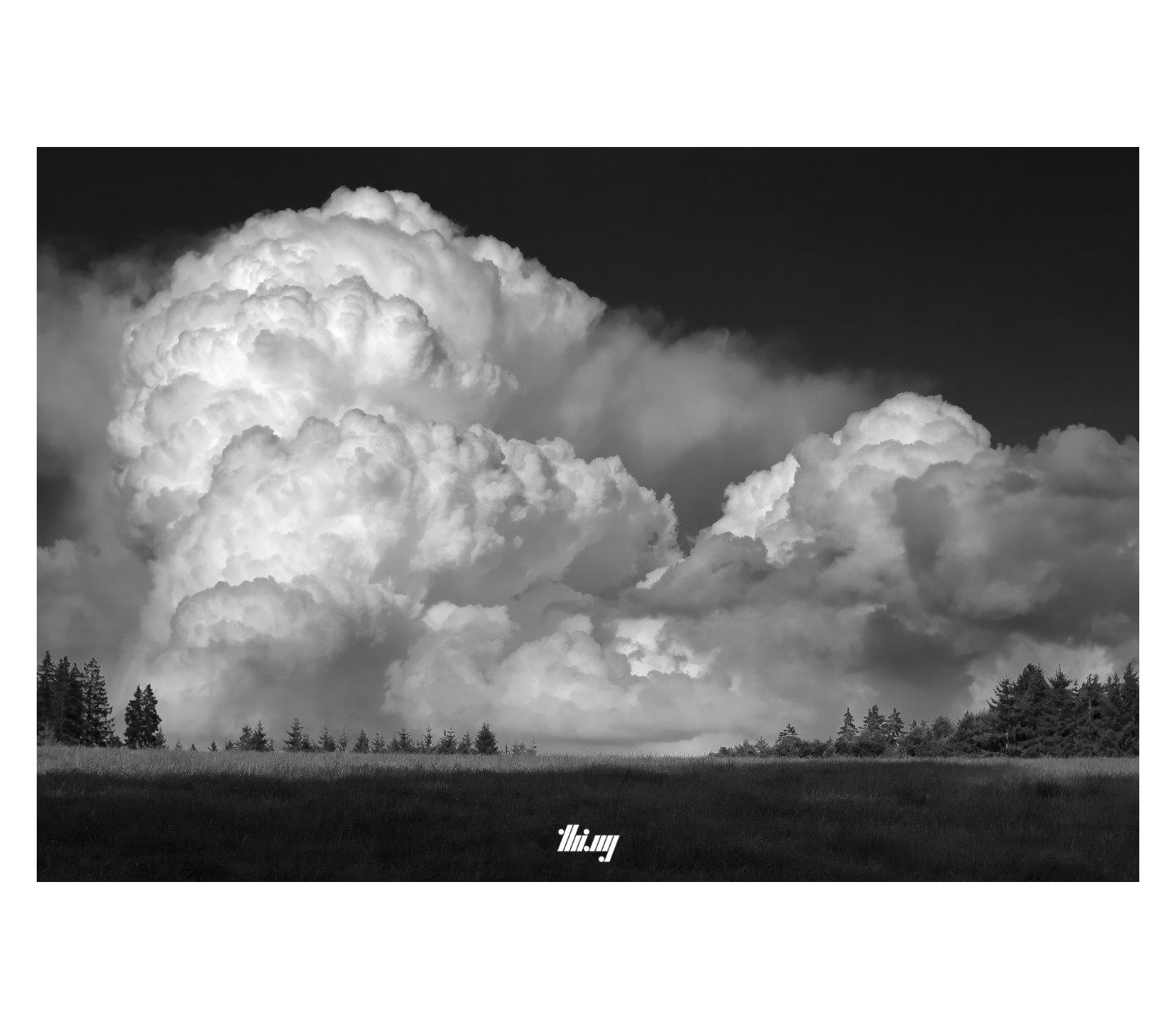
A Conjuring Of Clouds
Yesterday's evening walk... It's been a great week for cloud spotting, but with dozens of storm cells & hail moving through the area all week...
(Also thinking about the connotation to wildfires raging in Canada... 😢)
#MonochromeMonday #LandscapePhotography
 @aardrian@toot.cafe
2026-08-21 02:19:46
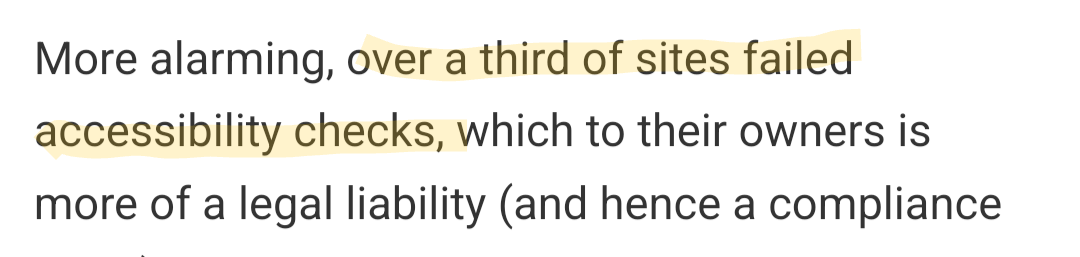
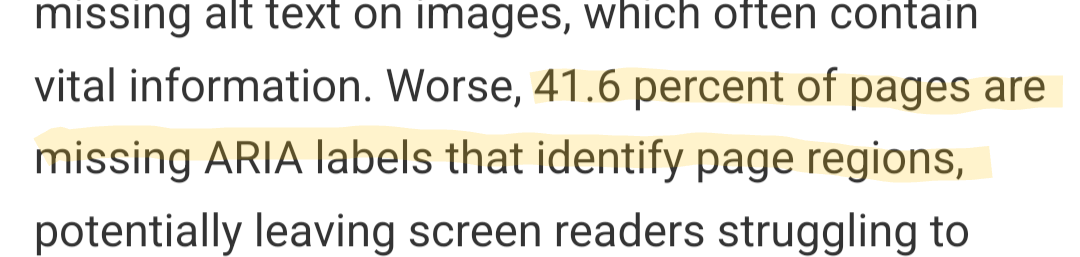
“Almost nobody pays attention to web standards anymore”
https://www.theregister.com/devops/2026/08/17/almost-nobody-pays-attention-to-web-standards-anymore/5288782
Has the two attached bangers. My thoughts:
1. …
 @cdarwin@c.im
2026-08-17 20:42:18
Serena Williams is back.
First, by teaming up with rising Canadian teenager Victoria Mboko for a straight-sets win over the No. 3 seeds in women’s doubles at the Queen’s grass-court tournament in London,
Williams sent a message to the tennis world that it may be in for an interesting summer.
Then she sent an even bigger message, by accepting a wild card into the singles at Wimbledon, which she has won seven times.
Williams’ comeback comes just under one year after she d…

 @aral@mastodon.ar.al
2026-09-17 06:53:43
And this is apparently what passes for journalism today.
No, the raging Zionist Robert Kraft who rounded up a posse of stadium owners to cancel Macklemore for supporting Gaza during his set is *NOT* doubling Macklemore’s $1M donation to Gaza.
Ed both-sides-on-genocide Sheeran asked Kraft “to match a $2m (£1.5m) donation to ‘aid in the region’” (

 @yetiinabox@todon.nl
2026-09-17 08:47:18
Rescued from a single tree, clinging to a steep cliff on the side of a remote Pacific island, seedlings from the last wild specimen of _Dendroseris neriifolia_ (Hook & Arn.) are now comfortably settled into a botanical oasis in the cheddar cheese producing landscape of the Mull of Galloway. As the curator of Logan Botanic Garden (one of the four constituent gardens of the Edinburgh Botanics) observed, "Experience shows that plant species from the Juan Fernandez Islands do well at Lo…
 @tomteo@mastodonczech.cz
2026-09-18 21:14:22
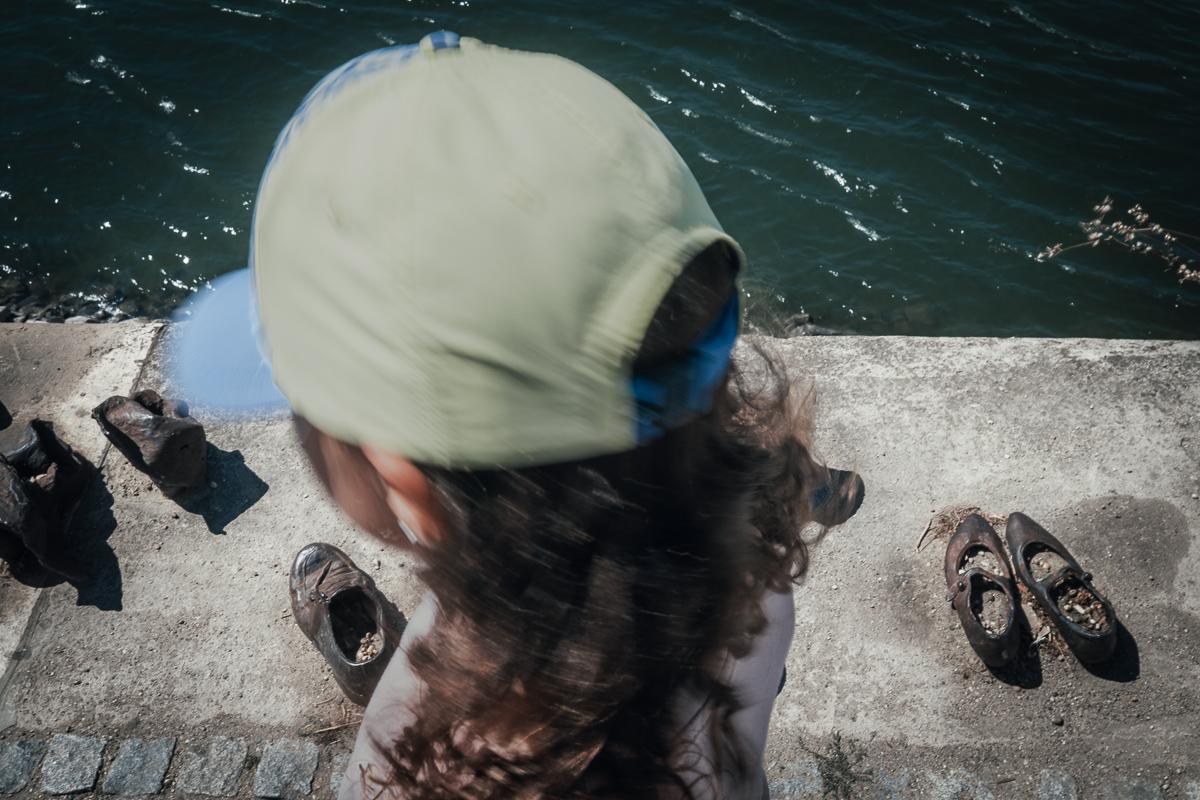
![Černobílý, mírně shora pořízený snímek bronzové pamětní desky zasazené do dlážděné cesty. Deska je obdélníková, s mírně vyvýšeným okrajem. Část textu na desce je zakryta a rozmazána pohybem nohy chodce v tenisce. Viditelný text zní: "TO TH[E MEMORY] [OF THE VICT]IMS SHOT INTO T[HE DANUBE] BY ARROW CROSS MILITIAMEN IN 1944–45 ERECTED 16TH APRIL 2005". Kolem desky je vidět dlážděná cesta a rozmazaná silueta nohy v pohybu. V horní části desky a na dlažbě je stín, který se zdá být od nohy chodce.](https://mastodonczech.cz/system/media_attachments/files/117/294/072/652/396/609/original/d6cdce7bc51c4a41.jpg)
 @hex@kolektiva.social
2026-06-27 04:05:41
Now, I don't especially like the term "church" so I may use something else... like "coven." You can do what you want. But I happen to have already mapped out an example. (It is exactly that, just an example, so take if it's useful, change if you need, and don't stick to anything too closely.) Oh, this mapping also means that you would, for religious reasons, only be allowed to work under capitalism 4 days a week instead of 5.
Given the increases in productivity over the last 100 years, a 4 day work week is a completely reasonable expectation. If we have to annex Monday for the weekend by force of religion, so be it. It is rightfully ours anyway. If enough people try it, this will probably work. If it doesn't work, it just needs more people.
The Practice of Worship:
It is recommended to break down worship in to three sections: the functional, the communal, and the spiritual. It is also recommended to break these across multiple days. A common structure for some Christian churches is to take 10-15 minutes for announcements (Functional), an hour or two for services (Spiritual), followed by (Communal) coffee, tea, and cookies for an unspecified time up to two hours after. When starting or working with limited time a single compressed model like this may work, but it's not optimal.
- The Functional
The purpose of this section is to address the functional needs of the coven. Block out time (less than 90 minute blocks is recommended) to go through reports and updates from those involved in the Dispensary, Library, Works Committee (infrastructure), and Services Committee (providing services internally and, potentially, externally). Talk through any additional announcements, including those from other covens you may be federated with.
It is helpful to include unstructured communal time, such as shared meals, during or after functional meetings. As the federation grows, more time will be needed. It is recommended to break functional meetings, work parties, and such across multiple days. When a federation becomes sufficiently large, it is recommended to take every Monday, on top of Saturday and Sunday, as a third day of community and worship.
The scope of the functional spans 3 realms (which may be more-or-less fluid): the personal or family, the coven and federation, and humanity itself. It is up to each coven and individual to negotiate how to allocate the three days of the weekend once we have liberated Monday from the work week, but it is important to reserve it for one of these three. However, some people must work on weekends. Medical personnel, for example, cannot conform to a standard work week. While the work week should be universally restricted, which specific days are used will be up to the specific coven and their members.
A functional meeting can start with an agenda like the following:
Functional Invocation
Announcements
Report Backs
Dispensary
Inventory Check
What is low
What is empty
What is expiring
What is needed
Funds status
Library
Inventory Check and Items needing return
Library acquisition requests
Funds status and budget check
Works Committee
Upcoming projects
Subcommittee updates (Following the Works Committee agenda)
New committee formations
Funds status
Services Committee
New capabilities announcements
New needs requests
Subcommittee updates (Following the Works Committee agenda)
New committee formations
Funds status
Task Check
Breaking the Circle
This agenda is a suggestion for those who don't know where to start. It can be adapted or ignored as appropriate.
- The Spiritual
Spirituality is necessarily an undefined space. It is deeply personal. Each individual taking time to share their own personal spiritual experiences can help each connect with each other. This experience of connection can itself be a spiritual experience. It may also be useful to read esoteric, mystical, or philosophical texts together as type of "book club" and share thoughts. Others may draw from their own knowledge or traditions. This is something that must be defined together within a group.
- The Communal
The communal aspect of the practice of worship bind the coven and federation together. Within the community we find joy and release, connection and comfort. The coven is where we turn in times of need, and where we share our hopes and dreams.
 @arXiv_csGR_bot@mastoxiv.page
2026-07-21 07:45:37
EVOLVE: Efficient Learned Volume Compression with Variable-Rate Encoding on a Cross-Domain Database
Kaiyuan Tang, Maizhe Yang, Chaoli Wang
https://arxiv.org/abs/2607.18187 https://arxiv.org/pdf/2607.18187 https://arxiv.org/html/2607.18187
arXiv:2607.18187v1 Announce Type: new
Abstract: Large-scale scientific simulations generate volumetric data at rates that far outpace advances in storage and network bandwidth, making effective lossy compression increasingly critical. However, conventional compressors often struggle to preserve fine structural details at high compression ratios (CRs), and implicit neural representations (INRs) require costly per-volume optimization and produce models with fixed CRs. To respond, we present EVOLVE, an autoencoder (AE)-based volume-compression framework that targets high CRs for offline compression, with three key contributions. First, we construct a large-scale cross-domain database of 6,376 volumes from 21 scientific simulations, curated via perceptual hashing to ensure diversity, enabling the optimized model to extract features that generalize across volumes within the covered scientific simulation domains. Second, we reexamine the design space of AE-based compressors and incorporate several macro- and micro-designs into a vanilla AE to develop EVOLVE, which substantially improves the expressive power and compression capability. Third, we develop a learnable gain mechanism with a three-stage training strategy to enable variable-rate encoding, allowing a single model to support continuous CR adjustment at inference time. Experiments on multiple unseen scientific simulation datasets demonstrate that EVOLVE achieves substantially higher CRs than conventional compressors at comparable reconstruction quality, while delivering compression speeds that are orders of magnitude faster than INR-based methods, highlighting its promise as a strong alternative for compressing scientific data. The code, model weights, and results are available on our project page at https://evolve-vis.github.io.
toXiv_bot_toot
@cdarwin@c.im2026-08-12 07:02:42
Doctors say Donald Trump’s new executive order on vaccines
Kis misguided and likely to stoke fear and confusion among parents
at a time when measles is raging, immunization rates are falling and children are heading back to school.
“Many families are finishing up that back-to-school checklist,
and among those things is the medical checkup and assuring that their kids have their vaccines,”
Michigan pediatrician Dr. Molly O’Shea said.
“To put into question …
 @toxi@mastodon.thi.ng
2026-07-17 08:58:43
So the upcoming NPM publish token changes are a potential lock-out scenario for people who're not using CI-based "Trusted Publishing" (TP) and cannot switch to "Staged Publishing" (SP) for reasons of practicality or feasibility.
https://github.blog/changelog/2026-07-