 @peterhoneyman@a2mi.social
2026-09-09 01:35:12
"the government" sent me a link to https://links-2.govdelivery.com/ in order to have me create an all-encompassing federal identity on a web site in montenegro
@peterhoneyman@a2mi.social"the government" sent me a link to https://links-2.govdelivery.com/ in order to have me create an all-encompassing federal identity on a web site in montenegro
 @michabbb@social.vivaldi.net
 @aral@mastodon.ar.al
🥳 New release: Test Monkey version 1.2.0
• 100% coverage? You get a trophy 🏆 (Instead of a useless table.)
https://codeberg.org/small-web/test-monkey#100-coverage
Test Monkey is a node:test custom reporter that’s also a monkey.
npm install --save-dev @sm…

 @ripienaar@devco.social
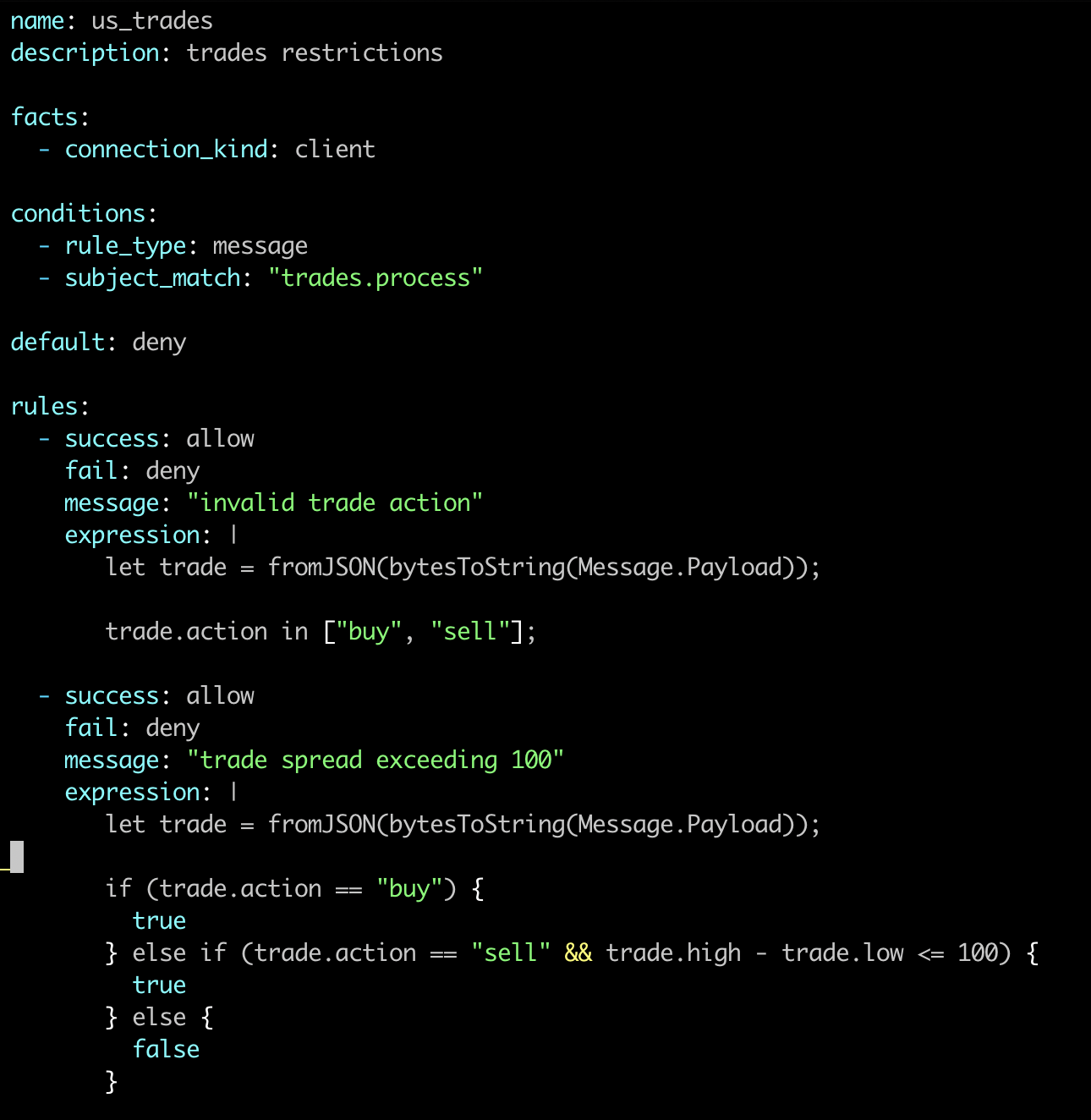
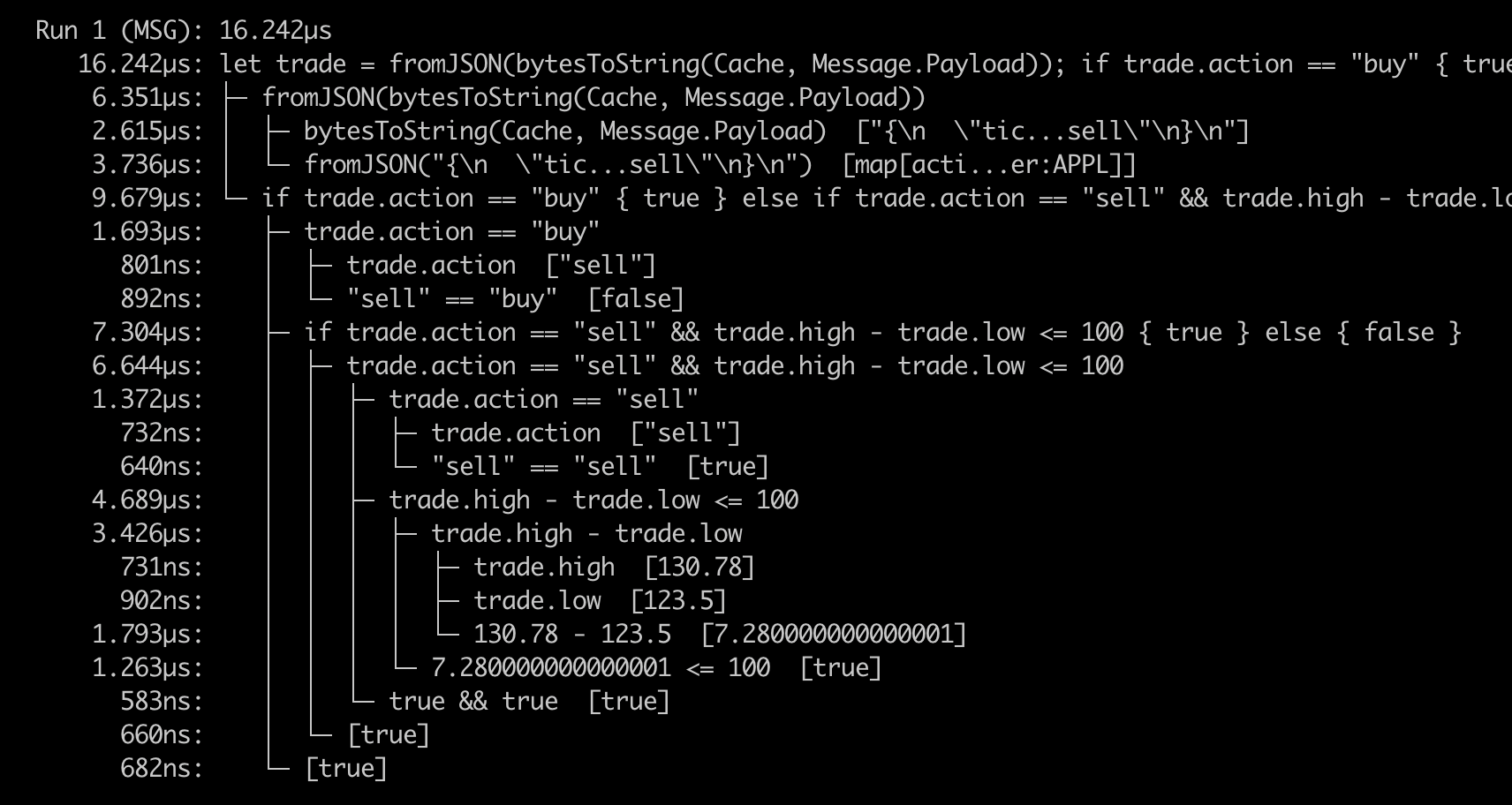
Been thinking about debuggers for my rule engine langue, here's a sample rule - 2 sets of somewhat complex logic. Lots of scope for error, typos, things just not having the value you expect etc.
So added a tracing evaluator that shows the AST walk, outcomes, timings etc.
Be better on the web, so the dashboard will make this really awesome along with a rule editor.
 @hippyjo@c.im
WCAG Evaluation Methodology now covers more than web pages: #a11y #accessibility
 @theodric@social.linux.pizza
Idea: an aggressively Web 2.0 site for bitching about things called Grumbl
 @Techmeme@techhub.social
Alibaba releases Qwen-Image-2.1, a 7B open-weight model it says outperforms most closed-source models, with native transparency and up to ten reference images (Qwen)
https://qwen.ai/blog?id=qwen-image-2.1
 @kubikpixel@chaos.social
Stanford study finds 5% of IP addresses send 55% of all web requests
Fewer than 0.2% of domains in the .com, .net and .org zones resolve to an address of their own, and 5% of client addresses generate more than half of the world's web requests, according to a Stanford-led measurement study that reached wide circulation this week, eight days after Google switched on IP-based ad personalization across the European Economic Area.
🤖
 @digitalnaiv@mastodon.social
Weinsprache – Nicht so süffig im Abgang?
Seit einiger Zeit beschäftige ich mich etwas intensiver mit Wein. Getrunken habe ich ihn immer gerne, aber nun schaue ich schon mal im Web nach, lese Blogs wie den von Michael Liebert und dortige Weinbesprechungen, bin Mitglied in 1-2 Communities wie 13Grad, baue mir eine Twitter-Liste auf und kaufe mir das ein oder andere Weinbuch wie Carsten Sebastian Henns 111 Deutsche Weine, die man getrunken haben muss oder auch seine…
http://stefanpfeiffer.blog/2012/08/23/weinsprache-nicht-so-suffig-im-abgang/?utm_source=mastodon&utm_medium=jetpack_social
@aral@mastodon.ar.alIf I do say so myself, I do love expressive I can be with Kitten.
This is me injecting raw HTML markup into a Markdown code block in a Kitten Markdown page to highlight specific lines in a code block¹.
(The string interpolation of the HTML as an array is a hack that bypasses Kitten’s default sanitisation and should only be used with trusted content.)
PS. I’m going through all the tutorials on the site to update them to reflect the current state of Kitten after the three-mon…
![2. The welcome message tells you that you can use the `.help` command for assistance. Run that and you will see a list that looks like the following:
```text
.break Sometimes you get stuck, this gets you out
.clear Alias for .break
.editor Enter editor mode
.exit Exit the REPL
.help Print this help message
${['<strong>']}.id Show your Small Web place ID (and create it and your secret if necessary).${['</strong>']}
.load Lo…](https://s3-eu-central-1.amazonaws.com/mastodon-aral/media_attachments/files/117/002/935/800/101/601/original/8cb19f2b6919e4b6.jpeg)
 @harrysentonbury@social.linux.pizza
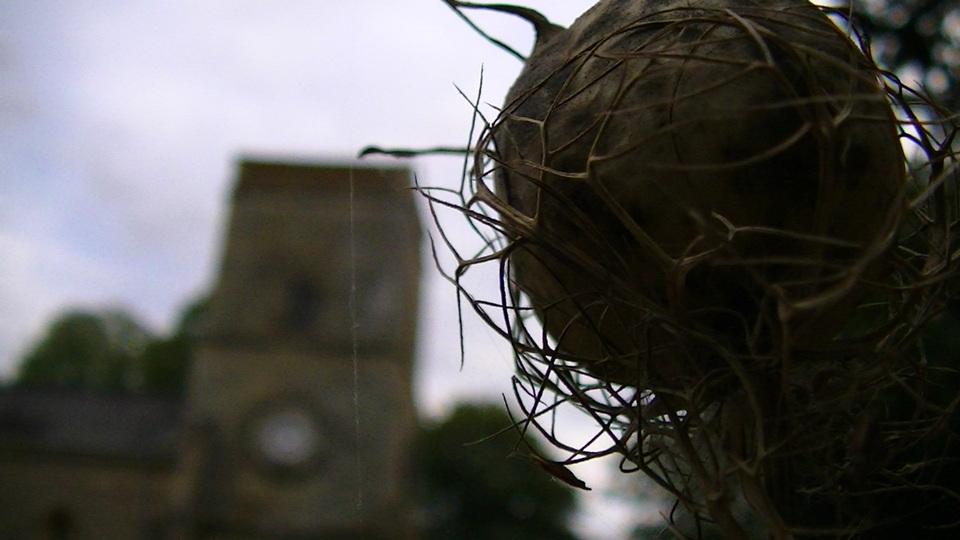
here is another love-in-a-mist snap for #spookySaturday before saturday ends. about 2 minutes for here in the UK. i think it looks a bit spooky anyroad
 @thomasfuchs@hachyderm.io
80s: rise of personal computing
90s: the Internet changes everything
00s: the Web 2.0 revolution
10s: the age of the smartphone
*checks notes*
20s: anthropomorphized matrix multiplications
 @stefan@gardenstate.social
 @jom@social.kontrollapparat.de
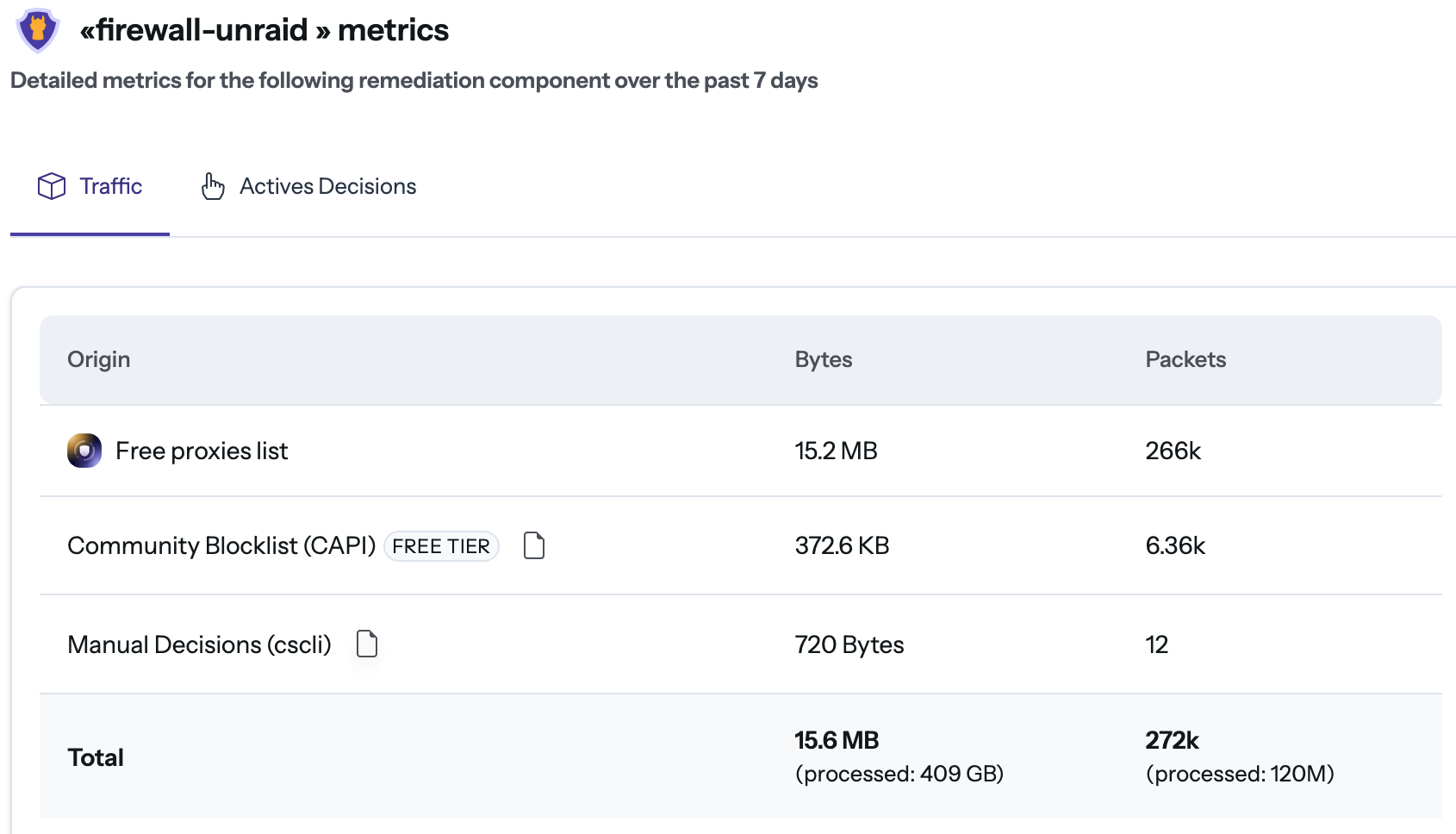
Didn't know CrowdSec until recently, but I'm quite impressed. Thought I'd share: I'm protecting my Jellyfin and audiobookshelf via nginx logs for a few days now and it's very promising, especially the proactive blocking via the global community list.
Now looking for a nice GUI (alerts/stats/unbanning) since the official panel's pricing isn't for home users. Please only recommend tools you've actually used (I know how to Kagi 😊!).
 @Techmeme@techhub.social
ShinyHunters hijacked the dark web site of cybercrime gang Cl0p, set an eight-figure extortion demand, describing the amount as "2.333%" of Cl0p's net worth (Alexander Martin/The Record)
https://therecord.media/shinyhunters-clop-cyberattack-website
 @cameo007@rheinneckar.social
 @aardrian@toot.cafe
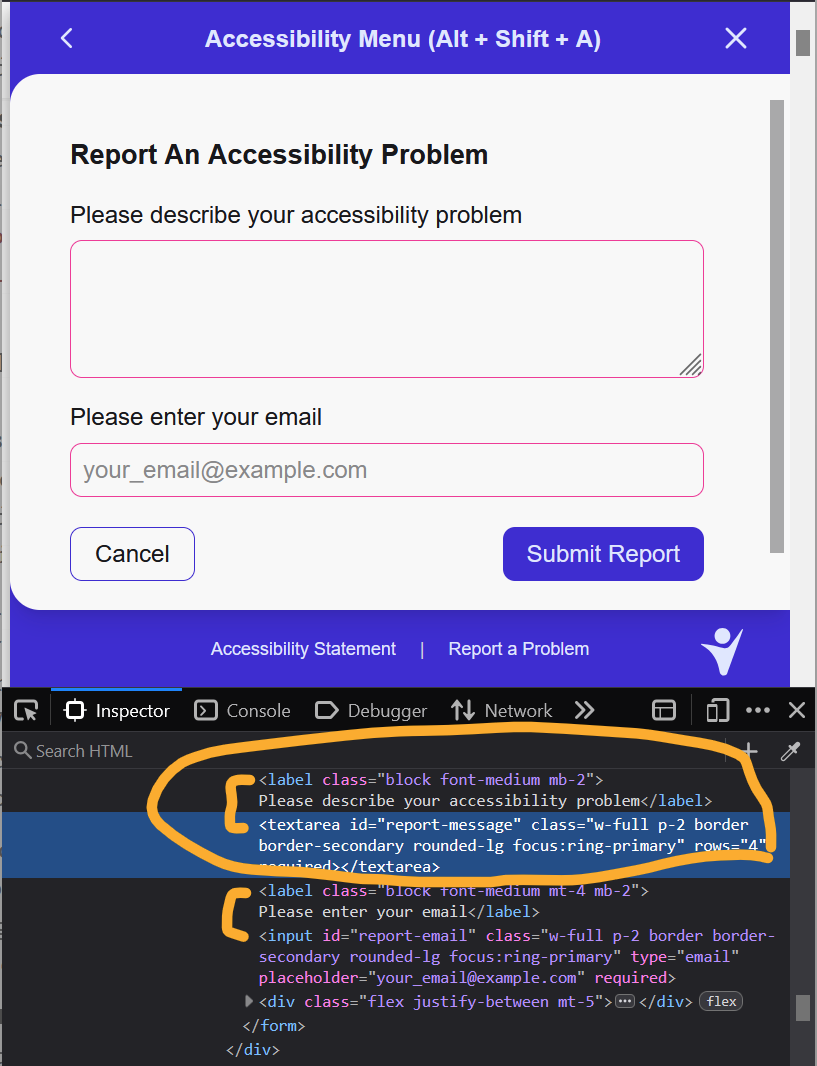
Yet another #accessibility #overlay that introduces WCAG failures just by installing it.
Users might not be able to report an accessibility problem. Here, one field is unlabeled (4.1.2 / 1.3.1) and the other is labeled by its placeholder (1.4.3 / 3.3.2).
This one offered by Welcoming Web.
 @jon@henshaw.social
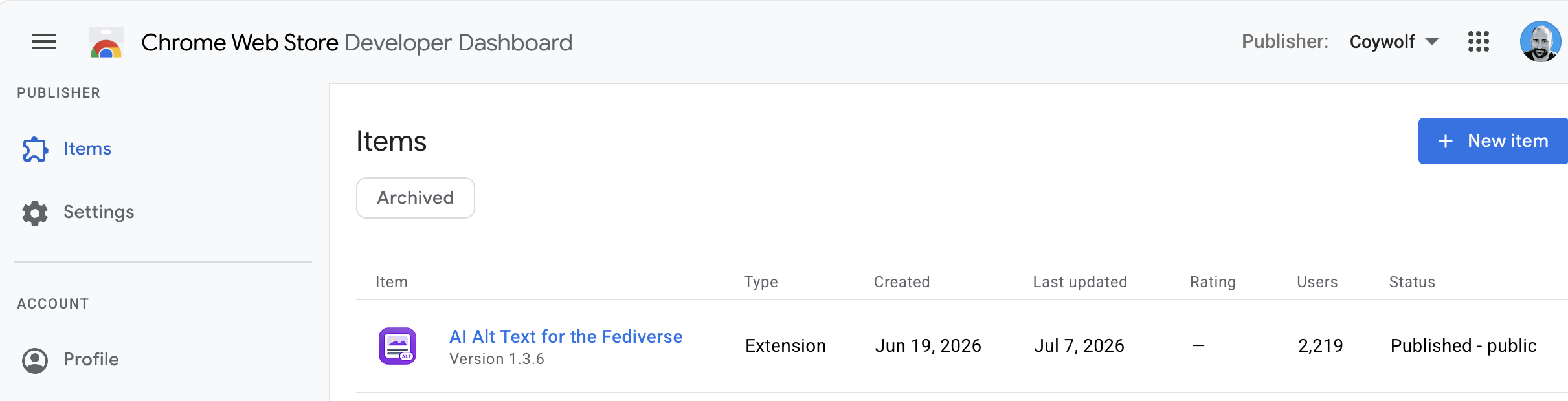
I quietly published the AI Alt Text for the Fediverse Chrome extension weeks ago. I have to say, I'm surprised that it already has over 2K active installs. Especially since it only works on Mastodon. I guess I can't be the only person who wants something like this, which is validating.
https:…
 @kazys@mastodon.social
I built a plugin to use NotebookLM in Zotero. You can upload books and articles and interact with it as you would on the web.
Link below.
1/2
 @relcfp@mastodon.social
H-Net Job Guide Weekly Report for H-USA: 2 August - 9 August
https://ift.tt/dWws3lx
Call for Paper (CAA 2027 Annual Conference): From the Street to the Bedroom: Designing the Modern…
via Input 4 RELCFP
 @arXiv_csCR_bot@mastoxiv.page
AuthProbe: Specification-Driven, Multi-Identity Detection of Broken Object-Level Authorization in Recruitment API
Jay Barach
https://arxiv.org/abs/2607.20574 https://arxiv.org/pdf/2607.20574 https://arxiv.org/html/2607.20574
arXiv:2607.20574v1 Announce Type: new
Abstract: Broken Object-Level Authorization (BOLA), also known as Insecure Direct Object Reference (IDOR), has topped the OWASP API Security ranking since 2019 and is the root cause of some of the largest exposures of applicant data in recruitment technology. The defining feature of this flaw class is that a malicious request is byte-for-byte indistinguishable from a legitimate one, which is precisely why web application firewalls and single identity scanners fail to catch it. We present AuthProbe, an open-source, black-box scanner that detects BOLA and IDOR in HTTP APIs by driving its tests from an OpenAPI specification and by acting under two or more identities that the operator controls. AuthProbe discovers, for each identity, the objects that identity legitimately owns, then attempts to read one identity's objects while authenticated as another and confirms a leak by comparing the response against a ground-truth fetch by the true owner. It also walks predictable identifiers to expose enumeration and reports missing authentication and existence oracles. The tool returns a severity-thresholded exit code and machine-readable reports so that it can gate a continuous integration build. On a synthetic recruitment API in which the McHire failure class is reproduced, AuthProbe detects every planted cross-identity read with no false positives on a hardened counterpart, and its running time grows linearly with the number of objects under test. AuthProbe is released under the Apache 2.0 license with an authorized-use guardrail.
toXiv_bot_toot
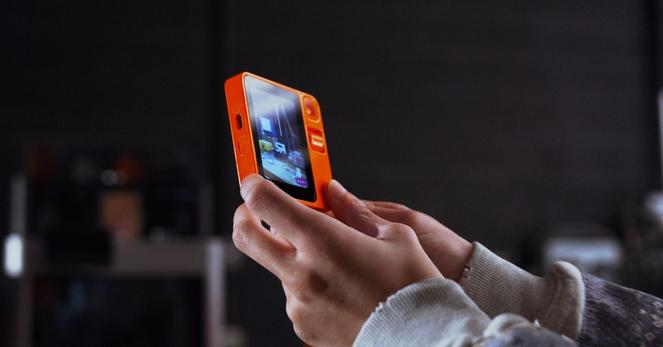
@Techmeme@techhub.socialRabbit launches OS3, a cloud AI agent that connects to local apps and files on Windows, Mac, and Linux and works via web, Telegram, iMessage, or its R1 device (Julian Chokkattu/Wired)
https://www.wired.com/story/rabbit-r1-os3-jesse-lyu/
 @thomastraynor@social.linux.pizza
Sigh, another web site and another interface fail.
1. Check boxes - you can select one or many.
2. If you want me to select ONLY one item then the proper option is a radio button.
3. STOP THE REFRESH when I make a selection. Allow me to fine tune what I want then have a 'REFRESH' button to show the results.
 @kexpmusicbot@mastodonapp.uk
🇺🇦 #NowPlaying on #KEXP's #MorningShow
Archers of Loaf:
🎵 Web in Front
#ArchersofLoaf
https://archersofloaf.bandcamp.com/track/web-in-front-2
https://open.spotify.com/track/33cSQbSL7Hxg1xeYGkj9gt
@stefan@gardenstate.socialMatt was a long time hero of mine. It's been wild to watch his brain cook and totally fall from a place of being worth any respect over the last few years.
I think I have 2 - 3 people remaining from the early web I still look too and I wish them luck.
And I wish myself luck in seeing people make mistakes and still finding value in their good ideas.
@michabbb@social.vivaldi.net⚡ One Docker command starts the full stack locally on port 3010. First startup pulls images in 2-3 minutes, then you pick inbound or outbound, name the bot, describe the use case in a few words and click Web Call.
🔑 No API keys required to start: #Dograh ships with auto-generated keys and its own LLM, TTS and STT stack. Own keys for LLM, TTS, STT or telephony can be connected later.
@relcfp@mastodon.socialH-Net Job Guide Weekly Report for H-Asia: 2 August - 9 August
https://ift.tt/BQ3xaNS
Call for Paper (CAA 2027 Annual Conference): From the Street to the Bedroom: Designing the Modern…
via Input 4 RELCFP
@relcfp@mastodon.socialH-Net Job Guide Weekly Report for H-Interfaith: 2 August - 9 August
https://ift.tt/NJKTats
Call for Paper (CAA 2027 Annual Conference): From the Street to the Bedroom: Designing the Modern…
via Input 4 RELCFP
 @arXiv_astrophGA_bot@mastoxiv.page
Replaced article(s) found for astro-ph.GA. https://arxiv.org/list/astro-ph.GA/new
[1/2]:
- GA-NIFS: Powerful and frequent outflows in moderate-luminosity active galactic nuclei at $z\sim3-6$
Giacomo Venturi, et al.
https://arxiv.org/abs/2512.09996 https://mastoxiv.page/@arXiv_astrophGA_bot/115705753776819617
- ALMA High-J CO Spectroscopy of High-Redshift Galaxies. II. 0.03" Resolution CO Kinematics Reveal ...
Ken-ichi Tadaki
https://arxiv.org/abs/2603.01352 https://mastoxiv.page/@arXiv_astrophGA_bot/116164867046260901
- Very long-term relaxation of harmonic 1D self-gravitating systems
Kerwann Tep, Jean-Baptiste Fouvry, Christophe Pichon
https://arxiv.org/abs/2603.11238 https://mastoxiv.page/@arXiv_astrophGA_bot/116220857983732581
- The tidal evolution of satellite galaxies in cosmological simulations: insights from COLIBRE
Feihong He, et al.
https://arxiv.org/abs/2604.03105 https://mastoxiv.page/@arXiv_astrophGA_bot/116356854403461047
- Deriving volume density profiles of filaments from observed surface densities
Alexander Men'shchikov, Guo-Yin Zhang
https://arxiv.org/abs/2604.12570 https://mastoxiv.page/@arXiv_astrophGA_bot/116407809964147819
- Reduced Incidence of Little Red Dots at z < 3 from Number Density and Halo Mass Evolution
Chenxuan Zhang, Huanian Zhang, Qingwen Wu, Luis C. Ho, Jian-Min Wang
https://arxiv.org/abs/2606.02773 https://mastoxiv.page/@arXiv_astrophGA_bot/116685196830855300
- The Hubble Missing Globular Clusters Survey IV. Ultra-faint compact satellites of the Milky Way. ...
M. Bellazzini, et al.
https://arxiv.org/abs/2606.12517 https://mastoxiv.page/@arXiv_astrophGA_bot/116736072691643849
- Nebular_AGN: A CIGALE module for fitting AGN emission lines
Hao Zhang, Patrice Theule, Veronique Buat, Denis Burgarella, Estelle Pons, Mederic Boquien
https://arxiv.org/abs/2606.14643 https://mastoxiv.page/@arXiv_astrophGA_bot/116753094453286560
- Assembly bias from nuisance to probe I: the relation between galactic conformity and the linear m...
Nelson Padilla, Ivan Lacerna, Dante Paz
https://arxiv.org/abs/2607.04022 https://mastoxiv.page/@arXiv_astrophGA_bot/116877882568563713
- Enabling Cosmic Web Analysis at Gigaparsec Scales: A Multi Block Approach for DisPerSE
Ankit Singh, Frazer Pearce, Meghan Gray, Gustavo Yepes
https://arxiv.org/abs/2607.14785 https://mastoxiv.page/@arXiv_astrophGA_bot/116934310782158818
toXiv_bot_toot
 @luana@wetdry.world
Apparently it doesn't work if I
1. Toot it from Moshidon
2. Use the web UI to delete and redraft a toot I made from Moshidon
Ugh
 @inthehands@hachyderm.io
STUDENT 2: This other teacher was doing web searches in class, and they •started using the AI overview•
STUDENT 1: [[severe cringe]]
@relcfp@mastodon.socialH-Net Job Guide Weekly Report for H-USA: 26 July - 2 August
https://ift.tt/zUcXDnr
Call for Paper (CAA 2027 Annual Conference): From the Street to the Bedroom: Designing the Modern…
via Input 4 RELCFP
@relcfp@mastodon.socialJOBS> H-Net Job Guide Weekly Report for H-Buddhism: 2 August - 9 August
https://ift.tt/6rTfolR
Call for Paper (CAA 2027 Annual Conference): From the Street to the Bedroom: Designing the Modern…
via Input 4 RELCFP
 @chris@mstdn.chrisalemany.ca
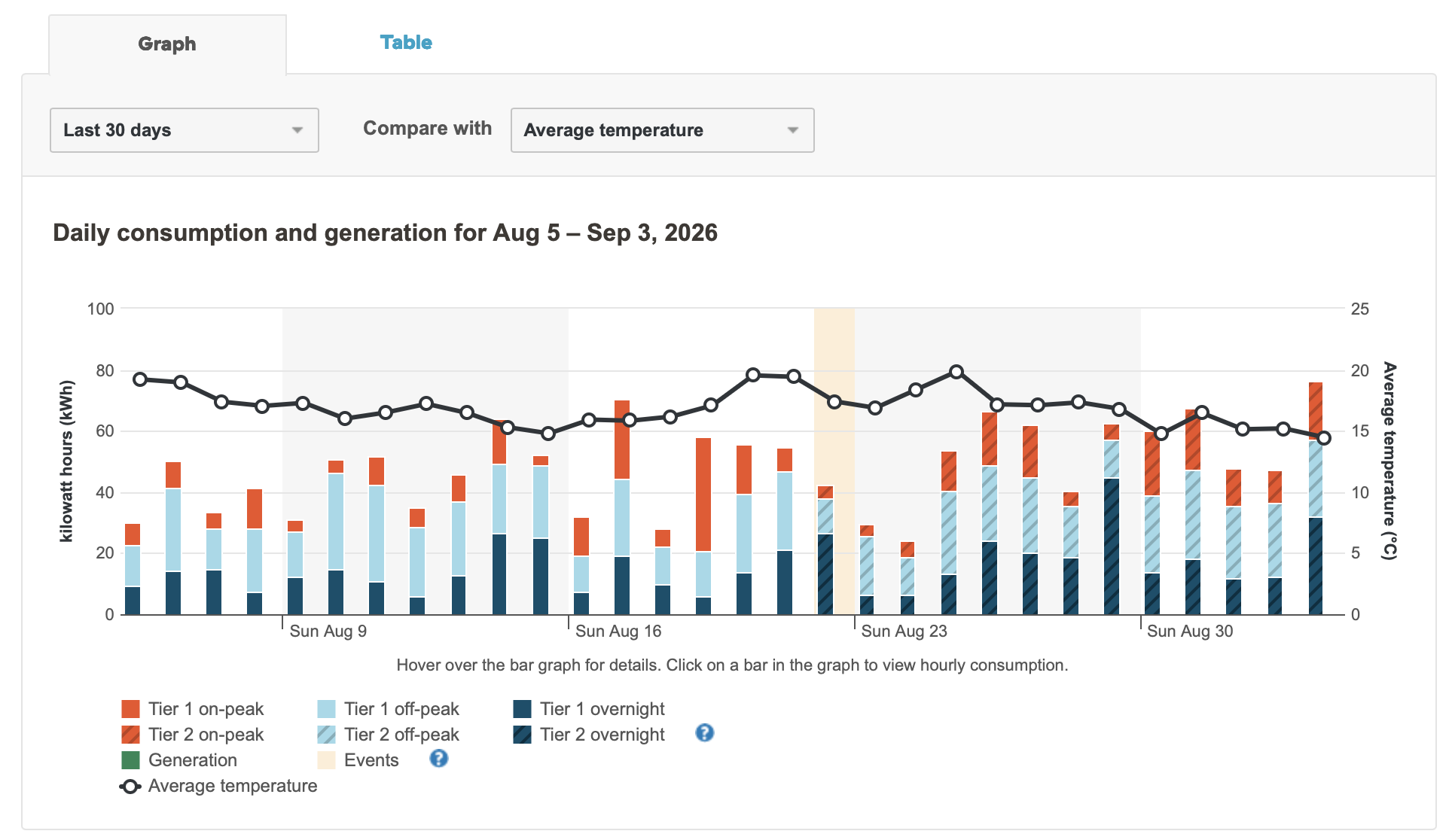
i don't know who at BC Hydro* is in charge of their Web UX in their user account website, but man they have had this consumption data in one form or another for a long time and now that they have brought in the option for time-of-day based billing, they've improved the graphing even more!
It easily and simply shows, on a daily basis, what rate I am paying at what time and how much.
Beautiful!!
I can also add in the average temperature over that time, and also compare total daily consumption between this year and last. Tier 1 applies to the first 644kWh used of the billing month. Last month the Tier 1 applied to exactly half my consumption.
On my rate schedule (in CAD) the off-peak prices are:
Tier 1: 11.87 cents/kWh
Tier 2: 14.08 cents/kWh
On peak surcharge: 5 cents/kWh
Overnight discount: -5 cents/kWh
As an example, last month I was charged $10.40 for on-peak usage but got a discount of $25.90 for off peak time. After all is said and done, my overall average power cost for the month was 12.67 cents/kWh. The majority of that overnight usage is:
EV charging.
Overnight dishwasher/laundry/dryer/hot water use.
Pond pumps.
*the Crown Corporation that generates and delivers most of the electricity in British Columbia Canada)
#electricity #BCHydro #BCPoli #power #conservation #demanduse
 @otakus_terebi@mastodon.social
Tras el último capítulo de hoy se ha anunciado que la 2 parte de la 3 Temporada de Mushoku Tensei se estrenarš en 2027
Web oficial: #MushokuTensei #anime #manga #novelaligera #無職転生
@luana@wetdry.worldWe should really get some kind of web browser with gamepad UI for Linux. It'd be useful for the Steam Deck, Steam Machine and for anyone that likes keeping their PC connected to their TV.
I got one of those PC 2.4GHz USB remote controllers, but having a TV-like or console-like UI would make using it a better experience too since in addition to the keyboard and gyroscope it does have many TV-like buttons such as directional controls and stuff. Some apps work ok with those since it maps to keyboard arrows keys, but still not the ideal UI for that.
@otakus_terebi@mastodon.social