 @michabbb@social.vivaldi.net
2026-08-17 02:56:01
 @catsalad@infosec.exchange
2026-07-15 18:57:05
RE: https://infosec.exchange/@catsalad/114758254385767289
Aaaaaaaaaaaaaaaaaa!! :neocat_scream_stare:

 @Techmeme@techhub.social
2026-08-07 18:01:25
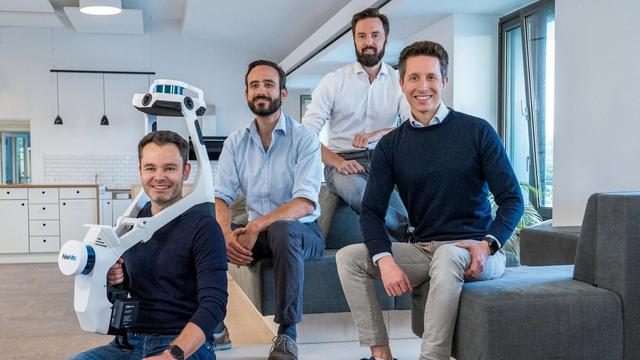
Munich-based NavVis, which provides enterprises with spatial data on factories, plants, buildings, and more, raised an $85M Series D led by The Jordan Company (Rahul Raj/EU-Startups)
https://www.eu-startups.com/2026/08/munich
 @michabbb@social.vivaldi.net
2026-09-16 05:29:09
📊 Measured tools/list payload: 10 tools 5,843 − 1,431 bytes (-75.5%), 40 tools 23,423 − 1,431 bytes (-93.9%), 100 tools 58,585 − 1,431 bytes (-97.6%). Rule of thumb: past 10-15 tools, a catalog pays off.
⚖️ Trade-off: search adds a round trip and batches have no loops or branching. Small servers with always-used tools should keep advertising directly; agents needing control flow still need a sandbox like
 @mxp@mastodon.acm.org
2026-08-10 23:19:19
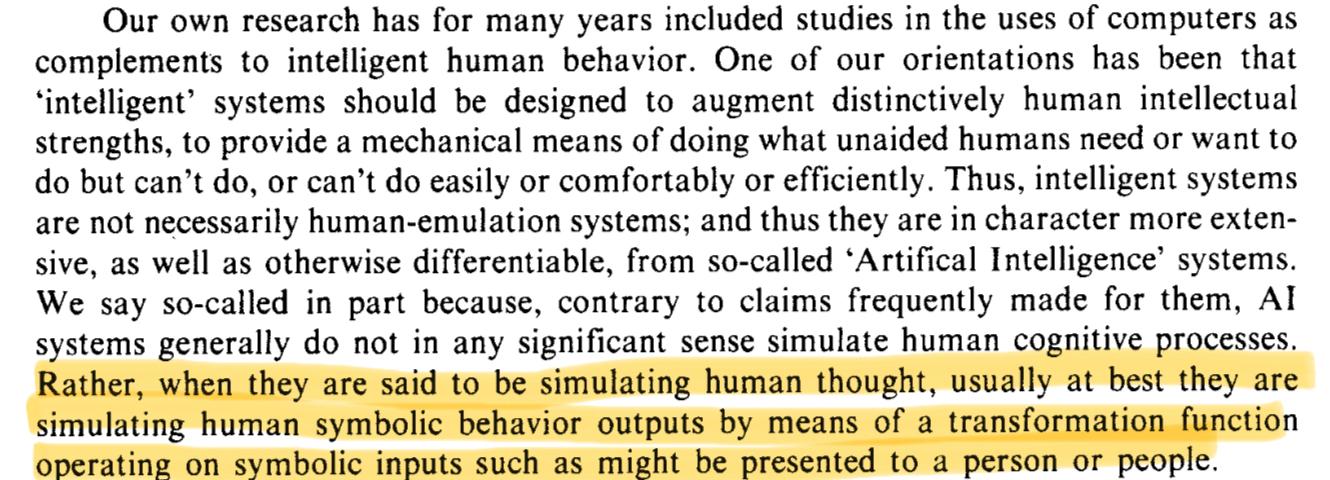
Skimming the Sedelow & Sedelow papers, I came across this passage, which is as true today as it was in 1978.
Sedelow, W. A., & Sedelow, S. Y. (1978). Formalized historiography, the structure of scientific and literary texts: Part I. some issues posed by computational methodology. Journal of the History of the Behavioral Sciences, 14(3), 247–263. https://
 @jom@social.kontrollapparat.de
2026-08-05 06:28:31
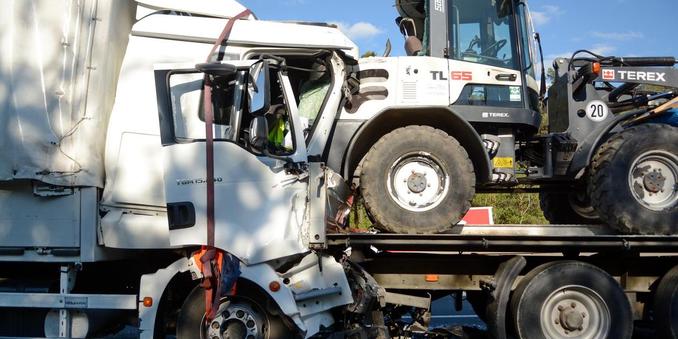
Stefan Pfeiffer, Leiter der Verkehrspolizei in Feucht, hat in seiner Laufbahn weit über 100 Verkehrstote auf den Autobahnen gesehen. Manche Unfälle lassen ihn nicht mehr los, die Angst fährt immer mit. Er fordert weitreichende Veränderungen. https://www.n…
 @arXiv_astrophGA_bot@mastoxiv.page
2026-09-09 11:30:55
Replaced article(s) found for astro-ph.GA. https://arxiv.org/list/astro-ph.GA/new
[3/4]:
- Characterising the Globular Cluster Systems of Three Local Group Dwarf Galaxies: NGC6822, NGC147 ...
McGill, Ferguson, Mackey, Crociati, Howell, Huxor, Irwin, McConnachie, Savino, Tanvir, Weisz
https://arxiv.org/abs/2608.28434 https://mastoxiv.page/@arXiv_astrophGA_bot/117189126930011519
- Magnetic Fields in Massive Star-forming Regions (MagMaR). IX. Radiative Torque Alignment and Disr...
Vineet Rawat, et al.
https://arxiv.org/abs/2609.03458 https://mastoxiv.page/@arXiv_astrophGA_bot/117211751382008296
- Rapid Growth of Intermediate-Mass Black Holes through Disk-induced Stellar Disruptions
Mengye Wang, Yiqiu Ma, Qingwen Wu, Boyuan Liu, Zijian Wang, Zhili Wang
https://arxiv.org/abs/2609.03701 https://mastoxiv.page/@arXiv_astrophGA_bot/117211765145858867
- Comparison of HMG and flat rotation velocities inferred from galaxy-galaxy weak lensing
Robert Monjo
https://arxiv.org/abs/2410.04258 https://mastoxiv.page/@arXiv_astrophCO_bot/113270920913210256
- Not-quite-primordial black holes
Wenzer Qin, Soubhik Kumar, Priyamvada Natarajan, Neal Weiner
https://arxiv.org/abs/2506.13858 https://mastoxiv.page/@arXiv_astrophCO_bot/114703627339774703
- Constraining fuzzy dark matter with the 21-cm power spectrum from Cosmic Dawn and Reionization
Shihang Liu, Yilin Liu, Bowen Peng, Mengzhou Xie, Zelong Liu, Bohua Li, Yi Mao
https://arxiv.org/abs/2508.10176 https://mastoxiv.page/@arXiv_astrophCO_bot/115031874791799781
- Using Strong Lensing to Detect Subhalos with Steep Inner Density Profiles
Kassidy E. Kollmann, James W. Nightingale, Mariangela Lisanti, Andrew Robertson, Oren Slone
https://arxiv.org/abs/2510.17956 https://mastoxiv.page/@arXiv_astrophCO_bot/115416896040400445
- Axion Constraints from White Dwarf Cooling in 47 Tucanae
Leesa Fleury, Alysa Obertas, Harvey Richer, Jeremy Heyl
https://arxiv.org/abs/2511.21676 https://mastoxiv.page/@arXiv_astrophSR_bot/115621063357293188
- Frequency shift and viewing direction variations in gravitational lensing
Miko{\l}aj Korzy\'nski, Mateusz Kulejewski
https://arxiv.org/abs/2601.13912 https://mastoxiv.page/@arXiv_astrophCO_bot/115932615538946873
- WIMP Dark Matter Searches in Reticulum II Using MeerKAT
Shibre Semane, Geoff Beck, Sphesihle Makhathini, Marco Regis, Gianni Bernardi
https://arxiv.org/abs/2603.06385 https://mastoxiv.page/@arXiv_astrophCO_bot/116198370267558665
toXiv_bot_toot
@michabbb@social.vivaldi.net2026-09-11 07:38:00
📦 Ships 68 specialized agents, 291 skills and 94 commands covering planning, build repair, code review, security, architecture, docs, frontend, data and ML work
🧪 #TDD becomes a gated RED − GREEN − REFACTOR flow with evidence, and a fresh-context reviewer checks the changes instead of the same context grading its own code
@michabbb@social.vivaldi.net2026-07-05 10:14:12
📋 #Kanban board moves tasks through BACKLOG − INBOX − ACTIVE − DONE with real-time agent feedback, plus Routines for cron-style recurring tasks and persistent per-project Memory
@michabbb@social.vivaldi.net2026-08-22 23:47:40
📦 Three ready-made workflows on branches: two-pack (coder − cleaner) for quick backend work, four-pack (specifier − coder − refactorer − architect) with Gherkin specs, six-pack adding cleaner, hardender and QA as separate quality gates