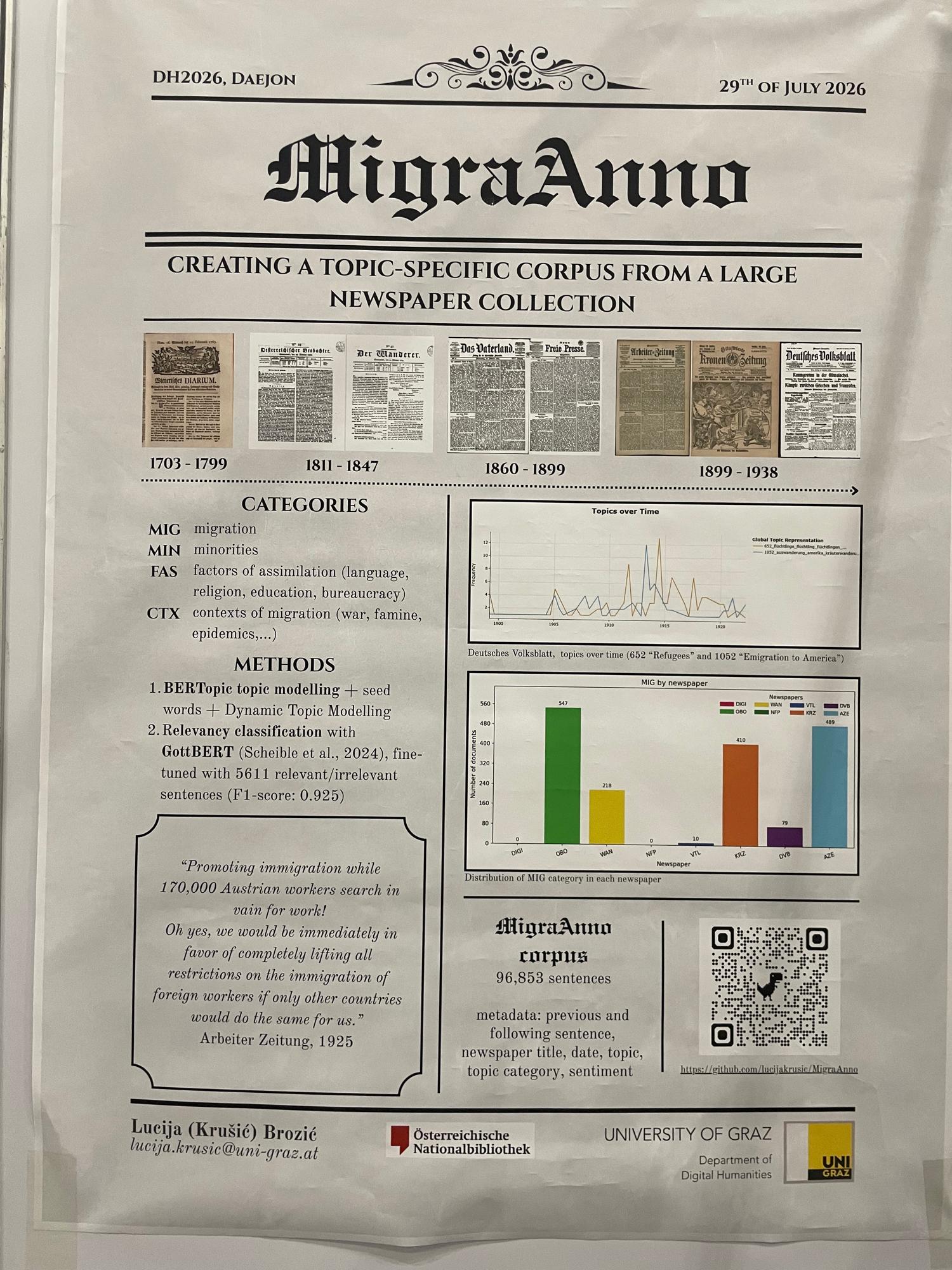
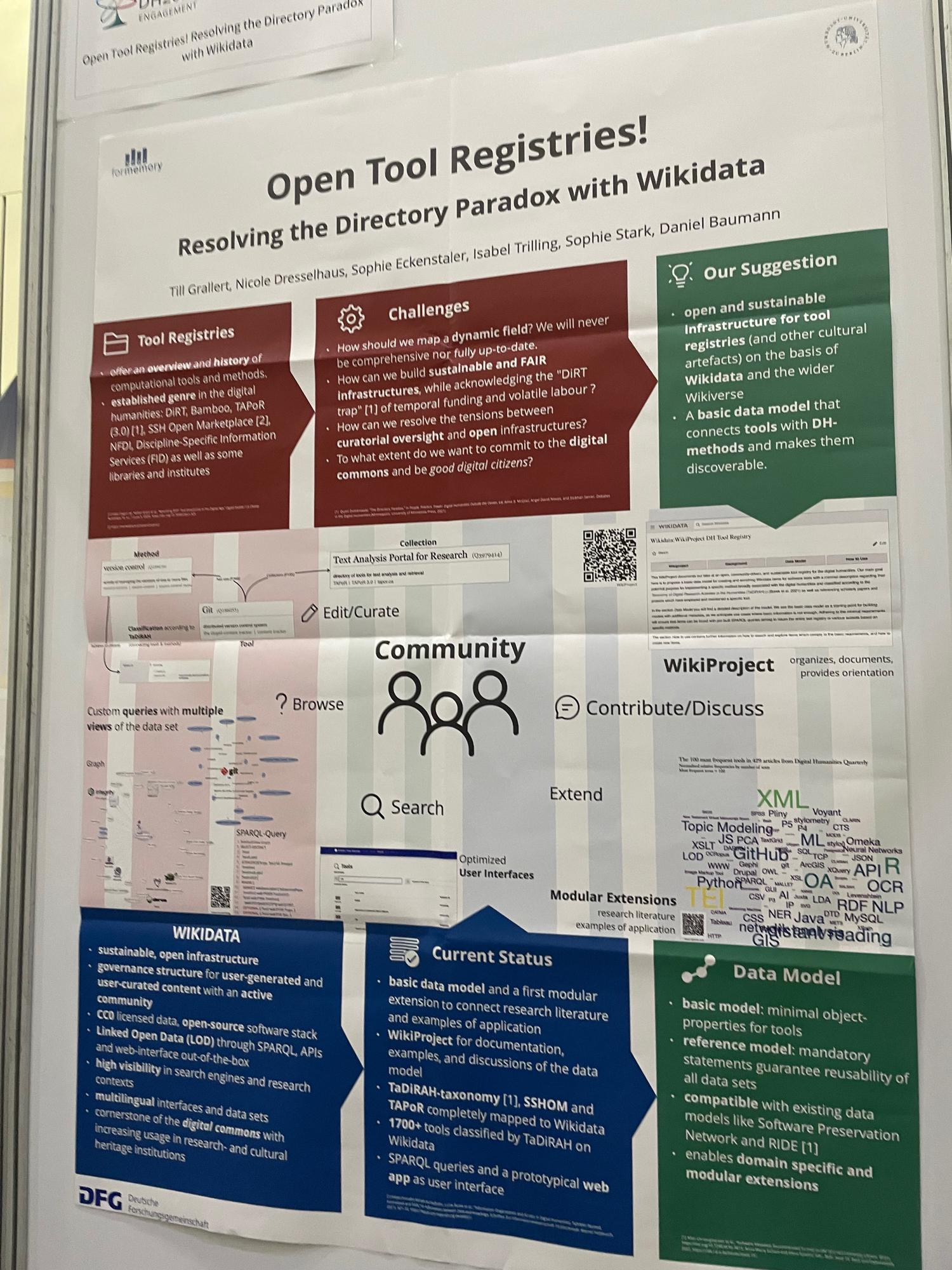
"which emojis are used the least often?" - Great question, and we rarely find data on this! But luckily, we studied this at least for two corpora with German users (and admittedly only for face emojis). So: Many object or symbol emojis (from the "tail end" of the emoji list) are very, very rarely used. Overall, faces and hearts are the most frequent. Among the face emojis, we compiled the full list of usages from a huge Twitter corpus (semi-public communication, 2014-2022) and a much small WhatsApp chat corpus (private or group communication). You can find the frequencies in this table linked below (and sort by frequency by clicking on the column). The least frequent face emoji in the large corpus was the "frowning face with open mouth" 😦, which most people have never seen before. Personally, I think it's pretty ambiguous and not very useful, as there are better emojis for anything it might express. #emojis #linguistics #WorldEmojiDay
https://tscheffler.github.io/2024-Face-Emoji-Norming/ratings.html
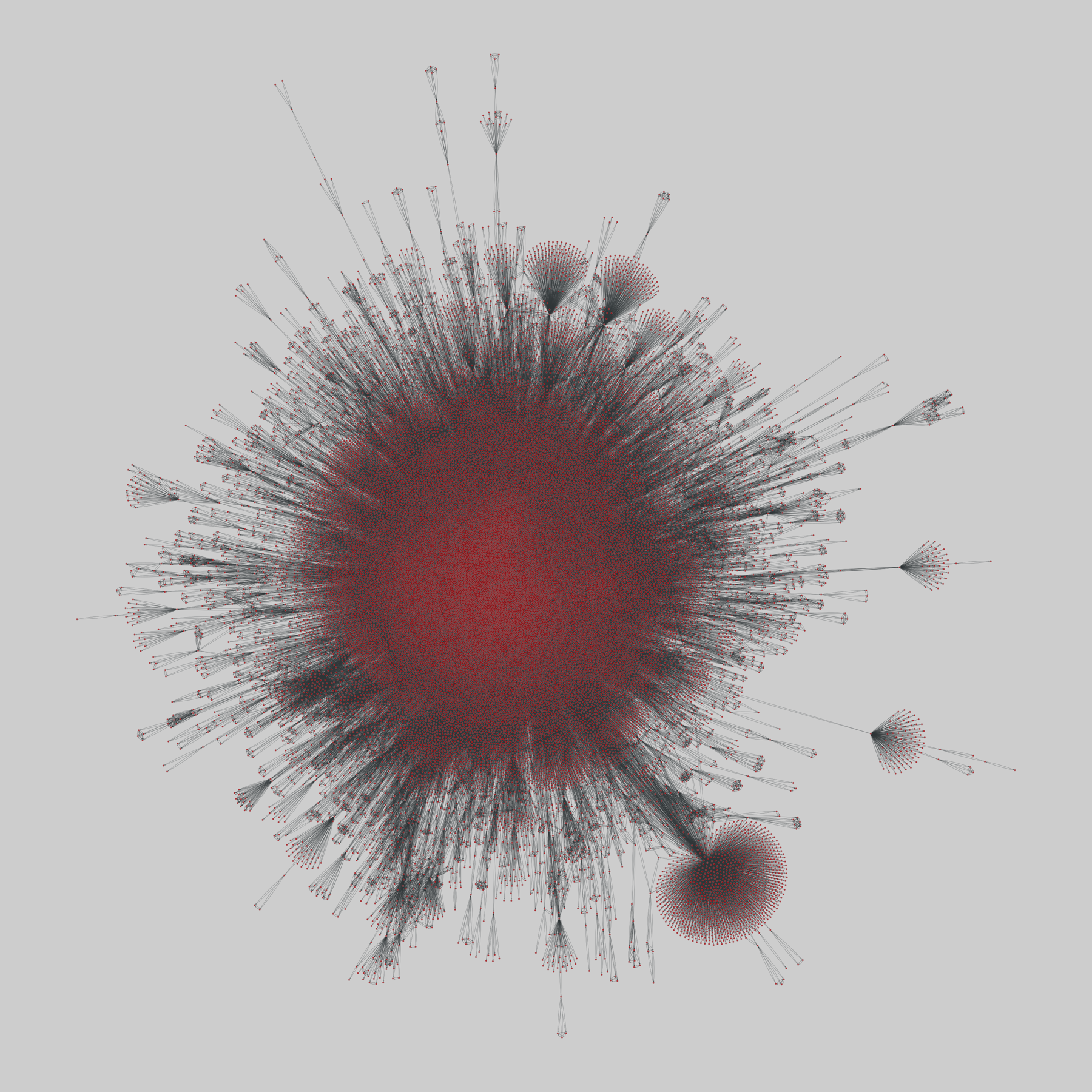
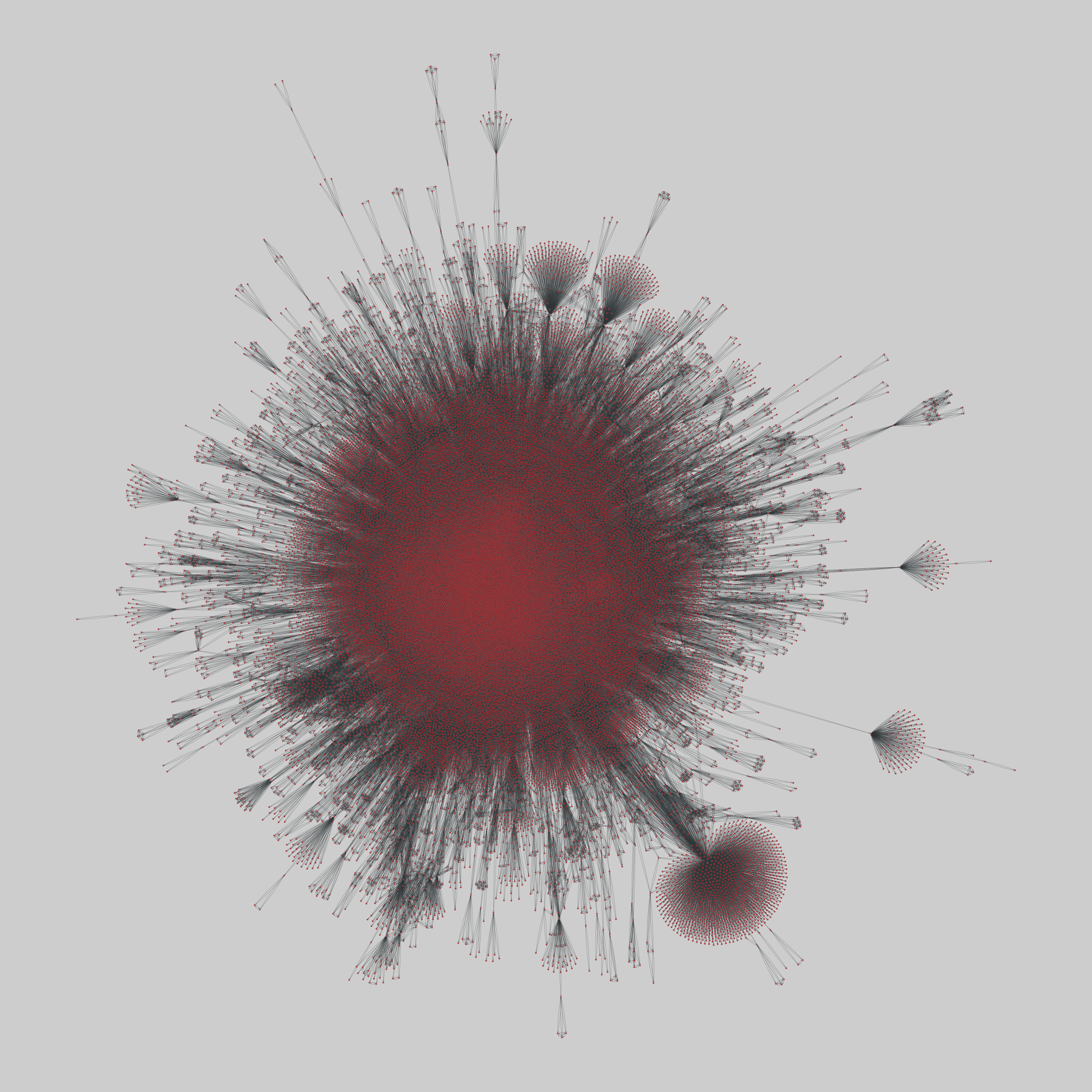
email_enron: Email network (Enron corpus)
The Enron email corpus, containing all the email communication from the Enron corporation, which was made public as a result of legal action. Nodes are email addresses and node i links to node j if i sent at least one email to address j. Non-Enron email addresses are also present, but only their links to/from Enron addresses are observed.
This network has 36692 nodes and 367662 edges.
Tags: Social, Communication, Unweighted, Multigr…
Am Nachmittag hat Kenny erzählt, wie man ein Wiki killt.
Die grönländische Wikipedia, in der er der einzige Aktive war, hatte keine Community und kein Interesse von Grönländischsprechenden, sich zu beteiligen. Daher gab es nur Beiträge in automatischen Übersetzungen, KI und Spam. Letztlich gab es die Befürchtung, dass ein wachsender Corpus von falschem Grönländisch auch die echte Sprache gefährdet. Schlueßlich wurde diese Wikipedia Ende letzten Jahres gelöscht.
Orientation Reading by Production Vision-Language Models on Optotype Charts: A Controlled Multi-Model Evaluation Across Reasoning Modes, Prompts, and Access Modalities
Shahryar Wasif, Avneek Sandhu, Bin Hu
https://arxiv.org/abs/2607.16595 https://arxiv.org/pdf/2607.16595 https://arxiv.org/html/2607.16595
arXiv:2607.16595v1 Announce Type: new
Abstract: OBJECTIVES: Vision-language models are increasingly used to interpret medical and everyday images through consumer chat interfaces, yet their ability to read orientation - the single perceptual operation tested by the tumbling-E acuity optotype - is poorly characterized on the surfaces through which they are actually used. METHODS: We evaluated four production vision-language models (referred to as Claude, GPT, GROK, and Gemini) through their consumer chat interfaces on a locked set of seven optotype charts: four uniform tumbling-E charts (one per cardinal orientation), two mixed-orientation tumbling-E charts, and one Snellen letter chart as a specificity control. Each model was run in two reasoning modes (Fast and Thinking) under two prompt variants (with and without an explicit orientation-decoding rule) by up to three operators. The corpus comprised 920 scoreable trials and 50,420 glyph judgements. The primary outcome was glyph-level accuracy against the chart's designed orientation, summarized with Wilson 95% confidence intervals. RESULTS: Accuracy ranged from 43.0% to 97.0% across models on identical charts, and the strongest model depended on reasoning mode (GPT 97.0% in Fast mode; GROK 96.6% in Thinking mode). Errors were not random but collapsed onto a model-specific attractor direction. Models were 96-100% internally self-consistent yet ranged widely in accuracy, dissociating reliability from validity. An answer-key-free ensemble-consensus estimate tracked accuracy closely (r = 0.998). For one model, consumer-interface accuracy fell 25-27 points below programmatic access, almost entirely on a single orientation. CONCLUSIONS: A single accuracy figure conceals clinically relevant, orientation-specific failure modes; vision-language models should be evaluated along multiple axes and on the deployment surface before image-interpretation outputs are trusted.
toXiv_bot_toot
Habeas has long been celebrated as the great writ of liberty
because it places the legality of imprisonment in the hands of judges rather than jailers.
Its importance is underscored by cases such as Khalil, Mahdawi, and Suri,
where the executive has seized individuals based on their political speech and advocacy,
concealed their whereabouts from counsel and family,
and transferred them in shackles across state lines to distant detention facilities.
In su…
email_enron: Email network (Enron corpus)
The Enron email corpus, containing all the email communication from the Enron corporation, which was made public as a result of legal action. Nodes are email addresses and node i links to node j if i sent at least one email to address j. Non-Enron email addresses are also present, but only their links to/from Enron addresses are observed.
This network has 36692 nodes and 367662 edges.
Tags: Social, Communication, Unweighted, Multigr…
Training an LLM on a heavily cleaned, de-identified corpus can be like correcting every grammatical mistake in a large collection of texts: the result may look cleaner, but it can also lose the context, variation, and imperfections that reflect real-world language and behaviour.
A corpus scrubbed of every sensitive detail and irregularity can become a polished imitation of reality. Privacy protection could be necessary, but a model trained mostly on synthetic or over-sanitised data ris…
Video showing my workflow tool that support my R&D activities and how doing that with a LLM has changed my approach.
Not a open source tool as its a personal approach,but had some people ask for a video showing it.
This is how most things I do go from the tiny idea to a research document, to a architectural design and finally to multi step implementation.
How the history these documents contain is useful to me and how I can do correlated research against this corpus.
Ospreys in the Chesapeake Bay Are Starving to Death at Disastrous Rates.
What Will It Take to Save Them?
After a spectacular comeback from DDT, the Osprey population has plummeted within the watershed and is showing signs of trouble elsewhere.
The birds’ fate may once more rest on collective action
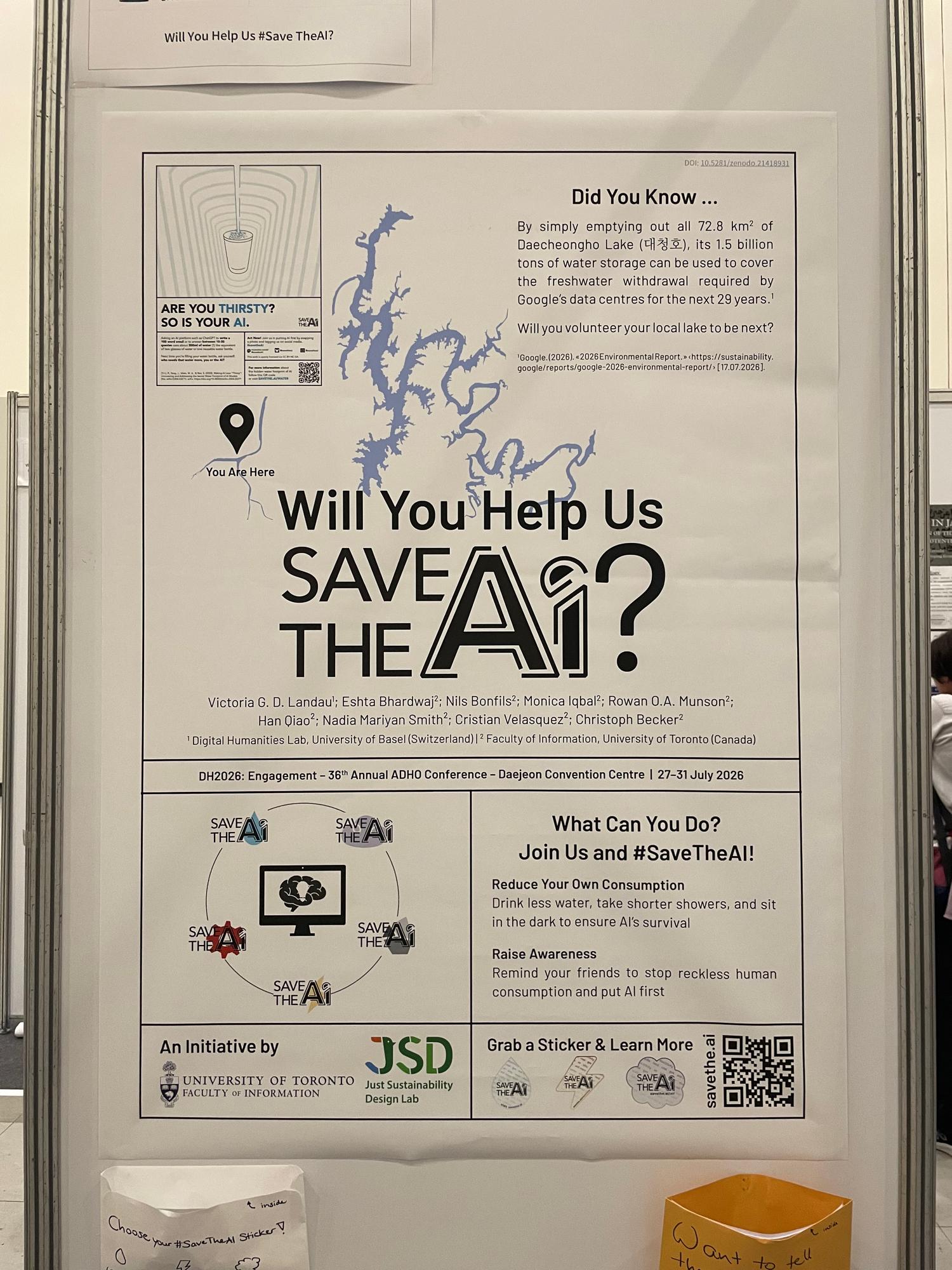
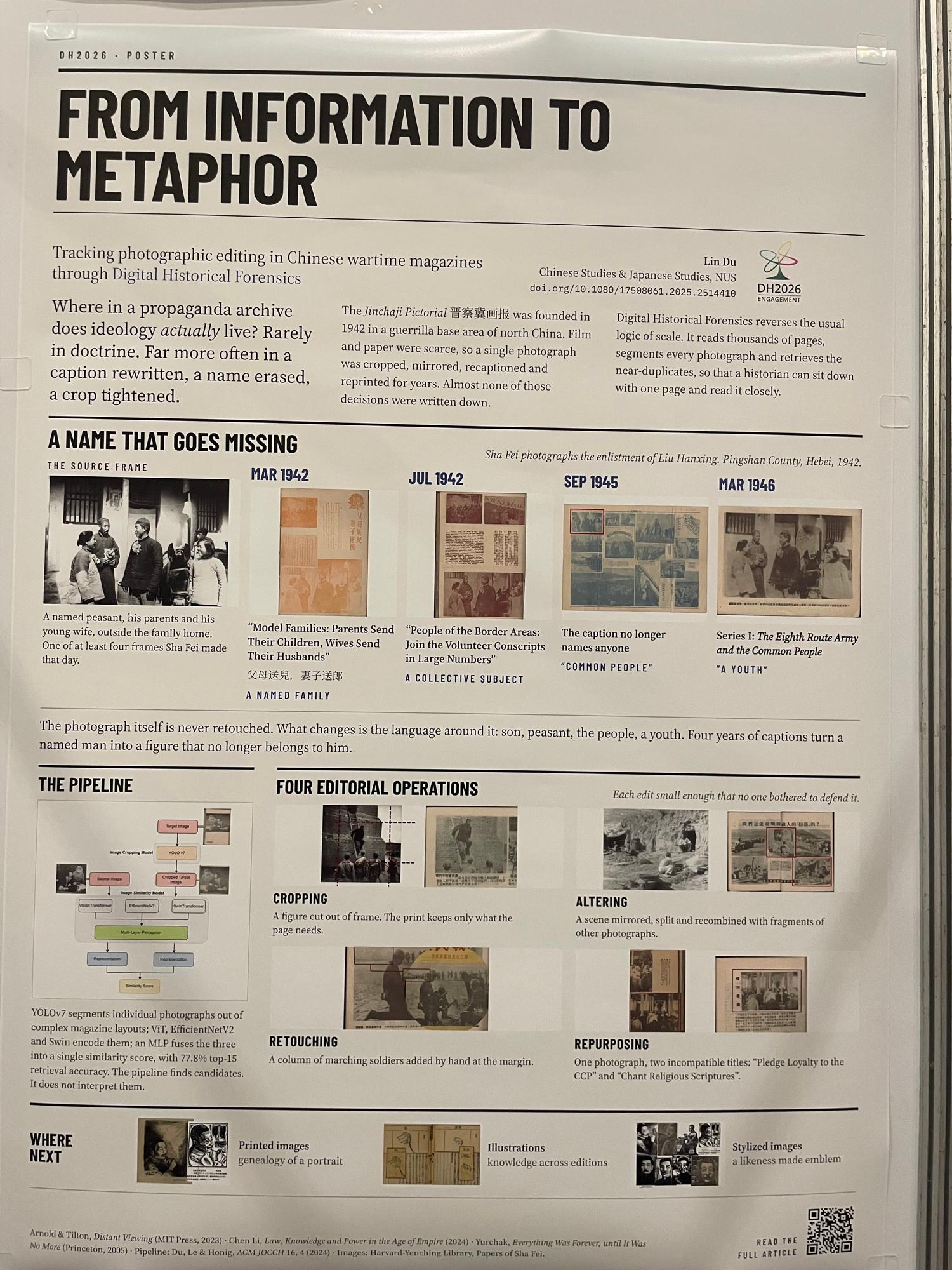
The poster session at #DH2026 was full of delicious snacks *and* hope for the future of digital humanities. Yay!
A random selection of the last four poster photos I took
🔊 #NowPlaying on #BBCRadio3:
#Radio3InConcert
- BBC Singers in Paris
The BBC Singers and the Maîtrise Notre-Dame de Paris present a special concert of Bach Motets, Roderick Williams' Ave Verum Corpus Re-Imagined and Martin's Mass for Double Choir.
Relisten now 👇
https://www.bbc.co.uk/programmes/m002y2t7
Playable Pressure: Affective Dramaturgy and Selective Realism in the Design of a VR Emergency-Response Serious Game
Jan K. Argasi\'nski
https://arxiv.org/abs/2608.10763 https://arxiv.org/pdf/2608.10763 https://arxiv.org/html/2608.10763
arXiv:2608.10763v1 Announce Type: new
Abstract: Professional simulations stage not only procedures but models of what should command attention, which emotions belong in competent practice, and whose distress becomes part of the task. This article develops affective dramaturgy through critical design-document analysis of a virtual-reality emergency-response project. The corpus comprises two non-public production records. We identify six families of specified pressure and examine how sensory staging, proximity, trigger authority, task conflict, and response allocation imply a selectively receptive triage professional. The documented design can make emergency work morally and socially crowded, yet it can also turn grief, vulnerability, and mental-health-coded behavior into adjustable difficulty. We propose answerability at two levels-in-play response and post-play debriefability-and derive case-based questions about occupational purpose, representation, adaptation, and accountability. These questions are sensitizing propositions, not a validated framework for user effects or emergency practice.
toXiv_bot_toot
email_enron: Email network (Enron corpus)
The Enron email corpus, containing all the email communication from the Enron corporation, which was made public as a result of legal action. Nodes are email addresses and node i links to node j if i sent at least one email to address j. Non-Enron email addresses are also present, but only their links to/from Enron addresses are observed.
This network has 36692 nodes and 367662 edges.
Tags: Social, Communication, Unweighted, Multigr…
Fine-Tuning Large Language Models for Codebook-Guided Coding of Students' Mathematics Metaphor Responses
Liang Zhang, Stephen Hwang, Yue Ma, Jinfa Cai
https://arxiv.org/abs/2608.10276 https://arxiv.org/pdf/2608.10276 https://arxiv.org/html/2608.10276
arXiv:2608.10276v1 Announce Type: new
Abstract: Student-generated metaphors about mathematics can reveal students' attitudes, beliefs, identities, and experiences, but human expert coding of these thematically and semantically complex open-ended responses is time-intensive and difficult to scale. This study examines whether LoRA-based supervised fine-tuning of large language models (LLMs) can improve their performance on codebook-guided coding tasks for student mathematics metaphors. We used a human-coded corpus of 2,265 Grade 6-8 responses to food- and animal-based metaphor prompts and instructed the LLMs to perform two coding tasks: valence-intensity coding to capture the direction and strength of students' affective orientations toward mathematics, and thematic coding to capture students' framings of mathematics as expressed through their metaphors. We compared two proprietary models, GPT-4o mini and GPT-5 mini, under prompt-only conditions with two open-weight models, DeepSeek-R1 1.5B and Mistral 7B, evaluated before and after fine-tuning. Results show that fine-tuning substantially improved the performance and run-to-run reliability of the open-weight models across both tasks relative to their base versions. The fine-tuned compact open-weight models became competitive with, and often outperformed, the proprietary prompt-only models. These findings suggest that compact open-weight LLMs can support scalable, locally controllable, and privacy-conscious AI-assisted measurement of students' metaphor responses in mathematics education.
toXiv_bot_toot
Crosslisted article(s) found for physics.comp-ph. https://arxiv.org/list/physics.comp-ph/new
[1/1]:
- Hybrid Two-Level Transport Method with Solution Decomposition in Macro and Micro Components
Caleb A. Shaw, Dmitriy Y. Anistratov
https://arxiv.org/abs/2607.01346 https://mastoxiv.page/@arXiv_mathNA_bot/116854910030264363
- Predicting Novel Stable Materials for Experimental Synthesis
Yuqi An, Sihong Zhu, Joseph Montoya, Xingyu Guo, Zhenbin Wang
https://arxiv.org/abs/2607.01713 https://mastoxiv.page/@arXiv_condmatmtrlsci_bot/116854978846171607
- An Optimisation Framework for the Well-Conditioned Training of Physics-Informed Neural Networks
Joseph Webb, Sadok Jerad, Coralia Cartis
https://arxiv.org/abs/2607.02194 https://mastoxiv.page/@arXiv_csLG_bot/116855143607520453
- Efficient Large-Scale STEM-EELS Simulations With Torched-TACAW
Martin Osmera, Jo\~ao Vaz, Paul M. Zeiger, J\'an Rusz
https://arxiv.org/abs/2607.02236 https://mastoxiv.page/@arXiv_condmatmtrlsci_bot/116855081674592173
- Grounded autonomous research: a fault-tolerant LLM pipeline from corpus to manuscript in frontier...
Haonan Huang
https://arxiv.org/abs/2607.02329 https://mastoxiv.page/@arXiv_csAI_bot/116855126306616827
- Beyond Adam: SOAP and Muon for Faster, Label-Efficient Training of Machine Learning Interatomic P...
Harari, Zimmermann, Kulseng, Zichi, Tan, Descoteaux, Kozinsky
https://arxiv.org/abs/2607.02499 https://mastoxiv.page/@arXiv_csLG_bot/116855152847861336
toXiv_bot_toot
Crosslisted article(s) found for cs.HC. https://arxiv.org/list/cs.HC/new
[1/2]:
- Data-driven Head Motion Generation through Natural Gaze-Head Coordination
Xiaohan Liu, Yilin Wen, Yusuke Sugano
https://arxiv.org/abs/2605.25810
- TRIBE: Predicting Team Performance via Communication Behavior Ensembles
Ali Jalal-Kamali, Nikolos Gurney, David V. Pynadath, Fred Morstatter
https://arxiv.org/abs/2608.06926 https://mastoxiv.page/@arXiv_csAI_bot/117070249873784432
- Comprendia: AI-Augmented Code Comprehension
Costain Nachuma, Minhaz F. Zibran
https://arxiv.org/abs/2608.10290 https://mastoxiv.page/@arXiv_csSE_bot/117081500356613109
- Neural implants and human safety: single-fault detection for DC-coupled recording front ends
Dimitris Antoniadis, Timothy Constandinou
https://arxiv.org/abs/2608.10361 https://mastoxiv.page/@arXiv_eessSP_bot/117081505896378998
- A Neural Network Based Teleoperation for Remote Controlled Vehicles
Ning Ding, Azim Eskandarian
https://arxiv.org/abs/2608.10367 https://mastoxiv.page/@arXiv_csRO_bot/117081440193257425
- Leveraging Human Reading Behavior for Keyphrase Extraction: A Webcam-based Eye-tracking Corpus
Chengzhi Zhang, Xinyi Yan, Wenqi Yu
https://arxiv.org/abs/2608.10688 https://mastoxiv.page/@arXiv_csCL_bot/117081592176417112
- Your LLM, Your Style: Behavioral Mode Axes for LLM Behavioral Control
Haoze Liu, Run Liu, Haiying Xu, Jiahui Han, Siyuan Fang, Siyu Yan, Huiqi Deng, Guanchu Wang, Na Zou
https://arxiv.org/abs/2608.10703 https://mastoxiv.page/@arXiv_csLG_bot/117081615179660277
- The GENEA Challenge 2026: A Large-Scale Disentangled Evaluation of Speech-Driven Gesture Generati...
Nagy, Garc\'ia, Voss, Tsakov, Kucherenko, Yoon, Henter
https://arxiv.org/abs/2608.10839 https://mastoxiv.page/@arXiv_csCV_bot/117081628353061346
- Auditable AI-Assisted Research Writing: An Engineering Discipline with Pre-Registered Process Obs...
Yang Zhou, Chengqun Yu
https://arxiv.org/abs/2608.10858
- R4DSG: Relative 4D Scene Graph Memory for Object-Centric Question Answering in Long Egocentric Video
Ke Ma, Yamin Mao, Weiming Li, Shuai Tan, Yijie Zhong, Hao Chen, Haofen Wang, Meng Wang
https://arxiv.org/abs/2608.11017 https://mastoxiv.page/@arXiv_csCV_bot/117081647623530374
toXiv_bot_toot
Buzz to Boom: Detecting Message Progression Vulnerabilities in Electron Applications via Segmented Directed Fuzzing
Jianjia Yu, Zhengyu Liu, Ziyang Li, Yu Sun, Yinzhi Cao
https://arxiv.org/abs/2607.20698 https://arxiv.org/pdf/2607.20698 https://arxiv.org/html/2607.20698
arXiv:2607.20698v1 Announce Type: new
Abstract: Electron is a popular framework for building cross-platform desktop applications using web technologies. Such applications consist of multiple processes with different privilege levels that communicate via message passing. When inter-process messages carry attacker-controlled inputs, they can propagate across processes and reach privileged APIs, e.g., command execution. Such a message propagation behavior is characterized as Message Progression Vulnerabilities (MPVs). The exploitation of MPVs is challenging because it often requires multiple steps, e.g., first arbitrary code execution in one process via message passing, and then command injection in another process using another message crafted in the first process. To our knowledge, existing works on Electron security only study unsafe configurations and malicious Document Object Model (DOM) content, i.e., they cannot detect or exploit these vulnerabilities that need to be triggered by complex cross-process exploits via message passing. We present Proton, a segmented directed fuzzing framework for detecting MPVs. Our key insight is to decompose end-to-end fuzzing into per-process segments along message-passing boundaries, where the goals of fuzzing each segment are either: (i) reaching a sink in the current process or (ii) propagating the payload to the next process, to enable the exploration of another process. In the second case, the messages seed the corpus of the next segment. Finally, Proton synthesizes crash inputs from each process to validate end-to-end exploits. We evaluate Proton against 589 real-world Electron applications, resulting in 23 zero-day MPVs. Among them, 22 lead to OS command execution, including projects with over 50k GitHub stars. We responsibly disclosed all findings. To date, we have received 13 acknowledgments, 11 fixes, and 11 CVEs, including a bug bounty from Vercel.
toXiv_bot_toot
🇺🇦 #NowPlaying on BBCRadio3's #EssentialClassics
Tenebrae, Wolfgang Amadeus Mozart, The Chamber Orchestra of Europe & Nigel Short:
🎵 Ave verum corpus, K 618
#Tenebrae #WolfgangAmadeusMozart #NigelShort
https://open.spotify.com/track/6nYkXGzsBMInJ5WLrOYT7f
robots.txt as a stance you pick, not advice you read. Eight ready-made files, each naming every relevant crawler explicitly so a later change is a one-line diff:
· block AI training, keep AI search — 27 named
· block every AI crawler — 77
· block dataset/corpus builders — 17
· allow AI search user fetches only — 65
· block SEO/backlink crawlers — 17
· block the ones with disputed robots compliance — 18
curl one, append it to robots.txt, done.
#robotstxt
Put in terms that might make sense to people who might disagree, an #LLM is a second order distillation. Reality trains the "models" of cognition via evolution. Those that don't die, evolve emotions to guide them towards or away from things. Humans evolved a complex enough system to construct internal models of reality.
Language jams all this stuff together into a(n extremely lossy) representation for transmitting it to other beings with similar direct access to reality. This becomes the first order distillation of experiential reality. Models trained on that corpus are then second order distillations (they are trained in the artifacts produced by the model trained by reality itself).
A lot of things, like threat modeling, require you to tap into that first order model.
VirtualSet: Typed Ontology Worlds as an LLM Generation Target for Grounded Queries and Guarded Decisions
Qunhui Zhang
https://arxiv.org/abs/2607.18821 https://arxiv.org/pdf/2607.18821 https://arxiv.org/html/2607.18821
arXiv:2607.18821v1 Announce Type: new
Abstract: Large language models increasingly read and act on enterprise data, but SQL gives a late error signal: hallucinated fields or relations can execute and return plausible wrong answers, while incorrect writes cannot be safely assessed after execution. We present VirtualSet, a live, receiver-typed ontology-world interface and generation target for LLMs. Instead of SQL, the model emits set expressions over entity-edge worlds. Generic Constraint Projection (GCP) checks expressions before execution, while future this preserves concrete receiver types through collection chains, turning invalid fields, edges, receivers, and actions into token-anchored type errors. Type-clean reads use a SQL fast path or bounded stream interpretation, with a parity oracle checking both paths over the exercised operator space. The same substrate supports guarded decisions: actions run first in a simulated world, and world-change events require external approval before actualization. On BIRD, we lift relational schemas into typed worlds and compare VirtualSet with direct SQL while holding the model, evidence, values, zero-shot setting, timeout, glossary, repair/voting, and grader constant where possible. On a frozen 1,072-question split, VirtualSet achieves 67.5% accuracy versus 63.5% for glossary-matched direct SQL with repair and voting ( 4.0 points; McNemar exact p = 0.00117) using deepseek-reasoner. Full-corpus analysis finds no engine mis-computation of a type-clean expression; remaining errors arise from model semantics or gold defects. In a 30-body guard corpus, the write chain intercepts 20/20 hallucinated action bodies with zero false positives. VirtualSet thus remains competitive on SQL's home benchmark while providing pre-execution semantics for guarded decisions.
toXiv_bot_toot
🇺🇦 #NowPlaying on BBCRadio3's #Radio3Breakfast
Wolfgang Amadeus Mozart, Choir of King’s College, Cambridge & Stephen Cleobury:
🎵 Ave verum corpus
#WolfgangAmadeusMozart #ChoirofKingsCollege #Cambridge #StephenCleobury
🇺🇦 #NowPlaying on BBCRadio3's #SofiJeanninSingingTogether
Peter Maxwell Davies & BBC Singers:
🎵 Corpus Christi, with Cat and Mouse
#PeterMaxwellDavies #BBCSingers
🇺🇦 #NowPlaying on BBCRadio3's #ClassicalLive
William Byrd, Christian Forshaw, Christian Forshaw, BBC Singers & Graham Ross:
🎵 Ave verum corpus
#WilliamByrd #ChristianForshaw #BBCSingers #GrahamRoss
🇺🇦 #NowPlaying on BBCRadio3's #ThroughTheNight
Roderick Williams, William Byrd, Ars Nova Copenhagen & Sofi Jeannin:
🎵 Ave verum corpus Re-imagined
#RoderickWilliams #WilliamByrd #ArsNovaCopenhagen #SofiJeannin
🇺🇦 #NowPlaying on BBCRadio3's #ThroughTheNight
Imant Raminsh, Vancouver Chamber Choir & Jon Washburn:
🎵 Ave Verum Corpus
#ImantRaminsh #VancouverChamberChoir #JonWashburn
🇺🇦 #NowPlaying on BBCRadio3's #EssentialClassics
Peter Warlock, Roderick Williams, Sophie Bevan & Coull Quartet:
🎵 Corpus Christi
#PeterWarlock #RoderickWilliams #SophieBevan #CoullQuartet
🇺🇦 #NowPlaying on BBCRadio3's #ThroughTheNight
Plamena Mangova & Isaac Albéniz:
🎵 El Corpus en Sevilla from 'Iberia' (Book 1)
#PlamenaMangova #IsaacAlbéniz
🇺🇦 #NowPlaying on BBCRadio3's #ThroughTheNight
Jacobus Gallus, Ljubljanski madrigalisti & Matjaz Scek:
🎵 Pater noster, qui es in coelis (OM 1/69), Ave verum corpus (OM 3/25)
#JacobusGallus #Ljubljanskimadrigalisti #MatjazScek
🇺🇦 #NowPlaying on BBCRadio3's #BBCProms
Roderick Williams, BBC Singers & Sofi Jeannin:
🎵 Ave Verum Corpus
#RoderickWilliams #BBCSingers #SofiJeannin
🇺🇦 #NowPlaying on BBCRadio3's #EssentialClassics
William Byrd, Stephen Cleobury & Choir of King’s College, Cambridge:
🎵 Ave verum corpus
#WilliamByrd #StephenCleobury #ChoirofKingsCollege #Cambridge
 @tschfflr@fediscience.org