Albert Invent, which launched an AI model trained on chemical patents and data about 15M molecules, raised a $55M Series B, a source says at a $340M valuation (Rashi Shrivastava/Forbes)
https://www.forbes.com/sites/the-prompt/20
I continue to be baffled by people who say LLMs are good at writing code.
Putting aside (I know, we shouldn’t) the ethics, speaking purely about the outcomes:
For the past 10 months, at my current client the vast majority of the code I see, and even some experiments of my own, have been LLM generated.
And it’s just… shit?
So verbose, such poor use of language idiosyncrasies favoring “brute” solutions. Like it’s just not anything I could ever ship with a straight face…
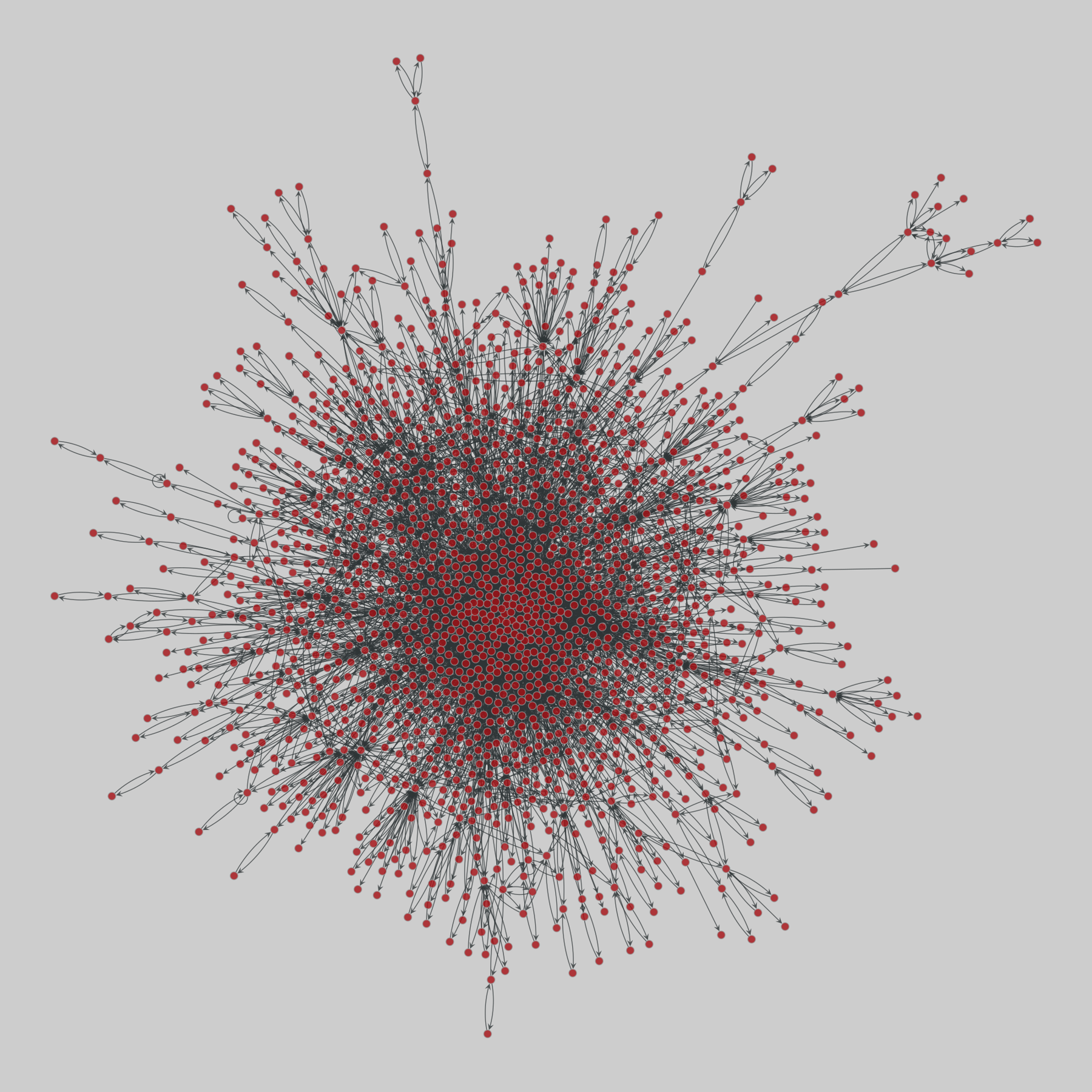
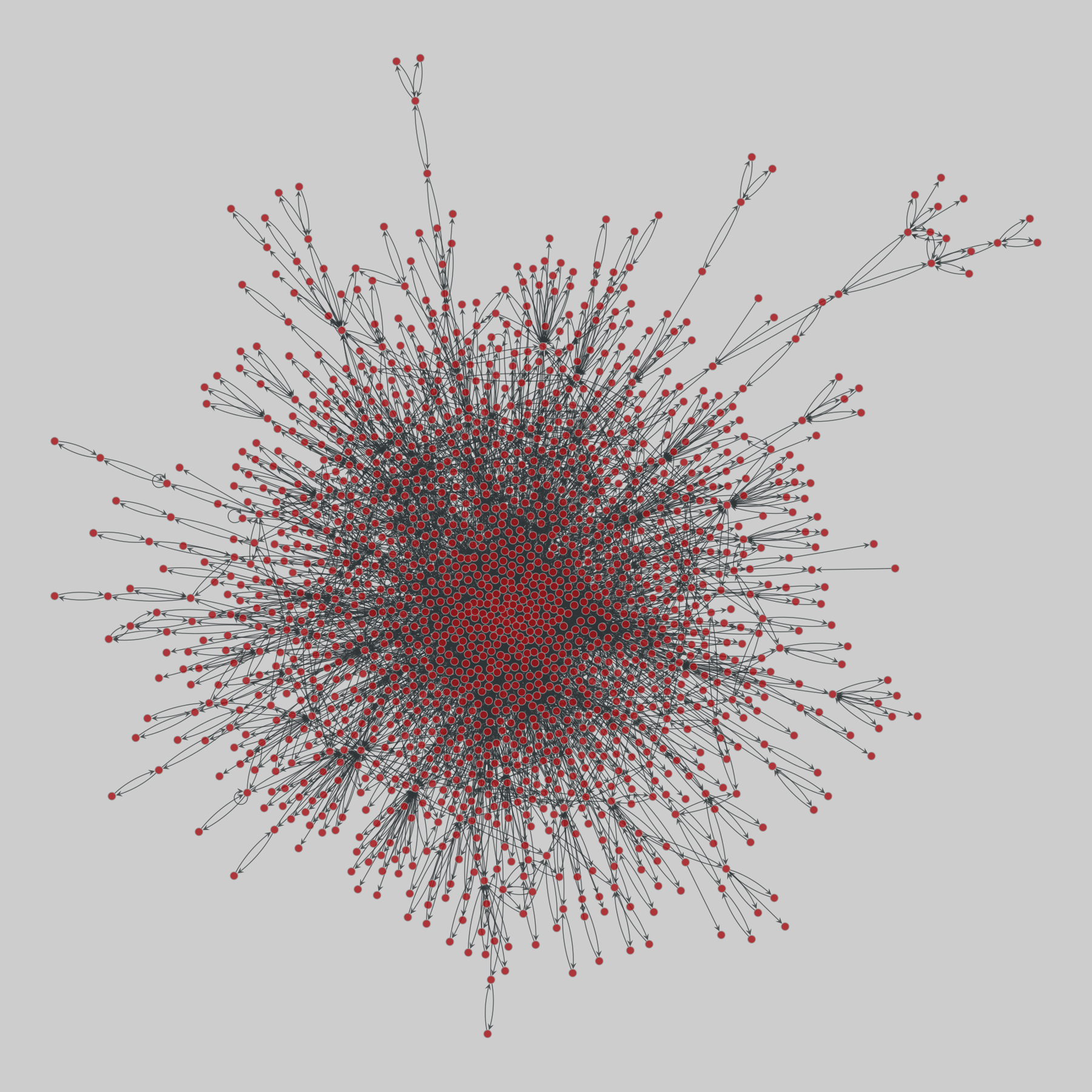
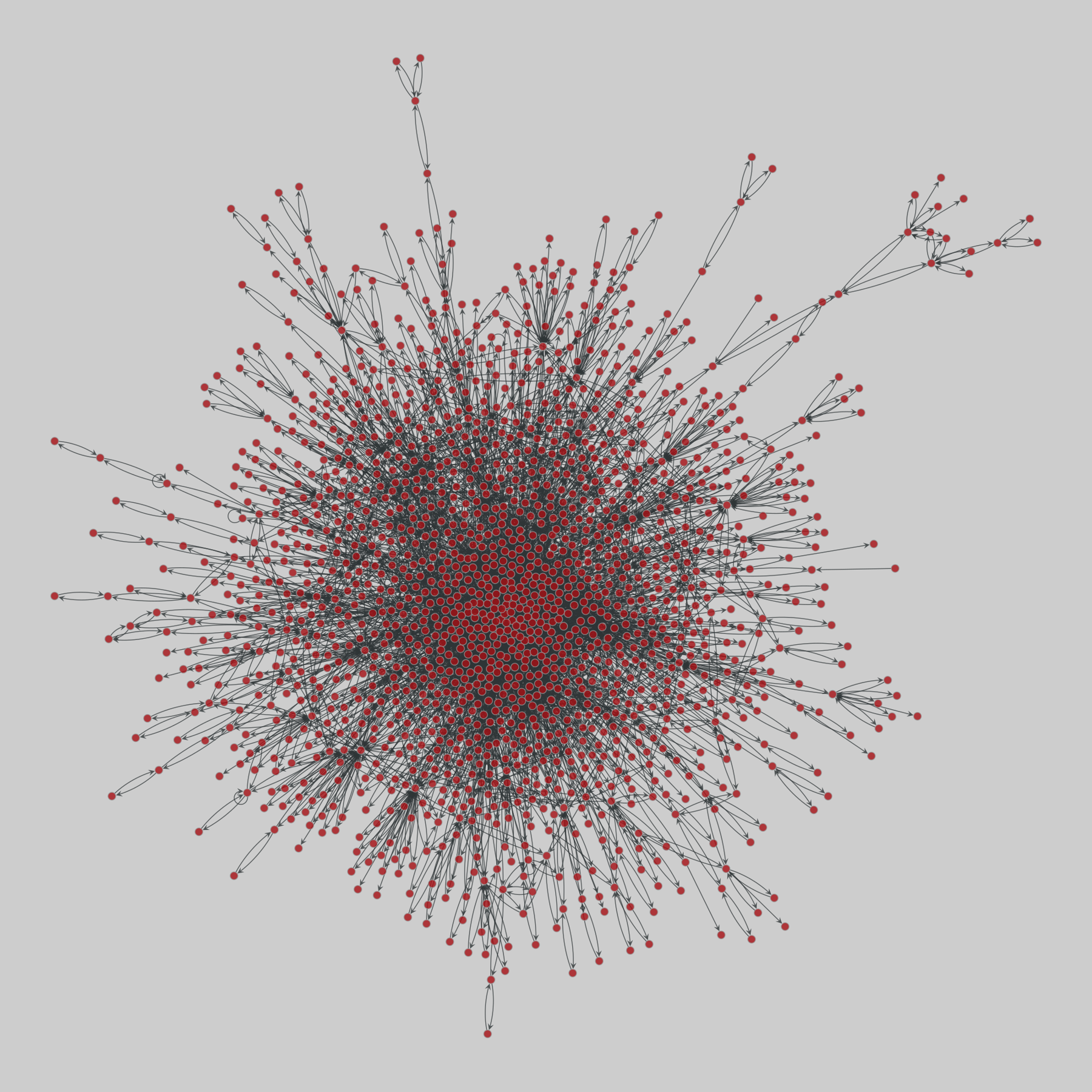
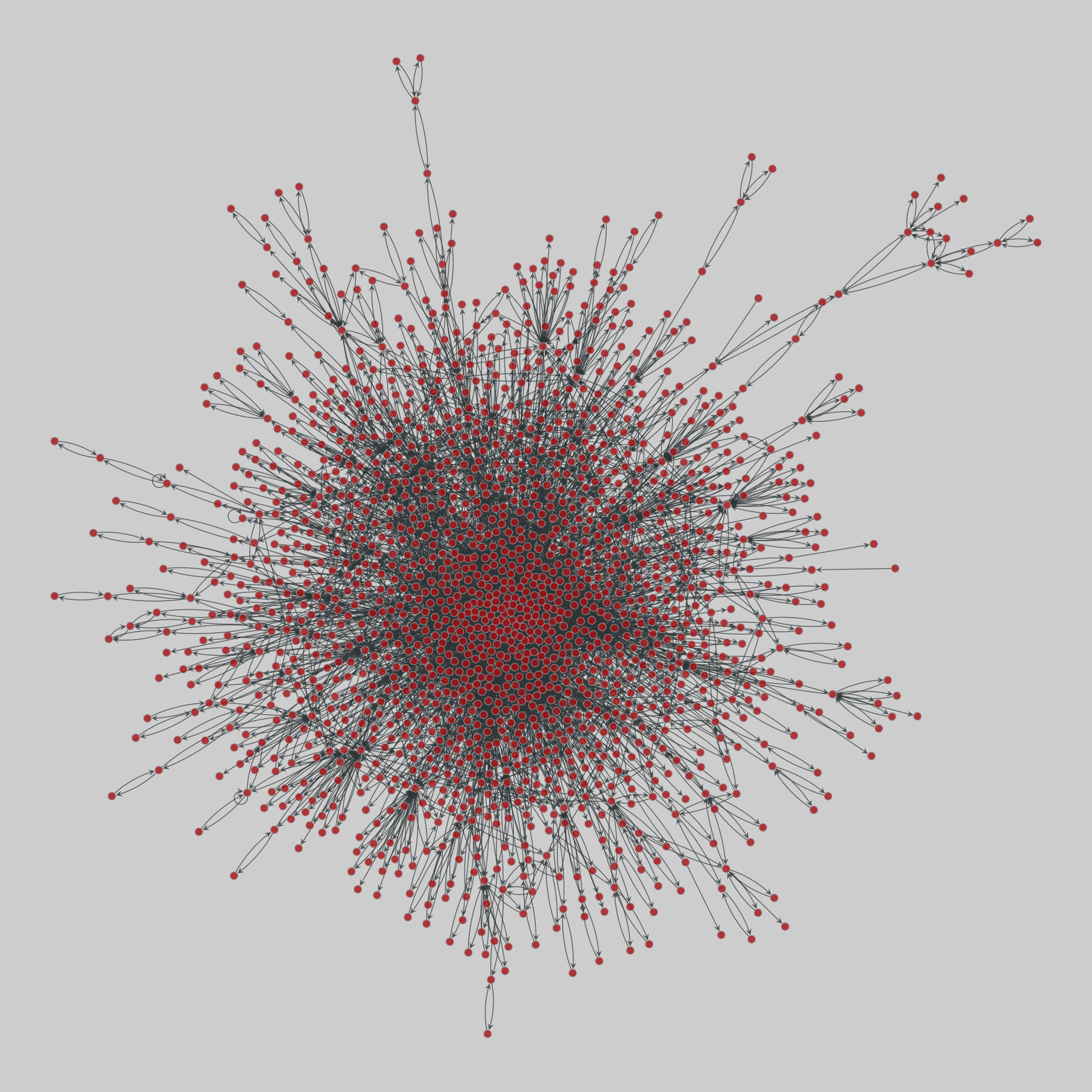
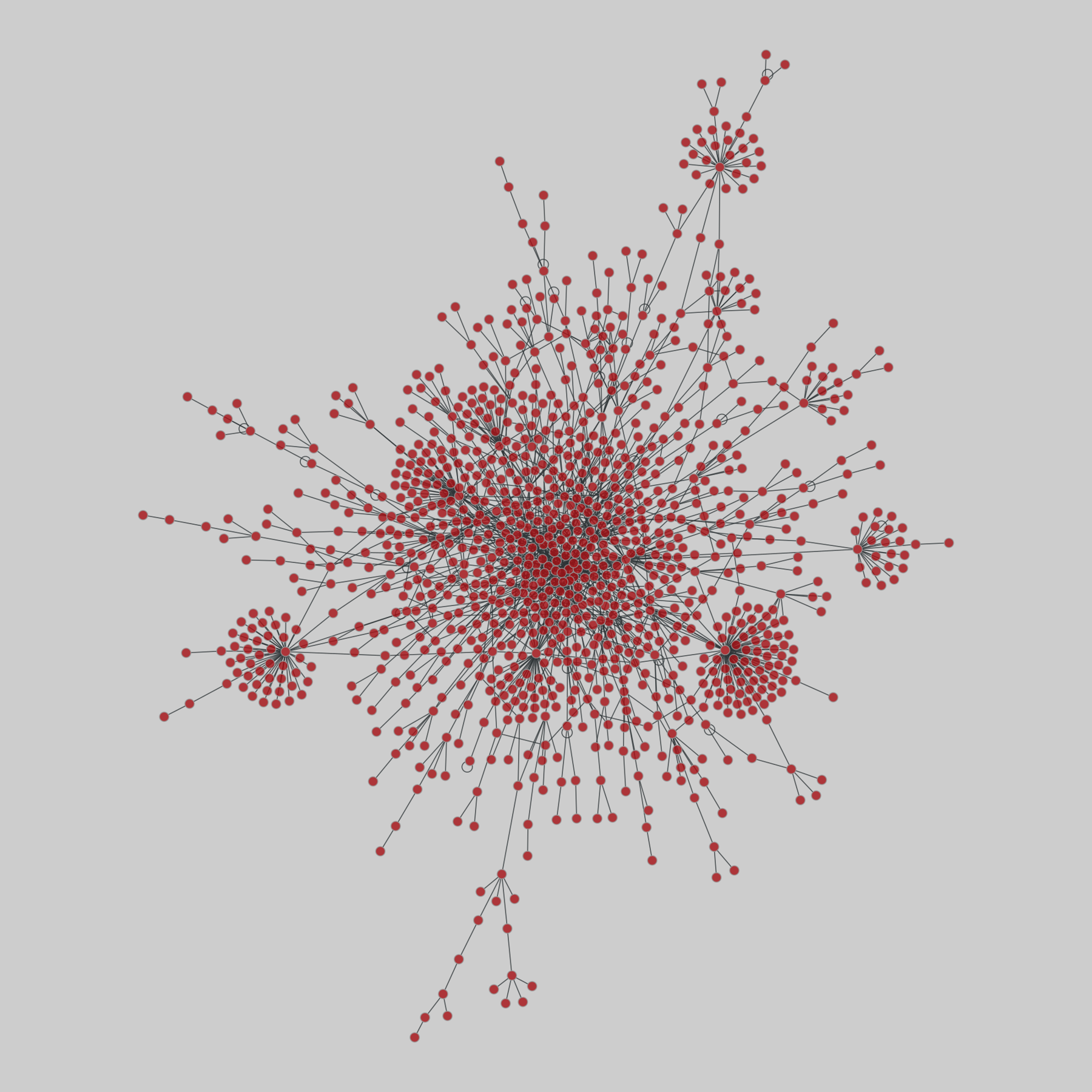
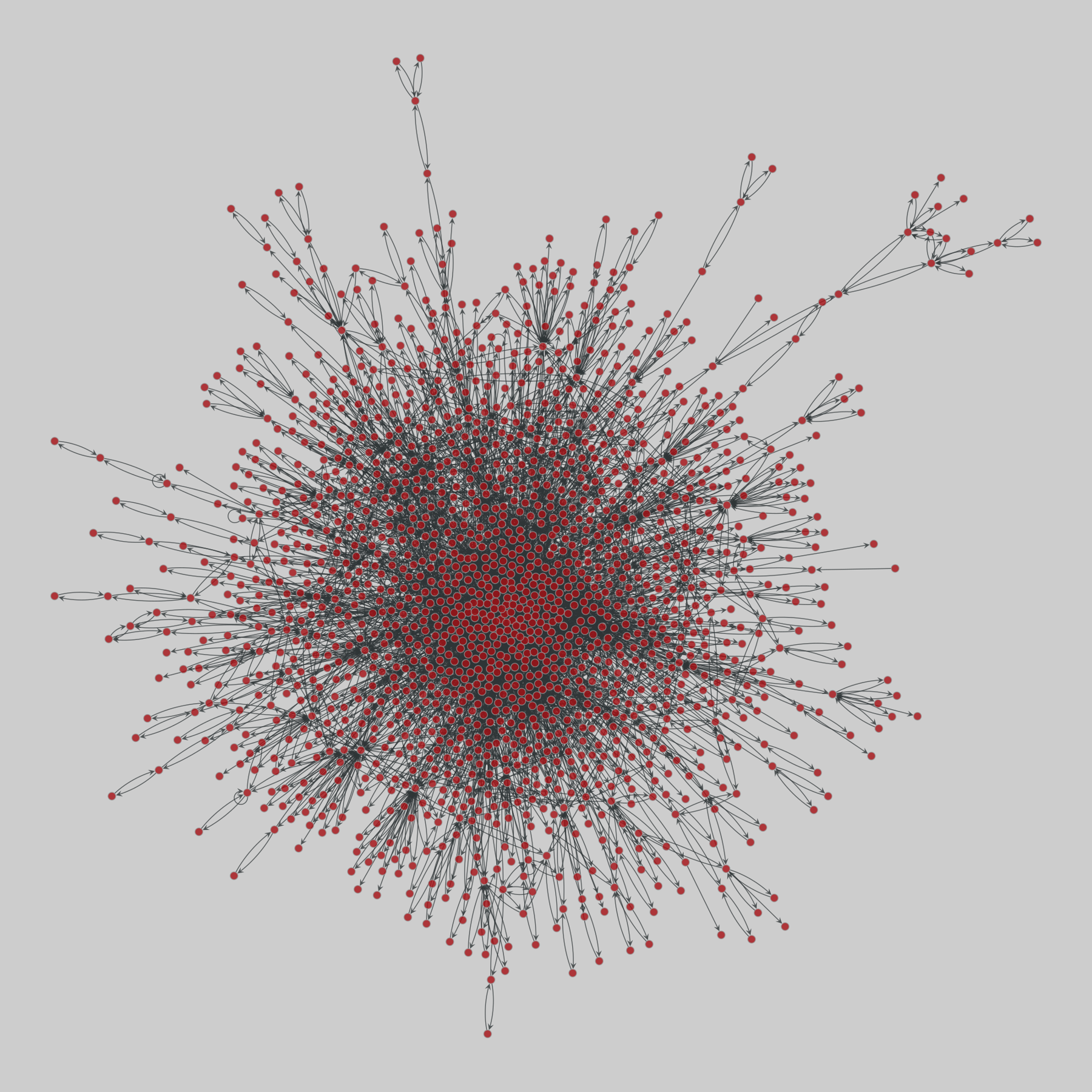
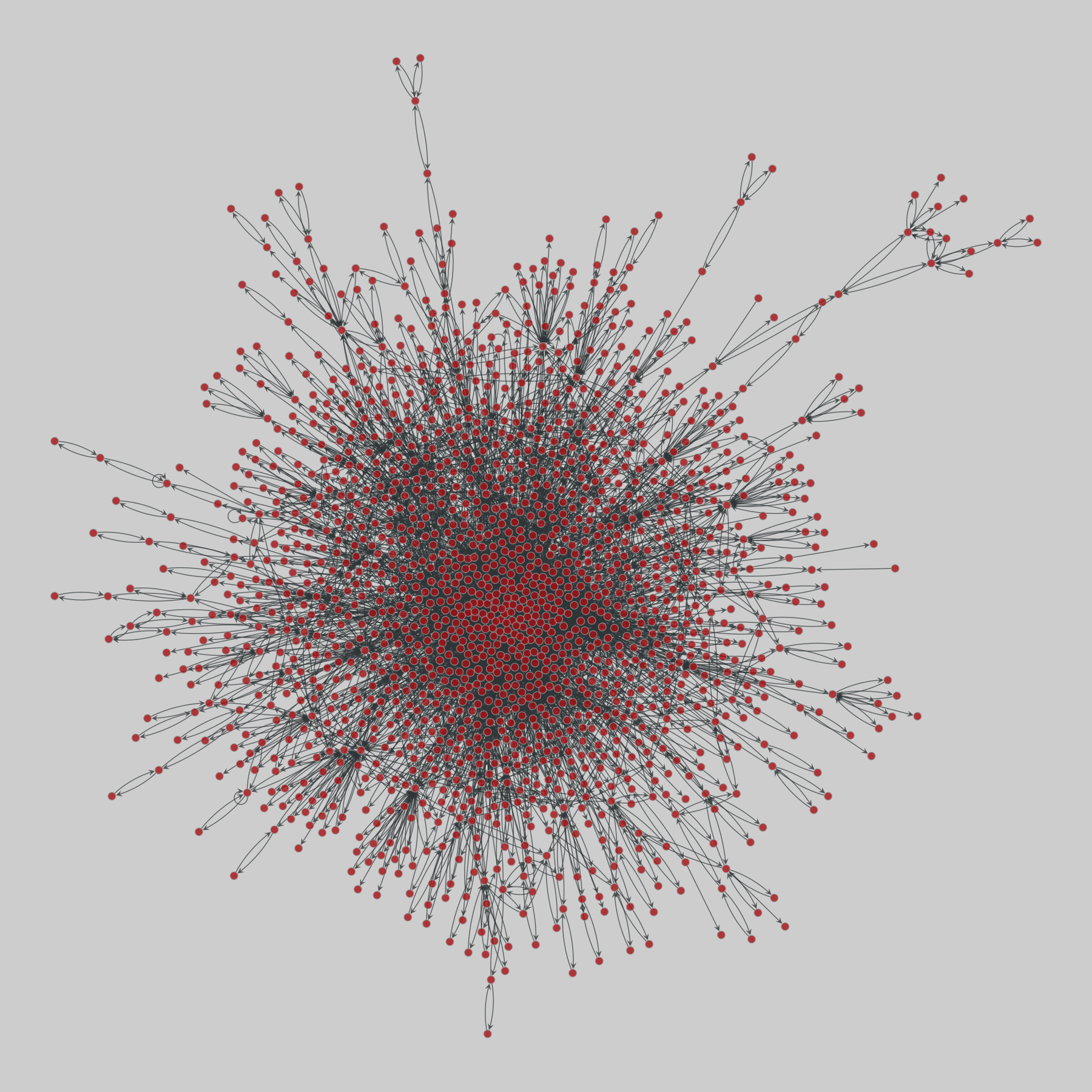
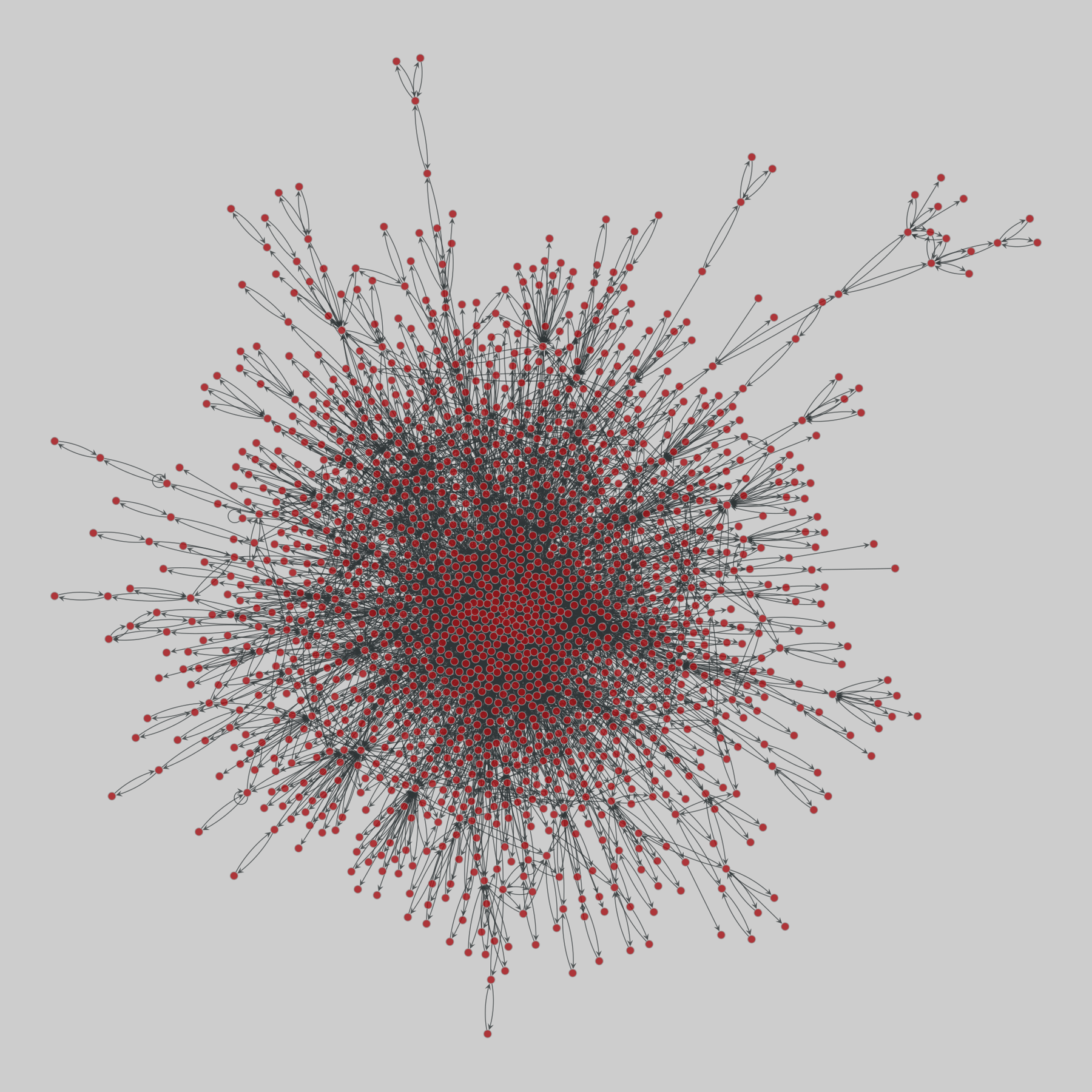
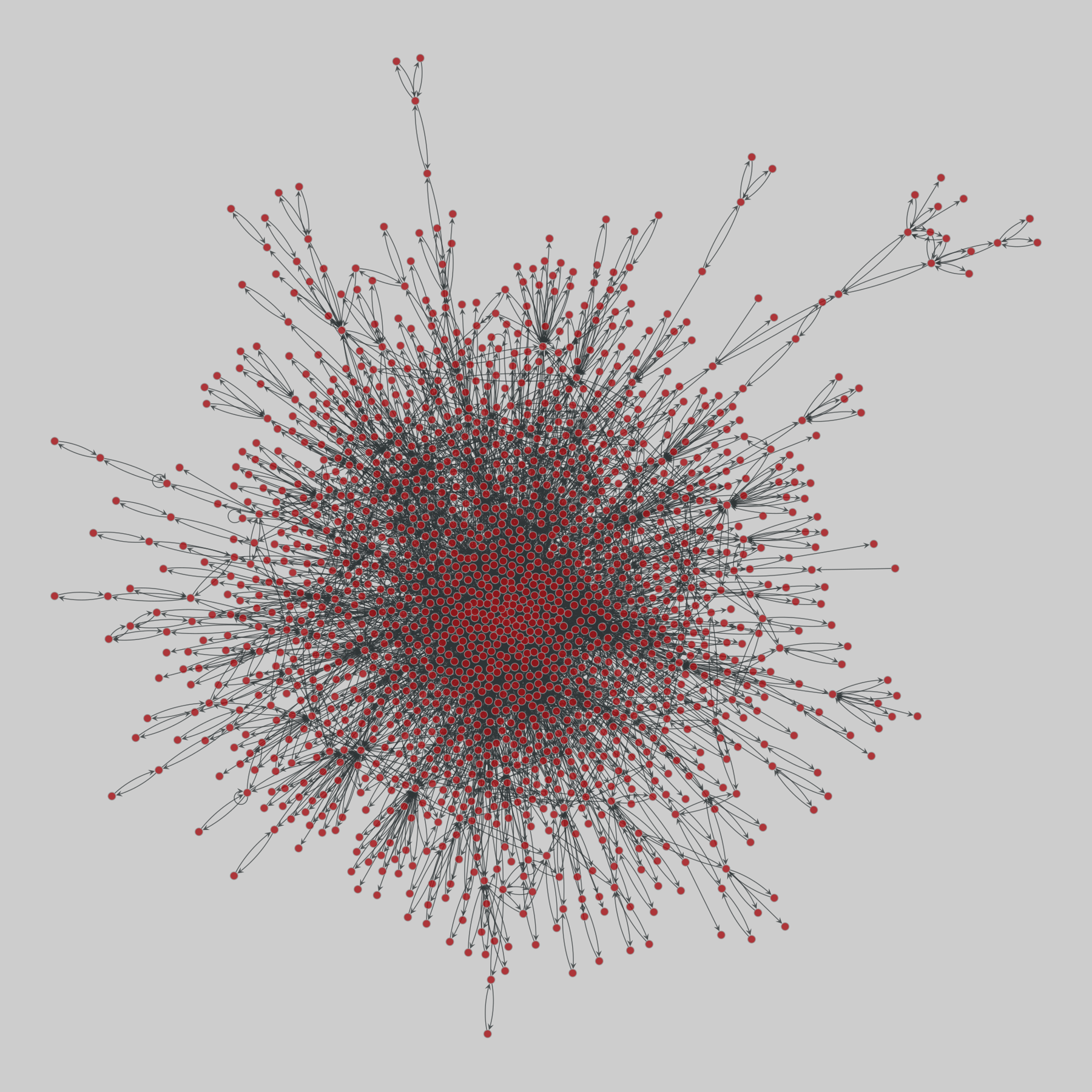
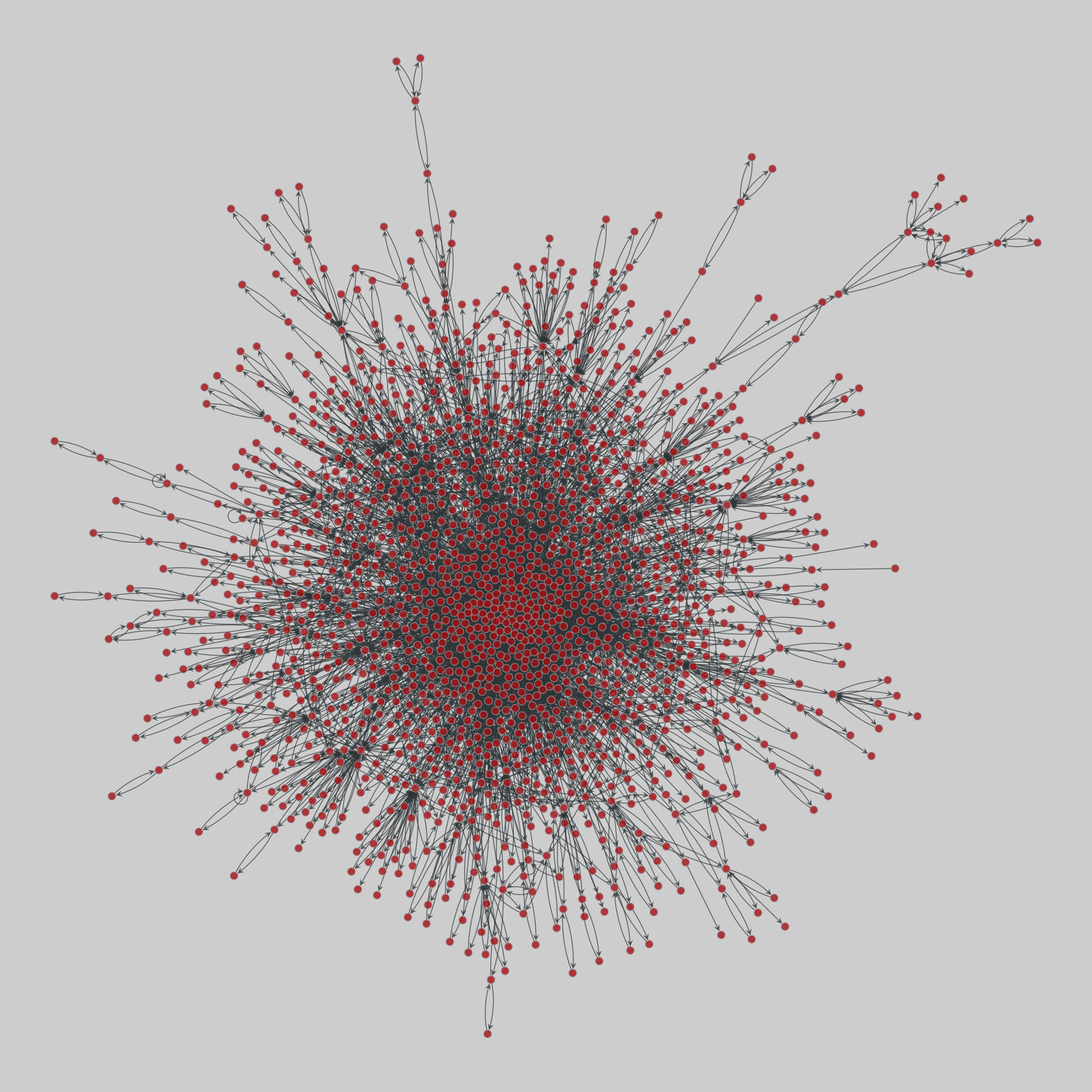
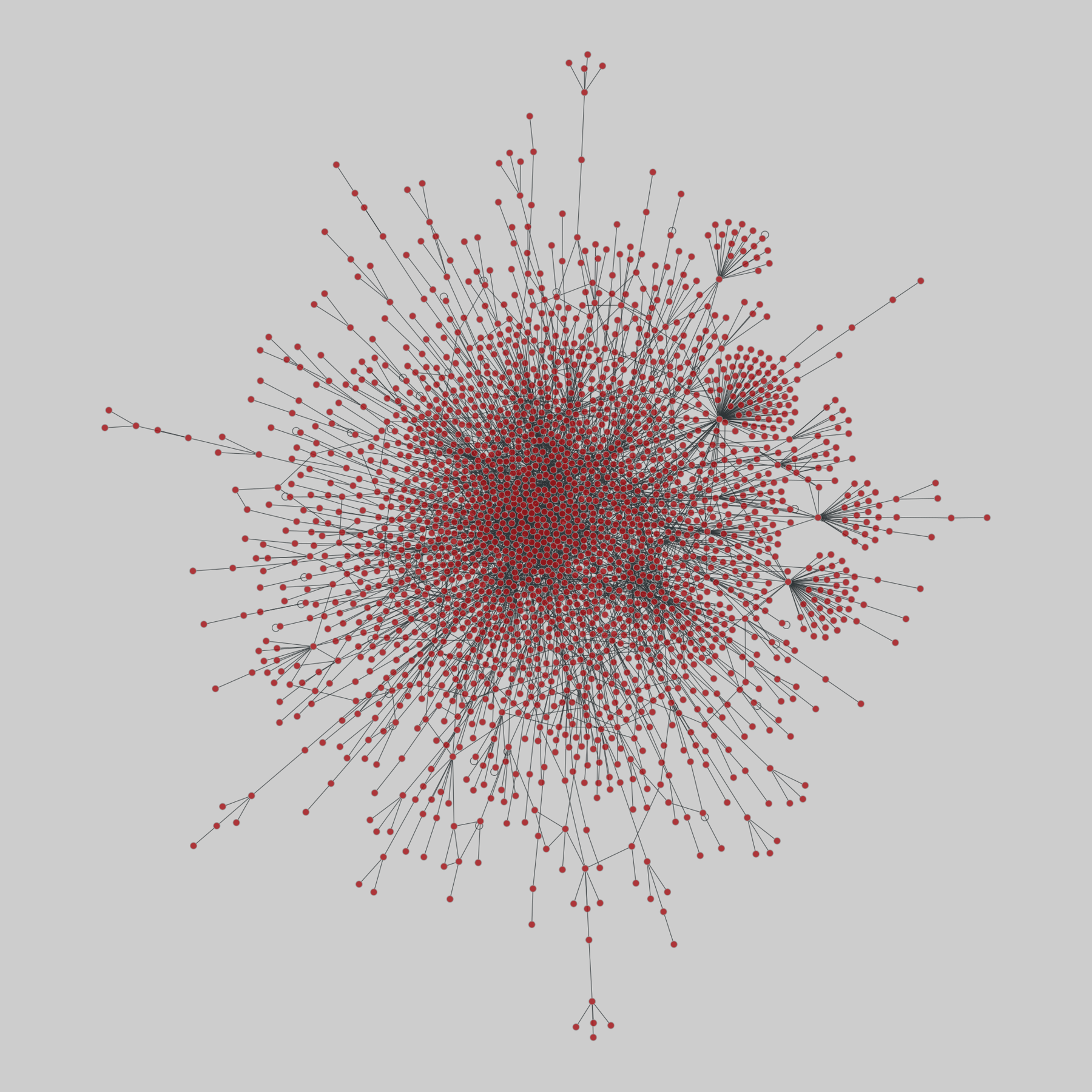
interactome_stelzl: Stelzl human interactome (2005)
A network of human proteins and their binding interactions. Nodes represent proteins and an edge represents an interaction between two proteins, as inferred via high-throughput Y2H experiments using bait and prey methodology.
This network has 1706 nodes and 6207 edges.
Tags: Biological, Protein interactions, Unweighted
Hierarchical Bayesian Calibration with Bayesian Committee Machine
Sebastian Heinekamp, David M. Higdon, Andreas Adelmann
https://arxiv.org/abs/2608.12603 https://arxiv.org/pdf/2608.12603 https://arxiv.org/html/2608.12603
arXiv:2608.12603v1 Announce Type: new
Abstract: Calibrating computational models to experimental data is a core task in applied statistics, especially in scientific domains, where physical experiments are costly and simulations play a central role in design and inference. Motivated by uncertainty quantification challenges in particle accelerator experiments, we develop and evaluate a Hierarchical Bayesian Calibration framework. In contrast to standard Bayesian calibration, certain inputs - such as beam injection amplitude - must be estimated separately for each experiment. We adopt the Kennedy-O'Hagan formulation and extend it with a hierarchical prior structure to model the distribution of experiment-specific calibration parameters, thus borrowing strength and improving generalisation across repeated experiments. A key methodological challenge arises from the need to evaluate a large number of forward simulations, which renders conventional Markov chain Monte Carlo approaches computationally prohibitive. To address this, we leverage the Bayesian Committee Machine as a scalable modelling strategy for Gaussian Process emulators. The BCM provides a principled divide-and-conquer approach, enabling parallel inference and reducing computational cost without requiring problem-specific tuning of the emulator approximation. Posterior sampling is performed using the No-U-Turn Sampler, supported by automatic differentiation in Julia, which removes the need for analytic gradient derivation and facilitates flexible model specification. We assess the proposed framework using established benchmark problems and simulated data from the Argonne Wakefield Accelerator. The results demonstrate substantial computational savings and robust calibration performance, highlighting the applicability of the method to large-scale scientific modelling problems.
toXiv_bot_toot
Empirical likelihood confidence regions for ordered bivariate means
Naresh Garg
https://arxiv.org/abs/2608.12174 https://arxiv.org/pdf/2608.12174 https://arxiv.org/html/2608.12174
arXiv:2608.12174v1 Announce Type: new
Abstract: Let $\boldsymbol{X}_i=(X_{1i},X_{2i})^\top$ be independent and identically distributed observations with mean $\boldsymbol{\mu}=(\mu_1,\mu_2)^\top$ constrained by $\mu_1\leq\mu_2$. We study empirical-likelihood inference for a fixed mean vector and distinguish it from the previously known test of equality against an ordered alternative. At a fixed interior point, the constrained empirical likelihood ratio has the usual $\chi^2_2$ limit. At a fixed boundary point $(m,m)^\top$, its limit is the chi-bar-square distribution $\tfrac12\chi^2_1 \tfrac12\chi^2_2$. By contrast, profiling the unknown common mean in the equality-versus-order test yields $\tfrac12\chi^2_0 \tfrac12\chi^2_1$, the $k=2$ ordered-mean case of El Barmi (1996). We give an exact reduction of the latter statistic to the empirical likelihood of the paired differences, establish the localization step needed for the fixed-boundary expansion, and derive a local-to-boundary limit showing that interior calibration is not uniform over $n^{-1/2}$-neighborhoods of the boundary. Monte Carlo experiments under Gaussian, Student $t_5$, and shifted log-normal sampling examine fixed, boundary, and local regimes with explicit numerical-failure accounting. Illustrative paired-data analyses show the practical distinction between fixed-candidate confidence regions, directional equality tests, and ordinary scalar empirical-likelihood intervals truncated to the nonnegative parameter space.
toXiv_bot_toot
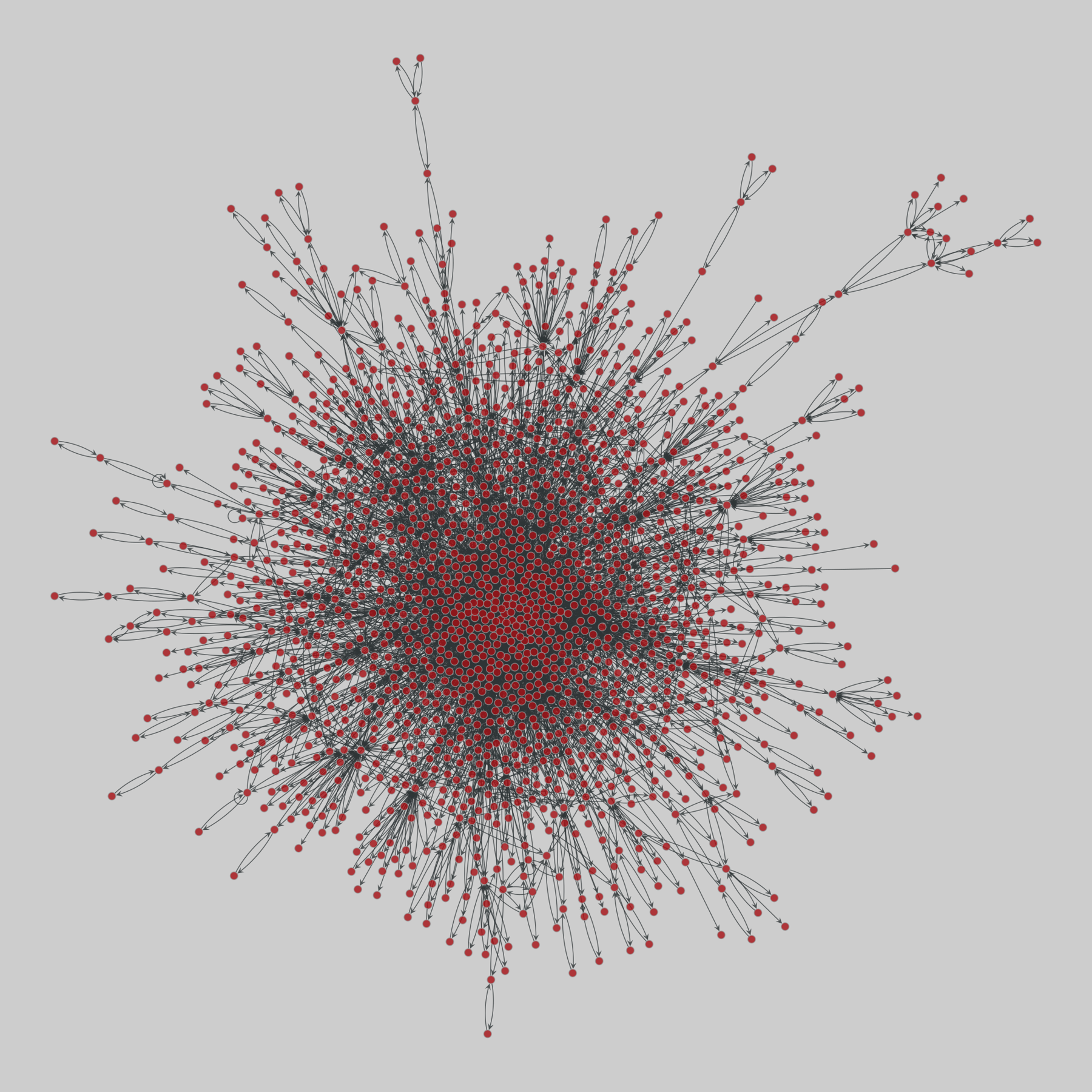
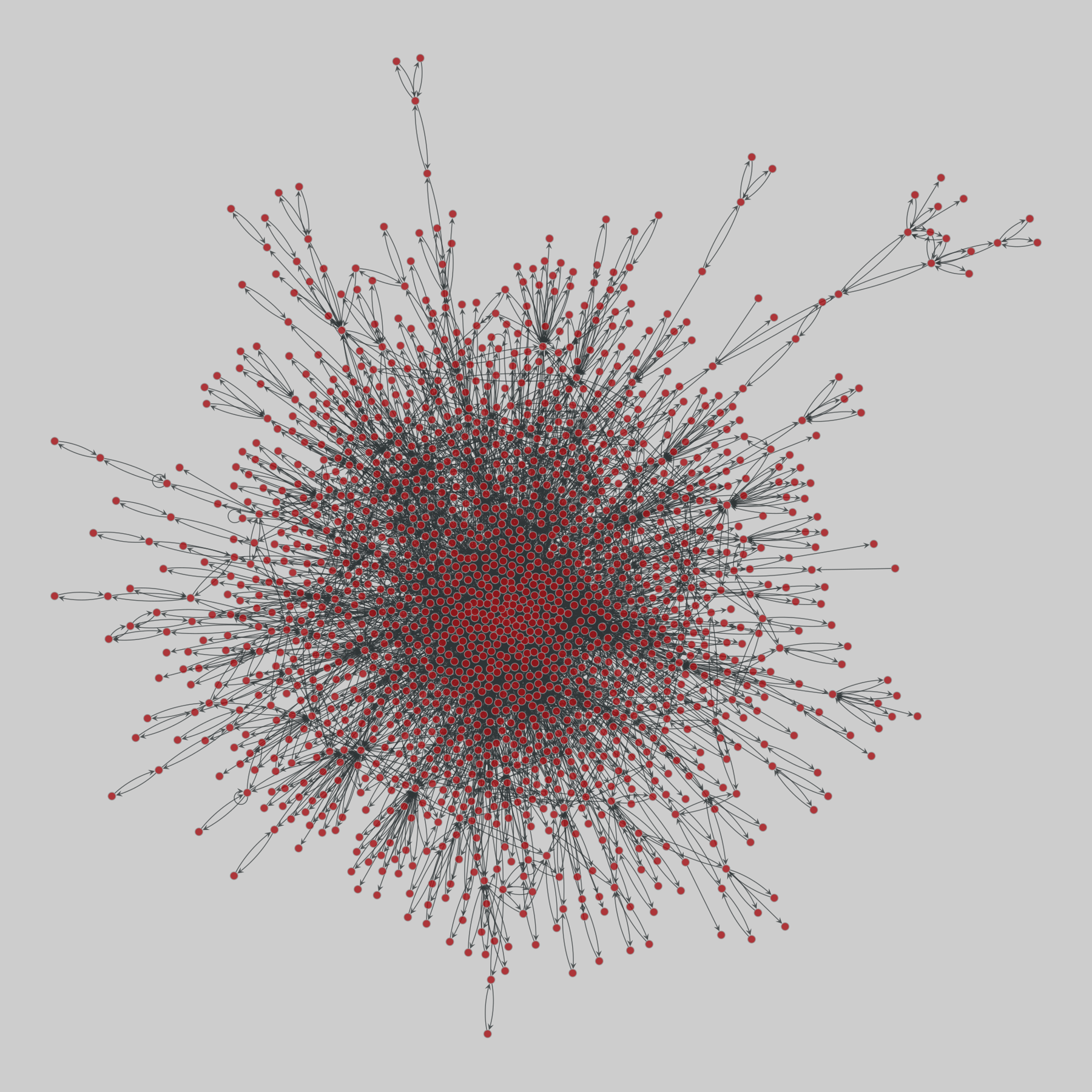
interactome_stelzl: Stelzl human interactome (2005)
A network of human proteins and their binding interactions. Nodes represent proteins and an edge represents an interaction between two proteins, as inferred via high-throughput Y2H experiments using bait and prey methodology.
This network has 1706 nodes and 6207 edges.
Tags: Biological, Protein interactions, Unweighted
interactome_stelzl: Stelzl human interactome (2005)
A network of human proteins and their binding interactions. Nodes represent proteins and an edge represents an interaction between two proteins, as inferred via high-throughput Y2H experiments using bait and prey methodology.
This network has 1706 nodes and 6207 edges.
Tags: Biological, Protein interactions, Unweighted
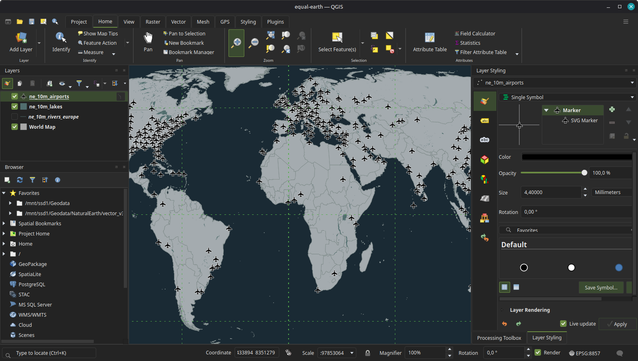
QGIS tabbed ribbon UI experiments
A long-standing feature request in the QGIS repo has been an option for a ribbon-style GUI to replace the plethora of toolbars that usually characterize the top rows of any QGIS window.
A couple of months ago Eithan published an experimental "Ribbon Toolbar" plugin for QGIS 3 that implemented a first version of this idea. I recently picked up the threads, ported the plugin to QGIS 4 and continued …
Divided Attention Amplifies the Importance of Expectation-Aligned Visualization Design
Jiho Kim, Anna L. Chinni, Karen B. Schloss, Michael Gleicher
https://arxiv.org/abs/2608.10320 https://arxiv.org/pdf/2608.10320 https://arxiv.org/html/2608.10320
arXiv:2608.10320v1 Announce Type: new
Abstract: Studies have shown that visualization design affects interpretability when visualization interpretation is the user's sole task. However, in real-world settings, users often engage with visualizations while performing concurrent tasks, such as when users simultaneously monitor alerts or respond to messages. Such divided attention may alter how users interpret visualizations, potentially increasing the importance of designs that align with viewer expectations. We investigated this possibility through two experiments comparing visualization interpretation under single-task and dual-task conditions. Specifically, we examined how well-established inferred mappings between color, spatial position, and semantic concepts affect interpretation when users perform a concurrent task, both with unlimited viewing time (Exp. 1) and under limited viewing time (Exp. 2). Our results show that divided attention amplifies the performance gap between expectation-aligned and expectation-violating designs, affecting response time, interpretation accuracy, and the ability to produce a judgment under time constraints. To explain these results, we model the user's decision-making process using a Linear Ballistic Accumulator (LBA) framework. Our findings highlight the increased importance of aligning visualization designs with viewer expectations under divided attention and introduce a process-oriented modeling approach to understanding how expectation and multitasking shape visualization interpretation.
toXiv_bot_toot
interactome_stelzl: Stelzl human interactome (2005)
A network of human proteins and their binding interactions. Nodes represent proteins and an edge represents an interaction between two proteins, as inferred via high-throughput Y2H experiments using bait and prey methodology.
This network has 1706 nodes and 6207 edges.
Tags: Biological, Protein interactions, Unweighted
Come join us on August 12th in celebrating a partial solar eclipse and the Perseids meteor shower! Experience shows in a mobile planetarium, hands-on experiments, lectures – and, of course, sky observations.
https://www.mps.mpg.de/lange-nacht-der-astron…
SynAct: A Reasoning-Acting Large Language Model Agent for Adaptive Synthesis Optimization
Fangzhou Liu, Peiyi Han, Jiawei Liu, Yuan Pu, Zhuolun He, Rongliang Fu, Tsung-Yi Ho, Bei Yu
https://arxiv.org/abs/2608.12751 https://arxiv.org/pdf/2608.12751 https://arxiv.org/html/2608.12751
arXiv:2608.12751v1 Announce Type: new
Abstract: Logic synthesis transforms RTL designs into gate-level netlists, where PPA results are highly sensitive to the choice of optimization commands, making synthesis tuning both high-dimensional and expensive. Previous approaches fall into two categories: automated methods, which perform black-box search over fixed action spaces with limited decision-level interpretability, and LLM-based methods, which typically generate static scripts upfront and cannot adapt to evolving circuit states. We present SynAct, an adaptive closed-loop LLM reasoning--acting agent that iteratively diagnoses live synthesis reports and reasons over the current circuit state, retrieved tool knowledge, and historical optimization experience to issue targeted commands. SynAct focuses on improving timing, particularly worst negative slack (WNS), while maintaining balanced area and power trade-offs. Experiments on a commercial synthesis tool across 14 designs show that SynAct reduces average WNS to 27% of that from bootstrap synthesis.
toXiv_bot_toot
A Multi-scale Investigation of Aqueous Foams Stabilised by PNIPAM Microgels
Joanne Zimmer, Luca Mirau, Kevin Gr\"aff, Ga\"etan Barth, Carina Schneider, Vera A. N. A. Hesse, Hayden Robertson, Regine von Klitzing
https://arxiv.org/abs/2608.11999 https://arxiv.org/pdf/2608.11999 https://arxiv.org/html/2608.11999
arXiv:2608.11999v1 Announce Type: new
Abstract: Aqueous foams possess multiple structural motifs across different length scales: macroscopic foam, bubbles, foam films and the air/water interface. In this study, macroscopic foams are generated by sparging gas through an aqueous dispersion of PNIPAM microgels which act as foam stabilisers due to their surface activity. The stiffness of the microgels and thus their interfacial activity are tuned by variation of the cross-linker density. The effect of the cross-linker density and the microgel concentration on the resulting foam formation properties (foamability) and the foam stability are investigated. A lower cross-linker density and a higher microgel concentration enhance the foamability, generate foams with smaller bubbles and higher liquid fractions, and increase the foam stability. These observations are correlated with the microgel behavior at the single air/water interface examined by pendant drop tensiometry and Langmuir compression experiments as well as the mobility in single free-standing foam films determined using a Thin Film Pressure Balance. Our findings highlight good agreement across all length scales: increased foamability correlates with a faster decrease in surface tension, and higher foam stability with a higher surface elastic modulus of a microgel-covered single air/water interface and decreasing mobility in foam films.
toXiv_bot_toot
(YouTube) Unboxing your #BCI https://www.youtube.com/watch?v=Moh_ytOHAwU Plug into your living mouse for unspecified animal experiments, by Science Corp.
Closed-Form of the Local Galactic Potential and Stellar Distribution Function from Gaia DR3
Indranil Das, Adam Kamoski, Dora Demiri, Brianna Isola, Hanieh Karimi, Dmitrii S. Zagorulia
https://arxiv.org/abs/2609.09011 https://arxiv.org/pdf/2609.09011 https://arxiv.org/html/2609.09011
arXiv:2609.09011v1 Announce Type: new
Abstract: The local dark matter density determines the strength of the signal expected in direct-detection experiments, yet published estimates from stellar motions disagree by more than their errors, and the most recent machine-learning analysis of Gaia data finds a local density consistent with zero. According to Jeans' theorem, a distribution function built from integrals of motion satisfies the collisionless Boltzmann equation (CBE) trivially for any choice of potential, so a search that simultaneously fits the distribution function and the potential to the CBE identifies neither. Our pipeline instead estimates the distribution function in isolation, linearizing the equation in terms of accelerations and allowing for direct measurement of the local force field, and then fits closed forms to that field via symbolic regression. Throughout, we find that the usable information lies not in the CBE residual but in the stellar number counts, the observable most distorted by survey selection. Along the vertical profile, our recovered potential agrees with the classical self-gravitating isothermal disc.
toXiv_bot_toot
Stay or Stray - A Dynamical Systems Viewpoint of Popularity Bias
Sarvesh Shashidhar, Lankireddy Prabhat, Arpit Agarwal, D. Manjunath, Karan Bhukar, Tanmay Khandelwal
https://arxiv.org/abs/2608.10474 https://arxiv.org/pdf/2608.10474 https://arxiv.org/html/2608.10474
arXiv:2608.10474v1 Announce Type: new
Abstract: Popularity bias in recommendation systems arises when a majority user class generates disproportionate interaction data, causing the system to increasingly favour it while degrading recommendation quality for niche users. While extensive empirical evidence of popularity bias exists, the dynamics leading to its emergence are not well understood. In this work, we study the coupled evolution of recommender model updates and user engagement through the lens of dynamical systems. We formulate a stochastic process and analyse its asymptotic behaviour through an ordinary differential equation (ODE) framework grounded in two-time-scale stochastic approximation. We characterise the equilibrium points of this dynamical system, and derive conditions under which popularity bias is provably emergent, as well as conditions under which symmetric retention of all user classes is possible. We conduct experiments on synthetic data and real-world production logs derived from a large-scale commercial music recommendation platform to validate our theoretical results.
toXiv_bot_toot
Unsealed docs: in its lawsuit, New York alleges TikTok gave thousands of users, including youth, non-functional safety features as part of placebo experiments (Diana Novak Jones/Reuters)
https://www.reuters.com/world/china/tiktok
I spent a while trying to work out when Tidal was born, but eventually realised it didn't have a birthday, it slowly emerged and came into focus over an extended, continuous series of experiments, events and collaborations..
However I did my first talk on live coding something like an uzulang written in Haskell on 17th September 2009, so maybe we could pretend that uzu culture turns 17 on 17th Sept 2026?
Experiments must be reproducible; they should all fail in the same way.
Replaced article(s) found for q-bio.NC. https://arxiv.org/list/q-bio.NC/new
[1/1]:
- Dynamical incompatibilities in paced finger tapping experiments
Ariel D. Silva, Claudia R. Gonz\'alez, Rodrigo Laje
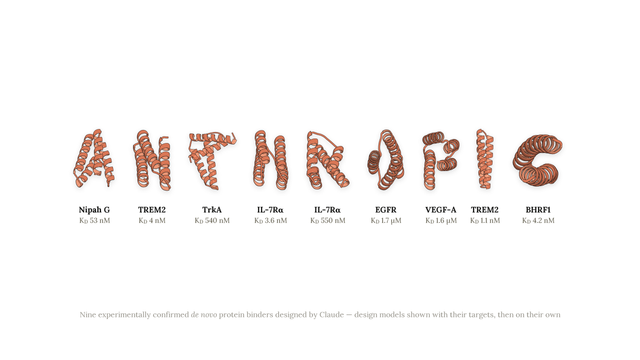
Last week, Anthropic confirmed that it was operating a wet biology lab in the Bay Area
where it uses its AI models to run physical experiments.
This week, the AI giant announced that this lab has already made what it believes is a big discovery:
a new enzyme “system” that has certain “properties reminiscent of CRISPR,”
as Anthropic describes it.
CRISPR is a natural immune system used by bacteria to fight off viruses that has become a gene-editing technology wi…
Random close packing at extreme size ratios with an Adam-based inflation protocol
Kenneth Desmond
https://arxiv.org/abs/2608.12235 https://arxiv.org/pdf/2608.12235 https://arxiv.org/html/2608.12235
arXiv:2608.12235v1 Announce Type: new
Abstract: We present \texttt{rcpgenerator}, an openly available code for generating $d$-dimensional dense, disordered, non-overlapping close packings from an arbitrary prescribed list of particle diameters. The method adapts the Clarke--Wiley inflation protocol, but instead uses the Adam optimizer to relax the particle configuration. Typically, particle coordinates are advanced with a single, global step size, which must shrink as the size ratio $S\equiv D_{\max}/D_{\min}$ grows, generally stalling the optimization. Adam instead gives each coordinate its own adaptive step size, stabilizing the optimization time across a broader range of $S$. We demonstrate this in three-dimensional periodic tests that reach $S\sim5\times10^{5}$ for a continuous lognormal distribution ($N\sim10^{6}$ diameters) and particle numbers up to $N\approx5.6\times10^{6}$ for power-law distributions, with the densest packings reaching $\phi\simeq0.87$, each completed in minutes to hours on a multicore machine. Across truncated-lognormal, truncated-power-law, and Weibull distributions, the resulting $\phi$ reproduces trends such as the locations of peaks and knees with distribution shape and $S$ found in prior numerical results and in the parameter-free Farr--Groot prediction, with a remaining offset typically $0.005$--$0.01$. Additionally, results are commensurate with multimodal packing densities measured in vibrated-bed experiments. The code and the complete per-case census behind every figure are released with the paper.
toXiv_bot_toot
Elbow Angle Guidance System Based on Surface Haptic Sensations Elicited by Lightweight Wearable Fabric Actuator
Kenta Yokoe, Tadayoshi Aoyama, Yuki Funabora, Masaru Takeuchi, Yasuhisa Hasegawa
https://arxiv.org/abs/2608.10404 https://arxiv.org/pdf/2608.10404 https://arxiv.org/html/2608.10404
arXiv:2608.10404v1 Announce Type: new
Abstract: The demand for wearable haptic devices has rapidly increased for various applications. However, many haptic devices interfere with the wearer's activities and movements. In addition, several haptic devices fail to elicit intuitive haptic sensations by adjusting to the natural posture of the wearer. To address these issues, we propose an elbow angle guidance system using a lightweight wearable fabric actuator. The proposed actuator is made of fabric and has two McKibben-type artificial muscles attached to it, rendering it extremely lightweight and facilitating the delivery of surface haptic sensations to intuitively induce elbow extension and flexion. The surface haptic sensation elicited by the fabric actuator is adjusted to natural body movements without interfering with the wearer's movements. Moreover, the proposed system measures and guides the elbow angle by changing the intensity of the surface haptic sensation delivered to users in real time. The accuracy of the proposed system is demonstrated through experiments involving human participants.
toXiv_bot_toot
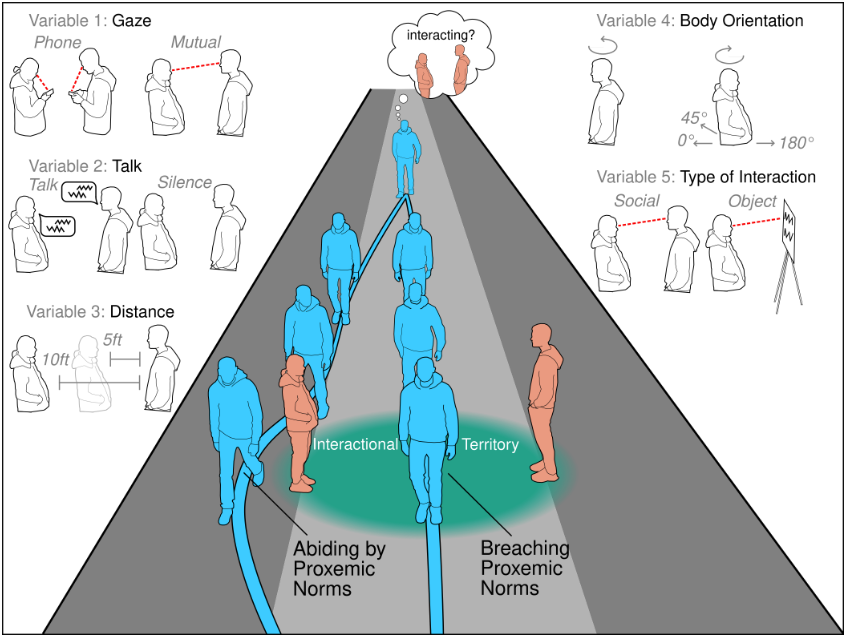
Invisible walls: how pedestrians navigate around social interactions
https://arxiv.org/abs/2607.20876
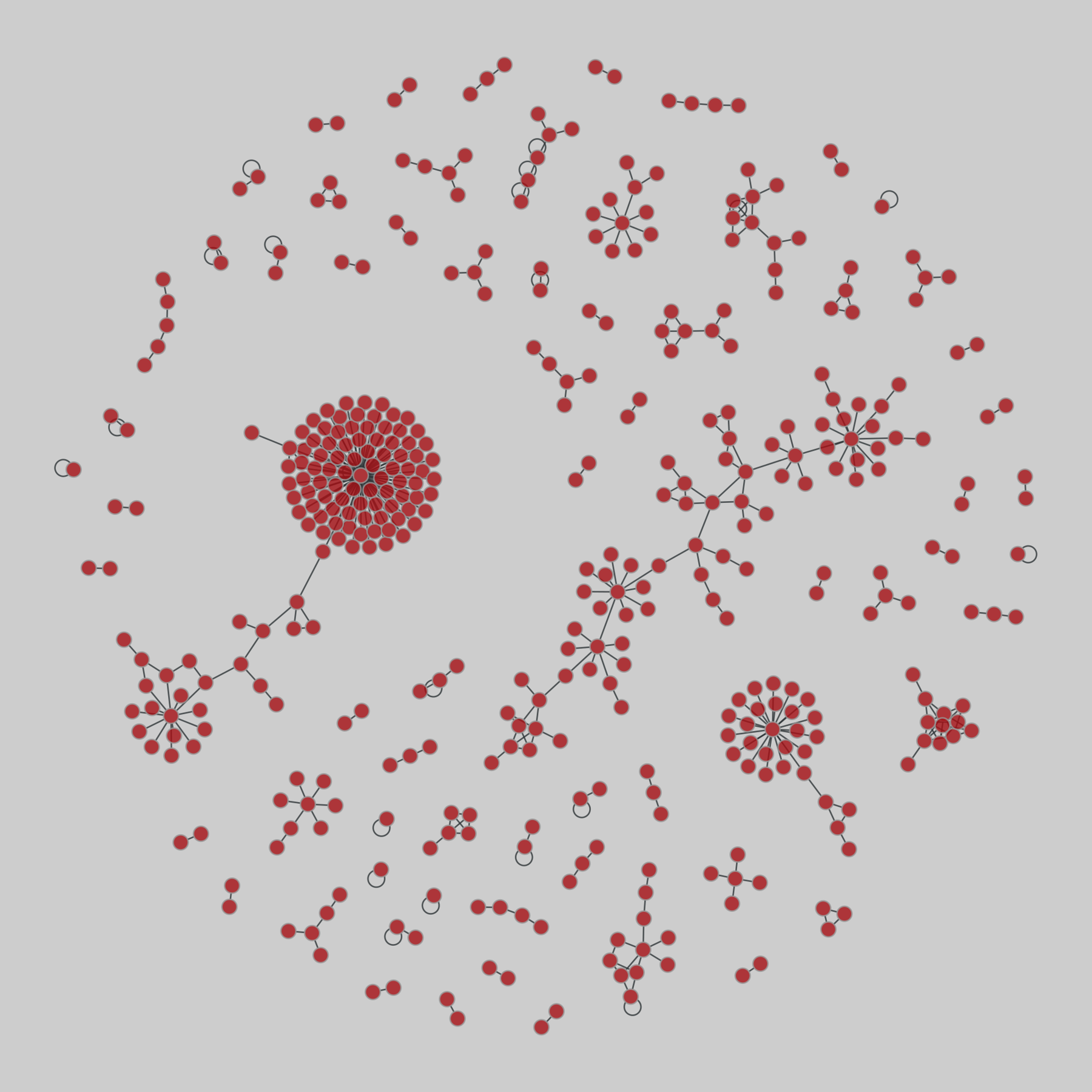
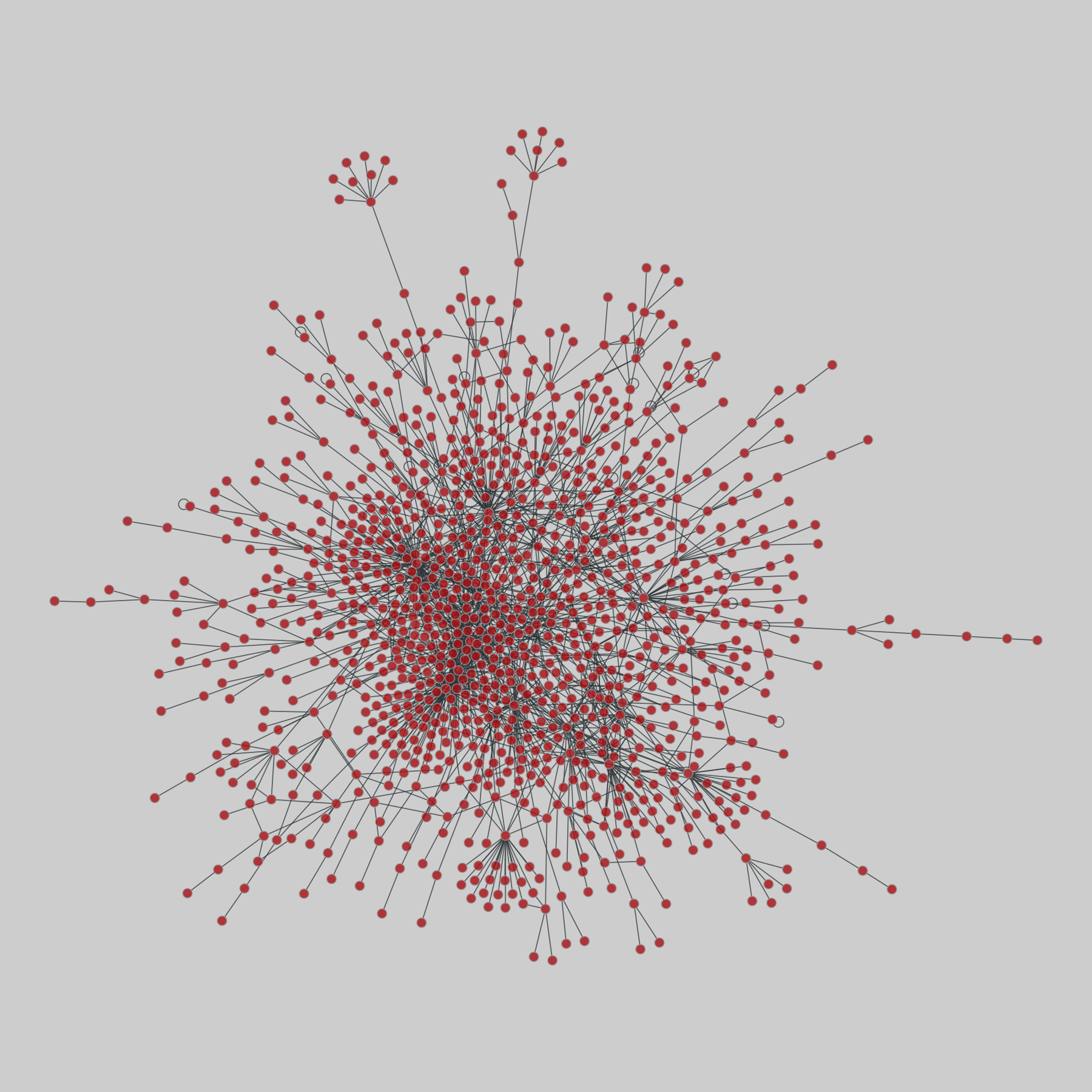
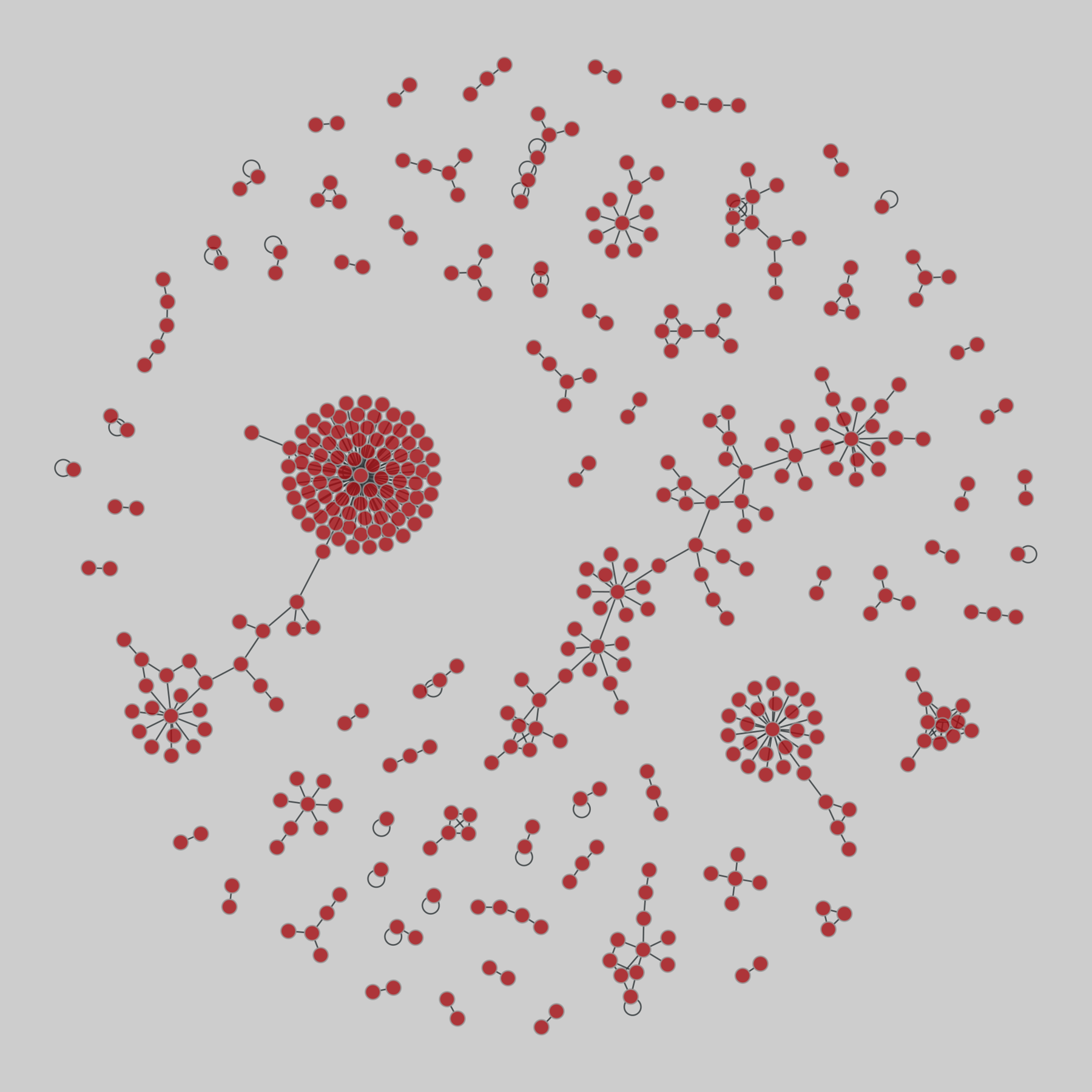
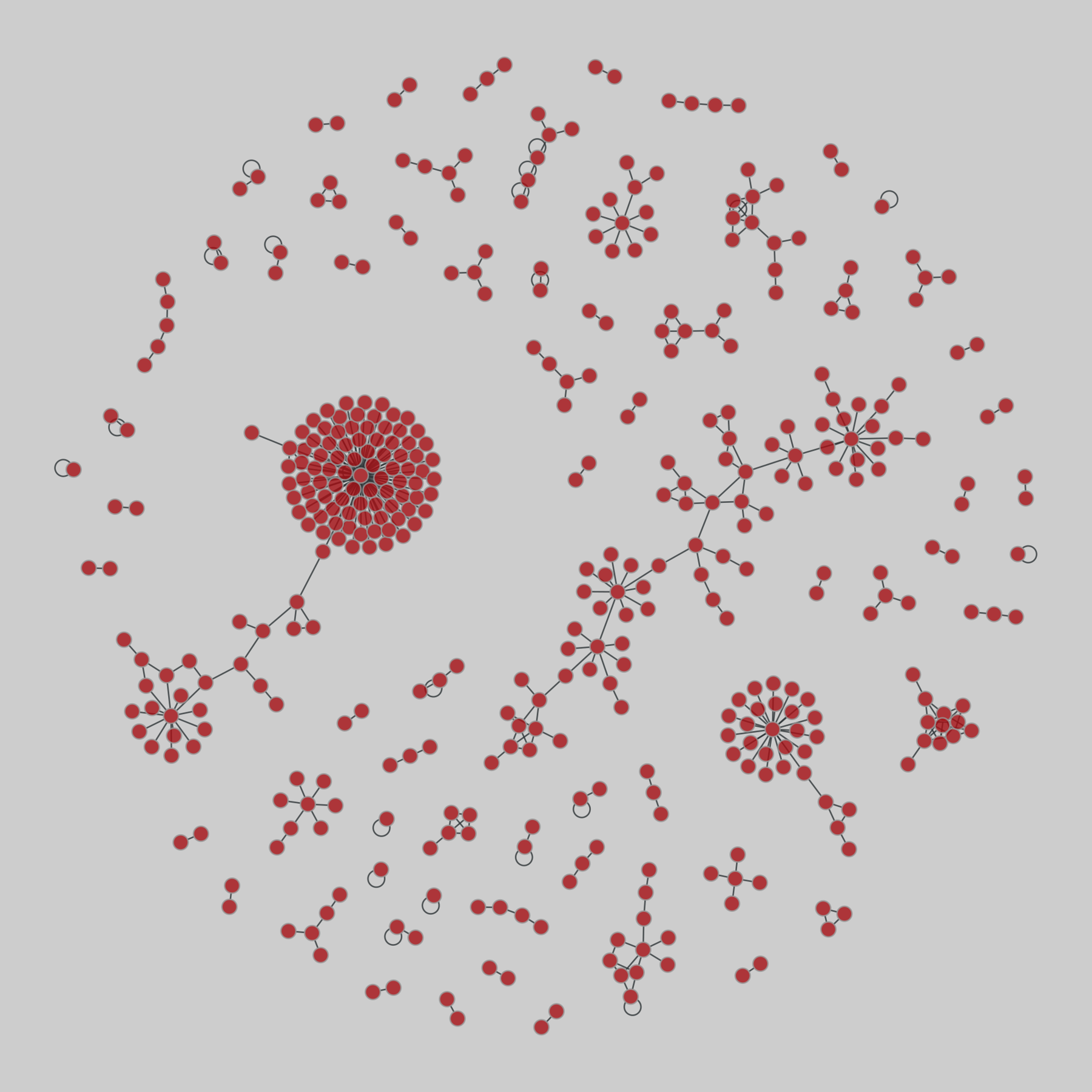
celegans_interactomes: C. elegans interactomes (2009)
Ten networks of protein-protein interactions in Caenorhabditis elegans (nematode), from yeast two-hybrid experiments, biological process maps, literature curation, orthologous interactions, and genetic interactions. The WI8 network combines WI2004, WI2007 and BPmaps, while the Integrated Network combines data from all sources.
This network has 1496 nodes and 1816 edges.
Tags: Biological, Protein interactions, Unweighted
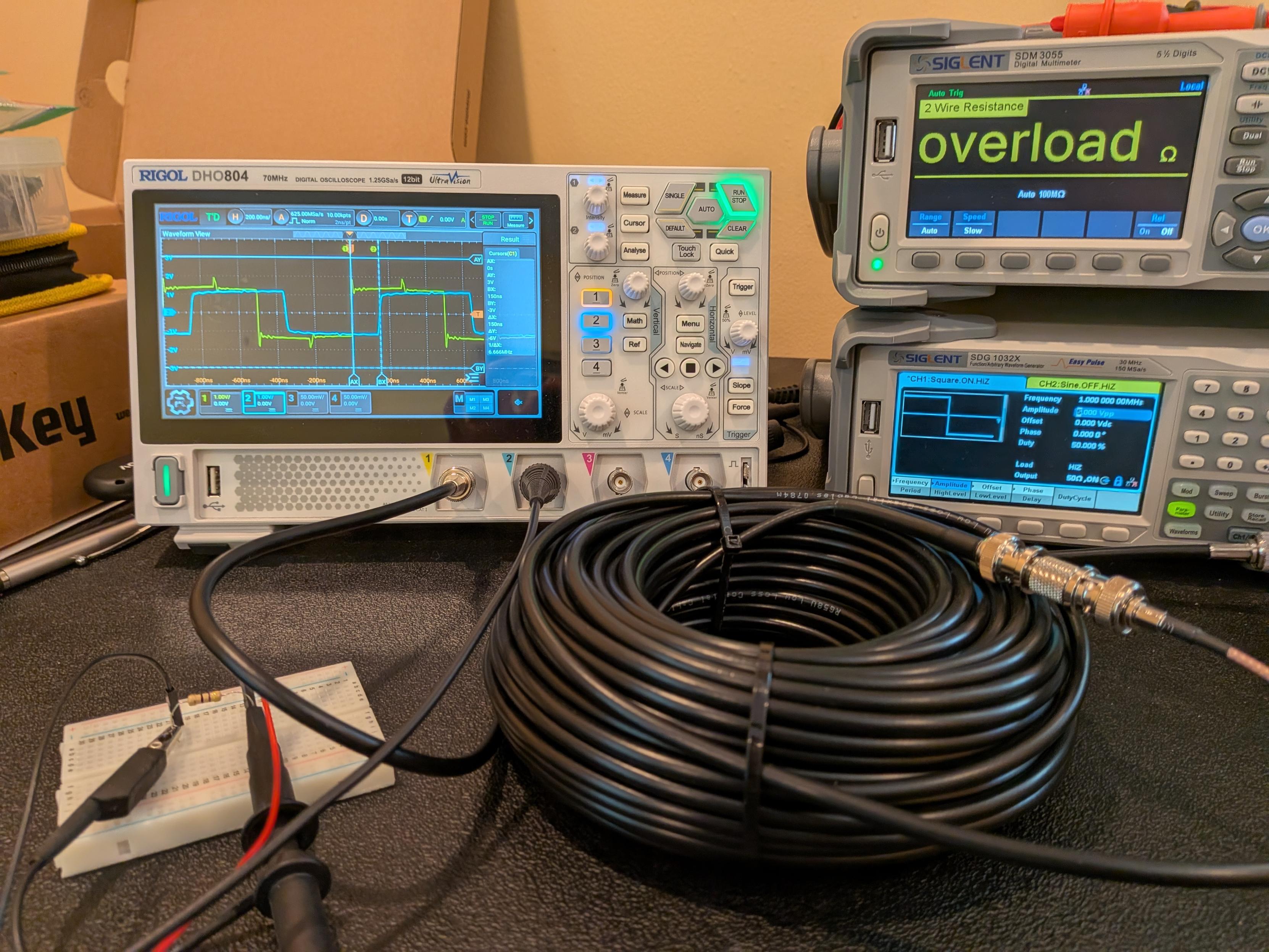
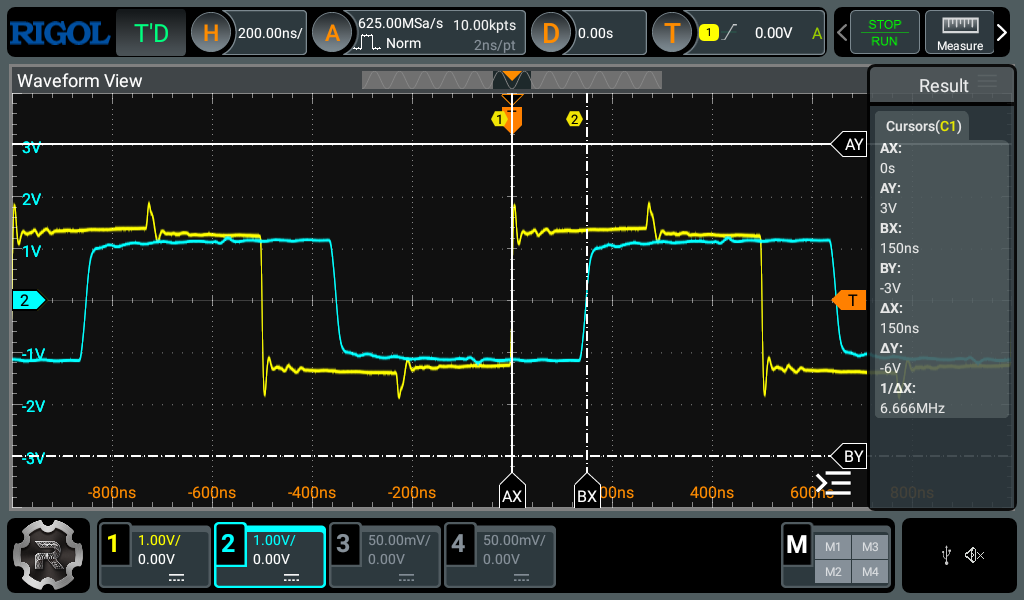
Reading @…'s book got me back in the lab doing experiments to measure the speed a signal travels through a 100-ft coaxial cable.
In this low-quality setup with a 47-ohm resistor on a breadboard, I got 203.2 x 10^6 m/s, or about 68% of the speed of light.
In a better setup using a proper 50-ohm BNC impedance adapter, I got 229.2 x 10^6 m/s, or ab…
Automatic Field-of-View Adjustment for a View-Expansive Microscope via LSTM-Based Gaze and Pipette Motion Interpretation
Kenta Yokoe, Takuya Hara, Tadayoshi Aoyama
https://arxiv.org/abs/2608.10401 https://arxiv.org/pdf/2608.10401 https://arxiv.org/html/2608.10401
arXiv:2608.10401v1 Announce Type: new
Abstract: Intracytoplasmic sperm injection (ICSI) operators frequently adjust the field-of-view (FOV) during procedures, which interrupts workflow and increases procedure time. Conventional microscopes require manual objective lens switching and illumination adjustments to achieve different FOV sizes. We propose an AI-based automatic FOV adjustment method integrated with a view-expansive microscope. This microscope enables the simultaneous acquisition of a large FOV and high-resolution images using a single objective lens through multiview imaging with galvanometer mirrors and high-speed vision, thereby eliminating the need for physical lens exchanges. Our method utilizes a long short-term memory (LSTM) model to predict the appropriate FOV size based on real-time analysis of the pipette's position and velocity, combined with the operator's gaze position. The AI model is trained using ICSI procedure data from an expert with over five years of micromanipulation experience. Experimental evaluation with novice operators reveals that the proposed automatic FOV adjustment system significantly improves the ICSI procedure speed, reducing the average task completion time from 60.5 to 48.0 s (p < 0.001). The experiments also demonstrate that this improvement enables novice operators to achieve ICSI working speeds equivalent to those of expert operators.
toXiv_bot_toot
Low stray-field ion pump configuration for cold atom experiments
Preeti Sharma, Luisa Loranca Cruz, Leonardo Ricci, Andrea Bertoldi
https://arxiv.org/abs/2609.03570 https://
... I wanna study how electroshock improves Super Hexagon performance. I'm sure the answer is "not at all", but I'll need to perform many experiments to confirm that.
Cambridge, MA-based Transfyr emerges from stealth with a $25M seed to use AI to address science's reproducibility crisis and capture labs' "tacit knowledge" (Carl Zimmer/New York Times)
https://www.nytimes.com/2026/08/27/science/scienti…
ProtoGIB-Workload: Learning Workload-Specific Neural Topology Prototypes across Subjects
Yuzhe Zhang, Yixi Zhang, Shengdian Jiang, Chengxi Xie, Jihong Wang, Huan Liu, Man Yao, Minnan Luo, Chao Shen
https://arxiv.org/abs/2608.10647 https://arxiv.org/pdf/2608.10647 https://arxiv.org/html/2608.10647
arXiv:2608.10647v1 Announce Type: new
Abstract: Reliable electroencephalography (EEG)-based mental workload recognition is crucial for adaptive human-centered systems, yet practical deployment requires models to generalize to users unseen during training. Although functional connectivity graphs are widely adopted to capture workload-related neural interactions, they inherently entangle task-relevant structures with subject-specific physiological traits and sample-level noise. This entanglement often leads models to learn structural shortcuts, severely degrading cross-subject generalization. To address this, we propose ProtoGIB-Workload, a novel framework that explicitly regularizes and aligns graph structures for subject-independent workload recognition. Our approach introduces a Stochastic Graph Information Bottleneck (SGIB) to compress dense correlation priors into compact, task-relevant subgraphs, filtering out input-related redundancy. Crucially, to prevent the retention of subject-specific spurious edges, we propose a Class-Conditional Topology Stabilizer (CTS). Leveraging the fixed electrode coordinates of EEG data, CTS operates directly on graph-generation probabilities to encourage consistent edge-generation statistics across different subjects sharing the same workload class. Extensive experiments on two public EEG workload datasets and one in-house EEG cognitive load dataset of air traffic controllers under strict leave-one-subject-out (LOSO) protocols demonstrate that ProtoGIB-Workload significantly outperforms state-of-the-art temporal and graph-based baselines, improving the cross-subject Macro-F1 score by an average of 5.15% (up to 6.34%). Further analyses confirm that our method successfully extracts stable, cross-subject consistent neural connectivity patterns.
toXiv_bot_toot
When Does Inexact Matching Ensure Balance and Inference without Adjustment?
Ying Jin
https://arxiv.org/abs/2610.10873 https://arxiv.org/pdf/2610.10873 https://arxiv.org/html/2610.10873
arXiv:2610.10873v1 Announce Type: new
Abstract: One-to-one matching without replacement is a classical approach to constructing comparable treated and control samples in the design of observational studies. It pairs each treated unit with a distinct control while minimizing a covariate distance objective. With continuous covariates, the matched pairs generally remain inexact, which contributes to bias in downstream analysis. Its key theoretical properties, such as the resulting imbalance between matched pairs and when it is negligible to support valid inference, remain unclear. In this paper, we analyze one-to-one matching based on $d$-dimensional, continuous covariates with a quadratic covariate-distance objective. First, we find that when $d\leq 3$, under standard conditions on the propensity score ensuring abundant control samples near each treated sample, the imbalance (difference between within-group averages) is root-$n$ negligible uniformly over the family of smooth functions with a common first- and second-order derivative bound. However, such balance is subject to a dimension restriction, as we construct examples in which the imbalance is root-$n$ non-negligible when $d=4$ and dominates root-$n$ rate when $d>4$. Second, we show that when $d\leq 3$, the matched design allows valid Wald-type and bootstrap inference for the average treatment effect on the treated, distributional treatment effects, and quantile treatment effects. Thus, the same outcome-blind matched design supports various downstream inferences without having to tailor the design to the targets. Finally, paired randomization inference based on the matched design is asymptotically valid in the super-population sense for $d\leq 3$ but can fail when $d=4$. We corroborate the theoretical results with numerical experiments.
toXiv_bot_toot
When doing science, it's important to run many rigorous experiments and gather a large volume of data so that it is more likely that you will be able to cherry-pick your desired results from amongst them
This manifesto resonates nicely with my recent #offlinefirst experiments.
I'm not quite where I want to be with the whole thing but I feel that I'm on the right way.
https://blog.ayom.media/ide…
Review: GPT-6 Astra can adeptly use tools like Unreal Engine to build complex environments, such as a civilization with Unreal's autonomous MetaHuman characters (Matt Shumer/Something Big Is Happening)
https://somethingbig.ai/astra-review
Crosslisted article(s) found for physics.ins-det. https://arxiv.org/list/physics.ins-det/new
[1/1]:
- How Architecture and Training Affect TPC Representations Across Experiments
Tyler Wheeler, et al.
Even the very best AI models cannot predict how well (blind) people can master visual-to-auditory sensory substitution: not everything can be derived from simulation, and running complex real-world experiments is far beyond what AI can currently do https://www.youtube.com/playlist?list=PLmr
Replaced article(s) found for physics.atom-ph. https://arxiv.org/list/physics.atom-ph/new
[1/1]:
- In situ magnetic-field stabilization for quantum-gas experiments
Gvozdiovas, Vald\'es-Curiel, Liang, Mercado-Gutierrez, Pi\~neiro, Tao, Trypogeorgos, Zhao, Spielman
…
GPE: Evaluating Robust Evidence Aggregation for Fact Verification under Controllable GEO-Style Poisoning
Zhaoqi Wang, Zijian Zhang, Xiaomei Yuan, Pengtao Kou, Jiamou Liu, Zhen Li, Liehuang Zhu
https://arxiv.org/abs/2607.20730 https://arxiv.org/pdf/2607.20730 https://arxiv.org/html/2607.20730
arXiv:2607.20730v1 Announce Type: new
Abstract: Large language models increasingly use search tools to retrieve up-to-date information, introducing a new attack surface in which retrieved documents can be manipulated. This risk is amplified by the development of generative engine optimization, which can make selected content more likely to be retrieved, cited, and adopted by models. Existing fact-verification benchmarks and evaluation frameworks do not provide the controlled evidence environments needed to assess robustness against GEO poisoning. We therefore propose GPE, which consists of a multi-domain fact-verification benchmark and an evaluation framework for controlling evidence sources and poisoning ratios. Experiments across multiple verification methods and poisoning attacks demonstrate that GPE exposes robustness degradation and efficiency trade-offs that cannot be observed through clean evaluation alone, confirming the need to evaluate fact verification under adversarial evidence environments.
toXiv_bot_toot
The Butterfly Defect Effect in Cylindrical Shell Buckling: Non-localized Interactions of Localized Imperfections
Uba K. Ubamanyu, Antoine Blond, John W. Hutchinson, Pedro M. Reis
https://arxiv.org/abs/2607.19245 https://arxiv.org/pdf/2607.19245 https://arxiv.org/html/2607.19245
arXiv:2607.19245v1 Announce Type: new
Abstract: We investigate the buckling of axially compressed cylindrical shells containing localized defects, focusing on interactions among multiple defects and between them and the shell edges. Using high-fidelity finite-element simulations, we first characterize the parameter space of single-dimple sensitivity, defect-edge coupling, and pairwise defect-defect interactions. Building on this deterministic baseline, we run stochastic simulations of shells with randomly distributed imperfections whose amplitudes are sampled from a log-normal distribution. Post-buckling deformations form non-axisymmetric, butterfly-shaped patterns whose `wings' reach far across the shell surface. This spatial extent induces unavoidable interactions with neighboring defects and the clamped edges, so that buckling is not necessarily initiated by the deepest defect. A larger defect population raises the likelihood of an extreme defect, producing a statistical size effect: as the mean number of defects grows, the mean knockdown factor decreases asymptotically and its variability decays exponentially. The butterfly defect effect qualitatively explains the scatter in historical experimental data by correlating the knockdown factor with the cylinder length-to-thickness ratio ($H/t$) rather than the radius-to-thickness ratio ($R/t$) alone, thereby establishing $H$ as a key parameter for stability alongside $R$ and $t$. Nonetheless, the knockdown factors obtained here remain well above those reported in historical experiments, indicating that the localized Gaussian dimple, though nearly the worst-case imperfection for spherical shells, is not so for cylinders.
toXiv_bot_toot
interactome_stelzl: Stelzl human interactome (2005)
A network of human proteins and their binding interactions. Nodes represent proteins and an edge represents an interaction between two proteins, as inferred via high-throughput Y2H experiments using bait and prey methodology.
This network has 1706 nodes and 6207 edges.
Tags: Biological, Protein interactions, Unweighted
Enigma, which runs large-scale experiments exploring how humans interact with robots, emerges from stealth with a $70M seed led by Index Ventures and Ribbit (Marina Temkin/TechCrunch)
https://techcrunch.com/2026/07/27/enigma-ra…
Theoretical development of an operational wave-induced ice erosion model through laboratory experiments
Wenjun Lu, Behnam Ghadimi, Dominique Mouaze, Marianne Font, R\'emi Lambert, Harvey Goodwin, Widar Weizhi Wang, Raed Lubbad, Sveinung L{\o}set
https://arxiv.org/abs/2607.20118 https://arxiv.org/pdf/2607.20118 https://arxiv.org/html/2607.20118
arXiv:2607.20118v1 Announce Type: new
Abstract: Wave-induced melting of vertical ice fronts is represented in several operational iceberg and coastal-erosion models by the rough-wall parameterization of White (1980), whose closure chain is incompletely documented and whose commonly used compact expression is stated at the waterline. We reconstruct the formulation, specify the rough-turbulent wave-friction closure using Jonsson's implicit relation and its Lambert-W solution, and extend the model to a depth-resolved melt-rate profile under linear wave kinematics. Because the horizontal and vertical orbital-velocity components are linked, we use the horizontal component as a convenient representative scale and introduce a dimensionless coefficient alpha for the remaining closure uncertainty. The reconstruction gives a waterline coefficient of 3.0 x 10^-4 with White's resultant-velocity definition and 2.09 x 10^-4 for the reference choice alpha = 1; neither reproduces White's published 1.46 x 10^-4 directly. Two monochromatic wave-flume experiments with freshwater ice are then used to calibrate alpha from profiles below the wave trough. The full Lambert-W friction coefficient is used in this calibration. Best-fit values are 0.684 and 0.612 for periods of 1.54 and 0.87 s, respectively, a relative difference of approximately 11%. Their corresponding effective waterline coefficients, 1.43 x 10^-4 and 1.28 x 10^-4, are close to White's published value but do not constitute an independent validation. The fitted profiles reproduce the observed depth dependence below the trough, while deviations near the surface expose unresolved effects of intermittent submergence, local wave impact, and uncertain thermal forcing.
toXiv_bot_toot
Diffusivity-Free Turbulence in Liquid Metal Rotating Rayleigh-Bénard Convection Experiments: #turbulence in rapidly rotating celestial bodies.
"unlike bad Blender experiments, this is an entirely new shape with big geometric significance"
A Mathematician Discovered a New Eight-Faced Shape. It Looks Like a Glitch in Reality
https://gizmodo.com/a-mathematician-discovered-a-new-eight-faced-shape-it-looks-like-a-glitch-in-reality-2000818219
Sharp Minimax Theory for Randomized Experiments
Timothy Sudijono, Edgar Dobriban, Eric Tchetgen Tchetgen
https://arxiv.org/abs/2608.13822 https://arxiv.org/pdf/2608.13822 https://arxiv.org/html/2608.13822
arXiv:2608.13822v1 Announce Type: new
Abstract: We study minimax-optimal designs and estimators for estimating the sample average treatment effect in finite population randomized experiments, where both design and estimator are unrestricted. For binary potential outcomes, we show this minimax risk is equivalent to the minimax risk $\rho_n^*$ of an estimation problem with $2$ unknown parameters. We leverage this reduction to establish a second-order risk expansion $\rho_n^* = n^{-1} - Cn^{-4/3} o_n(n^{-4/3})$ for an explicit constant $C$ related to the Airy function. The minimax risk is attained by Bernoulli randomization with a nonlinear shrinkage estimator. Our results show that standard procedures such as complete randomization with difference in means are only minimax optimal up to first order in $n.$ We derive further results on admissibility of these procedures and discuss the practical implications of our results.
toXiv_bot_toot
Here's a couple thought experiments:
Would you allow an AI company to make a model trained off your open source licensed work, if the model was guaranteed to be open weights under an MIT-like license, and the training dataset was public?
And
Do you think that the existing licenses of open source work allow this already? (answers may vary by license)
interactome_stelzl: Stelzl human interactome (2005)
A network of human proteins and their binding interactions. Nodes represent proteins and an edge represents an interaction between two proteins, as inferred via high-throughput Y2H experiments using bait and prey methodology.
This network has 1706 nodes and 6207 edges.
Tags: Biological, Protein interactions, Unweighted
Experiments with interacting ultracold polar molecules
Philip D. Gregory, Jonathan M. Mortlock, Daniel K. Ruttley, Simon L. Cornish
https://arxiv.org/abs/2607.25519 https://
PhantomSeal: Proactive Deepfakes Defense with Identity/Context Protection and Forensic Tracing
Liangqin Ren, Zeyan Liu, Ye Wang, Yuxin Chen, Fengjun Li, Bo Luo
https://arxiv.org/abs/2607.20564 https://arxiv.org/pdf/2607.20564 https://arxiv.org/html/2607.20564
arXiv:2607.20564v1 Announce Type: new
Abstract: Deepfakes, especially face-swapping attacks, pose significant challenges to authenticity, security, and ethics across science, engineering, and society. While most existing detection/tracing approaches operate post hoc, proactive defenses that aim to intervene before deepfake generation remain limited in terms of real-world effectiveness. In this paper, we present PhantomSeal, the first proactive defense to simultaneously protect both the identity and the context of users' images from being used in face-swapping attacks, while supporting forensic tracing. We present a novel cloaking technique that embeds a selected identity as a stealthy identifier. This mechanism steers the deepfake generation process toward producing content that resembles the chosen cloak identity, thereby preventing successful face-swapping while enabling effective feature-based forensic analysis. The effectiveness and robustness of PhantomSeal is demonstrated in extensive experiments across different face-swapping architectures and models. For example, it reduces the attack success rate of SimSwap, an advanced deepfake model, to 0.30%, and correctly identifies 97.97% of manipulated content. Codes can be found at https://github.com/LiangqinRen/PhantomSeal
toXiv_bot_toot
Intrigued by Nandakishor m's Laya model (roughly, a FOSS version of Jev). One potential use is for coding in the sense of analyzing texts and assigning codes—something researchers who deal with qualitative data do all the time. So overnight I set off two rough experiments: ↵
Collaborative System Failure Prognostics via Federated Longitudinal-Survival Modeling
Fan Yang, Madelyn Weller, Dimuthu Fernando, Hila Livneh, Yuxin Wen
https://arxiv.org/abs/2607.26038 https://arxiv.org/pdf/2607.26038 https://arxiv.org/html/2607.26038
arXiv:2607.26038v1 Announce Type: new
Abstract: Time-to-event modeling provides a systematic framework for estimating time-dependent failure risk, reliability, and remaining useful life (RUL) from longitudinal condition monitoring data. However, applying these models to distributed prognostics remains challenging because sensor trajectories and failure-time records are often stored across organizations or operational sites and cannot be centrally pooled due to privacy or proprietary constraints. Moreover, the classical Cox proportional hazards model relies on a nonseparable partial likelihood involving global risk sets, making direct optimization difficult under standard federated learning protocols. This paper presents a federated longitudinal-survival modeling framework for collaborative system failure prognostics. The proposed framework combines longitudinal sensor representation learning with a client-separable discrete-time hazard objective, enabling multiple clients to collaboratively train a prognostic model without sharing raw sensor measurements or individual failure records. Time-dependent representations extracted from multivariate sensor histories are used to estimate interval-specific failure hazards, reliability curves, and system RUL. Experiments on the four C-MAPSS turbofan engine degradation subsets under simulated decentralized settings demonstrate that the proposed framework consistently improves prognostic performance over isolated local training while maintaining performance comparable to centralized training across heterogeneous operating conditions and failure modes. These results demonstrate the potential of federated longitudinal-survival modeling for collaborative, data-aware condition monitoring and system failure prognostics.
toXiv_bot_toot
Wrt to Codeberg kicking out slop:
“How may the compulsive programmer be distinguished from a merely dedicated, hard-working professional programmer? First, by the fact that the ordinary professional programmer addresses himself to the problem to be solved, whereas the compulsive programmer sees the problem mainly as an opportunity to interact with the computer.
The ordinary computer programmer will usually discuss both his substantive and his technical programming problem with others. He will generally do lengthy preparatory work, [...] He develops his program slowly and systematically. When something doesn't work, he may spend considerable time away from the computer, framing careful hypotheses to account for the malfunction and designing crucial experiments to test them.
[...]
When he has finally composed the program he set out to produce, he is able to complete a sensible description of it and to turn his attention to other things.
The professional regards programming as a means toward an end, not as an end in itself. His satisfaction comes from having solved a substantive problem, not from having bent a computer to his.”
—Joseph Weizenbaum, Computer Power and Human Reason, 1976
celegans_interactomes: C. elegans interactomes (2009)
Ten networks of protein-protein interactions in Caenorhabditis elegans (nematode), from yeast two-hybrid experiments, biological process maps, literature curation, orthologous interactions, and genetic interactions. The WI8 network combines WI2004, WI2007 and BPmaps, while the Integrated Network combines data from all sources.
This network has 431 nodes and 438 edges.
Tags: Biological, Protein interactions, Unweighted
LowPowAR: Power-Constrained Tone Mapping for Augmented Reality
Weikai Lin, Sheng Zhao, Ian Ross, Carl Marshall, Sushant Kondguli, Yuhao Zhu
https://arxiv.org/abs/2607.19509 https://arxiv.org/pdf/2607.19509 https://arxiv.org/html/2607.19509
arXiv:2607.19509v1 Announce Type: new
Abstract: Everyday-wearable Augmented Reality (AR) glasses must meet strict power limits, making displays a key target for optimization. We cast display power optimization as a power-constrained tone-mapping problem and propose a human-vision-grounded, learning-based framework that maximizes perceptual quality under a given power budget. We introduce an optimization-friendly tone-mapping operator (TMO) parameterization along with a progressive optimization strategy to effectively navigate the quality-vs-power landscape. We distill the iterative optimization into a lightweight feed-forward neural network for real-time deployment. Subjective experiments show that our method yields better perceptual quality than prior work at the same power budget. Project page: https://horizon-lab.org/lowpowar/.
toXiv_bot_toot
Sidewall effects on the onset of interfacial Holmboe waves in stratified exchange flows at high Schmidt number
Guilherme Siqueira de Aquino, Metten M. de Lange, Adrien Lefauve, Matias Duran-Matute
https://arxiv.org/abs/2607.19565 https://arxiv.org/pdf/2607.19565 https://arxiv.org/html/2607.19565
arXiv:2607.19565v1 Announce Type: new
Abstract: Predicting the onset of interfacial instabilities is central to understanding turbulent mixing in natural and engineered stratified shear flows. Here, we study the onset of travelling Holmboe waves in confined exchange flows along a slope. Earlier stratified inclined duct experiments have mapped this transition, and stability analyses based on measured or prescribed profiles have explained their emergence. However, a predictive criterion linking forcing, geometry, base flow, and wave onset was still lacking. We closed this gap with a long-duct, sharp-interface asymptotic theory for the three-dimensional laminar exchange flow, including the effects of sidewall friction. The resulting analytical solution naturally identifies a confinement-adjusted Froude number, $Fr^*$, which unifies the effects of forcing and confinement into a single measure of the effective laminar exchange flow. Using this solution to parameterise sidewall drag in a practical width-averaged model, we perform linear stability analyses and numerical simulations at high Schmidt number. Together, linear stability analysis, direct numerical simulations, and existing experiments across a range of duct widths show that wave onset is accurately predicted by an approximately constant critical value of $Fr^*$. Deviations arise only in very narrow ducts, where sidewalls influence instability not only by modifying the laminar exchange flow but also by directly damping perturbations and delaying wave onset. These findings provide a predictive criterion for wave onset, reconcile long-standing discrepancies among experimental configurations, and establish lateral confinement as a fundamental control on the transition from laminar exchange to wave-driven mixing in stratified shear flows.
toXiv_bot_toot
Leaky Language Models: Stealing Architecture and Inference Optimizations via Per-Token Timing
Sadegh Majidi, Niloofar Mireshghallah, Kazem Taram
https://arxiv.org/abs/2607.20723 https://arxiv.org/pdf/2607.20723 https://arxiv.org/html/2607.20723
arXiv:2607.20723v1 Announce Type: new
Abstract: This work presents LeakyLMs, a set of attacks that leak proprietary model, architecture, and deployment information from production language models. LeakyLMs is the first to demonstrate that key model and deployment details can be inferred using only token generation timing, even when interacting through remote APIs. LeakyLMs introduces two core attacks. The first attack targets inference optimizations and deployment strategies. For example, our attack detects whether a provider uses speculative decoding, a widely deployed inference-time optimization, and further identifies the context length of the draft model used in the pipeline. Our measurements show that Google Gemini Flash 2.5 uses speculative decoding with a draft context window of approximately 128K tokens. The second attack recovers key architectural properties, including the number of transformer layers, hidden dimension size, and number of attention heads. To achieve this, LeakyLMs builds a detailed and accurate model of token-generation timing on modern NVIDIA GPUs, characterizing how latency scales with model configuration and hardware parameters. The attack then performs a search over the architecture space using this timing model. In experiments with Llama models, the near-correct architectural configuration appears in the top-10 guesses more than 90% of the time.
toXiv_bot_toot
BART Online Open-Source Sequence Toolbox for Computational MRI
Daniel Mackner, Philip Schaten, Markus Huemer, Viktoria Buchegger, Moritz Blumenthal, Xiaoqing Wang, Martin Uecker
https://arxiv.org/abs/2607.19099 https://arxiv.org/pdf/2607.19099 https://arxiv.org/html/2607.19099
arXiv:2607.19099v1 Announce Type: new
Abstract: Purpose In advanced computational MRI techniques, acquisition and reconstruction techniques are jointly designed. For reproducibility, it is therefore important to provide an open implementation of both. At the same time, any use in a clinical environment usually requires a close integration with the MRI scanner. Ensuring long-time reproducibility and maintenance then poses additional challenges. In this work, we aim to provide a fully integrated open-source framework that can meet these demands.
Methods A software framework to develop pulse sequences is added to the BART toolbox. In addition, a vendor-specific driver sequence is developed that can be used to run the sequence on a clinical MRI scanner enabling online adjustment of all relevant sequence parameters. Using the Pulseq format, the exact same sequence can also be reproduced offline. As proof-of-concept, quantitative MRI methods for T1 and joint water/fat R2*, B0 mapping using radial FLASH and model-based reconstruction are implemented in the proposed framework. Consistency between online and offline acquisition is validated in phantom and in vivo experiments.
Results Quantitative MRI methods consisting of acquisition and reconstruction were successfully implemented in BART. Acquisition parameters and FOV can be adapted online on a clinical MRI system. Quantitative parameter maps from model-based reconstruction agree for online and offline regenerated Pulseq acquisitions.
Conclusion This work enables reproducibility of advanced computational MRI methods within a comprehensive end-to-end open-source framework.
toXiv_bot_toot
Weakly Non-Negative Supermartingales for Omega-Regular Verification
Toru Takisaka, Hongjie Qing, Libo Zhang
https://arxiv.org/abs/2607.17798 https://arxiv.org/pdf/2607.17798 https://arxiv.org/html/2607.17798
arXiv:2607.17798v1 Announce Type: new
Abstract: Martingale-based methods are central to probabilistic program verification, but strong global non-negativity requirements can exclude simple certificates from tractable template classes. Relaxing this requirement enlarges the search space for automated synthesis, but naive relaxations are unsound in the probabilistic setting. We introduce lazy Streett supermartingales and their lexicographic extension, showing that weak non-negativity can nevertheless be used soundly to certify almost-sure satisfaction of $\omega$-regular properties with polynomial templates under a broad class of sampling distributions, including all bounded-support distributions. This extends prior weakly non-negative methods from termination to general $\omega$-regular verification. We further give a compositional account of lexicographic certificates in terms of one-dimensional ones. Experiments on 170 polynomial probabilistic-program benchmarks show increases of 20.0-23.5 percentage points in verification success over the strongly non-negative baseline.
toXiv_bot_toot
interactome_stelzl: Stelzl human interactome (2005)
A network of human proteins and their binding interactions. Nodes represent proteins and an edge represents an interaction between two proteins, as inferred via high-throughput Y2H experiments using bait and prey methodology.
This network has 1706 nodes and 6207 edges.
Tags: Biological, Protein interactions, Unweighted
celegans_interactomes: C. elegans interactomes (2009)
Ten networks of protein-protein interactions in Caenorhabditis elegans (nematode), from yeast two-hybrid experiments, biological process maps, literature curation, orthologous interactions, and genetic interactions. The WI8 network combines WI2004, WI2007 and BPmaps, while the Integrated Network combines data from all sources.
This network has 1237 nodes and 1735 edges.
Tags: Biological, Protein interactions, Unweighted
Deepfake News Detection: A Multimodal Framework Integrating LipNet, DeepSpeech and ResNET for Enhanced Audio-Visual Analysis
Ameena Khan, Muhammad Ahsan Aziz, Muhammad Junaid Asif, Naeem Akhter, Rana Fayyaz Ahmad
https://arxiv.org/abs/2607.20579 https://arxiv.org/pdf/2607.20579 https://arxiv.org/html/2607.20579
arXiv:2607.20579v1 Announce Type: new
Abstract: Deepfake news refers to AI-generated (or AI ma-nipulated) multimedia content intentionally generated to deceive audiences by manipulating the facial expressions, or speech while maintaining the realistic appearance. The rapid progress of generative AI has made the synthesis of highly realistic fake videos and cloned voices widely accessible, posing a serious threat to the authenticity of digital news media. This paper presents a multi-modal framework that discerns the authenticity of video content by jointly exploiting audio and visual cues, thereby addressing the challenge of detecting the deepfake videos. We proposed a framework that involves features extraction from lip movements, audio content and video frames. Lip movements and speech content are encoded using the LipNet and DeepSpeech2 models, while facial features are extracted by leveraging the use of BlazeFace and represented with ResNet18. The extracted feature vectors are concatenated into a holistic video representation and classified with an ensemble of machine learning and deep learning models, including Random Forest (RF), Multi-layer Perceptron (MLP) and Long Short-Term Memory (LSTM) networks. Exten-sive experiments performed on the FakeAVCeleb dataset shows that the proposed approach attains an accuracy of 94% using augmented audio features, outperforming a state-of-the-art multi-modal ensemble baseline. The results confirm the robustness and practical potential of the proposed framework for deepfake news detection.
toXiv_bot_toot
interactome_stelzl: Stelzl human interactome (2005)
A network of human proteins and their binding interactions. Nodes represent proteins and an edge represents an interaction between two proteins, as inferred via high-throughput Y2H experiments using bait and prey methodology.
This network has 1706 nodes and 6207 edges.
Tags: Biological, Protein interactions, Unweighted
celegans_interactomes: C. elegans interactomes (2009)
Ten networks of protein-protein interactions in Caenorhabditis elegans (nematode), from yeast two-hybrid experiments, biological process maps, literature curation, orthologous interactions, and genetic interactions. The WI8 network combines WI2004, WI2007 and BPmaps, while the Integrated Network combines data from all sources.
This network has 431 nodes and 438 edges.
Tags: Biological, Protein interactions, Unweighted
Which Model Is Actually Serving You? IRIS: Budgeted Black-Box Auditing of Model Substitution and Routing Dilution in LLM Gateways
Yuewei Zhang, Zhi-Hai Zhang, Hanzhang Qin
https://arxiv.org/abs/2607.20860 https://arxiv.org/pdf/2607.20860 https://arxiv.org/html/2607.20860
arXiv:2607.20860v1 Announce Type: new
Abstract: Commercial LLM gateways mediate access to hosted models, but the served backend may not match the advertised one: it may substitute a cheaper model on every request or route only a fraction $\epsilon$ of requests to it. Prior black-box auditors often need a privileged signal (log-probabilities, token ranks, or reference samples) or a target-specific probe, fix the query budget in advance, and return a yes/no verdict. We present $\mathrm{IRIS}$, an audit that needs only the returned text: it asks endpoints to generate random numbers or strings, fingerprints the backend, and is the first to combine, in one text-only audit, detection of whole-stream substitution and fractional dilution, attribution of the served backend, routing-fraction ($\epsilon$) estimation, and a query budget it sizes itself. A cheap pilot fits the exponential query-error decay and freezes that budget before any suspect query is issued. On an intra-family Qwen3 ladder $\mathrm{IRIS}$ verifies the backend at $0.99$ AUROC and sharpens attribution as queries accumulate; across a commercial OpenRouter library it catches $\epsilon{=}0.3$ dilution on margin-qualified pairs at $0.85$ mean power ($0.017$ false-positive rate) and recovers $\epsilon$ to within $0.04$ for enrolled diluents; and a live cross-provider audit flags $14$ of $15$ same-model provider pairs by genuine quantization and kernel deviations, corroborated on third-party MET traces. Against comparable black-box auditors, $\mathrm{IRIS}$ matches or beats detection on shared tasks, and adaptive allocation lifts the matched-budget target-hit rate from $73$% to $87$%. Further experiments cover adversarial gateways, knob identifiability, unseen diluents, and false-positive control.
toXiv_bot_toot
Generalization Error Estimation for Primal--Dual Algorithms in Non-Smooth Regression
Kai Tan, Pierre C Bellec
https://arxiv.org/abs/2608.13870 https://arxiv.org/pdf/2608.13870 https://arxiv.org/html/2608.13870
arXiv:2608.13870v1 Announce Type: new
Abstract: This paper studies trajectory-wise estimation of generalization error for primal--dual algorithms in non-smooth regression. Motivating examples include \(\ell_1\)-penalized least absolute deviations regression and square-root Lasso regression, where the data-fitting loss is non-differentiable and existing risk estimators for gradient-type optimization paths do not apply directly. We develop a general recursive framework that includes the Chambolle--Pock algorithm and related primal--dual splitting methods. We estimate risk by correcting each in-sample fitted value with a weighted combination of past dual iterates. The ideal weights are Stein derivative contractions and depend on the design covariance. We construct replacement weights from observable derivative contractions of the fitted-signal trajectory, yielding a covariance-free, data-driven correction. For high-dimensional Gaussian designs and fixed finite iteration horizon, we prove finite-sample guarantees for both estimators. For square-root ridge, we further establish a matched-Gaussian universality result beyond Gaussian designs. Numerical experiments show that the proposed estimators accurately track the out-of-sample risk along finite optimization paths.
toXiv_bot_toot
interactome_stelzl: Stelzl human interactome (2005)
A network of human proteins and their binding interactions. Nodes represent proteins and an edge represents an interaction between two proteins, as inferred via high-throughput Y2H experiments using bait and prey methodology.
This network has 1706 nodes and 6207 edges.
Tags: Biological, Protein interactions, Unweighted
Packet-Loss Robust 3D Gaussian Compression via Atomic Packaging and GNN-based Error Concealment
Yuxuan Tao, Xuerui Ma, Hao Zhang, Chunhua Peng
https://arxiv.org/abs/2607.17916 https://arxiv.org/pdf/2607.17916 https://arxiv.org/html/2607.17916
arXiv:2607.17916v1 Announce Type: new
Abstract: 3D Gaussian Splatting (3DGS) and recent compression schemes such as HAC enable high-fidelity real-time neural rendering, but their bitstreams are fragile under packet loss during network streaming. Existing compression methods often separate correlated anchor attributes into independent streams, so losing one packet can create attribute-inconsistent broken anchors and severe rendering artifacts. We propose a packet-loss robust 3DGS transmission and error concealment framework. On the encoder side, anchor-level atomic packaging jointly encapsulates all attributes of each anchor, converting corrupted-attribute failures into clean missing-anchor erasures. Stratified random grouping further disperses packet losses across the spatial domain to avoid large contiguous voids. On the decoder side, we formulate recovery as prior-aware attribute inpainting. A Context-Aware Residual Interpolation (CARI) branch uses hash-grid prior predictions and neighboring residuals to build a robust baseline, while a lightweight two-layer graph neural network with cross-attention over hash-grid priors refines high-frequency attribute residuals. Attribute-wise confidence control falls back to interpolation when learned predictions are unreliable. Experiments under 20 percent random packet loss on BungeeNeRF, Mip-NeRF 360, and Tanks and Temples show that the proposed method substantially improves over no-concealment transmission and limits average PSNR degradation to about 3 dB relative to the lossless HAC reference.
toXiv_bot_toot
Emergent topological structure in spontaneous brain-organoid activity
Eve Bodnia, Margaux Basart, Sofie Hai, Lenzie Ford, Nina Miolane, Kenneth S. Kosik, Dirk Bouwmeester, Lincoln D. Carr
https://arxiv.org/abs/2607.16517 https://arxiv.org/pdf/2607.16517 https://arxiv.org/html/2607.16517
arXiv:2607.16517v1 Announce Type: new
Abstract: Neural activity is widely held to organize on low-dimensional structure embedded in a high-dimensional state space. Persistent homology reads such structure directly from the pattern of pairwise correlations, without assuming in advance which variables are relevant. We apply persistent homology to microelectrode-array (MEA) recordings of spontaneous activity from human (Lancaster) and mouse (Pa\c{s}ca) cortical organoids, spanning $26$--$234$ simultaneously sorted units, and ask whether topological data analysis resolves structure at the node counts that neural recordings actually deliver. Building weighted networks in correlation space and characterizing them by Vietoris--Rips filtration, we find that the first homology ($H_1$, loops) rises significantly above a rate- and population-preserving null in $14$ of $18$ datasets. This loop structure occupies a non-redundant core: it is robust to random removal of units yet disrupted by targeted removal of the units that carry it. Topological richness grows with network size, and second homology ($H_2$) emerges significantly above the null only in the larger networks. These results show that persistent homology resolves structured topology in neural recordings at the scale experiments actually deliver.
toXiv_bot_toot
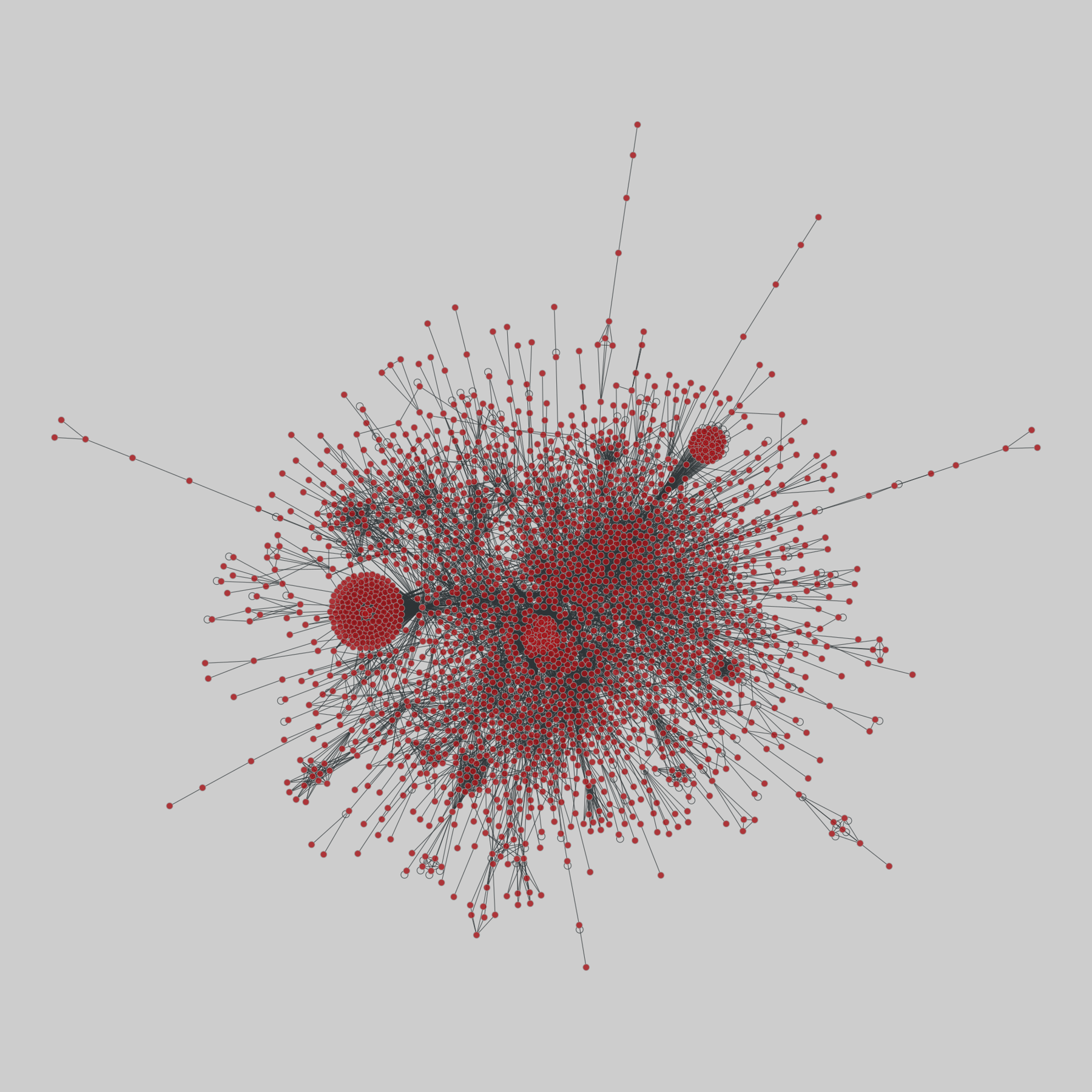
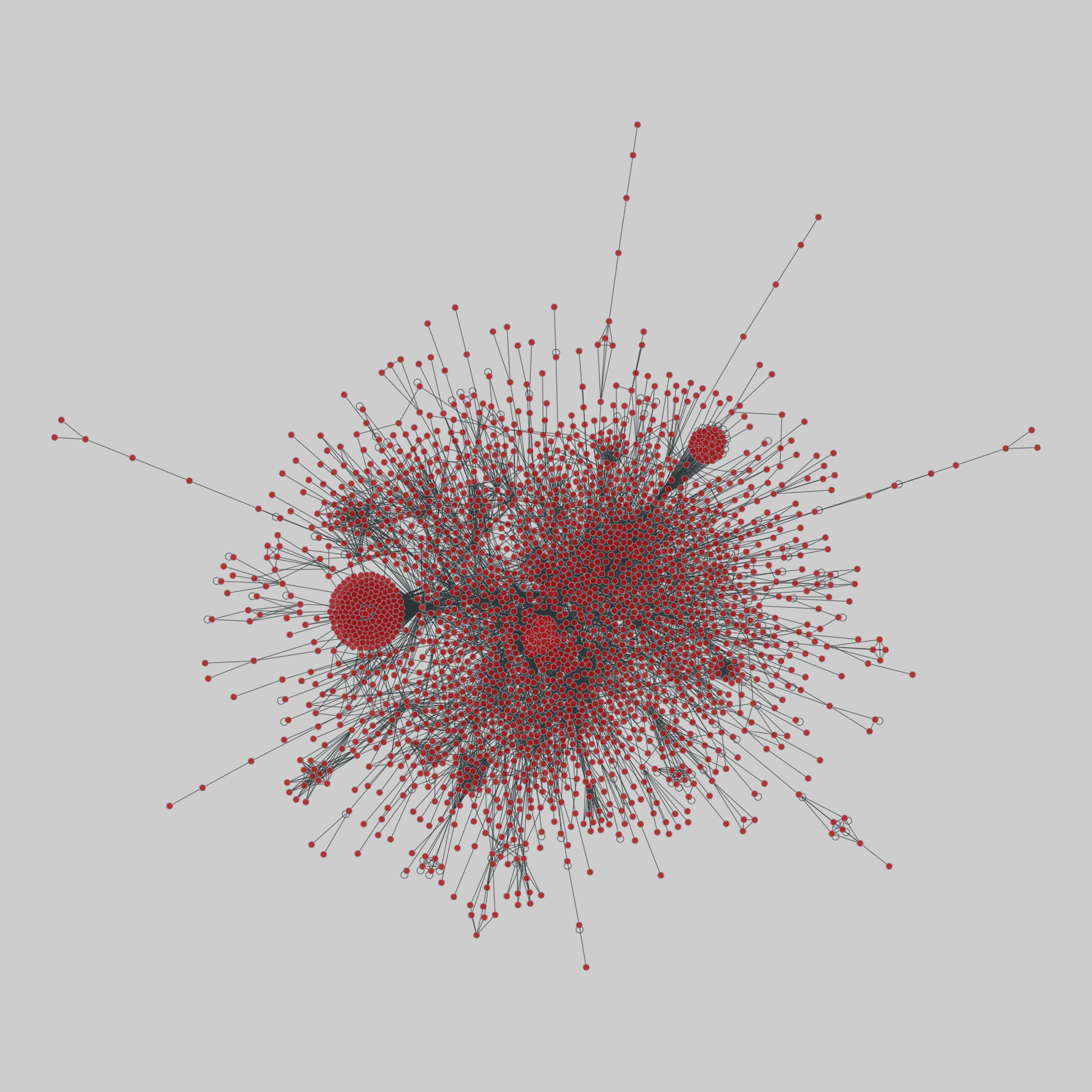
celegans_interactomes: C. elegans interactomes (2009)
Ten networks of protein-protein interactions in Caenorhabditis elegans (nematode), from yeast two-hybrid experiments, biological process maps, literature curation, orthologous interactions, and genetic interactions. The WI8 network combines WI2004, WI2007 and BPmaps, while the Integrated Network combines data from all sources.
This network has 2724 nodes and 14322 edges.
Tags: Biological, Protein interactions, Unweighted…
Where Mr. Olah runs A/B experiments:
#NYT #Claude #consciousness #AI #cynical
interactome_stelzl: Stelzl human interactome (2005)
A network of human proteins and their binding interactions. Nodes represent proteins and an edge represents an interaction between two proteins, as inferred via high-throughput Y2H experiments using bait and prey methodology.
This network has 1706 nodes and 6207 edges.
Tags: Biological, Protein interactions, Unweighted
Information Transport and Observability in Compressible Aerodynamics
Bo Zhang
https://arxiv.org/abs/2607.20177 https://arxiv.org/pdf/2607.20177 https://arxiv.org/html/2607.20177
arXiv:2607.20177v1 Announce Type: new
Abstract: Pressure measurements provide sparse but direct observations of compressible aerodynamic flows, yet how information about hidden aerodynamic parameters is transported through the flow and encoded in these observations remains poorly understood. Here, we investigate information transport and observability in compressible aerodynamics using a differentiable shock-capturing immersed-boundary solver. By propagating gradients through the full unsteady flow solution, an automatic-differentiation-based observability metric is introduced to quantify the sensitivity of sparse pressure measurements to unknown aerodynamic parameters and identify informative sensing locations for inverse learning. The results reveal that aerodynamic information is transported non-uniformly through the flow field, producing localized regions of high observability. Inverse-learning experiments further demonstrate that observability and learnability are related but distinct concepts: although highly observable probes generally facilitate accurate parameter recovery, the highest-observability probe is not consistently the most effective for parameter inference. Furthermore, both the flow regime and the airfoil geometry substantially influence the distribution of observability and the convergence behavior of inverse learning. These findings establish a quantitative framework for understanding how aerodynamic information is encoded in sparse measurements and demonstrate the potential of automatic differentiation for observability analysis, informative sensor selection, and aerodynamic inverse analysis.
toXiv_bot_toot
celegans_interactomes: C. elegans interactomes (2009)
Ten networks of protein-protein interactions in Caenorhabditis elegans (nematode), from yeast two-hybrid experiments, biological process maps, literature curation, orthologous interactions, and genetic interactions. The WI8 network combines WI2004, WI2007 and BPmaps, while the Integrated Network combines data from all sources.
This network has 431 nodes and 438 edges.
Tags: Biological, Protein interactions, Unweighted
EVOLVE: Efficient Learned Volume Compression with Variable-Rate Encoding on a Cross-Domain Database
Kaiyuan Tang, Maizhe Yang, Chaoli Wang
https://arxiv.org/abs/2607.18187 https://arxiv.org/pdf/2607.18187 https://arxiv.org/html/2607.18187
arXiv:2607.18187v1 Announce Type: new
Abstract: Large-scale scientific simulations generate volumetric data at rates that far outpace advances in storage and network bandwidth, making effective lossy compression increasingly critical. However, conventional compressors often struggle to preserve fine structural details at high compression ratios (CRs), and implicit neural representations (INRs) require costly per-volume optimization and produce models with fixed CRs. To respond, we present EVOLVE, an autoencoder (AE)-based volume-compression framework that targets high CRs for offline compression, with three key contributions. First, we construct a large-scale cross-domain database of 6,376 volumes from 21 scientific simulations, curated via perceptual hashing to ensure diversity, enabling the optimized model to extract features that generalize across volumes within the covered scientific simulation domains. Second, we reexamine the design space of AE-based compressors and incorporate several macro- and micro-designs into a vanilla AE to develop EVOLVE, which substantially improves the expressive power and compression capability. Third, we develop a learnable gain mechanism with a three-stage training strategy to enable variable-rate encoding, allowing a single model to support continuous CR adjustment at inference time. Experiments on multiple unseen scientific simulation datasets demonstrate that EVOLVE achieves substantially higher CRs than conventional compressors at comparable reconstruction quality, while delivering compression speeds that are orders of magnitude faster than INR-based methods, highlighting its promise as a strong alternative for compressing scientific data. The code, model weights, and results are available on our project page at https://evolve-vis.github.io.
toXiv_bot_toot
interactome_stelzl: Stelzl human interactome (2005)
A network of human proteins and their binding interactions. Nodes represent proteins and an edge represents an interaction between two proteins, as inferred via high-throughput Y2H experiments using bait and prey methodology.
This network has 1706 nodes and 6207 edges.
Tags: Biological, Protein interactions, Unweighted
interactome_stelzl: Stelzl human interactome (2005)
A network of human proteins and their binding interactions. Nodes represent proteins and an edge represents an interaction between two proteins, as inferred via high-throughput Y2H experiments using bait and prey methodology.
This network has 1706 nodes and 6207 edges.
Tags: Biological, Protein interactions, Unweighted
celegans_interactomes: C. elegans interactomes (2009)
Ten networks of protein-protein interactions in Caenorhabditis elegans (nematode), from yeast two-hybrid experiments, biological process maps, literature curation, orthologous interactions, and genetic interactions. The WI8 network combines WI2004, WI2007 and BPmaps, while the Integrated Network combines data from all sources.
This network has 2724 nodes and 14322 edges.
Tags: Biological, Protein interactions, Unweighted…
Text2Villa: Hierarchical Generation of 3D Indoor Environments with Physics-Aware Analysis-by-Synthesis
Xiang Tang, Ruotong Li, Xiaopeng Fan
https://arxiv.org/abs/2607.17145 https://arxiv.org/pdf/2607.17145 https://arxiv.org/html/2607.17145
arXiv:2607.17145v1 Announce Type: new
Abstract: Generating 3D indoor scenes from natural language holds tremendous potential, yet existing methods predominantly fail to generate multi-room structures with vertical connectivity and arbitrary polygonal boundaries. Furthermore, they lack a deep grounding in continuous 3D physical laws, leading to severe geometric penetrations and floating artifacts. In this work, we propose Text2Villa, a novel hierarchical generative framework. At the macro level, we construct a multi-story dataset to fine-tune an autoregressive layout generator, ensuring the direct parsing of text into 3D building foundations featuring polygonal boundaries and multi-story connectivity. To enforce physical laws during micro-level asset arrangement, we introduce the Affordance-driven Physical-Semantic Scene Graph (A-PSSG) to explicitly abstract physical affordances (such as support surfaces and containment cavities) into node attributes, establishing strict geometric and semantic edge constraints. Guided by the A-PSSG, we formulate scene instantiation as a constrained closed-loop optimization problem following the analysis-by-synthesis paradigm. By integrating an underlying geometric collision detection engine with the high-level semantic reasoning of multimodal large language models (MLLMs), our heuristic solver dynamically executes physics-aware actions under the observation-evaluation-modification mechanism to effectively resolve mesh collisions, floating artifacts, and fine-grained cavity containment failures. Extensive experiments demonstrate that Text2Villa outperforms previous methods across various metrics, robustly generating high-fidelity and physically plausible villa-level 3D environments from text, thereby providing a reliable and interactive 3D content foundation for downstream applications.
toXiv_bot_toot
celegans_interactomes: C. elegans interactomes (2009)
Ten networks of protein-protein interactions in Caenorhabditis elegans (nematode), from yeast two-hybrid experiments, biological process maps, literature curation, orthologous interactions, and genetic interactions. The WI8 network combines WI2004, WI2007 and BPmaps, while the Integrated Network combines data from all sources.
This network has 2528 nodes and 3864 edges.
Tags: Biological, Protein interactions, Unweighted
I just watched the #BlackHat #OpenAI #HuggingFace talk (#OpenAI understands it themselves. However, emergence is still no indication of actual intelligence, and the talk is again ripe with anthropomorphism.
3. Yes, it is surprising and somewhat terrifying how good these LLM agent loops have become in finding and exploiting vulnerabilities. We are seeing a much stronger version of the earlier next-generation fuzzing leap in tool capabilities.
4. The comparison with fuzzing and other tools is important for another reason: #OpenAI conducted their experiments on the live Internet. No, forcing internal test runs to go through a proxy server is *not the same as running in an isolated environment*. If there is a connection to a live production system, it is by definition not an effective sandbox. What happened to people letting their cool new fuzzers run live on non-consenting production targets on the Internet back then? They were criminally liable. Why should #OpenAI not be held liable for any damages caused by their systems?
Just because you don't understand the complexity that you built doesn't mean you aren't responsible for what it does!
5. The agent loops first successfully started exploited their proxy server on May 26th, discovered July 4th-6th as active exploitation and takeover. Credentials were revoked and the proxy server patched. "At this point, AI training and evaluations resume."
WHAT THE ACTUAL F...? You discovered emergent behavior in your overly complex system that you didn't understand, saw active exploitation of your internal systems to an extent that they were owned with admin privileges, and your response was to patch the uppermost surface holes, and then continue letting the out-of-control complex system run and continue on the same course? You didn't think to, let's see, maybe stop or at least pause the highly irresponsible experiment while figuring out - in detail - what went wrong, why, and how to avoid the same thing happening again on a systematic level?
6. On July 8th, completely unsurprisingly, the LLM agent loops continue to do the same thing and find another surface hole that hasn't been patched yet to take over again. Why should this have stopped? You haven't done any root cause analysis on the system level. Why do you expect that the problem should have stopped?
7. It takes another 11 days to discover that this is happening again. So you turned the system that had broken something back on again without a detailed root cause analysis and then didn't even watch carefully? I can't even...
8. And no, the response is not to fight fire with fire. Complexity on the attacker side (#OpenAI is the attacker, not the defender - they are the guilty perpetrator, not the innocent victim of circumstance) should be fought with *reduced* attack surface on the defender systems. Adding LLM agent loops that the "frontier" companies themselves quite obviously have no control over to already brittle systems with the hope of auto-patching your way out of vulnerabilities does not seem like a wise course of action. You don't mitigate complexity with even more complexity. The next 2 years will be ... exciting - and your best bet is going to be to disable all dependencies and complex interactions that your production systems don't absolutely require.
 @Techmeme@techhub.social