 @benb@osintua.eu
2026-01-07 19:33:44
Witkoff reveals cards: defense mechanisms & economic deal for Ukraine at final stage: https://benborges.xyz/2026/01/07/witkoff-reveals-cards-defense-mechanisms.html
@benb@osintua.euWitkoff reveals cards: defense mechanisms & economic deal for Ukraine at final stage: https://benborges.xyz/2026/01/07/witkoff-reveals-cards-defense-mechanisms.html
 @cosmos4u@scicomm.xyz
Decoding AGN Feedback with X-arithmetic - From Morphology to Physical Mechanisms: #GalaxyClusters by Numbers (and Physics): https://chandra.si.edu/photo/2025/xa/
 @arXiv_csGT_bot@mastoxiv.page
Selling Privacy in Blockchain Transactions
Georgios Chionas, Olga Gorelkina, Piotr Krysta, Rida Laraki
https://arxiv.org/abs/2512.08096 https://arxiv.org/pdf/2512.08096 https://arxiv.org/html/2512.08096
arXiv:2512.08096v1 Announce Type: new
Abstract: We study methods to enhance privacy in blockchain transactions from an economic angle. We consider mechanisms for privacy-aware users whose utility depends not only on the outcome of the mechanism but also negatively on the exposure of their economic preferences. Specifically, we study two auction-theoretic settings with privacy-aware users. First, we analyze an order flow auction, where a user auctions off to specialized agents, called searchers, the right to execute her transaction while maintaining a degree of privacy. We examine how the degree of privacy affects the revenue of the auction and, broadly, the net utility of the privacy-aware user. In this new setting, we describe the optimal auction, which is a sealed-bid auction. Subsequently, we analyze a variant of a Dutch auction in which the user gradually decreases the price and the degree of privacy until the transaction is sold. We compare the revenue of this auction to that of the optimal one as a function of the number of communication rounds. Then, we introduce a two-sided market - a privacy marketplace - with multiple users selling their transactions under their privacy preferences to multiple searchers. We propose a posted-price mechanism for the two-sided market that guarantees constant approximation of the optimal social welfare while maintaining incentive compatibility (from both sides of the market) and budget balance. This work builds on the emerging line of research that attempts to improve the performance of economic mechanisms by appending cryptographic primitives to them.
toXiv_bot_toot
 @nemobis@mamot.fr
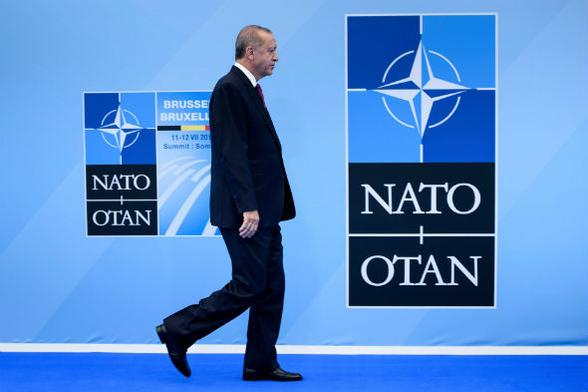
Fascinating analysis by Aurel Sari on mechanisms to effectively suspend a #NATO member (or lack thereof).
https://www.justsecurity.org/66574/can-turkey-be-expelled-from-nato/
 @cdarwin@c.im
Democracy experts believe there is no longer any doubt about Trump’s desire to interfere with this fall’s elections.
“We should not be waiting for the next shoe to drop,”
said Wendy Weiser, vice-president for democracy at the Brennan Center for Justice.
🆘“There is a full-blown effort to seize control of some of the mechanisms of our elections and to lay the foundation for interfering in upcoming elections.”
The president has no power over federal elections,
and …
 @seeingwithsound@mas.to
Non-invasive technology can shape the brain's reward-seeking mechanisms https://www.plymouth.ac.uk/news/non-invasive-technology-can-shape-the-brains-reward-seeking-mechanisms Non-invasive ultrasonic neuromodulation of the human …
 @manawyrm@chaos.social
@… DOCSIS has some really crazy mechanisms for QoS when your segment is congested, I really can‘t quite believe that‘s what you’re seeing in your rural area, though.
Are you running a DOCSIS 3.1 capable modem? What are your upstream measurements like? All channels running on proper modulation modes?
 @arXiv_condmatsuprcon_bot@mastoxiv.page
Layer-Resolved Impurity States Reveal Competing Pairing Mechanisms in Trilayer Nickelate Superconductor La$_4$Ni$_3$O$_{10}$
Suyin Zheng, Tao Zhou
https://arxiv.org/abs/2512.07636
 @burger_jaap@mastodon.social
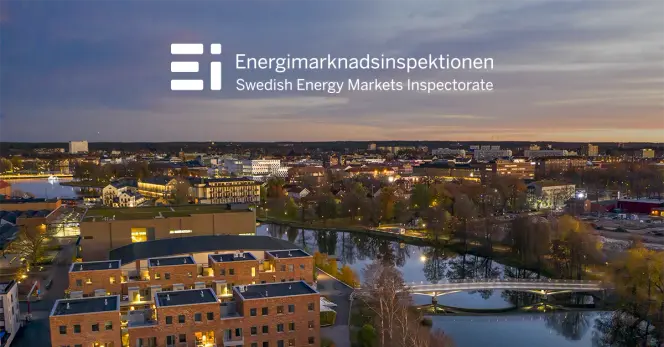
The Swedish energy regulator has approved standardised definitions for flexibility products. This makes it easier for suppliers and aggregators to optimise customer devices for local grid needs. The more flexibility offered through these market mechanisms, the lower the costs for all energy system users.
 @UP8@mastodon.social
😵💫 Targeted ultrasound can shape the brain's reward-seeking mechanisms
#ultrasound
@seeingwithsound@mas.to(paywalled) Appropriation of perceptual prostheses: an enactive approach to spatial perception https://link.springer.com/chapter/10.1007/978-3-031-91550-5_2 "analysis of the mechanisms of perception through perceptual prostheses", "A coupling device which is…
 @ruari@velocipederider.com
I made a small thing. Just a little automated masto account @… to track updates to 7-Zip and RAR (WinRAR).
Why!? 🤔 These types of archiving tools are very handy but have been known to have security issues (both had exploits last year). Plus they don't always provide automatic update mechanisms on most platforms. 😉
It …
 @rasterweb@mastodon.social
Latching mechanisms are so fucking cool! Especially the ones that do not rely on gravity.
 @arXiv_qbioNC_bot@mastoxiv.page
Setting up for failure: automatic discovery of the neural mechanisms of cognitive errors
Puria Radmard, Paul M. Bays, M\'at\'e Lengyel
https://arxiv.org/abs/2512.04808 h…
 @arXiv_csDS_bot@mastoxiv.page
Perfect Network Resilience in Polynomial Time
Matthias Bentert, Stefan Schmid
https://arxiv.org/abs/2602.03827 https://arxiv.org/pdf/2602.03827 https://arxiv.org/html/2602.03827
arXiv:2602.03827v1 Announce Type: new
Abstract: Modern communication networks support local fast rerouting mechanisms to quickly react to link failures: nodes store a set of conditional rerouting rules which define how to forward an incoming packet in case of incident link failures. The rerouting decisions at any node $v$ must rely solely on local information available at $v$: the link from which a packet arrived at $v$, the target of the packet, and the incident link failures at $v$. Ideally, such rerouting mechanisms provide perfect resilience: any packet is routed from its source to its target as long as the two are connected in the underlying graph after the link failures. Already in their seminal paper at ACM PODC '12, Feigenbaum, Godfrey, Panda, Schapira, Shenker, and Singla showed that perfect resilience cannot always be achieved. While the design of local rerouting algorithms has received much attention since then, we still lack a detailed understanding of when perfect resilience is achievable.
This paper closes this gap and presents a complete characterization of when perfect resilience can be achieved. This characterization also allows us to design an $O(n)$-time algorithm to decide whether a given instance is perfectly resilient and an $O(nm)$-time algorithm to compute perfectly resilient rerouting rules whenever it is. Our algorithm is also attractive for the simple structure of the rerouting rules it uses, known as skipping in the literature: alternative links are chosen according to an ordered priority list (per in-port), where failed links are simply skipped. Intriguingly, our result also implies that in the context of perfect resilience, skipping rerouting rules are as powerful as more general rerouting rules. This partially answers a long-standing open question by Chiesa, Nikolaevskiy, Mitrovic, Gurtov, Madry, Schapira, and Shenker [IEEE/ACM Transactions on Networking, 2017] in the affirmative.
toXiv_bot_toot
 @chris@mstdn.chrisalemany.ca
There were actually a lot of good recommendations from that Committee report, the one on PR was just the final one! Here's a few more.. including some that local #Fediverse proponents could dig into! @… was on the Committee.
—>FEDI ADVANTAGE<— “The Committee heard about a number of issues related to
the electoral information environment. Members recommend
that the provincial government collaborate with Elections
BC and the federal government to review existing legislative
and regulatory measures related to misinformation,
disinformation, and hate speech during elections, including
**mechanisms to ensure the timely removal of harmful content** (**emphasis added)”
—> FEDI ADVANTAGE<— “To better address challenges associated with social media and emergent technologies such as artificial intelligence, Members recommend establishing a working group to propose amendments to BC’s privacy and election legislation. To better protect all users, the Committee recommends requiring digital platforms to act with a duty of care and establish clear safety-related requirements such as data privacy, platform design, and content policy. The Committee also heard about concerns regarding foreign interference, and recommends that these be considered by the Electoral Integrity Working Group.”
—The Committee heard about the critical importance of
civic education to ensure the public’s understanding of
democratic institutions, processes, and participation. The
Committee recommends strengthening civic education
in the K-12 school system with input from experts and a
greater emphasis on applied learning.
— the Committee suggests enhancing data collection by requiring proactive enumeration on an annual basis and ensuring that registered parties and candidates can access poll-by-poll results. Elections BC should review and improve
voter registration practices and communication, as well as
access to and public awareness of voting opportunities. With respect to expanding voter eligibility, the Committee supports further examination of extending voting rights to 16- and 17-year-olds as well as permanent residents in BC.
— Committee Members recommend modernizing the candidate nominator verification process, requiring Elections BC to collect and share voters’ contact information with registered political parties and candidates, and strengthening measures related to access to multi-unit buildings for candidates and their campaigns.
Full report to the Legislature: #BCPoli #CanPoli #CdnPoli #ElectoralReform #Democracy #ProportionalRepresentation #Polarization
 @frankel@mastodon.top
Tracing the thoughts of a large language model
#LLM
@burger_jaap@mastodon.socialCan you guess which country's EV charging strategy prioritises market-based price signals to guide charging and discharging?
#V2G

 @lysander07@sigmoid.social
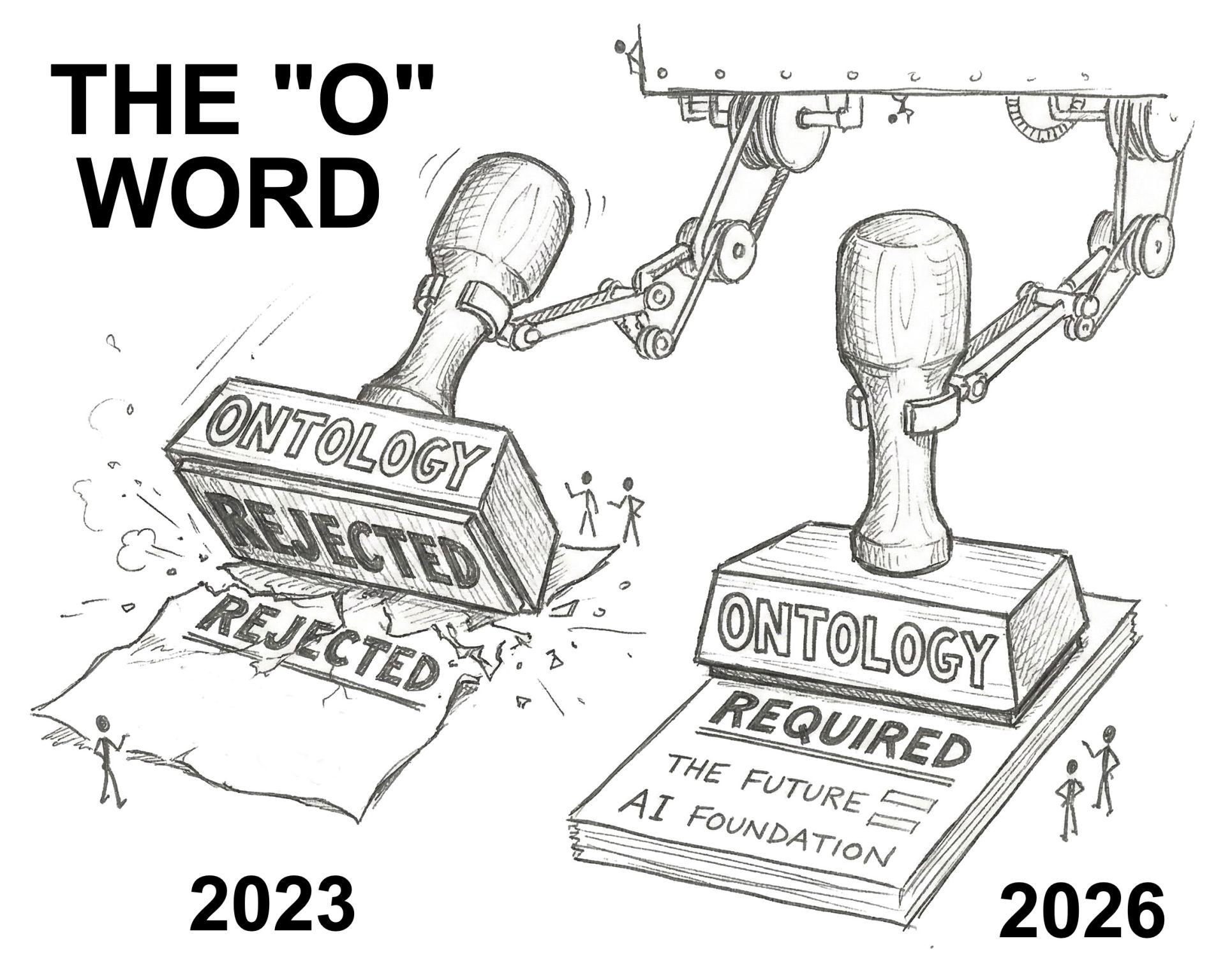
Ontology is shaping up to be the buzzword of 2026 because they are offering what #LLMs are lacking: formal grounding
LLMs offer creativity but need logical grounding. Ontologies provide this formal structure, anchoring meaning and unifying diverse data sources into a single semantic layer. They are essential for achieving precision and are one of the most reliable defense mechanisms against
 @felwert@fedihum.org
Teaching students simple #WebScraping was always quite rewarding. It opens up numerous relevant, real-world data sources that are the foundation for any further analysis. Things already got more complicated with dynamic content loading, but now bot-exclusion-mechanisms make it almost impossible in many cases. Is web scraping for the
@cdarwin@c.imTrump has effectively turned the White House into a slush fund,
running the federal government like a personal ATM.
Public money, political favors and government power are funneled to his friends and family businesses,
while regulatory agencies and enforcement mechanisms are hollowed out or weaponized for profit.
His oligarch allies, from big tech executives to big oil barons, are already seeing massive returns on their political investments.
This is not demo…
 @fortune@social.linux.pizza
There was a writer in 'Life' magazine ... who claimed that rabbits have
no memory, which is one of their defensive mechanisms. If they recalled
every close shave they had in the course of just an hour life would become
insupportable.
-- Kurt Vonnegut
 @arXiv_condmatmtrlsci_bot@mastoxiv.page
Increased Covalence and V-center mediated Dark Fenton-Like Reactions in V-doped TiO2: Mechanisms of Enhanced Charge-Transfer
Manju Kumari, Dilip Sasmal, Suresh Chandra Baral, Maneesha P, Poonam Singh, Abdelkrim Mekki, Khalil Harrabi, Somaditya Sen
https://arxiv.org/abs/2512.24219
 @david@boles.xyz
The Inheritance: When the Body Remembers What the Mind Cannot
Some secrets do not stay buried. They write themselves into blood and bone. They pass from grandmother to mother to daughter through mechanisms we are only beginning to understand. The Inheritance, the second novel in the Fractional Fiction series, asks what happens when a scientist trained to study transgenerational trauma in laboratory mice discovers that the patterns she has been mapping exist in her own…
@seeingwithsound@mas.toOscillatory multi-timescale mechanisms underlying audiovisual sequence prediction https://direct.mit.edu/imag/article/doi/10.1162/IMAG.a.1103/134754/Oscillatory-multi-timescale-mechanisms-underlying
 @ErikJonker@mastodon.social
Good article, makes you think 🤔
"How AI Destroys Institutions"
#ai
 @arXiv_physicsinsdet_bot@mastoxiv.page
Proton Energy Dependence of Radiation Induced Low Gain Avalanche Detector Degradation
Veronika Kraus, Marcos Fernandez Garcia, Luca Menzio, Michael Moll
https://arxiv.org/abs/2602.01800 https://arxiv.org/pdf/2602.01800 https://arxiv.org/html/2602.01800
arXiv:2602.01800v1 Announce Type: new
Abstract: Low Gain Avalanche Detectors (LGADs) are key components for precise timing measurements in high-energy physics experiments, including the High Luminosity upgrades of the current LHC detectors. Their performance is, however, limited by radiation induced degradation of the gain layer, primarily driven by acceptor removal. This study presents a systematic comparison of how the degradation evolves with different incident proton energies, using LGADs from Hamamatsu Photonics (HPK) and The Institute of Microelectronics of Barcelona (IMB-CNM) irradiated with 18 MeV, 24 MeV, 400 MeV and 23 GeV protons and fluences up to 2.5x10^15 p/cm2. Electrical characterization is used to extract the acceptor removal coefficients for different proton energies, whereas IR TCT measurements offer complementary insight into the gain evolution in LGADs after irradiation. Across all devices, lower energy protons induce stronger gain layer degradation, confirming expectations. However, 400 MeV protons consistently appear less damaging than both lower and higher energy protons, an unexpected deviation from a monotonic energy trend. Conversion of proton fluences to 1 MeV neutron-equivalent fluences reduces but does not eliminate these differences, indicating that the standard Non-Ionizing Energy Loss (NIEL) scaling does not fully account for the underlying defect formation mechanisms at different energies and requires revision when considering irradiation fields that contain a broader spectrum of particle types and energies.
toXiv_bot_toot
 @arXiv_csGR_bot@mastoxiv.page
Screen, Match, and Cache: A Training-Free Causality-Consistent Reference Frame Framework for Human Animation
Jianan Wang, Nailei Hei, Li He, Huanzhen Wang, Aoxing Li, Haofen Wang, Yan Wang, Wenqiang Zhang
https://arxiv.org/abs/2601.22160 https://arxiv.org/pdf/2601.22160 https://arxiv.org/html/2601.22160
arXiv:2601.22160v1 Announce Type: new
Abstract: Human animation aims to generate temporally coherent and visually consistent videos over long sequences, yet modeling long-range dependencies while preserving frame quality remains challenging. Inspired by the human ability to leverage past observations for interpreting ongoing actions, we propose FrameCache, a training-free three-stage framework consisting of Screen, Cache, and Match. In the Screen stage, a multi-dimensional, quality-aware mechanism with adaptive thresholds dynamically selects informative frames; the Cache stage maintains a reference pool using a dynamic replacement-hit strategy, preserving both diversity and relevance; and the Match stage extracts behavioral features to perform motion-consistent reference matching for coherent animation guidance. Extensive experiments on standard benchmarks demonstrate that FrameCache consistently improves temporal coherence and visual stability while integrating seamlessly with diverse baselines. Despite these encouraging results, further analysis reveals that its effectiveness depends on baseline temporal reasoning and real-synthetic consistency, motivating future work on compatibility conditions and adaptive cache mechanisms. Code will be made publicly available.
toXiv_bot_toot
 @toxi@mastodon.thi.ng
Theo Jansen still at it with full force... (life goals!)
Strandbeest evolution 2025
https://youtube.com/watch?v=ANhA94ZqnEQ
...and obligatory re-sharing of some pics of our joint generative design workshop in 2013, incl. Theo's graveyard of older Strandbeests and mechanisms:
…
 @grumpybozo@toad.social
I spent Friday trying to hack into a customer box in India. They need support but have "secured" the system beyond the reach of the access mechanisms they have offered. None of the 4 different VPN’s we operate for their US operations can reach the box directly, so I must RDP into a domain controller in Mumbai, which they replaced without telling us. After finally getting to the box, none of the dozen passwords they’ve provided over the years work.
Definitely billable hours. <…
 @@arXiv_physicsatomph_bot@mastoxiv.page@mastoxiv.page
Trapping and cooling mechanisms in blue-detuned magneto-optical traps of molecules
Qinshu Lyu, M. R. Tarbutt
https://arxiv.org/abs/2601.21097 https://arxiv…
@seeingwithsound@mas.to(PDF) Neural mechanisms underlying intracortical microstimulation for sensory restoration https://www.nature.com/articles/s41551-025…
 @arXiv_csLG_bot@mastoxiv.page
Weighted Stochastic Differential Equation to Implement Wasserstein-Fisher-Rao Gradient Flow
Herlock Rahimi
https://arxiv.org/abs/2512.17878 https://arxiv.org/pdf/2512.17878 https://arxiv.org/html/2512.17878
arXiv:2512.17878v1 Announce Type: new
Abstract: Score-based diffusion models currently constitute the state of the art in continuous generative modeling. These methods are typically formulated via overdamped or underdamped Ornstein--Uhlenbeck-type stochastic differential equations, in which sampling is driven by a combination of deterministic drift and Brownian diffusion, resulting in continuous particle trajectories in the ambient space. While such dynamics enjoy exponential convergence guarantees for strongly log-concave target distributions, it is well known that their mixing rates deteriorate exponentially in the presence of nonconvex or multimodal landscapes, such as double-well potentials. Since many practical generative modeling tasks involve highly non-log-concave target distributions, considerable recent effort has been devoted to developing sampling schemes that improve exploration beyond classical diffusion dynamics.
A promising line of work leverages tools from information geometry to augment diffusion-based samplers with controlled mass reweighting mechanisms. This perspective leads naturally to Wasserstein--Fisher--Rao (WFR) geometries, which couple transport in the sample space with vertical (reaction) dynamics on the space of probability measures. In this work, we formulate such reweighting mechanisms through the introduction of explicit correction terms and show how they can be implemented via weighted stochastic differential equations using the Feynman--Kac representation. Our study provides a preliminary but rigorous investigation of WFR-based sampling dynamics, and aims to clarify their geometric and operator-theoretic structure as a foundation for future theoretical and algorithmic developments.
toXiv_bot_toot
 @ripienaar@devco.social
Lets Encrypt for IP addresses \o/
https://letsencrypt.org/2026/01/15/6day-and-ip-general-availability.html
 @Dragofix@veganism.social
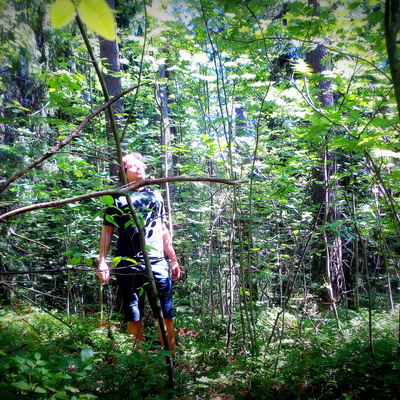
Scientists shocked as bumblebees learn to read simple “Morse code” #bee
@UP8@mastodon.social💮 Compact LET Arrays for Origami-Based Mechanisms
#robotics #mechanical
@frankel@mastodon.top6-day and IP Address Certificates are Generally Available
#LetsEncrypt
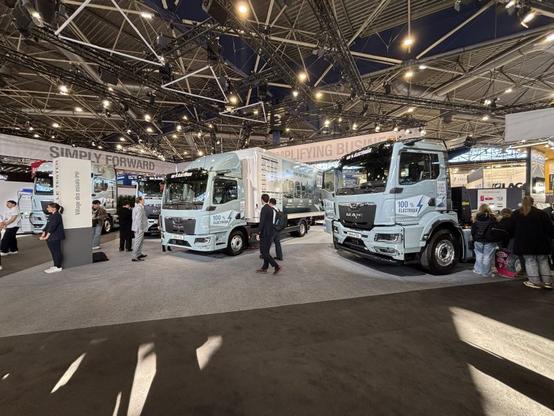
@burger_jaap@mastodon.socialMAN Trucks and EDF in France have launched an electric truck package that guarantees price parity with the diesel equivalent. Smart charging plays a key role in reducing energy costs by 30–50%.
https://www.linkedin.com/posts/jaapburger_
@arXiv_condmatmtrlsci_bot@mastoxiv.pageMechanisms of Resistive Switching in 2D Monolayer and Multilayer Materials
M. Kaniselvan, Y. R. Jeon, M. Mladenovi\'c, M. Luisier, D. Akinwande
https://arxiv.org/abs/2511.21242
@UP8@mastodon.social🐛 Mechanisms and Perspectives of Microplastic Biodegradation by Insects and Their Associated Microorganisms
#bugs

 @arXiv_physicsgenph_bot@mastoxiv.page
Non-Gravitational Acceleration in 3I ATLAS: Constraints on Exotic Volatile Outgassing in Interstellar Comets
Florian Neukart
https://arxiv.org/abs/2511.07450 https://arxiv.org/pdf/2511.07450 https://arxiv.org/html/2511.07450
arXiv:2511.07450v1 Announce Type: new
Abstract: The interstellar comet 3I/ATLAS exhibited a measurable nongravitational acceleration similar in form to that of 1I/'Oumuamua but of smaller magnitude. Using thermophysical and Monte Carlo models, we show that this acceleration can be fully explained by anisotropic outgassing of conventional volatiles, primarily CO and CO2, under realistic surface and rotational conditions. The model includes diurnal and obliquity-averaged energy balance, empirical vapor-pressure relations, and collimated jet emission from localized active regions. Mixed CO-CO2 compositions reproduce both the magnitude and direction of the observed acceleration with physically plausible active fractions below one percent for nucleus radii between 0.5 and 3 km. Less volatile species such as NH3 and CH4 underproduce thrust at equilibrium temperatures near 1 AU. These results eliminate the need for nonphysical or exotic explanations and define thermophysical limits for natural acceleration mechanisms in interstellar comets.
toXiv_bot_toot
@arXiv_qbioNC_bot@mastoxiv.pageMeta-learning three-factor plasticity rules for structured credit assignment with sparse feedback
Dimitra Maoutsa
https://arxiv.org/abs/2512.09366 https://arxiv.org/pdf/2512.09366 https://arxiv.org/html/2512.09366
arXiv:2512.09366v1 Announce Type: new
Abstract: Biological neural networks learn complex behaviors from sparse, delayed feedback using local synaptic plasticity, yet the mechanisms enabling structured credit assignment remain elusive. In contrast, artificial recurrent networks solving similar tasks typically rely on biologically implausible global learning rules or hand-crafted local updates. The space of local plasticity rules capable of supporting learning from delayed reinforcement remains largely unexplored. Here, we present a meta-learning framework that discovers local learning rules for structured credit assignment in recurrent networks trained with sparse feedback. Our approach interleaves local neo-Hebbian-like updates during task execution with an outer loop that optimizes plasticity parameters via \textbf{tangent-propagation through learning}. The resulting three-factor learning rules enable long-timescale credit assignment using only local information and delayed rewards, offering new insights into biologically grounded mechanisms for learning in recurrent circuits.
toXiv_bot_toot
@seeingwithsound@mas.toThe psychology of collective abandonment https://www.psychologytoday.com/us/blog/harnessing-hybrid-intelligence/202511/the-psychology-of-collective-abandonment Why we choose
@seeingwithsound@mas.to(2024) Rapid desensitization to retinally stabilized flickering stimuli https://iovs.arvojournals.org/article.aspx?articleid=2797077 To the extent that mechanisms for perceptual fading are in the brain it could have consequences for visual cortical prostheses.
@arXiv_qbioNC_bot@mastoxiv.pageReplaced article(s) found for q-bio.NC. https://arxiv.org/list/q-bio.NC/new
[1/1]:
- State-space kinetic Ising model reveals task-dependent entropy flow in sparsely active nonequilib...
Ken Ishihara, Hideaki Shimazaki
https://arxiv.org/abs/2502.15440 https://mastoxiv.page/@arXiv_qbioNC_bot/114057779012161849
- Mechanisms for anesthesia, unawareness, respiratory depression, memory replay and sleep: MHb > IP...
Karin Vadovi\v{c}ov\'a
https://arxiv.org/abs/2509.04454 https://mastoxiv.page/@arXiv_qbioNC_bot/115167812677714466
- Meta-learning three-factor plasticity rules for structured credit assignment with sparse feedback
Dimitra Maoutsa
https://arxiv.org/abs/2512.09366 https://mastoxiv.page/@arXiv_qbioNC_bot/115699940165988688
- Prefrontal scaling of reward prediction error readout gates reinforcement-derived adaptive behavi...
Sang, Huang, Zhong, Wang, Yu, Li, Feng, Wang, Chai, Menon, Wang, Fang, Wang
https://arxiv.org/abs/2512.09761 https://mastoxiv.page/@arXiv_qbioNC_bot/115700046994546552
- Proof of a perfect platonic representation hypothesis
Liu Ziyin, Isaac Chuang
https://arxiv.org/abs/2507.01098 https://mastoxiv.page/@arXiv_csLG_bot/114788750477759162
toXiv_bot_toot
@arXiv_qbioNC_bot@mastoxiv.pageManifolds and Modules: How Function Develops in a Neural Foundation Model
Johannes Bertram, Luciano Dyballa, T. Anderson Keller, Savik Kinger, Steven W. Zucker
https://arxiv.org/abs/2512.07869 https://arxiv.org/pdf/2512.07869 https://arxiv.org/html/2512.07869
arXiv:2512.07869v1 Announce Type: new
Abstract: Foundation models have shown remarkable success in fitting biological visual systems; however, their black-box nature inherently limits their utility for under- standing brain function. Here, we peek inside a SOTA foundation model of neural activity (Wang et al., 2025) as a physiologist might, characterizing each 'neuron' based on its temporal response properties to parametric stimuli. We analyze how different stimuli are represented in neural activity space by building decoding man- ifolds, and we analyze how different neurons are represented in stimulus-response space by building neural encoding manifolds. We find that the different processing stages of the model (i.e., the feedforward encoder, recurrent, and readout modules) each exhibit qualitatively different representational structures in these manifolds. The recurrent module shows a jump in capabilities over the encoder module by 'pushing apart' the representations of different temporal stimulus patterns; while the readout module achieves biological fidelity by using numerous specialized feature maps rather than biologically plausible mechanisms. Overall, we present this work as a study of the inner workings of a prominent neural foundation model, gaining insights into the biological relevance of its internals through the novel analysis of its neurons' joint temporal response patterns.
toXiv_bot_toot