 @hex@kolektiva.social
2025-10-30 10:05:59
The fracturing of the Dutch far-right, after Wilder's reminded everyone that bigots are bad at compromise, is definitely a relief. Dutch folks I've talked to definitely see D66 as progressive, <strike>so there's no question this is a hard turn to the left (even if it's not a total flip to the far-left)</strike> a lot of folks don't agree. I'm going to let the comments speak rather than editorialize myself..
While this is a useful example of how a democracy can be far more resilient to fascism than the US, that is, perhaps, not the most interesting thing about Dutch politics. The most interesting thing is something Dutch folks take for granted and never think of as such: there are two "governments."
The election was for the Tweede Kamer. This is a house of representatives. The Dutch use proportional representation, so people can (more or less) vote for the parties they actually want. Parties <strike>rarely</strike> never actually get a ruling majority, so they have to form coalition governments. This forces compromise, which is something Wilders was extremely bad at. He was actually responsible for collapsing the coalition his party put together, which triggered this election... and a massive loss of seats for his party.
Dutch folks do still vote strategically, since a larger party has an easier time building the governing coalition and the PM tends to come from the largest party. This will likely be D66, which is really good for the EU. D66 has a pretty radical plan to solve the housing crisis, and it will be really interesting to see if they can pull it off. But that's not the government I want to talk about right now.
In the Netherlands, failure to control water can destroy entire towns. A good chunk of the country is below sea level. Both floods and land reclamation have been critical parts of Dutch history. So in the 1200's or so, the Dutch realized that some things are too important to mix with normal politics.
You see, if there's an incompetent government that isn't able to actually *do* anything (see Dick Schoof and the PVV/VVD/NSC/BBB coalition) you don't want your dikes to collapse and poulders to flood. So the Dutch created a parallel "government" that exists only to manage water: waterschap or heemraadschap (roughly "Water Board" in English). These are regional bureaucracies that exist only to manage water. They exist completely outside the thing we usually talk about as a "government" but they have some of the same properties as a government. They can, for example, levy taxes. The central government contributes funds to them, but lacks authority over them. Water boards are democratically elected and can operate more-or-less independent of the central government.
Controlling water is a common problem, so water boards were created to fulfill the role of commons management. Meanwhile, so many other things in politics run into the very same "Tragedy of the Commons" problems. The right wing solution to commons management is to let corporations ruin everything. The left-state solution is to move everything into the government so it can be undermined and destroyed by the right. The Dutch solution to this specific problem has been to move commons management out of the domain of the central government into something else.
And when I say "government" here, I'm speaking more to the liberal definition of the term than to an anarchist definition. A democratically controlled authority that facilitates resource management lacks the capacity for coercive violence that anarchists define as "government." (Though I assume they might leverage police or something if folks refuse to pay their taxes, but I can't imagine anyone choosing not to.)
As the US federal government destroys the social fabric of the US, as Trump guts programs critical to people's survival, it might be worth thinking about this model. These authorities weren't created by any central authority, they evolved from the people. Nothing stops Americans from building similar institutions that are both democratic and outside of the authority of a government that could choose to defund and abolish them... nothing but the realization that yes, you actually can.
#USPol #NLPol
 @Techmeme@techhub.social
2026-01-01 00:50:40
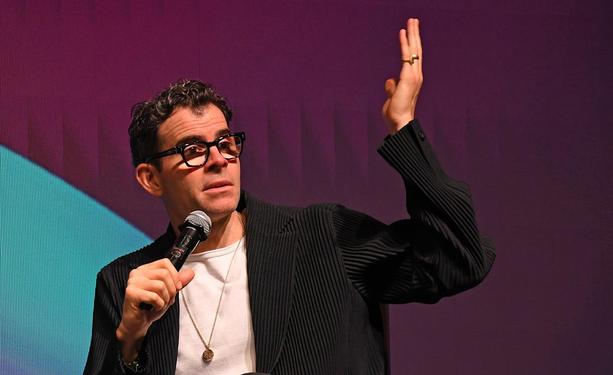
Adam Mosseri details trends shaping Instagram and says it'll be more practical to authenticate real media than label AI, as AI gets better at imitating reality (Karissa Bell/Engadget)
https://www.engadget.com/s…

 @Mediagazer@mstdn.social
2026-01-01 01:25:41
Adam Mosseri details trends shaping Instagram and says it'll be more practical to authenticate real media than label AI, as AI gets better at imitating reality (Karissa Bell/Engadget)
https://www.engadget.com/s…
 @tiotasram@kolektiva.social
2025-11-29 11:40:52
Just finished "It's Lonely at the Center of the Earth" by Zoe Thorogood.
CW: Frank/graphic discussion of suicide and depression (not in this post but in the book).
It feels a bit wrong to simply give it my review here as I would another graphic memoir, because it's much more personal and less consensual than the usual. It feels less like Thorogood has invited us into her life than like she was forced to put her life on display in order to survive, and while I selfishly like to read into the book that she benefited in some way from the process, she's honest about how tenuous and sometimes false that claim can be. Knowing what I've learned from this book about Thorogood's life and demons, I don't want her to feel the mortification of being perceived by me, and so perhaps the best thing I could do is to simply unread the book and pull it back out of my memories.
I did not find Thorogood's life relatable, nor pitiable (although my instinct bends in that direction), but instead sacred and unknowable. I suspect that her writing and drawing has helped others in similar circumstances, but she leaves me with no illusion that this fact brings her any form of peace or joy. I wonder what she would feel reading "Lab Girl" or "The Deep Dark," but she has been honest enough to convey that such speculation on my part is a bit intrusive.
I guess the one other thing I have to say: Zoe Thorogood has through artistic perseverance developed an awe-inspiring mastery of the comic medium, from panel composition, through to page layout and writing. This book wields both Truth and Beauty.
#AmReading #ReadingNow
 @DrPlanktonguy@ecoevo.social
2025-11-29 14:30:16
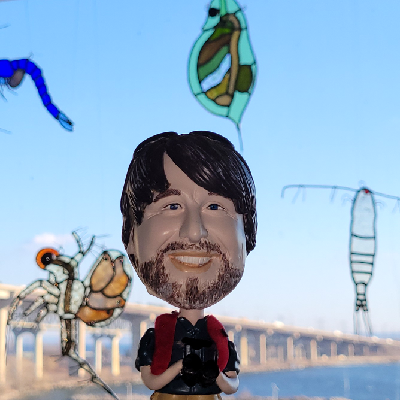
Weekend #Plankton Factoid 🦠🦐
Many aquatic animals are described as "filter feeders" but this is not functionally correct since it would require water forced through a mesh. Instead, most zooplankton, including copepods, are suspension feeders. They create feeding current gyres using appendages, and use spiny modified ones (maxillae) to intercept individual algal particles and move …


 @leftsidestory@mstdn.social
2025-11-01 03:57:06
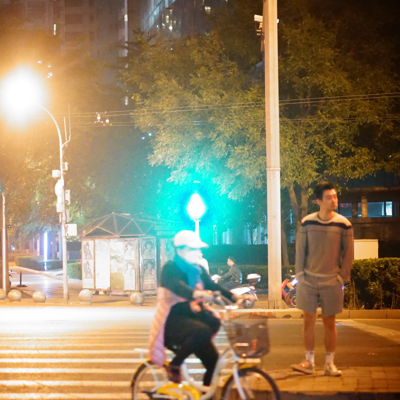
Moody Urbanity - Paces 🏃♀️
情绪化城市 -配速 🏃♀️
📷 Zeiss IKON Super Ikonta 533/16
🎞️ Ilford HP5 400, expired 1993
#filmphotography #Photography #blackandwhite




 @mpsgoettingen@academiccloud.social
2025-10-30 13:28:14
ESA’s space probe #JUICE is headed towards a truly unexpected encounter: on November 2nd, observations of interstellar object #3IATLAS will begin. Read more about contributions from #mpsgoettingen
@leftsidestory@mstdn.social2025-12-01 00:30:02
Moody Urbanity - Old & New IV 🔆
情绪化城市 - 新与旧 IV 🔆
📷 Nikon FE
🎞️ Ilford HP5 Plus 400, expired 1993
#filmphotography #Photography #blackandwhite


 @Techmeme@techhub.social
2025-10-31 08:46:42
YouTube is revamping its TV app to mimic paid streamers like Netflix, organizing videos by seasons and episodes, blurring the lines between pro and user content (Janko Roettgers/The Verge)
https://www.theverge.com/column/809883/inside-youtubes-transformation-…
 @leftsidestory@mstdn.social
2025-10-31 00:30:00
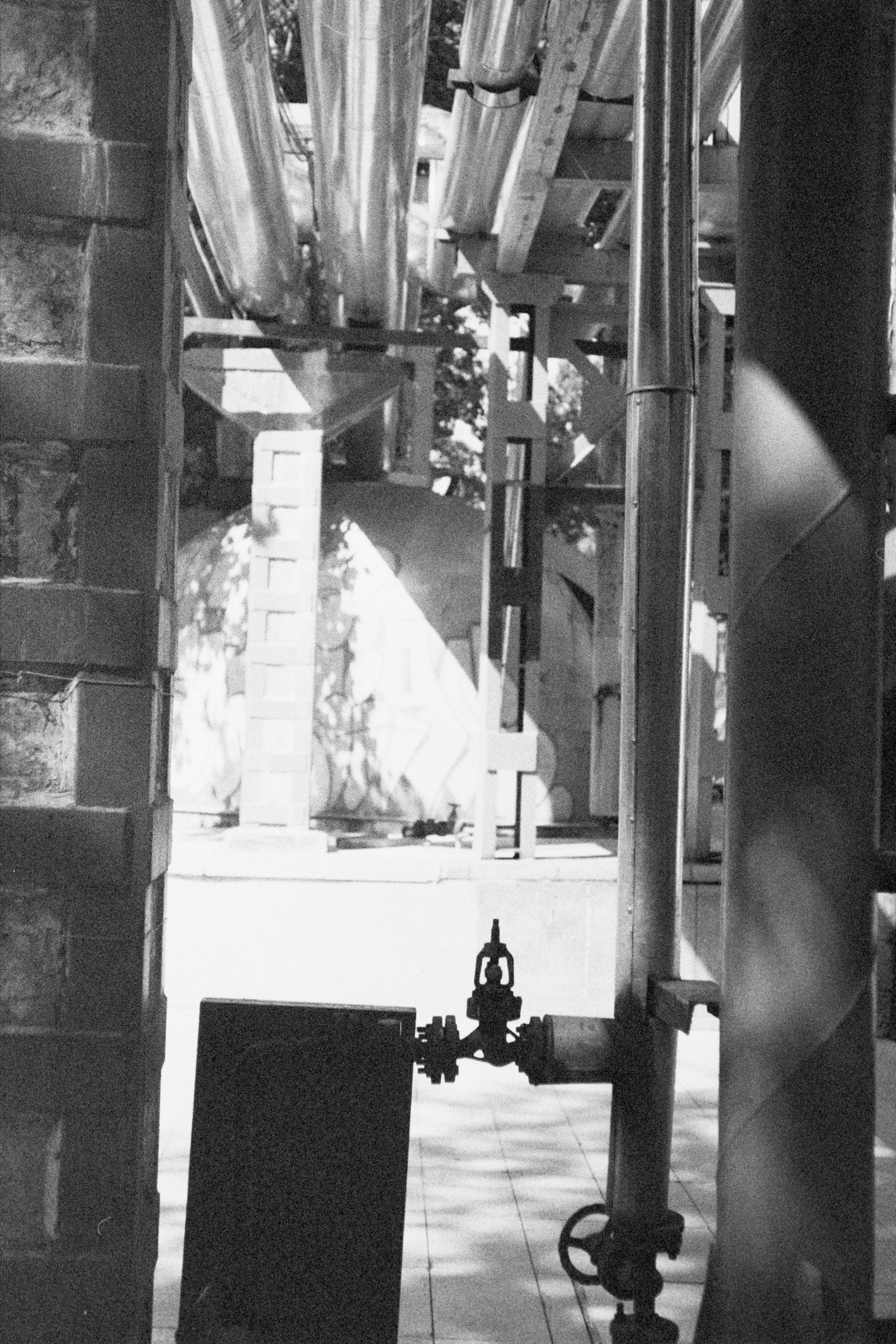
Moody Urbanity - Ups & Downs ⬆️⬇️
情绪化城市 - 上上下下 ⬆️⬇️
📷 Pentax MX
🎞️ Ilford HP5 Plus 400, expired 1993
#filmphotography #Photography #blackandwhite