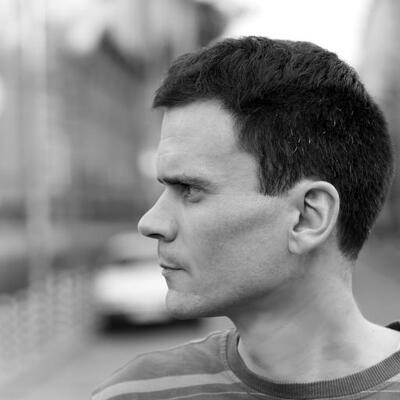
Human-machine learning boosts noninvasive brain-computer control in untrained users https://techxplore.com/news/2026-07-human-machine-boosts-noninvasive-brain.html "working on noninvasive brain-computer interfaces (BCIs) to develop technology that is…
This month on All Space Considered, Griffith Observatory welcomed Dr. Joel Leja, Associate Professor of astronomy & astrophysics at The Pennsylvania State University, to discuss his research on the processes of galaxy formation derived from a combination of statistics, machine learning, and deep galaxy surveys with telescopes like the James Webb Space Telescope: #LittleRedDots
AWS SVP Dave Brown is leaving after 19 years for a new job; he led compute and machine learning services and is a member of the S-team advising Andy Jassy (Greg Bensinger/Reuters)
https://www.reuters.com/technology/amazon-aws-ex…
On the Structural Limits of Machine Learning Decision Systems: An Information-Theoretic, Interaction-Based, and Stochastic-Dynamical Perspective
Nestor R. Barraza, Gabriel Pena
https://arxiv.org/abs/2608.13510 https://arxiv.org/pdf/2608.13510 https://arxiv.org/html/2608.13510
arXiv:2608.13510v1 Announce Type: new
Abstract: Machine learning procedures are commonly evaluated in terms of predictive accuracy and computational efficiency. However, their achievable performance is fundamentally constrained by structural properties of the underlying data-generating process, which are formalized in terms of informational bounds. In this work we examine intrinsic limits of data-driven decision systems from an information-theoretic and interaction-based perspective. We analyze minimal achievable error in classification through Fano-type bounds and precision limits in parametric estimation via the Cram\'er-Rao inequality, emphasizing that such limits depend on the underlying model rather than on algorithmic sophistication alone. We further discuss how implicit assumptions, such as independence, ergodicity, and distributional stability, affect the validity of inferential procedures. Building on interaction-based modeling principles, we review typical frameworks such as Markov Random Fields and potential based representations for encoding dependence mechanisms. We also describe decision systems, including LLM-integrated agent architectures, as feedback-driven stochastic processes where state-dependent dynamics may induce emergent macroscopic behavior. This perspective highlights the importance of having adequate models for the data as a prerequi- site for expanding predictive capability, and situates algorithmic learning within the informational limits imposed by the models.
toXiv_bot_toot
The sheer amount of intentionality and thought that went into designing @…'s local ML processing is so heartwarming. It represents the best of what CS can be --- thoughtfully designing software to empower people ♥️
https://ente.com/…
A Scoping Review of Physics Informed Machine Learning for Wave Propagation Modeling in Seismology
\'Oscar Rinc\'on-Carde\~no, Gregorio P\'erez-Bernal, Silvana Montoya-Noguera, Nicol\'as Guar\'in-Zapata
https://arxiv.org/abs/2607.00178 https://arxiv.org/pdf/2607.00178 https://arxiv.org/html/2607.00178
arXiv:2607.00178v1 Announce Type: new
Abstract: \emph{Background:} Standard numerical methods accurately simulate seismic waves but are computationally expensive, particularly for inverse problems. Machine learning approaches have been proposed as alternatives that can reduce computational cost while maintaining acceptable physical accuracy. \emph{Objective:} To map how physics-informed machine learning methods have been applied to seismic wave propagation modeling based on partial differential equations. \emph{Methods:} A scoping review was conducted using the OpenAlex and Scopus databases. Selected studies were classified by problem type (forward or inverse) and machine learning strategy to identify research trends, methodological patterns, and gaps in the literature. \emph{Results:} Physics-informed machine learning has been applied to both forward modeling and inversion in seismology, often reaching accuracy comparable to standard numerical methods at lower computational cost. Application of three mechanisms for incorporating physical knowledge were identified: observational bias, inductive bias, and learning bias. To evaluate methodological reproducibility of a representative method, the original PINN framework was replicated in PyTorch, obtaining results consistent with and in most cases more accurate than those originally reported. From the reviewed literature, limitations remain in benchmarking consistency, training cost, and scalability to three-dimensional and experimentally validated problems. \emph{Conclusions:} Standard numerical methods remain the basis of seismological workflows, while physics-informed machine learning offers complementary approaches that are useful for inverse problems and surrogate modeling. Future work should focus on consistent benchmarking, hybrid formulations, and validation under realistic geophysical conditions.
toXiv_bot_toot
The Angle of Attack: What a Hunting Pack Knows About Geometry and What a Machine is Learning to do with It.
A wolf does not charge a moose head-on. It runs toward the place the moose will be, and it arrives there beside other wolves who each compute that same future from a different spot on the field....
Global Circulation of Martian Ionospheric Currents Revealed by #Magnetometer Data: #Mars with Magnetic Field Data: #MAVEN satellite track magnetic fields on Mars; it can also track atmospheric circulation, using machine learning.
Problematic, the large majority of developers us AI tools, regardless that added value looks limited. But AI in coding is here to stay so how to deal with that?
"The scarce skill is no longer writing code. Erik Brown, a senior partner at management and technology consulting firm West Monroe, explained, "It's knowing what should be built, how it should be architected "
Amazon Web Services (AWS), said customers using its EC2 Capacity Blocks for Machine Learning service will face hourly price increases of around 20% from July.
https://www.computing.co.uk/news/2026/aws-
Immich seems pretty nice, but... its docker-compose container suite is *6 Gigabytes*. That's absurd. The machine learning tagger container isn't even the largest! The app container itself is over 3 GB.
WTH?
#Immich #Docker
Closed-Form of the Local Galactic Potential and Stellar Distribution Function from Gaia DR3
Indranil Das, Adam Kamoski, Dora Demiri, Brianna Isola, Hanieh Karimi, Dmitrii S. Zagorulia
https://arxiv.org/abs/2609.09011 https://arxiv.org/pdf/2609.09011 https://arxiv.org/html/2609.09011
arXiv:2609.09011v1 Announce Type: new
Abstract: The local dark matter density determines the strength of the signal expected in direct-detection experiments, yet published estimates from stellar motions disagree by more than their errors, and the most recent machine-learning analysis of Gaia data finds a local density consistent with zero. According to Jeans' theorem, a distribution function built from integrals of motion satisfies the collisionless Boltzmann equation (CBE) trivially for any choice of potential, so a search that simultaneously fits the distribution function and the potential to the CBE identifies neither. Our pipeline instead estimates the distribution function in isolation, linearizing the equation in terms of accelerations and allowing for direct measurement of the local force field, and then fits closed forms to that field via symbolic regression. Throughout, we find that the usable information lies not in the CBE residual but in the stellar number counts, the observable most distorted by survey selection. Along the vertical profile, our recovered potential agrees with the classical self-gravitating isothermal disc.
toXiv_bot_toot
Enhancing Attack Detection Capabilities in BACnet/IP Networks Using Machine-Learning Models
Derek Manzella, John D. Hastings
https://arxiv.org/abs/2607.20686 https://arxiv.org/pdf/2607.20686 https://arxiv.org/html/2607.20686
arXiv:2607.20686v1 Announce Type: new
Abstract: Building Automation Systems (BAS) manage critical building functions using protocols such as BACnet/IP, yet defenders have limited tooling and few labeled datasets for detecting BACnet-specific attacks. This work addresses these gaps through three contributions. First, CISA's Zeek BACnet parser is modified to produce a unified per-packet log, simplifying feature engineering for machine-learning (ML) pipelines. Second, a simulated BACnet/IP testbed is developed using bacpypes3 to model a small commercial HVAC system with physics-based device behavior, schedule-aware controller logic, and per-packet attack labeling. Third, five unsupervised anomaly detection models are evaluated using baseline traffic and six BACnet attack types, including denial of service, reconnaissance, property tampering, and false data injection. Results show that One-Class SVM achieved the strongest overall performance, with an average F1 score of 0.864 across all attacks and F1 scores above 0.99 for high-volume denial-of-service and reconnaissance attacks. Detection is much stronger for high-volume attacks, such as DoS attacks and reconnaissance, than stealthier techniques such as tampering and false data injection, which scored around 77%.
toXiv_bot_toot
[2026-06-22 Mon (UTC), no new articles found for cs.LG Machine Learning]
toXiv_bot_toot
Replaced article(s) found for physics.ao-ph. https://arxiv.org/list/physics.ao-ph/new
[1/1]:
- Knowledge-guided machine learning for disentangling Pacific sea surface temperature variability a...
Kyle J. C. Hall, Maria J. Molina, Emily F. Wisinski, Gerald A. Meehl, Antoniett…
Limits of the inverse scattering problem
Matvei Fedin, Kirill Gubarev, Andrey Morozov
https://arxiv.org/abs/2608.13105 https://arxiv.org/pdf/2608.13105 https://arxiv.org/html/2608.13105
arXiv:2608.13105v1 Announce Type: new
Abstract: The main goal of tomography is the reconstruction of density function out of its line integrals (integral measurements of this density along x-ray lines). Such construction is possible and known as inverse x-ray/Radon transformations. We are interested in generalization of this problem to the case of particles. For this we need to limit the speed of these particles, otherwise the problem is reduced to the previous one. The question we discuss in this paper is how low can this speed be depending on the parameters of the studied potential. We study this problem using simple theoretical examples and Machine Learning pipeline to restore the potential.
toXiv_bot_toot
The DOD seeks to recruit engineers experienced in frontier AI, machine learning and automation, and data systems, to embed them "down to the unit level" (John Harney/Bloomberg)
https://www.bloomberg.com/news/articles/20
We should take seriously the possibility that the dependence and psychological spiral in the QP are not just an accident, but the result of conscious product design on the part of AI vendors.
Capitalism’s two favorite business models are (1) systemic capture and (2) addiction. We know AI corps are aiming for (1); that’s their explicit investor pitch. Consider the possibility that they’re aiming for (2) as well. Cigarette companies worked hard to make their products •more• addictive. Do we really think these companies with trillions of dollars of investor pressure on them aren’t doing the same?
There’s a lot of ways machine learning could create a different psychological experience for product users — and right now, vendors are pointedly not choosing those alternatives.
2/2
Optical free space extreme learning machine for the implementation of emergent complex systems
Elena Moreno, Fernando Soldevila, Daniel Torrent
https://arxiv.org/abs/2609.00933 …
Replaced article(s) found for math.DS. https://arxiv.org/list/math.DS/new
[2/2]:
- Generic-case complexity of Whitehead's algorithm, revisited
Ilya Kapovich
https://arxiv.org/abs/1903.07040
- Exponential mixing for the randomly forced NLS equation
Yuxuan Chen, Shengquan Xiang, Zhifei Zhang, Jia-Cheng Zhao
https://arxiv.org/abs/2506.10318 https://mastoxiv.page/@arXiv_mathAP_bot/114675099940694476
- Machine-Precision Prediction of Low-Dimensional Chaotic Systems from Noise-Free Data
Christof Sch\"otz, Niklas Boers
https://arxiv.org/abs/2507.09652
- Limit theorems for inhomogeneous $\phi$-mixing Markov chains
Yeor Hafouta, Brenden Williams
https://arxiv.org/abs/2510.15323 https://mastoxiv.page/@arXiv_mathPR_bot/115405447591487390
- A kernel method for the learning of Wasserstein geometric flows
Jianyu Hu, Juan-Pablo Ortega, Daiying Yin
https://arxiv.org/abs/2511.06655 https://mastoxiv.page/@arXiv_mathNA_bot/115530572827554967
- Null-Validated Topological Signatures of Financial Market Dynamics
Samuel W. Akingbade
https://arxiv.org/abs/2602.00383 https://mastoxiv.page/@arXiv_qfinST_bot/116006072151481289
- Simple generators of rational function fields
Alexander Demin, Gleb Pogudin
https://arxiv.org/abs/2602.10878 https://mastoxiv.page/@arXiv_csSC_bot/116056681962763734
- Martin Boundary and Invariant Fields of Multiplicative SHE
Hongyi Chen
https://arxiv.org/abs/2602.16126 https://mastoxiv.page/@arXiv_mathPR_bot/116096386900973756
- Counting the number of $1_{m}$-preperiodic $\mathcal{O}_{K}$-points of a discrete dynamical syste...
Brian Kintu
https://arxiv.org/abs/2606.14468 https://mastoxiv.page/@arXiv_mathNT_bot/116753018953819097
- Shadowing and Hyperbolicity for Endomorphisms of Locally Compact Groups
Dekui Peng
https://arxiv.org/abs/2606.27647 https://mastoxiv.page/@arXiv_mathGR_bot/116832321784455128
- Uniform $L^{\infty}$-Boundedness of Global Attractors for Reaction-Diffusion Equations with Neuma...
Antonio L. Pereira
https://arxiv.org/abs/2607.08061 https://mastoxiv.page/@arXiv_mathAP_bot/116894588437564813
- Stability of closed characteristics and invariant sets on star-shaped hypersurfaces
Huagui Duan, Zihao Qi
https://arxiv.org/abs/2607.15546 https://mastoxiv.page/@arXiv_mathSG_bot/116951161229689295
- Vakonomic Fluids
Ritoban Roy-Chowdhury, Mohammad Sina Nabizadeh, Oliver Gross, Anthony Gruber, Albert Chern
https://arxiv.org/abs/2607.18312 https://mastoxiv.page/@arXiv_mathph_bot/116962502170736360
toXiv_bot_toot
Well said,
"Models will keep getting cheaper and better. Your competitor gets the same discount, so it buys you nothing. The durable edge is the data you have organized and can trust, testing you actually run, and people who can tell when a confident answer is still wrong."
#AI
Conditional Normalizing Flow for Gas-Surface Scattering from Thermal to Hypersonic Velocities
Miklas Sch\"utte, Stephen Hocker, Hansj\"org Lipp, Johannes Roth, Stefanos Fasoulas, Marcel Pfeiffer
https://arxiv.org/abs/2606.31928 https://arxiv.org/pdf/2606.31928 https://arxiv.org/html/2606.31928
arXiv:2606.31928v1 Announce Type: new
Abstract: Accurate aerodynamic modeling of satellites in very low Earth orbit (VLEO) requires gas-surface interaction (GSI) models that capture the full velocity spectrum from thermal to orbital speeds. Atmospheric particles initially strike spacecraft surfaces at hypersonic velocities of 6 000 - 10 000 m/s. Due to surface roughness and complex geometries, especially within air-breathing electric propulsion (ABEP) intake systems, multiple collisions occur, progressively reducing the particle velocities. A recent machine learning framework for deriving scattering kernels from molecular dynamics (MD) simulations has shown promise, but remains limited to high-velocity single impacts and possibly violates fundamental equilibrium principles such as detailed balance. This work extends this machine learning based scattering kernel to cover the complete velocity range using conditional normalizing flows trained with physics-informed constraints, enabling accurate modeling of multi-bounce scenarios in realistic VLEO applications. We train a conditional Real-valued Non-Volume Preserving (cRealNVP) model on expanded molecular dynamics simulations covering velocities from thermal to hypersonic speeds, incorporating a detailed balance loss term. The resulting model demonstrates improved accuracy compared to previous approaches even in the original high-velocity regime, while successfully capturing thermal-velocity scattering. Quantitative assessment shows that thermalization is approximated within acceptable tolerances. This framework provides essential capabilities for accurate ABEP intake optimization and VLEO mission planning while offering a general methodology applicable to broader rarefied gas dynamics problems requiring thermodynamic consistency.
toXiv_bot_toot
Replaced article(s) found for physics.geo-ph. https://arxiv.org/list/physics.geo-ph/new
[1/1]:
- Regimes of rotating convection in an experimental model of the Earth's tangent cylinder
Rishav Agrawal, Martin Holdsworth, Alban Poth\'erat
https://arxiv.org/abs/2408.07837 https://mastoxiv.page/@arXiv_physicsgeoph_bot/112970809988434109
- Machine learning enhanced data assimilation framework for multiscale carbonate rock characterization
Bo, Elsheikh, Menke, Maes, Geiger, Kashim, Bakar, Singh
https://arxiv.org/abs/2602.06989 https://mastoxiv.page/@arXiv_physicsgeoph_bot/116045261443672160
- Guided Unconditional and Conditional Generative Models for Super-Resolution and Inference of Quas...
Anantha Narayanan Suresh Babu, Akhil Sadam, Pierre F. J. Lermusiaux
https://arxiv.org/abs/2507.00719 https://mastoxiv.page/@arXiv_physicsfludyn_bot/114782990520242000
- PCP-GAN: Property-Constrained Pore-scale image reconstruction via conditional Generative Adversar...
Ali Sadeghkhani, Brandon Bennett, Masoud Babaei, Arash Rabbani
https://arxiv.org/abs/2510.19465 https://mastoxiv.page/@arXiv_csCV_bot/115422929244004682
- Fate of Secondary Droplets Produced by High-speed Raindrops Interacting with a Liquid Pool
Han-Hsiang Kuo, Xuanting Hao
https://arxiv.org/abs/2604.10491 https://mastoxiv.page/@arXiv_physicsfludyn_bot/116402146676519672
- Excursion-set structure factor of the auroral electric field
Magnus F Ivarsen, Kaili Song, Jean-Pierre St-Maurice, Glenn C Hussey
https://arxiv.org/abs/2606.26854 https://mastoxiv.page/@arXiv_physicsspaceph_bot/116815350546290631
toXiv_bot_toot
Crosslisted article(s) found for physics.app-ph. https://arxiv.org/list/physics.app-ph/new
[1/1]:
- Geometric Superconducting Diode Effect in an NbN Nanoring
Li, Huang, Li, Shang, Yang, Xu, Yue, Lyu, Li, Xiong, Tu, Tao, Jia, Chen, Wang, Wu, Wang
https://arxiv.org/abs/2607.20794 https://mastoxiv.page/@arXiv_condmatsuprcon_bot/116973866726287047
- Uni-XAS: Alignment-Driven Bidirectional Multimodal Learning for X-ray Absorption Spectroscopy
Zhong, Zhao, Huang, Xu, Xu, Tao, Fang, Cheng, Tang
https://arxiv.org/abs/2607.20906 https://mastoxiv.page/@arXiv_condmatmtrlsci_bot/116973913129528548
- Monolithic Magneto-Optical Mach-Zehnder Isolator Using Laser-Annealed Iron Garnet on a Silicon Wa...
Sugita, Motoji, Yoshihara, Maeda, Yamamoto, Miyashita, Ishiyama, Goto
https://arxiv.org/abs/2607.20964 https://mastoxiv.page/@arXiv_physicsoptics_bot/116973875770402667
- Matrix-free phase-field modeling of fracture in micromechanical testing simulations of inelastic ...
Di Gioacchino, Shakeri, Atkins, Stengel, Ghaffari, Thompson, Brown
https://arxiv.org/abs/2607.21150 https://mastoxiv.page/@arXiv_physicscompph_bot/116973849426928766
- Machine learning based prediction of optical properties in two-dimensional Mo-W-S-Se-Te transitio...
Vivek Chowdhury, Tarvir Anjum Aditto, Md. Samrat, Hafiz Imtiaz, Ahmed Zubair
https://arxiv.org/abs/2607.21246 https://mastoxiv.page/@arXiv_condmatmtrlsci_bot/116973941637010048
- Bayesian evidence adaptive pursuit to identify neutron sources with scatter-based spectrometers
David Breitenmoser, William Heriot, Peter Marleau, Shaun D. Clarke, Sara A. Pozzi
https://arxiv.org/abs/2607.21543 https://mastoxiv.page/@arXiv_physicsinsdet_bot/116973871839453430
toXiv_bot_toot
A Cosmic Muon Tomography System with Machine Learning based Momentum Measurement for Multi-Object Reconstruction and Material Characterization
Bharat Kumar Sirasva, Rohit Gupta, Satyajit Jena
https://arxiv.org/abs/2608.23141
Crosslisted article(s) found for nlin.SI. https://arxiv.org/list/nlin.SI/new
[1/1]:
- Two-dimensional Toda--Arnoldi correspondence: Holomorphic Krylov geometry and counterdiabatic tra...
Urei Miura
https://arxiv.org/abs/2608.04850 https://mastoxiv.page/@arXiv_quantph_bot/117047618895534612
- Machine-Learning Search for Lax Connections
Osamu Fukushima, Tomohiro Shigemura, Ryosuke Suda, Norihiro Tanahashi, Kentaroh Yoshida
https://arxiv.org/abs/2608.05146 https://mastoxiv.page/@arXiv_hepth_bot/117047572101225603
toXiv_bot_toot
And that's where I have to leave it. I need to work on some other projects. I just want to leave this as a thing to think about.
We know the weaknesses of our enemy. If we focus on exploiting those weaknesses, on learning and adapting, we will win. The machine may be strong, but it's also big, slow, and incompetent. We are nimble, and we can win.
Dinosaurs will die. Be the weird little tree rats that survive this age of apocalypse.
Replaced article(s) found for cs.LG. https://arxiv.org/list/cs.LG/new
[7/11]:
- Evaluating Universal Machine Learning Force Fields Against Experimental Measurements
Mannan, Bihani, Gonzales, Lee, Gosvami, Ranu, Miret, Krishnan
Deepfake News Detection: A Multimodal Framework Integrating LipNet, DeepSpeech and ResNET for Enhanced Audio-Visual Analysis
Ameena Khan, Muhammad Ahsan Aziz, Muhammad Junaid Asif, Naeem Akhter, Rana Fayyaz Ahmad
https://arxiv.org/abs/2607.20579 https://arxiv.org/pdf/2607.20579 https://arxiv.org/html/2607.20579
arXiv:2607.20579v1 Announce Type: new
Abstract: Deepfake news refers to AI-generated (or AI ma-nipulated) multimedia content intentionally generated to deceive audiences by manipulating the facial expressions, or speech while maintaining the realistic appearance. The rapid progress of generative AI has made the synthesis of highly realistic fake videos and cloned voices widely accessible, posing a serious threat to the authenticity of digital news media. This paper presents a multi-modal framework that discerns the authenticity of video content by jointly exploiting audio and visual cues, thereby addressing the challenge of detecting the deepfake videos. We proposed a framework that involves features extraction from lip movements, audio content and video frames. Lip movements and speech content are encoded using the LipNet and DeepSpeech2 models, while facial features are extracted by leveraging the use of BlazeFace and represented with ResNet18. The extracted feature vectors are concatenated into a holistic video representation and classified with an ensemble of machine learning and deep learning models, including Random Forest (RF), Multi-layer Perceptron (MLP) and Long Short-Term Memory (LSTM) networks. Exten-sive experiments performed on the FakeAVCeleb dataset shows that the proposed approach attains an accuracy of 94% using augmented audio features, outperforming a state-of-the-art multi-modal ensemble baseline. The results confirm the robustness and practical potential of the proposed framework for deepfake news detection.
toXiv_bot_toot
A Scoping Review of Physics Informed Machine Learning for Wave Propagation Modeling in Seismology
\'Oscar Rinc\'on-Carde\~no, Gregorio P\'erez-Bernal, Silvana Montoya-Noguera, Nicol\'as Guar\'in-Zapata
https://arxiv.org/abs/2607.00178
A formal log(Re)-cost framework for the engineering turbulence problem
Jiaqi Li, Robert F. Kunz, George Huang, Xiang I. A. Yang
https://arxiv.org/abs/2607.20199 https://arxiv.org/pdf/2607.20199 https://arxiv.org/html/2607.20199
arXiv:2607.20199v1 Announce Type: new
Abstract: In fluid engineering, the turbulence problem is the longstanding challenge of obtaining accurate predictions of engineering quantities at affordable computational cost. Viewed through computational complexity, a practical algorithm requires cost growth no worse than $O(N)$, where $N$ denotes problem size. For turbulent flows, the problem size may be approximated by the number of dynamically relevant scales and hence by the Reynolds number $Re$. We propose a multi-fidelity, physics-constrained, data-driven framework designed to meet this criterion under stated assumptions. We augment the Spalart--Allmaras model through field inversion and machine learning using a constrained formulation that preserves the law of the wall. The model is trained at a low Reynolds number, where high-fidelity data are affordable, and deployed at higher Reynolds numbers. For a mean-flow-aligned grid in a wall-bounded flow, fixed spanwise resolution, and steady-solver cost linear in grid-point count, the low-fidelity RANS prediction scales as $O(\log(Re))$. The high-fidelity calculation and learning stage each contribute $O(Re^0)$ relative to the target Reynolds number, giving an overall formal cost of $O(\log(Re))$. In plane channel flow, a model trained at $Re_\tau=1000$ corrects the wake-layer error of the baseline model and retains the improvement at $Re_\tau=5200$. In the periodic hill, a model trained at $Re_b=5600$ is tested at $Re_b=10595$, $19000$, and $37000$. The constrained formulation preserves separation and recovery behavior as Reynolds number increases, yields the lowest root-mean-square error across all tests, and exhibits nearly Reynolds-number-independent error, indicating robust extrapolation.
toXiv_bot_toot
Crosslisted article(s) found for physics.comp-ph. https://arxiv.org/list/physics.comp-ph/new
[1/1]:
- Hybrid Two-Level Transport Method with Solution Decomposition in Macro and Micro Components
Caleb A. Shaw, Dmitriy Y. Anistratov
https://arxiv.org/abs/2607.01346 https://mastoxiv.page/@arXiv_mathNA_bot/116854910030264363
- Predicting Novel Stable Materials for Experimental Synthesis
Yuqi An, Sihong Zhu, Joseph Montoya, Xingyu Guo, Zhenbin Wang
https://arxiv.org/abs/2607.01713 https://mastoxiv.page/@arXiv_condmatmtrlsci_bot/116854978846171607
- An Optimisation Framework for the Well-Conditioned Training of Physics-Informed Neural Networks
Joseph Webb, Sadok Jerad, Coralia Cartis
https://arxiv.org/abs/2607.02194 https://mastoxiv.page/@arXiv_csLG_bot/116855143607520453
- Efficient Large-Scale STEM-EELS Simulations With Torched-TACAW
Martin Osmera, Jo\~ao Vaz, Paul M. Zeiger, J\'an Rusz
https://arxiv.org/abs/2607.02236 https://mastoxiv.page/@arXiv_condmatmtrlsci_bot/116855081674592173
- Grounded autonomous research: a fault-tolerant LLM pipeline from corpus to manuscript in frontier...
Haonan Huang
https://arxiv.org/abs/2607.02329 https://mastoxiv.page/@arXiv_csAI_bot/116855126306616827
- Beyond Adam: SOAP and Muon for Faster, Label-Efficient Training of Machine Learning Interatomic P...
Harari, Zimmermann, Kulseng, Zichi, Tan, Descoteaux, Kozinsky
https://arxiv.org/abs/2607.02499 https://mastoxiv.page/@arXiv_csLG_bot/116855152847861336
toXiv_bot_toot
Replaced article(s) found for cs.CR. https://arxiv.org/list/cs.CR/new
[1/2]:
- Facade: High-Precision Insider Threat Detection Using Deep Contextual Anomaly Detection
Alex Kantchelian, et al.
https://arxiv.org/abs/2412.06700 https://mastoxiv.page/@arXiv_csCR_bot/113627226016881063
- Enhancing Membership Inference Attacks on Diffusion Models from a Frequency-Domain Perspective
Puwei Lian, Yujun Cai, Songze Li, Bingkun Bao
https://arxiv.org/abs/2505.20955 https://mastoxiv.page/@arXiv_csCR_bot/114584229384238830
- Cryptographic Choreographies
Sebastian M\"odersheim, Simon Lund, Alessandro Bruni, Marco Carbone, Rosario Giustolisi
https://arxiv.org/abs/2602.12967 https://mastoxiv.page/@arXiv_csCR_bot/116079470877038972
- TALUS: FIPS-204-Exact Threshold ML-DSA via Boundary Clearance
Leo Kao, Raymond Chang
https://arxiv.org/abs/2603.22109 https://mastoxiv.page/@arXiv_csCR_bot/116283533730322814
- SafeHarbor: Defining Precise Decision Boundaries via Hierarchical Memory-Augmented Guardrail for ...
Liu, Ying, Zhang, Zou, Zhang, Yang, Zhang, Peng
https://arxiv.org/abs/2605.05704 https://mastoxiv.page/@arXiv_csCR_bot/116537968700983890
- AI Security Policy Should Assess Systems, Not Only Models
Michael A. Riegler, Inga Str\"umke
https://arxiv.org/abs/2605.09504 https://mastoxiv.page/@arXiv_csCR_bot/116560756584469721
- Efficient and Privacy Aware Edge Cloud Collaborative Inference for Large Language Models
Cheng Li, Jiexiong Liu, Yixuan Chen, Yi Li
https://arxiv.org/abs/2607.13093 https://mastoxiv.page/@arXiv_csCR_bot/116928605403267286
- From Neural Intent to Cryptographic Authorization: Securing AI-Driven Enterprise Workflows
Jiasi Weng, Jian Weng, Minrong Chen, Ming Li, Jia-Nan Liu, Zhi Li, Yue Zhang
https://arxiv.org/abs/2607.15596 https://mastoxiv.page/@arXiv_csCR_bot/116951166143038362
- Towards an Automated Test of LLM Security Knowledge
Shufan Chai, Liangliang Sun, Jessica Staddon
https://arxiv.org/abs/2607.18496 https://mastoxiv.page/@arXiv_csCR_bot/116962579240952448
- DynaMark: A Reinforcement Learning Framework for Dynamic Watermarking in Industrial Machine Tool ...
Navid Aftabi, Abhishek Hanchate, Satish Bukkapatnam, Dan Li
https://arxiv.org/abs/2508.21797 https://mastoxiv.page/@arXiv_eessSY_bot/115128274334268839
- CLOAK: Contrastive Guidance for Latent Diffusion-Based Data Obfuscation
Xin Yang, Omid Ardakanian
https://arxiv.org/abs/2512.12086 https://mastoxiv.page/@arXiv_csLG_bot/115729063749487767
toXiv_bot_toot
Toward a mechanistic understanding of inference in visual cortex and diffusion models
Zeyu Yun, Alexander Belsten, Dasheng Bi, Zahra Kadkhodaie, Yubei Chen, Bruno A. Olshausen
https://arxiv.org/abs/2607.15693 https://arxiv.org/pdf/2607.15693 https://arxiv.org/html/2607.15693
arXiv:2607.15693v1 Announce Type: new
Abstract: We describe a model of perceptual inference in primary visual cortex (V1) equivalent to a minimal diffusion model whose function can be readily understood from its parameters. The model is based on sparse coding with a non-factorial prior over latent variables in the form of an unconstrained, pairwise interaction matrix, extending standard sparse coding inference to a general recurrent dynamical system. We efficiently train these recurrent dynamics using a denoising score-matching objective and implicit differentiation. After training on natural images, the learned interaction matrix mirrors the structure of horizontal connections in superficial layers of V1 that link neurons of similar orientation tuning. This model exhibits exceptionally good denoising performance, restoring image features such as extended contours amid extreme visual ambiguity, nearly matching the behavior of standard, black-box diffusion architectures in generalization regime. Owing to the model's simplicity, the network's Jacobian can be decomposed directly in terms of the interaction matrix between latent variables, revealing mechanistically how the recurrent dynamics assign high probability over a continuous family of natural structural deformations. Intriguingly, within this circuit, a large fraction of latent variables learn to disconnect from visual input altogether, essentially forming a hierarchical representation that appears to enforce global consistency among image features. Together, the model and results bridge two distinct domains: for neuroscience, it generates concrete, testable hypotheses regarding functional connectivity in recurrent neural circuits during perceptual inference tasks; for machine learning, it elucidates the internal mechanisms learned by diffusion models that allow them to generate infinitely many novel images from a finite training set.
toXiv_bot_toot
RE: https://mastodonapp.uk/@JohnSullivan/116842603611650876
“Some of the company’s most experienced personnel left before all of their accumulated knowledge could be fully transferred into Ford’s automated systems…”
This is apparently the new line for blaming companies for AI failures: you didn’t fully upload the brains of your senior people before firing them! You have to complete the extraction process first! Suck them dry, •then• discard them!
Machine learning does not actually work that way, but…in this FOMO-driven industry, anything goes to blame the customer.
🧵
Label-Free Finite-Volume-Residual Training of Attention Graph Neural Networks for Coupled Thermo-Fluid Fields
Tianyu Li, Zhiwei Cao, Qingang Zhang, Ruihang Wang, Binyang Song, Yonggang Wen
https://arxiv.org/abs/2607.20321 https://arxiv.org/pdf/2607.20321 https://arxiv.org/html/2607.20321
arXiv:2607.20321v1 Announce Type: new
Abstract: Neural surrogates are widely used in scientific machine learning for fast prediction of three-dimensional (3D) thermo-fluid fields. However, generating training data using conventional numerical solvers often incurs substantial computational and storage costs. We propose to train an attention graph neural network by minimizing the finite-volume method (FVM) residuals of the governing equations. These residuals are evaluated directly on the mesh, requiring no labeled data. We evaluate the trained surrogates against computational fluid dynamics (CFD) references and a data-supervised baseline across four scenarios. On the two steady-state benchmarks, the FVM-loss model achieves an all-field normalized root-mean-square error (nRMSE) of 2.3-2.8%. It demonstrates close agreement with the CFD references, including the buoyancy-energy coupling. On the two parametric transient cases, the FVM-loss model outperforms the supervised baseline in terms of accuracy, while avoiding the data-generation cost entirely. These results indicate that the FVM loss can provide a practical training signal for neural surrogates and reduce the model development cost.
toXiv_bot_toot
 @seeingwithsound@mas.to