Tootfinder

Opt-in global Mastodon full text search. Join the index!

@compfu@mograph.social

2026-02-18 19:39:19

RE: mograph.social/@thevfxfeed/116
To be honest, a machine-learning model for Nuke where the training data is clearly sourced and free of legal baggage would be a really good thing. There are so many image segmentation and inpainti…

@usul@piaille.fr
2026-01-17 21:01:10

Two Years of Building AI in Firefox | Tarek Ziadé
blog.ziade.org/2025/12/05/two-

@Techmeme@techhub.social

2026-02-06 13:40:52

How an appeal changed the way the USPTO assesses AI patents under the US Patent Act, signaling a shift towards more favorable treatment of AI and ML inventions (Matthew Carey/Bloomberg Law)
news.bloomberglaw.com/tech-and

@UP8@mastodon.social
2026-03-16 21:39:44

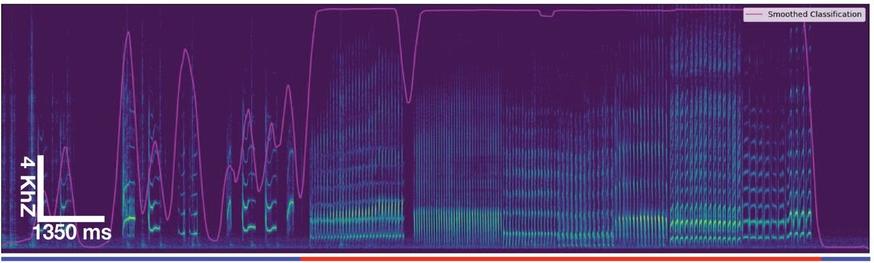
🎶 TweetyBERT parses canary songs to better understand how brains learn language
#birds

@NFL@darktundra.xyz
2026-01-16 16:16:25

NFL Divisional Round anytime touchdown scorer picks, odds: Model locks in anytime TD scorer best bets

cbssports.com/nfl/news/nfl-div

@inthehands@hachyderm.io
2026-02-14 20:01:58

RE: mastodon.social/@airspeedswift
Reflections on Trusting Trust and the Trust You’re Trusting is an Opaque, Nondeterministic Machine Learning Model

CETI is a nonprofit organization
applying advanced machine learning and state-of-the-art robotics
to listen to and translate the communication of sperm whales.
Our research focus is in Dominica
in the Eastern Caribbean
projectceti.org/

@berlinbuzzwords@floss.social
2026-01-15 12:21:04

Only one month remains until our Call for Papers ends!
Seize the opportunity to submit your proposal for this year's Berlin Buzzwords and be part of Europe’s leading conference for modern data infrastructure, search, and machine learning.
Submit now: 2026.berlinbuzzwords.de/call-f

@primonatura@mstdn.social
2026-01-14 15:00:51

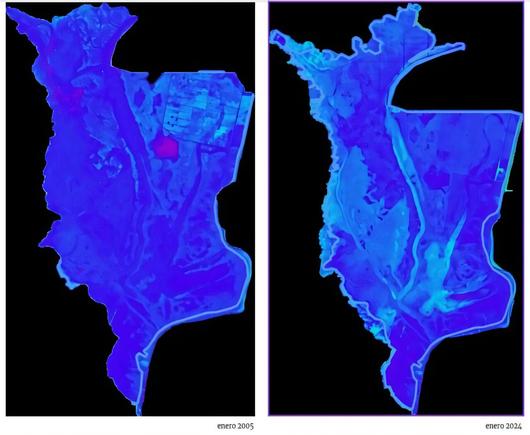
"AI for Nature Restoration Tools: How Companies are Transforming Ecosystem Recovery Projects"
#AI #ArtificialIntelligence #Nature

@ruth_mottram@fediscience.org
2026-03-09 11:37:16

Machine Learning techniques are upending multiple scientific fields. Operational 5-day forecasting of air quality in 1 minute in this paper from Chinese researchers.
This is awesome work with very clear public health implications.
EDIT for clarity: I am.not suggesting LLMs have anything to do with this work, but many people hear AI and imagine LLMs. And many of them.are perhaps rightly sceptical of AI as a result.
But AI or ML techniques can be useful for lots of things, not just chatbots. And we should probably invest more in those.

nature.com/articles/s41586-026

@UP8@mastodon.social
2026-03-03 15:14:58

⚰️ Fentanyl or phony? Machine learning algorithm learns to pick out opioid signatures
#sensors

@cosmos4u@scicomm.xyz
2026-02-10 23:49:42

Possible identification of the Luna 9 Moon landing site using a novel machine learning algorithm: #Luna9 Spacecraft, 60 Years After It Vanished: iflscience.com/nasas-lunar-orb

@drgeraint@glasgow.social

2026-02-09 21:58:38
Content warning: Injury details

The dangers of relying on machine learning uncritically.
reuters.com/investigations/ai-

@jorgecandeias@mastodon.social
2026-01-09 15:44:54

RE: mas.corq.co/@rogue_corq/115865
Estes estão a dizer que encontraram o Maduro através de IA.
Não me custa a crer. Os sistemas de machine learning são bons a detetar padrões estatísticos (baseiam-se nisso, ališs) e uma consequênci…

@ruth_mottram@fediscience.org
2026-03-04 06:39:44

The preprint of the paper is here btw: #MachineLearning methods to emulate #Greenland ice sheet melt via European Weather Cloud computing
europeanweather.cloud/use-case

@Carwil@mastodon.online
2026-03-04 01:40:03

Confirmation in the press that the US DoD and Palantir are using AI and machine learning software to produce and speed up target listing. thetimes.com/world/middle-east

@datascience@genomic.social
2026-02-01 11:00:00

Tidy Modeling with R: #rstats #machinelearning

@arXiv_csLG_bot@mastoxiv.page
2026-02-25 16:07:47

Replaced article(s) found for cs.LG. arxiv.org/list/cs.LG/new
[2/6]:
- Performance Asymmetry in Model-Based Reinforcement Learning
Jing Yu Lim, Rushi Shah, Zarif Ikram, Samson Yu, Haozhe Ma, Tze-Yun Leong, Dianbo Liu
arxiv.org/abs/2505.19698 mastoxiv.page/@arXiv_csLG_bot/
- Towards Robust Real-World Multivariate Time Series Forecasting: A Unified Framework for Dependenc...
Jinkwan Jang, Hyungjin Park, Jinmyeong Choi, Taesup Kim
arxiv.org/abs/2506.08660 mastoxiv.page/@arXiv_csLG_bot/
- Wasserstein Barycenter Soft Actor-Critic
Zahra Shahrooei, Ali Baheri
arxiv.org/abs/2506.10167 mastoxiv.page/@arXiv_csLG_bot/
- Foundation Models for Causal Inference via Prior-Data Fitted Networks
Yuchen Ma, Dennis Frauen, Emil Javurek, Stefan Feuerriegel
arxiv.org/abs/2506.10914 mastoxiv.page/@arXiv_csLG_bot/
- FREQuency ATTribution: benchmarking frequency-based occlusion for time series data
Dominique Mercier, Andreas Dengel, Sheraz Ahmed
arxiv.org/abs/2506.18481 mastoxiv.page/@arXiv_csLG_bot/
- Complexity-aware fine-tuning
Andrey Goncharov, Daniil Vyazhev, Petr Sychev, Edvard Khalafyan, Alexey Zaytsev
arxiv.org/abs/2506.21220 mastoxiv.page/@arXiv_csLG_bot/
- Transfer Learning in Infinite Width Feature Learning Networks
Clarissa Lauditi, Blake Bordelon, Cengiz Pehlevan
arxiv.org/abs/2507.04448 mastoxiv.page/@arXiv_csLG_bot/
- A hierarchy tree data structure for behavior-based user segment representation
Liu, Kang, Iyer, Malik, Li, Wang, Lu, Zhao, Wang, Liu, Liu, Liang, Yu
arxiv.org/abs/2508.01115 mastoxiv.page/@arXiv_csLG_bot/
- One-Step Flow Q-Learning: Addressing the Diffusion Policy Bottleneck in Offline Reinforcement Lea...
Thanh Nguyen, Chang D. Yoo
arxiv.org/abs/2508.13904 mastoxiv.page/@arXiv_csLG_bot/
- Uncertainty Propagation Networks for Neural Ordinary Differential Equations
Hadi Jahanshahi, Zheng H. Zhu
arxiv.org/abs/2508.16815 mastoxiv.page/@arXiv_csLG_bot/
- Learning Unified Representations from Heterogeneous Data for Robust Heart Rate Modeling
Zhengdong Huang, Zicheng Xie, Wentao Tian, Jingyu Liu, Lunhong Dong, Peng Yang
arxiv.org/abs/2508.21785 mastoxiv.page/@arXiv_csLG_bot/
- Monte Carlo Tree Diffusion with Multiple Experts for Protein Design
Liu, Cao, Jiang, Luo, Duan, Wang, Sosnick, Xu, Stevens
arxiv.org/abs/2509.15796 mastoxiv.page/@arXiv_csLG_bot/
- From Samples to Scenarios: A New Paradigm for Probabilistic Forecasting
Xilin Dai, Zhijian Xu, Wanxu Cai, Qiang Xu
arxiv.org/abs/2509.19975 mastoxiv.page/@arXiv_csLG_bot/
- Why High-rank Neural Networks Generalize?: An Algebraic Framework with RKHSs
Yuka Hashimoto, Sho Sonoda, Isao Ishikawa, Masahiro Ikeda
arxiv.org/abs/2509.21895 mastoxiv.page/@arXiv_csLG_bot/
- From Parameters to Behaviors: Unsupervised Compression of the Policy Space
Davide Tenedini, Riccardo Zamboni, Mirco Mutti, Marcello Restelli
arxiv.org/abs/2509.22566 mastoxiv.page/@arXiv_csLG_bot/
- RHYTHM: Reasoning with Hierarchical Temporal Tokenization for Human Mobility
Haoyu He, Haozheng Luo, Yan Chen, Qi R. Wang
arxiv.org/abs/2509.23115 mastoxiv.page/@arXiv_csLG_bot/
- Polychromic Objectives for Reinforcement Learning
Jubayer Ibn Hamid, Ifdita Hasan Orney, Ellen Xu, Chelsea Finn, Dorsa Sadigh
arxiv.org/abs/2509.25424 mastoxiv.page/@arXiv_csLG_bot/
- Recursive Self-Aggregation Unlocks Deep Thinking in Large Language Models
Siddarth Venkatraman, et al.
arxiv.org/abs/2509.26626 mastoxiv.page/@arXiv_csLG_bot/
- Cautious Weight Decay
Chen, Li, Liang, Su, Xie, Pierse, Liang, Lao, Liu
arxiv.org/abs/2510.12402 mastoxiv.page/@arXiv_csLG_bot/
- TeamFormer: Shallow Parallel Transformers with Progressive Approximation
Wei Wang, Xiao-Yong Wei, Qing Li
arxiv.org/abs/2510.15425 mastoxiv.page/@arXiv_csLG_bot/
- Latent-Augmented Discrete Diffusion Models
Dario Shariatian, Alain Durmus, Umut Simsekli, Stefano Peluchetti
arxiv.org/abs/2510.18114 mastoxiv.page/@arXiv_csLG_bot/
- Predicting Metabolic Dysfunction-Associated Steatotic Liver Disease using Machine Learning Method...
Mary E. An, Paul Griffin, Jonathan G. Stine, Ramakrishna Balakrishnan, Soundar Kumara
arxiv.org/abs/2510.22293 mastoxiv.page/@arXiv_csLG_bot/
toXiv_bot_toot

@seeingwithsound@mas.to
2026-02-27 14:24:49

A machine learning-based decoder framework for the cortical voltage-sensitive dye responses to retinal neuromorphic microstimulation: A proof-of-concept simulation study mdpi.com/2306-5354/13/2/231 Seizure risks not accounted for (e.g. edge-only vision), nor receptive field sizes, etc;

Decoding of images from simulated VSD signals
@NFL@darktundra.xyz
2026-01-04 16:26:35

Ravens vs. Steelers NFL player props, SGP: Self-learning AI backs Aaron Rodgers Over 1.5 passing TDs on 'SNF'

cbssports.com/nfl/news/ravens-

@ruth_mottram@fediscience.org
2026-03-03 16:55:44

Proud PhD supervisor moment: @… have nice write up to Elke Schlager's brilliant work, (now a preprint in @…) on how we can use #MachineLearning methods to emulate #Greenland ice sheet melt via European Weather Cloud computing
europeanweather.cloud/use-case

@ocrampal@mastodon.social
2026-01-01 17:38:43

We assume intelligence is computable not because we’ve proven it, but because we’ve lost the ability to conceptualize it any other way. We are no longer using computation to model reality; we are forcing reality to fit the model.
ocrampal.com/the-ultimate-hamm

@hex@kolektiva.social
2026-02-20 10:37:46

In my head I'm just replacing "counter insurgency" with "horse cavalry."
"We're going to keep learning how to leverage horse cavalry against machine guns and tanks until we get it right."
No. No you will not. You will keep trying until you learn the hard way that it can't be done.

@v_i_o_l_a@openbiblio.social
2026-01-25 15:29:38

"Author Name Disambiguation in Scholarly Research: A Bibliometric Perspective"
doi.org/10.1515/opis-2025-0035
"The rapid expansion of scholarly publishing has amplified the long-standing challenge of author name ambiguity in academic databases. This issue, manifesting a…

@berlinbuzzwords@floss.social
2026-01-07 12:51:06

Become a partner and learn about the latest trends and buzz in the world of Data, Search and Machine Learning, while simultaneously supporting Open Source communities through your sponsorship!
 
If your company or organization would like to support #bbuzz, please email us at partner@berlinbuzzwords.de.
 
To learn more, visit: 2026.berlinbuzzwords.de/become

@arXiv_csDS_bot@mastoxiv.page
2026-02-10 10:45:35

Incremental (k, z)-Clustering on Graphs
Emilio Cruciani, Sebastian Forster, Antonis Skarlatos
arxiv.org/abs/2602.08542 arxiv.org/pdf/2602.08542 arxiv.org/html/2602.08542
arXiv:2602.08542v1 Announce Type: new
Abstract: Given a weighted undirected graph, a number of clusters $k$, and an exponent $z$, the goal in the $(k, z)$-clustering problem on graphs is to select $k$ vertices as centers that minimize the sum of the distances raised to the power $z$ of each vertex to its closest center. In the dynamic setting, the graph is subject to adversarial edge updates, and the goal is to maintain explicitly an exact $(k, z)$-clustering solution in the induced shortest-path metric.
While efficient dynamic $k$-center approximation algorithms on graphs exist [Cruciani et al. SODA 2024], to the best of our knowledge, no prior work provides similar results for the dynamic $(k,z)$-clustering problem. As the main result of this paper, we develop a randomized incremental $(k, z)$-clustering algorithm that maintains with high probability a constant-factor approximation in a graph undergoing edge insertions with a total update time of $\tilde O(k m^{1 o(1)} k^{1 \frac{1}{\lambda}} m)$, where $\lambda \geq 1$ is an arbitrary fixed constant. Our incremental algorithm consists of two stages. In the first stage, we maintain a constant-factor bicriteria approximate solution of size $\tilde{O}(k)$ with a total update time of $m^{1 o(1)}$ over all adversarial edge insertions. This first stage is an intricate adaptation of the bicriteria approximation algorithm by Mettu and Plaxton [Machine Learning 2004] to incremental graphs. One of our key technical results is that the radii in their algorithm can be assumed to be non-decreasing while the approximation ratio remains constant, a property that may be of independent interest.
In the second stage, we maintain a constant-factor approximate $(k,z)$-clustering solution on a dynamic weighted instance induced by the bicriteria approximate solution. For this subproblem, we employ a dynamic spanner algorithm together with a static $(k,z)$-clustering algorithm.
toXiv_bot_toot

@cellfourteen@social.petertoushkov.eu
2026-01-21 15:05:17

I like AI. I like robots. I love machine learning automation. I don't like it when their use cases are replacing people, spying on or profiling people, prosecuting people, submitting people into subscription, creating "art", "videos", "pictures" and scumbag "memes", warfare, propaganda, disinformation, deepfakes of any kind, ads, trolling, pumping up stocks, just plain wrong search results that force you to waste twice as much time to confirm they …

@hw@fediscience.org
2026-02-23 07:19:51

Audrey Watters writes about how the #AI 'tsunami' in #edtech follows the same trajectory as all the previous technological hype cycles:
"There will be no “AI” tutor revolution just as there was no MOOC revolution just as there was no personalized learning revolution just as there was no computer-assisted instruction revolution just as there was no teaching machine revolution."
2ndbreakfast.audreywatters.com

@arXiv_qbioGN_bot@mastoxiv.page
2026-03-10 08:59:39

Identifying genes associated with phenotypes using machine and deep learning
Muhammad Muneeb, David B. Ascher, YooChan Myung
arxiv.org/abs/2603.06804

@arXiv_condmatstrel_bot@mastoxiv.page
2026-02-03 08:18:44

Machine Learning to Predict Spectral Anisotropy in Valence-to-Core X-ray Emission Spectroscopy
Charles A. Cardot, John Tichenor, Seth M. Shjandemaar, Josh J. Kas, Fernando D. Vila, Gerald T. Seidler, John J. Rehr
arxiv.org/abs/2602.00242

@NFL@darktundra.xyz
2026-01-09 19:01:57

NFL Wild Card Weekend anytime touchdown scorer picks, odds: Model reveals top anytime TD scorer best bets

cbssports.com/nfl/news/nfl-wil

@arXiv_csLG_bot@mastoxiv.page
2026-02-25 10:36:21

On Electric Vehicle Energy Demand Forecasting and the Effect of Federated Learning
Andreas Tritsarolis, Gil Sampaio, Nikos Pelekis, Yannis Theodoridis
arxiv.org/abs/2602.20782 arxiv.org/pdf/2602.20782 arxiv.org/html/2602.20782
arXiv:2602.20782v1 Announce Type: new
Abstract: The wide spread of new energy resources, smart devices, and demand side management strategies has motivated several analytics operations, from infrastructure load modeling to user behavior profiling. Energy Demand Forecasting (EDF) of Electric Vehicle Supply Equipments (EVSEs) is one of the most critical operations for ensuring efficient energy management and sustainability, since it enables utility providers to anticipate energy/power demand, optimize resource allocation, and implement proactive measures to improve grid reliability. However, accurate EDF is a challenging problem due to external factors, such as the varying user routines, weather conditions, driving behaviors, unknown state of charge, etc. Furthermore, as concerns and restrictions about privacy and sustainability have grown, training data has become increasingly fragmented, resulting in distributed datasets scattered across different data silos and/or edge devices, calling for federated learning solutions. In this paper, we investigate different well-established time series forecasting methodologies to address the EDF problem, from statistical methods (the ARIMA family) to traditional machine learning models (such as XGBoost) and deep neural networks (GRU and LSTM). We provide an overview of these methods through a performance comparison over four real-world EVSE datasets, evaluated under both centralized and federated learning paradigms, focusing on the trade-offs between forecasting fidelity, privacy preservation, and energy overheads. Our experimental results demonstrate, on the one hand, the superiority of gradient boosted trees (XGBoost) over statistical and NN-based models in both prediction accuracy and energy efficiency and, on the other hand, an insight that Federated Learning-enabled models balance these factors, offering a promising direction for decentralized energy demand forecasting.
toXiv_bot_toot

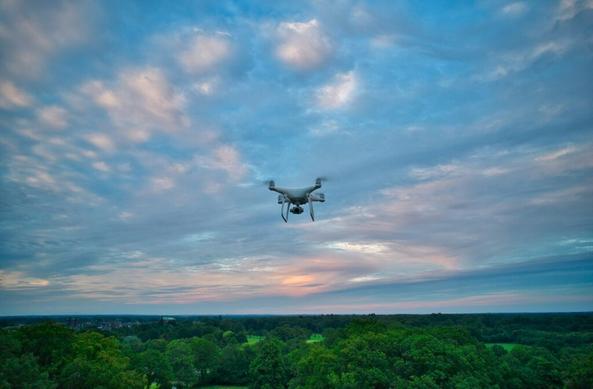
Short-range kamikaze drones are one of the fastest moving facets of the defense sector today —
The Marine Corps "Organic Precision Fires-Light" (OPF-L) program, is designed to provide dismounted Marine infantry rifle squads with a man-packable, easy-to-operate precision strike drone to engage adversaries beyond line of sight.
A recent announcement of a $23.9-million contract to provide the U.S. Marine Corps with more than 600 "Bolt-M" drones is the next phas…

@primonatura@mstdn.social
2026-02-20 15:00:14

"Satellite images indicate that the Doñana Marshland will disappear within 60 years"
#Environment
phys.org/news/2026-02-satellit

@arXiv_qbioGN_bot@mastoxiv.page
2026-03-09 08:08:21

Machine Learning for analysis of Multiple Sclerosis cross-tissue bulk and single-cell transcriptomics data
Francesco Massafra, Samuele Punzo, Silvia Giulia Galfr\'e, Alessandro Maglione, Simone Pernice, Stefano Forti, Simona Rolla, Marco Beccuti, Marinella Clerico, Corrado Priami, Alina S\^irbu
arxiv.org/abs/2603.05572

@arXiv_csLG_bot@mastoxiv.page
2026-02-25 16:07:58

Replaced article(s) found for cs.LG. arxiv.org/list/cs.LG/new
[3/6]:
- Towards Scalable Oversight via Partitioned Human Supervision
Ren Yin, Takashi Ishida, Masashi Sugiyama
arxiv.org/abs/2510.22500 mastoxiv.page/@arXiv_csLG_bot/
- ContextPilot: Fast Long-Context Inference via Context Reuse
Yinsicheng Jiang, Yeqi Huang, Liang Cheng, Cheng Deng, Xuan Sun, Luo Mai
arxiv.org/abs/2511.03475 mastoxiv.page/@arXiv_csLG_bot/
- Metabolomic Biomarker Discovery for ADHD Diagnosis Using Interpretable Machine Learning
Nabil Belacel, Mohamed Rachid Boulassel
arxiv.org/abs/2601.11283 mastoxiv.page/@arXiv_csLG_bot/
- PhysE-Inv: A Physics-Encoded Inverse Modeling approach for Arctic Snow Depth Prediction
Akila Sampath, Vandana Janeja, Jianwu Wang
arxiv.org/abs/2601.17074
- SAGE-5GC: Security-Aware Guidelines for Evaluating Anomaly Detection in the 5G Core Network
Cristian Manca, Christian Scano, Giorgio Piras, Fabio Brau, Maura Pintor, Battista Biggio
arxiv.org/abs/2602.03596
- LORE: Jointly Learning the Intrinsic Dimensionality and Relative Similarity Structure From Ordina...
Anand, Helbling, Davenport, Berman, Alagapan, Rozell
arxiv.org/abs/2602.04192
- Towards Robust Scaling Laws for Optimizers
Alexandra Volkova, Mher Safaryan, Christoph H. Lampert, Dan Alistarh
arxiv.org/abs/2602.07712 mastoxiv.page/@arXiv_csLG_bot/
- Do We Need Adam? Surprisingly Strong and Sparse Reinforcement Learning with SGD in LLMs
Sagnik Mukherjee, Lifan Yuan, Pavan Jayasinha, Dilek Hakkani-T\"ur, Hao Peng
arxiv.org/abs/2602.07729 mastoxiv.page/@arXiv_csLG_bot/
- AceGRPO: Adaptive Curriculum Enhanced Group Relative Policy Optimization for Autonomous Machine L...
Yuzhu Cai, Zexi Liu, Xinyu Zhu, Cheng Wang, Siheng Chen
arxiv.org/abs/2602.07906 mastoxiv.page/@arXiv_csLG_bot/
- VESPO: Variational Sequence-Level Soft Policy Optimization for Stable Off-Policy LLM Training
Guobin Shen, Chenxiao Zhao, Xiang Cheng, Lei Huang, Xing Yu
arxiv.org/abs/2602.10693 mastoxiv.page/@arXiv_csLG_bot/
- KBVQ-MoE: KLT-guided SVD with Bias-Corrected Vector Quantization for MoE Large Language Models
Zukang Xu, Zhixiong Zhao, Xing Hu, Zhixuan Chen, Dawei Yang
arxiv.org/abs/2602.11184 mastoxiv.page/@arXiv_csLG_bot/
- MUSE: Multi-Tenant Model Serving With Seamless Model Updates
Correia, Ferreira, Martins, Bento, Guerreiro, Pereira, Gomes, Bono, Ferreira, Bizarro
arxiv.org/abs/2602.11776 mastoxiv.page/@arXiv_csLG_bot/
- Pawsterior: Variational Flow Matching for Structured Simulation-Based Inference
Jorge Carrasco-Pollo, Floor Eijkelboom, Jan-Willem van de Meent
arxiv.org/abs/2602.13813 mastoxiv.page/@arXiv_csLG_bot/
- Silent Inconsistency in Data-Parallel Full Fine-Tuning: Diagnosing Worker-Level Optimization Misa...
Hong Li, Zhen Zhou, Honggang Zhang, Yuping Luo, Xinyue Wang, Han Gong, Zhiyuan Liu
arxiv.org/abs/2602.14462 mastoxiv.page/@arXiv_csLG_bot/
- Divine Benevolence is an $x^2$: GLUs scale asymptotically faster than MLPs
Alejandro Francisco Queiruga
arxiv.org/abs/2602.14495 mastoxiv.page/@arXiv_csLG_bot/
- \"UberWeb: Insights from Multilingual Curation for a 20-Trillion-Token Dataset
DatologyAI, et al.
arxiv.org/abs/2602.15210 mastoxiv.page/@arXiv_csLG_bot/
- GLM-5: from Vibe Coding to Agentic Engineering
GLM-5-Team, et al.
arxiv.org/abs/2602.15763 mastoxiv.page/@arXiv_csLG_bot/
- Anatomy of Capability Emergence: Scale-Invariant Representation Collapse and Top-Down Reorganizat...
Jayadev Billa
arxiv.org/abs/2602.15997 mastoxiv.page/@arXiv_csLG_bot/
- AI-CARE: Carbon-Aware Reporting Evaluation Metric for AI Models
KC Santosh, Srikanth Baride, Rodrigue Rizk
arxiv.org/abs/2602.16042 mastoxiv.page/@arXiv_csLG_bot/
- Beyond Message Passing: A Symbolic Alternative for Expressive and Interpretable Graph Learning
Chuqin Geng, Li Zhang, Haolin Ye, Ziyu Zhao, Yuhe Jiang, Tara Saba, Xinyu Wang, Xujie Si
arxiv.org/abs/2602.16947 mastoxiv.page/@arXiv_csLG_bot/
toXiv_bot_toot

@arXiv_csLG_bot@mastoxiv.page
2026-02-25 16:08:08

Replaced article(s) found for cs.LG. arxiv.org/list/cs.LG/new
[4/6]:
- Neural Proposals, Symbolic Guarantees: Neuro-Symbolic Graph Generation with Hard Constraints
Chuqin Geng, Li Zhang, Mark Zhang, Haolin Ye, Ziyu Zhao, Xujie Si
arxiv.org/abs/2602.16954 mastoxiv.page/@arXiv_csLG_bot/
- Multi-Probe Zero Collision Hash (MPZCH): Mitigating Embedding Collisions and Enhancing Model Fres...
Ziliang Zhao, et al.
arxiv.org/abs/2602.17050 mastoxiv.page/@arXiv_csLG_bot/
- MASPO: Unifying Gradient Utilization, Probability Mass, and Signal Reliability for Robust and Sam...
Fu, Lin, Fang, Zheng, Hu, Shao, Qin, Pan, Zeng, Cai
arxiv.org/abs/2602.17550 mastoxiv.page/@arXiv_csLG_bot/
- A Theoretical Framework for Modular Learning of Robust Generative Models
Corinna Cortes, Mehryar Mohri, Yutao Zhong
arxiv.org/abs/2602.17554 mastoxiv.page/@arXiv_csLG_bot/
- Multi-Round Human-AI Collaboration with User-Specified Requirements
Sima Noorani, Shayan Kiyani, Hamed Hassani, George Pappas
arxiv.org/abs/2602.17646 mastoxiv.page/@arXiv_csLG_bot/
- NEXUS: A compact neural architecture for high-resolution spatiotemporal air quality forecasting i...
Rampunit Kumar, Aditya Maheshwari
arxiv.org/abs/2602.19654 mastoxiv.page/@arXiv_csLG_bot/
- Augmenting Lateral Thinking in Language Models with Humor and Riddle Data for the BRAINTEASER Task
Mina Ghashami, Soumya Smruti Mishra
arxiv.org/abs/2405.10385 mastoxiv.page/@arXiv_csCL_bot/
- Watermarking Language Models with Error Correcting Codes
Patrick Chao, Yan Sun, Edgar Dobriban, Hamed Hassani
arxiv.org/abs/2406.10281 mastoxiv.page/@arXiv_csCR_bot/
- Learning to Control Unknown Strongly Monotone Games
Siddharth Chandak, Ilai Bistritz, Nicholas Bambos
arxiv.org/abs/2407.00575 mastoxiv.page/@arXiv_csMA_bot/
- Classification and reconstruction for single-pixel imaging with classical and quantum neural netw...
Sofya Manko, Dmitry Frolovtsev
arxiv.org/abs/2407.12506 mastoxiv.page/@arXiv_quantph_b
- Statistical Inference for Temporal Difference Learning with Linear Function Approximation
Weichen Wu, Gen Li, Yuting Wei, Alessandro Rinaldo
arxiv.org/abs/2410.16106 mastoxiv.page/@arXiv_statML_bo
- Big data approach to Kazhdan-Lusztig polynomials
Abel Lacabanne, Daniel Tubbenhauer, Pedro Vaz
arxiv.org/abs/2412.01283 mastoxiv.page/@arXiv_mathRT_bo
- MoEMba: A Mamba-based Mixture of Experts for High-Density EMG-based Hand Gesture Recognition
Mehran Shabanpour, Kasra Rad, Sadaf Khademi, Arash Mohammadi
arxiv.org/abs/2502.17457 mastoxiv.page/@arXiv_eessSP_bo
- Tightening Optimality gap with confidence through conformal prediction
Miao Li, Michael Klamkin, Russell Bent, Pascal Van Hentenryck
arxiv.org/abs/2503.04071 mastoxiv.page/@arXiv_statML_bo
- SEED: Towards More Accurate Semantic Evaluation for Visual Brain Decoding
Juhyeon Park, Peter Yongho Kim, Jiook Cha, Shinjae Yoo, Taesup Moon
arxiv.org/abs/2503.06437 mastoxiv.page/@arXiv_csCV_bot/
- How much does context affect the accuracy of AI health advice?
Prashant Garg, Thiemo Fetzer
arxiv.org/abs/2504.18310 mastoxiv.page/@arXiv_econGN_bo
- Reproducing and Improving CheXNet: Deep Learning for Chest X-ray Disease Classification
Daniel J. Strick, Carlos Garcia, Anthony Huang, Thomas Gardos
arxiv.org/abs/2505.06646 mastoxiv.page/@arXiv_eessIV_bo
- Sharp Gaussian approximations for Decentralized Federated Learning
Soham Bonnerjee, Sayar Karmakar, Wei Biao Wu
arxiv.org/abs/2505.08125 mastoxiv.page/@arXiv_statML_bo
- HoloLLM: Multisensory Foundation Model for Language-Grounded Human Sensing and Reasoning
Chuhao Zhou, Jianfei Yang
arxiv.org/abs/2505.17645 mastoxiv.page/@arXiv_csCV_bot/
- A Copula Based Supervised Filter for Feature Selection in Diabetes Risk Prediction Using Machine ...
Agnideep Aich, Md Monzur Murshed, Sameera Hewage, Amanda Mayeaux
arxiv.org/abs/2505.22554 mastoxiv.page/@arXiv_statML_bo
- Synthesis of discrete-continuous quantum circuits with multimodal diffusion models
Florian F\"urrutter, Zohim Chandani, Ikko Hamamura, Hans J. Briegel, Gorka Mu\~noz-Gil
arxiv.org/abs/2506.01666 mastoxiv.page/@arXiv_quantph_b
toXiv_bot_toot

@NFL@darktundra.xyz
2025-12-29 15:02:19

Falcons vs. Rams SGP: 'Monday Night Football' same-game parlay picks, bets, props from SportsLine AI

cbssports.com/nfl/news/falcons

@arXiv_condmatdisnn_bot@mastoxiv.page
2026-01-21 22:50:45

Replaced article(s) found for cond-mat.dis-nn. arxiv.org/list/cond-mat.dis-nn
[1/1]:
- Machine Learning Symmetry Discovery for Integrable Hamiltonian Dynamics
Wanda Hou, Molan Li, Yi-Zhuang You

@arXiv_csLG_bot@mastoxiv.page
2025-12-22 13:54:35

Replaced article(s) found for cs.LG. arxiv.org/list/cs.LG/new
[2/5]:
- The Diffusion Duality
Sahoo, Deschenaux, Gokaslan, Wang, Chiu, Kuleshov
arxiv.org/abs/2506.10892 mastoxiv.page/@arXiv_csLG_bot/
- Multimodal Representation Learning and Fusion
Jin, Ge, Xie, Luo, Song, Bi, Liang, Guan, Yeong, Song, Hao
arxiv.org/abs/2506.20494 mastoxiv.page/@arXiv_csLG_bot/
- The kernel of graph indices for vector search
Mariano Tepper, Ted Willke
arxiv.org/abs/2506.20584 mastoxiv.page/@arXiv_csLG_bot/
- OptScale: Probabilistic Optimality for Inference-time Scaling
Youkang Wang, Jian Wang, Rubing Chen, Xiao-Yong Wei
arxiv.org/abs/2506.22376 mastoxiv.page/@arXiv_csLG_bot/
- Boosting Revisited: Benchmarking and Advancing LP-Based Ensemble Methods
Fabian Akkerman, Julien Ferry, Christian Artigues, Emmanuel Hebrard, Thibaut Vidal
arxiv.org/abs/2507.18242 mastoxiv.page/@arXiv_csLG_bot/
- MolMark: Safeguarding Molecular Structures through Learnable Atom-Level Watermarking
Runwen Hu, Peilin Chen, Keyan Ding, Shiqi Wang
arxiv.org/abs/2508.17702 mastoxiv.page/@arXiv_csLG_bot/
- Dual-Distilled Heterogeneous Federated Learning with Adaptive Margins for Trainable Global Protot...
Fatema Siddika, Md Anwar Hossen, Wensheng Zhang, Anuj Sharma, Juan Pablo Mu\~noz, Ali Jannesari
arxiv.org/abs/2508.19009 mastoxiv.page/@arXiv_csLG_bot/
- STDiff: A State Transition Diffusion Framework for Time Series Imputation in Industrial Systems
Gary Simethy, Daniel Ortiz-Arroyo, Petar Durdevic
arxiv.org/abs/2508.19011 mastoxiv.page/@arXiv_csLG_bot/
- EEGDM: Learning EEG Representation with Latent Diffusion Model
Shaocong Wang, Tong Liu, Yihan Li, Ming Li, Kairui Wen, Pei Yang, Wenqi Ji, Minjing Yu, Yong-Jin Liu
arxiv.org/abs/2508.20705 mastoxiv.page/@arXiv_csLG_bot/
- Data-Free Continual Learning of Server Models in Model-Heterogeneous Cloud-Device Collaboration
Xiao Zhang, Zengzhe Chen, Yuan Yuan, Yifei Zou, Fuzhen Zhuang, Wenyu Jiao, Yuke Wang, Dongxiao Yu
arxiv.org/abs/2509.25977 mastoxiv.page/@arXiv_csLG_bot/
- Fine-Tuning Masked Diffusion for Provable Self-Correction
Jaeyeon Kim, Seunggeun Kim, Taekyun Lee, David Z. Pan, Hyeji Kim, Sham Kakade, Sitan Chen
arxiv.org/abs/2510.01384 mastoxiv.page/@arXiv_csLG_bot/
- A Generic Machine Learning Framework for Radio Frequency Fingerprinting
Alex Hiles, Bashar I. Ahmad
arxiv.org/abs/2510.09775 mastoxiv.page/@arXiv_csLG_bot/
- ASecond-Order SpikingSSM for Wearables
Kartikay Agrawal, Abhijeet Vikram, Vedant Sharma, Vaishnavi Nagabhushana, Ayon Borthakur
arxiv.org/abs/2510.14386 mastoxiv.page/@arXiv_csLG_bot/
- Utility-Diversity Aware Online Batch Selection for LLM Supervised Fine-tuning
Heming Zou, Yixiu Mao, Yun Qu, Qi Wang, Xiangyang Ji
arxiv.org/abs/2510.16882 mastoxiv.page/@arXiv_csLG_bot/
- Seeing Structural Failure Before it Happens: An Image-Based Physics-Informed Neural Network (PINN...
Omer Jauhar Khan, Sudais Khan, Hafeez Anwar, Shahzeb Khan, Shams Ul Arifeen
arxiv.org/abs/2510.23117 mastoxiv.page/@arXiv_csLG_bot/
- Training Deep Physics-Informed Kolmogorov-Arnold Networks
Spyros Rigas, Fotios Anagnostopoulos, Michalis Papachristou, Georgios Alexandridis
arxiv.org/abs/2510.23501 mastoxiv.page/@arXiv_csLG_bot/
- Semi-Supervised Preference Optimization with Limited Feedback
Seonggyun Lee, Sungjun Lim, Seojin Park, Soeun Cheon, Kyungwoo Song
arxiv.org/abs/2511.00040 mastoxiv.page/@arXiv_csLG_bot/
- Towards Causal Market Simulators
Dennis Thumm, Luis Ontaneda Mijares
arxiv.org/abs/2511.04469 mastoxiv.page/@arXiv_csLG_bot/
- Incremental Generation is Necessary and Sufficient for Universality in Flow-Based Modelling
Hossein Rouhvarzi, Anastasis Kratsios
arxiv.org/abs/2511.09902 mastoxiv.page/@arXiv_csLG_bot/
- Optimizing Mixture of Block Attention
Guangxuan Xiao, Junxian Guo, Kasra Mazaheri, Song Han
arxiv.org/abs/2511.11571 mastoxiv.page/@arXiv_csLG_bot/
- Assessing Automated Fact-Checking for Medical LLM Responses with Knowledge Graphs
Shasha Zhou, Mingyu Huang, Jack Cole, Charles Britton, Ming Yin, Jan Wolber, Ke Li
arxiv.org/abs/2511.12817 mastoxiv.page/@arXiv_csLG_bot/
toXiv_bot_toot

@NFL@darktundra.xyz
2026-01-24 19:26:37

NFL player props, 2026 AFC, NFC Championship picks, odds, AI predictions: Puka Nacua Over 92.5 receiving yards

cbssports.com/nfl/news/nfl-pla

@arXiv_csLG_bot@mastoxiv.page
2025-12-22 11:50:19

Crosslisted article(s) found for cs.LG. arxiv.org/list/cs.LG/new
[1/3]:
- Optimizing Text Search: A Novel Pattern Matching Algorithm Based on Ukkonen's Approach
Xinyu Guan, Shaohua Zhang
arxiv.org/abs/2512.16927 mastoxiv.page/@arXiv_csDS_bot/
- SpIDER: Spatially Informed Dense Embedding Retrieval for Software Issue Localization
Shravan Chaudhari, Rahul Thomas Jacob, Mononito Goswami, Jiajun Cao, Shihab Rashid, Christian Bock
arxiv.org/abs/2512.16956 mastoxiv.page/@arXiv_csSE_bot/
- MemoryGraft: Persistent Compromise of LLM Agents via Poisoned Experience Retrieval
Saksham Sahai Srivastava, Haoyu He
arxiv.org/abs/2512.16962 mastoxiv.page/@arXiv_csCR_bot/
- Colormap-Enhanced Vision Transformers for MRI-Based Multiclass (4-Class) Alzheimer's Disease Clas...
Faisal Ahmed
arxiv.org/abs/2512.16964 mastoxiv.page/@arXiv_eessIV_bo
- Probing Scientific General Intelligence of LLMs with Scientist-Aligned Workflows
Wanghan Xu, et al.
arxiv.org/abs/2512.16969 mastoxiv.page/@arXiv_csAI_bot/
- PAACE: A Plan-Aware Automated Agent Context Engineering Framework
Kamer Ali Yuksel
arxiv.org/abs/2512.16970 mastoxiv.page/@arXiv_csAI_bot/
- A Women's Health Benchmark for Large Language Models
Elisabeth Gruber, et al.
arxiv.org/abs/2512.17028 mastoxiv.page/@arXiv_csCL_bot/
- Perturb Your Data: Paraphrase-Guided Training Data Watermarking
Pranav Shetty, Mirazul Haque, Petr Babkin, Zhiqiang Ma, Xiaomo Liu, Manuela Veloso
arxiv.org/abs/2512.17075 mastoxiv.page/@arXiv_csCL_bot/
- Disentangled representations via score-based variational autoencoders
Benjamin S. H. Lyo, Eero P. Simoncelli, Cristina Savin
arxiv.org/abs/2512.17127 mastoxiv.page/@arXiv_statML_bo
- Biosecurity-Aware AI: Agentic Risk Auditing of Soft Prompt Attacks on ESM-Based Variant Predictors
Huixin Zhan
arxiv.org/abs/2512.17146 mastoxiv.page/@arXiv_csCR_bot/
- Application of machine learning to predict food processing level using Open Food Facts
Arora, Chauhan, Rana, Aditya, Bhagat, Kumar, Kumar, Semar, Singh, Bagler
arxiv.org/abs/2512.17169 mastoxiv.page/@arXiv_qbioBM_bo
- Systemic Risk Radar: A Multi-Layer Graph Framework for Early Market Crash Warning
Sandeep Neela
arxiv.org/abs/2512.17185 mastoxiv.page/@arXiv_qfinRM_bo
- Do Foundational Audio Encoders Understand Music Structure?
Keisuke Toyama, Zhi Zhong, Akira Takahashi, Shusuke Takahashi, Yuki Mitsufuji
arxiv.org/abs/2512.17209 mastoxiv.page/@arXiv_csSD_bot/
- CheXPO-v2: Preference Optimization for Chest X-ray VLMs with Knowledge Graph Consistency
Xiao Liang, Yuxuan An, Di Wang, Jiawei Hu, Zhicheng Jiao, Bin Jing, Quan Wang
arxiv.org/abs/2512.17213 mastoxiv.page/@arXiv_csCV_bot/
- Machine Learning Assisted Parameter Tuning on Wavelet Transform Amorphous Radial Distribution Fun...
Deriyan Senjaya, Stephen Ekaputra Limantoro
arxiv.org/abs/2512.17245 mastoxiv.page/@arXiv_condmatmt
- AlignDP: Hybrid Differential Privacy with Rarity-Aware Protection for LLMs
Madhava Gaikwad
arxiv.org/abs/2512.17251 mastoxiv.page/@arXiv_csCR_bot/
- Practical Framework for Privacy-Preserving and Byzantine-robust Federated Learning
Baolei Zhang, Minghong Fang, Zhuqing Liu, Biao Yi, Peizhao Zhou, Yuan Wang, Tong Li, Zheli Liu
arxiv.org/abs/2512.17254 mastoxiv.page/@arXiv_csCR_bot/
- Verifiability-First Agents: Provable Observability and Lightweight Audit Agents for Controlling A...
Abhivansh Gupta
arxiv.org/abs/2512.17259 mastoxiv.page/@arXiv_csMA_bot/
- Warmer for Less: A Cost-Efficient Strategy for Cold-Start Recommendations at Pinterest
Saeed Ebrahimi, Weijie Jiang, Jaewon Yang, Olafur Gudmundsson, Yucheng Tu, Huizhong Duan
arxiv.org/abs/2512.17277 mastoxiv.page/@arXiv_csIR_bot/
- LibriVAD: A Scalable Open Dataset with Deep Learning Benchmarks for Voice Activity Detection
Ioannis Stylianou, Achintya kr. Sarkar, Nauman Dawalatabad, James Glass, Zheng-Hua Tan
arxiv.org/abs/2512.17281 mastoxiv.page/@arXiv_csSD_bot/
- Penalized Fair Regression for Multiple Groups in Chronic Kidney Disease
Carter H. Nakamoto, Lucia Lushi Chen, Agata Foryciarz, Sherri Rose
arxiv.org/abs/2512.17340 mastoxiv.page/@arXiv_statME_bo
toXiv_bot_toot

@berlinbuzzwords@floss.social
2026-02-12 15:25:25

Our Call for Papers for Berlin Buzzwords closes this Sunday, February 15!
We encourage everyone in modern data infrastructure, search and machine learning and focused on open source software projects to submit their talk proposals, especially first-timers and people from underrepresented groups! #bbuzz #OpenSource #Berlin #Conference #MachineLearning #Search #DataInfrastructure #DataScience

@NFL@darktundra.xyz
2025-12-22 14:26:15

Colts vs. 49ers SGP: 'Monday Night Football' same-game parlay picks, bets, props from SportsLine AI

cbssports.com/nfl/news/colts-4

@arXiv_csLG_bot@mastoxiv.page
2026-02-25 16:08:29

Replaced article(s) found for cs.LG. arxiv.org/list/cs.LG/new
[6/6]:
- Fast-ThinkAct: Efficient Vision-Language-Action Reasoning via Verbalizable Latent Planning
Chi-Pin Huang, Yunze Man, Zhiding Yu, Min-Hung Chen, Jan Kautz, Yu-Chiang Frank Wang, Fu-En Yang
arxiv.org/abs/2601.09708 mastoxiv.page/@arXiv_csCV_bot/
- Universality of Many-body Projected Ensemble for Learning Quantum Data Distribution
Quoc Hoan Tran, Koki Chinzei, Yasuhiro Endo, Hirotaka Oshima
arxiv.org/abs/2601.18637 mastoxiv.page/@arXiv_quantph_b
- FROST: Filtering Reasoning Outliers with Attention for Efficient Reasoning
Haozheng Luo, Zhuolin Jiang, Md Zahid Hasan, Yan Chen, Soumalya Sarkar
arxiv.org/abs/2601.19001 mastoxiv.page/@arXiv_csCL_bot/
- Analysis of Shuffling Beyond Pure Local Differential Privacy
Shun Takagi, Seng Pei Liew
arxiv.org/abs/2601.19154 mastoxiv.page/@arXiv_csDS_bot/
- CryoLVM: Self-supervised Learning from Cryo-EM Density Maps with Large Vision Models
Weining Fu, Kai Shu, Kui Xu, Qiangfeng Cliff Zhang
arxiv.org/abs/2602.02620
- XtraLight-MedMamba for Classification of Neoplastic Tubular Adenomas
Sultana, Afsar, Rahu, Singh, Shula, Combs, Forchetti, Asari
arxiv.org/abs/2602.04819
- Flow-Based Conformal Predictive Distributions
Trevor Harris
arxiv.org/abs/2602.07633 mastoxiv.page/@arXiv_statML_bo
- GOT-Edit: Geometry-Aware Generic Object Tracking via Online Model Editing
Shih-Fang Chen, Jun-Cheng Chen, I-Hong Jhuo, Yen-Yu Lin
arxiv.org/abs/2602.08550 mastoxiv.page/@arXiv_csCV_bot/
- UI-Venus-1.5 Technical Report
Venus Team, et al.
arxiv.org/abs/2602.09082 mastoxiv.page/@arXiv_csCV_bot/
- The Wisdom of Many Queries: Complexity-Diversity Principle for Dense Retriever Training
Xincan Feng, Noriki Nishida, Yusuke Sakai, Yuji Matsumoto
arxiv.org/abs/2602.09448 mastoxiv.page/@arXiv_csIR_bot/
- Intent Laundering: AI Safety Datasets Are Not What They Seem
Shahriar Golchin, Marc Wetter
arxiv.org/abs/2602.16729 mastoxiv.page/@arXiv_csCR_bot/
- The Metaphysics We Train: A Heideggerian Reading of Machine Learning
Heman Shakeri
arxiv.org/abs/2602.19028 mastoxiv.page/@arXiv_csCY_bot/
- Skill-Inject: Measuring Agent Vulnerability to Skill File Attacks
David Schmotz, Luca Beurer-Kellner, Sahar Abdelnabi, Maksym Andriushchenko
arxiv.org/abs/2602.20156 mastoxiv.page/@arXiv_csCR_bot/
- A Very Big Video Reasoning Suite
Maijunxian Wang, et al.
arxiv.org/abs/2602.20159 mastoxiv.page/@arXiv_csCV_bot/
toXiv_bot_toot

@arXiv_csLG_bot@mastoxiv.page
2025-12-22 11:50:43

Crosslisted article(s) found for cs.LG. arxiv.org/list/cs.LG/new
[3/3]:
- Fraud detection in credit card transactions using Quantum-Assisted Restricted Boltzmann Machines
Jo\~ao Marcos Cavalcanti de Albuquerque Neto, Gustavo Castro do Amaral, Guilherme Penello Tempor\~ao
arxiv.org/abs/2512.17660 mastoxiv.page/@arXiv_quantph_b
- Vidarc: Embodied Video Diffusion Model for Closed-loop Control
Feng, Xiang, Mao, Tan, Zhang, Huang, Zheng, Liu, Su, Zhu
arxiv.org/abs/2512.17661 mastoxiv.page/@arXiv_csRO_bot/
- Imputation Uncertainty in Interpretable Machine Learning Methods
Pegah Golchian, Marvin N. Wright
arxiv.org/abs/2512.17689 mastoxiv.page/@arXiv_statML_bo
- Revisiting the Broken Symmetry Phase of Solid Hydrogen: A Neural Network Variational Monte Carlo ...
Shengdu Chai, Chen Lin, Xinyang Dong, Yuqiang Li, Wanli Ouyang, Lei Wang, X. C. Xie
arxiv.org/abs/2512.17703 mastoxiv.page/@arXiv_condmatst
- Breast Cancer Neoadjuvant Chemotherapy Treatment Response Prediction Using Aligned Longitudinal M...
Rahul Ravi, Ruizhe Li, Tarek Abdelfatah, Stephen Chan, Xin Chen
arxiv.org/abs/2512.17759 mastoxiv.page/@arXiv_eessIV_bo
- MedNeXt-v2: Scaling 3D ConvNeXts for Large-Scale Supervised Representation Learning in Medical Im...
Roy, Kirchhoff, Ulrich, Rokuss, Wald, Isensee, Maier-Hein
arxiv.org/abs/2512.17774 mastoxiv.page/@arXiv_eessIV_bo
- Domain-Aware Quantum Circuit for QML
Gurinder Singh, Thaddeus Pellegrini, Kenneth M. Merz, Jr
arxiv.org/abs/2512.17800 mastoxiv.page/@arXiv_quantph_b
- Visually Prompted Benchmarks Are Surprisingly Fragile
Feng, Lian, Dunlap, Shu, Wang, Wang, Darrell, Suhr, Kanazawa
arxiv.org/abs/2512.17875 mastoxiv.page/@arXiv_csCV_bot/
- Learning vertical coordinates via automatic differentiation of a dynamical core
Tim Whittaker, Seth Taylor, Elsa Cardoso-Bihlo, Alejandro Di Luca, Alex Bihlo
arxiv.org/abs/2512.17877 mastoxiv.page/@arXiv_physicsao
- RadarGen: Automotive Radar Point Cloud Generation from Cameras
Tomer Borreda, Fangqiang Ding, Sanja Fidler, Shengyu Huang, Or Litany
arxiv.org/abs/2512.17897 mastoxiv.page/@arXiv_csCV_bot/
- Distributionally Robust Imitation Learning: Layered Control Architecture for Certifiable Autonomy
Gahlawat, Aboudonia, Banik, Hovakimyan, Matni, Ames, Zardini, Speranzon
arxiv.org/abs/2512.17899 mastoxiv.page/@arXiv_eessSY_bo
- Re-Depth Anything: Test-Time Depth Refinement via Self-Supervised Re-lighting
Ananta R. Bhattarai, Helge Rhodin
arxiv.org/abs/2512.17908 mastoxiv.page/@arXiv_csCV_bot/
toXiv_bot_toot

@arXiv_csLG_bot@mastoxiv.page
2025-12-22 13:54:55

Replaced article(s) found for cs.LG. arxiv.org/list/cs.LG/new
[4/5]:
- Sample, Don't Search: Rethinking Test-Time Alignment for Language Models
Gon\c{c}alo Faria, Noah A. Smith
arxiv.org/abs/2504.03790 mastoxiv.page/@arXiv_csCL_bot/
- A Survey on Archetypal Analysis
Aleix Alcacer, Irene Epifanio, Sebastian Mair, Morten M{\o}rup
arxiv.org/abs/2504.12392 mastoxiv.page/@arXiv_statME_bo
- The Stochastic Occupation Kernel (SOCK) Method for Learning Stochastic Differential Equations
Michael L. Wells, Kamel Lahouel, Bruno Jedynak
arxiv.org/abs/2505.11622 mastoxiv.page/@arXiv_statML_bo
- BOLT: Block-Orthonormal Lanczos for Trace estimation of matrix functions
Kingsley Yeon, Promit Ghosal, Mihai Anitescu
arxiv.org/abs/2505.12289 mastoxiv.page/@arXiv_mathNA_bo
- Clustering and Pruning in Causal Data Fusion
Otto Tabell, Santtu Tikka, Juha Karvanen
arxiv.org/abs/2505.15215 mastoxiv.page/@arXiv_statML_bo
- On the performance of multi-fidelity and reduced-dimensional neural emulators for inference of ph...
Chloe H. Choi, Andrea Zanoni, Daniele E. Schiavazzi, Alison L. Marsden
arxiv.org/abs/2506.11683 mastoxiv.page/@arXiv_statML_bo
- Beyond Force Metrics: Pre-Training MLFFs for Stable MD Simulations
Maheshwari, Tang, Ock, Kolluru, Farimani, Kitchin
arxiv.org/abs/2506.14850 mastoxiv.page/@arXiv_physicsch
- Quantifying Uncertainty in the Presence of Distribution Shifts
Yuli Slavutsky, David M. Blei
arxiv.org/abs/2506.18283 mastoxiv.page/@arXiv_statML_bo
- ZKPROV: A Zero-Knowledge Approach to Dataset Provenance for Large Language Models
Mina Namazi, Alexander Nemecek, Erman Ayday
arxiv.org/abs/2506.20915 mastoxiv.page/@arXiv_csCR_bot/
- SpecCLIP: Aligning and Translating Spectroscopic Measurements for Stars
Zhao, Huang, Xue, Kong, Liu, Tang, Beers, Ting, Luo
arxiv.org/abs/2507.01939 mastoxiv.page/@arXiv_astrophIM
- Towards Facilitated Fairness Assessment of AI-based Skin Lesion Classifiers Through GenAI-based I...
Ko Watanabe, Stanislav Frolov, Aya Hassan, David Dembinsky, Adriano Lucieri, Andreas Dengel
arxiv.org/abs/2507.17860 mastoxiv.page/@arXiv_csCV_bot/
- PASS: Probabilistic Agentic Supernet Sampling for Interpretable and Adaptive Chest X-Ray Reasoning
Yushi Feng, Junye Du, Yingying Hong, Qifan Wang, Lequan Yu
arxiv.org/abs/2508.10501 mastoxiv.page/@arXiv_csAI_bot/
- Unified Acoustic Representations for Screening Neurological and Respiratory Pathologies from Voice
Ran Piao, Yuan Lu, Hareld Kemps, Tong Xia, Aaqib Saeed
arxiv.org/abs/2508.20717 mastoxiv.page/@arXiv_csSD_bot/
- Machine Learning-Driven Predictive Resource Management in Complex Science Workflows
Tasnuva Chowdhury, et al.
arxiv.org/abs/2509.11512 mastoxiv.page/@arXiv_csDC_bot/
- MatchFixAgent: Language-Agnostic Autonomous Repository-Level Code Translation Validation and Repair
Ali Reza Ibrahimzada, Brandon Paulsen, Reyhaneh Jabbarvand, Joey Dodds, Daniel Kroening
arxiv.org/abs/2509.16187 mastoxiv.page/@arXiv_csSE_bot/
- Automated Machine Learning Pipeline: Large Language Models-Assisted Automated Dataset Generation ...
Adam Lahouari, Jutta Rogal, Mark E. Tuckerman
arxiv.org/abs/2509.21647 mastoxiv.page/@arXiv_condmatmt
- Quantifying the Impact of Structured Output Format on Large Language Models through Causal Inference
Han Yuan, Yue Zhao, Li Zhang, Wuqiong Luo, Zheng Ma
arxiv.org/abs/2509.21791 mastoxiv.page/@arXiv_csCL_bot/
- The Generation Phases of Flow Matching: a Denoising Perspective
Anne Gagneux, S\'egol\`ene Martin, R\'emi Gribonval, Mathurin Massias
arxiv.org/abs/2510.24830 mastoxiv.page/@arXiv_csCV_bot/
- Data-driven uncertainty-aware seakeeping prediction of the Delft 372 catamaran using ensemble Han...
Giorgio Palma, Andrea Serani, Matteo Diez
arxiv.org/abs/2511.04461 mastoxiv.page/@arXiv_eessSY_bo
- Generalized infinite dimensional Alpha-Procrustes based geometries
Salvish Goomanee, Andi Han, Pratik Jawanpuria, Bamdev Mishra
arxiv.org/abs/2511.09801 mastoxiv.page/@arXiv_statML_bo
toXiv_bot_toot

@arXiv_csLG_bot@mastoxiv.page
2026-02-25 10:38:41

On the Generalization Behavior of Deep Residual Networks From a Dynamical System Perspective
Jinshu Huang, Mingfei Sun, Chunlin Wu
arxiv.org/abs/2602.20921 arxiv.org/pdf/2602.20921 arxiv.org/html/2602.20921
arXiv:2602.20921v1 Announce Type: new
Abstract: Deep neural networks (DNNs) have significantly advanced machine learning, with model depth playing a central role in their successes. The dynamical system modeling approach has recently emerged as a powerful framework, offering new mathematical insights into the structure and learning behavior of DNNs. In this work, we establish generalization error bounds for both discrete- and continuous-time residual networks (ResNets) by combining Rademacher complexity, flow maps of dynamical systems, and the convergence behavior of ResNets in the deep-layer limit. The resulting bounds are of order $O(1/\sqrt{S})$ with respect to the number of training samples $S$, and include a structure-dependent negative term, yielding depth-uniform and asymptotic generalization bounds under milder assumptions. These findings provide a unified understanding of generalization across both discrete- and continuous-time ResNets, helping to close the gap in both the order of sample complexity and assumptions between the discrete- and continuous-time settings.
toXiv_bot_toot

@arXiv_csLG_bot@mastoxiv.page
2026-02-25 10:34:01

Bikelution: Federated Gradient-Boosting for Scalable Shared Micro-Mobility Demand Forecasting
Antonios Tziorvas, Andreas Tritsarolis, Yannis Theodoridis
arxiv.org/abs/2602.20671 arxiv.org/pdf/2602.20671 arxiv.org/html/2602.20671
arXiv:2602.20671v1 Announce Type: new
Abstract: The rapid growth of dockless bike-sharing systems has generated massive spatio-temporal datasets useful for fleet allocation, congestion reduction, and sustainable mobility. Bike demand, however, depends on several external factors, making traditional time-series models insufficient. Centralized Machine Learning (CML) yields high-accuracy forecasts but raises privacy and bandwidth issues when data are distributed across edge devices. To overcome these limitations, we propose Bikelution, an efficient Federated Learning (FL) solution based on gradient-boosted trees that preserves privacy while delivering accurate mid-term demand forecasts up to six hours ahead. Experiments on three real-world BSS datasets show that Bikelution is comparable to its CML-based variant and outperforms the current state-of-the-art. The results highlight the feasibility of privacy-aware demand forecasting and outline the trade-offs between FL and CML approaches.
toXiv_bot_toot

@arXiv_csLG_bot@mastoxiv.page
2025-12-22 13:55:06

Replaced article(s) found for cs.LG. arxiv.org/list/cs.LG/new
[5/5]:
- CLAReSNet: When Convolution Meets Latent Attention for Hyperspectral Image Classification
Asmit Bandyopadhyay, Anindita Das Bhattacharjee, Rakesh Das
arxiv.org/abs/2511.12346 mastoxiv.page/@arXiv_csCV_bot/
- Safeguarded Stochastic Polyak Step Sizes for Non-smooth Optimization: Robust Performance Without ...
Dimitris Oikonomou, Nicolas Loizou
arxiv.org/abs/2512.02342 mastoxiv.page/@arXiv_mathOC_bo
- Predictive Modeling of I/O Performance for Machine Learning Training Pipelines: A Data-Driven App...
Karthik Prabhakar, Durgamadhab Mishra
arxiv.org/abs/2512.06699 mastoxiv.page/@arXiv_csPF_bot/
- Minimum Bayes Risk Decoding for Error Span Detection in Reference-Free Automatic Machine Translat...
Lyu, Song, Kamigaito, Ding, Tanaka, Utiyama, Funakoshi, Okumura
arxiv.org/abs/2512.07540 mastoxiv.page/@arXiv_csCL_bot/
- In-Context Learning for Seismic Data Processing
Fabian Fuchs, Mario Ruben Fernandez, Norman Ettrich, Janis Keuper
arxiv.org/abs/2512.11575 mastoxiv.page/@arXiv_csCV_bot/
- Journey Before Destination: On the importance of Visual Faithfulness in Slow Thinking
Rheeya Uppaal, Phu Mon Htut, Min Bai, Nikolaos Pappas, Zheng Qi, Sandesh Swamy
arxiv.org/abs/2512.12218 mastoxiv.page/@arXiv_csCV_bot/
- Non-Resolution Reasoning (NRR): A Computational Framework for Contextual Identity and Ambiguity P...
Kei Saito
arxiv.org/abs/2512.13478 mastoxiv.page/@arXiv_csCL_bot/
- Stylized Synthetic Augmentation further improves Corruption Robustness
Georg Siedel, Rojan Regmi, Abhirami Anand, Weijia Shao, Silvia Vock, Andrey Morozov
arxiv.org/abs/2512.15675 mastoxiv.page/@arXiv_csCV_bot/
- mimic-video: Video-Action Models for Generalizable Robot Control Beyond VLAs
Jonas Pai, Liam Achenbach, Victoriano Montesinos, Benedek Forrai, Oier Mees, Elvis Nava
arxiv.org/abs/2512.15692 mastoxiv.page/@arXiv_csRO_bot/
toXiv_bot_toot

@arXiv_csLG_bot@mastoxiv.page
2026-02-25 10:38:51

Hierarchic-EEG2Text: Assessing EEG-To-Text Decoding across Hierarchical Abstraction Levels
Anupam Sharma, Harish Katti, Prajwal Singh, Shanmuganathan Raman, Krishna Miyapuram
arxiv.org/abs/2602.20932 arxiv.org/pdf/2602.20932 arxiv.org/html/2602.20932
arXiv:2602.20932v1 Announce Type: new
Abstract: An electroencephalogram (EEG) records the spatially averaged electrical activity of neurons in the brain, measured from the human scalp. Prior studies have explored EEG-based classification of objects or concepts, often for passive viewing of briefly presented image or video stimuli, with limited classes. Because EEG exhibits a low signal-to-noise ratio, recognizing fine-grained representations across a large number of classes remains challenging; however, abstract-level object representations may exist. In this work, we investigate whether EEG captures object representations across multiple hierarchical levels, and propose episodic analysis, in which a Machine Learning (ML) model is evaluated across various, yet related, classification tasks (episodes). Unlike prior episodic EEG studies that rely on fixed or randomly sampled classes of equal cardinality, we adopt hierarchy-aware episode sampling using WordNet to generate episodes with variable classes of diverse hierarchy. We also present the largest episodic framework in the EEG domain for detecting observed text from EEG signals in the PEERS dataset, comprising $931538$ EEG samples under $1610$ object labels, acquired from $264$ human participants (subjects) performing controlled cognitive tasks, enabling the study of neural dynamics underlying perception, decision-making, and performance monitoring.
We examine how the semantic abstraction level affects classification performance across multiple learning techniques and architectures, providing a comprehensive analysis. The models tend to improve performance when the classification categories are drawn from higher levels of the hierarchy, suggesting sensitivity to abstraction. Our work highlights abstraction depth as an underexplored dimension of EEG decoding and motivates future research in this direction.
toXiv_bot_toot

@arXiv_csLG_bot@mastoxiv.page
2026-02-25 12:33:36

Crosslisted article(s) found for cs.LG. arxiv.org/list/cs.LG/new
[2/3]:
- Diffusion Modulation via Environment Mechanism Modeling for Planning
Hanping Zhang, Yuhong Guo
arxiv.org/abs/2602.20422 mastoxiv.page/@arXiv_csAI_bot/
- Heterogeneity-Aware Client Selection Methodology For Efficient Federated Learning
Nihal Balivada, Shrey Gupta, Shashank Shreedhar Bhatt, Suyash Gupta
arxiv.org/abs/2602.20450 mastoxiv.page/@arXiv_csDC_bot/
- Prior-Agnostic Incentive-Compatible Exploration
Ramya Ramalingam, Osbert Bastani, Aaron Roth
arxiv.org/abs/2602.20465 mastoxiv.page/@arXiv_csGT_bot/
- PhyGHT: Physics-Guided HyperGraph Transformer for Signal Purification at the HL-LHC
Mohammed Rakib, Luke Vaughan, Shivang Patel, Flera Rizatdinova, Alexander Khanov, Atriya Sen
arxiv.org/abs/2602.20475 mastoxiv.page/@arXiv_hepex_bot
- ActionEngine: From Reactive to Programmatic GUI Agents via State Machine Memory
Zhong, Faisal, Fran\c{c}a, Leesatapornwongsa, Szekeres, Rong, Nath
arxiv.org/abs/2602.20502 mastoxiv.page/@arXiv_csAI_bot/
- Inner Speech as Behavior Guides: Steerable Imitation of Diverse Behaviors for Human-AI coordination
Rakshit Trivedi, Kartik Sharma, David C Parkes
arxiv.org/abs/2602.20517 mastoxiv.page/@arXiv_csAI_bot/
- Stop-Think-AutoRegress: Language Modeling with Latent Diffusion Planning
Lovelace, Belardi, Zalouk, Polavaram, Kundurthy, Weinberger
arxiv.org/abs/2602.20528 mastoxiv.page/@arXiv_csCL_bot/
- Standard Transformers Achieve the Minimax Rate in Nonparametric Regression with $C^{s,\lambda}$ T...
Yanming Lai, Defeng Sun
arxiv.org/abs/2602.20555 mastoxiv.page/@arXiv_statML_bo
- Personal Information Parroting in Language Models
Nishant Subramani, Kshitish Ghate, Mona Diab
arxiv.org/abs/2602.20580 mastoxiv.page/@arXiv_csCL_bot/
- Characterizing Online and Private Learnability under Distributional Constraints via Generalized S...
Mo\"ise Blanchard, Abhishek Shetty, Alexander Rakhlin
arxiv.org/abs/2602.20585 mastoxiv.page/@arXiv_statML_bo
- Amortized Bayesian inference for actigraph time sheet data from mobile devices
Daniel Zhou, Sudipto Banerjee
arxiv.org/abs/2602.20611 mastoxiv.page/@arXiv_statML_bo
- Knowing the Unknown: Interpretable Open-World Object Detection via Concept Decomposition Model
Xueqiang Lv, Shizhou Zhang, Yinghui Xing, Di Xu, Peng Wang, Yanning Zhang
arxiv.org/abs/2602.20616 mastoxiv.page/@arXiv_csCV_bot/
- On the Convergence of Stochastic Gradient Descent with Perturbed Forward-Backward Passes
Boao Kong, Hengrui Zhang, Kun Yuan
arxiv.org/abs/2602.20646 mastoxiv.page/@arXiv_mathOC_bo
- DANCE: Doubly Adaptive Neighborhood Conformal Estimation
Feng, Reich, Beaglehole, Luo, Park, Yoo, Huang, Mao, Boz, Kim
arxiv.org/abs/2602.20652 mastoxiv.page/@arXiv_statML_bo
- Vision-Language Models for Ergonomic Assessment of Manual Lifting Tasks: Estimating Horizontal an...
Mohammad Sadra Rajabi, Aanuoluwapo Ojelade, Sunwook Kim, Maury A. Nussbaum
arxiv.org/abs/2602.20658 mastoxiv.page/@arXiv_csCV_bot/
- F10.7 Index Prediction: A Multiscale Decomposition Strategy with Wavelet Transform for Performanc...
Xuran Ma, et al.
arxiv.org/abs/2602.20712 mastoxiv.page/@arXiv_astrophIM
- Communication-Inspired Tokenization for Structured Image Representations
Davtyan, Sahin, Haghighi, Stapf, Acuaviva, Alahi, Favaro
arxiv.org/abs/2602.20731 mastoxiv.page/@arXiv_csCV_bot/
- SibylSense: Adaptive Rubric Learning via Memory Tuning and Adversarial Probing
Yifei Xu, et al.
arxiv.org/abs/2602.20751 mastoxiv.page/@arXiv_csCL_bot/
- Assessing the Impact of Speaker Identity in Speech Spoofing Detection
Anh-Tuan Dao, Driss Matrouf, Nicholas Evans
arxiv.org/abs/2602.20805 mastoxiv.page/@arXiv_csSD_bot/
- Don't Ignore the Tail: Decoupling top-K Probabilities for Efficient Language Model Distillation
Sayantan Dasgupta, Trevor Cohn, Timothy Baldwin
arxiv.org/abs/2602.20816 mastoxiv.page/@arXiv_csCL_bot/
- DRESS: A Continuous Framework for Structural Graph Refinement
Eduar Castrillo Velilla
arxiv.org/abs/2602.20833 mastoxiv.page/@arXiv_csDS_bot/
toXiv_bot_toot

@arXiv_csLG_bot@mastoxiv.page
2025-12-22 13:54:24

Replaced article(s) found for cs.LG. arxiv.org/list/cs.LG/new
[1/5]:
- Feed Two Birds with One Scone: Exploiting Wild Data for Both Out-of-Distribution Generalization a...
Haoyue Bai, Gregory Canal, Xuefeng Du, Jeongyeol Kwon, Robert Nowak, Yixuan Li
arxiv.org/abs/2306.09158
- Sparse, Efficient and Explainable Data Attribution with DualXDA
Galip \"Umit Yolcu, Moritz Weckbecker, Thomas Wiegand, Wojciech Samek, Sebastian Lapuschkin
arxiv.org/abs/2402.12118 mastoxiv.page/@arXiv_csLG_bot/
- HGQ: High Granularity Quantization for Real-time Neural Networks on FPGAs
Sun, Que, {\AA}rrestad, Loncar, Ngadiuba, Luk, Spiropulu
arxiv.org/abs/2405.00645 mastoxiv.page/@arXiv_csLG_bot/
- On the Identification of Temporally Causal Representation with Instantaneous Dependence
Li, Shen, Zheng, Cai, Song, Gong, Chen, Zhang
arxiv.org/abs/2405.15325 mastoxiv.page/@arXiv_csLG_bot/
- Basis Selection: Low-Rank Decomposition of Pretrained Large Language Models for Target Applications
Yang Li, Daniel Agyei Asante, Changsheng Zhao, Ernie Chang, Yangyang Shi, Vikas Chandra
arxiv.org/abs/2405.15877 mastoxiv.page/@arXiv_csLG_bot/
- Privacy Bias in Language Models: A Contextual Integrity-based Auditing Metric
Yan Shvartzshnaider, Vasisht Duddu
arxiv.org/abs/2409.03735 mastoxiv.page/@arXiv_csLG_bot/
- Low-Rank Filtering and Smoothing for Sequential Deep Learning
Joanna Sliwa, Frank Schneider, Nathanael Bosch, Agustinus Kristiadi, Philipp Hennig
arxiv.org/abs/2410.06800 mastoxiv.page/@arXiv_csLG_bot/
- Hierarchical Multimodal LLMs with Semantic Space Alignment for Enhanced Time Series Classification
Xiaoyu Tao, Tingyue Pan, Mingyue Cheng, Yucong Luo, Qi Liu, Enhong Chen
arxiv.org/abs/2410.18686 mastoxiv.page/@arXiv_csLG_bot/
- Fairness via Independence: A (Conditional) Distance Covariance Framework
Ruifan Huang, Haixia Liu
arxiv.org/abs/2412.00720 mastoxiv.page/@arXiv_csLG_bot/
- Data for Mathematical Copilots: Better Ways of Presenting Proofs for Machine Learning
Simon Frieder, et al.
arxiv.org/abs/2412.15184 mastoxiv.page/@arXiv_csLG_bot/
- Pairwise Elimination with Instance-Dependent Guarantees for Bandits with Cost Subsidy
Ishank Juneja, Carlee Joe-Wong, Osman Ya\u{g}an
arxiv.org/abs/2501.10290 mastoxiv.page/@arXiv_csLG_bot/
- Towards Human-Guided, Data-Centric LLM Co-Pilots
Evgeny Saveliev, Jiashuo Liu, Nabeel Seedat, Anders Boyd, Mihaela van der Schaar
arxiv.org/abs/2501.10321 mastoxiv.page/@arXiv_csLG_bot/
- Regularized Langevin Dynamics for Combinatorial Optimization
Shengyu Feng, Yiming Yang
arxiv.org/abs/2502.00277
- Generating Samples to Probe Trained Models
Eren Mehmet K{\i}ral, Nur\c{s}en Ayd{\i}n, \c{S}. \.Ilker Birbil
arxiv.org/abs/2502.06658 mastoxiv.page/@arXiv_csLG_bot/
- On Agnostic PAC Learning in the Small Error Regime
Julian Asilis, Mikael M{\o}ller H{\o}gsgaard, Grigoris Velegkas
arxiv.org/abs/2502.09496 mastoxiv.page/@arXiv_csLG_bot/
- Preconditioned Inexact Stochastic ADMM for Deep Model
Shenglong Zhou, Ouya Wang, Ziyan Luo, Yongxu Zhu, Geoffrey Ye Li
arxiv.org/abs/2502.10784 mastoxiv.page/@arXiv_csLG_bot/
- On the Effect of Sampling Diversity in Scaling LLM Inference
Wang, Liu, Chen, Light, Liu, Chen, Zhang, Cheng
arxiv.org/abs/2502.11027 mastoxiv.page/@arXiv_csLG_bot/
- How to use score-based diffusion in earth system science: A satellite nowcasting example
Randy J. Chase, Katherine Haynes, Lander Ver Hoef, Imme Ebert-Uphoff
arxiv.org/abs/2505.10432 mastoxiv.page/@arXiv_csLG_bot/
- PEAR: Equal Area Weather Forecasting on the Sphere
Hampus Linander, Christoffer Petersson, Daniel Persson, Jan E. Gerken
arxiv.org/abs/2505.17720 mastoxiv.page/@arXiv_csLG_bot/
- Train Sparse Autoencoders Efficiently by Utilizing Features Correlation
Vadim Kurochkin, Yaroslav Aksenov, Daniil Laptev, Daniil Gavrilov, Nikita Balagansky
arxiv.org/abs/2505.22255 mastoxiv.page/@arXiv_csLG_bot/
- A Certified Unlearning Approach without Access to Source Data
Umit Yigit Basaran, Sk Miraj Ahmed, Amit Roy-Chowdhury, Basak Guler
arxiv.org/abs/2506.06486 mastoxiv.page/@arXiv_csLG_bot/
toXiv_bot_toot

@arXiv_csLG_bot@mastoxiv.page
2025-12-22 10:32:10

Polyharmonic Cascade
Yuriy N. Bakhvalov
arxiv.org/abs/2512.17671 arxiv.org/pdf/2512.17671 arxiv.org/html/2512.17671
arXiv:2512.17671v1 Announce Type: new
Abstract: This paper presents a deep machine learning architecture, the "polyharmonic cascade" -- a sequence of packages of polyharmonic splines, where each layer is rigorously derived from the theory of random functions and the principles of indifference. This makes it possible to approximate nonlinear functions of arbitrary complexity while preserving global smoothness and a probabilistic interpretation. For the polyharmonic cascade, a training method alternative to gradient descent is proposed: instead of directly optimizing the coefficients, one solves a single global linear system on each batch with respect to the function values at fixed "constellations" of nodes. This yields synchronized updates of all layers, preserves the probabilistic interpretation of individual layers and theoretical consistency with the original model, and scales well: all computations reduce to 2D matrix operations efficiently executed on a GPU. Fast learning without overfitting on MNIST is demonstrated.
toXiv_bot_toot