Delos Data, which develops network chips and software to connect AI chips in a data center, raised $100M from Matrix, Playground, Socratic Partners, and others (Stephen Nellis/Reuters)
https://www.reuters.com/business/delos-dat
Wer digitale Souveränität ernst meint, muss die Übernahmelogik der Tech-Branche hinterfragen. Der Beitrag von Erik Bärwaldt argumentiert, dass europäische Technologieführer wie Proton, Matrix oder Ecosia ihre Unabhängigkeit zunehmend durch Stiftungsmodelle absichern. Ziel ist nicht maximale Rendite, sondern langfristige Kontrolle über Technologie, Infrastruktur und Unternehmenszweck.
#Golem
Can everyone please stop giving software names like “Continuwuity of Theseus”?! I'd like to be able to recommend platforms like Matrix to normals at some point…
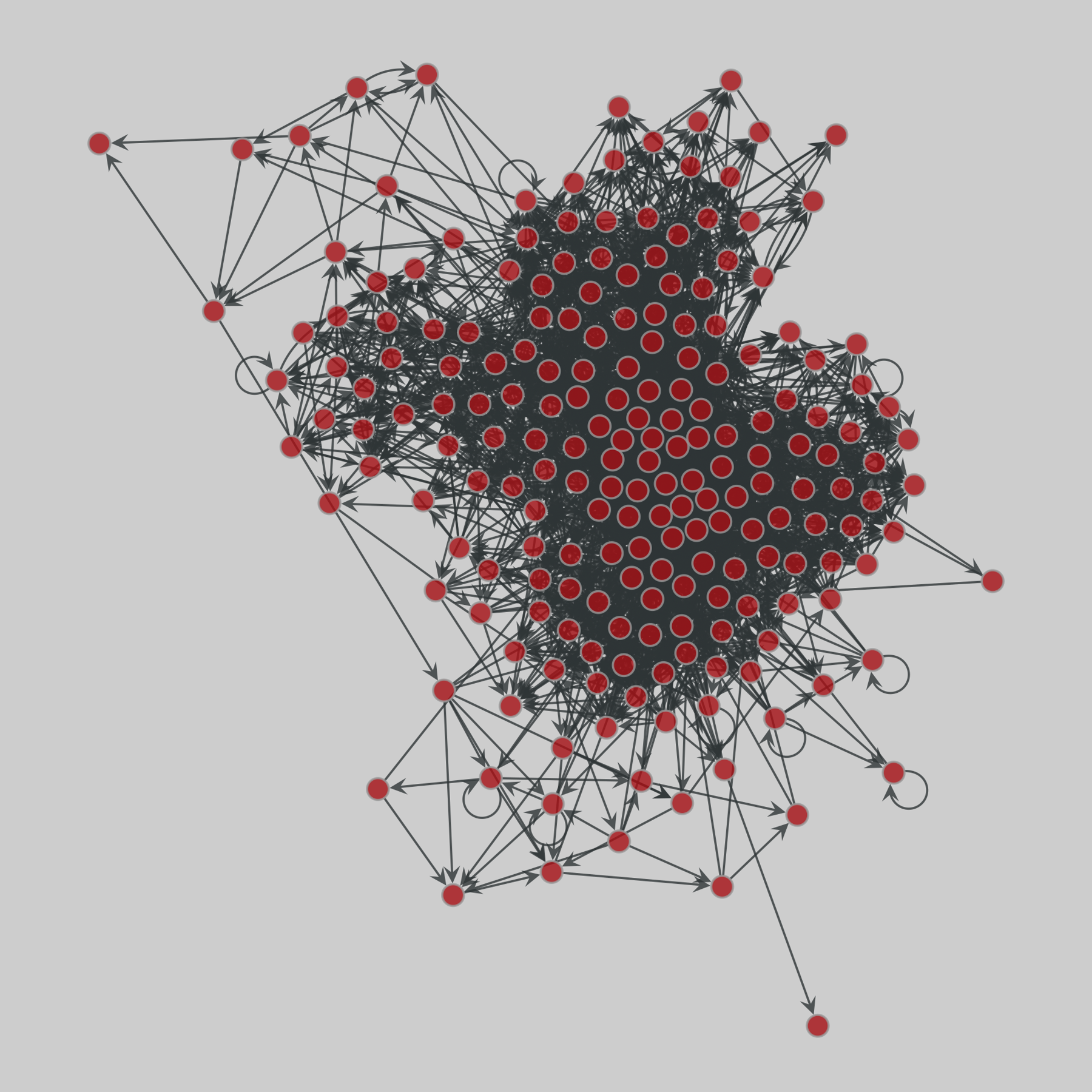
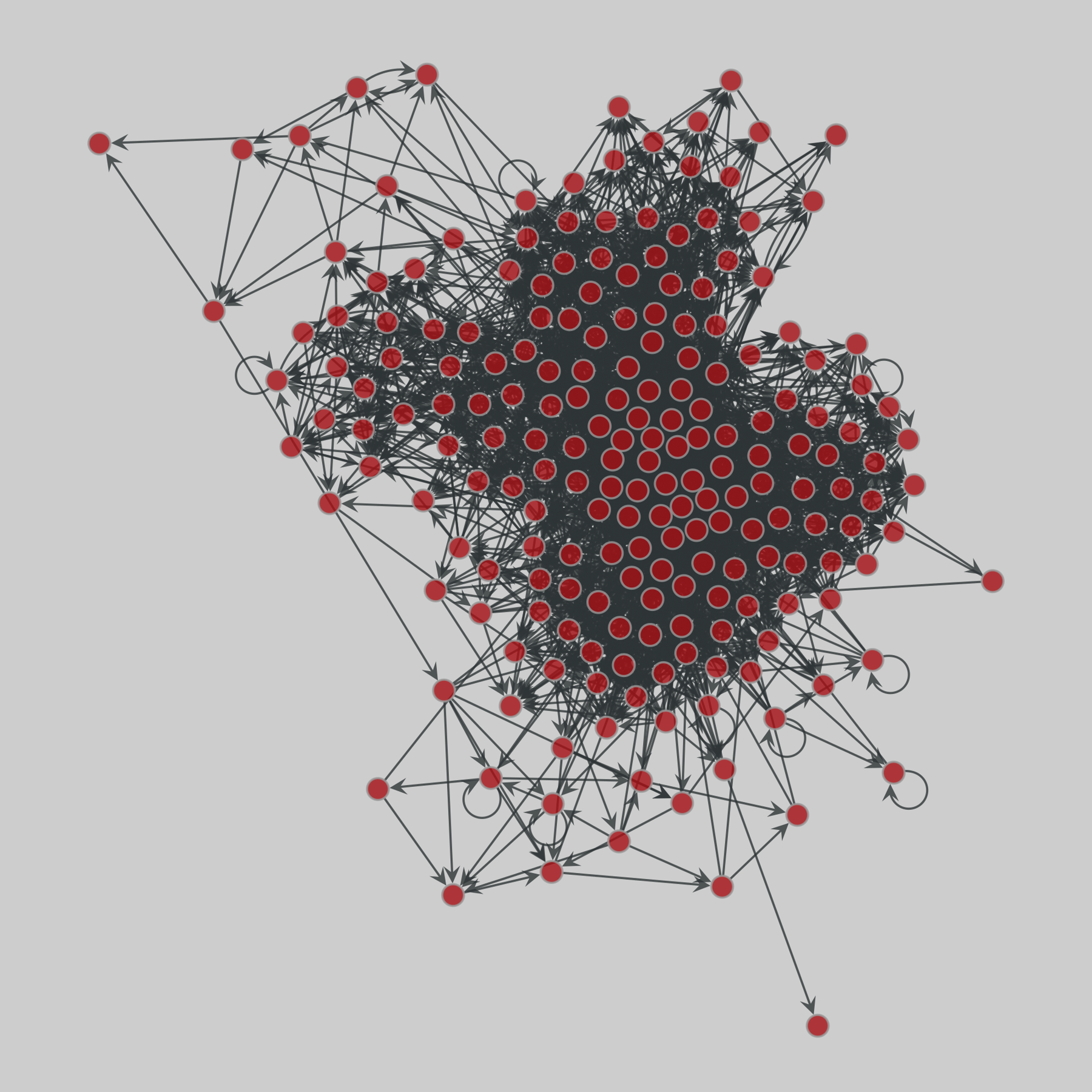
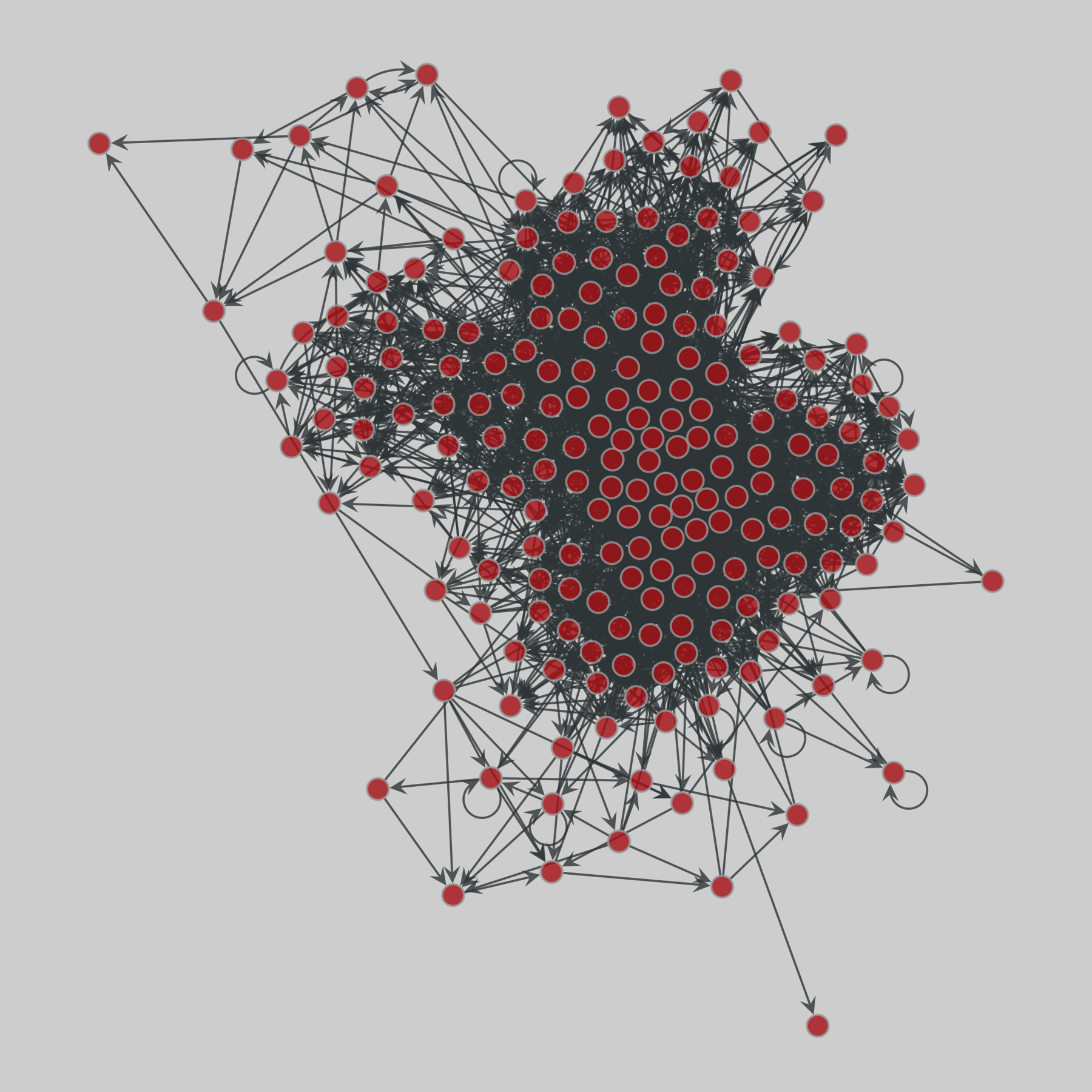
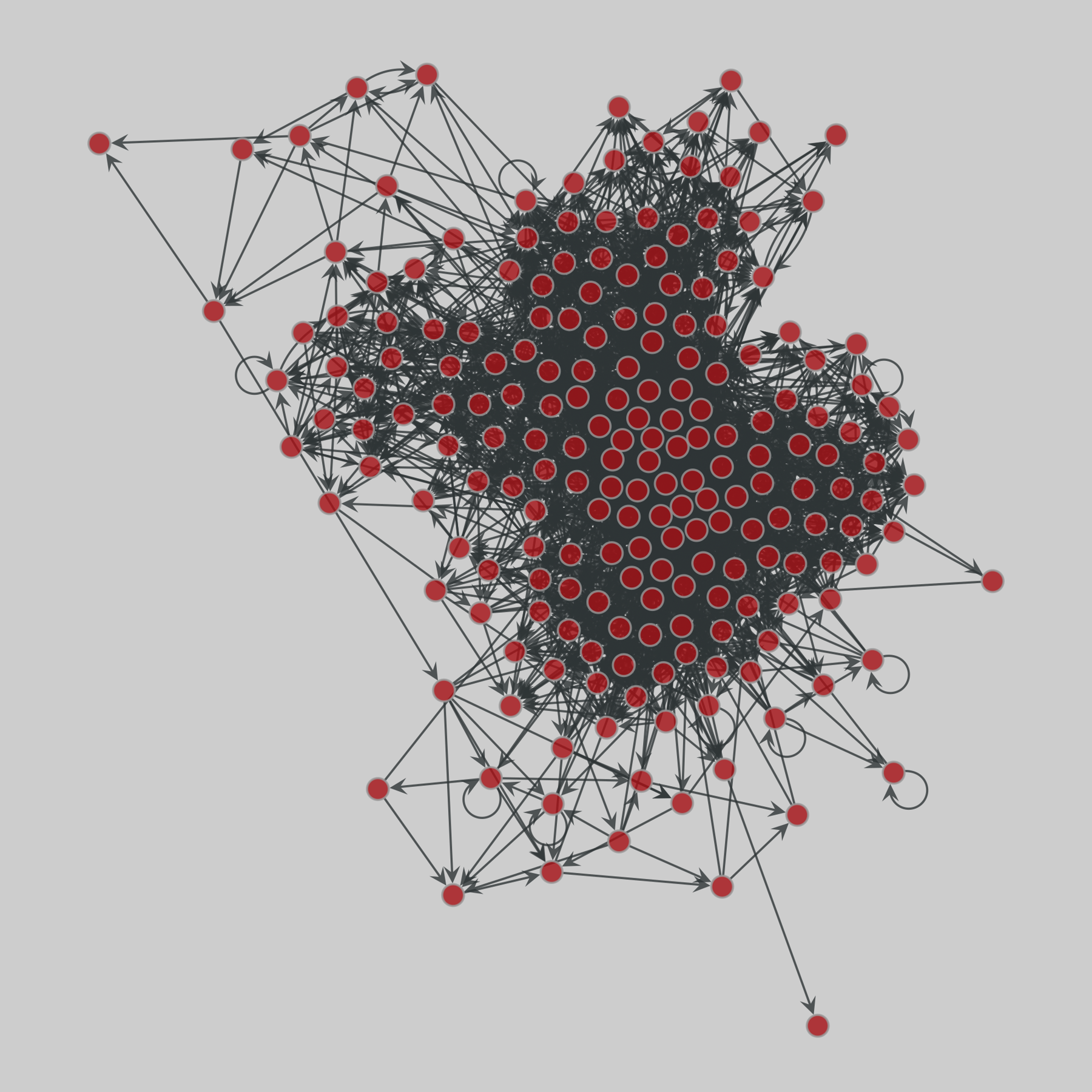
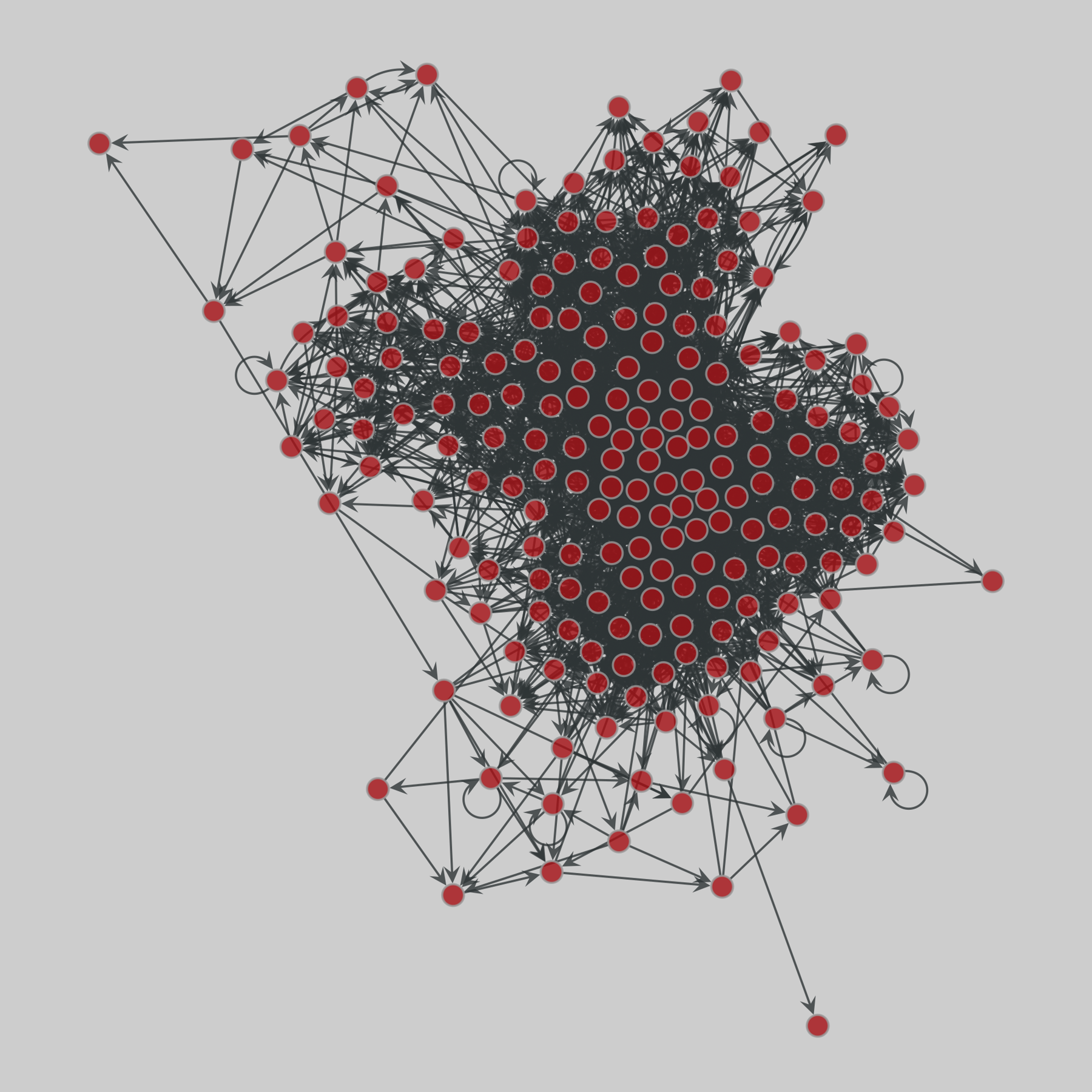
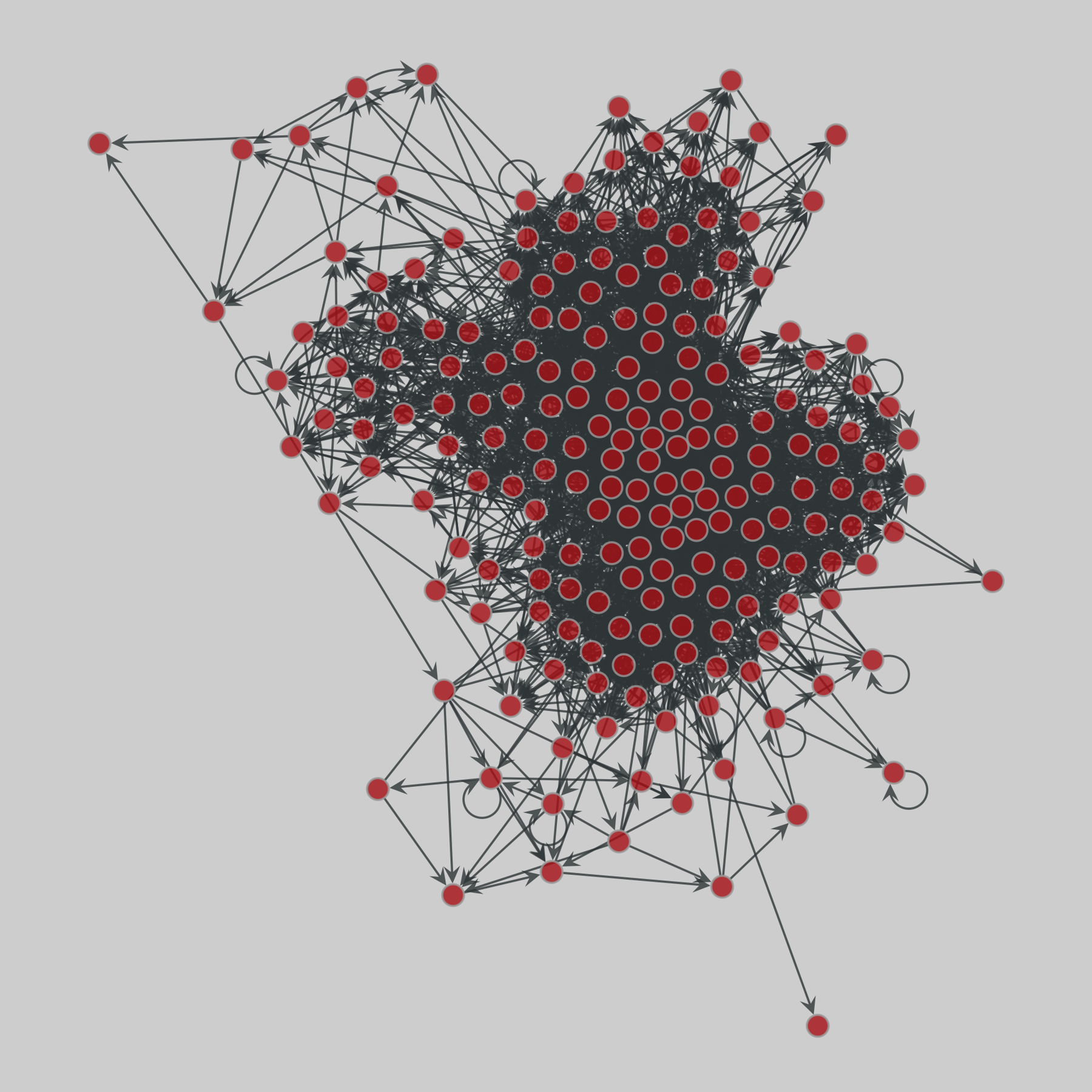
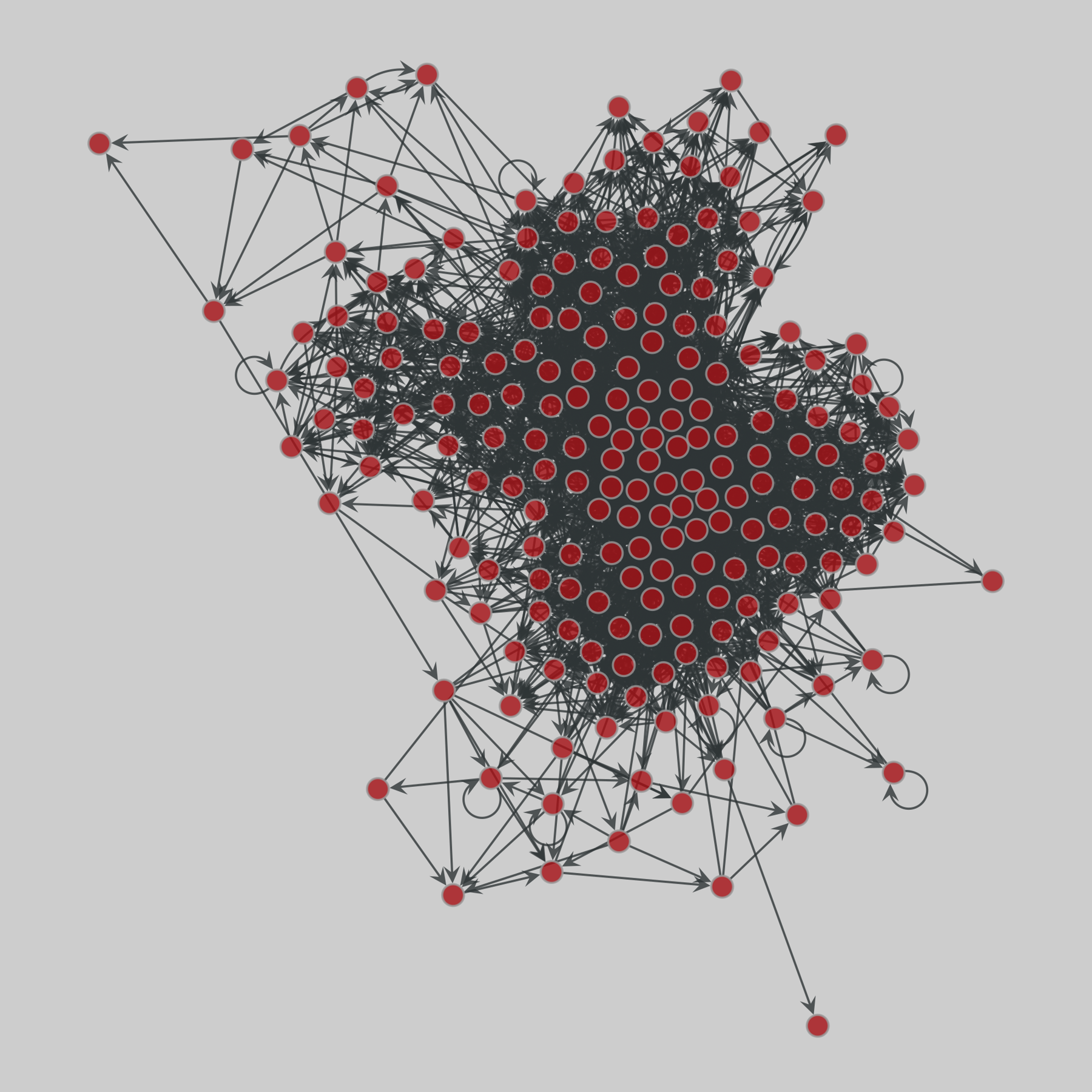
cintestinalis: Tadpole larva brain (C. intestinalis)
Entire connectivity matrix for the complete brain of a larva of Ciona intestinalis. Each directed edge represents a synaptic connection from pre-synaptic cell i to post-synaptic cell j (may not be a neuron). Edge weights represent the cumulative depth of presynaptic contacts in µm.
This network has 205 nodes and 2903 edges.
Tags: Biological, Connectome, Weighted
Thrilled to be diving deep into the world of local AI orchestration! 🖥️ So excited to explore how we can run autonomous agents right from our own machines—no cloud required. This is the future of edge computing, and I'm here for the hands-on learning journey. Who else is experimenting with on-device intelligence? Let's connect and share insights! 🤖 #AI
A short note on the image of multilinear graded polynomials on matrix algebras
Italo Bauer Rodrigues da Silva, Felipe Yukihide Yasumura
https://arxiv.org/abs/2608.16768 https://…
This is an interview with Lilly Wachowski. Variety Magazine felt the need to also copy/paste a contrary statement by JKR's publicity team.
I get that journalists want to report all the voices, but it feels in terrible taste to append JKR's response *in the same page* as Ms. Wachowski's interview.
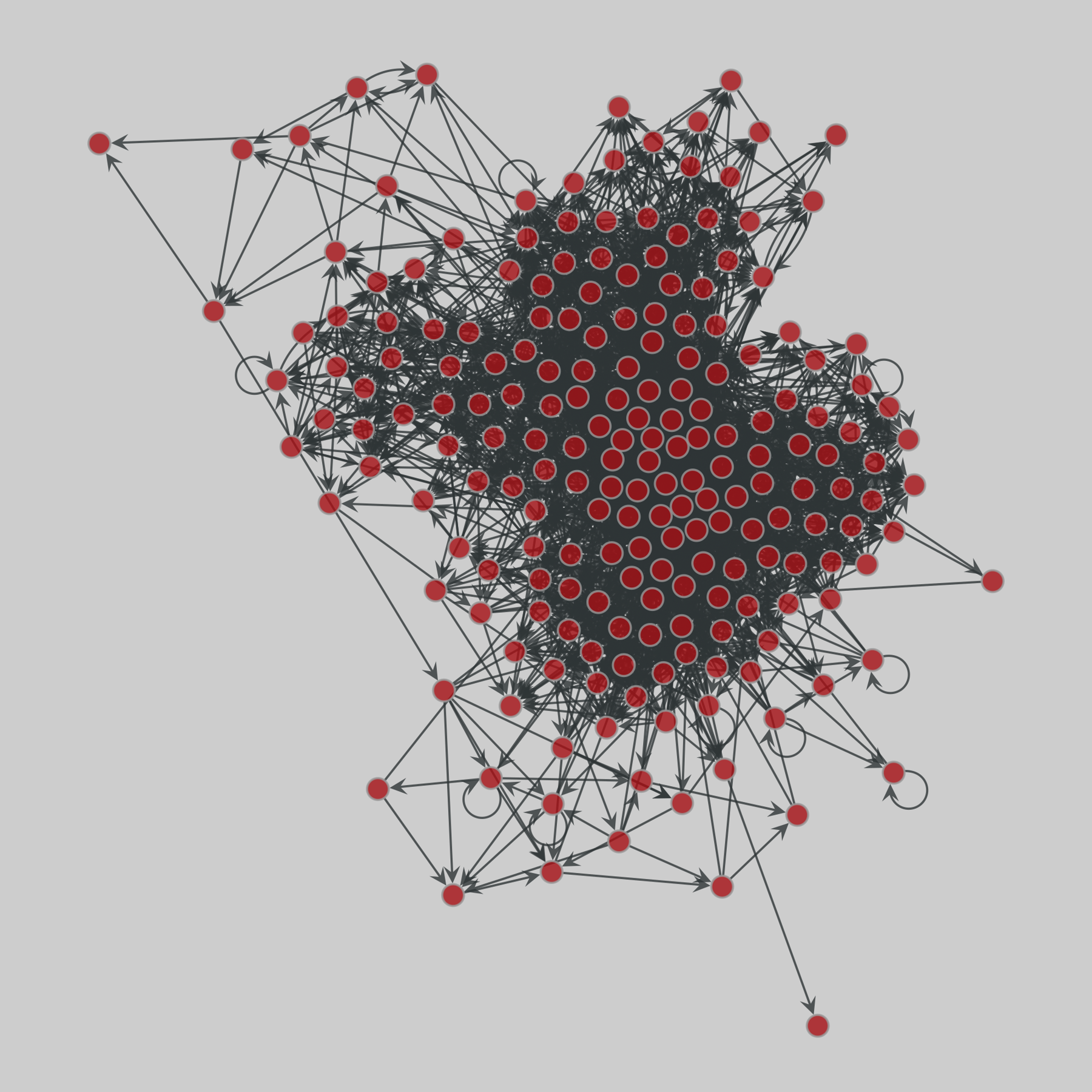
cintestinalis: Tadpole larva brain (C. intestinalis)
Entire connectivity matrix for the complete brain of a larva of Ciona intestinalis. Each directed edge represents a synaptic connection from pre-synaptic cell i to post-synaptic cell j (may not be a neuron). Edge weights represent the cumulative depth of presynaptic contacts in µm.
This network has 205 nodes and 2903 edges.
Tags: Biological, Connectome, Weighted
Spectral phase transitions in Gaussian multi-index models
Florent Krzakala, Pierre Mergny, Vanessa Piccolo
https://arxiv.org/abs/2608.12183 https://arxiv.org/pdf/2608.12183 https://arxiv.org/html/2608.12183
arXiv:2608.12183v1 Announce Type: new
Abstract: Recovering a low-dimensional latent subspace from nonlinear observations of Gaussian covariates in high dimensions is a fundamental problem in feature learning. Here, we consider Gaussian multi-index models in which the covariates $\boldsymbol{x}_i \stackrel{\mathrm{i.i.d.}}{\sim} \mathcal{N}(0,\boldsymbol{I}_d)$ and the responses $\boldsymbol{y}_i$ depend on $\boldsymbol{x}_i$ only through its projection onto an unknown $r$-dimensional subspace. Earlier work based on approximate message passing (AMP) identified a sharp threshold for weak recovery [Troiani et al., 2025], raising the question of whether it can be attained, without side information, by a spectral method. We answer this affirmatively and develop a general random matrix theory for matrix-valued spectral estimators of the form \[\boldsymbol{D}_n=\frac{1}{n}\sum_{i=1}^n\boldsymbol{T}(\boldsymbol{y}_i)\otimes\boldsymbol{x}_i\boldsymbol{x}_i^\top,\] where $\boldsymbol{T}$ is an arbitrary bounded symmetric matrix-valued preprocessing map of fixed dimension. As $n,d \to \infty$ with $n/d\to\alpha$, we prove that the empirical spectral measure of $\boldsymbol{D}_n$ converges almost surely to a deterministic compactly supported distribution characterized by a matrix-valued self-consistent equation. We then establish a spectral phase transition for the largest eigenvalue: below threshold it sticks to the bulk edge, while above threshold an outlier emerges. We characterize the outlier location through a finite-dimensional deterministic equation and show that the associated spectral estimator achieves weak recovery of the latent subspace. Finally, we prove that the AMP-derived preprocessing of [Defilippis et al., 2025] is optimal among all bounded matrix-valued preprocessing maps of any fixed dimension. Its transition coincides with the AMP weak-recovery threshold, proving the general spectral conjecture of [Defilippis et al., 2025].
toXiv_bot_toot
Selkirk Member of the Ordovician Red River Formation, aka Tyndall Stone commercially, as seen in Winnipeg, Canada.
Complex 3D burrows are interpreted as Thalassinoides; the color difference is due to dolomite vs calcite matrix. #FossilFriday urban #geology
My thoughts every day when I'm trying to collaborate on #matrix or #discord instead of #irc
Rank-One Matrix Discrepancy and Algorithmic Kadison--Singer
Ekene Ezeunala, Haotian Jiang
https://arxiv.org/abs/2609.17266 https://arxiv.org/pdf/2609.17266…
Bin diese Woche wieder zweimal im Radio zu hören 🎵 : Mi. 14:00 live im Deutschlandfunk Kultur (Thema ungefähr "Verändern LLMs unsere Sprache") und Fr. 19:05 aus der Konserve im ORF oe1 "Matrix: Computer und neue Medien" zu Emojis 🤩 #radio #wissenschaft #WissKomm
Heute hab ich von der Plattform https://gemeinsam.jetzt erfahren, die österreichweit zivilgesellschaftliche Initiativen auflistet und vernetzen möchte und auch Jitsi, Matrix und Etherpad anbietet. Wirkt im Moment ein bisschen Graz-lastig, also wäre toll, wenn das ein bisschen breiter bekannt werden würde :)
Sie …
'Fixed' the TV this morning by doing a software update!
Crosslisted article(s) found for math.RA. https://arxiv.org/list/math.RA/new
[1/1]:
- Entrywise Loewner Preservers on Min and Max Matrix Cones
Wei Xie
https://
Crosslisted article(s) found for physics.atom-ph. https://arxiv.org/list/physics.atom-ph/new
[1/1]:
- Hartree-Fock Density-Matrix Renormalization Group for Very Long Chains
Steven R. White
Multidimensional stochastic liquidity in Kyle's model of informed trading
Ibrahim Ekren, Evangelos A. Nikitopoulos, Lu Vy
https://arxiv.org/abs/2607.10934 https://arxiv.org/pdf/2607.10934 https://arxiv.org/html/2607.10934
arXiv:2607.10934v1 Announce Type: new
Abstract: We develop a variational formulation of Kyle's model of informed trading that accommodates stochastic liquidity and multiple traded assets. The main equilibrium result is stated first: under a martingale dual condition, a matrix-valued martingale depth process generates a linear-Gaussian equilibrium with stochastic matrix-valued price impact. We derive this martingale from a primal-dual problem, inspired by causal optimal transport, that characterizes the endogenous speed at which the insider injects private information into prices; in general, this problem admits only local martingale optimizers, and the martingale dual condition is the hypothesis that the optimizer is a true martingale. We interpret informed trading as the optimal liquidation of private information and verify the construction in the scalar and common-eigenbasis cases. The fully general matrix-valued case reduces to a coupled matrix FBSDE, which we isolate as the remaining obstruction. Along the way, we establish an independently interesting Doob-Meyer decomposition for general (not necessarily symmetric) matrix-valued submartingales.
toXiv_bot_toot
Replaced article(s) found for stat.AP. https://arxiv.org/list/stat.AP/new
[1/2]:
- Source apportionment of air pollution burden using geometric non-negative matrix factorization an...
Bora Jin, et al.
Weighted Nuclear Elastic Net Estimation of (Near-) Low-Rank Drift Matrices in Ornstein-Uhlenbeck Processes
Dmytro Marushkevych, Francisco Pina, Mark Podolskij
https://arxiv.org/abs/2608.12838 https://arxiv.org/pdf/2608.12838 https://arxiv.org/html/2608.12838
arXiv:2608.12838v1 Announce Type: new
Abstract: We study estimation of the drift matrix in a continuously observed high-dimensional Ornstein-Uhlenbeck process when the drift is exactly or approximately low rank. In this setting, exact low rank induces non-stable directions and hence a non-ergodic regime, resulting in a poorly conditioned empirical covariance matrix. To address this difficulty, we introduce a Weighted Nuclear Elastic Net Estimator that combines ridge regularization with a nuclear-norm penalty expressed in the empirical likelihood geometry.
Under a general diagonalizable spectral framework, we establish oracle inequalities relative to arbitrary low-rank comparison matrices. For near low-rank drifts, the approximation error is naturally measured through the singular-value decay of the drift after weighting by the regularized empirical covariance. The stochastic term is controlled by self-normalized martingale arguments under appropriate choice of the tuning parameter.
For a symmetric positive-semidefinite exact low-rank model, we verify the empirical-curvature condition required to translate the weighted bound into a Frobenius-norm bound. With an appropriate choice of tuning parameters, the resulting estimator satisfies, up to a logarithmic factor, the standard rank-$r$ matrix-estimation scaling $r d/T$: specifically, its squared Frobenius error is of order $r d\log(T)/T$ with high probability, under an explicit dimension-horizon condition.
toXiv_bot_toot
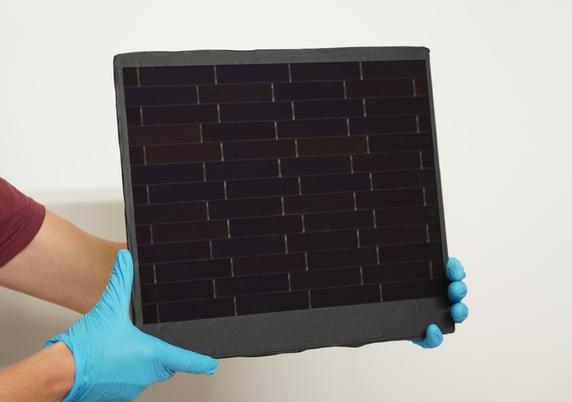
Forschende des #FraunhoferISE haben einen neuen Wirkungsgrad-Rekord für ein #Photovoltaik-Modul erzielt.
Durch den Einsatz der Shingle-Matrix-Technologie und weiterentwickelter III-V-Germanium-#Solarzellen erreicht das Modul 34,4 Prozent Effizienz.
Die Bauweise reduziert Absch…
40 years ago today, the grateful dead, bob dylan & the heartbreakers on a brutally hot sunday in DC at the mammoth RFK stadium, 1st of 2 days. dylan & co. play first. summer ’86, show #10.
soundboard: https://archive.org/details/gd1986-07-06.1739…
As much as I've loved to hate on it, the CCRU as a subject inevitably interests me from time to time, and I've gained from critically drinking in it's aesthetically pleasing side. I recently learned of this website where you can play Decadence and Subdecadence from their mythology https://playdecadence.online
Matrix Spencer: Eight Standard Deviations Suffice and an Almost-Linear Time Algorithm for Dense Input
Zhao Song, Lichen Zhang
https://arxiv.org/abs/2609.15025 https://
I've had issues with Linux.Pizza's Matrix-server, mainly due to uncontrolled growth of the database. Even thou retention is set do one month, there is still an absurd amount of growth in the database.
I have never encountered this before, not even with thousands of active users.
I do know that other users had this issue before and have been vocal about it.
Is there any solution to this yet?
Stabilizer complexity and the Python's lunch
Abhirup Bhattacharya, Jatin Narde, Onkar Parrikar, Suprakash Paul
https://arxiv.org/abs/2608.12472 https://arxiv.org/pdf/2608.12472 https://arxiv.org/html/2608.12472
arXiv:2608.12472v1 Announce Type: new
Abstract: In this note, we study the stabilizer complexity of the reduced density matrix corresponding to one side of a partially entangled thermal (PET) state with fixed energy boundary conditions in a holographic CFT. In particular, we study Wigner negativity, an operationally meaningful magic monotone which can be interpreted as the complexity of classically simulating any quantum circuit preparation of the reduced state on the subregion. Using assumptions on the pseudorandomness of the CFT spectrum and the heavy operator insertion, we observe that the Wigner negativity of the PET state relative to the microcanonical density matrix at the given energy is given by $\exp\left[\frac{1}{8G_N}(A_{\text{out}} - A_{\text{min}})\right]$, where $A_{\text{out}}$ is the area of the outer extremal surface, while $A_{\text{min}}$ is the area of the minimal extremal surface. Thus, the stabilizer complexity of the reduced density matrix on the boundary subregion is $O(1)$ in the absence of a python's lunch, but gets exponentially enhanced in the presence of a python's lunch in the bulk geometry.
toXiv_bot_toot
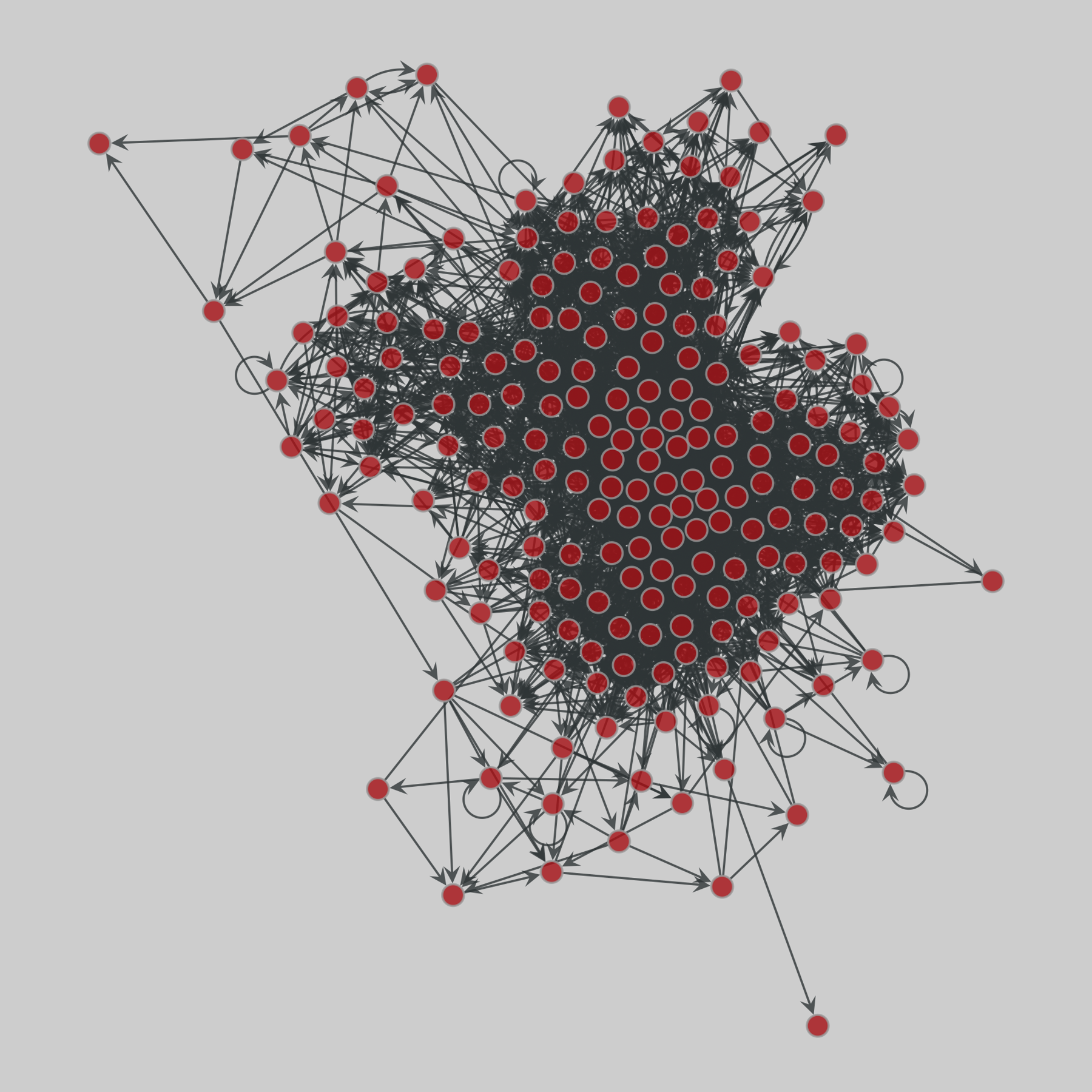
cintestinalis: Tadpole larva brain (C. intestinalis)
Entire connectivity matrix for the complete brain of a larva of Ciona intestinalis. Each directed edge represents a synaptic connection from pre-synaptic cell i to post-synaptic cell j (may not be a neuron). Edge weights represent the cumulative depth of presynaptic contacts in µm.
This network has 205 nodes and 2903 edges.
Tags: Biological, Connectome, Weighted
For fun I've been getting the Qualcomm Hexagon llama.cpp to build; it's taken quite a fight - they do release a binary SDK - built for x86 (win or Linux) or aarch (windows only?!) - I'm using upstream llvm...which is painful. The hexagon matrix stuff isn't in upstream llvm - or anywhere else in source - yet; still the hexagon vector is; but chasing llvm head turns out to just about have it working, but last week a new flag was added needed to stop it crashing.
Builds…
Lilly Wachowski on Her New Studio Anarchists United, the Black Power Origins of 'The Matrix' and How 'Harry Potter' Fans Are 'Supporting Trans Genocide' (Marlow Stern/Variety)
https://variety.com/2026/tv/features/lilly-wachowski-jk-rowling-harry-potter-trans-the-matrix-1236858104/
http://www.memeorandum.com/260911/p105#a260911p105
Distance Matrices of Ordered Point Clouds and Their Persistent Homology
David Hien
https://arxiv.org/abs/2608.12620 https://arxiv.org/pdf/2608.12620 https://arxiv.org/html/2608.12620
arXiv:2608.12620v1 Announce Type: new
Abstract: The distance matrix of a finite point cloud can be visualized as a heatmap. When the data arise from a time series, the sublevel sets of this image are known as recurrence plots and are widely used in time series analysis. Motivated by this perspective, we establish a relationship between the distance-matrix filtration of the time series and the \v{C}ech (or Vietoris--Rips) filtration of its state-space embedding in the form of a degree-one chain map. We study the induced maps in homology, showing that the map from $H_0$ into $H_1$ is essentially surjective and providing an example where the map from $H_1$ into $H_2$ is nontrivial. These chain maps can be applied to simplify image persistence computations arising in the computation of cycling signatures, a topological tool for time series analysis. Moreover, these computations yield finer information that allows the analysis of transitions between different types of cycling motion.
toXiv_bot_toot
„Ich hab deine Nummer nicht.“
„Kein Problem. Du kannst mich auch bei Signal, Telegram, Matrix, Threema und Jabber jederzeit nicht erreichen.“
Happy to announce v3.0.0 of my build-and-inspect-python-package GitHub Action that does what the name says.
If u maintain a Python pkg u should really give it a look! Much, much fewer broken pkgs have been pushed to PyPI & who doesn't love automatic trove classifier − GHA test matrix conversion‽
This release brings you Twine 7 & with that packaging metadata 2.5 & PEP 794 (Import Name Metadata) – also a new release procedure: no more trailing v3 tags – only full ve…
the ‘Boys are too in sync 🤖 | @AmericanAirlines #DallasCowboys #glitch #matrix #glitches
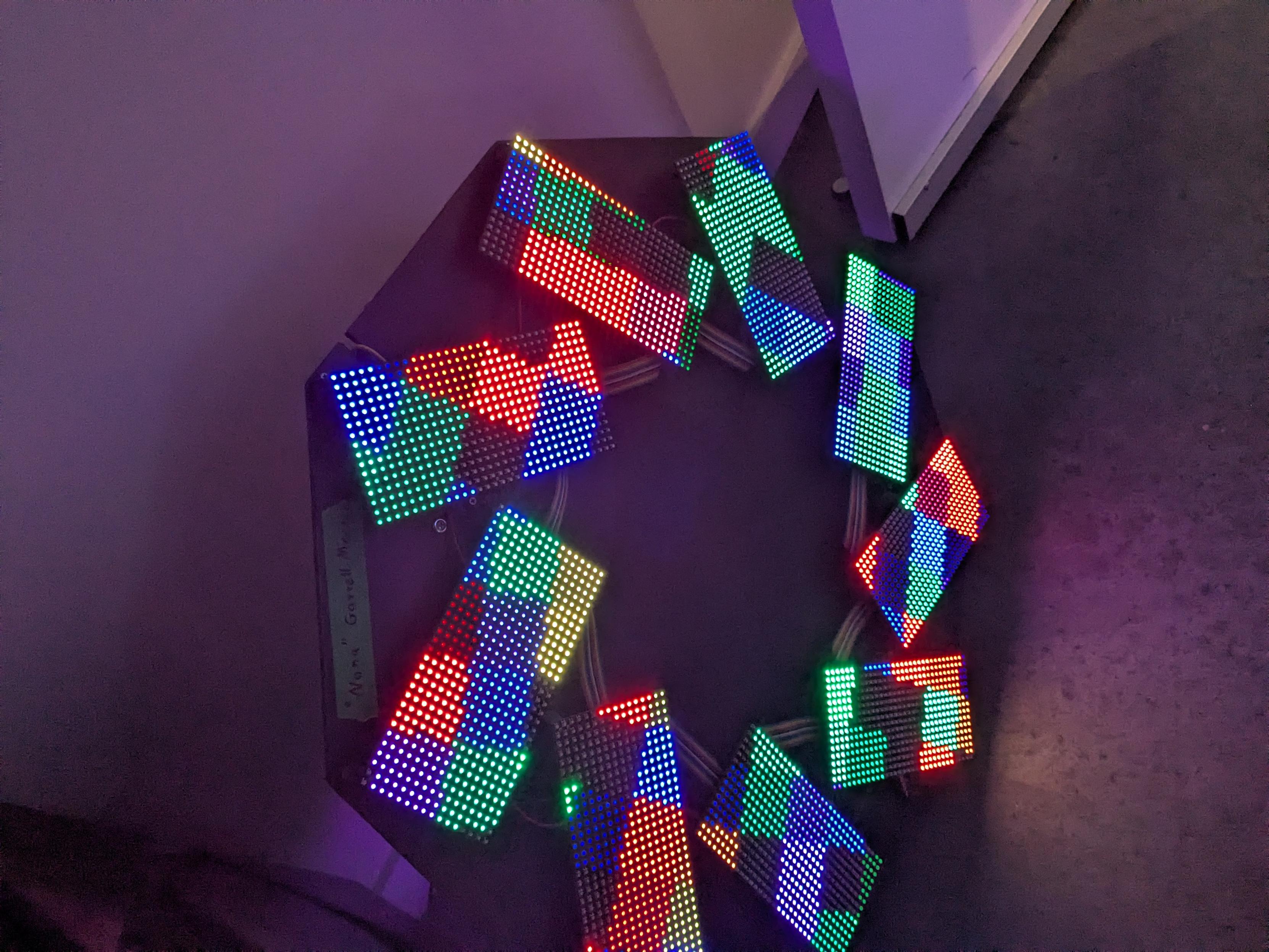
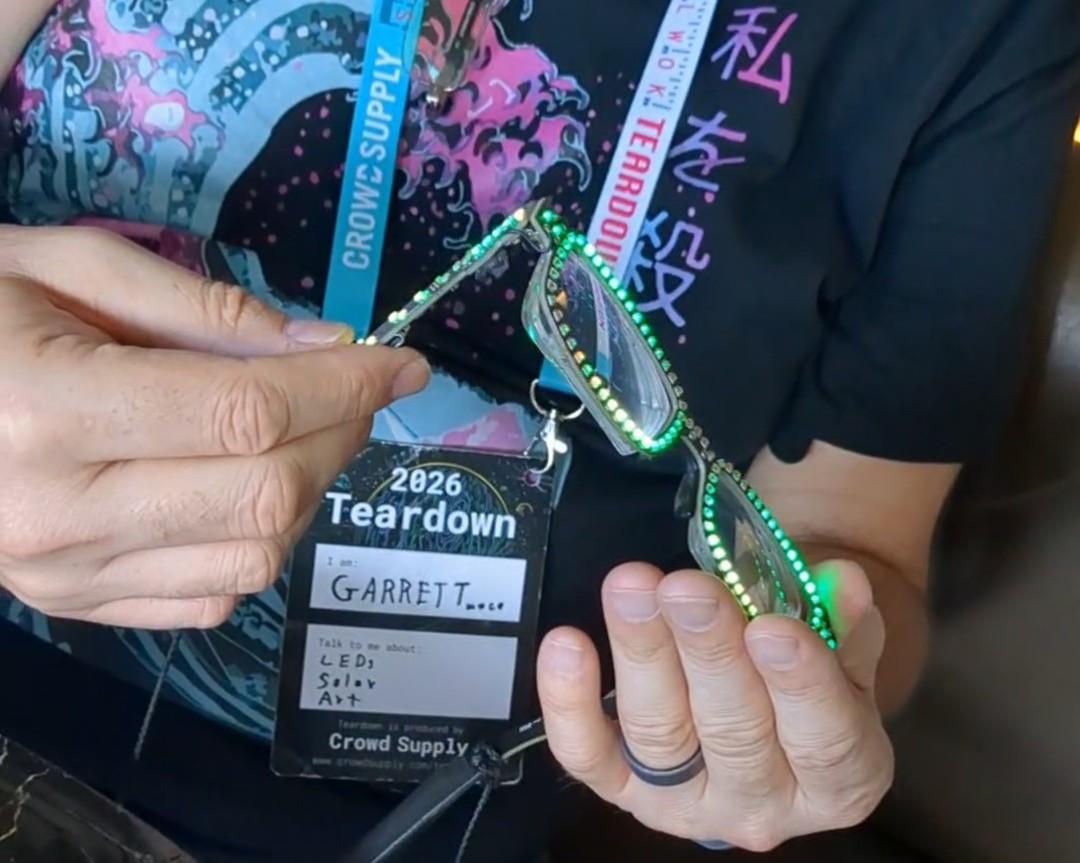
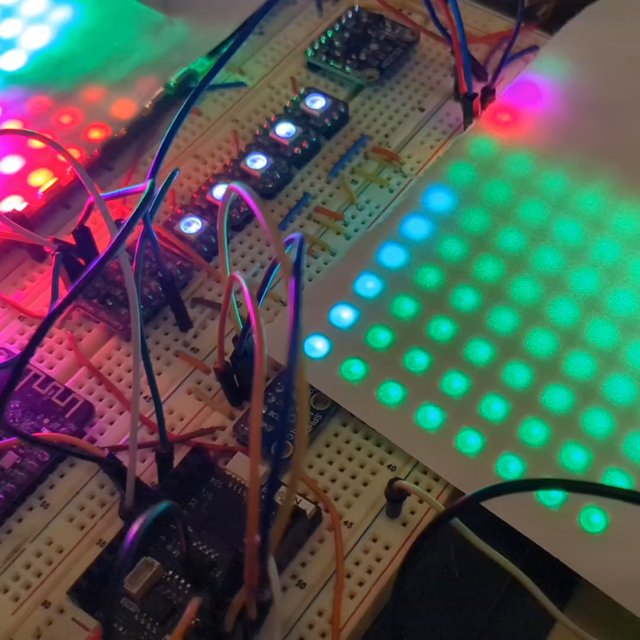
My favorite LEDs at #teardown2026
The huemanatee is by Solid Mirage - https://solidmirage.store/
Ring of matrix panels and Rx glasses by Garrett Mace -
I have a nice second hand HDMI matrix (can switch 4 inputs around 8 outputs..) and am OVERJOYED to discover it has an old school protocol. Like you can plug in an ethernet cable and then telnet to it to control it remotely. I'm not really sure why it makes me so happy.
https://luxpro.ua/files/vs-48hn_manual
Pattern formation: reactivity is not necessary for chemotaxis--driven instabilities
Angela Monti
https://arxiv.org/abs/2608.03685 https://arxiv.org/pdf/2608.03685 https://arxiv.org/html/2608.03685
arXiv:2608.03685v1 Announce Type: new
Abstract: A classical result by Neubert, Caswell and Murray states that reactivity of a spatially homogeneous equilibrium is a necessary condition for diffusion-driven (Turing) instability. In this work, we investigate whether the same conclusion remains valid in the presence of chemotaxis. We consider a general reaction--diffusion system coupled with a chemotactic flux and establish necessary conditions for asymptotic instability. We show that the classical requirement of reactivity can be relaxed when the chemotactic contribution is sufficiently strong. In particular, while reactivity remains necessary for Turing instability, it is not a necessary condition for chemotaxis-driven instability. From a computational viewpoint, we extend the matrix-oriented formulation developed for reaction--diffusion systems to the more general class of reaction--diffusion--chemotaxis models. The chemotactic transport term is discretized in a form compatible with the matrix-oriented approximation of the diffusion operator, yielding an efficient numerical framework for the simulation of chemotaxis-driven pattern formation. A geometric interpretation of the instability region is presented, highlighting the distinct roles played by diffusion and chemotaxis. The theoretical and numerical developments are illustrated through two representative examples: a chemotaxis-extended Schnakenberg model, showing how chemotaxis modifies classical Turing patterns, and a predator--prey model, demonstrating that chemotaxis alone can induce pattern formation in the absence of both reactivity and diffusion-driven instability. These results reveal a fundamental difference between diffusion-driven and chemotaxis-driven mechanisms of spatial self-organization and provide new theoretical and computational insights into the role of non-symmetric transport processes in biological pattern formation.
toXiv_bot_toot
Lanczos Method for QRPA Strength Functions in Atomic Nuclei
Dong Min Roh, Chao Yang, Jonathan Engel, Matthew L. Dai
https://arxiv.org/abs/2607.01114 https://arxiv.org/pdf/2607.01114 https://arxiv.org/html/2607.01114
arXiv:2607.01114v1 Announce Type: new
Abstract: We present a symmetric Lanczos method for computing charge-changing QRPA strength functions in atomic nuclei. Starting from the finite-amplitude-method formulation of the QRPA linear-response problem, we derive equivalent spectral representations and, in the real case, a reduced eigenvalue problem involving the matrix products $MK$ and $KM$, where $M\equiv A B$ and $K\equiv A-B$ are formed from the usual QRPA matrices $A$ and $B$. The resulting formulation enables a matrix-free Lanczos approximation of the Lorentzian-smeared strength function over a broad energy interval from a single Krylov run, in contrast to conventional frequency-by-frequency response calculations. Numerical tests for $^{112}$Sn and $^{150}$Nd first show that GMRES reproduces the converged iterative FAM strength profiles while requiring fewer iterations. Using GMRES as the frequency-by-frequency reference, we then show that the Lanczos approximation reproduces the same strength profiles with reduced overall cost. These results indicate that symmetric Lanczos projection provides an efficient and accurate approach for QRPA strength-function calculations when spectral information is required over an extended frequency range.
toXiv_bot_toot
#PhanpySocial changelog ✨
🗂️ Collections (Mastodon v4.6)
🤖 Filter notifications from bots (Mastodon v4.6)
🐛 Bug fixes
🔗 https://phanpy.social/
💬
The Quantum Mechanics of Rare Events: From Quantum Walks to Stochastic Inflation
Daniel Green, Kshitij Gupta, Akhil Premkumar
https://arxiv.org/abs/2608.06319 https://arxiv.org/pdf/2608.06319 https://arxiv.org/html/2608.06319
arXiv:2608.06319v1 Announce Type: new
Abstract: Rare fluctuations in physical systems depend on the detailed microphysics responsible for the fluctuations. In classical statistical systems, the large deviation principle has elucidated the role of semi-classics in describing this regime, and has simultaneously provided a the mathematical foundation of statistical mechanics. Large deviation theory for quantum system is considerably less developed. As all physical systems are fundamentally quantum mechanical, this leaves a major gap in our understanding of rare fluctuations relevant to statistical physics, cosmology, and more. In this paper, we develop the practical aspects of the theory of large deviations relevant for calculating rare events in physical systems from quantum walks to cosmology. We first analyze the case of the anharmonic oscillator coupled to a bath, showing explicitly how the system evolves from dominantly statistical (e.g. thermal) to quantum fluctuations. We then generalize these results, showing that the dominant rare fluctuations minimize the measurement-induced relative entropy. This perspective provides a thermodynamic description of a wide range of open quantum systems. We apply these results to random walks that arise in cosmology through stochastic inflation. We show that the evolution of the density matrix of long wavelength fields on a fixed de Sitter background breaks the KMS symmetry, giving rise to a stationary density matrix that does not respect detailed balance.
toXiv_bot_toot
getting bottom surgery in the matrix call that a neovagina
getting bottom surgery in the matrix call that a neovagina
cintestinalis: Tadpole larva brain (C. intestinalis)
Entire connectivity matrix for the complete brain of a larva of Ciona intestinalis. Each directed edge represents a synaptic connection from pre-synaptic cell i to post-synaptic cell j (may not be a neuron). Edge weights represent the cumulative depth of presynaptic contacts in µm.
This network has 205 nodes and 2903 edges.
Tags: Biological, Connectome, Weighted
I mentioned that we face a (voluntary) layoff. So alot of colleagues will leave soon and someone asked me about an alumni-group ...
My first reaction was "anything except a WhatsApp Group". But what would / could work? Anyone who tried that in the past?
I guess it'll boil down to Whatsapp/Signal? I would suggest Matrix but I'm afraid it might be too alien for some?
#work
Radiometric Thermal Imaging Dataset of Laboratory Rats with Anatomical Segmentation Masks
Dima Bykhovsky, Evyatar Chaimoff, Pe'er Eden, Tom Simkin, Oshrit Hoffer, Shahar Cohen, Bar Eilat Yogev, Gal Levi, Noa Efroni, Doron Todder, Hagit Cohen
https://arxiv.org/abs/2608.03481 https://arxiv.org/pdf/2608.03481 https://arxiv.org/html/2608.03481
arXiv:2608.03481v1 Announce Type: new
Abstract: Infrared thermography provides a contact-free, restraint-free method to record surface temperatures. It serves as a valuable marker for thermoregulatory responses in laboratory animal stress and pharmacology research. However, the analysis of these images is currently bottlenecked by the manual delineation of anatomical regions. To date, no public dataset has provided paired radiometric thermal frames of rats with pixel-level body-part labels. We present a dataset of 1,655 quality-controlled radiometric thermal frames from 25 laboratory rats. Each frame is paired with a dense four-class anatomical segmentation mask (background, head, body, and tail) and the raw $480 \times 640$ temperature matrix (rows $\times$ columns) in degrees Celsius. This ensures every label is registered directly to the physical temperature it describes rather than a color-mapped rendering. The frames originate from two pharmacological cohorts where interventions alter thermoregulation in opposite directions: ethanol, which induces peripheral vasodilation, and ketamine, which affects central thermoregulation. This provides a wide and physiologically diverse range of surface temperature regimes. Aggregated across the dataset, the per-class temperatures follow a head~$>$~body~$>$~tail ordering in physical units. To demonstrate that the data support pixel-level segmentation directly from the radiometric channel, we present an exploratory U-Net segmentation pipeline that attains a subject-level cross-validated mean intersection-over-union of $0.895 \pm 0.006$. The dataset provides a reuse-ready benchmark for thermal semantic segmentation and for downstream physiological and stress-phenotyping analyses.
toXiv_bot_toot
@… Tak jak fediversum jest social mediami opartymi o otwarty i zdecentralizowany protokół ActivityPub, tak Element jest komunikatorem opartym otwarty i zdecentralizowany protokół Matrix.
Taka ciekawa technologia do szyfrowanej komunikacji w czasie rzeczywistym między ludźmi, bez centralnego właściciela. Można porównać do Signala, W…
So I am the only dweller in my home the coming week, and I become so incredibly bored when I am alone - I hate it.
Anyway, this is what I have done during the last 6 hours:
- Fixed the leaking toilet
- Fixed the damaged toilet seat
- Almost migrated my Nextcloud server
- Started to migrate my Matrix Synapse server
- Rebuild some furniture in order to hide the router (Wife Approved)
- Installed OpenHop (Meshcore) on my raspberry pi with a MeshADV hat
…
cintestinalis: Tadpole larva brain (C. intestinalis)
Entire connectivity matrix for the complete brain of a larva of Ciona intestinalis. Each directed edge represents a synaptic connection from pre-synaptic cell i to post-synaptic cell j (may not be a neuron). Edge weights represent the cumulative depth of presynaptic contacts in µm.
This network has 205 nodes and 2903 edges.
Tags: Biological, Connectome, Weighted
Metriport, whose tools help doctors retrieve patient data, raised $26M in Series A and seed funding led by Matrix GP TJ Parker, taking its total raise to $28.4M (Ngai Yeung/Endpoints News)
https://endpoints.news/metriport-raises-26m-to-help-doctors-retrieve…
HenTwin: A Multimodal Digital Twin Framework for Longitudinal Biological State Monitoring in Laying Hens
Yashan Dhaliwal, Shreya Rao, Suresh Neethirajan
https://arxiv.org/abs/2607.28652 https://arxiv.org/pdf/2607.28652 https://arxiv.org/html/2607.28652
arXiv:2607.28652v1 Announce Type: new
Abstract: Early-life monitoring in laying hens remains constrained by fragmented single-modality sensing and the absence of formal system-level state representations. HenTwin, a multimodal digital twin framework implemented as a five-layer IoT architecture, formalizes flock-level multimodal biological state dynamics from hatch through 25 weeks of age. A four-dimensional biological state vector integrating body surface temperature, acoustic energy entropy, band energy ratio, and optical-flow-based motion is defined, with the temperature-humidity index treated as an exogenous environmental input to preserve intervention capability. A discrete-time state transition model is estimated from 25 weeks of longitudinal multimodal data collected from 150 Lohmann LSL-Lite hens across five controlled rooms at the Atlantic Poultry Research Centre, Dalhousie University. The estimated transition matrix exhibits modality-specific persistence while remaining asymptotically stable. Perturbation analysis demonstrates that a sustained 2.0 THI increase produces a stable long-run acoustic entropy elevation of 0.54 nats, approximately one-quarter of the entire 1.87-nat developmental decline observed across the study period. Pettitt change-point detection identifies coordinated multimodal developmental state transitions at Weeks 12-14. Cross-room validation suggests that structural transition parameters are partially transferable across rooms, whereas environmental input sensitivity requires room-specific calibration, supporting a two-tier IoT deployment architecture. Leave-one-out cross-validation demonstrates consistent out-of-sample model performance. HenTwin takes a first step toward formal, state-aware digital twin inference in precision livestock farming.
toXiv_bot_toot
Ich wollte ein #Issue für #ÖffiNG anlegen. Aber ich kann keinen #github account anlegen und ich habe kein #matrix. (…
Getting closer to Rust replacement for my Arduino LED code on ESP32. In addition to parallel outputs, I now have wifi, a web server, and very basic audio in. (I2S Audio with async DMA only works with git `esp-hal`, depending on some very recent not yet released enhancements)
Next steps for full parity: DDP in over UDP, key/value store in flash to preserve settings (eg save brightness), more advanced patterns, and hopefully using the second core.
Crosslisted article(s) found for math.ST. https://arxiv.org/list/math.ST/new
[1/1]:
- Graphical Models for Multivariate Count Data
Iza Danielewska, Bartosz Ko{\l}odziejek
https://arxiv.org/abs/2608.11366 https://mastoxiv.page/@arXiv_statME_bot/117087137518300934
- Semiparametric efficient estimation of the Cox regression coefficient when there can be ties
Benjamin R Baer
https://arxiv.org/abs/2608.11399 https://mastoxiv.page/@arXiv_statME_bot/117087137911796087
- Kernel Methods for Learning Operators with Multiple Inputs and Outputs
Adrien Weihs, Chunyang Liao, Jingmin Sun, Hayden Schaeffer
https://arxiv.org/abs/2608.11831 https://mastoxiv.page/@arXiv_csLG_bot/117087254700651171
- Efficient Response-Adaptive Randomization for Multi-arm Trials with Prioritized Composite Endpoints
Ayon Mukherjee
https://arxiv.org/abs/2608.11953 https://mastoxiv.page/@arXiv_statME_bot/117087188083583909
- Deviation inequalities for U-processes of growing order, with applications to half-space depth
Stanislav Minsker, Shunan Yao
https://arxiv.org/abs/2608.12056 https://mastoxiv.page/@arXiv_mathPR_bot/117087117268165539
- Sharp Berry-Esseen Bounds for the Log Determinant of a Gaussian Sample Correlation Matrix
Hongru Zhao
https://arxiv.org/abs/2608.12242 https://mastoxiv.page/@arXiv_mathPR_bot/117087153642598120
- A contiguity approach to replica symmetric marginals
Ernesto Mordecki, Anas A. Rahman, Manuel S\'aenz
https://arxiv.org/abs/2608.12309 https://mastoxiv.page/@arXiv_mathph_bot/117087180577891013
toXiv_bot_toot
Crosslisted article(s) found for physics.atom-ph. https://arxiv.org/list/physics.atom-ph/new
[1/1]:
- Matrix Holography on an Optical Lattice
Robin L\"owenberg, Julian Sonner
Distributed Stochastic Smoothing ADMM for Penalized Quantile Regression
Rongmei Liang, Xiaofei Wu
https://arxiv.org/abs/2608.09220 https://arxiv.org/pdf/2608.09220 https://arxiv.org/html/2608.09220
arXiv:2608.09220v1 Announce Type: new
Abstract: Quantile regression is well suited to heterogeneous and heavy-tailed data, but computation becomes challenging for large, distributed data sets because the check loss is nonsmooth. We propose a distributed stochastic smoothing alternating direction method of multipliers (DSS-ADMM) for horizontally partitioned penalized quantile regression. Each worker computes a mini-batch gradient of a Huber-smoothed check loss, and a coordinator performs a single proximal aggregation step for the regularizer. Raw observations remain local, worker updates run in parallel, and the method requires no matrix inversion. For proper, closed, and convex penalties, stacking the local coefficient vectors yields a standard two-block stochastic ADMM formulation. With fixed smoothing, we establish an expected $O(\log K/\sqrt K)$ joint objective-feasibility bound and an explicit $\eps/4$ approximation term for the original check-loss objective; when the smooth block is strongly convex, the bound improves to $O(\log K/K)$. We also characterize the scope of an extension to the minimax concave penalty and the smoothly clipped absolute deviation penalty. Reproducible simulations consider both homogeneous worker partitions, in which observations are independently and identically distributed across workers, and heterogeneous partitions, in which worker-specific covariate distributions differ. Sensitivity studies and analyses of the diabetes and Engel data illustrate the trade-offs among per-observation gradient evaluations, communication, consensus, sparsity, and prediction.
toXiv_bot_toot
Every single one of these doomerism articles is a) 100% bullshit and b) is put there to make the technology seem magical when it's just matrix multiplication
Will your butter knife kill off humanity? Cutlery scientists and politicians wrestle with risks of butter knives
Decomposition of a square matrix into a product of a nilpotent matrix and an involutive or idempotent matrix
Flavien Mabilat
https://arxiv.org/abs/2608.17569 https://
MORSE-PI -- Flexible and artefact-free image reconstruction for structural and functional QSM and other phase-critical imaging applications
Barbara Dymerska, Oliver Josephs, Benjamin James, Vahid Malekian, Nadine N. Graedel, Martina F. Callaghan
https://arxiv.org/abs/2606.21336 https://arxiv.org/pdf/2606.21336 https://arxiv.org/html/2606.21336
arXiv:2606.21336v1 Announce Type: new
Abstract: Phase imaging applications such as QSM are highly sensitive to noise amplifications, phase singularities, and other artefacts, particularly in challenging scenarios such as ultra-high field (7T), under-sampled or single-echo acquisitions. We present a novel image reconstruction method, MORSE-PI, designed to produce high-SNR, artefact-free, and singularity-free phase images for both structural and functional phase-based brain imaging. MORSE-PI extends our previous approach, MORSE, by introducing a Virtual Reference Coil (VRC). The VRC is constructed as a linear combination of coil sensitivity maps, with correlations enhanced between coil elements using the noise covariance matrix. Such a VRC ensures robust signal support across the entire brain and is used to correct phase offsets in the MORSE-derived coil sensitivity estimates, resulting in artefact-free, high SNR phase. Compared to GRAPPA with ASPIRE phase correction, MORSE-PI demonstrates greater robustness to artefacts such as noise amplification and aliasing, and shows improved reproducibility in structural imaging at both 3T and 7T. Unlike ESPIRiT and GRAPPA combined with adaptive coil combination methods, MORSE-PI yields singularity-free phase maps. MORSE-PI enables high-SNR reconstructions even for the most challenging scenarios, such as single-echo EPI at 7T. Its efficient, containerised implementation using the Gadgetron framework supports deployment on the MRI scanner console during measurements. MORSE-PI offers a flexible and computationally efficient solution for generating high-SNR, artefact- and singularity-free phase images in both single- and multi-echo GRE and EPI acquisitions. This makes it particularly well-suited for structural and functional QSM, as well as other phase-based MRI applications. Its robustness and rapid computational time facilitate efficient deployment on scanners across field strengths.
toXiv_bot_toot
@… do you know any good matrix<->discord bridges? mautrix seems promising but they allow ai contributions and setup involves creating a webhook for each channel indiviudally. forks maybe?
@… do you know any good matrix<->discord bridges? mautrix seems promising but they allow ai contributions and setup involves creating a webhook for each channel indiviudally. forks maybe?
Crosslisted article(s) found for physics.app-ph. https://arxiv.org/list/physics.app-ph/new
[1/1]:
- Geometric Superconducting Diode Effect in an NbN Nanoring
Li, Huang, Li, Shang, Yang, Xu, Yue, Lyu, Li, Xiong, Tu, Tao, Jia, Chen, Wang, Wu, Wang
https://arxiv.org/abs/2607.20794 https://mastoxiv.page/@arXiv_condmatsuprcon_bot/116973866726287047
- Uni-XAS: Alignment-Driven Bidirectional Multimodal Learning for X-ray Absorption Spectroscopy
Zhong, Zhao, Huang, Xu, Xu, Tao, Fang, Cheng, Tang
https://arxiv.org/abs/2607.20906 https://mastoxiv.page/@arXiv_condmatmtrlsci_bot/116973913129528548
- Monolithic Magneto-Optical Mach-Zehnder Isolator Using Laser-Annealed Iron Garnet on a Silicon Wa...
Sugita, Motoji, Yoshihara, Maeda, Yamamoto, Miyashita, Ishiyama, Goto
https://arxiv.org/abs/2607.20964 https://mastoxiv.page/@arXiv_physicsoptics_bot/116973875770402667
- Matrix-free phase-field modeling of fracture in micromechanical testing simulations of inelastic ...
Di Gioacchino, Shakeri, Atkins, Stengel, Ghaffari, Thompson, Brown
https://arxiv.org/abs/2607.21150 https://mastoxiv.page/@arXiv_physicscompph_bot/116973849426928766
- Machine learning based prediction of optical properties in two-dimensional Mo-W-S-Se-Te transitio...
Vivek Chowdhury, Tarvir Anjum Aditto, Md. Samrat, Hafiz Imtiaz, Ahmed Zubair
https://arxiv.org/abs/2607.21246 https://mastoxiv.page/@arXiv_condmatmtrlsci_bot/116973941637010048
- Bayesian evidence adaptive pursuit to identify neutron sources with scatter-based spectrometers
David Breitenmoser, William Heriot, Peter Marleau, Shaun D. Clarke, Sara A. Pozzi
https://arxiv.org/abs/2607.21543 https://mastoxiv.page/@arXiv_physicsinsdet_bot/116973871839453430
toXiv_bot_toot
Toward a mechanistic understanding of inference in visual cortex and diffusion models
Zeyu Yun, Alexander Belsten, Dasheng Bi, Zahra Kadkhodaie, Yubei Chen, Bruno A. Olshausen
https://arxiv.org/abs/2607.15693 https://arxiv.org/pdf/2607.15693 https://arxiv.org/html/2607.15693
arXiv:2607.15693v1 Announce Type: new
Abstract: We describe a model of perceptual inference in primary visual cortex (V1) equivalent to a minimal diffusion model whose function can be readily understood from its parameters. The model is based on sparse coding with a non-factorial prior over latent variables in the form of an unconstrained, pairwise interaction matrix, extending standard sparse coding inference to a general recurrent dynamical system. We efficiently train these recurrent dynamics using a denoising score-matching objective and implicit differentiation. After training on natural images, the learned interaction matrix mirrors the structure of horizontal connections in superficial layers of V1 that link neurons of similar orientation tuning. This model exhibits exceptionally good denoising performance, restoring image features such as extended contours amid extreme visual ambiguity, nearly matching the behavior of standard, black-box diffusion architectures in generalization regime. Owing to the model's simplicity, the network's Jacobian can be decomposed directly in terms of the interaction matrix between latent variables, revealing mechanistically how the recurrent dynamics assign high probability over a continuous family of natural structural deformations. Intriguingly, within this circuit, a large fraction of latent variables learn to disconnect from visual input altogether, essentially forming a hierarchical representation that appears to enforce global consistency among image features. Together, the model and results bridge two distinct domains: for neuroscience, it generates concrete, testable hypotheses regarding functional connectivity in recurrent neural circuits during perceptual inference tasks; for machine learning, it elucidates the internal mechanisms learned by diffusion models that allow them to generate infinitely many novel images from a finite training set.
toXiv_bot_toot
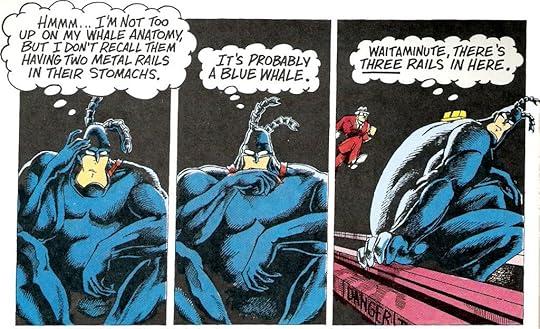
War Games? Skynet? Sneakers? Matrix? GladOS? HAL 9000?
No, no, no, the dystopian AI future we're getting is The Tick in AI form
Replaced article(s) found for physics.comp-ph. https://arxiv.org/list/physics.comp-ph/new
[1/1]:
- How Physical Dynamics Shape the Properties of Ising Machines: Evaluating Oscillators vs. Bistable...
Abir Hasan, Nikhil Shukla
https://arxiv.org/abs/2603.06843 https://mastoxiv.page/@arXiv_physicscompph_bot/116204003660873932
- Pulgon-tools: A toolkit for analysing and harnessing symmetries in quasi-1D systems
Yu-Jie Cen, Sandro Wieser, Georg K. H. Madsen, Jes\'us Carrete
https://arxiv.org/abs/2603.28435 https://mastoxiv.page/@arXiv_physicscompph_bot/116322896642584491
- MADField: Multi-fidelity Amortized Density Field for Adsorption in Nanoporous Materials
Yoonho Kim, Seongsu Kim, Sungsoo Ahn, Honghui Kim
https://arxiv.org/abs/2606.21284 https://mastoxiv.page/@arXiv_physicscompph_bot/116798531764581123
- Monte Carlo Physics-informed Neural Networks for Inverse Multiscale Heat Conduction Problems via ...
Qingyi Lin, Chuang Zhang, Xuhui Meng, Zhaoli Guo
https://arxiv.org/abs/2606.25793 https://mastoxiv.page/@arXiv_physicscompph_bot/116809736857979012
- TRIDS: AI-native molecular docking framework for accelerating high-throughput virtual screening w...
Liu, Zhang, Xue, Hao, Bing, Chai, Zhao, Yang, Zhang, Gao
https://arxiv.org/abs/2510.24186 https://mastoxiv.page/@arXiv_physicschemph_bot/115456702015641743
- Absence of poor local minima in matrix product states
Hao-Kai Zhang, Chenghong Zhu, Shuo Liu, Shi-Xin Zhang, Tao Xiang
https://arxiv.org/abs/2606.09988 https://mastoxiv.page/@arXiv_quantph_bot/116724766789822682
toXiv_bot_toot
Replaced article(s) found for math.AT. https://arxiv.org/list/math.AT/new
[1/1]:
- Rational G-spectra over blocks with finite Weyl groups
J. P. C. Greenlees
https://arxiv.org/abs/2508.07752 https://mastoxiv.page/@arXiv_mathAT_bot/115014981580784182
- Stable Vectorization of Persistent Laplacians via Spectral Descriptors
Inkee Jung, Wonwoo Kang, Heehyun Park
https://arxiv.org/abs/2512.05463 https://mastoxiv.page/@arXiv_mathAT_bot/115682865323968969
- New Applications and Computations of the Lefschetz Number of Homeomorphisms and Open Maps
Jes\'us A. \'Alvarez L\'opez, Alejandro O. Majadas-Moure
https://arxiv.org/abs/2601.11370 https://mastoxiv.page/@arXiv_mathAT_bot/115920849620499577
- Discrete Coefficients and Open Invariant Covers in the Homology of Ample Groupoids
Luciano Melodia
https://arxiv.org/abs/2603.20861 https://mastoxiv.page/@arXiv_mathAT_bot/116283018602632921
- Koszul modules, holonomy Lie algebras, and resonance of groups and CDGAs
Alexander I. Suciu
https://arxiv.org/abs/2604.24986 https://mastoxiv.page/@arXiv_mathAT_bot/116486854147281455
- Highly connected non-formal Milnor fibers via polyhedral products
Alexander I. Suciu
https://arxiv.org/abs/2605.09254 https://mastoxiv.page/@arXiv_mathAT_bot/116560568619851882
- Fibrewise Orbifold Resolutions with Applications to $\mathrm{G}_2$-Moduli Spaces
Thorsten Hertl
https://arxiv.org/abs/2606.21128 https://mastoxiv.page/@arXiv_mathAT_bot/116798352254312526
- The spectrum of strict units of topological modular forms
Zhenpeng Li, Kiran Luecke
https://arxiv.org/abs/2607.27124 https://mastoxiv.page/@arXiv_mathAT_bot/117007859693230838
- Combinatorial Bounds on the Peterson Hit Problem via Certified Matrix Minors
Dang Vo Phuc
https://arxiv.org/abs/2608.02623 https://mastoxiv.page/@arXiv_mathAT_bot/117041748797896077
- Persistent Intrinsic Volumes
David Cohen-Steiner, Antoine Commaret
https://arxiv.org/abs/2407.14469 https://mastoxiv.page/@arXiv_mathMG_bot/112828943071296316
- Schematic Functorialities of Birational Motivic Homotopy Categories
Dipankar Maity
https://arxiv.org/abs/2608.04793 https://mastoxiv.page/@arXiv_mathAG_bot/117047522975134859
- Understanding Non-Split 2-Group Symmetry: (3 1)D SymTFT, Anomaly and Bordism
Zhenbang Gu, Ran Luo, Yi-Nan Wang, Yi Zhang
https://arxiv.org/abs/2608.08766
toXiv_bot_toot
cintestinalis: Tadpole larva brain (C. intestinalis)
Entire connectivity matrix for the complete brain of a larva of Ciona intestinalis. Each directed edge represents a synaptic connection from pre-synaptic cell i to post-synaptic cell j (may not be a neuron). Edge weights represent the cumulative depth of presynaptic contacts in µm.
This network has 205 nodes and 2903 edges.
Tags: Biological, Connectome, Weighted
Some weird glitch in the Matrix happened that I was reaching for vanilla ice cream and I ended up with wildberry ice cream.
But that’s okay, I needed them for iced coffee.
cintestinalis: Tadpole larva brain (C. intestinalis)
Entire connectivity matrix for the complete brain of a larva of Ciona intestinalis. Each directed edge represents a synaptic connection from pre-synaptic cell i to post-synaptic cell j (may not be a neuron). Edge weights represent the cumulative depth of presynaptic contacts in µm.
This network has 205 nodes and 2903 edges.
Tags: Biological, Connectome, Weighted
Elastic Trapped States at Dislocation Defects in Scaled Coupling and Hofstadter Models
Yangkai Liu, Cheng Lin, Yuan Liu, Jiao Shen, Yifan Zhu, Haiyan Fan, Hui Zhang
https://arxiv.org/abs/2607.19890 https://arxiv.org/pdf/2607.19890 https://arxiv.org/html/2607.19890
arXiv:2607.19890v1 Announce Type: new
Abstract: Elastic topological dislocations provide a pathway for trapping elastic wave energy at internal defects, rather than being confined solely to external boundaries or corners, which are typically associated with topological insulators (TIs). However, two practical constraints persist. First, highly confined dislocation states based on conventional Su-Schrieffer-Heeger (SSH) dimerization usually require a large coupling contrast and a correspondingly enlarged bandgap, which may be challenging to realize. Second, some Hamiltonians with richer topological physics often contain complex hopping terms, synthetic gauge fields or nonlocal couplings, which substantially increase the geometric complexity of experimental samples. Here, dislocation-induced trapped states are demonstrated in both a scaled coupling (SC) model and a Hofstadter model (HM) within an elastic platform. In the SC model, the trapped mode is treated as a higher localized state in the continuum rather than an in-gap mode in the SSH model. Consequently, the SC-induced dislocation can trap an enhanced mode without the requirement of an enlarged bandgap. For the HM, Householder tridiagonalization is used to map the original tight-binding Hamiltonian with complex hopping terms onto a tridiagonal matrix with only positive-real-valued nearest-neighbour (NN) hopping terms. Truncation at a weak-hopping position preserves the topological phenomena and allows a dislocation defect to be constructed from the shortened aperiodic chain. The results establish a practical route for designing highly localized modes without relying solely on bandgap enlargement or complex couplings, which advance the topological physics of elastic wave systems and promise enhanced possibilities for elastic functional devices.
toXiv_bot_toot
80s: rise of personal computing
90s: the Internet changes everything
00s: the Web 2.0 revolution
10s: the age of the smartphone
*checks notes*
20s: anthropomorphized matrix multiplications
cintestinalis: Tadpole larva brain (C. intestinalis)
Entire connectivity matrix for the complete brain of a larva of Ciona intestinalis. Each directed edge represents a synaptic connection from pre-synaptic cell i to post-synaptic cell j (may not be a neuron). Edge weights represent the cumulative depth of presynaptic contacts in µm.
This network has 205 nodes and 2903 edges.
Tags: Biological, Connectome, Weighted
Replaced article(s) found for physics.comp-ph. https://arxiv.org/list/physics.comp-ph/new
[1/1]:
- Learning Stiff Dynamical Operators: Scaling, Fast-Slow Excitation, and Eigen-Consistent Neural Mo...
Mauro Valorani
https://arxiv.org/abs/2601.01632 https://mastoxiv.page/@arXiv_physicscompph_bot/115847284915795620
- How Physical Dynamics Shape the Properties of Ising Machines: Evaluating Oscillators vs. Bistable...
Abir Hasan, Nikhil Shukla
https://arxiv.org/abs/2603.06843 https://mastoxiv.page/@arXiv_physicscompph_bot/116204003660873932
- Quantum metric-induced generalized magneto-optical effects in $\mathcal{PT}$-symmetric antiferrom...
Yongpan Li, Yichen Liu, Cheng-Cheng Liu
https://arxiv.org/abs/2503.04312 https://mastoxiv.page/@arXiv_condmatmtrlsci_bot/114120036631640231
- Filtered Quantum Phase Estimation
Gwonhak Lee, Minhyeok Kang, Jungsoo Hong, Stepan Fomichev, Joonsuk Huh
https://arxiv.org/abs/2510.04294 https://mastoxiv.page/@arXiv_quantph_bot/115332659452746830
- NAVIS: A LAMMPS-Python framework for efficient computation of nanochannel velocity and thermal in...
Sleeba Varghese, Sobin Alosious, Jesper Schmidt Hansen, Billy Dean Todd
https://arxiv.org/abs/2601.11391 https://mastoxiv.page/@arXiv_condmatsoft_bot/115920990500539102
- Fast proton transport and neutron production in proton therapy using Fourier neural operators
Blangiardi, Ratliff, Teichert, Ytre-Hauge, Langer, Meric
https://arxiv.org/abs/2603.03912 https://mastoxiv.page/@arXiv_physicsmedph_bot/116175752411043510
- Smoluchowski Coagulation Equation and the Evolution of Primordial Black Hole Clusters
Borui Zhang, Wei-Xiang Feng, Haipeng An
https://arxiv.org/abs/2604.01684 https://mastoxiv.page/@arXiv_astrophCO_bot/116339761602853235
- Identical Particle Systems : Hierarchical Spectral Reconstruction
Hovan Lee, R\'emi Lef\`evre, Gr\'egoire Ithier
https://arxiv.org/abs/2605.02864 https://mastoxiv.page/@arXiv_quantph_bot/116521159694499994
- A matrix free action of the Ashtekar-Lewandowski volume operator of loop quantum gravity
Waleed Sherif
https://arxiv.org/abs/2606.18397 https://mastoxiv.page/@arXiv_grqc_bot/116770027887442756
toXiv_bot_toot
Learning Latent Memory States from Longitudinal Athlete Monitoring Data
Dae-Jin Lee
https://arxiv.org/abs/2608.06290 https://arxiv.org/pdf/2608.06290 https://arxiv.org/html/2608.06290
arXiv:2608.06290v1 Announce Type: new
Abstract: We propose a new unit of analysis for longitudinal data: the Latent Memory Table. The scientific contribution is not the encoder. It is that table, treated as a reusable statistical object on the same footing as a matrix of principal-component scores, a table of estimated random effects, or a table of predicted probabilities. We estimate a statistical table that summarizes recent longitudinal history and is intended to be stored, queried, analysed and reused throughout the statistical workflow. A memory operator maps each masked windowed history to a finite-dimensional state; collecting those states with uncertainty yields the Latent Memory Table. Validation is organized around six properties---recoverability, personalization, temporal coherence, interpretability, stability and reusability---summarized by a composite quality index \(Q\); the Transformer, the SoccerMon case study and the simulations exist to argue that this table deserves that status. Classical exponentially weighted moving averages and related short- and long-horizon scalar summaries arise as restricted, typically univariate special cases of the same operator class. A simulation study with known memory mechanisms shows that \(Q\) and rotation-invariant recovery scores discriminate genuine multivariate or personalized memory from negative controls and from misspecified windows, whereas regime classification accuracy alone does not. SoccerMon serves as an empirical case study: a constructed Latent Memory Table attains \(Q\approx 0.73\) versus about \(0.40\) for classical and lagged principal-component baselines, with incremental held-out value for some wellness targets and Procrustes ensembles for row-wise reliability.
toXiv_bot_toot
Exchange and core-polarization effects on Rydberg-transition electric-dipole matrix elements in Rb and Cs
Yu Shi-Cheng, Zhen-Xiang Zhong, Cheng-Bin Li
https://arxiv.org/abs/2608.22798
cintestinalis: Tadpole larva brain (C. intestinalis)
Entire connectivity matrix for the complete brain of a larva of Ciona intestinalis. Each directed edge represents a synaptic connection from pre-synaptic cell i to post-synaptic cell j (may not be a neuron). Edge weights represent the cumulative depth of presynaptic contacts in µm.
This network has 205 nodes and 2903 edges.
Tags: Biological, Connectome, Weighted
Non-symmetric vector dyson equations
Jiaoyang Huang, Zhonggen Su, Ruizhe Xu
https://arxiv.org/abs/2607.16333 https://arxiv.org/pdf/2607.16333 https://arxiv.org/html/2607.16333
arXiv:2607.16333v1 Announce Type: new
Abstract: We study the vector Dyson equation $$-\frac{1}{m(z)}=z\mathbf{1} \mathbf{a} Sm(z),$$ with parameter $z$ in the complex upper half-plane $\mathbb{C}_ $, where $\mathbf{a}\in\mathbb R^d$ and $S$ is a nonnegative matrix, not necessarily symmetric. This equation has a unique vector solution $m(z)\in\mathbb{C}_ ^d$, for which we establish a complete measure decomposition and prove regularity. We then develop a graph-theoretic approach to the singularity and stability problem for non-symmetric matrices $S$. The graph structure of $S$ identifies the possible degeneracies of the stability operator as $z$ approaches the real axis. In particular, for non-backtracking matrices, we prove square-root growth at regular edges, cubic-root growth at regular cusps, and complete stability estimates. We also obtain the corresponding estimates for symmetric matrices in the periodic setting.
toXiv_bot_toot
RE: https://mastodon.social/@GroupNebula563/117253072360753906
the place has been floundering for a while and it's a fucking shame
it would really mean a lot to me if some more people could at least take a look <3
https://discord.gg/X8dFVVPtRn or https://matrix.to/#/#chinafakes:chat.bluepixelcomputing.com
EDIT: fixed matrix link, sorry about that
RE: https://mastodon.social/@GroupNebula563/117253072360753906
the place has been floundering for a while and it's a fucking shame
it would really mean a lot to me if some more people could at least take a look <3
https://discord.gg/X8dFVVPtRn or https://matrix.to/#/#chinafakes:chat.bluepixelcomputing.com
EDIT: fixed matrix link, sorry about that
Fast VEM Fluid Simulation
Runze Zhang, Bo Ren
https://arxiv.org/abs/2607.17725 https://arxiv.org/pdf/2607.17725 https://arxiv.org/html/2607.17725
arXiv:2607.17725v1 Announce Type: new
Abstract: The intricate motion arising from fluid--boundary interactions is visually compelling, yet notoriously difficult and computationally expensive to simulate in the presence of complex boundaries. Accurately resolving boundary geometry requires body-fitted grids constructed via cut-cell methods, which often leads to poorly conditioned linear systems in the pressure projection stage and, consequently, prohibitive computational cost. We present FastVEM, an efficient boundary-conforming fluid simulation framework that enables high-fidelity flow--boundary interaction at substantially reduced cost. Computational efficiency is achieved through a coordinated, top-down design spanning numerical discretization, grid construction, and linear solvers. FastVEM adopts a Virtual Element Method (VEM) discretization to robustly enforce incompressibility and boundary conditions on irregular body-fitted grids, and employs a VEM polynomial-space Particle-in-Cell scheme for advection. Complementing this discretization, a convexity-preserving cut-cell strategy is introduced to construct simulation-friendly body-fitted grids. To accelerate pressure projection, we develop a Galerkin geometric multigrid solver featuring a diffusion-free prolongation operator that prevents coarse-level matrix densification, along with a nested, boundary-aware grid hierarchy that ensures well-posed placement of coarse-level degrees of freedom. Compared to prior cut-cell--based fluid simulators, FastVEM speeds up the computationally dominant pressure projection stage by up to 100x, while robustly handling even more challenging boundary geometries.
toXiv_bot_toot
Measurement of the reduced dipole matrix element in Ba$^ $
N. Jayjong, M. D. K. Lee, K. J. Arnold, M. D. Barrett
https://arxiv.org/abs/2607.20920 https://a…
The $6\times6$ equality case of matrix spaces with rank-two commutators
Zhi-Lin Zhang
https://arxiv.org/abs/2608.19012 https://arxiv.org/pdf/2608.19012
From Continuous Dynamics to Practical Gradient-Based Samplers
James Chok
https://arxiv.org/abs/2608.05425 https://arxiv.org/pdf/2608.05425 https://arxiv.org/html/2608.05425
arXiv:2608.05425v1 Announce Type: new
Abstract: Gradient-based Markov chain Monte Carlo methods are often introduced as a catalog of algorithms: Hamiltonian Monte Carlo (HMC), the Metropolis-adjusted Langevin algorithm (MALA), the No-U-Turn Sampler (NUTS), and several underdamped variants. This presentation obscures the common structure of the methods and, more importantly, the reasons why a sampler that is correct in principle may be ineffective in practice. We develop a unified account, beginning with exact continuous-time dynamics that represent idealized sampling methods and for which Metropolis adjustments are not required. Numerical discretization makes the dynamics computationally feasible but introduces bias. Metropolis adjustment removes the asymptotic bias by converting numerical errors into rejection, leading to HMC, MALA, NUTS, and the Metropolis-adjusted kinetic Langevin algorithm (MAKLA).
The second half of the paper presents geometric design choices that determine practical performance, namely, although MAKLA and NUTS have nice theoretical properties, their sampling efficiency may be slow in practice. Importantly, a fixed mass matrix can whiten globally anisotropic targets, often fixing sampling inefficiency in Bayesian posteriors with large data. Whereas hierarchical posteriors introduce their own problem, causing state-dependent variation in the Hessian (e.g., Neal's funnel). We explain how a randomized step size can be used effectively to sample from such a distribution. The resulting paper is both a tutorial on the mechanics of gradient-based sampling and a set of practical recipes to improve sampler performance.
toXiv_bot_toot
RE: #machteburch.social den Rücken kehren und auf #mathe.social weiter machen.
Komplexitätsreduktion, eat-your-own-dogfood, Sichtbarkeit für die Instanz. Hoffe natürlich, dass diese Account-Migration dann auch hält was sie verspricht.
Fördermitglied bei @… bleibe ich natürlich und nutze auch noch #matrix auf magdeburg.jetzt.
Und ich bin auch schon mal einigen #magdeburg accounts gefolgt, die ich sonst automatisch in der lokalen Timeline hatte.
heads up: just for funsies we might be hosting one or more in character gaming sessions soon
feel free to pop by #VOTV #VoicesOfTheVoid #asokel
heads up: just for funsies we might be hosting one or more in character gaming sessions soon
feel free to pop by #VOTV #VoicesOfTheVoid #asokel
Hat hier jemand einen Account bei #Github oder #Matrix und kann einen Feature Request für die #WetterApp #BreezyWeather machen: "Hinzufügen einer weiteren Kachel für #WetBulb #Temperature bzw #Kühlgrenztemperatur"?
#fedihelp
 @Techmeme@techhub.social