 @UP8@mastodon.social
2025-10-31 01:35:42
Dot matrix art display on the bottom of the cantilevered section of the Herbert F. Johnson Museum of Art
#photo #photography #cornell
 @UP8@mastodon.social
Dot matrix art display on the bottom of the cantilevered section of the Herbert F. Johnson Museum of Art
#photo #photography #cornell
 @grifferz@social.bitfolk.com
"Unfortunately, in attempting to do so, we erroneously deleted the data directory of the primary"
jfc we have all been there, if you haven't then it doesn't mean you're perfect it probably just means you haven't done ops enough.
This is what hugops are for.
"Post-mortem of the September 2 Matrix.org outage"
 @niklaskorz@rheinneckar.social
 @rasterweb@mastodon.social
Well, a little success, a little failure.
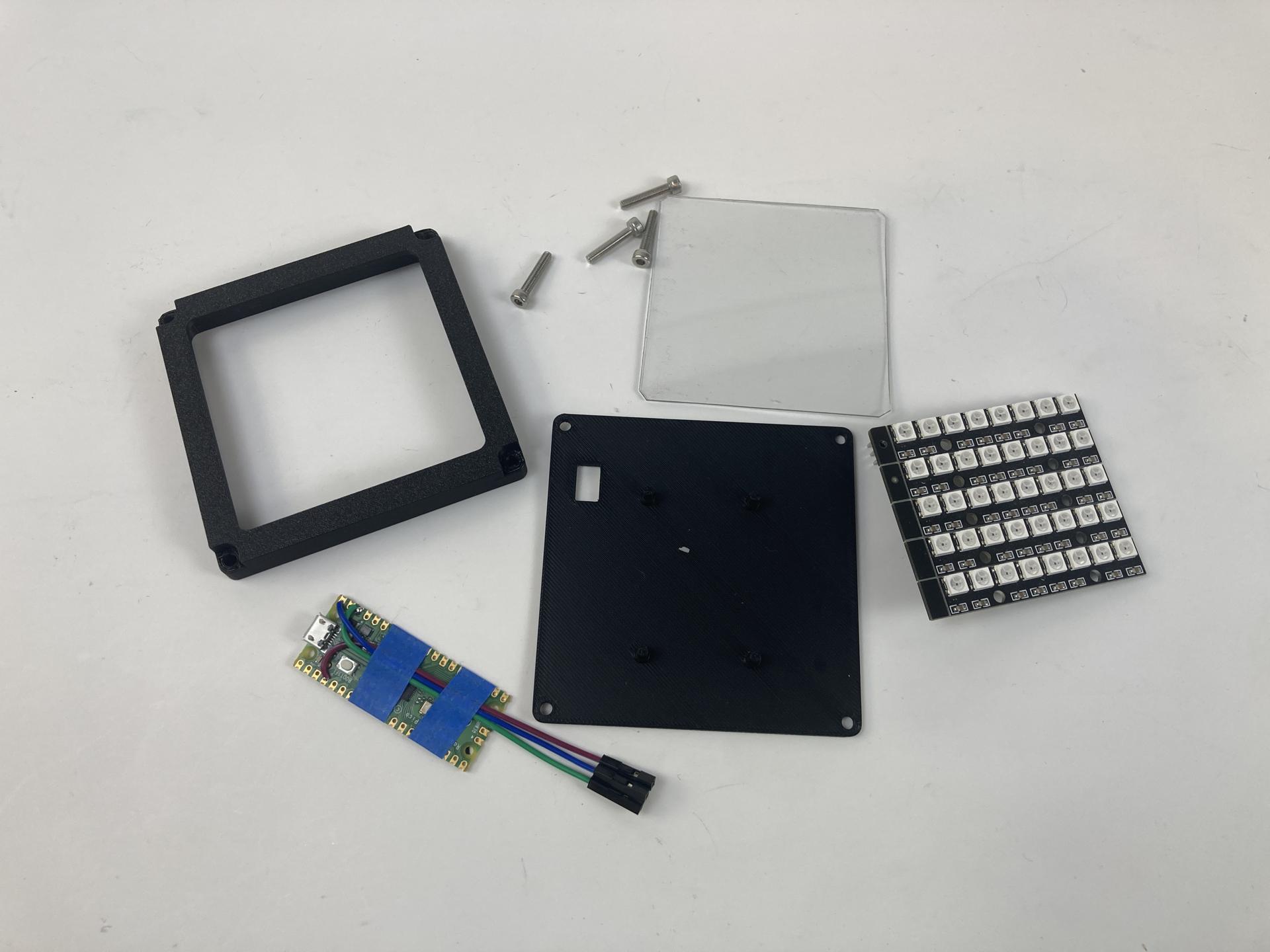
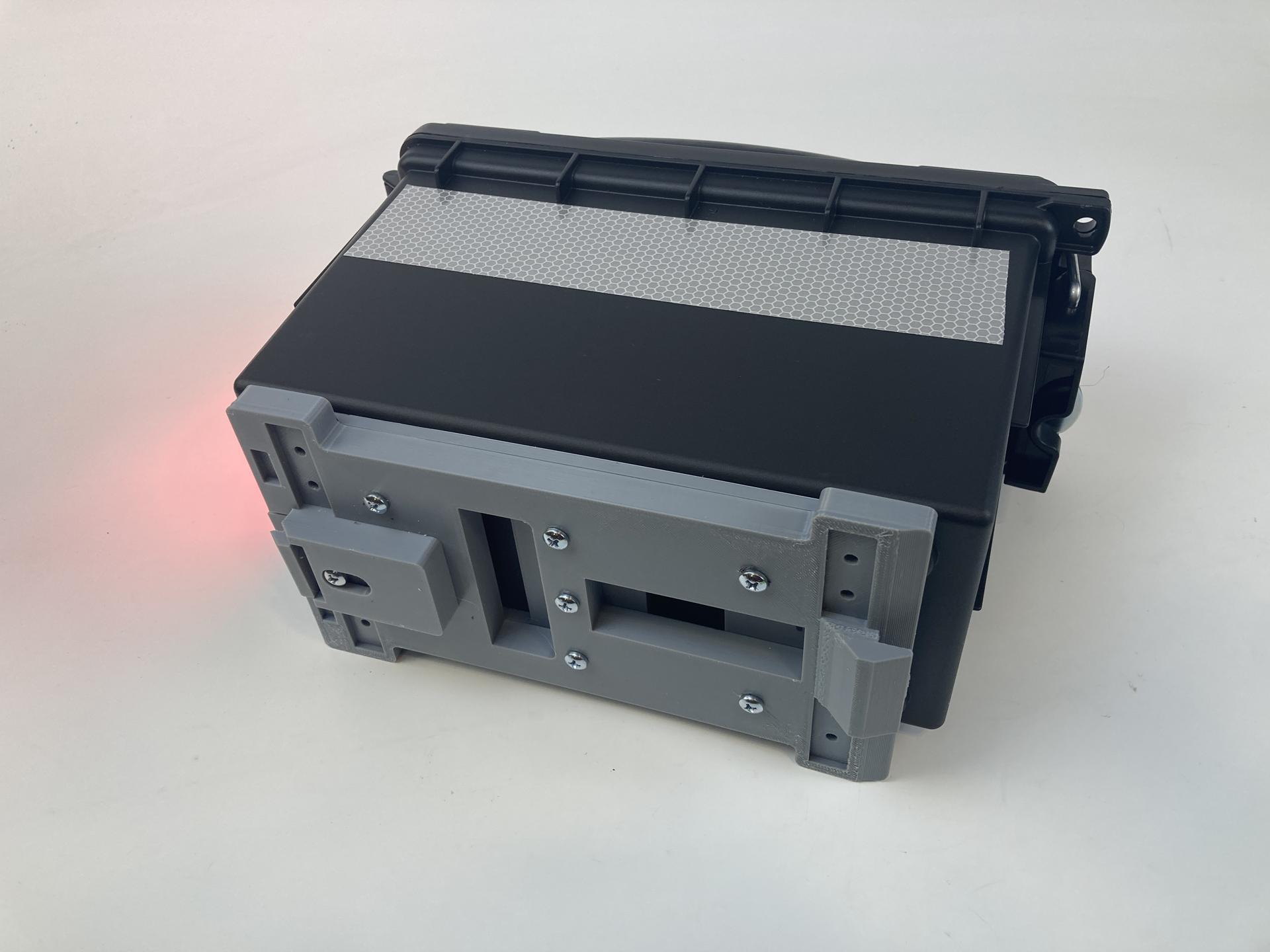
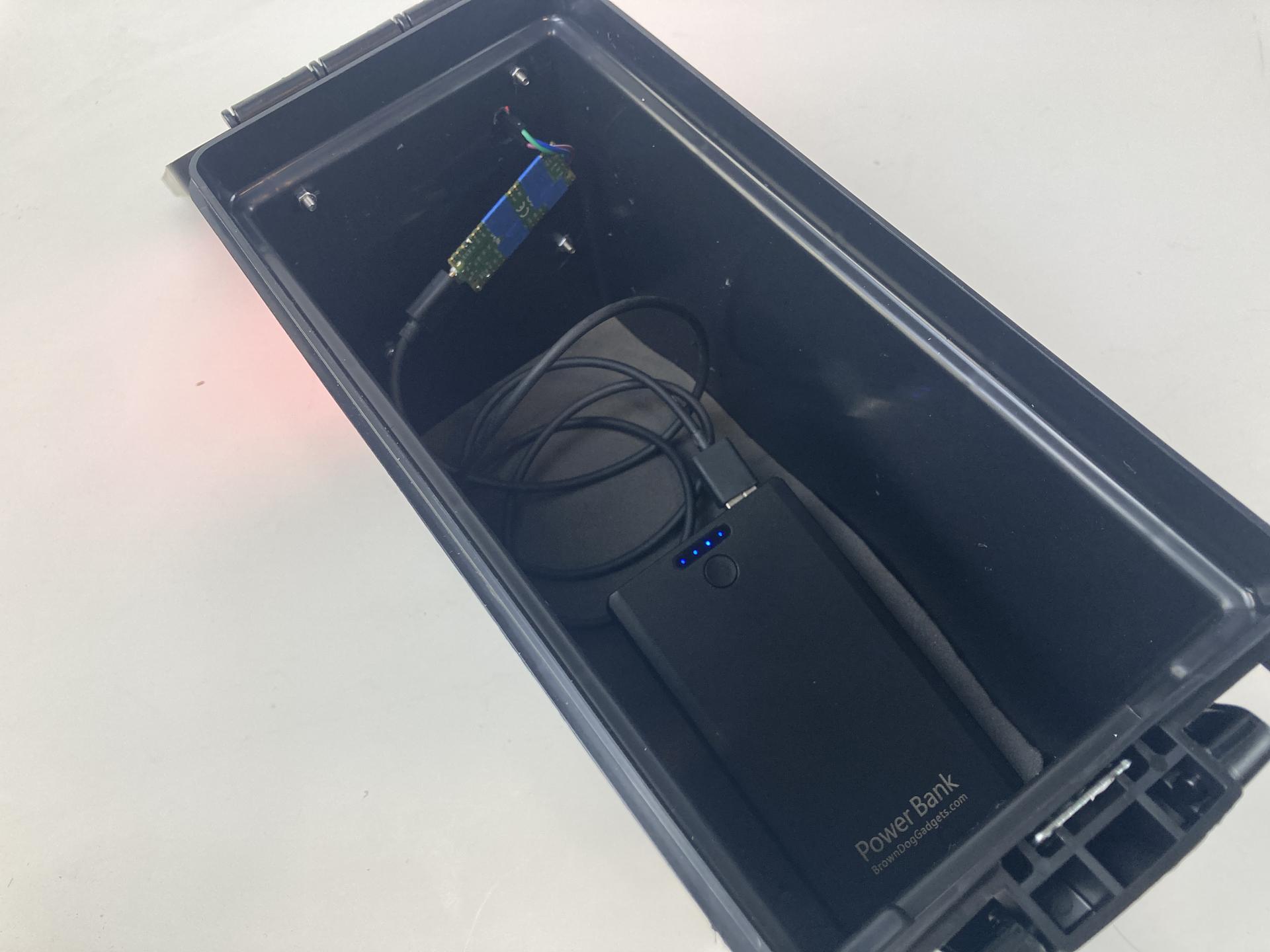
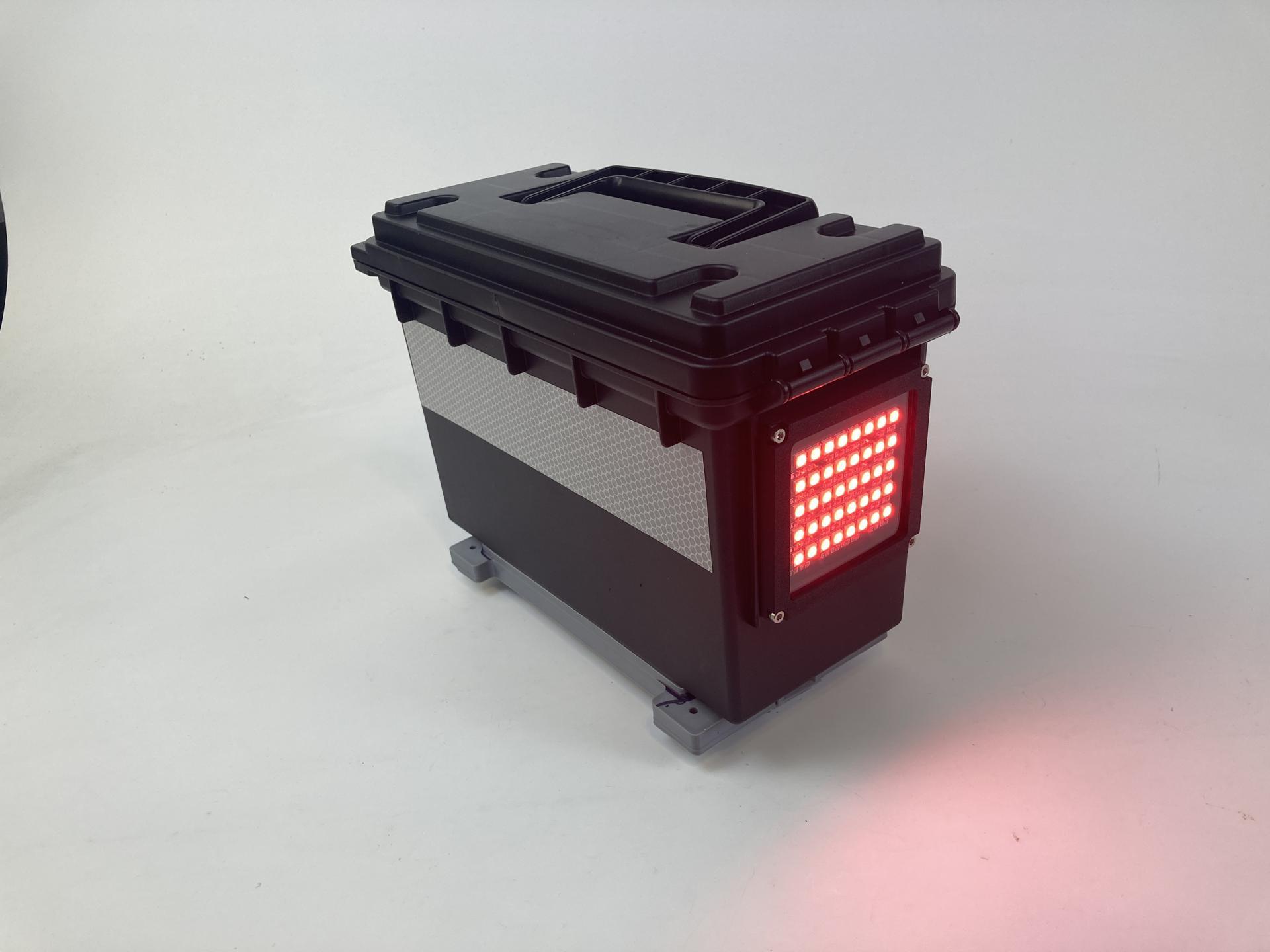
The box with a NeoPixel matrix on the back and a USB battery inside (and a microcontroller) works great!
But I did not bungee it to the bike rack so it flew off, hit the road, the lid broke off, and the MIK adapter also broke.
I bungee corded it into place and it's good now... but the box is busted so I'll have to come up with another solution.
 @cheeaun@mastodon.social
RE: https://mastodon.social/@cheeaun/115415146417702654
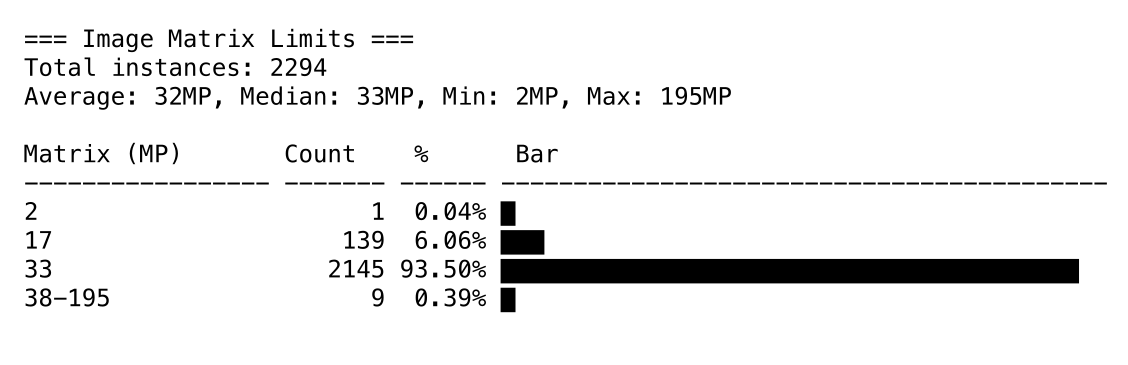
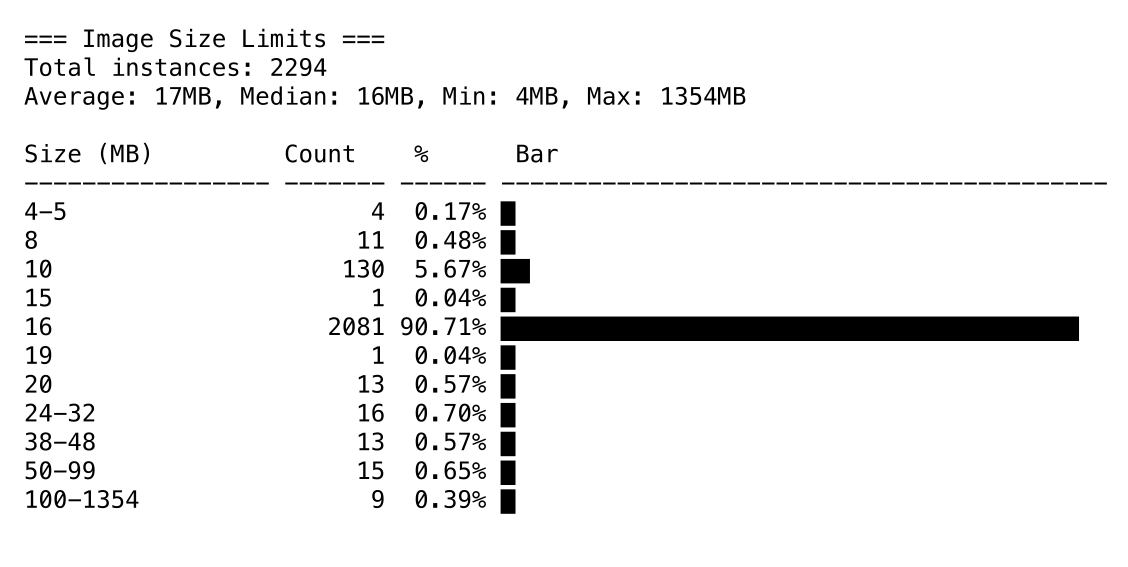
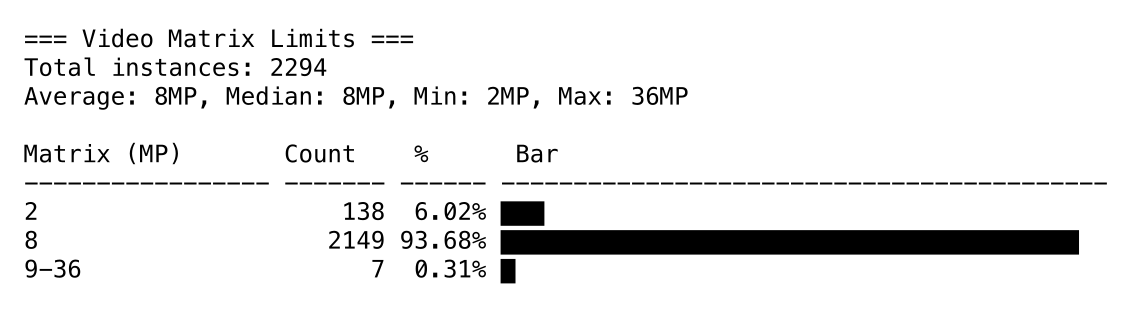
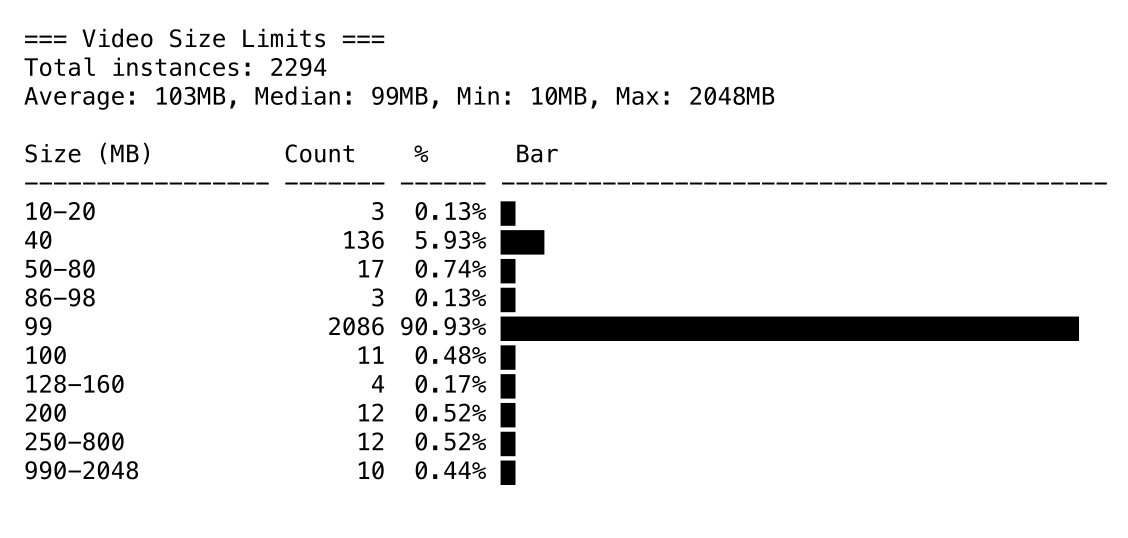
After looking at this, got curious to know the limits in most servers.
So I did a little data analysis. Servers list from @…
 @netzschleuder@social.skewed.de
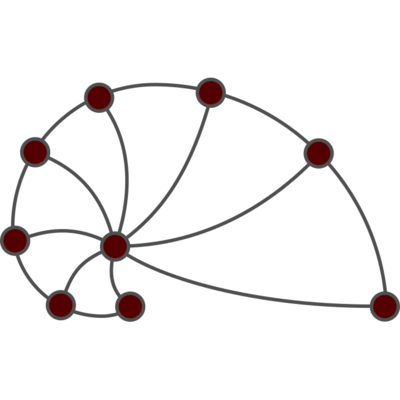
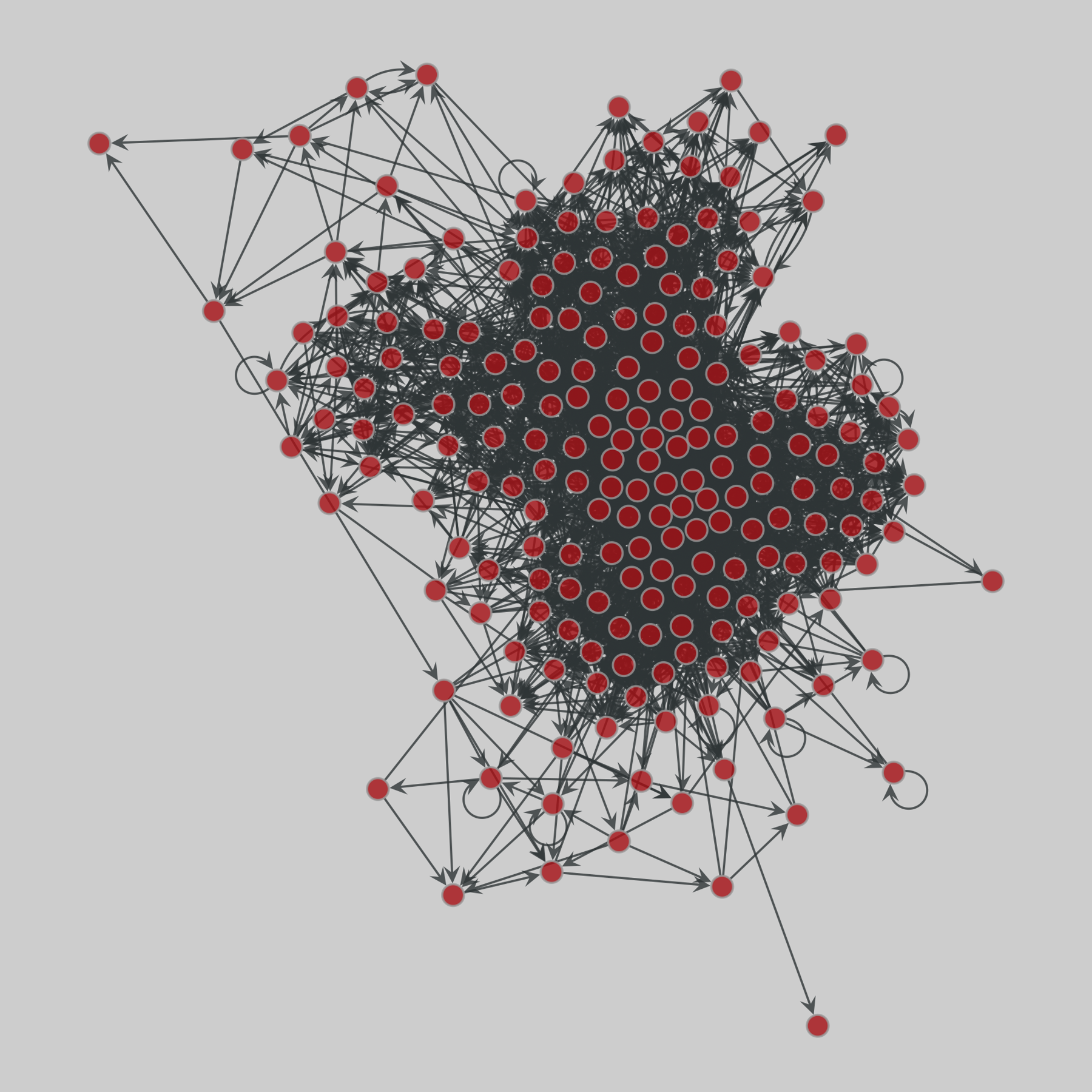
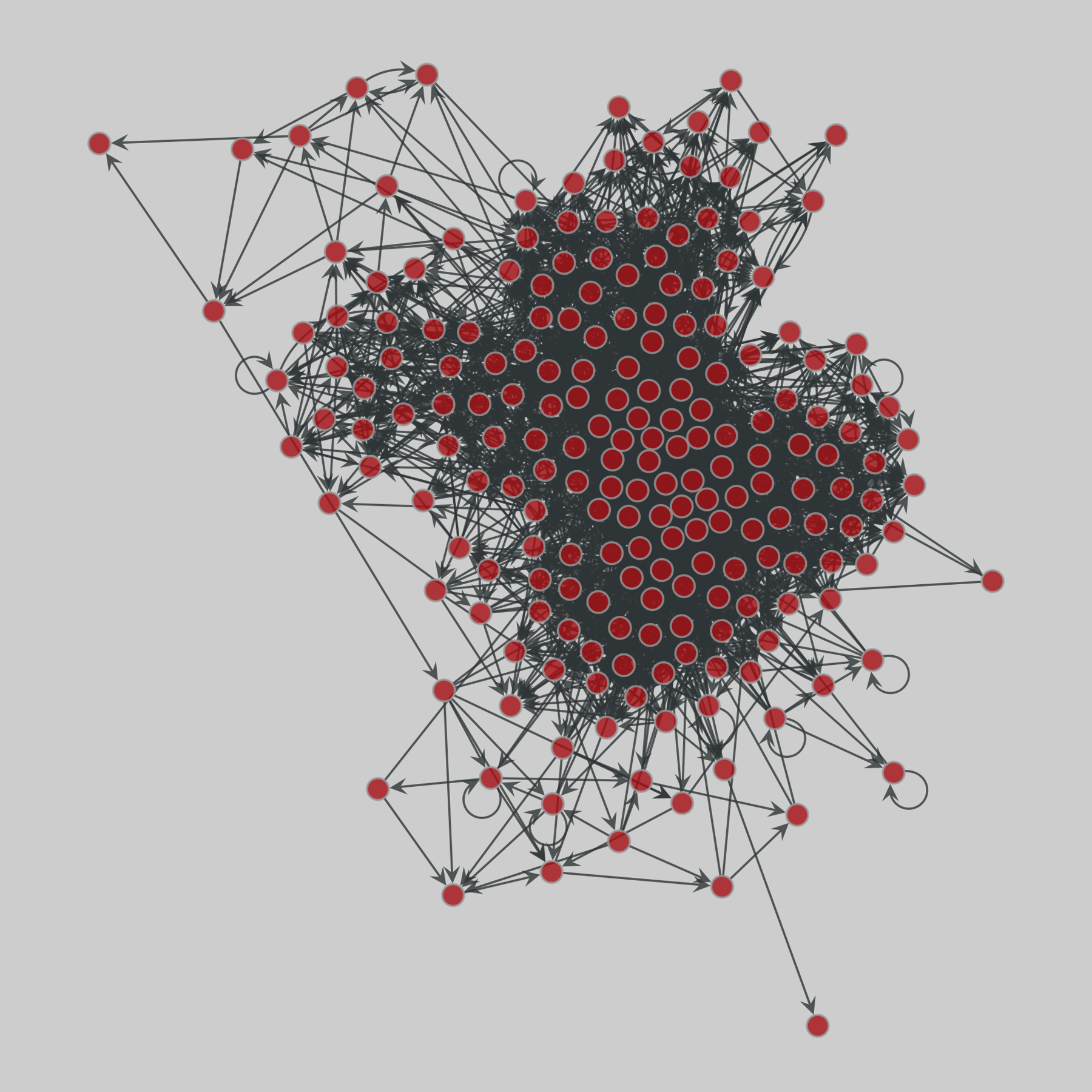
cintestinalis: Tadpole larva brain (C. intestinalis)
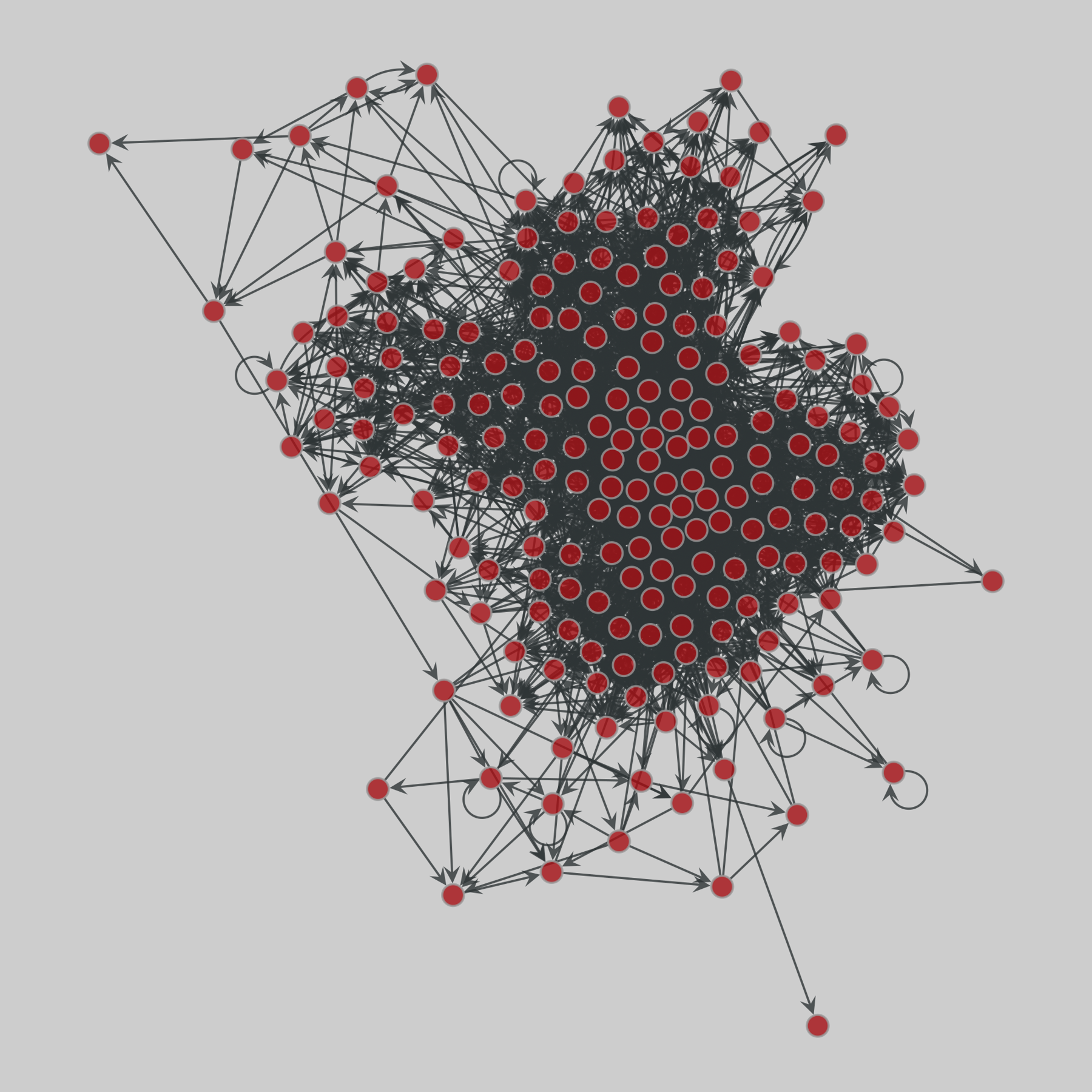
Entire connectivity matrix for the complete brain of a larva of Ciona intestinalis. Each directed edge represents a synaptic connection from pre-synaptic cell i to post-synaptic cell j (may not be a neuron). Edge weights represent the cumulative depth of presynaptic contacts in µm.
This network has 205 nodes and 2903 edges.
Tags: Biological, Connectome, Weighted
 @lil5@social.linux.pizza
DeltaChat is a cool idea but should be cranked to the max. Fuck protocols, instant messaging has never been been about the protocol but the network effect.
Not everyone knows how to login to their email outside of the web browser, a chat client should facilitate speech between you and your friend’s favourite app.
These are all open protocols that allow for direct communication but garden off others: activitypub, email, irc, matrix, xmpp, bluesky, nostr, simplex, theema, tox, jam…
 @gwire@mastodon.social
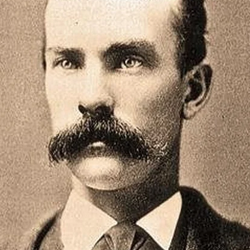
I've now seen one of the new high-tech post boxes on the street.
I say new, it's still an EIIR red pillar box from (probably) the 70s - but the door has been augmented with a camera (for scanning matrix codes) and parcel slot - and it has a sort of solar panel hat. Like it's being very slowly morphed into a Dalek.
 @bourgwick@heads.social
#NowPlaying - raga pop & soul jams & very airplane-y nuggets from a far corner of lost san francisco, 1968, aspirational hit-making division, with ex-great society guitarist darby slick. with live cuts from the matrix & deep liners by alec palao. more a portal than a forgotten classic. @…

 @cjust@infosec.exchange
I guess we should probably add #Clankerslop and #FurryPorn to Cypher's list
#ShamelesslyStolenFromSomewhereElseOnTheInternetHonestlyICantKeepTrackOfThisStuffAnymore

 @johnleonard@mastodon.social
 @portaloffreedom@social.linux.pizza
Technologically I would probably appreciate XMPP more, but the Matrix ecosystem I find much more usable and mature.
 @cdarwin@c.im
Welcome to the Discography of American Historical Recordings (DAHR),
a database of master recordings made by American record companies during the 78rpm era.
It is part of the American Discography Project (ADP)
—an initiative of the University of California, Santa Barbara that is edited by a team of researchers based at the UCSB Library.
To begin your research, enter names, titles, places, matrix or catalog numbers below,
or click on the advanced browse or search…
 @catsalad@infosec.exchange
Catte Cinematic Universe

 @arXiv_physicsoptics_bot@mastoxiv.page
Multi-port programmable silicon photonics using low-loss phase change material Sb$_2$Se$_3$
Thomas W. Radford, Idris A Ajia, Latif Rozaqi, Priya Deoli, Xingzhao Yan, Mehdi Banakar, David J Thomson, Ioannis Zeimpekis, Alberto Politi, Otto L. Muskens
https://arxiv.org/abs/2511.18205 https://arxiv.org/pdf/2511.18205 https://arxiv.org/html/2511.18205
arXiv:2511.18205v1 Announce Type: new
Abstract: Reconfigurable photonic devices are rapidly emerging as a cornerstone of next generation optical technologies, with wide ranging applications in quantum simulation, neuromorphic computing, and large-scale photonic processors. A central challenge in this field is identifying an optimal platform to enable compact, efficient, and scalable reconfigurability. Optical phase-change materials (PCMs) offer a compelling solution by enabling non-volatile, reversible tuning of optical properties, compatible with a wide range of device platforms and current CMOS technologies. In particular, antimony tri-selenide ($\text{Sb}_{2}\text{Se}_{3}$) stands out for its ultra low-loss characteristics at telecommunication wavelengths and its reversible switching. In this work, we present an experimental platform capable of encoding multi-port operations onto the transmission matrix of a compact multimode interferometer architecture on standard 220~nm silicon photonics using \textit{in-silico} designed digital patterns. The multi-port devices are clad with a thin film of $\text{Sb}_{2}\text{Se}_{3}$, which can be optically addressed using direct laser writing to provide local perturbations to the refractive index. A range of multi-port geometries from 2$\times$2 up to 5$\times$5 couplers are demonstrated, achieving simultaneous control of up to 25 matrix elements with programming accuracy of 90% relative to simulated patterns. Patterned devices remain stable with consistent optical performance across the C-band wavelengths. Our work establishes a pathway towards the development of large scale PCM-based reconfigurable multi-port devices which will allow implementing matrix operations on three orders of magnitude smaller areas than interferometer meshes.
toXiv_bot_toot
 @toxi@mastodon.thi.ng
Close-up view of the audio-responsive LED floor installation I co-created for the KEF Muon launch in 2007 @ Sala del Cenacolo (Museo Nazionale della Scienza e della Tecnologia in Milano). The animation was repurposed from one of my first projects I created with Processing (in 2003)...
The 2 meter tall speakers were designed by Ross Lovegrove and made from milled solid aluminium...
The installation was created by Moving Brands (my old employer), a short video of the project/instal…

 @arXiv_mathCO_bot@mastoxiv.page
Exact bounds for efficient consistent matrices obtained from a reciprocal matrix
Susana Furtado, Charles Johnson
https://arxiv.org/abs/2510.12358 https://a…
 @dichotomiker@dresden.network
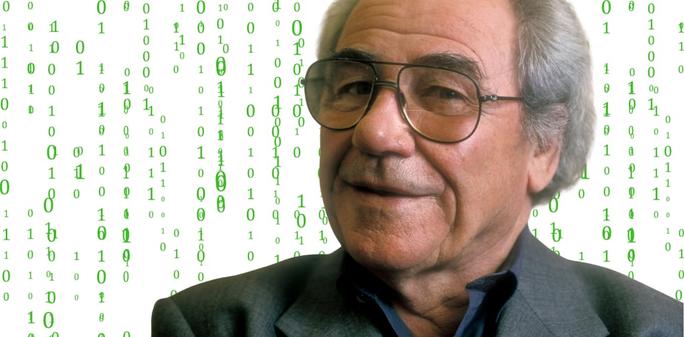
Baudrillard (the author of Simulation and Simulacra in 1981, the inspiration for The Matrix movies) predicted Internet bubbles and the influence of algorithms and AI 30 years ago.
https://theconversation.com/how-the-fr
 @arXiv_statML_bot@mastoxiv.page
Improved Central Limit Theorem and Bootstrap Approximations for Linear Stochastic Approximation
Bogdan Butyrin, Eric Moulines, Alexey Naumov, Sergey Samsonov, Qi-Man Shao, Zhuo-Song Zhang
https://arxiv.org/abs/2510.12375
 @poppastring@dotnet.social
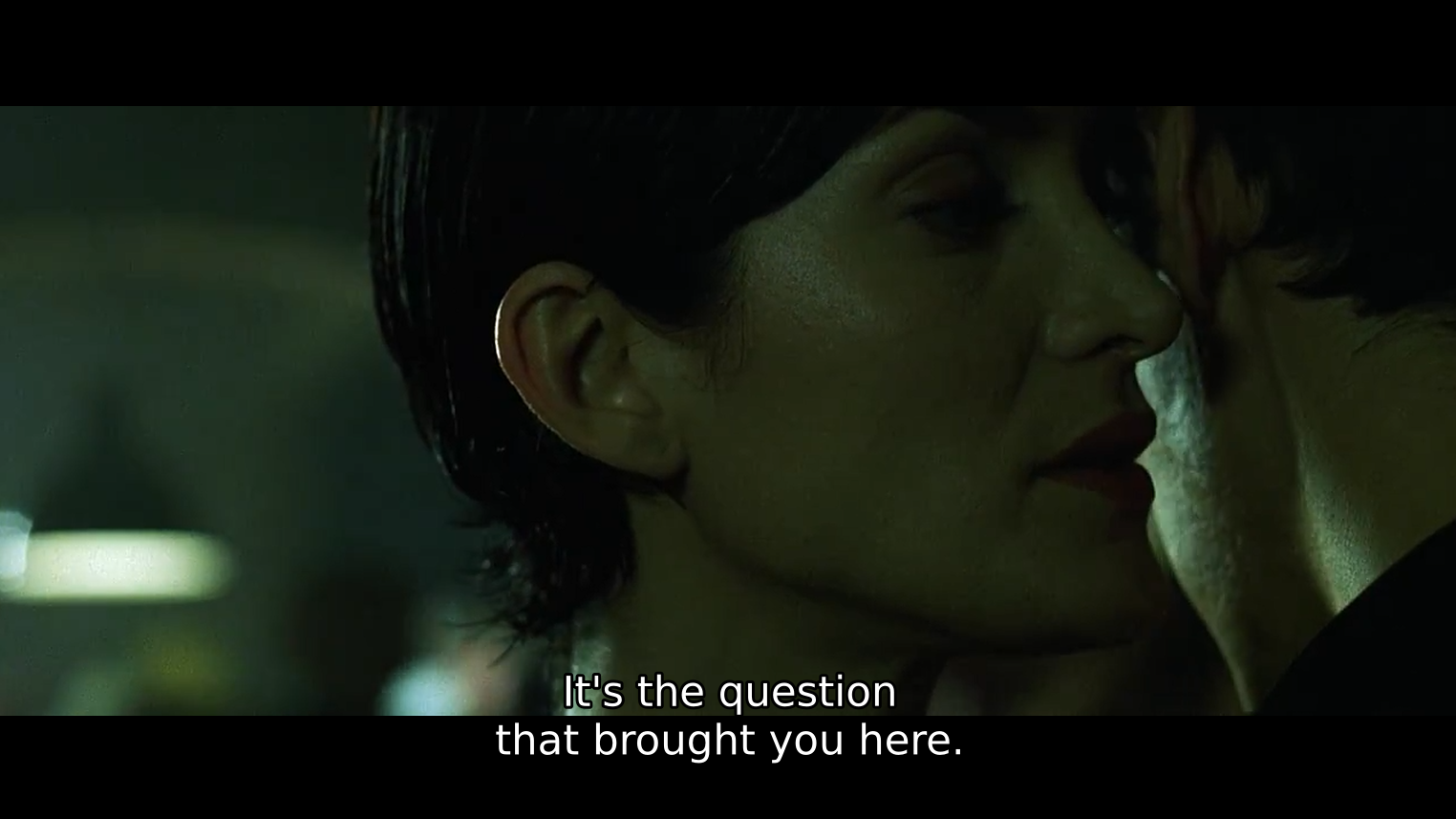
The Matrix Reloaded (2003), Oracle and Neo in the park
Neo: “What does he want?”
Oracle: “What do all men with power want? More power.”
 @arXiv_csLG_bot@mastoxiv.page
Polyharmonic Cascade
Yuriy N. Bakhvalov
https://arxiv.org/abs/2512.17671 https://arxiv.org/pdf/2512.17671 https://arxiv.org/html/2512.17671
arXiv:2512.17671v1 Announce Type: new
Abstract: This paper presents a deep machine learning architecture, the "polyharmonic cascade" -- a sequence of packages of polyharmonic splines, where each layer is rigorously derived from the theory of random functions and the principles of indifference. This makes it possible to approximate nonlinear functions of arbitrary complexity while preserving global smoothness and a probabilistic interpretation. For the polyharmonic cascade, a training method alternative to gradient descent is proposed: instead of directly optimizing the coefficients, one solves a single global linear system on each batch with respect to the function values at fixed "constellations" of nodes. This yields synchronized updates of all layers, preserves the probabilistic interpretation of individual layers and theoretical consistency with the original model, and scales well: all computations reduce to 2D matrix operations efficiently executed on a GPU. Fast learning without overfitting on MNIST is demonstrated.
toXiv_bot_toot
 @cellfourteen@social.petertoushkov.eu
 @arXiv_hepth_bot@mastoxiv.page
Exploring the Spectral Edge in SYK Models
Bowen Ouyang, Pratik Rath
https://arxiv.org/abs/2510.07804 https://arxiv.org/pdf/2510.07804
 @kornel@mastodon.social
The Matrix was supposed to be green-ish, but it's been made when the film industry was switching from analog to digital, so all the (re)released versions look different.
Noodle made a charming documentary about losing sanity trying to find the "correct" green:
https://youtu.be/lPU-kXEhSgk
 @arXiv_mathQA_bot@mastoxiv.page
Reciprocal relations for orthogonal quantum matrices
Pavel Pyatov, Oleg Ogievetsky
https://arxiv.org/abs/2510.09811 https://arxiv.org/pdf/2510.09811…
@netzschleuder@social.skewed.decintestinalis: Tadpole larva brain (C. intestinalis)
Entire connectivity matrix for the complete brain of a larva of Ciona intestinalis. Each directed edge represents a synaptic connection from pre-synaptic cell i to post-synaptic cell j (may not be a neuron). Edge weights represent the cumulative depth of presynaptic contacts in µm.
This network has 205 nodes and 2903 edges.
Tags: Biological, Connectome, Weighted
 @arXiv_condmatmtrlsci_bot@mastoxiv.page
A Wigner Matrix Based Convolution Algorithm For Matrix Elements in the LCAO Method
Tyler C. Sterling
https://arxiv.org/abs/2510.06285 https://arxiv.org/pdf…
@lil5@social.linux.pizza @arXiv_hepph_bot@mastoxiv.page
A possibility of describing a sequential gauge symmetry as a part of the dihedral flavor symmetry and its implications
Jae Jun Kim
https://arxiv.org/abs/2510.06155 https://
 @arXiv_mathPR_bot@mastoxiv.page
Matrix Random Walks and the Lima Bean Law
Bruce K. Driver, Brian C. Hall, Ching Wei Ho, Todd Kemp, Yuriy Nemish, Evangelos A. Nikitopoulos, Felix Parraud
https://arxiv.org/abs/2510.10712
 @rasos@fairmove.net
Just booked the train ticket to #Strasbourg for the #matrix conference 15-18 Oct. Check out the schedule:
https://2025.matrix.org/s…

 @nemobis@mamot.fr
Due to long inactivity in #Matrix, I managed to get in that dreaded state where *all* my sessions were zombies (logged in, but considered inactive, and unable to send events or decrypt new events). I know the drill, so it was easy to get back to a functioning state, but I can't say I was happy about it. (I "lost" a few months of group messages sent while I was inactive, as none of my sessi…
 @arXiv_quantph_bot@mastoxiv.page
Semiclassical analytical solutions of the eigenstate thermalization hypothesis in a quantum billiard
Yaoqi Ye, Chengkai Lin, Xiao Wang
https://arxiv.org/abs/2510.12517 https://
 @todbot@mastodon.social
But what *IS* the Matrix?
Oh. okay. nevermind.
 @arXiv_mathOC_bot@mastoxiv.page
Inverse Continuous-Time Linear Quadratic Regulator: From Control Cost Matrix to Entire Cost Reconstruction
Yuexin Cao, Yibei Li, Zhuo Zou, Xiaoming Hu
https://arxiv.org/abs/2510.04083
 @arXiv_csDS_bot@mastoxiv.page
Even Faster Kernel Matrix Linear Algebra via Density Estimation
Rikhav Shah, Sandeep Silwal, Haike Xu
https://arxiv.org/abs/2510.02540 https://arxiv.org/pd…
 @arXiv_eessSP_bot@mastoxiv.page
On the Noise Robustness of Affine Frequency Division Multiplexing: Analysis and Applications
Vincent Savaux, Steve Sawadogo, Hyeon Seok Rou, Giuseppe Thadeu Freitas de Abreu
https://arxiv.org/abs/2510.03901
 @arXiv_astrophIM_bot@mastoxiv.page
Fisher Matrix for Beginners
David Wittman (UC Davis)
https://arxiv.org/abs/2510.09683 https://arxiv.org/pdf/2510.09683
 @arXiv_mathNA_bot@mastoxiv.page
Construction of Basis Functions for the Geometry Conforming Immersed Finite Element Method
Slimane Adjerid, Tao Lin, Haroun Meghaichi
https://arxiv.org/abs/2510.12018 https://…
 @ripienaar@devco.social
I am not all that knowledgeable of Matrix servers but I have one that is unfederated and somehow we're getting spam sent from one of the users who only use a iPhone.
Seems to me this should just be impossible given their security?
 @mgorny@social.treehouse.systems
1. Be unhappy that #Element doesn't support multiple accounts.
2. Be unhappy that they've made a new #ElementX that doesn't work with your main account.
3. Realize that you can use both programs to support your main and backup accounts simultaneously.
4. Realize you don't have your backup account password in KeepassDX.
5. Try to figure out which email address you used.
6. It finally works.
7. Realize that you can't get the room address from Element when the server is down.
#Matrix
 @kurtsh@mastodon.social
Ah. Now there's the motion picture studio ligitiousness & just-desserts I know so well.
Warner vs Alcon. Y'all deserve each other.
✅ Matrix, Practical Magic, Ocean's Sequels: Warner Bros. Forced Into Deal
https://www.…
 @arXiv_mathAP_bot@mastoxiv.page
The distorted Fourier transform for the linearized Gross-Pitaevskii equation in the Hyperbolic plane
Oussama Landoulsi, Sohrab Shahshahani
https://arxiv.org/abs/2509.26590 https…
 @arXiv_mathph_bot@mastoxiv.page
Reduced Density Matrix Functional Theory And A Reduced Formulation Of Density Functional Theory
H{\aa}kon Richard Fredheim, Simen Kvaal
https://arxiv.org/abs/2510.12242 https://…
 @alejandrobdn@social.linux.pizza
After months of not using it, I dusted off my Matrix account thanks to the room created by @… and I encountered a problem due to a loop that prevented me from completing the verification of some devices. Although I solved it, it is certainly not an app suitable for non-techies.
I guess Matrix isn't designed for them, to begin with. However, maybe there…
 @arXiv_eessSY_bot@mastoxiv.page
Privacy-Preserving Distributed Estimation with Limited Data Rate
Jieming Ke, Jimin Wang, Ji-Feng Zhang
https://arxiv.org/abs/2510.12549 https://arxiv.org/p…
 @arXiv_csIT_bot@mastoxiv.page
Near-optimal Rank Adaptive Inference of High Dimensional Matrices
Fr\'ed\'eric Zheng, Yassir Jedra, Alexandre Proutiere
https://arxiv.org/abs/2510.08117 https://
 @arXiv_mathGR_bot@mastoxiv.page
Roots in the substitution group and in the group of Riordan matrices with ones in the main diagonal
Jorge Calero-Sanz, Luis Felipe Prieto-Mart\'inez
https://arxiv.org/abs/2509.25972
 @arXiv_mathAG_bot@mastoxiv.page
Complexity of the Zero Set of a Matrix Schubert Ideal
Laura Escobar, Cesar Meza
https://arxiv.org/abs/2510.00131 https://arxiv.org/pdf/2510.00131
 @arXiv_csCC_bot@mastoxiv.page
The Log-Rank Conjecture: New Equivalent Formulations
Lianna Hambardzumyan, Shachar Lovett, Morgan Shirley
https://arxiv.org/abs/2510.02583 https://arxiv.or…
 @arXiv_physicsfludyn_bot@mastoxiv.page
Intelligent backpropagated neural networks application on Couette-Poiseuille flow of variable viscosity in a composite porous channel filled with an anisotropic porous layer
Timir Karmakar, Amrita Mandal
https://arxiv.org/abs/2510.08745
 @arXiv_physicsgenph_bot@mastoxiv.page
Einstein and Debye temperatures, electron-phonon coupling constant and a probable mechanism for ambient-pressure room-temperature superconductivity in intercalated graphite
E. F. Talantsev
https://arxiv.org/abs/2511.07460 https://arxiv.org/pdf/2511.07460 https://arxiv.org/html/2511.07460
arXiv:2511.07460v1 Announce Type: new
Abstract: Recently, Ksenofontov et al (arXiv:2510.03256) observed ambient pressure room-temperature superconductivity in graphite intercalated with lithium-based alloys with transition temperature (according to magnetization measurements) $T_c=330$ $K$. Here, I analyzed the reported temperature dependent resistivity data $\rho(T)$ in these graphite-intercalated samples and found that $\rho(T)$ is well described by the model of two series resistors, where each resistor is described as either an Einstein conductor or a Bloch-Gr\"uneisen conductor. Deduced Einstein and Debye temperatures are $\Theta_{E,1} \approx 250$ $K$ and $\Theta_{E,2} \approx 1,600$ $K$, and $\Theta_{D,1} \approx 300$ $K$ and $\Theta_{D,2} \approx 2,200$ $K$, respectively. Following the McMillan formalism, from the deduced $\Theta_{E,2}$ and $\Theta_{D,2}$, the electron-phonon coupling constant $\lambda_{e-ph} = 2.2 - 2.6$ was obtained. This value of $\lambda_{e-ph}$ is approximately equal to the value of $\lambda_{e-ph}$ in highly compressed superconducting hydrides. Based on this, I can propose that the observed room-temperature superconductivity in intercalated graphite is localized in nanoscale Sr-Ca-Li metallic flakes/particles, which adopt the phonon spectrum from the surrounding bulk graphite matrix, and as a result, conventional electron-phonon superconductivity arises in these nano-flakes/particles at room temperature. Experimental data reported by Ksenofontov et al (arXiv:2510.03256) on trapped magnetic flux decay in intercalated graphite samples supports the proposition.
toXiv_bot_toot
 @penguin42@mastodon.org.uk
anyone else seeing matrix 429 errors today on matrix.org? The element web app is ok, but all clients I've tried on debian are giving it.
 @arXiv_csDC_bot@mastoxiv.page
Investigating Matrix Repartitioning to Address the Over- and Undersubscription Challenge for a GPU-based CFD Solver
Gregor Olenik, Marcel Koch, Hartwig Anzt
https://arxiv.org/abs/2510.08536
@poppastring@dotnet.socialThe Matrix Reloaded (2003), Oracle and Neo in the park
Neo: “What does he want?”
Oracle: “What do all men with power want? More power.”
 @arXiv_mathDG_bot@mastoxiv.page
Generalized Bishop frames of regular time-like curves in 4-dimensional Lorentz space $\mathbb{L}^{4}$
Subaru Nomoto
https://arxiv.org/abs/2510.09345 https://
@arXiv_csLG_bot@mastoxiv.pageRegularized Random Fourier Features and Finite Element Reconstruction for Operator Learning in Sobolev Space
Xinyue Yu, Hayden Schaeffer
https://arxiv.org/abs/2512.17884 https://arxiv.org/pdf/2512.17884 https://arxiv.org/html/2512.17884
arXiv:2512.17884v1 Announce Type: new
Abstract: Operator learning is a data-driven approximation of mappings between infinite-dimensional function spaces, such as the solution operators of partial differential equations. Kernel-based operator learning can offer accurate, theoretically justified approximations that require less training than standard methods. However, they can become computationally prohibitive for large training sets and can be sensitive to noise. We propose a regularized random Fourier feature (RRFF) approach, coupled with a finite element reconstruction map (RRFF-FEM), for learning operators from noisy data. The method uses random features drawn from multivariate Student's $t$ distributions, together with frequency-weighted Tikhonov regularization that suppresses high-frequency noise. We establish high-probability bounds on the extreme singular values of the associated random feature matrix and show that when the number of features $N$ scales like $m \log m$ with the number of training samples $m$, the system is well-conditioned, which yields estimation and generalization guarantees. Detailed numerical experiments on benchmark PDE problems, including advection, Burgers', Darcy flow, Helmholtz, Navier-Stokes, and structural mechanics, demonstrate that RRFF and RRFF-FEM are robust to noise and achieve improved performance with reduced training time compared to the unregularized random feature model, while maintaining competitive accuracy relative to kernel and neural operator tests.
toXiv_bot_toot
@cellfourteen@social.petertoushkov.euI spit on the popular opinion and declare #TheMatrixResurrections essential to the original trilogy 🙂 It's not a good Matrix movie. It's a painfully stand-alone movie commenting on society expecting a repeat of a Matrix movie - despite the obvious warnings of The Matrix. Try re-watching it after the first three from today's point view and judge by yourself. F…
@netzschleuder@social.skewed.decintestinalis: Tadpole larva brain (C. intestinalis)
Entire connectivity matrix for the complete brain of a larva of Ciona intestinalis. Each directed edge represents a synaptic connection from pre-synaptic cell i to post-synaptic cell j (may not be a neuron). Edge weights represent the cumulative depth of presynaptic contacts in µm.
This network has 205 nodes and 2903 edges.
Tags: Biological, Connectome, Weighted
 @arXiv_hepth_bot@mastoxiv.page
Scattering in the dual regime of Yang-Baxter deformed O(2N) sigma models
Alexey Bychkov, Boris Nekrasov
https://arxiv.org/abs/2510.11429 https://arxiv.org/…
@arXiv_condmatmtrlsci_bot@mastoxiv.pageRotation of crystal seed during early stages of growth reveals the anisotropy of glass matrix
R. Thapa, E. Mustermann, H. Jain, V. Dierolf, M. E. McKenzie
https://arxiv.org/abs/2510.09807
@arXiv_statML_bot@mastoxiv.pageDimension-Free Minimax Rates for Learning Pairwise Interactions in Attention-Style Models
Shai Zucker, Xiong Wang, Fei Lu, Inbar Seroussi
https://arxiv.org/abs/2510.11789 https:…
@arXiv_hepph_bot@mastoxiv.pageA Limit on the Total Lepton Number in the Universe from BBN and the CMB
Valerie Domcke, Miguel Escudero, Mario Fernandez Navarro, Stefan Sandner
https://arxiv.org/abs/2510.02438
@arXiv_mathCO_bot@mastoxiv.pageThe distance spectrum of the bipartite double cover of strongly regular graphs
S. Morteza Mirafzal
https://arxiv.org/abs/2510.02400 https://arxiv.org/pdf/2…
@arXiv_quantph_bot@mastoxiv.pageEmergence and localization of exceptional points in an exactly solvable toy model
Miloslav Znojil
https://arxiv.org/abs/2510.01756 https://arxiv.org/pdf/25…
@gwire@mastodon.socialReddit is switching off their Matrix server after two years of operation.
(Most of the reactions to the announcement was that they had no idea Reddit ran a Matrix server.)
https://support.reddithelp.com/hc/en-us/articles/249629456…
@arXiv_physicsoptics_bot@mastoxiv.pageDispersion-Aware Modeling Framework for Parallel Optical Computing
Ziqi Wei, Yuanjian Wan, Yuhu Cheng, Xiao Yu, Peng Xie
https://arxiv.org/abs/2511.18897 https://arxiv.org/pdf/2511.18897 https://arxiv.org/html/2511.18897
arXiv:2511.18897v1 Announce Type: new
Abstract: Optical computing represents a groundbreaking technology that leverages the unique properties of photons, with innate parallelism standing as its most compelling advantage. Parallel optical computing like cascaded Mach-Zehnder interferometers (MZIs) based offers powerful computational capabilities but also introduces new challenges, particularly concerning dispersion due to the introduction of new frequencies. In this work, we extend existing theories of cascaded MZI systems to develop a generalized model tailored for wavelength-multiplexed parallel optical computing. Our comprehensive model incorporates component dispersion characteristics into a wavelength-dependent transfer matrix framework and is experimentally validated. We propose a computationally efficient compensation strategy that reduces global dispersion error within a 40 nm range from 0.22 to 0.039 using edge-spectrum calibration. This work establishes a fundamental framework for dispersion-aware model and error correction in MZI-based parallel optical computing chips, advancing the reliability of multi-wavelength photonic processors.
toXiv_bot_toot
@rasos@fairmove.netGreat insights and many new contacts at the #matrixconf2025 . The @… team will present tomorrow Sat Oct 18th at 10 am CEST SchulchatRLP, a #matrix service for half a mill…



 @arXiv_mathNA_bot@mastoxiv.page
Forward and backward error bounds for a mixed precision preconditioned conjugate gradient algorithm
Thomas Bake, Erin Carson, Yuxin Ma
https://arxiv.org/abs/2510.11379 https://
@lil5@social.linux.pizzaIn Matrix, the server has your consent, If you like it or not
```
sender cannot leave as they are not already knocking on, invited to, or joined to the room
```
#matrix
@arXiv_mathOC_bot@mastoxiv.pageGlobal Convergence of Four-Layer Matrix Factorization under Random Initialization
Minrui Luo, Weihang Xu, Xiang Gao, Maryam Fazel, Simon Shaolei Du
https://arxiv.org/abs/2511.09925 https://arxiv.org/pdf/2511.09925 https://arxiv.org/html/2511.09925
arXiv:2511.09925v1 Announce Type: new
Abstract: Gradient descent dynamics on the deep matrix factorization problem is extensively studied as a simplified theoretical model for deep neural networks. Although the convergence theory for two-layer matrix factorization is well-established, no global convergence guarantee for general deep matrix factorization under random initialization has been established to date. To address this gap, we provide a polynomial-time global convergence guarantee for randomly initialized gradient descent on four-layer matrix factorization, given certain conditions on the target matrix and a standard balanced regularization term. Our analysis employs new techniques to show saddle-avoidance properties of gradient decent dynamics, and extends previous theories to characterize the change in eigenvalues of layer weights.
toXiv_bot_toot
@arXiv_csIT_bot@mastoxiv.pageObservation Matrix Design for Densifying MIMO Channel Estimation via 2D Ice Filling
Zijian Zhang, Mingyao Cui
https://arxiv.org/abs/2510.08887 https://arxi…
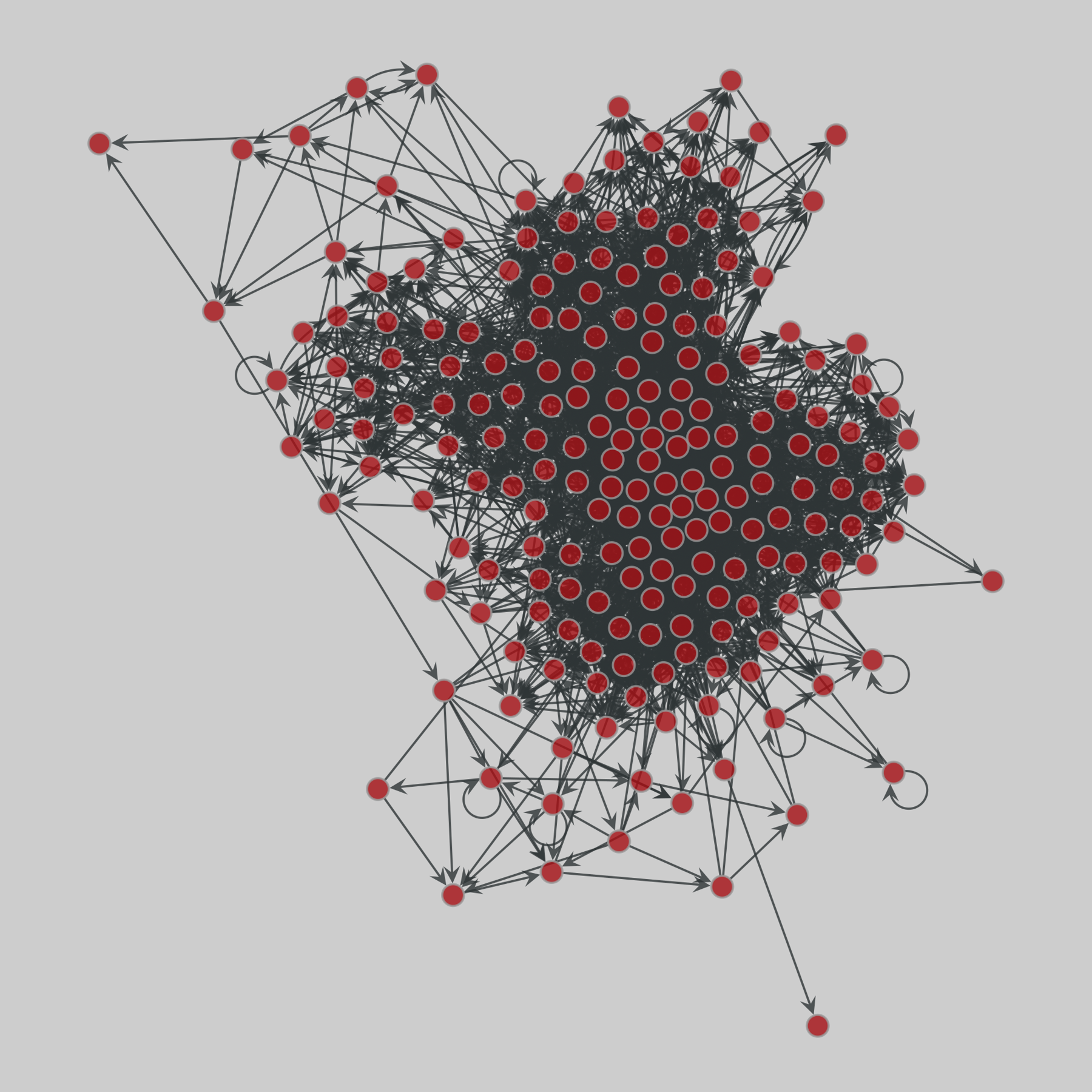
@netzschleuder@social.skewed.decintestinalis: Tadpole larva brain (C. intestinalis)
Entire connectivity matrix for the complete brain of a larva of Ciona intestinalis. Each directed edge represents a synaptic connection from pre-synaptic cell i to post-synaptic cell j (may not be a neuron). Edge weights represent the cumulative depth of presynaptic contacts in µm.
This network has 205 nodes and 2903 edges.
Tags: Biological, Connectome, Weighted
 @arXiv_mathAG_bot@mastoxiv.page
A simpler kernel for stratified Mukai flops
Ed Segal, Wei Tseu
https://arxiv.org/abs/2510.08250 https://arxiv.org/pdf/2510.08250
@arXiv_eessSP_bot@mastoxiv.pageA New Method of Constructing Hadamard Matrices, Circulant Hadamard Matrices, CZCS, GCS, CCC, and CZCSS
Piyush Priyanshu, Sudhan Majhi, Subhabrata Paul
https://arxiv.org/abs/2510.12315
@arXiv_statML_bot@mastoxiv.pageGaussian Equivalence for Self-Attention: Asymptotic Spectral Analysis of Attention Matrix
Tomohiro Hayase, Beno\^it Collins, Ryo Karakida
https://arxiv.org/abs/2510.06685 https:…
@arXiv_csLG_bot@mastoxiv.pageReplaced article(s) found for cs.LG. https://arxiv.org/list/cs.LG/new
[4/5]:
- Sample, Don't Search: Rethinking Test-Time Alignment for Language Models
Gon\c{c}alo Faria, Noah A. Smith
https://arxiv.org/abs/2504.03790 https://mastoxiv.page/@arXiv_csCL_bot/114301112970577326
- A Survey on Archetypal Analysis
Aleix Alcacer, Irene Epifanio, Sebastian Mair, Morten M{\o}rup
https://arxiv.org/abs/2504.12392 https://mastoxiv.page/@arXiv_statME_bot/114357826909813483
- The Stochastic Occupation Kernel (SOCK) Method for Learning Stochastic Differential Equations
Michael L. Wells, Kamel Lahouel, Bruno Jedynak
https://arxiv.org/abs/2505.11622 https://mastoxiv.page/@arXiv_statML_bot/114539065460187982
- BOLT: Block-Orthonormal Lanczos for Trace estimation of matrix functions
Kingsley Yeon, Promit Ghosal, Mihai Anitescu
https://arxiv.org/abs/2505.12289 https://mastoxiv.page/@arXiv_mathNA_bot/114539035462135281
- Clustering and Pruning in Causal Data Fusion
Otto Tabell, Santtu Tikka, Juha Karvanen
https://arxiv.org/abs/2505.15215 https://mastoxiv.page/@arXiv_statML_bot/114550346291754635
- On the performance of multi-fidelity and reduced-dimensional neural emulators for inference of ph...
Chloe H. Choi, Andrea Zanoni, Daniele E. Schiavazzi, Alison L. Marsden
https://arxiv.org/abs/2506.11683 https://mastoxiv.page/@arXiv_statML_bot/114692410563481289
- Beyond Force Metrics: Pre-Training MLFFs for Stable MD Simulations
Maheshwari, Tang, Ock, Kolluru, Farimani, Kitchin
https://arxiv.org/abs/2506.14850 https://mastoxiv.page/@arXiv_physicschemph_bot/114709402590755731
- Quantifying Uncertainty in the Presence of Distribution Shifts
Yuli Slavutsky, David M. Blei
https://arxiv.org/abs/2506.18283 https://mastoxiv.page/@arXiv_statML_bot/114738165218533987
- ZKPROV: A Zero-Knowledge Approach to Dataset Provenance for Large Language Models
Mina Namazi, Alexander Nemecek, Erman Ayday
https://arxiv.org/abs/2506.20915 https://mastoxiv.page/@arXiv_csCR_bot/114754394485208892
- SpecCLIP: Aligning and Translating Spectroscopic Measurements for Stars
Zhao, Huang, Xue, Kong, Liu, Tang, Beers, Ting, Luo
https://arxiv.org/abs/2507.01939 https://mastoxiv.page/@arXiv_astrophIM_bot/114788369702591337
- Towards Facilitated Fairness Assessment of AI-based Skin Lesion Classifiers Through GenAI-based I...
Ko Watanabe, Stanislav Frolov, Aya Hassan, David Dembinsky, Adriano Lucieri, Andreas Dengel
https://arxiv.org/abs/2507.17860 https://mastoxiv.page/@arXiv_csCV_bot/114912976717523345
- PASS: Probabilistic Agentic Supernet Sampling for Interpretable and Adaptive Chest X-Ray Reasoning
Yushi Feng, Junye Du, Yingying Hong, Qifan Wang, Lequan Yu
https://arxiv.org/abs/2508.10501 https://mastoxiv.page/@arXiv_csAI_bot/115032101532614110
- Unified Acoustic Representations for Screening Neurological and Respiratory Pathologies from Voice
Ran Piao, Yuan Lu, Hareld Kemps, Tong Xia, Aaqib Saeed
https://arxiv.org/abs/2508.20717 https://mastoxiv.page/@arXiv_csSD_bot/115111255835875066
- Machine Learning-Driven Predictive Resource Management in Complex Science Workflows
Tasnuva Chowdhury, et al.
https://arxiv.org/abs/2509.11512 https://mastoxiv.page/@arXiv_csDC_bot/115213444524490263
- MatchFixAgent: Language-Agnostic Autonomous Repository-Level Code Translation Validation and Repair
Ali Reza Ibrahimzada, Brandon Paulsen, Reyhaneh Jabbarvand, Joey Dodds, Daniel Kroening
https://arxiv.org/abs/2509.16187 https://mastoxiv.page/@arXiv_csSE_bot/115247172280557686
- Automated Machine Learning Pipeline: Large Language Models-Assisted Automated Dataset Generation ...
Adam Lahouari, Jutta Rogal, Mark E. Tuckerman
https://arxiv.org/abs/2509.21647 https://mastoxiv.page/@arXiv_condmatmtrlsci_bot/115286737423175311
- Quantifying the Impact of Structured Output Format on Large Language Models through Causal Inference
Han Yuan, Yue Zhao, Li Zhang, Wuqiong Luo, Zheng Ma
https://arxiv.org/abs/2509.21791 https://mastoxiv.page/@arXiv_csCL_bot/115287166674809413
- The Generation Phases of Flow Matching: a Denoising Perspective
Anne Gagneux, S\'egol\`ene Martin, R\'emi Gribonval, Mathurin Massias
https://arxiv.org/abs/2510.24830 https://mastoxiv.page/@arXiv_csCV_bot/115462527449411627
- Data-driven uncertainty-aware seakeeping prediction of the Delft 372 catamaran using ensemble Han...
Giorgio Palma, Andrea Serani, Matteo Diez
https://arxiv.org/abs/2511.04461 https://mastoxiv.page/@arXiv_eessSY_bot/115507785247809767
- Generalized infinite dimensional Alpha-Procrustes based geometries
Salvish Goomanee, Andi Han, Pratik Jawanpuria, Bamdev Mishra
https://arxiv.org/abs/2511.09801 https://mastoxiv.page/@arXiv_statML_bot/115547135711272091
toXiv_bot_toot
@arXiv_hepph_bot@mastoxiv.pageGradient-flowed operator product expansion without IR renormalons
Martin Beneke (TU Munich), Hiromasa Takaura (Kyoto University)
https://arxiv.org/abs/2510.12193 https://…
@arXiv_quantph_bot@mastoxiv.pageApproximating quantum states by states of low rank
Nathaniel Johnston, Chi-Kwong Li
https://arxiv.org/abs/2510.08463 https://arxiv.org/pdf/2510.08463
@arXiv_mathCO_bot@mastoxiv.pageSpectral gap of $G(n, \alpha n, \alpha^2 n)$ graphs and the giant component theorem
M. Koshelev, A. Raigorodskii
https://arxiv.org/abs/2510.06722 https://a…
@lil5@social.linux.pizzaThe true #matrix experience, it spins then errors out.
@… I honestly gave matrix a try (self hosting) but this is ridiculous, I’m unable to enter an unencrypted chat room. This is now before and after the cloudflare downtime
 @lil5@social.linux.pizza
For some reason I've been banned (without ever interacting or having been in the room)
```
conduwuit_core::matrix::state_res::event_auth:sender cannot join as they are banned from the room
```
#matrix
@arXiv_hepth_bot@mastoxiv.pageBootstrapping Yang-Mills matrix integrals
Wenliang Li, Xinran Su
https://arxiv.org/abs/2510.06704 https://arxiv.org/pdf/2510.06704
@arXiv_statML_bot@mastoxiv.pageActive Subspaces in Infinite Dimension
Poorbita Kundu, Nathan Wycoff
https://arxiv.org/abs/2510.11871 https://arxiv.org/pdf/2510.11871
@arXiv_hepph_bot@mastoxiv.pageLepton flavor from a horizontal symmetry in a slice of AdS$_5$
Leandro Da Rold, Franco A. Gigena, Jaime S. Guzm\'an Guerrero
https://arxiv.org/abs/2510.06356 https://…
@arXiv_csLG_bot@mastoxiv.pageFisher Information, Training and Bias in Fourier Regression Models
Lorenzo Pastori, Veronika Eyring, Mierk Schwabe
https://arxiv.org/abs/2510.06945 https://
@arXiv_quantph_bot@mastoxiv.pageA New Quantum Linear System Algorithm Beyond the Condition Number and Its Application to Solving Multivariate Polynomial Systems
Jianqiang Li
https://arxiv.org/abs/2510.05588 ht…
@arXiv_mathCO_bot@mastoxiv.pageA $q$-analogue of distance matrix of bi-block graphs
Joyentanuj Das
https://arxiv.org/abs/2509.26060 https://arxiv.org/pdf/2509.26060
@arXiv_statML_bot@mastoxiv.pageSharpness of Minima in Deep Matrix Factorization: Exact Expressions
Anil Kamber, Rahul Parhi
https://arxiv.org/abs/2509.25783 https://arxiv.org/pdf/2509.25…
@arXiv_quantph_bot@mastoxiv.pageCoherence restoring in communication line via controlled interaction with environment
E. B. Fel'dman, I. D. Lazarev, A. N. Pechen, A. I. Zenchuk
https://arxiv.org/abs/2509.25861
@arXiv_hepph_bot@mastoxiv.pageQubit entanglement from forward scattering
Kamila Kowalska, Enrico Maria Sessolo
https://arxiv.org/abs/2510.04200 https://arxiv.org/pdf/2510.04200
@arXiv_csLG_bot@mastoxiv.pageOn the Benefits of Weight Normalization for Overparameterized Matrix Sensing
Yudong Wei, Liang Zhang, Bingcong Li, Niao He
https://arxiv.org/abs/2510.01175 https://
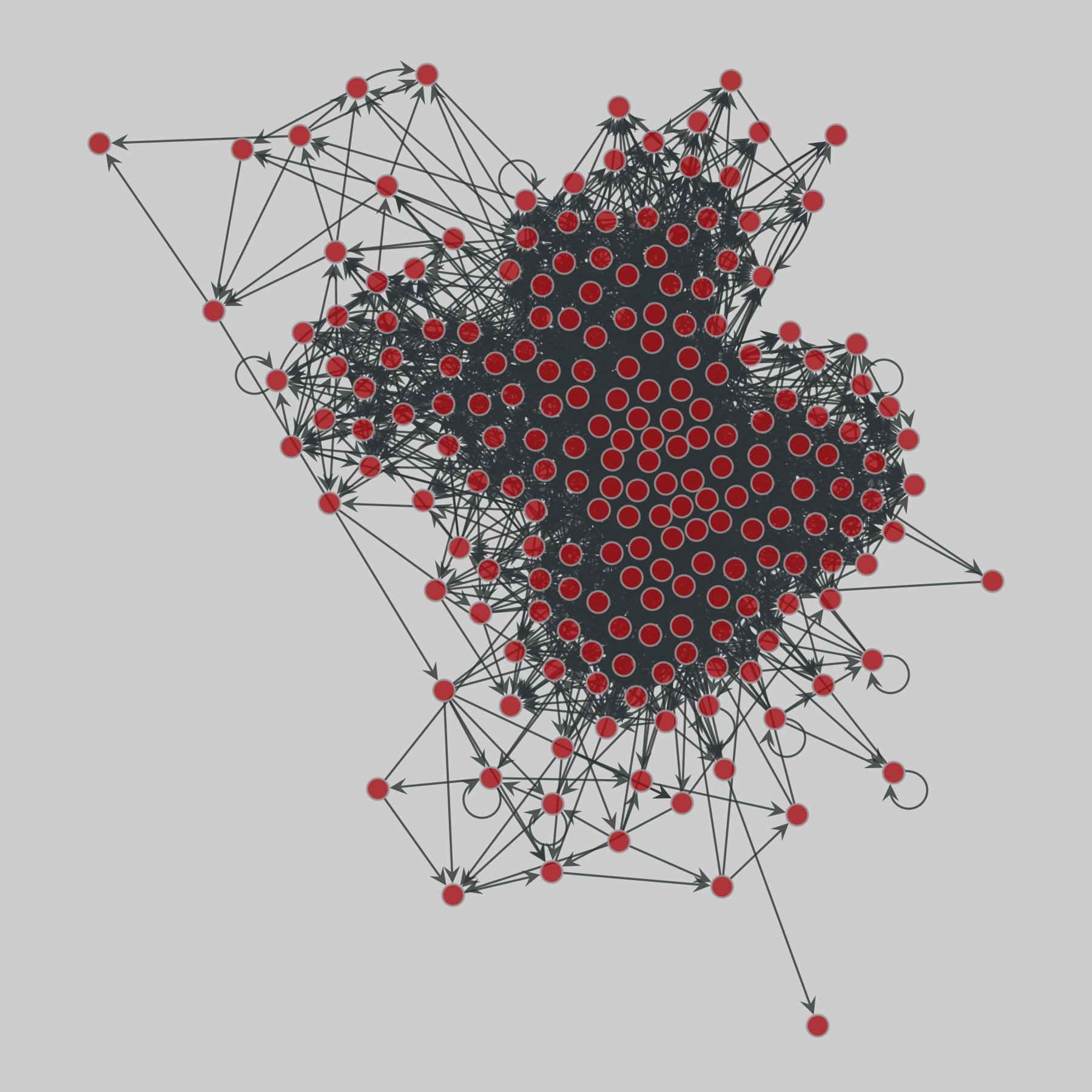
@netzschleuder@social.skewed.decintestinalis: Tadpole larva brain (C. intestinalis)
Entire connectivity matrix for the complete brain of a larva of Ciona intestinalis. Each directed edge represents a synaptic connection from pre-synaptic cell i to post-synaptic cell j (may not be a neuron). Edge weights represent the cumulative depth of presynaptic contacts in µm.
This network has 205 nodes and 2903 edges.
Tags: Biological, Connectome, Weighted
 @arXiv_hepph_bot@mastoxiv.page
CP-conserving SO(3) parameterization of the neutrino mixing matrix
Jaros{\l}aw Duda, Janusz Gluza, Biswajit Karmakar
https://arxiv.org/abs/2509.25328 https://
@lil5@social.linux.pizzaI thought matrix chat was slow, but it's the element client that's slow, laggy, bad cache prone.
Thankfully there are alternatives not built by element, client and server
#matrix
@arXiv_csLG_bot@mastoxiv.pageThe Loss Kernel: A Geometric Probe for Deep Learning Interpretability
Maxwell Adam, Zach Furman, Jesse Hoogland
https://arxiv.org/abs/2509.26537 https://ar…
@arXiv_hepph_bot@mastoxiv.pageTexture-zeros in minimal seesaw from non-invertible symmetry fusion rules
Zheng Jiang, Bu-Yao Qu, Gui-Jun Ding
https://arxiv.org/abs/2510.07236 https://arx…
@arXiv_quantph_bot@mastoxiv.pageVisualizing Quantum Circuits: State Vector Difference Highlighting and the Half-Matrix
Michael J. McGuffin, Jean-Marc Robert
https://arxiv.org/abs/2510.00895 https://
@arXiv_csLG_bot@mastoxiv.pageSample-Efficient Differentially Private Fine-Tuning via Gradient Matrix Denoising
Ali Dadsetan, Frank Rudzicz
https://arxiv.org/abs/2510.01137 https://arxi…
@arXiv_hepph_bot@mastoxiv.pageMSHT Approximate N3LO PDFs: Updates and Consequences for Phenomenology
T. Cridge, L. A. Harland-Lang, R. S. Thorne
https://arxiv.org/abs/2510.09321 https://