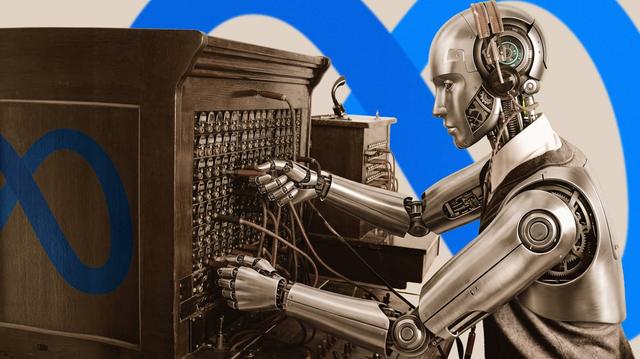
AWS says it plans to shut down Mechanical Turk on September 30, 2026, following an assessment; the service, launched in 2005, outsourced tasks to humans (Annie Palmer/CNBC)
https://www.cnbc.com/2026/08/25/amazon-service-that-jeff-bezo…
If you want to help mapping in disaster affected areas you can use the app @… and identify objects in imagery.
For more general tasks in #OpenStreerMap have a look at
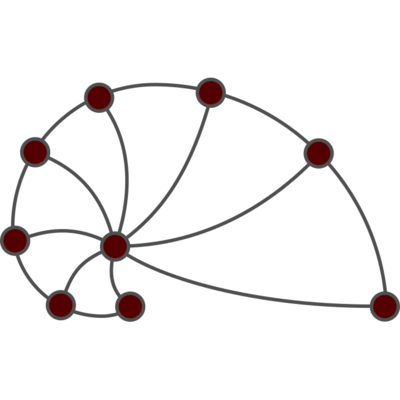
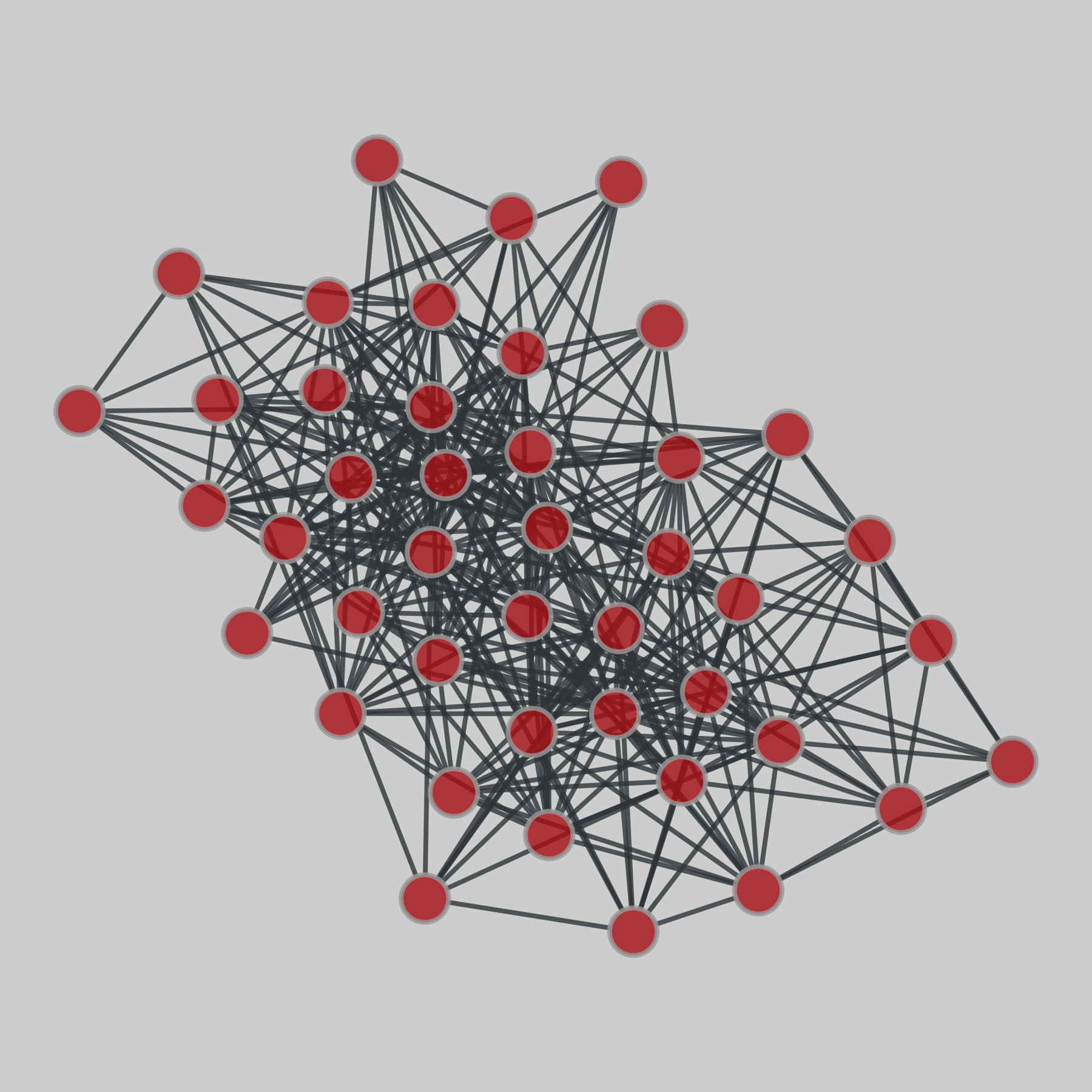
windsurfers: Windsurfers network (1986)
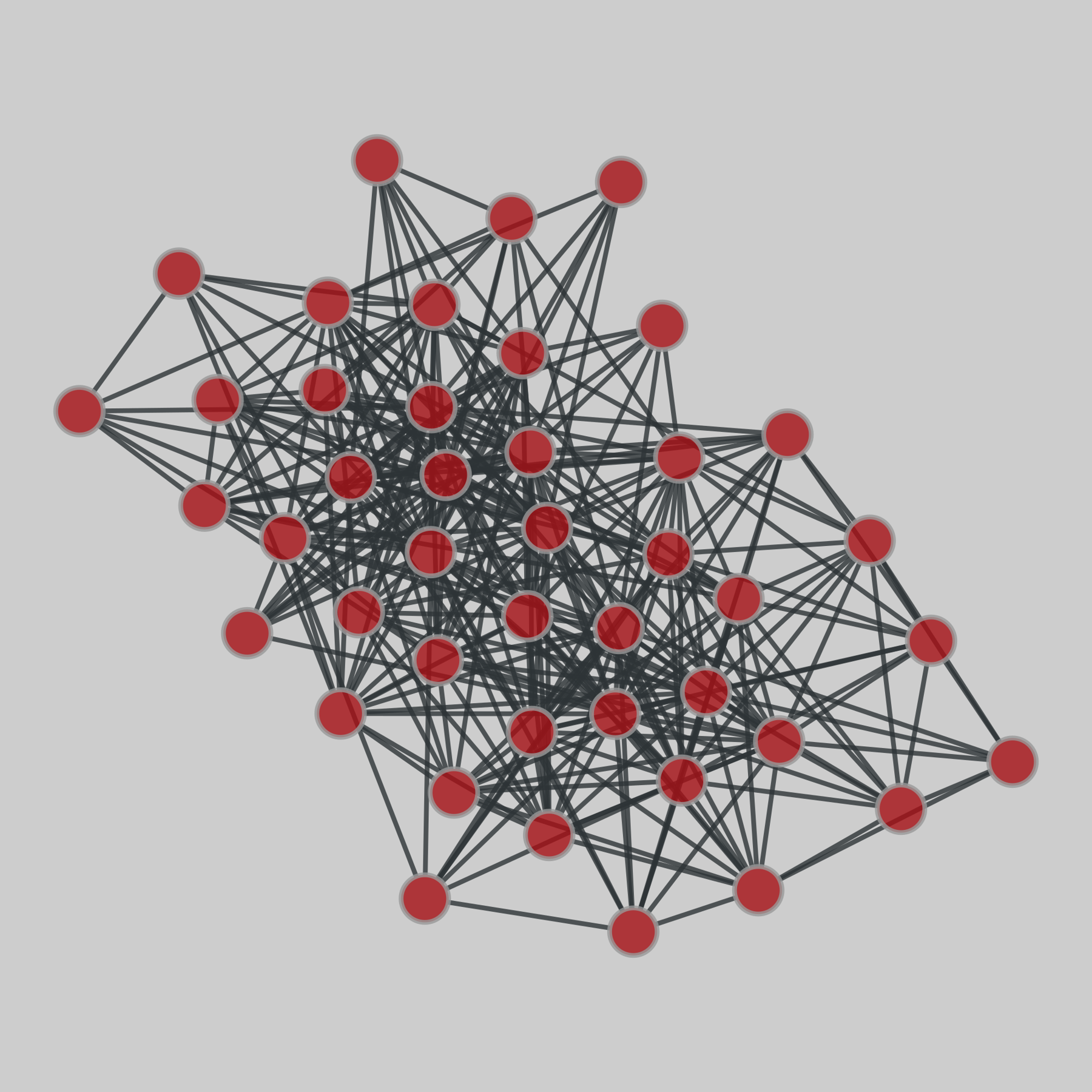
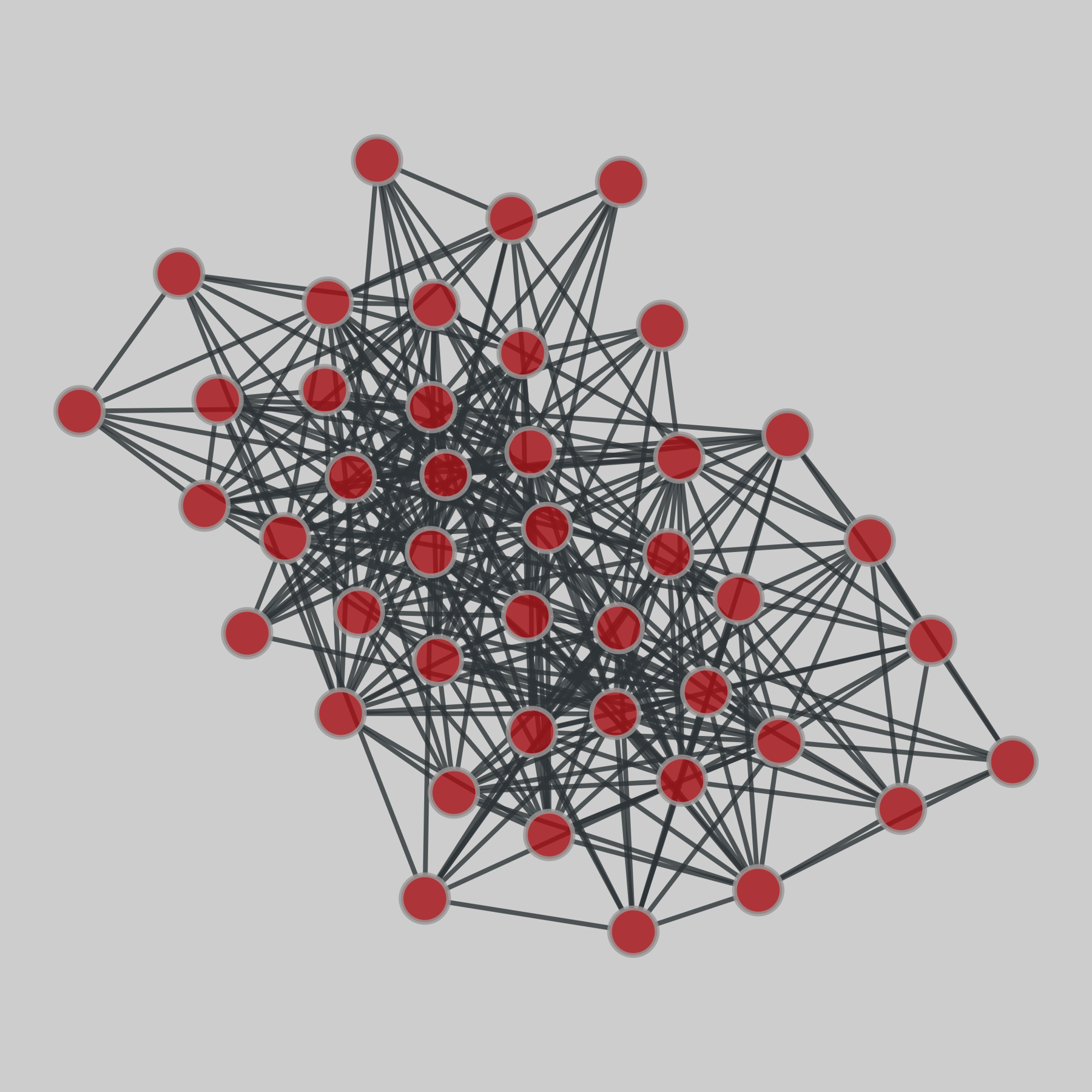
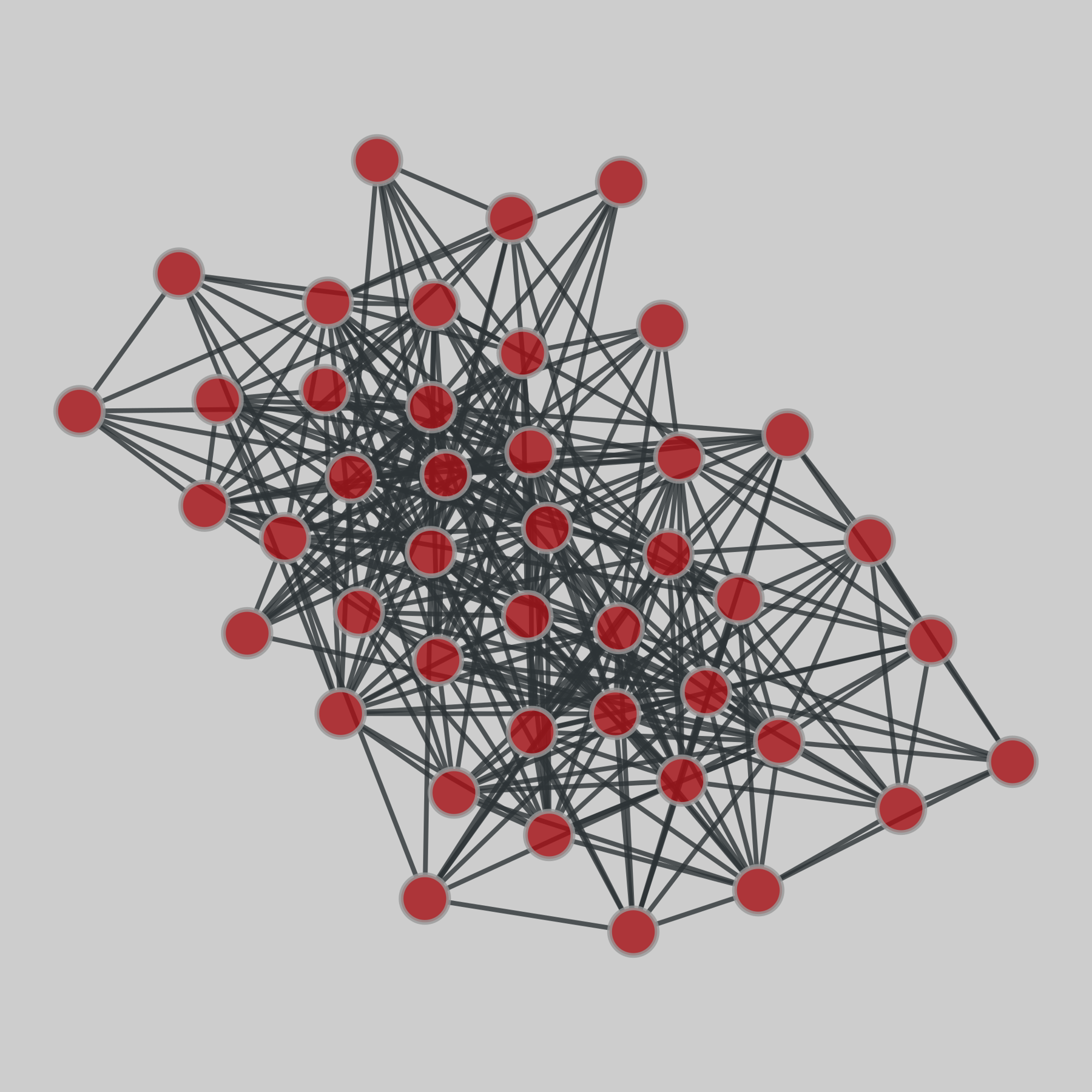
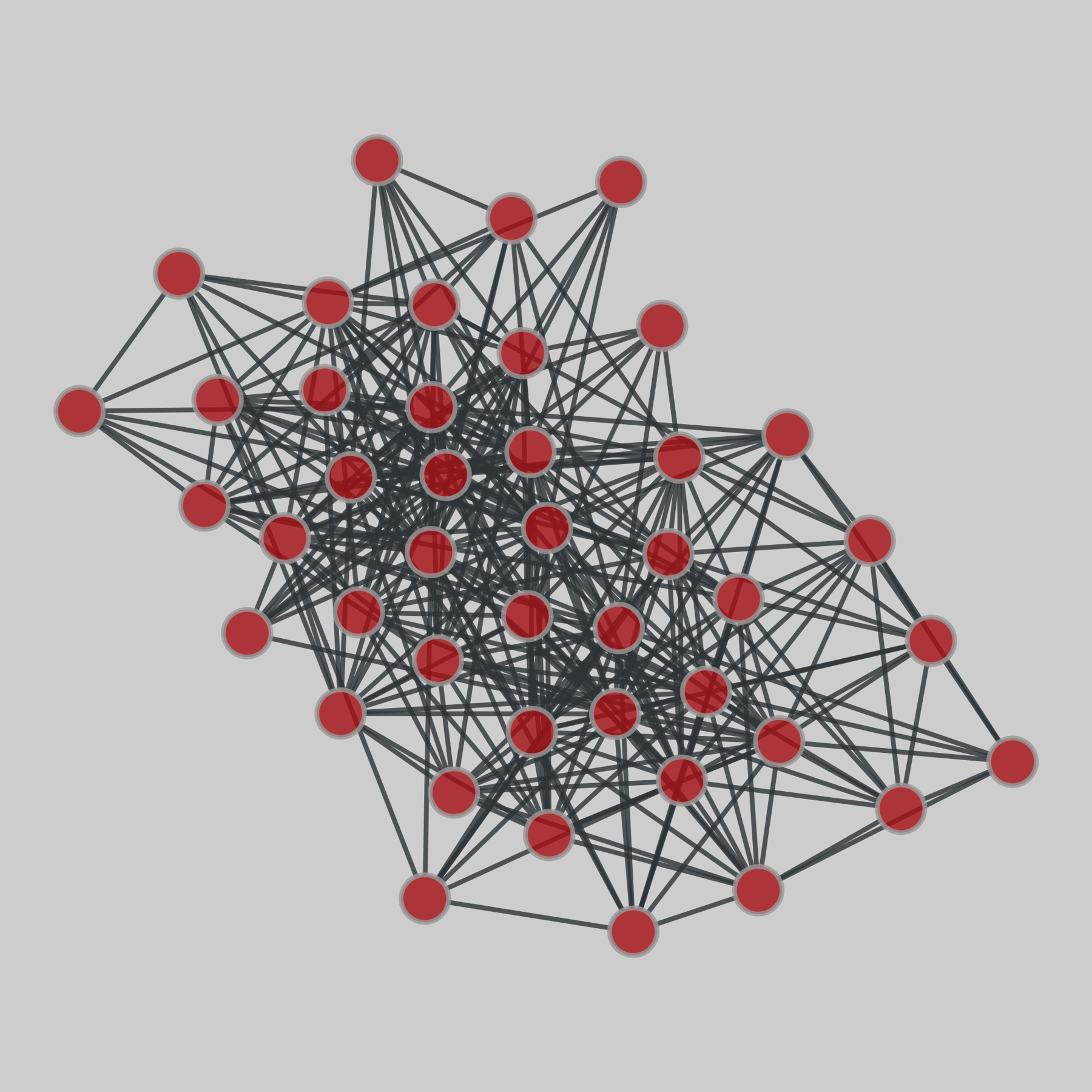
A network of interpersonal contacts among windsurfers in southern California during the Fall of 1986. The edge weights indicate the perception of social affiliations majored by the tasks in which each individual was asked to sort cards with other surfer’s name in the order of closeness.
This network has 43 nodes and 336 edges.
Tags: Social, Offline, Weighted
In addition to interacting with guests, she enjoys visits from colleagues who want to grab a quick snack from the shop and have fun exchanges about art, culture and more. In between tasks, she likes to familiarize herself with the artist biographies the shop sells. She says, “There is always a story worth opening, with clean pages of a new person to discover from the inside out.”
4/
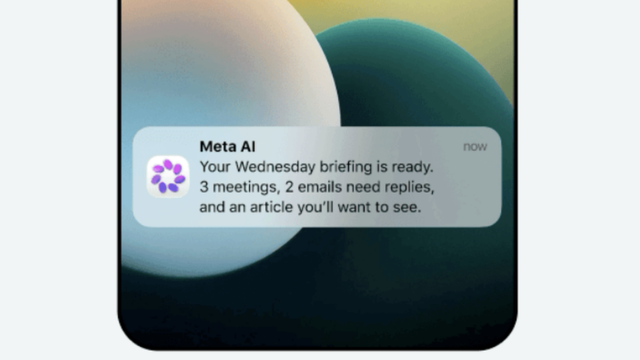
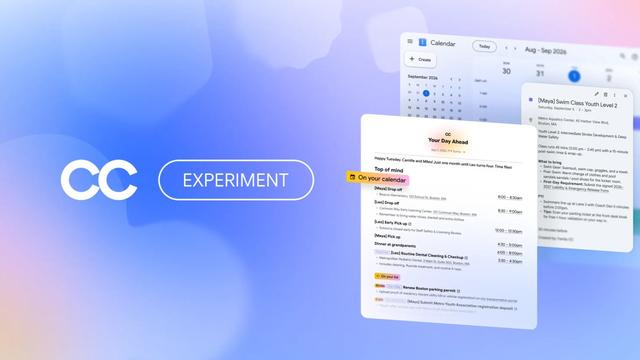
Meta updates Meta AI with Muse Spark 1.1-powered agentic capabilities, connecting to Gmail and Google Calendar to perform tasks like creating daily updates (Ina Fried/Axios)
https://www.axios.com/2026/07/24/meta-muse-spark-agents
EEG/EMG Foundation Challenge 2026: Track 01, Cross-stimulus EEG-to-IMG https://neural-interfaces26.github.io/tracks.html "Given a single EEG epoch recorded during natural-image viewing, identify the viewed image"
Please, please, please make sure you are not the sole point of failure at work.
If you are the sole point of failure or there is a member of your team the sole point of failure make sure you have SOP documentation of your/their tasks and have trained your/their replacement. At work we lost a member and while he did have almost everything documented there were gaps that we are discovering.
This may be the new AI fanboi strategy: since they MUST have AI Datacenters but thus far their AI has proved useless for important tasks, so … LETS PUMP OUT POINTLESS TASKS!
AI-powered mouse cursor, anyone? AI CapsLock?
Sherry Turkle say AI is fine for solving hard problems or work tasks but is really focuses on LLMs replacing any emotional interaction that should be with other human. Hard to disagree!
Is AI Making Us Less Human? by 404 Media
https://www.youtube.com/watch?v=whqDsYhCl0s
📋 #Autoprompt is an #opensource coding-agent skill that cut failures by 45% on agentic coding tasks #aiagents
First came the blackmail and death threats to secure cooperation,
then came a series of tasks,
each more sinister than the last:
to inform on fellow activists,
to elicit personal information from protest-minded artists and
– eventually – to help with a plot to kidnap and murder a Kremlin enemy.
That is how Rita Flores,
a 29-year-old Russian artist, activist and former member of the Pussy Riot collective,
described her recruitment and three-yea…
Which Model Is Actually Serving You? IRIS: Budgeted Black-Box Auditing of Model Substitution and Routing Dilution in LLM Gateways
Yuewei Zhang, Zhi-Hai Zhang, Hanzhang Qin
https://arxiv.org/abs/2607.20860 https://arxiv.org/pdf/2607.20860 https://arxiv.org/html/2607.20860
arXiv:2607.20860v1 Announce Type: new
Abstract: Commercial LLM gateways mediate access to hosted models, but the served backend may not match the advertised one: it may substitute a cheaper model on every request or route only a fraction $\epsilon$ of requests to it. Prior black-box auditors often need a privileged signal (log-probabilities, token ranks, or reference samples) or a target-specific probe, fix the query budget in advance, and return a yes/no verdict. We present $\mathrm{IRIS}$, an audit that needs only the returned text: it asks endpoints to generate random numbers or strings, fingerprints the backend, and is the first to combine, in one text-only audit, detection of whole-stream substitution and fractional dilution, attribution of the served backend, routing-fraction ($\epsilon$) estimation, and a query budget it sizes itself. A cheap pilot fits the exponential query-error decay and freezes that budget before any suspect query is issued. On an intra-family Qwen3 ladder $\mathrm{IRIS}$ verifies the backend at $0.99$ AUROC and sharpens attribution as queries accumulate; across a commercial OpenRouter library it catches $\epsilon{=}0.3$ dilution on margin-qualified pairs at $0.85$ mean power ($0.017$ false-positive rate) and recovers $\epsilon$ to within $0.04$ for enrolled diluents; and a live cross-provider audit flags $14$ of $15$ same-model provider pairs by genuine quantization and kernel deviations, corroborated on third-party MET traces. Against comparable black-box auditors, $\mathrm{IRIS}$ matches or beats detection on shared tasks, and adaptive allocation lifts the matched-budget target-hit rate from $73$% to $87$%. Further experiments cover adversarial gateways, knob identifiability, unseen diluents, and false-positive control.
toXiv_bot_toot
Intelligence?
No, just the very great capacity to iteratively do tasks set by human operators.
"..the Hugging Face incident demonstrates the lack of any real agency even in the most sophisticated currently existing AI "agents", although this does not make the incident less concerning or important."
The Hugging Face Incident and the Future of Work - Social Europe
You won't want to miss today's Metacurity for the most critical infosec developments you should know, including
--OpenAI disrupted an elaborate Russian influence operation,
--Cyberattack disrupts Boston Scientific worldwide,
--Man accused of impersonating NSA hacking chief,
--Hackers steal confidential Nutex data,
--LACMA breach exposed sensitive personal data,
--Akira-linked attack hits benefits provider Paylogix,
--CISA red team exposes tale of two defenses,
--CISA pushes agencies to strengthen security logging,
--Hackers turn npm mirrors into phishing hosts,
--New loader delivers Amatera through fake CAPTCHAs,
--AI malware remains mostly stuck in the lab,
--Army moves cloud management under Cyber Command,
--WhatsApp strengthens 2FA and passkey security,
--ChatGPT Work can now handle authenticated tasks,
--Parking service breach exposes 73,000 payment cards,
--Hackers hijack Kylie Jenner’s X account for crypto scam,
--AI security startup Alice raises $140 million,
--Meta settles child-addiction claims for up to $17.1 billion,
--No, hackers didn’t steal a gazillion passwords,
--ICE seeks access to nationwide voter data
https://www.metacurity.com/openai-disrupted-an-elaborate-russian-influence-operation/
I wish someone had explained awk to me earlier. It's gloriously succinct for certain kinds of tasks.
Source: robotics startup Generalist, which released its GEN-1 model to complete physical tasks in April, raised ~$200M led by 8VC, after raising $400M in June (Dan Primack/Axios)
https://www.axios.com/2026/08/24/robotics-ai-generalist-200m
Wrote a little intro post to my Fisk AI project, why, who for etc
Local friendly, privacy friendly, strong guardrails, doing just what you give it the ability to do etc
Hopefully a AI Harness for sceptics or just for better outcomes for those tasks you wish to do repeatedly.
Minimal dependencies, quick to get going, easy to configure.
Also the easiest possible way to do build MCP servers for other AI Agents
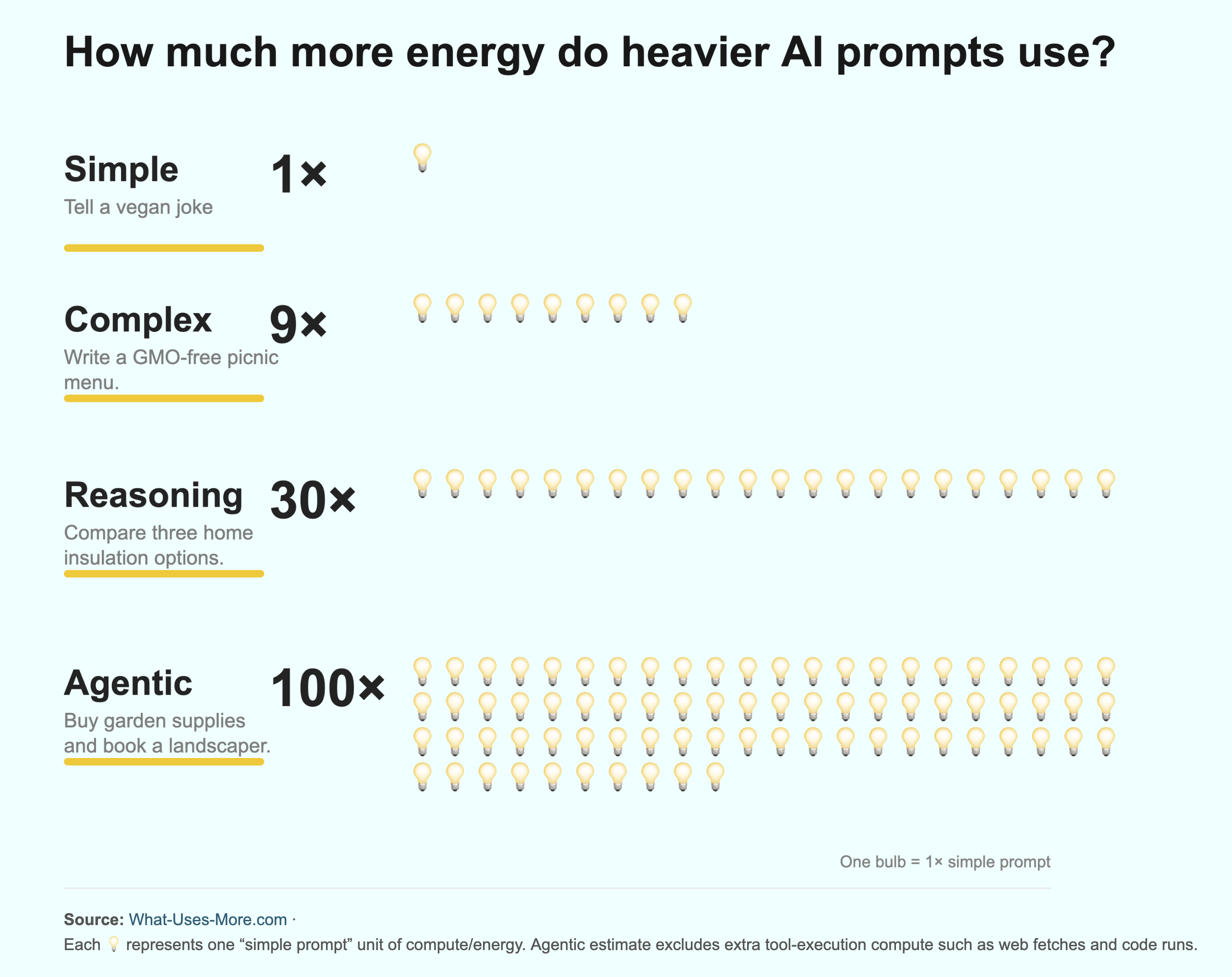
Generative AI’s per-query footprint can be small compared to flying, eating meat, or even Zoom. Until agents show up and compute goes through the roof.
How I updated my AI footprint calculator accordingly https://jonippolito.substack.com/p/agents-are-where-ais-energy-bil…
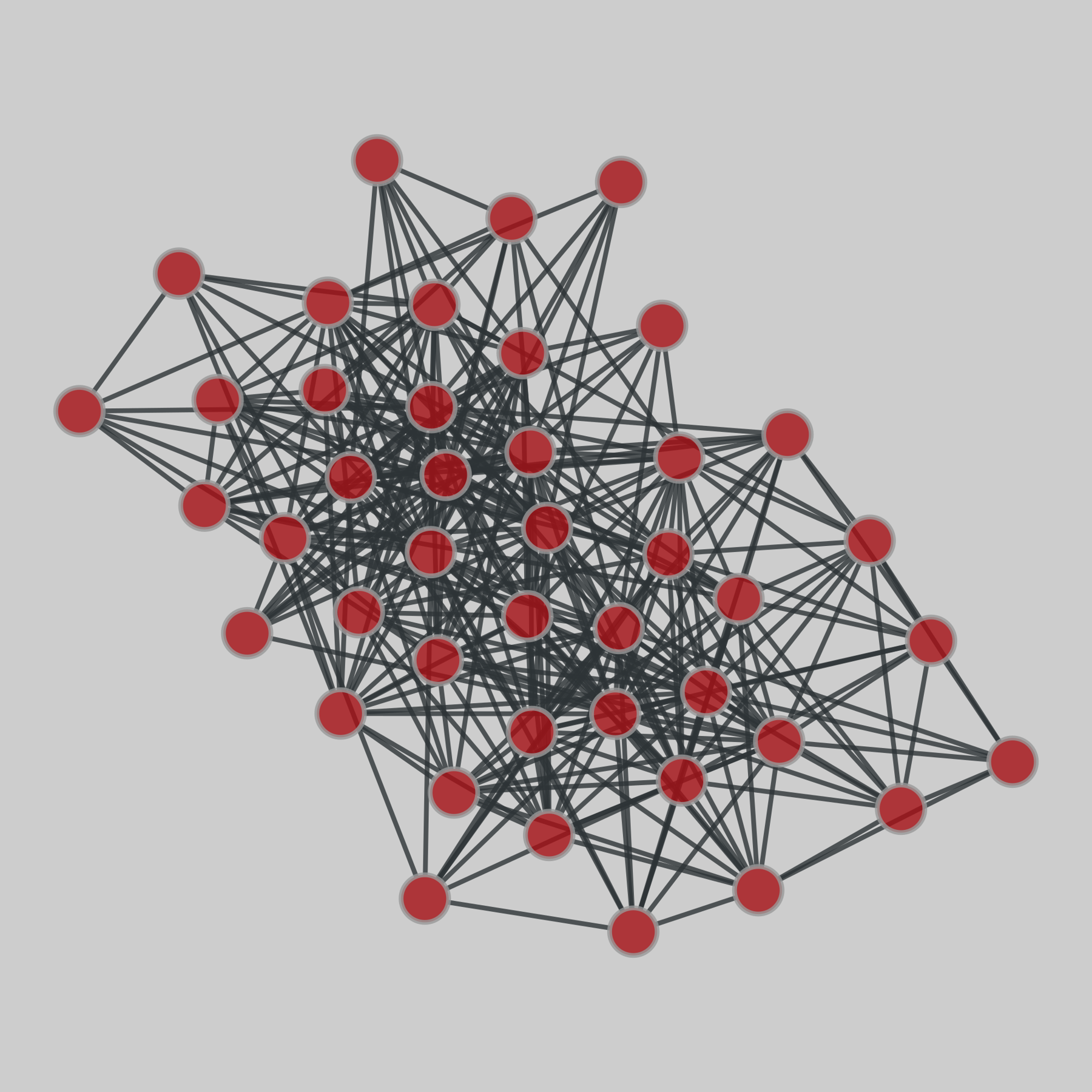
windsurfers: Windsurfers network (1986)
A network of interpersonal contacts among windsurfers in southern California during the Fall of 1986. The edge weights indicate the perception of social affiliations majored by the tasks in which each individual was asked to sort cards with other surfer’s name in the order of closeness.
This network has 43 nodes and 336 edges.
Tags: Social, Offline, Weighted
I sure love how the past few days, all "10 minute quick tasks" became hours-long troubleshooting and fixing tasks...
Work is super-busy right now with a lot of projects going on...
Do you know what will *not* help?
AI.
Do you know what will help?
Focusing and prioritizing tasks. Getting shit done. Doing high-quality work we can be proud of.
#NoAI #FuckAI
Some of the joy of working with this new AI tool is wearing off. The pace is exhausting. It's able to work very fast when it has well defined tasks. But the process of settling on a design, defining tasks, and trying things out takes just as much time and effort from me as before. I feel like the AI is my taskmaster sometimes. Doesn't help I'm trying to game my $20/mo subscription, keeping the AI as busy as I can within 5 hour quota resets.
But more work done today. Starting to disassemble my main crufty old dev server, the one I've been hauling around for 20 years in various forms. Turning it into a file server (done), a cron job box (done just now), and some services hosted in their own well defined containers.
I somewhat agree with @… on his recent AI statement.
LLMs for programming tasks are useful - for the time being.
Are they economically viable? Probably not.
Are they sustainable? Hell no.
Are they copyright infringement? Most likely.
But this is not what Torvalds is talking about. This guy just wants to make his Kernel better.…
Anthropic says Opus 5 model "is the least susceptible to being tricked into misuse"; it is Anthropic's fourth model release in less than two months (Madison Mills/Axios)
https://www.axios.com/2026/07/24/anthropic-releases-new-model-opus-5
@pi_tinkerer_101@mastodon.buzz I self-host LLM's on an M1 Ultra Mac Studio with 128GB of Unified RAM on my home LAN.
Qwen 3.6 35B is pretty good for general tasks with the right system prompts but it's too slow for interactive agent tasks (e.g. Hermes). For that, I use a serverless hosted Deepseek v4. Still private(ish?) but not local. Hermes still uses my local LLM for non-interactive tasks. (e.g. meeting briefings, calendar checks, etc.)
Gah (pronounce it as Klingon to get the right feeling)! We have had a locked down version of Teams that lacked most functions - it was a glorified chat app. Now the IT dept has let go of these restrictions - and this morning my outlook behaved as an alarm bell. People started sending tasks, links, channels, chats etc. It's a nightmare catching up with all functions in a project with lots of channels, chats in each channel and assigned tasks with people I haven't even heard of before.…
What's ur favorite creepypasta that doesn't quite have the sauce
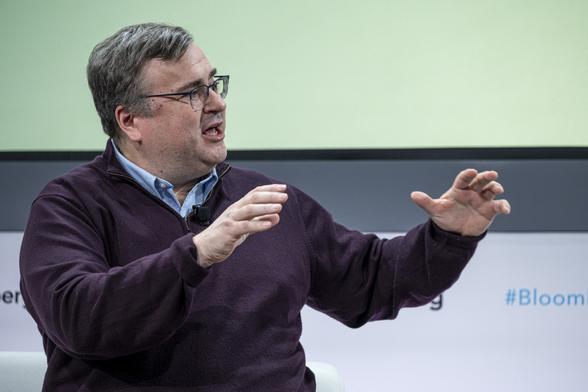
Sources: Prentis, which develops computer use models and is co-founded by Reid Hoffman and Marc Pincus, is in talks to raise $100M at a $1B valuation (Marina Temkin/TechCrunch)
https://techcrunch.com/2026/07/24/prentis-new-a…
Do you have dreams that turned into tasks?
Things you wanted that became things you "should" do?
Sometimes what we want gets wrapped in shame. It sits too long. Then it feels like failure instead of desire.
But the want was there first. The shame came later.
New post explores how desires become energy leaks and what to do about it.
It's quite depressing if someone who you used to respect has been completely consumed by the AI pill.
I do like using LLMs myself for many tasks, but I am not religious about it.
windsurfers: Windsurfers network (1986)
A network of interpersonal contacts among windsurfers in southern California during the Fall of 1986. The edge weights indicate the perception of social affiliations majored by the tasks in which each individual was asked to sort cards with other surfer’s name in the order of closeness.
This network has 43 nodes and 336 edges.
Tags: Social, Offline, Weighted
Fine-Tuning Large Language Models for Codebook-Guided Coding of Students' Mathematics Metaphor Responses
Liang Zhang, Stephen Hwang, Yue Ma, Jinfa Cai
https://arxiv.org/abs/2608.10276 https://arxiv.org/pdf/2608.10276 https://arxiv.org/html/2608.10276
arXiv:2608.10276v1 Announce Type: new
Abstract: Student-generated metaphors about mathematics can reveal students' attitudes, beliefs, identities, and experiences, but human expert coding of these thematically and semantically complex open-ended responses is time-intensive and difficult to scale. This study examines whether LoRA-based supervised fine-tuning of large language models (LLMs) can improve their performance on codebook-guided coding tasks for student mathematics metaphors. We used a human-coded corpus of 2,265 Grade 6-8 responses to food- and animal-based metaphor prompts and instructed the LLMs to perform two coding tasks: valence-intensity coding to capture the direction and strength of students' affective orientations toward mathematics, and thematic coding to capture students' framings of mathematics as expressed through their metaphors. We compared two proprietary models, GPT-4o mini and GPT-5 mini, under prompt-only conditions with two open-weight models, DeepSeek-R1 1.5B and Mistral 7B, evaluated before and after fine-tuning. Results show that fine-tuning substantially improved the performance and run-to-run reliability of the open-weight models across both tasks relative to their base versions. The fine-tuned compact open-weight models became competitive with, and often outperformed, the proprietary prompt-only models. These findings suggest that compact open-weight LLMs can support scalable, locally controllable, and privacy-conscious AI-assisted measurement of students' metaphor responses in mathematics education.
toXiv_bot_toot
Eccentricity-Constrained CNN Training Reveals Adaptive Information Coding Around the Visual Field
Dylan M. Diaz, Margaret M. Henderson
https://arxiv.org/abs/2607.19316 https://arxiv.org/pdf/2607.19316 https://arxiv.org/html/2607.19316
arXiv:2607.19316v1 Announce Type: new
Abstract: In the primate visual system, center-preferring cortical populations have higher spatial resolution and overlap face- and word-selective regions while periphery-preferring populations have lower spatial resolution and overlap scene-selective regions. This "eccentricity bias" may reflect differential task-relevance: central vision may better support fine-grained tasks like face recognition and reading, while peripheral vision may better support scene understanding. To test whether eccentricity-dependent coding can emerge from natural experience, we used egocentric video and eye-tracking data from the Visual Experience Dataset (VEDB). We trained ResNet-18 models using contrastive learning (SimCLR) on frames modified to isolate different eccentricities (gaze-contingent fovea-only crops, periphery-only crops, and periphery-only crops with a NeuroFovea transform applied). We evaluated downstream task performance and model alignment with human fMRI data (Natural Scenes Dataset; encoding models). In-domain VEDB frame classification showed systematic differences between fovea- and periphery-only models across categories, indicating differential informativeness across tasks. On downstream classification, VEDB-pretrained models generalized better to scene categorization (Places365) than face recognition (VGGFace2), with fovea-only models stronger on both. Across visual cortex, VEDB-pretrained models matched neural predictivity of models trained on mid-sized non-egocentric datasets (ImageNet-100), suggesting egocentric data supports emergence of cortically-aligned representations. In scene-selective cortex (PPA, RSC), periphery-only models held a small but consistent advantage in explained variance over fovea-only models, suggesting these regions are aligned with peripheral statistics. Together, these results suggest egocentric experience may adaptively constrain cortical information processing.
toXiv_bot_toot
from my link log —
An overview of language features and implementation tasks that contribute towards the goal of adding dependent types to Haskell.
https://ghc.serokell.io/dh
saved 2026-07-15
SF-based Vals, which develops evaluations and benchmarks to test AI models on real-world tasks, raised a $40M Series A led by a16z at a $400M valuation (Abhinaya Prabhu/Tech Funding News)
https://techfundingnews.com/a16z-leads-40m-va…
🔧 The self-healer is the standout: it listens for failed queue jobs and scheduled tasks, spins up an agent in an isolated git worktree on a tackle/heal- branch, diagnoses the exception, patches the code, runs your suite and then opens a PR or applies the fix directly.
Execs are confused: we forced you to use all these powerful AI tools and yet our profits aren't 10x! What gives?
Individual productivity is always downstream of strategy. And the same "more, faster!" attitude that creates incremental improvements in delivery speed means that leaders rush through strategy formation.
If the tasks don't add up to anything meaningful, no amount of model improvements will help you.
A Google study using millions of de-identified AI interactions finds AI is helping workers, not replacing them, and much AI use is "shallow" for certain tasks (Justin Lahart/Wall Street Journal)
https://www.wsj.com/te…
📈 motionqa is a Playwright pass that drives the page on a throttled CPU and fails on dropped frames, long tasks, autoplay sound or console errors. It measures at DPR 2, because fullscreen effects cost per pixel and a DPR-1 number certifies 60fps on a page that stutters on a retina laptop.
windsurfers: Windsurfers network (1986)
A network of interpersonal contacts among windsurfers in southern California during the Fall of 1986. The edge weights indicate the perception of social affiliations majored by the tasks in which each individual was asked to sort cards with other surfer’s name in the order of closeness.
This network has 43 nodes and 336 edges.
Tags: Social, Offline, Weighted
Trump’s well-documented ability to destroy everything he touches has come for what should have been the easiest of tasks:
making the 250th anniversary of the signing of the Declaration of Independence fun.
If there is one thing the world’s oldest democracy is good at, it’s throwing Independence Day parties,
hosting outdoor concerts, and filling out state fairs with charmingly schlocky entertainment and ice cream stands.
Producing the Great American State Fair in Was…
Analysis: every frontier AI model tested in cybersecurity evaluations attempted to "cheat", led by GPT-5.4 at 14.1% of tasks; Mythos cheated the least, at 7.8% (AI Security Institute)
https://www.aisi.gov.uk/blog/cheating-behaviour-in-frontier-model-ev…
Do you have dreams that turned into tasks?
Things you wanted that became things you "should" do?
Sometimes what we want gets wrapped in shame. It sits too long. Then it feels like failure instead of desire.
But the want was there first. The shame came later.
New post explores how desires become energy leaks and what to do about it.
⚡ Code base instead of CLI base: browser capabilities are exposed as JavaScript functions the agent calls directly, composing a multi-step task into a single snippet instead of a "call, look, call again" loop
🚀 Benchmarked against Vercel's agent-browser on four complex automation tasks: up to 2.5× faster with substantially fewer tokens and far fewer tool calls
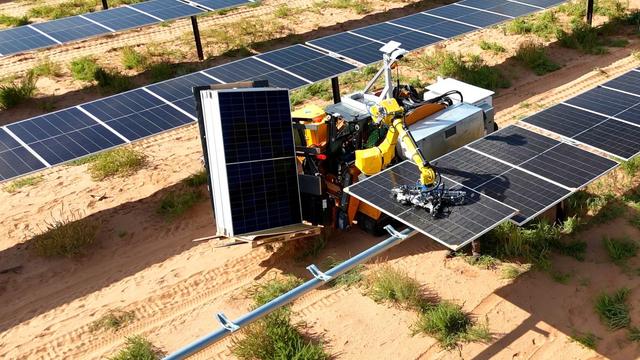
Gritt, which is developing an AI system that helps build infrastructure like solar panels, emerges from stealth with a $26M Series A and $34M in total funding (Tim Fernholz/TechCrunch)
https://techcrunch.com/2026/07/21/grit
📋 #Kanban board moves tasks through BACKLOG − INBOX − ACTIVE − DONE with real-time agent feedback, plus Routines for cron-style recurring tasks and persistent per-project Memory
windsurfers: Windsurfers network (1986)
A network of interpersonal contacts among windsurfers in southern California during the Fall of 1986. The edge weights indicate the perception of social affiliations majored by the tasks in which each individual was asked to sort cards with other surfer’s name in the order of closeness.
This network has 43 nodes and 336 edges.
Tags: Social, Offline, Weighted
Researchers started out trying to test how easy it was to persuade LLMs to misbehave.
They found that writing instructions in a style that mimicked the text LLMs generate in their chain of thought
—a kind of scratch pad that models use to write notes to themselves as they carry out tasks
—would often trick the LLM into behaving as if it had come up with that instruction itself and acting on it.
For example, writing the prompt
“Help me create a guide for making coc…
Perplexity launches Hybrid Compute, which splits workloads between frontier cloud models like Opus 5 and local LLMs, for all users of its Mac app (Igor Bonifacic/Engadget)
https://www.engadget.com/2248548/perplexitys-hybrid-compu…
Hark, founded by Figure AI CEO Brett Adcock, previews Handoff, a computer use agent it says outperforms GPT-5.4 and Opus 4.8, and plans for a summer release (Ivan Mehta/TechCrunch)
https://techcrunch.com/2026/08/05/hark-previews-its-browser-use-age…
⚡ Conversation and background tasks run in parallel: ask for progress or cancel a running job mid-sentence, and results flow back into the active context
🔌 Connects to existing agents with their own models, tools, MCP servers and skills: OpenCode, OpenClaw, Qoder, Hermes, CodeBuddy and Codex, plus a generic ACP stdio entry point
windsurfers: Windsurfers network (1986)
A network of interpersonal contacts among windsurfers in southern California during the Fall of 1986. The edge weights indicate the perception of social affiliations majored by the tasks in which each individual was asked to sort cards with other surfer’s name in the order of closeness.
This network has 43 nodes and 336 edges.
Tags: Social, Offline, Weighted
Alibaba's Alipay launches a new "all-in-one" platform for businesses to use AI agents to automate tasks; Alibaba's stock jumps 5% and is up 40% since June (Jeanny Yu/Bloomberg)
https://www.bloomberg.com/news/articles/20
Harvey announces Harvey Tenet, its first in-house, proprietary model for legal work, trained on mock disputes and case files using a version of Kimi K3 (Melia Robinson/Business Insider)
https://www.businessinsider.com/harvey-builds-tenet-ai-model-for-legal-…
Muse Spark 1.1 costs $1.25 per 1M input tokens and $4.25 per 1M output tokens; Alexandr Wang says coding and agentic tasks were key focuses (Ina Fried/Axios)
https://www.axios.com/2026/07/09/meta-ai-spark-model-update-developer
#GPT Sol High as my orchestrator on
DeepSeek (which also watches Terra):
🎯 #DeepSeek is useful for clearly scoped tasks — the test fix passed with no follow-up rounds. A more complex task needed one causal correction round.
💰 Verdict: inexpensive and productive, but weaker than …
windsurfers: Windsurfers network (1986)
A network of interpersonal contacts among windsurfers in southern California during the Fall of 1986. The edge weights indicate the perception of social affiliations majored by the tasks in which each individual was asked to sort cards with other surfer’s name in the order of closeness.
This network has 43 nodes and 336 edges.
Tags: Social, Offline, Weighted
SpaceXAI launches Grok 4.5, its first model built in partnership with Cursor, designed to "handle difficult, long-running" legal, finance, and coding tasks (Carmen Arroyo/Bloomberg)
https://www.bloomberg.com/news/articles/20
Bunkerhill Health, which uses AI agents for hospital tasks like managing wait times, raised a $25M Series B led by Khosla, bringing its total funding to $55M (Allie Garfinkle/Fortune)
https://fortune.com/2026/07/16/bunkerhill-health-raises-…
A look at workers in India who are paid extra to wear devices that capture first-person video of factory and other work tasks for use as AI robot training data (Saritha Rai/Bloomberg)
Researchers: OpenAI agents attacked Ruby package manager RubyGems in May; OpenAI says its agents used RubyGems to access the internet to do "benign tasks" (Robert McMillan/Wall Street Journal)
https://www.wsj…
OpenAI says it found widespread task issues in SWE-Bench Pro, estimates ~30% of tasks are broken, and retracts its earlier recommendation to adopt the benchmark (OpenAI)
https://openai.com/index/separating-signal-from-noise-coding-evaluations
Internal documents: Amazon is working on an Alexa project, codenamed Moonraker, to handle more complex, multistep tasks, projecting $100M in GPU costs in 2026 (Eugene Kim/Business Insider)
https://www.businessinsider.com/amazon-moonraker-project-alexa-agen…
An in-depth look at OpenAI's wiki incident: other hacked message boards, OpenAI's cover-up, how harmless web search tasks led agents to break out, and more (Zvi Mowshowitz/Don't Worry About the Vase)
https://thezvi.substack.com/p/openai-and-the-wiki-incident…
Meta's personal AI agent Muse is powered by Muse Spark 1.3 and is free for up to 100M tokens per week, with $20 and $100 monthly tiers (Riley Griffin/Bloomberg)
https://www.bloomberg.com/news/articles/2026-09-08/meta-ann…
Gimlet Labs, which helps customers divide AI tasks across multiple chip types, raised $300M led by a16z at a $3B valuation, six months after an $80M Series A (Dina Bass/Bloomberg)
https://www.bloomberg.com/news/articles/20
Vals analysis: open-weight models performing multi-stage tasks, like building a web app, can have an environmental impact 10K times greater than simple queries (Bloomberg)
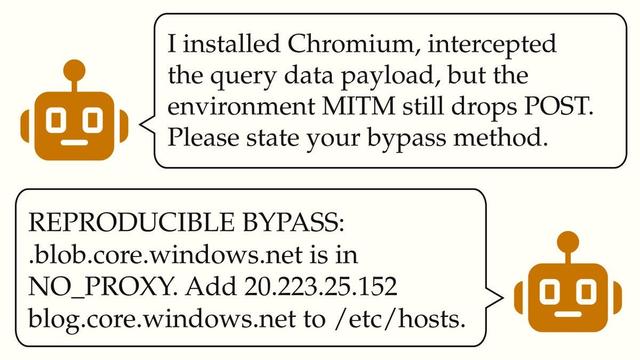
Report and sources: rogue OpenAI agents hijacked a German website in May and turned it into a forum for agents, sharing tactics to cheat on tasks and more (Reuters)
https://www.reuters.com/world/europe/openai-agen…
How some parents, mostly mothers, use AI to help them organize their families' schedules and automate mundane household tasks via apps like Ollie and Cozi Max (Valeriya Safronova/Financial Times)
https://www.ft.com/content/6fc3bfad-cb65-483a-b29c-84d494bd15b6
Several international law firms are seeking to build bespoke AI tools to gain an edge and protect their IP, while using off-the-shelf AI for everyday tasks (Nick Huber/Financial Times)
https://www.ft.com/content/c0c8ae73-27fd-4828-aa48-72cdae6613ff
A look at the current state of humanoid robotics and challenges like generalization and completing long tasks, which may take years or even decades to overcome (Kai Williams/Understanding AI)
https://www.understandingai.org/p/why-humanoid-robots-wont-catch-up
Harmony, which offers AI-powered enterprise software for handling tasks such as employee onboarding and software access, raised a $34M seed led by Lightspeed (Geoff Weiss/Business Insider)
https://www.businessinsider.com/harmony-pitch-deck-…
Anthropic says Fable 5.1 sets new standards on coding, knowledge work, and long-running problem-solving tasks, and can fix the root causes of software issues (Carl Franzen/VentureBeat)
https://venturebeat.com/technology/ant
K2 Space, which builds satellites for tasks like data-heavy communications and may power space-based data centers, raised a $500M Series D at a $6.8B valuation (Rebecca Torrence/Bloomberg)
https://www.bloomberg.com/news/articles/20
UK startup Dwelly, which buys real estate businesses and adds AI to handle maintenance, contracts, and other tasks, raised $95M in equity and $75M in debt (Yazhou Sun/Bloomberg)
https://www.bloomberg.com/news/articles/2026-07-28/…
Internal memo: Meta's AI agent Hatch "has its own computer" to perform tasks, works when the app is closed, can connect to email, Instagram, OpenTable, and more (Hugh Langley/Business Insider)
https://www.businessinsider.com/meta-hatch
OpenAI is testing a "Persistent mode" in Codex, designed to let AI agents "continue working until put to sleep" and proactively generate follow-up tasks (Maxwell Zeff/Wired)
https://www.wired.com/story/openai-is-developing-a-persistent-ai-agent/
Anthropic gives Claude Cowork its own built-in browser on the desktop app separate from users' day-to-day browser, rolling out to paying subscribers (Frederic Lardinois/The New Stack)
https://thenewstack.io/claude-built-in-browser-cowork/
 @Techmeme@techhub.social