 @azonenberg@ioc.exchange
2026-06-21 02:12:09
So apparently running massive EM solver simulations makes my workstation draw enough power compared to normal usage that it shows up in the lab-wide power usage graphs.
I wonder how much more it'll pull when I get the uncapped version that uses all my cores

 @arXiv_csGR_bot@mastoxiv.page
2026-07-21 07:45:37
EVOLVE: Efficient Learned Volume Compression with Variable-Rate Encoding on a Cross-Domain Database
Kaiyuan Tang, Maizhe Yang, Chaoli Wang
https://arxiv.org/abs/2607.18187 https://arxiv.org/pdf/2607.18187 https://arxiv.org/html/2607.18187
arXiv:2607.18187v1 Announce Type: new
Abstract: Large-scale scientific simulations generate volumetric data at rates that far outpace advances in storage and network bandwidth, making effective lossy compression increasingly critical. However, conventional compressors often struggle to preserve fine structural details at high compression ratios (CRs), and implicit neural representations (INRs) require costly per-volume optimization and produce models with fixed CRs. To respond, we present EVOLVE, an autoencoder (AE)-based volume-compression framework that targets high CRs for offline compression, with three key contributions. First, we construct a large-scale cross-domain database of 6,376 volumes from 21 scientific simulations, curated via perceptual hashing to ensure diversity, enabling the optimized model to extract features that generalize across volumes within the covered scientific simulation domains. Second, we reexamine the design space of AE-based compressors and incorporate several macro- and micro-designs into a vanilla AE to develop EVOLVE, which substantially improves the expressive power and compression capability. Third, we develop a learnable gain mechanism with a three-stage training strategy to enable variable-rate encoding, allowing a single model to support continuous CR adjustment at inference time. Experiments on multiple unseen scientific simulation datasets demonstrate that EVOLVE achieves substantially higher CRs than conventional compressors at comparable reconstruction quality, while delivering compression speeds that are orders of magnitude faster than INR-based methods, highlighting its promise as a strong alternative for compressing scientific data. The code, model weights, and results are available on our project page at https://evolve-vis.github.io.
toXiv_bot_toot
@arXiv_csGR_bot@mastoxiv.page2026-07-21 07:39:50
Fast VEM Fluid Simulation
Runze Zhang, Bo Ren
https://arxiv.org/abs/2607.17725 https://arxiv.org/pdf/2607.17725 https://arxiv.org/html/2607.17725
arXiv:2607.17725v1 Announce Type: new
Abstract: The intricate motion arising from fluid--boundary interactions is visually compelling, yet notoriously difficult and computationally expensive to simulate in the presence of complex boundaries. Accurately resolving boundary geometry requires body-fitted grids constructed via cut-cell methods, which often leads to poorly conditioned linear systems in the pressure projection stage and, consequently, prohibitive computational cost. We present FastVEM, an efficient boundary-conforming fluid simulation framework that enables high-fidelity flow--boundary interaction at substantially reduced cost. Computational efficiency is achieved through a coordinated, top-down design spanning numerical discretization, grid construction, and linear solvers. FastVEM adopts a Virtual Element Method (VEM) discretization to robustly enforce incompressibility and boundary conditions on irregular body-fitted grids, and employs a VEM polynomial-space Particle-in-Cell scheme for advection. Complementing this discretization, a convexity-preserving cut-cell strategy is introduced to construct simulation-friendly body-fitted grids. To accelerate pressure projection, we develop a Galerkin geometric multigrid solver featuring a diffusion-free prolongation operator that prevents coarse-level matrix densification, along with a nested, boundary-aware grid hierarchy that ensures well-posed placement of coarse-level degrees of freedom. Compared to prior cut-cell--based fluid simulators, FastVEM speeds up the computationally dominant pressure projection stage by up to 100x, while robustly handling even more challenging boundary geometries.
toXiv_bot_toot
 @mcdanlj@social.makerforums.info
2026-09-13 23:10:27
@… OK here's a fun question! The class is the number of simultaneous transmitters. But the cross-band repeater objective explicitly says not to log those QSOs (like the retired satellite objective from last year).
In ARRL/RAC FD, those transmitters are explicitly classed as bonus transmitters that don'…
 @arXiv_astrophGA_bot@mastoxiv.page
2026-09-09 09:20:56
The Impact of Circumgalactic Rotation on Ly$\alpha$ Radiative Transfer
Hee-Gyeong Kym, Seok-Jun Chang, Max Gronke, Kwang-Il Seon
https://arxiv.org/abs/2609.08396 https://arxiv.org/pdf/2609.08396 https://arxiv.org/html/2609.08396
arXiv:2609.08396v1 Announce Type: new
Abstract: Hydrogen Lyman-alpha (Ly$\alpha$) is a prominent emission line from the circumgalactic medium (CGM). Due to its resonant nature, Ly$\alpha$ carries imprints of the physical properties and kinematics of the cold CGM. In particular, CGM rotation can modify the Ly$\alpha$ peak separation, which is often interpreted as a tracer of H I column density. We present 3D Monte Carlo Ly$\alpha$ radiative-transfer simulations in a CGM-like rotating medium and examine how the emergent spectra depend on rotational velocity ($V_{\rm rot}$), H I column density ($N_{\rm HI}$), viewing angle, clumpiness, and intrinsic source width. We find that rotation broadens the integrated spectra and increases the peak separation, with the strongest viewing-angle dependence when rotational Doppler shifts dominate over frequency diffusion. At high $N_{\rm HI}$, numerous scatterings reduce the sensitivity of integrated spectra to rotation, producing a degeneracy between $V_{\rm rot}$ and $N_{\rm HI}$. Consequently, Ly$\alpha$ peak separation alone can overestimate $N_{\rm HI}$ in a rotating medium. Spatially resolved halo spectra provide a clearer diagnostic: opposite sides of the rotating medium show systematic redshifted and blueshifted asymmetries associated with the line-of-sight velocity of the last-scattering gas. Such rotation-driven signatures can also contribute to velocity-map patterns often interpreted in terms of inflow or outflow, highlighting the need to consider rotation in spatially resolved Ly$\alpha$ observations. We further show that the main signatures persist in simple clumpy media, while the halo signatures are largely insensitive to the intrinsic source width. Our results demonstrate that spatially resolved Ly$\alpha$ observation is essential for disentangling CGM rotation from radiative-transfer effects.
toXiv_bot_toot
 @arXiv_astrophCO_bot@mastoxiv.page
2026-08-06 07:57:46
Characterising the epoch of reionisation using the cross-correlation of the kSZ effect and CMB lensing
Niall MacCrann, Christopher Cain, Aleksandra Kusiak, Fiona McCarthy, Alexander Van Engelen, Darby Kramer, William R. Coulton, Frank J. Qu
https://arxiv.org/abs/2608.04868 https://arxiv.org/pdf/2608.04868 https://arxiv.org/html/2608.04868
arXiv:2608.04868v1 Announce Type: new
Abstract: We investigate the cross-correlation of the kinematic Sunyaev-Zeldovich (kSZ) effect with lensing of the cosmic microwave background (CMB) as a probe of the epoch of reionisation. During reionisation, bubbles of ionised electrons form around overdensities, generating temperature perturbations in the CMB via the kSZ effect, which correlate with the projected matter density field probed by CMB lensing. We demonstrate using AMBER simulations that this effect can be probed via cross-correlating the squared kSZ field with the CMB lensing potential, and that the signal is sensitive to the duration and midpoint of reionisation. We forecast that for a Simons Observatory-like experiment with 5$\mu$K-arcmin white noise, covering 40% of the sky, the signal could be marginally detected at $S/N$ = 2 to 3. Meanwhile, a futuristic experiment like CMB-HD could provide a measurement of $S/N \sim 50$, yielding informative constraints on reionisation scenarios. We investigate potential challenges in measuring the signal and explore mitigation for each: contamination from extragalactic foregrounds at low redshift, contamination of the kSZ-squared estimator by lensing, and other estimator biases.
toXiv_bot_toot
 @jby@ecoevo.social
2026-08-11 14:54:05
Trail-side Eucalyptus at the Scorpion Ranch campgrounds on Santa Cruz Island
#naturalist #tree

 @theodric@social.linux.pizza
2026-07-12 14:37:26
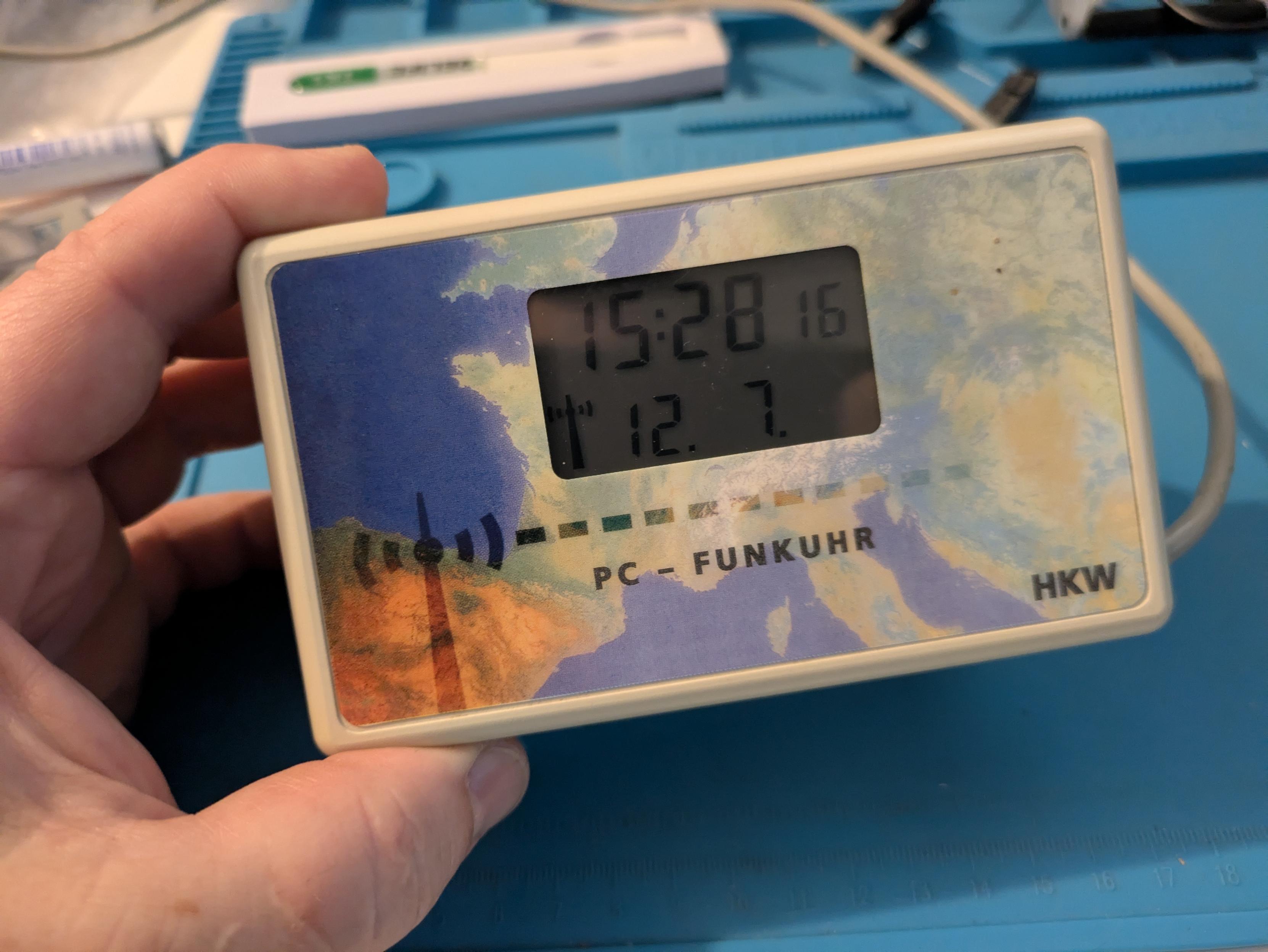
Crazy that you can simulate DCF77 by inducing a signal into the receiver's antenna by playing back [some harmonic of(?)] the 77.5kHz signal with your phone's speaker. I now have my DCF77 clock showing the correct IST for Ireland!
Here's the app: https://play.google.com/store/apps/det
 @azonenberg@ioc.exchange
2026-07-03 16:06:44
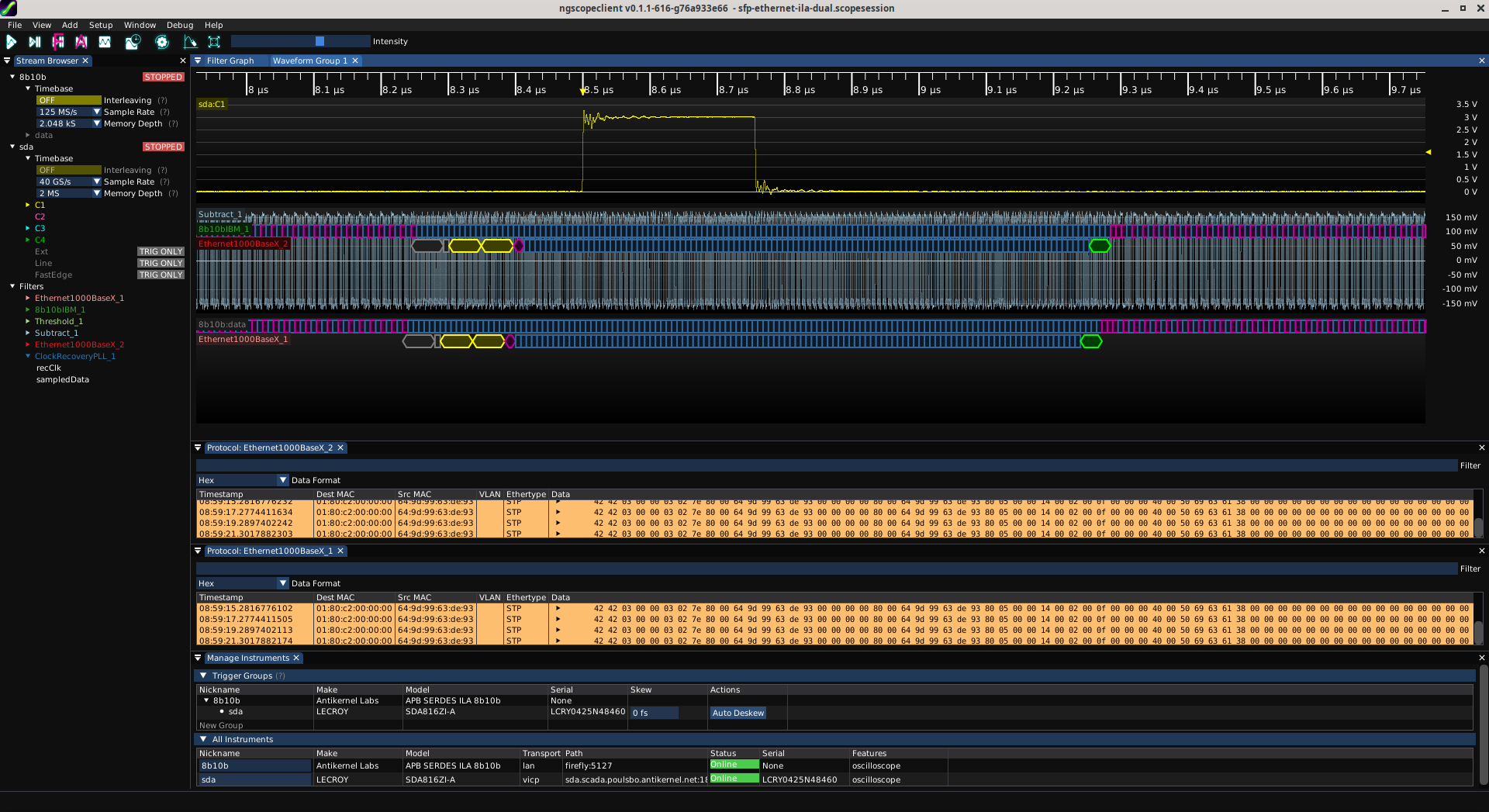
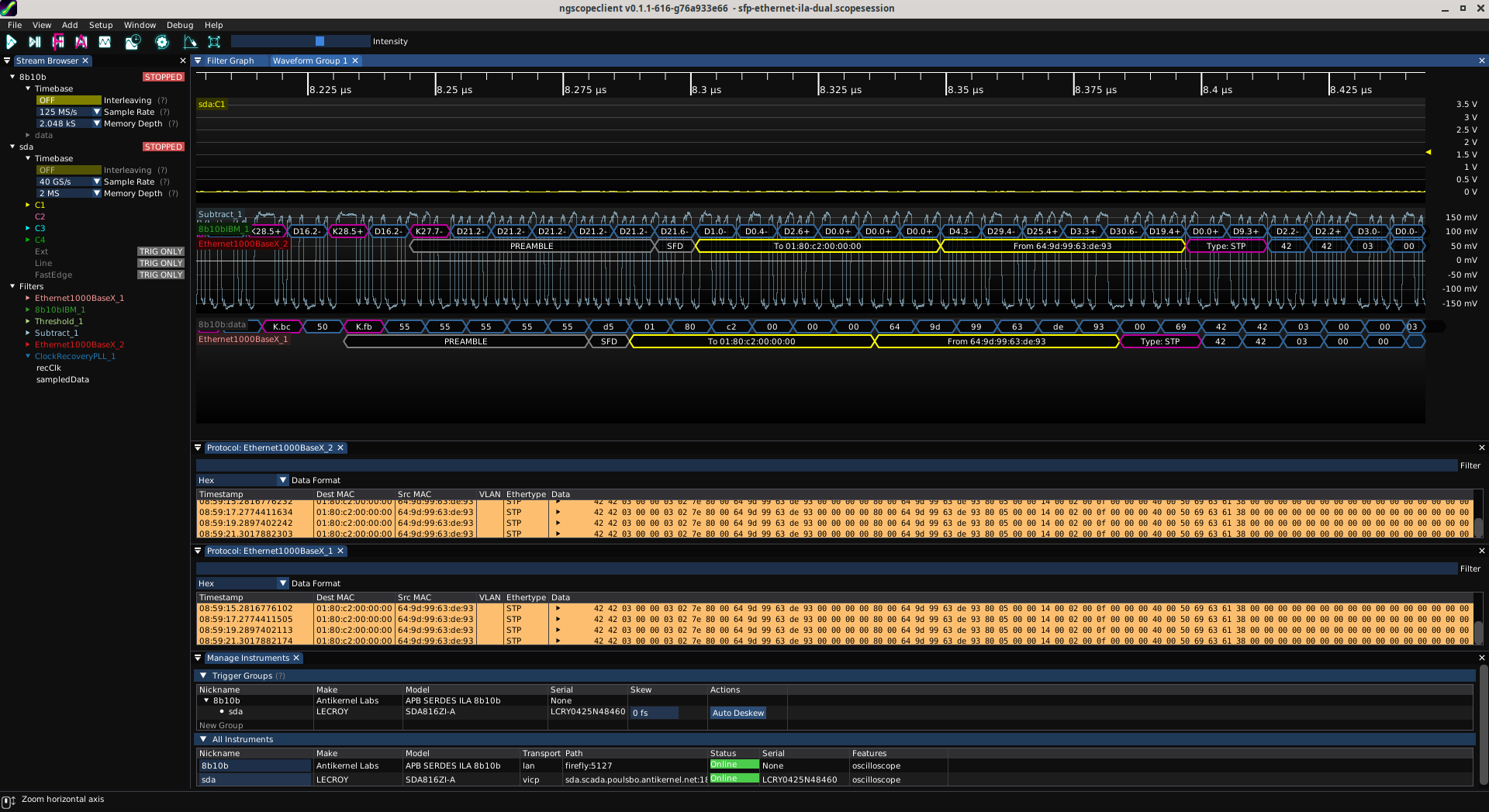
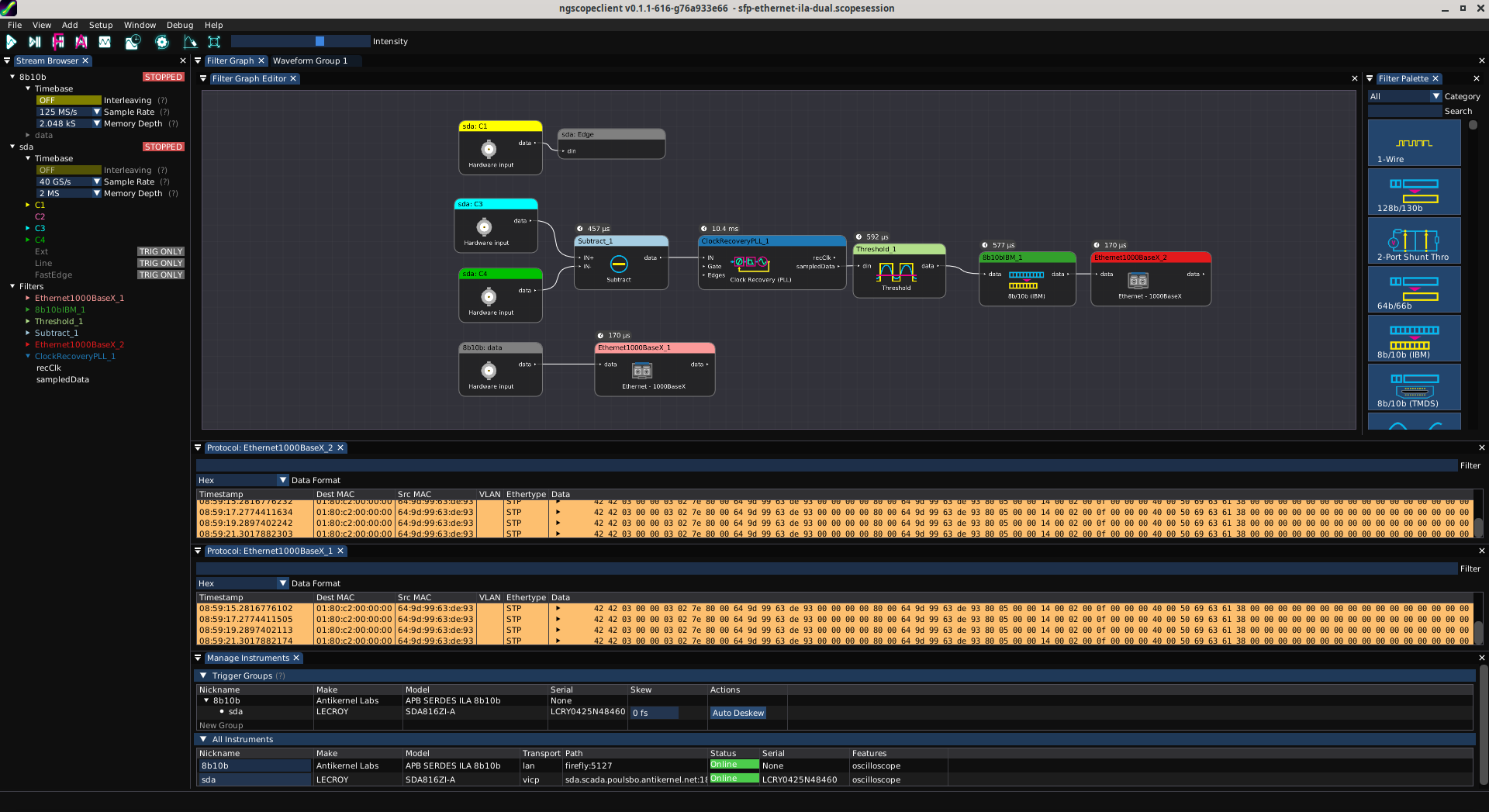
Mission accomplished! Still a bunch of rough edges to work out, and I need to build equivalent blocks for other line codings as well as a "generic" ILA that just records waveforms.
But here's a simultaneous cross-trigger of the SERDES ILA and an analog waveform capture of the signal going into the SFP, (manually) deskewed and aligned.
Now imagine extending this to additional debug blocks within the FPGA.
 @hex@kolektiva.social
2026-06-27 04:33:19
- Membership not associated with any other church or denomination
I'm just gonna throw this one away. Distinct membership in only one religious organization is a distinct property of western Christianity. It is not impossible within "Eastern" belief systems, for example, to simultaneously be a member of multiple faiths, and as such one could be a member of one or multiple other churches or denominations. Being both Buddhist and Christian, for example, is not necessarily strange *outside* of Christian supremacist societies.
But if you want your membership to be distinct, you do you. I'm not your dad. Probably. I mean, my kids aren't on social media yet and I don't know if they'll ever read this. But maybe I am your dad. I'm still not telling you what to do. Also, in that case, I love you.
Anyway, moving on.