 @kexpmusicbot@mastodonapp.uk
2026-06-25 00:20:35
🇺🇦 #NowPlaying on KEXP's #DriveTime
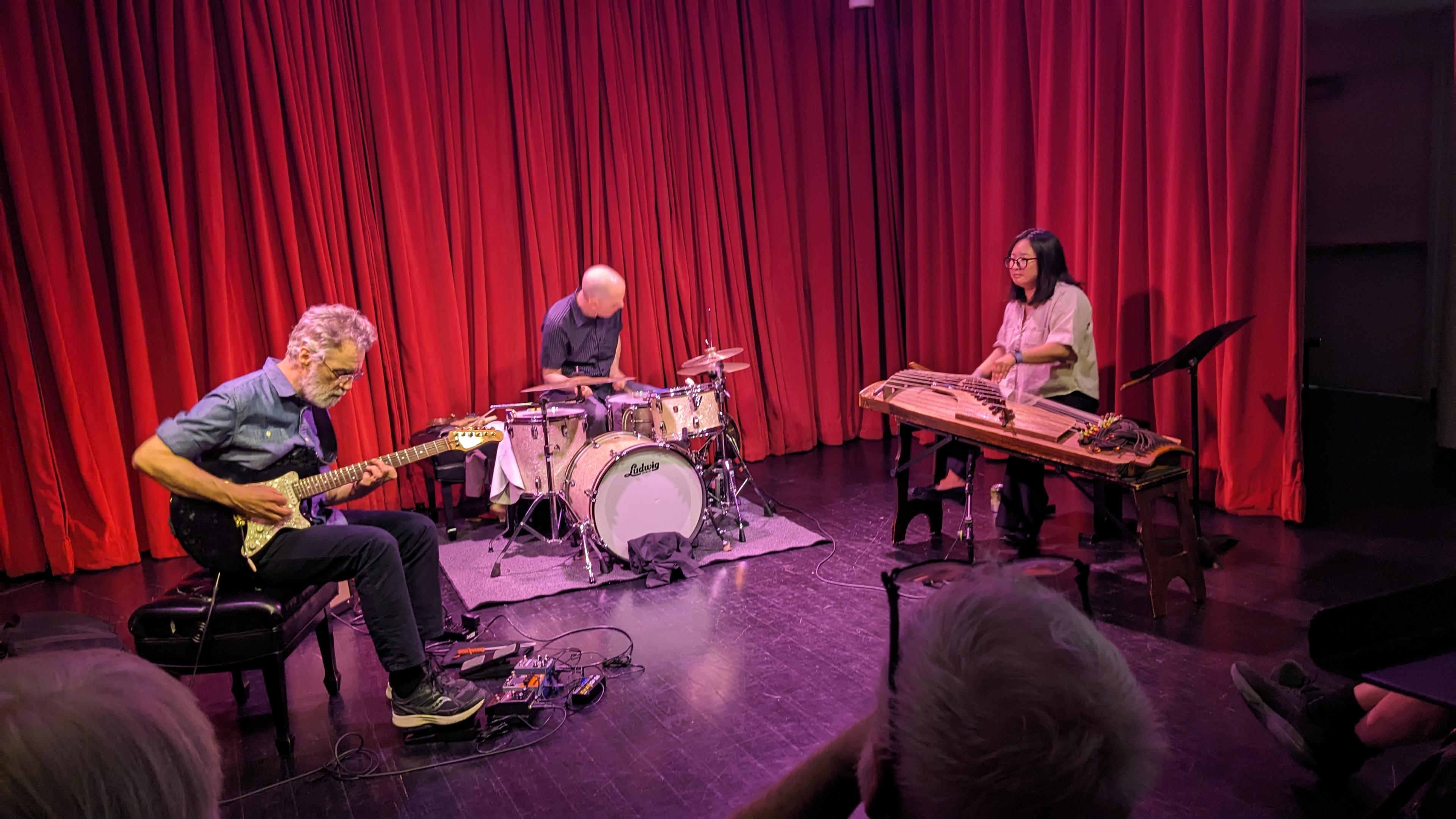
BALTHVS:
🎵 Eternal Flow
#BALTHVS
https://balthvs.bandcamp.com/track/eternal-flow
https://open.spotify.com/track/55lOBc12fmfvR0qjDQosDn
@kexpmusicbot@mastodonapp.uk🇺🇦 #NowPlaying on KEXP's #DriveTime
BALTHVS:
🎵 Eternal Flow
#BALTHVS
https://balthvs.bandcamp.com/track/eternal-flow
https://open.spotify.com/track/55lOBc12fmfvR0qjDQosDn
 @tinoeberl@mastodon.online
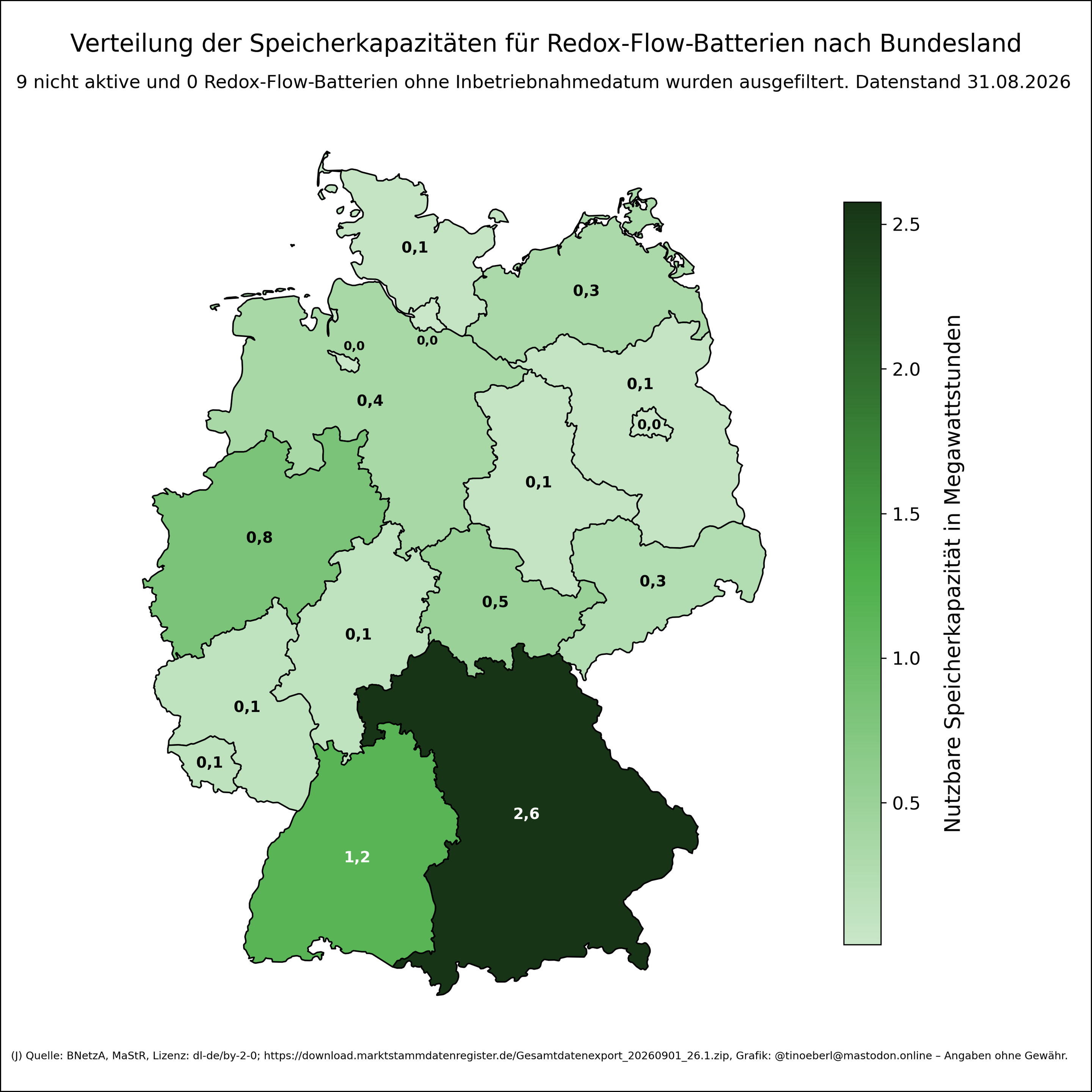
Verteilung der #Speicherkapazitäten für Redox-Flow-Batterie nach Bundesland in #Deutschland mit Stand vom 31.08.2026.
9 nicht aktive und 0 Redox-Flow-Batterien ohne Inbetriebnahmedatum wurden ausgefiltert.
Der Datenbestand enthält ggf. unplausible Datensätze.
👉…
 @azonenberg@ioc.exchange
Thinking about making a suite of FPGA (and i guess potentially ASIC) debug IPs that integrate with ngscopeclient. In part because Efinix's debug tools are... Suboptimal.
The flow will be ADIv5 esque but not exclusively JTAG/SWD centric.
At a high level my concept is to root with a bridge from various external interfaces (starting with UART) to APB. The bridge will offer commands for 32 bit read and write, getting some kind of id code / version, and querying the base address o…
 @markhburton@mstdn.social
UK, EU, USA.
End sanctions on Venezuela!
Venezuela quakes: How will sanctions impact aid operations? | Earthquakes News | Al Jazeera
https://www.aljazeera.com/news/2026/6/25/venezuela-quakes-how-will-sanctions-im…
 @Techmeme@techhub.social
Google reports Q2 free cash flow at negative $5.9B amid increased AI spending, marking its first cash burn since going public decades ago (Ryan McMorrow/Financial Times)
https://www.ft.com/content/b02f972c-c764-4006-9377-42563d9d5530
 @netzschleuder@social.skewed.de
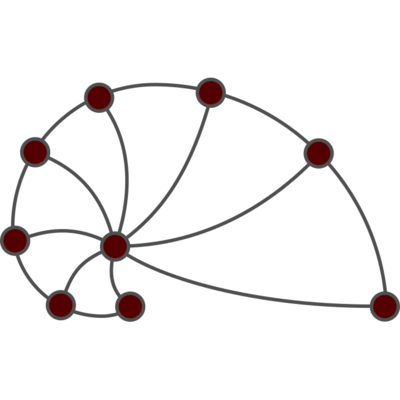
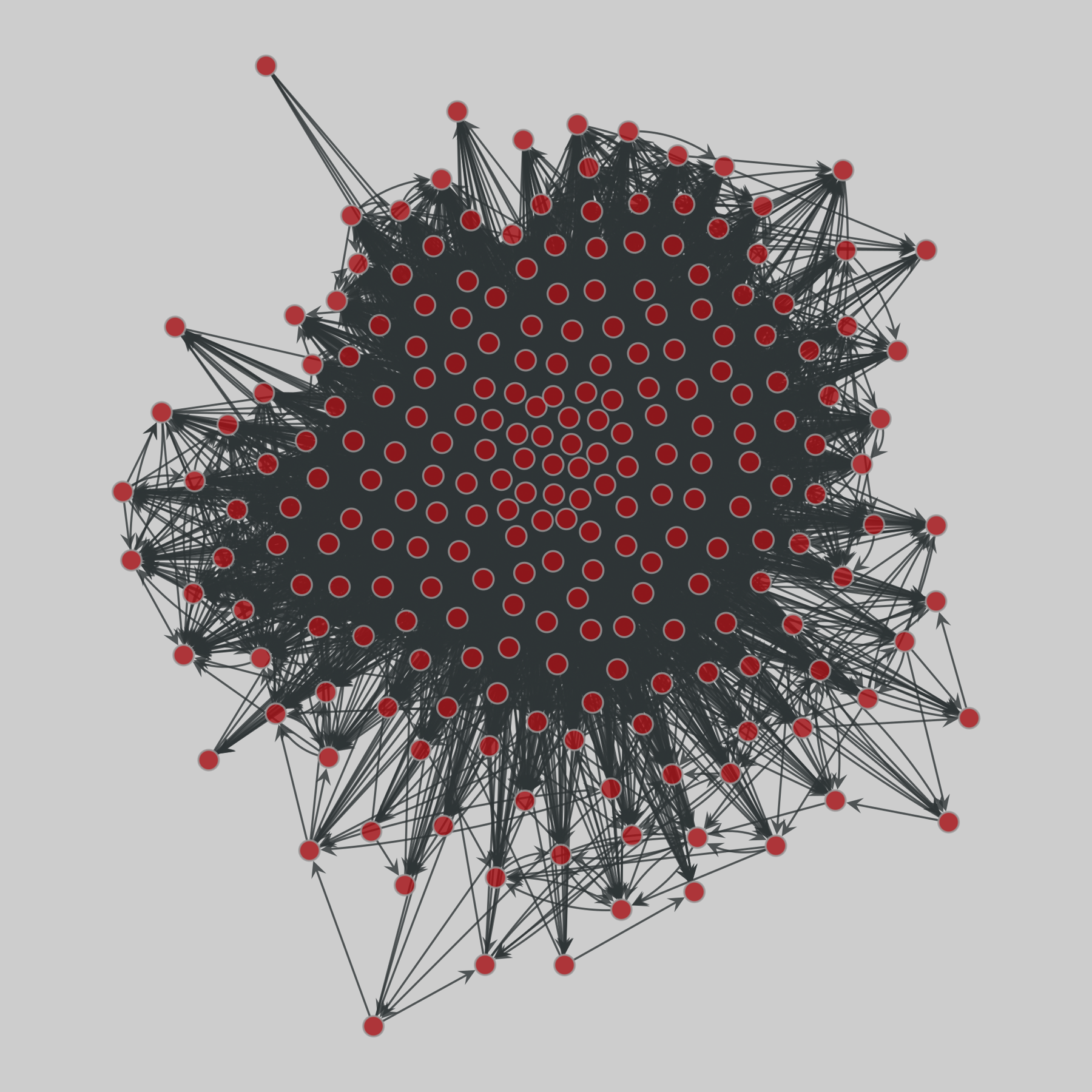
un_migrations: UN migration stock (2015)
A network of migration between countries, collected by the United Nations. A directed edge gives the flow of migration, and an edge property gives the number of migrants, for each given year and sex. Estimates are presented for 1990, 1995, 2000, 2005, 2010 and 2015 and are available for all countries and areas of the world. The estimates are based on official statistics on the foreign-born or the foreign population.
This network has 232 no…
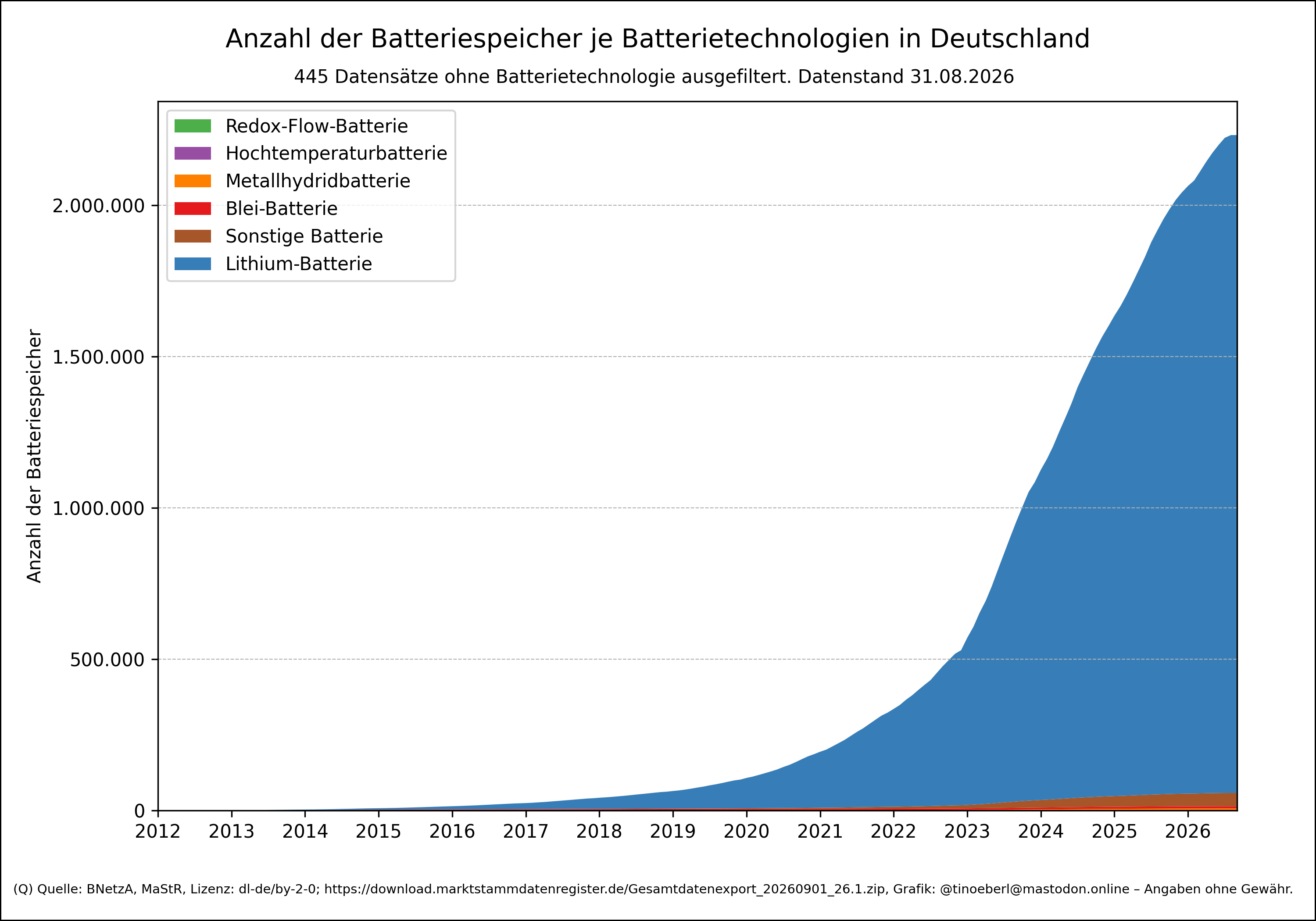
 @tinoeberl@mastodon.online
Anzahl der #Batteriespeicher je #Batterietechnologien in #Deutschland mit Stand vom 31.08.2026.
4463 nicht aktive und 0 Batteriespeicher ohne Inbetriebnahmedatum wurden a…
 @heiseonline@social.heise.de
 @Sustainable2050@mastodon.energy
No, the 2026 drought isn't over yet!
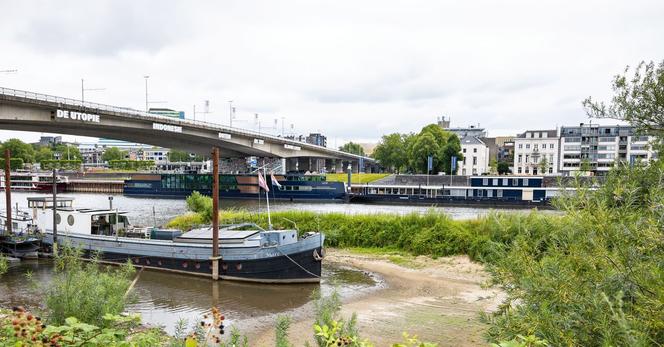
Historically low water flow in the river Rhine, where it enters the Netherlands: 640 m³/s now, and expected to drop below 600 by the weekend. The lowest ever measured this time of the year was 750 m³/s.
Unprecedented, there's that word again.
https://
 @PaulWermer@sfba.social
Reading about the new Colorado River water management framework, I was surprised at the large per capita water consumption number - well over 100 gal per day.
As a San Francisco household, we've been averaging under 45 gal per person per day.
But then, we are using 1.28 gal per flush toilets, lower flow showerheads, and water efficient dishwashers and washing machines (2 unit building, w/small rear yard requiring watering)
So what are the barriers to converting, and w…
@paulwermer@sfba.socialReading about the new Colorado River water management framework, I was surprised at the large per capita water consumption number - well over 100 gal per day.
As a San Francisco household, we've been averaging under 45 gal per person per day.
But then, we are using 1.28 gal per flush toilets, lower flow showerheads, and water efficient dishwashers and washing machines (2 unit building, w/small rear yard requiring watering)
So what are the barriers to converting, and w…
@Techmeme@techhub.socialTesla reports a negative Q2 free cash flow of $1.1B, its first in over two years, partly due to increased AI and robotic investments, amid diminishing profits (Reuters)
https://www.reuters.com/business/media-telecom/el…
 @jake4480@c.im
I don't usually like to talk about records until they're fully out and I can hear all of it, but this first single from the Open Mike Eagle/Kenny Segal joint coming in August called 'DOOMED!' is fucking UNREAL and I can't get over it. Super psyched to hear the rest. The beat, the flow of this, fuuuuck what IS it even
https://
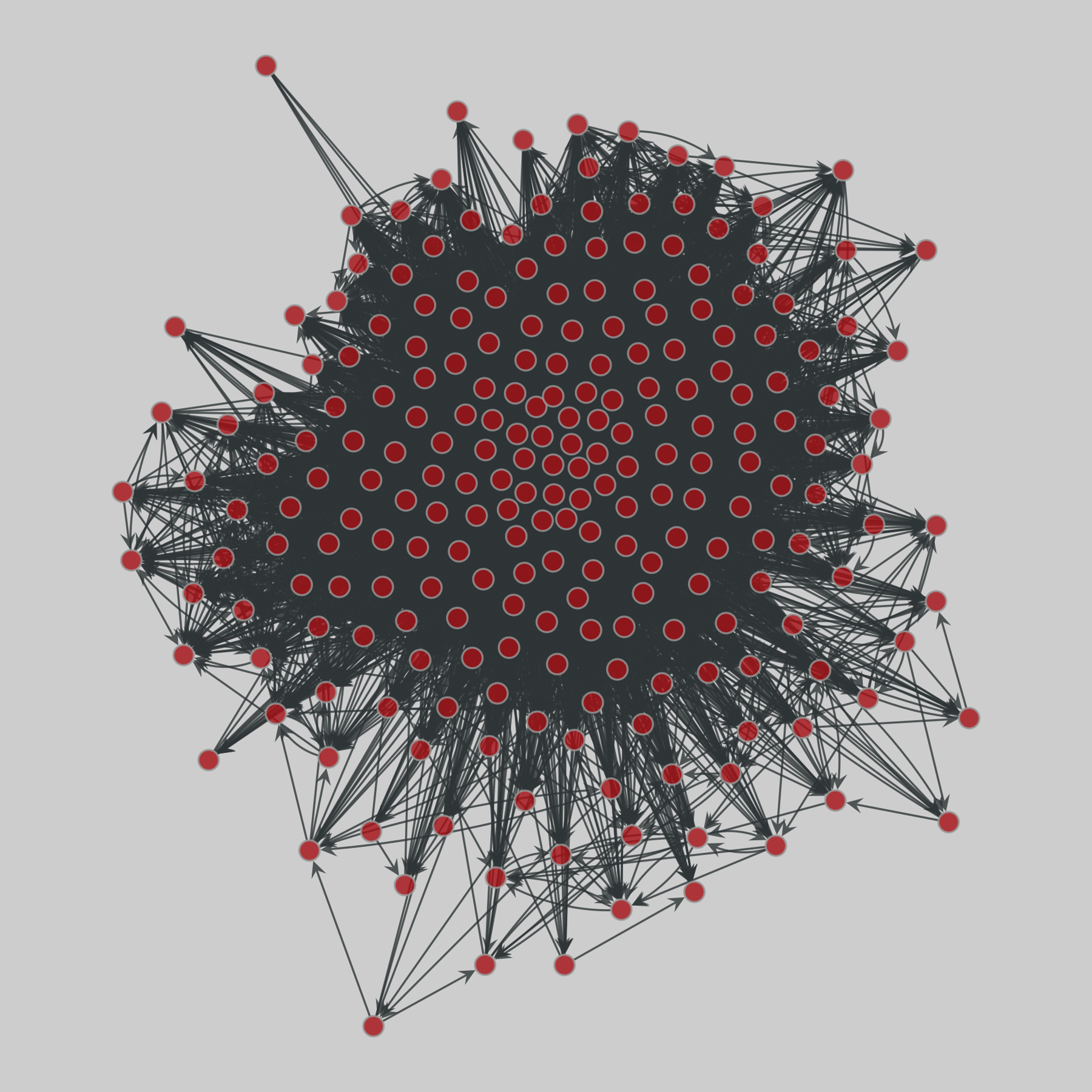
@netzschleuder@social.skewed.deun_migrations: UN migration stock (2015)
A network of migration between countries, collected by the United Nations. A directed edge gives the flow of migration, and an edge property gives the number of migrants, for each given year and sex. Estimates are presented for 1990, 1995, 2000, 2005, 2010 and 2015 and are available for all countries and areas of the world. The estimates are based on official statistics on the foreign-born or the foreign population.
This network has 232 no…
 @arXiv_mathDG_bot@mastoxiv.page
Ricci flow with metric torsion on surfaces of positive Euler characteristic
Shubham Dwivedi
https://arxiv.org/abs/2609.15880 https://arxiv.org/pdf/2609.15880 https://arxiv.org/html/2609.15880
arXiv:2609.15880v1 Announce Type: new
Abstract: We study an adapted Ricci flow of connections with metric torsion on surfaces with positive Euler characteristic. We first prove that there do not exist any nontrivial solitons of the flow on the $2$-sphere thus confirming a conjecture of Branding--Kr\"oncke (J. Geom. Anal. 27.3 (2017), arXiv:1606.09121). We give an explicit family of torsion data for which the corresponding global solutions fail to converge on $\mathbb{S}^2$. Nevertheless, we provide several sufficient conditions for the convergence of the flow to a stationary point. We first prove that the normalized adapted Ricci flow always converges on $\mathbb{RP}^2$, which completely answers a question in the paper of Branding and Kr\"oncke. Using this, we deduce that the flow converges on $\mathbb{S}^2$ whenever the initial metric and the torsion one-form are antipodally symmetric. We also prove a {\L}ojasiewicz--Simon gradient inequality for the flow and use it to prove convergence to a stationary point provided the solution is close to an arbitrary stationary point.
toXiv_bot_toot
 @mgorny@social.treehouse.systems
 @arXiv_physicsfludyn_bot@mastoxiv.page
Information Transport and Observability in Compressible Aerodynamics
Bo Zhang
https://arxiv.org/abs/2607.20177 https://arxiv.org/pdf/2607.20177 https://arxiv.org/html/2607.20177
arXiv:2607.20177v1 Announce Type: new
Abstract: Pressure measurements provide sparse but direct observations of compressible aerodynamic flows, yet how information about hidden aerodynamic parameters is transported through the flow and encoded in these observations remains poorly understood. Here, we investigate information transport and observability in compressible aerodynamics using a differentiable shock-capturing immersed-boundary solver. By propagating gradients through the full unsteady flow solution, an automatic-differentiation-based observability metric is introduced to quantify the sensitivity of sparse pressure measurements to unknown aerodynamic parameters and identify informative sensing locations for inverse learning. The results reveal that aerodynamic information is transported non-uniformly through the flow field, producing localized regions of high observability. Inverse-learning experiments further demonstrate that observability and learnability are related but distinct concepts: although highly observable probes generally facilitate accurate parameter recovery, the highest-observability probe is not consistently the most effective for parameter inference. Furthermore, both the flow regime and the airfoil geometry substantially influence the distribution of observability and the convergence behavior of inverse learning. These findings establish a quantitative framework for understanding how aerodynamic information is encoded in sparse measurements and demonstrate the potential of automatic differentiation for observability analysis, informative sensor selection, and aerodynamic inverse analysis.
toXiv_bot_toot
 @ruth_mottram@fediscience.org
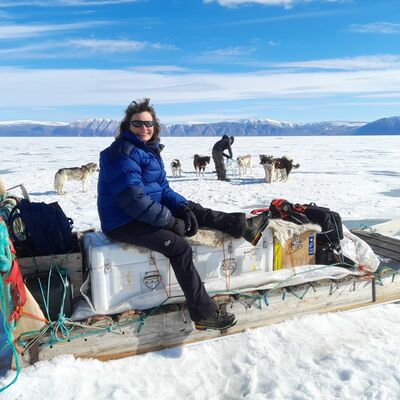
On flow, familiarity, culture and zombie flow.
I think I'd argue the Fediverse does not encourage zombie flow, and is maybe "the right kind of hard" as Derek Thompson puts it here. Fascinating stuff.
https://www.derekthompson.org/p/how-zombie-flow-took-over-culture
@netzschleuder@social.skewed.deat_migrations: Austrian internal migrations (2002-2022)
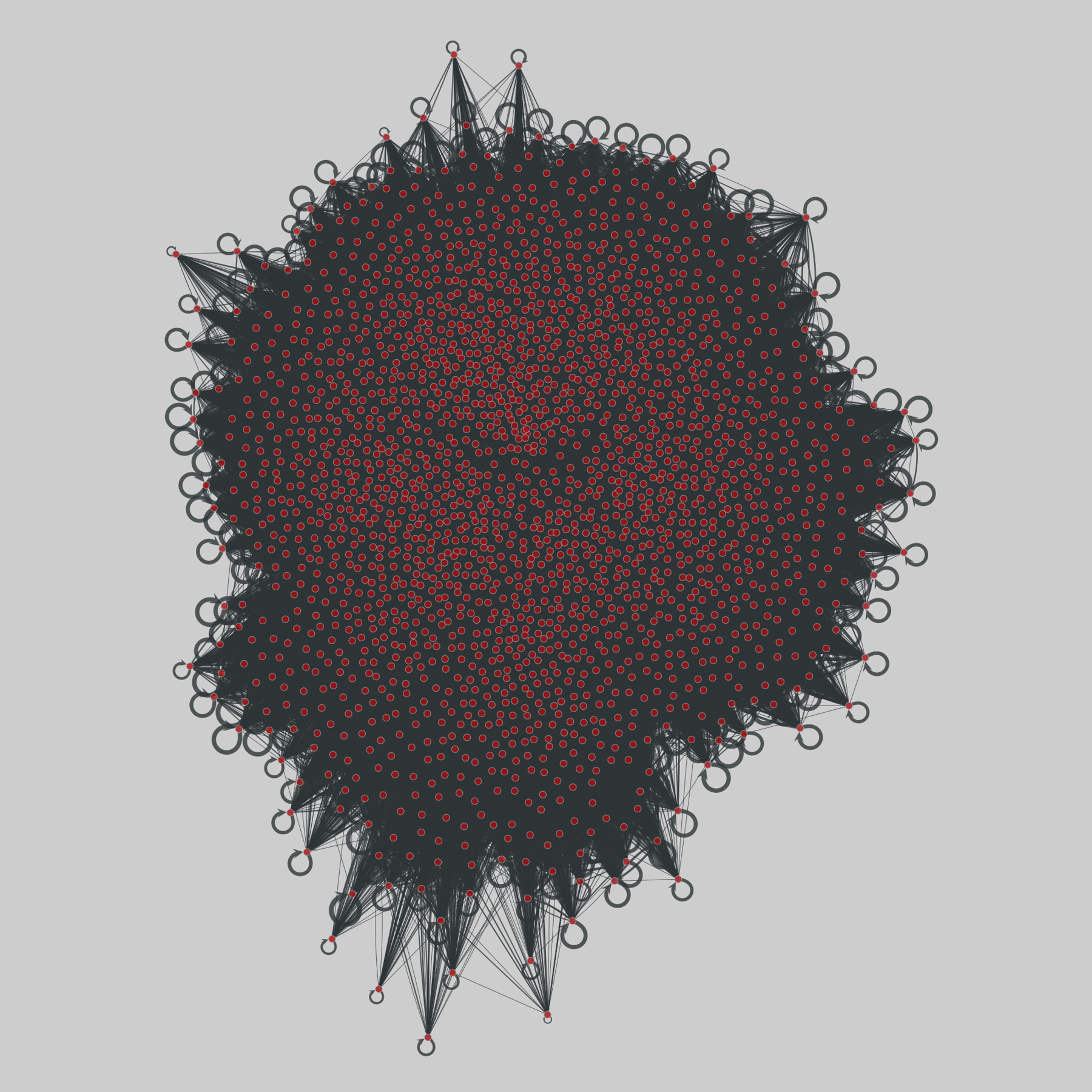
A network of migrations between municipalities in Austria, from 2002 to 2022. A weighted directed link from source to target indicates a migration flow from these two municipalities. Edges are annotated with migration volume (number of people), nationality, sex, and year.
This network has 2115 nodes and 2908569 edges.
Tags: Social, Economic, Travel, Weighted, Politlcal, Timestamps, Metadata
 @kurt@nelson.fun
The EV charging market is so fragmented. First you have to find a station with the right plug. Then you have to make sure it is available and not broken. Then half the time it requires some janky proprietary app with a sign up flow and manual card entry. Maybe then you can charge for a half hour or whatever.
California needs to lead the way with an open protocol for paying for and tracking your charging.
But let's also do this for e-bikes.
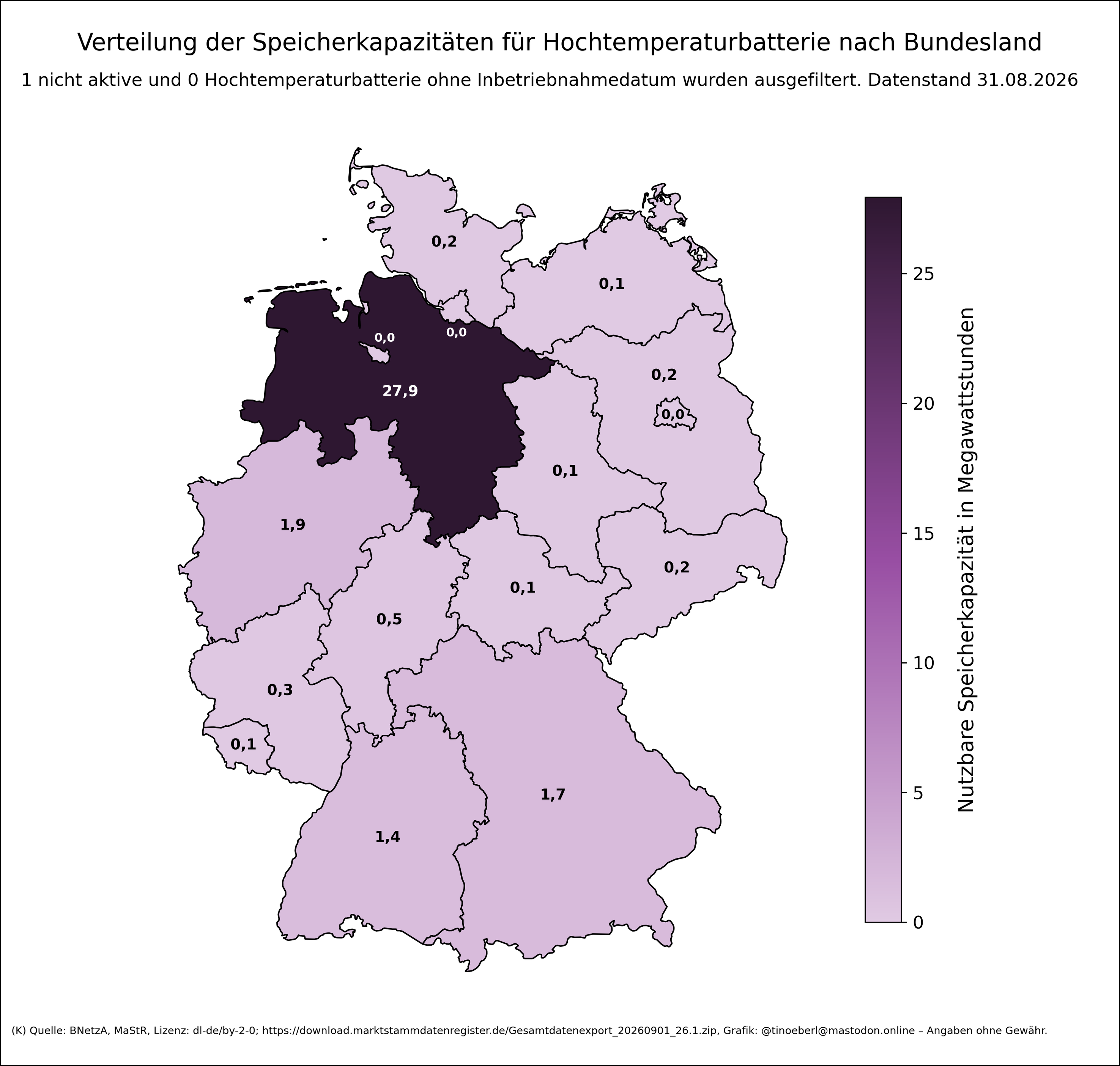
@tinoeberl@mastodon.onlineVerteilung der #Speicherkapazitäten für #Hochtemperaturbatterie nach Bundesland in #Deutschland mit Stand vom 31.08.2026.
1 nicht aktive und 0 Hochtemperaturbat…
 @cyrevolt@mastodon.social
It looks like HP have actually put a lot of thought into their Sure Start feature:
https://h10032.www1.hp.com/ctg/Manual/c05163901.pdf
A section dedicated to UX, and a good explanation of the EC initiating the boot flow - kudos!
 @cdarwin@c.im
When the Justice Department indicted the Southern Poverty Law Center in April on controversial fraud charges, the storied civil rights organization faced a major threat to its lifeblood
— the flow of donor dollars.
Not because it was convicted or because the Internal Revenue Service revoked its tax-exempt status.
Not even because individual donors stopped writing checks.
Instead, three Wall-Street-affiliated grantmaking giants each made a decision,
one they ref…
 @StephenRees@mas.to
Smoke Gets In Your...Hole Where Your Soul Should Be
MAGA may have a set a new mark for belligerent stupidity
BILL MCKIBBEN
JUL 20
...wildfires, and hence smoke, will persist all summer, and since the hot world we’re creating produces ever more wildfire and hence an endless supply of future smoke, I think it’s worth taking a moment to get all this on the record.
Also, the flow of smoke down from Canada has produced a perfect MRI of the MAGA nervous system, reveali…

 @grist@fosstodon.org
Getting in the vibe-coding flow feels great at first, but not so much when you're trying to tie together version control spread across artifacts. What would coherent version control/app history look like? https://www.getgrist.com/blog/why-is-grist-an-i…
 @NFL@darktundra.xyz
Cowboys, Saints fined $500,000 each by NFL for fights at joint practice https://www.nytimes.com/athletic/7527635/2026/08/20/cowboys-saints-fined-500000-nfl-joint-practice/
 @bourgwick@heads.social
 @cowboys@darktundra.xyz
Cowboys, Saints fined $500,000 each by NFL for actions at joint practice https://www.nytimes.com/athletic/7527635/2026/08/20/cowboys-saints-fined-500000-nfl-joint-practice/
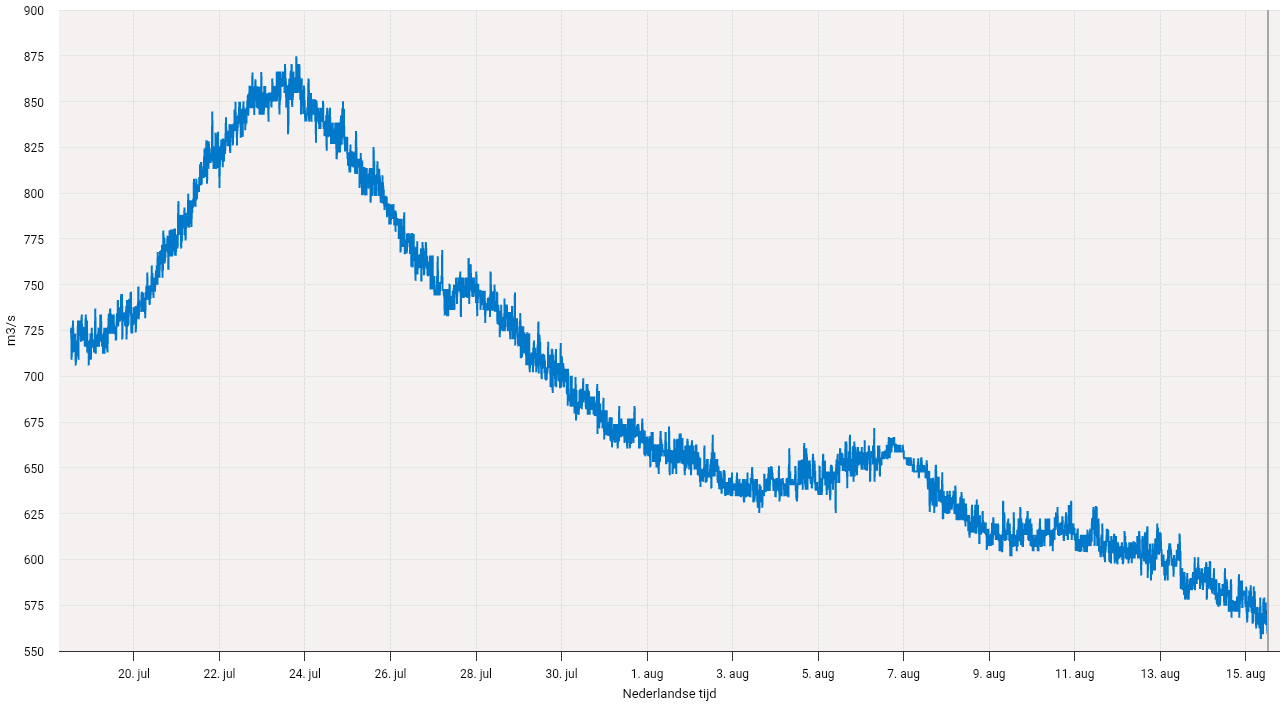
@Sustainable2050@mastodon.energyThe water flow in the Rhine keeps plummeting. It had never been below 780 m³/s in summer. When we were at 650, an expert told us it couldn't go much lower. Now we're at 572 m³/s, the lowest on record, even below the ice blocked flow in the winter of 1929.
#drought #ClimateChange…
 @khalidabuhakmeh@mastodon.social
 @Mediagazer@mstdn.social
Google launches its Lyria 3.5 music generation model in Google Flow Music, highlighting improved musicality, lyrics, vocal quality, and creative control (Google)
https://blog.google/innovation-and-ai/models-and-research/google-labs/lyria-3-5/
…
@arXiv_physicsfludyn_bot@mastoxiv.pageSidewall effects on the onset of interfacial Holmboe waves in stratified exchange flows at high Schmidt number
Guilherme Siqueira de Aquino, Metten M. de Lange, Adrien Lefauve, Matias Duran-Matute
https://arxiv.org/abs/2607.19565 https://arxiv.org/pdf/2607.19565 https://arxiv.org/html/2607.19565
arXiv:2607.19565v1 Announce Type: new
Abstract: Predicting the onset of interfacial instabilities is central to understanding turbulent mixing in natural and engineered stratified shear flows. Here, we study the onset of travelling Holmboe waves in confined exchange flows along a slope. Earlier stratified inclined duct experiments have mapped this transition, and stability analyses based on measured or prescribed profiles have explained their emergence. However, a predictive criterion linking forcing, geometry, base flow, and wave onset was still lacking. We closed this gap with a long-duct, sharp-interface asymptotic theory for the three-dimensional laminar exchange flow, including the effects of sidewall friction. The resulting analytical solution naturally identifies a confinement-adjusted Froude number, $Fr^*$, which unifies the effects of forcing and confinement into a single measure of the effective laminar exchange flow. Using this solution to parameterise sidewall drag in a practical width-averaged model, we perform linear stability analyses and numerical simulations at high Schmidt number. Together, linear stability analysis, direct numerical simulations, and existing experiments across a range of duct widths show that wave onset is accurately predicted by an approximately constant critical value of $Fr^*$. Deviations arise only in very narrow ducts, where sidewalls influence instability not only by modifying the laminar exchange flow but also by directly damping perturbations and delaying wave onset. These findings provide a predictive criterion for wave onset, reconcile long-standing discrepancies among experimental configurations, and establish lateral confinement as a fundamental control on the transition from laminar exchange to wave-driven mixing in stratified shear flows.
toXiv_bot_toot
 @primonatura@mstdn.social
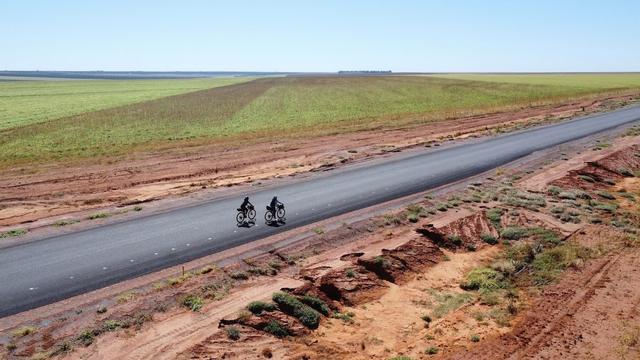
"A Bicycle Journey Across Brazil to Find a Vanishing Savanna"
#Brazil #Environment
https://e…
 @Kingu@sakurajima.moe
 @cheryanne@aus.social
SEQ Sport
Covering local sport across South East Qld hosted by Scott MacAllister, streaming on Flow Radio...
Great Australian Pods Podcast Directory: https://www.greataustralianpods.com/seq-sport/

 @toxi@mastodon.thi.ng
Mariensprung (2021)
A 160 meter tall waterfall emerging straight out of the rock below the Waxenstein, and a tributary to the Hammersbach in the Höllental (Hell's Valley).
#WaterfallWednesday #Video #POV
 @tinoeberl@mastodon.online
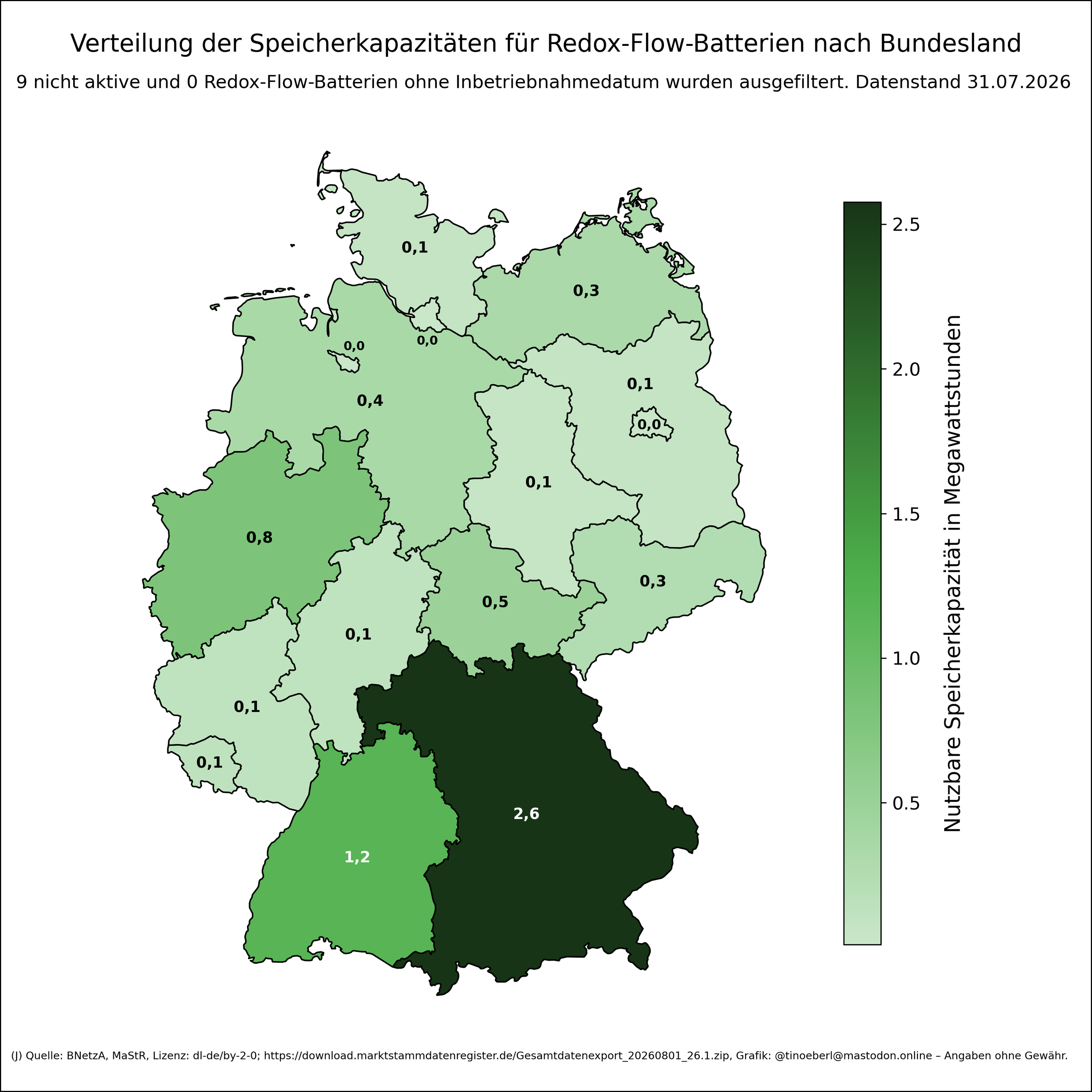
Verteilung der #Speicherkapazitäten für Redox-Flow-Batterie nach Bundesland in #Deutschland mit Stand vom 31.07.2026.
9 nicht aktive und 0 Redox-Flow-Batterien ohne Inbetriebnahmedatum wurden ausgefiltert.
Der Datenbestand enthält ggf. unplausible Datensätze.
👉…
 @kexpmusicbot@mastodonapp.uk
🇺🇦 #NowPlaying on KEXP's #VarietyMix
Pearl Jam:
🎵 Even Flow
#PearlJam
https://fororchestra.bandcamp.com/track/pearl-jam-even-flow
https://open.spotify.com/track/6QewNVIDKdSl8Y3ycuHIei
 @datascience@genomic.social
{dtrack} makes documentation of data wrangling part of the analysis and creates pretty flow charts: #rstats
 @arXiv_physicsmedph_bot@mastoxiv.page
Theoretical derivation of blood velocity from TOF-MRA based artery centerline
Abrar Faiyaz
https://arxiv.org/abs/2607.16498 https://arxiv.org/pdf/2607.16498 https://arxiv.org/html/2607.16498
arXiv:2607.16498v1 Announce Type: new
Abstract: Time-of-flight magnetic resonance angiography (TOF-MRA) is widely used for structural vascular imaging, but extracting functional hemodynamics like blood velocity typically requires supplementary phase-contrast scans. This study proposes a novel, physics-informed computational framework to extract variable fluid velocity directly from standard TOF-MRA signal profiles. We analytically expand the Bloch equations into Bloch-McConnell flow equations, establishing a mathematical relationship between the spatial decay of longitudinal magnetization and fluid velocity. To validate this derivation and overcome the limitations of constant-velocity assumptions, a MATLAB simulation framework was developed to model fluid flow in two variable-geometry flowing tube cases i.e continuous tapering and focal stenosis -under synthetic scanner noise. A global inverse optimization approach utilizing Dual-Tikhonov regularization was deployed to stably invert the ill-posed transit time integral, actively penalizing high-frequency numerical ringing while preserving structural curve stiffness. The computational sim-ulations successfully recovered ground-truth point-wise velocities, accurately tracking gradual hemodynamic accelerations and sharp stenotic jets. This theoretical framework provides a robust mathematical proof-of-concept that quantitative, localized functional hemodynamic metrics can be extracted from standard structural MRA imaging, estab-lishing a foundation for advanced flow quantification without requiring additional scan time.
toXiv_bot_toot
@Techmeme@techhub.socialNvidia, with quarterly free cash flow up 18x over the past three years to $48.5B, is using its balance sheet and credit rating to build an AI capital moat (Ari Levy/CNBC)
https://www.cnbc.com/2026/08/18/nvidias-ai-moat-is-shifting-from-chips-to-capital.…
 @michabbb@social.vivaldi.net
📊 Measured tools/list payload: 10 tools 5,843 − 1,431 bytes (-75.5%), 40 tools 23,423 − 1,431 bytes (-93.9%), 100 tools 58,585 − 1,431 bytes (-97.6%). Rule of thumb: past 10-15 tools, a catalog pays off.
⚖️ Trade-off: search adds a round trip and batches have no loops or branching. Small servers with always-used tools should keep advertising directly; agents needing control flow still need a sandbox like
 @arXiv_physicsinsdet_bot@mastoxiv.page
Replaced article(s) found for physics.ins-det. https://arxiv.org/list/physics.ins-det/new
[1/1]:
- Flow-dependent tagging of $^{214}$Pb decays in the LZ dark matter detector
J. Aalbers, et al.
https://arxiv.org/abs/2508.19117 https://mastoxiv.page/@arXiv_physicsinsdet_bot/115099888730207431
- Experimental Characterization of Bulk Micromegas for Development of Active Target Time Projection...
Pralay Kumar Das, Nayana Majumdar, Supratik Mukhopadhyay
https://arxiv.org/abs/2602.21238 https://mastoxiv.page/@arXiv_physicsinsdet_bot/116135916399290266
- An AI-based Detector Simulation and Reconstruction Model for the ALEPH Experiment at LEP
Ya-Feng Lo, Dmitrii Kobylianskii, Benjamin Nachman, Eilam Gross
https://arxiv.org/abs/2604.11834 https://mastoxiv.page/@arXiv_physicsinsdet_bot/116407678561282432
- New Spallation Background Rejection Techniques to Greatly Improve the Solar Neutrino Sensitivity ...
Obada Nairat, John F. Beacom, Shirley Weishi Li
https://arxiv.org/abs/2510.12873 https://mastoxiv.page/@arXiv_hepph_bot/115382755693449240
- Quantization Effects of Artificial Neural Networks for Embedded Edge-Computing Applications
Aksoy, Bekman, Dimitrov, Dorosti, Eguzo, Fleitmann, Hader, Zambanini, van Waasen
https://arxiv.org/abs/2511.05479 https://mastoxiv.page/@arXiv_csNE_bot/115524263599389339
toXiv_bot_toot
 @BBC6MusicBot@mastodonapp.uk @tinoeberl@mastodon.online
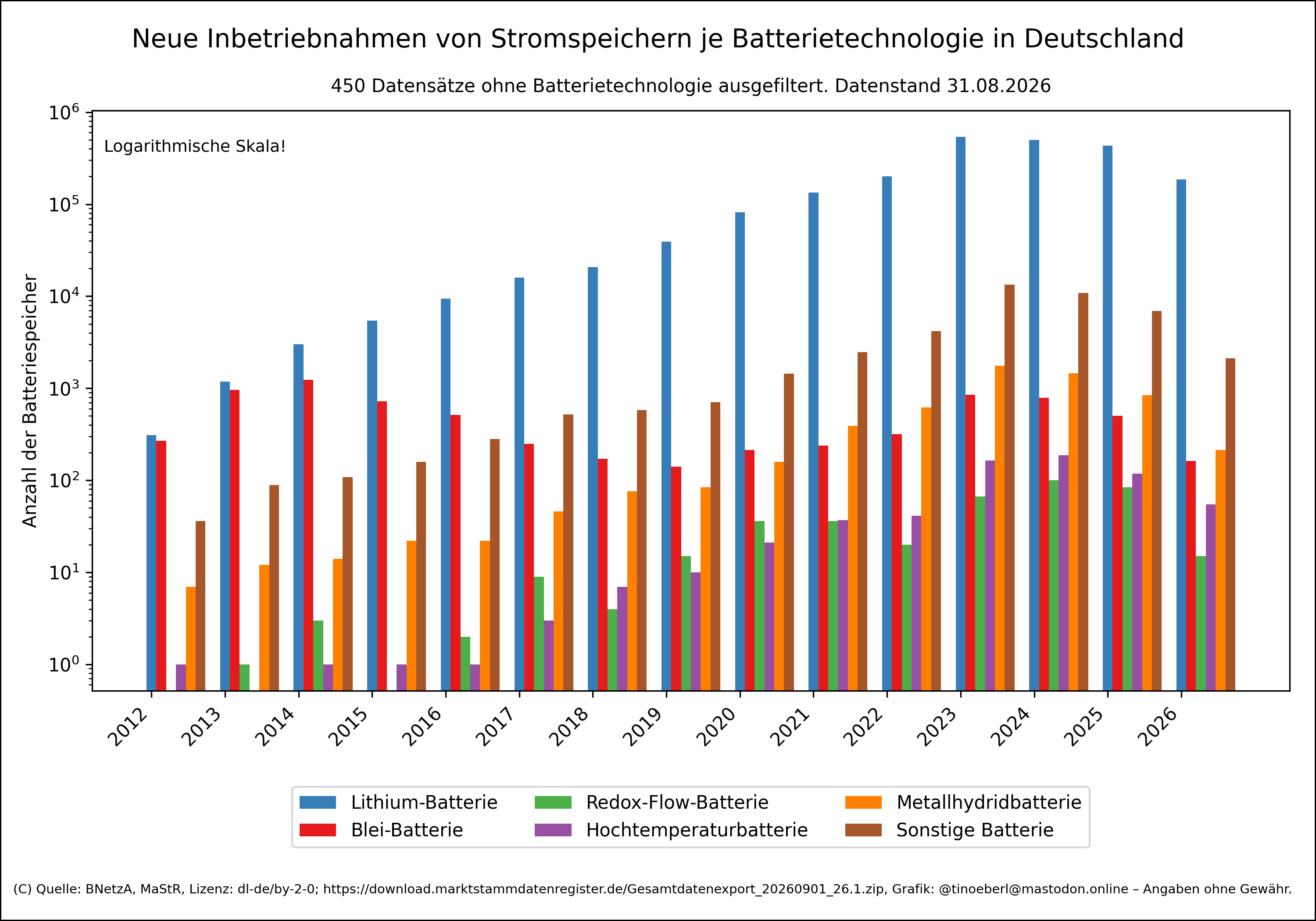
Neue Inbetriebnahmen von #Stromspeichern je #Batterietechnologie in #Deutschland mit Stand vom 31.08.2026.
Betrachtet werden Datensätze mit Betriebsstatus „aktiv“ und vorhan…
 @jerome@jasette.facil.services
You can now donate to Olivia Chow campaign for mayor.
If you have the spare cash flow, the refund from the city after the election is actually quite generous. $100 donation = $75 refund later
https://www.oliviachow.ca/donate
@arXiv_physicsfludyn_bot@mastoxiv.pageBayesian finite element regression for vascular flow reconstruction with quantified uncertainty
Cem Gormezano, Shawn Shadden
https://arxiv.org/abs/2607.20224 https://arxiv.org/pdf/2607.20224 https://arxiv.org/html/2607.20224
arXiv:2607.20224v1 Announce Type: new
Abstract: Reconstructing accurate velocity and pressure fields from under-resolved noisy measurements of blood flow is an ill-posed inverse problem due to unknown inlet and outlet boundary conditions. We present a Bayesian finite element regression framework that reconstructs steady three-dimensional velocity and pressure fields, with quantified uncertainty, from noisy velocity observations without offline training data. We represent velocity and pressure fields in Taylor-Hood finite element basis functions, and construct physics-informed priors on the nodal degrees of freedom from maximum-entropy principles. Combined with a likelihood specified by a noise-model, this yields a posterior whose maximum-a-posteriori estimate (MAP) gives velocity and pressure reconstructions. The MAP estimate is computed by solving a large-scale sparse nonlinear least-squares problem where pressure is eliminated analytically, no-slip walls are enforced exactly, and gradient is computed without forward/adjoint solves or automatic differentiation. A Laplace approximation of the posterior quantifies the uncertainties in our reconstructions and propagates them to clinically relevant quantities of interest including, pressure drop, flow rates, and wall shear stress. On patient-specific cerebral aneurysm, aortic aneurysm, and aortic coarctation geometries, the method reconstructs velocity and pressure more accurately than tricubic interpolation and comparably to a PINN, while recovering region-of-interest wall shear stress more accurately than both.
toXiv_bot_toot
 @radioeinsmusicbot@mastodonapp.uk
🇺🇦 Auf radioeins läuft...
Queens of the Stone Age:
🎵 Go with the flow
#NowPlaying #QueensoftheStoneAge
https://open.spotify.com/track/0wzRcekWyVCSyPtlPOeJau
@Techmeme@techhub.social @peterhoneyman@a2mi.social
was it something i said?
(yes: you said "i'm thinking we could extend the control flow hacking module with spectre and rowhammer. also we could expand on use-after-free and heap grooming.")
![Claude screenshot:
Chat paused
Sonnet 5's safeguards flagged this message. Our intentionally broad safeguards allow us to deliver more capabilities faster, but can sometimes flag legitimate cybersecurity work. Apply to the Cyber Verification Program to reduce these interruptions. Continue with Sonnet 4.6, send feedback, apply for verification, or learn more.
Details: [cyber]](https://files.a2mi.social/media_attachments/files/117/242/579/399/995/503/original/5779415583b44dd7.png)
 @brichapman@mastodon.social
This week's climate progress is about connection:
The Green Climate Fund unlocked nearly $6B for adaptation and mitigation projects in vulnerable countries.
Indigenous women in Guatemala are scaling climate-resilient farming with drought-tolerant crops and agroforestry.
Twelve opened AirPlant One, making jet fuel from captured CO2 and renewable power.
Sign up for the For People And Planet climate solutions digest:
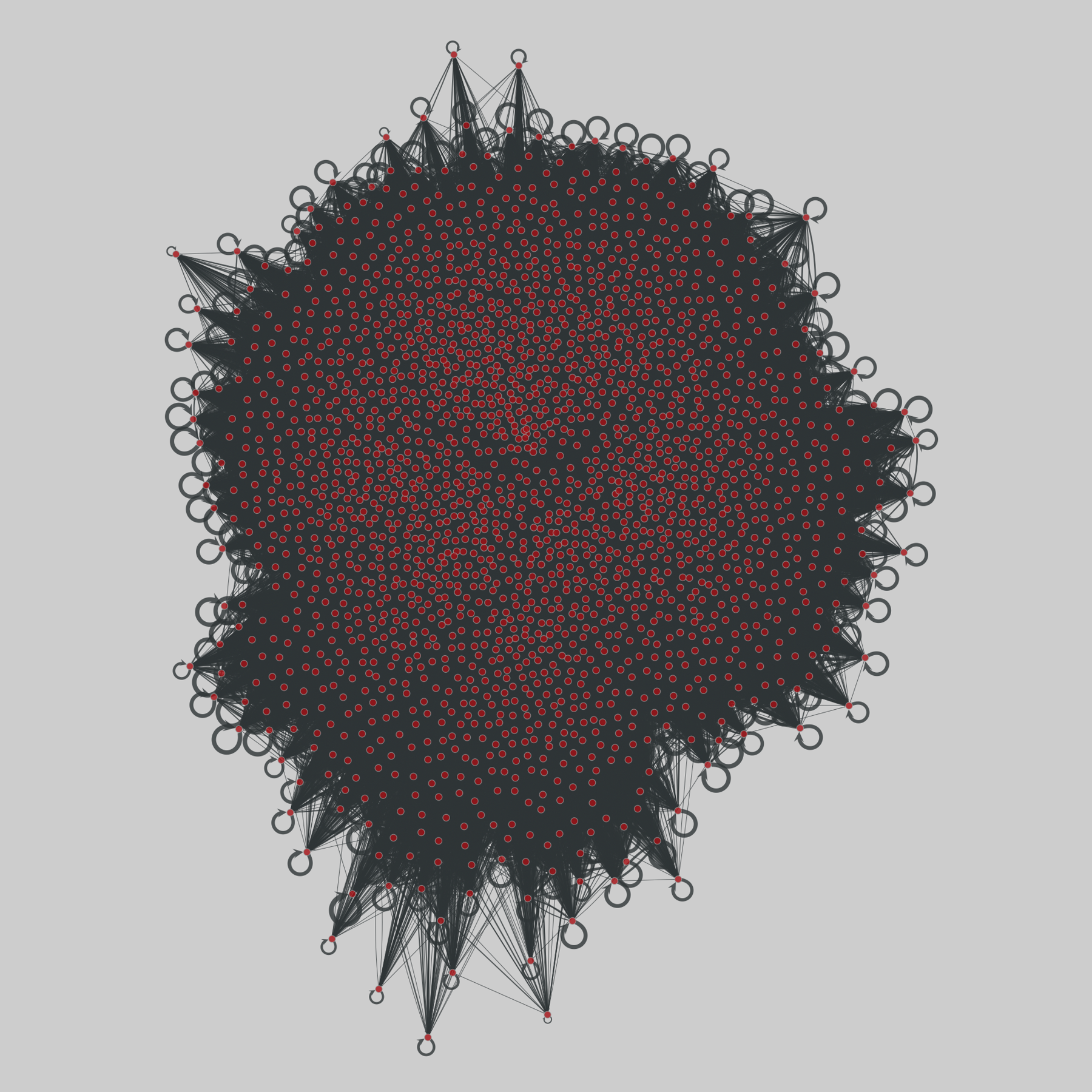
 @emilis@social.linux.pizza @netzschleuder@social.skewed.de
at_migrations: Austrian internal migrations (2002-2022)
A network of migrations between municipalities in Austria, from 2002 to 2022. A weighted directed link from source to target indicates a migration flow from these two municipalities. Edges are annotated with migration volume (number of people), nationality, sex, and year.
This network has 2115 nodes and 2908569 edges.
Tags: Social, Economic, Travel, Weighted, Politlcal, Timestamps, Metadata
 @cdarwin@c.im
Nero’s Bridge emerges from Tiber River amid water crisis
The remains of an ancient bridge have emerged in Rome’s Tiber River, near St. Peter’s Basilica, as weeks with virtually no rain caused water levels to plunge.
The span — known as Nero’s Bridge, named for the former Roman emperor — once connected Rome’s city center with the Tiber’s right bank.
The Tiber’s flow has fallen below 2,825 cubic feet per second, about half the historic average for the month of July, according…
@kexpmusicbot@mastodonapp.uk🇺🇦 #NowPlaying on KEXP's #AfternoonShow
Digital Underground:
🎵 Oregano Flow (Gumbo Soup mix)
#DigitalUnderground
https://therealdjbacon.bandcamp.com/track/digital-underground-oregano-flow-radio-intro-outro
@Mediagazer@mstdn.socialGoogle adds a toggle in Gemini and Flow to remove visible watermarks from AI-generated images, videos, and music; SynthID watermarks and C2PA metadata remain (Emma Roth/The Verge)
https://www.theverge.com/tech/980416/google-gemini-ai-watermarks-removal
 @arXiv_condmatsoft_bot@mastoxiv.page
Spatially heterogeneous relaxational dynamics and the evolution of recoverable strain following flow cessation of a ductile nanocolloidal glass
Chloe W. Lindeman, James J. Griebler, Penelope Grace Kovakas, Miaoqi Chu, Qingteng Zhang, Suresh Narayanan, James L. Harden, Simon A. Rogers, Robert L. Leheny
https://arxiv.org/abs/2608.11470 https://arxiv.org/pdf/2608.11470 https://arxiv.org/html/2608.11470
arXiv:2608.11470v1 Announce Type: new
Abstract: We report a combined rheology and x-ray photon correlation spectroscopy (XPCS) study of the structural and mechanical relaxation of a ductile, nanocolloidal glass following the cessation of shear flow. After the glass is sheared to 300% strain at various shear rates and then held at fixed strain, the stress undergoes a protracted, quasi-logarithmic decay with hold time that depends weakly on the initial strain rate. Recovery rheology measurements reveal that this stress relaxation is accompanied by a logarithmic decrease in the elastic component of the recoverable strain; hence, the rates of decrease of the stress and recoverable strain are proportional. XPCS measurements during the stress relaxation reveal dynamics dominated by a convection-like backflow that is divided into two dynamically distinct regions indicative of banded motion. In one region, the flow can be modeled by an affine strain, while in the other region the glass moves as a plug while undergoing slow, glassy relaxation. The rates of these dynamics approximately track the rate of loss of recoverable strain, indicating this motion is the predominant microscopic mechanism driving the conversion of recoverable to unrecoverable strain during stress relaxation. In contrast, XPCS measurements during strain recovery reveal purely affine flow with no evidence of heterogeneity and with strain rates that agree quantitatively with the rheometry measurements. Together, these results provide a unified microscopic picture connecting the evolving internal dynamics of a ductile glass to its macroscopic mechanical relaxation following flow cessation.
toXiv_bot_toot
@Sustainable2050@mastodon.energyRhine river, where it enters the Netherlands, reaches record low flow for July (and still going down).
https://www.nrc.nl/nieuws/2026/07/14/bij-lobith-stroomt-historisch-weinig-water-de-rijn-door-a4932457
@arXiv_physicsfludyn_bot@mastoxiv.pageA formal log(Re)-cost framework for the engineering turbulence problem
Jiaqi Li, Robert F. Kunz, George Huang, Xiang I. A. Yang
https://arxiv.org/abs/2607.20199 https://arxiv.org/pdf/2607.20199 https://arxiv.org/html/2607.20199
arXiv:2607.20199v1 Announce Type: new
Abstract: In fluid engineering, the turbulence problem is the longstanding challenge of obtaining accurate predictions of engineering quantities at affordable computational cost. Viewed through computational complexity, a practical algorithm requires cost growth no worse than $O(N)$, where $N$ denotes problem size. For turbulent flows, the problem size may be approximated by the number of dynamically relevant scales and hence by the Reynolds number $Re$. We propose a multi-fidelity, physics-constrained, data-driven framework designed to meet this criterion under stated assumptions. We augment the Spalart--Allmaras model through field inversion and machine learning using a constrained formulation that preserves the law of the wall. The model is trained at a low Reynolds number, where high-fidelity data are affordable, and deployed at higher Reynolds numbers. For a mean-flow-aligned grid in a wall-bounded flow, fixed spanwise resolution, and steady-solver cost linear in grid-point count, the low-fidelity RANS prediction scales as $O(\log(Re))$. The high-fidelity calculation and learning stage each contribute $O(Re^0)$ relative to the target Reynolds number, giving an overall formal cost of $O(\log(Re))$. In plane channel flow, a model trained at $Re_\tau=1000$ corrects the wake-layer error of the baseline model and retains the improvement at $Re_\tau=5200$. In the periodic hill, a model trained at $Re_b=5600$ is tested at $Re_b=10595$, $19000$, and $37000$. The constrained formulation preserves separation and recovery behavior as Reynolds number increases, yields the lowest root-mean-square error across all tests, and exhibits nearly Reynolds-number-independent error, indicating robust extrapolation.
toXiv_bot_toot
@arXiv_physicsinsdet_bot@mastoxiv.pageReplaced article(s) found for physics.ins-det. https://arxiv.org/list/physics.ins-det/new
[1/1]:
- Flow-dependent tagging of $^{214}$Pb decays in the LZ dark matter detector
J. Aalbers, et al.
@BBC6MusicBot@mastodonapp.uk @kexpmusicbot@mastodonapp.uk🇺🇦 #NowPlaying on KEXP's #DriveTime
Brother Ali:
🎵 Uncle Sam Goddamn
#BrotherAli
https://statikflow.bandcamp.com/track/brother-ali-uncle-sam-goddamn-statik-flow-remix
https://open.spotify.com/track/06tMxo0sySSq4SkIS3xUsc
@Techmeme@techhub.socialSingapore hopes access to advanced AI models will stem the flow of finance talent to Hong Kong, where financial firms struggle to access the latest US AI models (Financial Times)
https://www.ft.com/content/7d2969fd-85aa-43fb-ae04-97d1d0ee2463
@michabbb@social.vivaldi.net⚡ Conversation and background tasks run in parallel: ask for progress or cancel a running job mid-sentence, and results flow back into the active context
🔌 Connects to existing agents with their own models, tools, MCP servers and skills: OpenCode, OpenClaw, Qoder, Hermes, CodeBuddy and Codex, plus a generic ACP stdio entry point
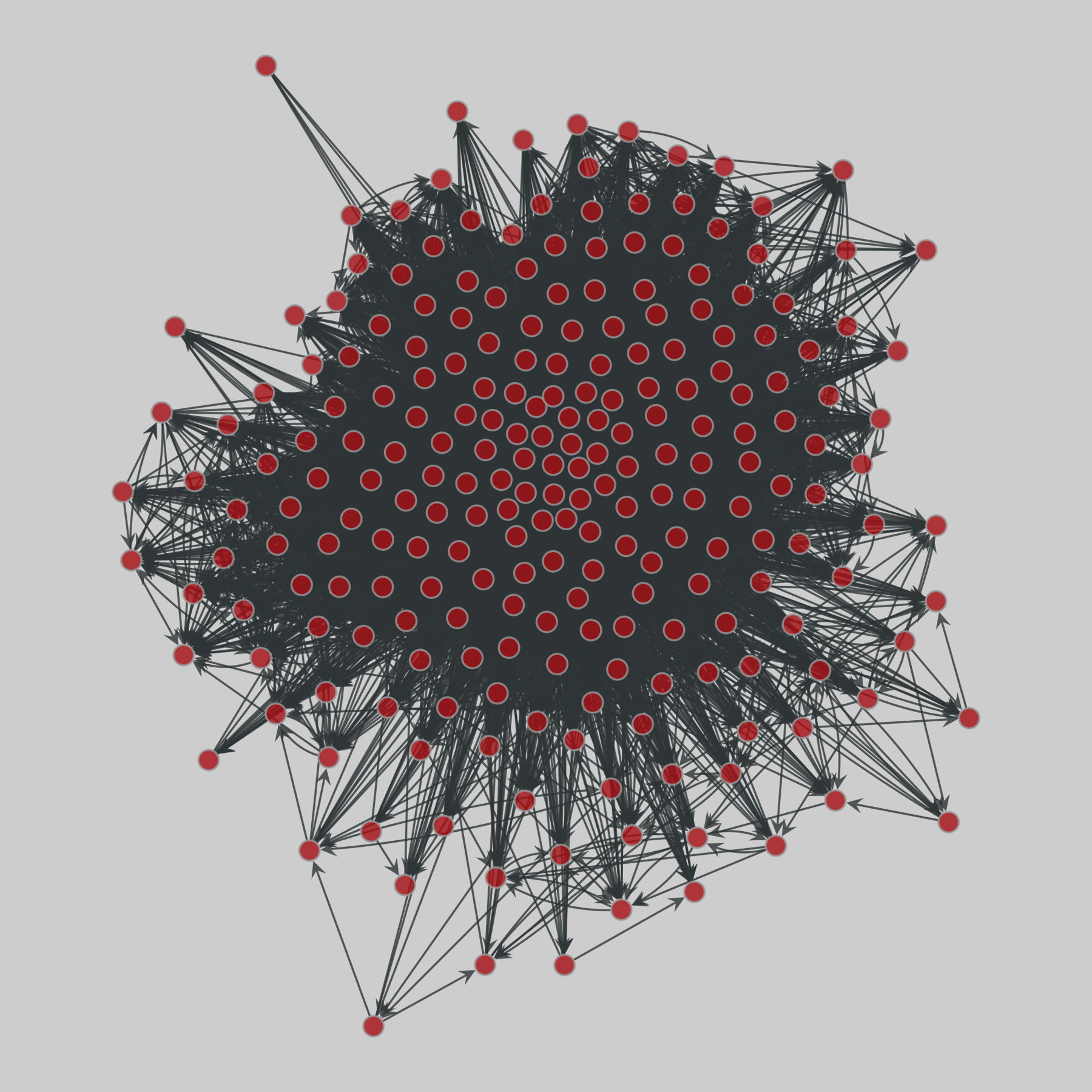
@netzschleuder@social.skewed.deun_migrations: UN migration stock (2015)
A network of migration between countries, collected by the United Nations. A directed edge gives the flow of migration, and an edge property gives the number of migrants, for each given year and sex. Estimates are presented for 1990, 1995, 2000, 2005, 2010 and 2015 and are available for all countries and areas of the world. The estimates are based on official statistics on the foreign-born or the foreign population.
This network has 232 no…
 @Mediagazer@mstdn.social
Ozone: publisher ad supply in Q2 fell by 32% to 37% YoY in the US and 39% to 41% YoY in the UK, driven by AI-era zero-click search and reduced referral traffic (Jessica Davies/Digiday)
https://digiday.com/media/publisher-ad-supply-fell-b…
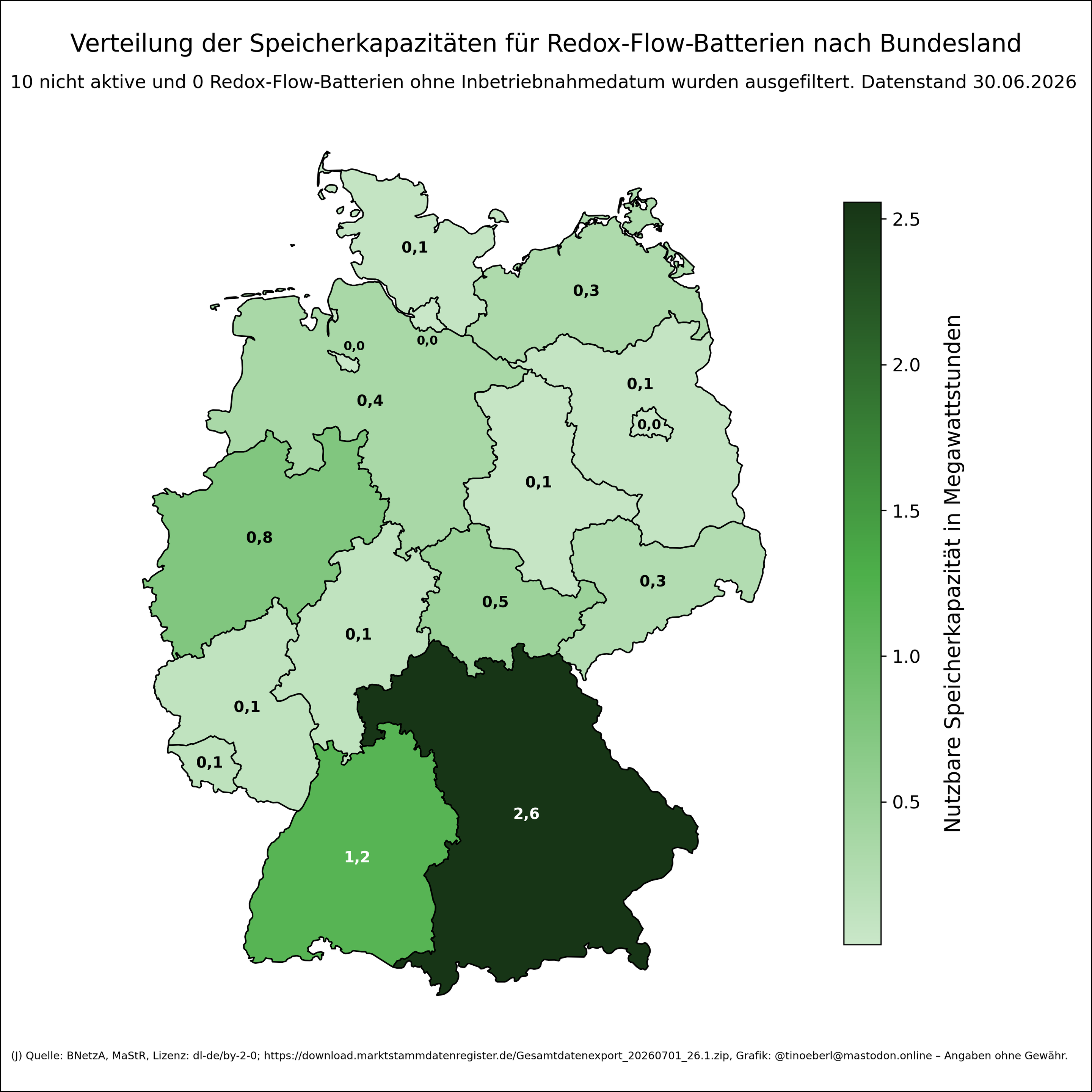
@tinoeberl@mastodon.onlineVerteilung der #Speicherkapazitäten für Redox-Flow-Batterie nach Bundesland in #Deutschland mit Stand vom 30.06.2026.
10 nicht aktive und 0 Redox-Flow-Batterien ohne Inbetriebnahmedatum wurden ausgefiltert.
Der Datenbestand enthält ggf. unplausible Datensätze.
…
 @arXiv_mathDG_bot@mastoxiv.page
Ricci Solitons, Almost Theta-Yamabe Solitons, and Finite-Order Tensor Symmetries of a Vector Field on Riemannian Manifolds with Rank-One Anisotropic Curvature
Abdou Bousso, Ameth Ndiaye
https://arxiv.org/abs/2609.14866 https://arxiv.org/pdf/2609.14866 https://arxiv.org/html/2609.14866
arXiv:2609.14866v1 Announce Type: new
Abstract: We study the iterated action of the Lie derivative on the curvature tensor of a Riemannian manifold with rank-one anisotropic curvature, whose Riemann tensor is expressed via the Kulkarni-Nomizu product as $R = \lambda (\xi^\flat\otimes\xi^\flat)\owedge g$. First, we examine the conditions under which such a manifold admits a Ricci soliton structure and demonstrate that this property implies the almost $\theta$-Yamabe soliton structure. Furthermore, we show that if the associated potential vector field $X$ is a symmetry of the Ricci tensor of a fixed order $k$ (i.e., $\mathcal{L}_X^k \operatorname{Ric} = 0$), the geometric problem reduces to solving a partial differential equation of order $k 1$ along the flow. Finally, under the assumption that $X$ is a conformal vector field ($\mathcal{L}_X g = 2\varphi g$) whose infinitesimal flow preserves the line distribution $\mathcal{D}=\operatorname{Span}\{\xi\}$ (with $[X,\xi]=a\xi$ for $a\in\mathbb{R}$), we prove that several key geometric problems (such as establishing the relation $\mathcal{L}_X^k R = R$, determining the minimal order $k$ for $X$ to be a Lie curvature symmetry, or satisfying $\mathcal{L}_X^{k 1}R = f \mathcal{L}_X^k R$ for a continuous function $f$) are equivalent to a scalar differential problem governed by the operator $D_X = X 6\varphi 2a$.
toXiv_bot_toot
@cdarwin@c.imSaudi Arabia will run out of oil stocks for export if it doesn’t restart a drone-damaged major pipeline to the Red Sea within days,
leading to the loss of up to 4% of global supply, Saudi oil buyers and traders said.
Satellite photos released on Sunday night appeared to show a pumping station on the key 1,200km (745-mile) Saudi east-west pipeline charred and badly damaged, after drone attacks on Friday.
A further decline in oil flow from Saudi Arabia, the world largest oi…
@arXiv_physicsfludyn_bot@mastoxiv.pageHard Guarantees at a Measured Price: Entropy-Stable Learned Finite Volumes for Compressible Flow
Denis Gueyffier (ONERA -- Institut Polytechnique de Paris)
https://arxiv.org/abs/2607.20171 https://arxiv.org/pdf/2607.20171 https://arxiv.org/html/2607.20171
arXiv:2607.20171v1 Announce Type: new
Abstract: Learned solvers for compressible flow are usually compared to classical methods at equal mesh resolution rather than at equal computational cost, and they typically offer no guarantee that their solutions remain physically admissible. We present a learned finite volume scheme for the two-dimensional Euler equations on unstructured meshes, admissible by construction and with an entropy-stable interior flux. We evaluate it under protocols fixed before any computation: frozen thresholds, falsification clauses, negative controls, a factor decomposition of the learned components, and an iso-cost comparison against the refined classical baseline. The decomposition produced the central result: the guarantee machinery alone, with both learned heads switched off (the unlearned skeleton), is the strongest scheme at equal mesh on every periodic case. At equal wall-clock cost the picture inverts into a map. Learning pays robustly only on the wall case whose boundary-condition type it never saw (10.8%). Its periodic gains flip sign with the evaluation draw ( 10% on one held-out case, -12% on the hardest). The skeleton is the only method whose iso-cost gain never changes sign, at a measured overhead of 1.74x per step. The guaranteed variant completes 36 of 36 rollouts, Mach extrapolation and unseen wall included, with zero negativity events. We fix the guaranteed scheme's one remaining out-of-distribution weakness, Mach extrapolation, at inference time: with scale-invariant network inputs, a specific-entropy floor, and no retraining, the corrected arm overtakes the unconstrained arm on one Mach case, cuts its deficit on the other by a third, passes the skeleton on the unseen wall, and keeps the guarantee. A spatial gate closes the loop: activating the heads only near the walls beats both the skeleton and the corrected arm, and transfers unchanged to a second wall geometry.
toXiv_bot_toot
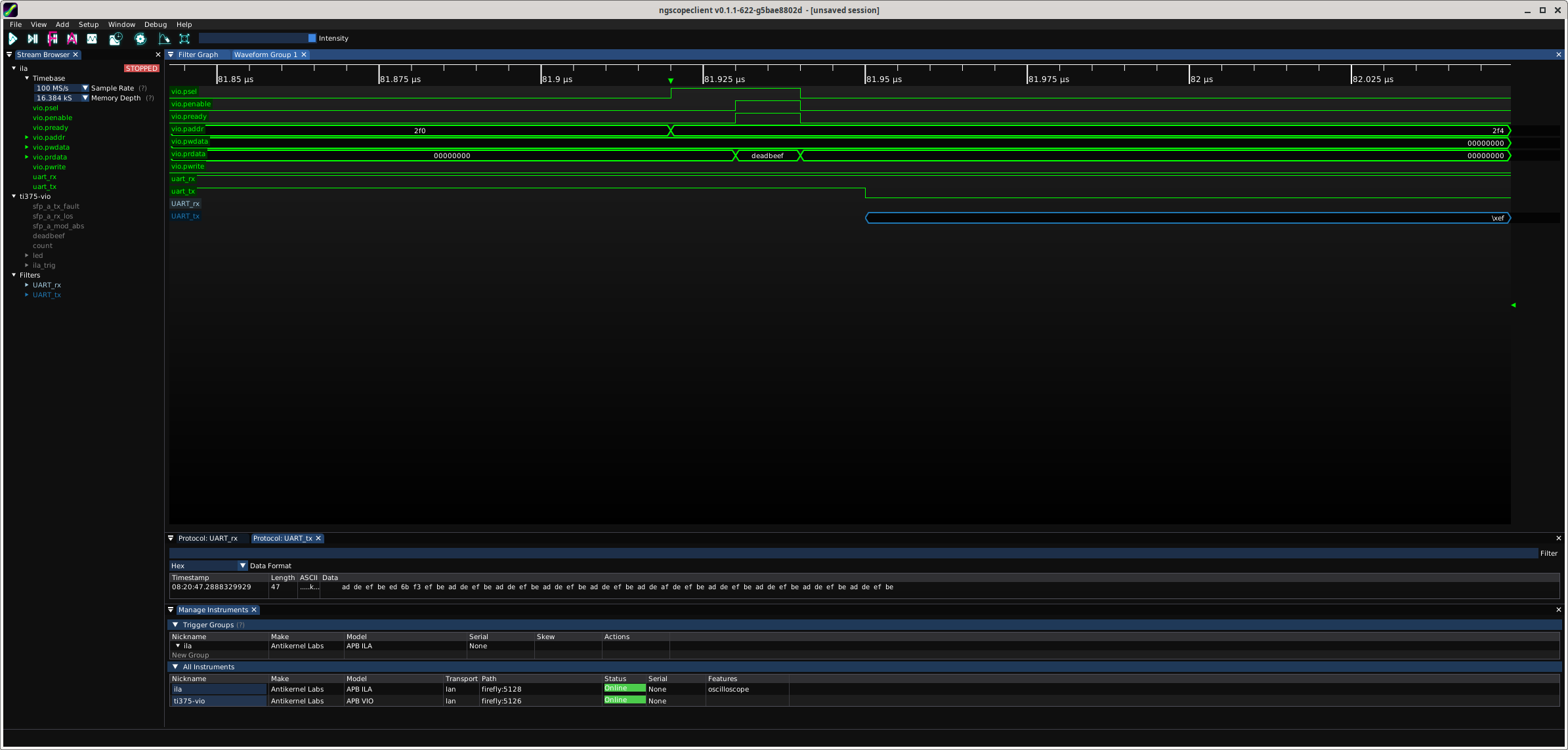
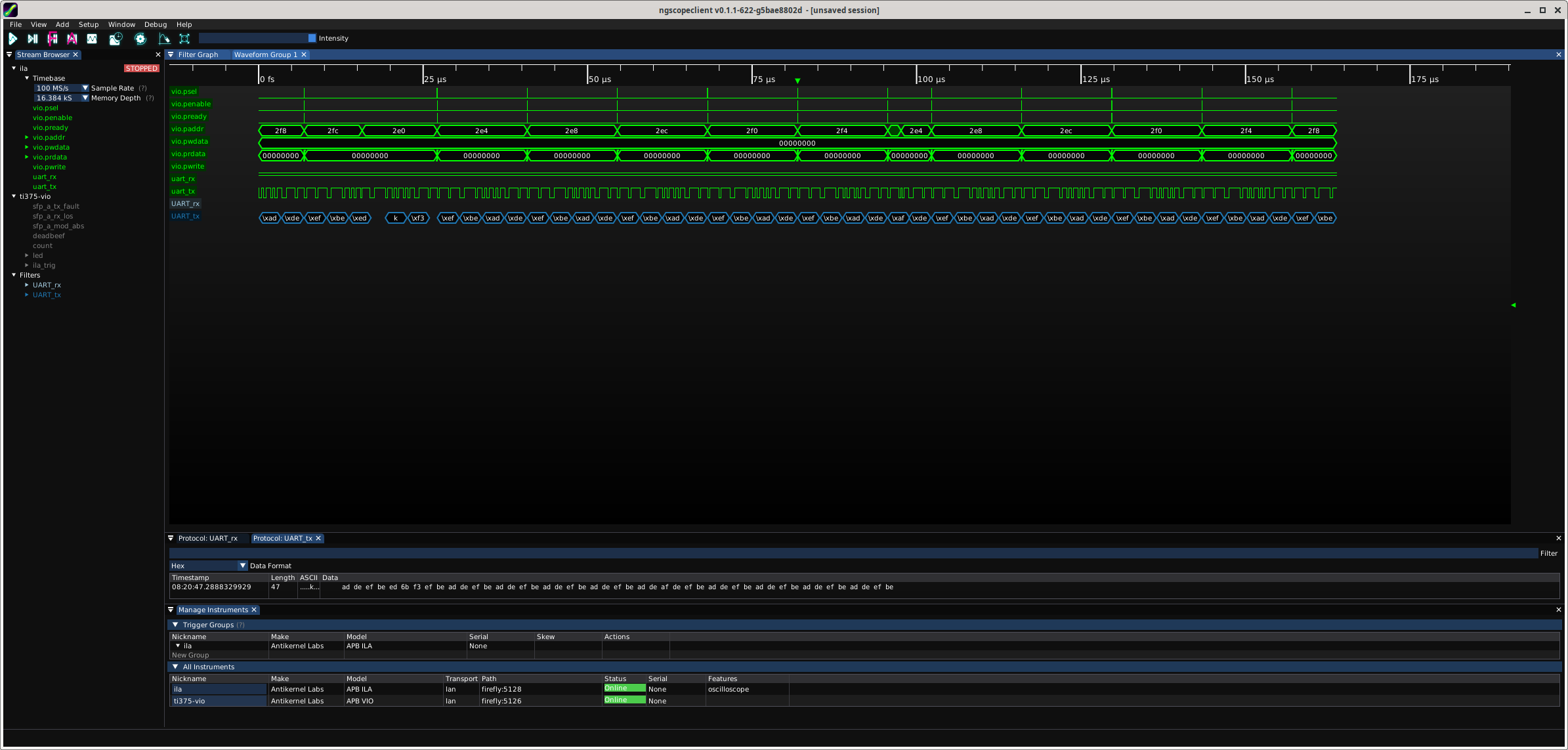
@Kingu@sakurajima.moe @azonenberg@ioc.exchangeFirst light on the ngscopeclient ILA integration including digital vector support up to 32 bits (up to 64 will come soon and is straightforward to add, bigger will be a bit more work since there's no native int type bigger than that)
Next step will be to make a protocol decode for APB to prove out the decode flow on digital buses
 @brichapman@mastodon.social
This week brought real momentum:
Nuveen invested $546M in SunZia wind a 550-mile transmission line for the US Southwest.
Morocco's World Bank-backed pumped-storage project adds 1 GW to balance renewables.
CATL launched ultra-fast batteries for delivery vans and hit 4,000 swap stations.
Sign up for the For People And Planet climate solutions digest:
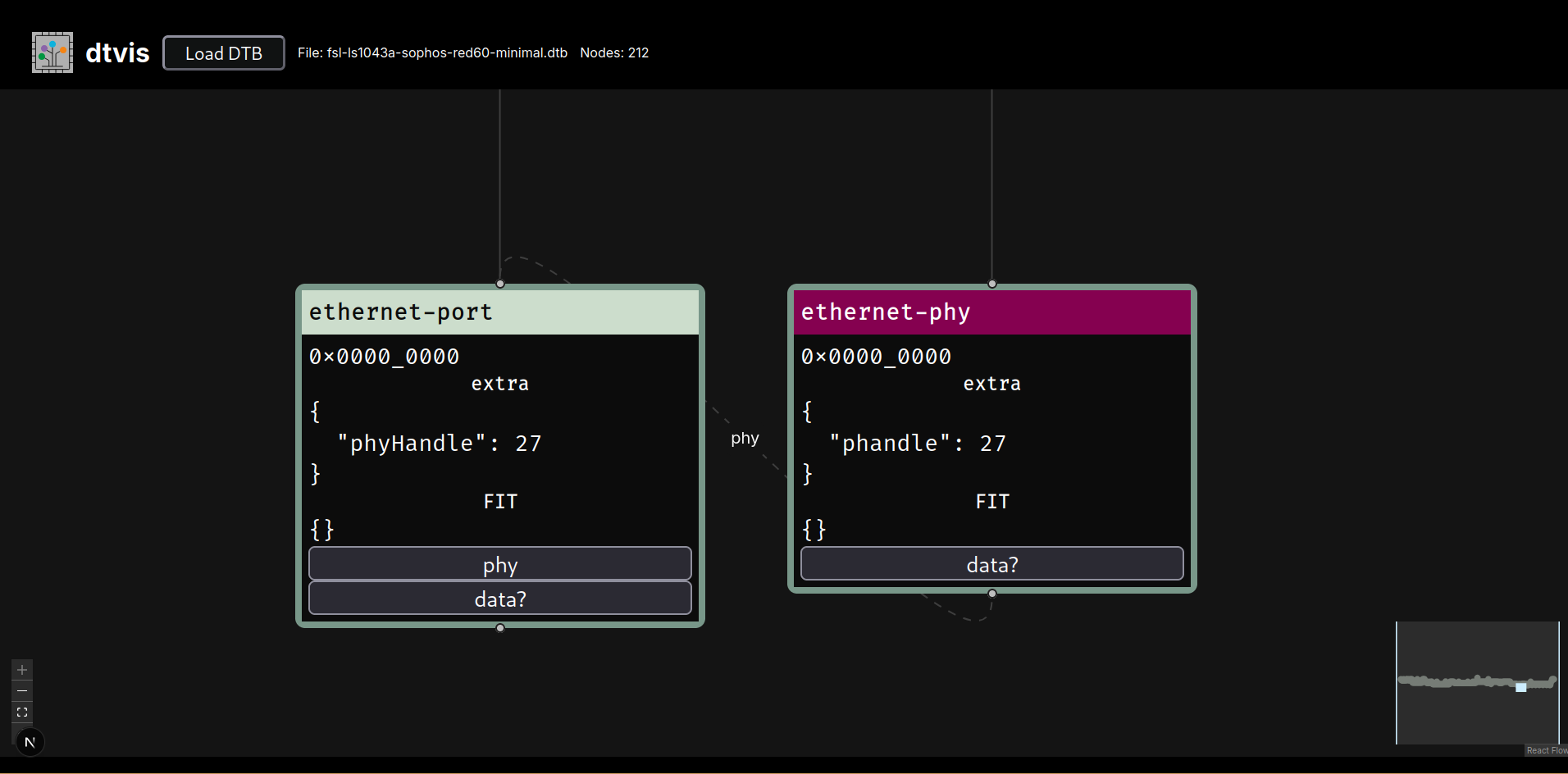
@cyrevolt@mastodon.socialwoop, I quickly hacked a button into dtvis to follow phandle edges - React Flow is such a neat library: https://github.com/xyflow/xyflow
Here is a little example where the source node of the edge is nearby. Otherwise, clicking the button takes you to the source node. Just a draft, there is more to come; bidirectional mapping, animated panning, etc etc
 @Techmeme@techhub.social
Google launches its Lyria 3.5 music generation model in Google Flow Music, highlighting improved musicality, lyrics, vocal quality, and creative control (Google)
https://blog.google/innovation-and-ai/models-and-research/google-labs/lyria-3-5/
…
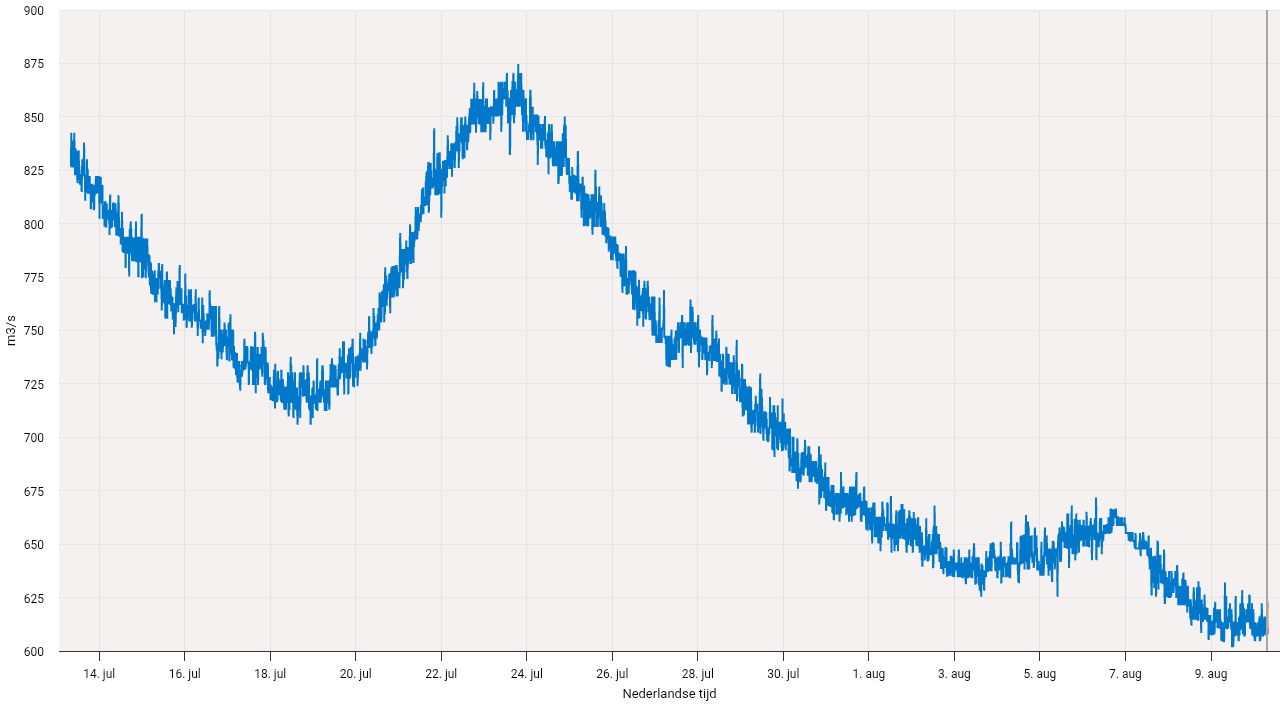
@Sustainable2050@mastodon.energyAll-time low water flow in the river Rhine!
Where it enters the Netherlands, only 614 m³/s yesterday, breaking the November 1947 record of 620 m³/s. In summer, this is unheard of: normally it's around 1700 m³/s. Little or no rain upstream.
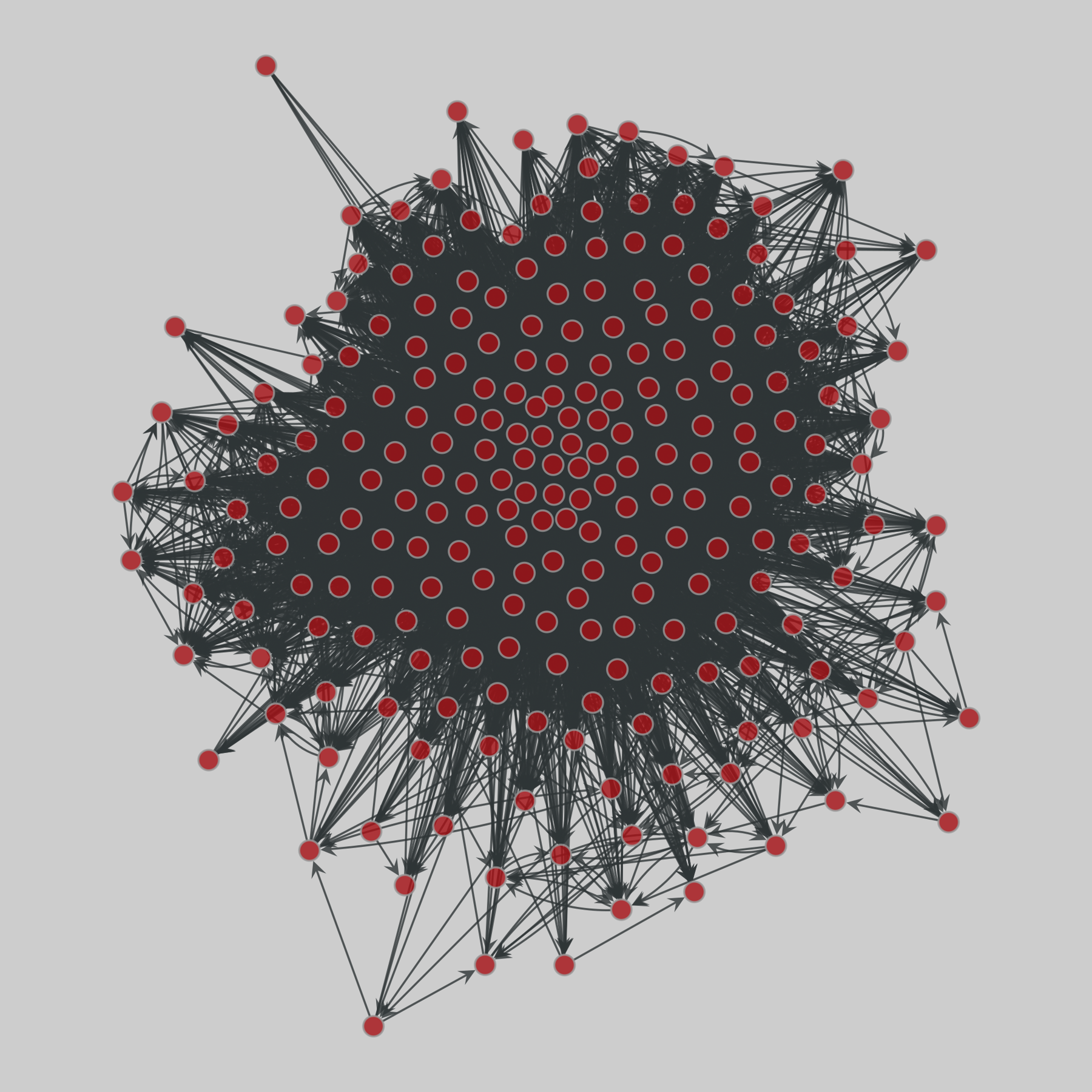
 @netzschleuder@social.skewed.de
un_migrations: UN migration stock (2015)
A network of migration between countries, collected by the United Nations. A directed edge gives the flow of migration, and an edge property gives the number of migrants, for each given year and sex. Estimates are presented for 1990, 1995, 2000, 2005, 2010 and 2015 and are available for all countries and areas of the world. The estimates are based on official statistics on the foreign-born or the foreign population.
This network has 232 no…
 @arXiv_physicsfludyn_bot@mastoxiv.page
Replaced article(s) found for physics.flu-dyn. https://arxiv.org/list/physics.flu-dyn/new
[1/1]:
- Exact results for dissipation and steady creeping flow in three-dimensional chiral active fluids
Laura Meissner-Oszer, Bogdan Cichocki, Jeffrey C. Everts
https://arxiv.org/abs/2510.19658 https://mastoxiv.page/@arXiv_physicsfludyn_bot/115422802755500601
- Pressure beneath a periodic travelling water-wave in constant-vorticity flow over a flat bed
Adrian Constantin, Nicolas Gindrier, Otmar Scherzer
https://arxiv.org/abs/2602.21077 https://mastoxiv.page/@arXiv_physicsfludyn_bot/116130402894456942
- A minimal wake-vortex model explains formation flight of flapping birds
Olivia Pomerenk, Kenneth S. Breuer
https://arxiv.org/abs/2602.22043 https://mastoxiv.page/@arXiv_physicsfludyn_bot/116136202119473646
- Lagrangian Ellipsoid Diagnostics in Rough Two-Dimensional Synthetic Flows: Aspect-Ratio Saturatio...
Michael Chertkov
https://arxiv.org/abs/2605.27606 https://mastoxiv.page/@arXiv_physicsfludyn_bot/116651135705771524
- On the Theory of Bulk Viscosity of Cold Plasmas and Thermodynamics of Alkali-Noble Gas Cocktails
Albert M. Varonov, Todor M. Mishonov
https://arxiv.org/abs/2511.14790 https://mastoxiv.page/@arXiv_physicsplasmph_bot/115581169803088580
toXiv_bot_toot
@cdarwin@c.imAlphabet, Amazon, Meta, Microsoft and Oracle
have doubled their debt to build AI,
👉to $350 billion
💥and cash flow is not keeping up.
Now they are crowding into European credit markets,
🔥on track to out-borrow France
https://thenextweb.com/news/big-tech-3
@Techmeme@techhub.socialGoogle adds a toggle in Gemini and Flow to remove visible watermarks from AI generated images, videos, and music; SynthID watermarks and C2PA metadata remain (Emma Roth/The Verge)
https://www.theverge.com/tech/980416/google-gemini-ai-watermarks-removal
@michabbb@social.vivaldi.net📦 Ships 68 specialized agents, 291 skills and 94 commands covering planning, build repair, code review, security, architecture, docs, frontend, data and ML work
🧪 #TDD becomes a gated RED − GREEN − REFACTOR flow with evidence, and a fresh-context reviewer checks the changes instead of the same context grading its own code
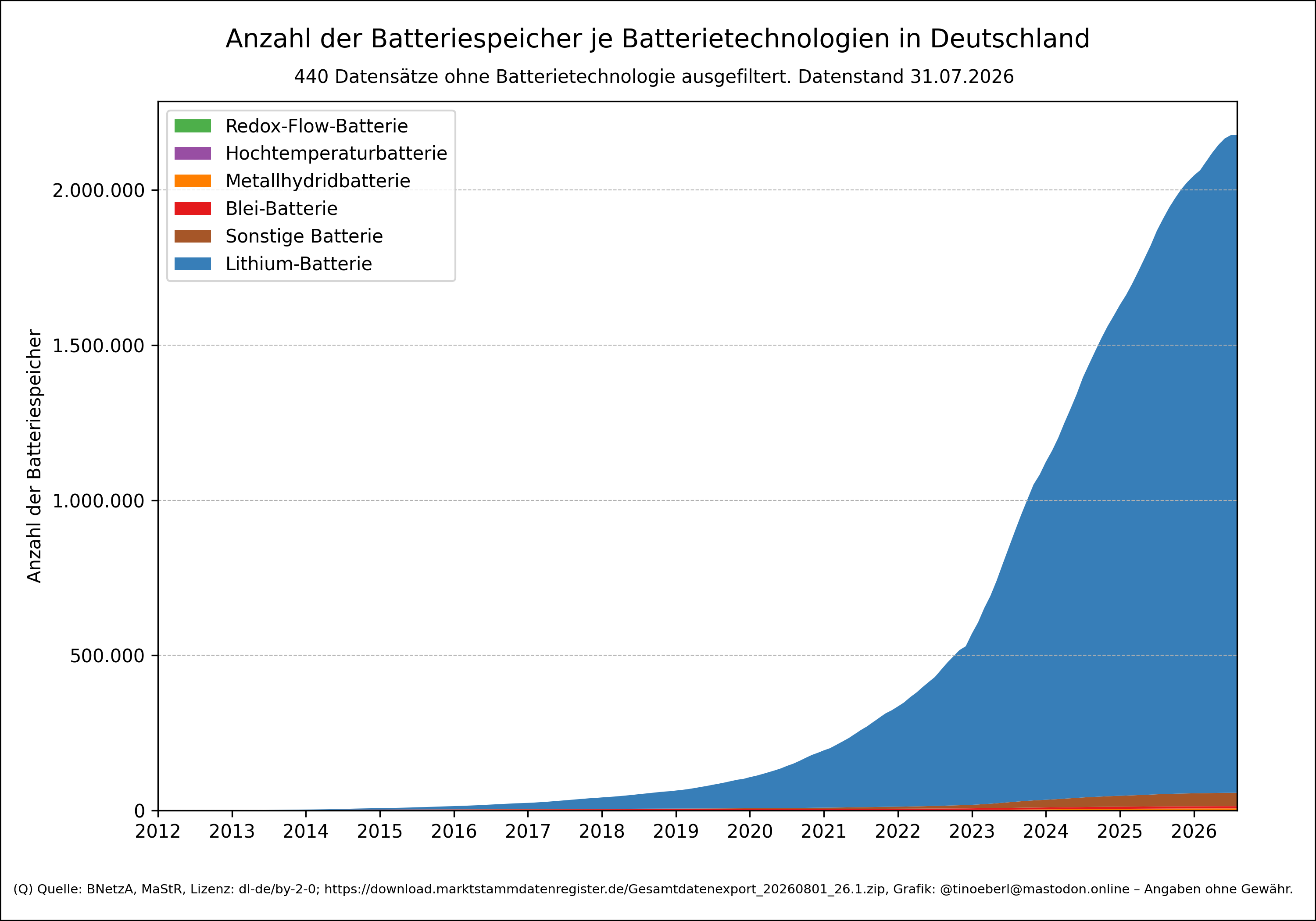
@tinoeberl@mastodon.onlineAnzahl der #Batteriespeicher je #Batterietechnologien in #Deutschland mit Stand vom 31.07.2026.
4149 nicht aktive und 0 Batteriespeicher ohne Inbetriebnahmedatum wurden a…
 @arXiv_physicsfludyn_bot@mastoxiv.page
Elastohydrodynamic instability of a spinning elastic disk
Sifan Yin, Paul R. Kaneelil, L. Mahadevan
https://arxiv.org/abs/2607.19561 https://arxiv.org/pdf/2607.19561 https://arxiv.org/html/2607.19561
arXiv:2607.19561v1 Announce Type: new
Abstract: A soft thin elastic disk spinning in a viscous fluid experiences centrifugal tension generated by rotation together with viscous shear generated by the surrounding flow. While the former stabilizes the flat state, the latter can destabilize it. We combine the linearized F\"{o}ppl-von K\'{a}rm\'{a}n equations for a rotating elastic disk with the shear stresses arising from the classical von K\'{a}rm\'{a}n swirling flow to derive an elastohydrodynamic stability problem. Linear stability analysis identifies the onset of buckling in terms of two dimensionless control parameters measuring centrifugal stiffening and fluid-induced shear. Above threshold the disk buckles into azimuthally periodic saddle-like modes whose wavenumber increases with increasing rotational tension. The buckled configuration also supports retrograde traveling waves that rotate more slowly than the material frame. These results identify a simple mechanism whereby fluid shear destabilizes rotating elastic structures.
toXiv_bot_toot
@azonenberg@ioc.exchangeThinking about the integration flow for VIO-style devices in ngscopeclient (i.e. a bunch of multi-bit scalar digital input and output channels).
Does it make more sense to have one filter graph node per VIO with separate streams per input/output port? Or one node per input or output on the VIO?
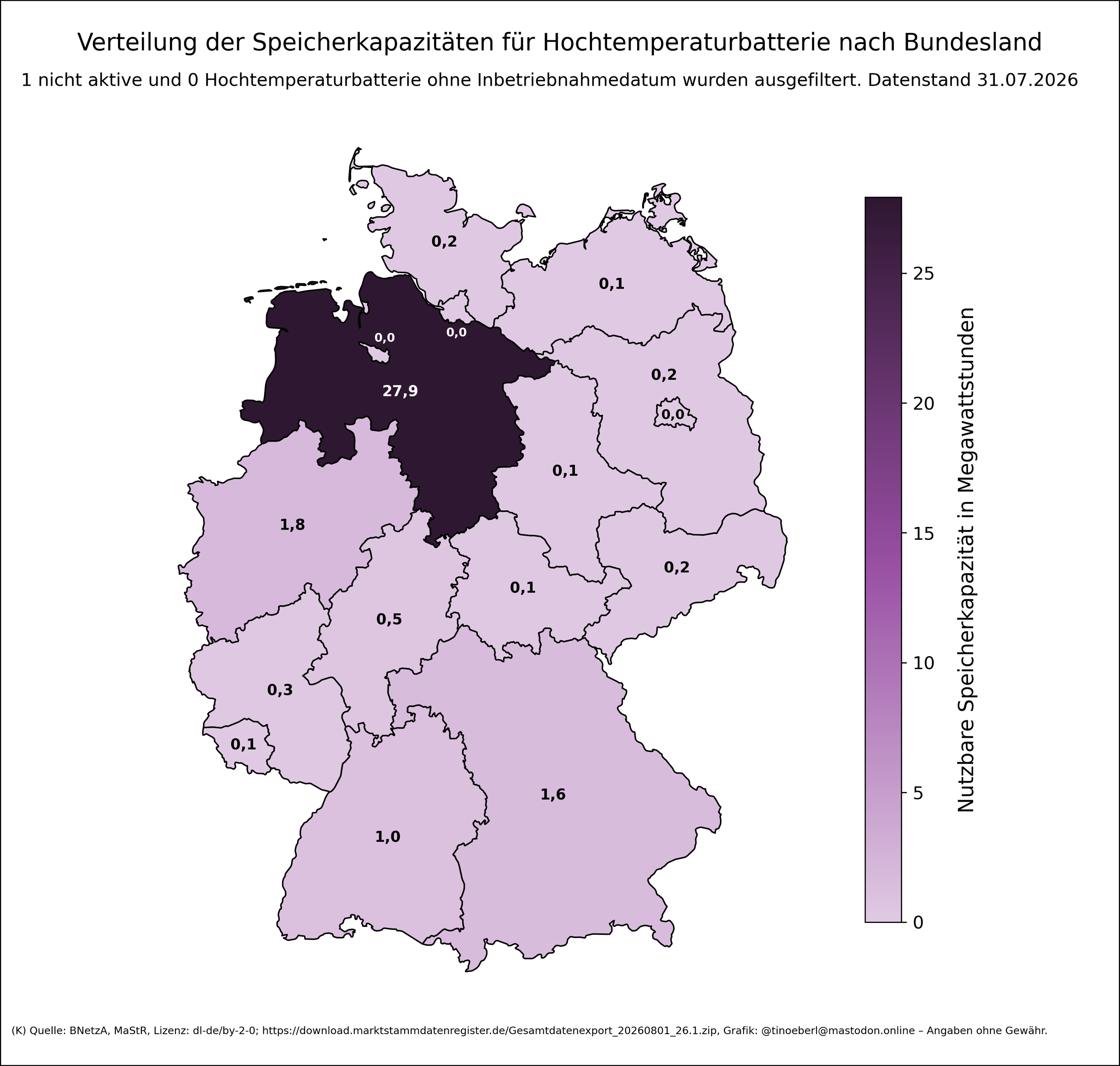
@tinoeberl@mastodon.onlineVerteilung der #Speicherkapazitäten für #Hochtemperaturbatterie nach Bundesland in #Deutschland mit Stand vom 31.07.2026.
1 nicht aktive und 0 Hochtemperaturbat…
 @kexpmusicbot@mastodonapp.uk @netzschleuder@social.skewed.de
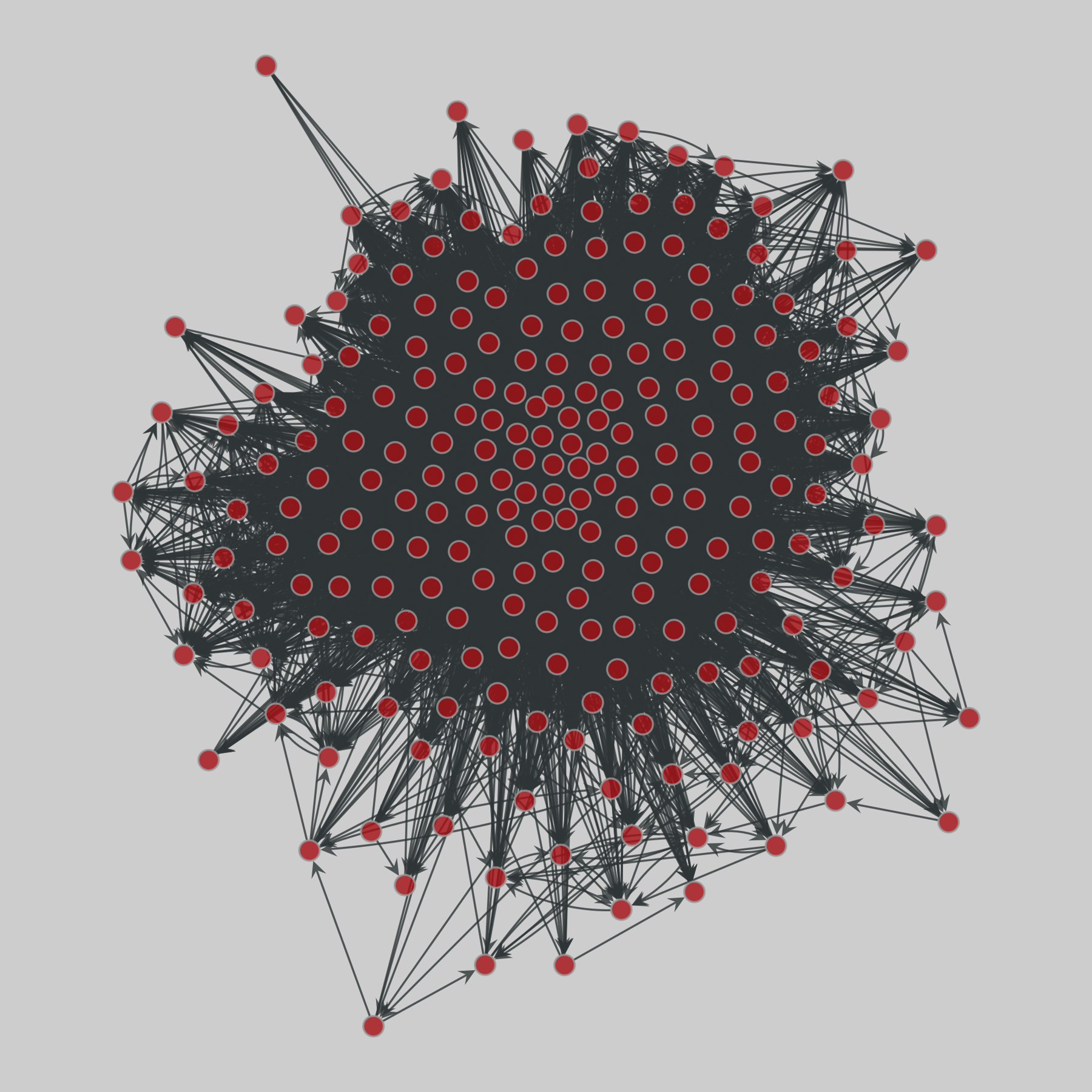
un_migrations: UN migration stock (2015)
A network of migration between countries, collected by the United Nations. A directed edge gives the flow of migration, and an edge property gives the number of migrants, for each given year and sex. Estimates are presented for 1990, 1995, 2000, 2005, 2010 and 2015 and are available for all countries and areas of the world. The estimates are based on official statistics on the foreign-born or the foreign population.
This network has 232 no…
 @Techmeme@techhub.social
Euno, whose platform reconstructs data flow, meaning, health, and more across data environments to give agents context, raised a $23M Series A led by N47 (Chris Metinko/Axios)
https://www.axios.com/pro/enterprise-software-deals/2026/09/09/conte…
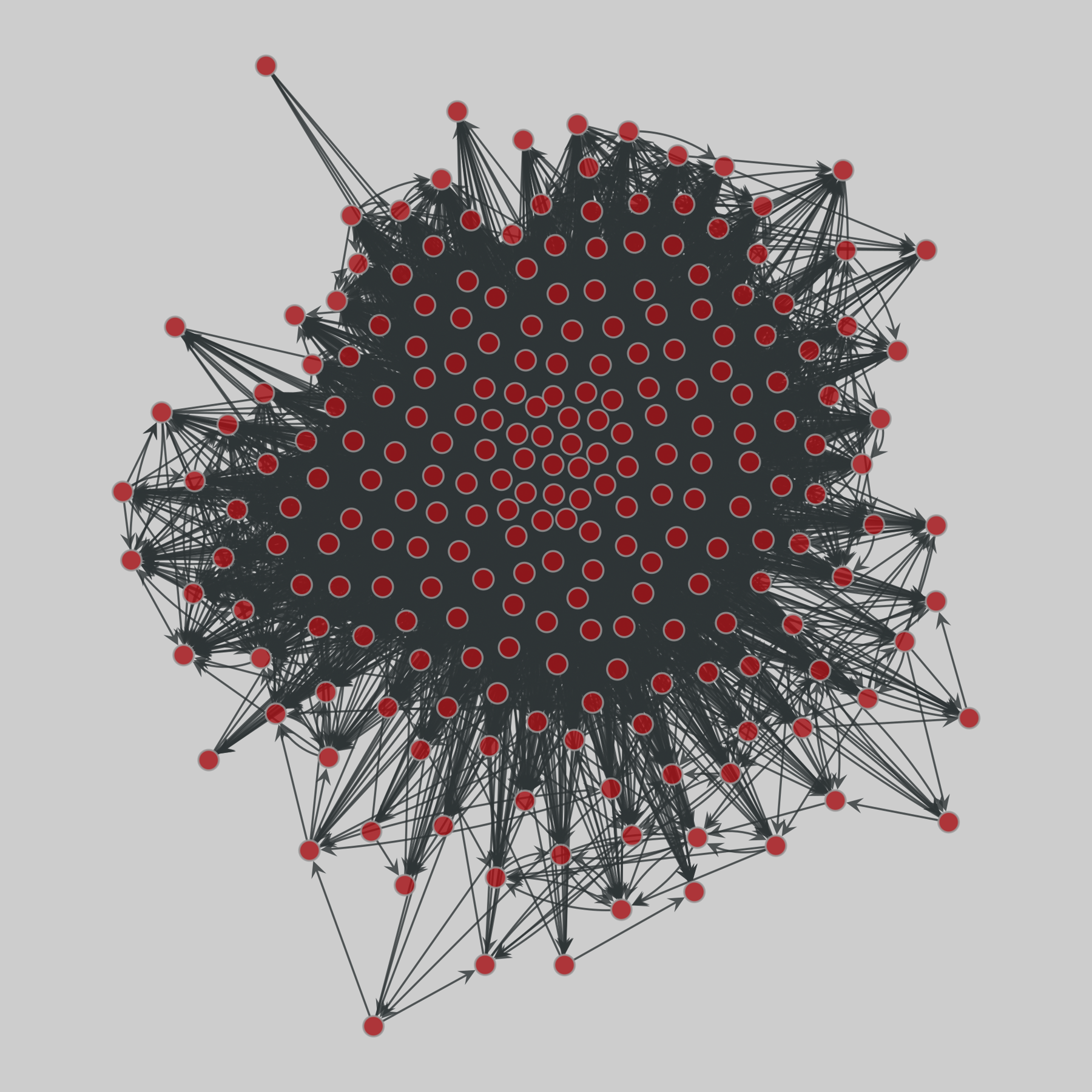
@tinoeberl@mastodon.onlineNeue Inbetriebnahmen von #Stromspeichern je #Batterietechnologie in #Deutschland mit Stand vom 31.07.2026.
Betrachtet werden Datensätze mit Betriebsstatus „aktiv“ und vorhan…
 @Sustainable2050@mastodon.energy
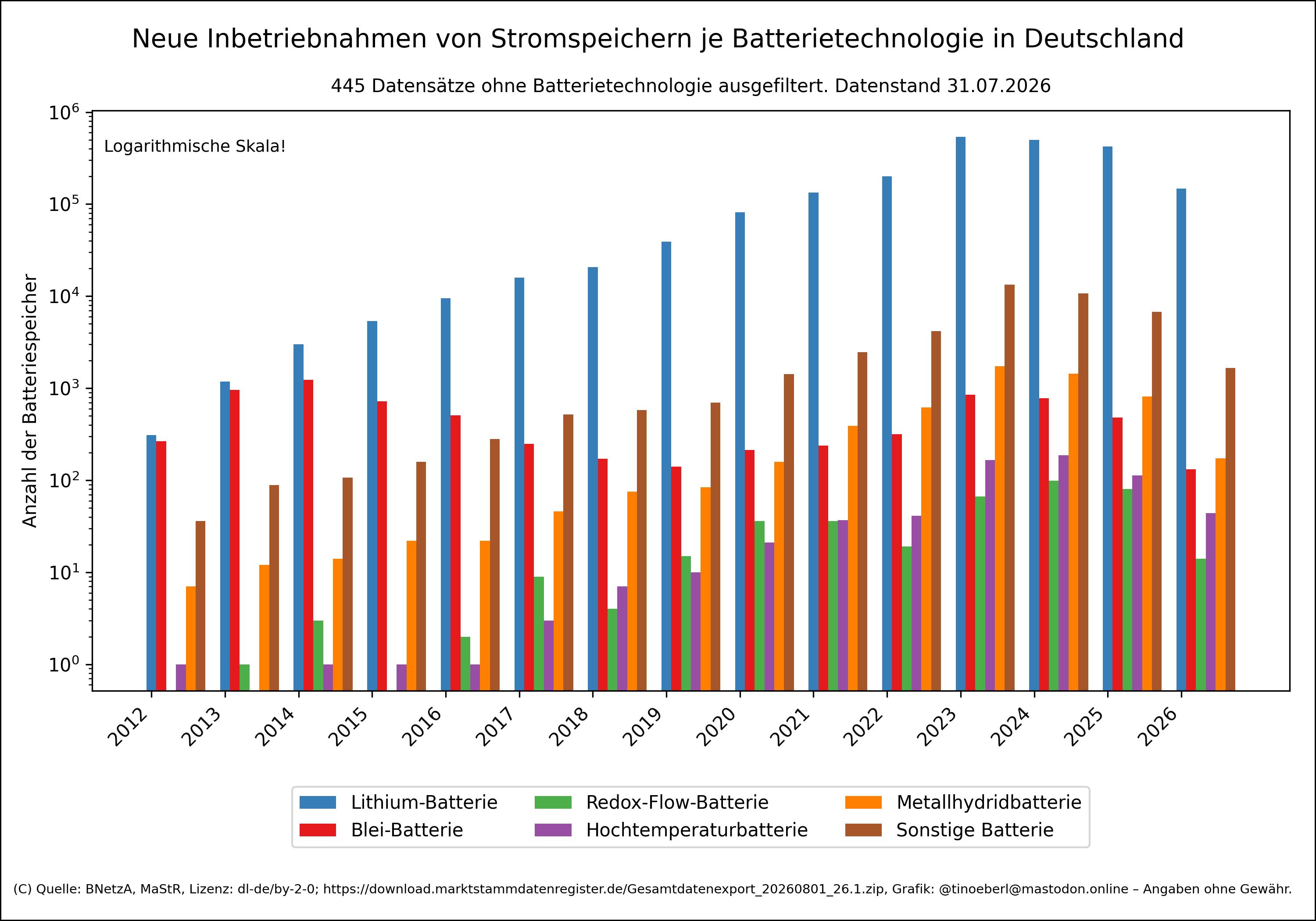
Lowest ever Rhine water flow measured at the German-Dutch border in July was 782 m³/s, in 1976.
Now, we're at 680 m³/s!
 @netzschleuder@social.skewed.de
un_migrations: UN migration stock (2015)
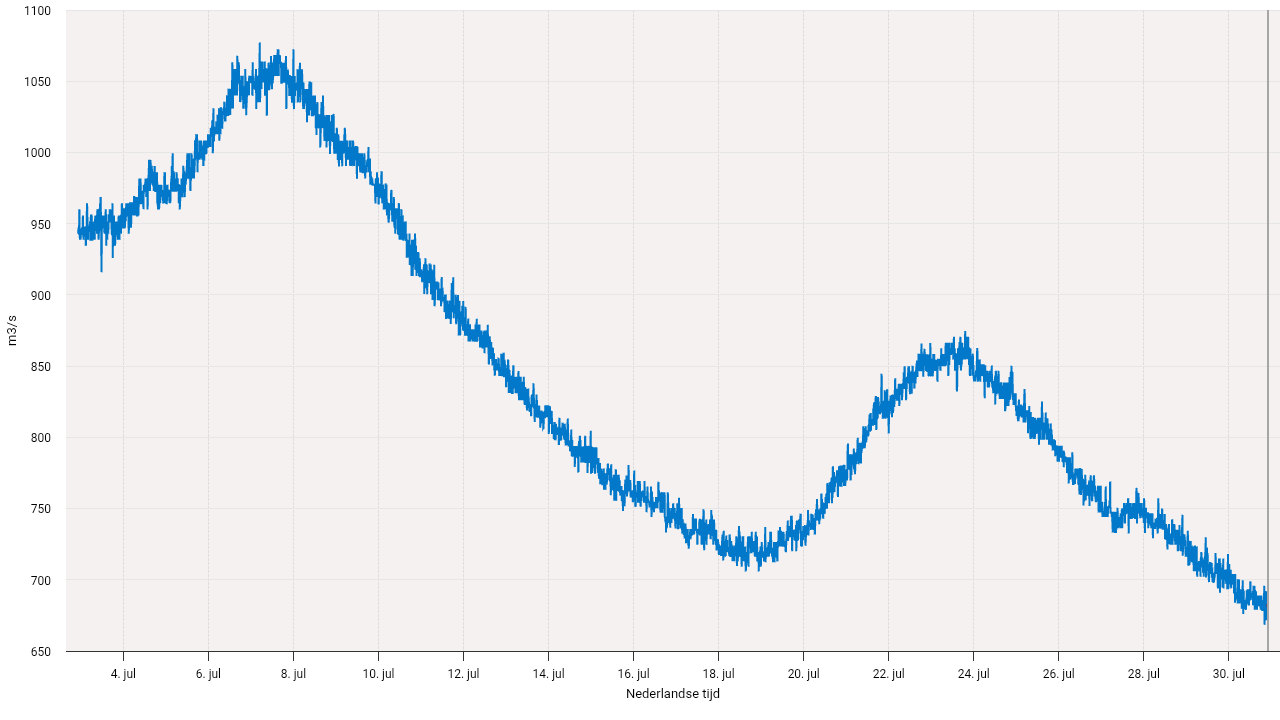
A network of migration between countries, collected by the United Nations. A directed edge gives the flow of migration, and an edge property gives the number of migrants, for each given year and sex. Estimates are presented for 1990, 1995, 2000, 2005, 2010 and 2015 and are available for all countries and areas of the world. The estimates are based on official statistics on the foreign-born or the foreign population.
This network has 232 no…
 @cdarwin@c.im
The first lesson many new engineers learn is that you have to take credit for your work.
If you silently jump in to help a struggling project and get it back on track, there’s no guarantee of reward.
Credit will naturally flow to the project lead, not you.
In fact, if this project is outside of your direct team, it’s likely you will be punished for it:
to your manager, it will look like you’re simply doing nothing at all.
Even when your manager is watching you…
@Techmeme@techhub.socialSource: Mercor hit over $2B in gross revenue run rate in June, double its pace in April, and is profitable on a free cash flow basis (Julia Hornstein/The Information)
https://www.theinformation.com/briefings/exclusive-mercor-hit-2-billion-gros…
@arXiv_physicsfludyn_bot@mastoxiv.pageCavitation Acoustic Perturbation Equations: A Computational Framework for Source-Resolved Multiphase Hydroacoustics
Zhi Cheng, Rajeev K. Jaiman
https://arxiv.org/abs/2607.19567 https://arxiv.org/pdf/2607.19567 https://arxiv.org/html/2607.19567
arXiv:2607.19567v1 Announce Type: new
Abstract: This work develops a cavitation-consistent acoustic perturbation framework for predicting sound generation and propagation in cavitating flows. Unlike conventional acoustic perturbation equations for single-phase or weakly compressible flows, the proposed formulation embeds cavitation physics directly into the acoustic equations. The cavitation acoustic perturbation equations (CAPE) incorporate vapor mass transfer, mixture compressibility, and pressure-rate effects within a unified formulation, allowing cavitation-induced noise sources to be resolved in the computational domain. The numerical framework is verified using one-dimensional wave-propagation problems. The solutions become insensitive to further mesh and time-step refinement, the perfectly matched layer suppresses boundary reflections, and the predicted attenuation over a range of source frequencies follows Stokes' sound attenuation law. The framework is then applied to cavitating flow past a circular cylinder and a NACA hydrofoil. The non-cavitating benchmark shows dipole-like radiation associated with unsteady loading, whereas cavitating cases exhibit monopole-like or geometry-modulated radiation caused by volumetric phase change. Source-term analyses identify tonal frequencies associated with vortex shedding, cavity shedding, and collapse-induced excitation. The phase-change terms provide a direct volumetric contribution to the monopole-like source, while localized collapse events appear through amplification of the pressure-rate source. The proposed framework extends acoustic perturbation methods to cavitating multiphase flows and provides an efficient tool for hydroacoustic prediction, source localization, and mechanism analysis in marine and hydraulic applications.
toXiv_bot_toot
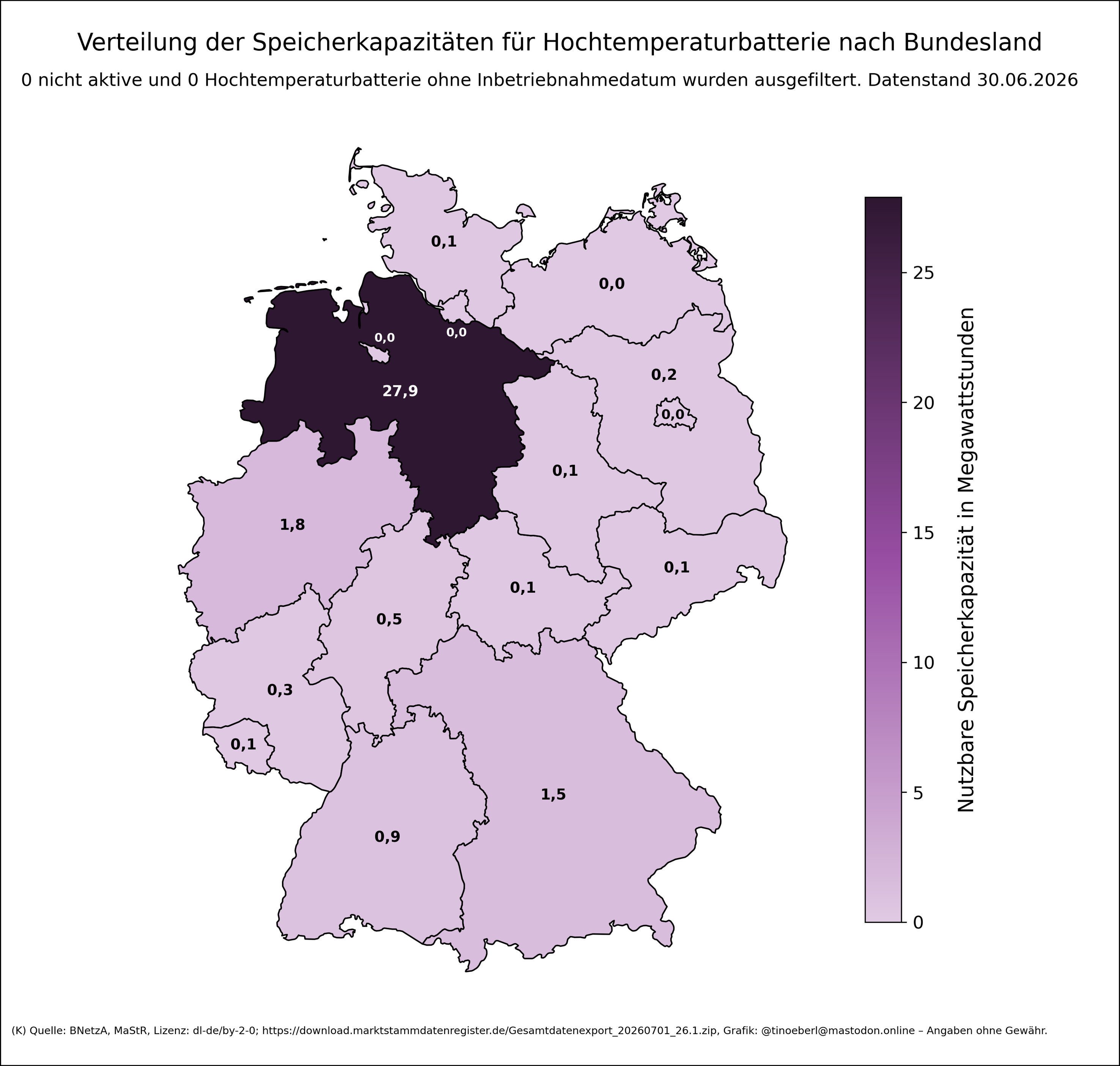
@tinoeberl@mastodon.onlineVerteilung der #Speicherkapazitäten für #Hochtemperaturbatterie nach Bundesland in #Deutschland mit Stand vom 30.06.2026.
0 nicht aktive und 0 Hochtemperaturbat…
 @arXiv_physicsfludyn_bot@mastoxiv.page
Discrete Boltzmann model at Burnett level for compressible multicomponent flows under external forces
Demei Li, Huilin Lai, Chuandong Lin, Suni Chen
https://arxiv.org/abs/2607.20029 https://arxiv.org/pdf/2607.20029 https://arxiv.org/html/2607.20029
arXiv:2607.20029v1 Announce Type: new
Abstract: This work extends the Burnett-level discrete Boltzmann model (DBM) from single-component to multicomponent compressible flows under external forces, building on the fundamental framework of the high-precision discrete kinetic method. A high-isotropy 25-discrete-velocity set is adopted to guarantee numerical stability and spatial symmetry, while a rigorous moment-matching strategy is developed to construct the equilibrium distribution function and external force term. Different from the single-component counterpart, the present model intrinsically incorporates interspecies mass diffusion effects and multi-component thermodynamic nonequilibrium behaviors, which are critical for complex compressible multicomponent systems. The Chapman--Enskog expansion verifies that the proposed model can exactly recover the Burnett-level governing equations for forced multicomponent compressible flows in the continuum limit. Five canonical benchmark cases, including multicomponent mass diffusion, compressible Sod shock tube, thermal Couette flow, Kelvin--Helmholtz instability, and Rayleigh--Taylor instability, are systematically performed. Numerical results demonstrate that the developed Burnett-level multicomponent DBM achieves high accuracy and robustness in capturing both hydrodynamic evolution and multicomponent nonequilibrium characteristics under external forces.
toXiv_bot_toot
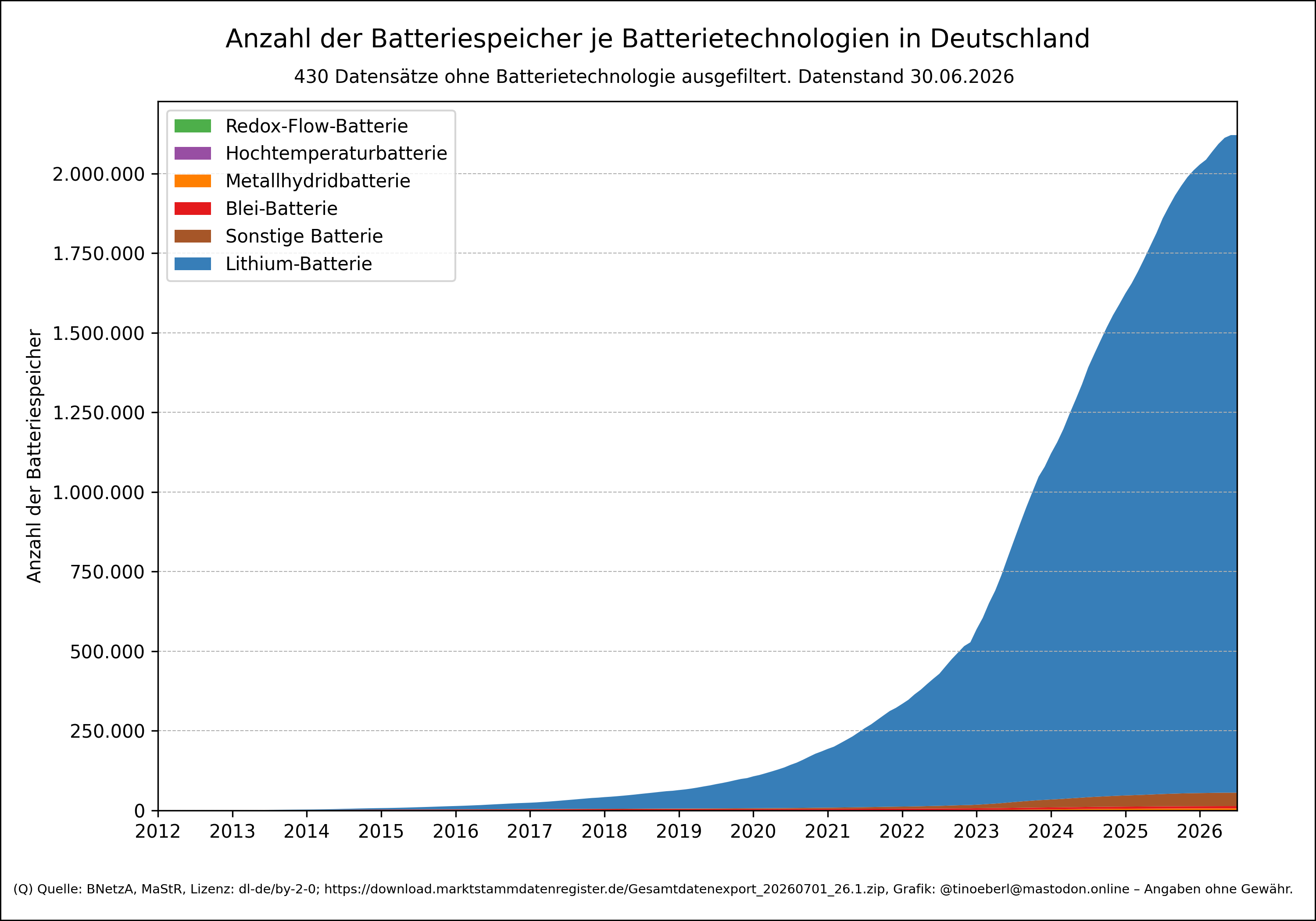
@tinoeberl@mastodon.onlineAnzahl der #Batteriespeicher je #Batterietechnologien in #Deutschland mit Stand vom 30.06.2026.
3782 nicht aktive und 0 Batteriespeicher ohne Inbetriebnahmedatum wurden a…
 @arXiv_physicsfludyn_bot@mastoxiv.page
svMultiPhysics: a finite element-based solver for cardiovascular simulations
David Codoni, Sujal Dave, David W. Parker, Aaron L. Brown, Javiera Jilberto, Han Zhao, Divya Adil, Zachary A. Sexton, Martin R. Pfaller, Michele Bucelli, Shawn C. Shadden, Charles A. Taylor, Alison L. Marsden
https://arxiv.org/abs/2607.19631 https://arxiv.org/pdf/2607.19631 https://arxiv.org/html/2607.19631
arXiv:2607.19631v1 Announce Type: new
Abstract: Heart disease remains the leading cause of death in the United States, motivating extensive efforts to improve its diagnosis, treatment, and prevention. Over the past decade, computational modeling has emerged as a powerful tool to advance cardiovascular research by enabling detailed, patient-specific studies of cardiac physiology and pathology. svMultiPhysics is an open-source, parallel finite element solver written in C specifically designed for multiphysics cardiovascular problems. It provides a unified framework for simulating the partial differential equations that govern solid mechanics, fluid dynamics, diffusion, and cardiac electrophysiology. These equations can be solved independently or in a coupled fashion, allowing researchers to investigate interactions between physical processes in a modular yet integrated way. The solver's main strength lies in its ability to seamlessly couple multiple physics modules, enabling the study of complex, highly nonlinear systems. For example, svMultiPhysics can capture the interplay between cardiac electrophysiology, myocardial tissue mechanics, and blood flow dynamics, processes that are essential to understanding vascular and cardiac physiology and function in health and disease. Preliminary GPU-enabled simulations show up to approximately $30\times$ wall-clock speedup for selected linear solver configurations over CPU-based simulations. By offering a robust, extensible, and freely available platform, svMultiPhysics empowers researchers to explore multiphysics problems in cardiovascular science. As the primary 3D solver in the SimVascular open source project, it forms a key component of an end-to-end open source software ecosystem for image based patient specific modeling in the cardiovascular system. It is maintained and openly developed on GitHub, fostering transparency, reproducibility, and collaboration.
toXiv_bot_toot
@Techmeme@techhub.socialMeta reports free cash flow of $784M in Q2, down 91% YoY, and now expects 2026 capex to be $130B-$145B, compared with its prior forecast of $125B-$145B (Reuters)
https://www.reuters.com/business/meta-narrows-annual-capex-forecast-ai-buildout-…
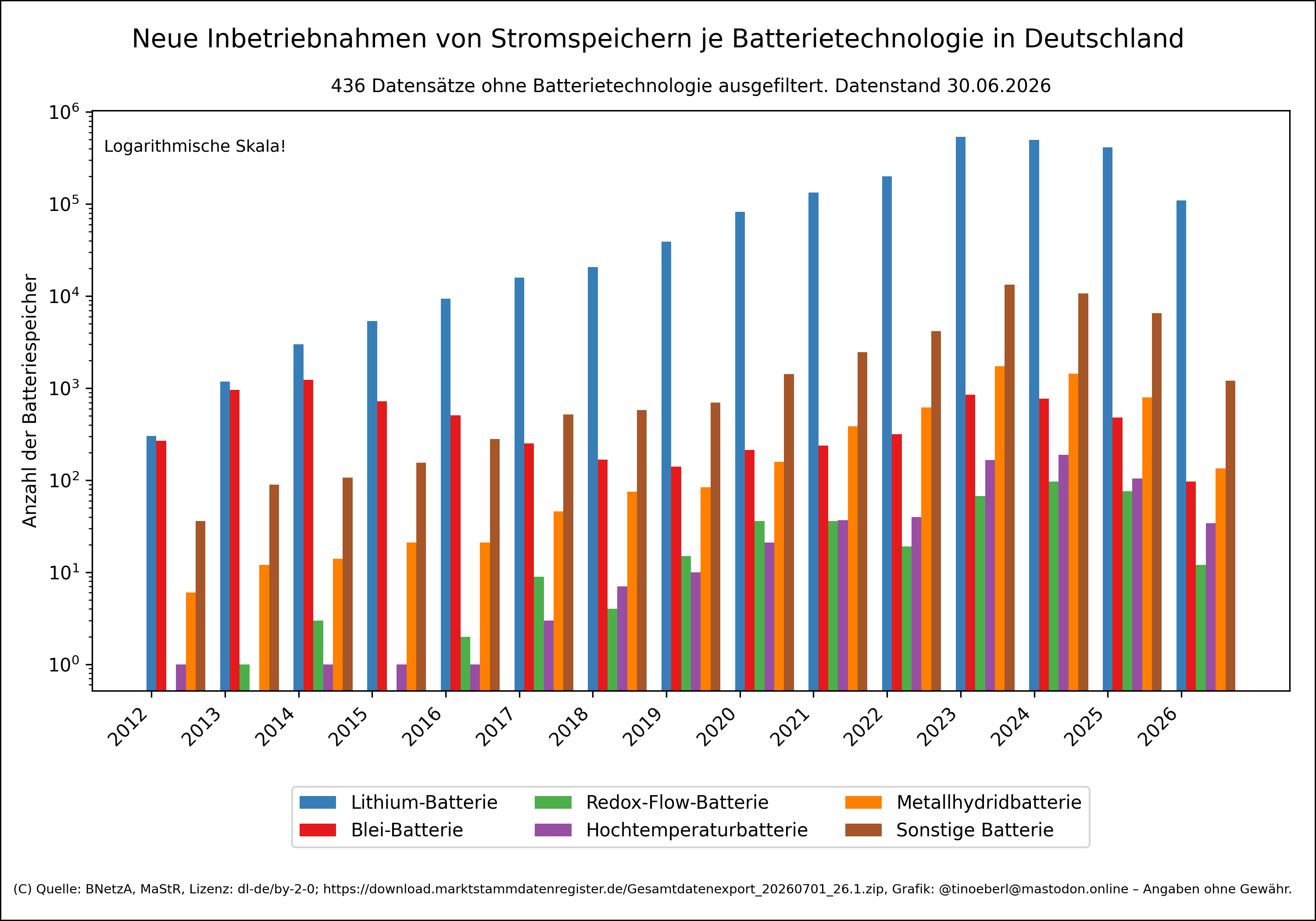
@tinoeberl@mastodon.onlineNeue Inbetriebnahmen von #Stromspeichern je #Batterietechnologie in #Deutschland mit Stand vom 30.06.2026.
Betrachtet werden Datensätze mit Betriebsstatus „aktiv“ und vorhan…