Replaced article(s) found for math.OC. https://arxiv.org/list/math.OC/new
[1/1]:
- A robust BFGS algorithm for unconstrained nonlinear optimization problems
Yaguang Yang
https://arxiv.org/abs/1212.5929
- Quantum computing and the stable set problem
Alja\v{z} Krpan, Janez Povh, Dunja Pucher
https://arxiv.org/abs/2405.12845 https://mastoxiv.page/@arXiv_mathOC_bot/112483516437815686
- Mean Field Game with Reflected Jump Diffusion Dynamics: A Linear Programming Approach
Zongxia Liang, Xiang Yu, Keyu Zhang
https://arxiv.org/abs/2508.20388 https://mastoxiv.page/@arXiv_mathOC_bot/115111048711698998
- Differential Dynamic Programming for the Optimal Control Problem with an Ellipsoidal Target Set a...
Sungjun Eom, Gyunghoon Park
https://arxiv.org/abs/2509.07546 https://mastoxiv.page/@arXiv_mathOC_bot/115179281556444440
- On the Moreau envelope properties of weakly convex functions
Marien Renaud, Arthur Leclaire, Nicolas Papadakis
https://arxiv.org/abs/2509.13960 https://mastoxiv.page/@arXiv_mathOC_bot/115224514482363803
- Automated algorithm design via Nevanlinna-Pick interpolation
Ibrahim K. Ozaslan, Tryphon T. Georgiou, Mihailo R. Jovanovic
https://arxiv.org/abs/2509.21416 https://mastoxiv.page/@arXiv_mathOC_bot/115286533597711930
- Optimal Control of a Bioeconomic Crop-Energy System with Energy Reinvestment
Othman Cherkaoui Dekkaki
https://arxiv.org/abs/2510.11381 https://mastoxiv.page/@arXiv_mathOC_bot/115372322896073250
- Point Convergence Analysis of the Accelerated Gradient Method for Multiobjective Optimization: Co...
Yingdong Yin
https://arxiv.org/abs/2510.26382 https://mastoxiv.page/@arXiv_mathOC_bot/115468018035252078
- History-Aware Adaptive High-Order Tensor Regularization
Chang He, Bo Jiang, Yuntian Jiang, Chuwen Zhang, Shuzhong Zhang
https://arxiv.org/abs/2511.05788
- Equivalence of entropy solutions and gradient flows for pressureless 1D Euler systems
Jos\'e Antonio Carrillo, Sondre Tesdal Galtung
https://arxiv.org/abs/2312.04932 https://mastoxiv.page/@arXiv_mathAP_bot/111560077272113052
- Kernel Modelling of Fading Memory Systems
Yongkang Huo, Thomas Chaffey, Rodolphe Sepulchre
https://arxiv.org/abs/2403.11945 https://mastoxiv.page/@arXiv_eessSY_bot/112121123836064435
- The Maximum Theoretical Ground Speed of the Wheeled Vehicle
Altay Zhakatayev, Mukatai Nemerebayev
https://arxiv.org/abs/2502.15341 https://mastoxiv.page/@arXiv_physicsclassph_bot/114057765769441123
- Hessian stability and convergence rates for entropic and Sinkhorn potentials via semiconcavity
Giacomo Greco, Luca Tamanini
https://arxiv.org/abs/2504.11133 https://mastoxiv.page/@arXiv_mathPR_bot/114346453424694503
- Optimizing the ground state energy of the three-dimensional magnetic Dirichlet Laplacian with con...
Matthias Baur
https://arxiv.org/abs/2504.21597 https://mastoxiv.page/@arXiv_mathph_bot/114431404740241516
- A localized consensus-based sampling algorithm
Arne Bouillon, Alexander Bodard, Panagiotis Patrinos, Dirk Nuyens, Giovanni Samaey
https://arxiv.org/abs/2505.24861 https://mastoxiv.page/@arXiv_mathNA_bot/114612580684567066
- A Novel Sliced Fused Gromov-Wasserstein Distance
Moritz Piening, Robert Beinert
https://arxiv.org/abs/2508.02364 https://mastoxiv.page/@arXiv_csLG_bot/114976243138728278
- Minimal Regret Walras Equilibria for Combinatorial Markets via Duality, Integrality, and Sensitiv...
Alo\"is Duguet, Tobias Harks, Martin Schmidt, Julian Schwarz
https://arxiv.org/abs/2511.09021 https://mastoxiv.page/@arXiv_csGT_bot/115541243299714775
toXiv_bot_toot
I’ve been testing a theory: many people who are high on #AI and #LLMs are just new to automation and don’t realize you can automate processes with simple programming, if/then conditions, and API calls with zero AI involved.
So far it’s been working!
Whenever I’ve been asked to make an AI flow or find a way to implement AI in our work with a client, I’ve returned back with an automation flow that uses 0 AI.
Things like “when a new document is added here, add a link to it in this spreadsheet and then create a task in our project management software assigned to X with label Y”.
And the people who were frothing at the mouth at how I must change my mind on AI have (so far) all responded with resounding enthusiasm and excitement.
They think it’s the same thing. They just don’t understand how much automation is possible without any generative tools.
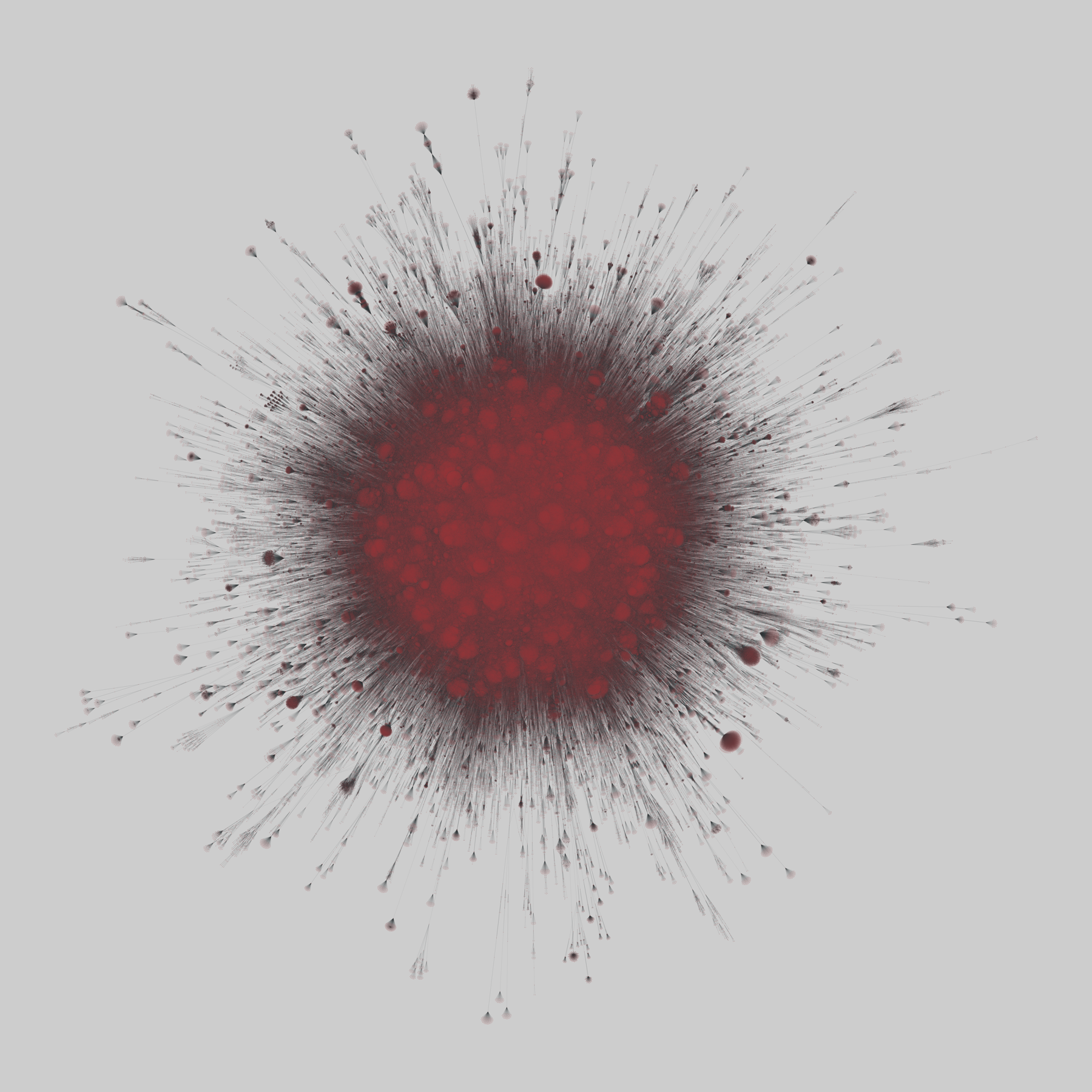
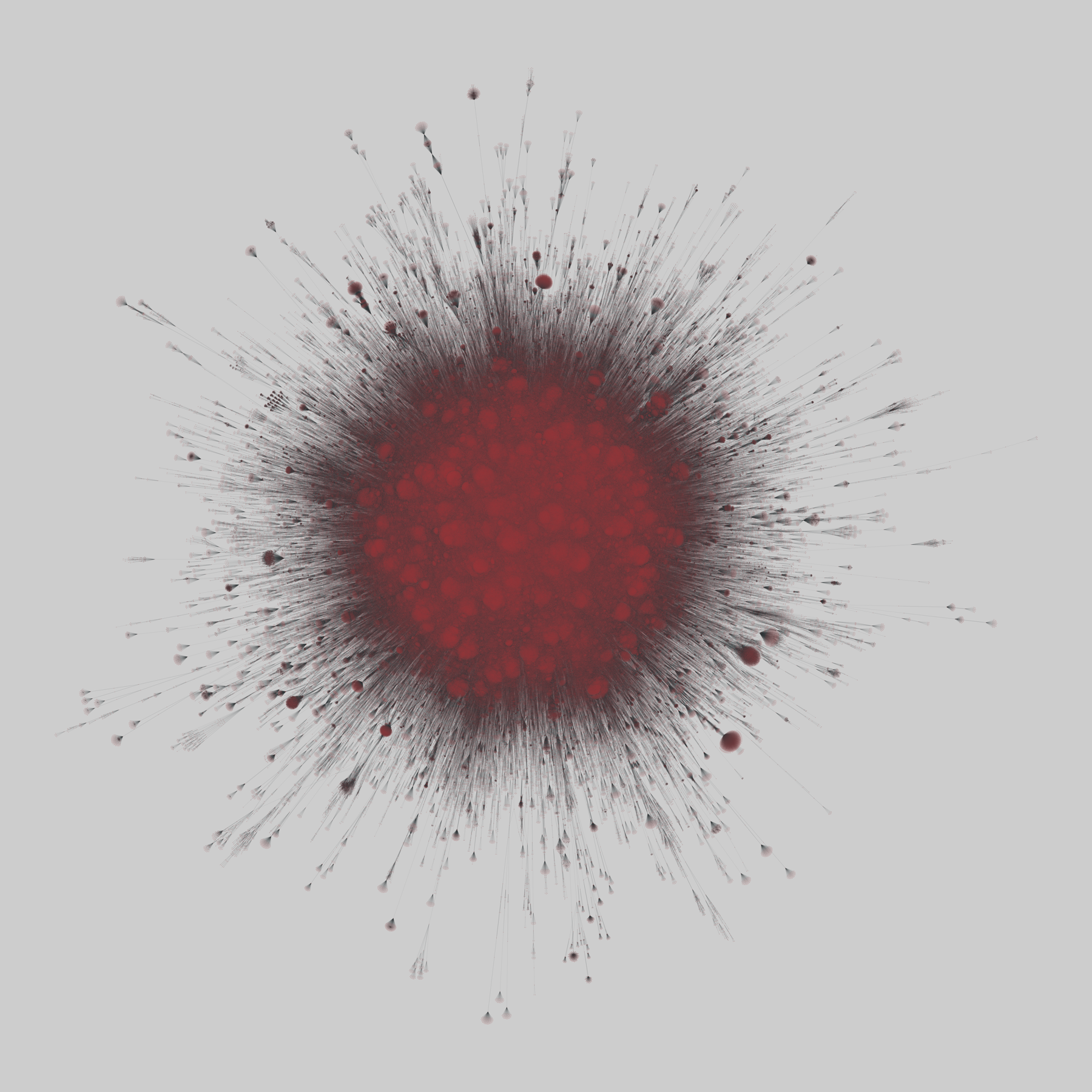
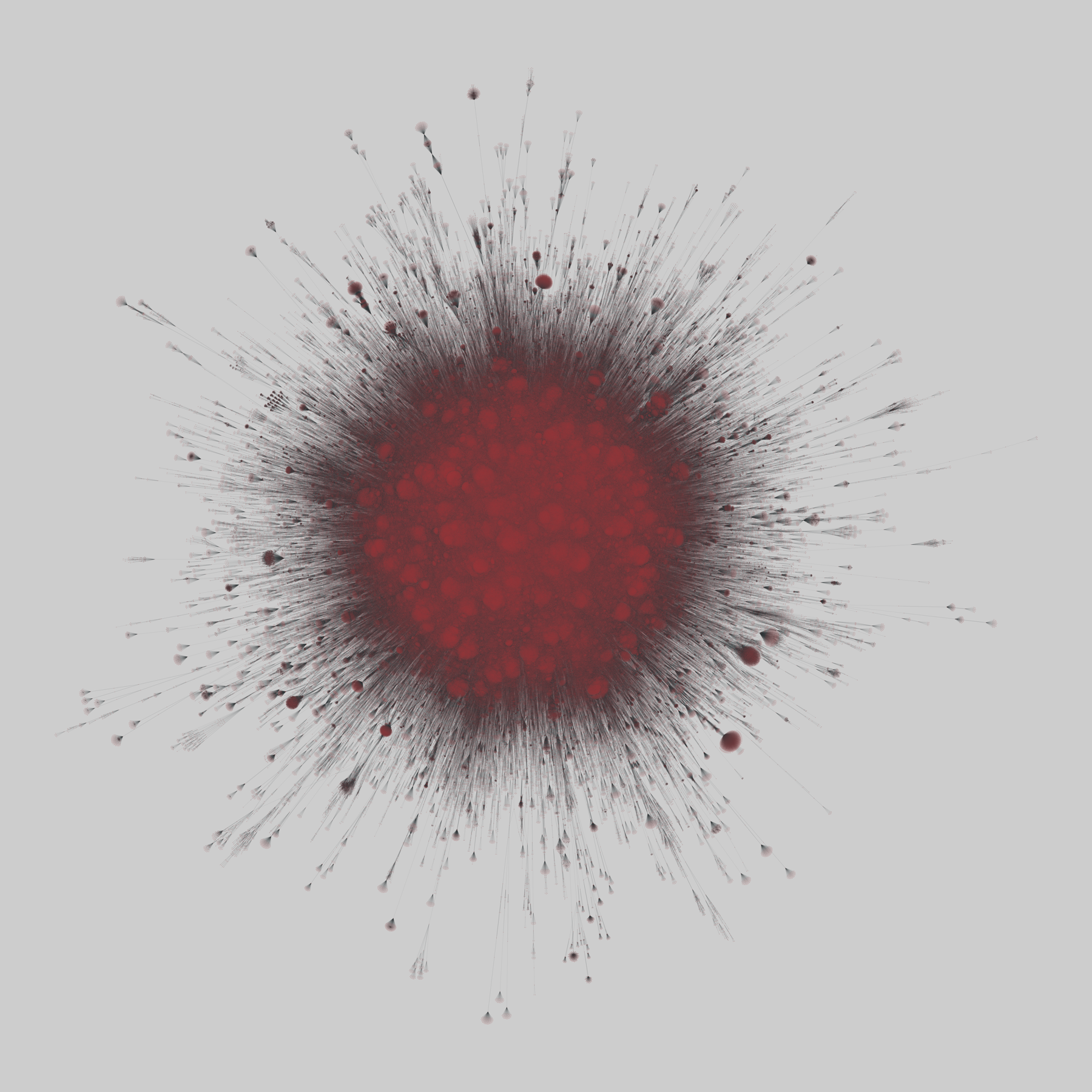
google_web: Old Google web graph (2002)
A web graph representing a crawl of a portion of the general WWW, from a 2002 Google Programming contest.
This network has 916428 nodes and 5105039 edges.
Tags: Informational, Web graph, Unweighted
https://networks.skewed.de/net/google_web
These are three arguments for web dev serv. APIs, even if you have to take a critical look at them in detail:
»Speed Comparison: Benchmarking programming languages using the Leibniz formula for calculating π«
— 2025-12-12
📊 https://niklas-heer.github.io/speed-comparison/…
Remote Interference Mitigation through Null Precoding and Fractional Programming
Xuyang Sun, Hussein A. Ammar, Israfil Bahceci, Raviraj Adve, Gary Boudreau, Zehua Li
https://arxiv.org/abs/2510.09989
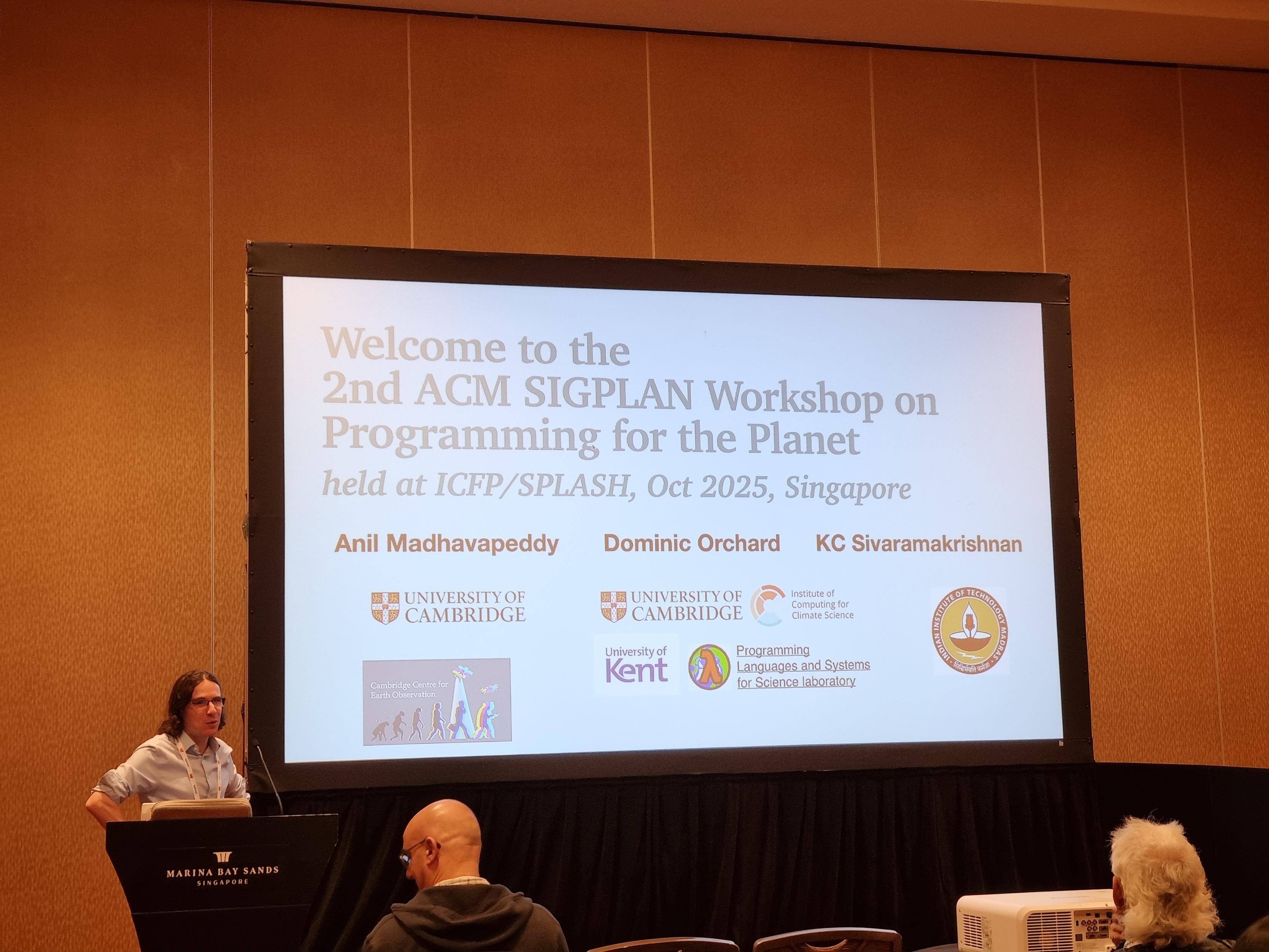
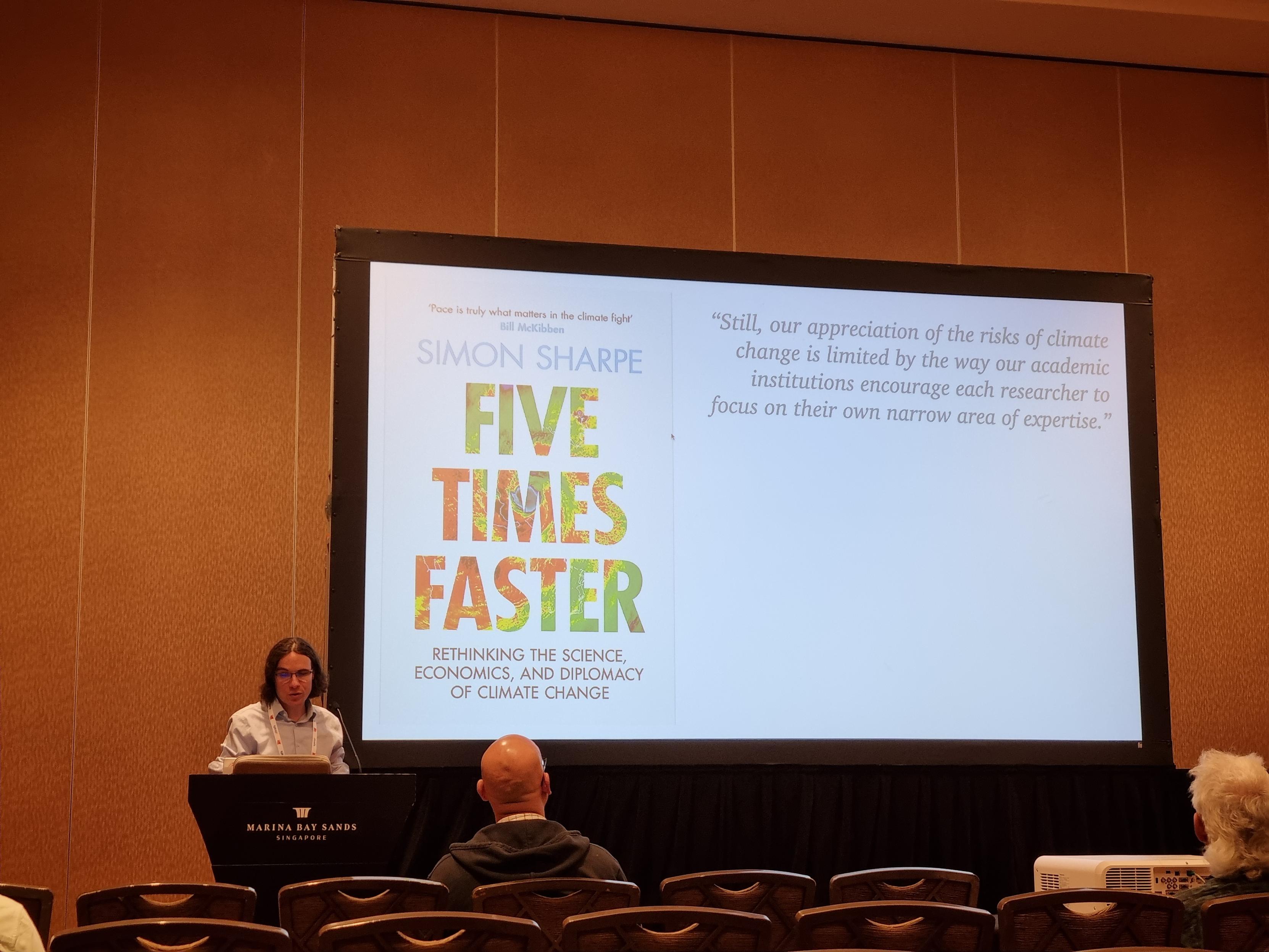
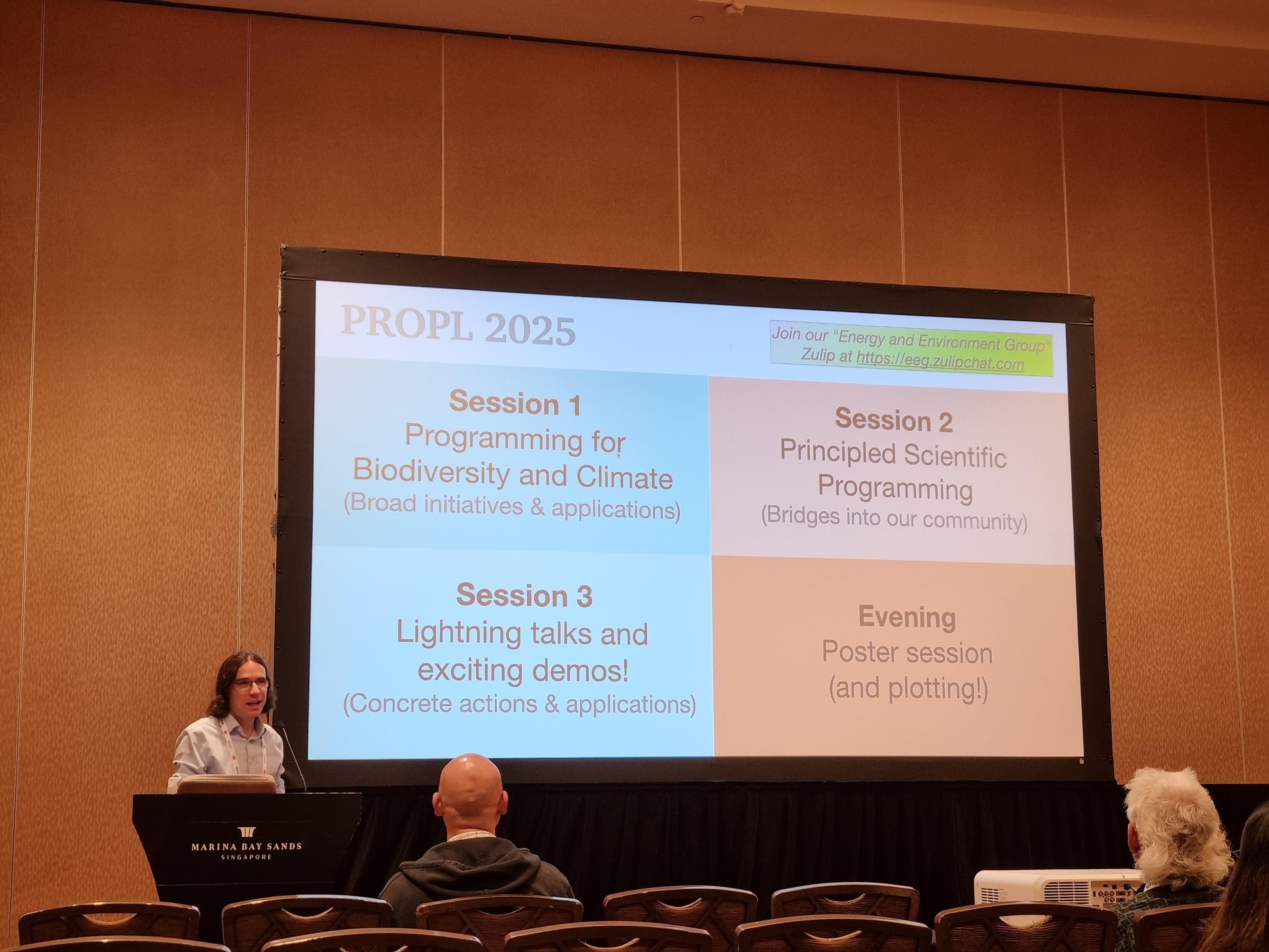
PROPL - Workshop on Programming for the Planet welcome by Dominic Orchard @… #icfpsplash25
Barriers that Programming Instructors Face While Performing Emergency Pedagogical Design to Shape Student-AI Interactions with Generative AI Tools
Sam Lau (University of California San Diego), Kianoosh Boroojeni (Florida International University), Harry Keeling (Howard University), Jenn Marroquin (Google)
https://arxiv.org/abs/2510.09492…
Nice blog in the discussion about AI & coding,
"AI can replace most of programming, but programming isn’t the job.
Programming is a task. It’s one of many things you do as part of your work. But if you’re a software engineer, your actual job is more than typing code into an editor."
https://<…
Verification of Sequential Convex Programming for Parametric Non-convex Optimization
Rajiv Sambharya, Nikolai Matni, George Pappas
https://arxiv.org/abs/2511.10622 https://arxiv.org/pdf/2511.10622 https://arxiv.org/html/2511.10622
arXiv:2511.10622v1 Announce Type: new
Abstract: We introduce a verification framework to exactly verify the worst-case performance of sequential convex programming (SCP) algorithms for parametric non-convex optimization. The verification problem is formulated as an optimization problem that maximizes a performance metric (e.g., the suboptimality after a given number of iterations) over parameters constrained to be in a parameter set and iterate sequences consistent with the SCP update rules. Our framework is general, extending the notion of SCP to include both conventional variants such as trust-region, convex-concave, and prox-linear methods, and algorithms that combine convex subproblems with rounding steps, as in relaxing and rounding schemes. Unlike existing analyses that may only provide local guarantees under limited conditions, our framework delivers global worst-case guarantees--quantifying how well an SCP algorithm performs across all problem instances in the specified family. Applications in control, signal processing, and operations research demonstrate that our framework provides, for the first time, global worst-case guarantees for SCP algorithms in the parametric setting.
toXiv_bot_toot
Replaced article(s) found for cs.NE. https://arxiv.org/list/cs.NE/new
[1/1]:
- Enabling Population-Level Parallelism in Tree-Based Genetic Programming for GPU Acceleration
Zhihong Wu, Lishuang Wang, Kebin Sun, Zhuozhao Li, Ran Cheng
AI-assisted Programming May Decrease the Productivity of Experienced Developers by Increasing Maintenance Burden
Feiyang (Amber), Xu, Poonacha K. Medappa, Murat M. Tunc, Martijn Vroegindeweij, Jan C. Fransoo
https://arxiv.org/abs/2510.10165
Between #Matlab and #Python, which one would you recommend to learn, for a student who wants to learn programming (from scratch) to do data analysis? And why?
I am conflicted because I think Matlab is maybe slightly more straightforward to learn, but Python should be more useful in the long …
DebugTA: An LLM-Based Agent for Simplifying Debugging and Teaching in Programming Education
Lingyue Fu, Haowei Yuan, Datong Chen, Xinyi Dai, Qingyao Li, Weinan Zhang, Weiwen Liu, Yong Yu
https://arxiv.org/abs/2510.11076
Programming peaked
#javascript #k8s
Locally Linear Convergence for Nonsmooth Convex Optimization via Coupled Smoothing and Momentum
Reza Rahimi Baghbadorani, Sergio Grammatico, Peyman Mohajerin Esfahani
https://arxiv.org/abs/2511.10239 https://arxiv.org/pdf/2511.10239 https://arxiv.org/html/2511.10239
arXiv:2511.10239v1 Announce Type: new
Abstract: We propose an adaptive accelerated smoothing technique for a nonsmooth convex optimization problem where the smoothing update rule is coupled with the momentum parameter. We also extend the setting to the case where the objective function is the sum of two nonsmooth functions. With regard to convergence rate, we provide the global (optimal) sublinear convergence guarantees of O(1/k), which is known to be provably optimal for the studied class of functions, along with a local linear rate if the nonsmooth term fulfills a so-call locally strong convexity condition. We validate the performance of our algorithm on several problem classes, including regression with the l1-norm (the Lasso problem), sparse semidefinite programming (the MaxCut problem), Nuclear norm minimization with application in model free fault diagnosis, and l_1-regularized model predictive control to showcase the benefits of the coupling. An interesting observation is that although our global convergence result guarantees O(1/k) convergence, we consistently observe a practical transient convergence rate of O(1/k^2), followed by asymptotic linear convergence as anticipated by the theoretical result. This two-phase behavior can also be explained in view of the proposed smoothing rule.
toXiv_bot_toot
Beyond Revenue and Welfare: Counterfactual Analysis of Spectrum Auctions with Application to Canada's 3800MHz Allocation
Sara Jalili Shani, Kris Joseph, Michael B. McNally, James R. Wright
https://arxiv.org/abs/2512.08106 https://arxiv.org/pdf/2512.08106 https://arxiv.org/html/2512.08106
arXiv:2512.08106v1 Announce Type: new
Abstract: Spectrum auctions are the primary mechanism through which governments allocate scarce radio frequencies, with outcomes that shape competition, coverage, and innovation in telecommunications markets. While traditional models of spectrum auctions often rely on strong equilibrium assumptions, we take a more parsimonious approach by modeling bidders as myopic and straightforward: in each round, firms simply demand the bundle that maximizes their utility given current prices. Despite its simplicity, this model proves effective in predicting the outcomes of Canada's 2023 auction of 3800 MHz spectrum licenses. Using detailed round-by-round bidding data, we estimate bidders' valuations through a linear programming framework and validate that our model reproduces key features of the observed allocation and price evolution. We then use these estimated valuations to simulate a counterfactual auction under an alternative mechanism that incentivizes deployment in rural and remote regions, aligning with one of the key objectives set out in the Canadian Telecommunications Act. The results show that the proposed mechanism substantially improves population coverage in underserved areas. These findings demonstrate that a behavioral model with minimal assumptions is sufficient to generate reliable counterfactual predictions, making it a practical tool for policymakers to evaluate how alternative auction designs may influence future outcomes. In particular, our study demonstrates a method for counterfactual mechanism design, providing a framework to evaluate how alternative auction rules could advance policy goals such as equitable deployment across Canada.
toXiv_bot_toot
"Working with AI is kinda painful, like working with a 200 IQ dementia patient"
- Vince P.
#programming #ai #claudecode
Validation of collision-free spheres of Stewart-Gough platforms for constant orientations using the Application Programming Interface of a CAD software
Bibekananda Patra, Rajeevlochana G. Chittawadigi, Sandipan Bandyopadhyay
https://arxiv.org/abs/2510.08408
Running on the battle-tested #Erlang virtual machine that powers planet-scale systems such as WhatsApp and Ericsson, #Gleam is ready for workloads of any size.
https://gleam…
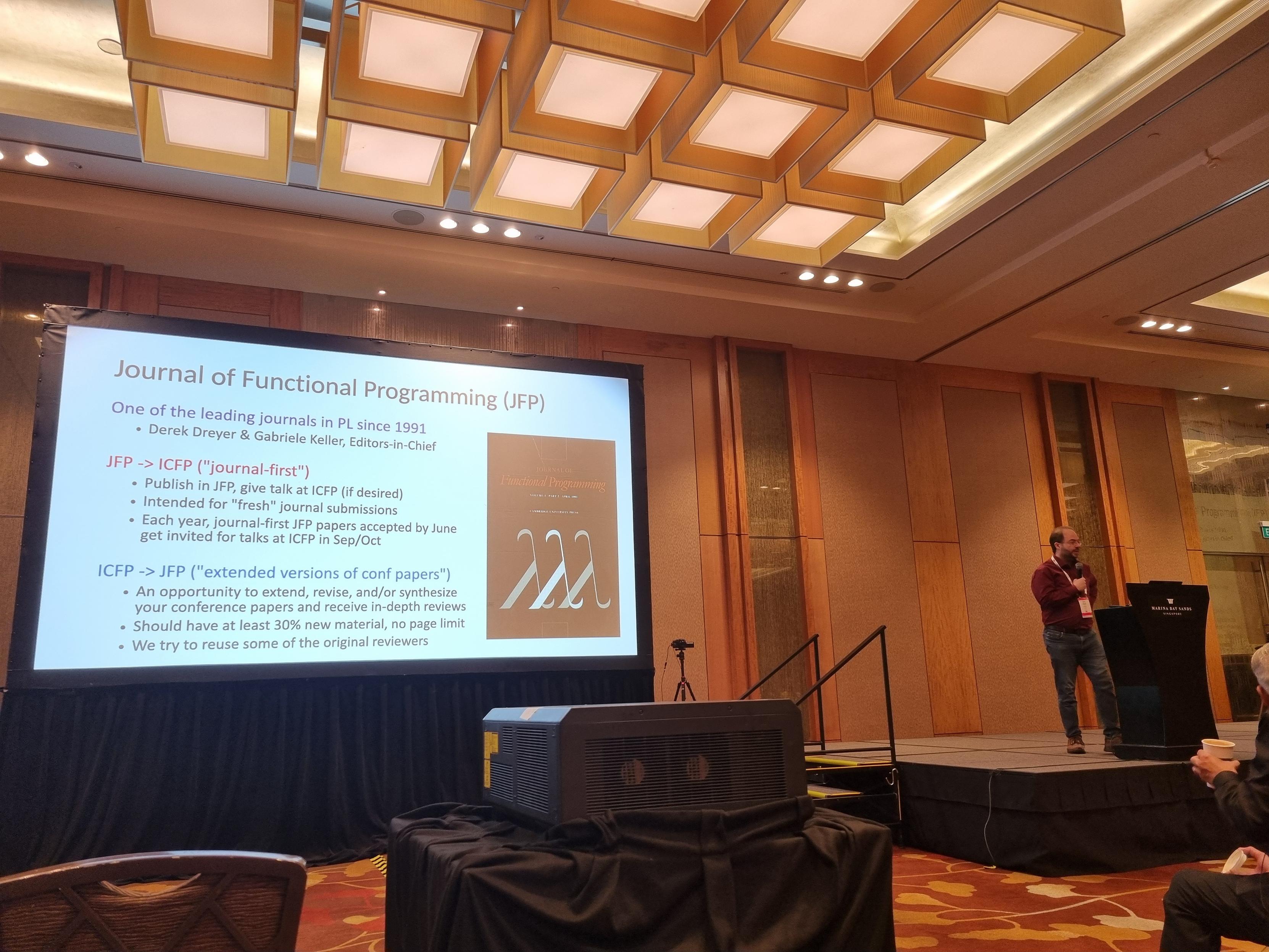
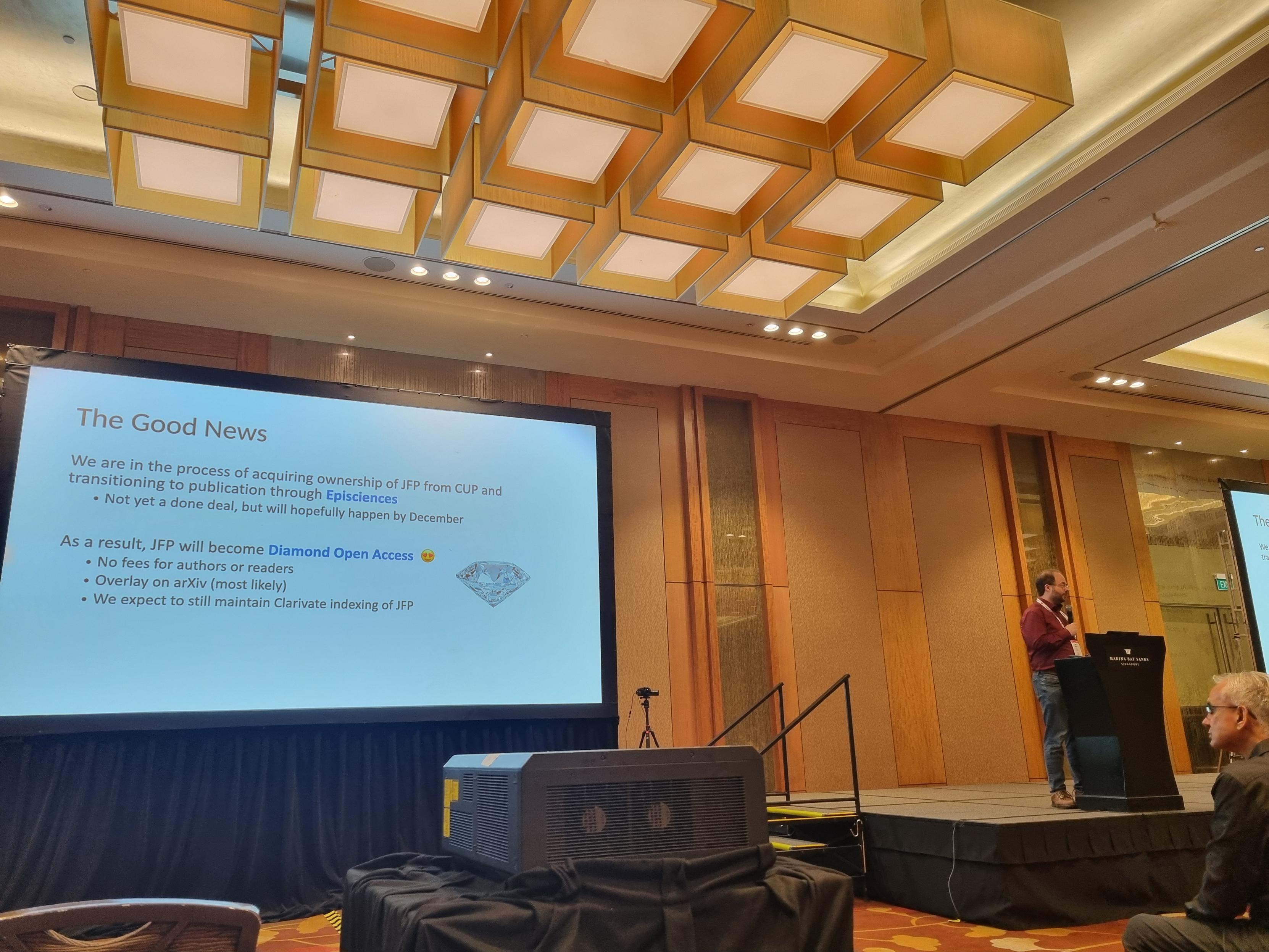
#icfpsplash25 Journal of Functional Programming leaves Cambridge University Press and becomes "scientist owned".
I did not know the Semble logo was a cairn.
Now I want a pet rock mascot. With googly eyes.
(I should make sure we have googly eyes at the conference)
Also a very good post by @wesleyfinck.org on naming in interfaces and products.
https://notes.wesleyfinck.org/3m6mpbihiy22o
LiveOIBench: Can Large Language Models Outperform Human Contestants in Informatics Olympiads?
Kaijian Zou, Aaron Xiong, Yunxiang Zhang, Frederick Zhang, Yueqi Ren, Jirong Yang, Ayoung Lee, Shitanshu Bhushan, Lu Wang
https://arxiv.org/abs/2510.09595
Poll: "I'm a server application programmer with a Fediverse account." This means that I mainly develop server-side applications.
Please consider quoting, or boosting for a more statistically significant result.
#programming #backend
HUGR: A Quantum-Classical Intermediate Representation
Mark Koch, Agust\'in Borgna, Seyon Sivarajah, Alan Lawrence, Alec Edgington, Douglas Wilson, Craig Roy, Luca Mondada, Lukas Heidemann, Ross Duncan
https://arxiv.org/abs/2510.11420
Cracking CodeWhisperer: Analyzing Developers' Interactions and Patterns During Programming Tasks
Jeena Javahar, Tanya Budhrani, Manaal Basha, Cleidson R. B. de Souza, Ivan Beschastnikh, Gema Rodriguez-Perez
https://arxiv.org/abs/2510.11516
I'm a well-known functional programing booster, but this article about the failure of web frameworks is spot on.
https://alfy.blog/2025/10/04/how-functional-programming-shaped-modern-frontend.html
google_web: Old Google web graph (2002)
A web graph representing a crawl of a portion of the general WWW, from a 2002 Google Programming contest.
This network has 916428 nodes and 5105039 edges.
Tags: Informational, Web graph, Unweighted
https://networks.skewed.de/net/google_web<…
On Dynamic Programming Theory for Leader-Follower Stochastic Games
Jilles Steeve Dibangoye, Thibaut Le Marre, Ocan Sankur, Fran\c{c}ois Schwarzentruber
https://arxiv.org/abs/2512.05667 https://arxiv.org/pdf/2512.05667 https://arxiv.org/html/2512.05667
arXiv:2512.05667v1 Announce Type: new
Abstract: Leader-follower general-sum stochastic games (LF-GSSGs) model sequential decision-making under asymmetric commitment, where a leader commits to a policy and a follower best responds, yielding a strong Stackelberg equilibrium (SSE) with leader-favourable tie-breaking. This paper introduces a dynamic programming (DP) framework that applies Bellman recursion over credible sets-state abstractions formally representing all rational follower best responses under partial leader commitments-to compute SSEs. We first prove that any LF-GSSG admits a lossless reduction to a Markov decision process (MDP) over credible sets. We further establish that synthesising an optimal memoryless deterministic leader policy is NP-hard, motivating the development of {\epsilon}-optimal DP algorithms with provable guarantees on leader exploitability. Experiments on standard mixed-motive benchmarks-including security games, resource allocation, and adversarial planning-demonstrate empirical gains in leader value and runtime scalability over state-of-the-art methods.
toXiv_bot_toot
Replaced article(s) found for cs.PL. https://arxiv.org/list/cs.PL/new
[1/1]:
- When Lifetimes Liberate: A Type System for Arenas with Higher-Order Reachability Tracking
Siyuan He, Songlin Jia, Yuyan Bao, Tiark Rompf
The purpose of an ORM is to use an SQL database without benefiting from SQL database.
#ORM #SQL #Programming
CodeWatcher: IDE Telemetry Data Extraction Tool for Understanding Coding Interactions with LLMs
Manaal Basha, Aime\^e M. Ribeiro, Jeena Javahar, Cleidson R. B. de Souza, Gema Rodr\'iguez-P\'erez
https://arxiv.org/abs/2510.11536
Replaced article(s) found for cs.PL. https://arxiv.org/list/cs.PL/new
[1/1]:
- PolyVer: A Compositional Approach for Polyglot System Modeling and Verification
Chen, Lin, Godbole, Singh, Polgreen, Lee, Seshia
from my link log —
The Gleam programming language is my new obsession.
https://ericcodes.io/blog/gleam-my-new-obsession.html
saved 2025-10-07 ht…
Crosslisted article(s) found for cs.PL. https://arxiv.org/list/cs.PL/new
[1/1]:
- Which Is Better For Reducing Outdated and Vulnerable Dependencies: Pinning or Floating?
Imranur Rahman, Jill Marley, William Enck, Laurie Williams
google_web: Old Google web graph (2002)
A web graph representing a crawl of a portion of the general WWW, from a 2002 Google Programming contest.
This network has 916428 nodes and 5105039 edges.
Tags: Informational, Web graph, Unweighted
https://networks.skewed.de/net/google_web
Crosslisted article(s) found for cs.PL. https://arxiv.org/list/cs.PL/new
[1/1]:
- Hound: Relation-First Knowledge Graphs for Complex-System Reasoning in Security Audits
Bernhard Mueller
…
ConstraintLLM: A Neuro-Symbolic Framework for Industrial-Level Constraint Programming
Weichun Shi, Minghao Liu, Wanting Zhang, Langchen Shi, Fuqi Jia, Feifei Ma, Jian Zhang
https://arxiv.org/abs/2510.05774
AutoMLGen: Navigating Fine-Grained Optimization for Coding Agents
Shangheng Du, Xiangchao Yan, Dengyang Jiang, Jiakang Yuan, Yusong Hu, Xin Li, Liang He, Bo Zhang, Lei Bai
https://arxiv.org/abs/2510.08511
“ALGOL 68 — A language specification intended as an improvement on ALGOL 60 that seemed to make everyone involved in the effort unhappy.”
https://cacm.acm.org/article/lessons-from-pl-i-a-most-ambitious-programming-language/
from my link log —
Thinking with Types: type-level programming in Haskell.
https://thinkingwithtypes.com/
saved 2019-05-26 https://dotat.at/:/PZEX4.html
Replaced article(s) found for cs.PL. https://arxiv.org/list/cs.PL/new
[1/1]:
- Weak-Linear Types
Hector Gramaglia
https://arxiv.org/abs/2402…
Replaced article(s) found for cs.PL. https://arxiv.org/list/cs.PL/new
[1/1]:
- Types, equations, dimensions and the Pi theorem
Nicola Botta, Patrik Jansson, Guilherme Horta Alvares Da Silva
 @arXiv_mathOC_bot@mastoxiv.page