Tootfinder

Opt-in global Mastodon full text search. Join the index!

@Techmeme@techhub.social
2026-09-24 11:41:07

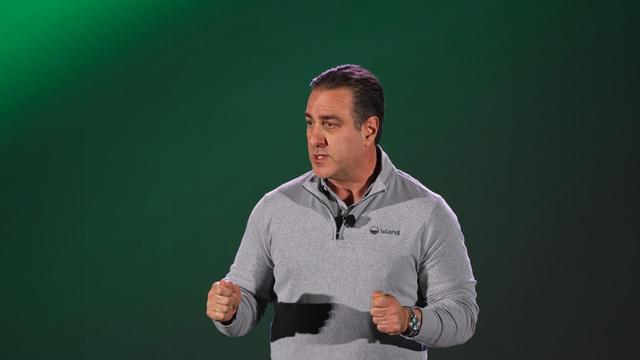
Dallas-based enterprise browser security startup Island raised $400M led by Evolution Equity Partners at a $6.4B valuation and plans to grow its staff to 1,500 (Samantha Subin/CNBC)
cnbc.com/2026/09/24/island-ai-

New research shows that what we call the human brain is actually two ancient, independent nervous systems assembled side by side over hundreds of millions of years of evolutionary history.
“We’ve shown for the first time that the front of the brain arises from a totally different progenitor cell than the back of the brain,”
said Kyle Loh, Ph.D., associate professor of developmental biology at Stanford Medicine and senior author of the study.
“Our discovery means that we can …

@cheryanne@aus.social
2026-07-24 00:50:28

Unfiltered
We are stripping away the bullshit to dissect how trauma, military health, fitness fads and the evolution of health impact your head, your heart, and the future...
Great Australian Pods Podcast Directory: greataustralianpods.com/unfilt

Unfiltered   
Screenshot of the podcast listing on the Great Australian Pods website
@fanf@mendeddrum.org
2026-09-23 20:42:04

from my link log —
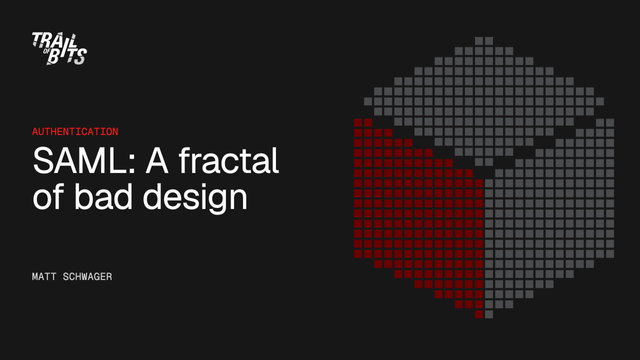
SAML: A fractal of bad design.
blog.trailofbits.com/2026/09/2
saved 2026-09-23

In a landmark study published today in the journal Nature,
a team of more than 130 international researchers combed through ancient bat fossils and genomic data from living species
to establish that bats likely originated in Europe about 65m years ago
– not in Africa, Asia or North America, as had previously been thought.
Rather, it seems that the earliest ancestors of modern bats dispersed from Europe into Africa,
then expanded onwards to Asia, the Americas and…

@stefan@gardenstate.social
2026-07-21 17:22:36

I should play more MMOs I always think.
The History & Evolution of Massively Multiplayer Games (with Raph Koster) - /noclip
#videoGames

@cosmos4u@scicomm.xyz
2026-07-19 16:38:21

The #BarnardsStar planetary system - stability, composition, and evolution of four sub-Earth exoplanets: academic.oup.com/mnras/article -> Astronomers find nearby planets to be small, strange, and utterly uninhabitable: cam.ac.uk/research/news/astron

Two contrasting films,
produced eight years apart,
neatly distill the evolution of John Fetterman,
Pennsylvania’s maverick senator in his journey from progressive icon to a man seemingly more at ease with his nominal Republican opponents than his fellow Democrats.
Fetterman’s evolution has been so stark that some Democrats fear he will go over to the Republicans
– jeopardizing the party’s hopes of regaining control of the Senate
– despite his disavowals of…

@arXiv_mathCT_bot@mastoxiv.page
2026-07-21 07:52:08

Dynamical Systems as Functorial Realisations of Abstract Evolution Shapes
Bangxin Wang
arxiv.org/abs/2607.17455 arxiv.org/pdf/2607.17455

@heiseonline@social.heise.de
2026-08-28 15:38:04

„Bau-Simulator: Evolution“ ausprobiert: Abriss mit roher Gewalt und Feingefühl
Im Bau-Simulator: Evolution lässt man seiner Zerstörungswut freien Lauf. Beim Probespiel sorgte das bereits für Schadenfreude mit technischen Macken.

@stargazersmith@social.linux.pizza
2026-07-17 18:40:54

Earth's largest particle accelerator opens new window into the early universe just after the Big Bang: 'A culmination of a decades-long quest' | Space space.com/scienc…

@seeingwithsound@mas.to
2026-09-18 06:54:48

#AI slop? Bioelectronic interfaces for restoring vision pathways sciencedirect.com/science/arti on

Evolution of bioelectric ophthalmic technologies toward intelligent vision therapy.
@raiders@darktundra.xyz
2026-07-16 20:08:32

“I'd rather slam my hand in a car door”: Ex-Raiders HC Jon Gruden spells doom for NFL over modern football evolution sportskeeda.com/nfl/news-i-d-r

@BBC3MusicBot@mastodonapp.uk
2026-07-23 23:30:29

🔊 #NowPlaying on #BBCRadio3:
#ThroughTheNight
- Sacra Partitura: the beginnings of Italian Baroque
The early music group Ensemble Daimonion traces the evolution of Italian musical style from the Renaissance to the Baroque.
Relisten now 👇
bbc.co.uk/programmes/m002yyfr

@arXiv_nlincd_bot@mastoxiv.page
2026-07-23 08:52:45

Replaced article(s) found for nlin.CD. arxiv.org/list/nlin.CD/new
[1/1]:
- A Mathematical Framework for Linear Response Theory for Nonautonomous Systems
Stefano Galatolo, Valerio Lucarini
arxiv.org/abs/2603.19509 mastoxiv.page/@arXiv_mathDS_bo
- Lagrangian Ellipsoid Diagnostics in Rough Two-Dimensional Synthetic Flows: Aspect-Ratio Saturatio...
Michael Chertkov
arxiv.org/abs/2605.27606 mastoxiv.page/@arXiv_physicsfl
- Universal self-similar evolution of two-dimensional acoustic turbulence in Bose-Einstein condensates
Guillaume Costa, Sergey Nazarenko, Giorgio Krstulovic
arxiv.org/abs/2607.06062 mastoxiv.page/@arXiv_condmatqu
toXiv_bot_toot

@kexpmusicbot@mastodonapp.uk
2026-07-04 00:26:25

🇺🇦 #NowPlaying on KEXP's #DriveTime
Pearl Jam:
🎵 Do the Evolution
#PearlJam
daniz.bandcamp.com/track/do-th
open.spotify.com/track/0dIipTY

@arXiv_physicsinsdet_bot@mastoxiv.page
2026-08-21 07:56:48

Radiotracer photoluminescence for element-specific identification of color centers
Brecht Biesmans, Afonso Lamelas, Kirill Danilov, Aleksandr Seliverstov, \^Angelo Costa, V\'itor Amaral, Andr\'e Vantomme, Jo\~ao Guilherme Correia, Ulrich Wahl, Lino M. C. Pereira, the ISOLDE Collaboration
arxiv.org/abs/2608.19219 arxiv.org/pdf/2608.19219 arxiv.org/html/2608.19219
arXiv:2608.19219v1 Announce Type: new
Abstract: We report on the implementation of a radiotracer photoluminescence spectroscopy setup at the ISOLDE radioactive ion beam facility at CERN, enabling element-specific identification of optically active defects in solids. The method combines radioactive ion implantation with optical spectroscopy, allowing the temporal evolution of photoluminescence signals to be correlated directly with nuclear decay. The setup is currently optimized for color centers in diamond and related wide-bandgap materials and enables room-temperature measurements. The system consists of an optical microscope coupled to a fiber-fed Czerny-Turner spectrometer with a liquid-nitrogen-cooled CCD detector, providing the stability required for long-duration measurements. As a proof-of-principle, radioactive $^{75}$Ga was implanted into diamond as a precursor to produce $^{75}$Ge impurities. The photoluminescence band extending from 600 nm, corresponding to the well-known GeV$^{-}$ center, exhibits an exponential decay with a half-life of $82.3^{ 2.5}_{-2.3} \mathrm{min}$, in agreement with the known $\beta^{-}$ decay half-life of $^{75}$Ge of $82.78(4) \mathrm{min}$. This establishes a direct and unambiguous correlation between the observed spectral feature and its germanium origin. These results demonstrate the capability of the setup to perform element-specific optical spectroscopy and extend radiotracer methods to color centers in wide-bandgap materials, taking advantage of the uniquely broad range of radioactive isotopes available at ISOLDE.
toXiv_bot_toot

@arXiv_physicsfludyn_bot@mastoxiv.page
2026-07-23 08:11:44

Discrete Boltzmann model at Burnett level for compressible multicomponent flows under external forces
Demei Li, Huilin Lai, Chuandong Lin, Suni Chen
arxiv.org/abs/2607.20029 arxiv.org/pdf/2607.20029 arxiv.org/html/2607.20029
arXiv:2607.20029v1 Announce Type: new
Abstract: This work extends the Burnett-level discrete Boltzmann model (DBM) from single-component to multicomponent compressible flows under external forces, building on the fundamental framework of the high-precision discrete kinetic method. A high-isotropy 25-discrete-velocity set is adopted to guarantee numerical stability and spatial symmetry, while a rigorous moment-matching strategy is developed to construct the equilibrium distribution function and external force term. Different from the single-component counterpart, the present model intrinsically incorporates interspecies mass diffusion effects and multi-component thermodynamic nonequilibrium behaviors, which are critical for complex compressible multicomponent systems. The Chapman--Enskog expansion verifies that the proposed model can exactly recover the Burnett-level governing equations for forced multicomponent compressible flows in the continuum limit. Five canonical benchmark cases, including multicomponent mass diffusion, compressible Sod shock tube, thermal Couette flow, Kelvin--Helmholtz instability, and Rayleigh--Taylor instability, are systematically performed. Numerical results demonstrate that the developed Burnett-level multicomponent DBM achieves high accuracy and robustness in capturing both hydrodynamic evolution and multicomponent nonequilibrium characteristics under external forces.
toXiv_bot_toot

@arXiv_astrophGA_bot@mastoxiv.page
2026-07-22 08:52:17

Replaced article(s) found for astro-ph.GA. arxiv.org/list/astro-ph.GA/new
[1/2]:
- GA-NIFS: Powerful and frequent outflows in moderate-luminosity active galactic nuclei at $z\sim3-6$
Giacomo Venturi, et al.
arxiv.org/abs/2512.09996 mastoxiv.page/@arXiv_astrophGA
- ALMA High-J CO Spectroscopy of High-Redshift Galaxies. II. 0.03" Resolution CO Kinematics Reveal ...
Ken-ichi Tadaki
arxiv.org/abs/2603.01352 mastoxiv.page/@arXiv_astrophGA
- Very long-term relaxation of harmonic 1D self-gravitating systems
Kerwann Tep, Jean-Baptiste Fouvry, Christophe Pichon
arxiv.org/abs/2603.11238 mastoxiv.page/@arXiv_astrophGA
- The tidal evolution of satellite galaxies in cosmological simulations: insights from COLIBRE
Feihong He, et al.
arxiv.org/abs/2604.03105 mastoxiv.page/@arXiv_astrophGA
- Deriving volume density profiles of filaments from observed surface densities
Alexander Men'shchikov, Guo-Yin Zhang
arxiv.org/abs/2604.12570 mastoxiv.page/@arXiv_astrophGA
- Reduced Incidence of Little Red Dots at z < 3 from Number Density and Halo Mass Evolution
Chenxuan Zhang, Huanian Zhang, Qingwen Wu, Luis C. Ho, Jian-Min Wang
arxiv.org/abs/2606.02773 mastoxiv.page/@arXiv_astrophGA
- The Hubble Missing Globular Clusters Survey IV. Ultra-faint compact satellites of the Milky Way. ...
M. Bellazzini, et al.
arxiv.org/abs/2606.12517 mastoxiv.page/@arXiv_astrophGA
- Nebular_AGN: A CIGALE module for fitting AGN emission lines
Hao Zhang, Patrice Theule, Veronique Buat, Denis Burgarella, Estelle Pons, Mederic Boquien
arxiv.org/abs/2606.14643 mastoxiv.page/@arXiv_astrophGA
- Assembly bias from nuisance to probe I: the relation between galactic conformity and the linear m...
Nelson Padilla, Ivan Lacerna, Dante Paz
arxiv.org/abs/2607.04022 mastoxiv.page/@arXiv_astrophGA
- Enabling Cosmic Web Analysis at Gigaparsec Scales: A Multi Block Approach for DisPerSE
Ankit Singh, Frazer Pearce, Meghan Gray, Gustavo Yepes
arxiv.org/abs/2607.14785 mastoxiv.page/@arXiv_astrophGA
toXiv_bot_toot

@NFL@darktundra.xyz
2026-09-07 09:06:32

One question for each NFL team: Andy Reid's evolution, Caleb Downs' value among topics nytimes.com/athletic/7568408/2

@Tupp_ed@mastodon.ie
2026-07-12 12:01:57

New Gist: The End of the 100 Year Government
“Protection of the property-owning class has been the water that Irish politics swims through, invisible to its fishy participants but explaining nearly everything. It is why our housing crisis exists and why it cannot, apparently, be solved. Solving it would mean a political evolution on a scale of growing legs and lungs and actually climbing out of that water. "

@arXiv_csAR_bot@mastoxiv.page
2026-08-14 07:30:59

Spec-Driven Hardware Evolution via Executable Contract Refinement and Proof-Guided RTL Update
Shibo Zhao, Yang Zhang, Mengxia Tao, Baoqi Zhang, Kezhi Li, Qiang Xu, Binwu Zhu, Hao Yan, Min Li
arxiv.org/abs/2608.12684 arxiv.org/pdf/2608.12684 arxiv.org/html/2608.12684
arXiv:2608.12684v1 Announce Type: new
Abstract: Hardware development is inherently evolutionary: major revisions typically begin by changing intended behavior and then updating a previously validated implementation, rather than regenerating RTL from scratch. Yet most recent LLM-based hardware research still frames the task primarily as prompt-to-RTL generation, offering limited support for semantic version evolution of trusted legacy designs. We present spec-driven hardware evolution, a contract-centered formulation for RTL version iteration. Instead of treating a new feature request as a direct prompt for RTL generation, we refine it into a reviewed executable contract for the next version. This contract specifies what must hold at the externally visible transactional level through a behavior-level reference together with explicit observation and checking semantics, while leaving how the change is realized in RTL to the evolution process. Based on this formulation, we organize hardware evolution into four stages: Specify, Plan, Implement, and Validate. After contract approval, the remaining stages proceed automatically: Plan derives cross-version semantic deltas and localizes affected RTL regions, aided by mutation-based semantic probing; Implement and Validate then perform legacy-aware RTL update under proof-guided checking and iterative repair. We evaluate the framework on a controlled version-evolution case study of a representative TPU datapath block under data-format changes. The results support the feasibility of contract-driven hardware evolution and demonstrate that the proposed backend workflow can effectively drive validated legacy RTL toward next-version functional convergence under a reviewed executable contract. An anonymous artifact for reproducibility is available at anonymous.4open.science/r/SDHE.
toXiv_bot_toot

@doktrock@toad.social
2026-06-30 14:12:17

"Rise of modern marine fishes captured in an early Paleocene Lagerstätte" in the Eastern Desert of Egypt. ⚒️🧪
"helping to fill a 10 million year interval with sparse fossil information about modern fish evolution. Among the findings include the earliest known fossil skeletons of jack, a type of sportfish, moonfish and pipefish, the family to which seahorses belong."
#geology

@cowboys@darktundra.xyz
2026-09-07 09:04:23

One question for each NFL team: Andy Reid's evolution, Caleb Downs' value among topics nytimes.com/athletic/7568408/2

@cwensel@fosstodon.org
2026-07-13 22:05:19

In which I introduce my new project
#sql #postgreSQL

@arXiv_csGR_bot@mastoxiv.page
2026-07-21 07:34:37

Feature-Guided Diffusion for Non-Differentiable Inverse Rendering
Andrei-Timotei Ardelean, Michael Fischer, Tim Weyrich, Tom\'a\v{s} Iser
arxiv.org/abs/2607.17411 arxiv.org/pdf/2607.17411 arxiv.org/html/2607.17411
arXiv:2607.17411v1 Announce Type: new
Abstract: Inverse rendering is traditionally solved via differentiable renderers and gradient descent, which requires substantial problem-specific engineering and is prone to getting stuck in local minima due to ambiguities. Derivative-free approaches alleviate engineering requirements, but often heavily depend on a good problem initialization. In this work, we propose Feature-Informed Diffusion Evolution (FIDE), a fully black-box framework that requires no gradients or specific initialization: the renderer is treated as an opaque function whose only requirement is to produce images. Our key insight is feature guiding: rather than reducing each candidate rendering to a scalar loss value, we use a Vision Transformer (ViT) to extract dense visual features from it. We subsequently use these features to train a diffusion-based candidate proposal model, allowing the network to use visual cues to predict parameters that would match the target image. The candidate solutions proposed by this diffusion model are then refined in a closed loop with a CMA evolution strategy, continuously narrowing the proposal region as optimization progresses. We validate across diverse inverse problems from path tracing, vector splines, Voronoi shaders, and robotics, and demonstrate that feature-guiding substantially improves convergence over scalar-loss baselines and reliably escapes local minima where gradient-based methods stall.
toXiv_bot_toot

@cosmos4u@scicomm.xyz
2026-07-15 23:30:44

New Constraints on the Spatial and Temporal Evolution of the Lunar Surface Regolith: #lunar explorers, depending on the task at hand.

@KazuShuSora@social.tchncs.de
2026-07-13 12:42:19

Today's haul using the coupon we got when we purchased our PCs 🙂‍↕️💕

Resident Evil 4 - Separate Ways DLC
Resident Evil Requiem Deluxe Edition
Jurassic World Evolution 3: Rebirth Expansion
Resident Evil 5 Gold Edition
Resident Evil 6 Complete Pack
Reanimal
Silent Hill 2
Silent Hill f
@fanf@mendeddrum.org
2026-08-16 08:42:02

from my link log —
Why Teslas aren't the future.
theweek.com/articles/861665/wh
saved 2019-09-11

@izzychambers@vivaldi.net
2026-08-06 13:58:24

@… I prefer Evolution. Just like the interface better.

@michabbb@social.vivaldi.net
2026-08-08 09:13:20

I think I've reached the next evolution stage: a team of coding agents building 24/7, for days on end. Only problem? One subscription doesn't cut it anymore.
🙈😅
#AI #Coding #Codex

@memeorandum@universeodon.com
2026-07-21 10:50:37

Once Anti-Abortion, Now a Progressive: The Evolution of a Maine Democrat (New York Times)
nytimes.com/2026/07/21/us/poli
memeorandum.com/260721/p15#a26

@simon_brooke@mastodon.scot
2026-08-31 07:18:41

Discussion of how evolution, under #capitalism, systematically selects for #psychopathy. Which is obvious, when you think about it, but it's interesting to hear it argued explicitly.
The Great Simplification with Nate Hagens: The Psychopathic Selection Hypothesis: The Rules of the Game …

@stargazersmith@social.linux.pizza
2026-09-14 03:15:21

space.com/astronomy/james-webb

@chiraag@mastodon.online
2026-09-05 14:50:41

Fascinating discussion of where menopause came from and potentially why it evolved:
Nebula: nebula.tv/videos/stephaniesamm
YT:

@christydena@zirk.us
2026-08-07 02:32:34

"In order to make a revolution, you have to discard the notion that anything one has previously regarded as truth about human beings is necessarily true. Revolution is an effort to discover or to create truth, not to prove what is true. [...] The highest level of human creativity is the constant developing and advancing of your vision."
Joshua and Grace Lee Boggs, Revolution and Evolution in the Twentieth Century

The African savanna was critical for the evolution of humans to their current form.
But they weren't always there.
To reach their current form, covering about half of Africa, took a process starting around 15 million years ago.
pnas.org/doi/10.1073/pnas.2527

@markhburton@mstdn.social
2026-08-02 08:11:30

During the lockdowns when bookshops were closed, I was reading books we had on the shelves. One was C Darwin, Journal of Researches (1839), his diary of the Beagle voyage. Absolutely fascinating and very readable. An insight into those regions in 1831-36 and Darwin's emerging world view, and broadly humanistic attitude.
My edition (1900s) lacked a cover and some pages were still uncut. I rebound it (badly).

@shriramk@mastodon.social
2026-08-26 01:53:44

At a party tonight, my inimitable colleague Michael Littman (initials: ML) said, "You know, Tamil sounds like the name of a programming language". This suggests the next obvious step in PL evolution. @… and KC Sivaramakrishnan, make this happen:

SML ⭢ OCaml ⭢ TaML
@mela@zusammenkunft.net
2026-08-27 07:59:54

Ach. Guck. Ein Teil der Feministen haben zeitweise auch Lesben ausschließen wollen. "The Lavender Menace".
Quelle surprise.
share.libbyapp.com/title/12450

@arXiv_mathDG_bot@mastoxiv.page
2026-09-15 08:49:05

Global Analysis: An Introduction to Nonlinear Analysis and Its Variational Methods on Riemannian Manifolds
Carlos Daniel Vel\'azquez-Mendoza, Mar\'ia de los \'Angeles Sandoval-Romero, Romulo Diaz Carlos
arxiv.org/abs/2609.14580 arxiv.org/pdf/2609.14580 arxiv.org/html/2609.14580
arXiv:2609.14580v1 Announce Type: new
Abstract: This monograph develops an introduction to global analysis centered on the interaction between differential geometry, functional analysis, partial differential equations, and variational methods on Riemannian manifolds. Beginning with smooth and Riemannian geometry, it develops Sobolev spaces, distributions, interpolation and fractional regularity, differential and pseudodifferential operators on vector bundles, elliptic theory, heat methods, bounded geometry, and trace theorems. It then treats Fredholm and index theory, culminating in the Atiyah--Singer index theorem, followed by geometric evolution equations and Ricci flow, infinite-dimensional geometry on Banach and Hilbert manifolds, and variational methods including the direct method, Palais--Smale theory, deformation arguments, the mountain pass theorem, and the Nehari method. Particular emphasis is placed on explicit proofs, the passage from local Euclidean estimates to intrinsic global statements, and the precise geometric hypotheses required in compact, noncompact, and boundary settings. The text is intended for advanced undergraduate and graduate students, as well as readers approaching global analysis from geometry or differential equations.
toXiv_bot_toot

@hex@kolektiva.social
2026-06-27 03:36:29

Distinct legal existence:
This is a distinct legal entity, such as an LLC. Your "church" will need a governing body to run the legal entity it's formed under. However you decide to do this, it must be spelled out clearly in filing forms. There are a lot of ways to "govern" a community, and, since diversity allows evolution, I'm not going to describe any of them.
Basically, all you need is *some* legal incorporation. This is important for the legal aspect (if you are trying to subvert the legal framework within the legal framework). You will need this in order to own bank accounts and property collectively, and you may need this to remove or reduce the influence of the dominant system on your collective governance of finances and property.
If you, on the other hand, just have a communal squat that operates economically entirely in black markets then I don't know why you're reading this.
(Fun fact, which I'm skipping to because I don't want to forget it: As I understand it, The Church of the Subgenious skipped a lot of this by including "paying taxes" in their definition of their church. They pay their taxes every year, and the IRS rejects their payment, which proves they're a church. OK, back to what I was talking about...)
Edit: One thing I forgot about this. There must be *at least 3 /unrelated/ people* named on the legal documents. That is the minimum number to be a legal church.

@_tillwe_@mastodon.social
2026-06-27 07:45:15

Einer kleinen Notiz in der heutigen BZ entnehme ich, dass Günter Dux gestorben ist - hatte ihn Ende der 1990er in meinem Studium erlebt, habituell ein sehr traditioneller Lehrer (Vorlesung = Manuskript des nächsten Buches wird vorgelesen), in seinen Überlegungen zu Umwelt, Evolution und Enkulturation aber durchaus interessant und mit nachhaltigem Nachhall. #rip

@raiders@darktundra.xyz
2026-09-07 09:03:20

One question for each NFL team: Andy Reid's evolution, Caleb Downs' value among topics nytimes.com/athletic/7568408/2

@arXiv_astrophCO_bot@mastoxiv.page
2026-08-06 08:41:46

Crosslisted article(s) found for astro-ph.CO. arxiv.org/list/astro-ph.CO/new
[1/1]:
- Consistent Thermal Resummation and Phase Transitions with 2PI Methods
Amitayus Banik, Kimmo Kainulainen
arxiv.org/abs/2608.04102 mastoxiv.page/@arXiv_hepph_bot
- Amnesia in the Axion Misalignment Landscape
Kierthika Chathirathas, Cem Er\"oncel, Mathieu Kaltschmidt, Javier Redondo, Kenichi Saikawa
arxiv.org/abs/2608.04139 mastoxiv.page/@arXiv_hepph_bot
- Corrections to Hawking radiation from asteroid-mass primordial black holes: analytic and numerica...
Gabriel Vasquez, Bowen Chen, Cara Nel, Emily Koivu, Makana Silva, Christopher M. Hirata
arxiv.org/abs/2608.04346 mastoxiv.page/@arXiv_grqc_bot/
- Relativistic Signatures of Dark Matter Equations of State in Static Spherically Symmetric Spacetimes
Akash Yadav, Sudhava Yadav, K. K. Venkataratnam
arxiv.org/abs/2608.04470 mastoxiv.page/@arXiv_grqc_bot/
- Inflow-driven galaxy evolution - I. Revealing the physics of the fundamental metallicity relation
Kai Wang, et al.
arxiv.org/abs/2608.04784 mastoxiv.page/@arXiv_astrophGA
- Evolution of matter perturbations in the context of cosmic slowing down
D. Koh Cuende, G. Panotopoulos
arxiv.org/abs/2608.04922 mastoxiv.page/@arXiv_grqc_bot/
- Post-Inflationary Constraints on Nonminimally Coupled Quintessential Inflation
Min Gi Park, Seong Chan Park, Tomo Takahashi, Jos\'e Jaime Terente D\'iaz
arxiv.org/abs/2608.05079 mastoxiv.page/@arXiv_grqc_bot/
- CCAT: Design and Characterization of the 350 GHz Instrument Module
Ben Keller, et al.
arxiv.org/abs/2608.05121 mastoxiv.page/@arXiv_astrophIM
toXiv_bot_toot

@arXiv_astrophGA_bot@mastoxiv.page
2026-09-09 09:37:27

The fading hierarchy of Galactic open clusters
Guimei Liu, Jo\~ao Alves, Yu Zhang, Emily L. Hunt, Ruqiu Lin, Josefa E. Gro{\ss}schedl, Efrem Maconi, Nora Wagner, Lilly Kormann, Cameren Swiggum
arxiv.org/abs/2609.09122 arxiv.org/pdf/2609.09122 arxiv.org/html/2609.09122
arXiv:2609.09122v1 Announce Type: new
Abstract: Galactic open clusters provide a record of both hierarchical star formation and the subsequent dynamical evolution of the Milky Way disk. We use the two-point correlation function to characterize the spatial and kinematic clustering of open clusters in the solar neighborhood, considering their three-dimensional (3D) distributions and their projections onto the Galactic plane, as well as subsamples divided by age, mass, and survey volume. We quantify the clustering through fractal dimensions and characteristic correlation scales. We find that the youngest clusters have fractal dimensions comparable to those measured in the interstellar medium, suggesting that they retain part of the hierarchical structure of their natal molecular clouds. The clustering strength then decreases systematically with age and becomes weak on a characteristic timescale of order 100 Myr. This evolution is scale dependent: the excess correlation at tens of parsecs fades more rapidly than the weaker correlation at hundreds of parsecs. By contrast, we find only a weak dependence of the clustering properties on cluster mass and volume. Using the same cluster sample, we derive an empirical mapping between projected and 3D fractal dimensions, providing an observational calibration for comparing the Milky Way with studies of external galaxies, where only projected measurements are available. The open-cluster population exhibits characteristic spatial and kinematic clustering scales of approximately 370 pc and 11 km/s, respectively. These results support a picture in which young open clusters inherit a spatial hierarchy from star formation and progressively lose their spatial correlations through subsequent evolution.
toXiv_bot_toot

@vosje62@mastodon.nl
2026-09-20 01:40:27

RE: scicomm.xyz/@AstroDave/1173006
Amerikaans lab dat op basis van bestaande vervuiling op zoek is naar bacteriën die kunnen helpen om die vervuiling aan te pakken...
'Over time, pollution puts pressure on these microbes to adapt. Bacteria that can survive it — or even break it down — grow more common. And they can pass that ability to other bacteria, not just to their own offspring, by sharing genes directly.
At Hazelwood Green, decades of industrial pollution accidentally ran a giant evolution experiment for us.'
(Via @… )

@cosmos4u@scicomm.xyz
2026-09-16 17:07:28

The emergence of a [WC] star in #SakuraisObject: academic.oup.com/mnras/article -> ‘Born-again’ star offers rare chance to watch stellar evolution in real time: astro.oma.be/en/born-again-sta and ras.ac.uk/news-and-press/resea

@arXiv_mathDS_bot@mastoxiv.page
2026-08-04 09:55:10

Crosslisted article(s) found for math.DS. arxiv.org/list/math.DS/new
[1/2]:
- Inertial manifolds for the nonlocal parabolic problem
Xiaoqing Yang, Alexandre N. Carvalho, Chunyou Sun
arxiv.org/abs/2608.00197 mastoxiv.page/@arXiv_mathAP_bo
- Why males compete rather than care, with an application to supplying collective goods
Sara L. Loo, Danya Rose, Michael Weight, Kristen Hawkes, Peter S. Kim
arxiv.org/abs/2608.00292 mastoxiv.page/@arXiv_qbioPE_bo
- Sylvester's Theorem and Reduced Linear Systems: From Three-Factor Products to Small Dynamical Models
James M. Hyman
arxiv.org/abs/2608.00367 mastoxiv.page/@arXiv_mathHO_bo
- Modeling Unknown Nonlocal PDE Systems via Flow Map Learning
Zhongshu Xu, Ying Li, Yanzhi Zhang, Dongbin Xiu
arxiv.org/abs/2608.00400 mastoxiv.page/@arXiv_csLG_bot/
- Fundamental examples of height functions on closed manifolds and their 1st derivatives
Naoki Kitazawa
arxiv.org/abs/2608.00556 mastoxiv.page/@arXiv_mathDG_bo
- Duck hunting with quantum mechanics
Artem Alexandrov
arxiv.org/abs/2608.00579 mastoxiv.page/@arXiv_nlinPS_bo
- Dynamics on graphs with disjoint cycles and applications
Pere Ara, Tran Quang Do, Tran Giang Nam
arxiv.org/abs/2608.00587 mastoxiv.page/@arXiv_mathRA_bo
- Co-evolution of social reward and punishment under institutional interventions
Van An Nguyen, et al.
arxiv.org/abs/2608.01183 mastoxiv.page/@arXiv_csAI_bot/
- Reputation-driven Cooperation in Lattice-based Decentralized Federated Learning through Evolution...
Huynh, Vinh, Lam, Truong, Bui, Dinh, Le Gia, Le Nguyen Nhat, Duong, Han, Nguyen, Trang
arxiv.org/abs/2608.01197 mastoxiv.page/@arXiv_csAI_bot/
- The Riemann Problem for a 3x3 Generalized Chaplygin Gas System with Variable Pressure
Thomas Allen, Ella Kim, Jonathan Nunes, Rita Xing, Charis Tsikkou
arxiv.org/abs/2608.01580 mastoxiv.page/@arXiv_mathAP_bo
- Non-KKT Accumulation in Entropic Mirror Descent
Kuangyu Ding, Kim-Chuan Toh
arxiv.org/abs/2608.01658 mastoxiv.page/@arXiv_mathOC_bo
toXiv_bot_toot

@arXiv_physicssocph_bot@mastoxiv.page
2026-07-08 08:07:20

Long-range social pressure and the evolution of cooperation in multiplex networks
Mar\'ia Pereda, Gabrielle Muller
arxiv.org/abs/2607.06056

@arXiv_csHC_bot@mastoxiv.page
2026-08-12 08:26:20

Stay or Stray - A Dynamical Systems Viewpoint of Popularity Bias
Sarvesh Shashidhar, Lankireddy Prabhat, Arpit Agarwal, D. Manjunath, Karan Bhukar, Tanmay Khandelwal
arxiv.org/abs/2608.10474 arxiv.org/pdf/2608.10474 arxiv.org/html/2608.10474
arXiv:2608.10474v1 Announce Type: new
Abstract: Popularity bias in recommendation systems arises when a majority user class generates disproportionate interaction data, causing the system to increasingly favour it while degrading recommendation quality for niche users. While extensive empirical evidence of popularity bias exists, the dynamics leading to its emergence are not well understood. In this work, we study the coupled evolution of recommender model updates and user engagement through the lens of dynamical systems. We formulate a stochastic process and analyse its asymptotic behaviour through an ordinary differential equation (ODE) framework grounded in two-time-scale stochastic approximation. We characterise the equilibrium points of this dynamical system, and derive conditions under which popularity bias is provably emergent, as well as conditions under which symmetric retention of all user classes is possible. We conduct experiments on synthetic data and real-world production logs derived from a large-scale commercial music recommendation platform to validate our theoretical results.
toXiv_bot_toot

@@arXiv_physicsatomph_bot@mastoxiv.page@mastoxiv.page
2026-07-10 07:54:10

Theoretical ab initio Evolution of Satellite Intensity near Threshold for Cu K-shell transitions
Daniel Pinheiro, Gon\c{c}alo Baptista, C\'esar Godinho, Andr\'e Fernandes, Jorge Machado, Pedro Amaro, Nancy Paul, Martino Trassinelli, Miguel Avillez, Paul Indelicato, Jos\'e Paulo Santos, Mauro Guerra
arxiv.org/abs/2607.07…

@arXiv_hepth_bot@mastoxiv.page
2026-08-07 08:25:59

The Quantum Mechanics of Rare Events: From Quantum Walks to Stochastic Inflation
Daniel Green, Kshitij Gupta, Akhil Premkumar
arxiv.org/abs/2608.06319 arxiv.org/pdf/2608.06319 arxiv.org/html/2608.06319
arXiv:2608.06319v1 Announce Type: new
Abstract: Rare fluctuations in physical systems depend on the detailed microphysics responsible for the fluctuations. In classical statistical systems, the large deviation principle has elucidated the role of semi-classics in describing this regime, and has simultaneously provided a the mathematical foundation of statistical mechanics. Large deviation theory for quantum system is considerably less developed. As all physical systems are fundamentally quantum mechanical, this leaves a major gap in our understanding of rare fluctuations relevant to statistical physics, cosmology, and more. In this paper, we develop the practical aspects of the theory of large deviations relevant for calculating rare events in physical systems from quantum walks to cosmology. We first analyze the case of the anharmonic oscillator coupled to a bath, showing explicitly how the system evolves from dominantly statistical (e.g. thermal) to quantum fluctuations. We then generalize these results, showing that the dominant rare fluctuations minimize the measurement-induced relative entropy. This perspective provides a thermodynamic description of a wide range of open quantum systems. We apply these results to random walks that arise in cosmology through stochastic inflation. We show that the evolution of the density matrix of long wavelength fields on a fixed de Sitter background breaks the KMS symmetry, giving rise to a stationary density matrix that does not respect detailed balance.
toXiv_bot_toot

@kexpmusicbot@mastodonapp.uk
2026-09-21 10:40:17

🇺🇦 #NowPlaying on KEXP's #VarietyMix
Palm Skin Productions:
🎵 Evolution of the Beast - Part II (Global Communications Remix)
#PalmSkinProductions

@raiders@darktundra.xyz
2026-07-29 21:37:15

‘Every Single Rep’: Ashton Jeanty’s Next Transformation Should Have NFL Defenses on High Alert heavy.com/sports/nfl/las-vegas

@cosmos4u@scicomm.xyz
2026-07-10 00:06:03

No evolution in the number density of #LittleRedDots from cosmic dawn to cosmic noon: arxiv.org/abs/2606.30253 -> Backyard Black Holes: astrobites.org/2026/07/09/back

@arXiv_astrophGA_bot@mastoxiv.page
2026-07-22 08:11:07

Bright Galaxies at Cosmic Dawn: A Cloud-Scale Star Formation Model Unifying Variable SFE, IMFs, and Stochasticity
Elie Cueto, Anne Hutter
arxiv.org/abs/2607.18868 arxiv.org/pdf/2607.18868 arxiv.org/html/2607.18868
arXiv:2607.18868v1 Announce Type: new
Abstract: To investigate the origins of the high abundance of UV-bright galaxies at z > 10, we present a new semi-analytic model that bridges the gap between small-scale star formation physics and large-scale galaxy evolution by explicitly tracking discrete star-forming clouds within smoothly evolving dark matter potentials. Unlike conventional semi-analytic models, our approach naturally captures the stochasticity of star formation, allowing us to isolate how cloud properties, star formation efficiencies (SFEs), and stellar initial mass functions (IMFs) shape the star-formation burstiness of early galaxies. Clouds are drawn sequentially from a cloud mass distribution, assigned an SFE and IMF depending on cloud mass, metallicity, and redshift, and evolve under the influence of short-timescale stellar feedback. We identify three distinct star formation regimes arising from the interplay between cloud masses, densities, and feedback timescales: a stochastic, feedback-limited regime in low-mass halos with long quiescent phases; a bursty regime regulated by the cloud mass distribution; and a smooth, continuous regime in massive halos. Our fiducial model adopts a dynamic IMF, an SFE linked to cloud properties and the IMF, and massive, moderately dense clouds. Varying assumptions reveals that top-heavy IMFs and enhanced SFEs in massive clouds amplify burstiness, while altering the upper cloud mass or density normalisation is secondary. Among model ingredients, the IMF most strongly impacts the UV luminosity function (LF), while switching to a constant SFE boosts the faint end, and reducing the maximum cloud mass decreases the bright end. These results demonstrate that cloud-scale physics critically shape early galaxy UV luminosity distributions.
toXiv_bot_toot

@mela@zusammenkunft.net
2026-08-27 07:44:59

Leseempfehlung:
How Queer Bookshops Changed the World
by A. J. West.
share.libbyapp.com/title/12450

@BBC6MusicBot@mastodonapp.uk
2026-07-05 23:52:38

🇺🇦 #NowPlaying on #BBC6Music's #GuyGarveysFinestHour
Joan As Police Woman:
🎵 The Ride
#JoanAsPoliceWoman
joanaspolicewoman.bandcamp.com
open.spotify.com/track/5cwVI8c

@newsie@darktundra.xyz
2026-08-26 18:26:14

Scientists Discover Vast Underground 'Anomaly' on Mars 404media.co/scientists-discove

@servelan@newsie.social
2026-06-29 22:07:25

I thought we were the only ones to use anything but the metric system to describe size...?
A Giant Scorpion the Size of a Coffee Table Is Forcing Scientists To Rethink Evolution
scitechdaily.com/a-giant-scorp

@izzychambers@vivaldi.net
2026-06-26 11:39:19

@… I'm happy with Evolution.

@arXiv_physicscompph_bot@mastoxiv.page
2026-07-02 07:53:53

LSR-Net: Long-Short-Range Operator Learning for Pattern Dynamics on Manifolds
Qian Serena Hou, Zecheng Gan
arxiv.org/abs/2607.00750 arxiv.org/pdf/2607.00750 arxiv.org/html/2607.00750
arXiv:2607.00750v1 Announce Type: new
Abstract: We propose the Long-Short-Range Neural Network (LSR-Net), an extensible operator-learning framework for predicting pattern dynamics on planar domains, spherical surfaces, and general manifolds. The method decomposes the forward evolution operator into a long-range component, represented by a compact Fourier multiplier constructed via the Sum-of-Exponentials (SOE) approximation, and a short-range component adapted to the underlying geometry and its intrinsic symmetries. For general manifolds represented by irregularly sampled point clouds, the long-range component is implemented by Gaussian gridding onto an auxiliary regular grid, where the Fourier multiplier is efficiently applied in k-space using FFT and the result is interpolated back to the original sample points. We evaluate LSR-Net on several benchmark systems, including the Allen-Cahn, Cahn-Hilliard, Schnakenberg, and Turing systems, over planar domains, spherical surfaces, and a blob-shaped manifold. Numerical results demonstrate that LSR-Net consistently achieves higher accuracy and improved stability compared with baseline operator-learning models. In particular, for Allen-Cahn dynamics on the sphere, the RMSE is reduced by approximately three orders of magnitude compared with the Spherical Fourier Neural Operator (SFNO). Rotation and reflection equivariance tests further confirm that the learned operator is consistent with these geometric transformations. These results indicate that LSR-Net provides an effective and robust approach for learning pattern dynamics on complex geometries.
toXiv_bot_toot

@radioeinsmusicbot@mastodonapp.uk
2026-08-13 14:34:47

🇺🇦 Auf radioeins läuft...
Braids:
🎵 Evolution (Radio Edit)
#NowPlaying #Braids
open.spotify.com/track/5pL1fxm

@cosmos4u@scicomm.xyz
2026-08-22 00:55:01

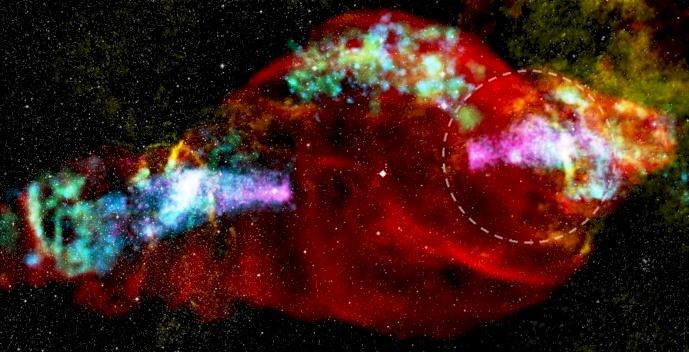
The Western Jet of SS 433/W50 - Hard X-Ray Emission, Spectral Evolution, and Comparison to the Eastern Jet: iopscience.iop.org/article/10. -> The Microquasar and the Manatee: aasnova.org/2026/08/17/feature

@inthehands@hachyderm.io
2026-09-13 19:31:26

In my experience, at least, it feels like offshoring went through a productive evolution over the years, from
“Just farm it out to a bunch of those third world people who are cheap and barely even exist as humans!!”
to
“We can totally have globally distributed software teams with some people in places with a lower cost of living, as long as we work extra hard to make sure everyone functions as a team.”
That may be a rosy picture that comes from my own limited circles, but…that's the progress I saw. I wonder when / if folks will do similar learning about the current cost-cutting manias.

@arXiv_condmatsoft_bot@mastoxiv.page
2026-08-13 07:41:35

Spatially heterogeneous relaxational dynamics and the evolution of recoverable strain following flow cessation of a ductile nanocolloidal glass
Chloe W. Lindeman, James J. Griebler, Penelope Grace Kovakas, Miaoqi Chu, Qingteng Zhang, Suresh Narayanan, James L. Harden, Simon A. Rogers, Robert L. Leheny
arxiv.org/abs/2608.11470 arxiv.org/pdf/2608.11470 arxiv.org/html/2608.11470
arXiv:2608.11470v1 Announce Type: new
Abstract: We report a combined rheology and x-ray photon correlation spectroscopy (XPCS) study of the structural and mechanical relaxation of a ductile, nanocolloidal glass following the cessation of shear flow. After the glass is sheared to 300% strain at various shear rates and then held at fixed strain, the stress undergoes a protracted, quasi-logarithmic decay with hold time that depends weakly on the initial strain rate. Recovery rheology measurements reveal that this stress relaxation is accompanied by a logarithmic decrease in the elastic component of the recoverable strain; hence, the rates of decrease of the stress and recoverable strain are proportional. XPCS measurements during the stress relaxation reveal dynamics dominated by a convection-like backflow that is divided into two dynamically distinct regions indicative of banded motion. In one region, the flow can be modeled by an affine strain, while in the other region the glass moves as a plug while undergoing slow, glassy relaxation. The rates of these dynamics approximately track the rate of loss of recoverable strain, indicating this motion is the predominant microscopic mechanism driving the conversion of recoverable to unrecoverable strain during stress relaxation. In contrast, XPCS measurements during strain recovery reveal purely affine flow with no evidence of heterogeneity and with strain rates that agree quantitatively with the rheometry measurements. Together, these results provide a unified microscopic picture connecting the evolving internal dynamics of a ductile glass to its macroscopic mechanical relaxation following flow cessation.
toXiv_bot_toot

@arXiv_astrophGA_bot@mastoxiv.page
2026-07-22 08:11:34

Molecular gas hidden in plain sight in the early Universe
Pasquier Noterdaeme, Jens-Kristian Krogager, Sergei Balashev
arxiv.org/abs/2607.18974 arxiv.org/pdf/2607.18974 arxiv.org/html/2607.18974
arXiv:2607.18974v1 Announce Type: new
Abstract: We report the discovery of an extreme intervening molecular absorber at zabs = 4.1 towards the z = 4.7 quasar SDSS J080023.02 305101.22 revealed through strong H2 absorption that had remained unnoticed in archival data for about two decades. The system, which we analysed with new VLT/X-shooter observations, has a metallicity of about one-fifth the solar value, in line with the moderate dust reddening AV~0.06 mag. More strikingly, it exhibits the highest molecular fraction, fH2 = 2N(H2)/(2N(H2) N(HI))~=60%, measured at z>0 from direct determinations of both atomic and molecular hydrogen column densities. Notably, this fraction is comparable to the very highest values in the Local Group. The inferred fH2 still represents a conservative lower limit to the local molecular fraction since the H i absorption very likely includes atomic gas unrelated to the actual molecular component, as indicated by the wide (Delta v~500 km/s) multi-component low-ionisation metal profile.
The detection of such a system at early cosmic times is remarkable given the limited number of quasar spectra probing z>4. It suggests an unexpectedly high incidence of H2, with important implications for the evolution of molecular gas. This high incidence may be driven by high average densities and enhanced turbulence at those redshifts. At the same time, our results also highlight possible observational biases, both in quasar selection and in recognising strong H2 absorption, suggesting that a significant fraction of molecular gas may remain undetected, in particular near the peak of star formation. The present system offers a unique benchmark for developing efficient detection algorithms. Further progress will benefit from colour-independent quasar surveys, while constraining the physical conditions and environments of such extreme absorbers will require observations on future extremely large telescopes.
toXiv_bot_toot

@arXiv_physicsfludyn_bot@mastoxiv.page
2026-08-07 07:49:05

Confinement-induced evolution and breakup of viscoelastic filaments in microfluidic coflows
U. K. Kar, T. Sujith, D. Ghosh, A. K. Sen
arxiv.org/abs/2608.05343

@nelson@tech.lgbt
2026-08-12 16:29:08

I have a hard time remembering that Fedora uses something called DNF to update itself. What does DNF stand for, I wondered? "Dandified YUM". YUM is Yellowdog Updater, Modified", an evolution of YUP which was some PowerPC thing.
Actually it's all just RPM.

@arXiv_nlinSI_bot@mastoxiv.page
2026-08-04 07:58:27

Ermakov-Painleve' II Symmetry Reduction of a Class of Moving Boundary Problems for a Reciprocal Extended mKdV Equation
Colin Rogers, Sandra Carillo
arxiv.org/abs/2608.00681 arxiv.org/pdf/2608.00681 arxiv.org/html/2608.00681
arXiv:2608.00681v1 Announce Type: new
Abstract: A reciprocal transformation is applied to link an integrable extension of the classical solitonic mKdV to a novel nonlinear evolution equation incorporating a source term. Application of Ermakov-Painleve' II symmetry reduction is made to determine the exact solution to a class of associated moving boundary problems of Stefan-type.
toXiv_bot_toot

@arXiv_astrophGA_bot@mastoxiv.page
2026-07-22 08:39:29

Crosslisted article(s) found for astro-ph.GA. arxiv.org/list/astro-ph.GA/new
[1/1]:
- Characterizing Microlensing Planetary System OGLE-2014-BLG-0676L with High-Resolution Image Const...
Asahi Idei, et al.
arxiv.org/abs/2607.18408 mastoxiv.page/@arXiv_astrophEP
- Nancy Grace Roman Space Telescope Wide Field Instrument: Bright Point Source Saturation Response ...
Dana R. Louie, et al.
arxiv.org/abs/2607.18419 mastoxiv.page/@arXiv_astrophIM
- Capture of interstellar objects during stellar encounters
Sean N. Raymond, Nathan A. Kaib, Matthew J. Hopkins
arxiv.org/abs/2607.18551 mastoxiv.page/@arXiv_astrophEP
- Semi-Analytical Model for the Evolution of Stellar Binaries in the Empty Loss Cone of Massive Bla...
Samuel McGuire, Evgeni Grishin, Ilya Mandel, Yuri Levin
arxiv.org/abs/2607.18761 mastoxiv.page/@arXiv_astrophHE
- Accretion of multipolar massive complex scalar field packets by a Schwarzschild black hole
Flavio Rosales-Infante, Ivan Alvarez-Rios, Francisco S. Guzman
arxiv.org/abs/2607.18920 mastoxiv.page/@arXiv_grqc_bot/
- A Type Ia Supernova Candidate at $z\sim4.3$: A Transient Interloper in the Search for $z\sim14$ G...
Seiji Toshikage, et al.
arxiv.org/abs/2607.18972 mastoxiv.page/@arXiv_astrophHE
toXiv_bot_toot

@johnhobbs@mstdn.ca
2026-09-08 13:01:56

Aging exemplifies evolution in action, enhancing our lives yearly. Experience is our greatest asset, not a limitation. Let’s shatter the myth that age restricts growth. Your best years are ahead! Seize new opportunities and redefine your purpose with bold confidence.

@BBC6MusicBot@mastodonapp.uk
2026-07-05 23:27:36

🇺🇦 #NowPlaying on #BBC6Music's #GuyGarveysFinestHour
Joan As Police Woman:
🎵 Real Life
#JoanAsPoliceWoman
joanaspolicewoman.bandcamp.com
open.spotify.com/track/5pzi9mQ

@arXiv_astrophCO_bot@mastoxiv.page
2026-08-06 07:58:04

Coupled quintessence from an axion dark sector
Rayff de Souza, Edmund J. Copeland, Jailson Alcaniz
arxiv.org/abs/2608.05032 arxiv.org/pdf/2608.05032 arxiv.org/html/2608.05032
arXiv:2608.05032v1 Announce Type: new
Abstract: Recent observational data arising from the DESI collaboration has hinted at a possible departure from the standard $\Lambda$CDM cosmological model, preferring instead the presence of a dynamical dark energy component. Specifically, the associated equation of state of the dark energy features a crossing into the so-called phantom regime, which is challenging to accommodate in canonical single scalar-field scenarios. However, this behavior can be effectively described by an interacting dark sector, where the specific dark energy equation of state remains above the phantom divide whilst the dark matter component deviates from the standard cold dark matter evolution. In this work, we explore this possibility in the context of an axion dark sector, where both the dark energy and dark matter are represented by two interacting axion-like fields. We show that given the required mass hierarchy for these fields to play such roles, their dynamics can be effectively placed in the coupled quintessence framework, where their motion follows from a sourced continuity equation in the fluid description. In this regime, we perform a statistical analysis of this scenario with current data, finding that a sub-Planckian dark energy axion decay constant stays well within the observational bounds without the need to fine-tune the associated field's initial conditions. We also perform a comparison with $\Lambda$CDM, where we find that the model provides a better fit to the data while staying competitive from a Bayesian perspective.
toXiv_bot_toot

@arXiv_astrophGA_bot@mastoxiv.page
2026-07-22 08:08:01

Examining the stellar-merger origin of the blue main sequence in the open cluster NGC\,3532 with N-body simulations
Khushboo K. Rao (Institute of Astronomy, National Central University, 300 Zhongda Road, Zhongli 32001 Taoyuan, Taiwan), Sambaran Banerjee (Helmholtz-Instituts f\"ur Strahlen- und Kernphysik)
arxiv.org/abs/2607.18681 arxiv.org/pdf/2607.18681 arxiv.org/html/2607.18681
arXiv:2607.18681v1 Announce Type: new
Abstract: Extended main-sequence turnoffs, extended main sequences, and split main sequences observed in the colour-magnitude diagrams of young and intermediate-age star clusters are now widely interpreted as the consequence of a distribution of stellar rotation rates among their intermediate-mass (1.5-1.8~M$_\odot$) members. However, the origin of the slowly rotating population that occupies the blue main sequence (bMS) remains uncertain, and stellar mergers have been proposed as one possible pathway. We investigate whether stellar mergers can account for the observed bMS population in the 330-Myr Galactic open cluster NGC 3532. We perform fourteen direct NBODY7 simulations spanning different initial cluster masses, radii, binary fractions, and binary orbital distributions. The simulations are selected to reproduce the present-day properties of NGC 3532 within the observational uncertainties, allowing us to estimate the expected number of merger products among its intermediate-mass main-sequence (MS) members. The cluster hosts $\approx 37\%$ bMS members among its intermediate-mass MS population, which are predominantly slow rotators. Despite this large bMS population, our simulations produce only a handful of MS-MS merger products, due to the cluster's low density and substantial mass loss during its evolution. Stellar mergers are unlikely to be the dominant formation channel for the observed slowly rotating bMS population in NGC 3532 and other disperse open clusters. Our results instead favour angular-momentum loss mechanisms operating before or shortly after the zero-age main sequence, such as pre-main-sequence star-disk interactions or tidal synchronization in low-mass ratio binaries.
toXiv_bot_toot

@arXiv_mathDS_bot@mastoxiv.page
2026-08-05 07:35:35

Dynamics of Fractional Wave Equations with Nonlocal Damping
Ra\'ul E. Vidal, Vando Narciso
arxiv.org/abs/2608.02842 arxiv.org/pdf/2608.02842 arxiv.org/html/2608.02842
arXiv:2608.02842v1 Announce Type: new
Abstract: In this work we study a fractional wave equation with Balakrishnan--Taylor type damping posed on a bounded domain $\Omega\subset\mathbb{R}^n$. The model couples the fractional Laplacian with a nonlinear damping coefficient depending on the fractional energy, leading to a doubly nonlocal evolution equation that extends the classical wave equation with energy-dependent dissipation. By means of the theory of linear operators, we establish the global well-posedness of both mild and regular solutions. We then investigate the long-time dynamics of the associated semigroup and prove that it is gradient and asymptotically smooth. As a consequence, we establish the existence of a compact global attractor and show that it coincides with the unstable manifold of the set of stationary solutions. To the best of our knowledge, this provides the first characterization of the asymptotic dynamics for fractional wave equations with Balakrishnan--Taylor type damping.
toXiv_bot_toot

@cosmos4u@scicomm.xyz
2026-09-16 19:41:21

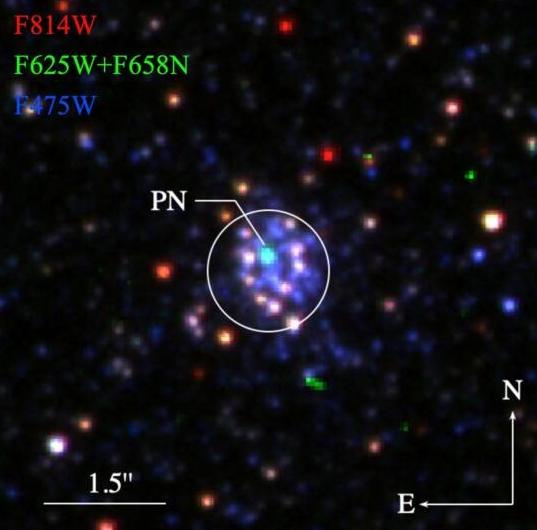
A Planetary Nebula from a 5.7 M⊙ Progenitor in a 90 Myr M31 Star Cluster: #PlanetaryNebula with Massive Progenitor Sheds Light on Stellar Evolution: aasnova.org/2026/09/16/extraga

@BBC3MusicBot@mastodonapp.uk
2026-08-15 15:57:58

🇺🇦 #NowPlaying on BBCRadio3's #SoundOfCinema
Paul Saunderson:
🎵 Evolution Suite
#PaulSaunderson
open.spotify.com/track/2HK8wPf

@arXiv_astrophGA_bot@mastoxiv.page
2026-07-22 08:12:01

Physical Properties of 6.7 Million Galaxies from the DESI Bright Galaxy Survey: Spectral Fitting and Systematic Tests with Mock Spectra
Niu Li, Hu Zou, Jinfu Gou, Weijian Guo, Wenxiong L, Haoming Song, Jipeng Sui, Xi Tan, Yunao Xiao, Jingyi Zhang
arxiv.org/abs/2607.19162 arxiv.org/pdf/2607.19162 arxiv.org/html/2607.19162
arXiv:2607.19162v1 Announce Type: new
Abstract: We present a comprehensive analysis of the physical properties of galaxies in the Dark Energy Spectroscopic Instrument (DESI) Data Release 1 (DR1) Bright Galaxy Survey (BGS), based on full spectral fitting of $\sim 6.7$ million galaxy spectra. Using a customized spectral fitting pipeline, we derive key physical parameters including stellar mass, stellar velocity dispersion, stellar population age, dust attenuation, and emission-line properties. To quantify the reliability and systematic uncertainties of our measurements, we construct a large set of mock spectra that closely reproduce the observed properties of DESI data, including realistic noise and spectral features. By comparing the recovered parameters with the known inputs, we assess the performance of the spectral fitting as a function of stellar continuum signal-to-noise ratio (S/N, defined as the ratio of the median continuum flux to its associated error) and redshift. We find that stellar masses can be robustly recovered with negligible bias for spectra with $\mathrm{S/N} \gtrsim 5$, while low-S/N spectra ($\mathrm{S/N} \lesssim 5$) show a mild systematic overestimation of $\sim 0.1$ dex and increased scatter. Similar trends are observed for stellar population parameters, while emission-line fluxes are recovered with high accuracy and minimal bias. We further validate our stellar mass estimates by comparison with independent measurements from photometric spectral energy distribution fitting, finding good overall consistency within the expected systematic uncertainties. The value-added catalog presented in this work enables a wide range of statistical studies of galaxy evolution with DESI, and provides a foundation for future analyses.
toXiv_bot_toot

@@arXiv_physicsatomph_bot@mastoxiv.page@mastoxiv.page
2026-07-28 07:53:44

Evolution of dipole-dipole dynamics in cold ammonia collisions
Yao Chang, Andr\'e J. A. van Roij, Stach E. J. Kuijpers, Sven Herbers, Etienne F. Walraven, Tijs Karman, Sebastiaan Y. T. van de Meerakker
arxiv.org/abs/2607.24239

@arXiv_physicscompph_bot@mastoxiv.page
2026-07-01 09:09:33

Replaced article(s) found for physics.comp-ph. arxiv.org/list/physics.comp-ph
[1/1]:
- Learning Stiff Dynamical Operators: Scaling, Fast-Slow Excitation, and Eigen-Consistent Neural Mo...
Mauro Valorani
arxiv.org/abs/2601.01632 mastoxiv.page/@arXiv_physicsco
- How Physical Dynamics Shape the Properties of Ising Machines: Evaluating Oscillators vs. Bistable...
Abir Hasan, Nikhil Shukla
arxiv.org/abs/2603.06843 mastoxiv.page/@arXiv_physicsco
- Quantum metric-induced generalized magneto-optical effects in $\mathcal{PT}$-symmetric antiferrom...
Yongpan Li, Yichen Liu, Cheng-Cheng Liu
arxiv.org/abs/2503.04312 mastoxiv.page/@arXiv_condmatmt
- Filtered Quantum Phase Estimation
Gwonhak Lee, Minhyeok Kang, Jungsoo Hong, Stepan Fomichev, Joonsuk Huh
arxiv.org/abs/2510.04294 mastoxiv.page/@arXiv_quantph_b
- NAVIS: A LAMMPS-Python framework for efficient computation of nanochannel velocity and thermal in...
Sleeba Varghese, Sobin Alosious, Jesper Schmidt Hansen, Billy Dean Todd
arxiv.org/abs/2601.11391 mastoxiv.page/@arXiv_condmatso
- Fast proton transport and neutron production in proton therapy using Fourier neural operators
Blangiardi, Ratliff, Teichert, Ytre-Hauge, Langer, Meric
arxiv.org/abs/2603.03912 mastoxiv.page/@arXiv_physicsme
- Smoluchowski Coagulation Equation and the Evolution of Primordial Black Hole Clusters
Borui Zhang, Wei-Xiang Feng, Haipeng An
arxiv.org/abs/2604.01684 mastoxiv.page/@arXiv_astrophCO
- Identical Particle Systems : Hierarchical Spectral Reconstruction
Hovan Lee, R\'emi Lef\`evre, Gr\'egoire Ithier
arxiv.org/abs/2605.02864 mastoxiv.page/@arXiv_quantph_b
- A matrix free action of the Ashtekar-Lewandowski volume operator of loop quantum gravity
Waleed Sherif
arxiv.org/abs/2606.18397 mastoxiv.page/@arXiv_grqc_bot/
toXiv_bot_toot

@BBC6MusicBot@mastodonapp.uk
2026-07-05 12:55:33

🇺🇦 #NowPlaying on #BBC6Music's #GuyGarveysFinestHour
Joan As Police Woman:
🎵 The Ride
#JoanAsPoliceWoman
joanaspolicewoman.bandcamp.com
open.spotify.com/track/5cwVI8c

@raiders@darktundra.xyz
2026-07-31 21:07:39

Fernando Mendoza Delivers Reality Check on ‘Harsh Lessons’ in Raiders Camp heavy.com/sports/nfl/las-vegas

@arXiv_astrophCO_bot@mastoxiv.page
2026-08-05 09:12:06

Replaced article(s) found for astro-ph.CO. arxiv.org/list/astro-ph.CO/new
[2/2]:
- Empirical Relationship Between Dark Matter and Baryon Profiles for Solving the Core-Cusp and Dive...
Kento Kamada
arxiv.org/abs/2512.23008 mastoxiv.page/@arXiv_astrophGA
- Traversable Wormholes induced by polytropic $n=1$ energy density
Remo Garattini, Francisco S. N. Lobo, Kirill Zatrimaylov
arxiv.org/abs/2603.12527 mastoxiv.page/@arXiv_grqc_bot/
- Primordial Black Holes: A Review of Formation and Evolution
S. Shankaranarayanan, Soumya Bhattacharya, Archit Vidyarthi
arxiv.org/abs/2606.23846
toXiv_bot_toot

@BBC3MusicBot@mastodonapp.uk
2026-08-16 11:36:00

🔊 #NowPlaying on #BBCRadio3:
#BBCProms
- 2026
Live at the BBC Proms: Swedish Chamber Orchestra under Martin Fröst with a programme exploring the evolution of dance, from Rameau to Mühlrad, and culminating with Beethoven.
Relisten now 👇
bbc.co.uk/programmes/m00302z5

@BBC6MusicBot@mastodonapp.uk
2026-07-05 12:27:36

🇺🇦 #NowPlaying on #BBC6Music's #GuyGarveysFinestHour
Joan As Police Woman:
🎵 Real Life
#JoanAsPoliceWoman
joanaspolicewoman.bandcamp.com
open.spotify.com/track/5pzi9mQ

@nelson@tech.lgbt
2026-07-06 14:24:42

Today we visited the Calder exhibit at the Fondation Louis Vuitton, an extraordinary retrospective. I now appreciate the evolution of his career much more, also the diversity of his works. Phenomenally staged exhibit, really great.
The big moment in his life was visiting Piet Mondrian's studio in 1930. After that he abandons anything figurative and focuses on abstract sculptures, mostly the mobiles. But he also had some variety: his wire figure sculptures are delightful.

@BBC3MusicBot@mastodonapp.uk
2026-08-16 10:00:53

🔊 #NowPlaying on #BBCRadio3:
#BBCProms
- 2026
Live at the BBC Proms: Swedish Chamber Orchestra under Martin Fröst with a programme exploring the evolution of dance, from Rameau to Mühlrad, and culminating with Beethoven.
Relisten now 👇
bbc.co.uk/programmes/m00302z5

@hex@kolektiva.social
2026-09-04 10:38:56

Put in terms that might make sense to people who might disagree, an #LLM is a second order distillation. Reality trains the "models" of cognition via evolution. Those that don't die, evolve emotions to guide them towards or away from things. Humans evolved a complex enough system to construct internal models of reality.
Language jams all this stuff together into a(n extremely lossy) representation for transmitting it to other beings with similar direct access to reality. This becomes the first order distillation of experiential reality. Models trained on that corpus are then second order distillations (they are trained in the artifacts produced by the model trained by reality itself).
A lot of things, like threat modeling, require you to tap into that first order model.

@cosmos4u@scicomm.xyz
2026-09-16 19:09:03

Tidal Demise -The Evolution and Fate of a Hypothetical #Venus Moon: iopscience.iop.org/article/10. -> Venus ate its moon: news.ucr.edu/articles/2026/09/ - study explains why Earth’s ‘twin’ lacks rocky satellite.

@arXiv_astrophGA_bot@mastoxiv.page
2026-09-09 11:30:25

Replaced article(s) found for astro-ph.GA. arxiv.org/list/astro-ph.GA/new
[2/4]:
- Anisotropy of Satellite Galaxies-I: Contrasting Correlations with Central Galaxy, Host Halo, and ...
Zhuoming Zhang, Weiguang Cui, Yun Chen, Romeel Dav\'e, Katarina Kraljic
arxiv.org/abs/2604.27845 mastoxiv.page/@arXiv_astrophGA
- Little red dots as obscured little blue dots: relative abundances, luminosities, and black-hole m...
Piero Madau, Roberto Maiolino
arxiv.org/abs/2605.05074 mastoxiv.page/@arXiv_astrophGA
- Halo-driven Origin and Evolution of Overmassive Black Holes and Little Red Dots
Ritik Sharma, Mahavir Sharma
arxiv.org/abs/2605.16485 mastoxiv.page/@arXiv_astrophGA
- The chemo-dynamical complexity of {\omega} Centauri: different kinematics for different populations
G. Pagnini, P. Bianchini, P. Di Matteo, A. Mastrobuono-Battisti
arxiv.org/abs/2605.20503 mastoxiv.page/@arXiv_astrophGA
- Globular Clusters in the Time of the JWST. I. Survey Design and First Results on Multiple Populat...
A. P. Milone, et al.
arxiv.org/abs/2606.20979 mastoxiv.page/@arXiv_astrophGA
- Tidal origin of dark-matter free dwarf galaxies in the NGC 1052 group
Francois Hammer, Yanbin Yang
arxiv.org/abs/2606.30718 mastoxiv.page/@arXiv_astrophGA
- First-star imprints in a metal-poor galaxy overdensity near the end of reionization
Zihao Li, et al.
arxiv.org/abs/2606.31638 mastoxiv.page/@arXiv_astrophGA
- The black hole occupation fraction as a fossil record of seeding, dynamics, and galaxy assembly
Emma Jane Weller, Priyamvada Natarajan, Colin J. Burke
arxiv.org/abs/2607.09853 mastoxiv.page/@arXiv_astrophGA
- Active galactic nucleus activity in nearby disk galaxies: The roles of bar strength and spiral ar...
Martirosyan, Hakobyan, Adibekyan, Barkhudaryan, Gevorgyan, Karapetyan
arxiv.org/abs/2608.09320 mastoxiv.page/@arXiv_astrophGA
- Serendipitous discovery of an almost-dark galaxy in the Virgo Cluster
Minh Ngoc Le, et al.
arxiv.org/abs/2608.19326 mastoxiv.page/@arXiv_astrophGA
toXiv_bot_toot

@arXiv_astrophGA_bot@mastoxiv.page
2026-09-09 09:21:30

J023721.13$-$010528.5: A Giant $S$-shaped Radio Galaxy Showing Four Episodes of Jet Activity
Pavan Vijay Khadekar, Dharam Vir Lal, Ramana Athreya
arxiv.org/abs/2609.08506 arxiv.org/pdf/2609.08506 arxiv.org/html/2609.08506
arXiv:2609.08506v1 Announce Type: new
Abstract: We present high-sensitivity, high-resolution radio observations of J023721.13$-$010528.5 using the upgraded Giant Metrewave Radio Telescope in band-3 (250--500\,MHz) and band-4 (550--950\,MHz), along with MeerKAT (1280\,MHz) and VLA (3\,GHz) survey images. The radio source, hosted by a bright cluster galaxy at redshift $z=0.372$, is a giant radio galaxy with a projected linear size between the outermost hotspots of 1.2~Mpc and is one of the largest $S$-shaped radio sources known. Its radio morphology revealed four pairs of components straddling the radio core, which were also local maxima in profiles of radio flux densities and equipartition energy density measured along the radio lobes. Spatially resolved multi-frequency spectral analysis showed progressively older emission from the inner to the outer components, spanning approximately 4--21 Myr. The high degree of symmetry of the inner three component-pairs with respect to the radio core makes it improbable that these are randomly located knots in the radio jet. Therefore, we present J023721.13$-$010528.5 as the prototype of a new class of radio galaxies with four episodes of jet activity --- a quadruple-double radio galaxy. We suggest that giant $S$-shaped radio sources may be among the most promising targets for identifying and studying multi-epoch radio jet activity, since their large linear sizes and jet-axis evolution can spatially separate hotspots from successive episodes, making them easier to detect and analyse.
toXiv_bot_toot

@arXiv_astrophGA_bot@mastoxiv.page
2026-09-09 09:29:35

Euclid: Quick Data Release (Q1) -- Exploring the detailed visual morphology of galaxies in clusters
Mas-Buitrago, Kruk, O'Ryan, Nardone, La Marca, Awad, Baes, Fossati, G\'eron, Ghaffari, Girardi, Lintott, Sorce, Altieri, Durret, Pettorino, Irureta-Goyena, Simmons, Reerink, S\'anchez, Knapen, Shankar, Duran-Camacho, P\'erez-Mart\'inez, Walmsley, Auricchio, Baccigalupi, Baldi, Bardelli, Battaglia, Biviano, Bolzonella, Bonchi, Branchini, Brescia, Brinchmann, Camera, Ca\~nas-Herrera, Capobianco, Carbone, Carretero, Castellano, Castignani, Cavuoti, Cimatti, Colodro-Conde, Congedo, Conselice, Conversi, Copin, Costille, Courbin, Courtois, Cropper, Degaudenzi, De Lucia, Dole, Dubath, Dupac, Dusini, Ealet, Fabricius, Farina, Farinelli, Ferriol, Fosalba, Fotopoulou, Frailis, Franceschi, Fumana, Galeotta, George, Gillis, Giocoli, G\'omez-Alvarez, Gracia-Carpio, Grazian, Grupp, Gwyn, Holmes, Hook, Hormuth, Hornstrup, Huertas-Company, Jahnke, Jhabvala, Joachimi, Kermiche, Kiessling, Kubik, K\"ummel, Kunz, Kurki-Suonio, Le Brun, Ligori, Lilje, Lindholm, Lloro, Mainetti, Mansutti, Marggraf, Martinelli, Martinet, Marulli, Massey, Maurogordato, Medinaceli, Melchior, Meneghetti, Merlin, Meylan, Mora, Moresco, Moscardini, Munari, Neissner, Niemi, Nightingale, Padilla, Paltani, Pasian, Pedersen, Percival, Pezzotta, Pires, Polenta, Poncet, Popa, Pozzetti, Raison, Renzi, Rhodes, Riccio, Romelli, Roncarelli, Rusholme, Saglia, Sakr, S\'anchez, Sapone, Sartoris, Schneider, Schrabback, Scodeggio, Secroun, Sihvola, Simon, Sirignano, Sirri, Tallada-Cresp\'{i}, Taylor, Teplitz, Tereno, Tessore, Toft, Toledo-Moreo, Torradeflot, Tutusaus, Valiviita, Vassallo, Kleijn, Veropalumbo, Wang, Weller, Zacchei, Zamorani, Zerbi, Zucca, Macias-Perez, Sereno
arxiv.org/abs/2609.08962 arxiv.org/pdf/2609.08962 arxiv.org/html/2609.08962
arXiv:2609.08962v1 Announce Type: new
Abstract: Galaxy clusters provide unique laboratories for studying environmental effects on galaxy evolution. The morphology--density ($T$--$\Sigma$) and morphology--cluster-centric radius ($T$--$R$) relations trace how galaxy morphology is influenced by the environment, but previous studies at intermediate redshifts have been limited in both sample size and radial coverage. We use the Euclid Quick Data Release 1 (Q1) visual morphology catalogue to measure the $T$--$\Sigma$ and $T$--$R$ relations for smooth, featured-or-disc, and barred galaxies in known clusters at $0.2\leq z\leq 0.5$, extending this analysis to large cluster-centric distances ($3 R_{500c}$) and studying their dependence on stellar mass. Using photometric redshifts and stellar masses provided by Euclid, we identify 1754 cluster members within $1.5 R_{500c}$, distributed across 71 clusters. We classify the identified galaxies as smooth, featured-or-disc, or barred using the predicted vote fractions provided by the Zoobot deep learning foundation model in the Q1 visual morphology catalogue. We confirm the $T$--$\Sigma$ relation in all the stellar mass ranges studied, with a stronger influence of the cluster environment on galaxy morphology in the densest parts of the cluster and closer to the cluster centre. Beyond $1.5 R_{500c}$, the morphological segregation weakens, with featured-or-disc galaxies overtaking smooth galaxies at the lowest densities, consistent with the growing contribution of field interlopers in the cluster outskirts. For barred galaxies, we find a tentative decline of the bar fraction toward lower densities that is most pronounced for the most massive galaxies. In conclusion, our results show that the cluster environment drives a progressive transformation of galaxy morphology, with the loss of disc structure becoming more pronounced towards the cluster core, where environmental processes act most efficiently.
toXiv_bot_toot

@arXiv_astrophGA_bot@mastoxiv.page
2026-09-09 09:33:33

Active galactic nucleus activity in brightest cluster galaxies at intermediate redshifts in Sunyaev-Zel'dovich--selected clusters
N. Hatamkhani, R. E. Skelton, J. Delhaize, M. Hilton, S. I. Loubser, N. Gupta, K. M. Mogotsi
arxiv.org/abs/2609.09049 arxiv.org/pdf/2609.09049 arxiv.org/html/2609.09049
arXiv:2609.09049v1 Announce Type: new
Abstract: Context. Brightest cluster galaxies (BCGs) host powerful active galactic nuclei (AGNs) and help regulate the heating--cooling balance of the intracluster medium. While radio-mode feedback is well established locally, its prevalence at intermediate redshifts remains poorly constrained. Aims. We investigate the incidence, accretion state, and host-galaxy properties of AGNs in BCGs in Sunyaev--Zel'dovich (SZ)-selected clusters at $0.3 < z < 0.8$, testing dependences on cosmic epoch, cluster mass, and dynamical state. Methods. We analyse 171 BCGs from the Atacama Cosmology Telescope SZ catalogue, combining Southern African Large Telescope spectroscopy, WISE mid-infrared photometry, and Rapid ASKAP Continuum Survey radio data with \textsc{X-CIGALE} modelling to derive stellar masses, star formation rates, and Eddington-scaled accretion rates. Results. Thirty-eight BCGs (22%) host radio-loud AGNs. Only two ($\sim$5%) are high-excitation radio galaxies; the remainder are low-excitation systems. Most AGNs have low Eddington ratios ($-3 \lesssim \log_{10}\lambda_{\mathrm{Edd}} \lesssim -1$), consistent with radiatively inefficient accretion. Accretion efficiency increases with redshift, while correlations with cluster mass and dynamical state are weak. Radio luminosity is independent of cluster mass. Compared to field radio AGNs, BCG radio-loud AGNs have similar radio powers but are hosted by galaxies $\sim0.8$ dex more massive. Conclusions. BCG radio-loud AGNs at $0.3 < z < 0.8$ are predominantly low-excitation, radiatively inefficient systems, indicating that maintenance-mode accretion was widespread in massive clusters ($M_{500c} \simeq 3.2 \times 10^{14},M_\odot$) by $z \sim 1$. Accretion appears regulated primarily by fuel availability and cosmic evolution rather than global cluster properties, while the cluster environment mainly sets the host-galaxy mass scale.
toXiv_bot_toot

@arXiv_astrophGA_bot@mastoxiv.page
2026-09-09 11:30:10

Replaced article(s) found for astro-ph.GA. arxiv.org/list/astro-ph.GA/new
[1/4]:
- Hidden in Pixels. I. Discovery of dual "little red dots" indicates excess clustering on kilo-pars...
Takumi S. Tanaka, et al.
arxiv.org/abs/2412.14246 mastoxiv.page/@arXiv_astrophGA
- Spatio-Temporal Log-Gaussian Cox-Hawkes Processes with Inhibition and Excitation for Stochastic S...
Qihan Zou
arxiv.org/abs/2508.12372 mastoxiv.page/@arXiv_astrophGA
- The Star-forming Main Sequence and Bursty Star-formation Histories at $z>1.4$ in JADES and AURORA
Clarke, Shapley, Lam, Topping, Brammer, Sanders, Reddy, Karthikeyan
arxiv.org/abs/2510.06681 mastoxiv.page/@arXiv_astrophGA
- Stellar-mass black holes in young massive and open stellar clusters -- VII. Comparisons with grav...
Sambaran Banerjee
arxiv.org/abs/2602.09694 mastoxiv.page/@arXiv_astrophGA
- The influence of galaxy mergers, black-hole growth, and gas processes on the evolution of the ste...
Aaron R. Rowntree, Fiorenzo Vincenzo, Ankit Singh, Gareth Few, Jaehyun Lee, Christophe Pichon
arxiv.org/abs/2603.03951 mastoxiv.page/@arXiv_astrophGA
- OPTIMus-Survey of massive star-forming regions at OPTical, Infrared, and Millimeter wavelengths
M. S. Kirsanova, A. V. Moiseev, A. M. Tatarnikov, A. S. Gusev, A. D. Yarovova, D. S. Wiebe
arxiv.org/abs/2603.04041 mastoxiv.page/@arXiv_astrophGA
- MEOW: The increase in the obscured AGN fraction in mid-infrared from 0 < z < 6 with JWST MIRI
Teodora-Elena Bulichi, et al.
arxiv.org/abs/2603.22393 mastoxiv.page/@arXiv_astrophGA
- Ripples of Stellar Enrichment (RoSE) - simulating element production and mixing in a Milky Way-ma...
Chuhan Zhang, Mark R. Krumholz, Melissa K. Ness, Yuan-sen Ting, Zefeng Li, Zipeng Hu
arxiv.org/abs/2603.29242 mastoxiv.page/@arXiv_astrophGA
- Do little red dots really form a distinct class of astronomical objects?
Billand, Elbaz, Franco, Gentile, Daddi, Giavalisco, Kocevski, Lewis, Magnelli, Sangalli, Tarrasse
arxiv.org/abs/2604.11677 mastoxiv.page/@arXiv_astrophGA
toXiv_bot_toot

@arXiv_astrophGA_bot@mastoxiv.page
2026-09-09 10:57:55

Crosslisted article(s) found for astro-ph.GA. arxiv.org/list/astro-ph.GA/new
[3/3]:
- Physical Law Ecology: mapping multi-mechanism ecologies as the zeroth step of data-driven scienti...
Xiongheng Bian, Xiangyu Cui, Ma Feng, Xiaoyan Shen
arxiv.org/abs/2609.08536 mastoxiv.page/@arXiv_csSC_bot/
- Radial velocity follow-up of \textit{Gaia} astrometric substellar companions: six confirmed brown...

Marcus L. Marcussen, et al.
arxiv.org/abs/2609.08590 mastoxiv.page/@arXiv_astrophEP
- Compton-induced HE -- VHE $\gamma$-rays from pair cascade emissions in the SEDs of radio galaxies...
Mfuphi Ntshatsha, Markus B\"ottcher, Soebur Razzaque
arxiv.org/abs/2609.08787 mastoxiv.page/@arXiv_astrophHE
- Why Azimuthal Averaging Works in Halo Lensing: Symmetry and Power Counting for Nonlinear Shear an...

Keiichi Umetsu (ASIAA)
arxiv.org/abs/2609.08825 mastoxiv.page/@arXiv_astrophCO
- An analysis of four stellar rings
E. Paunzen, et al.
arxiv.org/abs/2609.08942 mastoxiv.page/@arXiv_astrophSR
- Open Clusters as Laboratories for Cool Star Evolution: Highlights from the Cool Stars 23 Splinter...
Deepak Chahal, et al.
arxiv.org/abs/2609.09026 mastoxiv.page/@arXiv_astrophSR
- Detection of episodic Ultra-fast Outflows in the Low-luminosity quasar Mrk 205 using XMM-Newton data
Victoria-Ceballos, Longinotti, Krongold, Lanzuisi, Gudi\~no, Lara-DI
arxiv.org/abs/2609.09028 mastoxiv.page/@arXiv_astrophHE
- TILING I: Field-level Bayesian reconstruction of cosmological initial conditions during the epoch...
Nikolaos Triantafyllou, Andrei Mesinger, Steven Murray, Samuel Gagnon-Hartman
arxiv.org/abs/2609.09102 mastoxiv.page/@arXiv_astrophCO
- Sizing the Universe with DESI Galaxy Sizes: Plain Fundamentals of Fundamental-Plane Lensing
Kun Xu, et al.
arxiv.org/abs/2609.09151 mastoxiv.page/@arXiv_astrophCO
toXiv_bot_toot

@cosmos4u@scicomm.xyz
2026-09-02 02:41:59

Emissivity line ratios for [Mn iii] and spectral diagnostics of H ii regions: #GalacticEvolution: news.osu.edu/new-chemical-clue - researchers use atomic data to measure distinct cosmic elements.

@cosmos4u@scicomm.xyz
2026-09-06 00:56:30

Mantle melting and magma ocean dynamics on Mercury impacted by sulfur in reduced mafic magmas / Carbon distribution in planet Mercury from magma ocean evolution to graphite crust and core composition / The crystallization of Mercury's magma ocean and the formation of its primordial mantle structure: #Mercury formed its graphite crust and core: sciences.uliege.be/cms/c_13721

@cosmos4u@scicomm.xyz
2026-09-04 00:19:01

Multiwavelength diagnostics of pre-flare evolution with Aditya-L1 - from the solar chromosphere to the corona: #SolarFlares: isro.gov.in/Aditya_L1_Catches_