Replaced article(s) found for q-bio.NC. https://arxiv.org/list/q-bio.NC/new
[1/1]:
- State-space kinetic Ising model reveals task-dependent entropy flow in sparsely active nonequilib...
Ken Ishihara, Hideaki Shimazaki
https://arxiv.org/abs/2502.15440 https://mastoxiv.page/@arXiv_qbioNC_bot/114057779012161849
- Mechanisms for anesthesia, unawareness, respiratory depression, memory replay and sleep: MHb > IP...
Karin Vadovi\v{c}ov\'a
https://arxiv.org/abs/2509.04454 https://mastoxiv.page/@arXiv_qbioNC_bot/115167812677714466
- Meta-learning three-factor plasticity rules for structured credit assignment with sparse feedback
Dimitra Maoutsa
https://arxiv.org/abs/2512.09366 https://mastoxiv.page/@arXiv_qbioNC_bot/115699940165988688
- Prefrontal scaling of reward prediction error readout gates reinforcement-derived adaptive behavi...
Sang, Huang, Zhong, Wang, Yu, Li, Feng, Wang, Chai, Menon, Wang, Fang, Wang
https://arxiv.org/abs/2512.09761 https://mastoxiv.page/@arXiv_qbioNC_bot/115700046994546552
- Proof of a perfect platonic representation hypothesis
Liu Ziyin, Isaac Chuang
https://arxiv.org/abs/2507.01098 https://mastoxiv.page/@arXiv_csLG_bot/114788750477759162
toXiv_bot_toot
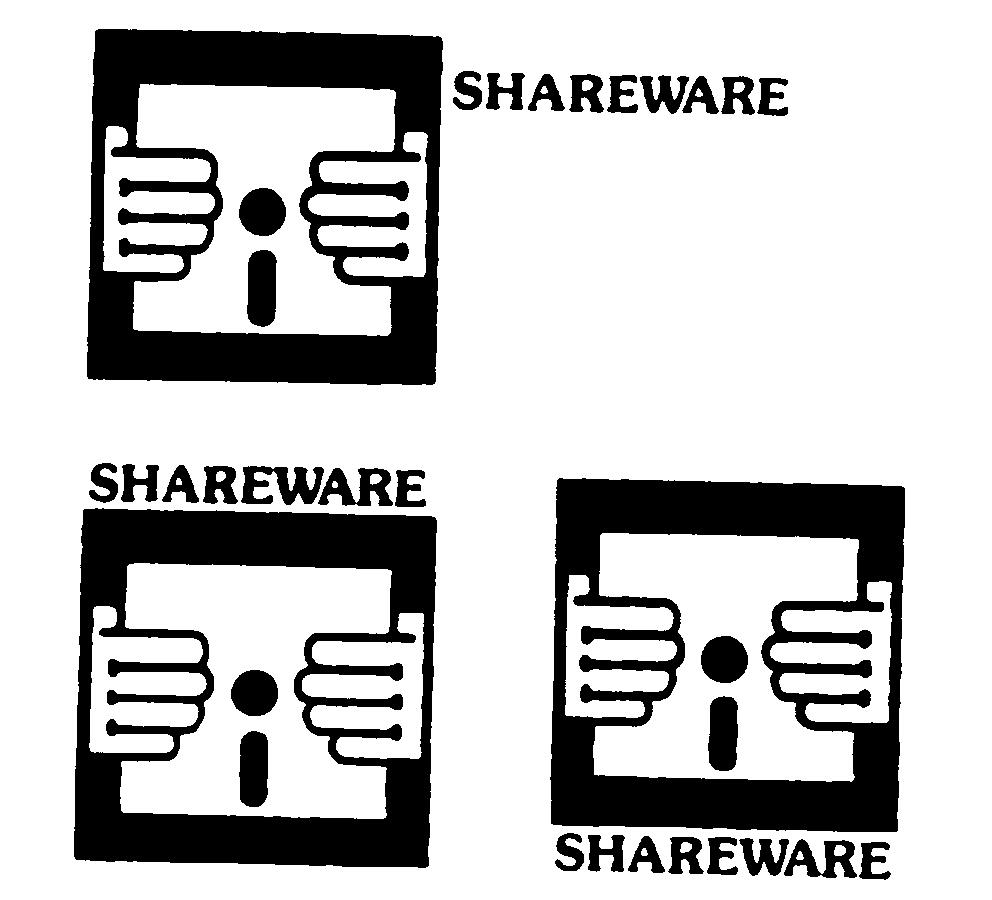
Kennt ihr die Firma "Shareware Marketing"? Die hat sich das schöne Bild als Handelsmarke eintragen lassen. Es symbolisiert das Weitergeben einer Diskette von einer Person zur nächsten. Was habt ihr denn gedacht?
https://trademarks.ipo.gov.uk/ipo-tmcase/page/Re…
Discharge Petition No. 12, Bill Number: H.Res. 486, 119th Congress (Office of the Clerk, U.S. House of Representatives)
https://clerk.house.gov/DischargePetition/2025121012?Page=2
http://www.memeorandum.com/251210/p141#a251210p141
[2025-11-11 Tue (UTC), 4 new articles found for cond-mat.dis-nn Disordered Systems and Neural Networks]
toXiv_bot_toot
Mathematical basis, phase transitions and singularities of (3 1)-dimensional phi4 scalar field model
Zhidong Zhang
https://arxiv.org/abs/2511.07439 https://arxiv.org/pdf/2511.07439 https://arxiv.org/html/2511.07439
arXiv:2511.07439v1 Announce Type: new
Abstract: The lambda phi4 scalar field model that can be applied to interpret pion-pion scattering and properties of hadrons. In this work, the mathematical basis, phase transitions and singularities of a (3 1)-dimensional (i.e., (3 1)D) phi4 scalar field model are investigated. It is found that as a specific example of topological quantum field theories, the (3 1)D phi4 scalar field model must be set up on the Jordan-von Neumann-Wigner framework and dealt with the parameter space of complex time (or complex temperature). The use of the time average and the topologic Lorentz transformation representing Reidemeister moves ensure the integrability, which takes into account for the contributions of nontrivial topological structures to physical properties of the many-body interacting system. The ergodic hypothesis is violated at finite temperatures in the (3 1)D phi4 scalar field model. Because the quantum field theories with ultraviolet cutoff can be mapped to the models in statistical mechanics, the (3 1)D phi4 scalar field model with ultraviolet cutoff is studied by inspecting its relation with the three-dimensional (3D) Ising model. Furthermore, the direct relation between the coupling K in the 3D Ising model and the bare coupling lambda0 in the (3 1)D phi4 scalar field model is determined in the strong coupling limit. The results obtained in the present work can be utilized to investigate thermodynamic physical properties and critical phenomena of quantum (scalar) field theories.
toXiv_bot_toot
Excited $\Sigma$ states of the hydrogen-antihydrogen molecule
L. Brumm, J. Sch\"urmann, A. Saenz
https://arxiv.org/abs/2511.08308 https://arxiv.org/pd…
Replaced article(s) found for q-bio.NC. https://arxiv.org/list/q-bio.NC/new
[1/1]:
- Microbes in the Moonlight: How the Gut Microbiota Influences Sleep
Enso Onill Torres Alegre
https://arxiv.org/abs/2511.02766 https://mastoxiv.page/@arXiv_qbioNC_bot/115496288192570702
- Structural Plasticity as Active Inference: A Biologically-Inspired Architecture for Homeostatic C...
Brennen A. Hill
https://arxiv.org/abs/2511.02241 https://mastoxiv.page/@arXiv_csNE_bot/115496100776467755
toXiv_bot_toot
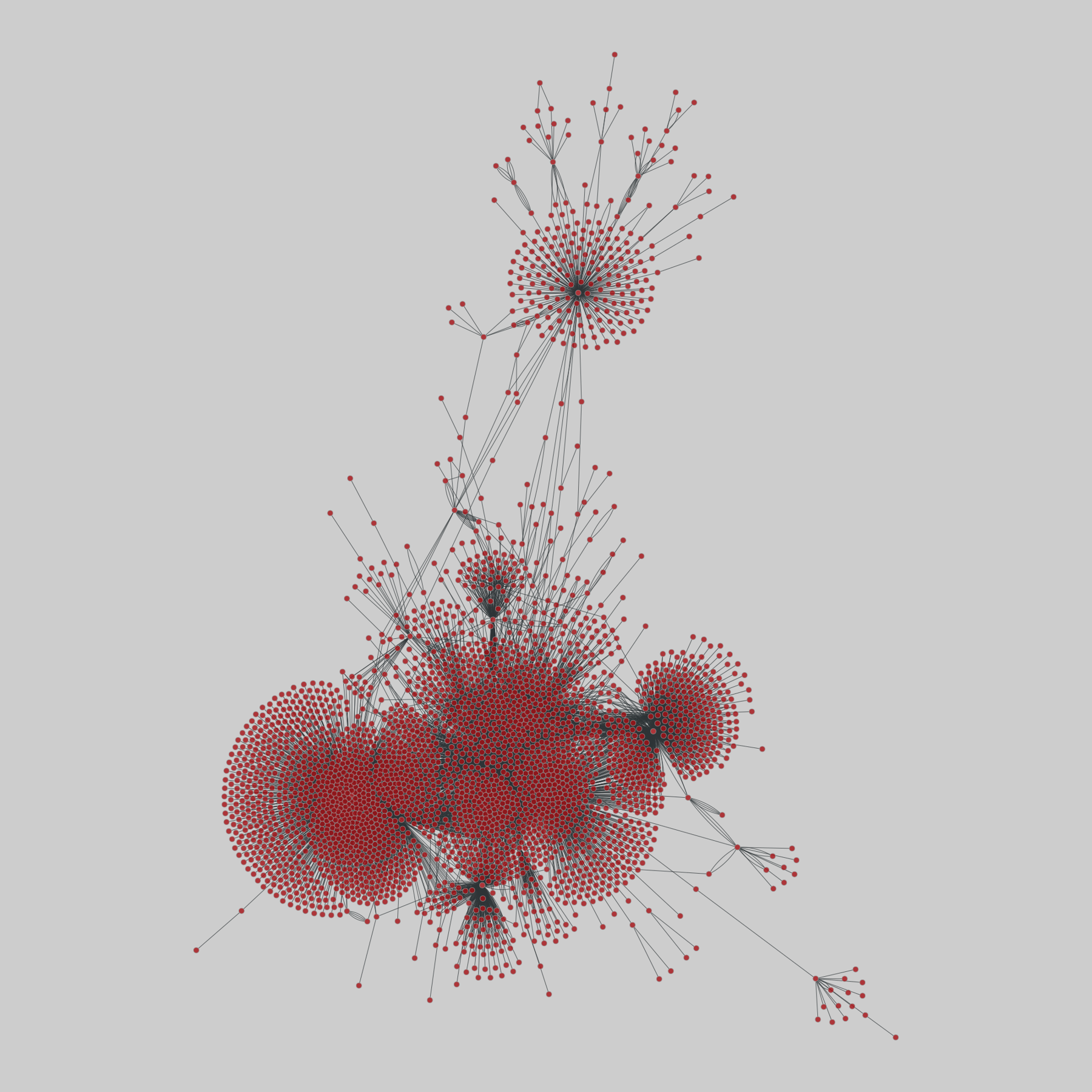
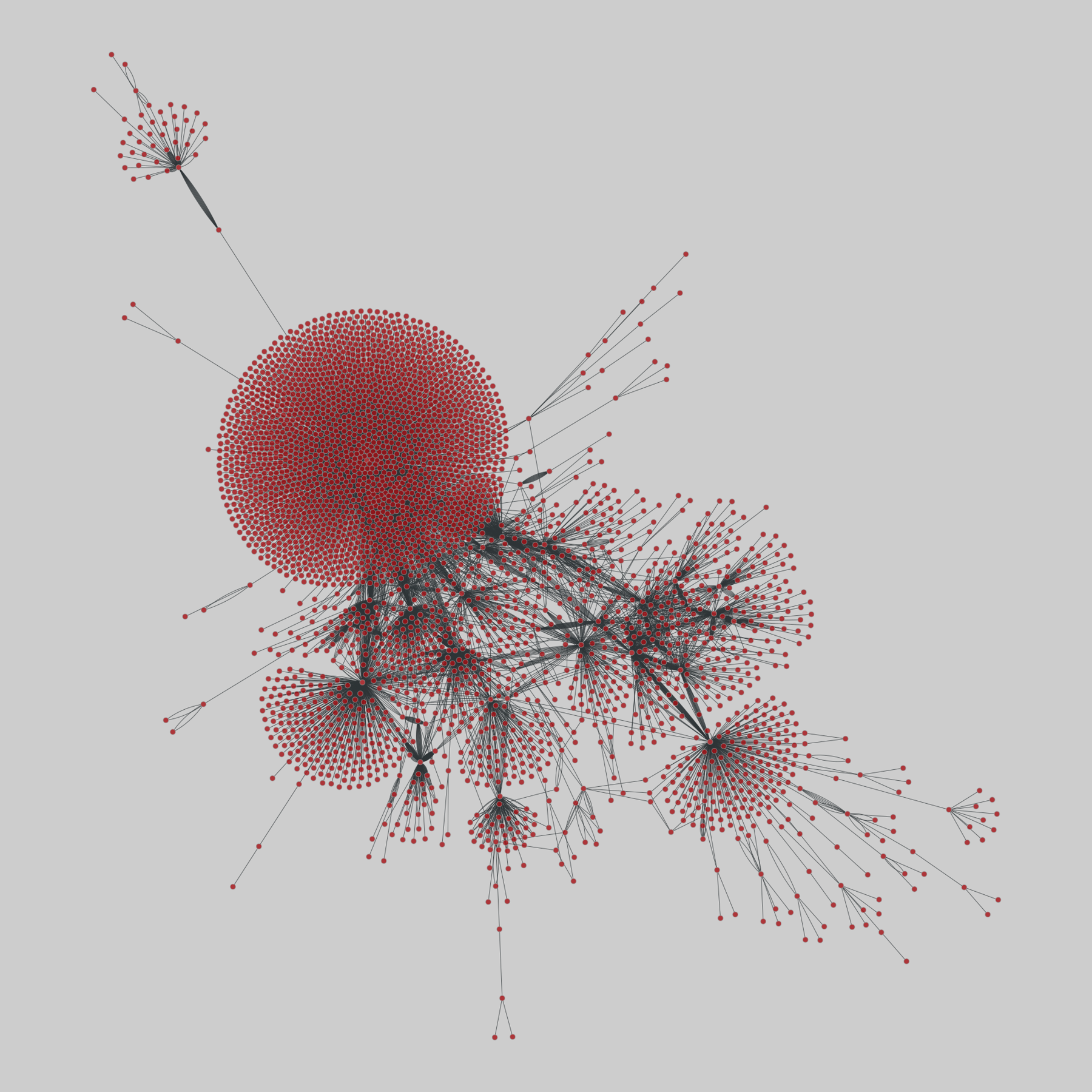
edit_wikiquote: Wikiquote edits (2010)
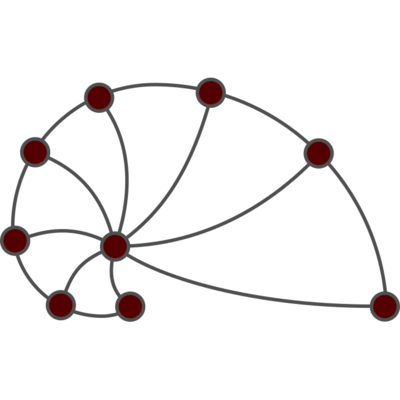
A bipartite user-page network extracted from Wikiquotes. A user connects to a page if that user edited that page. Edits (edges) are timestamped. Edge weights represent counts of the number of edits.
This network has 3929 nodes and 20595 edges.
Tags: Informational, Web graph, Multigraph, Timestamps
RE: https://mastodon.social/@austinkocher/115870985578248318
"But I’m observing an escalating wave of deaths in ICE custody pouring over the agency’s press release page — intentionally designed to roll out at a time when few will notice. Well, I …
Let's face it: Trump's attack on Venezuela is about fossil fuels* once more. Another reason to resume working on the energy transition this coming Monday!
*) Confirmed by Trump himself:
is wikipedia’s “skin” setting supposed to have any effect? everything looks the same whatever i choose
(tiny font size, page cannot be zoomed to less than 110% screen width)
[2025-12-11 Thu (UTC), 4 new articles found for q-bio.NC Neurons and Cognition]
toXiv_bot_toot
5 reasons to submit your idea for #TNC26 Call for Proposals - Part 2
Next June, Helsinki 🇫🇮 will welcome our global R&E community under the theme Digital Sisu—inspired by the Finnish concept of “sisu:” inner strength, perseverance, and determination when things get tough.
In our digital era, sisu is about taking action, meeting challenges with courage, creativity, and collaboration to…
In #Wikimedia land, I created my first #Lua module in #WikimediaCommons:
I'm preparing a briefing on #SeaLevelRise and my hunt for an image led me to the wikipedia page and holy moly it's good...
If you want to learn about many different aspects, I'd definitely start there.
https://en.wikipedia.org/wiki/Sea_level_rise
Crosslisted article(s) found for q-bio.NC. https://arxiv.org/list/q-bio.NC/new
[1/1]:
- Scalable Construction of Spiking Neural Networks using up to thousands of GPUs
Bruno Golosio, et al.
https://arxiv.org/abs/2512.09502 https://mastoxiv.page/@arXiv_csDC_bot/115700162341982631
toXiv_bot_toot
Got this from a friend! LEGO is child’s play compared to this! Let’s
see if I can build this over the upcoming weeks.
Ihr liebt Teddys offenbar auch so🥰. Nur der Waldbär (mit grüner handgemalter #wandklexschmuck Galaxie) ist noch da im #klexadventskalender. Echt 925 Sterling Silber, auf https://www.wandklex.art/page/klexadventskalender-2025-63444. 🚦
📰 Gut informiert zu sein, ist unser #Schutzschild gegen Polemik der #Politiker, #Lobbyisten oder Manipulation durch rechte Medien. Ich tröte kostenlos aktuelle Informationen zu
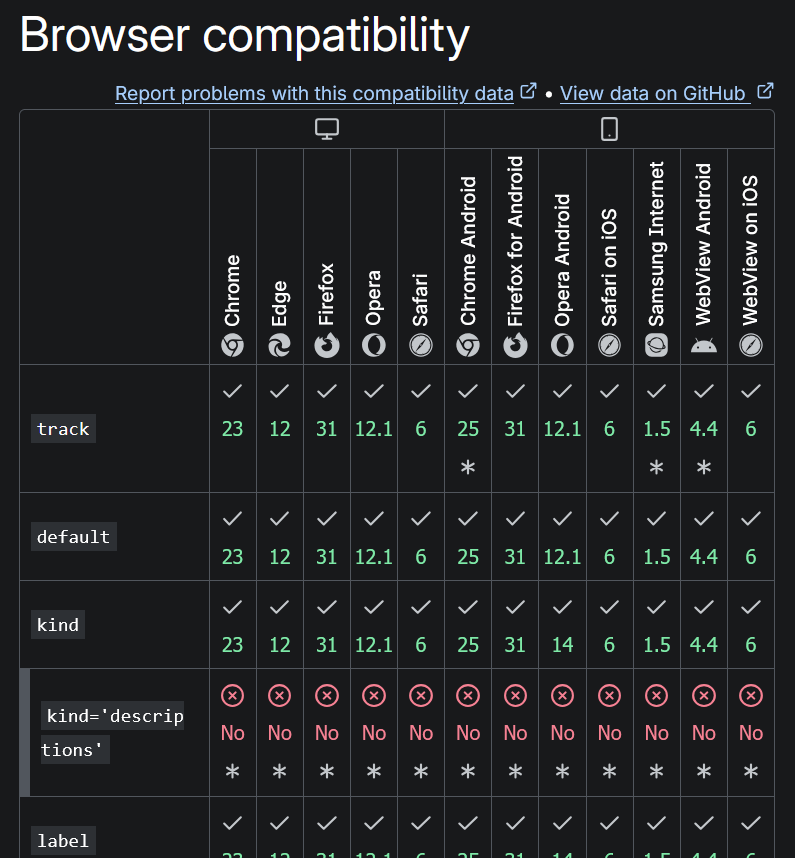
Just me trying to reconcile Baseline listing `<track>` as “widely available” and all browsers shown with green checks when down the page there’s an entire row of red Xes for one of the core accessibility features of `<track>`.
#HTML #accessibility
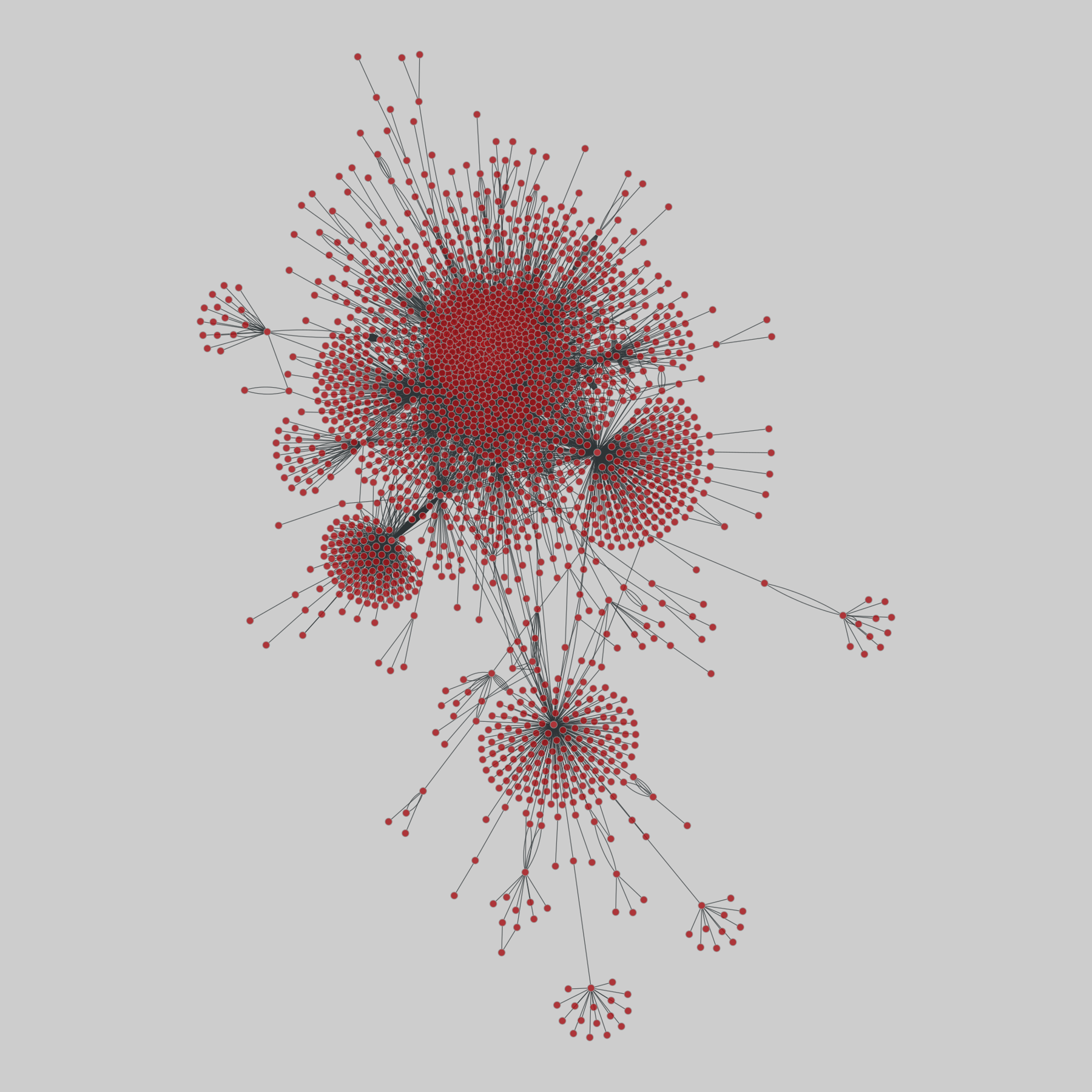
edit_wikiquote: Wikiquote edits (2010)
A bipartite user-page network extracted from Wikiquotes. A user connects to a page if that user edited that page. Edits (edges) are timestamped. Edge weights represent counts of the number of edits.
This network has 2277 nodes and 8672 edges.
Tags: Informational, Web graph, Multigraph, Timestamps
RT: Seth Harp @sethharpesq
Nov 1
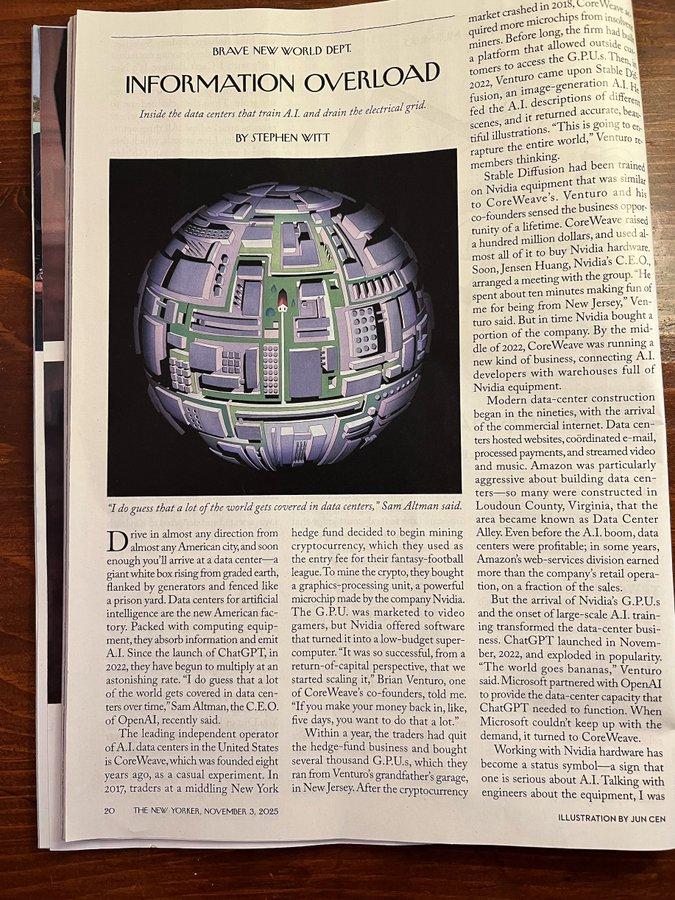
The biggest capital outlay ever, for a product that no one will pay for.
OpenAI loses ten billion dollars a quarter. There is no path to profitability for subprime AI. These absurd data centers will stand sentinel over the ruins of our fake economy like moai on Easter Island.
"US will be ‘strongly involved’ in Venezuela oil industry, Trump says after Caracas attacked and Maduro captured"
At least he is not pretending it's about anything else.
htt…
Just added a “Sign in with Mastodon” example to Kitten’s¹ examples:
https://codeberg.org/kitten/app/src/branch/main/examples/sign-in-with-mastodon
If I have time at some point, I might make it into a tutorial.
Enjoy!
:kitten:💕
Crosslisted article(s) found for q-bio.NC. https://arxiv.org/list/q-bio.NC/new
[1/1]:
- Spatial Spiking Neural Networks Enable Efficient and Robust Temporal Computation
Lennart P. L. Landsmeer, Amirreza Movahedin, Mario Negrello, Said Hamdioui, Christos Strydis
https://arxiv.org/abs/2512.10011 https://mastoxiv.page/@arXiv_csNE_bot/115705872402670407
toXiv_bot_toot
Strategyproof Tournament Rules for Teams with a Constant Degree of Selfishness
David Pennock, Daniel Schoepflin, Kangning Wang
https://arxiv.org/abs/2512.05235 https://arxiv.org/pdf/2512.05235 https://arxiv.org/html/2512.05235
arXiv:2512.05235v1 Announce Type: new
Abstract: We revisit the well-studied problem of designing fair and manipulation-resistant tournament rules. In this problem, we seek a mechanism that (probabilistically) identifies the winner of a tournament after observing round-robin play among $n$ teams in a league. Such a mechanism should satisfy the natural properties of monotonicity and Condorcet consistency. Moreover, from the league's perspective, the winner-determination tournament rule should be strategyproof, meaning that no team can do better by losing a game on purpose.
Past work considered settings in which each team is fully selfish, caring only about its own probability of winning, and settings in which each team is fully selfless, caring only about the total winning probability of itself and the team to which it deliberately loses. More recently, researchers considered a mixture of these two settings with a parameter $\lambda$. Intermediate selfishness $\lambda$ means that a team will not lose on purpose unless its pair gains at least $\lambda s$ winning probability, where $s$ is the individual team's sacrifice from its own winning probability. All of the dozens of previously known tournament rules require $\lambda = \Omega(n)$ to be strategyproof, and it has been an open problem to find such a rule with the smallest $\lambda$.
In this work, we make significant progress by designing a tournament rule that is strategyproof with $\lambda = 11$. Along the way, we propose a new notion of multiplicative pairwise non-manipulability that ensures that two teams cannot manipulate the outcome of a game to increase the sum of their winning probabilities by more than a multiplicative factor $\delta$ and provide a rule which is multiplicatively pairwise non-manipulable for $\delta = 3.5$.
toXiv_bot_toot
In my first workshop of the #FF2025 conference! Considering 'Future scenarios: Supporting the AI4LAM Community in Teaching and Learning' https://www.conftool.org/f…
So, I still have not updated my iPhone to v26 because I hate everything I’ve seen about the “Liquid Glass” and Apple still had a v18 update last time around.
But I expect I will be forced to upgrade since Safari with Lockdown Mode on in v18 chokes on almost every page, redrawing a couple of times before giving up. I also see this in a couple of apps which are probably just thin wrappers around Safari WebViews. Turning off lockdown mode for the site ends the problem.
If you do know where to find the page: please do not spoil the poll by sharing, or giving clues to, the address.
This is genuinely terrifying. Google Scholar is pushing "AI Powered Scholar Search."
What's scariest about this is that it will almost certainly turn up results that feel *right* -- they'll mention relevant topics and let a researcher craft a perfectly unassailable reference list.
But what it will prevent the researcher from doing is the actual research of finding relevant publications: discovering connections, framing questions, identifying contrasts…
Yesterday I installed some OpenSource Software on my Laptop. As it also has a donation page, I donated 5€.
Since a couple of years I try to donate whenever I install OpenSource Software. Something between 5€-15€. Especially in the age of "Free"Apps that are bloated with Ads, I want to honor when a software comes just as is with a friendly hint to a donation page.
(I really try to avoid resetting my machines as this always comes with a couple of donations...)
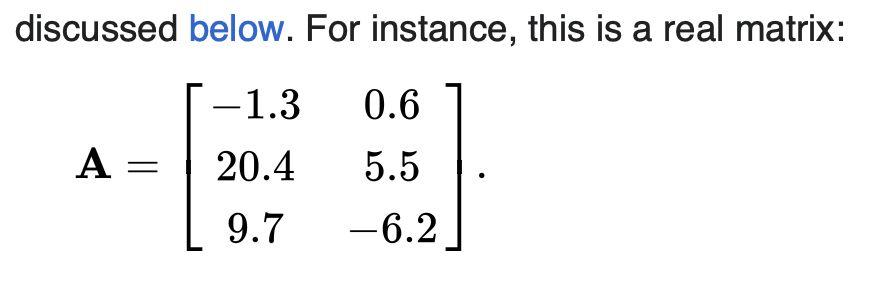
But what *IS* the Matrix?
Oh. okay. nevermind.
Sophie Cavez: Behind The Style & Sophistication | Chatterbox with Mel Biggs Ep.23
In depth interview with fabulous Belgian folk accordionist Sophie Cavez
#Accordion #FolkMusic #Belgium
> try to test my software
> it uses codeberg.org for a test checkout
> /info/refs?service=git-upload-pack": dial tcp 217.197.84.140:443: i/o timeout
> open codeberg status page
> it times out
What am i supposed to do now. Touch grass?
A federal judge on Wednesday shredded the Trump administration’s shallow defense for bragging about its rampant, warrantless immigration arrests.
In an 88-page ruling, U.S. Judge Beryl Howell wrote that the Trump administration had illegally lowered the standard for making immigration arrests
when it instituted a policy of “arrest now, ask questions later” as part of the federal takeover of Washington, D.C.
Howell documented how the Department of Homeland Security and Trump …
Running my own full-service, multi-tenanted & multi-domain email service gives me a remarkable feeling of power. It's is seriously cool (been running 4 of them for a bunch of years). In other news, Mailcow is superb - . https://mailcow.email/ (I run their Dockerized install)
Ugh.. Just noticed some new #Copilot settings appearing in #Github, and one of them was giving it access to all repositories 😡 just like.. by default
This is in Settings > Copilot > coding agent
I have already set copilot "visibility" as "Disabled" but is that f…
Modeling, Segmenting and Statistics of Transient Spindles via Two-Dimensional Ornstein-Uhlenbeck Dynamics
C. Sun, D. Fettahoglu, D. Holcman
https://arxiv.org/abs/2512.10844 https://arxiv.org/pdf/2512.10844 https://arxiv.org/html/2512.10844
arXiv:2512.10844v1 Announce Type: new
Abstract: We develop here a stochastic framework for modeling and segmenting transient spindle- like oscillatory bursts in electroencephalogram (EEG) signals. At the modeling level, individ- ual spindles are represented as path realizations of a two-dimensional Ornstein{Uhlenbeck (OU) process with a stable focus, providing a low-dimensional stochastic dynamical sys- tem whose trajectories reproduce key morphological features of spindles, including their characteristic rise{decay amplitude envelopes. On the signal processing side, we propose a segmentation procedure based on Empirical Mode Decomposition (EMD) combined with the detection of a central extremum, which isolates single spindle events and yields a collection of oscillatory atoms. This construction enables a systematic statistical analysis of spindle features: we derive empirical laws for the distributions of amplitudes, inter-spindle intervals, and rise/decay durations, and show that these exhibit exponential tails consistent with the underlying OU dynamics. We further extend the model to a pair of weakly coupled OU processes with distinct natural frequencies, generating a stochastic mixture of slow, fast, and mixed spindles in random temporal order. The resulting framework provides a data- driven framework for the analysis of transient oscillations in EEG and, more generally, in nonstationary time series.
toXiv_bot_toot
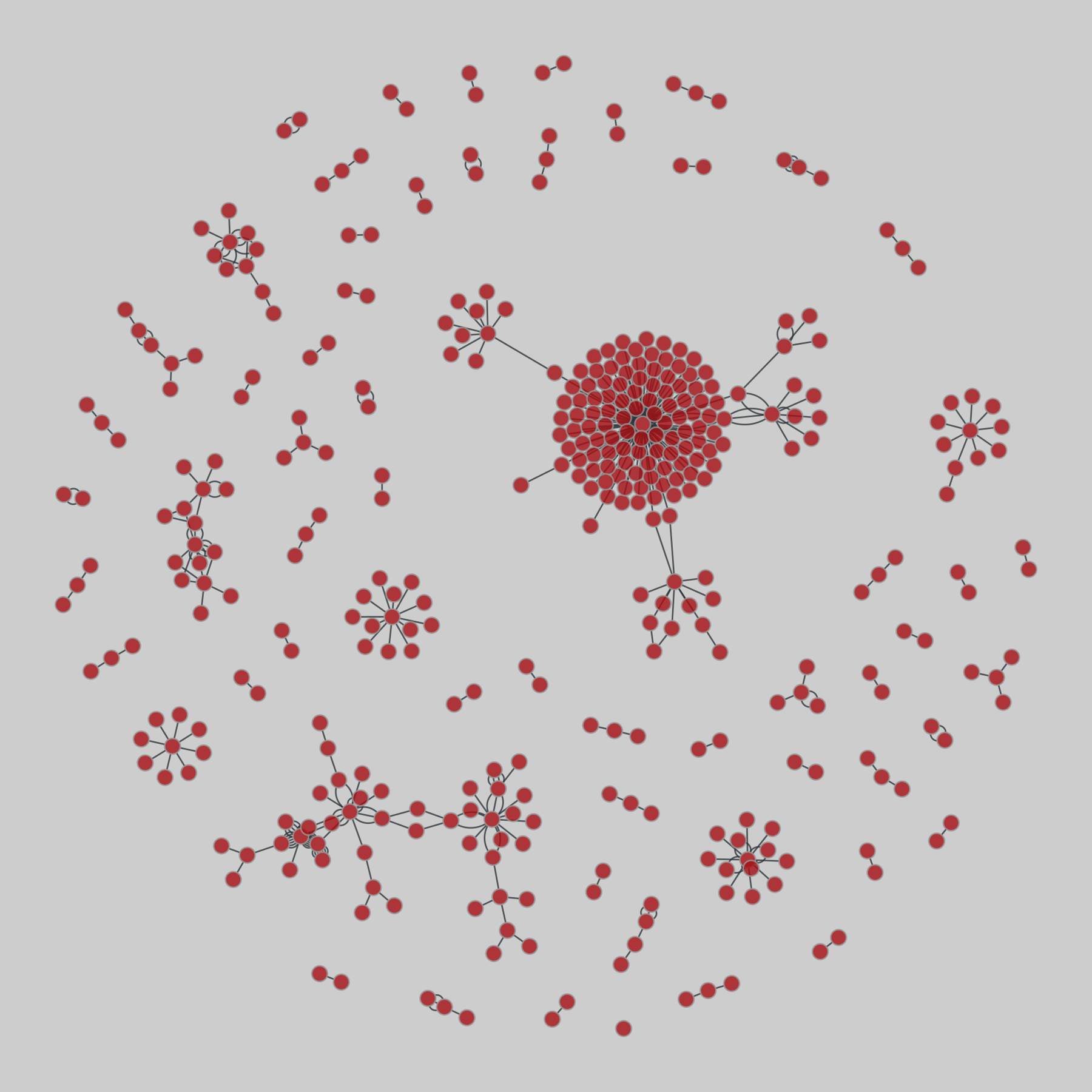
edit_wiktionary: Wiktionary edits (2010)
Three bipartite user-page networks extracted from Wiktionary, for French, German, and English. A user connects to a page if that user edited that page. Edits (edges) are timestamped. Edge weights represent counts of the number of edits.
This network has 142 nodes and 156 edges.
Tags: Informational, Web graph, Multigraph, Timestamps
Okular is a great PDF - and a lot of other format - document viewer.
It's quite happy to deal with a few thousand page PDF file; and I just learnt it can also do images, and mark down (and others).
https://okular.kde.org/
After reading your paper, ... I found its research highly valuable and inspiring. However, I encountered some issues with page layout and details, which I would like to understand further.
Allometric scaling of brain activity explained by avalanche criticality
Tiago S. A. N. Sim\~oes, Jos\'e S. Andrade Jr., Hans J. Herrmann, Stefano Zapperi, Lucilla de Arcangelis
https://arxiv.org/abs/2512.10834 https://arxiv.org/pdf/2512.10834 https://arxiv.org/html/2512.10834
arXiv:2512.10834v1 Announce Type: new
Abstract: Allometric scaling laws, such as Kleiber's law for metabolic rate, highlight how efficiency emerges with size across living systems. The brain, with its characteristic sublinear scaling of activity, has long posed a puzzle: why do larger brains operate with disproportionately lower firing rates? Here we show that this economy of scale is a universal outcome of avalanche dynamics. We derive analytical scaling laws directly from avalanche statistics, establishing that any system governed by critical avalanches must exhibit sublinear activity-size relations. This theoretical prediction is then verified in integrate-and-fire neuronal networks at criticality and in classical self-organized criticality models, demonstrating that the effect is not model-specific but generic. The predicted exponents align with experimental observations across mammal species, bridging dynamical criticality with the allometry of brain metabolism. Our results reveal avalanche criticality as a fundamental mechanism underlying Kleiber-like scaling in the brain.
toXiv_bot_toot
[2026-01-02 Fri (UTC), no new articles found for cond-mat.mtrl-sci Materials Science]
toXiv_bot_toot
The joys of running #proprietaryGarbage expecting an FHS environment and whatever other shenanigans on :nixos: #NixOS...
If anyone has any idea how to get the CEWE Fotobuch software to behave on NixOS, be my guest:
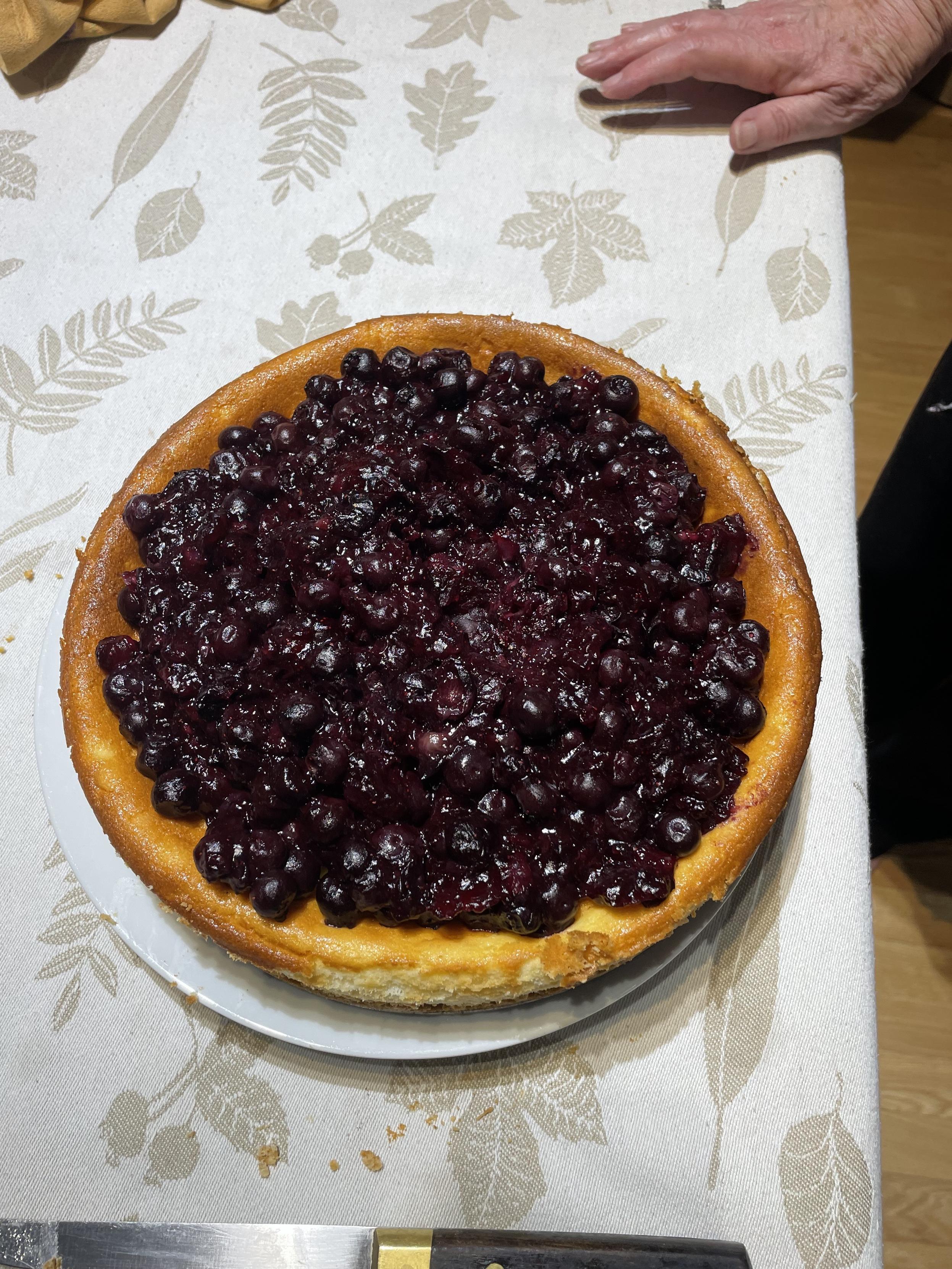
my mommy made me a cheeseccake from an old cookbook she got 50 years ago on a trip to the USA which young me subsequently doodled on said cheesecake page.
we are figuring i was trying to write "only make on my 48th Birthday" 🎉
😆
#birthday #cake #cheesecake #today #family
I am an AI model made for everything in general.
I've memorized the wiki page of every Minecraft mineral.
I know the Queen rules England. My training set's historical.
Hallucinations are my Waterloo—That isn't allegorical.
I'm built from matrix operations simple and mathematical,
My neurons are a metaphor, not actually synaptical.
The data centers built today are ninety-nine percent for me.
Spare no expense; you'll live forever soon in …
Parallel Neuron Groups in the Drosophila Brain
Robert Worden
https://arxiv.org/abs/2512.10525 https://arxiv.org/pdf/2512.10525 https://arxiv.org/html/2512.10525
arXiv:2512.10525v1 Announce Type: new
Abstract: The full connectome of an adult Drosophila enables a search for novel neural structures in the insect brain. I describe a new neural structure, called a Parallel Neuron Group (PNG). Two neurons are called parallel if they share a significant number of input neurons and output neurons. Most pairs of neurons in the Drosophila brain have very small parallel match. There are about twenty larger groups of neurons for which any pair of neurons in the group has a high match. These are the parallel groups. Parallel groups contain only about 1000 out of the 65,000 neurons in the brain, and have distinctive properties. There are groups in the right mushroom bodies, the antennal lobes, the lobula, and in two central neuropils (GNG and EB). Most parallel groups do not have lateral symmetry. A group usually has one major input neuron, which inputs to all the neurons in the group, and a small number of major output neurons. The major input and output neurons are laterally asymmetric. Parallel neuron groups present puzzles, such as: what does a group do, that could not be done by one larger neuron? Do all neurons in a group fire in synchrony, or do they perform different functions? Why are they laterally asymmetric? These may merit further investigation.
toXiv_bot_toot
A screenshot of the FreeBSD search page:
[2025-12-12 Fri (UTC), 3 new articles found for q-bio.NC Neurons and Cognition]
toXiv_bot_toot
Prefrontal scaling of reward prediction error readout gates reinforcement-derived adaptive behavior in primates
Tian Sang, Yichun Huang, Fangwei Zhong, Miao Wang, Shiqi Yu, Jiahui Li, Yuanjing Feng, Yizhou Wang, Kwok Sze Chai, Ravi S. Menon, Meiyun Wang, Fang Fang, Zheng Wang
https://arxiv.org/abs/2512.09761 https://arxiv.org/pdf/2512.09761 https://arxiv.org/html/2512.09761
arXiv:2512.09761v1 Announce Type: new
Abstract: Reinforcement learning (RL) enables adaptive behavior across species via reward prediction errors (RPEs), but the neural origins of species-specific adaptability remain unknown. Integrating RL modeling, transcriptomics, and neuroimaging during reversal learning, we discovered convergent RPE signatures - shared monoaminergic/synaptic gene upregulation and neuroanatomical representations, yet humans outperformed macaques behaviorally. Single-trial decoding showed RPEs guided choices similarly in both species, but humans disproportionately recruited dorsal anterior cingulate (dACC) and dorsolateral prefrontal cortex (dlPFC). Cross-species alignment uncovered that macaque prefrontal circuits encode human-like optimal RPEs yet fail to translate them into action. Adaptability scaled not with RPE encoding fidelity, but with the areal extent of dACC/dlPFC recruitment governing RPE-to-action transformation. These findings resolve an evolutionary puzzle: behavioral performance gaps arise from executive cortical readout efficiency, not encoding capacity.
toXiv_bot_toot
Replaced article(s) found for physics.atom-ph. https://arxiv.org/list/physics.atom-ph/new
[1/1]:
- Optical excitation and stabilization of ultracold field-linked tetratomic molecules
Bijit Mukherjee, Micha{\l} Tomza
NeuroSketch: An Effective Framework for Neural Decoding via Systematic Architectural Optimization
Gaorui Zhang, Zhizhang Yuan, Jialan Yang, Junru Chen, Li Meng, Yang Yang
https://arxiv.org/abs/2512.09524 https://arxiv.org/pdf/2512.09524 https://arxiv.org/html/2512.09524
arXiv:2512.09524v1 Announce Type: new
Abstract: Neural decoding, a critical component of Brain-Computer Interface (BCI), has recently attracted increasing research interest. Previous research has focused on leveraging signal processing and deep learning methods to enhance neural decoding performance. However, the in-depth exploration of model architectures remains underexplored, despite its proven effectiveness in other tasks such as energy forecasting and image classification. In this study, we propose NeuroSketch, an effective framework for neural decoding via systematic architecture optimization. Starting with the basic architecture study, we find that CNN-2D outperforms other architectures in neural decoding tasks and explore its effectiveness from temporal and spatial perspectives. Building on this, we optimize the architecture from macro- to micro-level, achieving improvements in performance at each step. The exploration process and model validations take over 5,000 experiments spanning three distinct modalities (visual, auditory, and speech), three types of brain signals (EEG, SEEG, and ECoG), and eight diverse decoding tasks. Experimental results indicate that NeuroSketch achieves state-of-the-art (SOTA) performance across all evaluated datasets, positioning it as a powerful tool for neural decoding. Our code and scripts are available at https://github.com/Galaxy-Dawn/NeuroSketch.
toXiv_bot_toot
edit_wikiquote: Wikiquote edits (2010)
A bipartite user-page network extracted from Wikiquotes. A user connects to a page if that user edited that page. Edits (edges) are timestamped. Edge weights represent counts of the number of edits.
This network has 3369 nodes and 13926 edges.
Tags: Informational, Web graph, Multigraph, Timestamps
Meta-learning three-factor plasticity rules for structured credit assignment with sparse feedback
Dimitra Maoutsa
https://arxiv.org/abs/2512.09366 https://arxiv.org/pdf/2512.09366 https://arxiv.org/html/2512.09366
arXiv:2512.09366v1 Announce Type: new
Abstract: Biological neural networks learn complex behaviors from sparse, delayed feedback using local synaptic plasticity, yet the mechanisms enabling structured credit assignment remain elusive. In contrast, artificial recurrent networks solving similar tasks typically rely on biologically implausible global learning rules or hand-crafted local updates. The space of local plasticity rules capable of supporting learning from delayed reinforcement remains largely unexplored. Here, we present a meta-learning framework that discovers local learning rules for structured credit assignment in recurrent networks trained with sparse feedback. Our approach interleaves local neo-Hebbian-like updates during task execution with an outer loop that optimizes plasticity parameters via \textbf{tangent-propagation through learning}. The resulting three-factor learning rules enable long-timescale credit assignment using only local information and delayed rewards, offering new insights into biologically grounded mechanisms for learning in recurrent circuits.
toXiv_bot_toot
Before this poll: were you aware of the search page?
#FreeBSD
Screenshot to follow.
The Third Visual Pathway for Social Perception
David Pitcher
https://arxiv.org/abs/2512.09351 https://arxiv.org/pdf/2512.09351 https://arxiv.org/html/2512.09351
arXiv:2512.09351v1 Announce Type: new
Abstract: Influential models of primate visual cortex describe two functionally distinct pathways: a ventral pathway for object recognition and the dorsal pathway for spatial and action processing. However, recent human and non-human primate research suggests the existence of a third visual pathway projecting from early visual cortex through the motion-selective area V5/MT into the superior temporal sulcus (STS). Here we integrate anatomical, neuroimaging, and neuropsychological evidence demonstrating that this pathway specializes in processing dynamic social cues such as facial expressions, eye gaze, and body movements. This third pathway supports social perception by computing the actions and intentions of other people. These findings enhance our understanding of visual cortical organization and highlight the STS's critical role in social cognition, suggesting that visual processing encompasses a dedicated neural circuit for interpreting socially relevant motion and behavior.
toXiv_bot_toot
Replaced article(s) found for q-bio.NC. https://arxiv.org/list/q-bio.NC/new
[1/1]:
- How random connectivity shapes the fluctuating dynamics of finite-size neural populations
Nils E. Greven, Jonas Ranft, Tilo Schwalger
https://arxiv.org/abs/2412.16111 https://mastoxiv.page/@arXiv_qbioNC_bot/113701218895660861
- Feature Integration Spaces: Joint Training Reveals Dual Encoding in Neural Network Representations
Omar Claflin
https://arxiv.org/abs/2507.00269 https://mastoxiv.page/@arXiv_qbioNC_bot/114782582851811013
- Surface Waves and Axoplasmic Pressure Waves in Action Potential Propagation: Fundamentally Differ...
Marat M. Rvachev, Benjamin Drukarch
https://arxiv.org/abs/2505.24580 https://mastoxiv.page/@arXiv_physicsbioph_bot/114612607303169706
toXiv_bot_toot
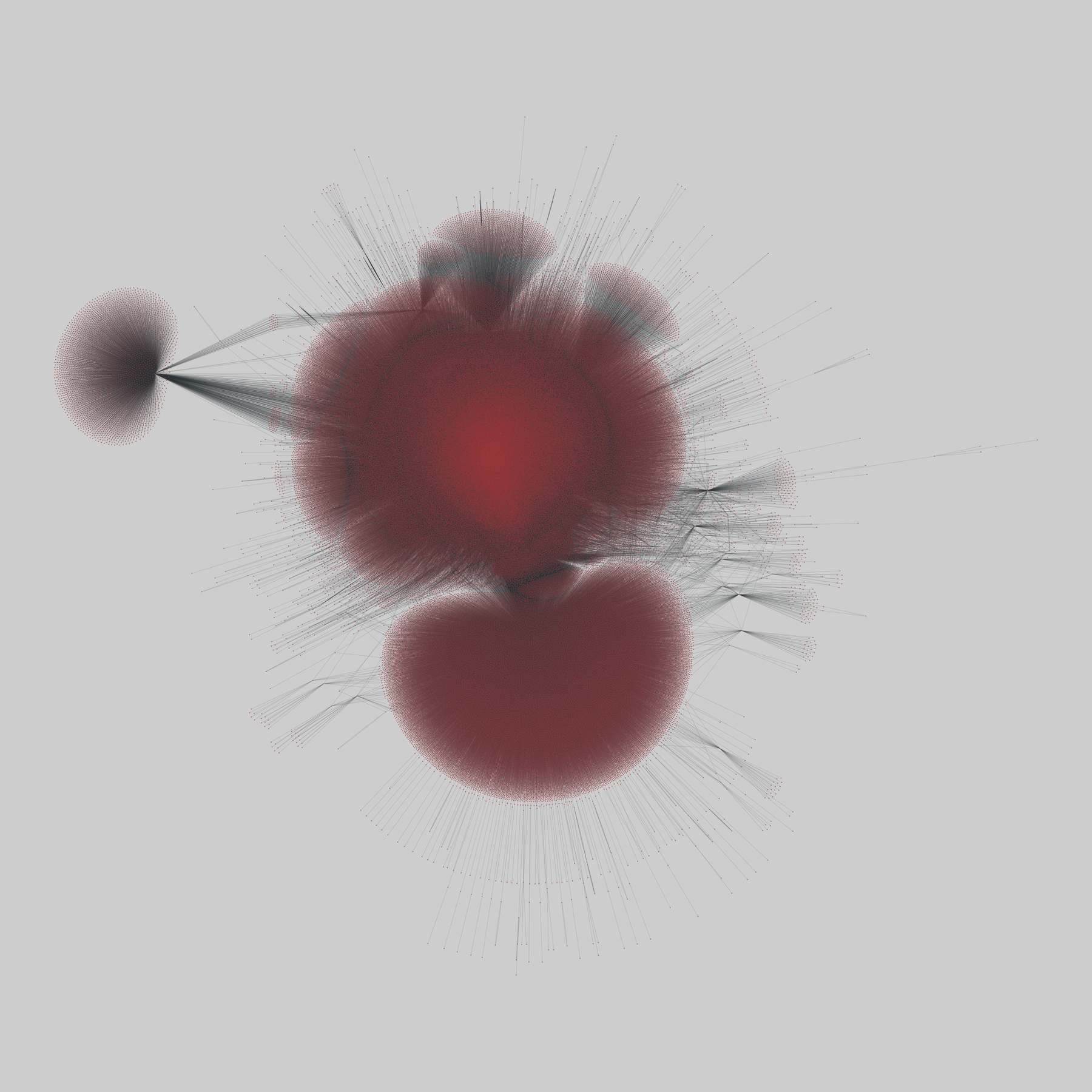
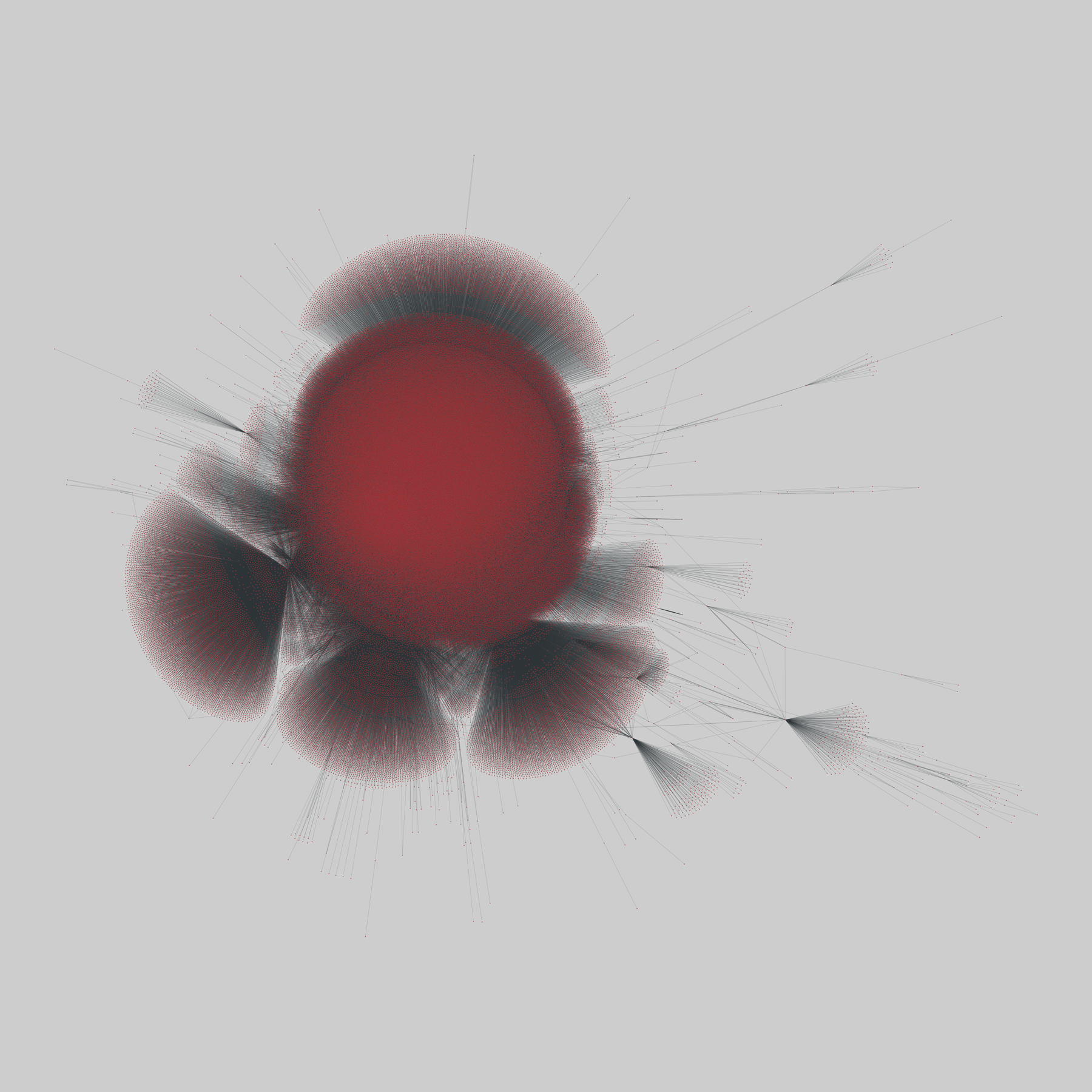
edit_wikiquote: Wikiquote edits (2010)
A bipartite user-page network extracted from Wikiquotes. A user connects to a page if that user edited that page. Edits (edges) are timestamped. Edge weights represent counts of the number of edits.
This network has 130834 nodes and 703139 edges.
Tags: Informational, Web graph, Multigraph, Timestamps
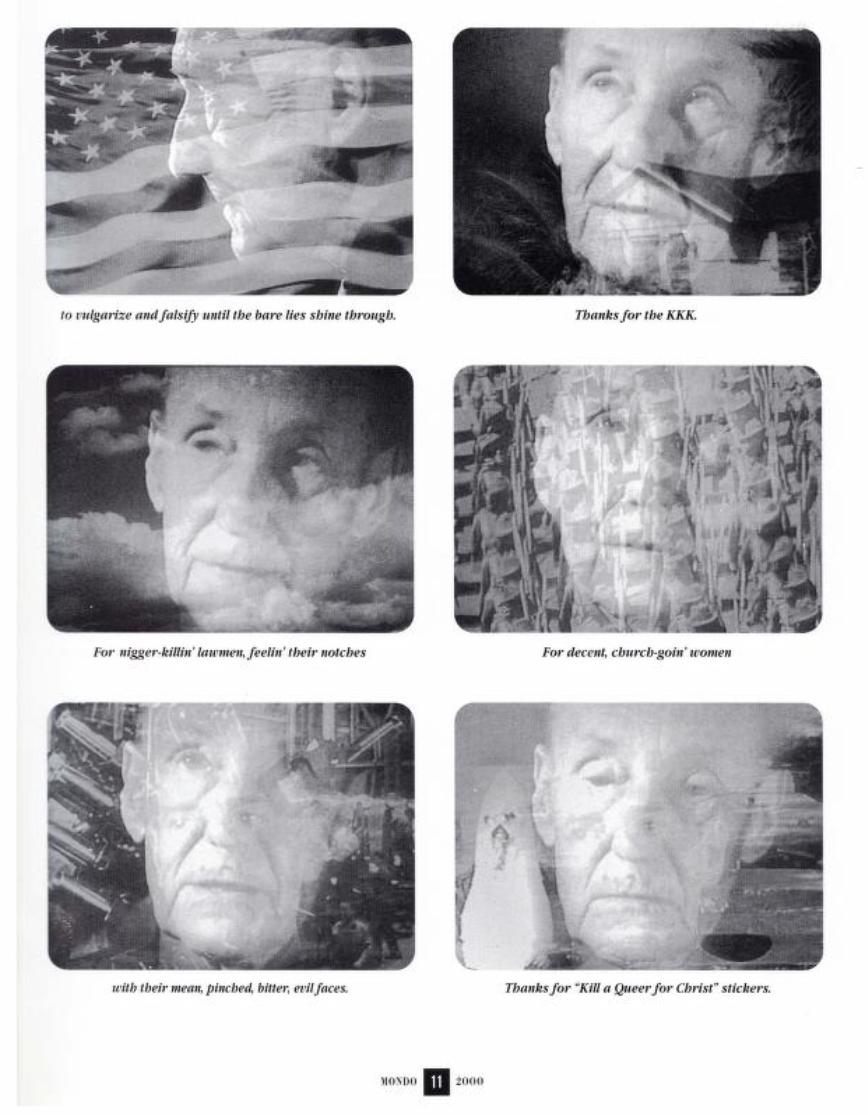
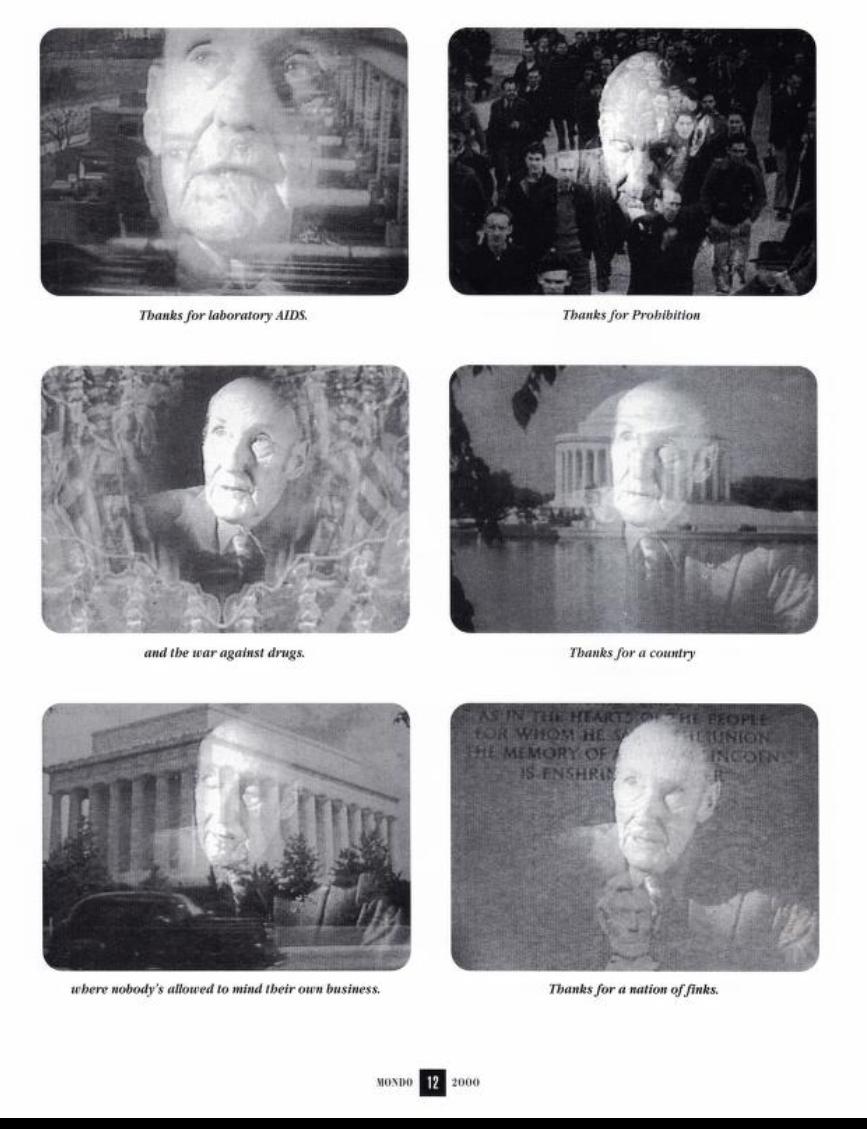
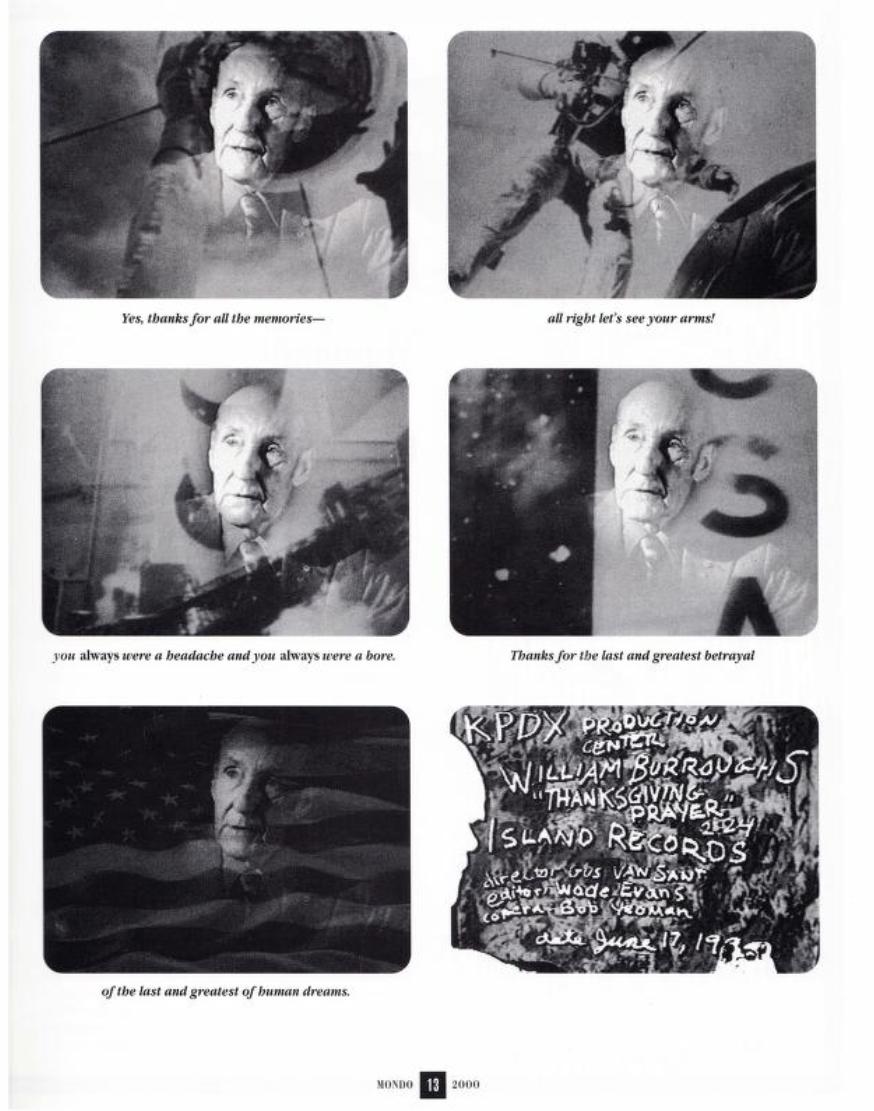
william burroughs's "a thanksgiving prayer" (1986), as rendered in mondo 2000 #3. https://archive.org/details/Mondo.2000.Issue.03.1991/page/n9/mode/2up
Crosslisted article(s) found for cond-mat.mtrl-sci. https://arxiv.org/list/cond-mat.mtrl-sci/new
[1/1]:
- Ovonic switches enable energy-efficient dendrite-like computing
Kang, Lee, Oh, Song, Park, Kim, Park, Jang, Kim, Yi, Kumar, Lee
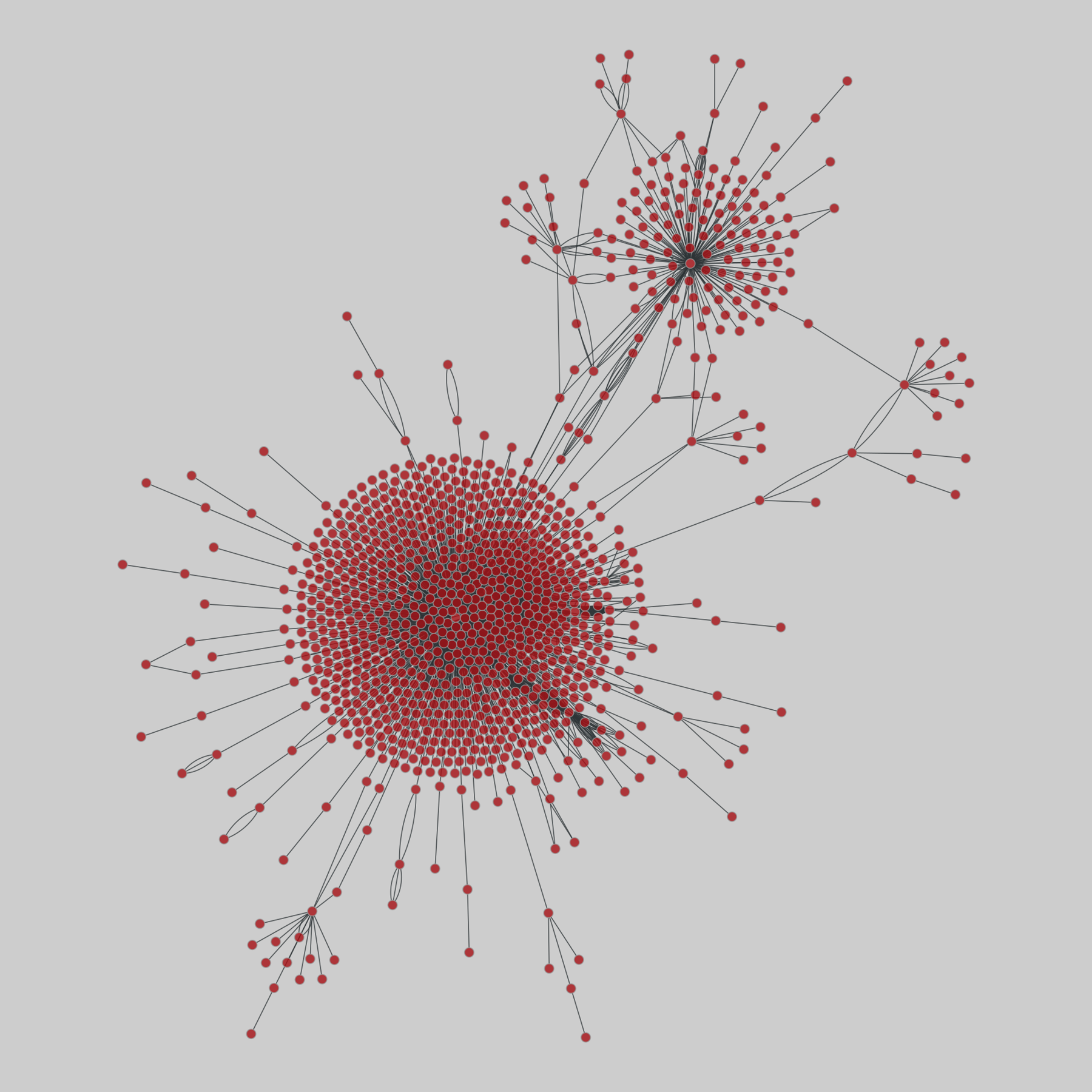
edit_wikibooks: Wikipedia book edits (2010)
Two bipartite user-page networks extracted from Wikipedia, about books. A user connects to a page if that user edited that page. Edits (edges) are timestamped. Edge weights represent counts of the number of edits.
This network has 394 nodes and 499 edges.
Tags: Informational, Web graph, Multigraph, Timestamps
[2025-11-03 Mon (UTC), 5 new articles found for physics.atom-ph Atomic Physics]
toXiv_bot_toot
edit_wikibooks: Wikipedia book edits (2010)
Two bipartite user-page networks extracted from Wikipedia, about books. A user connects to a page if that user edited that page. Edits (edges) are timestamped. Edge weights represent counts of the number of edits.
This network has 3466 nodes and 13382 edges.
Tags: Informational, Web graph, Multigraph, Timestamps
…
Crosslisted article(s) found for q-bio.NC. https://arxiv.org/list/q-bio.NC/new
[1/1]:
- Sleep effects on brain, cognition, and mental health during adolescence are mediated by the glymp...
Zeng, Li, Yang, Del Mauro, Yu, Lu, Zhuo, Rowland, Emerson, Wang
https://arxiv.org/abs/2512.08704 https://mastoxiv.page/@arXiv_qbioPE_bot/115694469206360926
toXiv_bot_toot
edit_wiktionary: Wiktionary edits (2010)
Three bipartite user-page networks extracted from Wiktionary, for French, German, and English. A user connects to a page if that user edited that page. Edits (edges) are timestamped. Edge weights represent counts of the number of edits.
This network has 140902 nodes and 1026100 edges.
Tags: Informational, Web graph, Multigraph, Timestamps
[2025-12-03 Wed (UTC), 3 new articles found for physics.atom-ph Atomic Physics]
toXiv_bot_toot
Multi state neurons
Robert Worden
https://arxiv.org/abs/2512.08815 https://arxiv.org/pdf/2512.08815 https://arxiv.org/html/2512.08815
arXiv:2512.08815v1 Announce Type: new
Abstract: Neurons, as eukaryotic cells, have powerful internal computation capabilities. One neuron can have many distinct states, and brains can use this capability. Processes of neuron growth and maintenance use chemical signalling between cell bodies and synapses, ferrying chemical messengers over microtubules and actin fibres within cells. These processes are computations which, while slower than neural electrical signalling, could allow any neuron to change its state over intervals of seconds or minutes. Based on its state, a single neuron can selectively de-activate some of its synapses, sculpting a dynamic neural net from the static neural connections of the brain. Without this dynamic selection, the static neural networks in brains are too amorphous and dilute to do the computations of neural cognitive models. The use of multi-state neurons in animal brains is illustrated in hierarchical Bayesian object recognition. Multi-state neurons may support a design which is more efficient than two-state neurons, and scales better as object complexity increases. Brains could have evolved to use multi-state neurons. Multi-state neurons could be used in artificial neural networks, to use a kind of non-Hebbian learning which is faster and more focused and controllable than traditional neural net learning. This possibility has not yet been explored in computational models.
toXiv_bot_toot
edit_wikibooks: Wikipedia book edits (2010)
Two bipartite user-page networks extracted from Wikipedia, about books. A user connects to a page if that user edited that page. Edits (edges) are timestamped. Edge weights represent counts of the number of edits.
This network has 1229 nodes and 2321 edges.
Tags: Informational, Web graph, Multigraph, Timestamps
<…
Revised comment on the paper titled "The Origin of Quantum Mechanical Statistics: Insights from Research on Human Language
Miko{\l}aj Sienicki, Krzysztof Sienicki
https://arxiv.org/abs/2512.07881 https://arxiv.org/pdf/2512.07881 https://arxiv.org/html/2512.07881
arXiv:2512.07881v1 Announce Type: new
Abstract: This short note comments on \citet{Aerts2024Origin}, which proposes that ranked word frequencies in texts should be read through the lens of Bose--Einstein (BE) statistics and even used to illuminate the origin of quantum statistics in physics. The core message here is modest: the paper offers an interesting analogy and an eye-catching fit, but several key steps mix physical claims with definitions and curve-fitting choices. We highlight three such points: (i) a normalization issue that is presented as "bosonic enhancement", (ii) an identification of rank with energy that makes the BE fit only weakly diagnostic of an underlying mechanism, and (iii) a baseline comparison that is too weak to support an ontological conclusion. We also briefly flag a few additional concerns (interpretation drift, parameter semantics, and reproducibility).
toXiv_bot_toot
Automation in quantum logic experiments with cold molecular ions
Richard Karl, Meissa Diouf, Aleksandr Shlykov, Mikolaj Roguski, Stefan Willitsch
https://arxiv.org/abs/2510.27582
Manifolds and Modules: How Function Develops in a Neural Foundation Model
Johannes Bertram, Luciano Dyballa, T. Anderson Keller, Savik Kinger, Steven W. Zucker
https://arxiv.org/abs/2512.07869 https://arxiv.org/pdf/2512.07869 https://arxiv.org/html/2512.07869
arXiv:2512.07869v1 Announce Type: new
Abstract: Foundation models have shown remarkable success in fitting biological visual systems; however, their black-box nature inherently limits their utility for under- standing brain function. Here, we peek inside a SOTA foundation model of neural activity (Wang et al., 2025) as a physiologist might, characterizing each 'neuron' based on its temporal response properties to parametric stimuli. We analyze how different stimuli are represented in neural activity space by building decoding man- ifolds, and we analyze how different neurons are represented in stimulus-response space by building neural encoding manifolds. We find that the different processing stages of the model (i.e., the feedforward encoder, recurrent, and readout modules) each exhibit qualitatively different representational structures in these manifolds. The recurrent module shows a jump in capabilities over the encoder module by 'pushing apart' the representations of different temporal stimulus patterns; while the readout module achieves biological fidelity by using numerous specialized feature maps rather than biologically plausible mechanisms. Overall, we present this work as a study of the inner workings of a prominent neural foundation model, gaining insights into the biological relevance of its internals through the novel analysis of its neurons' joint temporal response patterns.
toXiv_bot_toot
State and Parameter Estimation for a Neural Model of Local Field Potentials
Daniele Avitabile, Gabriel J. Lord, Khadija Meddouni
https://arxiv.org/abs/2512.07842 https://arxiv.org/pdf/2512.07842 https://arxiv.org/html/2512.07842
arXiv:2512.07842v1 Announce Type: new
Abstract: The study of cortical dynamics during different states such as decision making, sleep and movement, is an important topic in Neuroscience. Modelling efforts aim to relate the neural rhythms present in cortical recordings to the underlying dynamics responsible for their emergence. We present an effort to characterize the neural activity from the cortex of a mouse during natural sleep, captured through local field potential measurements. Our approach relies on using a discretized Wilson--Cowan Amari neural field model for neural activity, along with a data assimilation method that allows the Bayesian joint estimation of the state and parameters. We demonstrate the feasibility of our approach on synthetic measurements before applying it to a dataset available in literature. Our findings suggest the potential of our approach to characterize the stimulus received by the cortex from other brain regions, while simultaneously inferring a state that aligns with the observed signal.
toXiv_bot_toot
[2025-12-10 Wed (UTC), 4 new articles found for q-bio.NC Neurons and Cognition]
toXiv_bot_toot
Precise ab initio calculations of $^4$He($1snp \, ^3P_J$) fine structure of high Rydberg states
Hao Fang, Jing Chi, Xiao-Qiu Qi, Yong-Hui Zhang, Li-Yan Tang, Ting-Yun Shi
https://arxiv.org/abs/2510.27405
Replaced article(s) found for physics.atom-ph. https://arxiv.org/list/physics.atom-ph/new
[1/1]:
- Robust and scalable rf spectroscopy in first-order magnetic sensitive states at second-long coher...
C. -H. Yeh, K. C. Grensemann, L. S. Dreissen, H. A. F\"urst, T. E. M…
Crosslisted article(s) found for physics.atom-ph. https://arxiv.org/list/physics.atom-ph/new
[1/1]:
- Detection of photon-level signals embedded in sunlight with an atomic photodetector
Laura Zarraoa, Romain Veyron, Tomas Lamich, Sondos Elsehimy, Morgan W. Mitchell
…
Replaced article(s) found for q-bio.NC. https://arxiv.org/list/q-bio.NC/new
[1/1]:
- Graceful forgetting: Memory as a process
Alain de Cheveign\'e
https://…
edit_wikiquote: Wikiquote edits (2010)
A bipartite user-page network extracted from Wikiquotes. A user connects to a page if that user edited that page. Edits (edges) are timestamped. Edge weights represent counts of the number of edits.
This network has 3795 nodes and 11174 edges.
Tags: Informational, Web graph, Multigraph, Timestamps
Generation of strong ultralow-phase-noise microwave fields with tunable ellipticity for ultracold polar molecules
Shrestha Biswas, Sebastian Eppelt, Christian Buchberger, Xing-Yan Chen, Andreas Schindewolf, Michael Hani, Erwin Biebl, Immanuel Bloch, Xin-Yu Luo
https://arxiv.org/abs/2512.03007
Crosslisted article(s) found for q-bio.NC. https://arxiv.org/list/q-bio.NC/new
[1/1]:
- Memory-Amortized Inference: A Topological Unification of Search, Closure, and Structure
Xin Li
…
Effect of the avoided crossing on the rovibrational energy levels, resonances, and predissociation lifetimes within the ground and first excited electronic states of lithium fluoride
V. G. Ushakov, A. Yu. Ermilov, E. S. Medvedev
https://arxiv.org/abs/2512.02085
 @arXiv_qbioNC_bot@mastoxiv.page