2026-10-22 14:04:28
Oh ffs, Python's certificate storage is more fucked up; If you think your updated ca-certificates were enough, nope, still fucked:
https://discuss.python.org/t/information-for-python-users-regarding-emudhra-emsig…
Oh ffs, Python's certificate storage is more fucked up; If you think your updated ca-certificates were enough, nope, still fucked:
https://discuss.python.org/t/information-for-python-users-regarding-emudhra-emsig…

It's kind of crazy that both GPT and Claude really love to manipulate files by writing Python scripts that do text search-and-replace. First of all, why isn't this a dedicated tool? Second, the generated scripts usually don't check that the search-and-replace was successful. Are they just good enough at regurgitating text that they never make mistakes? What if the file was modified in the mean time?
zomg on my primary device:
locate cacert.pem | xargs grep -l 'emSign.*G3' | wc -l
returns 92, mostly in python virtualenvs. what a cancer.
🐍 Best fit is algorithmic code that can be tailored to hardware, but plain Python and PyTorch graphs also benefit, since the company says they are often far from optimal even under Torch's compiler.
🔧 Tracing and profiling overhead is capped at 2%, zero when idle. Setup: install the runtime, run your code. The model is hosted by doubleAI, so some trust is required.
🌐
Opus 5.5 efficiency jump — but only at lower effort levels. At low, medium and high effort it is 1.9–3.3× faster and 1.6–2.4× cheaper than Opus 5. Python at low effort now costs $0.38 and 35 seconds, against Opus 5's $0.75 and 117 s. At xhigh the two models are indistinguishable; at max 5.5 is 1.3× slower in Python and 1.9× slower in Go with high variability. Three Python runs at max took 1030, 1688 and 3333 seconds. Opus 5's defaults to high; 5.5's defaults to medium. https://github.com/adrianco/retort/blob/main/model-blog.md
✅ Every rewrite is backed by formal verification: Maxwell produces proofs that the replacement code is equivalent. The same process can prove the absence of memory errors; doubleAI says it found memory-safety issues in Python itself this way.
📊 Claimed results: data pipelines more than 38x faster, AI inference kernels more than 4.5x faster. The 4K video model LTX-2.5 ran nearly twice as fast after Maxwell cut data exchange between GPUs and dropped unnecessary token padding.
Here's build-and-inspect-python-package 3.0.2 brought to you by certifi and the number 4: https://github.com/hynek/build-and-inspect-python-package/releases/tag/v3.0.2
“Start in under a minute!”
I guess the three hours spent on trying to install a supported Python version don’t count :-/
New release (0.26.0) of the ha-mqtt-discoverable module.
- Minimum supported Python version is 3.11 now (3.10 is EOL)
- Add Python 3.15 support
- Stability improvements
- Improved documentation
- Improved mqtt configurability
- Dependency updates
Details at #mqtt #homeAssistant #python
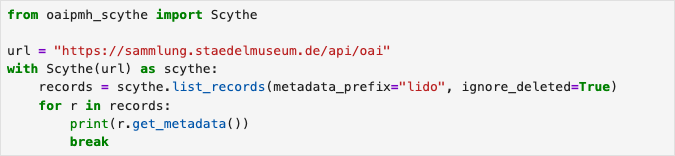
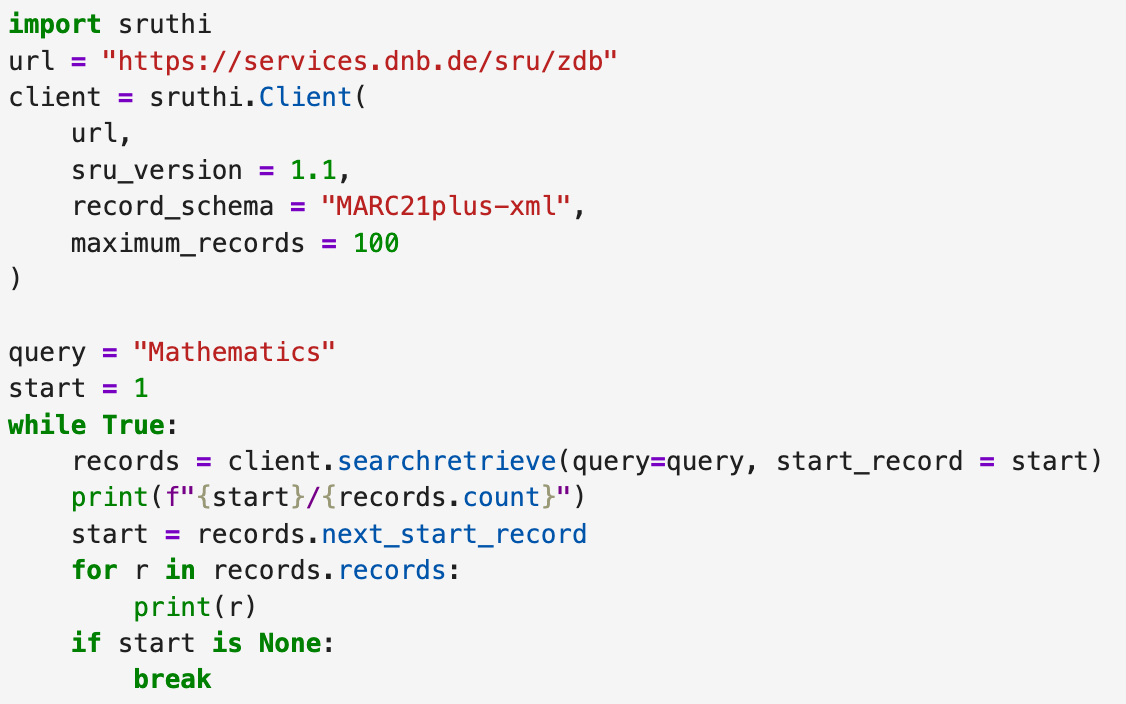
There's also a #SRU library for Python, a bit less elaborate than #scythe for OAI. It's called sruthi (https://github.com/metaodi/sruthi
my favorite Python 3.15 feature is flattening using `[*ls for ls in [[1], [2]]]` because the old syntax is impossible to remember and no amount of reply-guying “you just have to imagine two for loops bro" has ever changed anything about it: I always added a `flatten()` helper. I can remember the new syntax BECAUSE IT MAKES SENSE 🥲
In a supply chain attack on the popular LiteLLM library in March this year, around 434,000 build pipelines – which were in use at more than 2,500 companies – are believed to have been compromised: #Python #ITSecurity #SupplyChain #LiteLLM