 @nohillside@smnn.ch
2026-09-21 08:08:47
Die AfD hat in zwei Landtagswahlen die (relative) Mehrheit geholt, aber selbst im angeblich linkslastigen Bluesky ist meine TL voll des Entsetzens über den Sieg der Linke in Berlin. Muss man nicht verstehen.
@nohillside@smnn.chDie AfD hat in zwei Landtagswahlen die (relative) Mehrheit geholt, aber selbst im angeblich linkslastigen Bluesky ist meine TL voll des Entsetzens über den Sieg der Linke in Berlin. Muss man nicht verstehen.
 @simon_brooke@mastodon.scot
#ScribesAndMakers 8/22: "Fantasy stories are frequently inspired by medieval societies. Why do you think people are fascinated by that time period?"
Elite propaganda.
Medieval knights were a bloodthirsty elite. Armour allowed them to cut down commoners with relative impunity, and they did. The myth of the 'parfait gentil knicht' is entirely propaganda.


 @arXiv_physicsappph_bot@mastoxiv.page
Evaluation-Recording Contamination in Learned Nano-Quadrotor Dynamics: A Fresh-Seed Audit
David Shulman
https://arxiv.org/abs/2607.18482 https://arxiv.org/pdf/2607.18482 https://arxiv.org/html/2607.18482
arXiv:2607.18482v1 Announce Type: new
Abstract: Learned flight-dynamics models are often trained on short windows extracted from longer recordings. Randomly splitting these windows can place dependent samples from the same physical flight in both training and evaluation sets. We audit this issue using a fixed snapshot of the NanoBench Crazyflie 2.1 dataset. The experiment holds evaluation flights, rollout starts, training-window count, validation data, and optimization budget fixed. In the contaminated protocol, [LeakagePercent] percent of a recording-disjoint training set is replaced with windows from evaluation recordings, while both arms use the same clean validation set. We compare a world-coordinate delta multilayer perceptron with a relative-coordinate control across [NumSeeds] fresh training seeds and [NumEvalFlights] complete evaluation recordings. The primary endpoint is failure-aware position RMSE over 1-second rollouts, analyzed with paired crossed recording-by-seed inference. Contamination lowers apparent world-model error by 12.1 percent, from 0.299 m to 0.262 m, but the predeclared 95 percent confidence interval for contaminated minus disjoint error is -0.0735 to 0.0011 m. Because the interval crosses zero, the confirmatory result is negative. Secondary horizons and the relative-coordinate model show similar trends, but no coordinate-representation interaction is supported. Reliable leakage assessment therefore requires recording-level splits, failure-aware rollouts, replication across fresh seeds, and inference over both recordings and optimization seeds.
toXiv_bot_toot
 @azonenberg@ioc.exchange
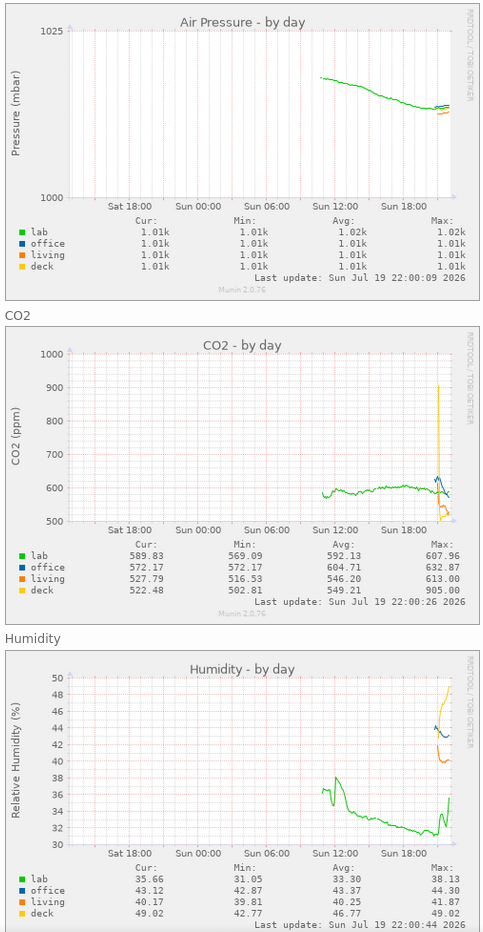
Just set up some new IAQ monitoring stations around the house. Still want to put one in the bedroom to see how stuffy it gets at night with the door closed, but I only had four units so this is what I started with.
Particle counts are Sensirion SEN5x, CO2 and most other atmospheric data SCD4x.
Haven't done any kind of zero cal on the CO2 and they've been sitting around idle for a while, so there's probably a bit of offset that will need to be corrected - the one on th…
 @arXiv_physicsinsdet_bot@mastoxiv.page
UPLOAD-ANYON: Progress Towards an Optimised Twisted Anyon Cavity with High-Sensitivity AM-Noise Detection for an Ultralight Axion Dark Matter Search
Robert Crew, Emma Paterson, Maxim Goryachev, Eugene Ivanov, Pashupati Dhakal, Tugrul Talha Ersoz, Michael Tobar, Jeremy Bourhill
https://arxiv.org/abs/2608.19225 https://arxiv.org/pdf/2608.19225 https://arxiv.org/html/2608.19225
arXiv:2608.19225v1 Announce Type: new
Abstract: We propose a superconducting single-mode microwave haloscope based on helical cavity resonators for the detection of ultralight dark matter axions over the mass range $10^{-18}$ to $10^{-13}\,\mathrm{eV}$. Building on the single-mode helical-cavity concept introduced by Bourhill et al. [Phys. Rev. D 108, 052014 (2023); arXiv:2208.01640], we use an inverse-design framework to develop practical resonator geometries compatible with superconducting niobium fabrication. The optimisation employs a figure of merit derived to minimise the measurement time required to achieve a fixed experimental sensitivity. Relative to the heuristic M\"obius-geometry benchmark, the best subtractively manufacturable bulk-niobium design achieves a figure of merit more than three orders of magnitude larger. An experimentally informed microwave interferometric readout model, incorporating measured electronics noise and active suppression of pump amplitude noise, is used to project the sensitivity of the proposed experiment. For an acquisition time of three months, the haloscope is projected to reach $g_{a\gamma\gamma}<10^{-11}\,\mathrm{GeV}^{-1}$ across more than four orders of magnitude in axion mass. The projected sensitivity extends approximately one order of magnitude below the current exclusion limits set by CAST, providing a practical pathway towards a high-sensitivity direct search for ultralight dark matter axions.
toXiv_bot_toot
⭐ Starred a repository
meodai/cusphanger
OKLCH palette generator with intuitive parameters (sequential, diverging, qualitative) — gamut-relative saturation, cusp/shared chroma modes, in-gamut by construction.
github.com/meodai/cusphanger
 @arXiv_astrophGA_bot@mastoxiv.page
Morphology-spin connection in the SAMI Galaxy Survey
Youngmin Baek, Sree Oh, Sukyoung K. Yi, Scott M. Croom, Matthew Colless, Jesse van de Sande, Stefania Barsanti, Sam P. Vaughan
https://arxiv.org/abs/2607.18654 https://arxiv.org/pdf/2607.18654 https://arxiv.org/html/2607.18654
arXiv:2607.18654v1 Announce Type: new
Abstract: The spin parameter $\lambda_{\rm{R_e}}$ is a proxy for the specific stellar angular momentum of galaxies and is a useful metric for classifying kinematic morphology. This study aims to quantify the relative importance of galaxy properties in explaining $\lambda_{\rm{R_e}}$, using data from the Sydney-AAO Multi-object Integral-field spectrograph (SAMI) Galaxy Survey. We apply partial correlation analysis and partial least squares regression to assess the relative contributions of different parameters in explaining $\lambda_{\rm{R_e}}$. We find that morphology indicators, bulge-to-total ratio within one effective radius ($B/T_\rm{e}$) and ellipticity ($\varepsilon_\rm{e}$), show the strongest correlations with $\lambda_{\rm{R_e}}$ and play a leading role in the regression analysis. This result statistically confirms the established fast-rotator sequence, in which fast-rotating early-type galaxies form a continuous structural and kinematic sequence with spiral galaxies, with $\lambda_{\rm{R_e}}$ decreasing as bulge prominence increases. The light-weighted age and stellar mass also exhibit significant correlations, but their contributions are secondary to the morphology indicators in multivariate analyses. We also examine whether the observed trends in $\lambda_{\rm{R_e}}$ can be reproduced using galaxy properties alone. The morphology indicators (${B/T_\rm{e}}$, $\varepsilon_\rm{e}$) reproduce the overall distribution of observed $\lambda_{\rm{R_e}}$ with a scatter of about 0.12, while the inclusion of Age_LW and $M_\star$ provides only modest additional improvement. However, these relations do not reproduce the slow-rotator regime well. Overall, our results show that photometric structural parameters best explain $\lambda_{\rm{R_e}}$ and suggest that statistical inference of galaxy spin from non-IFS observables may become feasible with improved models and a broader set of parameters.
toXiv_bot_toot
 @arXiv_mathCV_bot@mastoxiv.page
On meromorphic pencils, cusp singularities and holomorphic foliations in the complex plane
Bruno Scardua
https://arxiv.org/abs/2607.18526 https://arxiv.org/pdf/2607.18526 https://arxiv.org/html/2607.18526
arXiv:2607.18526v1 Announce Type: new
Abstract: We study polynomial holomorphic $1$-forms in $\mathbb{C}^2$ that are homologically trivial along the fibers of meromorphic pencils of the form $
\phi = \frac{f^p}{g^q}, $
where $f,g$ are holomorphic functions (possibly polynomials) in general position and $(p,q)=1$. We first establish a homological characterization of relative exactness: if a polynomial $1$-form $\Omega$ has vanishing periods along every closed path contained in the fibers $\phi_c$, then $\Omega$ decomposes as $\Omega = a\omega_0 dh,$ where $\omega_0 = p gdf - q f dg,$ for suitable polynomials $a$ and $h$. In the homogeneous case, degree constraints force $a$ to be constant. We then apply this integration principle to foliations leaving invariant plane curve singularities of cusp type \[ f^p g^q = 0. \] Under a natural genericity (Morse type) condition, we prove a globalization theorem showing that homological triviality along the associated pencil implies that $\Omega$ is a polynomial cusp basic form, \[ \Omega = d(f^p g^q) \lambda (p gdf - q fdg), \qquad \lambda \in \mathbb{C}. \] In particular, such foliations admit Liouvillian first integrals of hypergeometric type.
Our results provide a bridge between relative cohomology, the geometry of rational pencils, and the analytic structure of cusp foliations, yielding explicit normal forms and first integrals under homological hypotheses.
toXiv_bot_toot
 @arXiv_physicsmedph_bot@mastoxiv.page
Sensitivity of silicon-to-water dose conversion and Bragg-peak metrics to stopping-power datasets in proton dosimetry
F. Matias, J. M. B. Shorto, P. de Vera, R. Garcia-Molina, I. Abril, T. F. Silva, J. Pereira, H. Yoriyaz
https://arxiv.org/abs/2607.16441 https://arxiv.org/pdf/2607.16441 https://arxiv.org/html/2607.16441
arXiv:2607.16441v1 Announce Type: new
Abstract: Accurate proton dosimetry requires consistent stopping-power data for detector-to-water conversion and Monte Carlo radiation transport. We quantify the sensitivity of water-to-silicon stopping-power ratios, converted dose-to-water distributions, and Bragg-peak metrics to the stopping-power dataset for a 67.5 MeV pristine proton beam in water. PHITS simulations used SRIM-2013, PSTAR/NIST, ATIMA, and TDDFT-Penn stopping powers up to 10 MeV, together with a common SBETHE-based extension at higher energies. The water-to-silicon stopping-power ratio showed relative entrance-to-distal variations of 17.40%$-$22.10%. Conversion of normalized PTW silicon-diode percentage-depth-ionization data yielded relative percentage-depth-dose curves with a common maximum at 36.86 mm, consistent with the experimental Bragg-peak depth of (36.81 $\pm$ 0.15) mm. The converted curves were approximately 3% below the reference throughout the entrance and plateau regions, while deviations of up to 2.1% occurred near the Bragg peak. Direct PHITS calculations predicted Bragg-peak depths of 36.575$-$36.675 mm; only the TDDFT-Penn result lay within the quoted experimental uncertainty. These results show that stopping-power treatment affects the magnitude of the converted dose more strongly than the Bragg-peak position does, and that it should be harmonized or explicitly included in uncertainty budgets for proton-beam calibration, commissioning, quality assurance, and Monte Carlo validation.
toXiv_bot_toot
 @jonippolito@digipres.club
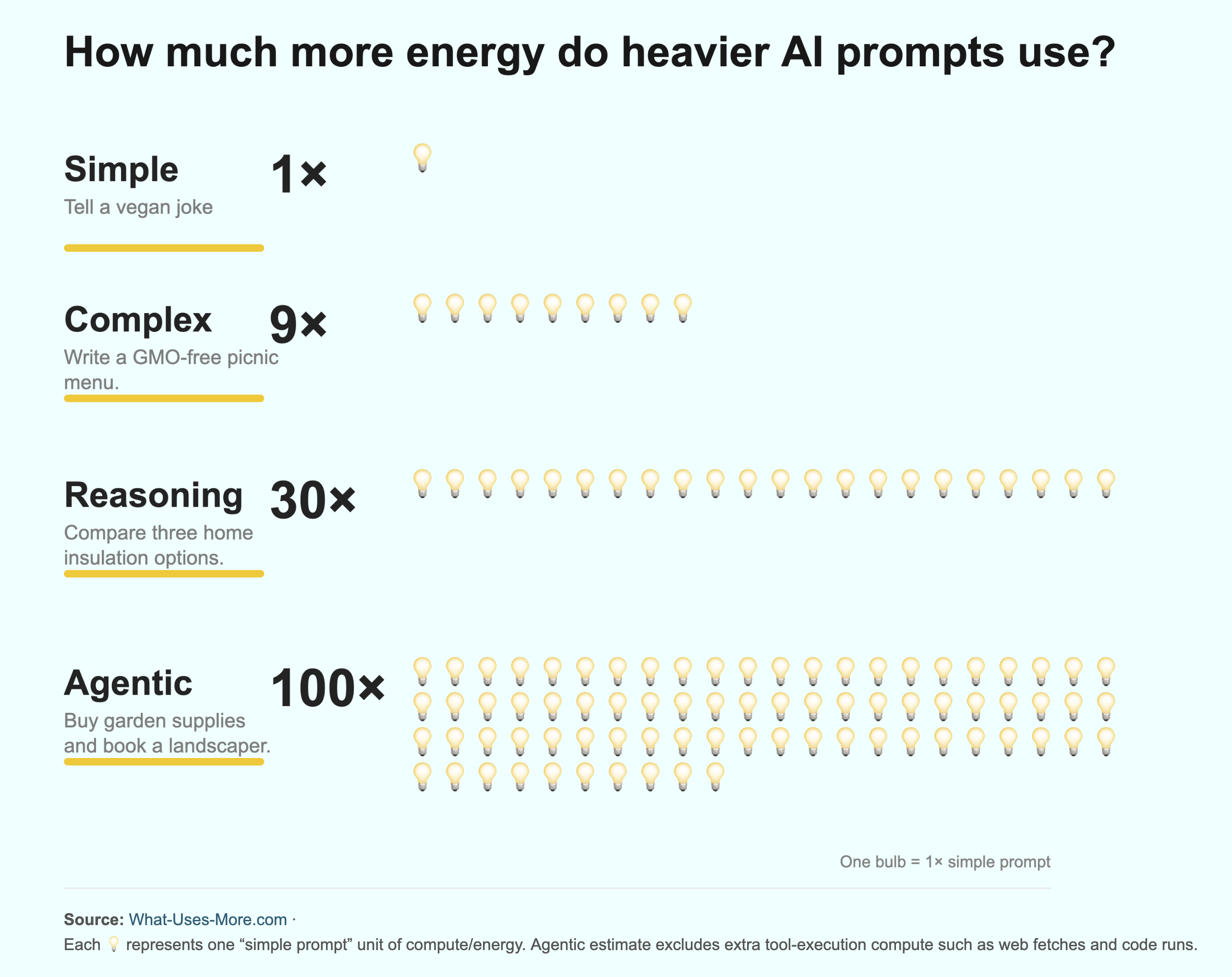
Generative AI’s per-query footprint can be small compared to flying, eating meat, or even Zoom. Until agents show up and compute goes through the roof.
How I updated my AI footprint calculator accordingly https://jonippolito.substack.com/p/agents-are-where-ais-energy-bil…
 @waidler@bayerwald.social
Die Instanz https://bayerwald.social läuft jetzt mit Softwareverson v4.7.2
https://github.com/mastodon/mastodon/r
 @Neybulot@pawb.fun
All the D23 stuff that came out has been amazing, so glad Kingdom Hearts 4 finally got a relative release date
 @grumpybozo@toad.social
RE: https://social.wildeboer.net/@jwildeboer/116924873937619510
I’m glad no one brought up the LONG tradition of “OpenSomething” actually being not very open at all in relative terms. See “Open Group” as the reference case.
 @arXiv_qfinTR_bot@mastoxiv.page
Replaced article(s) found for q-fin.TR. https://arxiv.org/list/q-fin.TR/new
[1/1]:
- Asymptotic and finite-sample distributions of one- and two-sample empirical relative entropy
Matthieu Garcin, Louis Perot
https://arxiv.org/abs/2512.16411 https://mastoxiv.page/@arXiv_statME_bot/115745600813668734
toXiv_bot_toot
 @privacity@social.linux.pizza
Data breach, il Garante privacy sanziona #WindTre per 1,7 milioni di euro
Riscontrate gravi carenze nella sicurezza dei sistemi aziendali, che hanno determinato due accessi abusivi e l’esfiltrazione dei dati personali di oltre 365mila clienti. Per 41.359 di essi, l’esfiltrazione ha riguardato anche le informazioni relative ai metodi di pagamento utilizzati, come il bollettino postale, …
 @paulwermer@sfba.social
#Flock - the continuing saga highlighting the real perils of a #SurveillanceState. The fact that you haven't done anything illegal? Well, you irritated a friend of a (Select one: LEO, FlockTechnician, DA Office investigator, some random person who has hacking skills)
San Jose officer fir…
@PaulWermer@sfba.social#Flock - the continuing saga highlighting the real perils of a #SurveillanceState. The fact that you haven't done anything illegal? Well, you irritated a friend of a (Select one: LEO, FlockTechnician, DA Office investigator, some random person who has hacking skills)
San Jose officer fir…
 @arXiv_csGR_bot@mastoxiv.page
On the Performance and Implementation of Parallax free Video See-Through Displays
Ricardo Augusto Borsoi, Guilherme Holsbach Costa
https://arxiv.org/abs/2607.16484 https://arxiv.org/pdf/2607.16484 https://arxiv.org/html/2607.16484
arXiv:2607.16484v1 Announce Type: new
Abstract: In see-through systems an observer watches a (background) scene partially occluded by a display. In this display, usually positioned close to the observer, a region of the background scene is shown, yielding the sensation that the display is transparent. To achieve the transparency effect, it is very important to compensate the parallax error and other distortions caused by the image acquisition system. In this paper a detailed study of a video see-through methodology with parallax correction is performed. In a system composed by two cameras -- one directed to the user and another to the background scene -- and a display, the relative position between the user, the display and the scene is estimated using a feature detection algorithm and the parallax error is compensated assuming a planar scene model. The application of the proposed methodology on Driver Assistance Systems (DAS) is proposed. A theoretical assessment of the algorithm shows that although approximations are proposed to simplify the methodology and reduce the computational cost, such as the planar scene model and fixed working distance, on some practical situations their effects can be neglected without noticeable impact on the perceptual quality of the solution.
toXiv_bot_toot
 @cdarwin@c.im
Linus Pauling's landmark paper
"The nature of the chemical bond. IV...."
appeared 94 years ago this month in JACS;
it introduced electronegativity.
Read it here
https://scarc.library.oregonstate.edu/coll/pauling/bond/papers/…
 @raiders@darktundra.xyz
‘Communication is Everything’: Can Raiders’ New-Look Safety Tandem Clamp Down on Chargers Passing Game? https://heavy.com/sports/nfl/las-vegas-raiders/raiders-secondary-plan-stop-justin-herbert/
 @stargazersmith@social.linux.pizza
Octopus Brains Defy a Long-Held Rule About Why Animals Evolve Intelligence : ScienceAlert
Octopus Brains Defy a Long-Held Rule About Why Animals Evolve Intelligence : ScienceAlert https://www.sciencealert.com/the-size-of-cephalopod-brains-se…
 @arXiv_mathDS_bot@mastoxiv.page
Fixed Points, Stability, and Basin Geometry of the $3\times 3$ Correlation Map
Ishrak Alhajj Hassan
https://arxiv.org/abs/2608.03404 https://arxiv.org/pdf/2608.03404 https://arxiv.org/html/2608.03404
arXiv:2608.03404v1 Announce Type: new
Abstract: For more than half a century, iterated Pearson correlation has been used in clustering, seriation, and information visualization despite the absence of a general analytical theory of its limiting dynamics. We completely resolve the fixed-point classification and relative Lyapunov stability problems for the correlation map in dimension three. An exact row-wise Gram factorization yields the identity $\operatorname{rank}C(A)=\operatorname{rank}(AH_n)$, forcing every fixed point to be singular and to lie on the relative boundary of the elliptope. In arbitrary dimension, we characterize all nondegenerate sign-valued fixed points and prove that their number is $2^{n-1}-1$.
For $n=3$, we derive an explicit coordinate representation and prove that the natural nondegenerate domain contains exactly seven fixed points: three rank-one patterned points, three rank-two mixed points, and one rank-two equicorrelation point, forming three orbits under the permutation action of $S_3$. Exact symbolic Jacobian calculations prove that the patterned points are locally asymptotically stable, whereas admissible invariant boundary curves realize the expanding multipliers and prove that the mixed and equicorrelation points are Lyapunov unstable relative to the natural nondegenerate domain.
Permutation equivariance maps the three patterned basins onto one another and implies equal Lebesgue measure whenever measurable. Reproducible basin computations classify every sampled admissible trajectory as converging to one of the three patterned attractors, with nearly equal frequencies and no trajectory-level classification mismatches under stricter validation. These results establish a complete fixed-point and relative Lyapunov stability theory in dimension three and provide strong reproducible evidence for the full-measure convergence conjecture for the union of the three patterned basins.
toXiv_bot_toot
 @markhburton@mstdn.social
Ed Milliband's "promotion is strongly opposed by the City and big business because of his relative radicalism, and the Unite union on account of his commitment to “net zero” at the expense of drilling in the North Sea."
That is a *relative* radicalism, both on economics and on decarbonisation, but it shows the strength of the forces for continuity stupidity.
Battle begins over the shape and direction of Burnham government | Morning Star
 @bibbleco@infosec.exchange
And while I'm at it,..
https://www.theguardian.com/politics/2026/jun/20/leave-voting-areas-foreign-workers-decade-since-brexit-referendum
Yet another Grauniad journalist who likes slinging around statisti…
@arXiv_physicsmedph_bot@mastoxiv.pageReview of oxygen measurement and relevance to the mechanisms of FLASH radiotherapy
Brian W. Pogue, David I. Hunter, Corbin Narita, William S. Thomas, Xu Cao, Harold M. Swartz
https://arxiv.org/abs/2607.17974 https://arxiv.org/pdf/2607.17974 https://arxiv.org/html/2607.17974
arXiv:2607.17974v1 Announce Type: new
Abstract: FLASH radiotherapy (FLASH-RT) is the phenomenon of relative sparing of normal tissue when ultra-high dose rates (UHDR) are used compared with conventional dose rates (CDR) as clinically used. Despite extensive investigation, the underlying mechanisms remain unexplained. Among the proposed hypotheses, tissue oxygen has consistently been a central theme because oxygen is the most dominant factor known to modulate radiation-induced damage. The factors implicated in FLASH sparing include the baseline partial pressure of oxygen (pO2), transient radiolytic oxygen consumption (ROC), and oxygen-dependent changes in the chemistry of reactive oxygen species (ROS) that vary with dose rate. This review synthesizes current evidence on in vivo oxygen measurement techniques, highlighting their capabilities and limitations in capturing the spatial and temporal heterogeneity of tissue oxygenation. Key experimental studies in skin are summarized and interpreted by modulating oxygen levels via changes in inspired oxygen gas and vascular clamping interventions, demonstrating that the FLASH effect occurs only at intermediate baseline pO2 (normoxic or slightly hypoxic) values, but not at hypoxia or hyperoxia. Direct measurement of oxygen consumption during UHDR irradiation is possible, providing one of the first in situ measurements of radiation chemistry in patients. In parallel, recent advances in fast in vitro radiation chemistry assays indicate that UHDR irradiation alters radical yields, favoring increased production of solvated electrons and reduced hydroxyl radical mediated damage. Taken together, the available data suggest that the FLASH sparing effect arises from an interplay among the delivered dose and dose rate, local oxygen availability, and radiation chemistry, with tissue-specific variation in scavenging, leading to altered biological responses across the CDR-to-UHDR shift.
toXiv_bot_toot
@simon_brooke@mastodon.scotRight, my #Clojure humidity library now computes all the values that I think it should. The code could do with a bit of tidying up, there is no data validation, I have no reliable test data for the actual-vapour-pressure function, and I can't yet do the time-shifting computations I want; but nevertheless I think this is now usable and useful.
 @lightweight@mastodon.nzoss.nz
I wonder about the relative number of NZers here in the Fediverse vs. those on BlueSky. I wouldn't be surprised if it wasn't quite similar numbers.
 @aral@mastodon.ar.al
RE: https://mathstodon.xyz/@HydrePrever/116826512563362233
Where’s the “we know it’s real and caused by humans but we’re a relative handful of rich psychopaths and psychopath-adjacents who’ve forgotten what guillotines are and we don’t give a single sti…
@arXiv_qfinTR_bot@mastoxiv.pageOptimal Market Making in Prediction Markets
Dominik Feil, Max Nendel
https://arxiv.org/abs/2607.17991 https://arxiv.org/pdf/2607.17991 https://arxiv.org/html/2607.17991
arXiv:2607.17991v1 Announce Type: new
Abstract: Prediction markets are attracting growing attention as trading volumes rise and their practical relevance increases. To ensure efficient price discovery, liquidity provision becomes ever more important. Due to the binary settlement structure in prediction markets, optimal market making leads to an optimization problem that is fundamentally different from the ones studied in classical settings. In this paper, we develop a stochastic control framework for prediction markets in which the market price is modeled as a conditional probability of the outcome that is generated by a transformed latent belief diffusion. A market maker selects bid and ask quotes to maximize expected terminal wealth while controlling both mark-to-market inventory risk and the settlement risk of remaining positions at resolution. We derive the associated Hamilton--Jacobi--Bellman equation and characterize the unique optimal bid and ask quotes. By transforming the equation to the latent belief space and using a fixed-point argument, we prove existence and uniqueness of a classical solution and verify the resulting optimal quoting strategy. In addition, we provide a numerical analysis, which reveals how optimal liquidity provision in prediction markets depends on inventory, market beliefs, time to resolution, and risk aversion. Further, we demonstrate that the optimal quoting strategy substantially improves downside protection while preserving most of its expected profit relative to a myopic benchmark that maximizes the instantaneous expected mark-to-market profit.
toXiv_bot_toot
@arXiv_csGR_bot@mastoxiv.pagePacket-Loss Robust 3D Gaussian Compression via Atomic Packaging and GNN-based Error Concealment
Yuxuan Tao, Xuerui Ma, Hao Zhang, Chunhua Peng
https://arxiv.org/abs/2607.17916 https://arxiv.org/pdf/2607.17916 https://arxiv.org/html/2607.17916
arXiv:2607.17916v1 Announce Type: new
Abstract: 3D Gaussian Splatting (3DGS) and recent compression schemes such as HAC enable high-fidelity real-time neural rendering, but their bitstreams are fragile under packet loss during network streaming. Existing compression methods often separate correlated anchor attributes into independent streams, so losing one packet can create attribute-inconsistent broken anchors and severe rendering artifacts. We propose a packet-loss robust 3DGS transmission and error concealment framework. On the encoder side, anchor-level atomic packaging jointly encapsulates all attributes of each anchor, converting corrupted-attribute failures into clean missing-anchor erasures. Stratified random grouping further disperses packet losses across the spatial domain to avoid large contiguous voids. On the decoder side, we formulate recovery as prior-aware attribute inpainting. A Context-Aware Residual Interpolation (CARI) branch uses hash-grid prior predictions and neighboring residuals to build a robust baseline, while a lightweight two-layer graph neural network with cross-attention over hash-grid priors refines high-frequency attribute residuals. Attribute-wise confidence control falls back to interpolation when learned predictions are unreliable. Experiments under 20 percent random packet loss on BungeeNeRF, Mip-NeRF 360, and Tanks and Temples show that the proposed method substantially improves over no-concealment transmission and limits average PSNR degradation to about 3 dB relative to the lossless HAC reference.
toXiv_bot_toot
 @kurt@nelson.fun
I am still getting mail weekly for someone who lived at my address at least a decade ago, and according to my searches is dead.
Since I'm not a relative/executor, it seems there is zero way for me to request to make it stop?
 @Cognessence@social.linux.pizza
Many people on this relative oasis of an online community are probably going through a lot more than we realise (as patronising and obvious as that can sound - not meant so!) And so, if you know of musicians on here, brighten their day a bit by buying a release on Bandcamp Friday - where all the fees go directly to them - if you can. :)
It is hard to know how much warmth and weight a small gesture might carry for someone on the other side of the screen.
 @villavelius@mastodon.online
As they say, “Al has not killed the scientific literature, but it is showing where to find the corpse." (anonymous quote)
https://deevybee.blogspot.com/2026/07/how-paper-mills-go-straight-without.html
@cdarwin@c.imA bet on near-term explosive AI-driven growth:
Whether U.S. real GDP per capita will grow by at least 15% within a single year
(measured relative to prior peak)
by the end of 2033.
Agreed on X, 15–16 August 2026.
Odds: 4:1
— every $1 staked by the fast-growth side is matched by $4 from the no-fast-growth side.
Implied probability of the fast-growth scenario: 20%.
 @mxp@mastodon.acm.org
“The quality of the assessed criterion is weak, meaning it is not challenging relative to the international standard in the scientific domain. Many weaknesses or flaws can be identified and deserve absolutely to be addressed.”
Unfortunately, that perfectly describes the proposal I just spent 3½ hours reviewing.
#ReviewerDuty
@mxp@mastodon.acm.org“The quality of the assessed criterion is weak, meaning it is not challenging relative to the international standard in the scientific domain. Many weaknesses or flaws can be identified and deserve absolutely to be addressed.”
Unfortunately, that perfectly describes the proposal I just spent 3½ hours reviewing.
#ReviewerDuty
@mxp@mastodon.acm.org“The quality of the assessed criterion is weak, meaning it is not challenging relative to the international standard in the scientific domain. Many weaknesses or flaws can be identified and deserve absolutely to be addressed.”
Unfortunately, that perfectly describes the proposal I just spent 3½ hours reviewing.
#ReviewerDuty
 @jon@henshaw.social
If I were a scientist, this is the kind of sciency science I would spend my time sciencing.
#Coffee
 @arXiv_mathDG_bot@mastoxiv.page
Replaced article(s) found for math.DG. https://arxiv.org/list/math.DG/new
[1/3]:
- Family index for Fredholm extensions of semi-Fredholm operators
Marina Prokhorova
https://arxiv.org/abs/2401.16060 https://mastoxiv.page/@arXiv_mathDG_bot/111843359116350796
- Constructing stable Hilbert bundles via Diophantine approximation
Yucheng Liu, Biao Ma
https://arxiv.org/abs/2501.15784
- Ricci Solitons of Left-Invariant Metrics on Lie Groups with Derived Algebra of Dimension at Most Two
Hamid Reza Salimi Moghaddam
https://arxiv.org/abs/2601.10730 https://mastoxiv.page/@arXiv_mathDG_bot/115920688396400257
- Mass and rigidity in almost K\"ahler geometry
Partha Ghosh
https://arxiv.org/abs/2603.08627 https://mastoxiv.page/@arXiv_mathDG_bot/116204063956883755
- Classifying Slice-Regular Polynomials via Group Actions on the Twistor Space
Chunlin Liu, Giovanni Moreno, Haipan Shi
https://arxiv.org/abs/2605.22788 https://mastoxiv.page/@arXiv_mathDG_bot/116617182455085202
- $G_2$ and the Maximally Symmetric (3, 8) Distribution with 6-Dimensional Square
Nicklas Day, Boris Doubrov, Igor Zelenko
https://arxiv.org/abs/2605.25910 https://mastoxiv.page/@arXiv_mathDG_bot/116639966776117301
- Cohn--Vossen-Type Inequalities for Three-Manifolds and Locally Conformally Flat Manifolds
Jialong Deng
https://arxiv.org/abs/2606.01368 https://mastoxiv.page/@arXiv_mathDG_bot/116679534951132380
- From Gradient Descent to Potential Theory: A Geometric Dictionary for Binary Classification
Catalin Vasii
https://arxiv.org/abs/2607.00988 https://mastoxiv.page/@arXiv_mathDG_bot/116849328935224137
- A sharp relative comparison inequality for conformal fillings of Poincar\'e--Einstein manifolds
Nan Wu
https://arxiv.org/abs/2607.13742 https://mastoxiv.page/@arXiv_mathDG_bot/116928601640640156
- A degenerate free boundary minimal annulus and non-uniqueness in spherical caps beyond the hemisp...
Alexander Pigazzini
https://arxiv.org/abs/2607.23534 https://mastoxiv.page/@arXiv_mathDG_bot/116996542129550830
- Special Lagrangians with multiple isolated singularities
Bryan Dimler, Filippo Gaia
https://arxiv.org/abs/2607.26302 https://mastoxiv.page/@arXiv_mathDG_bot/117007805427278588
- Demailly-Koll\'ar continuity on klt pairs, and applications to alpha and delta invariants
Tam\'as Darvas, Kewei Zhang
https://arxiv.org/abs/2608.23505 https://mastoxiv.page/@arXiv_mathDG_bot/117155289132945927
toXiv_bot_toot
 @arXiv_mathST_bot@mastoxiv.page
Weighted Nuclear Elastic Net Estimation of (Near-) Low-Rank Drift Matrices in Ornstein-Uhlenbeck Processes
Dmytro Marushkevych, Francisco Pina, Mark Podolskij
https://arxiv.org/abs/2608.12838 https://arxiv.org/pdf/2608.12838 https://arxiv.org/html/2608.12838
arXiv:2608.12838v1 Announce Type: new
Abstract: We study estimation of the drift matrix in a continuously observed high-dimensional Ornstein-Uhlenbeck process when the drift is exactly or approximately low rank. In this setting, exact low rank induces non-stable directions and hence a non-ergodic regime, resulting in a poorly conditioned empirical covariance matrix. To address this difficulty, we introduce a Weighted Nuclear Elastic Net Estimator that combines ridge regularization with a nuclear-norm penalty expressed in the empirical likelihood geometry.
Under a general diagonalizable spectral framework, we establish oracle inequalities relative to arbitrary low-rank comparison matrices. For near low-rank drifts, the approximation error is naturally measured through the singular-value decay of the drift after weighting by the regularized empirical covariance. The stochastic term is controlled by self-normalized martingale arguments under appropriate choice of the tuning parameter.
For a symmetric positive-semidefinite exact low-rank model, we verify the empirical-curvature condition required to translate the weighted bound into a Frobenius-norm bound. With an appropriate choice of tuning parameters, the resulting estimator satisfies, up to a logarithmic factor, the standard rank-$r$ matrix-estimation scaling $r d/T$: specifically, its squared Frobenius error is of order $r d\log(T)/T$ with high probability, under an explicit dimension-horizon condition.
toXiv_bot_toot
 @scottmiller42@mstdn.social
At 8:00 AM, at the Des Moines Airport, it’s already 80 F, and rising fast. Dew point 71 F, relative humidity 74%. Forecasted high of 90 F. Most of the southern half of Iowa, including the Des Moines metro, remains in a National Weather Service “extreme heat warning” until 10 pm tonight. “Dangerously hot conditions with heat index values over 100.”
Stay safe out there. Check in on any vulnerable folks.
 @penguin42@mastodon.org.uk
Just finished reading a ~1949 pop-science article on viruses; it's fascinating - they've just got electron microscopy so they're now able to see them and go WTF without understanding what's going on. Their only other tool previously was measuring relative amounts of nucleic acids, and their only definition is really 'it passes through smaller filters than bacteria'. And then getting confused by things like King Edwards potatoes that almost all carry a virus but ar…
@simon_brooke@mastodon.scot @arXiv_mathCV_bot@mastoxiv.pageRelative Cohomology and Deformations of Logarithmic Foliations on Complex Spaces
V\'itor Le\'on, Bruno Sc\'ardua
https://arxiv.org/abs/2608.06302 https://arxiv.org/pdf/2608.06302 https://arxiv.org/html/2608.06302
arXiv:2608.06302v1 Announce Type: new
Abstract: We study relative cohomology for logarithmic differential forms and meromorphic forms that are relatively closed with respect to the associated logarithmic foliation. Under suitable Diophantine, geometric, and topological hypotheses, we obtain decompositions into a meromorphic multiple of the defining logarithmic form, an exact meromorphic form, and a logarithmic form with constant residues. We establish a meromorphic extension theorem from suitable two-dimensional sections and prove local, polynomial, and homogeneous versions of the relative-cohomology decomposition; the global polynomial result is proved in arbitrary dimension by ambient leafwise continuation and meromorphic extension. Resolution of singularities, non-nodal saturation, and holonomy gluing are used to treat singular logarithmic foliations. As an application, we derive formal normal forms for analytic integrable deformations, including a several-component result in dimension two and a two-component extension in higher dimensions.
toXiv_bot_toot
 @stephane_klein@social.coop
Je viens de proposer une petite contribution Š "incus-apply" : #incus
 @vrandecic@mas.to
RE: https://expressional.social/@fnielsen/116815500379297771
"In a survey of N = 10,661 respondents across 26 countries, two-level hierarchical linear models predicted relative player preference from individual-level ideology, authoritarianism, s…
 @callunavulgaris@mastodon.scot
I've just been told yet another relative is ill, another cancer case. You get to a certain age and it's hit after hit.
 @barijaona@mastodon.mg
RE: https://eldritch.cafe/@UnePorte/117180946454714348
À lire absolument (avec les messages qui suivent) sur la bulle financière relative aux soi-disantes "IA".
Donc, lorsque le retour Š la réalité s'imposera, les coûts d'actualisati…
 @arXiv_csHC_bot@mastoxiv.page
Fine-Tuning Large Language Models for Codebook-Guided Coding of Students' Mathematics Metaphor Responses
Liang Zhang, Stephen Hwang, Yue Ma, Jinfa Cai
https://arxiv.org/abs/2608.10276 https://arxiv.org/pdf/2608.10276 https://arxiv.org/html/2608.10276
arXiv:2608.10276v1 Announce Type: new
Abstract: Student-generated metaphors about mathematics can reveal students' attitudes, beliefs, identities, and experiences, but human expert coding of these thematically and semantically complex open-ended responses is time-intensive and difficult to scale. This study examines whether LoRA-based supervised fine-tuning of large language models (LLMs) can improve their performance on codebook-guided coding tasks for student mathematics metaphors. We used a human-coded corpus of 2,265 Grade 6-8 responses to food- and animal-based metaphor prompts and instructed the LLMs to perform two coding tasks: valence-intensity coding to capture the direction and strength of students' affective orientations toward mathematics, and thematic coding to capture students' framings of mathematics as expressed through their metaphors. We compared two proprietary models, GPT-4o mini and GPT-5 mini, under prompt-only conditions with two open-weight models, DeepSeek-R1 1.5B and Mistral 7B, evaluated before and after fine-tuning. Results show that fine-tuning substantially improved the performance and run-to-run reliability of the open-weight models across both tasks relative to their base versions. The fine-tuned compact open-weight models became competitive with, and often outperformed, the proprietary prompt-only models. These findings suggest that compact open-weight LLMs can support scalable, locally controllable, and privacy-conscious AI-assisted measurement of students' metaphor responses in mathematics education.
toXiv_bot_toot
 @newsie@darktundra.xyz
SOLVED: The Case of the Missing Megalodon https://www.404media.co/solved-the-case-of-the-missing-megalodon/
 @arXiv_hepth_bot@mastoxiv.page
Crosslisted article(s) found for hep-th. https://arxiv.org/list/hep-th/new
[1/2]:
- Living on the Edge of Effective Field Theory: Near-Extremal Black Holes in Quadratic Gravity
Kelvin Ka-Ho Lam, Gary T. Horowitz, Nicol\'as Yunes
https://arxiv.org/abs/2608.05268 https://mastoxiv.page/@arXiv_grqc_bot/117053119278147418
- Relative entropy of entanglement of Haar random states
Takato Mori, Beni Yoshida
https://arxiv.org/abs/2608.05274 https://mastoxiv.page/@arXiv_quantph_bot/117053252355717367
- Theory of Measurement-Altered Criticality
Kabir Khanna, Sara Murciano, Romain Vasseur
https://arxiv.org/abs/2608.05289 https://mastoxiv.page/@arXiv_condmatstatmech_bot/117053093687616139
- Self-dual $S_3$ gauge theory in 2 1d: lattice model and topological phase transitions
Da-Chuan Lu, Chong Wang, Ashvin Vishwanath
https://arxiv.org/abs/2608.05294 https://mastoxiv.page/@arXiv_condmatstrel_bot/117053135203168433
- 3-form dark energy and cosmic birefringence
Kohei Kamada, Tucker Manton
https://arxiv.org/abs/2608.05296 https://mastoxiv.page/@arXiv_astrophCO_bot/117053109615577309
- GOOFy-compatible 3HDMs and beyond
I. de Medeiros Varzielas, A. Kun\v{c}inas
https://arxiv.org/abs/2608.05304 https://mastoxiv.page/@arXiv_hepph_bot/117053194550154760
- Beyond Borel Windows: A Systematic Optimization Framework for QCD Sum Rules
Raphael M. Albuquerque
https://arxiv.org/abs/2608.05322 https://mastoxiv.page/@arXiv_hepph_bot/117053194943710217
- Quantum information loss
James Fullwood, Wu-zhong Guo, Boyu Yang
https://arxiv.org/abs/2608.05535 https://mastoxiv.page/@arXiv_quantph_bot/117053277916138502
- Coherent and Stochastic Axion Dark Matter from Thermal Relaxation
Gurmani, Cilli, Channuie, Abdujabbarov, Atamurotov, G\"udekli
https://arxiv.org/abs/2608.05538 https://mastoxiv.page/@arXiv_hepph_bot/117053223846614186
- Asymmetric Quantum Oppenheimer-Snyder Collapse
Micha{\l} Bobula, Tomasz Paw{\l}owski
https://arxiv.org/abs/2608.05818 https://mastoxiv.page/@arXiv_grqc_bot/117053193567517392
- Triviality in a Non-Perturbative Second-Order Mean-Field Theory for $\phi^4_4$
Majdouline Borji
https://arxiv.org/abs/2608.05998 https://mastoxiv.page/@arXiv_mathph_bot/117053148149785707
- Measurement-induced entanglement Hamiltonian
Viktor Eisler, Erik Tonni
https://arxiv.org/abs/2608.06006 https://mastoxiv.page/@arXiv_condmatstatmech_bot/117053217162278663
- An Effective String Theory Toolbox for Quantum Hall Interfaces I: Worldsheet Kinematics and Const...
Ken K. W. Ma
https://arxiv.org/abs/2608.06097 https://mastoxiv.page/@arXiv_condmatmeshall_bot/117053183146860935
toXiv_bot_toot
@simon_brooke@mastodon.scot#WeatherScience people, can someone identify where this image is sourced from, and tell me how I can find similar relative humidity charts for other dates/times?
It looks like #MetOffice data, but I cannot find it on `digital.nmla.metoffice.gov.uk`
 @servelan@newsie.social
UN Votes To Adopt Map Showing Nations At Their True Relative Sizes, Only The United States Voted Against It - Joe.My.God.
https://www.joemygod.com/2026/09/un-votes-to-adopt-map-showing-nations-are-their-true-relative-sizes-only-united-states-voted-against/
 @arXiv_astrophCO_bot@mastoxiv.page
Cosmological constraints and standard sirens forecasts for non-dynamical dark energy in Horndeski gravity
Marcello Miranda, Ruchika, Ivan De Martino, Daniele Vernieri, Salvatore Capozziello
https://arxiv.org/abs/2608.04079 https://arxiv.org/pdf/2608.04079 https://arxiv.org/html/2608.04079
arXiv:2608.04079v1 Announce Type: new
Abstract: We investigate an analytically tractable sector of the Extended Cuscuton model, a non-dynamical dark-energy realization within the framework of viable Horndeski gravity. We focus on four benchmark submodels and constrain them with current background probes, namely cosmic chronometers, Type-Ia supernovae, and BAO, while imposing theoretical viability, Lunar Laser Ranging, and Big Bang Nucleosynthesis bounds. We then forecast third-generation bright-standard-siren constraints with Einstein Telescope and Cosmic Explorer networks, considering prompt-emission, afterglow, and kilonova counterparts. Current data already restrict the viable parameter space to small departures from $\Lambda$CDM and do not remove the calibration-driven offset between the CC SN and CC BAO determinations of $H_0$. In principle, future bright sirens substantially sharpen the constraints, especially for kilonova catalogues and extended detector networks. Across the forecast configurations, the relative uncertainty on $H_0$ remains below $13.18\%$ and can reach $0.21\%$ in the most constraining cases, while $\Omega_\Lambda$ is recovered at the percent level in the best cases. These results show that third-generation standard sirens can provide a precise complementary test of non-dynamical dark energy beyond $\Lambda$CDM.
toXiv_bot_toot
 @arXiv_eessIV_bot@mastoxiv.page
ScoreField: Neural Inverse Scattering with Score-Based Generative Priors
Wenhan Guo, Yuan Gao, Yu Sun
https://arxiv.org/abs/2608.02937 https://arxiv.org/pdf/2608.02937 https://arxiv.org/html/2608.02937
arXiv:2608.02937v1 Announce Type: new
Abstract: Designing an effective electromagnetic inverse-scattering solver requires faithful enforcement of nonlinear full-wave physics together with an expressive prior on the unknown permittivity contrast. We propose ScoreField, a neural inverse scattering framework that integrates coupled implicit neural representations (INRs) with a pretrained score-based generative prior. ScoreField employs two INRs to parameterize the permittivity contrast and the induced current fields, and jointly optimize them under the Lippmann-Schwinger equations. In addition to the implicit regularization by the INR architecture, the score model provides a learned prior gradient on the contrast, which is propagated to the contrast INR through the chain rule. This formulation enables ScoreField to effectively handle strong multiple scattering, where nonlinear wave interactions require accurate modeling of the coupled full-wave physics. We evaluate ScoreField on simulated weak- and strong-scattering benchmarks, the canonical Austria phantom, and experimental Fresnel measurements. We note that ScoreField significantly improves reconstruction fidelity and suppresses artifacts relative to classical full-wave methods and deep learning baselines, achieving an average PSNR improvement of $1.8 \, \mathrm{dB}$ over the best competing method on real Fresnel data.
toXiv_bot_toot
@paulwermer@sfba.socialThe interesting information one stumbles across:
What is a fault and what are the different types? | U.S. Geological Survey
https://www.usgs.gov/faqs/what-a-fault-and-what-are-different-types
@PaulWermer@sfba.socialThe interesting information one stumbles across:
What is a fault and what are the different types? | U.S. Geological Survey
https://www.usgs.gov/faqs/what-a-fault-and-what-are-different-types
@penguin42@mastodon.org.ukI'm fighting a TTL based double stepper from a Cumana floppy drive; having replaced it's 74LS123 (dual monostable) and 74LS38 (quad OC NAND), it's now continually oscillating and just throws the head to the end of the travels; hmm - from my reverse eng it looks like it loops both the Q and !Q outputs of one back to the !A,B inputs of the other and relies on relative timing to stop the oscillation - which doesn't work on the replacement chips I used.
@simon_brooke@mastodon.scot#Clojure friends, I'm trying to transcribe an equation from a #meteorology paper, and I've got something wrong: I'm coming out low.
Can you spot my error?
I can post a gist of my source if that would help.
The paper is here:


 @inthehands@hachyderm.io
This post is correct. Also…those people Katelyn's talking about are sweeping under the rug what actually happened:
Obama supported gay marriage in the mid-90S.
When that became an electoral liability in larger races, he took the position of supporting same-sex civil unions instead of same-sex marriage (which would still have been a big win in 2008 if legalized nationally, and was still a risky position to take).
Then he switched back to favoring gay marriage in a hot second as soon as it seemed like public support was behind it and his opposition might become a barrier.
• • •
Say what you will about him being deceptive or opportunistic or incrementalist or scheming or you just hate Obama or whatever, fine, I don't really care. Katelyn’s point is the important one: Obama consistently staked out positions in the direction of •increased• civil rights for queer folks, and moved his position to keep pushing in that direction relative to whatever the political conditions were.
I would be perfectly frigging delighted if Democrats now would consistently do the same for trans folks. Come on, y’all.
P.S. Replies of the form “you mentioned Obama so here’s some other thing I don’t like about him” are tiresome and will be an instant mute.
https://fed.brid.gy/r/https://bsky.app/profile/did:plc:3gxyh4elwykcdnpci7gmqrvh/post/3mvg7jpxjq22i
@cdarwin@c.imTwenty-one footprints cross a muddy lakeshore in northern Kenya,
left there 1.4 million years ago.
They belonged to eight adults traveling together.
The track makers were
Paranthropus boisei,
a human relative whose oversized teeth and powerful jaw dominated its skull.
A new analysis, published in the Proceedings of the National Academy of Sciences, found that some members of the species were much larger than earlier estimates based on fossil bones.
…
@arXiv_hepth_bot@mastoxiv.pageInformation--Theoretic Black Hole Entropy II: Infrared Gravity and Charged/Rotating Extensions
Alex Kehagias
https://arxiv.org/abs/2608.05801 https://arxiv.org/pdf/2608.05801 https://arxiv.org/html/2608.05801
arXiv:2608.05801v1 Announce Type: new
Abstract: We investigate gravitational and Kerr-Newman extensions of an information-theoretic black-hole entropy that satisfies the Nernst formulation of the third law of thermodynamics. The entropy is identified with the Kullback-Leibler divergence between a mass-dependent Bernoulli ensemble and an unbiased reference ensemble, and therefore measures relative information rather than the logarithm of the number of black-hole microstates. We show perturbatively that its temperature and entropy can be reproduced by an infrared deformation of General Relativity. To linear order in the deformation couplings, the surface-gravity temperature and the Wald entropy agree with the information-theoretic results. In an explicit realization, the matching generates a positive effective cosmological term whose smallness is related to the large microscopic parameter $N$. We also propose an extension to Kerr-Newman black holes based on the irreducible mass. This construction preserves the connection with the horizon area and the semiclassical limit, while distinguishing geometrical extremality from the universal statistical-freezing endpoint, which is independent of angular momentum and charge.
toXiv_bot_toot
@arXiv_csHC_bot@mastoxiv.pageCrosslisted article(s) found for cs.HC. https://arxiv.org/list/cs.HC/new
[1/2]:
- Data-driven Head Motion Generation through Natural Gaze-Head Coordination
Xiaohan Liu, Yilin Wen, Yusuke Sugano
https://arxiv.org/abs/2605.25810
- TRIBE: Predicting Team Performance via Communication Behavior Ensembles
Ali Jalal-Kamali, Nikolos Gurney, David V. Pynadath, Fred Morstatter
https://arxiv.org/abs/2608.06926 https://mastoxiv.page/@arXiv_csAI_bot/117070249873784432
- Comprendia: AI-Augmented Code Comprehension
Costain Nachuma, Minhaz F. Zibran
https://arxiv.org/abs/2608.10290 https://mastoxiv.page/@arXiv_csSE_bot/117081500356613109
- Neural implants and human safety: single-fault detection for DC-coupled recording front ends
Dimitris Antoniadis, Timothy Constandinou
https://arxiv.org/abs/2608.10361 https://mastoxiv.page/@arXiv_eessSP_bot/117081505896378998
- A Neural Network Based Teleoperation for Remote Controlled Vehicles
Ning Ding, Azim Eskandarian
https://arxiv.org/abs/2608.10367 https://mastoxiv.page/@arXiv_csRO_bot/117081440193257425
- Leveraging Human Reading Behavior for Keyphrase Extraction: A Webcam-based Eye-tracking Corpus
Chengzhi Zhang, Xinyi Yan, Wenqi Yu
https://arxiv.org/abs/2608.10688 https://mastoxiv.page/@arXiv_csCL_bot/117081592176417112
- Your LLM, Your Style: Behavioral Mode Axes for LLM Behavioral Control
Haoze Liu, Run Liu, Haiying Xu, Jiahui Han, Siyuan Fang, Siyu Yan, Huiqi Deng, Guanchu Wang, Na Zou
https://arxiv.org/abs/2608.10703 https://mastoxiv.page/@arXiv_csLG_bot/117081615179660277
- The GENEA Challenge 2026: A Large-Scale Disentangled Evaluation of Speech-Driven Gesture Generati...
Nagy, Garc\'ia, Voss, Tsakov, Kucherenko, Yoon, Henter
https://arxiv.org/abs/2608.10839 https://mastoxiv.page/@arXiv_csCV_bot/117081628353061346
- Auditable AI-Assisted Research Writing: An Engineering Discipline with Pre-Registered Process Obs...
Yang Zhou, Chengqun Yu
https://arxiv.org/abs/2608.10858
- R4DSG: Relative 4D Scene Graph Memory for Object-Centric Question Answering in Long Egocentric Video
Ke Ma, Yamin Mao, Weiming Li, Shuai Tan, Yijie Zhong, Hao Chen, Haofen Wang, Meng Wang
https://arxiv.org/abs/2608.11017 https://mastoxiv.page/@arXiv_csCV_bot/117081647623530374
toXiv_bot_toot
@callunavulgaris@mastodon.scotGoodness me I'm no use to anyone today. I think it is the 'tism putting its foot down. Last week's main work days, M-W, were the hardest I'd had in ages. Guests arrived Weds night, on Fri night I was awake the whole time sitting in Fit to Sit with a relative and guests were still with us til Mon morning. Another hard M-W at work. Apart from having to find some quiet space at times I've coped but last night slept 10hrs and today am a wet lettuce. I think today and mebbes t…
 @memeorandum@universeodon.com
RELATIVE ATTRACTION: Troy Jackson's Longtime Lover Is His Second Cousin (Steve Robinson/The Maine Wire)
https://www.themainewire.com/2026/07/relative-attraction-troy-jacksons-longtime-lover-is-his-second-cousin/
http://www.memeorandum.com/260731/p60#a260731p60
 @arXiv_mathAT_bot@mastoxiv.page
Crosslisted article(s) found for math.AT. https://arxiv.org/list/math.AT/new
[1/1]:
- A Probabilistic Interpretation of the Ball Mapper Graph
John Rick Manzanares, Jay-Anne Bulauan
https://arxiv.org/abs/2608.11397 https://mastoxiv.page/@arXiv_csCG_bot/117087029774695566
- Lifting Functors and Relative Schur-Baer Theorems
Maxim Ivanov
https://arxiv.org/abs/2608.11926 https://mastoxiv.page/@arXiv_mathGR_bot/117087106488884988
toXiv_bot_toot
 @arXiv_csAR_bot@mastoxiv.page
YAVIN: A Unified Architecture for Secure Edge Processing in Memory
Shouzhi Fang, William C. Tegge, Md Omar Faruque, Peipei Zhou, Endadul Hoque, Alex K. Jones
https://arxiv.org/abs/2608.13496 https://arxiv.org/pdf/2608.13496 https://arxiv.org/html/2608.13496
arXiv:2608.13496v1 Announce Type: new
Abstract: Secure, private multi-tenant execution spanning processors, memory, and accelerators remains one of the most significant challenges in modern edge computing systems. Simultaneously, processing-in-memory (PIM) has emerged as an effective approach for reducing the Von Neumann bottleneck by moving computation closer to data. Existing trusted execution environments (TEEs) establish trust only within the processor, protecting data while it traverses untrusted resources such as the memory bus. Consequently, trusted computation cannot be performed directly within memory. We present YAVIN, a unified trusted computing base (TCB) that extends the TEE beyond the processor to encompass both processor execution and a dedicated memory region supporting trusted processing-in-memory execution while treating the memory bus as untrusted. Leveraging the dedicated protected memory regions already established by conventional TEE architectures, YAVIN enables data to be decrypted, processed, and re-encrypted by either processor or PIM execution while remaining within the TEE. To realize this unified TCB, YAVIN presents the first PIM implementations of the LightSaber KEM post-quantum cryptosystem and ASCON-128 authenticated encryption, co-designing both algorithms for efficient DRAM execution to establish and maintain shared cryptographic state. Finally, we demonstrate how cryptography-PIM co-design for tensor-based workloads reorganizes computation to satisfy the ordering constraints imposed by authenticated encryption with minimal performance overhead while simultaneously enabling bit-sliced ordering that limits temporary plaintext exposure. Compared to the latest PIM AES implementation, YAVIN achieves more than a 20x speedup while incurring only 34% and 9.3% overhead when executing INT8 and INT32 quantized edge-class LLMs, respectively, relative to plaintext execution.
toXiv_bot_toot
@arXiv_astrophGA_bot@mastoxiv.pageReplaced article(s) found for astro-ph.GA. https://arxiv.org/list/astro-ph.GA/new
[2/4]:
- Anisotropy of Satellite Galaxies-I: Contrasting Correlations with Central Galaxy, Host Halo, and ...
Zhuoming Zhang, Weiguang Cui, Yun Chen, Romeel Dav\'e, Katarina Kraljic
https://arxiv.org/abs/2604.27845 https://mastoxiv.page/@arXiv_astrophGA_bot/116498354157450002
- Little red dots as obscured little blue dots: relative abundances, luminosities, and black-hole m...
Piero Madau, Roberto Maiolino
https://arxiv.org/abs/2605.05074 https://mastoxiv.page/@arXiv_astrophGA_bot/116532257236808646
- Halo-driven Origin and Evolution of Overmassive Black Holes and Little Red Dots
Ritik Sharma, Mahavir Sharma
https://arxiv.org/abs/2605.16485 https://mastoxiv.page/@arXiv_astrophGA_bot/116600099981368914
- The chemo-dynamical complexity of {\omega} Centauri: different kinematics for different populations
G. Pagnini, P. Bianchini, P. Di Matteo, A. Mastrobuono-Battisti
https://arxiv.org/abs/2605.20503 https://mastoxiv.page/@arXiv_astrophGA_bot/116611492244112285
- Globular Clusters in the Time of the JWST. I. Survey Design and First Results on Multiple Populat...
A. P. Milone, et al.
https://arxiv.org/abs/2606.20979 https://mastoxiv.page/@arXiv_astrophGA_bot/116798505195128575
- Tidal origin of dark-matter free dwarf galaxies in the NGC 1052 group
Francois Hammer, Yanbin Yang
https://arxiv.org/abs/2606.30718 https://mastoxiv.page/@arXiv_astrophGA_bot/116843697540196894
- First-star imprints in a metal-poor galaxy overdensity near the end of reionization
Zihao Li, et al.
https://arxiv.org/abs/2606.31638 https://mastoxiv.page/@arXiv_astrophGA_bot/116843808992215808
- The black hole occupation fraction as a fossil record of seeding, dynamics, and galaxy assembly
Emma Jane Weller, Priyamvada Natarajan, Colin J. Burke
https://arxiv.org/abs/2607.09853 https://mastoxiv.page/@arXiv_astrophGA_bot/116917335448220325
- Active galactic nucleus activity in nearby disk galaxies: The roles of bar strength and spiral ar...
Martirosyan, Hakobyan, Adibekyan, Barkhudaryan, Gevorgyan, Karapetyan
https://arxiv.org/abs/2608.09320 https://mastoxiv.page/@arXiv_astrophGA_bot/117075958570546068
- Serendipitous discovery of an almost-dark galaxy in the Virgo Cluster
Minh Ngoc Le, et al.
https://arxiv.org/abs/2608.19326 https://mastoxiv.page/@arXiv_astrophGA_bot/117132468460153504
toXiv_bot_toot
 @arXiv_condmatsoft_bot@mastoxiv.page
Universality in the deswelling of tangentially active polymer chains in dilute solutions
Suryansh Tripathi, Aritra Santra
https://arxiv.org/abs/2608.11972 https://arxiv.org/pdf/2608.11972 https://arxiv.org/html/2608.11972
arXiv:2608.11972v1 Announce Type: new
Abstract: Dilute solutions of linear polymer chains with tangentially active monomeric beads are simulated using a Brownian dynamics (BD) algorithm over a range of solvent quality in the crossover regime between $\theta$ and athermal solvents. The conformational changes with increasing P{\'e}clet number ($Pe$) (which is proportional to the strength of activity) suggest deswelling of the chains resulting in a collapse of the radius of gyration data to a random walk (RW) statistics at a unique value of $Pe$, independent of the solvent quality. The swelling behaviour of active polymers in the crossover regime relative to their size at the $\theta$ state is found to follow the same universal characteristics as that of passive polymer chains. Furthermore, based on polymer blob theory we present a novel scaling of the thermal blob size with tangential activity of the monomeric beads. Altogether, this work establishes a connection between the configurational properties of active polymers and scaling laws in polymer physics, which provides a useful framework to study the dynamics of activity induced motion of polymeric molecules for various biophysical applications.
toXiv_bot_toot
 @arXiv_mathKT_bot@mastoxiv.page
Replaced article(s) found for math.KT. https://arxiv.org/list/math.KT/new
[1/1]:
- The Redshift Bound from Quillen-Lichtenbaum
Shay Ben-Moshe
https://arxiv.org/abs/2608.02180 https://mastoxiv.page/@arXiv_mathKT_bot/117036142171107624
- Relative cyclotomic structures and equivariant complex cobordism
Andrew J. Blumberg, Michael A. Mandell, Allen Yuan
https://arxiv.org/abs/2310.02348 https://mastoxiv.page/@arXiv_mathAT_bot/111180552474754562
- Partial Bloch--Kato Selmer groups of $B$-pairs as delta functors
Rustam Steingart
https://arxiv.org/abs/2510.00775 https://mastoxiv.page/@arXiv_mathNT_bot/115303925744964328
- Higher Lefschetz formulas on {\Gamma}-proper manifolds
Paolo Piazza, Hessel Posthuma, Yanli Song, Xiang Tang
https://arxiv.org/abs/2512.14318 https://mastoxiv.page/@arXiv_mathDG_bot/115733938226608515
toXiv_bot_toot
 @arXiv_econGN_bot@mastoxiv.page
Political Power-Sharing, Firm Entry, and Economic Growth: Evidence from Multiple Elected Representatives
Harsha Dutta, Pulak Ghosh, Arkodipta Sarkar, Nishant Vats
https://arxiv.org/abs/2608.08934 https://arxiv.org/pdf/2608.08934 https://arxiv.org/html/2608.08934
arXiv:2608.08934v1 Announce Type: new
Abstract: We examine the effect of political power-sharing on local economic activity. This effect depends on the relative importance of the risks associated with unchecked power and the potential efficiency gains or losses arising from checks and balances. Our research design exploits a geographic discontinuity design due to the haphazard overlap of electoral and administrative boundaries that generates quasi-random variation in the number of politicians governing adjacent regions. We supplement this design using an episode of electoral delimitation that allows us to exploit within-region variation in the number of politicians. We find increasing the number of politicians governing an area can lead to new firm creation, lower unemployment, and greater real economic activity. Our results suggest that non-aligned multiple politicians enhance state efficiency by imposing checks and balances on each other, leading to lower regulatory obstacles, less cronyism, and improved provision of public infrastructure, creating an economically favorable environment for firm creation.
toXiv_bot_toot
@servelan@newsie.socialUS deports relative of Afghans who aided military to Africa | Donald Trump News | Al Jazeera
https://www.aljazeera.com/news/2026/8/30/us-deports-relative-of-afghans-who-aided-military-to-africa?traffic_source=rss
@arXiv_hepth_bot@mastoxiv.pageInformation-Theoretic Black Hole Entropy I: Beyond the Area Law
Alex Kehagias
https://arxiv.org/abs/2608.05795 https://arxiv.org/pdf/2608.05795 https://arxiv.org/html/2608.05795
arXiv:2608.05795v1 Announce Type: new
Abstract: Although the Bekenstein-Hawking area law is consistent with the first and second laws of black hole thermodynamics, it appears to be in conflict with the third law, which in the Nernst formulation states that the entropy should either vanish or approach a universal constant in the zero-temperature limit. We argue that this tension reflects a limitation of the semiclassical area law rather than a fundamental feature of black hole thermodynamics. On this basis, we obtain an entropy formula that is consistent with the third law, and approaches Bekenstein-Hawking entropy in the high-temperature limit. The resulting entropy admits a simple microscopic interpretation, and it can be written as the Kullback-Leibler divergence between a mass-biased Bernoulli distribution and the uniform distribution on N microscopic bits. From this perspective, the thermodynamic black hole entropy admits an information-theoretic representation as an entropy deficit, namely as the relative entropy between the black hole ensemble and a maximally mixed reference ensemble. The Bekenstein-Hawking area law then emerges as the leading term in an $1/N$ expansion, while a universal mass scale $M_0=\sqrt{N}\,M_P$, interpreted as an absolute upper bound on the black hole mass, controls the bias of the underlying microscopic ensemble. The subleading terms represent finite-information corrections to the classical area law.
toXiv_bot_toot
@cdarwin@c.imThe effects of tariffs depend on which goods are tariffed:
tariffs on consumption and intermediates act like shocks to supply;
tariffs on capital goods act like shocks to demand.
The concentration of the 2025 tariff increases on consumption goods and the relative sparing of capital goods limited the damage to output while amplifying the inflationary impulse.
@arXiv_astrophGA_bot@mastoxiv.pageWeak cool core, weak turbulence: XRISM, XMM-Newton and Chandra spectroscopy of the core of Abell 1413
Egemen Gormez, Murat Hudaverdi
https://arxiv.org/abs/2609.08778 https://arxiv.org/pdf/2609.08778 https://arxiv.org/html/2609.08778
arXiv:2609.08778v1 Announce Type: new
Abstract: We present the first XRISM spectroscopy of the core of Abell 1413 (z = 0.143), combining 104.7 ks of Resolve with archival XMM-Newton and Chandra spectra of a matched sky region. A1413 is hot, massive and relaxed but lacks a strong cool core (t_cool = 6.4 Gyr), a regime in which the low turbulence reported to date has been tested only once, in A3571. The Resolve spectrum requires a single velocity-broadened component with kT = 7.06 ( 0.33, -0.43) keV and a line-of-sight velocity dispersion sigma_v = 170 ( 25, -24) km/s (M_3D = 0.217). The bulk velocity relative to the brightest cluster galaxy, v_bulk = -24 /- 26 (z_ICM) /- 71 (z_BCG) km/s, is limited by the optical redshift rather than by Resolve, and disfavours coherent line-of-sight sloshing. The non-thermal pressure fraction, 2.5 /- 0.7 per cent, implies a hydrostatic mass bias b < 2.5 per cent, comparable to the strong cool-core cluster A2029 (2.6 /- 0.3 per cent) and, at matched sampling scale, if anything below it. With A3571 (1.3 /- 0.3 per cent), to which A1413 rescales within 0.2 sigma, two weak cool cores now show that this quiescence does not require central cooling. The resolved Fe-K He-alpha complex gives Fe = 0.38 /- 0.03 (stat) /- 0.04 (sys) solar; Ni/Fe, separated from Fe K-beta for the first time, is solar, as is the pattern as a whole. The Ne, Mg and Si lines that set Ne/Fe, Mg/Fe and Si/Fe lie below 2 keV, where our instruments disagree by 10-20 per cent; we therefore do not regard the SNIa fraction as constrained.
toXiv_bot_toot
@arXiv_qfinTR_bot@mastoxiv.pageExistence and convergence of discrete-time Kyle models with multiple insiders
Jin Choi, Kasper Larsen
https://arxiv.org/abs/2607.15057 https://arxiv.org/pdf/2607.15057 https://arxiv.org/html/2607.15057
arXiv:2607.15057v1 Announce Type: new
Abstract: We extend the limited participation model in Basak and Cuoco (1998) to allow for traders with different time-preference coefficients but identical constant relative risk-aversion coefficients. Our main result gives parameter restrictions which ensure the existence of a Radner equilibrium. As an application, we give further parameter restrictions which ensure all traders survive in the long run.
toXiv_bot_toot
 @cosmos4u@scicomm.xyz
RE: https://mstdn.social/@kibcol1049/117214750510905873
Mercator gets the relative areas of regions at different latitudes 'wrong' but their shapes locally right: Africa in particular looks like it actually does (check it out in Meteosat and DSCOVR images ... or by looking at a globe from a distance). In the UN-'recommended' projection it is markedly distorted, however: how this is supposed to make Africans happy is beyond my understanding.
@arXiv_hepth_bot@mastoxiv.pageThe Quantum Mechanics of Rare Events: From Quantum Walks to Stochastic Inflation
Daniel Green, Kshitij Gupta, Akhil Premkumar
https://arxiv.org/abs/2608.06319 https://arxiv.org/pdf/2608.06319 https://arxiv.org/html/2608.06319
arXiv:2608.06319v1 Announce Type: new
Abstract: Rare fluctuations in physical systems depend on the detailed microphysics responsible for the fluctuations. In classical statistical systems, the large deviation principle has elucidated the role of semi-classics in describing this regime, and has simultaneously provided a the mathematical foundation of statistical mechanics. Large deviation theory for quantum system is considerably less developed. As all physical systems are fundamentally quantum mechanical, this leaves a major gap in our understanding of rare fluctuations relevant to statistical physics, cosmology, and more. In this paper, we develop the practical aspects of the theory of large deviations relevant for calculating rare events in physical systems from quantum walks to cosmology. We first analyze the case of the anharmonic oscillator coupled to a bath, showing explicitly how the system evolves from dominantly statistical (e.g. thermal) to quantum fluctuations. We then generalize these results, showing that the dominant rare fluctuations minimize the measurement-induced relative entropy. This perspective provides a thermodynamic description of a wide range of open quantum systems. We apply these results to random walks that arise in cosmology through stochastic inflation. We show that the evolution of the density matrix of long wavelength fields on a fixed de Sitter background breaks the KMS symmetry, giving rise to a stationary density matrix that does not respect detailed balance.
toXiv_bot_toot
@bibbleco@infosec.exchange#ForestryEngland leap into action after the disastrous* wildfire in the New Forest by, er, asking campsite operators to ban portable barbeques. Horse, stable door. Stable door, horse. Oh wait, where did he go?
https://www.bbc.co.uk/news/live/cmq56755ve09t?post=asset:34e2147e-ba7d-487f-ab5b-dec981161f14#post
* Disastrous in terms of rare wildlife habitat and indeed the flora and fauna itself, relative to the past few thousand years, but of course in a few short years the criteria for disaster will be ratcheted up a few notches. No-one was even hurt, for instance, as far as I know, let alone killed. Living in another Forestry England area makes me a bit pessimistic about the future.
@arXiv_mathAT_bot@mastoxiv.pageReplaced article(s) found for math.AT. https://arxiv.org/list/math.AT/new
[1/1]:
- Relative cyclotomic structures and equivariant complex cobordism
Andrew J. Blumberg, Michael A. Mandell, Allen Yuan
https://arxiv.org/abs/2310.02348 https://mastoxiv.page/@arXiv_mathAT_bot/111180552474754562
- A multiplicative version of the tom Dieck splitting
Andrew J. Blumberg, Michael A. Mandell
https://arxiv.org/abs/2505.02721 https://mastoxiv.page/@arXiv_mathAT_bot/114459688814867416
- A rank-based distance for interval modules and Wasserstein stability of persistence landscapes
Peter Bubenik, Wanchen Zhao
https://arxiv.org/abs/2509.20921 https://mastoxiv.page/@arXiv_mathAT_bot/115269470873966833
- The rank-five Peterson hit problem, the Singer transfer, and canonical Milnor-operation layers
Dang Vo Phuc
https://arxiv.org/abs/2511.11745 https://mastoxiv.page/@arXiv_mathAT_bot/115569647485799776
- The Algebra of Categorical Spectra
Naruki Masuda
https://arxiv.org/abs/2605.03114 https://mastoxiv.page/@arXiv_mathAT_bot/116526500745660438
- Visualizing Local Maxima of the Ohio overdose epidemic with Vineyards
Nicholas Bermingham, David White, Nathan Willey
https://arxiv.org/abs/2607.05710 https://mastoxiv.page/@arXiv_mathAT_bot/116883198005698618
- Chern--Simons-type $3$-cocycles and $\mathbb{Q}/\mathbb{Z}$-torsion in the third homology of disc...
Takefumi Nosaka
https://arxiv.org/abs/2601.07230 https://mastoxiv.page/@arXiv_mathGT_bot/115886790889229457
- The Topology of $k$-Robust Clique Complexes in Grid-like Graphs
Marek Filakovsk\'y
https://arxiv.org/abs/2602.11365 https://mastoxiv.page/@arXiv_mathCO_bot/116062392661479542
- The Redshift Bound from Quillen-Lichtenbaum
Shay Ben-Moshe
https://arxiv.org/abs/2608.02180 https://mastoxiv.page/@arXiv_mathKT_bot/117036142171107624
toXiv_bot_toot
 @tiotasram@kolektiva.social
Earth's futures can be divided into two categories: futures which support human life and those that don't.
The IPCC reports have avoided framing things this way, but burn enough fossil fuels quickly enough and you tip over into the later.
Note that this logic applies to any sub-region of the Earth too: some unknown number of years ago, thanks to ExxonMobil's sales of oil and duplicity about the known risks, the tipping point into "unlivable future" was crossed with respect to a segment of the Trishuli river in Nepal, and just this year that future was realized quite suddenly. In individual apartments across North America and Europe this summer thousands of people found themselves in unlivable futures due to heat waves, and millions more avoided that fate narrowly through the use of air conditioning which could well fail in future heat waves...
What the IPCC reports have been detailing for literally more than three decades is what it would take to tip things the other way. They report this in various forms, but usually at the level of how much CO2 emissions can be permitted on what schedule in order to prevent (locally-)unlivable futures (abstracted as a number of degrees of warming relative to a baseline).
The IPCC reports of emissions and mitigations can be translated into actions: what kind of policy would have to be enacted when by which government in order to avoid an unlivable future. In general however, hierarchical nation-states have proven collectively incapable of meeting *any* of these targets, and so indeed, translating emissions targets into policy actions is increasingly impossible, and has always been an improbable path towards survival. The longer nation states fail to meet the necessary emissions goals (or even accelerate oil drilling), the more drastic action is necessary. We can continue to talk about what kind of national policies might avoid unlivable futures, even as those futures are realized for more and more people, but national policies are not the only kinds of actions that can change the future. Fire example, a national policy shutting down an oil pipeline might avert a certain amount of emissions, but the pipeline owner could also shut it down themselves, or an activist could sabotage it, and the effect would be the same. Lots of different actors have different kinds of actions they can take to create similar effects, and it's the effects that are necessary to avoid unlivable futures.
Effectively, assuming that we will not wind up in a totally unlivable future, this leads to a principle of action substitution. We know what effects are necessary, and if nation states refuse to enact those via policies and companies likewise refuse to make any voluntary changes, then the only actions that remain to be taken are drastic direct actions. Simply put: the longer nations and corporations refuse to do anything to create livable futures, the more people will simply take direct action to achieve the needed carbon emissions reductions, because the alternative for them is death and that alternative is becoming clearer with each climate casualty, so it will be increasingly impossible to threaten them into giving up their lives for corporate profits.
#ClimateChange #ClimateEmergency
 @arXiv_physicsfludyn_bot@mastoxiv.page
Parameter mapping and physical reconstruction of Akhmediev breathers at the interface of two fluid half-spaces
Olga Avramenko, Volodymyr Naradovyi
https://arxiv.org/abs/2607.20193 https://arxiv.org/pdf/2607.20193 https://arxiv.org/html/2607.20193
arXiv:2607.20193v1 Announce Type: new
Abstract: A methodology combining parameter mapping and physical reconstruction of Akhmediev breathers at the interface between two fluid half-spaces is developed on the basis of the Nayfeh model. Parameter maps are constructed to characterize the breather modulation period, the modulational instability growth rate, and the relative contribution of the bound second harmonic to the reconstructed interfacial profile. Their combined analysis provides a physically meaningful classification of breather regimes beyond the conventional focusing condition of the nonlinear Schr\"odinger equation. Reconstruction of the physical interfacial profile establishes a quantitative relation between nonlinear wave deformation and the contribution of the bound second harmonic, making it possible to identify the range of applicability of the weakly nonlinear approximation. Representative regimes from different modulational instability regions are analyzed to demonstrate the influence of resonance and focusing boundaries on breather characteristics and interfacial wave profiles. The proposed approach provides a direct link between the mathematical description of Akhmediev breathers and their physical interpretation and can be extended to other localized solutions of the nonlinear Schr\"odinger equation and to a broad class of stratified hydrodynamic systems.
toXiv_bot_toot
@arXiv_physicsmedph_bot@mastoxiv.pageAdapting a 3D scanning water phantom for use in brachytherapy dosimetry
Rachael Wilks (Royal Brisbane and Women's Hospital, Herston Qld 4029, Australia, Herston Biofabrication Institute, Herston Qld 4029, Australia, University of Queensland, St. Lucia Qld 4072, Australia), Samuel C. Peet (Royal Brisbane and Women's Hospital, Herston Qld 4029, Australia, Herston Biofabrication Institute, Herston Qld 4029, Australia, Queensland University of Technology, Brisbane Qld 4001, Australia), Tanya Kairn (Royal Brisbane and Women's Hospital, Herston Qld 4029, Australia, Herston Biofabrication Institute, Herston Qld 4029, Australia, University of Queensland, St. Lucia Qld 4072, Australia, Queensland University of Technology, Brisbane Qld 4001, Australia), Scott B. Crowe (Royal Brisbane and Women's Hospital, Herston Qld 4029, Australia, Herston Biofabrication Institute, Herston Qld 4029, Australia, University of Queensland, St. Lucia Qld 4072, Australia, Queensland University of Technology, Brisbane Qld 4001, Australia)
https://arxiv.org/abs/2606.21320 https://arxiv.org/pdf/2606.21320 https://arxiv.org/html/2606.21320
arXiv:2606.21320v1 Announce Type: new
Abstract: In external beam radiotherapy, 3D scanning water phantoms are the gold standard for obtaining relative dosimetry data. These phantoms, consisting of a water tank and mechanical arm, along with accompanying software, are de-signed to acquire dose profiles along and orthogonal to the beam axis. In brachy-therapy, the acquisition of analogous dose profiles is more difficult, and is generally achieved with complex custom-built phantoms or chemical dosimeters such as film or gel. In this study, a low-cost 3D-printed jig was designed and fabricated within a clinical department, to allow precise brachytherapy dose measurements using a PTW BeamScan water phantom. Specifically, this jig al-lowed applicators to be suspended securely and reproducibly within the water phantom. Protocols were developed to relate the scanning system coordinates to the physical source position, and to obtain isodose planes both parallel and radial to the source axis. The developed solution has the potential to be used for physical verification of TG43 dose calculation parameters (e.g. anisotropy functions), the characterization of dose for a single dwell position in a complex applicator containing non-water equivalent materials, or the collection of point dose measure-ments for treatments incorporating multiple dwell positions or catheters.
toXiv_bot_toot
@memeorandum@universeodon.comRelative of Afghans Who Helped U.S. Military Is Deported to Africa (New York Times)
https://www.nytimes.com/2026/08/29/us/afghans-deported-us-central-african-republic.html
http://www.memeorandum.com/260829/p31#a260829p31
@arXiv_hepth_bot@mastoxiv.pageStabilizer complexity and the Python's lunch
Abhirup Bhattacharya, Jatin Narde, Onkar Parrikar, Suprakash Paul
https://arxiv.org/abs/2608.12472 https://arxiv.org/pdf/2608.12472 https://arxiv.org/html/2608.12472
arXiv:2608.12472v1 Announce Type: new
Abstract: In this note, we study the stabilizer complexity of the reduced density matrix corresponding to one side of a partially entangled thermal (PET) state with fixed energy boundary conditions in a holographic CFT. In particular, we study Wigner negativity, an operationally meaningful magic monotone which can be interpreted as the complexity of classically simulating any quantum circuit preparation of the reduced state on the subregion. Using assumptions on the pseudorandomness of the CFT spectrum and the heavy operator insertion, we observe that the Wigner negativity of the PET state relative to the microcanonical density matrix at the given energy is given by $\exp\left[\frac{1}{8G_N}(A_{\text{out}} - A_{\text{min}})\right]$, where $A_{\text{out}}$ is the area of the outer extremal surface, while $A_{\text{min}}$ is the area of the minimal extremal surface. Thus, the stabilizer complexity of the reduced density matrix on the boundary subregion is $O(1)$ in the absence of a python's lunch, but gets exponentially enhanced in the presence of a python's lunch in the bulk geometry.
toXiv_bot_toot
@servelan@newsie.socialAlleged Epstein victim and Trump accuser living in fear of retaliation, relative says | Jeffrey Epstein | The Guardian
https://www.theguardian.com/us-news/2026/jun/30/alleged-epstein-victim-trump-accuser
@memeorandum@universeodon.comTrump administration deports relative of Afghans who helped US military to Central African Republic (Mark Banchereau/Associated Press)
https://apnews.com/article/central-african-republic-afghan-deportation-united-states-687d053499ccdbf6a26f091219ae10fe
http://www.memeorandum.com/260830/p14#a260830p14
@arXiv_physicsfludyn_bot@mastoxiv.pageA formal log(Re)-cost framework for the engineering turbulence problem
Jiaqi Li, Robert F. Kunz, George Huang, Xiang I. A. Yang
https://arxiv.org/abs/2607.20199 https://arxiv.org/pdf/2607.20199 https://arxiv.org/html/2607.20199
arXiv:2607.20199v1 Announce Type: new
Abstract: In fluid engineering, the turbulence problem is the longstanding challenge of obtaining accurate predictions of engineering quantities at affordable computational cost. Viewed through computational complexity, a practical algorithm requires cost growth no worse than $O(N)$, where $N$ denotes problem size. For turbulent flows, the problem size may be approximated by the number of dynamically relevant scales and hence by the Reynolds number $Re$. We propose a multi-fidelity, physics-constrained, data-driven framework designed to meet this criterion under stated assumptions. We augment the Spalart--Allmaras model through field inversion and machine learning using a constrained formulation that preserves the law of the wall. The model is trained at a low Reynolds number, where high-fidelity data are affordable, and deployed at higher Reynolds numbers. For a mean-flow-aligned grid in a wall-bounded flow, fixed spanwise resolution, and steady-solver cost linear in grid-point count, the low-fidelity RANS prediction scales as $O(\log(Re))$. The high-fidelity calculation and learning stage each contribute $O(Re^0)$ relative to the target Reynolds number, giving an overall formal cost of $O(\log(Re))$. In plane channel flow, a model trained at $Re_\tau=1000$ corrects the wake-layer error of the baseline model and retains the improvement at $Re_\tau=5200$. In the periodic hill, a model trained at $Re_b=5600$ is tested at $Re_b=10595$, $19000$, and $37000$. The constrained formulation preserves separation and recovery behavior as Reynolds number increases, yields the lowest root-mean-square error across all tests, and exhibits nearly Reynolds-number-independent error, indicating robust extrapolation.
toXiv_bot_toot
 @chris@mstdn.chrisalemany.ca
And if you'd like to see some facts about Privatization in other jurisdictions, here’s a recent report from the Canadian Labour Congress.
#elbowssomething #airports #privatization #sellout #transportation #greed #publicgood #airtravel #canada #canpoli #cdnpoli
@arXiv_physicsfludyn_bot@mastoxiv.pageTheoretical development of an operational wave-induced ice erosion model through laboratory experiments
Wenjun Lu, Behnam Ghadimi, Dominique Mouaze, Marianne Font, R\'emi Lambert, Harvey Goodwin, Widar Weizhi Wang, Raed Lubbad, Sveinung L{\o}set
https://arxiv.org/abs/2607.20118 https://arxiv.org/pdf/2607.20118 https://arxiv.org/html/2607.20118
arXiv:2607.20118v1 Announce Type: new
Abstract: Wave-induced melting of vertical ice fronts is represented in several operational iceberg and coastal-erosion models by the rough-wall parameterization of White (1980), whose closure chain is incompletely documented and whose commonly used compact expression is stated at the waterline. We reconstruct the formulation, specify the rough-turbulent wave-friction closure using Jonsson's implicit relation and its Lambert-W solution, and extend the model to a depth-resolved melt-rate profile under linear wave kinematics. Because the horizontal and vertical orbital-velocity components are linked, we use the horizontal component as a convenient representative scale and introduce a dimensionless coefficient alpha for the remaining closure uncertainty. The reconstruction gives a waterline coefficient of 3.0 x 10^-4 with White's resultant-velocity definition and 2.09 x 10^-4 for the reference choice alpha = 1; neither reproduces White's published 1.46 x 10^-4 directly. Two monochromatic wave-flume experiments with freshwater ice are then used to calibrate alpha from profiles below the wave trough. The full Lambert-W friction coefficient is used in this calibration. Best-fit values are 0.684 and 0.612 for periods of 1.54 and 0.87 s, respectively, a relative difference of approximately 11%. Their corresponding effective waterline coefficients, 1.43 x 10^-4 and 1.28 x 10^-4, are close to White's published value but do not constitute an independent validation. The fitted profiles reproduce the observed depth dependence below the trough, while deviations near the surface expose unresolved effects of intermittent submergence, local wave impact, and uncertain thermal forcing.
toXiv_bot_toot