I think reducing the power and influence of individual justices
by expanding the Court
is most likely to strengthen the institution,
by helping restore and strengthen its independence in the long term.
https://www.brennancenter.org/our-work/pol
Interesting to see this big but not the biggest tech companies lean into privacy. I hope this works out for Motorola.
GrapheneOS is a de-Googled Android variant with an emphasis on security and privacy.
https://motorolanews.com/motorola-three-new-b2b-solutions-at-mwc-2…
French IT company Capgemini plans to sell its US subsidiary Capgemini Government Solutions, whose contract with the US ICE drew scrutiny from French lawmakers (Sybille de La Hamaide/Reuters)
https://www.reuters.com/business/french-tech-compa…
"Labor SHIFT is the next keystroke in Hong's broader plan to bring back worker control of Wisconsin’s economy: supplementing 20th-century labor protections with 21st-century solutions."
https://francescahong.com/policy/labor-shift/
Donald Trump won AZ-06 by less than one point in 2024
– and I need your help to flip this seat blue.
It’s Jo Mendoza reaching out.
I know polling can be confusing. Everyone wants to convince you that their race is the most important for you to support,
and it can be hard to figure out which are actually the most critical.
So let’s talk about what the data says about my race:
There’s only been one poll so far, but it shows me beating my MAGA opponent by onl…
From synthetic turbulence to true solutions: A deep diffusion model for discovering periodic orbits in the Navier-Stokes equations
Jeremy P Parker, Tobias M Schneider
https://arxiv.org/abs/2602.23181 https://arxiv.org/pdf/2602.23181 https://arxiv.org/html/2602.23181
arXiv:2602.23181v1 Announce Type: new
Abstract: Generative artificial intelligence has shown remarkable success in synthesizing data that mimic complex real-world systems, but its potential role in the discovery of mathematically meaningful structures in physical models remains underexplored. In this work, we demonstrate how a generative diffusion model can be used to uncover previously unknown solutions of a nonlinear partial differential equation: the two-dimensional Navier-Stokes equations in a turbulent regime. Trained on data from a direct numerical simulation of turbulence, the model learns to generate time series that resemble physically plausible trajectories. By carefully modifying the temporal structure of the model and enforcing the symmetries of the governing equations, we produce synthetic trajectories that are periodic in time, despite the fact that the training data did not contain periodic trajectories. These synthetic trajectories are then refined into true solutions using an iterative solver, yielding 111 new periodic orbits (POs) with very short periods. Our results reveal a previously unobserved richness in the PO structure of this system and suggest a broader role for generative AI: not as replacements for simulation and existing solvers, but as a complementary tool for navigating the complex solution spaces of nonlinear dynamical systems.
toXiv_bot_toot
Interesting to see this big but not the biggest tech companies lean into privacy. I hope this works out for Motorola.
GrapheneOS is a de-Googled Android variant with an emphasis on security and privacy.
https://motorolanews.com/motorola-three-new-b2b-sol…
Still, per the OP’s point, we should learn from what it is about vibe coding that really appeals to people.
The OP makes the case that we should find better abstractions and better idioms to fight boilerplate. Yes. And that we should look to things like Hypercard that reward inexperienced experimentation and exploration. Very very yes.
The latter part of my thread argues that we should •also• search for better solutions to the “Don’t make me decide! Just do something typical!” problem. I don’t know what that looks like, but we should take that problem more seriously.
Complementary Eigen-Zundel Interpretation Reconciles Thermodynamics and Spectroscopy of Excess Protons in Aqueous HF Solutions
Louis Lehmann, Florian N. Br\"unig, Jonathan Scherlitzki, Morten Lehmann, Martin Kaupp, Beate Paulus, Roland R. Netz
https://arxiv.org/abs/2603.25371 https://arxiv.org/pdf/2603.25371 https://arxiv.org/html/2603.25371
arXiv:2603.25371v1 Announce Type: new
Abstract: Aqueous solutions of HF and HCl behave very differently at intermediate concentrations: HCl dissociates completely, whereas HF remains only partially dissociated and forms bifluoride (HF$_2^-$). This should lead to different excess-proton spectra in HF and HCl solutions, in contrast to experimental reports. Using ab initio molecular dynamics, we show that in HF the proton is not firmly bound to F$^-$, as suggested by textbook chemistry, but dynamically shared with a hydrating water molecule. This is rationalized by a modified Eigen-state description which also explains the formation of HF$_2^-$. The similar vibrational spectra of HF and HCl solutions are explained by a complementary Zundel picture in terms of almost identical excess proton transfer free-energy profiles for HF and HCl. These results reconcile thermodynamic and spectroscopic observations and provide a unified microscopic picture of excess protons in aqueous solution.
toXiv_bot_toot
I have no idea what's going around linkedin these days but I've now been contacted by *two* people in the last week or so convinced that they can build an ASIC SERDES IP with LLMs.
The total lack of understanding of the problem domain, much less potential solutions, is deafening.
With the boom in AI side projects, I would have expected the number of packages created from 2025 to now to be a bit higher. Especially when you consider that #dotnet solutions have package sprawl (e.g., 1 solution has 20 packages).
Turf Talk By Lawn Solutions Australia
Our podcast provides lawn tips and advice on all things lawns and gardening...
Great Australian Pods Podcast Directory: https://www.greataustralianpods.com/lawn-solutions-australia/
Perhaps the main difference between myself and vibe coders is that we have completely different backgrounds.
I've learned coding as a kid, with no friends and no Internet. I didn't do it because it was cool; nerdy stuff was the exact opposite of cool and was likely to get you bullied. I didn't do it because it promised good salary; as a 10-year old, I didn't ponder much about my future, let alone salary. I did it because I was bored, and it was something interesting to do.
I didn't do specific exercises, but rather created whatever I've found interesting. I wasn't graded, I had all the time in the world, and I've enjoyed solving problems. Even if I had access to the Internet, I doubt I would start looking for ready solutions and copy-pasting them. My code was always mine, and I was proud of it; at least at the time.
Of course, nowadays I do stuff I don't enjoy as well. But I'm a grown man who takes responsibility for what I do. And even if my code is shit, it is my shit, and 100% eco.
#NoAI #NoLLM
Get inspired by real-world Sylius solutions! 🎉 On April 30th, @… from @… will join us at the Sylius Meetup in Mannheim to share case studies of successful Sylius implementations for B2B companies. See how Sylius can help …
Q&A with Terence Tao on AI-generated Erdős solutions, "cheap wins", hybrid human AI contributions, push-of-a-button workflows, new ways of doing math, and more (Matteo Wong/The Atlantic)
https://www.theatlantic.com/technology/2026/02/ai-math-terrance…
Magnetic equations on the Heisenberg group: symmetries, solutions and the inverse problem of the calculus of variations
Gabriela Ovando, Mauro Subils
https://arxiv.org/abs/2602.21187 https://arxiv.org/pdf/2602.21187 https://arxiv.org/html/2602.21187
arXiv:2602.21187v1 Announce Type: new
Abstract: The Heisenberg Lie group $H_3$ is modeled on the differentiable structure of $\mathbb{R}^3$ but equipped with another non-commutative product operation. By fixing the usual metric on the Heisenberg Lie group, this work provides a comprehensive overview of the behavior of magnetic geodesics for any invariant Lorentz force. After writing the magnetic equations, we found symmetries that enable the explicit computation of the magnetic trajectories for any homogeneous exact and non-exact magnetic form. Finally we show that these magnetic trajectories are solutions of a variational problem: we present explicit examples of Lagrangians.
toXiv_bot_toot
“AI” is truly the ultimate expression (perhaps literally) of trying to solve social problems with technical solutions
#AI #society
Maybe this helps others: I have an external hard drive, and it was always quite slow. Looking into it, from what I could gather, both the drive and the laptop should support USB3 speed, also called SuperSpeed. But it didn't. lsusb and dmesg told me that the drive is connected with "High Speed (480Mbps)", while lsusb clearly said SuperSpeed (5Gbps) is supported. I googled around, and found many with similar problems, but no solutions or specific info. 🧵
Ever pondered how intelligent, automated solutions tailored for your business can revolutionize growth? My robust system simplifies online expansion – effortlessly. Connect with me for personalized mentorship and unwavering support. Let’s unlock your full potential NOW! 🌟 #BusinessGrowth #Mentorship
Linear programs help to find optimal solutions based on a set of constrains. I used {ompr} before, but the new package {tidyLP} looks promising and integrates with the tidyverse. #rstats #linearprograms #optimization
For my tool-choice article, I came up with an #orgmode template to support collecting #requirements and solutions with their evaluation.
This might be handy to some of you.
#UOMF: Requirement Analysis…
@… systemic problems can’t be solved with individual solutions
Operation Sovereignty: Bundestag plans a breakthrough from Microsoft & Co.
A cross-party parliamentary commission aims to end dependence on US tech giants and increasingly rely on European open-source solutions.
https://www.heise.de/en/news/Operatio…
First workday today with FreeBSD as the main system, running Mango WM on the Dell Inspiron 7300, with hybrid graphics.
Very important note to myself: think in solutions, not problems. Rethink and it'll work for you. and RTF Handbook!
No easy bluetooth? All my devices have at least one radio dongle (Dell kb mouse combo) or analog cable (Edifier MR3). The Linuxies are perfectly fine running all that with BT. So switch the 'old' core to your BSD machine. FreeBSD is blesse…
An evening well spent in the photo basement lab: Preparing new ferric oxalate and silver nitrate sensitizer part solutions from scratch, pH testing and logging state of various other fresh processing chems, filtering solutions, doing a bunch of test strips... and a lot of waiting in between (emulsion takes around 1h to dry, then up to 20 mins exposure), good time chunks for researching...
Still on the quest to achieve cooler & deeper tones, but also quite happy about the new deep &…
Great photos from the Rest of World's 2026 Photo Contest! Of course given that I've been monitoring Low Earth Orbit ( #LEO) solutions for #InternetAccess, I was intrigued that the winning photo showed the contrast between a train of
The Disability Dialogue
Brings together people with disability, leaders, and sector experts to share their lived experience, discuss what's working, what isn't and help shape real solutions...
Great Australian Pods Podcast Directory: https://www.greataustralianpods.com/the-di
From synthetic turbulence to true solutions: A deep diffusion model for discovering periodic orbits in the Navier-Stokes equations
Jeremy P Parker, Tobias M Schneider
https://arxiv.org/abs/2602.23181
Stories of AI "accelerating" work describe problems as though they were solutions. "This PM had an LLM generate their product strategy." "This designer shipped a prototype with a backend running in Google Sheets." "This engineer no longer reads the code they release."
Releasing things is not an unalloyed good. "Build to learn" only works if you can learn something - and overwhelming your org's ability to absorb information is NOT th…
Why Pass@k Optimization Can Degrade Pass@1: Prompt Interference in LLM Post-training
Anas Barakat, Souradip Chakraborty, Khushbu Pahwa, Amrit Singh Bedi
https://arxiv.org/abs/2602.21189 https://arxiv.org/pdf/2602.21189 https://arxiv.org/html/2602.21189
arXiv:2602.21189v1 Announce Type: new
Abstract: Pass@k is a widely used performance metric for verifiable large language model tasks, including mathematical reasoning, code generation, and short-answer reasoning. It defines success if any of $k$ independently sampled solutions passes a verifier. This multi-sample inference metric has motivated inference-aware fine-tuning methods that directly optimize pass@$k$. However, prior work reports a recurring trade-off: pass@k improves while pass@1 degrades under such methods. This trade-off is practically important because pass@1 often remains a hard operational constraint due to latency and cost budgets, imperfect verifier coverage, and the need for a reliable single-shot fallback. We study the origin of this trade-off and provide a theoretical characterization of when pass@k policy optimization can reduce pass@1 through gradient conflict induced by prompt interference. We show that pass@$k$ policy gradients can conflict with pass@1 gradients because pass@$k$ optimization implicitly reweights prompts toward low-success prompts; when these prompts are what we term negatively interfering, their upweighting can rotate the pass@k update direction away from the pass@1 direction. We illustrate our theoretical findings with large language model experiments on verifiable mathematical reasoning tasks.
toXiv_bot_toot
Signal and Proton Mail – What Private Information Can Law Enforcement Access?
On a regular basis I see questions being asked about the privacy of Signal and Proton Mail in terms of potential law enforcement access. It seems reasonable to me to be skeptical – we live with a large number of Internet vendor applications and services that do not respect our privacy and which capture information about us to sell to data brokers or advertisers. Some of companies pro-actively work with law e…
Copaganda watch: Here's a story about a struggling restaurant in SoMa, owned by two women of color.
Then there's a sharp pivot to Supervisor Matt Dorsey's solutions, all based on coercion and punishment: "a multi-layered strategy of business curfews, higher police staffing and a new sobering center." This would only continue to make conditions worse.
I have long since learned, when playing games like wordle, that my brain will suggest candidate words that we frequently use but that aren't standard English, like _quine_, _crore_ or _migra_ (Scots, Nepali/Hindi, Mexican respectively). So I filter them out, or try to. This evening I saw an obvious solution but filtered it out as it was the name, in Hindi, of a vegetable.
After another five rather frustrating minutes of seeking solutions, I wrote it down anyway and then realised i…
Why would a company pay you to come up with the same solutions generated by a chatbot?
The answer is, they don’t want to pay you! It’s that fucking simple!
Crosslisted article(s) found for math.DG. https://arxiv.org/list/math.DG/new
[1/1]:
- Uniformly elliptic boundary value problems
Matti Lyko
https://arxiv.org/abs/2602.22748 https://mastoxiv.page/@arXiv_mathKT_bot/116141657345878486
- Generalization of lattice Dirac operator index
Aoki, Fujita, Fukaya, Furuta, Matsuo, Onogi, Yamaguchi
https://arxiv.org/abs/2602.22858 https://mastoxiv.page/@arXiv_heplat_bot/116141725507327217
- Coupling between Phase Separation and Geometry on a Closed Elastic Curve: Free Energy Minimizatio...
Hanchun Wang, Ronojoy Adhikari, Michael E. Cates
https://arxiv.org/abs/2602.22977 https://mastoxiv.page/@arXiv_condmatsoft_bot/116141667150815220
- Properties of hypersurface singular sets of solutions to the $\sigma_k$-Yamabe equation in the ne...
Jonah A. J. Duncan, Luc Nguyen
https://arxiv.org/abs/2602.23190 https://mastoxiv.page/@arXiv_mathAP_bot/116141941100166351
toXiv_bot_toot
Cool - this #meeting could have been the #email I sent a month ago where I outlined the #problem, the alternative #solutions and my (as
Launch: Entreprenorth
A movement of Northern Indigenous entrepreneurs who are innovating solutions to strengthen economic resilience and community wellbeing for generations to come.
#indigenous
We could have had these cool EV innovations developed in Europe before if German carmakers hadn't been so bloody stubborn about petrol and diesel engines.
I will never not be cross about their delaying the green transition.
https://mastodon.social/@clim8_solutions/116191427518755095
Three solutions to secure Europe’s digital sovereignty
1. Eurostack: building an independent European tech stack
2. Homegrown European social networks
3. Strong enforcement of Europe’s digital laws
https://www.techpolicy.press/europe-cant-de…
"The practical experience gained from this project shows that heat pumps can be reliably used for grid-friendly load shifting – without restricting the heat supply to households."
100 residential heat pumps in Germany delivered power system flexibility to TSOs TenneT and TransnetBW
Ready to boost your online business strategies? 🌟 Discover our high-commission system crafted for maximum efficiency and growth. Unlock endless possibilities with cutting-edge automated solutions made just for you. Let’s turn digital dreams into real success! #BusinessSuccess #EntrepreneurTips
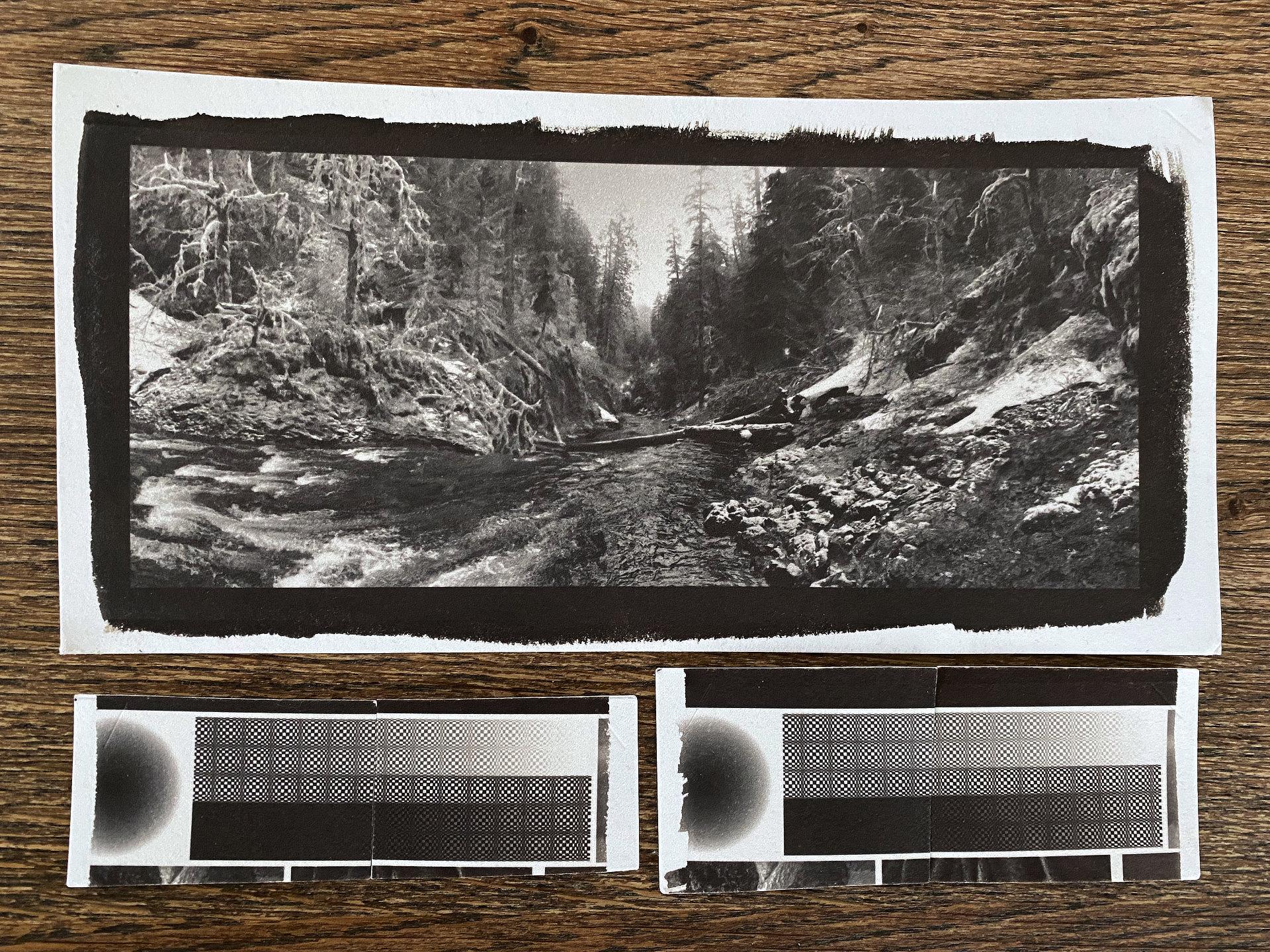
Made new test prints on some off-cuts, using a slightly stronger developer solution than usual to see impact on max. depth. The main image (Eagle Creek, Oregon) is using 18% sodium acetate (curve corrected negative), the test strips are of 20% and 15% solutions (both uncorrected). The phone capture doesn't really show the differences too well, but I think I will go for the 18-20% from now on...
(Btw. The original image is here:
Catching up on news of the past week... I saw the posts go by about show company AllBirds pivoting to be an #AI company... er... "a fully integrated GPU-as-a-Service and AI-native cloud solutions provider"... but I hadn't read the story... and now I'm just sitting here smiling and laughing! We live in strange times! 😃
Complementary Eigen-Zundel Interpretation Reconciles Thermodynamics and Spectroscopy of Excess Protons in Aqueous HF Solutions
Louis Lehmann, Florian N. Br\"unig, Jonathan Scherlitzki, Morten Lehmann, Martin Kaupp, Beate Paulus, Roland R. Netz
https://arxiv.org/abs/2603.25371
Replaced article(s) found for physics.flu-dyn. https://arxiv.org/list/physics.flu-dyn/new
[1/1]:
- Flow birefringence measurement in a radial Hele-Shaw cell considering three-dimensional effects
Kawaguchi, Worby, Yokoyama, Suzuki, Nagatsu, Tagawa
https://arxiv.org/abs/2503.10261 https://mastoxiv.page/@arXiv_physicsfludyn_bot/114159626474808492
- Harnessing natural and mechanical airflows for surface-based atmospheric pollutant removal
Tomlinson, Tsopelakou, Onn, Barrett, Boies, Fitzgerald
https://arxiv.org/abs/2503.11803 https://mastoxiv.page/@arXiv_physicsfludyn_bot/114182280989424086
- Modelling laminar flow in V-shaped filters integrated with catalyst technologies for atmospheric ...
Tomlinson, Tsopelakou, Onn, Barrett, Boies, Fitzgerald
https://arxiv.org/abs/2506.00603 https://mastoxiv.page/@arXiv_physicsfludyn_bot/114618363713267810
- Physics-based modelling of turbulence in wind-turbine wakes turbulence in neutral atmospheric bou...
Fr\'ed\'eric Blondel, Erwan J\'ez\'equel, Helen Schottenhamml, Majid Bastankhah
https://arxiv.org/abs/2508.20012 https://mastoxiv.page/@arXiv_physicsfludyn_bot/115105574493910598
- Laminar boundary layers over small-scale textured surfaces
Samuel D. Tomlinson, Demetrios T. Papageorgiou
https://arxiv.org/abs/2511.11471 https://mastoxiv.page/@arXiv_physicsfludyn_bot/115564297614664642
- Tensor Network Lattice Boltzmann Method for Data-Compressed Fluid Simulations
Lukas Gross, Elie Mounzer, David M. Wawrzyniak, Josef M. Winter, Nikolaus A. Adams
https://arxiv.org/abs/2512.07615 https://mastoxiv.page/@arXiv_physicsfludyn_bot/115689326375361321
- Low Regularity of Self-Similar Solutions of Two-Dimensional Riemann problems with Shocks for the ...
Gui-Qiang G. Chen, Mikhail Feldman, Wei Xiang
https://arxiv.org/abs/2504.07034 https://mastoxiv.page/@arXiv_mathAP_bot/114312466798796116
toXiv_bot_toot
On Electric Vehicle Energy Demand Forecasting and the Effect of Federated Learning
Andreas Tritsarolis, Gil Sampaio, Nikos Pelekis, Yannis Theodoridis
https://arxiv.org/abs/2602.20782 https://arxiv.org/pdf/2602.20782 https://arxiv.org/html/2602.20782
arXiv:2602.20782v1 Announce Type: new
Abstract: The wide spread of new energy resources, smart devices, and demand side management strategies has motivated several analytics operations, from infrastructure load modeling to user behavior profiling. Energy Demand Forecasting (EDF) of Electric Vehicle Supply Equipments (EVSEs) is one of the most critical operations for ensuring efficient energy management and sustainability, since it enables utility providers to anticipate energy/power demand, optimize resource allocation, and implement proactive measures to improve grid reliability. However, accurate EDF is a challenging problem due to external factors, such as the varying user routines, weather conditions, driving behaviors, unknown state of charge, etc. Furthermore, as concerns and restrictions about privacy and sustainability have grown, training data has become increasingly fragmented, resulting in distributed datasets scattered across different data silos and/or edge devices, calling for federated learning solutions. In this paper, we investigate different well-established time series forecasting methodologies to address the EDF problem, from statistical methods (the ARIMA family) to traditional machine learning models (such as XGBoost) and deep neural networks (GRU and LSTM). We provide an overview of these methods through a performance comparison over four real-world EVSE datasets, evaluated under both centralized and federated learning paradigms, focusing on the trade-offs between forecasting fidelity, privacy preservation, and energy overheads. Our experimental results demonstrate, on the one hand, the superiority of gradient boosted trees (XGBoost) over statistical and NN-based models in both prediction accuracy and energy efficiency and, on the other hand, an insight that Federated Learning-enabled models balance these factors, offering a promising direction for decentralized energy demand forecasting.
toXiv_bot_toot
This quote from Intuit about Anthropic Claude Opus 4.7 is amazing for its non-committal tone. The tap-dancing in this single quote would make Fred Astaire jealous. 😅
Inside India's AI Impact Summit: 300 exhibitors, 500 sessions, 250K visitors, billions in investment, and entrepreneurs touting solutions to real-world issues (New York Times)
https://www.nytimes.com/2026/02/19/busines
It's really great that #Gentoo no longer has to rely on such uncultured solutions as using scp / rsync to push a bunch of distfiles to a public_html directory that's then exposed on a HTTP server. Now I just have to… [checks notes]
1. Use 'kup putraw' to put the kernel patchset on distfiles mirror.
2. Wait an hour for mirrors to sync.
3. Start building new kernels.
4. Rsync kernels from build hosts to the local machine.
5. Use a complex script involving 'kup ls ... | grep' (yes, there is no way to check if a file exists, and most of kup commands don't even feature exit statuses) and `kup putraw ...` to upload the built kernels.
6. Wait an hour for mirrors to sync.
7. Check if all kernels were uploaded correctly.
8. Push new kernels.
Counterflow around a cylinder
Matheus P. Severino, Leandro F. Souza, Elmer M. Gennaro, Daniel Rodr\'iguez, Fernando F. Fachini
https://arxiv.org/abs/2602.22022 https://arxiv.org/pdf/2602.22022 https://arxiv.org/html/2602.22022
arXiv:2602.22022v1 Announce Type: new
Abstract: The incompressible flow around a circular cylinder, positioned at the center of an unconfined planar counterflow, is studied by means of numerical solutions of the conservation equations and linear stability analysis. The flow is completely defined by the Reynolds number ($\Rey$) -- based on the cylinder radius, the strain rate defining the counterflow, and the kinematic viscosity. For very low values of $\Rey$, the flow is steady, two-dimensional, and fully attached to the cylinder wall. Increasing $\Rey$ above $\Rey_s \approx 16.86$, the flow separates, giving rise to two symmetric, counter-rotating recirculation regions on each side of the cylinder. Further increasing $\Rey$ leads to a progressive enlargement of the recirculation regions and the appearance of multiple recirculation centers, akin to Moffatt eddies. However, the convective acceleration imposed by the counterflow limits their size. An oscillatory mode becomes linearly unstable for $\Rey_{c} \approx 4146$. This mode gives rise to a sinuous meandering of the wake flow, on each side of the cylinder, being analogous to the well-known von K\'arm\'an instability. The frequency of this mode is directly proportional to the strain rate defining the counterflow.
toXiv_bot_toot
Police, jail, and banning stuff seem to be this board's/mayor's only "solutions" to the public health crisis of addiction, and not, for example, voluntary treatment: we still lack enough treatment facilities to accommodate every San Franciscan who comes in ready and wanting help to kick their habit.
This policy is particularly dumb because of its obvious harm to nightlife. People want to be able to buy snacks when they leave the club.
Affordable solar-powered EV charging is coming to Europe. Mova's new LumeGret series launches in Q2 2026 with smart tariff optimization and an innovative FluxCharge system that delivers 2.5 kW of clean charging directly from solar panels.
Starting at just €1,000, it works with smart meters to maximize efficiency. A game-changer for sustainable home energy.
By accident, my #lazyblorg is one of the first blogging solutions that include a "Share on #Mastodon" functionality on each article page. 🥳
Learn how to do it yourself:
Replaced article(s) found for math.DG. https://arxiv.org/list/math.DG/new
[1/1]:
- Classification of generalized Yamabe solitons under vanishing conditions on the Weyl, Cotton, and...
Shun Maeta
https://arxiv.org/abs/2107.05487
- Non-collapsing volume estimate for local K\"ahler metrics in big cohomology classes
Thai Duong Do, Duc-Bao Nguyen, Duc-Viet Vu
https://arxiv.org/abs/2502.16136
- The rigidity statement in the Horowitz-Myers conjecture
S. Brendle, P. K. Hung
https://arxiv.org/abs/2504.16812 https://mastoxiv.page/@arXiv_mathDG_bot/114391742095134598
- The $k$th Order Preserving Sets and Isoperimetric Type Inequalities for Planar Ovals
Maksymilian Filip Safarewicz, Micha{\l} Zwierzy\'nski
https://arxiv.org/abs/2505.08017 https://mastoxiv.page/@arXiv_mathDG_bot/114504987361702955
- An improved upper bound for the second eigenvalue on tori
Fan Kang
https://arxiv.org/abs/2506.05846 https://mastoxiv.page/@arXiv_mathDG_bot/114652408234085783
- Pluriclosed metrics on compact semisimple Lie groups
Jorge Lauret, Facundo Montedoro
https://arxiv.org/abs/2506.21725 https://mastoxiv.page/@arXiv_mathDG_bot/114771230739330209
- Finite extinction time of a family of homogeneous Ricci flows
Roberto Araujo
https://arxiv.org/abs/2507.05097 https://mastoxiv.page/@arXiv_mathDG_bot/114817170850209379
- Concavity of spacetimes
Tobias Beran, Darius Er\"os, Shin-ichi Ohta, Felix Rott
https://arxiv.org/abs/2509.26196 https://mastoxiv.page/@arXiv_mathDG_bot/115298277656918174
- A Lower Bound for the First Non-zero Basic Eigenvalue on a Singular Riemannian Foliation
Bach Tran
https://arxiv.org/abs/2602.17501 https://mastoxiv.page/@arXiv_mathDG_bot/116102222415286571
- The Cauchy problem of the Lorentzian Dirac operator with APS boundary conditions
Nicol\`o Drago, Nadine Gro{\ss}e, Simone Murro
https://arxiv.org/abs/2104.00585
- The Eigenvalue Problem for the complex Monge-Amp\`ere operator
Papa Badiane, Ahmed Zeriahi
https://arxiv.org/abs/2306.03285 https://mastoxiv.page/@arXiv_mathCV_bot/110501544679577441
- Geodesic X-ray transform and streaking artifacts on simple surfaces or on spaces of constant curv...
Hiroyuki Chihara
https://arxiv.org/abs/2402.06899 https://mastoxiv.page/@arXiv_mathAP_bot/111924395641033643
- Koopman Regularization
Ido Cohen
https://arxiv.org/abs/2403.11302 https://mastoxiv.page/@arXiv_mathDS_bot/112121157959044047
- Parabolic noncommutative geometry
Magnus Fries, Magnus Goffeng, Ada Masters
https://arxiv.org/abs/2503.12938 https://mastoxiv.page/@arXiv_mathOA_bot/114182247165636785
- A Riemannian approach for PDE-constrained shape optimization over the diffeomorphism group using ...
Estefania Loayza-Romero, Lidiya Pryymak, Kathrin Welker
https://arxiv.org/abs/2503.22872 https://mastoxiv.page/@arXiv_mathOC_bot/114262964177766537
- Varifold solutions to Volume-Preserving Mean Curvature Flow: existence and weak-strong uniqueness
Andrea Poiatti
https://arxiv.org/abs/2507.08783 https://mastoxiv.page/@arXiv_mathAP_bot/114850896417417882
- Rigidity of Spectral Encodings under Weyl Growth Conditions
Anton Alexa
https://arxiv.org/abs/2510.03238 https://mastoxiv.page/@arXiv_mathSP_bot/115331835395254198
- The Regularity of Critical Points to Scale-Invariant Curvature Energies in Dimension 4
Yann Bernard, Tian Lan, Dorian Martino, Tristan Rivi\`ere
https://arxiv.org/abs/2511.01765 https://mastoxiv.page/@arXiv_mathAP_bot/115491294260333438
toXiv_bot_toot
Paris-based Parallel, which develops AI agents for hospitals and is initially focused on medical coding workflows, raised a $20M Series A led by Index Ventures (Tamara Djurickovic/Tech.eu)
https://tech.eu/2026/03/19/parallel-raises-20m-to-sca…
California batteries just supplied 44% of evening peak demand—proof that storage can replace gas plants.
D.C.'s gas hookup ban cleared the courts, opening the path to net-zero buildings.
Finland nears carbon-neutral power with wind and nuclear working together.
Sign up for the For People And Planet climate solutions digest:
Replaced article(s) found for physics.flu-dyn. https://arxiv.org/list/physics.flu-dyn/new
[1/1]:
- Phase dynamics and their role determining energy flux in hydrodynamic shell models
Santiago J. Benavides, Miguel D. Bustamante
https://arxiv.org/abs/2507.03397 https://mastoxiv.page/@arXiv_physicsfludyn_bot/114817127598602181
- Sequential water wave reconstruction in VOF-based numerical wave tanks with the EnKF approach
Liwen Yan, Linyuan Che, Jing Li
https://arxiv.org/abs/2510.14356 https://mastoxiv.page/@arXiv_physicsfludyn_bot/115388597190883395
- cfdmfFTFoam: A front-tracking solver for multiphase flows on general unstructured grids in OpenFOAM
Ehsan Amani
https://arxiv.org/abs/2602.05627
- Causally coherent structures in turbulent dynamical systems
Daniele Massaro, Saleh Rezaeiravesh, Philipp Schlatter
https://arxiv.org/abs/2602.13899 https://mastoxiv.page/@arXiv_physicsfludyn_bot/116085105891668720
- On Topology of Perturbed Vortices
Taosif Ahsan, Samuel A. Cohen, Alan H. Glasser
https://arxiv.org/abs/2507.04596 https://mastoxiv.page/@arXiv_mathph_bot/114817045016896633
- Multi-Sink Solutions to the Self-Similar Euler Equations
Hyungjun Choi, Matei P. Coiculescu
https://arxiv.org/abs/2602.15152 https://mastoxiv.page/@arXiv_mathAP_bot/116090659297578893
toXiv_bot_toot
LinkedIn job posting data: companies added 640K AI-related jobs from 2023 to 2025 in the US, including 225K "head of AI" jobs, up 49% from the prior four years (Te-Ping Chen/Wall Street Journal)
https://www.wsj.com/tech/ai/wanted-head-of
California batteries just powered 44% of evening peak demand—proving storage can replace fossil fuel backup.
D.C. upheld its gas hookup ban, paving the way for net-zero buildings.
Finland is nearing carbon-neutral electricity with wind and nuclear.
Sign up for the For People And Planet climate solutions digest:
What if activism could feel like building a home instead of fighting a fire?
On my substack I explore love as a political force—and why that might be the most radical thing we can center. https://substack.com/@bricchapman
 @cdarwin@c.im