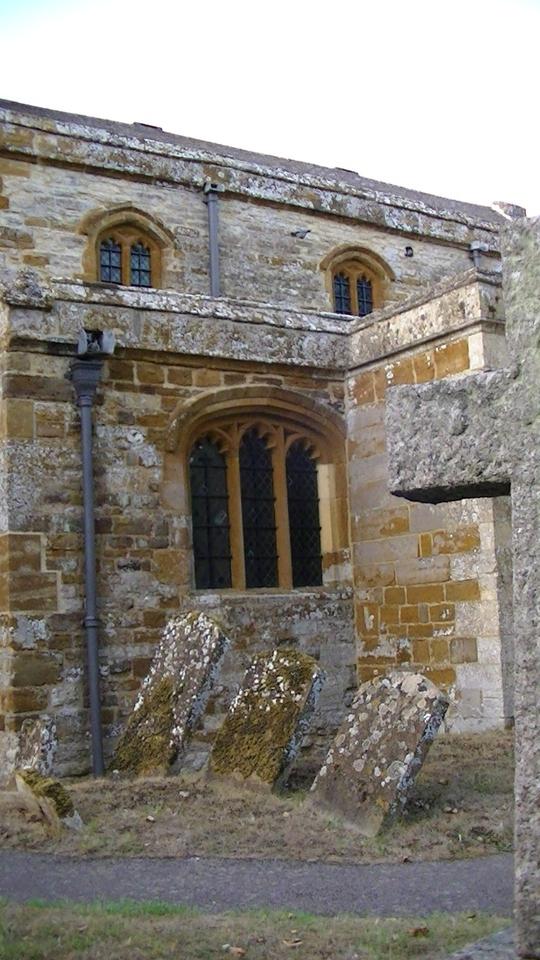
Online panels and better image editing have brought down their cost in recent decades. Since the 1990s, around twenty properly sampled visual preference surveys have been run on popular architectural preferences.
https://www.worksinprogress.news/p/do-people-prefe…
Getting to the CRUX of it.
The last couple of days I've been hanging out in Crux Linux and I really enjoyed doing just that. Reason why I did a write-up and how-to about my exploration into this source based distro.
#crux #cruxlinux
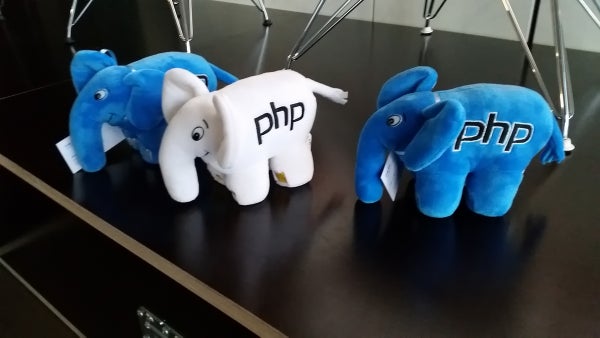
Join us next Thursday for our next #phpugmrn event!
Our speaker, @… will take us back to the fundamentals of Domain Driven Design (DDD). and argue that these principles are far more important than any specific architecture.
According to Sebastian, b…
Re-reading #RFC 8995, I find that I missed that the BRSKI architecture does support nonceless vouchers, at least in situations where you know precisely (by serial number) what you bought.
If I've ever pitched BRSKI based IoT and left you with a bad taste of "why do I have to run the device once in a connected situation": I'm sorry, I undersold it, it is even cooler than I made i…
I'll be at the Software Architecture Gathering and talk about the most important topic in programming (and architecture): abstraction.
I'll also hang out throughout the conference at the @… booth, so come and let's chat!
The early bird runs until Thursday, so make sure you get your ticket. You can also hit me up for a discoun…
🔧 The backend is #Python-based on top of #pipecat, the UI is #TypeScript. The architecture is modular so components can be swapped, and
Die Ars Elextronica (#aec) in #Linz habe ich seit Jahren nicht einmal mehr wahrgenommen.
Aber jetzt finde ich es spannend, nachdem eine Jury Forensic Architectur mit einer Nike ausgezeichnet hat, für "A Cartography of Genocide: Israel's Conduct in Gaza since October 2023"
Weil LH Stelzer darin Antisemitismus sieht, kommt er nicht zur Preisverleihung. Und der Leiter des AEC muss…
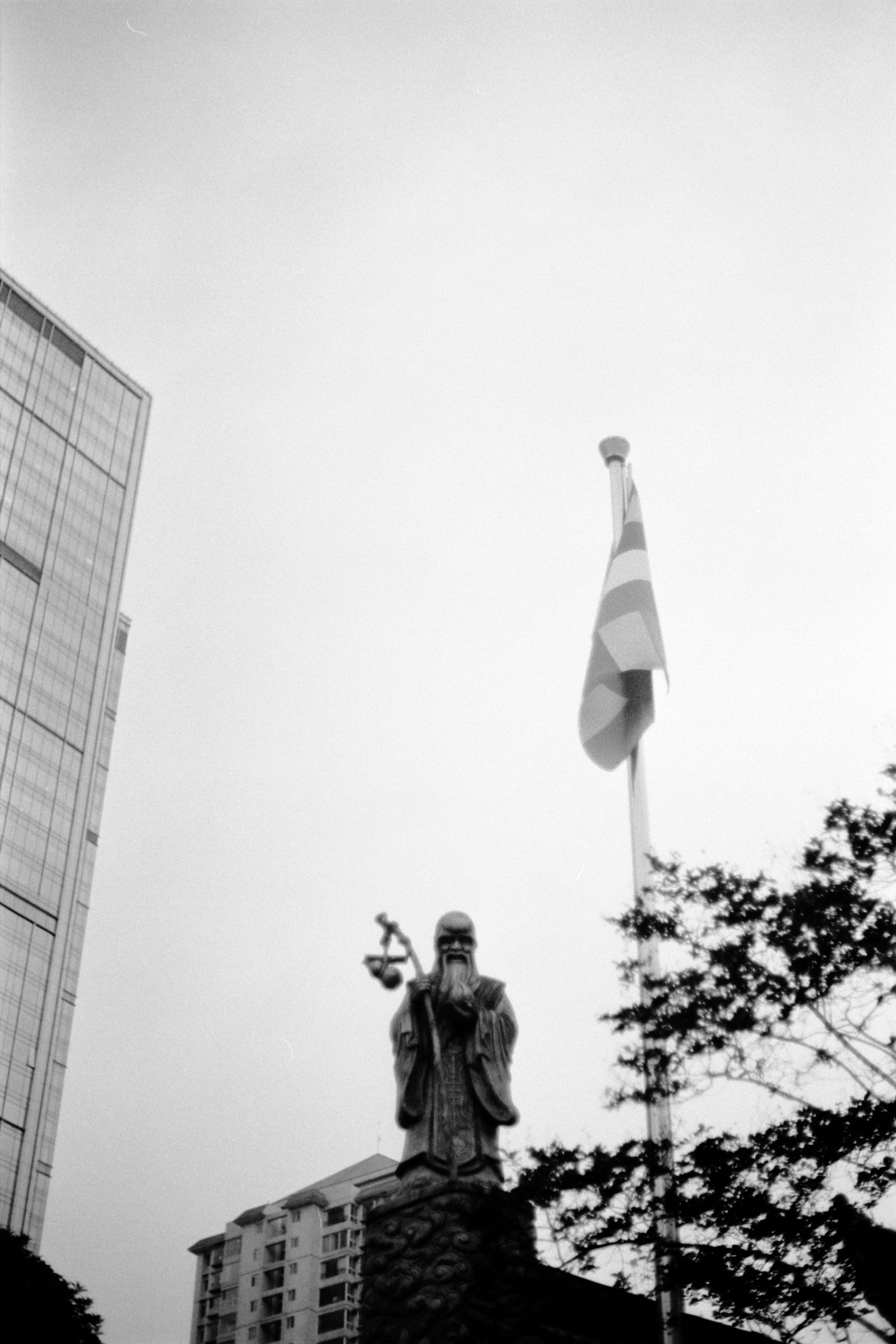
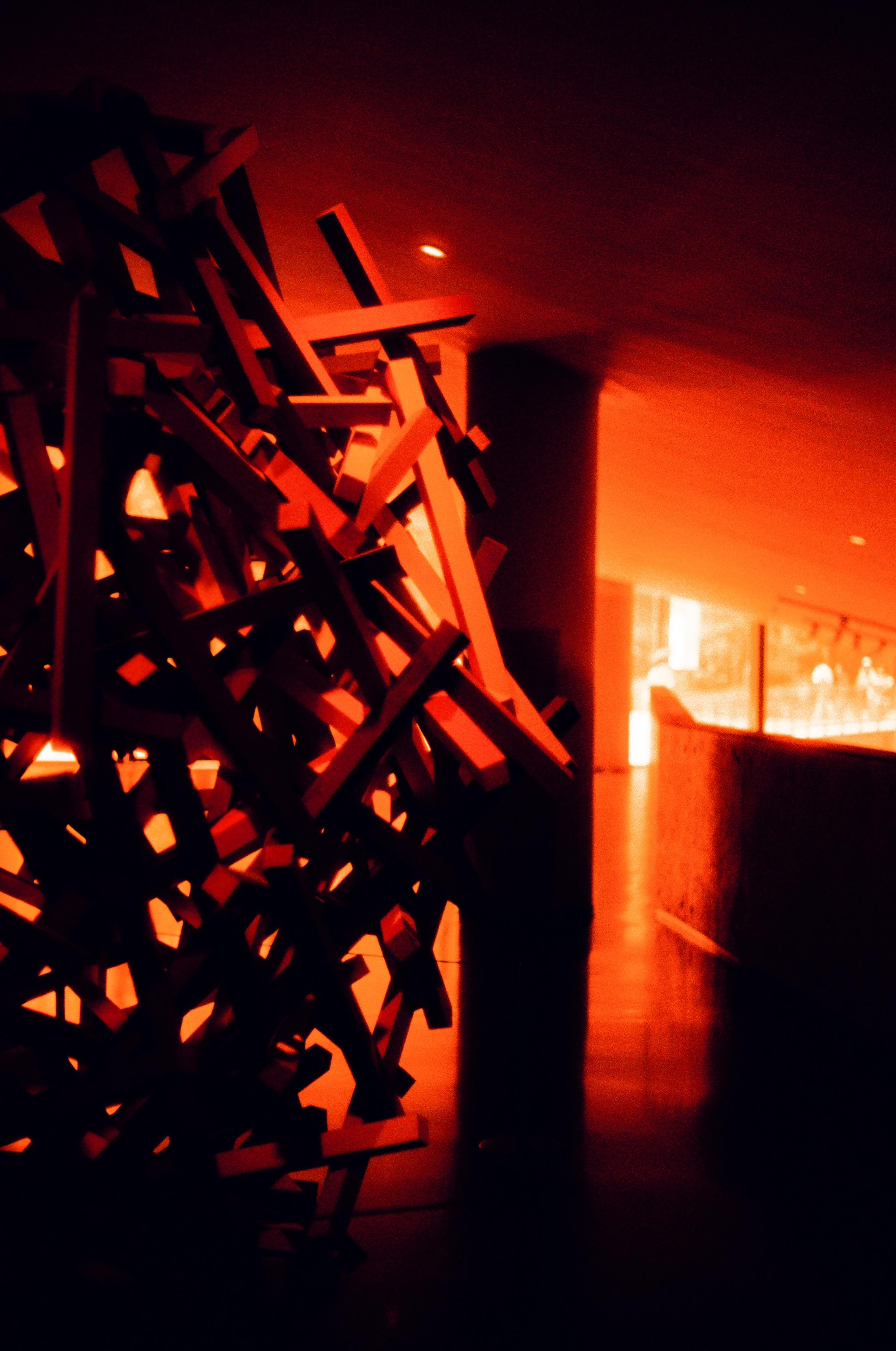
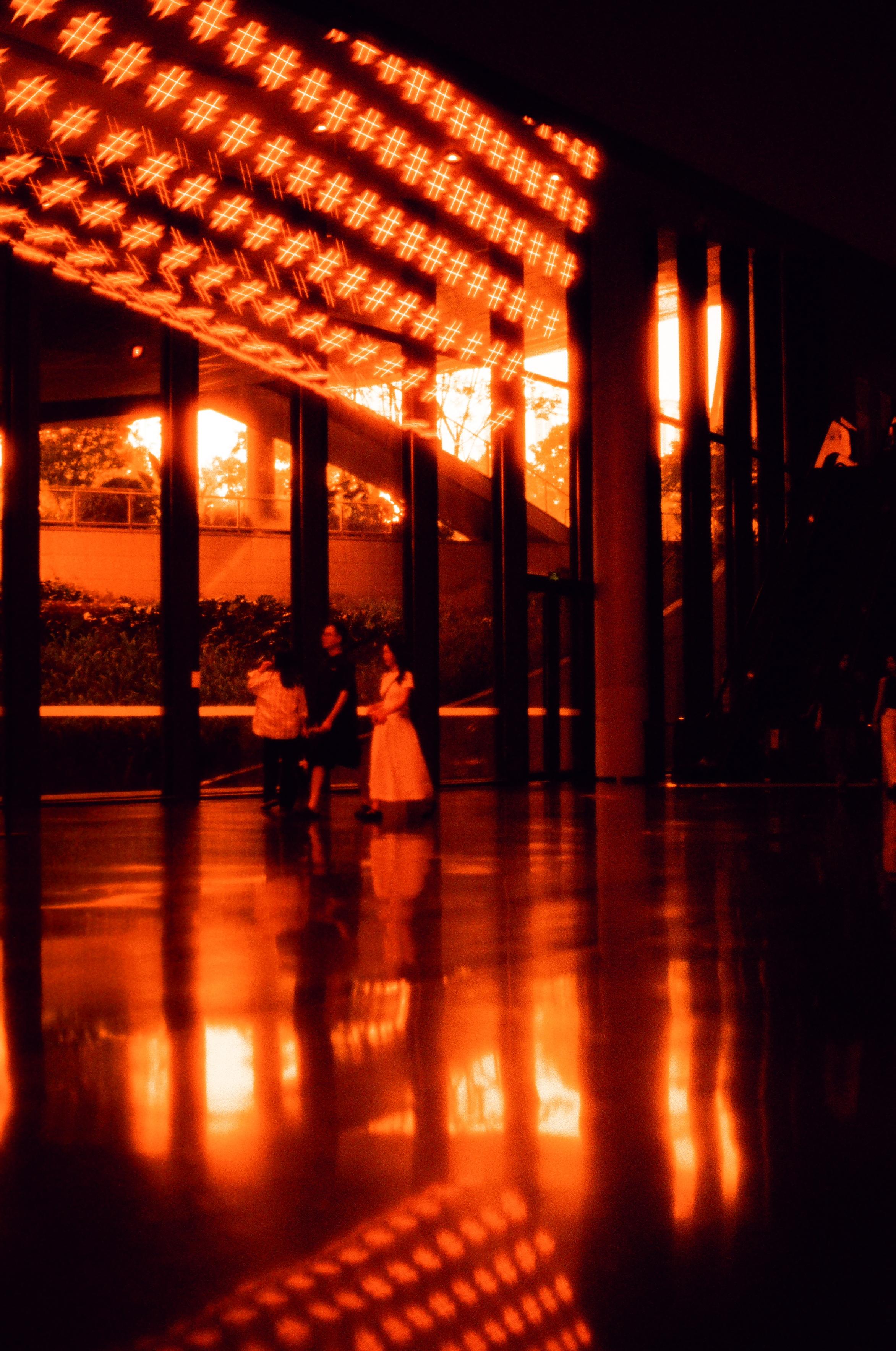
At the Corner II ✨
在角落里 II ✨
📷 Nikon FE
🎞️ Ilford Delta 3200
If you like my work, Support by buying me a coffee or a roll of film from
PayPal https://www.paypal.com/paypalme/ydcdingsite
Wise
Brief detour while running errands today. Who knows where this is, without image searching? #ArchitecturalHistory
Inside-out corner between Mann Library and Plant Science Building
#photo #photography #buildings #architecture
At Dreamforce, Salesforce announces Koa, a specialized CRM reasoning model built on Nvidia's Nemotron architecture, designed to power AI agents in Agentforce (Mike Wheatley/SiliconANGLE)
https://siliconangle.com/2026/09/15/sale…
Ah we are doing why I open source?
I do it for 2 reasons. What I learn while doing it. What skills I practice while doing it. That’s it.
The skill I practise most is of product design and product building. Often in infra space - I don’t open source my non infra work.
The things I learn is the tools, languages and patterns of architecture and product design.
heute zufällig entdeckt:
"Einführung in die RSWK – Regeln für die Schlagwortkatalogisierung": 9 Video-Tutorials von Kolleginnen der @…
» https://doi.org/10.5446/s_1686
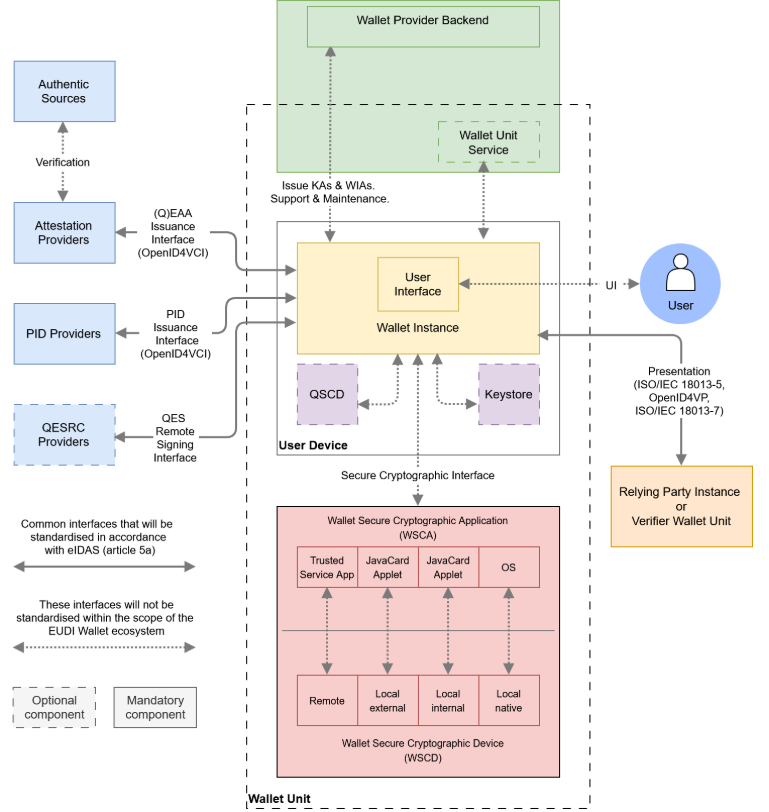
For those people interested in digital identity , wallets etc., Architecture and Reference Framework for the EU Digital Identity Wallet, version 3.0 has been released.
#EU
Are gate-all-around 2D CFETs the optimal architecture for the A2 node and beyond?
Fengben Xi, Gautam Gaddemane, Anshul Gupta, Sheng Yang, Aryan Afzalian, Quentin Smets, Maarten Van de Put, Kaustuv Banerjee, Tom Schram, Devin Verreck, Ward Janssens, Juergen Boemmels, Xiangyu Wu, Thomas Chiarella, J\'er\^ome Mitard, Gouri Sankar Kar, Geert Hellings, Cesar Javier Lockhart de la Rosa
…
The Frey Wille Hundertwasser Street Rivers collection testifies to his commitment to architecture
and is influenced, for example, by the famous Hundertwasserhaus in Vienna.
Hundertwasser was strongly committed to architecture and fought for a more natural and human-friendly construction.
He despised rational, sterile architecture and demanded more space for individual design.
In this context, he campaigned for a "tree obligation" and a "window right&…
Thoughtseeds as Latent Causes: A Dual-Process Computational Phenomenology of Focused-Attention Meditation
Prakash Chandra Kavi, Daniel Ari Friedman, Gustavo Patow
https://arxiv.org/abs/2607.14833 https://arxiv.org/pdf/2607.14833 https://arxiv.org/html/2607.14833
arXiv:2607.14833v1 Announce Type: new
Abstract: Meditative expertise involves sustained attention, rapid recovery from distraction, and coordinated dynamics of large-scale brain networks. We present a computational phenomenology of focused-attention meditation traversing four attractor states: breath focus, mind-wandering, meta-awareness, and redirect attention. Within a dual-process active inference formulation, the model implements a three-layer nested Markov-blanket architecture: (L1) a high-dimensional physiological neuronal substrate modeled as a stochastic multivariate Ornstein--Uhlenbeck process over attentional Yeo networks; (L2) a low-dimensional generative model (System 1) that encodes latent mental content as thoughtseeds and evaluates autonomic action tendencies; and (L3) an agentic metacognitive monitor (System 2) that implements a Global Neuronal Workspace (GNW) capacity bottleneck to selectively gate these tendencies. In L3, meta-awareness functions as the GNW ignition signal, derived from policy-prior divergence and dynamically gated by direct competition between orchestrator and distractor thoughtseeds. Policy selection actively minimizes expected free energy, and L2 actions furnish descending predictions over network activity to close the enactive perception--action cycle. Training uses variational Expectation-Maximization (EM) across expert and novice phenotypes. Simulations reproduce behavior consistent with empirical observations and findings in contemplative neuroscience, providing a tractable link between first-person phenomenology and objective neurophysiological measures.
toXiv_bot_toot
Fun UK gov computing doc I stumbled across; they switched to aws graviton from x86 with an argument that since a lot of the devs use ARM MacBooks it causes less issues having the same architecture.
https://docs.publishing.servic…
NITRO: High-Performance 3D NAND Flash-Based In-Storage Computing with Enhanced Activation Dataflow
Sanghun Shin, Sangyeon Kim, Gisan Ji, Sungju Ryu
https://arxiv.org/abs/2608.11920 https://arxiv.org/pdf/2608.11920 https://arxiv.org/html/2608.11920
arXiv:2608.11920v1 Announce Type: new
Abstract: In-storage computing (ISC) is considered a next-generation memory architecture for its ability to relieve the data bottleneck between the host and the memory. While the required resources of large language models (LLMs) have increased significantly in recent years, the memory density has not scaled accordingly. Recently, several works have studied NAND flash-based processing-in-memory (NAND-PIM) schemes to exploit the high density of the memory. However, they do not address the dataflow/buffer for the intermediate values, so a simple method is to deal with the values in the slow flash memory array. To overcome such a limitation, we propose a high-performance NAND flash-based ISC architecture with enhanced activation buffering. Instead of using the very slow flash memory array for the intermediate values, our architecture buffers the values in a fast DRAM subsystem. This approach effectively handles the high-latency penalties when activations are programmed into slower TLC NAND flash. We also introduce a distributed dataflow approach for the NAND-PIM array. This approach maximizes computational parallelism by employing efficient intra-plane data mapping. The results show that our proposed architecture achieves significant performance improvements, reducing the inference latency by up to 85% compared to the baseline.
toXiv_bot_toot
This week on #ProFed: security review.
I found a minor issue and took it as an opportunity to systematically check for more security issues. A few small things have been addressed already, more to follow.
The fixes also clean up the architecture in a few places – so the end result is both more secure and cleaner.
Inside Outside V 🔲
中间 V 🔲
📷 Pentax MX
🎞️ Fujifilm Neopan F, expired 1993
If you like my work, Support by buying me a coffee or a roll of film from
PayPal https://www.paypal.com/paypalme/ydcdingsite
Wise
“… is a platform for managing grants and tenders across their entire lifecycle. Leveraging its extensive database and dedicated architecture of AI Agents, it: …”
Hold it right there, bro, and get outta my face!
#AcademicChatter
“… is a platform for managing grants and tenders across their entire lifecycle. Leveraging its extensive database and dedicated architecture of AI Agents, it: …”
Hold it right there, bro, and get outta my face!
#AcademicChatter
“… is a platform for managing grants and tenders across their entire lifecycle. Leveraging its extensive database and dedicated architecture of AI Agents, it: …”
Hold it right there, bro, and get outta my face!
#AcademicChatter
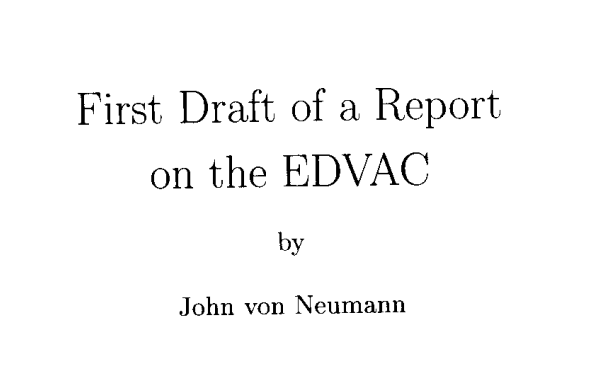
OTD 1945: von Neumann's EDVAC report published. The beginning of modern computer architecture.
https://web.mit.edu/sts.035/www/PDFs/edvac.pdf
Every Wednesday in September, we're hosting the 2026 Contemporary Australian Architects Speaker Series. Now in its 38th year, this annual lecture series discusses innovative ideas around design, art, and architecture. Join us in person or online.
#NFSA #Canberra
📦 Ships 68 specialized agents, 291 skills and 94 commands covering planning, build repair, code review, security, architecture, docs, frontend, data and ML work
🧪 #TDD becomes a gated RED − GREEN − REFACTOR flow with evidence, and a fresh-context reviewer checks the changes instead of the same context grading its own code
When the Interviewer Is a Bot: Behavior, Breakdowns, and Trust in MLLM-Led Interviews
He Zhang, Kambinachi Chukwuma, ChanMin Kim, John M. Carroll
https://arxiv.org/abs/2608.10412 https://arxiv.org/pdf/2608.10412 https://arxiv.org/html/2608.10412
arXiv:2608.10412v1 Announce Type: new
Abstract: Semi-structured interviews are a cornerstone of qualitative research but remain labor-intensive. We report an empirical study of what actually happens when the interviewer is an off-the-shelf real-time multimodal LLM (MLLM). We built InterviewBot, a voice-based interviewing system that wraps a real-time MLLM with a researcher-authored outline, and deployed it not as a novel architecture but as a research instrument for observing default MLLM interviewing behavior. In a practice study (N=15), participants completed a bot-led semi-structured interview and then a human-led reflection session about that experience. We contribute (i) a turn-level behavioral analysis of an MLLM interviewer (N_turns=428) showing that it is acknowledgment-heavy but probe-light (deepening probes account for 4.9% of all turns), and that 28.7% of question-bearing turns pack multiple questions into one turn despite an explicit one-question-at-a-time instruction; (ii) an inductive catalogue of four data-collection breakdowns (information loss, premature termination, latency, and interruption) observed in a deployed rather than simulated system; and (iii) three social dynamics from participants' reflections: disclosure calibration, where reduced social pressure coincided with shallower elaboration; institutional legitimacy, where trust tracked perceived stakes and what delegation to AI signaled about the organizer rather than conversational competence; and conversational grounding, where content-grounded paraphrase, not generic social filler, was what participants read as listening. We conclude with design implications for depth control, transparent handoffs, and non-templated listening mechanisms in human-centered interview automation.
toXiv_bot_toot
While I still think #atproto is a great architecture (and love how tangled.org is developing), I can't help but notice how much #Bluesky interactions seem to orbit around a few hundred popular accounts while Mastodon always had this eye level feeling to me where everyone interacts with eve…
Leaky Language Models: Stealing Architecture and Inference Optimizations via Per-Token Timing
Sadegh Majidi, Niloofar Mireshghallah, Kazem Taram
https://arxiv.org/abs/2607.20723 https://arxiv.org/pdf/2607.20723 https://arxiv.org/html/2607.20723
arXiv:2607.20723v1 Announce Type: new
Abstract: This work presents LeakyLMs, a set of attacks that leak proprietary model, architecture, and deployment information from production language models. LeakyLMs is the first to demonstrate that key model and deployment details can be inferred using only token generation timing, even when interacting through remote APIs. LeakyLMs introduces two core attacks. The first attack targets inference optimizations and deployment strategies. For example, our attack detects whether a provider uses speculative decoding, a widely deployed inference-time optimization, and further identifies the context length of the draft model used in the pipeline. Our measurements show that Google Gemini Flash 2.5 uses speculative decoding with a draft context window of approximately 128K tokens. The second attack recovers key architectural properties, including the number of transformer layers, hidden dimension size, and number of attention heads. To achieve this, LeakyLMs builds a detailed and accurate model of token-generation timing on modern NVIDIA GPUs, characterizing how latency scales with model configuration and hardware parameters. The attack then performs a search over the architecture space using this timing model. In experiments with Llama models, the near-correct architectural configuration appears in the top-10 guesses more than 90% of the time.
toXiv_bot_toot
to those who came to the #EuroPython Software Design and Architecture open space (and everyone else really): we mentioned the excellent book
Grokking Simplicity
and noticed that it's kinda pricey!
Conveniently, it's on sale right now: $34.64 for digital and $37.79 for print (shipped from EU).
I'm taking this opportunity to get it in print in addition to my …
HenTwin: A Multimodal Digital Twin Framework for Longitudinal Biological State Monitoring in Laying Hens
Yashan Dhaliwal, Shreya Rao, Suresh Neethirajan
https://arxiv.org/abs/2607.28652 https://arxiv.org/pdf/2607.28652 https://arxiv.org/html/2607.28652
arXiv:2607.28652v1 Announce Type: new
Abstract: Early-life monitoring in laying hens remains constrained by fragmented single-modality sensing and the absence of formal system-level state representations. HenTwin, a multimodal digital twin framework implemented as a five-layer IoT architecture, formalizes flock-level multimodal biological state dynamics from hatch through 25 weeks of age. A four-dimensional biological state vector integrating body surface temperature, acoustic energy entropy, band energy ratio, and optical-flow-based motion is defined, with the temperature-humidity index treated as an exogenous environmental input to preserve intervention capability. A discrete-time state transition model is estimated from 25 weeks of longitudinal multimodal data collected from 150 Lohmann LSL-Lite hens across five controlled rooms at the Atlantic Poultry Research Centre, Dalhousie University. The estimated transition matrix exhibits modality-specific persistence while remaining asymptotically stable. Perturbation analysis demonstrates that a sustained 2.0 THI increase produces a stable long-run acoustic entropy elevation of 0.54 nats, approximately one-quarter of the entire 1.87-nat developmental decline observed across the study period. Pettitt change-point detection identifies coordinated multimodal developmental state transitions at Weeks 12-14. Cross-room validation suggests that structural transition parameters are partially transferable across rooms, whereas environmental input sensitivity requires room-specific calibration, supporting a two-tier IoT deployment architecture. Leave-one-out cross-validation demonstrates consistent out-of-sample model performance. HenTwin takes a first step toward formal, state-aware digital twin inference in precision livestock farming.
toXiv_bot_toot
A Day Or Two At The Museum IV🏛️
博物馆的一两天 IV🏛️
📷 Pentax MX
🎞️ Harman Red 125 (FF)
If you like my work, Support by buying me a coffee or a roll of film from
PayPal https://www.paypal.com/paypalme/ydcdingsite
Wise
A Tale of Two Compact Bosons
Christian Ferko, Vishnu Jejjala, Brandon Robinson
https://arxiv.org/abs/2608.06376 https://arxiv.org/pdf/2608.06376 https://arxiv.org/html/2608.06376
arXiv:2608.06376v1 Announce Type: new
Abstract: Neural network field theory (NN-FT) defines a field theory by a network architecture together with a probability density on its latent variables. For compact theories the local Gaussian sector is only part of the story: one must also sum over discrete topological sectors. We review a mixed continuous/discrete latent-variable construction and apply it to two compact bosons. For the Berezinskii--Kosterlitz--Thouless transition, a random Fourier feature spin-wave sampler supplemented by an explicit Coulomb gas vortex sector reproduces the Gaussian critical line below $T_c$, vortex proliferation above $T_c$, the essential singularity of the correlation length, and the Nelson--Kosterlitz jump. For the bosonic string, oscillator modes augmented by momentum--winding labels reproduce circle T-duality, Buscher transformations on constant toroidal backgrounds, self-dual current algebra enhancement, and a toy T-fold. The common lesson is that the same local neural sampler, paired with different discrete topological data, yields physically distinct compact theories. These proceedings are based on arXiv:2604.02313.
toXiv_bot_toot
'Leuchtturm' #FotoVorschlag
From holidays at the baltic sea, a couple of years ago.
#photography #balticsea
Russia’s UAV Campaign Over Europe.
"Our key judgement is that Europe’s current counter-UAV architecture does not yet match the threat despite NATO, the European Union and national governments focusing more attention on the issue: detection is uneven, legal authorities are fragmented, response options are often disproportionate and attribution remains too slow to support timely deterrence."
Filip Makraduli's talk covered why hybrid retrieval requires multiple model types, the adapter architecture that makes multi-model serving possible, and building the pipeline end-to-end, tradeoffs, and lessons.
Watch the recap: #bbuzz
TIL about the TRON project, started 1984 in Japan as an architecture for real time operating systems, including a VLSI based CPU. It's some sort of ancestor for todays widely used RTOS real time operating system: https://en.wikipedia.org/wiki/TRON_project
IEEE Micro issue March/Apr…
“If the same person keeps appearing in architecture debates, delivery risks, historical explanations, escalation paths, and cross-team translation, that is no longer just a compliment.
This is a system smell.”
I strongly resonate with this post!
There are bugs in our organization and processes that you can't discover in an IDE.
Design G suggests the most modern, banknote-looking front sides for the future #Euro banknotes. Though, I really don't like the corporate-like vector stock images on the backs.
Design B, on the other hand, features very clean and informative illustrations of the European institutions' buildings on the backs. Architecture and banknotes are a dream team. Though, I'm not a fan of th…
I guess it is kind of nice that #LLMs are just as prone to getting confused by ambiguous wording in architecture specs as I am. I'm looking at you FEAT_FPRCVT.....
Inside Outside IV 🔲
中间 IV 🔲
📷 Pentax MX
🎞️ Fujifilm Neopan F, expired 1993
If you like my work, Support by buying me a coffee or a roll of film from
PayPal https://www.paypal.com/paypalme/ydcdingsite
Wise
Positron, which is designing an AI processor called Asimov with a "memory-first architecture" and up to 2.3TB of memory, raised $875M at a $5B valuation (Robbie Whelan/Wall Street Journal)
https://www.wsj.com/tech/ai/positron-value
🎯 Five diagram types: architecture, workflow, sequence, data flow and lifecycle, plus four visual presets, dark and light themes and finite motion
🔧 Architecture Delta compares two validated snapshots as Before / Delta / After with exact added, removed, changed, moved and rerouted facts for design and PR review
Visual-to-Haptic Augmentation in XR: A Wearable Glove for Perceptual Grounding in Multimodal Interaction
Faisal Mohd, Hamdi Elsaddik, Erhan Baturay Onural, Jihong Zhang, Fedwa Laamarti, Abdulmotaleb El Saddik
https://arxiv.org/abs/2608.10368 https://arxiv.org/pdf/2608.10368 https://arxiv.org/html/2608.10368
arXiv:2608.10368v1 Announce Type: new
Abstract: Extended Reality (XR) systems increasingly deliver high-fidelity visual and auditory experiences, yet tactile perception remains comparatively underutilized as a modality for enriching embodied interaction. This work presents a visual-to-haptic wearable glove and a feature-based visual-to-haptic mapping algorithm that translates spatial and temporal visual features from images and videos into distributed vibrotactile patterns. The proposed method extracts motion, edge, and brightness cues and fuses them into actuator-level intensity maps aligned with a 29-actuator glove arranged in a five-by-seven layout.
The system is implemented through a modular four-layer architecture comprising the XR environment, media content handling, visual-to-haptic processing, and embedded haptic hardware. A within-subject user study (N = 20) compared visual-only interaction with visual-plus-haptic augmentation across texture-based and dynamic video scenarios. Results indicate that tactile augmentation significantly improves perceived realism in dynamic video scenarios and enhances immersion and visual-tactile correspondence across conditions, with stronger and more consistent effects observed for dynamic visual events.
While the current implementation operates in a single-user, offline-synchronized configuration, the findings demonstrate that vision-driven tactile augmentation can function as a perceptual enhancement layer within multimodal XR systems. Such a layer may provide a foundation for future socially enriched XR environments where coherent multisensory grounding supports higher-level interaction and communication.
toXiv_bot_toot
i’m enjoying alastair reid’s thoughts on designing a language for readability so that nonspecialist programmers can understand intel’s instruction set architecture specification https://intellabs.github.io/isa-tools/
This week on #ProFed: I've documented the outward-facing architecture – ActivityPub extensions, federated search, and how other systems can integrate with ProFed.
This is aimed at developers of other projects who want to build on or cooperate with ProFed.
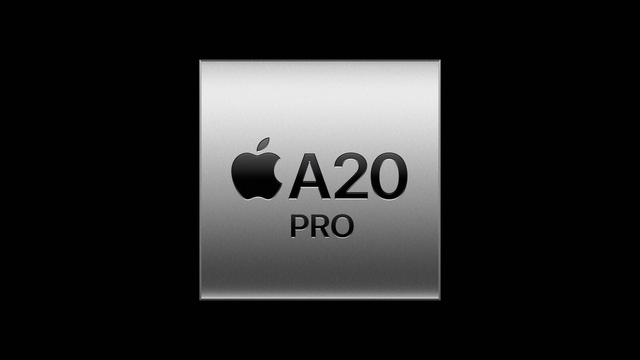
Apple unveils the 2nm A20 Pro, featuring a 6-core CPU with two "desktop class" super cores, a 7-core GPU up to 40% faster, and 32 Neural Engine cores in total (Hartley Charlton/MacRumors)
https://www.macrumors.com/2026/09/09/apple-unveils-a2…
YAVIN: A Unified Architecture for Secure Edge Processing in Memory
Shouzhi Fang, William C. Tegge, Md Omar Faruque, Peipei Zhou, Endadul Hoque, Alex K. Jones
https://arxiv.org/abs/2608.13496 https://arxiv.org/pdf/2608.13496 https://arxiv.org/html/2608.13496
arXiv:2608.13496v1 Announce Type: new
Abstract: Secure, private multi-tenant execution spanning processors, memory, and accelerators remains one of the most significant challenges in modern edge computing systems. Simultaneously, processing-in-memory (PIM) has emerged as an effective approach for reducing the Von Neumann bottleneck by moving computation closer to data. Existing trusted execution environments (TEEs) establish trust only within the processor, protecting data while it traverses untrusted resources such as the memory bus. Consequently, trusted computation cannot be performed directly within memory. We present YAVIN, a unified trusted computing base (TCB) that extends the TEE beyond the processor to encompass both processor execution and a dedicated memory region supporting trusted processing-in-memory execution while treating the memory bus as untrusted. Leveraging the dedicated protected memory regions already established by conventional TEE architectures, YAVIN enables data to be decrypted, processed, and re-encrypted by either processor or PIM execution while remaining within the TEE. To realize this unified TCB, YAVIN presents the first PIM implementations of the LightSaber KEM post-quantum cryptosystem and ASCON-128 authenticated encryption, co-designing both algorithms for efficient DRAM execution to establish and maintain shared cryptographic state. Finally, we demonstrate how cryptography-PIM co-design for tensor-based workloads reorganizes computation to satisfy the ordering constraints imposed by authenticated encryption with minimal performance overhead while simultaneously enabling bit-sliced ordering that limits temporary plaintext exposure. Compared to the latest PIM AES implementation, YAVIN achieves more than a 20x speedup while incurring only 34% and 9.3% overhead when executing INT8 and INT32 quantized edge-class LLMs, respectively, relative to plaintext execution.
toXiv_bot_toot
MazzikaAI: A knowledge-based performance-to-prompt compiler for real-time Arabic maqam accompaniment with a streaming text-to-music model
Jiaxin Du, Boulbaba Abdeljaouad, Yong Zhuang, Haoyu Li
https://arxiv.org/abs/2608.10360 https://arxiv.org/pdf/2608.10360 https://arxiv.org/html/2608.10360
arXiv:2608.10360v1 Announce Type: new
Abstract: Arabic maqam music microtonal, modal, and built on ornamented call and response is among the traditions most underserved by generative music models, whose training frameworks remain predominantly Western and equaltempered. Real time accompaniment sharpens this gap: an AI partner must listen, adapt dynamically, and respect idiomatic microtonal structures. Streaming text to music models provide strong generative capabilities but lack precise control interfaces. We present MazzikaAI, a knowledge based system that uses natural language as the actuator of a realtime control loop. By compiling live MIDI, gesture, and inferred harmony into continuously updated text prompts, MazzikaAI steers an unmodified streaming generator, Google Lyria RealTime, without requiring model finetuning. The system embeds expert knowledge of six core maqamat, characteristic ornaments, and ensemble dynamics, maintaining realtime responsiveness with subsecond keytoaudibleupdate latency. Empirical evaluations demonstrate that dynamic prompt compilation reliably grounds generation in microtonal scales, significantly increasing offgrid quartertone content over baseline generation. Beyond its core implementation, MazzikaAI illustrates how deterministic knowledgebased rules can effectively bridge expert, nonWestern musical traditions and unfinetuned foundation models. This architecture establishes a scalable paradigm for realtime humanAI cocreation, offering a generalizable blueprint for interactive accompaniment, adaptive music education, and culturally inclusive generative audio across diverse global idioms.
toXiv_bot_toot
OpenAI launches GPT-Live, a new generation of voice models built on a full-duplex architecture, meaning they can listen and speak at the same time (OpenAI)
https://openai.com/index/introducing-gpt-live
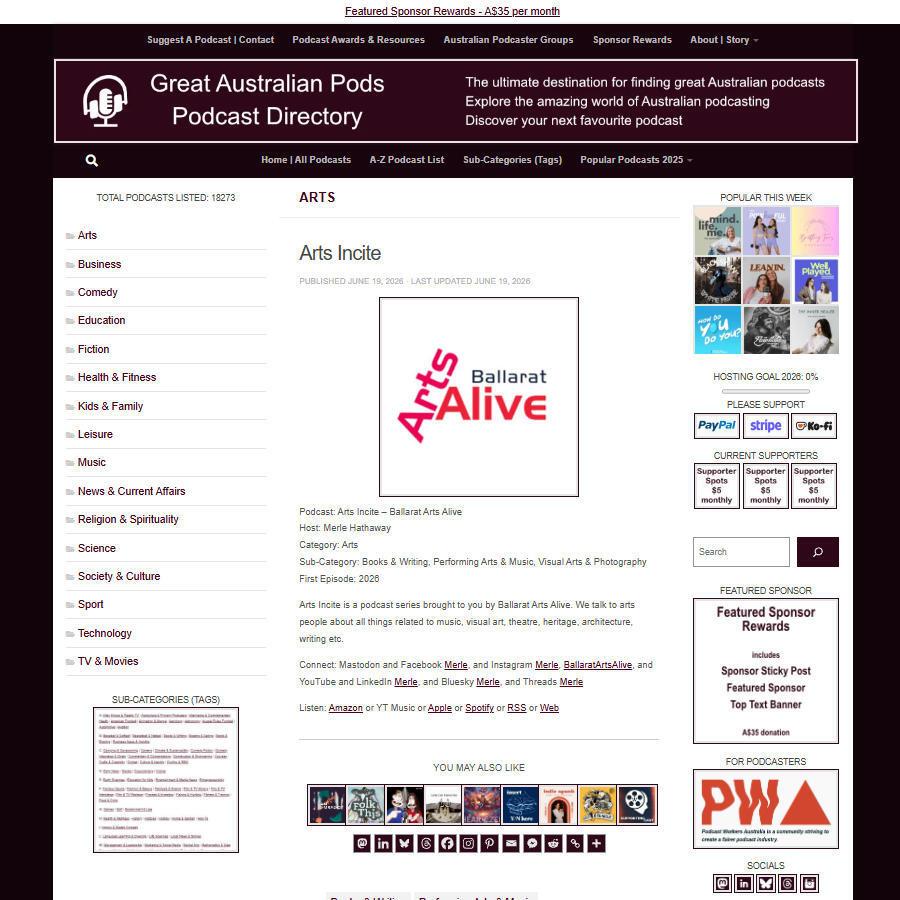
Arts Incite - Ballarat Arts Alive
We talk to arts people about all things related to music, visual art, theatre, heritage, architecture, writing etc...
Great Australian Pods Podcast Directory: https://www.greataustralianpods.com/arts-incite-ballarat-arts-alive…
Building on UNH campus in Durham, NH an ancient city by North American standards
#photo #photography #buildings
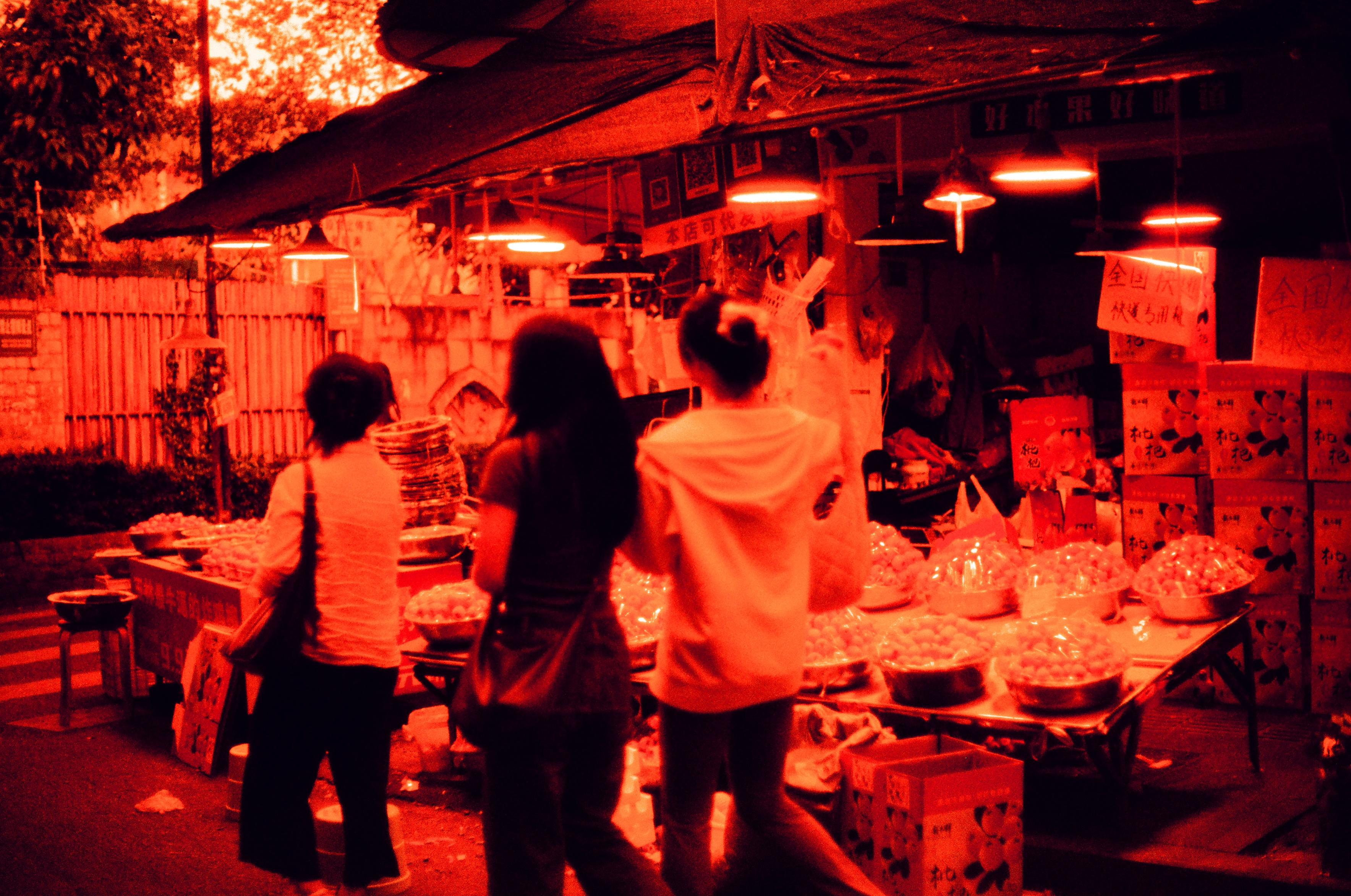
Red City 🌆
红色城市 🌆
📷 Pentax MX
🎞️ Harman Red 125 (FF)
If you like my work, Support by buying me a coffee or a roll of film from
PayPal https://www.paypal.com/paypalme/ydcdingsite
Wise
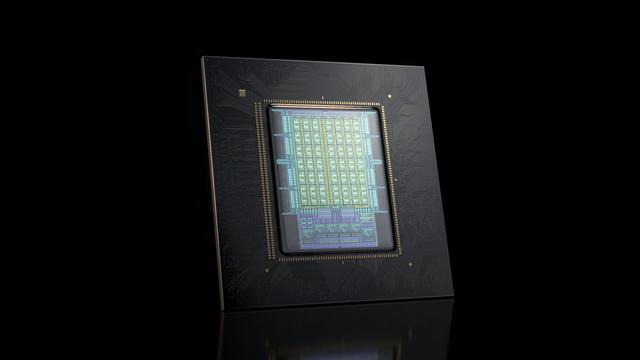
Nvidia details its Vera CPU, its first CPU with a custom core design, featuring 88 cores and 176 threads, and set for general availability in H2 2026 (Jake Roach/Tom's Hardware)
https://www.tomshardware.com/pc-component…
[2026-08-14 Fri (UTC), 10 new articles found for cs.AR Hardware Architecture]
toXiv_bot_toot
Arm EVP Mohamed Awad says its chip architecture now accounts for 50% of the hyperscale cloud computing market, as AI demand transforms the data center industry (Cheng Ting-Fang/Nikkei Asia)
https://asia.nikkei.com/editor-s-picks
🧠 #VoiceMem is an #opensource memory system for real-time #voiceagents, built on a streaming dual-brain architecture
A Day Or Two At The Museum III🏛️
博物馆的一两天 III🏛️
📷 Pentax MX
🎞️ Harman Red 125 (FF)
If you like my work, Support by buying me a coffee or a roll of film from
PayPal https://www.paypal.com/paypalme/ydcdingsite
Wise
Samsung previews zHBM, which vertically stacks HBM atop AI accelerators, and zNAND-O, built on V-NAND, and unveils the industry's first V10 BV-NAND architecture (Yoolim Lee/Bloomberg)
https://www.bloomberg.com/news/articles/20
🛡️ That kills credential exfiltration via prompt injection: an agent cannot leak a secret it never held
🔌 Transparent integration through HTTPS_PROXY and a MITM architecture, so existing MCP servers, CLIs, SDKs and APIs keep working unchanged
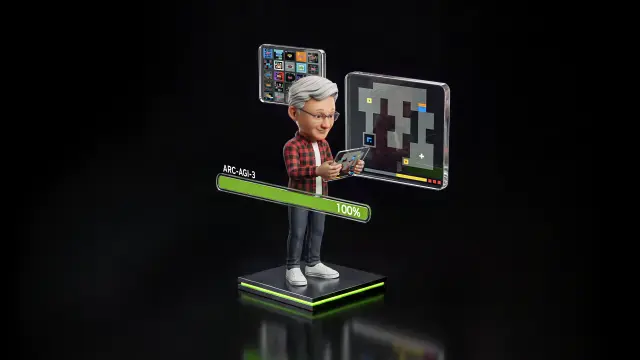
Nvidia says its general-purpose coding agent system AVO scored 100% across all 25 environments in the ARC-AGI-3 public set, completing all 183 levels (Terry Chen/NVIDIA Technical Blog)
https://developer.nv…
A look back at BitTorrent, launched by Bram Cohen 25 years ago, and how media piracy fueled its growth while its architecture shielded it from legal liability (Janko Roettgers/The Verge)
https://www.theverge.com/tech/959848/bittorrent-story-25-years-piracy
Urban Spirit II 👻
城市魂 II 👻
📷 Pentax 6x7
🎞️ LUCKY SHD 400 (6x7)
If you like my work, Support by buying me a coffee or a roll of film from
PayPal https://www.paypal.com/paypalme/ydcdingsite
Wise
Oxmiq, which aims to combine GPUs, CPUs, and a tensor engine into a single block of IP that it can license, raised $35M led by Samsung Catalyst Fund and Fudomo (Max A. Cherney/Reuters)
https://www.reuters.com/world/asia-pacific
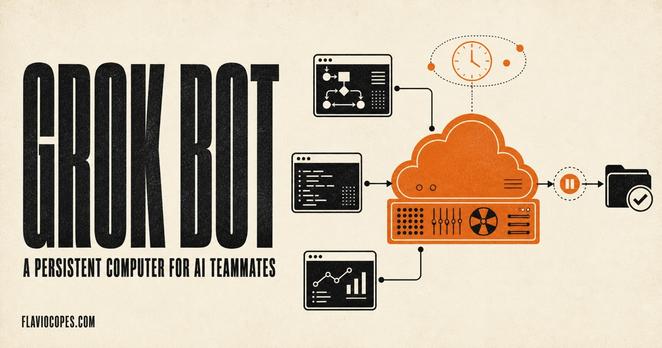
A deep dive into Grok Bot, including its architecture, use cases, and alternatives, as xAI adds shareable bot templates and online purchases through Stripe Link (Flavio Copes)
https://flaviocopes.com/grok-bot/
Murky Air II ☁️
混浊的空气 II ☁️
📷 Yashica 635
🎞️ ERA 100 (FF), expired 1993
If you like my work, Support by buying me a coffee or a roll of film from
PayPal https://www.paypal.com/paypalme/ydcdingsite
Wise
The Agentic AI Foundation updates MCP with a fully stateless architecture, a hardened authentication model, a formal 12-month deprecation policy, and more (Michael Nuñez/VentureBeat)
https://venturebeat.com/infrastructure/mcp-just-…
Non-Blurry Figures III 🧿
非-模糊的形象 III 🧿
📷 Yashica 635
🎞️ Ilford FP4 Plus 125 (FF), expired 1994
If you like my work, Support by buying me a coffee or a roll of film from
PayPal https://www.paypal.com/paypalme/ydcdingsite
Wise
Apple says M5 Ultra uses a quad-die 3nm architecture, "a first for Apple silicon", with inter-die bandwidth of 4.4TB/s and up to a 36-core CPU and 80-core GPU (Steve Dent/Engadget)
https://www.engadget.com/2243405/apple-m5-ultra-with-80-core-gp…
IBM details a 0.7nm chip manufacturing process that utilizes a "nanostack" 3D transistor architecture, which it says can maintain chip innovation for 10 years (Don Clark/New York Times)
https://www.nytimes.com/2026/06/25/technology/ibm-technology-tini…
IBM says it is developing a dual-architecture processor for IBM Z and LinuxONE systems that can natively execute both IBM's z/OS workloads and Arm applications (Michael Nuñez/VentureBeat)
https://venturebeat.com/infrastructure
Natural, which aims to help companies let their AI agents make autonomous payments, raised a $30M Series A led by Forerunner, bringing its total raised to $40M (Marina Temkin/TechCrunch)
https://techcrunch.com/2026/07/20/natural-rai…
Cerebras unveils CS-4, a server rack powered by three WSE-3 Turbo chips and built around its new Nexus architecture, with first shipments starting this quarter (Max A. Cherney/Reuters)
https://www.reuters.com/technology/cerebra
 @kuba@toot.kuba-orlik.name