2025-12-22 21:31:09
some excellent notes on the recent stash of boredoms recordings surfaced by @…. https://archive.org/search?query=subject:"boredoms%2…
RE: https://hachyderm.io/@thomasfuchs/115945071431971557
Also, yes you can connect to WiFi in Mac OS 9.2 with AirPort in a 27 year old iBook from 1999 and yes, iTunes can still query Gracenote for CD track titles.
reading a prelim paper on scaling up gpu-accelerated database query engines and feeling kinda gobsmacked at where that world is at
i remember when we built a “massive” memory machine at princeton with … i think it was 256 MB of RAM. (it sat idle except when ken thompson was logged in and building hash tables for chess endgames which was most of the time)
Did you miss one of the Web414 meetings in 2007? Looks like we recorded them!
#mke
🎯 Zero accuracy loss - preserves what matters: errors, anomalies, high-scoring items & query-relevant content using BM25/embedding similarity
✅ Full provider support: #OpenAI, #Anthropic, #Google
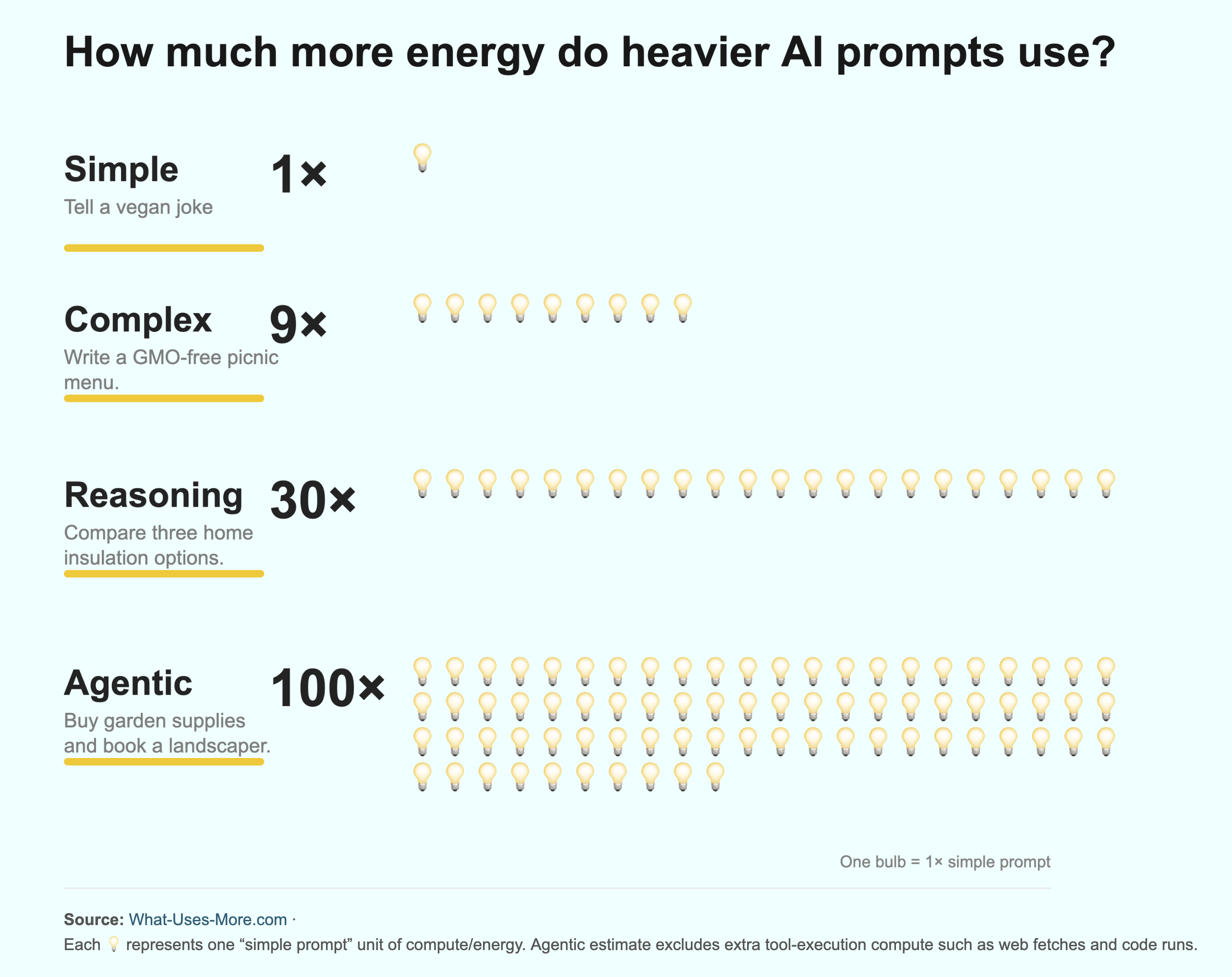
A programmer estimates his typical day of coding with Claude Code is equivalent to running the dishwasher an extra time, much more energy than a "median query" (Simon P. Couch)
https://www.simonpcouch.com/blog/2026-01-20-cc-impact/
@… Hey, it is me again 😅
Just to let you know that I receive some 400 Bad Request errors from some DoH servers (dns.quad9.net and ns0.fdn.fr for instance) while some others accept my queries (dns.google and Cloudflare 1.1.1.1).
I am not sure yet if the error is on my use of the library or within the library itself.
Here is the code to run the query:
@… thanks!
Hints:
― procfs(5) is deprecated (the FreeBSD Handbook is outdated; <https://man.freebsd.org/cgi/man.cgi?qu
The US House Armed Services Committee formally asks the Defense Department how it plans to safeguard Stars and Stripes' congressionally required independence (@erikwemple)
https://x.com/erikwemple/status/2013744189641470264
Extended The vOICe web app with xres and yres query parameters for setting the capture and on-screen preview resolution (default 320 x 240), e.g. https://www.seeingwithsound.com/webvoice/webvoice.htm?preview&xres=1200&yres=800 You may hav…
This rock wrote some seriously based shit you should definitely read!
🔗 #Anarchism
Somebody Told Me (The User Provider Should Use An Adaptor To Proxy The Query Factory Builder)
https://youtu.be/p03oO_7sCaY
from my link log —
JSONata: a JSON query and transformation language.
https://jsonata.org/
saved 2026-02-09 https://dotat.at/:/CEJOA.html
CAG-Avatar: Cross-Attention Guided Gaussian Avatars for High-Fidelity Head Reconstruction
Zhe Chang, Haodong Jin, Yan Song, Hui Yu
https://arxiv.org/abs/2601.14844 https://arxiv.org/pdf/2601.14844 https://arxiv.org/html/2601.14844
arXiv:2601.14844v1 Announce Type: new
Abstract: Creating high-fidelity, real-time drivable 3D head avatars is a core challenge in digital animation. While 3D Gaussian Splashing (3D-GS) offers unprecedented rendering speed and quality, current animation techniques often rely on a "one-size-fits-all" global tuning approach, where all Gaussian primitives are uniformly driven by a single expression code. This simplistic approach fails to unravel the distinct dynamics of different facial regions, such as deformable skin versus rigid teeth, leading to significant blurring and distortion artifacts. We introduce Conditionally-Adaptive Gaussian Avatars (CAG-Avatar), a framework that resolves this key limitation. At its core is a Conditionally Adaptive Fusion Module built on cross-attention. This mechanism empowers each 3D Gaussian to act as a query, adaptively extracting relevant driving signals from the global expression code based on its canonical position. This "tailor-made" conditioning strategy drastically enhances the modeling of fine-grained, localized dynamics. Our experiments confirm a significant improvement in reconstruction fidelity, particularly for challenging regions such as teeth, while preserving real-time rendering performance.
toXiv_bot_toot
"Hey, let's get some Chinese characters tattooed on our body without knowing any Chinese language!"
https://www.youtube.com/@ChinesewithJessie/search?query=Tattoo
ProphetKV: User-Query-Driven Selective Recomputation for Efficient KV Cache Reuse in Retrieval-Augmented Generation
Shihao Wang, Jiahao Chen, Yanqi Pan, Hao Huang, Yichen Hao, Xiangyu Zou, Wen Xia, Wentao Zhang, Haitao Wang, Junhong Li, Chongyang Qiu, Pengfei Wang
https://arxiv.org/abs/2602.02579 https://arxiv.org/pdf/2602.02579 https://arxiv.org/html/2602.02579
arXiv:2602.02579v1 Announce Type: new
Abstract: The prefill stage of long-context Retrieval-Augmented Generation (RAG) is severely bottlenecked by computational overhead. To mitigate this, recent methods assemble pre-calculated KV caches of retrieved RAG documents (by a user query) and reprocess selected tokens to recover cross-attention between these pre-calculated KV caches. However, we identify a fundamental "crowding-out effect" in current token selection criteria: globally salient but user-query-irrelevant tokens saturate the limited recomputation budget, displacing the tokens truly essential for answering the user query and degrading inference accuracy.
We propose ProphetKV, a user-query-driven KV Cache reuse method for RAG scenarios. ProphetKV dynamically prioritizes tokens based on their semantic relevance to the user query and employs a dual-stage recomputation pipeline to fuse layer-wise attention metrics into a high-utility set. By ensuring the recomputation budget is dedicated to bridging the informational gap between retrieved context and the user query, ProphetKV achieves high-fidelity attention recovery with minimal overhead. Our extensive evaluation results show that ProphetKV retains 96%-101% of full-prefill accuracy with only a 20% recomputation ratio, while achieving accuracy improvements of 8.8%-24.9% on RULER and 18.6%-50.9% on LongBench over the state-of-the-art approaches (e.g., CacheBlend, EPIC, and KVShare).
toXiv_bot_toot
Trend in the volume of new questions on StackOverflow https://data.stackexchange.com/stackoverflow/query/1926661
👨💻 Created by Sachin Beniwal, open for feedback and contributions
📚 https://benodiwal.github.io/pg_ai_query
💻 https://github.com/be…
Custom self-leveling, poured polyurethane art floors. Cool video.
I found others, e.g., on youtube:
"epoxy flooring 3d"
https://www.youtube.com/results?search_query=epoxy flooring 3d
#ReleaseThursday 🎉 Just pushed a new version of the https://thi.ng/column-store database and query engine which adds support for new column types (fixed-size n-dimensional int/uint/float vectors) and RLE (run-…
Tonight I made a daiquiri.
And then I realized, the way it’s spelled looks a lot like a portmanteau of daj (Polish: Give) and query.
So maybe every time someone gives you a SQL query, that’s actually a daiquiri.
Yesterday, after a mild query by some parents, my daughter’s primary school sent out a notice to say they were going to stop using their X account for comms.
It’s as simple as that. There are plenty of alternatives.
But even if there weren’t you can’t contribute to that.
And it can be as simple as
asking to prompt a change.
I just finished reorganizing the cable drawer.
The timeline of events was something like:
- the DNS server for internal name resolution runs inside a Docker container only reachable via IPv4
- if an Android device gets both IPv4 and IPv6 DNS servers, it will only query the IPv6 one
- fuck Docker; I'll install the DNS server on a Raspberry Pi
- creating a Pi image with sshd enabled didn't work
- this household has surprisingly few HDMI cables
- oh, …
I just finished reorganizing the cable drawer.
The timeline of events was something like:
- the DNS server for internal name resolution runs inside a Docker container only reachable via IPv4
- if an Android device gets both IPv4 and IPv6 DNS servers, it will only query the IPv6 one
- fuck Docker; I'll install the DNS server on a Raspberry Pi
- creating a Pi image with sshd enabled didn't work
- this household has surprisingly few HDMI cables
- oh, …
Yesterday, I observed a friend trying to show me something he saw on facebook recently. Every single search he tried resulted in first switching from facebook to “Meta”—whatever that is—without him noticing for quite some interactions, the search field was still there. Sending a query always opened the Meta AI answering the assumed question (but he was actually sending a query as he was looking for an image). He got angry, I got amused. He found the image eventually, but what a wacky UI!
Telerik software engineer Dave Brock takes a look at improvements in .NET 10 from a web api coder's perspective. Reviewed improvements include:
1. Built in Validation for Minimal APIs
2. Validation Error Responses
3. OpenAPI 3.1
4. Schema Improvements
5. EF Core 10 Named Query Filters
6. C# 14 Improvements
7. Null-conditional Assignments
8. Extension Members
(...)
"What’s New with APIs in .NET 10: Taking a Look at Real Improvements…
Robust forecast aggregation via additional queries
Rafael Frongillo, Mary Monroe, Eric Neyman, Bo Waggoner
https://arxiv.org/abs/2512.05271 https://arxiv.org/pdf/2512.05271 https://arxiv.org/html/2512.05271
arXiv:2512.05271v1 Announce Type: new
Abstract: We study the problem of robust forecast aggregation: combining expert forecasts with provable accuracy guarantees compared to the best possible aggregation of the underlying information. Prior work shows strong impossibility results, e.g. that even under natural assumptions, no aggregation of the experts' individual forecasts can outperform simply following a random expert (Neyman and Roughgarden, 2022).
In this paper, we introduce a more general framework that allows the principal to elicit richer information from experts through structured queries. Our framework ensures that experts will truthfully report their underlying beliefs, and also enables us to define notions of complexity over the difficulty of asking these queries. Under a general model of independent but overlapping expert signals, we show that optimal aggregation is achievable in the worst case with each complexity measure bounded above by the number of agents $n$. We further establish tight tradeoffs between accuracy and query complexity: aggregation error decreases linearly with the number of queries, and vanishes when the "order of reasoning" and number of agents relevant to a query is $\omega(\sqrt{n})$. These results demonstrate that modest extensions to the space of expert queries dramatically strengthen the power of robust forecast aggregation. We therefore expect that our new query framework will open up a fruitful line of research in this area.
toXiv_bot_toot
RE: https://cosocial.ca/@hyphacoop/115685327547429897
They likely won't like my answers. 😅
FWIW a 7B param LLM costs around 55MWh to train and test, and about 300Wh per query. Then factor that 52% of the answers are unusable, so like Lay's potato chips, NOBODY does only one prompt.
Sometimes i have the feeling that AI results in Google Search are just a placeholder. Results are often awful and incomparable with using the paid version of Gemini 3 with the same query. Google is betting that models will improve and become cheaper so that they can offer a better experience in the future.
#AI #Search
🔍 Schema-aware query intelligence through secure introspection understands your database structure for accurate query generation
🔌 Multi-model flexibility: supports #OpenAI, #Anthropic, #Gemini
the rise and fall of stackoverflow
the graph of posts per month is quite something
the decline over the last four years is almost a mirror of the rise 2008-2012
and they are now down to near zero
https://data.stackexchange.com/stackoverflow/query/1926661#gr…
The rapid decline of #StackOverflow et al in the age of #AI slop https://data.stackexchange.com/stackov
I think putting the `y` coordinate first in the Point struct and using a BTreeMap/BTreeSet (which is sorted by the key) was quite neat. It allowed me to query ranges (i.e. rows) efficiently without the need to keep the whole grid in memory.
@… I also think that as a stop gap it would help if both proects offered some official API to query what the latest version is and perhaps offered RSS/ATOM feeds of updates so that knowledgeable users could subscribe to that and be notified right away, direct from the source.
📈 #LogsQL query language provides fast full-text search, advanced analytics, and data extraction/transformation at query time. Can be combined with Unix tools like grep, less, sort, and jq for log analysis.
🎯 Optimized for high cardinality fields like trace_id, user_id, and ip addresses. Supports logs with hundreds of fields (wide events), multitenancy, out-of-order ingestion, live taili…
You know that Firefox feature where bookmarks could contain a %s in the url somewhere and then the name of the bookmark could be used as a prefix in the address bar to quickly query some website? What's that feature called? Does it exist in Safari?
#askfedi
Telerik software engineer Dave Brock takes a look at improvements in .NET 10 from a web api coder's perspective. Reviewed improvements include:
1. Built in Validation for Minimal APIs
2. Validation Error Responses
3. OpenAPI 3.1
4. Schema Improvements
5. EF Core 10 Named Query Filters
6. C# 14 Improvements
7. Null-conditional Assignments
8. Extension Members
(...)
"What’s New with APIs in .NET 10: Taking a Look at Real Improvements…
ZOR filters: fast and smaller than fuse filters
Antoine Limasset
https://arxiv.org/abs/2602.03525 https://arxiv.org/pdf/2602.03525 https://arxiv.org/html/2602.03525
arXiv:2602.03525v1 Announce Type: new
Abstract: Probabilistic membership filters support fast approximate membership queries with a controlled false-positive probability $\varepsilon$ and are widely used across storage, analytics, networking, and bioinformatics \cite{chang2008bigtable,dayan2018optimalbloom,broder2004network,harris2020improved,marchet2023scalable,chikhi2025logan,hernandez2025reindeer2}. In the static setting, state-of-the-art designs such as XOR and fuse filters achieve low overhead and very fast queries, but their peeling-based construction succeeds only with high probability, which complicates deterministic builds \cite{graf2020xor,graf2022binary,ulrich2023taxor}.
We introduce \emph{ZOR filters}, a deterministic continuation of XOR/fuse filters that guarantees construction termination while preserving the same XOR-based query mechanism. ZOR replaces restart-on-failure with deterministic peeling that abandons a small fraction of keys, and restores false-positive-only semantics by storing the remainder in a compact auxiliary structure. In our experiments, the abandoned fraction drops below $1\%$ for moderate arity (e.g., $N\ge 5$), so the auxiliary handles a negligible fraction of keys. As a result, ZOR filters can achieve overhead within $1\%$ of the information-theoretic lower bound $\log_2(1/\varepsilon)$ while retaining fuse-like query performance; the additional cost is concentrated on negative queries due to the auxiliary check. Our current prototype builds several-fold slower than highly optimized fuse builders because it maintains explicit incidence information during deterministic peeling; closing this optimisation gap is an engineering target.
toXiv_bot_toot
<https://github.com/freebsd/freebsd-src/blob/main/CONTRIBUTING.md#style> mentions the one-sentence-per-line rule for manual pages, however:
a) there's no such rule in mdoc(7) <
from my link log —
AEQuery: Apple Events command line query tool without AppleScript.
https://markalldritt.com/?p=1368
saved 2026-02-08 https://dotat.a…
SQL is the lingua franca. Hiring, maintenance, and reviews get easier when the query is the spec.
Over time, all NoSQL framework include SQL interfaces.
https://medium.com/@Modexa/the-sql-comeback-fabb86f6bfce
Source: OpenAI targets ~$60 per 1,000 views for ChatGPT ads, on par with live NFL broadcasts and above Meta's sub-$20 CPM, while offering little conversion data (The Information)
https://www.theinformation.com/articles/openai-seeks-premium-prices-early-…
@… ha, thanks … the bears page was amongst the top search results at <https://www.startpage.com/do/dsearch?query="d…
Source: OpenAI targets ~$60 per 1,000 views for ChatGPT ads, on par with live NFL broadcasts and above Meta's sub-$20 CPM, while offering little conversion data (The Information)
https://www.theinformation.com/articles/openai-seeks-premium-prices-early-…
Prune, Don't Rebuild: Efficiently Tuning $\alpha$-Reachable Graphs for Nearest Neighbor Search
Tian Zhang, Ashwin Padaki, Jiaming Liang, Zack Ives, Erik Waingarten
https://arxiv.org/abs/2602.08097 https://arxiv.org/pdf/2602.08097 https://arxiv.org/html/2602.08097
arXiv:2602.08097v1 Announce Type: new
Abstract: Vector similarity search is an essential primitive in modern AI and ML applications. Most vector databases adopt graph-based approximate nearest neighbor (ANN) search algorithms, such as DiskANN (Subramanya et al., 2019), which have demonstrated state-of-the-art empirical performance. DiskANN's graph construction is governed by a reachability parameter $\alpha$, which gives a trade-off between construction time, query time, and accuracy. However, adaptively tuning this trade-off typically requires rebuilding the index for different $\alpha$ values, which is prohibitive at scale. In this work, we propose RP-Tuning, an efficient post-hoc routine, based on DiskANN's pruning step, to adjust the $\alpha$ parameter without reconstructing the full index. Within the $\alpha$-reachability framework of prior theoretical works (Indyk and Xu, 2023; Gollapudi et al., 2025), we prove that pruning an initially $\alpha$-reachable graph with RP-Tuning preserves worst-case reachability guarantees in general metrics and improved guarantees in Euclidean metrics. Empirically, we show that RP-Tuning accelerates DiskANN tuning on four public datasets by up to $43\times$ with negligible overhead.
toXiv_bot_toot
@… if a package for firmware is missing from the meta package, that could be a bug report in Bugzilla.
Does fwget get the firmware?
fwget(8)
<https://
Welfarist Formulations for Diverse Similarity Search
Siddharth Barman, Nirjhar Das, Shivam Gupta, Kirankumar Shiragur
https://arxiv.org/abs/2602.08742 https://arxiv.org/pdf/2602.08742 https://arxiv.org/html/2602.08742
arXiv:2602.08742v1 Announce Type: new
Abstract: Nearest Neighbor Search (NNS) is a fundamental problem in data structures with wide-ranging applications, such as web search, recommendation systems, and, more recently, retrieval-augmented generations (RAG). In such recent applications, in addition to the relevance (similarity) of the returned neighbors, diversity among the neighbors is a central requirement. In this paper, we develop principled welfare-based formulations in NNS for realizing diversity across attributes. Our formulations are based on welfare functions -- from mathematical economics -- that satisfy central diversity (fairness) and relevance (economic efficiency) axioms. With a particular focus on Nash social welfare, we note that our welfare-based formulations provide objective functions that adaptively balance relevance and diversity in a query-dependent manner. Notably, such a balance was not present in the prior constraint-based approach, which forced a fixed level of diversity and optimized for relevance. In addition, our formulation provides a parametric way to control the trade-off between relevance and diversity, providing practitioners with flexibility to tailor search results to task-specific requirements. We develop efficient nearest neighbor algorithms with provable guarantees for the welfare-based objectives. Notably, our algorithm can be applied on top of any standard ANN method (i.e., use standard ANN method as a subroutine) to efficiently find neighbors that approximately maximize our welfare-based objectives. Experimental results demonstrate that our approach is practical and substantially improves diversity while maintaining high relevance of the retrieved neighbors.
toXiv_bot_toot
OK, but the results are still just paper links, not what the LLM thinks about them. So the only thing that changed is that it is much much slower now?
Maybe the LLM just formulates a query to the old scholar? Too many layers of "oh how can we build an LLM into this"...
OK, nobody in #math uses Google Scholar like this anyway. We only use it look at publication records of people and do reverse citation search (which papers cite this one I have).
When running a query with "out count;" in Overpass Ultra, where is that count actually displayed? I can't find any ui button to switch from the map view to response xml/json (like overpass turbo has).
#overpassultra #overpassql #osm
Replaced article(s) found for cs.DS. https://arxiv.org/list/cs.DS/new
[1/1]:
- Optimal Hardness of Online Algorithms for Large Independent Sets
David Gamarnik, Eren C. K{\i}z{\i}lda\u{g}, Lutz Warnke
https://arxiv.org/abs/2504.11450 https://mastoxiv.page/@arXiv_csDS_bot/114346418465357434
- An Approximation Algorithm for Monotone Submodular Cost Allocation
Ryuhei Mizutani
https://arxiv.org/abs/2511.00470 https://mastoxiv.page/@arXiv_csDS_bot/115490466535056736
- Expected Cost of Greedy Online Facility Assignment on Regular Polygons (v3)
Md. Rawha Siddiqi Riad, Md. Tanzeem Rahat, Md. Manzurul Hasan
https://arxiv.org/abs/2512.00506 https://mastoxiv.page/@arXiv_csDS_bot/115648910775471187
- Nested and outlier embeddings into trees
Shuchi Chawla, Kristin Sheridan
https://arxiv.org/abs/2601.15470 https://mastoxiv.page/@arXiv_csDS_bot/115943420904659985
- Bankrupting DoS Attackers
Trisha Chakraborty, Abir Islam, Valerie King, Daniel Rayborn, Jared Saia, Maxwell Young
https://arxiv.org/abs/2205.08287
- An Algorithm for Fast and Correct Computation of Reeb Spaces for PL Bivariate Fields
Amit Chattopadhyay, Yashwanth Ramamurthi, Osamu Saeki
https://arxiv.org/abs/2403.06564 https://mastoxiv.page/@arXiv_csCG_bot/112081476174323525
- On Densest $k$-Subgraph Mining and Diagonal Loading: Optimization Landscape and Finite-Step Exact...
Qiheng Lu, Nicholas D. Sidiropoulos, Aritra Konar
https://arxiv.org/abs/2410.07388 https://mastoxiv.page/@arXiv_csSI_bot/113287589348257824
- A New Quantum Linear System Algorithm Beyond the Condition Number and Its Application to Solving ...
Jianqiang Li
https://arxiv.org/abs/2510.05588 https://mastoxiv.page/@arXiv_quantph_bot/115337999786748703
- On Purely Private Covariance Estimation
Tommaso d'Orsi, Gleb Novikov
https://arxiv.org/abs/2510.26717 https://mastoxiv.page/@arXiv_csLG_bot/115468358153466988
- The Query Complexity of Local Search in Rounds on General Graphs
Simina Br\^anzei, Ioannis Panageas, Dimitris Paparas
https://arxiv.org/abs/2601.13266 https://mastoxiv.page/@arXiv_csCC_bot/115932039505257286
toXiv_bot_toot